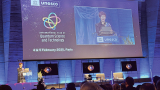
 Read article 'An international year like no other'
An international year like no other
The International Year of Quantum inaugural event was organised at UNESCO Headquarters in Paris in February 2025.

 Read article 'An international year like no other'
The International Year of Quantum inaugural event was organised at UNESCO Headquarters in Paris in February 2025.
 Read article 'Game on for physicists'
Raphael Granier de Cassagnac discusses opportunities for particle physicists in the gaming industry.
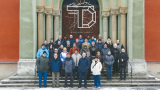 Read article 'The triggering of tomorrow'
The third TDHEP workshop explored how triggers can cope with high data rates.
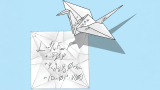 Read article 'How to unfold with AI'
Inspired by high-dimensional data and the ideals of open science, high-energy physicists are using artificial intelligence to reimagine the statistical technique of ‘unfolding’.
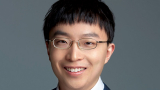 Read article 'The new hackerpreneur'
Hackathons can kick-start your career, says hacker and entrepreneur Jiannan Zhang.
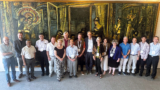 Read article 'ICFA talks strategy and sustainability in Prague'
The 96th ICFA meeting heard extensive reports from the leading HEP laboratories and various world regions on their recent activities and plans.
 Read article 'Rapid developments in precision predictions'
Achieving a theoretical uncertainty of only a few per cent in the measurement of physical observables is a vastly challenging task in the complex environment of hadronic collisions.
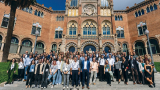 Read article 'AI treatments for stroke survivors'
Data on strokes is plentiful but fragmented, making it difficult to exploit in data-driven treatment strategies.
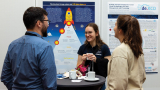 Read article 'Open-science cloud takes shape in Berlin'
Findable, Accessible, Interoperable and Reusable: the sixth symposium of the European Open Science Cloud (EOSC) attracted over 1,000 participants.
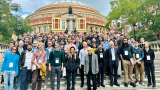 Read article 'Data analysis in the age of AI'
Experts in data analysis, statistics and machine learning for physics came together from 9 to 12 September for PHYSTAT’s Statistics meets Machine Learning workshop.