Open-access publisher MDPI has announced Ursula Röthlisberger, professor of computational chemistry and biochemistry at the École Polytechnique Fédérale de Lausanne (EPFL), as the recipient of the 2026 Michele Parrinello Award.
Announced in March this year, the award honours senior academics who have made outstanding contributions to computational physical sciences, encompassing physics, chemistry and materials science, with a particular emphasis on pioneering contributions to foundational science.
The award was established by MDPI to commemorate the scientific legacy of professor Michele Parrinello, whose groundbreaking work transformed atomistic simulation and molecular dynamics. In addition to a commemorative medal and certificate, the winner receives a prize of €50,000 in recognition of their achievements.
Professor Röthlisberger was selected by an award evaluation committee of internationally recognised experts, chaired by professor Xin-Gao Gong of Fudan University, China, for her pioneering contributions to computational chemistry and molecular simulation.
This includes her work in ab initio molecular dynamics and quantum mechanical/molecular mechanical (QM/MM) multiscale simulation methods. She has provided rigorous computational frameworks for investigating complex molecular processes across different scientific fields, creating important tools for studying molecular processes and guiding scientific discovery.
“I am deeply honoured to receive this award, which bears the name of one of my long-time mentors and most inspiring role models,” said professor Röthlisberger. “To me, this distinction represents far more than personal recognition – it is a wonderful affirmation of the scientific contributions that I have been privileged to make, together with outstanding students, postdoctoral researchers, collaborators and colleagues, throughout my career.”
A major focus of professor Röthlisberger’s recent research involves the computational design and understanding of next-generation photovoltaic materials. Through close collaboration with experimental scientists worldwide, she has revealed the fundamental mechanisms governing dye-sensitised and perovskite solar cells, helping to guide the development of more efficient, stable and sustainable solar-energy technologies.
“Her innovative research has significantly advanced the predictive modelling of complex chemical and biological systems, and has created lasting impact across multiple scientific disciplines,” said professor Gong. “Through her outstanding scientific achievements, dedication to education and leadership in the international research community, she has played a vital role in shaping the development of modern computational science.”
Professor Röthlisberger’s scientific achievements have earned her international esteem throughout her career. She is an elected fellow of the American Association for the Advancement of Science (AAAS), a member of the International Academy of Quantum Molecular Science, and a recipient of the Dirac Medal from the World Association of Theoretical and Computational Chemists (WATOC) and the Ruzicka Prize.
The Michele Parrinello Award forms part of MDPI’s commitment to recognising scientific excellence and supporting outstanding researchers whose work advances fundamental knowledge and addresses global scientific challenges. Alongside the Michele Parrinello Award, MDPI also offers the World Sustainability Award, the Emerging Sustainability Leader Award and the Tu Youyou Award, in addition to its wider awards programme.
The inaugural award ceremony will be held on 7 November 2026 at the Southern University of Science and Technology in Shenzhen, China, as part of the 2026 MDPI Materials Science Conference. Further updates will be made available on the official award website.
Nominations for the next edition of the Michele Parrinello Award are expected to open in 2027.
A particle collider is among the most ambitious projects a society can take on, and one whose worth is hard to capture in conventional economic terms. The instinctive argument for such machines rests on the knowledge they may produce, but no economist can attach a probability, let alone a monetary value, to a discovery that has not yet happened. For decades, this apparent impasse left funding decisions to the scientific case and to mostly qualitative socioeconomic narratives.
In 1945, Vannevar Bush, science adviser to two US presidents, identified the value of basic research in the foundations it may lay for practical progress. Robert Wilson, asked in Congress in 1969 whether the facility that became Fermilab would help defend the United States, answered that it would not, except by making the country worth defending. Reasoning of this kind is no longer enough on its own, and must now be backed by more quantitative evidence. The European Commission and national funding agencies, such as UK Research and Innovation (UKRI)and France Stratégie, expect proposers of large research infrastructures to provide detailed cost-benefit analyses (CBAs), estimating their projects’ societal returns.
The most thorough evaluation of this kind yet performed concerns the LHC and its high-luminosity upgrade (HL-LHC), which entered the main installation phase when the machine completed its third run on 27 June 2026 (CERN Courier July/August 2026 p8). Four years of work will refit the ring with new hardware, including advanced focusing magnets, crab cavities to increase the collision rate and superconducting power lines. The corresponding CBA, developed over more than a decade at the University of Milan and CSIL, rests on a set of carefully chosen assumptions that provide crucial context for interpreting its results.
Discovery set aside
A CBA asks whether an investment’s benefits to society exceed its costs over a defined horizon. Any value available now is worth more than the same amount later, if only because it can earn a return in the meantime, so costs and benefits arising in different future years cannot simply be added: each must be scaled down, or “discounted”, the further ahead it lies. The inverse happens for past values, which must be “capitalised”. The difference between discounted (or capitalised) benefits and costs then yields the net present value (NPV), and a positive expected NPV indicates that the project passes the test. For the HL-LHC CBA, the accounting window ran from 1993, when expenditure attributable to the LHC programme began, to 2038, the machine’s expected end of operations at the time of the analysis, since revised to 2041. All sums, after discounting or capitalising at the 3% rate recommended by the European Commission for public projects, were expressed in constant 2016 Swiss francs, removing the effect of inflation.
Two methodological choices defined the whole exercise. The first was to set discoveries aside. Scientific outcomes at the frontier are subject to what economists call Knightian uncertainty: no probability distribution can be assigned to them, and any attempt to price the discovery of new physics would be arbitrary. The analysis, therefore, excluded the intrinsic value of scientific results altogether and asked a narrower, more disciplined question: do the measurable side effects of the investment – such as the training of early-stage researchers or the technological gains of supplier firms – repay its cost on their own? In this sense, the test was deliberately conservative. Whatever knowledge the machine ultimately produces comes on top of, not inside, the calculated return.
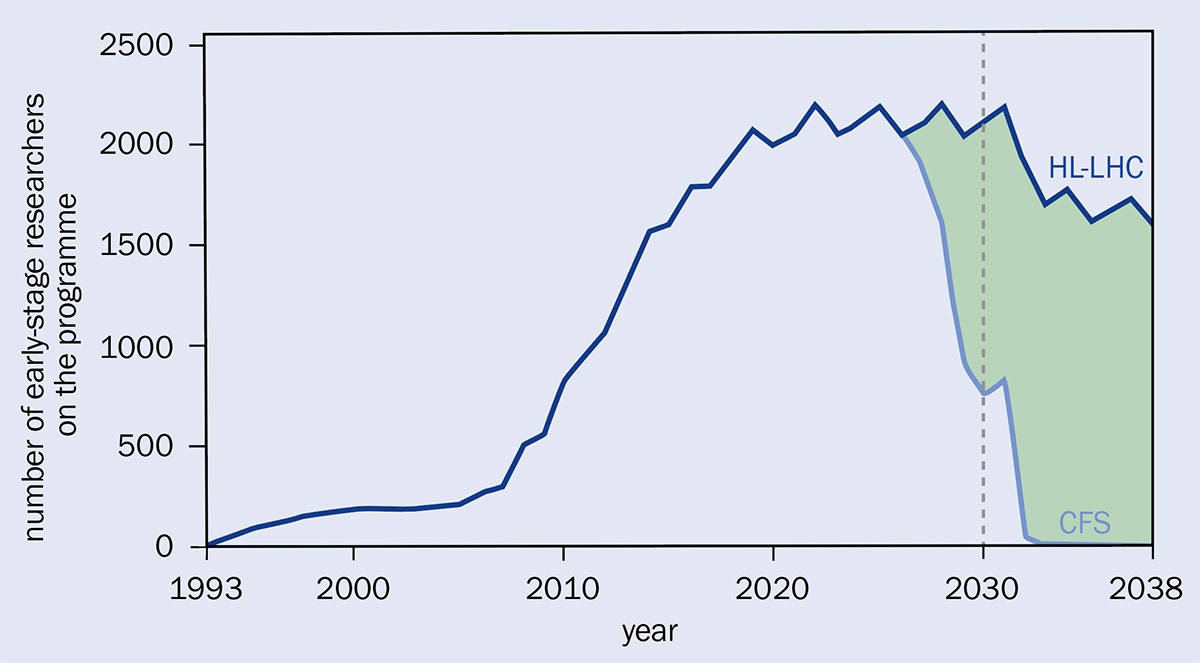
The second choice concerns the counterfactual scenario. An upgrade cannot be assessed against a baseline of no machine at all. The LHC exists either way. The counterfactual scenario assumed an LHC that continues without the luminosity boost, under ordinary maintenance, until its discovery potential is exhausted. In the study’s timeline, that point was conjectured to fall in 2030. Data-taking then ceases, staff are redeployed and the tunnel is kept safe but idle. Constructing this alternative future in detail, down to its cost profiles, researcher numbers and procurement volumes, was among the hardest challenges of the study. It is also what allows every result to be read in incremental terms, as the difference between a world with and one without the high-luminosity upgrade.
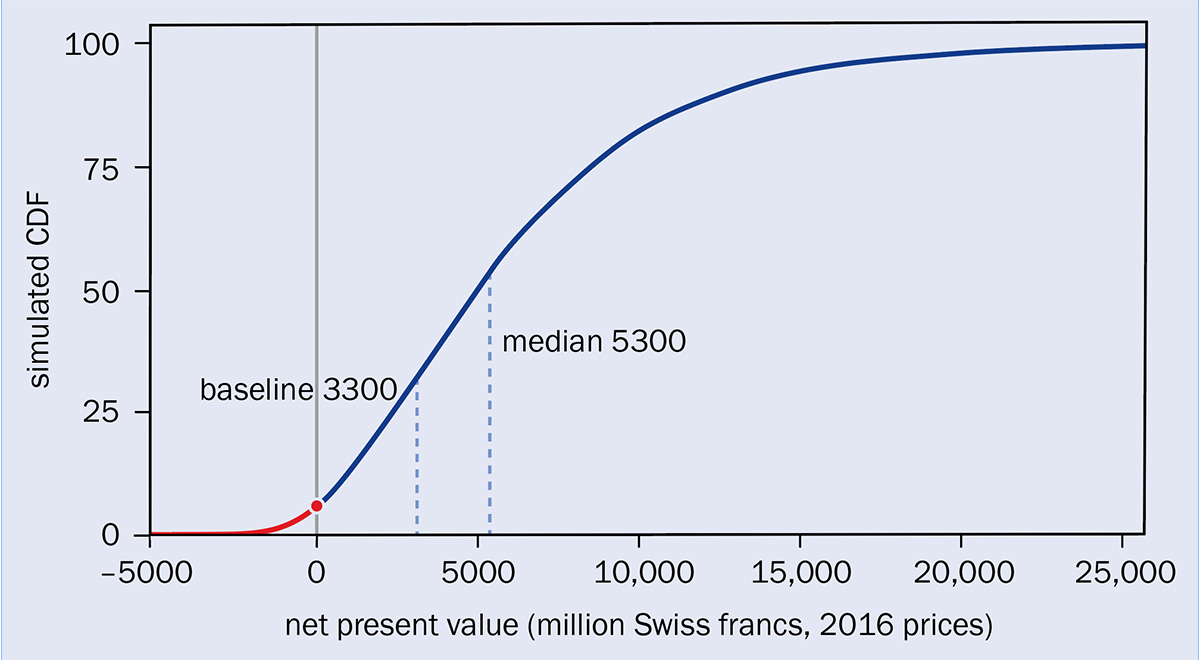
Uncertainty was handled through Monte Carlo simulation. Fifteen critical parameters, among them the early-stage researchers’ salary premium, the suppliers’ sales multiplier, visitor numbers, taxpayers’ willingness to pay and total costs, were treated as random variables. Their distributions were calibrated from data where possible, and from earlier studies and structured expert judgement where they were not. Fifty thousand simulation runs then generated a probability distribution for the project’s NPV (see “Odds on” figure).
That distribution, rather than any point estimate, is what the model ultimately delivers to decision-makers. Against the LHC counterfactual, the HL–LHC incremental NPV is positive: each Swiss franc invested returns about 1.8 francs in societal benefits, and the chance of a positive social return is 94%.
Human capital
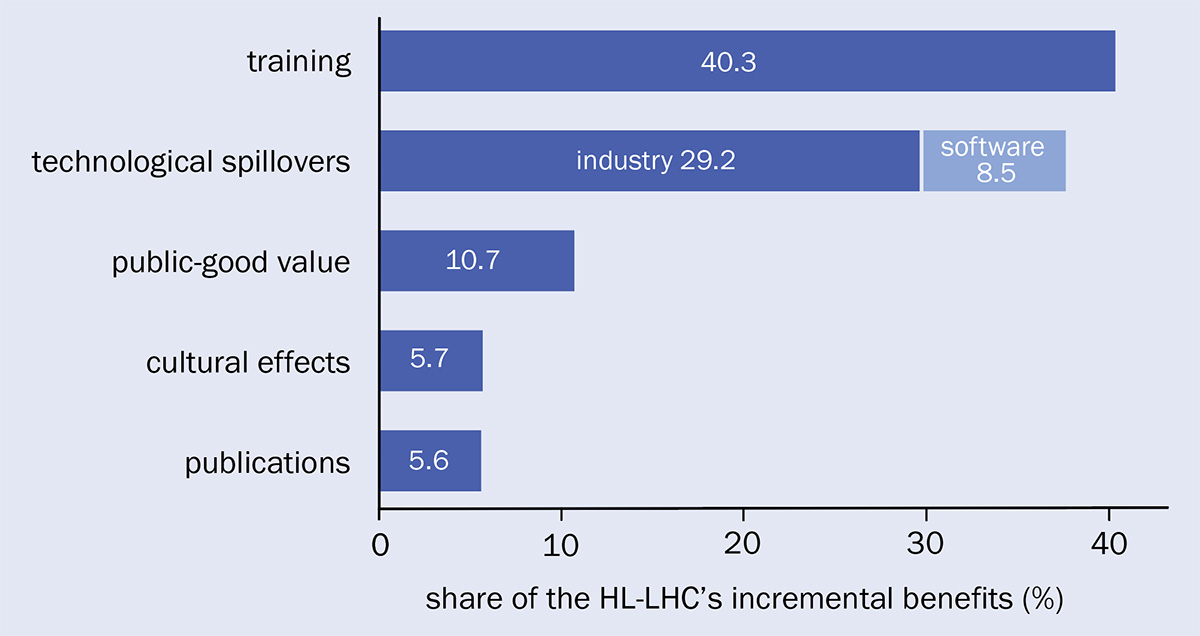
When the two scenarios are compared, the most valuable benefit of the HL-LHC to society is the people it trains (see “Measuring value” figure). Early-stage researchers, from technical, doctoral and postdoctoral trainees to young registered users of the experiments, acquire frontier technical and collaborative skills that employers reward for the rest of their careers. The benefit was measured as the lifetime salary premium these individuals earn relative to comparable peers who never passed through CERN, estimated from surveys of current students, alumni and more than 330 team leaders. Because a career lasts decades, benefits accruing to the final 2038 cohort extend to around 2080, long after the machine has been switched off.
In incremental terms, the salary premium for early-stage researchers accounts for roughly 40% of incremental benefits, the single largest share. The analysis assumes that employers pay the premium because training and hands-on experience make people more productive, so the figure is taken to gauge the value of skills flowing into the economy. The counterfactual clarifies why the share is so large: without the upgrade, the pipeline of early-stage researchers collapses once data-taking ends, whereas the HL–LHC keeps training thousands more through the 2030s (see “Two futures” figure). The FCC Feasibility Study predicts similar effects (CERN Courier May/June 2025 p9).
Each Swiss franc invested in the HL-LHC returns about 1.8 francs in societal benefits, and the chance of a positive social return is 94%
A new study of CERN’s overall impact over the past 25 years corroborates the pattern. In the 2025 CERN alumni survey, 95% of the almost 1000 respondents said that their experience at CERN had helped advance their careers, in fields ranging from software development to information technology, mechanical and industrial engineering, academia and financial services.
Technological spillovers
About 38% of the HL–LHC’s incremental benefits arise from technological spillovers. Firms that win high-tech procurement contracts learn from working with CERN and the experimental collaborations, file patents, refine processes and open new markets. The learning shows up as higher sales and profits in their business with customers other than CERN. The evidence base here is unusually rich, triangulated from a long-run econometric study of supplier accounts before and after their first CERN contract, a survey of more than 650 suppliers, and over two dozen in-depth case studies. In the model, each franc of high-tech procurement returns about three francs to the supplier in extra turnover or saved costs, a ratio first measured in surveys of CERN’s contractors in the 1980s, and confirmed by new evidence.
A second kind of spillover is software released freely to the world. Updated packages initially developed for the LHC programme, such as ROOT and Geant4, were valued at what users would otherwise have paid for commercial equivalents.
Colliders and culture
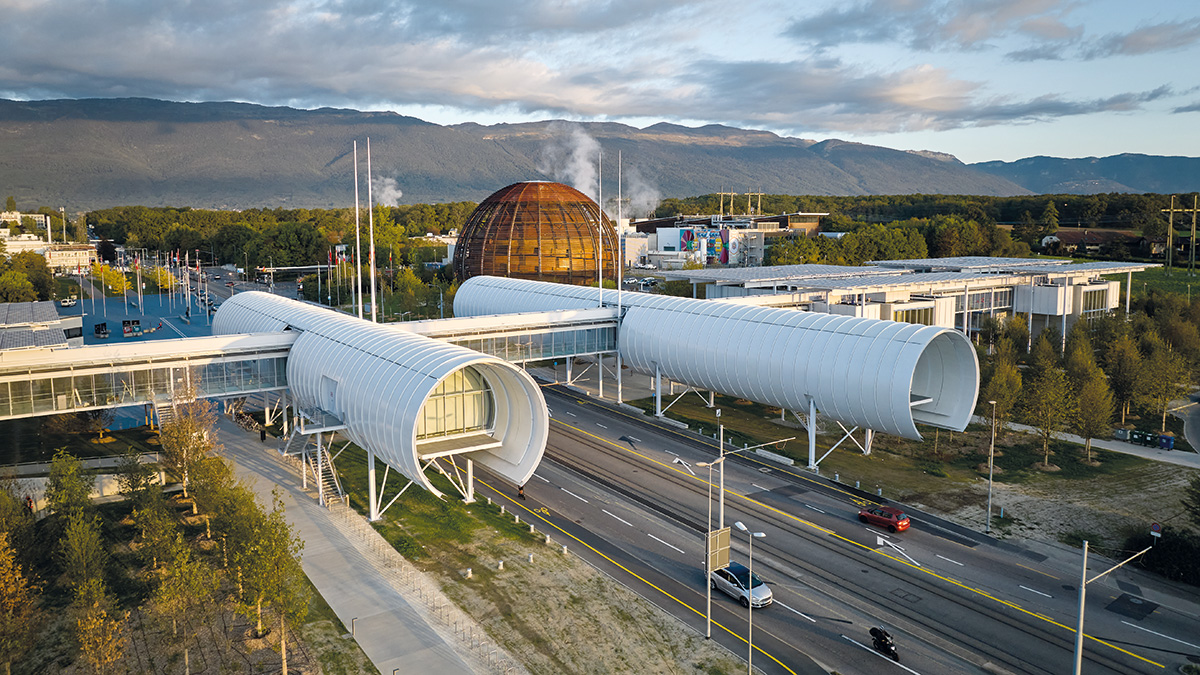
A particle collider is also a cultural asset. About 5.7% of the HL–LHC’s incremental benefits stem from cultural engagement – mostly people travelling to the Geneva site or attending CERN’s touring exhibitions (see “Worth the trip” image). These are valued through the travel cost method, a standard technique that infers what an experience is worth from what visitors spend to reach it: fares, time, tickets. Websites, social media, volunteer computing, films and popular books are counted too, though each contributes far less than the visits. Visitor numbers rise and fall with discovery announcements and with CERN’s own capacity to attract and receive an audience, which makes outreach strategy part of the calculation.
Publications
Scientific publications might seem the most natural benefit of a research infrastructure, yet in the accounting their value is limited. The reason lies in methodology. What is measured is not the content of the papers, which would smuggle discovery value back in, but the volume of scientific production and its uptake. A paper’s production cost, in terms of its authors’ salaries, is assumed to cancel against the value of the time spent writing it, evaluated at what those hours would otherwise have earned, so that its net benefit comes entirely from downstream citations. A paper never cited is worth zero. The category matters less for its size than for what its treatment reveals about the method’s discipline: even the most visible benefit of science is valued only through observable, countable channels.
Public-good value
The final category captures the value citizens place on fundamental knowledge being created at all, analogous to the existence value of biodiversity or cultural heritage. This item accounts for about 11% of the incremental benefits and is estimated through direct taxpayer surveys. In February 2018, a representative sample of French adults was asked whether they would accept a specific, small annual tax rise to fund a new accelerator, the alternative being that research at the LHC gradually winds down. Across models, the average willingness to pay exceeded the €2.70 that a French adult contributed to CERN through taxes in 2017. Earlier experiments with students in Italy, France, Spain and the UK, a later survey of Swiss taxpayers, and more recent studies in eight further countries – with more than 10,000 respondents in total – all point in the same direction.
The French survey also exposed an awareness gap. Only 46% of respondents had heard of CERN before the interview, compared with 89% for UNESCO, 86% for NASA and 77% for France’s own CNRS. Prior awareness was among the strongest predictors of willingness to pay, and the gap leaves headroom for the public value of CERN’s fundamental science to grow.
A sharper picture
Readers of earlier presentations on the socioeconomic impact of the HL–LHC will recognise these categories of benefits (CERN Courier September 2018 p51), but the picture has now sharpened in four ways. First, the analysis has fully embraced a probabilistic approach, with quantified simulation errors. Second, risk itself has become an object of analysis. Since cost overruns are the classic killer of Big Science, with the 1993 cancellation of the Superconducting Super Collider being a key example, the studies built a pessimistic scenario, pinning total costs above the reference value. Even then, the probability of a positive NPV stays around 80%. Third, the headline shares are now read strictly against the counterfactual, and the effect is remarkable. Cultural engagement, 13% of the HL–LHC’s total benefits, falls to about 6% incrementally, because some visitors come to CERN regardless of whether the upgrade happens. Publications rise from 2% to about 6%, because additional papers are only written if the machine runs. Fourth, the environmental dimension has more recently been incorporated into the evaluation of Big Science projects. A case in point is the FCC Feasibility Study, which accounts for the carbon footprint of construction and operation on the cost side, and for energy-efficiency technologies developed for the machine on the benefit side.
A conservative floor
The honest conclusion is double-edged. A social CBA of Big Science does not tell us whether the HL-LHC will find new physics, and no econometric methodology can. What it establishes is a floor. Even with new discoveries valued at zero, and under conservative assumptions throughout, the upgrade is very likely to repay society more than it costs, principally through the people it trains and the firms it transforms.
The HL-LHC is very likely to repay society more than it costs, principally through the people it trains and the firms it transforms
The approach is also portable. It has travelled from proton colliders to hadron therapy, synchrotron light sources, a protein database, the Einstein Telescope and Earth-observation satellites. Any major research infrastructure can be assessed the same way, provided the critical variables can be identified – their plausible ranges established from data and expert judgement – and the temptation to price potential discoveries resisted. Each application, moreover, feeds the next, since parameters estimated ex-post for one facility become the calibration base for appraising another. The economics of science, a young field grown alongside more than a decade of dialogue with CERN scientists, advances much like the instruments it studies.
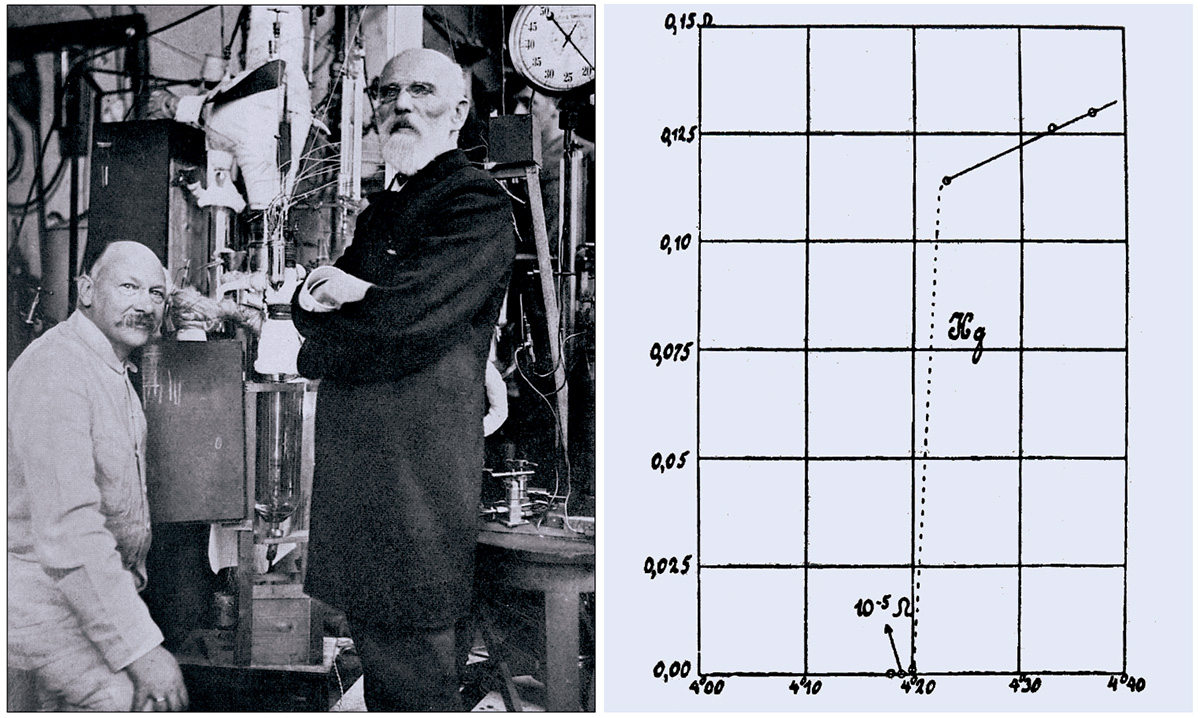
Each main dipole of the Large Hadron Collider (LHC) sustains a current of about 12,000 amperes, confined to filaments of niobium–titanium (Nb–Ti) way finer than a human hair. For the collider’s high-luminosity upgrade (HL–LHC), flexible lines of magnesium diboride (MgB2) will carry 10 times as much. Currents of this intensity would melt any ordinary cable. Yet these filaments bear them unscathed, for their resistance is exactly zero. Much of the reach of particle colliders rests on this fragile, emergent phenomenon: superconductivity. The man who first observed it, Heike Kamerlingh Onnes, died 100 years ago, on 21 February 1926.
His discovery, made in Leiden in 1911, was not an isolated event (see “Practically zero” figure). It crowned a long and systematic programme aimed at reaching and mastering temperatures close to absolute zero. Behind it stood physicists, engineers and technicians working in concert towards common scientific goals, in a style that anticipated the research infrastructures on which laboratories such as CERN would later be founded. The liquefaction of helium in 1908 brought the lowest temperatures within reach, and Onnes turned to how metals conduct in that regime. In a wire of mercury below 4.2 K, he found a resistance smaller than anything his instruments could measure, a phenomenon he christened “supraconductivity”.
An explanation of the effect would wait another 46 years, until Bardeen, Cooper and Schrieffer showed that, below a critical temperature, conduction electrons bind into pairs and condense into a single collective state, through which current flows without loss. Still, Onnes rapidly grasped how such behaviour could transform magnet technology, and in 1913 envisaged superconducting coils producing 100,000 gauss, or 10 T – far beyond any electromagnet of the day. The discovery, in 1914, that superconductivity in the materials then available was destroyed by fields of a few hundred gauss made this objective unattainable for half a century. The deadlock broke only in 1961, at Bell Telephone Laboratories, where John Kunzler and his colleagues drove a very heavy current through niobium–tin (Nb3Sn) at 88,000 gauss.
At CERN, superconductivity eventually developed along two complementary paths. Superconducting magnetsenable accelerators of practicable size to steer and focus ever more energetic beams, while superconducting radiofrequency (SRF) cavities provide high accelerating voltages at acceptable electrical and cryogenic costs. Together, the two technologies have progressively pushed the energy, luminosity and reach of the laboratory’s accelerator complex up to the LHC and its upcoming upgrade.
In 1913, Onnes envisaged superconducting coils producing 10 T – far beyond any electromagnet of the day
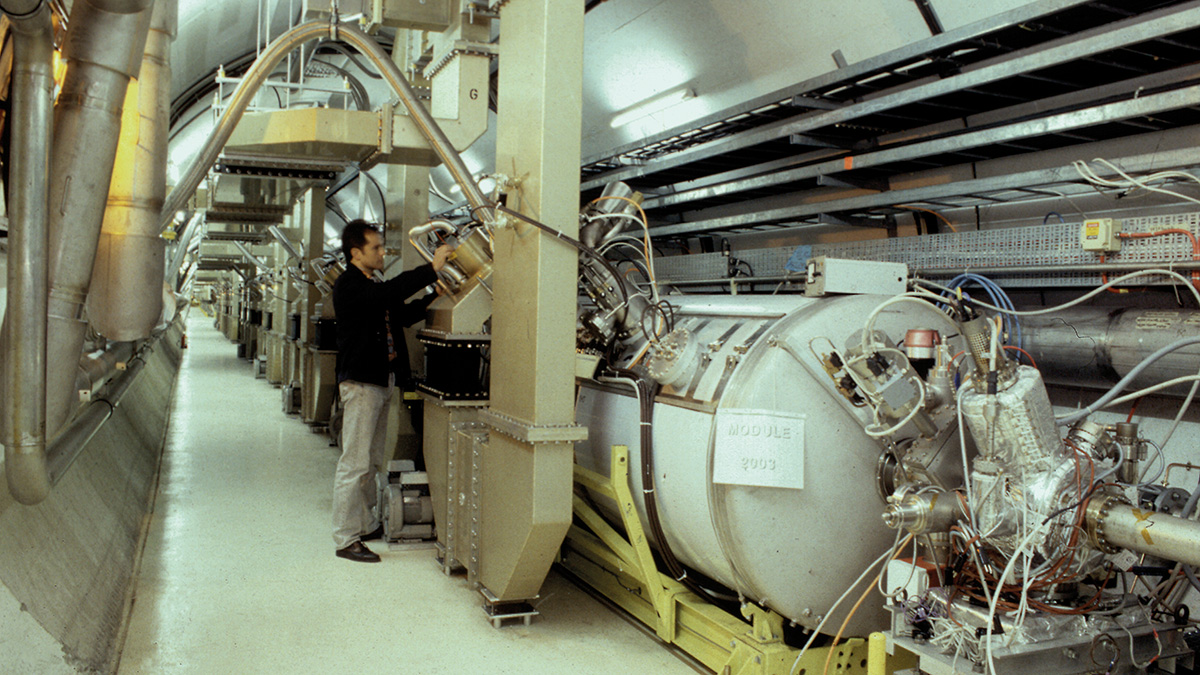
CERN’s first operational use of superconductivity in a collider’s magnet lattice came with the high-luminosity insertion of the Intersecting Storage Rings (ISR). Its eight superconducting quadrupoles, developed during the 1970s and brought into operation in 1980, focused the beams more tightly at one intersection, and were the first superconducting magnets routinely operated in an accelerator (see “Cold quartet” image). Their design introduced concepts that became central to accelerator-magnet technology, among them Romeo Perin’s “Roman arch” coil, in which electromagnetic forces are contained by compression. At the same time, their operation gave CERN direct experience of field quality, conductor stability, quench protection and cryogenics in an accelerator environment.
Feeling the squeeze
At the Large Electron–Positron collider (LEP), superconductivity entered the ALEPH and DELPHI detectors through their large solenoids, built at CEA–Saclay in France and the Rutherford Appleton Laboratory in the UK, respectively, and reached the beamline in the cold low-beta quadrupoles that squeezed the beams at all four experiments. More direct still was the impact of SRF technology, which came to shape the whole LEP programme. At the Z resonance, LEP operated at about 45.6 GeV per beam, with its original 128 copper cavities working at 352.2 MHz and supplying approximately 280 MV. Increasing the beam energy towards and beyond the W-pair threshold posed a fundamentally different problem: in a circular electron–positron collider, the energy lost to synchrotron radiation, which the cavities must restore on every turn, scales with the fourth power of the beam energy. The accelerating voltage, therefore, had to increase by more than one order of magnitude, which could not be achieved efficiently with a conventional copper system.
The LEP2 upgrade provided the answer. From the early 1990s, superconducting cavities were progressively installed, reaching a final system of 288 four-cell cavities powered by 36 klystrons. Most used a thin niobium film sputtered onto a copper substrate, a technology initiated and mastered at CERN by Cristoforo Benvenuti and subsequently transferred to industry, which combined a superconducting RF surface with the thermal stability of copper (see “Copper underneath” image). The system eventually supplied a total RF voltage of about 3.5 GV and enabled operation above 100 GeV per beam, opening the study of W-pair production, precision measurements of the W boson and searches for the Higgs boson and potential new particles.
Breaking out
With the LHC, superconductivity ceased to be a technology reserved for just a few cutting-edge components. The collider was to reuse the existing 27 km LEP tunnel, so its collision energy was tied to the fields of the bending dipoles. Conventional magnets were far too weak and energy-consuming, and even Nb–Ti, the most mature accelerator superconductor of the time, had to operate close to its practical limits.
The counter-rotating beams were accommodated in twin apertures within a common magnet structure, to fit the narrow tunnel and cut costs. The 1232 main dipoles were designed to operate at 8.33 T, with 392 main quadrupoles providing the arc focusing. On top of these came more than 7600 corrector magnets, together with the specialised quadrupoles and dipoles of the matching and interaction regions, bringing the total to nearly 10,000 superconducting magnets around the ring. To wring such fields from Nb–Ti with sufficient margin, the magnets were cooled by superfluid helium at 1.9 K. During Run 3, at a beam energy of 6.8 TeV and 8 T in the dipoles, the main-dipole system alone held nearly 8 GJ of magnetic energy. The LHC thus became both the largest superconducting magnet system in operation and the largest cryogenic installation ever built.
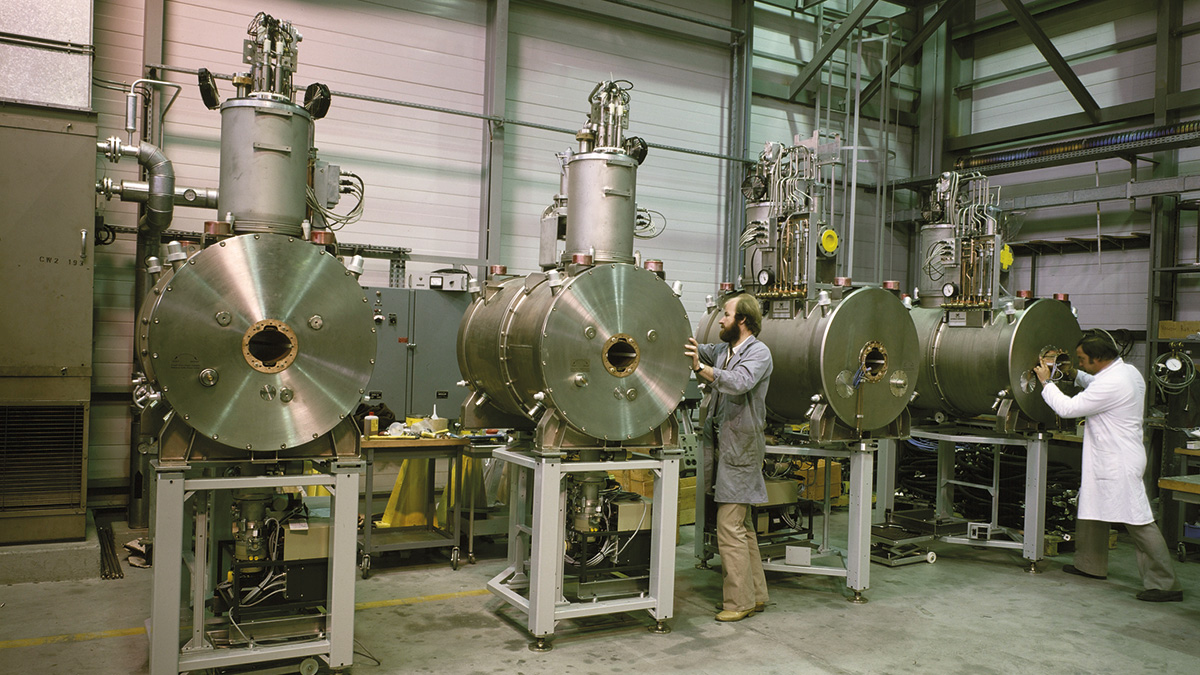
Working at such a scale transformed magnet development into an industrial enterprise (see “Mass production” image). Nearly 300,000 km of superconducting strand were produced, of which 250,000 km were assembled into Rutherford cables and wound into magnets manufactured by European industry under CERN coordination. As at the ISR and LEP, superconducting quadrupoles squeezed the beams at the interaction points, the final-focusing triplets coming through collaborations with the US laboratories, led by Fermilab, and with KEK in Japan. The large superconducting magnets of the CMS and ATLAS experiments, built with major contributions from laboratories around the world, extended the technology to the experiments.
Scaling up
Superconductivity also entered the LHC through its accelerating system. Each beam came to be served by eight single-cell cavities operating at 400 MHz and delivering a nominal voltage of 16 MV, built with the niobium-on-copper technology established for LEP2. Meanwhile, more than 1000 current leads – the components that feed the magnet circuits from room temperature – employ ceramic high-temperature superconductors (HTSs) of the kind discovered by J Georg Bednorz and K Alex Müller in 1986, whose high critical temperatures let them carry extreme currents without a liquid-helium bath. Their resistive upper sections can get cooled by helium gas at about 20 K, already used in other parts of the machine. This sharply reduces the heat reaching the liquid–helium level, and with it the refrigeration power. When it came online, the LHC was the first large-scale application of HTS materials.
Over the next four years, the machine will evolve into the HL-LHC, an even more efficient and powerful proton collider, extending its operation into the early 2040s and promising a tenfold increase in collected data over the initial design (CERN Courier July/August 2026 p8). Colliding much brighter, more intense beams, focused more strongly at the interaction points, requires a profound transformation of the regions around ATLAS and CMS.
A future hadron collider at the energy frontier would depend primarily on a new generation of high-field superconducting dipole magnets
Among the key technologies of the upgrade is a new generation of final-focusing quadrupoles built from Nb3Sn, never before used in an accelerator, with twice the mechanical aperture and up to a 50% higher peak field than their predecessors. The development of this technology began more than two decades ago, when the LHC itself was still under construction, as a joint effort between CERN and the US LHC Accelerator Research Program (LARP). The transition from the robust Nb–Ti to the far more brittle and strain-sensitive Nb3Sn required new mechanical structures, fabrication processes and protection strategies, developed and industrialised within an international collaboration in which the US Accelerator Upgrade Project (AUP), LARP’s successor, and CERN are each building half of the quadrupoles. In-kind contributions reach well beyond the Nb3Sn quadrupoles. The dipole orbit correctors are built by CIEMAT in Spain and IHEP in China, and the separation and recombination dipoles by KEK in Japan and INFN in Italy, which also provided nine types of higher-order correctors.
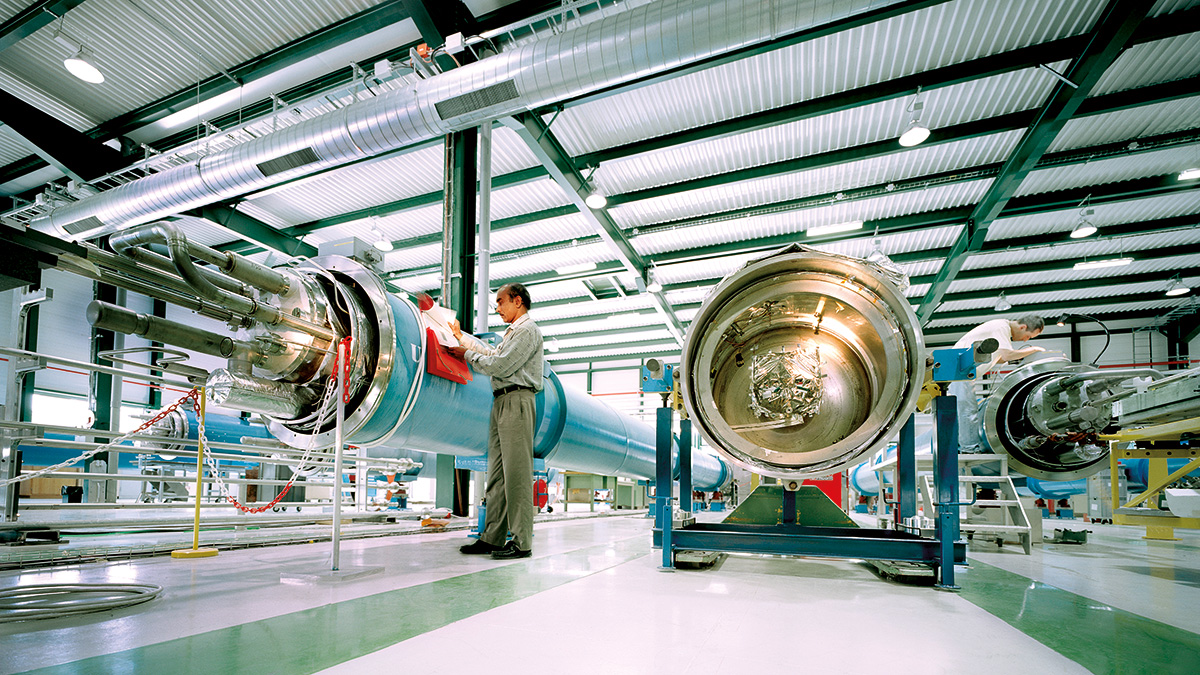
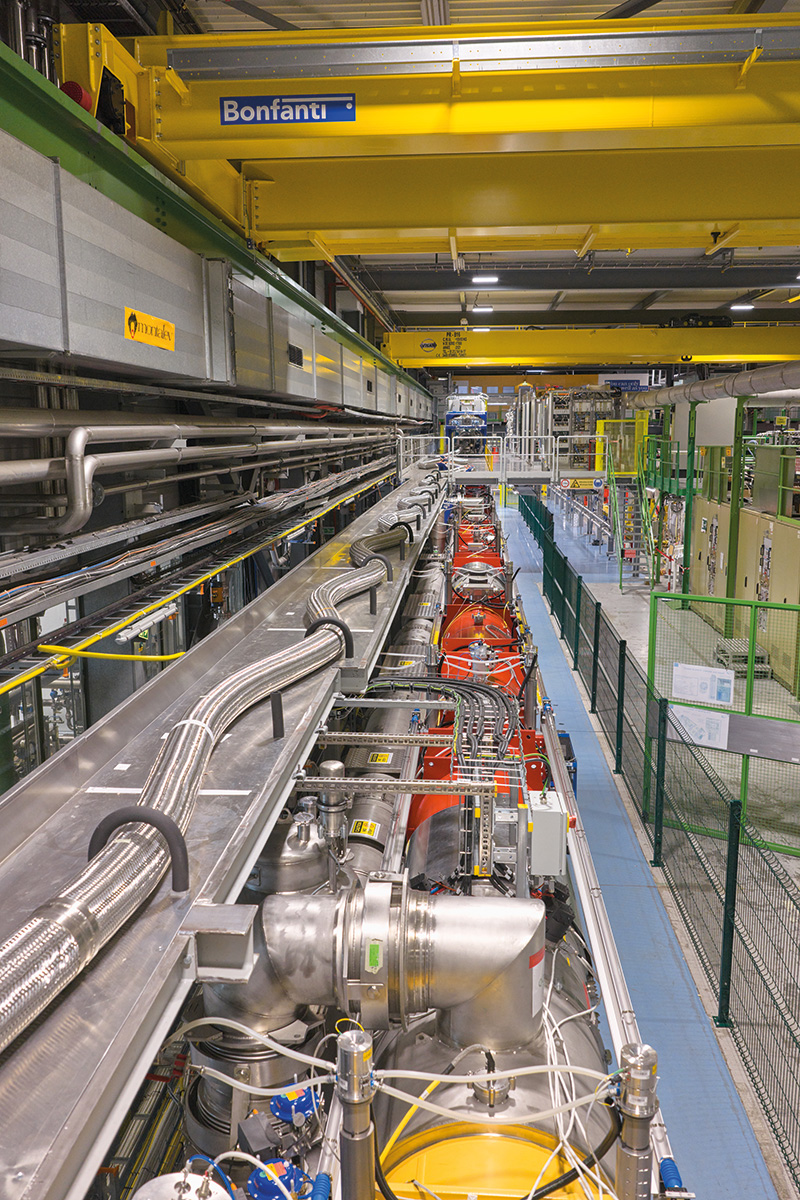
The upgrade will also make the first operational use of superconducting links based on MgB2. Eight such links, up to 140 m long and carrying up to 120 kA at temperatures of about 25 K, will conduct the high DC currents from the power converters, housed in new galleries shielded from the increased collision rates, down to the magnets on the beamline (see “Cold-blooded” image).
Peak energy
In parallel, CERN built its SRF expertise into High Intensity and Energy ISOLDE (HIE-ISOLDE), the superconducting post-accelerator that takes the exotic nuclei produced at the ISOLDE facility, which decay within seconds, and brings them to the energies of nuclear reactions. Its cavities carry a thin film of niobium on copper, like those of LEP2, and they came close to the performance of counterparts made entirely of niobium at 4.5 K, while keeping copper’s engineering advantages. The first radioactive beams came in 2015, and by 2018 the machine had reached 10 MeV per nucleon.
Superconductivity offers two complementary paths for increasing accelerator performance: higher magnetic fields for steering and focusing charged particles, and higher accelerating fields for efficiently increasing their energy. Any future flagship collider will need both, in proportions that depend on the machine’s design. Among the proposed facilities, a high-luminosity electron–positron collider such as the FCC-ee (CERN Courier May/June 2026 p41) would lean most heavily on SRF technology. Its accelerating system would have to compensate substantial synchrotron-radiation losses while serving operating points as different as the Z pole, with its large beam currents, and the top-quark threshold, with its high accelerating voltage. In addition, superconducting magnets, with Nb–Ti as the baseline and designs based on the HTS under consideration, would focus the beams at the interaction points and equip the detectors.
By contrast, a future hadron collider at the energy frontier would depend primarily on a new generation of high-field superconducting dipole magnets, reaching fields well beyond those deployed in today’s accelerators (CERN Courier March/April 2026 p30). Producing these magnets at industrial scale, and operating them reliably, would be among the main challenges of such a machine. High-field magnets would also open an alternative route to higher energy by reusing the existing LHC tunnel and infrastructure.
A century after Onnes’s death, the influence of his discovery on accelerator science continues to grow, and the two trajectories that emerged from it remain the principal paths along which superconductivity may extend the reach of particle accelerators. Dipole magnets developed within the scope of the HL-LHC project were designed to be the first in any collider to bend beams at the 100,000 gauss he imagined in 1913, while the High Field Magnet programme is exploring the territory beyond that dream.
The force between two quarks in a near-miss collision is of the same kind as that between two electrons, but far more intense. It is also known far less precisely. While the fine-structure constant of electromagnetism has been measured to better than one part in a billion, the strong coupling αs is only known to one in a hundred.
At the LHC, with its enormous number of proton–proton collisions, many process rates are now measured to the percent level. The uncertainty on the strong coupling is then becoming a theoretical bottleneck. The High-Luminosity LHC and a future Higgs factory such as the proposed FCC-ee will demand greater precision still, since new physics may first appear as small discrepancies between measurements and predictions. A calculation recently published in Nature has now reduced the uncertainty on αs to five parts per mille using only low-energy input. The value can therefore enter collider predictions without having been fitted to collider data.
A force apart
Protons are not elementary. Collisions at momenta far above their mass scale resolve them into quarks, held together by gluons, the carriers of the strong force. Hardly any process at a hadron collider can therefore be understood without the part of the Standard Model (SM) that describes this interaction, quantum chromodynamics (QCD).
In QCD, the strength of the force between two quarks, two gluons, or a quark and a gluon is parametrised by the single coupling αs. Predicting the cross-section of any process that involves these particles requires, therefore, a precise input value for this constant. For instance, gluon fusion – the process that produces Higgs bosons most copiously at the LHC – proceeds via a virtual top-quark loop, and its probability is proportional to αs2.
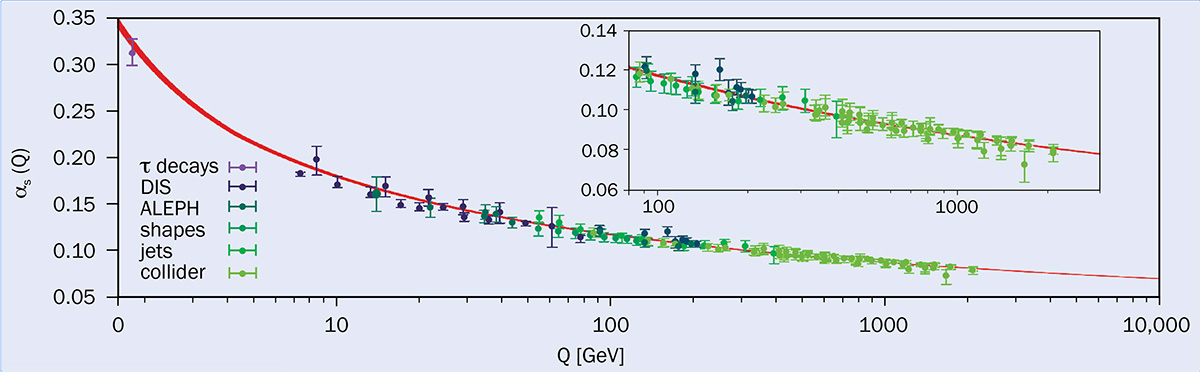
The strong coupling has an unusual property, inherited from a structural difference between QCD and quantum electrodynamics. Gluons, unlike the electrically neutral photon, carry colour, the very charge whose force they mediate, and thus interact among themselves. This leads to the coupling weakening as colour charges approach each other and growing as they separate. In a collision, the momentum transferred between the quarks and gluons sets the probed distance, and with it the scale at which αs must be evaluated. The conventional choice of a reference scale is the Z-boson mass, Q = MZ = 91.2 GeV in natural units. There, the current world average from the Particle Data Group (PDG) for αs is 0.1180 ± 0.0009. The precision is thus 7.6 parts per mille.
The weakness of the coupling at high-momentum transfers, where quarks and gluons behave almost as free particles, is known as “asymptotic freedom” and makes precise calculations possible as expansions in powers of αs. By contrast, at transfers below about a GeV, the coupling grows to order one, perturbative expansions in powers of αs break down, and any description in terms of quarks and gluons loses all predictivity. The strong interaction enforces this limit by confining quarks and gluons inside bound hadrons, and only these composites are ever seen in particle detectors. They include the proton and neutron, but also the pions, the kaons and an entire zoo of species, lately enlarged by the tetraquarks and pentaquarks discovered in collider experiments (CERN Courier November/December 2024 p33).
Spacetime on a grid
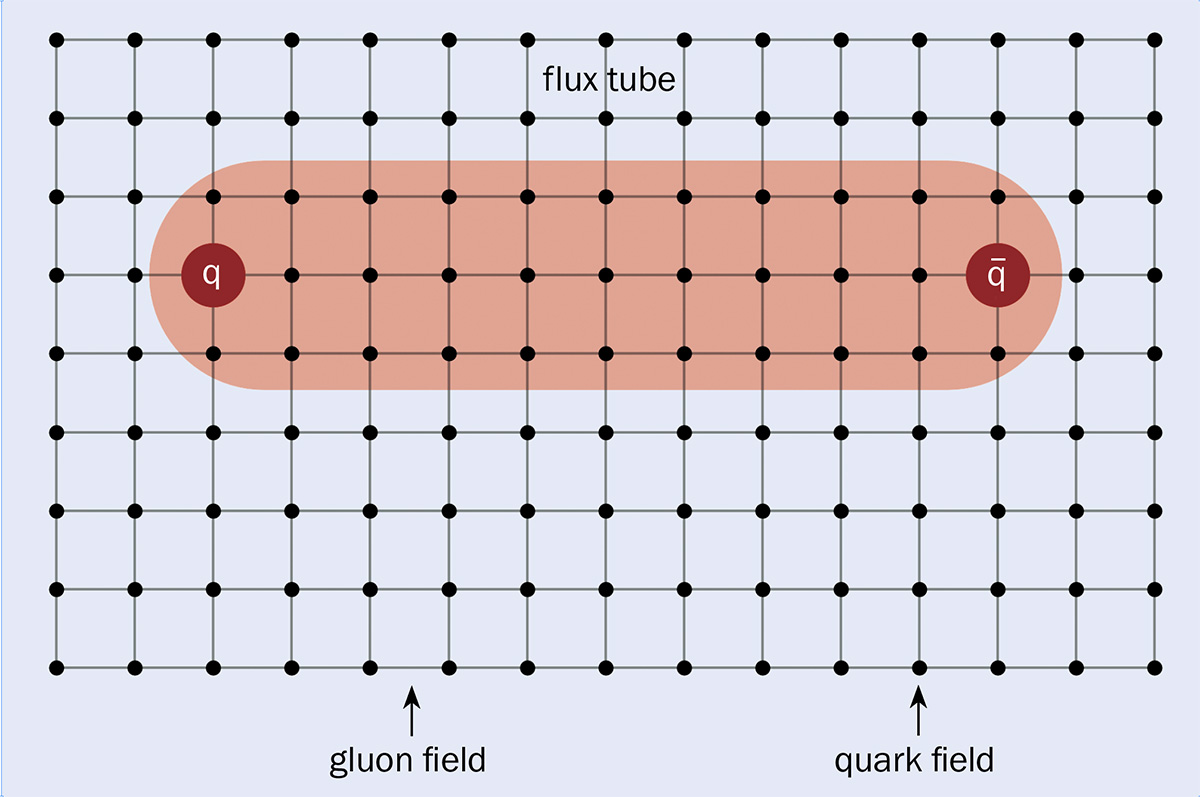
What fails at low energies are perturbative expansions, though, not QCD itself. The theory can predict the masses and key properties of bound states, but extracting these quantities requires a formulation that is not restricted to the weak-coupling regime. This was provided in a landmark 1974 paper by Kenneth Wilson. The idea is to approximate space and time as a four-dimensional lattice of points with a small spacing, later sent to zero to recover continuous spacetime (see the “On the lattice” figure). Enclosed in a finite volume, the lattice reduces QCD to a finite number of degrees of freedom. The theory’s predictions can then be evaluated by statistically sampling the possible configurations of the quark and gluon fields, and confinement emerges directly from the simulated dynamics (see “The theory, defined” panel).
The theory, defined
Beyond its computational role, the lattice occupies a privileged conceptual position. The perturbative series that typically define QCD are “asymptotic” expansions, believed not to be summable by any known method. They therefore cannot serve as a definition of the theory.
Wilson’s lattice can – at least, in part. Once space and time are replaced by a discrete grid and the system is enclosed in a finite volume, the theory is specified exactly by a finite set of well-defined quantities. The physical theory should emerge as the spacing shrinks to zero and the volume grows without bound, removing discretisation and finite-volume effects. While the existence of that limit has not been proved at a fully non-perturbative level, an all-order proof in perturbation theory exists for a class of discretisations. Even for a simplified theory with gluons alone, a truly rigorous construction, including a proof that its lightest state is massive, would settle one of the Clay Millennium Prize Problems.
The approach has a further price. The grid breaks translational, rotational and boost symmetry, and the simplest quark discretisations also sacrifice chiral symmetry. A further issue is that lattice QCD is formulated in imaginary time, which is well suited to statistical sampling but makes real-time scattering processes only partially and indirectly accessible. Many theorists nonetheless regard the lattice not as an approximation of QCD but as its true definition, and the broken symmetries as artefacts expected to vanish in the continuum limit. Providing a similarly rigorous definition of chiral non-Abelian gauge theories, as needed for a non-perturbative definition of the full Standard Model, remains an active area of research.
Still, the lattice became a quantitative tool only once algorithms and machines could generate enough field configurations for reliable statistical averages. For two decades, computing power forced severe compromises, most notoriously the quenched approximation, which neglected quark loops in the vacuum and therefore their backreaction on the gluon fields. This introduced an uncontrolled systematic error. Simulations with realistic dynamical quarks became feasible in the 2000s, and several collaborations obtained the masses of light hadrons and other low-energy observables in agreement with observation. Since 2011, the Flavour Lattice Averaging Group (FLAG) has compiled and averaged such results every two to three years, doing for lattice calculations what the PDG does for measurements and focusing on quantities central to particle phenomenology, such as the leptonic and semi-leptonic decay rates of K, D and B mesons. Lattice QCD has also shed light on how the proton’s charge, magnetisation and momentum are shared among its quarks and gluons, and distributed in space, and delivered high-impact ab-initio results on the phase diagram of QCD.
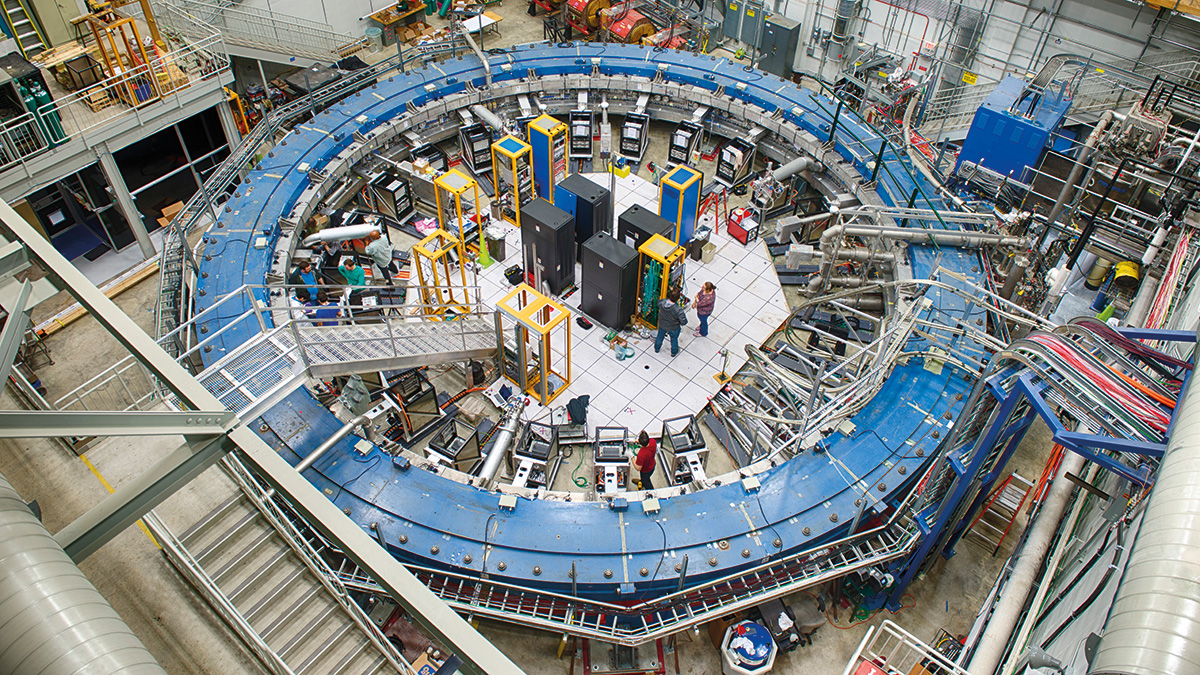
Over the past decade, the magnetic moment of the muon, a precision observable used to search for deviations from the SM, has proved a fruitful ground for demonstrating the maturity of lattice QCD. The measured value of the observable long disagreed with the SM prediction, whose largest theoretical uncertainty came from non-perturbative QCD effects. These comprise hadronic vacuum polarisation, traditionally estimated from measured e+e–→ hadrons cross sections, and the smaller hadronic light-by-light contribution (CERN Courier March/April 2025 p21). By 2025, independent lattice calculations of the dominant vacuum-polarisation term agreed, while measurements of its dominant two-pion channel disagreed well beyond the stated uncertainties. This led the Muon g−2 Theory Initiative to base the value of the leading hadronic contribution in that year’s white paper solely on lattice results (CERN Courier January/February 2026 p41). The resulting prediction turned out to be in agreement with the final direct measurement of the muon’s magnetic moment from Fermilab (see “The verdict” figure).
Lattice QCD also makes it possible to determine the fundamental parameters of QCD, namely the quark masses and the coupling at momentum MZ, from experimentally well-measured quantities such as the pion, kaon and proton masses. Finally, it offers theorists the possibility of studying strong interactions in ways not accessible via observations – for example, at vanishing quark masses or when particles are confined to a small volume.
The femto-universe
Theorists from condensed matter to particle physics have long worked at finite size to perform better-controlled calculations, before taking the infinite-volume limit. Placing a system in a box, however, can be more than an intermediate step. How an observable changes with the size of the box is dictated by the dynamics under study, and is therefore itself a prediction of the theory. The idea of exploiting a very small volume to interrogate QCD goes back to James Bjorken, who in 1979 coined the term femto-universe for the degrees of freedom of the strong interaction in a box less than 10–15metres across.
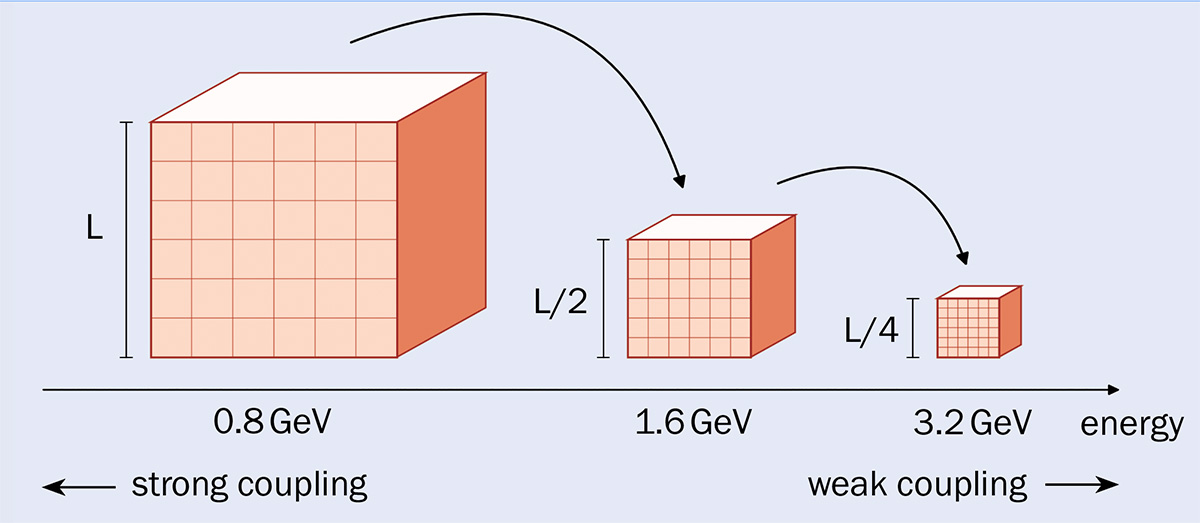
Building on Bjorken’s suggestive idea, Martin Lüscher, Peter Weisz and Ulli Wolff proposed in 1991 a systematic way to compute the momentum-dependence of αs in an asymptotically free theory, and implemented it in a model with one space dimension. The obstacle they faced is that a direct determination of αs would need a lattice large enough to hold hadrons, yet sufficiently fine to resolve energies above roughly 70 GeV, where low-order perturbation theory is accurate. No computer could span both scales at once. Their “step-scaling” method avoided the problem by using a family of femto-universes, each simulated separately and covering a narrow range of energies inversely proportional to its size (see “One box at a time” figure). Stepping down through the family, each member half the size of the last, the coupling can be followed upward in energies, until perturbation theory takes over. The extension to non-Abelian gauge theories, the class to which QCD belongs, followed the next year. The development of these techniques was among the reasons why Lüscher, who joined the CERN Theory Division in 1999, earned a share of the 2025 EPS High Energy and Particle Physics Prize, together with Jürg Gasser and Heinrich Leutwyler, for their theoretical work on the non-perturbative aspects of the strong interaction.
Heavy by design
In a Nature paper, published last April, seven theorists from the ALPHA collaboration computed αs at the reference momentum MZ using step scaling. The result, αs = 0.11876 ± 0.00058, carries a precision of 4.9 parts per mille and is consistent with the PDG average (see “Running down” figure). The calculation takes only low-energy quantities as input, namely the pion and kaon masses, together with a benchmark length of about 0.14 fm, itself determined by several independent lattice collaborations from well-measured quantities such as baryon masses and meson decay rates. The simulations contain only the three lightest quarks (up, down and strange), and the effect of the heavier charm and bottom quarks, negligible at low energies, is restored at the end using high-order perturbative QCD results and the measured values of their masses.
The same team’s 2017 determination, the first below one percent and until now the dominant input to the world average, rested on a single step-scaling analysis. The new work repeats it with finer lattices and adds a second approach, in which the masses of the three simulated quarks are increased to as high as 10 GeV. QCD then reduces, up to corrections falling as the inverse square of the masses, to a far simpler quarkless theory, in which the evolution of the coupling with energy can be determined independently. The two routes agree, and their average, resting on some 400 million core hours of simulation, gives the headline number.
The view from below
To many particle physicists, the idea that αs at MZ can be predicted by the SM with input solely from the low-energy world of hadrons is still unfamiliar. Nearly every phenomenological determination in the PDG runs the opposite way, fitting perturbative QCD predictions to high-energy collider observables. The comparison between the new result and these is therefore best read as a test of the SM: a heavy new particle at or above the Z mass would shift the collider determinations while leaving the low-energy ones practically unchanged. So far, the SM has passed the test with flying colours.
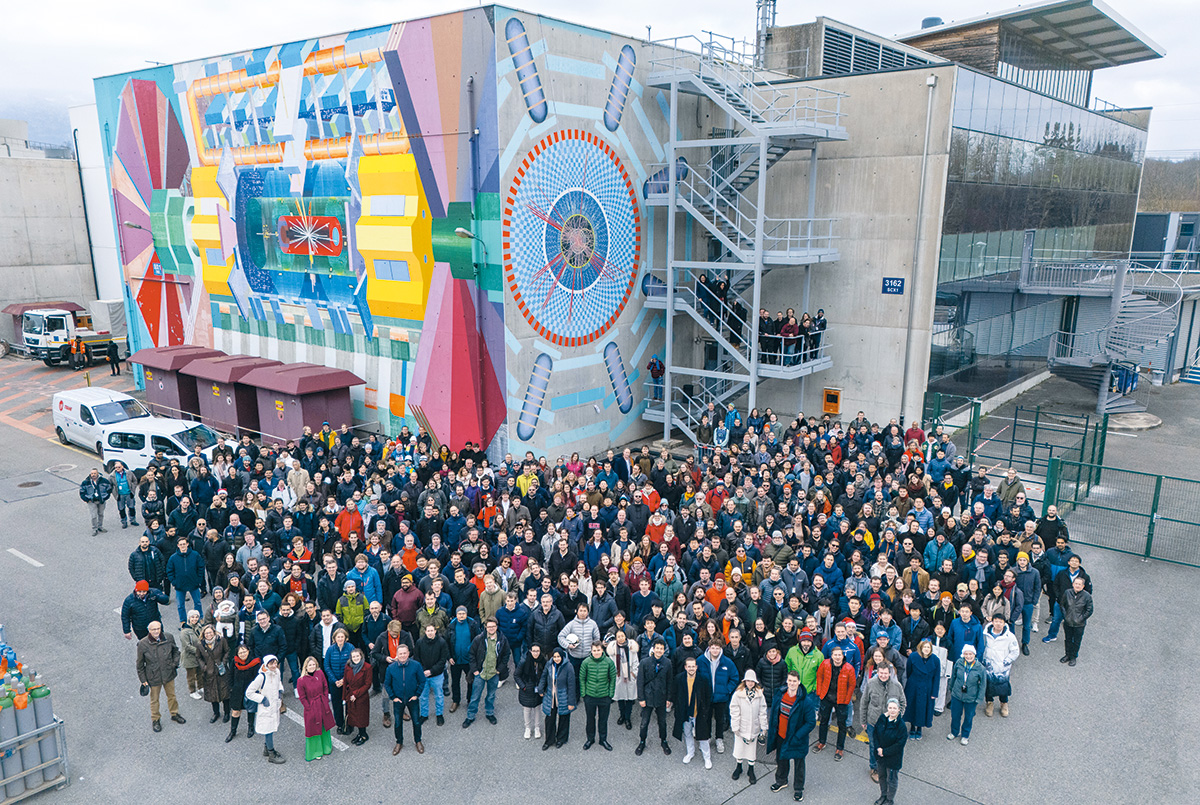
The ATLAS collaboration has approximately 6000 members from 262 institutes in 40 countries, about half of them scientific authors. This large and diverse community has spent the past few years carrying out detector operations, data analyses and upgrades all at once, through a global pandemic and a succession of geopolitical crises. As the High-Luminosity LHC (HL-LHC) era draws closer, the collaboration decided to find out where its members stand on fundamental strategic questions and how they feel about its organisation and operating model.
Collaborations in particle physics have not always been this large. The Gargamelle team that discovered weak neutral currents in 1973 counted 55 authors from seven European laboratories, with guests from Japan, the Soviet Union and the United States. The W boson was found a decade later by two collaborations, UA1 and UA2, of roughly 140 and 60 physicists, respectively. At LEP, the four experiments ALEPH, DELPHI, L3 and OPAL each counted several hundred physicists from a few tens of institutes. When ATLAS and CMS jointly measured the Higgs-boson mass in 2015, in the first paper the two collaborations signed together, the author list ran to 5154 names and filled 24 of the article’s 33 pages.
Most members plan to take part in the HL-LHC programme and stressed the importance of remaining engaged with the collaboration to successfully complete the upgrade
A collaboration of this scale can only be consulted through an organised, sustained effort. In the case of ATLAS, this meant establishing a working group of 14 members to draft survey questions, collecting responses from July to September 2024, and forming an analysis team of five to read and interpret the results, with each step of the process taking several months. Designed to be concise, focused and actionable, the “Big Survey” still comprised more than 200 questions. To limit the burden on participants and maximise reach, these were divided into four modules of approximately 20 minutes each, the first on strategic collaboration issues, the second on physics and performance, the third on operations, the upgrade and practical matters such as travel, meetings and remote working, and the fourth on career development and work culture.
Survey rates
Replies came from nearly 1500 members (see “Demographics” figure). The rate of participation rose steeply with seniority, from fewer than 10% of master’s and undergraduate students, engineers and technicians, and about 17% of PhD students, to around 30% of scientific authors with fewer than 5 years of authorship and nearly 60% of those with between 10 and 15. The overall response rate was slightly below 25% and was approximately uniform across world regions.
The results were examined across demographic groups, compiled into an internal document and then discussed with the collaboration at large during plenary meetings. An online tool also allowed members to explore the correlations for themselves. The conclusions comprise 37 actions to address the areas of improvement identified in the survey, and many have already been implemented. For instance, all active members, not only scientific authors and students, now have access to the collaboration’s complete internal documentation, and the operational workload institutions must cover has been rebalanced towards those less engaged in upgrade construction.
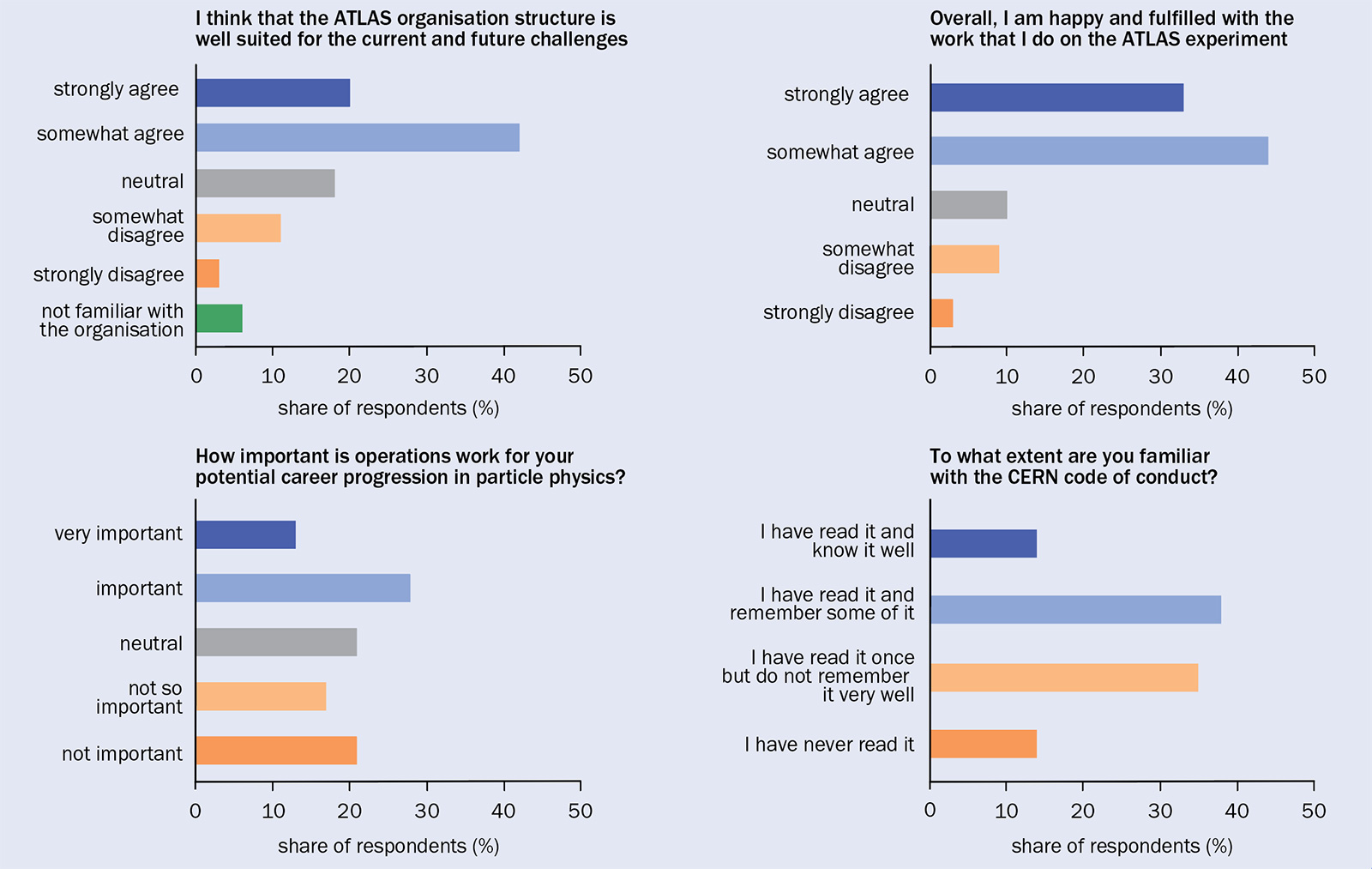
The survey showed overall satisfaction. Asked whether the ATLAS organisational structure is well suited to current and future challenges in data-taking, analysis and upgrades, 62% of respondents agreed, and 14% disagreed (see “Four of two hundred” figure). Most plan to take part in the HL-LHC programme, and they stressed the importance of remaining engaged with the collaboration to successfully complete the upgrade, move smoothly from construction to operations with the new detector, and then sustain years of running to collect much larger datasets. Responses highlighted the need for simple, intuitive workflows and well-documented tools for data analysis. The collaboration is strengthening its documentation team to bring order and searchability to the sprawling records. Moreover, over the past few years, its many analysis frameworks have been consolidated into a few broadly used ones with common statistical tools. On the physics programme itself, respondents see much still to explore, with the caution that effort remains balanced across topics and analysis teams are sufficiently staffed.
Among the aspects examined in detail were participation in detector upgrade activities, the organisation of physics analyses and publications, and the long-term operation of the experiment. One finding stands out. Contributions such as detector operation and maintenance are regarded as insufficiently recognised by the broad scientific community and research institutions. While most respondents feel satisfied with the recognition received within the collaboration for their work in operations, a large share does not consider this work important for their career progression in particle physics. The actions proposed in response are to make the rules behind authorship, speaker selection and operational credit public on an accessible, single web page, so that committees outside ATLAS can weigh a member’s contributions, and to brief funding agencies more often on technical achievements while pressing the need for long-term contracts for experimental experts.
The responses from early-career scientists showed that further attention is needed to fulfil their aspirations and underscored the importance of understanding the mindsets of the collaboration’s different generations. The ATLAS Early Career Scientists Board took an active part in the analysis and proposed measures to strengthen its initiatives and its role in connecting young researchers with the wider community. Those adopted include allowing all individuals, not only PhD students, to share non-controversial internal results confidentially with job and grant panels, and deepening ties with the CERN Alumni network.
The responses underscored the importance of understanding the mindsets of the collaboration’s different generations
ATLAS strives to provide an equal-opportunity environment, and inclusion and diversity are among its founding values. Members rated its multicultural character highly, with 80% of respondents agreeing that it is inclusive and open, 16% being neutral, and 4% finding it non-inclusive and closed. Since 2017, ATLAS has appointed four collaboration members as diversity and inclusion contacts, and a dedicated equity, diversity and inclusion office has been created to enhance their work. Nevertheless, many collaborators were not fully aware of the CERN code of conduct, and the ATLAS management is now communicating the code more actively, including whom to approach in the event of a potential violation.
The strength within
Overall, the actions resulting from the survey were defined to strengthen communication within ATLAS and with external stakeholders, improve documentation and accessibility for greater efficiency and transparency, and ensure an effective transition from Phase-II construction to optimal Run 4 operations, across data-taking and analysis. They also seek to retain expertise, recognise diverse contributions, and continue promoting the CERN code of conduct and a working environment that supports mental health and wellbeing. The 37-item list concluded a broad, introspective exercise and delivered a roadmap for preparing ATLAS for its high-luminosity phase.
I was born in 1936 in Ann Arbor, Michigan, where my parents were graduate students. Soon after, as war was breaking out between China and Japan, they decided to return to save their country. I was only a few months old, so I had nothing to say. I grew up as a refugee, in many cities, one step ahead of the advancing Japanese army. In 1948, I moved to Taiwan, where I realised I was a US citizen by birth. When a delegation from the University of Michigan visited, my mother mentioned I had been born in their hospital, and its president said I could study there without paying. So I left for Michigan in 1956, flying from Taipei through Okinawa, Tokyo, Anchorage and Seattle. It was a long way. I had asked my parents for $100, telling them that American students put themselves through college without taking money from home. “You may need more,” they said. As soon as I landed in Detroit, I bought a hamburger, and it cost $1. I immediately realised the mistake I had made. Fortunately, the dean of engineering, George Granger Brown, knew my parents and took me into his home, where I discovered American football. In six years, from freshman to PhD, I never missed a single game, and I still go back every year.
Physics was not the original plan, though.
My mother was a professor of psychology, and my father of engineering. I went for engineering, too. In my second term, I had extremely good grades in all courses except engineering drawing. I could not get a single straight line. My advisor told me I was no engineer, and that I had to switch to physics and mathematics.
Once inside physics, you first head for theory. What changed your mind?
Like most students with good grades, I wanted to do theoretical physics, and I worked with George Uhlenbeck, who had co-discovered the electron spin. One day, over tea in his office, he suddenly said: “If I were to do my life over again, I would be an experimentalist rather than a theorist.” This was one of the giants of the century, so I asked him why. He said: “Every experimentalist is very useful, because you always measure a number, you contribute knowledge. Every theorist is not. You can count them in the 20th century. There is Einstein, there is Dirac, there is Heisenberg…” I took a walk in the garden, came back and said: “You are right. I am leaving you.” I knew absolutely nothing about experiments. After my PhD, I went to CERN, where Giuseppe Cocconi taught me instrumentation. Understanding your instrument is the single most important thing for an experimentalist. You must know what you can do, what to treat with suspicion and what to check, and recheck, and recheck.
From CERN, you went to Columbia, just as quantum electrodynamics (QED) was running into trouble…
A Harvard group had measured electron–positron pair production and found an electron radius of 10–13 to 10–14 cm, in contrast with QED. The result was soon confirmed independently. No question mattered more, and I decided to do the experiment myself. Colleagues I had met through my work at CERN put me in touch with Willibald Jentschke, the founder of the Deutsches Elektronen-Synchrotron (DESY) in Hamburg, and he invited me.
How did your experiment work?
We repeated the measurement with an independent method. When you send photons onto a target, the rate at which they convert into wide-angle electron–positron pairs tells you whether QED holds at small distances. To deal with the enormous background associated with our 1011 photons on target, we built a pair spectrometer. In it, a magnet bends the pairs away from the photon beam, and the detector sits behind it. Measure once and measure twice, and the magnet sweeps away the background of the first measurement before the second. We showed that QED was correct, presenting the result at a 1966 conference in Berkeley. Feynman, of course, was very happy. The spectrometer then led us to the heavy photons: the vector mesons rho, omega and phi, which share the photon’s quantum numbers, apart from their masses. After years of this work, I asked myself why every vector meson sat near 1 GeV. Rho at 765 MeV, omega at 783, phi at 1020. Could there be something heavier?
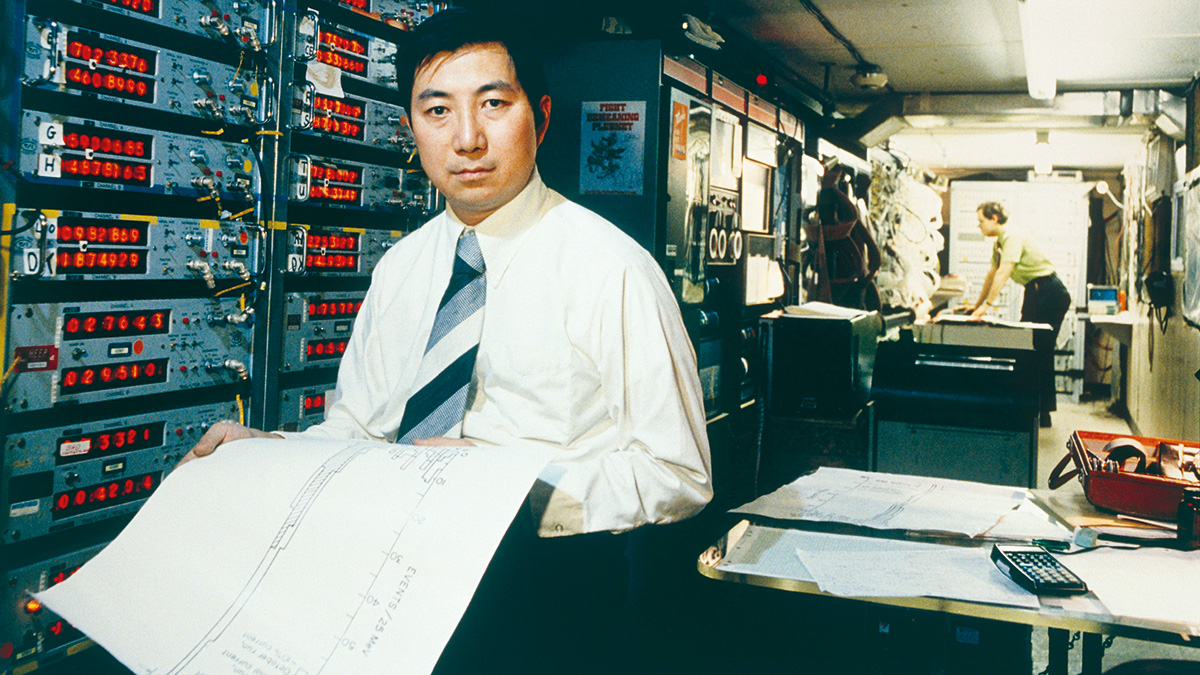
At the time, people were more interested in the strong interaction, so it was hard to get the experiment approved. Fortunately, Brookhaven accepted it, and MIT, where I had just returned, went all the way to support us. The design was the same as at DESY: we sent protons onto a target and measured the mass of the electron–positron pairs coming out, looking for a peak. With some 108 hadrons produced for every electron pair, the detector had to misidentify no more than one hadron in 1010. We were extremely careful with the instrument. In July, I was taking data at higher pair masses, around 4 to 5 GeV, and finding absolutely nothing. So I moved to lower energies, and suddenly all the particles came out, always at a mass of 3.1 GeV (see “The peak” image). No other particle, nothing. To verify it, we lowered the magnetic field by 10%, which moved the particles to a different region of the detector. Had it been background, it would have disappeared.
It did not disappear, of course. What happened next?
On 11 November, I learned that Burton Richter had also seen the same peak at SLAC, and we called Giorgio Bellettini at Frascati, where they reproduced the result within days. The particle, which we called J, lived some 10,000 times longer than comparable hadrons, indicating a new kind of matter: a fourth quark bound to its antiquark. Before, the quark model had been one respected idea among many. Afterwards, it carried a much heavier weight. As it deserved.
The name itself has gathered legends. Can you set the record straight, once and for all?
There are many theories. One says that J resembles my name in Chinese. Another that J is the first letter of Jeanne, my daughter’s name. Neither is true. We had come from the vector mesons, and in the vector-meson dominance model, the electromagnetic current is Jμ. That is where the J came from.
Those were also the years of your return to China, almost 30 years after you had left. How did it happen?
I had left in 1948, on a boat from Shanghai. I was 12 years old, and my mother took me up to the deck to look at China. “You may never see it again,” she said. In 1975, an invitation from the Chinese Academy of Sciences brought me back, and in 1978 came another, to lunch with Deng Xiaoping. He turned out to know his nuclear physics, and his wife and son were physicists. The lunch was excellent, as he had very good taste in food. It was just after the Cultural Revolution, and he asked: “How about we send some physicists to work with you?” That night, I called Herwig Schopper, who led DESY, and Schopper called Bonn. The next day, I could tell Deng that the German government would welcome them. “Good,” he said, “let me send 100 people.” I answered: “There is a difference between training soldiers and physicists. Select of the order of 10, and let me interview them.” I spent hours with each one, asking them to ask me questions, because when I asked, they could not answer. From that year on, they kept coming, and the three most recent director-generals of the Institute of High Energy Physics in Beijing all came from this school.
At PETRA you led the MARK-J experiment, which shared in the discovery of the gluon. Then came L3, at CERN’s Large Electron–Positron collider (LEP)…
MARK-J was built to measure the forward–backward asymmetry of muon pairs, seeking evidence for the existence of the intermediate vector bosons, and could rotate in both θ and φ to reduce the systematic errors. It went on to provide the first experimental evidence for the existence of the Z0. The accidental discovery of gluons at MARK-J was due to the detector’s ability to show that the three-jet distributions and their production rate were both in agreement with QCD. L3 then took 20 years, and 20 countries, East and West Germany, Pakistan and India, China and Taiwan among them. We never found a name for the detector, which remained simply the third letter of intent submitted for LEP. From L3 came 300 PhDs, and results that can be stated simply. Three charged leptons, three neutrinos, six quarks. Everything agreed with the electroweak theory. I knew Steven Weinberg quite well, and he was very happy. I told him, “I would be much happier if I did not agree with you!”
You were also involved in the Superconducting Super Collider (SSC), cancelled in 1993. Where did that leave you?
When Congress closed the SSC, I was almost 60 and had spent my entire career at accelerators. I remember distinctly walking back and forth in my garden and realising that retirement was not an option. I decided to work on something completely different, a problem I knew nothing about. Years earlier, at Brookhaven with Leon Lederman, I had helped find the antideuteron, the first antimatter nucleus, and the question had stayed with me: if antimatter binds into nuclei and exists anywhere in the universe, some of its nuclei would reach us as cosmic rays. Looking for them meant putting a magnet in space, and nobody thought that was possible. A magnet in the Earth’s field is a compass: one end points north, the other south. On a space station, it is unstable. Working out a magnet whose torques would cancel took many years.
… and a rocket to carry it to space. How did you get NASA on board?
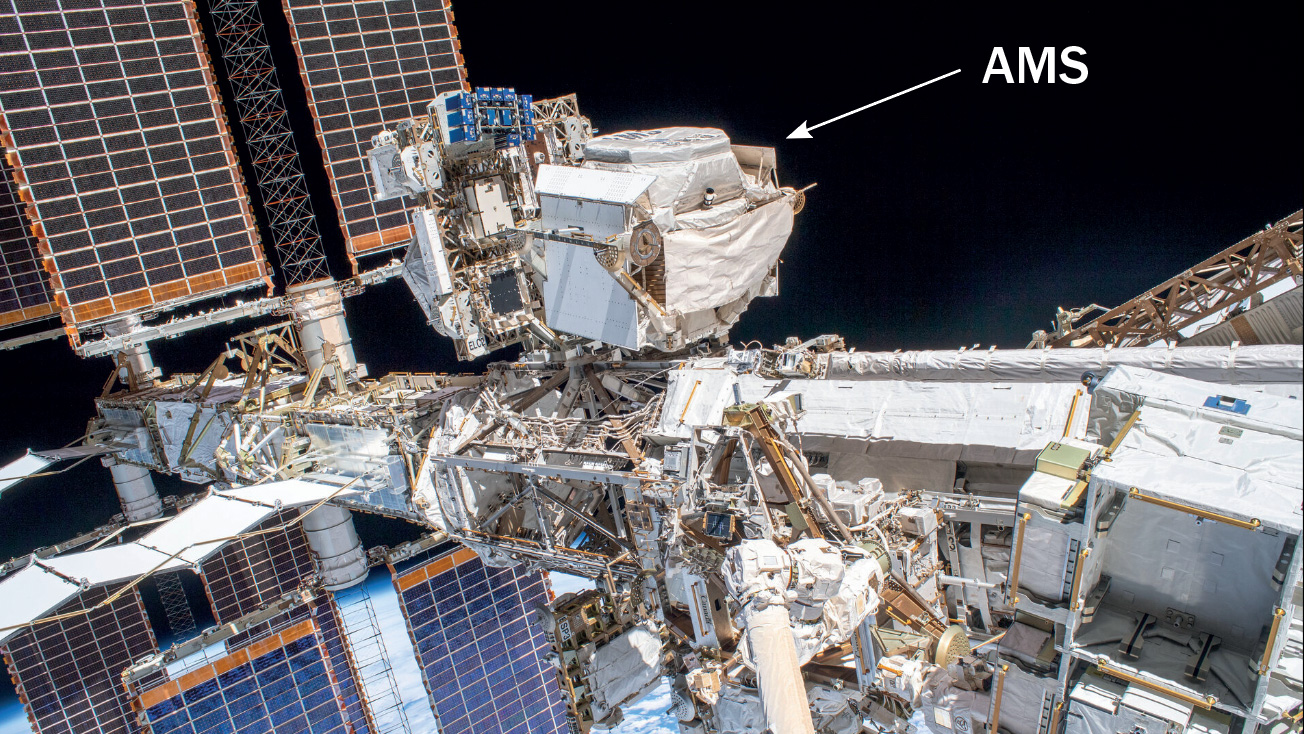
Roald Sagdeev, who ran Russian space research, recommended me to Dan Goldin, the head of NASA. When Goldin asked how heavy my detector was, he caught me off guard. “My last experiment, Mr Goldin, weighed 10,000 tonnes,” I said. His advice was to build a magnet, fly a prototype on the shuttle and, if it worked, go to the International Space Station (ISS). That magnet became the Alpha Magnetic Spectrometer (AMS). The prototype flew in 1998 and went quite well, so for the ISS we built something more ambitious: a superconducting magnet. Then, in April 2010, I discovered the shuttle programme had been cancelled, and without shuttles to refill its superfluid helium, the superconducting magnet could not survive. When you have been totally involved in an experiment for years, you can only go forward. We took AMS apart and rebuilt it around the permanent magnet very quickly. Otherwise, it would not be flying today.
AMS has now spent 15 years on the ISS. What is it like to run such an experiment from Earth?
In space, there is no Christmas, no summer vacation, no weekend. The ISS never stops, so you take data all the time. And space is unforgiving: if something goes wrong and you do not know it, you will make a mistake, so we check the instrument every two minutes. When the cooling system stopped, the only way to replace it was an open-heart surgery, performed by astronauts, where one wrong cut would have ended the experiment. NASA spent three years training them in a swimming pool. I have known many astronauts. They are all very intelligent, but also extremely calm. In space, the distance between life and death is very short. You must discipline yourself.
On to the results, then. AMS has been collecting positrons since day one. What have they shown?
So far we have 4.2 million of them, up to the TeV region, and the spectrum is not a smooth curve. The low-energy part can be explained by ordinary cosmic-ray collisions. But at high energies, there are far more positrons than collisions can produce, and this excess rises and then drops suddenly, around 810 GeV. It must come either from a new source, such as pulsars, or from dark-matter collisions, and we cannot yet tell which. The antiprotons, though, behave in the same way, and antiprotons cannot come from pulsars. If it is dark matter, its mass must be around 1.5 TeV.
And the antimatter?
We have a few antihelium candidates, particles with a charge of minus two and masses up to about 3.8 GeV, but we have announced nothing. The rate is one in 108, and no one knows their instrument to better than 1%. Even 1% is a miracle. Another magnet on top would settle it, but it would weigh 15 tonnes, and nothing can carry 15 tonnes to space. So we wait patiently, either for more candidates or for anti-carbon and anti-oxygen. Fortunately, there is no competition.
AMS also measures matter nuclei in cosmic rays. What have you found there?
In total, we have measured 265 billion cosmic rays. Among them, we can identify 28 elements of the periodic table, from hydrogen up to nickel, and measure them all very precisely. Each element has its own rigidity spectrum, so you would expect them to have different spectral shapes. In the 20 elements we have analysed so far, we see only four, two from the primary cosmic rays and two from secondaries produced by collisions along the way. Every element is a combination of these four, and none is explained by current models. There are hundreds of suggestions as to why. I do not spend time on them, because our first obligation is to ensure the data are correct: over the next 40 or 50 years, no spectrometer will repeat this measurement. The coming upgrade, a new tracker layer on top of the detector, exists just for that.
More broadly, where do you see particle physics going?
I do not know who is qualified to answer this question! Before the discovery of the J particle, nobody would have done physics on it. The future really depends on the next discovery. You have to go forward.
Every hadron catalogued so far consists of quarks bound by gluons. The BESIII collaboration has now reported evidence that the dominant constituent of the X(2370) resonance is a glueball – a long-conjectured hadron made of gluons alone. The analysis spans the state’s mass, quantum numbers, production rate and decay patterns, and rests on 10 billion J/ψ events recorded at the BEPCII collider in Beijing.
Gluons, unlike photons, are charged under the very interaction they mediate. As a consequence, they attract one another, and quantum chromodynamics (QCD) predicts them to bind into composite particles of their own. Calculations on a discretised spacetime lattice place the lightest such states, with scalar, tensor and pseudoscalar quantum numbers, between 1.3 and 3 GeV (see “How strong is the strong interaction?”). There, glueballs are notoriously hard to single out.
“Historically, there were many candidates, such as the f0(1710) and f0(1500), but none of them was ever established,” says Shan Jin of Nanjing University, who presented the results on 5 August at the International Conference on High Energy Physics in Natal, Brazil. “The difficulties mainly come from mixing with nearby mesons, and from other interpretations that are hard to exclude, such as multiquark and hybrid states.”
Pure force
The appeal of the search, for Jin, goes beyond expanding the taxonomy of hadrons. “Glueballs are a unique kind of matter, made of pure force rather than fermions,” he says. “And since gluons do not couple directly to the Higgs boson, an established glueball would directly probe how the strong interaction generates mass.”
The hunt has long centred on radiative J/ψ decays, in which the charm quark and its antiquark annihilate into a photon and two gluons. The pair, flavourless and even under charge conjugation, carries exactly the quantum numbers a glueball needs, and the recoiling photon tags the decay cleanly. A lattice calculation by Ying Chen of Beijing’s Institute of High Energy Physics and colleagues predicts around two in every ten thousand J/ψ decays to yield a pseudoscalar glueball, with mass 2395 ± 14 MeV.
An established glueball would directly probe how the strong interaction generates mass
BESIII first observed the X(2370) resonance in J/ψ→γπ+π–η′ decays in 2011, with a significance above 6.4σ, and later confirmed it in KKη′ final states. Pinning down its quantum numbers proved much more demanding. “It took us 13 years to determine the spin-parity of the X(2370),” says Jin. “Many processes containing the signal suffer from huge backgrounds of neutral pions, which are easily misidentified as photons. We finally found one, J/ψ→γKS0KS0η′, that is free of them.” The 2024 analysis gave JPC = 0–+ at a significance above 9.8σ and a mass of 2395 ± 11 (stat)+26–94 (syst) MeV, in agreement with the lattice prediction. The full J/ψ sample was essential. “With one billion events, the significance naively scales down by a factor of three, below 5σ,” notes Jin. “These studies would have been impossible.”
Over the past two years, three further decay modes, to KS0KS0π0, π0π0η and a0(980)π0, have been observed, each with a significance above 9σ. A combination across the new channels gives a mass of 2359+13–14 MeV and a width of 170+44–29 MeV. The measured product branching fractions alone sum to nearly 10–3, larger than expected for an unmixed glueball. In May, Chen and colleagues proposed that a small admixture of pseudoscalar charmonium could account for the enhanced production rate.
Suppressed decays
No single X(2370) decay mode is expected to dominate. The collaboration estimates that each S-wave quasi-two-body mode accounts for about one to ten percent of the total width, around 170 MeV. “These narrow partial widths are consistent with the glueball expectation, since its decays are suppressed by the Okubo–Zweig–Iizuka (OZI) rule,” explains Jin. “All other kinds of hadrons have quark–antiquark content, so their decays are OZI-allowed, with typical partial widths of the order of 100 MeV, much larger than what we observed.” The ω and φ mesons couple to light quark–antiquark pairs, so a state containing such pairs can decay readily to γω and γφ. The X(2370) →γω and γφ decays turned out to be strongly suppressed, Jin adds, showing that any light quark–antiquark content in the state must be very small.
Another indication comes from flavour. Gluons couple to all quark flavours equally, so a glueball must be a flavour singlet, and a pseudoscalar flavour singlet is expected not to decay to K*(892)K due to the conservation of generalised G-parity – a symmetry that combines charge conjugation with a flavour rotation. An η–η′ pseudoscalar excitation in this mass range would instead do so copiously, with a predicted partial width of about 15–200 MeV. BESIII searched for the mode in J/ψ→ γKS0KS0π0 decays and found nothing, implying a partial width below about 2 MeV. According to the collaboration, the X(2370) is thus the first flavour-singlet light hadron observed above 1 GeV. “We do need the 0–+ glueball to have a natural and complete explanation of all the X(2370) properties, while all other interpretations can hardly explain all of them simultaneously,” says Jin.
The next step would be to determine the mixing angle
A note of caution comes from the theory side. “The only available first-principles prediction for the spectrum of glueballs in the continuum limit completely neglects the effect of quarks,” says Davide Vadacchino, a theorist at the University of Plymouth. While the spectrum is under numerical control in this approximation, known as quenching, full QCD is still far off. “The glueball in nature is not an asymptotic state, and it also mixes with other flavour singlets,” he explains. “Its decay rate and mixing angle are in principle very interesting quantities, but obtaining them on the lattice is challenging.” Calculations with dynamical quarks remain exploratory, limited by poor signal-to-noise ratios and still awaiting a continuum limit, so the agreement with the quenched mass should be read with care. “The case made at BESIII seems to be strong,” concludes Vadacchino nonetheless. “The next step would be to determine the mixing angle between the glue component of the X(2370) and its matter component,” he adds.
Other interpretations have been proposed. On 1 September, Di Ben, Li-Ke Yang and Bing-Song Zou of Tsinghua University and the Chinese Academy of Sciences argued that a state dominated by a ΣΣ molecular component can account for the observed properties. At BESIII, further decay modes of the X(2370) remain to be studied, and the search will extend to the scalar and tensor glueballs.
The Alpha Magnetic Spectrometer (AMS) collaboration has now analysed the spectra of 20 cosmic-ray elements. These new results, published in Physical Review Letters, sort the cosmic radiation into four classes, two primary and two secondary. None behave quite as current models predict.
AMS has been taking data aboard the International Space Station (ISS) since May 2011, when it arrived on the space shuttle Endeavour (CERN Courier July/August 2011 p19). Since then, it has detected more than 260 billion events. Cosmic rays range in energy from about 1 GeV to as much as 108 TeV, far beyond the reach of any collider, and analysing the elements found amongst them provides a direct way to study their origin and journey through space.
Cosmic rays are traditionally divided into primary and secondary components. Primary cosmic rays originate in astrophysical sources, producing secondary rays when they collide with matter in the interstellar medium. The two can be told apart by their energy spectra: although both fluxes decrease with energy, that of secondary rays falls much more steeply.
Precision improvement
The first major results from AMS, in 2013, showed the fraction of positrons among cosmic rays rising with energy rather than falling, as it would if they came only from secondary collisions (CERN Courier October 2013 p23). The picture has grown more complex ever since. “AMS provides an orders-of-magnitude improvement in precision over previous detectors,” explains spokesperson Samuel Ting (see “You have to go forward”). “And most of its results disagree with current theory, necessitating the development of new models of cosmic rays.”
Earlier AMS surveys of 15 elements had revealed that primary cosmic rays can be divided into two distinct classes, according to how their flux varies with rigidity – the momentum of a charged particle divided by its electric charge, which determines how strongly it is deflected by magnetic fields.
The new analysis of phosphorus, chlorine, argon, potassium and calcium draws on about one million events collected over 13.5 years. The fluxes reveal that secondary cosmic rays can also be divided into two classes based on their rigidity dependence. Across the 20 elements whose spectra AMS has measured so far, out of the 28 it has identified, the fluxes therefore fall into four classes. For the five new elements, the analysis also determines the primary and secondary contributions to each flux.
The upgrade will allow for the collection of as much data in five years as was recorded in the previous 15
“When measurements are inaccurate, even the most simplified theoretical models can adequately account for the data,” says Sunil Gupta, an astroparticle physicist and honorary fellow of the Tata Institute of Fundamental Research and president-designate of the International Union of Pure and Applied Physics. “But those explanations fail when precision improves.”
The even-numbered elements argon and calcium prove more abundant at the cosmic-ray source than their odd-numbered neighbours phosphorus, chlorine and potassium. Possible explanations for this, and for AMS’s other unexpected results, remain under debate. Gupta cautions that further analysis, and more refined propagation models, will be needed, but says the new data “offer extremely significant constraints on the theoretical models essential for progress in this field.”
Understanding what cosmic rays are made of and how they travel is also the first step in the search for new physics in space, since they form the background against which any dark-matter signal or trace of primordial antimatter would have to stand out. AMS is set to sharpen its measurements with an additional silicon tracker layer, due to be installed in 2027. “The upgrade will increase the acceptance of AMS by 300%,” says Ting, “allowing for the collection of as much data in five years as was recorded in the previous 15. This will greatly extend the capabilities of AMS in the study of dark matter, antimatter and high-Z cosmic rays.”
CERN has carried out a successful full-scale test of the focusing magnets for the High-Luminosity LHC (HL-LHC). On 8 July 2026, the new superconducting quadrupole magnets at CERN’s Inner Triplet (IT) String facility reached their nominal operating current of 16,230 amperes without a quench. The result validates a key element of the magnet technology that will be installed on either side of the ATLAS and CMS interaction points during the LHC’s third Long Shutdown (LS3).
Known as inner triplet magnets, the new focusing quadrupoles have been in development for more than a decade (CERN Courier May 2016 p31). Their role is to squeeze proton beams just before they collide, increasing the number of proton–proton interactions and hence the accelerator’s luminosity. The new magnets have a much larger aperture than those currently installed in the LHC, 150 millimetres compared with 70, providing the space required to accommodate the new beam optics.
Peak fields
The quadrupoles use niobium–tin (Nb3Sn) superconducting coils in place of the niobium–titanium (Nb–Ti) used in the present LHC magnets (see “Ten thousand magnets later”). Nb3Sn allows the coils to reach peak fields of around 11.3 T, roughly 35% higher than those of the current generation (CERN Courier March/April 2026 p30). When the HL-LHC starts, the quadrupoles will become the first Nb3Sn magnets to be used in a working accelerator.
Before a superconducting magnet can be put into operation, it must first undergo a process known as training, which consists of gradually increasing the current during successive powering cycles. As the process unfolds, small mechanical movements within the coils can trigger losses of superconductivity known as quenches. Repeated cycles allow the coils to settle into a mechanically stable configuration, and the magnet to reach progressively higher currents. The ability to retain this trained performance is called memory.
“Good memory is a key performance requirement for accelerator magnets, as it minimises commissioning time, cryogenic consumption and operational delays,” explains Susana Izquierdo Bermudez, who leads CERN’s Large Magnet Facility, where the new superconducting magnets were developed and assembled.
Good memory is a key performance requirement for accelerator magnets
The quadrupoles are only part of the system under test. All 17 electrical circuits of the IT String were also successfully powered to their operating currents. The separation dipole, which will steer the two beams apart after they pass the interaction point, reached its nominal current after only a few training quenches. The corrector-magnet circuits likewise reached their target currents, both individually and in combined operation.
Superconducting magnets store large amounts of energy, which must be safely removed if a quench occurs. During the tests, the machine-protection systems successfully extracted and dissipated up to 38 MJ of stored magnetic energy into the helium bath that keeps the magnets at their operating temperature of 1.9 K.
Big data
“The successful powering of all circuits marked the completion of the IT String hardware commissioning phase,” explains Samer Yammine, responsible for IT String operations. “The campaign generated a vast amount of data that we are now analysing to better understand how all the systems interact.” The results of the analyses – which cover the superconducting magnets, cold powering system, power converters, quench detection and protection, cryogenics, vacuum, controls and alignment – will help refine the commissioning and operations procedures for the HL-LHC.
Further tests of the superconducting circuits, machine cycles, electromagnetic coupling and alignment will be followed by a warm-up to room temperature and a second cooldown ahead of a new round of testing. “This second operational campaign in September will primarily focus on validating the commissioning procedures and analysis tools, as well as demonstrating the reproducibility of the integrated system performance,” remarks Marta Bajko, head of the IT String facility. “We will test the systems under conditions close to those of the future HL-LHC.”
Climate models typically assume sulphuric acid is the only vapour driving the formation of aerosol particles that seed marine clouds. In a paper published in Nature on 24 June, the CLOUD (Cosmics Leaving Outdoor Droplets) collaboration at CERN reports that a second vapour, methanesulphonic acid (MSA), drives the process just as effectively in cold marine air. Particle formation over cool oceans may therefore run up to ten times, and particle growth up to twice, as fast as models predict.
The condensation of water vapour in the atmosphere into droplets requires a cloud condensation nucleus (CCN), a suspended speck of liquid or solid matter larger than about 50 nm. More than half of all CCN form when trace low-volatility vapours cluster spontaneously, a process called nucleation. In 1987, Robert Charlson, James Lovelock, Meinrat Andreae and Stephen Warren proposed that some nucleating vapours could come from oceanic life. In their “Gaian” picture, tiny algae called phytoplankton release dimethyl sulphide (DMS) from the ocean surface, and its oxidation products seed clouds, which in turn shade the waters below and help regulate the climate. The oxidation of DMS yields two acids in comparable amounts, sulphuric acid and MSA. While the former has been known for many years to drive particle nucleation, the role of the latter has long remained unclear.
Nucleation
MSA’s capacity to nucleate was first tested in the 1980s, at concentrations orders of magnitude above the typical 105 to 107 molecules per cubic centimetre of marine air. Later studies concluded that MSA could not compete with sulphuric acid in the real atmosphere, and experimental attention faded for two decades. Interest revived when MSA kept turning up inside small marine particles, but composition alone could not distinguish between nucleation and condensational growth of pre-existing aerosol particles. The next step called for controlled experiments under atmospheric conditions.
“CLOUD is essentially a highly controlled artificial atmosphere,” says Rima Baalbaki of the University of Helsinki and the Cyprus Institute, who co-led the study, “filled with ultrapure air made from liquid nitrogen and oxygen, in which temperature, humidity, ionisation and trace gases are adjusted to reproduce conditions from the boundary layer to the lower stratosphere.” Settling the question also demanded realistic vapour concentrations and instruments that watch every step at once, from the precursor gases through the first clusters to the grown particles. “No previous experiment had brought all these elements together,” she adds.
CLOUD is essentially a highly controlled artificial atmosphere
For sulphuric acid to nucleate at atmospheric concentrations, a base vapour such as ammonia is needed to form acid-base pairs that suppress the particle’s evaporation. CLOUD tested whether MSA can play a similar role, dialling MSA, sulphuric acid and ammonia up and down across the temperature range of marine air. At +9 °C, no MSA appeared in the embryonic molecular clusters. At –10 °C the picture changed: MSA entered the very first clusters, paired with ammonia, and nucleated without any sulphuric acid, while mixed clusters of both acids with ammonia were the most abundant of all. Without a base vapour, MSA contributed nothing to nucleation, even at –52 °C. However, once the first few molecules had clustered, ammonia was no longer required for MSA to drive rapid particle growth, limited only by the molecular arrival rate.
“What changes below –10 °C is the balance between cluster growth and evaporation,” explains Baalbaki. “At warmer temperatures, MSA molecules may collide and form a cluster, but they tend to evaporate before additional molecules can attach. Cooling lowers MSA’s saturation vapour pressure, so the molecules remain together long enough for others to join.” Cooling also raises the MSA yield from DMS oxidation, so the mechanism should matter most over polar oceans and in the upper troposphere.
Missing source
“Aircraft campaigns over the Atlantic and Pacific oceans have found a major unexplained source of nucleated particles at high altitude, which grow as they descend to seed low-latitude marine clouds that strongly influence Earth’s albedo,” says CLOUD spokesperson Jasper Kirkby. “Furthermore, for more than a decade, models have underestimated CCN over the Southern Ocean by roughly a factor of two. With this study, we have likely identified MSA as the key missing source of CCN for both.” CLOUD had previously reached a similar conclusion over land, linking abundant particle formation observed by research aircraft high above tropical rainforests to forest-emitted isoprene (CERN Courier January/February 2025 p5).
The collaboration has made an initial evaluation of the impact of their new measurements on CCN concentrations over the Arctic and Antarctic regions. Adding their measured mechanisms to a global model, they find that MSA may close much of the gap in CCN concentrations that causes current climate models to run unrealistically warm over the Southern Ocean.
Most of the key players are probably now known
The stakes reach beyond the poles. Emissions of sulphur dioxide from fossil fuels, which provide most atmospheric sulphuric acid, are being cut because fine-particle pollution causes millions of premature deaths each year. However, these same particles also cool the climate by making clouds brighter and more extensive. “Aerosols have short lifetimes, so as we stop producing them they will disappear rapidly and then temperatures will rise further,” says Kirkby. “Most climate models consider only particles nucleated from sulphuric acid, so they predict much less cloud as anthropogenic emissions fall. The overarching conclusion from CLOUD studies over the last 15 years is that the biosphere is much more capable than previously thought of producing abundant aerosol particles over both land and sea. So, as anthropogenic aerosol particles fall with emission controls, the biosphere should partially buffer the reduction more effectively, and the additional aerosol warming of the climate should be less than presently expected. But now we need to quantify it with model studies based on the CLOUD measurements.”
Experiments at intermediate temperatures must still pin down where MSA begins to nucleate, and a companion CLOUD study shows that with dimethylamine, a stronger base than ammonia, MSA forms particles at +5 °C and speeds sulphuric-acid nucleation tenfold to a hundredfold. “Particle physicists are careful about saying we’re done,” adds Kirkby. “We are not close to a ‘Standard Model’ of atmospheric aerosol formation, but most of the key players in particle nucleation and growth are probably now known. A major goal over the next few years is to prepare systematic parameterisations of our CLOUD measurements for climate models. And no doubt there are still more surprises in store for us along the way.”
To provide the best experiences, we use technologies like cookies to store and/or access device information. Consenting to these technologies will allow us to process data such as browsing behavior or unique IDs on this site. Not consenting or withdrawing consent, may adversely affect certain features and functions.
Functional
Always active
The technical storage or access is strictly necessary for the legitimate purpose of enabling the use of a specific service explicitly requested by the subscriber or user, or for the sole purpose of carrying out the transmission of a communication over an electronic communications network.
Preferences
The technical storage or access is necessary for the legitimate purpose of storing preferences that are not requested by the subscriber or user.
Statistics
The technical storage or access that is used exclusively for statistical purposes.The technical storage or access that is used exclusively for anonymous statistical purposes. Without a subpoena, voluntary compliance on the part of your Internet Service Provider, or additional records from a third party, information stored or retrieved for this purpose alone cannot usually be used to identify you.
Marketing
The technical storage or access is required to create user profiles to send advertising, or to track the user on a website or across several websites for similar marketing purposes.