The CERN Council has updated the European Strategy for Particle Physics, naming the FCC-ee as the preferred next flagship collider for CERN. Council president Costas Fountas reflects on the process that led here, and on what it will take to carry the project to approval in 2028.
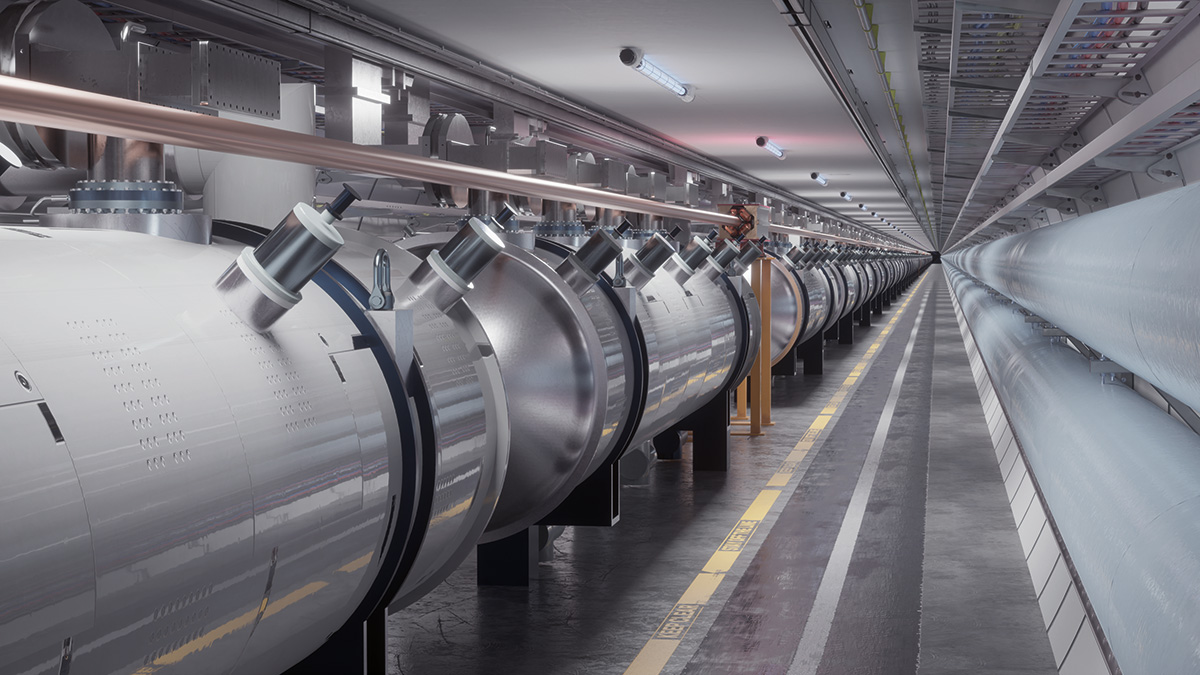
As president of the CERN Council, I have followed the updating of the European Strategy for Particle Physics (ESPP) first hand. The proposals for CERN’s future flagship project – the central goal of the ESPP 2026 update – were set out in the open, and physicists fought for their ideas with passion, as they should when the stakes are this high. Such conviction is the sign of a healthy field, and I am grateful to all who took part. Eventually, the community reached an overwhelming consensus on the electron-positron Future Circular Collider (FCC-ee), distilled in the recommendation of the European Strategy Group (ESG). When the Council met in Budapest this May, I was delighted to see it vote unanimously to update the ESPP accordingly.
The road ahead
The path to that vote is well known. The Council launched this bottom-up process in 2024, instituting the ESG, and the particle-physics community took it up with enthusiasm. Hundreds gathered to air and debate the proposals at the open symposium in Venice in June 2025 (CERN Courier September/October 2025 p24), before the recommendations were drawn together at the December drafting session in Ascona (CERN Courier January/February 2026 p7).
The ESPP’s medium-term recommendation is to complete the high-luminosity LHC upgrade and fully exploit the scientific potential of the HL-LHC. Looking further ahead, it recommends the FCC-ee as the preferred choice for CERN’s next flagship collider, aiming to maintain Europe’s leading role in particle physics. Given the clear scientific and strategic superiority of the FCC-ee relative to all other potential options, a descoped FCC-ee is recommended as the preferred option if the full machine is not considered to be feasible.
The Council invited the CERN management to use the ESPP update as input for its medium-term plan and for the ongoing studies of the FCC-ee as the possible next flagship at CERN. As a sign of its strong support, the Council further asked management to initiate discussions with the relevant authorities and entities in the Member and Associate Member States, as well as non-Member States and the European Union. The goal is to obtain pledges of additional cash and/or in-kind contributions to the cost of constructing and operating the FCC-ee, and, on this basis, to develop a financially feasible funding plan.
Securing those funds is now central, and the current CERN management continues an effort begun under its predecessor. The draft Multiannual Financial Framework (MFF) released by the European Commission in July 2025 foresees €3 billion towards the FCC, and pledges amounting to €860 million have already been secured by private donors in 2025 (CERN Courier January/February 2026 p9).
Certain Member States requested specific information to approve the FCC project through their finance agency system, and management has been instructed to provide it. It then promised to do an exercise on paper, which will result in an option analysis to assist these Member States in their approval procedures for the FCC. A large part of this information exists already in the ESPP documents. However, the Council did not support the development of alternative options in parallel with the FCC reference design.
In June, the Council approved the management’s plans and the milestones leading to a reference design for the FCC. The strategic question is now answered. From here, the task is one of carrying the project to approval, and the Council stands fully behind that effort.
The debate leading here was substantial, but it was conducted on the merits of the scientific case, and that is the common ground from which the community can now move forward. The time has come for us to unite behind the choice that has been made, see it through to success in 2028, support the management and contribute to CERN’s standing as the leading laboratory in particle physics.