 Read article 'How to surf to high energies'
Read article 'How to surf to high energies'
Read article 'How to surf to high energies'

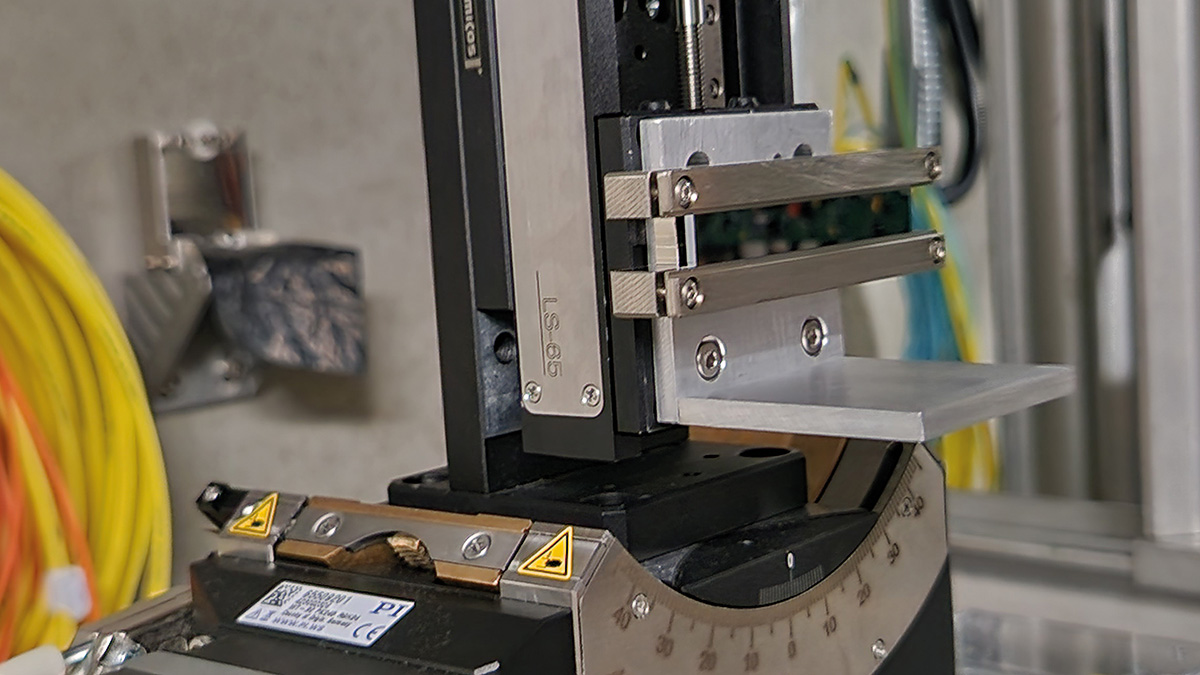 Read article 'Boosting physics with precision and intensity'
Physics Beyond Colliders' annual workshop convened 175 physicists at CERN to provide updates on ongoing projects and explore new proposals.
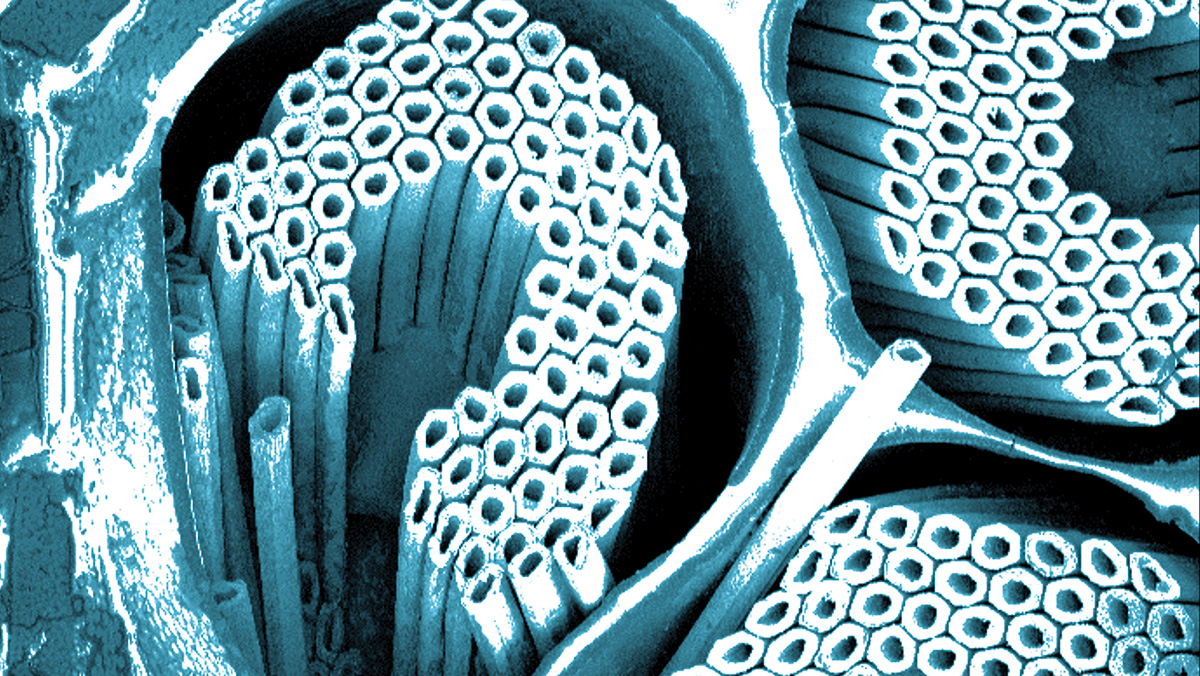 Read article 'Engineering materials for big science'
How the CERN EN-MME-MM section deals with the complex demands for mechanical design, production facilities and material science at CERN and beyond.
With R&D for a future e+e– collider advancing quickly, what remains, says Paris Sphicas, is to converge on the next machine in the context of the next Europ...
First proposed in 2012, the Circular Electron Positron Collider in China is soon to enter an engineering design phase.
Weaving through the molasse and limestone beneath Lake Geneva and around Mont Salève, the Future Circular Collider would constitute a major global civil-engineering project in its...
A workshop on sustainability for future accelerators took place on 25–27 September in Morioka, Japan.
The directors of KEK, CERN, Fermilab and IHEP discussed a future global strategy at the 13th ICFA seminar.
 Read about 'CERN Courier magazine: get the latest issue'
Browse the editor’s picks by downloading a PDF of the most recent issue of CERN Courier
 Read about 'In focus: enabling technologies'
The platform technologies that underpin Europe’s large-scale research facilities

 Read article 'ATLAS turbocharges event simulation'
As the harvest of data from the LHC experiments continues to increase, so does the required number of simulated collisions.
 Read article 'The inventive pursuit of UHF gravitational waves'
Since their first direct detection in 2015, gravitational waves have become pivotal in our quest to understand the universe.
 Read article 'New Challenges and Opportunities in Physics Education'
A guidebook for educators searching for innovative strategies to spice up their physics teachings or to better weave modern science into their lessons.
 Read article 'The Many Voices of Modern Physics'
A rich glimpse into written science communication throughout a century that introduced many new and abstract concepts in physics.
 Read article 'A safe approach to quantum gravity'
The “asymptotic safety” approach towards quantum gravity opens new avenues at the intersection between particle physics and gravity.
 Read article 'SHiP to chart hidden sector'
In March, CERN selected a new experiment called SHiP to search for hidden particles using high-intensity proton beams from the SPS.
 Read article 'Next-generation triggers for HL-LHC and beyond'
A new five-year-long project aims to accelerate novel computing, engineering and scientific ideas for the ATLAS and CMS upgrades.
 Read article 'European strategy update'
In March the CERN Council launched the process for updating the European strategy for particle physics.
 Read article 'EIC steps towards construction'
The US Department of Energy has approved “Critical Decision 3A” for the future Brookhaven-based collider.
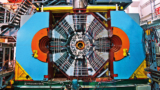 Read article 'BESIII passes milestone at the charm threshold'
The largest charm-threshold data set ever collected is also vital for studies with charm and beauty mesons at LHCb and Belle II.
 Read article 'New subdetectors to extend ALICE’s reach'
The LHC’s dedicated heavy-ion experiment is to be equipped with an upgraded inner tracker and a new forward calorimeter during the next long shutdown.
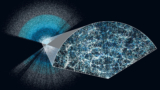 Read article 'First DESI results shine a light on Hubble tension'
The Dark Energy Spectroscopic Instrument has catalogued millions of objects in its bid to study the evolution of the universe.