Comsol -leaderboard other pages

Topics

The beam–bottle debate at PSI

Free neutrons have a lifetime of about 880 seconds, yet a longstanding tension between two measurement techniques continues to puzzle the neutron-physics community. The most precise averages from beam experiments and magnetic-bottle traps yield 888.1 ± 2.0 s and 877.8 ± 0.3 s, respectively – roughly corresponding to a 5σ discrepancy.

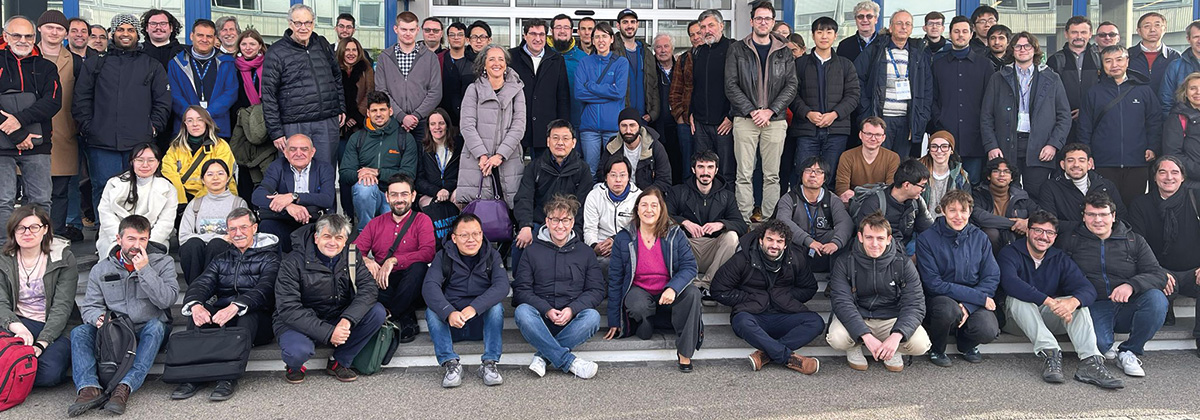
On 13 September 2025, 40 representatives of all currently operating neutron-lifetime experiments came together at the Paul Scherrer Institute (PSI) to discuss the current status of the tension and the path forward. Geoffrey Greene (University of Tennessee) opened the workshop by reflecting on five decades of neutron-lifetime measurements from the 1960s to the present.

The beam method employs cold-neutron beams, with protons from neutron beta-decays collected in a magnetic trap and counted. The lifetime is then inferred from the ratio of proton counts to neutron flux. Fred Wietfeldt (Tulane University) highlighted the huge efforts undertaken at the National Institute of Standards and Technology (NIST) in Gaithersburg, most importantly on the absolute calibration of the neutron detector.

Susan Seestrom (Los Alamos National Laboratory) described today’s most precise experiment, the UCNτ experiment at Los Alamos National Laboratory, which uses the magnetic-bottle trap method. It confines ultracold neutrons (UCNs) via their magnetic and gravitational interaction and counts the surviving ones at different times. She also provided an outlook on its next phase, UCNτ+, with increased statistics goals. The τSPECT experiment at PSI’s UCN facility is also based on magnetic confinement of neutrons and has recently started data taking, but has distinct differences. As explained by Martin Fertl from Johannes Gutenberg-University Mainz, τSPECT uses a double-spin-flip method to increase the UCN filling of the purely magnetic trap, and a detector moving in and out of the storage volume to first remove slightly higher-energetic neutrons before storage, and then measures the surviving neutrons in situ after storage.

Kenji Mishima (University of Osaka) presented the neutron-lifetime experiment at J-PARC, based on a new principle: the detection of the charged decay products in an active time-projection-chamber, where the neutrons are captured on a small 3He admixture. This experiment’s systematics are entirely different from those of previous efforts and may offer a unique contribution to the field. Other studies largely excluded the possibility that the beam–bottle discrepancy could be explained by hypothetical exotic decay channels or other non-standard processes.

New results from LANL, NIST, J-PARC and PSI should clarify the currently puzzling situation in the coming years.

Vienna’s new hub for particle physics

On 7 November 2025, the Austrian Academy of Sciences inaugurated the Marietta Blau Institute for Particle Physics (MBI). The new centre brings together the former Stefan Meyer Institute for Subatomic Physics and the Institute of High Energy Physics (HEPHY), creating Austria’s largest hub for particle-physics research. In total, about 130 researchers with broad expertise across the discipline now work under the MBI umbrella.

Marietta Blau was one of the first women to study physics at the University of Vienna. As recalled by Brigitte Strohmaier (University of Vienna), who summarised Blau’s biography, she became best known for her work at the Institute for Radium Research between 1923 and 1938, where she developed the nuclear-emulsion technique for detecting charged particles with micrometre-scale precision.

Together with Hertha Wambacher, Blau exposed nuclear emulsions to cosmic rays at Victor Hess’s observatory near Innsbruck, producing photographic evidence of the interactions between high-energy particles and matter.

Staying in Scandinavia when Nazi Germany annexed Austria in 1938, Blau could not return to Vienna. She secured a position at the Polytechnic Institute of Mexico City on the recommendation of Albert Einstein, but found herself isolated from colleagues. From 1944 on, she worked in the US before returning to Vienna in 1960, where she supervised the evaluation of photographic plates from CERN.

Her method of nuclear emulsions was further advanced by Cecil Powell in Bristol, who was awarded the Nobel Prize in Physics in 1950 for discoveries regarding mesons made with this method. On this and other occasions, Marietta Blau was also nominated, but never recognised for her groundbreaking research.

Joachim Kopp, chair of the Scientific Advisory Board of HEPHY, introduced the institute’s scientific outlook. He highlighted the breadth of MBI’s programme, which includes major contributions to CERN experiments such as CMS and ALICE at the LHC, and ASACUSA at the AD/ELENA facility, where antimatter is studied using low-energy antiprotons.

Groups at MBI are also involved in the Belle II experiment at KEK, as well as the dark-matter experiments CRESST and COSINUS at the LNGS underground lab. Neutrino physics, gravitational-wave studies at the Einstein Telescope, as well as tests of fundamental symmetries using ultra-cold hydrogen and deuterium beams, are also part of the research programme. The MBI also builds on the long tradition of detector development and construction for future experiments, complemented by a dedicated theory group.

Budapest brims with heavy ions

The 25th Zimányi Winter School gathered 120 researchers in Budapest to discuss recent advances in medium- and high-energy nuclear physics. The programme focused on the properties of strongly-interacting matter produced in heavy-ion collisions – little bangs that recreate conditions a few microseconds after the Big Bang.

József Zimányi was a pioneer of Hungarian and international heavy-ion physics, playing a central role in establishing relativistic heavy-ion research in Hungary and contributing key developments to hydrodynamic descriptions of nuclear collisions. Much of the week’s programme revisited the problems that occupied his career, including how the hot, dense system created in a collision evolves and how it converts its energy into the observed hadrons.

Giuseppe Verde (INFN Catania) and Máté Csanád (ELTE) emphasised the role of femtoscopic methods, rooted in the Hanbury Brown–Twiss interferometry originally developed for stellar measurements, in understanding the system that emerges from heavy-ion collisions. Quantum entanglement in high-energy nuclear collisions – a subject closely connected to the 2025 Nobel Prize in Physics – was also explored in a dedicated, invited lecture by Dmitri Kharzeev (Stony Brook University), who described the approach and the results of his team that suggest the origin of the observed thermodynamic properties is quantum entanglement itself.

The NA61/SHINE collaboration reported ongoing studies of isospin-symmetry breaking, including a recent result where the charged-to-neutral kaon ratio in argon–scandium collisions deviates at 4.7σ from expectations based on approximate isospin symmetry (CERN Courier March/April 2025 p9). Further detailed studies are planned, with potential implications for improving the understanding of antimatter production.

Hydrodynamic modelling remains one of the most successful tools in heavy-ion physics. Tetsufumi Hirano (Sophia University, Japan), the first recipient of the Zimányi Medal, discussed how the collision system behaves like an expanding relativistic fluid, whose collective motion encodes its initial conditions and transport properties. Hydrodynamic approaches incorporating spin effects – and the resulting polarisation effects in heavy-ion collisions – were discussed by Wojciech Florkowski (Jagiellonian University) and Victor E Ambrus (West University of Timisoara).

The many flavours of LHCb

The 15th edition of the Implications of LHCb Measurements and Future Prospects annual workshop took place at CERN from 4 to 7 November 2025, attracting more than 180 participants from the LHCb experiment and the theoretical physics community.

Peilian Li (UCAS) described how, thanks to an upgraded trigger that is fully software-based, the dataset gathered in 2025 alone already exceeded the total one from Run 1 and Run 2 combined. The future of LHCb was discussed, with prospects for an upgrade targeting the high-luminosity phase of the LHC, where timing information will be introduced. Theorist Monika Blanke (KIT) concluded the workshop with a keynote on the status of B-decay anomalies, highlighting the importance of LHCb measurements on constraining new physics models.

Much attention went to the long-standing discrepancies between data and theory on lepton–flavour–universality tests – such as the measurement of the R(D) and R(D*) ratios in semileptonic B-meson decays. Marzia Bordone (UZH) gave a theoretical overview of the determination of the form factors describing B  D* transitions, highlighting discrepancies in the determination of some form-factor shapes, both among different lattice–QCD determinations and within extractions from different experimental datasets.

A new combination of all LHCb measurements of the CKM angle γ, which quantifies a key CP-violating phase in b-hadron decays, yielded an overall value of (62.8 ± 2.6)°. The collaboration reported flagship electroweak precision measurements of the effective weak mixing angle and the W-boson mass, as well as the first dedicated measurement of the Z-boson mass at the LHC.

An exciting focus for 2026 will be the search for the double open-beauty tetraquark Tbb(bbud)

An exciting focus for 2026 will be the search for the double open-beauty tetraquark Tbb(bbud) – the first accessible exotic hadron expected to be stable against strong decay (CERN Courier November/December 2024 p34). Saša Prelovšek (UL) presented the first lattice-QCD calculation of the state’s electromagnetic form factors, allowing her to rule out an interpretation of the tetraquark as a loosely–bound B–B* molecule.

The legacy Run 1+2 B  K*μ+μ angular analysis, based on a dataset roughly twice as large as that used in previous ones, was presented. Previously seen tensions were confirmed with much increased precision and new observables are reported for the first time. Theorists Arianna Tinari (UZH), Giuseppe Gagliardi (INFN Rome3) and Nazila Mahmoudi (IP2I, CERN) reviewed the status of the non-local hadronic contributions that could affect this channel, discussing how the use of different theoretical approaches can be employed to determine these contributions and how compatible the current results are with the theoretical expectations.

Zhengchen Lian (THU, INFN Firenze) showed the characteristic “bowling–pin” deformation of neon nuclei as it was recently observed using the SMOG2 apparatus, which allows collisions of LHC protons with a variety of fixed-target light nuclei injected into the beampipe (CERN Courier November/December 2025 p8).

Tokyo targets the two infinities

From 17 to 23 November, the second International Conference on Physics of the Two Infinities (P2I) gathered nearly 200 participants on the historic Hongo campus of the University of Tokyo. Organised by the ILANCE laboratory, a joint initiative by CNRS and the University of Tokyo, the P2I series aims to bridge the largest and smallest scales of the universe. In this spirit, the 2025 programme drew together results from cosmological surveys, particle colliders and neutrino detectors.

Two cosmological tensions will play a key role in the coming decades. One concerns how strongly matter clumps together to form structures such as galaxy clusters and filaments. The other involves the universe’s expansion rate, H0. In both cases, measurements based on early-universe data differ from those conducted in the local universe. The discrepancy on H0 has now reached about 6σ (CERN Courier March/April 2025 p28). Independent methods, such as strong lensing, lensed supernovae and gravitational-wave standard sirens, are essential to confirm or resolve this discrepancy. Several of these techniques are expected to reach 1% precision in the near future. More broadly, upcoming large-scale cosmological missions, including Euclid, DESI, LiteBIRD and the Legacy Survey of Space and Time (LSST) – which released its world-leading camera’s first images in June – are set to deliver important insights into inflation, dark energy and the cosmological effects of neutrino masses.

The dark universe featured prominently. Participants discussed an excess of gamma rays from the galactic centre detected by the Fermi telescope, which is consistent with the self-annihilation of weakly interacting massive particles (WIMPs) and may represent one of the strongest experimental hints for dark matter. Recent analyses on more than 40 million galaxies and quasars in DESI’s Data Release 2 show that fits to baryon acoustic oscillation distances deviate from the standard ΛCDM model at the 2.8 to 4.2σ level, with a dynamical dark energy providing a better match. Euclid, having identified approximately 26 million galaxies out to over 10.5 billion light-years, is poised to constrain the nature of dark matter by combining measurements of large-scale structure, gravitational-lensing statistics, small-scale substructure, dwarf-galaxy populations and stellar streams. Experiments such as XENONnT and PandaX-4T are instead pursuing a mature direct-detection programme.

Future colliders were a central topic at P2I. While new physics has long been expected to emerge near the TeV scale to stabilise the Higgs mass, the Standard Model remains in excellent agreement with current data, and precision flavour measurements constrain many possible new particles to lie at much higher energies. The LHC collaborations presented a flurry of new results and superb prospects for its high–luminosity phase, alongside new results from Belle II and NA64. Looking ahead, a major future collider will be essential for exploring and probing the laws connecting particle physics with the earliest moments of the universe.

The conference hosted the first-ever public presentation of JUNO’s experimental results, only a few hours after their appearance on arXiv. Despite relying on only 59.1 days of data, the experiment has already demonstrated excellent detector performance and produced competitive measurements on solar-neutrino oscillation that are fully consistent with previous results. This level of precision is remarkable, after barely two months of data collection. Three major questions in neutrino physics remain unresolved: the ordering of neutrino masses, the value of the CP-violating parameter and the octant of the mixing angle θ32. The next generation of experiments, including JUNO, DUNE, Hyper-K and upgraded neutrino telescopes, are specifically designed to answer these questions. Meanwhile, DESI has reported a new, stringent upper limit of 0.064 eV on the sum of neutrino masses, within a flat ΛCDM framework. It is the tightest cosmological constraint to date.

The LHC collaborations presented a flurry of new results and superb prospects for its high–luminosity phase

New data from the JWST, Subaru and ALMA telescopes revealed an unexpectedly rich population of galaxies only 200–300 million years after the Big Bang. Many of these early systems appear to grow far more rapidly than predicted by the ΛCDM model, raising questions such as whether star formation efficiency was significantly higher in the early universe or whether we currently underestimate the growth of dark-matter halos (CERN Courier November/December 2025 p11). These data also highlighted a surprisingly abundant population of high-redshift active galactic nuclei, with important implications for black-hole seeding and early supermassive black-hole formation. A comprehensive review of the rapidly evolving field of supernova and transient astronomy was also presented. The mechanisms behind core-collapse supernovae remain only partially understood, and the thermonuclear explosions of white dwarfs continue to pose open questions. At the same time, observations keep identifying new transient classes, whose physical origins are still under investigation. Important insights into protostars, discs and planet formation were also discussed. Observations show that interstellar bubbles and molecular filaments shape the formation of stars and planets across a vast range of physical scales. More than 6000 exoplanets have today been detected, from hot Jupiters to super Earths and ocean planets, many without counterparts in our Solar System.

With more than 150 new gravitational-wave (GW) candidates now identified, including extreme ones with rapid spins and highly asymmetric component masses, GW astronomy offers outstanding opportunities to investigate gravity in the strong-field regime. Notably, the GW250114 event was shown to obey Hawking’s area law, which states that the total horizon area cannot decrease during a black-hole merger, providing strong confirmation of general relativity in the most nonlinear regime. Next-generation observatories such as the Einstein Telescope, Cosmic Explorer and LISA will allow detailed black-hole spectroscopy and impose tighter constraints on alternative theories of gravity.

Even if the transition to multi-messenger astronomy began in the late 20th century, the first binary neutron-star merger, GW170817, remains its landmark event. An extraordinary global effort – more than 70 teams and 100 instruments pointed at the event for years – highlighted several historic firsts: the first gravitational-wave “standard siren” measurement of the Hubble constant, the first association between a neutron-star merger and a short gamma-ray burst, the first observed kilonovae confirming the astrophysical site of heavy-element production, and the first direct test comparing the speed of gravity and light. Very-high-energy gamma-ray astronomy (HESS, MAGIC and VERITAS) also reported impressive results, with more than 300 sources above 100 GeV observed, and bright prospects, as the Cherenkov Telescope Array Observatory (CTAO) is about to start operations.

Tau leptons join the hunt

LHCb figure 1

As the Standard Model (SM) withstands increasingly stringent experimental tests, rare decays remain a prime hunting ground for new physics. In a recent paper, the LHCb collaboration reports its first dedicated searches for the decays B0→ K+πτ+τ and Bs0→ K+Kτ+τ, pushing hadron–collider flavour physics further into tau-rich territory.

At the quark level, the B0→ K+πτ+τ and Bs0→ K+Kτ+τ decays happen via the flavour-changing process b → sτ+τ, which is highly suppressed in the SM. The expected branching fractions of around 10–7 would place these decays well below the current experimental sensitivity. However, many new-physics scenarios, such as those involving leptoquarks or additional Z bosons, predict mediators that couple preferentially to third-generation leptons.

The tensions with the SM observed in the ratios of semileptonic branching fractions R(D(*)) and in b → sμ+μ processes could, for example, result in an enhancement of b → sτ+τ decays. Yet despite its potential to yield signs of new physics, the tau sector remains largely unexplored.

The LHCb analysis only considered tau decays to muons, in order to exploit the detector’s excellent muon identification systems. Reconstructing decays to final states with tau leptons at a hadron collider is notoriously challenging, particularly when relying on leptonic decays such as τ+→ μ+ντνμ, which result in multiple unreconstructed neutrinos. Using the Run 2 data set of about 5.4 fb–1 of proton–proton collisions, the collaboration applied machine-learning techniques to extract the topological and isolation features of suppressed tau-pair signals from the background.

Due to the large amount of missing energy in the final state, the B-meson mass cannot be fully reconstructed and the output of the machine-learning algorithm was instead fitted to search for a b → sτ+τ component. The search was primarily limited by the size of the control samples used to constrain the background shapes – a limitation that will be alleviated by the larger datasets expected in future LHC runs.

No significant signal excess was observed in either the K+πτ+τ or the K+Kτ+τ final states. Upper limits on the branching fractions were then established in bins of the dihadron invariant masses, allowing separate exploration of regions dominated by dihadron resonances and those expected to be primarily non-resonant.

These results represent the worlds most stringent limits on b  sτ+τ transitions

When interpreted in terms of resonant modes, the limits are B(B0→ K*(892)0τ+τ) < 2.8 × 10–4 and B(Bs0→ φ(1020)τ+τ) < 4.7 × 10–4 at the 95% confidence level. The B0→ K*(892)0τ+τ limit improves on previous bounds by approximately an order of magnitude, while the limit on Bs0→ φ(1020)τ+τ is the first ever established.

These results represent the world’s most stringent limits on b → sτ+τ transitions. The analysis lays essential groundwork for future searches, as the larger LHCb datasets from LHC Run 3 and beyond are expected to open a new frontier in measurements of rare b-hadron transitions involving heavy leptons.

With the upgraded detector and the novel fully software-based trigger, the efficiency in selecting low-pT muons – and consequently the tau leptons from which they originate – will be much improved. Sensitivity to b → sτ+τ transitions is therefore expected to increase substantially in the coming years.

Strangeness at its extremes

ALICE figure 1

Strangeness production in high-energy hadron collisions is a powerful tool for exploring quantum chromodynamics (QCD). Unlike up and down, strange quarks are not present as valence quarks in colliding protons and neutrons, and must therefore appear through interactions. They are, however, still light enough to be abundantly produced at the LHC.

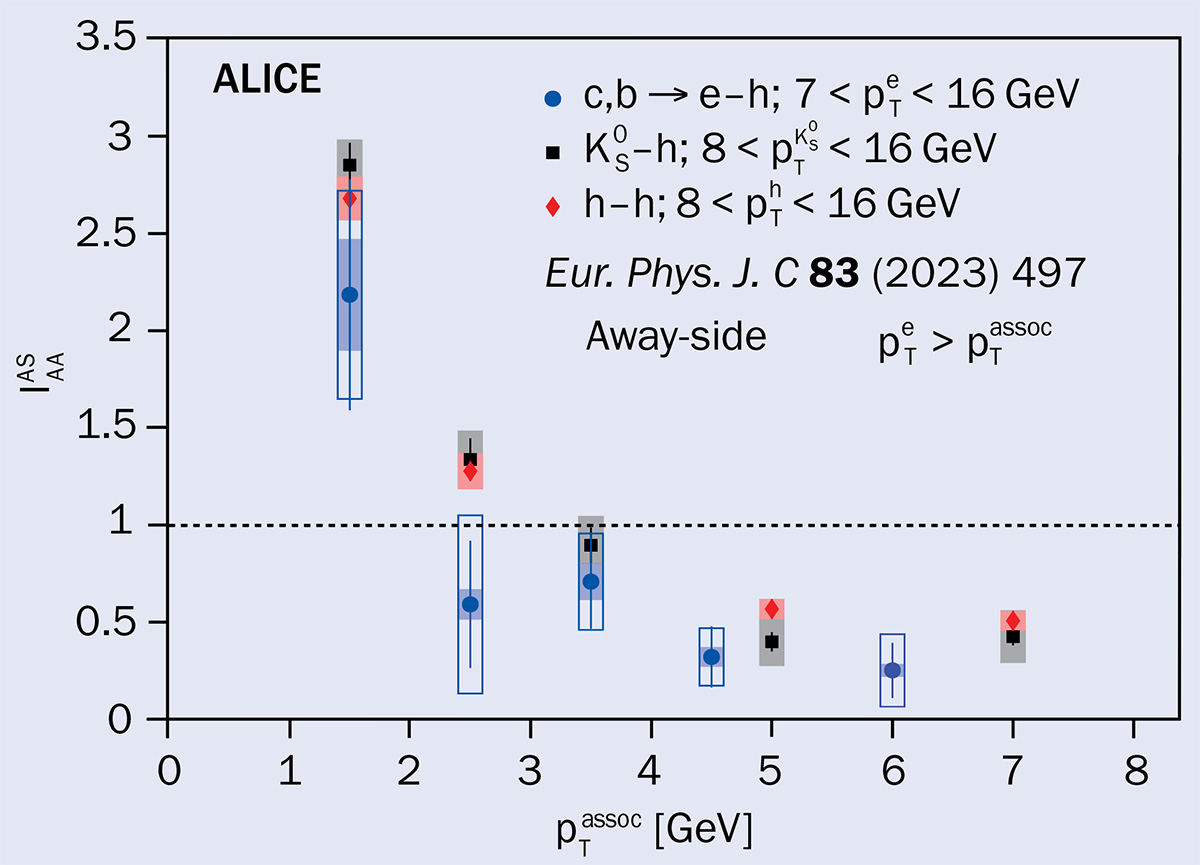
Over the past 15 years, the ALICE collaboration has shown that the abundance of strange over non-strange hadrons grows with event multiplicity in all collision systems. In particular, high-multiplicity proton–proton (pp) collisions display a significant strangeness enhancement, reaching saturation levels similar to those in heavy-ion collisions. In one of the most precise studies of strange-to-non-strange hadron production to date, the ALICE collaboration has reported its recent results from pp and lead–lead collisions at the LHC.

Strange hadrons (Ks0, Λ, Ξ, Ω) were reconstructed from their weak-decay topologies. Candidates were then selected by applying geometrical and kinematic cuts, estimating and subtracting backgrounds, and correcting the resulting distributions using detector-response simulations. The analyses were carried out at a centre-of-mass energy per nucleon pair of 5.02 TeV and span a wide multiplicity range, from 2 to 2000 charged particles at mid-rapidity.

To better understand how strangeness is produced, the collaboration has taken a significant step by measuring the probability distribution of forming a specific number of strange particles of the same species per event. This study, based on event-by-event strange-particle counting, moves beyond average yields and probes higher orders in the strange-particle production probability distribution. To account for the response of the detector, each candidate is assigned a probability of being genuine rather than background, and a Bayesian unfolding method iteratively corrects for particles that were missed or misidentified to reconstruct the true counts. This provides a novel technique for testing theoretical strangeness-production mechanisms, particularly in events characterised by a significant imbalance between strange and non-strange particles.

Exploiting a large dataset of pp collisions, the probability of producing n particles of a given species S (S = Ks0, Λ, Ξ or Ω) per event, P(nS), could be determined up to a maximum of nS = 7 for Ks0, nS = 5 for Λ, nS = 4 for Ξ and nS = 2 for Ω (see figure 1). An increase of P(nS) with charged-particle multiplicity is observed, becoming more pronounced for larger n, as reflected by the growing separation between the curves corresponding to low- and high-multiplicity classes in the high-n tail of the distributions.

The average production yield of n particles per event can be calculated from the P(nS) distributions, taking into account all possible combinations that result in a given multiplet. This makes it possible to compare events with the same or a different overall strange quark content that hadronise into various combinations of hadrons in the final state. While the ratio between Ω triplets to single Ks0 shows an extreme strangeness-enhancement pattern up to two orders of magnitude across multiplicity, comparing hadron combinations that differ in up- and down-quark content but share the same total s-quark content (for instance, Ω singlets compared to Λ triplets) helps isolate the part of the enhancement unrelated to strangeness.

Comparisons with state-of-the-art phenomenological models show that this new approach greatly enhances sensitivity to the underlying physics mechanisms implemented in different event generators. Together with the traditional strange-to-pion observables, the multiplicity-differential probability distributions of strange hadrons provide a more detailed picture of how strange quarks are produced and hadronise in high-energy collisions, offering a stringent benchmark for the phenomenological description of non-perturbative QCD.

Introduction to neutrino and particle physics

Neutrino physics is a vibrant field of study, with spectacular recent advances. To this day, neutrino oscillations are the only experimental evidence of physics beyond the Standard Model, and, 25 years after this discovery, breathtaking progress has been achieved in both theory and experiment. Giulia Ricciardi’s new textbook provides a timely new resource in a fast developing field.

Entering this exciting field of research can be intimidating, thanks to the breadth of topics that need to be mastered. As well as particle physics, neutrinos touch astroparticle physics, cosmology, astrophysics, nuclear physics and geophysics, and many neutrino textbooks assume advanced knowledge of quantum field theory and particle theory. Ricciardi achieves a brilliant balance by providing a solid foundation in these areas, alongside a comprehensive overview of neutrino theory and experiment. This sets her book apart from most other literature on the subject and makes it a precious resource for newcomers and experts alike. She provides a self-contained introduction to group theory, symmetries, gauge theories and the Standard Model, with an approach that is both accessible and scientifically rigorous, putting the emphasis on understanding key concepts rather than abstract formalisms.

With the theoretical foundations in place, Ricciardi then turns to neutrino masses, neutrino mixing, astrophysical neutrinos and neutrino oscillations. Dirac, Majorana and Dirac-plus-Majorana mass terms are explored, alongside the “see-saw” mechanism and its possible implementations. A full chapter is devoted to neutrino oscillations in the vacuum and in matter, preparing the reader to explore neutrino oscillations in experiments, first from natural sources, such as the Sun, supernovae, the atmosphere and cosmic neutrinos; a subsequent chapter then covers reactor and accelerator neutrinos, giving a detailed overview of the key theoretical and experimental issues. Ricciardi avoids a common omission in neutrino textbooks by addressing neutrin–nucleus interactions – a fast developing topic in theory and a crucial aspect of interpreting current and future experiments. The book concludes with a look at the current research and future prospects, including a discussion of neutrino-mass measurements and neutrinoless double-beta decay.

The clarity with which Ricciardi links theoretical concepts to experimental observations is remarkable. Her book is engaging and eminently enjoyable. I highly recommend it.

If Einstein had known

How would Einstein have reacted to Bell’s theorem and the experimental results derived from it? Alain Aspect’s new French-language book Si Einstein avait su (If Einstein had known) can be recommended to anybody interested in the Einstein–Bohr debates about quantum mechanics, how a CERN theorist, John Stewart Bell (1928–1990), weighed in in 1964, and how experimentalists converted Bell’s idea into ingenious physical experiments. Aspect shared the 2022 Nobel Prize in Physics with John F Clauser and Anton Zeilinger for this work.

The core part of Aspect’s book covers his own contributions to the experimental test of Bell’s inequality spanning 1975 to 1985. He gives a very personal account of his involvement as an experimental physicist in this matter, starting soon after he visited Bell at CERN in spring 1975 for advice concerning his French Thèse d’État. With anecdotes that give the reader the impression of sitting next to the author and listening to his stories, Aspect recounts how, in 1975, captivated by Bell’s work, he set up experiments in underground rooms at the Institut d’Optique in Orsay to test hidden-variable theories. He explains his experiments in detail with diagrams and figures from his original publications as well as images of the apparatus used. By 1981 and for several years to come, it was Aspect’s experiments that came closest to Bell’s idea on how to test the inequality formulated in 1964. Aspect defended his thesis in 1983 in a packed auditorium with illustrious examiners such as J S Bell, C Cohen-Tannoudji and B d’Espagnat. Not long afterwards, Cohen-Tannoudji invited him to the Collège de France and the Paris ENS to work on the laser cooling and manipulation of atoms – a quite different subject. At that time, Aspect didn’t see any point in closing some of the remaining loopholes in his experiments.

To prepare the terrain for his story, Aspect first tells the history of quantum mechanics from 1900 to 1935. He begins with a discussion of Planck’s blackbody radiation (1900), Einstein’s description of the photoelectric effect (1905) and the heat capacity of solids (1907), the wave–particle duality of light, first Solvay Congress (1911), Bohr’s atomic model (1913) and matter–radiation interaction according to Einstein (1916). He then covers the Einstein–Bohr debates at the Solvay congresses of 1927 and 1930 on the interpretation of the probability aspects of quantum mechanics.

Aspect then turns to the Einstein, Pod­olsky, Rosen (EPR) paper of 1935, which discusses a gedankenexperiment involving two entangled quantum mechanical particles. Whereas the previous Einstein–Bohr debates ended with convincing arguments by Bohr refuting Einstein’s point of view, Bohr didn’t come up with a clear answer to Einstein’s objection of 1935, namely that he considered quantum mechanics to be incomplete. In 1935 and the following years, for most physicists the Einstein–Bohr debate had been considered uninteresting and purely philosophical. It had practically no influence on the success of the application of quantum mechanics. Between 1935 and 1964, the EPR subject was nearly dormant, apart from David Bohm’s interventions during the 1950s. In 1964 Bell took up the EPR paradox, which had been advanced as an argument that quantum mechanics should be supplemented by additional variables (CERN Courier July/August 2025 p21).

Aspect describes clearly and convincingly how Bell entered the scene and how the inequality with his name triggered experimentalists to get involved: experiments with polarisation-entangled photons and their correlations could decide whether Einstein or Bohr’s view of quantum mechanics was correct. Bell’s discovery transferred the Einstein–Bohr debate from epistemology to the realm of experimental physics. At the end of the 1960s the first experiments based on Bell’s inequality started to take form. Aspect describes how these analysed the polarisation correlation of the entangled photons at a separation of a few metres. He discusses their difficulties and limitations, starting with the experiments launched by Clauser et al.

In the final chapter, covering 1985 to the present, Aspect explains why he decided not to continue his research with entangled photons and to switch subject. His opinion was that the technology at the time wasn’t ripe enough to close some of the remaining loopholes in his experiments – loopholes of a type that Bell considered less important. Aspect was convinced that if quantum mechanics was faulty, one would have seen indications of that in his experiments. It took until 2015 for two of the loopholes left open by Aspect’s experiments (the locality and detection loophole) to be simultaneously closed. Yet no experiment, as ideal as it is, can be said to be totally loophole-free, as Aspect says. The final chapter also covers more philosophical aspects of quantum non-locality and speculations about how Einstein would have reacted to the violation of Bell’s inequalities. In complementary sections, Aspect speaks about the no-cloning theorem, technological applications of quantum optics like quantum cryptography according to Ekert, quantum teleportation and quantum random number generators.

Who will profit from reading this book? First one should say that it is not a quantum-mechanics or quantum-optics textbook. Most of the material is written in such a way that it will be accessible and enjoyable to the educated layperson. For the more curious reader, supplementary sections cover physical aspects in deeper detail, and the book cites more than 80 original references. Aspect’s long experience and honed pedagogical skills are evident throughout. It is an engaging and authoritative introduction to one of the most profound debates in modern physics.

Hendrik Verweij 1931–2025

Henk Verweij

Hendrik Verweij, who was for many years a driving force in the development of electronics for high-energy physics, passed away on 11 August 2025 in Meyrin, Switzerland, at the age of 93.

Born in Linschoten near Gouda in the Netherlands, Henk earned a degree in electrical engineering at the Technical High School in Hilversum and started his career as an instrumentation specialist at Philips, working on oscilloscopes. He joined CERN in July 1956, bringing his expertise in electronics to the newly founded laboratory. With Ian Pizer, group leader of the electronics group of the nuclear-physics-division, he published CERN Yellow Report 61-15 on a nanosecond-sampling oscilloscope, followed by a paper on a fast amplifier one year later.

During the next four decades, developments in electronics profoundly transformed the world. Henk played a crucial role in bringing this transformation to CERN’s electronics instrumentation, and he eventually succeeded Pizer as group leader. Over the years he worked with numerous colleagues on fast signal-processing circuits. The creation of a collection of standardised modules facilitated the setup of a variety of CERN experiments. With Bjorn Hallgren and others, he realised the simultaneous, fast time and amplitude digitisation of the inner drift detector of the innovative UA1 experiment at CERN’s Super Proton Synchrotron, which discovered the W and Z bosons together with the UA2 experiment.

In the 1960s, recognising the importance of standardisation for engaging industry, Henk built close ties with colleagues in the US, including at Lawrence Berkeley Laboratory, SLAC and the National Bureau of Standards (NBS). He took part in the discussions that led to the Nuclear Instrumentation Module (NIM) standard, defined in 1964 by the US Atomic Energy Commission, and served on the NIM committee chaired by Lou Costrell of the NBS.

Henk was also a member of the ESONE committee for the CAMAC and later FASTBUS standards, working alongside colleagues such as Bob Dobinson, Fred Iselin, Phil Ponting, Peggie Rimmer, Tim Berners-Lee and many others from across Europe and the US in this international effort. He contributed hardware for standard modules both before and after the publication of the FASTBUS specification in 1984, and reported regularly at conferences on the status of European developments. A strong advocate of collaboration with industry, he also helped persuade LeCroy to establish a facility near CERN.

A driving force in the development of electronics for high-energy physics

Towards the end of his career, Henk became group leader of the microelectronics group at CERN, closing the loop in this transformational electronics evolution with integrated circuit developments for silicon microstrip, hybrid pixel and other detectors. When he retired in the 1990s, the group had built up the necessary expertise to design optimised application-specific integrated circuits (ASICs) for the LHC detectors. Ultimately, these allow the recording of millions of frames per second and event selection from the on-chip stored data.

Retirement did not diminish Henk’s interest in CERN and its electronics activities. He often passed by in the microelectronics group at CERN, regularly participating in Medipix meetings on the development of hybrid pixel-detector read-out chips for medical imaging and other applications.

Henk played an important role in making advances in microelectronics available to the high-energy physics community. His friends and colleagues will miss his experience, vision and irrepressible enthusiasm.

bright-rec iop pub iop-science physcis connect