The Chamonix Workshop is the annual strategic meeting of the CERN Accelerator and Technology Sector (ATS), a long-standing tradition dating back to 1991. Initially dedicated to the performance of the LEP collider, the workshop shifted its focus to the LHC in 2001 and, since 2024, has covered the entire CERN accelerator complex as well as future projects.
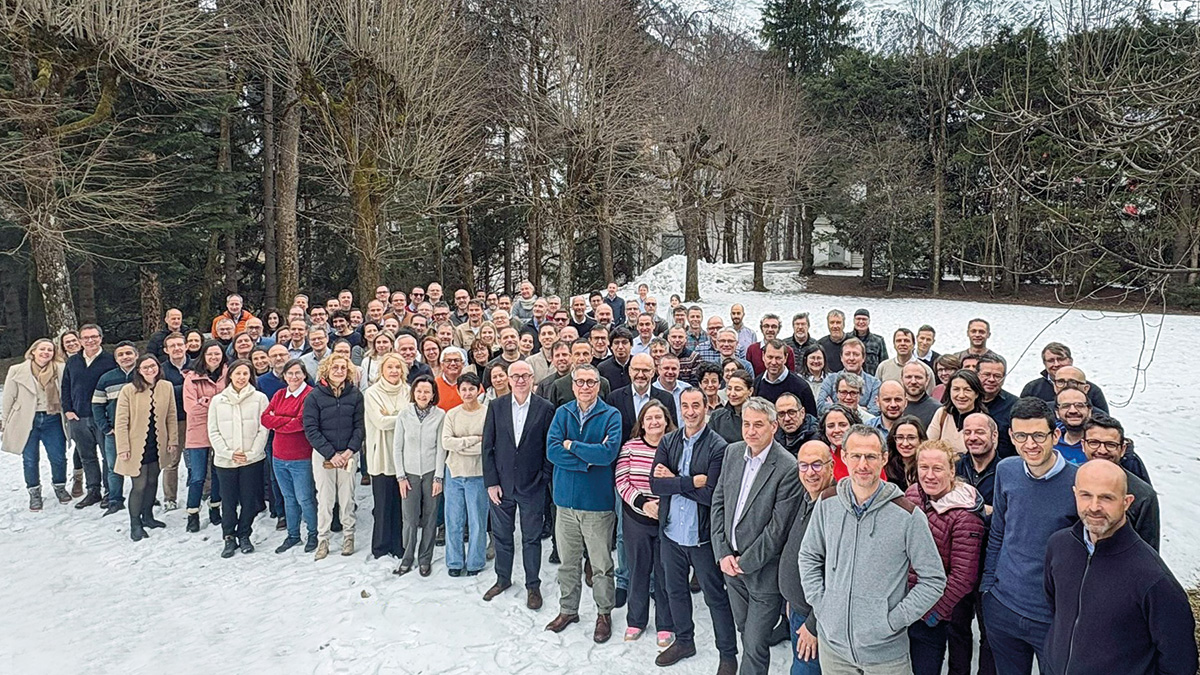
The 28th edition took place at the Majestic conference centre in Chamonix from 2 to 5 February, with around 130 participants from CERN attending, along with international guests. This year’s workshop was quite unique, as it covered not only the operational aspects of the accelerator complex until the end of Run 3, but also the tasks and challenges facing the sector for Long Shutdown 3 (LS3), which will start in July for the LHC and on 31 August for the rest of the injector complex (the ISOLDE facility and AWAKE experiment have already started their LS3 activities). There was also discussion of the 2026 update to the European Strategy for Particle Physics, and its implications for future activities at CERN.
Record-breaking
2025 was yet another year of records for the CERN accelerator complex. The LHC integrated a proton–proton dataset of 125 fb–1, the highest to date for a single year, and produced physics collisions with neon and oxygen ions for the first time. The Proton Synchrotron Booster delivered record intensities to the ISOLDE facility, as did ELENA to the AD experiments, while the SPS North Area received 20% more spills than targeted. Operation in 2026 was discussed at length, in particular the strategy for settings management and the tests still to be performed before LS3. These include reliability runs in the LHC injectors to ensure that the beams planned for the High-Luminosity LHC (HL-LHC) are operationally ready in the injector chain, and a high-intensity test scheduled in the LHC for the last two weeks of Run 3. This is unknown territory for beam physics and probes the limits of existing LHC equipment, which was designed for “ultimate” intensities of 1.7 × 10¹¹ protons per bunch, against the 2.3 × 10¹¹ expected for the HL-LHC.
The second and third days of the workshop focused on LS3 activities. The first priority is the HL-LHC project, which aims to produce 10 times more physics data than the LHC. Progress towards the HL-LHC was reviewed in detail, and significant advancements were noted on all fronts, as the project prepares to transition to the installation phase in the LHC tunnel. Installation activities are proceeding well in the new HL-LHC technical galleries, with the major cryogenic refrigerator installations nearly complete.
2025 was yet another year of records for the CERN accelerator complex
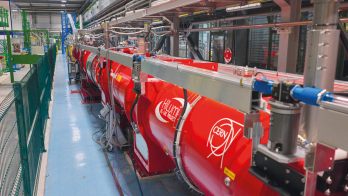
Progress with the inner triplet (IT) magnet string test in the SM18 test hall received particular attention. The test stand has since reached a vital operational milestone: cool-down began on 9 March and reached 1.9 K just eight days later, with the first powering tests following on 20 April. This is a major achievement that will allow the collective behaviour of the different systems in the final-focus zone of the HL-LHC to be validated. Lessons learnt from the IT string installation have already led to design changes that will greatly facilitate the work in the LHC tunnel.
In 2025, some technical challenges required mitigation actions to ensure the timely readiness of certain components. ATLAS and CMS also experienced some technical difficulties, which are being addressed to minimise their impact.
Other LS3 projects include an intensity and energy upgrade for ISOLDE, with major works to replace the current beam dumps; consolidation of the SPS North Area to renovate this fixed-target experimental area after 47 years of operation; and its preparation for the high-intensity ECN3 project, in view of the Beam Dump Facility and the recently approved SHiP experiment.
A solid plan for LS3 is now established, with all the main activities scheduled and only details to be finalised. On the critical path ahead lies the upgrade of the experimental insertions at points 1 and 5, where the LHC equipment will be removed to make way for the HL-LHC. The “safety first, safety always” message was clear. The successful and timely completion of LS3 will rely on the expertise, ingenuity, commitment and dedication of all the CERN teams involved.
A solid plan for LS3 is now established
The last day of the workshop was dedicated to the Laboratory’s longer-term future. It opened with how the FCC programme fits into the CERN strategy for 2026–2030, followed by talks on its organisation and an initial look at the workforce required for its implementation. The baseline accelerator design concepts for the FCC-ee and its injector complex, as well as the FCC-hh, were also discussed. The final session covered the development of an ATS roadmap for common accelerator-control hardware and software, advances in magnet and radio-frequency acceleration technologies, and the future fixed-target physics landscape.
Bringing together colleagues from across the ATS sector and beyond, the workshop was once again an excellent opportunity to take stock of the breadth of activities across the CERN accelerator complex and to finalise preparations for LS3.