Comsol -leaderboard other pages

Topics

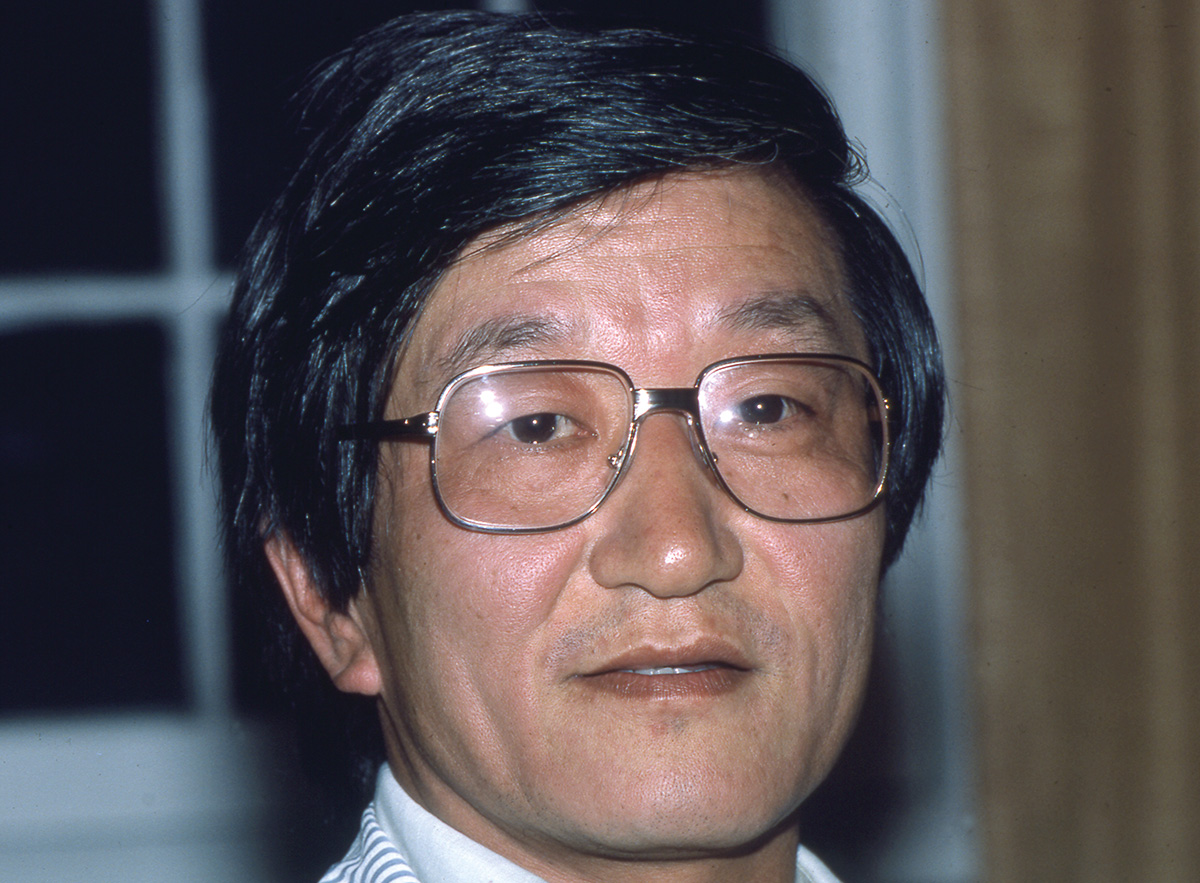
Mannque Rho 1936–2026

Mannque Rho

Mannque Rho, a world-renowned theoretical nuclear physicist from the Republic of Korea and distinguished member of the Institut de Physique Théorique (IPhT) at CEA Saclay, passed away in Paris on 19 March 2026, at the age of 89.

Born on 14 December 1936 in Hamyang, Gyeongnam Province, Rho was the eldest of eight children. He initially studied political science at Seoul National University and later moved to the US, completing his undergraduate education at Clark University with a Bachelor of Arts in chemistry in 1960. He obtained his PhD from the University of California, Berkeley, on 21 October 1963.

At Berkeley, Rho met Vincent Gillet, who invited him to take up a postdoctoral position at the Service de Physique Théorique (SPhT), the predecessor of IPhT at CEA Saclay. He moved to France in 1964 on a Joliot-Curie fellowship, to work at the Laboratoire Joliot-Curie in Orsay and at the SPhT. There, he joined the theoretical nuclear-physics team led by Claude Bloch, becoming a permanent member on 1 June 1965. This institute remained his intellectual home throughout his career.

Rho’s work spanned chiral symmetry in nuclear media, effective field theories and topological approaches to strongly interacting matter. In the early 1970s, he initiated a long-lasting collaboration with Gerald E Brown at Stony Brook University. Together, in 1979, they developed the “little bag” model, providing a conceptual bridge between quark degrees of freedom and the pion cloud surrounding nucleons.

He is best-known for the Brown–Rho scaling (1991), which describes the in-medium modification of hadron masses in hot and/or dense matter. This influential result has shaped modern approaches to dense nuclear matter, with important implications for heavy-ion collisions and neutron-star physics. Rho also made major contributions to the construction of effective field theories rooted in quantum chromodynamics, and conducted pioneering work on skyrmion matter and hidden local symmetries.

Over his career, Rho published more than 200 scientific articles, which have received over 11,000 citations. He authored the Chiral Nuclear Dynamics trilogy (with Maciej A Nowak, Ismail Zahed and Yong-Liang Ma) and edited several volumes of collected works.

Rho held visiting positions at leading institutions worldwide, including CERN, Stony Brook University, Seoul National University and the University of Tokyo – as a JSPS professor. He served as professor at the Korea Institute for Advanced Study and chair professor at Hanyang University.

His scientific achievements were recognised through numerous honours: the Paul Langevin Prize (1985), the Gay-Lussac–Humboldt Prize (1995), the Korean National Academy of Sciences Award (1999) and the Ho-Am Prize (2002). He received the Order of Civil Merit in 1997, an honorary Doctor of Science degree from Clark University in 2003 and the KBS Overseas Korean Award in 2004. He was a member of the Korean Academy of Science and Technology.

Remarkably, Rho remained scientifically active into his final years, working on superdense baryonic matter as recently as November 2025. The IPhT deeply regrets his loss, but his legacy will endure in theoretical nuclear physics. We extend sincere condolences to his family, colleagues and students.

Mick Storr 1949–2026

It was with profound sadness that we learned about the passing of Mick Storr on 7 June 2026, in Geneva. A deeply respected member of the CERN family and an extraordinary educator, he touched the lives of generations of teachers worldwide.

Mick was born in Farsley, a village in the Leeds district of West Yorkshire, England, on 11 February 1949. After completing his PhD at the University of Birmingham in 1975, Mick immediately came to CERN as a user affiliated with Lancaster University, working in the Photon Beam Collaboration at the OMEGA Spectrometer. He stayed on as a fellow and then a staff member in the Data Handling Division, joining the emulator effort in its early days. There, he developed key translator, trigger, testing and interface software, work that fed the 168E emulators used in UA1 during the years of the discovery of the W and Z bosons, and later the CERN–SLAC collaboration on the 3081E emulators.

From 1989 he joined the Electronics and Computing for Physics Division, where he pioneered the use of object-oriented programming in high-energy physics and supported the World Wide Web development team. As divisional training officer, he began the move to the second part of his CERN career.

For nearly a decade from 1997, Mick oversaw the technical training programme, keeping it up to date with courses that met the evolving needs of the CERN community. With Michelangelo Mangano, he co-founded and ran the CERN High School Teachers (HST) programme. Mick had a unique gift for helping teachers overcome any sense of intimidation and recognise their essential role in CERN’s mission, reminding them that they lay the foundations for the scientists and engineers of tomorrow. Through his vision and dedication, the CERN teacher programmes grew into a worldwide community built on curiosity, friendship and international collaboration.

His retirement from CERN in 2013 opened only a new chapter. Returning to his alma mater as an honorary senior research fellow, he continued to contribute to science education as an active CERN user.

Many learned a great deal from Mick – a mentor, guide and constant source of encouragement. Much of what makes CERN’s teacher programmes so special today reflects the principles he championed, his values and his unwavering belief in the importance of teachers and education. Many will remember his lectures and storytelling, his songs and barbecues, the countless moments in which he made every participant feel welcomed and valued. Mick had a remarkable ability to connect with people from every country and background, and always with an unmistakable smile.

One of his best-known sayings was: “At CERN, we never say goodbye, we only say au revoir.” Those words are hard to hear today, yet they capture the extraordinary legacy he leaves through the many teachers whose lives he touched, inspired, encouraged and welcomed at CERN over so many years.

Beyond his professional achievements, Mick had a wide range of interests. A squash player invited to the Swiss national team, a lifelong footballer and later a coach, he was also active in the Geneva Amateur Operatic Society, rising from the back row of the chorus to leading roles. In winter, he skied most weekends with the CERN ski club, and even took up snowboarding in his fifties. He is survived by his daughters Sophie and Scarlett and his grandchildren Isabelle and Max, who were a source of great pride and joy to him.

Merci et au revoir, Mick, and thank you for 51 remarkable years at CERN.

Directing a decade

What would you say were CERN’s scientific and technological highlights of the past 10 years?

I would start by highlighting the excellent performance of the accelerator complex, the experiments and the computing infrastructure, all of which have gone well beyond forecasts. Thanks to these achievements, and to the increasing sophistication of the data analyses, the Laboratory’s scientific output has far surpassed what one could have anticipated, both in breadth and depth. The diversity of results across all our facilities is impressive, and physics sensitivities have exceeded even the most optimistic expectations. Notably, some studies originally foreseen for the High-Luminosity LHC (HL-LHC) phase are already being carried out today.

Secondly, the approval of the HL-LHC by the CERN Council in June 2016 marked a major milestone for the future of the LHC programme, and paved the way for substantial progress in upgrading both the accelerator complex and the experiments. As a first step, the successful Long Shutdown 2, carried out during the challenging COVID-19 period, enabled significant upgrades to the injectors and the completion of the Phase-1 upgrades of the four experiments.

Following the establishment of the Physics Beyond Colliders (PBC) Study Group in 2016, we have strengthened the Laboratory’s programme of physics complementary to the LHC, notably with the approval of new experiments and projects such as FASER, SND@LHC and a high-intensity beam-dump facility at the North Area. The Neutrino Platform has remained a focal point for the neutrino community in Europe and beyond, enabling key detector R&D, technology demonstration and prototyping activities, as well as the construction of two large cryostats for the DUNE experiment at the Long-Baseline Neutrino Facility in the United States.

The extraordinary work towards the Future Circular Collider (FCC) over the past 10 years, culminating in the highly successful Feasibility Study, laid the foundations for a brilliant long-term future for CERN and the field, and served as a key input to the ongoing update of the European Strategy for Particle Physics. In December 2025, the European Strategy Group recommended the FCC-ee as the next flagship facility at CERN, a pivotal step for the future of particle physics. Chapeau to the entire CERN community for these extraordinary achievements!

You were CERN’s first female Director-General. When you first took on the role, did you find the focus on your gender a bit frustrating?

I cannot say that I found it frustrating. What surprised me was that people would tell me I was a role model. I did not consider myself a model of anything, so I was somewhat embarrassed by that description. But then I told myself that, if the fact that a woman held the position of CERN Director-General could encourage young women to pursue a career in science, I was happy to play that role.

Did your experience as Director-General differ from what you expected?

From the outset, it was an extraordinary experience, far broader than I had expected. I had to deal with a myriad of matters: not only scientific and technical ones, but also finances and human resources, environment and sustainability, relationships with governments, the public and the media, as well as the daily management of a laboratory as complex as CERN.

The extraordinary work towards the FCC has laid the foundations for a brilliant long-term future for CERN

Fortunately, I was surrounded by an excellent management team of directors, department heads and project leaders, and could count on the support, competence, enthusiasm and dedication of the entire CERN community. I am very grateful to the CERN Member States for the unique opportunity to serve as Director-General for two terms, and for their sustained support and trust throughout the 10 years.

There is one thing I would never have imagined I would need to do: raise substantial funding from the private sector. As a physicist, that was entirely outside my experience…

Despite that, you announced one billion US dollars of private funding for FCC shortly before the end of your tenure. How did you approach donations?

When I started my first term as CERN Director-General, I had no experience whatsoever with donations. I had not raised a single penny in my entire life!

I remember that, in the context of the Science Gateway, I considered hiring a professional fundraiser at some point. But then I realised that the salaries of these people were astronomical, so I abandoned the idea.

Over the years, I learned a lot from experience. I learned that fundraising is very much a matter of personal connections, and I was lucky enough to have some very good ones before becoming CERN Director-General. I also learned that donors love bold, ambitious projects like the FCC, projects that enable major progress for humanity. Finally, donors engage if they trust the institution, in this case CERN, but also if they trust the person. I think they trusted me.

What made you decide to pursue private donations, and how did the policy framework for accepting them come about?

Both the Science Gateway and FCC are extremely challenging projects in their respective areas. I quickly realised that projects of this kind can only be achieved with exceptional levels – and therefore sources – of funding.

The Science Gateway was a dream I had from the beginning of my first term, in 2016. At the time, I realised we could host 150,000 visitors annually, compared with 300,000 requests. That seemed a shame to me. The limitation came from the number of visitor areas, which led to the idea of a new building – a dedicated space that could expand our offer to the public. CERN’s budget provides only limited funding for education, communication and outreach initiatives, and the money raised annually through the CERN & Society Foundation was far from enough to cover a 100-million-Swiss-franc project. So we had to undertake a dedicated fundraising campaign.

The Science Gateway was a dream I had from the beginning of my first term

Then we obtained a 48-million-US-dollar donation from the “Eric and Wendy Schmidt Fund for Strategic Innovation” for the “Next Generation Triggers” project, which primarily supports the development of AI-based algorithms for the high-level triggers of ATLAS and CMS at the HL-LHC. It was the first donation ever made to the CERN budget for a scientific project, and prompted us to develop a policy for this type of contribution. The policy was approved by the CERN Council in December 2024. It provides a robust set of principles and boundaries to harness the potential benefits from private funding while safeguarding the integrity and independence of the CERN scientific programme. I had already begun discussions with potential donors regarding the FCC, and the policy provided a framework for those efforts.

The FCC is an unprecedented project, and it has always been clear to me that the two traditional sources of funding for CERN projects, contributions from Member and Non-Member States, would not suffice. We consequently decided to explore two avenues that are innovative for our field: the European Commission and private donors. Concerning the former, the FCC was the first on a list of potential “Moonshot” projects in the draft Multiannual Financial Framework for the 2028–2034 period, along with a substantial dedicated budget line. As for the latter, we received pledges totalling one billion US dollars from philanthropists in the United States and Europe. I am deeply grateful to them for their generosity, vision and commitment to fundamental research.

I would like to emphasise that the main source of CERN funding has been, is, and must remain the regular contributions from the Member and Associate Member States to the CERN annual budget. Private donations are extremely valuable, but they can never replace the long-term funding stability that these contributions provide, which has been one of the key reasons for CERN’s success over the decades.

How did you handle periods of crisis?

The key was teamwork, one of CERN’s strongest assets at all levels. As Director-General, I always drew on people’s strengths, and I was fortunate enough to work with extremely talented and dedicated collaborators across the entire Organisation. I should also mention that the knowledge of CERN and the experience I accumulated over 30 years as a member of staff proved particularly helpful during those challenging periods.

So we faced crises, from the COVID-19 pandemic to the consequences of the Russian invasion of Ukraine, and the high inflation and energy prices of 2023, in true CERN style: by working together. In the decision-making phase, different experts brought their perspectives, concerns and solutions to the table. In the implementation of measures, the relevant services, departments and units deployed their technical expertise. The approach was always collective. Of course, as Director-General, I had to take the final decision, and sometimes that was tough, especially in the context of budget cuts. But those decisions were always well-informed, grounded in collective thinking and shared expertise.

The serious crises we have experienced over the past 10 years have clearly highlighted the strength and resilience of CERN as an institution and of its community.

Do you think science can still be a force for peace?

Absolutely, because science is universal and unifying. Universal, because it is based on objective facts, the laws of nature, and not on opinions. An apple falls in the same way, whether it falls in Isaac Newton’s garden in 17th-century England, or today in Switzerland, China or the United States. Unifying, because the thirst for knowledge and the desire to understand how things work are intrinsic to humanity. Thus, science has no passport, belief or gender, and can help connect people in our fractured world.

There is no way to address today’s global challenges without science

In this context, the role of CERN is emblematic. It was founded in 1954, amid the ruins of the Second World War, at a turning point in history, with the dual aim of restoring the continent’s scientific excellence and promoting peaceful collaboration among Europe’s countries and peoples through science. Today, CERN is not only a world-class scientific facility and the world leader in high-energy particle physics: it is a value system, embracing and promoting knowledge, innovation, training and education, collaboration across borders, inclusion, diversity and open science.

Institutions like CERN show what humanity can achieve when we set aside our disputes and work together for the common good. They give us hope for a better world and are more relevant today than ever.

Does CERN have a responsibility to guide the world in new technologies such as AI?

I do not think that CERN’s role is to lead the world in the development of new technologies. Our primary mission is fundamental research, and we develop advanced technologies, in collaboration with our partner institutes in the Member States and beyond, insofar as they are necessary to achieve our scientific objectives.

Machine learning and other AI techniques have been used at CERN for many years, and have proven to be valuable tools in a wide range of applications, from accelerator operation to increasing the sensitivity of physics analyses. However, I do not consider it part of our mission to conduct research in AI as a goal in itself. CERN will, of course, need to develop those aspects of AI that are specific to our field when suitable solutions do not already exist. But we should neither reinvent existing solutions nor transform ourselves into a laboratory dedicated to developing all interesting technologies for their own sake.

What are you planning to do next?

I plan to return to active research, at least for part of my time. I have always loved all areas of physics, but the Higgs boson is particularly intriguing and very close to my heart. We have learned a great deal over the past 14 years, yet this key particle remains quite mysterious. There is a rich, compelling and exciting programme of studies ahead at the HL-LHC and, potentially, at the FCC-ee.

I also plan to continue promoting science in other contexts, including as a member of the Board of Trustees of the World Economic Forum. I believe there is no way to address today’s global challenges, from health to climate change, without science.

The FCC, half a century on

The community has spoken: the electron–positron Future Circular Collider (FCC-ee) is the preferred next flagship project for CERN. As an initiator of the concept of a circular Higgs factory in 2011, I was elated by this outcome. But it also made me wonder: why did it take so long? To answer this, we need to travel back 50 years.

1976 was an eventful year for particle physics. The open charm was discovered at SPEAR, while the J/ψ earned Burton Richter and Samuel Ting their Nobel Prize. The same year, Richter authored both the first yellow report on a large e+e– (LEP) colliding ring and the first paper proposing a linear e+e– collider. Gargamelle’s measurement of the ratio of Z-induced over W-induced neutrino interactions had allowed the Standard Model (SM) – by then a familiar name – to predict the masses of the W and Z bosons. And Carlo Rubbia, synergy wizard, proposed to undercut the e+e– aficionados by converting the SPS into a proton–antiproton collider. The W and Z bosons were duly discovered in 1983.

In 1987, following the La Thuile Workshop on Physics at Future Accelerators and before LEP had even been completed, Rubbia called a general meeting in CERN’s main auditorium to discuss the future beyond LEP. Two contenders stood out: a 5 TeV e+e– linear collider in a new 30 km tunnel (CLIC), or a 20 TeV pp collider (LHC) with the advantage of fitting in the already financed and nearly finished LEP tunnel. The relative physics merits of the two machines were compared on supersymmetry and Higgs compositeness. The LHC was chosen, and CLIC became a priority R&D programme.

We had a whale of a time at LEP, establishing that light neutrinos are exactly three, measuring the Z mass to six digits and predicting the top-quark mass through radiative corrections a few months before its Tevatron discovery.

By 1996, the LHC was approved and a small group at CERN was considering what could follow it. The listed options were a high-energy future LHC (FLHC), CLIC, and a 4 TeV muon collider. A first 0.5–1 TeV linear collider (LC) was assumed to be done elsewhere. In that context, a circular e+e– machine was mentioned only as a top factory add-on to the FLHC programme, with a design extrapolated from LEP and a performance well below the LC. The prevailing assumption was that the LHC would detect the Higgs boson and supersymmetry, if either existed.

A breakthrough came in 1999, when the asymmetric B factories PEP-II and KEKB, with separated e+ and e– rings and continuous top-up injection, demonstrated luminosities orders of magnitude higher than LEP. Meanwhile, LEP Higgs-hunted fiercely until the end of 2000, setting a lower mass limit at 114.5 GeV, while precision measurements set an upper mass limit of about 180 GeV.

The hunt is on

Come the summer of 2011, the LHC experiments were taking data at 7 TeV. The hunt for the Higgs and the supersymmetric particles was on, and the first limits already constrained the Higgs mass below that of a W pair. That clarified the required centre-of-mass energy of a Higgs factory: a relatively low-energy e+e– collider would do. Locating it in the LEP/LHC tunnel was an obvious possibility, and had already been discussed in the corridors of the EPS-HEP conference in Grenoble that July. Five months later, applying the B-factory design principles, a Higgs factory fitting in the LHC tunnel was evaluated. “LEP3” offered luminosity significantly higher than the linear collider, and the advantage of running several experiments simultaneously. On the downside, its maximum energy fell short of the top-pair-production threshold… and the LHC tunnel was already occupied.

None of this was a straight line. It took 15 years for the physics to make the case on its own terms

Presented with this evaluation, some members of the CERN Scientific Policy Committee suggested that an e+e– Higgs factory more than triple the size of LEP would make a great initial step towards a higher-energy version of the LHC, which was already under consideration. Inserting the Higgs factory in a 100 km tunnel did magic. With its large bending radius, the machine reached the top-pair threshold while covering a wide range of energies and luminosities. It delivered large statistics at the Z pole, with 6 × 1012 visible Z decays, and transverse polarisation for exquisite energy calibration up to the W-pair threshold. Those were key ingredients in achieving a vertiginous potential for statistical and systematic improvement, by up to a factor of 500 or more over the old LEP precision measurements. The Z run, it was later realised, would turn FCC-ee into a flavour factory for b and tau precision studies, and also enable unique searches for feebly coupled particles in the 5–80 GeV mass range.

What lies beyond

When the Higgs came, it did so at 125 GeV – too high for most incarnations of supersymmetry, too low for theories of a composite Higgs, and consistent with an unchanged SM up to very high energies. It raised the question of what lies behind the SM and at which energies, making it essential for the future of particle physics to include an extensive programme of precision measurements, in the hope of detecting deviations from the SM that could guide the next steps. The Higgs itself was also of obvious interest, and a lepton collider the natural way to study it.

These arguments were summarised in two contributions to the 2013 update of the European Strategy and led to the recommendation of a costed design study of FCC-hh and FCC-ee. The 2020 update continued it as a feasibility study, which led in turn to the 2025 recommendation.

None of this was a straight line. It took 15 years for the physics to make the case on its own terms, and the conversation had been on, in one form or another, for 35 years before that. The Higgs mass, the absence of supersymmetry and the precision reach all pointed to a machine in the best CERN tradition, where the most is made of the resources through a strong synergy between infrastructure planning and physics opportunities.

Breakthrough honours g–2

The 2026 Breakthrough Prize in Fundamental Physics recognised the multi-decade programme to measure, with ever-increasing precision, the muon’s anomalous magnetic moment (“g-2”). Announced in Los Angeles on 18 April, the $3 million award is shared among the living co-authors of the key publications from the muon g–2 collaborations at CERN, Brookhaven National Laboratory and Fermilab. Five further Breakthrough prizes recognised work in theoretical physics, dark-matter searches and cosmology.

As a charged particle with spin, the muon behaves like a tiny magnet whose strength is set by a dimensionless factor close to, but not exactly, two. The deviation, known as the anomalous magnetic moment, encodes virtual loop corrections from all sectors of the Standard Model (SM), and comparing it with theoretical predictions is among the most stringent tests of the theory.

Following initial measurements at Columbia University in 1957, the story began at CERN in 1959 with a small magnet borrowed from the University of Liverpool and Leon Lederman’s idea to test quantum electrodynamics using the muon. The idea was to place muons in a uniform external magnetic field and observe their spin precession frequency, which depends on the strength of the field and the muon’s magnetic moment. By 1962, a dedicated 6 m magnet at the Synchrocyclotron had enabled the CERN team to pin down the anomalous magnetic moment with a precision of 0.4%. Two storage-ring experiments at the Proton Synchrotron followed. The third reached a precision of 7.3 parts per million by 1979, and pulled hadronic effects into view for the first time.

Brookhaven’s E821 experiment took over at the Alternating Gradient Synchrotron, reaching 540 parts per billion in its final 2006 report. The measurement stood 2.2–2.7σ above the SM evaluations of the day. In the summer of 2013, the experiment’s 14 m-diameter superconducting storage ring travelled by road and barge from Long Island to Batavia, where Fermilab’s more intense and pure muon beam awaited.

The story of the g-2 began at CERN in 1959

The final Fermilab measurement, announced in June 2025, reached a precision of 127 parts per billion: 30,000 times better than the first g–2 results (CERN Courier July/August 2025 p7). The theory side has moved as sharply. By August 2023, the discrepancy with respect to the 2020 prediction of the Muon g–2 Theory Initiative, an international consortium tasked with delivering a consensus SM value, had reached 5.1σ. Its 2025 update, which drops data-driven inputs to the hadronic vacuum polarisation in favour of a lattice-QCD consensus, sits within roughly 1σ of the measured value. The shift between the two predictions is itself about 3σ, reflecting an unresolved tension (CERN Courier January/February 2026 p41).

The 2026 Special Breakthrough Prize in Fundamental Physics went to David Gross (KITP, UC Santa Barbara) for a lifetime of contributions to theoretical physics. In 1973, Gross and his graduate student Frank Wilczek at Princeton, and independently David Politzer at Harvard, found that the strong nuclear force becomes weaker as quarks approach one another, a property known as asymptotic freedom. The three shared the 2004 Nobel Prize in Physics.

The inaugural Vera Rubin New Frontiers Prize went to Carolina Figueiredo (Princeton University). With Nima Arkani-Hamed and collaborators, she showed that the scattering amplitudes of three apparently unrelated theories, describing gluons, pions and a simplified scalar toy model, are generated by a single function, related by a simple shift of the kinematics. The result emerges naturally from a geometric formulation known as surfaceology.

Among the New Horizons in Physics Prize recipients, Benjamin Safdi (UC Berkeley) was recognised for his contributions to axion searches. Clay Córdova (University of Chicago), Thomas Dumitrescu (UCLA), Shu-Heng Shao (MIT) and Yifan Wang (New York University) shared a New Horizons in Physics Prize for the development of generalised symmetries in quantum field theory, with applications ranging from condensed-matter physics to string theory. A third New Horizons in Physics Prize recognised Dillon Brout (Boston University), J Colin Hill (Columbia University), Mathew Madhavacheril (University of Pennsylvania), Maria Vincenzi (University of Oxford), Daniel Scolnic (Duke University) and W L Kimmy Wu (Caltech) for analyses of cosmic microwave background data and Type Ia supernova samples, delivering tight constraints on the expansion and composition of the universe.

Big Science and industry meet in Copenhagen

How can Europe turn its world-leading capabilities in Big Science into industrial and societal impact? The conclusion of the Research and Technology Infrastructures (RTIs) Summit 2025 was clear: Europe has the skills, partners and ambition, but progress is slowed by fragmentation and lack of consistent funding.

Held in Copenhagen on 22–23 October 2025, and hosted under the Danish EU presidency, the RTI Summit brought together leaders from across Europe to shape the future of research and technology infrastructures and to discuss how to implement the new European strategy in this field, launched by the European Commission at the event.

A dedicated session on accelerators and superconducting magnets examined today’s best practices and the steps needed to build a reliable route from lab to market. Several European strengths are already visible. Pierre Vedrine (CEA Saclay) showed how open technology infrastructures, such as Synergium, accelerate innovation from materials and components to full systems, including superconducting MRI magnets. Clean rooms, assembly platforms and large-scale testing shorten development cycles and enable close collaboration between scientists, industry, and small and medium-sized enterprises (SMEs). Martina Bauer (GSI/FAIR) presented the Hi-Acts platform, which offers companies a single-entry point into Helmholtz competencies to find contacts, access beamtime and services, and obtain guidance on cooperation.

The I.FAST EU-funded project coordinated by CERN, presented by Maurizio Vretenar, provided another example of co-innovation: involving SMEs in R&D from the outset supports earlier adoption of industrial standards, faster prototype improvement and lower costs. I.FAST brings together 49 partners, including 17 companies as co-innovation partners to develop technologies common to many accelerator platforms, from high-efficiency klystrons and thin-film superconducting RF cavities to new beam-window materials and energy-efficiency strategies. Industry presentations confirmed the long-term payoff of Big Science engagement: Julio Lucas (Elytt Energy) showed how experience from ITER tooling translated to CERN magnet systems and FAIR dipoles, while Torben Ekvall (Mark & Wedell) described how one-off contracts opened doors to the private fusion market.

Despite this progress, familiar obstacles persist. Access rules, intellectual property (IP) practices and internal priorities still vary by country and facility. Funding and support mechanisms exist but are difficult to navigate across borders. Funding cycles are often too short for hardware-heavy, low-TRL (technology readiness level) development – four-year projects rarely suffice to reach robust prototypes and market adoption, keeping the so-called “valley of death” wide. At the same time, administrative procedures overwhelm smaller companies without dedicated grant management. Talent retention is another pressure point: SMEs struggle to match big-company salaries and maintain niche competencies during long project gaps.

The Big Science market also presents a challenging risk profile for SMEs. Long projects offer few invoicing milestones against unavoidable upfront spending on engineering, tooling, quality systems and certification. Specialised skills must be maintained through periods of low order volume, and key experts are hard to replace in tight labour markets. Markets are lumpy and project-based, with long gaps between tenders and highly customised solutions that do not always translate to other buyers. Cross-border collaboration adds further complexity. Strategically, firms often enter early-stage R&D without a clear view of the post-project market, and risk over-dependence on a single facility.

A panel discussion with Pierre Vedrine (CEA), Julio Lucas (Elytt Energy), Raffaella Geometrante (KYMA Undulators and co-chair of the Accelerator Science and Technology Industry Permanent Forum), Sabine Brock (Hi-Acts) and Elena Hoffert (French Ministry of Higher Education and Research) converged on a set of practical remedies.

First, early and structured co-innovation should become the norm. When SMEs participate from low-TRL levels, roles and milestones can be defined up front, risk shared more evenly, and manufacturability feedback integrated before costs escalate.

Second, Europe would benefit from a more coherent access and IP framework. Building on models such as Hi-Acts, Europe could connect companies to testbeds, services and expert brokers without forcing them to relearn procedures in each country. Harmonised IP principles would help: open, royalty-free academic research, clear commercialisation pathways for industry, and standard terms agreed upfront rather than under time pressure.

Longer, steadier funding is equally important, as hardware-centric deep-tech needs time. Extending funding horizons beyond four years would match development realities, while dedicated technology-transfer funds – combining public and private capital – could bridge feasibility, prototyping and first deployments. Targeted instruments such as vouchers or match funding can reduce the barrier to SME participation in pilot projects, test campaigns and certification.

Markets matter

Market signals matter too: if facilities publish procurement roadmaps and use framework agreements, SMEs can plan capacity and recover innovation costs by selling validated solutions to multiple sites. Standardised specifications and qualification across facilities would increase portability and reduce repeated rework.

People remain the backbone of deep-tech translation. Mobility programmes and joint appointments between RTIs, universities and SMEs can spread know-how and create shared cultures. Embedding training and student pipelines within projects turns RTIs into talent multipliers. Temporary support to retain key teams between projects can prevent hard-won competencies from dissipating during inevitable times of low market demand.

Administrative simplification and lasting coordination would further lower barriers. SME-friendly procedures, template agreements and faster feedback make participation less daunting. Permanent, lightly funded structures can maintain continuity and provide a platform for roadmapping and collaboration. Securing the industry perspective in long-term strategies is essential, with the AIPF Forum being one such initiative.

In the end, the session’s messages were well aligned. Europe has the infrastructure, excellence and entrepreneurial SMEs to lead globally in Big Science technologies. By turning its diversity into a strength, through coordinated standards, simpler access to facilities, more continuous funding and earlier industry engagement, it can move technology transfer from a by-product to a central objective. This will allow SMEs to recover development costs and invest in people and in durable collaboration structures that keep the know-how alive. Europe could then ultimately accelerate the translation of Big Science into societal and industrial impact.

Physics with dad jokes

For Daniel Whiteson, professor at the University of California, Irvine, and a researcher on the ATLAS experiment at CERN, there was no obvious path ahead. As an undergraduate, he moved between fields, looking for one that fit. One summer, he tried plasma physics and later moved on to one of those laser labs in which, as he argues, “something is always broken”. It was only in particle physics that things eventually clicked. “That’s when I realised it’s possible to have fun doing research,” he recalls. “I also enjoyed the daily work of computer programming and data analysis, not vacuum chambers or optical systems. Particle physics is really personal.”

That idea has stayed with him. “We’re all interested in the big questions, but what you enjoy doing day-to-day determines where you can actually contribute,” he says. Finding that alignment, however, is rarely immediate. “When you’re young, you don’t know yourself well enough to know what you are going to like,” he reflects. “If everybody knew at 20 who they wanted to be at 40, their lives would be much simpler.”

Turning point

A second turning point came during his postdoctoral years, when he considered leaving academia. He had no doubt about the science. What worried him, instead, was the life that came with it. Looking at faculty 10 years older, he saw few who seemed happy, and few who had managed a good work–life balance. Luckily, there were exceptions. “I found mentors who seemed to be having healthy patterns and tried to follow their lead,” he says. “I thought I could make it work.”

Whiteson’s research with ATLAS focuses on “breaking down barriers to discovery, by using machine learning to make previously intractable problems tractable”, an area he has been working in since the late 1990s. One example is the use of machine-learning algorithms to distinguish rare particle signals from overwhelming background noise in LHC data, improving the sensitivity of searches for new physics beyond the Standard Model.

In parallel, he has built a career in science communication. The output spans podcasts, books, such as his recent volume Do Aliens Speak Physics? with cartoonist Andy Warner, and the PBS Kids series Elinor Wonders Why. Rather than teaching facts, the show portrays the process of science: when the children ask questions, adult characters don’t know the answer and show the children how to work it out for themselves.

We’re all interested in the big questions, but what you enjoy doing day-to-day determines where you can actually contribute

That journey started alongside cartoonist Jorge Cham. “I always wanted to use cartoons to convey science, because I feel like our field is so abstract that visuals are really important,” he says. Humour, too, became central to that approach. “I feel like humour is such an important part of communication. It puts people at ease.” As he puts it, “How complicated could this quantum field theory be if there’s dad jokes mixed in, right?”

After Whiteson reached out to Cham, the collaboration grew quickly. The first video, on dark matter, reached more than a million viewers on YouTube. A second, on the Higgs boson, was cited in the further-reading materials accompanying the 2013 Nobel Prize announcement. All the while, research did not halt. “I never stopped having students. I never stopped going to CERN. I never stopped writing papers,” he says. “My scientific productivity never dropped or dimmed.” If anything, communication helped. “I learned physics because I had to describe it for the general public. And that improved my science.”

Still, he is candid about the challenges: “The field is not always supportive of those kinds of efforts away from research.” He has felt this himself. “It’s unfair, but it’s also the reality,” he says. “There’s a tension within the community, and things are changing.”

Compelling prose

If there is one skill Whiteson feels is consistently underestimated, it is writing. “Writing is so important and so undervalued, especially in this AI age.” Papers are a natural example “If you read a paper, and it’s written sloppily, you think maybe the work is sloppy. Whereas if you read a paper, and it’s crisp and clear, then you feel grateful to the author for putting in the time to think things through.” Grants are another, and here the audience matters too. “Most of the grants submitted have great ideas. If the prose is compelling, it captures that bored grant reviewer and convinces them that you know what you’re doing.” The same applies to communication more broadly. “The challenge of science communication is not knowing if you understand the material, it’s whether you understand where the audience is coming from, and how to guide them.”

For early-career researchers, his advice is simple. “Do not get advice from people my age,” he says, pointing to how quickly the field is changing. “There’s now a path for people who do AI and physics. Thirty years ago, there really wasn’t. Even AI was like a side gig for folks like me!” What matters more, in his view, is to be true to oneself. “Do the stuff you find fun,” he says. “Because that’s where you’re going to shine.”

Execution mode

Going all the way back to Robert Wilson in the 1960s, some formidable figures precede you as Fermilab director…

Coming back to Fermilab is, for me, a little like coming home. My family and I moved to the United States in 1998, and Fermilab was the first place I worked in the Department of Energy (DOE) system. It was also a place where people really took me in. Fermilab, like many national laboratories, is built on the shoulders of giants – and Robert Wilson was one of them.

He got this huge site, more than 6000 acres, with a real vision for expansion and growth in science. He was also a genuine fan of architecture, truly inspired by it. Our Wilson Hall is a tribute to that. It echoes what people call the folding hands of Beauvais Cathedral in France. Having that building stand out from the prairie was a statement.

That’s Robert Wilson’s legacy at Fermilab: a science of statements and the ability to do things fast, effectively, things that people thought could not be done. So, honestly, sitting in that chair feels good.

Wilson’s 1969 Congressional testimony is one of the most celebrated defences of fundamental science. What do you make of his case today?

He told Congress that high-energy physics had to do with dignity and all the things that we really venerate and honour in our country. That is still true. Despite the strain on science funding and all the questions about whether we are spending money effectively, the government is still willing to invest more than five billion dollars at Fermilab over the next five to ten years. This feels almost contrarian to what you hear in the press. Yes, science is under pressure. But the commitment is there, for the very same reason Bob Wilson stated back then.

That said, I believe we carry a genuine responsibility to deliver to society. That has been the basis of the social contract since Vannevar Bush wrote Science, the Endless Frontier in 1945; the document that helped create the national laboratory system and agencies such as DOE, the National Science Foundation and NASA. I don’t expect every citizen to understand exactly what a neutrino does or why it matters. But the outcomes of science, and the technology we develop on the way, whether that’s AI, quantum information tools, electronics, those are things we have to deliver. It’s part of the social contract.

Then, under Leon Lederman, and driven forwards by figures like Helen Edwards, Fermilab expanded the world’s energy frontier with the Tevatron…

Helen Edwards is actually directly responsible for the fact that I’m in this country. It’s her fault, really. When I was a group leader at DESY in 1998, 37 years old, with two small kids and having just built a house in Germany, Helen walked into my office. She asked, “Norbert, what do you want to do with your future?” She was very direct and wouldn’t take no for an answer. I hesitated, and she said, “You need to think about this. You should go to the United States.” Six months later, I was at Fermilab.

She was undeterrable. If she had a mission, a North Star, there was no lab director, no government official, no one who could deflect her from it. She and Alvin Tollestrup, a name that doesn’t get talked about enough, developed the superconducting magnet technology under Leon Lederman’s leadership that made the Tevatron what it was. That technology later allowed DESY to build HERA and ultimately landed in the LHC at CERN.

Alvin could explain superconductor physics on first principles and very quickly come to how you wind a magnet and what fundamentally limits its performance. A physicist and a technologist at the same time. They were both giants. There’s no question about it.

You mentioned moving from Europe to the United States. How different were the two scientific cultures, in the late 1990s?

You sure you want to write about this? [chuckles] Before I left DESY, I went to the director, Björn Wiik. He was himself a visionary leader, the person behind the TESLA concept for superconducting RF. When he asked where I saw myself in five or ten years, I answered, “I want your job. I want to be a director.” He was very direct too. “You are only 35 years old,” he said. “To become a director in Europe, you have to look like me. You have to have grey hair and a beard.” I found that frustrating. But I think it was largely true at the time.

In the United States, age didn’t matter. Nationality didn’t matter. What mattered was: could I do it? A 39-year-old German, alongside a Canadian, Thom Mason, and the son of Croatian immigrants, Anthony Chargin, suddenly found themselves in charge of building one of the biggest science projects in the United States: the Spallation Neutron Source, inspired by a former South Korean accelerator physicist, Yanglai Cho. That’s a story you can’t make up. That is where my career really started.

The transition from Lederman to John Peoples coincided with both the golden age of the Tevatron and the era of the Superconducting Super Collider (SSC). What do those two directors, and that moment, tell us about leadership in big science?

I knew Leon well because I actually lived in his house. He had a place off-site, and when my family first arrived we had very little money, so he said: “You need a house. I have one.” And we moved in. He came by regularly, stored his Porsche in the garage, and we talked a great deal. I learned a lot from him.

He was the kind of person you simply liked. Everybody at Fermilab loved Leon. He was funny, extraordinarily smart and he had a vision for the laboratory. I asked him once why he stepped down after nine years as director. He told me, “If you are a lab director, you have to make important decisions, and with every decision you make, you lose 10 percent of your friends. After 10 decisions, they are all gone. That is when you step down.” That was a true Leon answer. But it reflected his deep understanding of what leadership really costs.

I deeply believe high-energy physics can again be a launchpad for open international collaboration

John Peoples was very different. He was hands-on, deeply involved in building the complex and the Antiproton Source. Where Leon was the beloved visionary, John was the builder who wanted to be involved. And he had two extraordinarily difficult jobs at the same time: managing the closure of the SSC in Texas, which you could see drain him, and running a programme that ultimately delivered the discovery of the top quark.

These were very different people, very different characters. I think every character has its time. That is as true at Fermilab as it is at CERN. You can tell the same story through CERN’s directors. We just lost one, Herwig Schopper, who was a phenomenal leader. He spoke openly about the sacrifices he and the laboratory had to make to get CERN going. And when you look at CERN 50 years later, that is still a defining legacy, with the 27-kilometre tunnel and the science that continues to come out of it.

What lessons does the abandonment of the SSC hold for the large-scale projects being discussed today?

The real lesson of the SSC isn’t the failure itself. It is about implementation. The days when you could go to a government and say your project costs this much, then come back the next year and ask for 20 percent more, and the year after that another 20 percent – those days are gone. That is not the world we live in, and at the scale of projects we are talking about today, it would not be responsible.

John understood that deeply. I have tried to carry it through my own career. On my watch, I will always be direct with our funding agencies about what I see as risks and what things actually cost. That is non-negotiable for me.

Fermilab then repositioned itself at the intensity frontier. How do you keep the laboratory aligned behind the Long-Baseline Neutrino Facility (LBNF) and the DUNE experiment?

You form a team, you focus the team and you execute. That sounds pretty mundane and simple. It is not. It is really hard. CERN went through something very similar under Robert Aymar with the LHC: the necessity to focus every resource and every engineering capability on one thing to make it happen.

I am a scientist, but also a project guy. I wake up every morning thinking about those five billion dollars. That is roughly eight hundred million a year. Three million dollars a day. My job is to organise a team that can responsibly and effectively deploy that every single day to build LBNF/DUNE.

When I spoke at my first all-hands meeting here, I laid out three bullet points, because nobody remembers more than three. First: beam at the DUNE far detector by 2031. Second: science at the High-Luminosity LHC and delivering on our commitments there. Third: develop science, technology and innovation for the benefit of society. Those are the three and everything flows from them.

I use the story of JFK visiting NASA and asking the janitor why he is there. The janitor says: “To put a man on the Moon.” That is the answer I want from everyone here. So I go around and ask people why they are here. And if I don’t get the answer I want, I ask again.

Neutrino physics is also receiving major investments in China and Japan, with JUNO already closing in on the neutrino mass hierarchy and Hyper-Kamiokande equipped to measure leptonic CP violation when it comes online. How does DUNE fit in that landscape?

We live in a world that is not the world of 20 or 30 years ago. We have to recognise that. But I deeply believe high-energy physics can again be a launchpad for open international collaboration.

The neutrino story is phenomenal for the US with the DOE’s support of the DUNE project. It is also great for CERN. The most significant large-scale investment CERN has made in an external experiment is in DUNE. And it goes both ways: Fermilab contributes significantly to the HL-LHC programme. That is one of the healthiest collaborations in the field, both at the personal level and at the level of laboratories and programmes.

In my world, it is better to make the wrong decision and correct it than to make no decision at all

As for competition among neutrino facilities, it’s healthy. It is all about what I call the three C’s: collaboration, cooperation, competition. Every scientific relationship works better when you are clear about which is which. There is competition with other neutrino experiments, of course, in the sense that whoever reaches an answer first gets the golden nugget. But there is also technology exchange, open science and the free sharing of knowledge. Both things are true.

When you look at the DUNE detector and the beam we are building, it will be, hopefully sooner than later, the most effective research instrument for this kind of science. It is nice to be number one. You never stay number one forever, but it is nice. CERN is number one in collider physics right now – a pretty good feeling. But you also have to deliver results.

How would you describe Fermilab’s culture right now?

Scientists are driven by curiosity. That hasn’t changed and it won’t. But when a large institution commits to building a major instrument, there is real tension between the broad research culture that develops over time and the laser focus that construction demands. Is there stress in the system? Yes, honestly, there is. The best thing you can do is recognise that, talk about it openly and make sure people can see the light at the end of the tunnel.

The people who love construction have a clear finish line. The researchers have an extraordinary instrument coming, and the conceptual and technical work they do now is their investment in what comes after. The two groups are not perpendicular to each other. A good instrument requires constant feedback from the science side on what it actually needs to deliver, but you also can’t have an infinite conversation about what to build while you are trying to finish building it. Finding that line is delicate, and I spent my life basically walking it. At the SNS, at LCLS-II, at ITER. You pick.

There is a saying I keep coming back to: culture eats strategy for breakfast. Getting the culture right will take time and requires healthy tension. But it also requires the willingness to make decisions. I am not afraid to make a decision. Sometimes the wrong one, and that’s fine, it needs to be corrected. But in my world, it is better to make the wrong decision and correct it than to make no decision at all.

Where should Fermilab position itself in the next chapter of global high-energy physics?

I wanna stretch my hand to Europe, and to CERN in particular. I am very proud of the connection between our two institutions, at the programmatic level and at the personal level. I think we need to continue discussing how to keep the world open for those that want to share our values and share our way of doing science. People like me should be able to come to the United States. People from here should be able to go to CERN. That’s the foundation of everything we do.

Policymaking with data

James Robinson

In physics, as in life, it’s important to persevere in the face of setbacks. When James Robinson joined the ATLAS experiment at CERN in 2008, the Large Hadron Collider had just sputtered into life. “I remember the excitement of the initial startup and the disappointment when data taking was delayed for a year,” recalls Robinson.” Over the next decade, Robinson built a career in experimental particle physics, analysing jets and soft-QCD events, convening subgroups, tuning Monte Carlo generators and helping measure luminosity.

By 2018, Robinson was beginning to ponder his professional priorities. “I didn’t really want to spend another three years writing grants and not having much time to do physics,” he says. Constant relocation was another strain. “It was really nice having the freedom to travel, but in your mid-thirties you start thinking maybe it’s time to settle in one location.”

Real-world research

That’s when he spotted an opening at the Alan Turing Institute, the UK’s national centre for data science and AI. The Institute is a research-led organisation who hire experts and academics to find solutions to real-world challenges and to advise UK public policy. The role Robinson initially applied for focused on advanced computing and AI strategy, one that would apply his academic skills, and help develop his practical ones. “The Institute has a lot in common with CERN,” he says. “But I applied because of its larger focus on applications of research, rather than pure blue-sky work.”

Today, Robinson is the software engineering research lead in the Turing’s Environment and Sustainability programme, where teams of researchers, data scientists and engineers tackle urgent global challenges. “Right now we’re working with the Met Office on using AI to get faster and better weather predictions in the UK,” he explains. “For other projects, we also partner with African countries to improve forecasts in the global South, and model changes in Arctic and Antarctic sea ice, which is useful for everything from animal migrations to navigation.”

One of Robinson’s first projects was to model London’s air quality to inform the mayor’s office on pollution hot spots. “Traffic turned out to be the most important factor,” he says. “We could point to areas where we thought air quality was bad but under-measured, and the mayor’s office deployed mobile sensors to check. During COVID we even repurposed the project to monitor how busy London was coming out of lockdown. It felt really nice to see a project pivot quickly and directly feed into policy.”

Although the Turing Institute engages with government and public-sector partners, it isn’t a commercial consultancy. Each team decides which areas they would like to work in, and the problems they focus on improving. Once they identify a problem, the next stage is to find the best partner who will allow their models to make the most impact. “We’re not here to build a slightly better algorithm for its own sake,” says Robinson. “We want to apply AI to make change in the real world.”

The Institute’s mission echoes the one that first drew Robinson to physics. “One of the big similarities with CERN is the sense that what you’re doing is worthwhile and good for the world,” he says. “It’s still research, but more applied. Improving the weather forecast that everyone sees on their phone – that’s easy to explain to your grandparents.”

Robinson, who had previously been part of decades-long, large-scale research projects at ATLAS, felt it extremely satisfying to see the direct impact of his work. “At CERN you contribute a tiny part to a huge experiment,” he says. “Here I get to see a project from start to finish, and sometimes adapted straight into real-world decision making.”

Transferable skills

But was high-energy physics a good preparation for Robinson’s current career?

The answer is a resounding yes. Having done a PhD and two post docs, he was used to flexible and adaptable timelines. “I was often handed a problem without a clear solution,” he recalls. “Sometimes we have to pivot quickly away from one idea or plan and dive straight into another. That ability to rethink and improve has transferred directly to Turing.”

A lack of formal technical qualifications also need not be a problem. “Many of us were self-taught programmers at CERN,” he says. “The fact you’ve done research, adapted and developed those skills is what matters.”

Collaboration is another common thread. “Like CERN, Turing is a meeting place for people from many different institutions,” he says. “No one can just order work to happen. You negotiate, you build consensus.”

But Robinson notes that applying for non-academic roles requires a shift in mindset. While academic CVs and cover letters are often long and detailed, applications for industry, consultancy or somewhere in between like the Institute, may look different.

“Don’t go into the specifics of your ATLAS analysis because it won’t be directly relevant in industry,” says Robinson. “Show your research experience, but focus on the skills: problem-solving, collaboration, adaptability.”

But most importantly, make sure the values of the company you’re applying to align with your own. For Robinson, the Turning Institute was an obvious choice.

“I’m taking the same mindset I had at CERN and using it to make a difference you can see,” says Robinson. “That’s the rewarding part: turning data into something that genuinely helps people.”

Eiffel honour for women physicists

When the Eiffel Tower opened for the 1889 Exposition Universelle, its girders bore in gold lettering the names of scientists whom Gustave Eiffel said had honoured France since 1789. Every one of them was a man. 137 years later, on 26 January 2026, Anne Hidalgo, the mayor of Paris, accepted the nomination of 72 women scientists to join them.

The list spans nearly 250 years and multiple disciplinary domains. Many made important contributions to nuclear and particle physics, and several had close associations with strong partners to CERN such as the Centre national de la recherche scientifique (CNRS) and the Commissariat à l’énergie atomique et aux énergies alternatives (CEA).

Foremost among the women to be honoured is Polish–French physicist Marie Skłodowska Curie (1867–1934), who discovered polonium and radium, helping to establish radioactivity as an intrinsic property of atoms. She carried out systematic measurements of radioactive substances, determined radium’s atomic weight and developed methods to isolate radioactive elements from pitchblende. She shared the 1903 Nobel Prize in Physics and later won the 1911 Nobel Prize in Chemistry, becoming the first woman laureate and the only person to receive Nobel prizes in two different scientific fields.

A pioneer in X-ray spectroscopy, Yvette Cauchois (1908–1999) invented the Cauchois spectrometer, a curved-crystal spectrometer widely used for the analysis of X-rays and gamma rays. She introduced X-ray spectroscopy using synchrotron radiation to Europe and later studied the X-ray spectrum of the Sun.

A trailblazer for women physicists in Japan, nuclear physicist Toshiko Yuasa (1909–1980) studied the continuous spectrum of beta radiation emitted by artificial radioactive substances and developed her own double-focusing spectrometer. In 1955 she warned of the dangers of nuclear tests at Bikini Atoll. In the 1960s, promoted to senior research fellow at CNRS, she studied nuclear reactions using a synchrocyclotron.

Marie-Antoinette Tonnelat (1912–1980) worked on early unified theories that sought to connect gravity and electromagnetism. She served as director of research at CNRS.

Henriette Faraggi (1915–1985) introduced new techniques with photographic emulsions and directed the CEA Department of Nuclear Physics from 1972 to 1978. She also served as chair of the Nuclear Physics Commission of IUPAP and became the first woman elected president of the French Physical Society. Convinced early on of the importance of high-energy heavy-ion physics for studying quark–gluon plasma, she played a key role in the decision to build GANIL in Caen.

Cécile DeWitt-Morette (1922–2017) worked in quantum field theory and gravitation, and founded the Les Houches Summer School in 1951, which became a major international centre for theoretical physics training. She later contributed to path-integral methods in quantum theory.

Yvonne Choquet-Bruhat (1923–2025) placed Einstein’s field equations of general relativity on a firmer mathematical ground, showing how their behaviour follows from appropriate initial conditions. In 1979 she became the first woman elected as a full member of the Académie des Sciences.

A specialist in cosmic radiation, Lydie Koch (1931–2023) led stratospheric-balloon experiments to detect cosmic rays, contributed to the development of innovative germanium and silicon detectors for the HEAO-3 and COS-B satellites, and advanced X-ray and gamma-ray astronomy. She played a central role in the development of astrophysics at the CEA and was head of the Astrophysics Section from 1967 to 1979.

“It is time for this highly symbolic landmark to embrace the cause of equality between women and men, and to restore women to their rightful place on this monument dedicated to the glory of science and scientists,” said Hidalgo.

bright-rec iop pub iop-science physcis connect