Within one week in December 2007, particle physicists in the UK and the US received unexpectedly bad budget news, which rocked the two communities. The funding decisions have together provided a large blow to work on a future International Linear Collider (ILC).
On 11 December the UK’s Science and Technology Facilities Council (STFC) announced its Delivery Plan for 2008/9 to 2011/12. The plan sets out how the council intends to deliver world-class science, in part through providing access to international facilities, within the finances allocated in the 2007 Comprehensive Spending Review. Though this review gave the STFC an increase of some 13.5% over the period in question, the news for UK particle physicists – and their colleagues in astronomy – was far from good. The most serious aspect for particle physicists was summed up in a simple statement: “We will cease investment in the International Linear Collider.” Astronomers received the news of withdrawal from “future investment in the twin 8-m Gemini telescopes”. The consequences of the overall UK budget announcement are still being assessed, but redundancies are likely.
This news immediately reverberated around the world, as the UK was a major contributor to the ILC, but bad news was also in store for their colleagues in the US. A week later on 18 December, the US budget for fiscal year 2008 was finally announced after several delays. In the rush to get the budget approved, several projects suffered big reductions, including “$0 for the US contribution to ITER [the international fusion project]”, and no funds for the NOvA project at Fermilab’s Tevatron. In addition the budget allowed for only 25% – $15 million instead of $60 million – of the amount requested for R&D on the ILC. This is much worse than it appears, as the US system works in such a way that FY2008 began last October, so this allocation may already have been spent.
While these two adverse developments represent a major setback for the ILC, there are also immediate ramifications for personnel at Fermilab and SLAC. Pierre Oddone, Fermilab’s director, had the unenviable task of announcing that some 200 layoffs from a workforce of about 2000 would probably be necessary, and that employees would now have two days enforced unpaid leave a month. Persis Drell, in her new role as director of SLAC, had to announce that work on the ILC had to stop on 1 January and that the B-factory would have to shut down prematurely. The laboratory would have to reduce its workforce by about 15%, implying 125 layoffs in addition to the nearly 100 announced previously as SLAC changes focus in its research.
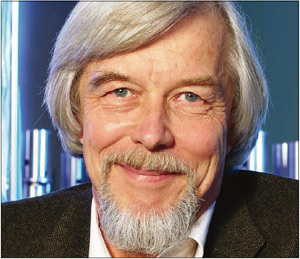
On 14 December, at its 145th meeting, CERN Council appointed Rolf-Dieter Heuer to succeed Robert Aymar as CERN’s director-general. Heuer will take office on 1 January 2009 and serve a five-year term. His mandate will cover the early years of operation of the LHC and its first scientific results.
Heuer is currently research director for particle and astroparticle physics at the DESY laboratory in Hamburg, but is no stranger to CERN. From 1984 to 1998, he was a staff member at the laboratory, working for the OPAL collaboration at LEP. He was also OPAL’s spokesperson from 1994 to 1998.
After obtaining a doctorate in 1977 from the University of Heidelberg, Heuer has spent much of his career involved with the construction and operation of large particle detector systems for studying electron–positron collisions. After leaving CERN in 1998 and joining the University of Hamburg he founded a group working on preparations for experiments at a possible future electron–positron collider. With his appointment at DESY in 2004, he became responsible for research at the HERA collider, DESY’s participation in the LHC, and R&D for a future electron–positron collider.
By Weimin Wu, World Scientific Publishing. Hardback ISBN 9812705600 £29 ($54).
Weimin Wu has led an extraordinary life. Arriving at Fudan University in 1960 at age 17, he was inducted into a special “Section Zero” – by day he studied nuclear physics, in the evenings he helped with research into uranium-enrichment techniques for China’s atomic bomb.
In 1965 he moved to Lanzhou University as a graduate student, but a year later the Great Proletarian Cultural Revolution burst over China and graduate students were a major target. Wu was packed off to an arid mountain region, where he worked as a shepherd, lived in a cave and survived on potatoes, wild plants, rainwater and melted snow. When he was allowed back to Lanzhou, he found that his supervisor had been accused of reactionary scholarship and landlordism, and assigned to clean toilets. Wu himself was soon sent to be a labourer. A commissar rescued him in 1969 and employed his skills to help develop the launch control system of China’s first artificial satellite.
After the end of the Cultural Revolution in 1976, the Chinese government discovered that intellectuals were “part of the working class”. But as Wu writes, “the era that destroyed the talents of many also had cast a dark shadow over them for a lifetime”.
In 1978 Wu joined the group tasked with building China’s first particle accelerator and in 1980 he came to CERN for two years, joining Jack Steinberger’s CDHS neutrino group. Back in Beijing he led the Chinese group involved in ALEPH’s muon detectors, and in June 1989 he observed the first J/Ψ particle to be seen at BES, the Beijing spectrometer. Three weeks earlier he had participated in pro-democracy demonstrations and witnessed the army’s repression in Tiananmen Square. Shortly afterwards he left China and found sanctuary at Fermilab, where he now works on the CMS experiment.
Of the two achievements closest to his heart, one occurred on 25 August 1986 when, despite technical and political obstacles, he sent the first e-mail from China (to Jack Steinberger at CERN). The other achievement was this book of photographs.
Wu has been taking photographs since he was 12. His takes his subjects mostly from nature and from the places and people in his life. Many of his photographs are romantic images of flowers, sunsets, rainbows and landscapes. Several are more mysterious, such as a green swimming pool, lit from within, in a city at night. “To me,” Wu writes, “physics and photography are like a pair of twin sisters.” Both require elegance, conciseness and the good luck that “is granted only to those who are prepared”.
The book includes 12 pages of episodes from Wu’s life, 12 pages by him about his photography, and more than 100 pages of his photographs divided into “Flowers”, “Landscape”, “People” and “The Beauty of Physics” – a selection of photos that remind him of physical concepts, with titles such as Latticework and Multidimensional Space, including the cover, which shows Birds of a Feather Flock Together.
By Frank Close, Taylor & Francis. Paperback ISBN 9781584887980 £22.99 ($39.95).
Back in 1983, the world of particle physics was very different: LEP was under construction and the LHC was just a dream for a few people; the top quark had not been discovered; the amount of dark matter in the universe was not known; and dark energy was not even imagined. However, high-school physics was much the same as it is now, with most lessons focusing on the basics and rarely touching on “modern” state-of-the-art science. “Popular science” books were not in abundance, so it came as a breath of fresh air when the first edition of The Cosmic Onion was published. According to Close, the original “inspired a generation of students to take up science”. A grand claim indeed, but not without substance – the author of this review is living proof.
Like the original version, the revised one takes the reader through the most important periods in particle physics, from the discoveries of atoms and nuclei to our most up-to-date theories, including the Higgs mechanism, supersymmetry and grand unified theories. Close tackles some difficult topics along the way, such as QCD and the electroweak force, yet manages to convey their intricacies in a clear and concise manner. This is helped by the fact that each chapter contains a number of self-contained boxes that explain the more advanced concepts. The book finishes with a chapter devoted to the relationship between particle physics, cosmology and the Big Bang – a fitting end, or should that be start?
I found the chapter on the LEP era particularly good. Although it is relatively short, it provides a good summary of the most important findings of the previous “big accelerator” at CERN. It includes hints of new physics that should become clearer once the LHC is operating. Much of the book can be seen as explaining why we are building the LHC, and this should appeal to high school students interested in a career in particle physics – some of whom may end up analysing LHC data in years to come.
There are many differences in the content between the original and The New Cosmic Onion, bringing it up to date without changing the overall style. Close also manages to avoid delving into the realms of fiction, sticking with the most likely theories and avoiding the more exotic ones. This does not make the book any less enjoyable – far from it. Even though the world has changed and the number of popular particle-physics books available has grown enormously, The New Cosmic Onion remains distinct and one of the few books that is enjoyable to read, plus it is a useful reference for physics students. Let’s hope it will inspire another generation of particle physicists.
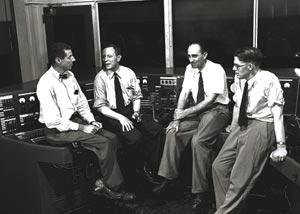
In the spring of 1947, Philip Morse and M Stanley Livingston visited Cornell University, where I was a post-doc working in nuclear physics under Hans Bethe. They talked about the newly established Brookhaven National Laboratory (BNL), where Morse was the director and Livingston was in charge of a project to build a gigantic accelerator that would reach 3 GeV – which was 10 times what anyone had achieved previously. This fascinated me, and I accepted their invitation to join the project for the summer. I worked with Nelson Blachman at BNL on some of the orbit problems of the proposed machine, and discovered that I enjoyed this type of work. I returned to Cornell, and joined the laboratory permanently the following year.
The project to build the Cosmotron (so called because it would almost emulate cosmic rays) proceeded, and by early 1952 success was in sight. French physicist Edouard Regenstreif of the University of Rennes visited us in the spring. He represented a consortium of 12 European countries (Conseil Européen pour la Recherche Nucléaire – the provisional CERN) that aimed to establish a new laboratory featuring an accelerator like the Cosmotron, only bigger. We showed him what we had, and he was duly impressed.
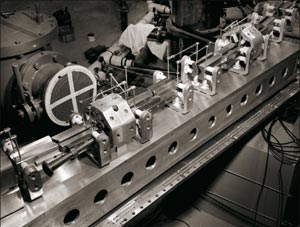
On 20 May 1952, the Cosmotron accelerated a beam of protons to a little more than 1 GeV – by far the highest energy ever attained by artificial acceleration – just 20 years after Livingston and Ernest Lawrence had achieved the first million volts with a cyclotron. The energy soon came close to the design value of 3 GeV and almost immediately we started to ask ourselves how our success could be extended to higher energy. Livingston (who had returned to the Massachusetts Institute of Technology in 1948) came back for the summer to lead a study group.
A delegation from CERN was due to follow up on Regenstreif’s visit to see whether they could pick up some pointers from us. They were planning to build a proton synchrotron similar to the Cosmotron as the centrepiece of their new international laboratory, but with an energy of around 10 GeV. Our study group considered what advice we could give them.
The story of how we came upon the “strong focusing” or “alternating gradient” scheme, which enhances orbit stability, has been told many times. The most important consequence of this enhanced stability is that the magnets for an accelerator may be much smaller, making it feasible to go to higher energy at a reasonable cost. We promptly considered the possibility of building new accelerators in the range of 30–100 GeV.
A week or two later the delegation from CERN arrived, comprising Odd Dahl, who had worked with high-voltage machines in Washington before the war; Frank Goward, one of the first people to make a working synchrotron; and Rolf Wideröe, the Norwegian who had first devised a scheme to use radio frequency repeatedly to produce more energy than the corresponding voltage, and whose 1928 paper led to Lawrence’s invention of the cyclotron. The visitors were impressed, and they returned home recommending the new method to build an accelerator for 30 GeV, rather than the planned 10 GeV.
Shortly afterwards, John and Hildred Blewett and I received an invitation to travel to Europe to discuss the new idea with CERN physicists. We set out in November – in sleeper berths on a Boeing Stratocruiser – on a 12-hour, non-stop flight to Paris. We met a number of interested people in a meeting led by Pierre Auger at UNESCO headquarters. It was there that I met Kjell Johnsen, leading to a friendship lasting until his death this summer. A number of people went to Geneva to look at an empty field as a possible site for the accelerator.
I left Geneva for my native city of Göttingen, to give a talk (the only one I have ever given in German) to Werner Heisenberg and people at the Max Planck Institute. I went on to Copenhagen to see Niels Bohr and his people, some of whom had built a mechanical model illustrating how alternating focusing and defocusing can give stability. The Blewetts went to Bergen for discussions with Dahl and I concluded my European trip with a visit to Harwell in England – which, as far as I can recall, is when I first met John Adams and Mervyn Hine.
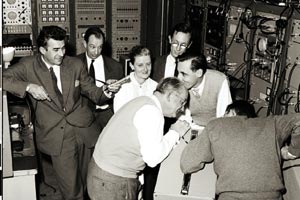
Back at BNL, we went to work on exploring the requirements for actually building an accelerator – and of course the CERN people did the same. Both groups decided to aim for an energy of around 30 GeV – and the race was on. However, we collaborated in this race as much as we competed, sharing internal reports and informal communications. The Blewetts took six months’ leave in 1953 to work with Dahl in Bergen. At the time, CERN was scattered over several sites prior to the establishment of the central laboratory in Geneva. At a conference at the University of Geneva in October 1953, participants discussed the theoretical and technical design issues for an alternating gradient synchrotron. I was one of several American participants and Hildred Blewett edited the proceedings – I still have a copy after all these years.
The rivalry and collaboration between the projects at BNL and CERN continued. As a result, the two accelerators are similar in overall design, not only in size but in most of the details. The machine at BNL is called the Alternating Gradient Synchrotron (AGS) and the one at CERN is the Proton Synchrotron (PS); in fact, both names apply to both machines.
There were still some differences. One possible problem was a phenomenon called the “transition energy”, an energy where the mechanism of phase stability demands a sudden change of phase of the accelerating field. All the theory – by Kjell Johnsen at CERN and me at BNL – predicted that this should be easy to deal with. The people at CERN were convinced that this was correct, while some of the powers-that-be at BNL decided that they would feel safer if there was an experimental demonstration of the feasibility of going through this critical energy. As a result, BNL built a small-scale model (the Electron Analog) to verify that calculation, while CERN did not. The Electron Analog worked perfectly, but it cost us some time. Consequently, CERN won the race – they had an accelerated beam in 1959, while ours came in 1960. Each was the world’s highest-energy accelerator when it came on.
There are numerous accelerators and colliders today with energies exceeding the PS and the AGS. These two venerable machines are approaching their 50th anniversaries and are breaking records in longevity rather than energy. They now function as injectors for their successors: the AGS for RHIC at BNL, and the PS for the SPS at CERN – which the LHC will soon succeed. Continued collaboration between BNL and CERN – and other high-energy laboratories around the world – is a matter of course.
DESY is to establish a new research group in which young scientists from DESY and three Russian institutes will work together to resolve current questions in particle physics. DESY’s proposal for “Physics and Calorimetry at the Terascale” is one of eight applications selected from 26 submissions to form a Helmholtz–Russia Joint Research Group. This comes as part of an initiative launched in 2006 by the president of the Helmholtz Association, Jürgen Mlynek, and the chair of the Russian Foundation for Basic Research, Vladislav Khomich. One aim of the new three-year support programme is to promote scientific co-operation between DESY and Russia and to provide attractive research opportunities for young scientists in particle physics. Within the joint research group, DESY will collaborate with three institutes based in Moscow: the Institute for Theoretical and Experimental Physics, Moscow State University and Moscow Engineering Physics Institute. The group will be involved in physics analyses of experiments at HERA and the LHC and for the proposed International Linear Collider (ILC), as well as in detector design and construction for the LHC and ILC.
The approval of this joint research group acknowledges the long and successful collaboration between DESY and its Russian partner institutes. The proposed activities will complement those of the Helmholtz Analysis Centre at DESY and the strategic alliance between DESY and German universities.
March: Precision is the name of the game as, once in position in the tunnel, the LHC’s magnets are carefully aligned.
March: The Train Inspection Monorail, affectionately referred to as “TIM,” will allow teams to view the LHC tunnel and take measurements remotely when it is inaccessible to humans.
The last of 1746 superconducting magnets is lowered into the LHC tunnel via a specially constructed pit at 12.00 on 26 April. This 15 m long dipole magnet is one of 1232 dipoles that will guide the two proton beams in opposite directions around the 27 km circumference.
Gently does it: In January, the lorry transporting the time projection chamber for the ALICE experiment took an hour to travel the 200 m from the assembly hall to the access shaft for the underground cavern.
The first half of the CMS barrel hadron calorimeter cylinder was lowered into the underground cavern in February. It weighs almost 600 tonnes.
In July the CMS forward pixel detector, which was built at Fermilab, underwent an installation test. The photo shows the central opening of the silicon strip tracker where the beam pipe and pixel detector will be located.
January: The CMS tracker outer barrel is inside the tracker support tube, fully cabled. The golden rectangles are digital optohybrid modules for distributing clock and trigger signals.
ALICE’s inner tracking system (ITS) was installed into the heart of the experiment in March. It was a delicate task to fit the ITS within the time projection chamber.
The 42nd and final module for LHCb’s vertex locator arrived from Liverpool in March, marking the culmination of 10 years of development. The detector will be placed just 5 mm from the beam line.
The outer layers of ALICE’s ITS, seen prior to installation in March, contain almost 5 m2 of double-sided silicon strip detectors.
The first inner detector endcap for the ATLAS experiment is fully inserted into the liquid-argon cryostat in May.
March: End view of the heat shield and cryostat of one of the ATLAS endcap toroids while still in the assembly hall before the mounting of detectors.
Lowering the second ATLAS endcap toroid magnet into the cavern in July.
By Frederick James, World Scientific Publishing. Hardback ISBN 9789812567956 £33 ($58). Paperback ISBN 9789812705273 £17 ($30).
In this second edition many chapters now include considerable new material, especially in areas concerning the theory and practice of confidence intervals, including the important Feldman–Cousins method. Both frequentist and Bayesian methodologies are presented, with a strong emphasis on techniques that are useful to physicists and other scientists in the interpretation of experimental data and comparison with scientific theories. This textbook is suitable for advanced graduate students in the physical sciences, as well as a reference for active researchers.
By Michael D Scadron, World Scientific Publishing. Hardback ISBN 9789812700506 £51 ($88).
This book looks at the techniques that are used in theoretical elementary-particle physics that are extended to other branches of modern physics. The initial application is to non-relativistic scattering graphs encountered in atomic, solid-state and nuclear physics. Then, focusing on relativistic Feynman diagrams and their construction in lowest order, the book also covers relativistic quantum theory based on group theoretical language, scattering theory and finite parts of higher order graphs. Aimed at students and professors of physics, it should also aid the non-specialist in mastering the principles and calculation tools that probe the quantum nature of the fundamental forces.
By Wade Allison, Oxford University Press. Hardback ISBN 9780199203888, £49.95 ($98.50). Paperback ISBN 9780199203895 £24.95 ($49.50).
This book is for every physicist who has ever needed to answer the question: what is physics for? Physics has reduced fear and increased safety for society, largely by extending the power to see. The methods used are magnetic resonance, ionizing radiation and sound, with their extensions. The author follows how they are applied by modern technology to “seeing” in clinical medicine, including therapy, and in other spheres of human activity such as archaeology, geophysics, security and navigation. By taking a broad view of the entire field, the book encourages comparisons and underlines the importance of public education. Physics undergraduates and graduates, as well as professional physicists, will find this book of interest.
To provide the best experiences, we use technologies like cookies to store and/or access device information. Consenting to these technologies will allow us to process data such as browsing behavior or unique IDs on this site. Not consenting or withdrawing consent, may adversely affect certain features and functions.
Functional
Always active
The technical storage or access is strictly necessary for the legitimate purpose of enabling the use of a specific service explicitly requested by the subscriber or user, or for the sole purpose of carrying out the transmission of a communication over an electronic communications network.
Preferences
The technical storage or access is necessary for the legitimate purpose of storing preferences that are not requested by the subscriber or user.
Statistics
The technical storage or access that is used exclusively for statistical purposes.The technical storage or access that is used exclusively for anonymous statistical purposes. Without a subpoena, voluntary compliance on the part of your Internet Service Provider, or additional records from a third party, information stored or retrieved for this purpose alone cannot usually be used to identify you.
Marketing
The technical storage or access is required to create user profiles to send advertising, or to track the user on a website or across several websites for similar marketing purposes.