Comsol -leaderboard other pages

Topics

Directing a decade

What would you say were CERN’s scientific and technological highlights of the past 10 years?

I would start by highlighting the excellent performance of the accelerator complex, the experiments and the computing infrastructure, all of which have gone well beyond forecasts. Thanks to these achievements, and to the increasing sophistication of the data analyses, the Laboratory’s scientific output has far surpassed what one could have anticipated, both in breadth and depth. The diversity of results across all our facilities is impressive, and physics sensitivities have exceeded even the most optimistic expectations. Notably, some studies originally foreseen for the High-Luminosity LHC (HL-LHC) phase are already being carried out today.

Secondly, the approval of the HL-LHC by the CERN Council in June 2016 marked a major milestone for the future of the LHC programme, and paved the way for substantial progress in upgrading both the accelerator complex and the experiments. As a first step, the successful Long Shutdown 2, carried out during the challenging COVID-19 period, enabled significant upgrades to the injectors and the completion of the Phase-1 upgrades of the four experiments.

Following the establishment of the Physics Beyond Colliders (PBC) Study Group in 2016, we have strengthened the Laboratory’s programme of physics complementary to the LHC, notably with the approval of new experiments and projects such as FASER, SND@LHC and a high-intensity beam-dump facility at the North Area. The Neutrino Platform has remained a focal point for the neutrino community in Europe and beyond, enabling key detector R&D, technology demonstration and prototyping activities, as well as the construction of two large cryostats for the DUNE experiment at the Long-Baseline Neutrino Facility in the United States.

The extraordinary work towards the Future Circular Collider (FCC) over the past 10 years, culminating in the highly successful Feasibility Study, laid the foundations for a brilliant long-term future for CERN and the field, and served as a key input to the ongoing update of the European Strategy for Particle Physics. In December 2025, the European Strategy Group recommended the FCC-ee as the next flagship facility at CERN, a pivotal step for the future of particle physics. Chapeau to the entire CERN community for these extraordinary achievements!

You were CERN’s first female Director-General. When you first took on the role, did you find the focus on your gender a bit frustrating?

I cannot say that I found it frustrating. What surprised me was that people would tell me I was a role model. I did not consider myself a model of anything, so I was somewhat embarrassed by that description. But then I told myself that, if the fact that a woman held the position of CERN Director-General could encourage young women to pursue a career in science, I was happy to play that role.

Did your experience as Director-General differ from what you expected?

From the outset, it was an extraordinary experience, far broader than I had expected. I had to deal with a myriad of matters: not only scientific and technical ones, but also finances and human resources, environment and sustainability, relationships with governments, the public and the media, as well as the daily management of a laboratory as complex as CERN.

The extraordinary work towards the FCC has laid the foundations for a brilliant long-term future for CERN

Fortunately, I was surrounded by an excellent management team of directors, department heads and project leaders, and could count on the support, competence, enthusiasm and dedication of the entire CERN community. I am very grateful to the CERN Member States for the unique opportunity to serve as Director-General for two terms, and for their sustained support and trust throughout the 10 years.

There is one thing I would never have imagined I would need to do: raise substantial funding from the private sector. As a physicist, that was entirely outside my experience…

Despite that, you announced one billion US dollars of private funding for FCC shortly before the end of your tenure. How did you approach donations?

When I started my first term as CERN Director-General, I had no experience whatsoever with donations. I had not raised a single penny in my entire life!

I remember that, in the context of the Science Gateway, I considered hiring a professional fundraiser at some point. But then I realised that the salaries of these people were astronomical, so I abandoned the idea.

Over the years, I learned a lot from experience. I learned that fundraising is very much a matter of personal connections, and I was lucky enough to have some very good ones before becoming CERN Director-General. I also learned that donors love bold, ambitious projects like the FCC, projects that enable major progress for humanity. Finally, donors engage if they trust the institution, in this case CERN, but also if they trust the person. I think they trusted me.

What made you decide to pursue private donations, and how did the policy framework for accepting them come about?

Both the Science Gateway and FCC are extremely challenging projects in their respective areas. I quickly realised that projects of this kind can only be achieved with exceptional levels – and therefore sources – of funding.

The Science Gateway was a dream I had from the beginning of my first term, in 2016. At the time, I realised we could host 150,000 visitors annually, compared with 300,000 requests. That seemed a shame to me. The limitation came from the number of visitor areas, which led to the idea of a new building – a dedicated space that could expand our offer to the public. CERN’s budget provides only limited funding for education, communication and outreach initiatives, and the money raised annually through the CERN & Society Foundation was far from enough to cover a 100-million-Swiss-franc project. So we had to undertake a dedicated fundraising campaign.

The Science Gateway was a dream I had from the beginning of my first term

Then we obtained a 48-million-US-dollar donation from the “Eric and Wendy Schmidt Fund for Strategic Innovation” for the “Next Generation Triggers” project, which primarily supports the development of AI-based algorithms for the high-level triggers of ATLAS and CMS at the HL-LHC. It was the first donation ever made to the CERN budget for a scientific project, and prompted us to develop a policy for this type of contribution. The policy was approved by the CERN Council in December 2024. It provides a robust set of principles and boundaries to harness the potential benefits from private funding while safeguarding the integrity and independence of the CERN scientific programme. I had already begun discussions with potential donors regarding the FCC, and the policy provided a framework for those efforts.

The FCC is an unprecedented project, and it has always been clear to me that the two traditional sources of funding for CERN projects, contributions from Member and Non-Member States, would not suffice. We consequently decided to explore two avenues that are innovative for our field: the European Commission and private donors. Concerning the former, the FCC was the first on a list of potential “Moonshot” projects in the draft Multiannual Financial Framework for the 2028–2034 period, along with a substantial dedicated budget line. As for the latter, we received pledges totalling one billion US dollars from philanthropists in the United States and Europe. I am deeply grateful to them for their generosity, vision and commitment to fundamental research.

I would like to emphasise that the main source of CERN funding has been, is, and must remain the regular contributions from the Member and Associate Member States to the CERN annual budget. Private donations are extremely valuable, but they can never replace the long-term funding stability that these contributions provide, which has been one of the key reasons for CERN’s success over the decades.

How did you handle periods of crisis?

The key was teamwork, one of CERN’s strongest assets at all levels. As Director-General, I always drew on people’s strengths, and I was fortunate enough to work with extremely talented and dedicated collaborators across the entire Organisation. I should also mention that the knowledge of CERN and the experience I accumulated over 30 years as a member of staff proved particularly helpful during those challenging periods.

So we faced crises, from the COVID-19 pandemic to the consequences of the Russian invasion of Ukraine, and the high inflation and energy prices of 2023, in true CERN style: by working together. In the decision-making phase, different experts brought their perspectives, concerns and solutions to the table. In the implementation of measures, the relevant services, departments and units deployed their technical expertise. The approach was always collective. Of course, as Director-General, I had to take the final decision, and sometimes that was tough, especially in the context of budget cuts. But those decisions were always well-informed, grounded in collective thinking and shared expertise.

The serious crises we have experienced over the past 10 years have clearly highlighted the strength and resilience of CERN as an institution and of its community.

Do you think science can still be a force for peace?

Absolutely, because science is universal and unifying. Universal, because it is based on objective facts, the laws of nature, and not on opinions. An apple falls in the same way, whether it falls in Isaac Newton’s garden in 17th-century England, or today in Switzerland, China or the United States. Unifying, because the thirst for knowledge and the desire to understand how things work are intrinsic to humanity. Thus, science has no passport, belief or gender, and can help connect people in our fractured world.

There is no way to address todays global challenges without science

In this context, the role of CERN is emblematic. It was founded in 1954, amid the ruins of the Second World War, at a turning point in history, with the dual aim of restoring the continent’s scientific excellence and promoting peaceful collaboration among Europe’s countries and peoples through science. Today, CERN is not only a world-class scientific facility and the world leader in high-energy particle physics: it is a value system, embracing and promoting knowledge, innovation, training and education, collaboration across borders, inclusion, diversity and open science.

Institutions like CERN show what humanity can achieve when we set aside our disputes and work together for the common good. They give us hope for a better world and are more relevant today than ever.

Does CERN have a responsibility to guide the world in new technologies such as AI?

I do not think that CERN’s role is to lead the world in the development of new technologies. Our primary mission is fundamental research, and we develop advanced technologies, in collaboration with our partner institutes in the Member States and beyond, insofar as they are necessary to achieve our scientific objectives.

Machine learning and other AI techniques have been used at CERN for many years, and have proven to be valuable tools in a wide range of applications, from accelerator operation to increasing the sensitivity of physics analyses. However, I do not consider it part of our mission to conduct research in AI as a goal in itself. CERN will, of course, need to develop those aspects of AI that are specific to our field when suitable solutions do not already exist. But we should neither reinvent existing solutions nor transform ourselves into a laboratory dedicated to developing all interesting technologies for their own sake.

What are you planning to do next?

I plan to return to active research, at least for part of my time. I have always loved all areas of physics, but the Higgs boson is particularly intriguing and very close to my heart. We have learned a great deal over the past 14 years, yet this key particle remains quite mysterious. There is a rich, compelling and exciting programme of studies ahead at the HL-LHC and, potentially, at the FCC-ee.

I also plan to continue promoting science in other contexts, including as a member of the Board of Trustees of the World Economic Forum. I believe there is no way to address today’s global challenges, from health to climate change, without science.

The FCC, half a century on

The community has spoken: the electron–positron Future Circular Collider (FCC-ee) is the preferred next flagship project for CERN. As an initiator of the concept of a circular Higgs factory in 2011, I was elated by this outcome. But it also made me wonder: why did it take so long? To answer this, we need to travel back 50 years.

1976 was an eventful year for particle physics. The open charm was discovered at SPEAR, while the J/ψ earned Burton Richter and Samuel Ting their Nobel Prize. The same year, Richter authored both the first yellow report on a large e+e (LEP) colliding ring and the first paper proposing a linear e+e collider. Gargamelle’s measurement of the ratio of Z-induced over W-induced neutrino interactions had allowed the Standard Model (SM) – by then a familiar name – to predict the masses of the W and Z bosons. And Carlo Rubbia, synergy wizard, proposed to undercut the e+e aficionados by converting the SPS into a proton–antiproton collider. The W and Z bosons were duly discovered in 1983.

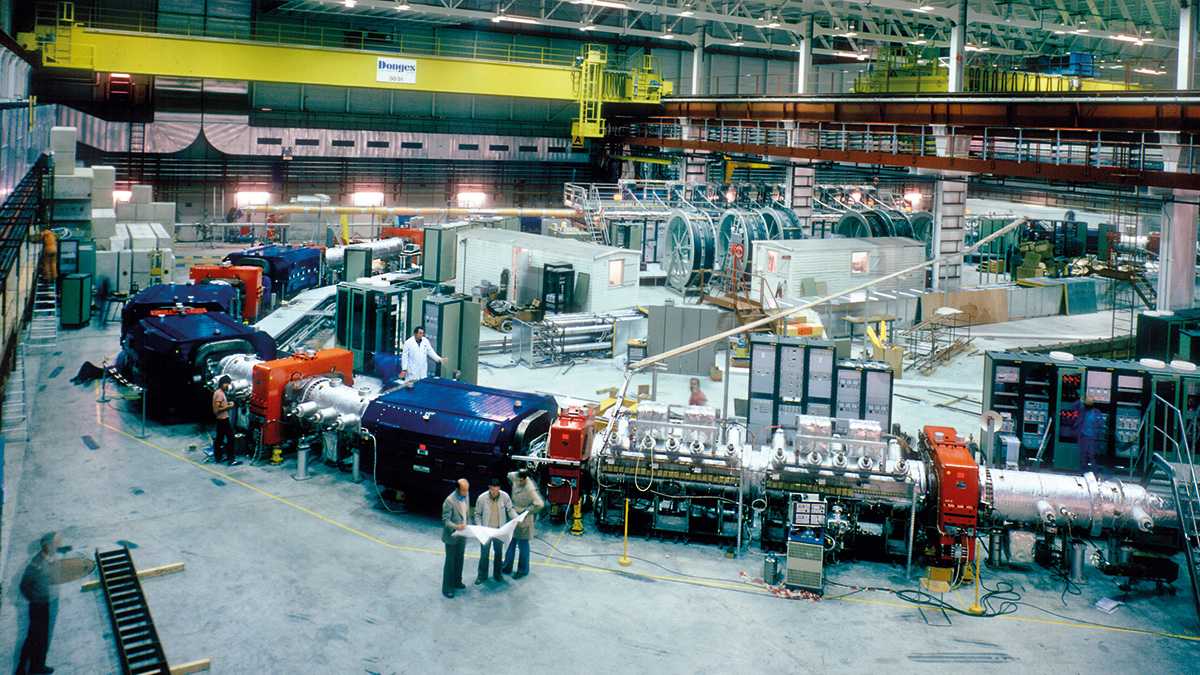
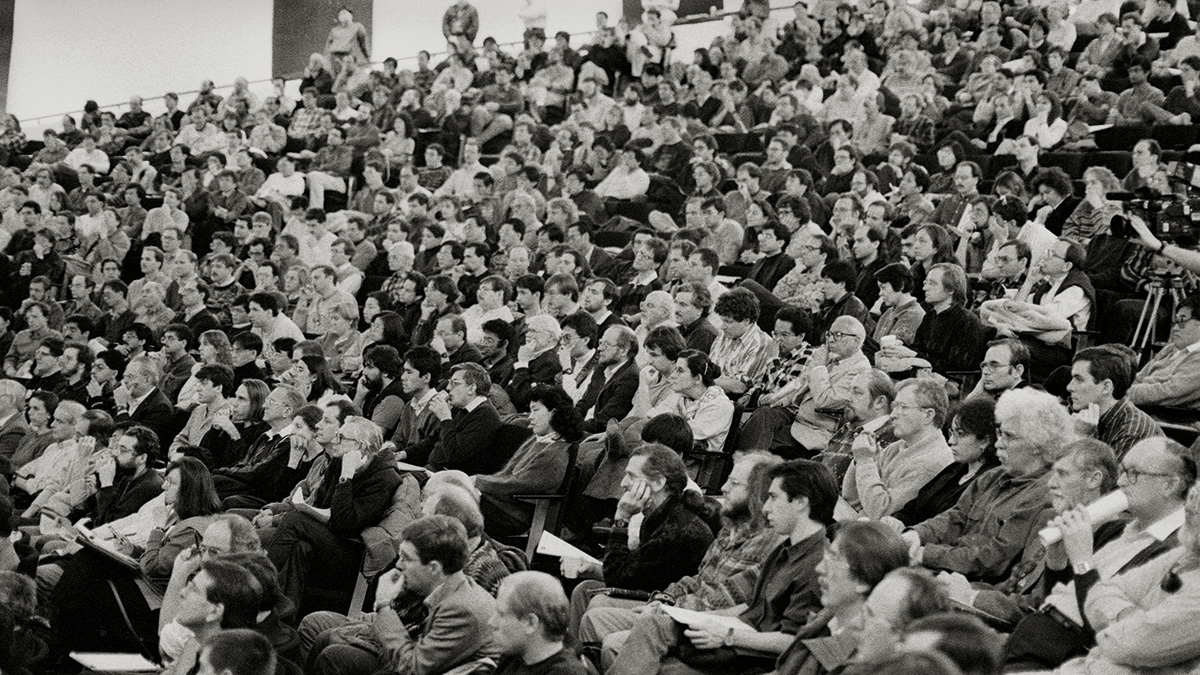
In 1987, following the La Thuile Workshop on Physics at Future Accelerators and before LEP had even been completed, Rubbia called a general meeting in CERN’s main auditorium to discuss the future beyond LEP. Two contenders stood out: a 5 TeV e+e linear collider in a new 30 km tunnel (CLIC), or a 20 TeV pp collider (LHC) with the advantage of fitting in the already financed and nearly finished LEP tunnel. The relative physics merits of the two machines were compared on supersymmetry and Higgs compositeness. The LHC was chosen, and CLIC became a priority R&D programme.

We had a whale of a time at LEP, establishing that light neutrinos are exactly three, measuring the Z mass to six digits and predicting the top-quark mass through radiative corrections a few months before its Tevatron discovery.

By 1996, the LHC was approved and a small group at CERN was considering what could follow it. The listed options were a high-energy future LHC (FLHC), CLIC, and a 4 TeV muon collider. A first 0.5–1 TeV linear collider (LC) was assumed to be done elsewhere. In that context, a circular e+e machine was mentioned only as a top factory add-on to the FLHC programme, with a design extrapolated from LEP and a performance well below the LC. The prevailing assumption was that the LHC would detect the Higgs boson and supersymmetry, if either existed.

A breakthrough came in 1999, when the asymmetric B factories PEP-II and KEKB, with separated e+ and e rings and continuous top-up injection, demonstrated luminosities orders of magnitude higher than LEP. Meanwhile, LEP Higgs-hunted fiercely until the end of 2000, setting a lower mass limit at 114.5 GeV, while precision measurements set an upper mass limit of about 180 GeV.

The hunt is on

Come the summer of 2011, the LHC experiments were taking data at 7 TeV. The hunt for the Higgs and the supersymmetric particles was on, and the first limits already constrained the Higgs mass below that of a W pair. That clarified the required centre-of-mass energy of a Higgs factory: a relatively low-energy e+e collider would do. Locating it in the LEP/LHC tunnel was an obvious possibility, and had already been discussed in the corridors of the EPS-HEP conference in Grenoble that July. Five months later, applying the B-factory design principles, a Higgs factory fitting in the LHC tunnel was evaluated. “LEP3” offered luminosity significantly higher than the linear collider, and the advantage of running several experiments simultaneously. On the downside, its maximum energy fell short of the top-pair-production threshold… and the LHC tunnel was already occupied.

None of this was a straight line. It took 15 years for the physics to make the case on its own terms

Presented with this evaluation, some members of the CERN Scientific Policy Committee suggested that an e+e Higgs factory more than triple the size of LEP would make a great initial step towards a higher-energy version of the LHC, which was already under consideration. Inserting the Higgs factory in a 100 km tunnel did magic. With its large bending radius, the machine reached the top-pair threshold while covering a wide range of energies and luminosities. It delivered large statistics at the Z pole, with 6 × 1012 visible Z decays, and transverse polarisation for exquisite energy calibration up to the W-pair threshold. Those were key ingredients in achieving a vertiginous potential for statistical and systematic improvement, by up to a factor of 500 or more over the old LEP precision measurements. The Z run, it was later realised, would turn FCC-ee into a flavour factory for b and tau precision studies, and also enable unique searches for feebly coupled particles in the 5–80 GeV mass range.

What lies beyond

When the Higgs came, it did so at 125 GeV – too high for most incarnations of supersymmetry, too low for theories of a composite Higgs, and consistent with an unchanged SM up to very high energies. It raised the question of what lies behind the SM and at which energies, making it essential for the future of particle physics to include an extensive programme of precision measurements, in the hope of detecting deviations from the SM that could guide the next steps. The Higgs itself was also of obvious interest, and a lepton collider the natural way to study it.

These arguments were summarised in two contributions to the 2013 update of the European Strategy and led to the recommendation of a costed design study of FCC-hh and FCC-ee. The 2020 update continued it as a feasibility study, which led in turn to the 2025 recommendation.

None of this was a straight line. It took 15 years for the physics to make the case on its own terms, and the conversation had been on, in one form or another, for 35 years before that. The Higgs mass, the absence of supersymmetry and the precision reach all pointed to a machine in the best CERN tradition, where the most is made of the resources through a strong synergy between infrastructure planning and physics opportunities.

Antimatter hits the road

Take a bunch of antiprotons. To stop them annihilating, seal them inside a near-perfect vacuum, suspended in the bore of a superconducting magnet, and superimpose an electric field. Load them onto a truck, and drive off. On 24 March 2026, the BASE collaboration sent 92 antiprotons on a test loop around CERN’s Meyrin site, achieving the first controlled and reversible transport of antimatter. The trip is the culmination of years of work to move antimatter precision measurements out of CERN’s noisy Antimatter Factory, where BASE operates (CERN Courier January/February 2025 p6).

The collaboration’s main target is CPT symmetry. Charge conjugation (C), parity inversion (P) and time reversal (T), taken together, are expected to leave physics invariant. Matter and antimatter must therefore have identical masses and magnetic moments of equal magnitude, with charges of opposite sign. BASE tests CPT directly on protons and antiprotons, confined in electromagnetic traps, by measuring their cyclotron and spin-flip frequencies. “At low energies, measurements usually use only matter systems, on the assumption that antimatter behaves the same way without testing it,” says Christian Smorra, leader of the collaboration’s transportable-trap project BASE–STEP. “Antiprotons are the only stable antibaryons that can be produced and trapped at low energies, enabling precise frequency measurements.”

Noisy fields

So far, BASE results on proton and anti­proton charge-to-mass ratios agree to 16 parts per trillion, and their magnetic moments to 1.5 parts per billion. The measured frequencies, however, scale linearly with the strong magnetic field that confines the particles, so any noise in it directly affects the result. The magnetic environment of CERN’s Antimatter Factory now limits how far precision can be pushed.

One natural solution is to move the antiprotons elsewhere. To survive the journey, they must remain in an extreme vacuum, below 10–14 mbar, since contact with a single gas molecule means annihilation. “At those pressures, the only way to test the vacuum is to trap antiprotons and see how long they survive,” explains Smorra. “We had no way to predict how much the pressure would rise in the room-temperature parts of the system during transport, so we had to rely on calculations and build the best possible setup to limit the gas flow into the trap.”

Calculations suggest that the trap could hold antiprotons for more than a year

The result is BASE-STEP: a one-tonne portable electromagnetic trap with up to four hours autonomous operation and a persistent superconducting magnet cooled by liquid helium. At those temperatures, the inner walls of the trap freeze out most gas molecules on contact, preserving the vacuum. Three further measures handle what the walls cannot manage alone. A 500 mm-long differential pumping section thins residual gas in the warm part of the system, a specialised valve – now in its third generation – seals the cold interior, and a dedicated pump captures any stray hydrogen.

The first injection of antiprotons, in December 2025, lasted three days. A subsequent run kept them trapped for more than a month, with cumulative experimental lifetimes now reaching two and a half. “Calculations suggest the trap could hold antiprotons for more than a year,” says Smorra. “The limit is set by gas slowly accumulating on the cold trap surfaces. Once a single layer has built up, they can no longer trap new molecules, and the vacuum starts to deteriorate.”

The 24 March test demonstrated that BASE-STEP could survive vibration and acceleration without losing its load. The team has now requested a low-magnetic-noise space at CERN to establish methods for transferring antiprotons between the transportable trap and a receiver experiment. Further afield, BASE–HHU at Heinrich Heine University Düsseldorf is being built to receive antiprotons from BASE-STEP and perform precision measurements. “We expect to need only one or two trips per measurement,” says Smorra. The Düsseldorf transport will take around 10 hours, longer than the trap can run on its own. A generator on the truck will power a cryocooler to keep the magnet superconducting throughout.

Beyond CPT tests, the approach may prove useful to other precision searches. “We are also studying exotic interactions of antiprotons,” comments Smorra, “such as antiproton–axion coupling or collision rates of millicharged particles with trapped antiprotons.”

Two channels for the top–antitop excess

The top quark was never meant to bind. And yet a year ago, CMS reported an excess of top-quark–antiquark pairs in dilepton events near the production threshold, consistent with the fleeting formation of a top-quark–antiquark quasi-bound state: toponium. ATLAS confirmed the effect just a few months later, rejecting a pure perturbative QCD interpretation at 7.7σ (CERN Courier September/October 2025 p9). CMS has now extended the case to an independent decay process.

The analysis, presented at this year’s Rencontres de Moriond, looks at events in which one top decays into a charged lepton, a neutrino and a bottom quark, and the other into jets. In 138 fb–1 of Run 2 data at 13 TeV, the enhancement exceeds the pure-QCD prediction by more than five standard deviations, with an excess cross section of 5.1 ± 0.9 pb.

“Establishing a signal in both channels was very important,” says Regina Demina, who leads the University of Rochester CMS group. “The lepton + jets channel has higher statistics, thanks to the larger hadronic branching ratio of the W boson, and a single neutrino makes the kinematics easier to reconstruct. The systematic uncertainties differ from those in the dilepton channel.”

The charm and bottom quarks live long enough to bind tightly with their antiparticles, and the resulting mesons appear as sharp, narrow peaks in the cross section. The top quark, by contrast, decays too quickly, with a width comparable to the binding energy that would hold a top-quark–antiquark system together. Any such state would manifest as a broad threshold enhancement, smeared over the smooth QCD continuum.

“The formation of bound states of charm or bottom quarks is a well-established effect, which allowed theorists to refine our understanding of the QCD binding potential,” says Yu-Heng Yu, a graduate student at the University of Rochester who worked on the analysis. “Yet it came as a surprise that, given the very short lifetime of top quarks, such a quasi-bound state still manages to form in a small fraction of events.”

The lepton + jets channel demanded two methodological adjustments. The first replaces the invariant mass of the top-quark–antiquark pair, whose resolution is limited near threshold, with their relative velocity as the discriminating observable. “If they form a bound state, the relative velocity should be much smaller than when they are produced independently,” says Otto Hindrichs, also at Rochester. The second concerns the parity-sensitive observables that distinguish a pseudoscalar from a scalar interpretation of the bump. “These variables require a reconstruction method that identifies the down-type jet from the hadronic W decay,” explains Hindrichs. “To achieve this, we developed a machine-learning technique that improves the correct identification of the top-quark decay products.”

Some puzzles remain. The 5.1 pb cross section sits below the 8.8 pb measured in dilepton events, and the non-relativistic QCD reference of about 6.4 pb. “We do observe somewhat different signal strengths in the lepton + jets and dilepton channels, and we are actively investigating this difference,” says Yu.

“With the current sensitivity, interpretations beyond the Standard Model cannot be excluded,” Hindrichs adds. “A pseudoscalar heavy Higgs decaying into top-quark pairs would interfere strongly with the continuum, creating a characteristic peak-dip structure in the invariant tt mass. With enough statistics, this feature could be used to differentiate it from a quasi-bound state.”

The top-quark–antiquark threshold enhancement in e+e collisions was analysed by Fadin and Khoze in 1987, and extended to hadron colliders by Fadin, Khoze and Sjöstrand in 1990, before the 1995 discovery of the top quark at Fermilab. The standard assumption was that any signal would have to wait for a next-generation e+e collider reaching the threshold, which would provide the cleanest measurement of the top-quark mass. “Even with Run 3 data, we will not be able to resolve the structure of the threshold region itself, because the resolution on both the invariant mass and the relative velocity is too limited,” says Demina. “But the increased statistics should allow us to probe the spin-parity content of the bump, testing whether it carries scalar or vector contributions alongside the pseudoscalar one.”

Breakthrough honours g–2

The 2026 Breakthrough Prize in Fundamental Physics recognised the multi-decade programme to measure, with ever-increasing precision, the muon’s anomalous magnetic moment (“g-2”). Announced in Los Angeles on 18 April, the $3 million award is shared among the living co-authors of the key publications from the muon g–2 collaborations at CERN, Brookhaven National Laboratory and Fermilab. Five further Breakthrough prizes recognised work in theoretical physics, dark-matter searches and cosmology.

As a charged particle with spin, the muon behaves like a tiny magnet whose strength is set by a dimensionless factor close to, but not exactly, two. The deviation, known as the anomalous magnetic moment, encodes virtual loop corrections from all sectors of the Standard Model (SM), and comparing it with theoretical predictions is among the most stringent tests of the theory.

Following initial measurements at Columbia University in 1957, the story began at CERN in 1959 with a small magnet borrowed from the University of Liverpool and Leon Lederman’s idea to test quantum electrodynamics using the muon. The idea was to place muons in a uniform external magnetic field and observe their spin precession frequency, which depends on the strength of the field and the muon’s magnetic moment. By 1962, a dedicated 6 m magnet at the Synchrocyclotron had enabled the CERN team to pin down the anomalous magnetic moment with a precision of 0.4%. Two storage-ring experiments at the Proton Synchrotron followed. The third reached a precision of 7.3 parts per million by 1979, and pulled hadronic effects into view for the first time.

Brookhaven’s E821 experiment took over at the Alternating Gradient Synchrotron, reaching 540 parts per billion in its final 2006 report. The measurement stood 2.2–2.7σ above the SM evaluations of the day. In the summer of 2013, the experiment’s 14 m-diameter superconducting storage ring travelled by road and barge from Long Island to Batavia, where Fermilab’s more intense and pure muon beam awaited.

The story of the g-2 began at CERN in 1959

The final Fermilab measurement, announced in June 2025, reached a precision of 127 parts per billion: 30,000 times better than the first g–2 results (CERN Courier July/August 2025 p7). The theory side has moved as sharply. By August 2023, the discrepancy with respect to the 2020 prediction of the Muon g–2 Theory Initiative, an international consortium tasked with delivering a consensus SM value, had reached 5.1σ. Its 2025 update, which drops data-driven inputs to the hadronic vacuum polarisation in favour of a lattice-QCD consensus, sits within roughly 1σ of the measured value. The shift between the two predictions is itself about 3σ, reflecting an unresolved tension (CERN Courier January/February 2026 p41).

The 2026 Special Breakthrough Prize in Fundamental Physics went to David Gross (KITP, UC Santa Barbara) for a lifetime of contributions to theoretical physics. In 1973, Gross and his graduate student Frank Wilczek at Princeton, and independently David Politzer at Harvard, found that the strong nuclear force becomes weaker as quarks approach one another, a property known as asymptotic freedom. The three shared the 2004 Nobel Prize in Physics.

The inaugural Vera Rubin New Frontiers Prize went to Carolina Figueiredo (Princeton University). With Nima Arkani-Hamed and collaborators, she showed that the scattering amplitudes of three apparently unrelated theories, describing gluons, pions and a simplified scalar toy model, are generated by a single function, related by a simple shift of the kinematics. The result emerges naturally from a geometric formulation known as surfaceology.

Among the New Horizons in Physics Prize recipients, Benjamin Safdi (UC Berkeley) was recognised for his contributions to axion searches. Clay Córdova (University of Chicago), Thomas Dumitrescu (UCLA), Shu-Heng Shao (MIT) and Yifan Wang (New York University) shared a New Horizons in Physics Prize for the development of generalised symmetries in quantum field theory, with applications ranging from condensed-matter physics to string theory. A third New Horizons in Physics Prize recognised Dillon Brout (Boston University), J Colin Hill (Columbia University), Mathew Madhavacheril (University of Pennsylvania), Maria Vincenzi (University of Oxford), Daniel Scolnic (Duke University) and W L Kimmy Wu (Caltech) for analyses of cosmic microwave background data and Type Ia supernova samples, delivering tight constraints on the expansion and composition of the universe.

Final collisions for the RHIC

On 6 February 2026, beams of oxygen ions circulated through the Relativistic Heavy Ion Collider (RHIC) at Brookhaven National Laboratory for the last time. A leading facility in the study of hadronic matter and the strong force since 2000, RHIC now hands its tunnel and many of its components to its successor, the Electron–Ion Collider (EIC).

“Experiencing the challenges of first trying to get beams to circulate during commissioning in the fall of 1999, one could not have dreamed how far the performance of this machine would come,” said Wolfram Fischer, chair of Brookhaven’s Collider-Accelerator Department. “We’ve pushed well beyond the original design in terms of the number of collisions we can produce, the energy range of those collisions, the variety of ions we’ve collided, and our ability to align the spins of protons and maintain a high degree of this alignment or polarisation.”

RHIC was conceived above all to study the quark–gluon plasma (QGP). In QGP, quarks and gluons, normally confined inside protons and neutrons, roam free under extreme temperature and density. The early universe is thought to have existed in this state for a fraction of a second after the Big Bang, before cooling into the ordinary matter around us.

Theorists had expected this primordial soup to behave as a weakly coupled gas of quarks and gluons. Gold–ion collision data from RHIC’s four original detectors, BRAHMS, PHENIX, PHOBOS and STAR, found instead a strongly coupled liquid. By 2005 the collaborations had concluded that they were producing one of the lowest-viscosity substances ever observed, a nearly “perfect” liquid. Later runs traced how this extreme state of matter swirls, flows and cools, and revealed that even small collision systems can briefly form tiny droplets, overturning earlier ideas about how QGP forms.

RHIC transformed nuclear physics by demonstrating the remarkable consequences of ‘boiling the vacuum’

“RHIC transformed nuclear physics by demonstrating the remarkable consequences of ‘boiling the vacuum,’” said theorist Raju Venugopalan, paraphrasing T D Lee’s description of matter governed by quantum chromodynamics.

Beyond QGP, STAR and PHENIX measurements in polarised proton–proton collisions established that gluons carry a significant share of the proton’s spin. In the final run, sPHENIX, the faster successor to PHENIX, became the first detector to record a continuous streaming dataset from RHIC’s spin-polarised proton collisions – thus eliminating the need for triggers.

The final run also gave a sense of the scale of modern physics data: sPHENIX alone recorded more than 200 petabytes of raw data, more than every previous RHIC dataset combined, including 40 billion gold–ion collision events. Analysis of RHIC data will continue for at least another decade. Much of RHIC’s infrastructure will then live on in the EIC, including its ion sources, pre-accelerator chain and one of its superconducting storage rings. A new electron ring will share the tunnel, crossing the ion beam at points where polarised electrons and ions will collide. The EIC will enable precision measurements that reveal how quarks and gluons are organised within protons or atomic nuclei, helping physicists to understand how mass, spin, and nuclear structure emerge from the strong force.

The kaon stays on script

Wired for rarity

Less than one in 10 billion positively-charged kaons decay into a pion and a neutrino–antineutrino pair. The NA62 experiment has now measured the rate of this rare process with an uncertainty 40% smaller than its previous result and a central value closer to the Standard Model (SM) prediction (CERN Courier November/December 2024 p11).

“The K+π+νν decay is a golden mode of flavour physics,” says NA62 spokesperson Giuseppe Ruggiero. “It is highly suppressed in the SM, but its branching ratio can be predicted to better than 10% precision. The decay is also highly sensitive to new physics, with many models predicting dramatic changes to the branching ratio. Such modifications may come from indirect effects of new physics at or above the 100 TeV scale.”

The scarcity of the decay called for a kaon factory. At NA62, a high-intensity proton beam from the Super Proton Synchrotron strikes a beryllium target, producing around 500 million secondary particles per second. About 6% are positively charged kaons. From that flux, the experiment must isolate the signal against backgrounds many orders of magnitude larger. The first 5σ observation, on data collected through 2022, was reported in 2024. The branching ratio came out at (13.0+3.3–3.0) × 10–11, consistent within 1.7σ with the SM prediction of around 8 × 10–11, despite a central value about 50% higher. Two years of additional data have now doubled the signal sample, and the central value has come down to (9.6+1.9–1.8) × 10–11, reaching a sub-20% precision.

Two new machine-learning techniques drove the increase in precision. “Reconstructing beam particles in the harsh environment of up to a gigahertz of incoming particles is challenging,” says Joel Swallow of CERN, lead data analyst of the study. “To tackle this, we deployed a transformer encoder to pick out a kaon as it enters the experiment. Meanwhile, a combined convolutional and feed-forward neural network was developed for pion identification, which effectively uses images of the energy deposits in the calorimeters to more efficiently and accurately identify pions.”

Two new machine-learning techniques drove the increase in precision

“Had the central value stayed where it was, the precision of the new measurement would have been sensitive to a 3σ excess,” says Ruggiero. “If there had been an excess that large, this measurement was perfectly positioned to find it. Evidently, nature is a bit more subtle.”

The new result tightens constraints on beyond-SM scenarios that would have predicted larger branching ratios, including those involving leptoquarks or heavy Z′ bosons. Still, the dominant uncertainty remains statistical, and additional data from 2025 and 2026 will improve the precision further.

The neutral counterpart, KL π0νν , has yet to be observed. The current upper limit on its branching ratio, set by Japan’s KOTO experiment at J-PARC, sits two orders of magnitude above the SM prediction. “Measuring both the charged and neutral modes is important,” says Ruggiero. “Together, they enable a fully independent reconstruction of the unitarity triangle from kaon decays alone. Even if, in the end, the charged mode is consistent with the SM, it does not rule out significant enhancements from new physics to the neutral mode.” The proposed KOTO-II, at J-PARC, is targeting a measurement of KL π0νν  in the 2030s.

On the hunt for cosmic clocks

The galactic centre (GC) is one of the most extreme places we know – a dense stellar cluster filled with turbulent plasma, orbiting the four-million-solar-mass black hole Sagittarius A* (Sgr A*). For decades, astronomers have expected this region to host a rich population of pulsars. Yet only a handful have been detected, and none within a parsec of Sgr A*. A deep survey with the Green Bank Telescope, part of the Breakthrough Listen (BL) programme, has now delivered both a stringent non-detection of the expected population and an intriguing millisecond pulsar candidate near Sgr A*.

Pulsars are rapidly rotating, highly magnetised neutron stars, whose periodic radio emission sweeps across Earth like a cosmic lighthouse. Their stable periods make them among the most precise clocks in nature. Ever since Jocelyn Bell Burnell’s 1967 detection of the B1919+21 pulsar, more than three thousand have been catalogued in our galaxy.

Many should populate the GC. The region hosts a dense concentration of massive stars that evolve and die in supernovae, leaving behind neutron stars. Population-synthesis models estimate the number of pulsars within the central parsec at hundreds, perhaps thousands. Moreover, the 2013 discovery of a magnetar (J1745-2900) just arcseconds from Sgr A* confirmed that neutron stars can survive, and be detected, in this environment.

Delving deep

Why, then, are they so elusive? Radio pulses are scattered by clumps of ionised gas along the line of sight, blurring them in time. The effect is severe everywhere, but worse near the dense GC, where it can stretch millisecond pulses to seconds at standard observing frequencies. Higher frequencies are scattered far less, and so pass through more cleanly. The BL GC survey took advantage of this, focusing on high radio frequencies of 8–12 GHz, well above the band typically used for pulsar searches. The observations total more than 20 hours between 2021 and 2023, with 11 hours on the innermost 1.4 arcminutes around Sgr A*. The result is one of the deepest pulsar searches ever performed in this region.

At the achieved sensitivity, the survey should have detected roughly 10% of the millisecond pulsars, rotating hundreds of times per second, and up to half of the slower, canonical pulsars expected if the GC population resembled that of the wider galaxy. It came up empty – almost.

In a one-hour scan, the survey identified a candidate consistent with an 8.19 millisecond pulsar, dubbed the Breakthrough Listen Pulsar (BLPSR). The signal was coherent across both time and frequency throughout the observation, with statistical tests on randomised data giving a chance occurrence rate of roughly one in a thousand (about 3σ) from its statistical properties alone, and closer to one in a million (approaching 5σ) when its coherent signal power is included.

These figures make a chance-origin unlikely on a single trial, though they are not, on their own, sufficient to establish a pulsar. The candidate did not reappear in subsequent observations, and a much stronger case is required before asserting an astrophysical origin. If confirmed, BLPSR would be the first millisecond pulsar found in the immediate GC environment, and an encouraging sign that more may yet lurk in the central parsec, just below current detection thresholds.

Still, the shortage of detections raises real questions. GC pulsars could be intrinsically fainter, older, or differently distributed than expected. Strong scattering may persist at higher frequencies through complex, localised structures in the interstellar medium. Selection effects, including long periods and unfavourable beaming geometry, could also play a larger role than usually assumed.

Millisecond pulsars are extraordinarily stable rotators, and serve as precision clocks for measuring gravitational effects. A confirmed millisecond pulsar in close orbit around Sgr A* may open a new window on strong-field gravity, allowing precision tests of general relativity in the immediate vicinity of a supermassive black hole.

The connection to fundamental physics extends further. Wide-band, high-resolution radio data of the kind used here have also been turned to the search for axion dark matter, where axion-to-photon conversion in stellar magnetic fields would imprint narrow spectral features. Modern radio surveys are increasingly designed for this kind of breadth, with the same observations used to search for pulsars, signatures of dark matter, and potential signs of extraterrestrial technology.

The path forward needs deeper, more sensitive searches, supported by advances in instrumentation and analysis. The Square Kilometre Array and the next-generation Very Large Array promise to overcome the current sensitivity and frequency limitations. Open data are equally important. By releasing GC observations publicly, BL enables the broader community to pursue independent analy­ses and complementary science cases.

If confirmed, a millisecond pulsar near Sgr A* would be a step forward in our understanding of the GC, and a potential new probe of physics in its most extreme regimes.

A sharper probe of a rare Bs decay

CMS figure 1

The Bs→ φμ+μ process, in which a bottom quark decays into a strange quark and a pair of oppositely charged muons, is a powerful probe of physics beyond the Standard Model (SM). For the first time, the CMS collaboration has measured its branching fraction as a function of q2, the squared invariant mass of the dimuon pair. In the low-q2 region, from 1.1 to 6 GeV2, the result lies 4.2σ below SM predictions obtained from a range of form-factor calculations.

In the SM, the weak nuclear force is mediated by the heavy gauge bosons W+, W and Z0. Transitions mediated by the Z0 boson in which fundamental particles, such as quarks, change their flavour without altering their electric charge are known as flavour-changing neutral current (FCNC) processes. These transitions are absent at tree level in the SM and can only happen via complex, higher-order “penguin” or “box” loop diagrams. Moreover, the Glashow–Iliopoulos–Maiani mechanism ensures that contributions from the up-type quarks in the loop largely cancel, heavily suppressing FCNCs. As a result, these rare processes provide a sensitive probe for physics beyond the SM.

The Bs→ φμ+μ decay is an FCNC transition where a bottom quark decays to a strange one, with the intermediate loop dominated by a top quark. Recent studies of similar processes have revealed tensions between experimental measurements and theoretical predictions for both the branching fraction and angular observables. Specifically, using 9 fb–1 of data collected at 7, 8 and 13 TeV centre-of-mass energies, the LHCb collaboration observed that the Bs→ φμ+μ branching fraction lies 3.6σ below the SM prediction (CERN Courier September/October 2021 p15).

In this new result, the CMS collaboration reports its first differential measurement of the branching fraction of the Bs→ φμ+μ decay as a function of q2, using 138 fb–1 of data collected at 13 TeV centre-of-mass energy. The Bs-meson candidate is reconstructed in the K+Kμ+μ final state by requiring soft-muon identification and high-purity hadronic tracks. The two hadron tracks, assigned the kaon mass hypothesis, are paired to form the φ-meson candidate. The narrow natural width of the φ resonance enables a clean selection with low background.

Signal events are extracted from extended, unbinned maximum-likelihood fits to the K+Kμ+μ invariant mass distribution over various q2 intervals. The branching fraction is then measured relative to the normalisation channel Bs→ J/ψφ, which shares the same final state, allowing many systematic uncertainties to cancel. The angular observables FL and A6 are extracted in each q2 bin, from an unbinned maximum-likelihood fit to the three-dimensional distributions of the Bs candidates’ invariant mass and two angular variables.

While the angular observables FL and A6 are consistent with expectations, the analysis reveals an up to 4.2σ tension between the measured branching fraction and SM predictions (see figure 1). Still, the current sensitivity is limited by statistical constraints. The inclusion of Run 3 data will significantly reduce these uncertainties, yielding the improved precision required to address the persistent anomalies in the beauty quark sector.

Jets boost nuclear coalescence

ALICE figure 1

The production mechanism of light (anti)nuclei in hadronic collisions has been studied in several experiments over the past decades, but is still not fully understood. One candidate mechanism is baryon coalescence, in which nuclei can form from preexisting nucleons only if they are close in phase space. The ALICE collaboration has now reported the first measurement of deuteron production in and out of jets in p–Pb collisions at a centre-of-mass energy per nucleon pair of 5.02 TeV. The results are consistent with the enhancement expected from coalescence models.

Jets, the collimated emission of hadrons produced by the hadronisation of high-energy quarks, are a natural testing ground for coalescence, as the nucleons they contain are typically close in phase space. Comparing yields inside and outside jets can then test the mechanism directly. In the ALICE analysis, the coalescence probability is investigated by calculating the coalescence parameter BA, defined as the ratio between the nucleus invariant yield and the proton invariant yield raised to the mass number A of the nucleus. This quantity is calculated both in (BjetA) and out of jets (BUEA, where UE represents the underlying event). In the latter, the density of produced particles is expected to be lower, and thus coalescence should be less likely. If proximity in phase-space affects the coalescence probability, BjetA should therefore exceed BUEA. Otherwise, the two should be similar.

Three regions of equal width are used to study the jet-correlated production: “toward”, “away” and “transverse” to the jet axis, with the direction approximated by the highest-transverse-momentum particle in the event. The in-jet contribution is obtained from the toward region by subtracting the underlying event, captured by the transverse region. Bjet2 appears to be enhanced with respect to BUE2 (see figure 1), as expected from coalescence models.

Compared to previous studies in pp data, the system formed in p–Pb collisions is slightly larger and produces more particles, providing additional constraints on coalescence. The enhancement of Bjet2 with respect to BUE2 is found to be larger in p-Pb than in the corresponding pp measurement at 13 TeV. This difference could be explained by the different source sizes and, possibly, by different particle-species compositions of the jets.

Further investigations of the coalescence parameter in and out of jets will be carried out with data from Run 3 of the LHC, which includes software-triggered pp data samples up to three orders of magnitude larger than those collected in Run 2. The full exploitation of this data will allow for the inclusion of A = 3 nuclei (3He, triton) and the extension of the transverse momentum coverage to higher values, providing additional information to constrain the processes behind the formation of light (anti)nuclei.

bright-rec iop pub iop-science physcis connect