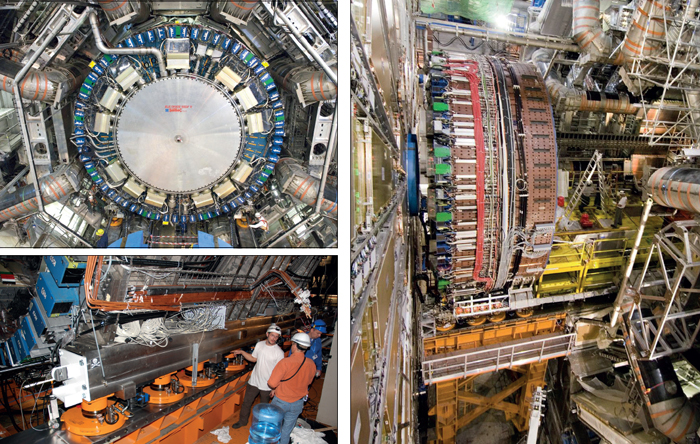
On 7 August, the technical teams in charge of closing activities in the ATLAS collaboration started to move the first pieces back into position around the LHC beam pipe. The subdetectors had been moved out in February 2013, at the beginning of the first LHC Long Shutdown (LS1) – a manoeuvre that was needed to allow access and work on the planned upgrades.
LS1 has seen a great deal of work on the ATLAS detector. In addition to the upgrades carried out on all of the subdetectors, when the next LHC run starts in 2015 the experiment will have a new beam pipe and a new inner barrel layer (IBL) for the pixel detector. For the work to be carried out in the cavern, one of the small wheels of the muon system had to be moved to the surface.
The various pieces are moved using an air-pad system on rails, with the exception of the 25-m-diameter big wheel (in the muon system), which moves on bogies. One of the most difficult objects to move is the endcap calorimeter: it weighs about 1000 tonnes and comes with many “satellites”, i.e. electric cables, cryogenic lines and optical fibres for the read-out. Thanks to the air pads, the 1000 tonnes of the calorimeter can be moved by applying a force of only 23 tonnes. During the movement, the calorimeter, with its cryostat filled with liquid argon, remains connected to the flexible lines whose motion is controlled by the motion of the calorimeter.
The inflation of the air pads must be controlled perfectly to avoid any damage to the delicate equipment. This is achieved using two automated control units –one built during LS1 – which perform hydraulic and pneumatic compensation. This year, the ATLAS positioning system has been improved thanks to the installation of a new sensor system on the various subdetectors. This will allow the experts to achieve an accuracy of 300 μm in placing the components in their final position. The position sensors were originally developed by Brandeis University within the ATLAS collaboration, but the positioning system itself was developed with the help of surveyors from CERN, who are now using this precision system in other experiments.
All of the equipment movements in the cavern happen under the strict control of the technical teams and the scientists in charge of the various subdetectors. It takes several hours to move each piece, not only owing to the weight involved, but also because several stops are necessary to perform tests and checks.
The closing activities are scheduled to run until the end of September. By then, the team will have moved a total of 12 pieces, that is, 3300 tonnes of material.
Work continues apace to ready the Super Proton Synchrotron (SPS) for its planned October restart, while beams are already being delivered to experiments at the Proton Synchrotron (PS) and PS Booster.
During July and August, SPS teams were kept busy with a range of start-up tests for the various equipment groups, including eight weeks of electrical power-converter tests. Since it began in February 2013, the Long Shutdown 1 (LS1) has seen the replacement and renovation of about 75% of the SPS powering, including major components such as 18 kV transformers, switches, cables and thyristor bridges that sit at the heart of the power converters. There have also been important upgrades to the control and high-precision measurement systems. The summer tests were to confirm that the renovated converters were operating correctly to power the SPS dipole and quadrupole magnets.
Slotted among this busy schedule of powering tests were the final checks of the accelerator’s magnets and beam dump. The SPS had one of each of the three main types of magnet fault: an electrical fault (short circuit) in a magnet circuit, a water leak (in the cooling system), and a vacuum-chamber leak. In addition, the main beam dump had to be replaced. Rather than stopping the tests for each move, the teams replaced all four elements in one go.
On 10–12 August, the three magnets and beam dump were removed and replaced with spares in the SPS tunnel. The logistics for this move were complex because of the weight of the magnets and beam dump, and also the 10-tonne chariot and lifting equipment. In addition, these large pieces of equipment fill the entire width of the tunnel, so co-ordinating which vehicles and teams were where and synchronizing their movements was vital.
Although the SPS teams are well-versed at replacing magnets – they can replace as many as four magnets during a two-day technical stop – replacing the beam dump proved to be a tougher challenge. Because the dump is radioactive, the length of transport had to be kept as short as possible and moving the dump from the tunnel to the radiation storage area could not take place if it rained. With this in mind, the operations team created detailed plans for the move, providing hourly updates and back-up solutions in case of rain.
Despite these extensive tests and replacements, the SPS remains on schedule to take beam from the PS in early September, with the accelerator operating again in October to provide beams to the North Area.
At the LHC, in late August the cooling of sector 1-2 was in progress, and the cooling of sector 5-6 beginning. Vacuum teams were checking for any final leaks and carrying out sealing tests in various sectors. At the same time, the copper-stabilizer continuity measurement tests were in progress in sector 8-1, before being carried out throughout the machine. The first power tests have begun in sector 6-7, which will be the first sector ready for beam. Elsewhere, electrical validation tests were in progress throughout the machine, together with instrumentation tests, particularly on the beam-loss sensors. All of the collimators, the kicker magnets and the beam instrumentation in the straight sections of the LHC were installed and under vacuum.
Work progresses on Linac4, the linear accelerator foreseen to take over from the current Linac2 as injector to the PS Booster. On 5 August, the first drift-tube linac (DTL) tank saw beams at 12 MeV. After seven years of design, prototyping and manufacturing, the Linac4 DTL, which comprises three tanks, underwent countless workshop-based measurements of the geometry, vacuum and magnet polarization of the tanks, before the first was installed in the Linac4 tunnel on 5 June. Beam commissioning tests ran until 21 August, and found the DTL operating with nominal transmission.
The National Synchrotron Light Source II (NSLS-II) is currently being commissioned at Brookhaven National Laboratory. When completed, it will be a state-of-the-art, medium-energy electron storage ring producing X-rays up to 10,000 times brighter than the original NSLS, which started operating at BNL in 1982 and will be shut down at the end of September.
The injector system includes a 200 MeV linac and booster with energy up to 3 GeV. The booster is a joint venture between the NSLS-II injector group and the Budker Institute of Nuclear Physics (BINP) in Novosibirsk, one of the NSLS-II partners. BINP has a solid relationship with the Brookhaven lab and has played a significant role in NSLS-II development, coming up with the final design of the booster. The institute has its own well-developed workshops and a variety of specialists, who are not only involved in many major international projects but also operate the VEPP-2000 and VEPP-4M colliders.
In May 2010, according to tender results, a contract was signed between Brookhaven and BINP on the manufacturing, installation and commissioning of the turnkey booster (except an RF system). One year later, Brookhaven staff visited BINP and accepted all first articles. Most of the components – including the magnets, power supplies, diagnostic systems, injection-extraction system – were made at BINP. However, BINP also engaged subcontractors, including European firms. For example, power supplies for the booster dipole magnets were produced by Danfysik A/S.
An 11-hour time difference between Novosibirsk and New York did not prevent good interaction between the laboratories. In the morning and evening, Brookhaven and BINP experts usually made contact to discuss the latest achievements and pose new questions. So the Sun never set over the booster project.
Booster parts arrived at Brookhaven from January through to August 2012. Most of the components came as girder assemblies with magnets aligned to tens of microns, and vacuum chambers installed. The journey of more than 10,000 km was made first by road from Novosibirsk to St Petersburg and then to New York by ship. Upon arrival at Brookhaven, all assemblies were thoroughly tested, but the long journey did not affect the alignment of magnets on the girders.
The testing and installation activities have spanned both organizations. The booster commissioning also involved staff from both NSLS-II and BINP. Following authorization, the commissioning of the booster started in December 2013 and was successfully completed in February 2014, ahead of schedule. The beam passing through booster was up to 95%, with all systems working according to design.
The commissioning of the main storage ring started in March and on 11 July, NSLS-II reached a current of 50 mA at 3 GeV, using a new superconducting radio-frequency cavity. The second cavity and other hardware are still to be installed before the accelerator reaches the full design current of 500 mA. The next step is commissioning insertion devices and front-ends.
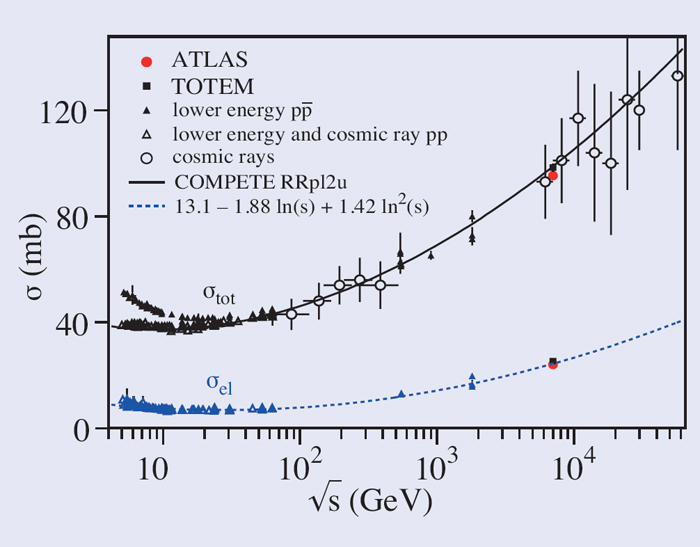
Data from a special run of the LHC using dedicated beam optics at 7 TeV have been analysed to measure the total cross-section of proton–proton collisions in ATLAS. Using the Absolute Luminosity For ATLAS (ALFA) Roman Pot sub-detector system located 240 m from the interaction point, ATLAS has determined the cross-section with unprecedented precision to be σtot (pp → X) = 95.4±1.4 mb.
The total cross-section is a fundamental parameter of the strong interactions, setting the scale of the size of the interaction region at a given energy. To measure the total cross-section, the optical theorem is used, which states that the total cross-section is proportional to the imaginary part of the forward elastic-scattering amplitude, extrapolated to momentum transfer, t = 0. From a measurement of the elastic-scattering cross-section differential in t, the value of the total cross-section is inferred, and is found to increase logarithmically with the centre-of-mass energy (see figure).
Measuring elastic scattering is a challenge because elastically scattered protons escape the interaction at very small angles of tens of micro-radians or less. To detect these protons, dedicated detectors are installed, such as ALFA. To achieve the required focusing properties, the LHC was operated with special beam optics of β* = 90 m. The detectors can then be moved as close as a few millimetres from the LHC beam, to access the smallest scattering angles.
The discovery of a Higgs boson by the ATLAS and CMS collaborations in 2012 marked a new era in particle physics. Since then, the experimental determination of the properties of the new boson, such as its mass and production rate, as well as the study of its decays into as many final states as possible, have became crucial tasks for the LHC experiments.
The ATLAS collaboration has recently published a new set of measurements of the Higgs boson’s properties from the two high-resolution decay channels, to two photons (ATLAS Collaboration 2014a) and to four charged leptons (ATLAS Collaboration 2014b). The new measurements have been performed using the proton–proton collisions delivered by the LHC in 2011 and 2012. They exploit the most accurate knowledge of the detector performance achieved so far, which has also led to an updated measurement of the Higgs mass, mH = 125.36±0.41 GeV (ATLAS Collaboration 2014c).
The Standard Model predicts precisely the couplings of the Higgs boson to all other known elementary particles, once its mass is measured. The simplest way to probe the new boson couplings is to measure the ratio μ (or signal strength) between the number of Higgs bosons measured in the collected data and the number predicted by the theory: a measured μ = 1 would mean that the observation is consistent with the Standard Model Higgs boson. In these latest analyses, the signal strength in the two-photon channel is found to be μ = 1.17±0.27, while it is μ = 1.44+0.40–0.33 in the four-lepton channel. So, within their uncertainties, both results agree with the Standard Model.
The Standard Model also predicts that a Higgs boson can be produced through different mechanisms in proton–proton collisions. The most frequent mechanism (87%) is the scattering (or “fusion”) of strongly interacting gluons to form a Higgs boson. Production through the fusion of W or Z bosons is predicted to occur in 7% of the cases, and has a characteristic event signature of two jets in the forward direction (along the proton beams) that accompany the Higgs boson. The figure shows a candidate event for this production mode. In the recent papers, ATLAS physicists have identified and measured Higgs bosons from various production mechanisms (ATLAS Collaboration 2014a and 2014b).
So far, no surprises have emerged when looking into the details, but the statistical uncertainties are still large. The new data-taking campaign starting in 2015 will be important to improve the precision of the measurements, and will lead to an improved understanding of the nature of the Higgs boson.
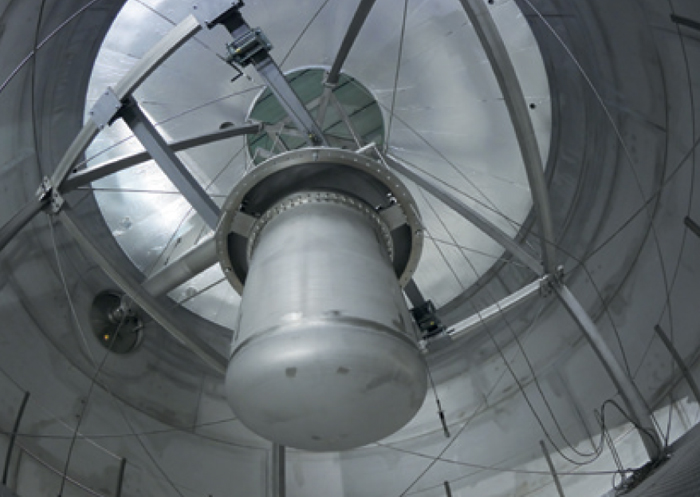
The US Department of Energy Office of High Energy Physics and the National Science Foundation Physics Division have announced their joint programme for second-generation dark-matter experiments, aiming at direct detection of the elusive dark-matter particles in Earth-based detectors. It will include ADMX-Gen2 – a microwave cavity searching for axions – and the LUX-Zeplin (LZ) and SuperCDMS-SNOLAB experiments targeted at weakly interacting massive particles (WIMPs). These selections were partially in response to recommendations of the P5 subpanel of the US High-Energy Physics Advisory Panel for a broad second-generation dark-matter direct-detection programme at a funding level significantly above that originally planned.
While ADMX-Gen2 consists mainly of an upgrade of the existing apparatus to reach a lower operation temperature of around 100 mK, and is rather inexpensive, the two WIMP projects are significantly larger. SuperCDMS will initially operate around 50 kg of ultra-pure germanium and silicon crystals at the SNOLAB laboratory in Ontario, for a search focused on WIMPs with low masses, below 10 GeV/c2. The detectors will be optimized for low-energy thresholds and for very good particle discrimination. The experiment will be designed such that up to 400 kg of crystals can be installed at a later stage. The massive LZ experiment will employ about 7 tonnes of liquid xenon as a dark-matter target in a dual-phase time-projection chamber (TPC), installed at the Sanford Underground Research Facility in South Dakota. It is targeted mainly towards WIMPs with masses above 10 GeV/ c2. The timescale for these experiments foresees that the detector construction will start in 2016, with commissioning in 2018. All three experiments need to run for several years to reach their design sensitivities.
Meanwhile, other projects are operational and taking data, and several new second-generation experiments, with target masses beyond the tonne scale, are fully funded and currently being installed. The Canadian–UK project DEAP-3600, installed at SNOLAB, should take its first data with a 3.6-tonne single-phase liquid-argon detector by the end of this year. Its sensitivity goal is a factor 10–25 beyond the current best limit, depending on the WIMP mass. XENON1T, a joint effort by US, European, Swiss and Israeli groups, aims to surpass this goal using 3 tonnes of liquid xenon, of which 2 tonnes will be inside a dual-phase TPC. Construction is progressing fast at the Gran Sasso National Laboratory, and first data are expected by 2015. These experiments and their upgrades, the newly funded US projects, and other efforts around the globe, should open up a bright future for direct-dark-matter searches in the years to come.
ESA’s INTEGRAL satellite has detected gamma-ray lines from the radioactive decay of nickel and cobalt in a nearby supernova of type Ia. This unprecedented result confirms that the intense light of the supernova comes from the radioactive decay of these elements, which were formed by the thermonuclear explosion of a white-dwarf star.
There are basically two main classes of supernova explosions. Type II supernovae result from the collapse of the core of a massive star, whereas those of type Ia are thought to be the thermonuclear disruption of a white-dwarf star. According to the theory of such explosions, the carbon and oxygen found in a white dwarf should be fused into radioactive nickel (56Ni) during the explosion. The 56Ni should decay quickly into radioactive cobalt (56Co), which itself subsequently decays, on a somewhat longer timescale, into stable iron (56Fe). The ignition should arise when the white dwarf’s mass exceeds a critical mass of about 1.4 times the mass of the Sun. This can result from mass transfer from a companion star or by the merger of two white dwarfs.
It is this uniform process among all type-Ia supernovae that makes them “standard candles” for cosmology, which were used to measure the acceleration of the expansion of the universe (CERN Courier November 2011 p5). Type Ia supernovae are also less frequent than type IIs, and it is only by coincidence that two relatively nearby events appeared recently: SN 2011fe in the Pinwheel Galaxy (CERN Courier January/February 2012 p13) and now SN 2014J in Messier 82 (Picture of the month CERN Courier March 2014 p12). At a distance of 11.5-million light-years from Earth, SN 2014J is the closest of its type since 1972. Its appearance offered a unique opportunity to use the SPI gamma-ray spectrometer aboard INTEGRAL to try to detect the emission lines from the decays of 56Ni and 56Co. All other scheduled observations of INTEGRAL were delayed, but it paid off.
Eugene Churazov, from the Space Research Institute in Moscow and the Max Planck Institute for Astrophysics in Germany, and collaborators, report the detection of two emission lines at 847 and 1238 keV from the radioactive decay of 56Co between 50 and 100 days after the ignition. They also find a weak signal at 511 keV from the electron–positron annihilation following the decay 56Co → 56Fe + e+ and associated emission in the 200–400 keV band. By fitting a three-parameter model to the observations, they calculate that about 0.6 solar masses of 56Ni have been produced by the thermonuclear explosion. The observed broadening of the lines suggests a typical expansion velocity of about 10,000 km/s.
Another team, led by Roland Diehl from the Max Planck Institute for Extraterrestrial Physics, reports the detection of 56Ni already 15 to 20 days after the explosion. This came as a surprise, and suggests that about 10% of the nickel is not produced at the centre of the star – from where the radiation could not escape – but must have been produced outside it. The researchers propose that a belt of helium accreted from the companion star could have detonated first, forming the observed nickel and then triggering the internal explosion that became the supernova.
Regardless of the fine details, these results represent a new breakthrough for the 12-year-old INTEGRAL spacecraft, which has previously detected the radioactive signal of 44Ti from the bright type-II SN 1987A in the Large Magellanic Cloud (CERN Courier December 2012 p11). The new results provide direct evidence that type-Ia supernovae are indeed thermonuclear explosions of white-dwarf stars.
CERN’s origins can be traced back to the late 1940s, when a divided Europe was emerging from the ashes of war. A small group of visionary scientists and public administrators, on both sides of the Atlantic, identified fundamental research as a potential vehicle to rebuild the continent and foster peace in a troubled region. It was from these ideas that CERN was born on 29 September 1954, with a dual mandate to provide excellent science, and to bring nations together. Twelve founding member states – Belgium, Denmark, France, the Federal Republic of Germany, Greece, Italy, the Netherlands, Norway, Sweden, Switzerland, the UK and Yugoslavia – signed the convention that officially entered into force 60 years ago.
As CERN’s facilities and research arena grew in size, so too did the extent of collaboration, with more countries becoming involved – in particular with the programme for the Large Electron–Positron (LEP) collider, and more recently with the construction of the Large Hadron Collider (LHC) itself, as well as its experiments. Today, CERN has 21 member states, with one candidate for accession, one associate member in the pre-stage to membership and seven observer states and organizations. In addition, it has co-operation agreements with many non-member states.
This timeline illustrates a few key moments in this collaborative journey, from those early days to 2014, the 60th anniversary year.
CERN is a unique institution, born from the ashes of war as a beacon of science and peace. Ben Lockspeiser, the first president of CERN Council, encapsulated the spirit of CERN succinctly when he said: “Scientific research lives and flourishes in an atmosphere of freedom – freedom to doubt, freedom to enquire and freedom to discover. These are the conditions under which this new laboratory has been established.”
Today, CERN has 21 member states and collaboration agreements with around 40 other countries. More than 10,000 people from around the world, representing nearly 100 nationalities, come to the laboratory on the Franco-Swiss border to carry out their research. At CERN, you find collaborations between people from countries more often associated with conflict than with reconciliation, which is the way it has always been at CERN.
The following short articles, written mainly from personal experience, highlight what CERN has meant to people in various regions of the world, from the Europe of the 1960s through to later decades, and the laboratory’s wider engagement with countries in other regions, such as Asia, Australasia and South America.
In July 1946, at the invitation of the Physical Society of London, physicists met at the Cavendish Laboratory in Cambridge for the International Conference on Fundamental Particles and Low Temperatures. This was the first such meeting in Europe since the conference on New Theories in Physics, which had been organized in part under the auspices of the International Institute for Intellectual Cooperation, a branch of the League of Nations, in Warsaw eight years earlier. As nobody from the so-called Eastern block was present in Cambridge, it seems that new clouds were already forming over the world – and over science.
Ten years later, in July 1956, CERN organized the Symposium on High-Energy Accelerators and Pion Physics, less than two years after its official foundation. Held at the Institut de Physique in Geneva, it attracted more than 300 participants from 22 countries, including some 50 scientists from the US and about the same number from the USSR, all of whom had been invited by CERN and were able, for the first time, to exchange information freely and compare ideas. Highly interesting papers dealing, in particular, with new principles for the acceleration of particles and with pion physics, were presented and discussed. According to CERN’s Annual Report for 1956, the conference was a landmark in the history of the organization.
It followed an opening in the West–East relationship around 1955. In August that year, the International Conference on the Peaceful Uses of Atomic Energy – “Atoms for Peace” – took place in Geneva, attended by a delegation from the USSR that included a number of scientists, among them Vladimir Veksler. A year later, the Joint Institute of Nuclear Research (JINR) was established with a charter very similar to the CERN convention, and with Dmitri Blokhintsev as the first director. It was based on scientific institutions that had grown up after the Second World War in a town on the Volga that eventually was named Dubna – city of sciences. At the same time, Soviet scientific work previously recorded in internal reports was declassified and published in scientific journals. English translations were published, mainly in the US, and learning Russian became popular among physicists.
It was the first time that a large delegation of Soviet scientists working in particle physics took part in a scientific conference in the West
The symposium organized by CERN in July 1956 offered the opportunity for many people to make personal contacts, and especially during an excellent reception held by the Soviet delegation at the Hotel Metropole, where they were all lodged for security reasons. Vodka ran abundantly. Many of the Soviet physicists subsequently became directors of the different laboratories of JINR and/or were to have important roles in Soviet physics. It was the first time that a large delegation of Soviet scientists working in particle physics took part in a scientific conference in the West.
The scientific sessions included reports from the Soviet delegation on the work done during the years 1950–1955 at the synchrocyclotron of the Institute of Nuclear Problems, which in 1956 became the Laboratory of Nuclear Problems, JINR. This was when the whole world learnt that the USSR had what was then the largest synchrocyclotron ever built – with a diameter of 6 m. At the same time, the world learnt that Bruno Pontecorvo had an active part in the scientific work with that machine. Although he was not present in Geneva, he had contributed to a paper on the synchrocyclotron’s beams and their use.
Adolf Mukhin presented results on π+p scattering at energies in the 176–310 MeV range. These results, together with those on pion production from other experiments, created some embarrassment in the physics community interested in performing similar experiments at the CERN Synchrocyclotron (SC). In 1956 the SC was still being constructed, and pion beams for users were foreseen only for early in 1958. Fortunately nature was kind, because weak interactions were soon to come to the fore, and experiments at the SC were able to make an important impact. Later, in 1961, Mukhin was one of the first two experimental physicists from the USSR to visit CERN for a long period – the other was Vladimir Nikitin – during which he joined an experiment on muon nuclear capture at the SC.
After 40 years at CERN, what have I Iearnt? From a Russian: the meaning of 8 March, how communication can be achieved with few words, and friendship, even if interrupted abruptly, can remain for life. From a Chinese: is the insurmountable really insurmountable? From an Iranian: what is important is not appearance but that you are respected. This is a short list – in reality, I was always learning something from the people I met at CERN. If nothing else, new recipes, what to see in their countries, or new cultural insights.
When I arrived at CERN in 1969, I thought I was a rare being – not only an academic woman but also a biologist. However, time showed that the biggest rarity was the place where I had come to work. During the first month, I was invited for dinner to the home of my boss, Johan Baarli, a Norwegian physicist who was head of the Health Physics Group. Travelling there on the bus, I met a Polish radiation-dosimetry physicist, Mieczyslaw Zielczyn´ski, who was also invited. At that time it was a great rarity to encounter someone from behind the “Iron Curtain”, and although we could not talk much because of our different languages, we became lifelong friends. A still bigger surprise came in April 1971, when the International Congress on Protection against Accelerator and Space Radiation was held at CERN, and Russian, American and European physicists and engineers could speak freely with each other.
As a collaborator on studies towards the possible applications of high-energy particle beams for cancer therapy, a Russian biologist, Valentina Kurnaeva, was working with me, whose husband was with the Serpukhov collaboration at the Proton Synchrotron. I still have many memories of good work and warm hospitality – invited for lunch, I arrived at noon, but the meal did not start until 2:00 p.m., and at 10:00 p.m. we were still there, singing, talking, eating and drinking. Sadly, it ended abruptly when one of the Russians disappeared mysteriously. My friends had to leave within a week, and we cried knowing that there was not much hope that we would see each other again.
By the end of the 1970s, Chinese physicists were appearing at CERN, with three in the Radiation Protection Group. They were friendly and eager to know everything. The Chinese philosophy on life helped me a great deal, not only because they were hard workers, no matter what time of day or night, but also because of their kindness and politeness. When I organized the farewell party after the decision was taken to end radiobiological activity at CERN in 1981, one of them did me a drawing. Even now, when I feel down, I look at it and it cheers me up. It is true that there is always light somewhere, one just has to pass over the mountain.
Later, when I was doing the safety courses for the physicists who had to work underground at the Large Electron–Positron (LEP) collider, I needed translations of a safety note and a sticker to call the fire brigade, in as many languages as possible. It was simple to find help with Chinese, Russian and many other languages, but the adventure was to find someone to help with Arabic and Turkish. Finally, I found assistance with the Turkish version by asking a worker who drove a truck in the Transport Group to help me. He was so proud that he introduced me to all of his family on a CERN open day, and I regularly met him thereafter and discussed safety issues.
What a big family CERN is and, I hope, will remain. It has opened my eyes and my mind to the world
During the LEP era in the 1990s, I would meet and lunch with an Iranian engineer. At that time Iran was closed to the West and pictures showed completely veiled women. She wore blue jeans and had studied in the US and UK, so I decided to ask her, how was it when she went home? Was it hard to switch from a typical western mode to the other? I was astonished by her answer. At home she felt free, respected for her knowledge and capabilities and not at all devalued as a woman – just the opposite of what I thought from reading the press.
During my last period of time at CERN, a rose left on my table on 8 March by Dmitry Rogulin, a Russian computer scientist working on a technology-transfer project, brought back sweet memories. It took me back to when I was first told by Valentina of what the date means, some time before International Women’s Day became recognized in the West.
What a big family CERN is and, I hope, will remain. It has opened my eyes and my mind to the world. For anyone working there, CERN truly is knowledge, understanding and peace.
• Marilena Streit-Bianchi worked at CERN for 41 years, first in radiobiological research, then later in safety training and finally technology transfer. She is also responsible for CERN’s Oral History Project.
From physics in Poland to medicine in America – via CERN
My formative years as a young Polish experimental high-energy physicist were spent at CERN, starting in 1974 and lasting, with breaks, until 1984, when I emigrated from Europe to the US. Today, I am a research faculty member in the radiology department in a medical centre – quite a transformation for a person with PhD training in experimental high-energy physics, who specialized initially in the development of gaseous particle detectors.
CERN had a special ambiance and offered tremendous opportunities to any young particle physicist, not only those from Poland. However, the Polish contingent at CERN was always disproportionally large compared with the size of the country in the Soviet block. We always had much more freedom to travel than others from the block, and I benefited 200% from that opportunity. I owe much gratitude to all who were supportive. Luckily for my family and me, we left Poland before martial law was imposed in December 1981.
At CERN I worked in several groups, but I owe the most to Georges Charpak and Fabio Sauli, and to the “Nucleus Heidelberg” group. Whatever I learned later after emigrating to the US was a natural continuation and expansion of that initial training – not just in a technical sense, but mostly in a cultural sense, with the mindset that everything is possible. This was the message from Georges, at least to young people like us. It was Georges who got me interested in imaging in nuclear medicine, and throughout my life I have repeated to all who would listen that I would not have been able to invent the breast-specific gamma imaging (BSGI) camera followed by other medical imagers, were it not for Georges. I was lucky to be able to tell him this in person – he did not believe me – in Paris, about six months before his death. On that trip I also stopped by the Hôtel Dieu hospital in Paris where I could see one of the BSGI cameras that I invented in operation. What satisfaction! And it all started at CERN.
I am still a proud member of the international particle-physics community, all these years after I left CERN and then Fermilab. What is exciting is that I still communicate with many of my colleagues and friends from the CERN-related community who are now working in medical imaging, including David Townsend, Paul Lecoq, Stefaan Tavernier, José Maria Benlloch, Franco Garibaldi, Alberto Del Guerra and João Varela. I cannot imagine my career without CERN.
• Stan Majewski is a faculty member at Radiology Research, Department of Radiology, University of Virginia.
Two generations of Chinese collaboration with CERN
The first official approach from CERN to China was in January 1966, when Bernard Gregory, then director-general, sent a letter to the director of the Institute of Atomic Energy (IAE) at the Chinese Academy of Sciences (CAS), expressing the wish to establish a scientific exchange programme between CERN and China. The IAE director at that time happened to be my father, Sanqiang Qian. Unfortunately, the letter arrived on the eve of the disastrous so-called “Cultural Revolution” in China (1966–1976), and my father never saw this letter because he was among the first people to be wrongly criticized, even before the “Cultural Revolution” started. Together with my mother, Zehui He – one of the deputy directors of the IAE (CERN Courier December 2011 p29) – my father was banished in 1969 to the remote countryside to work in agriculture, until he was allowed to return to Beijing for medical treatment in 1972 and then returned gradually to work at the IAE and CAS.
Meanwhile, part of the IAE was separated out to establish a new independent institute of CAS – the Institute of High Energy Physics (IHEP) – at the start of 1973, and my mother was appointed one of the IHEP deputy directors until 1984. The first director of IHEP was Wenyu Chang, who had some private contact with high-energy physicists in the US prior to 1972, and then exchanged official letters with CERN during 1972 and into 1973. He led the first delegation from China to visit CERN in June and July 1973. This was followed by the milestone visit to China in September 1975 by Victor Weisskopf, Willibald Jentschke and Léon Van Hove – respectively, CERN’s former, then current, and elect director-generals – together with Georges Charpak. During the visit, the CERN delegation had extensive discussions with their Chinese counterparts led by Sanqiang Qian who, as vice-president of CAS, visited CERN in June 1978.
Since then, CERN–Chinese collaboration has grown steadily from the visits of a few theorists and accelerator experts from a couple of Chinese institutes in the 1970s and 1980s, through larger groups on the L3 and ALEPH experiments at the Large Electron–Positron collider, to groups on all of the four major LHC experiments, with contributions from more than 10 Chinese universities and research institutes and more than 100 physicists and students.
My own work at CERN started in 1988, following my PhD from Illinois Institute of Technology in 1985 and work as a postdoc at Fermilab. The first five years of my work were with the INFN/Frascati group (based at CERN) on the ZEUS experiment at DESY. I was fortunate to work with top experts so that I could learn new techniques and skills more efficiently and make contributions, in particular in developing track-reconstruction algorithms by the Kalman filtering method. I’m pleased to see that this algorithm is used today by almost all experiments in high-energy physics, including the major LHC experiments.
Since 1994 I have worked on the CMS experiment, helping Peking University (PKU) to join the CMS collaboration in 1996, and proposing that PKU participate in the resistive-plate-chamber (RPC) system for forward muon detection. With strong support from the Chinese funding agencies, and with many colleagues from PKU and other countries, I was able to contribute to the entire RPC process, from prototyping and co-ordinating the chamber construction, through testing and installation, to commissioning and monitoring during Run I of the LHC. Muon triggering and reconstruction were to be crucial to the Higgs-boson discovery.
I felt extremely fortunate and excited when ATLAS and CMS announced the discovery of a Higgs boson in 2012, and when the award of the Nobel Prize in Physics to François Englert and Peter Higgs was announced in 2013. These achievements were the consequence of the tremendous hard work and close collaboration among thousands of physicists from more than 30 countries for about 20 years, which is nearly two-thirds of my physics career!
• Sijin Qian is a professor at Peking University (PKU) and deputy team leader of the PKU group in CMS. He represented China and 18 other non-member states of CERN on the CMS Management Board from 2008 to 2010. Chinese involvement in CMS is supported by NSFC, MoST and CAS.
In Argentina, the situation in 1975 was already becoming desperate. Then on 24 March 1976, a military junta was installed. Some of my friends in the faculty had disappeared, and I with my beard – something that made me look suspicious at the time – was saved by chance.
Knowing about CERN, and wishing as a young engineer to specialize, I applied for a job. Being from a non-member state, it was not easy to be selected, but chance, tenacity and probably the type of expertise helped. In September, I obtained authorization for leave from the National University of La Plata, where I was working as a researcher, and moved to the extraordinary international scientific research centre that CERN had already become. When I arrived, I was immediately taken by the spirit of universality that reigned there. This was surely the experience that changed my life and my way of thinking and looking at things forever. Few places in the world were so open in spirit. Science was above any political, social, religious or racial difference. It was the common objective that was important. Ask, and there was always someone ready to help or teach you, and it has remained so throughout the 38 years I have been collaborating with CERN.
When I went back to Argentina in 1978 at the end of the first military government, I tried without success to get an agreement signed between the government and CERN. After much toing and froing, and following my second stay at CERN in 1988 and 1989, a first agreement was set up finally. This was not a particularly fruitful agreement, but it led to the act of intent signed in 2006 by Lino Barañao – currently the minister of science in Argentina – who at the time was president of the National Agency for Science and Technology (ANPCyT). In turn, this was followed in 2007 by a framework agreement concerning both physics and technological collaboration between Argentina and CERN. Then, in 2009, the first protocol for collaboration between CERN and the Laboratory of Instrumentation and Control (LIC) of the National University of Mar del Plata, was signed.
About 30 students and researchers from the laboratory that I have been working for and leading have collaborated, either from Argentina or by being at CERN, and this has been beneficial to both partners. The developments carried out for CERN accelerators for many years – including most recently work for Linac4 – have undoubtedly contributed to improving the technology and the academic level of our research. Moreover, not only scientific achievements but also human relationships have been part of these wonderful 38 years of fruitful collaboration, for which I am grateful and proud.
• Mario Benedetti, director of LIC at the University of Mar del Plata (1983–2012), has worked at CERN’s Proton Synchrotron and most recently for the LHC upgrade.
In 1943, Mark Oliphant, an Australian physicist who had been working at Birmingham in the UK, took up a post as Ernest Lawrence’s deputy at Oak Ridge. In his spare time, Oliphant proposed a new method of accelerating particles – the synchrotron. Upon his return to England, he completed in 1953 the construction of the Birmingham 1 GeV proton synchrotron, one of the world’s first high-energy particle accelerators. Another Australian, Colin Ramm, joined Oliphant at Birmingham to work on the synchrotron. Ramm’s exceptional talents in instrumentation led to an invitation to join CERN soon after the organization’s foundation – initially to work on the design and construction of the magnet system of CERN’s Proton Synchrotron and later as leader of the Nuclear Physics Apparatus Division. This division built the famous heavy-liquid bubble chamber that made the first observations of high-energy neutrino interactions. In 1972, Ramm joined Melbourne University, where he continued analysing neutrino data from CERN.
In the mid-1960s, David Caro and Geoff Opat founded the Melbourne High Energy Physics Group, Australia’s first experimental particle-physics group. Its initial research programme, carried out at Brookhaven, searched for excited sub-nuclear species by observing interactions of antiprotons with deuterons in a bubble chamber. The 250,000 frames of 70-mm film were analysed at Melbourne.
A key appointment at Melbourne was that of Stuart Tovey, recruited in 1975 from CERN as an experienced experimentalist. Tovey was to become a pioneer of Australian involvement at CERN (CERN Courier March 2011 p46). He was prominent in the 1960s and 1970s in the study of hyperons and kaons, and later participated in the discovery of the W and Z bosons in the UA2 experiment.
The foundations for strengthening the involvement of Australia at CERN were laid towards the end of the 1980s, with the return to Australia of Geoffrey Taylor to work alongside Tovey at Melbourne. In 1991, Australia and CERN signed an International Co-operation Agreement. The group led by Lawrence Peak at Sydney University, which had a strong programme in cosmic rays, neutrino physics and fixed-target accelerator experiments at Fermilab, evolved towards accelerator-based experiments at CERN. The groups at ANSTO, Melbourne and Sydney participated in NOMAD in the mid-1990s – an important milestone because the Australian groups participated for the first time as equals in all stages of a major CERN experiment. Melbourne and Sydney have also participated in the Belle experiment at KEK since 1997.
A major highlight is Australia’s involvement in ATLAS. The international engagement and solid personal and professional ties with CERN of both Taylor and Tovey ensured strong participation of the Melbourne and Sydney groups from the early 1990s. They contributed to the construction of silicon modules for the end-cap wheels of the semiconductor tracker, through Australian industry delivered large precision-machined alloy plugs serving as ATLAS radiation shields, and set up a Tier-2 centre of the Worldwide LHC Computing Grid. Australian physicists have subsequently made significant contributions to the ATLAS Higgs analysis. An experimental particle-physics group led by Paul Jackson at Adelaide University also joined ATLAS in 2012.
The successful Centre of Excellence for Particle Physics at the Terascale, which incorporates Adelaide, Melbourne, Monash and Sydney Universities under the exceptional leadership of Taylor, will no doubt continue to build on these achievements in the years to come. The future looks bright and the only way for “down under” is up.
It was a great privilege and honour to have been part of the stimulating intellectual environment at Melbourne in the 1980s, and to be mentored and introduced by the likes of Opat, Peak, Ramm, Taylor and Tovey to the magical world of particles and fields.
• Emmanuel Tsesmelis is CERN’s deputy head of international relations. He has worked on UA2, NOMAD and CMS, and has led the LHC experimental areas group.
To provide the best experiences, we use technologies like cookies to store and/or access device information. Consenting to these technologies will allow us to process data such as browsing behavior or unique IDs on this site. Not consenting or withdrawing consent, may adversely affect certain features and functions.
Functional
Always active
The technical storage or access is strictly necessary for the legitimate purpose of enabling the use of a specific service explicitly requested by the subscriber or user, or for the sole purpose of carrying out the transmission of a communication over an electronic communications network.
Preferences
The technical storage or access is necessary for the legitimate purpose of storing preferences that are not requested by the subscriber or user.
Statistics
The technical storage or access that is used exclusively for statistical purposes.The technical storage or access that is used exclusively for anonymous statistical purposes. Without a subpoena, voluntary compliance on the part of your Internet Service Provider, or additional records from a third party, information stored or retrieved for this purpose alone cannot usually be used to identify you.
Marketing
The technical storage or access is required to create user profiles to send advertising, or to track the user on a website or across several websites for similar marketing purposes.