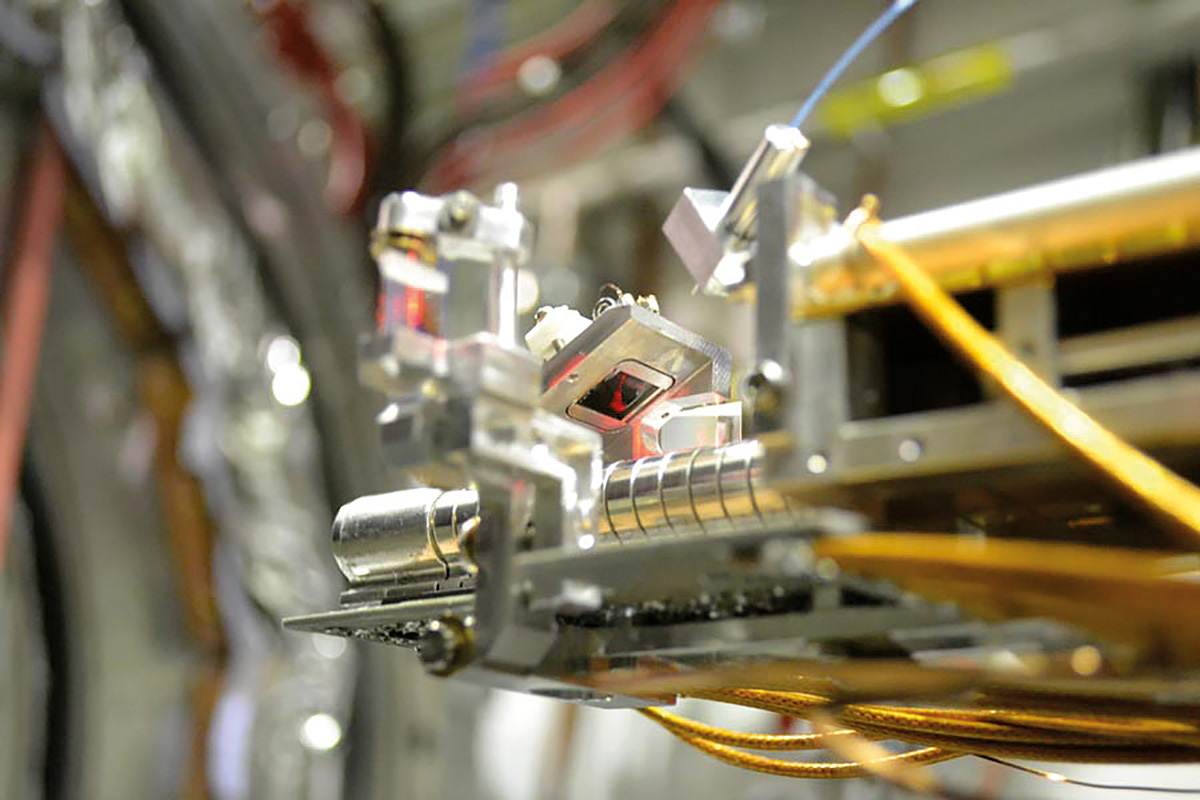
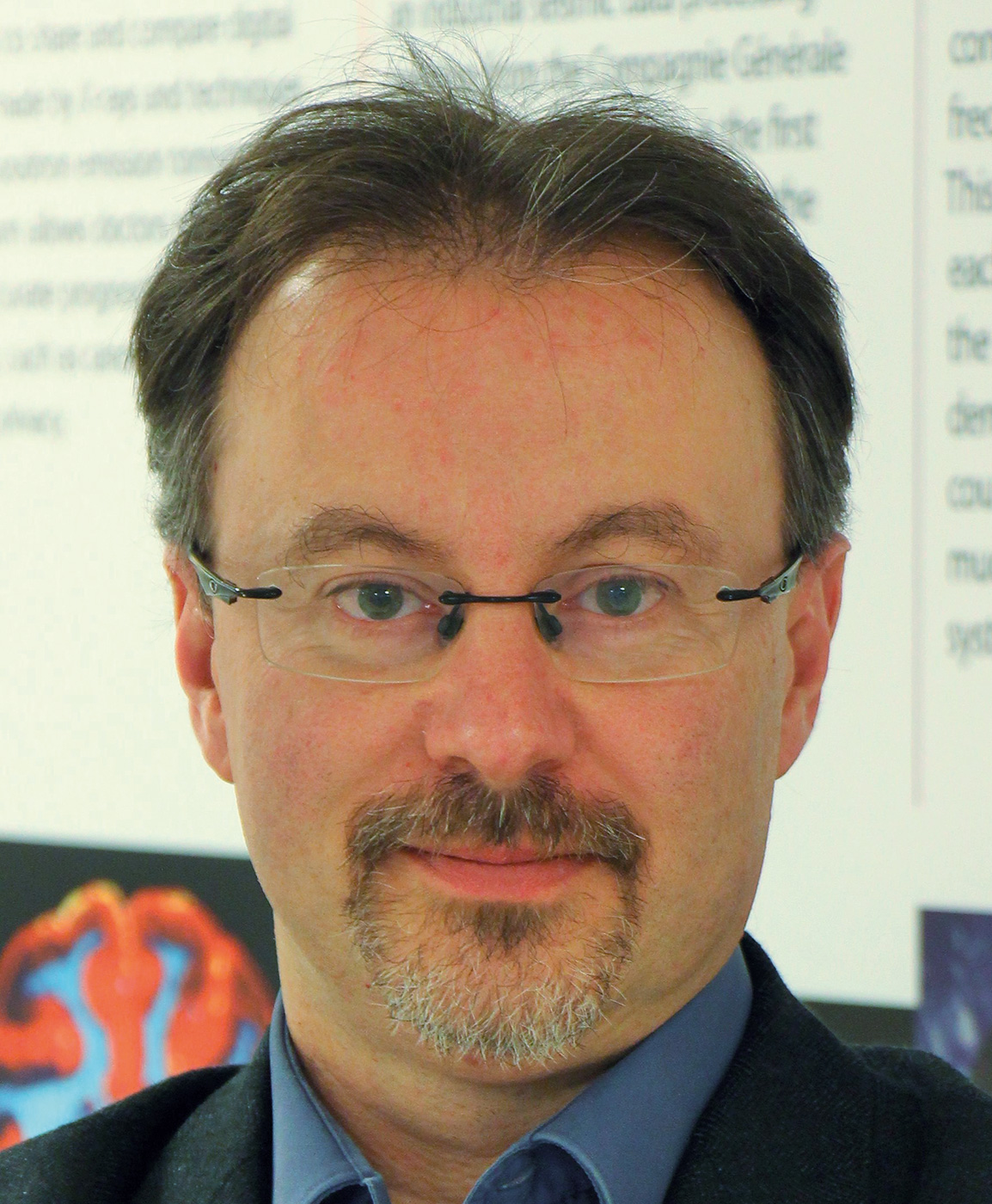
Quantum technologies, which exploit inherent phenomena of quantum mechanics such as superposition and entanglement, have the potential to transform science and society over the next five to 10 years. This is sometimes described as the second quantum revolution, following the first that included the introduction of devices such as lasers and transistors over the past half century. Quantum technologies (QTs) require resources that are not mainstream today. During the past couple of years, dedicated support for R&D in QTs has become part of national and international research agendas, with several major initiatives underway worldwide. The time had come for CERN to engage more formally with such activities.
Following a first workshop on quantum computing in high-energy physics organised by CERN openlab in November 2018, best-effort initiatives, events and joint pilot projects have been set up at CERN to explore the interest of the community in quantum technologies (in particular quantum computing), as well as possible synergies with other research fields. In June, CERN management announced the CERN quantum technology initiative. CERN is in the unique position of having in one place the diverse set of skills and technologies – including software, computing and data science, theory, sensors, cryogenics, electronics and material science – necessary for a multidisciplinary endeavour like QT. CERN also has compelling use cases that create ideal conditions to compare classic and quantum approaches to certain applications, and has a rich network of academic and industry relations working in unique collaborations such as CERN openlab.
Today, QT is organised into four main domains. One is computing, where quantum phenomena such as superposition are used to speed up certain classes of computational problems beyond the limits achievable with classical systems. A second is quantum sensing and metrology, which exploits the high sensitivity of coherent quantum systems to design new classes of precision detectors and measurement devices. The third, quantum communication, whereby single or entangled photons and their quantum states are used to implement secure communication protocols across fibre-optic networks, or quantum memory devices able to store quantum states. The fourth domain is quantum theory, simulation and information processing, where well-controlled quantum systems are used to simulate or reproduce the behaviour of different, less accessible, many-body quantum phenomena, and relations between quantum phenomena and gravitation can be explored – a topic at the heart of CERN’s theoretical research programme. There is much overlap between these four domains, for example quantum sensors and networks can be brought together to create potentially very precise, large-scale detector systems.
Over the next three years, the quantum technology initiative will assess the potential impact of QTs on CERN and high-energy physics on the timescale of the HL-LHC and beyond. After establishing governance and operational instruments, the initiative will work to define concrete R&D objectives in the four main QT areas by the end of this year. It will also develop an international education and training programme in collaboration with leading experts, universities and industry, and identify mechanisms for knowledge sharing within the CERN Member States, the high-energy physics community, other scientific research communities and society at large. Graduate students will be selected in time for the first projects to begin in early 2021.
Joint initiatives
A number of joint collaborations are already being created across the high-energy physics community and CERN is involved in several pilot investigation projects with leading academic and research centres. On the industry side, through CERN openlab, CERN is already collaborating on quantum-related technologies with CQC, Google, IBM and Intel. The CERN quantum technology initiative will continue to forge links with industry and collaborate with the main national quantum initiatives worldwide.
Quantum technologies have the potential to transform science and society over the next five to 10 years
By taking part in this rapidly growing field, CERN not only has much to offer, but also stands to benefit directly from it. For example, QTs have strong potential in supporting the design of new sophisticated types of detectors, or in tackling the computing workloads of the physics experiments more efficiently. The CERN quantum technology initiative, by helping structure and coordinate activities with our community and the many international public and private initiatives, is a vital step to prepare for this exciting future.
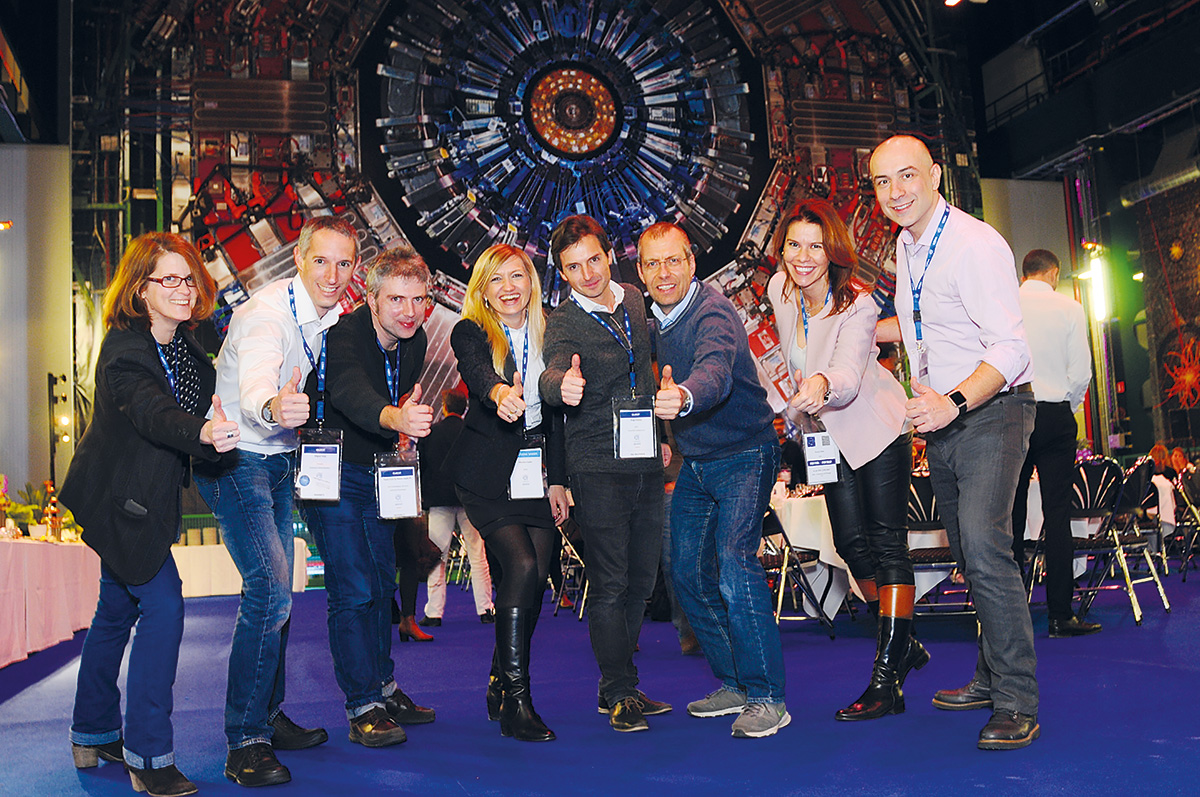
Since its launch in June 2017, the CERN Alumni Network has attracted more than 6300 members located in more than 100 countries. Predominantly a young network, with the majority of its members aged between 25 and 39, CERN alumni range between their early 20s up to those who are over 75. After a professional experience at CERN, be it as a user of the lab, as an associate, a student, a fellow or a staff member, our alumni venture into diverse careers in many different fields, such as computer software, information technology and services, mechanical or industrial engineering, electric/electronic manufacturing, financial services and management consulting.
The network was established to enable our alumni to maintain an institutional link with the organisation, as well as to demonstrate the positive impact of a professional CERN experience on society. Though most CERN alumni remain in high-energy physics research or closely related fields, those who wish to use their skills elsewhere, especially early-career members, will find active support in the Alumni Network.
The alumni.cern platform (also available as an app on Android and iOS) provides members with access to an exclusive and powerful network that can be leveraged as required, whether at the start of a career or later when the desire to give back to CERN is there. The platform facilitates different groups, including regional groups, interest groups (such as entrepreneurship and finance) and groups for managing the alumni of the CERN scientific collaborations. Events and selected news articles are also posted on the alumni.cern platform, and members can also benefit from messaging.
A key appeal of the platform is its jobs board, where both alumni and companies can post job opportunities free of charge. Since its launch more than 500 opportunities have been posted with 260 applications submitted directly via the platform, mostly in fields such as engineering, software engineering and data science. Several CERN alumni have found their next position thanks to the network, either directly via job postings or through networking events.
A notable success has been a series of “Moving out of Academia” networking events that showcase sectors into which CERN alumni migrate. Over the course of one afternoon, around half a dozen alumni are invited to share their experiences in a specific sector. Events devoted to finance, industrial engineering, big data, entrepreneurship and, most recently, medical technologies, have proved a great success. The alumni provide candid and pragmatic advice about working within a specific field, how to market oneself and discuss the additional skills that are advisable to enter a certain sector. These events attract more than 100 in-person participants and many more via webcast.
The Office for Alumni Relations has recently launched its first global CERN alumni survey to understand the community better and identify problems it can help to solve. The survey results will soon be shared with registered members, helping us to continue to build a vibrant and supportive network for the future.
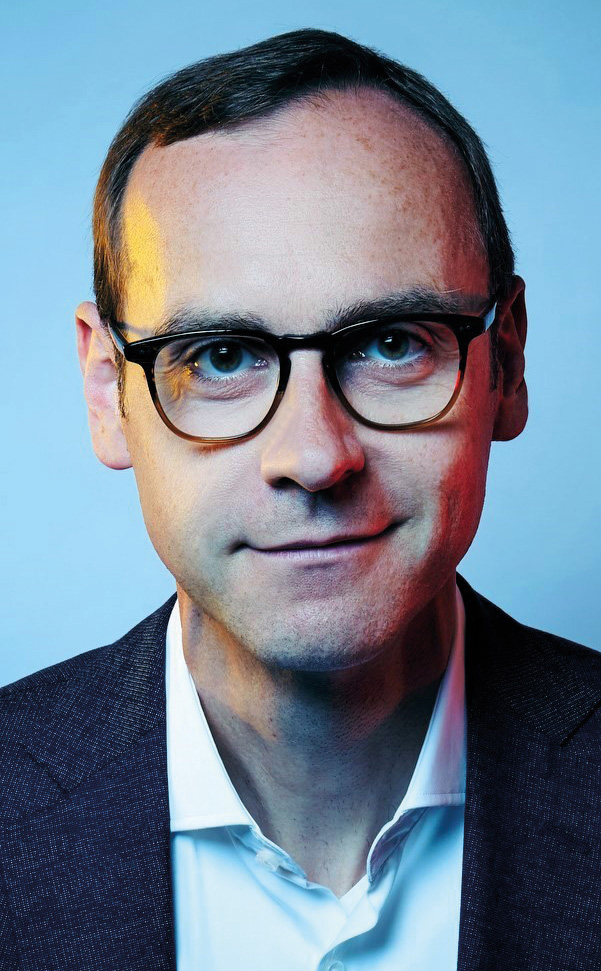
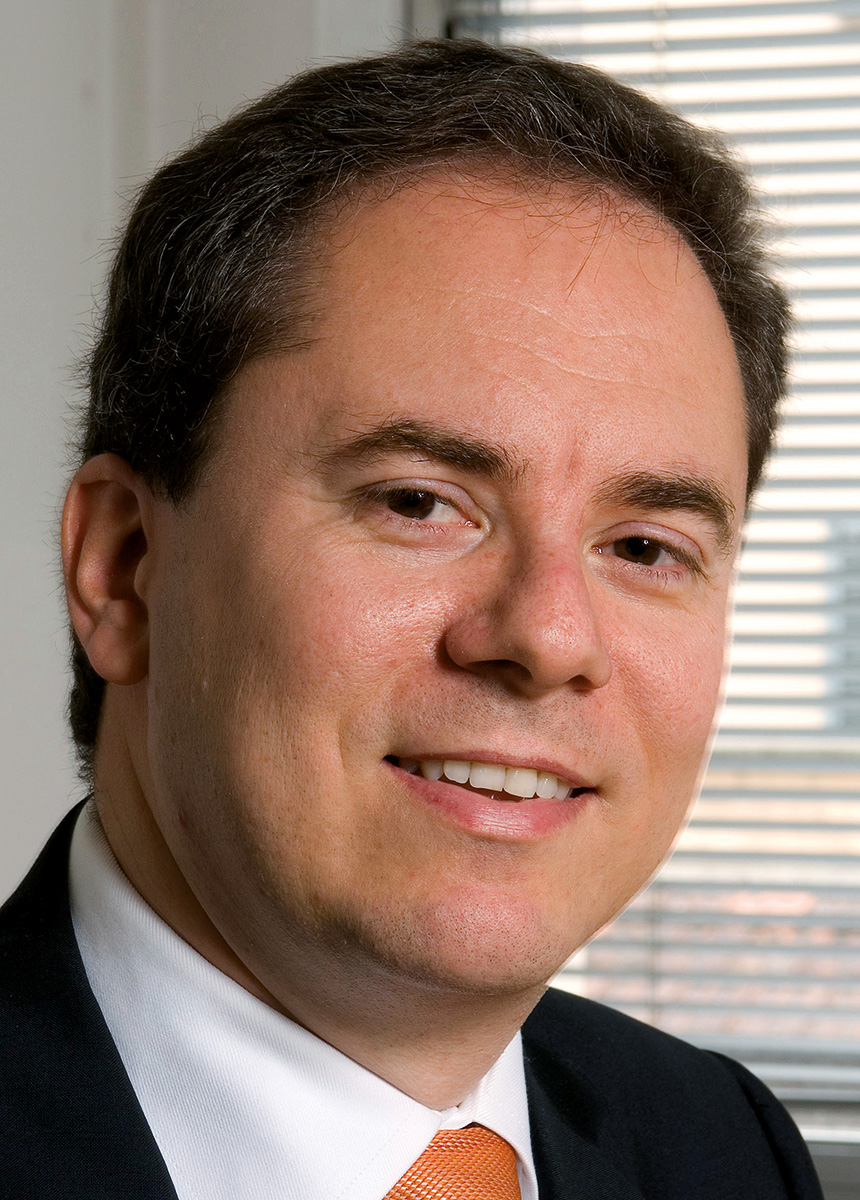
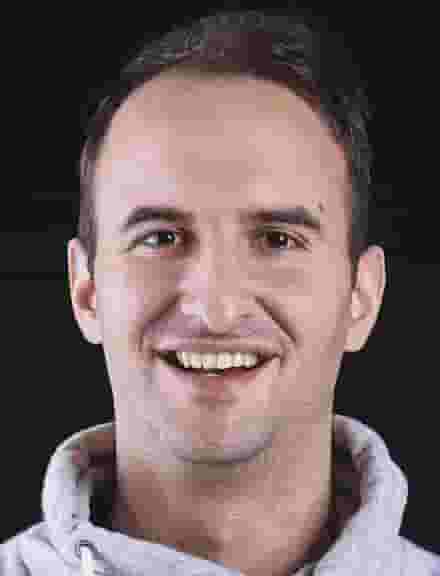
Markus joined CERN as a summer student in 1996, working on the OPAL experiment at LEP. Eager to tackle other professional challenges, upon graduating he accepted an internship with the Boston Consulting Group. “On my first day I found myself surrounded by Harvard MBAs in sleek suits, wondering what we would have in common,” he says. “I think there are two very clear reasons why companies are so keen to employ people from CERN. Number one, you develop extremely strong and structured analytical skills, and this is coupled with the second reason: a CERN experience provides you with a deep passion to perform.” In 2001 Markus returned to Germany as director of corporate development with Deutsche Bank. He enjoyed a meteoric rise in the world of finance, moving to UniCredit/HypoVereinsbank as managing director in 2005, and then to Landesbank Baden-Württemberg (LBBW), first as head of corporate development and subsequently CEO of LBBW Immobilien GmbH. The global financial crisis in 2009 led him to pursue a more entrepreneurial role, and he moved into marketing, becoming CFO and managing director of Avantgarde. After six successful years he sought some major life changes, taking three months off and discovering a passion for hiking. In 2018 Markus founded Terra Quantum to develop quantum computing. He describes it as his proudest career achievement to date, taking him back to his lifelong interest in quantum physics. “CERN gave me so much!” he says. “Recently I brought 70 entrepreneurs to CERN and they were blown away by their visit. Not only were they impressed that CERN is seeking answers to the most profound and relevant questions, but the sheer scale of project management of such a gigantic endeavour left them in complete awe.”
Maria Carmen Morodo Testa Launch range programmatic support officer at ESA
After completing her studies as a telecommunications engineer at the Polytechnic University in Barcelona, Carmen joined a multinational company in the agro-food sector specialising in automation and control systems, whilst studying for an MBA. On the university walls she spotted an advert for a staff position at CERN, which corresponded almost word for word to the position she held at the time, but in a completely different sector: CERN’s cooling and ventilation group. “So, why not?” she thought. “At CERN, I discovered the importance of being open to different paths and different ways of thinking.” In 2004, five years in to her position and with a “reasonable prospect” but no confirmation of a permanent contract, she began to think about the future. “I decided that it would be either CERN or a sister international organisation that would also give me the opportunity to take ownership of my work and shape it.” She sent a single application for an open position in the launcher department of the European Space Agency (ESA), and was successful. “I didn’t know of course if I was making a good choice and I was afraid of closing doors. But, my interest was already piqued by the launchers!” Carmen joined ESA at an exciting time, when Ariane 5 was preparing for flight. She trained on the job, largely thanks to a “work-meeting” technique that allows small teams to be fast and share knowledge and experience effectively on a specific objective, and is currently working on the Ariane 6 design project. “I do not hesitate to change positions at ESA, taking into account my technical interests, without giving too much importance to opportunities for hierarchical promotion.”
In 1987, then 18 year-old Alessandro was selected to take part in a physics school hosted by the Weizmann Institute of Science in Israel. His mentor Eilam Gross sparked a passion for particle physics, and Alessandro arrived at CERN in 1991 as a summer student working on micro strip gas avalanche chambers for a detector to be installed in the DELPHI experiment at LEP. His contract was extended to enable him to complete his work, and he returned to CERN in 1992 to work on DELPHI. After three glorious years, his Swiss scholarship was replaced by an Italian one with a much lower salary. A desire to buy a house and start a family forced him to consider other avenues, drawing on his hobby of computer programming. “I had a number of ongoing consultancies with external companies so I switched my hobby for my job and physics became my hobby!” Alessandro returned to Italy in 1995 as a freelance software developer designing antennas. In 1999 he joined Milan software company Diagramma, and transitioned from telecommunications to car insurance – where he was tasked with developing tools to enable customers to enter their data online and obtain the best tariff. “Nowadays, this is quite commonplace, but at the time such software did not exist,” he says. Alessandro is now general manager of Diagramma, which is developing AI algorithms to increase the efficiency of its products. He values his particle-physics experience more than ever: “It wasn’t enough to know the physics and think logically, I also had to think differently, laterally one could say. I learnt how to solve problems using an innovative approach. Having worked at CERN, I know how multi-talented these people are and I am very keen to employ such talent in my company.”
Stephen Turner Electrical/electronic engineer at STFC
Following a Master’s degree in electrical and electronic engineering at the University of Plymouth in the UK, Stephen started working for the UK Science and Technology Facilities Council (STFC), where he sought a three-month placement as part of their graduate scheme. Having contacted an STFC scientist with CERN links “who knew someone, who also knew someone” at CERN – a scientist supporting the Beamline for Schools competition – Stephen secured his placement in the autumn of 2017. As a member of the support-scientists team, his role was to help characterise the detectors and prepare the experimental area for the students, enabling him to combine his passion for education and outreach with technical experience, where he would gain precious knowledge that could be put to use in his current role at the ISIS neutron and muon source at the Rutherford Appleton Laboratory. “My experience at CERN provided me with the bigger picture of how such user facilities are run,” he says. Whilst at Plymouth, Stephen was also involved in Engineers Without Borders UK, which works with non-governmental organisations in developing countries on projects including water sanitation and hygiene, building techniques and clean energy. Although he now has a full time job, Stephen is still an active volunteer, and his interests in public engagement and international development brought him back to CERN in 2018 to share knowledge on target manufacturing and testing with the CERN mechanical and materials engineering group. “Lots of variety, public engagement and outreach were part of the job’s remit and it has kept its promises, he says. “There are not many companies that can offer this!”
John Murray Private investor and synthetic-biology consultant
John arrived at CERN in 1985 as a PhD student on the L3 experiment at LEP. Every day was a new experience, he says. “My absolute favourite thing was spending time with the summer students, out on the patio of Restaurant 1 in the evenings, just chatting. Everyone was so curious and knowledgeable.” Despite the fulfilment of his experience, he decided to pursue a career in finance, reckoning it was a game he could “win”. He found his first job on Wall Street thanks to a book he had read about option pricing, realising that the equations were similar to those of quantum field theory, only easier. His employer, First Boston, soon gave him responsibility for investing the firm’s capital, and by the late 1990s he was a hedge-fund manager at Goldman Sachs. Realising that the investment world was about to go digital, he started his own company, building computer models that could predict market inefficiencies and designing trading strategies. “Finance textbooks said these sorts of things were impossible, but they were all written before the markets went digital,” he says. In recent years, John has turned his attention to synthetic biology, where he invests in and advises start-up companies. Biology is following a similar path to finance 30 years ago, he says, and the pace of progress is going to accelerate as the field becomes more quantitative. In 2018 John offered to co-found the New York group of the CERN Alumni Network. “I loved the time I spent at CERN and the energy of its people. In setting up the New York group, I want to recreate that atmosphere. I also hope to help young alumni at the beginning of their careers. I hope we can help our younger members avoid making the same mistakes we did!”
Anne Richards CEO at a private finance services company
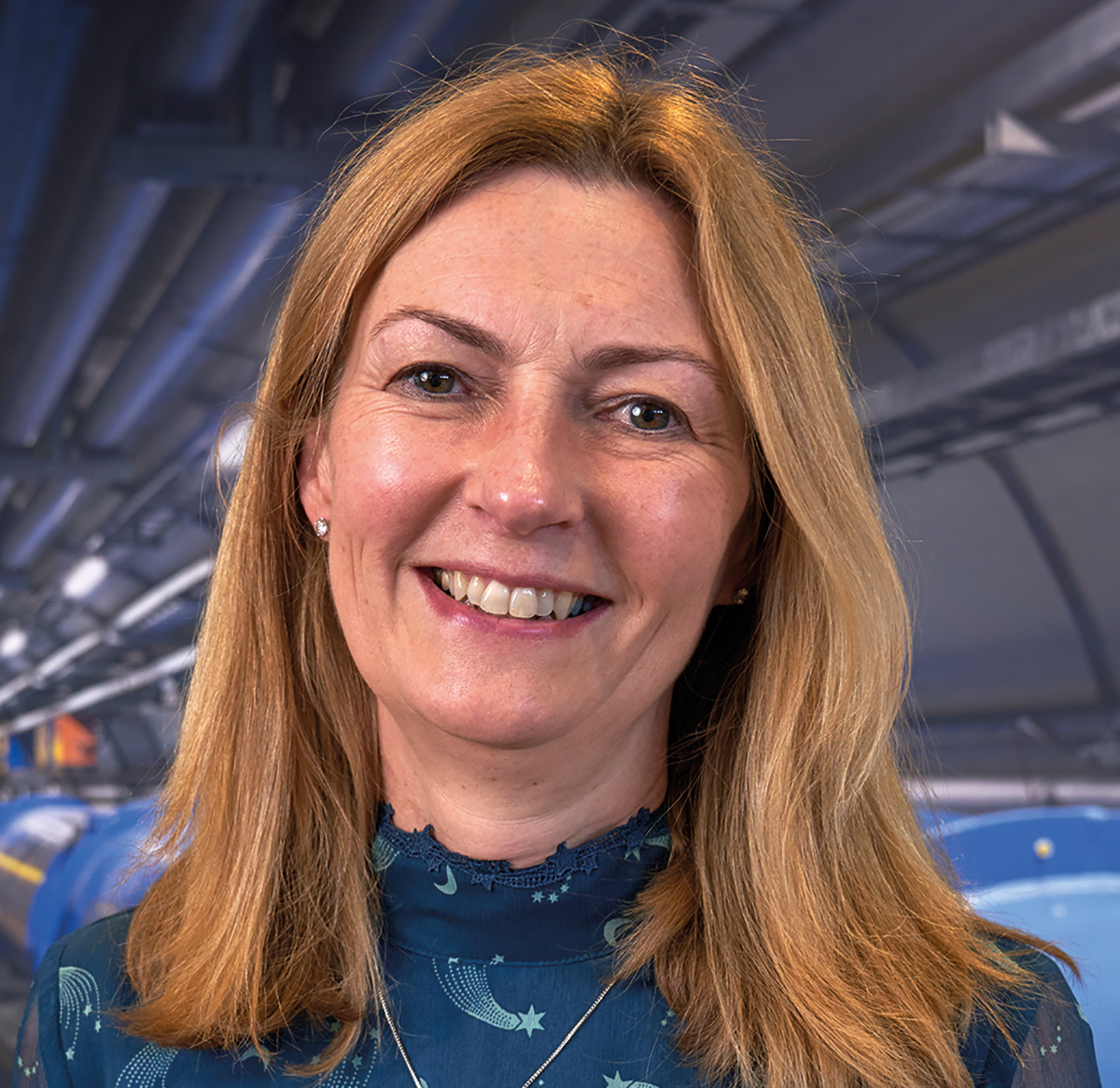
Anne came to CERN as a summer student in 1984 and fell in love with the international environment, leading her to apply for a fellowship where she worked on software and electronics for LEP. At the end of the fellowship, she was faced with a choice. “I was surrounded by these awesomely brilliant, completely focused physicists who were willing to dedicate their lives to fundamental research. And much as I loved to be amongst them and was proud of my equipment being installed in the accelerator, I didn’t feel I had the same passion they did. I was still seeking something else.” She returned to the UK and joined a technology consultancy firm in Cambridge where she had the opportunity to run a variety of different small-scale projects. “I really enjoyed that variety, I think that was what I was seeking,” she says. “Now I know that at CERN there are varied jobs one person can do, but at that time perhaps I wasn’t mature enough to realise that.” Today, she works in investment and finance, and has actively sought out roles that allow her to travel and work with people from different places. But a return visit to CERN in 2011 added another career dimension. “A fantastically positive change had happened in my lifetime: the appreciation of the importance of science by wider society. It was time to think how to capitalise on this and help society become more engaged directly with us.” The answer was the CERN & Society Foundation, of which Anne was appointed chair and that has seen CERN proactively engage with society, leading to the future Science Gateway project dedicated to education and outreach. “When we started the foundation in 2014 we did not know how incredibly successful it was going to be. The major part of this success comes from the interest and engagement we have had from alumni.”
Bartosz graduated with a Master’s degree in computer science from AGH University of Science and Technology in 2012. The following year he became a CERN technical student working on databases in CERN’s IT department. It was his first professional experience, and he was immediately captivated by the field of data security. Deciding to enter into a career in the area, he then applied for positions elsewhere, leading to a six-month research internship at IBM Zurich, participating in the Great Minds Programme. “My project focused on big-data analysis, an activity very closely related to my CERN project. I probably wouldn’t have been selected for the internship if I hadn’t had the CERN experience,” he explains. “It’s not just about the experience, but also the CERN reputation and prestige.” Working in a global environment with more than 20 international students was also extremely valuable. Since 2015 Bartosz has been working as a software engineer for Facebook’s product security team in Silicon Valley. “Despite the culture being slightly different at Facebook compared to CERN, I still apply the same approach I learnt at CERN,” he says. “Having learnt to communicate with people from other countries, this is highly useful for me in my current position as I now find it easier to make connections. It’s important not to close yourself off in your office. Go out and talk to people, those who have lots of experience, or who are working on something different from you, ask questions, make connections!”
Maaike Limper Data engineering and web portal specialist at Swiss Global Services
Following a PhD on ATLAS, Maaike became a CERN openlab fellow in 2012. There was a lot to learn in moving from physics to IT, she says. “You need to understand how technology actually works: how it stores your data as bytes on the disk or how your computations can optimise the CPU usage.” Until last year, Maaike was head of aviation surface performance at Inmarsat, investigating solutions to allow aircraft passengers to have a reliable internet connection. One of her challenges was to put data from all the systems involved in passenger internet connectivity, such as ground control, satellites and aircraft together and understand where outages were experienced and why.” As a particle physicist, by contrast, Maaike was dealing with “very specific issues and no longer felt challenged”. She also didn’t warm to the ruthless competition she encountered, especially when the first LHC data were being collected and the normal collaborative spirit was slightly set aside. In her new career, which recently saw her join Swiss Global Services as a data-engineering specialist, she feels she is the expert. “I like the fact that I am constantly kept busy, challenged and, sometimes, very much stressed!” However, her particle-physics training had a useful impact on her career. “At CERN, we are very good at developing our own tools and we don’t just expect there to be a ready-made product on the market.” And Maaike is proud that the detector she worked on sits at the centre of the ATLAS experiment. “I was there, checking that each optical cable was producing the right sound once connected and that everything was working as expected. So actually, yes, a little piece of my heart is there, deep inside ATLAS.”
Panayotis Spentzouris Head of Fermilab’s Quantum Science Program
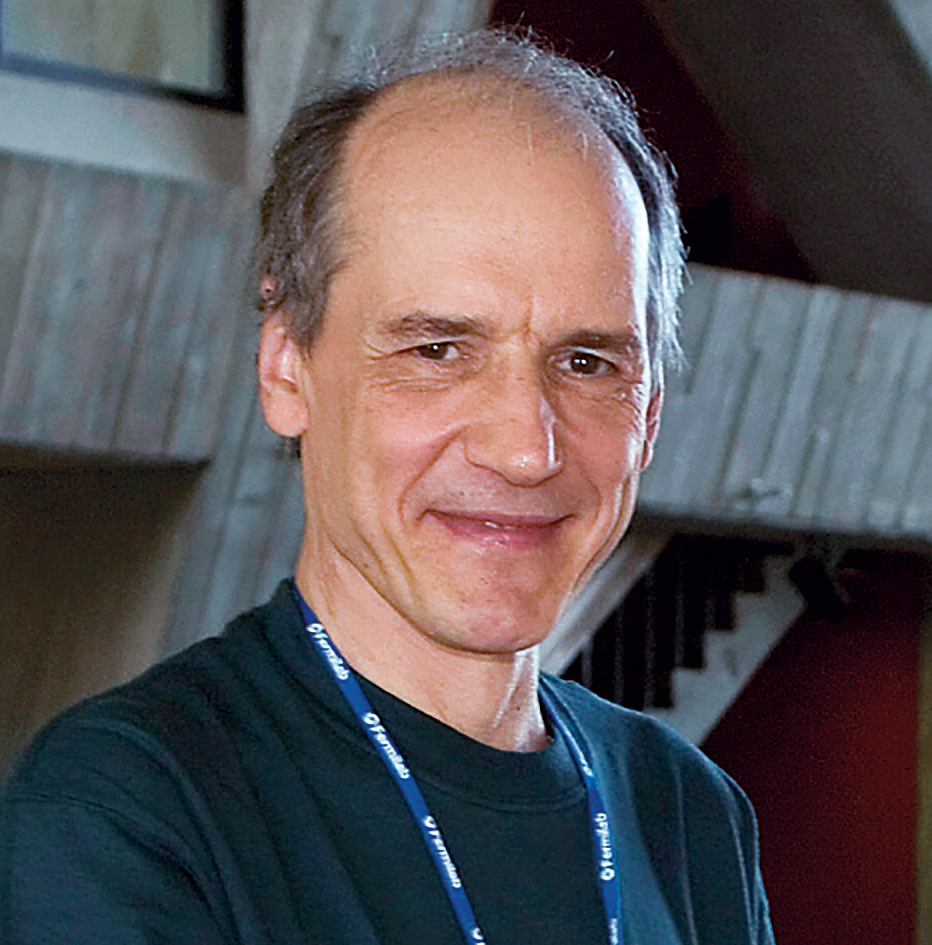
Panayotis’s affiliation with CERN began in 1986 as an associate physicist working on a prototype of a detector for the DELPHI experiment at LEP. He moved to the US in 1990 and started a PhD, continuing his research at Fermilab, first as a Columbia University postdoc and then a junior staff scientist. Of his time at CERN he recalls the challenging experience of working for a multi-institutional, multicultural and multinational collaboration of many people of different cultures. “I remember it being a great experience with exposure to many wonderful things from machine shops to computers and scientific collaborations. It was also whilst at CERN that my first ever paper was published, when DELPHI started taking data, around 1990 I think – I was absolutely thrilled. Even though, somewhere in the middle of my career, I ended up doing a lot of computational physics, CERN is where I began my career as an experimentalist and I am always grateful for that.” He did not want to leave fundamental research, and today Panayotis is a senior scientist at Fermilab. In 2014 he was head of Fermilab’s scientific computing division and since 2018 has led Fermilab’s Quantum Science Program, which includes simulation of quantum field theories, teleportation experiments and applying qubit technologies to quantum sensors in high-energy physics experiments. Shortly afterwards, he presented the Fermilab programme to CERN openlab’s “Quantum computing for high-energy physics” event. “Coming back to CERN was actually strange, because everything had changed so much that I needed to follow signs to find my way to the cafeteria!” He would also like to see Fermilab establish an alumni network of its own. “It is good to have a sense of community, especially during difficult times when you need your community to stand up in support of your organisation.”
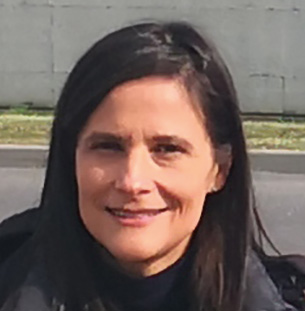
Having attended a small liberal arts college in the US where the focus was on philosophy, Thia found herself a bit frustrated. “We would discuss deep questions at length in class, and I would think:’ Can’t we test something?’ Physics seemed to be a place where people were striving to provide concrete answers to big questions, so I looked for summer internships in physics, and to my surprise I got one.” She wound up working with a group of plasma physicists who wanted an “artsy” person to make a movie visualising the solar magnetic flux cycle. “I liked learning the physics, I liked being sent off on my own, and it turned out I even liked the programming.” She went on to do a PhD in nuclear physics at SLAC and continued her research at JLab where, one night, while working late on a scintillating fibre-type particle detector, she realised that a colleague in the lab across from her was building the same type of detector – but for a project in medical instrumentation. They started to collaborate, and a few years later Thia founded the Center for Advanced Medical Instrumentation at Hampton University. More than a dozen patented technologies later, they were contacted by Hampton University’s president about proton therapy and realised that they had the know-how to build their own proton-therapy centre, which ended up being one of the largest in the world. “Having directed the centre from the start, Thia preferred the period of building, instrumenting and commissioning the facility over that of clinical operations. So she decided to set up a consulting company, which has so far helped to start 16 proton-therapy centres. “I think that my discourse-based philosophy education has been a help in learning to express ideas clearly and succinctly to people,” she says. “If you’re going to irradiate people, you must explain carefully and well why that’s a beneficial thing. Once you’re used to explaining things in plain language to potential patients or the public, you can give the same talk in a boardroom.”
•This final case study is based on an article in APS Careers 2020, produced in conjunction with Physics World. All other articles are drawn from the CERN Alumni Network.
George Trilling passed away in Berkeley, California, on 30 April at the age of 89. Born in Poland, he completed his PhD at Caltech in 1955 and two years later joined the University of Michigan. In 1960 he joined the faculty at the University of California, Berkeley and the scientific staff at what is now called the Lawrence Berkeley National Laboratory (LBNL). He followed Don Glaser, whose invention of the bubble chamber provided a new way to view particle interactions, and teamed up with Gerson Goldhaber.
The Trilling–Goldhaber group used bubble chambers developed at Berkeley to study K-meson interactions. In the early 1970s the group joined SLAC colleagues led by Burt Richter and Martin Perl to build the Mark-I detector for the SPEAR electron–positron collider. The Mark-I collaboration went on to discover the J/ψ resonance, charmed particles and the tau lepton. Beginning in the 1980s, the group continued their collaboration with SLAC to construct the Mark- II detector, which was first installed at SPEAR, and later moved to the higher energy PEP collider, where it enabled the measurement of the lifetime of the B meson among other important results.
George was a key figure in the many US studies in the 1980s that led to the successful proposal for the Superconducting Super Collider (SSC). He served on the SSC board of overseers and helped foster the early SSC design phase at LBNL. He initiated and led the Solenoidal Detector Collaboration, the first major experiment approved for the SSC in 1990. Despite retiring in 1994, he was instrumental in helping to organise and negotiate the US participation in the LHC.
Throughout his career, George was asked to take on important leadership roles. At the age of 38 he became chair of the UC Berkeley physics department. From 1984 to 1987 he was director of the physics division at LBNL, where he guided a major evolution towards precision semiconductor detectors – still a dominant theme at the lab today. Work on pixel detectors for the SSC, custom ASIC design, the Microsystems Lab and the CDF silicon vertex detector all began under his leadership. The Berkeley group is now a major participant in the ATLAS collaboration at the LHC.
A member of the National Academy of Sciences, in 2001 George served as president of the American Physical Society. He also chaired innumerable national panels, committees and task forces. We shall miss him greatly.
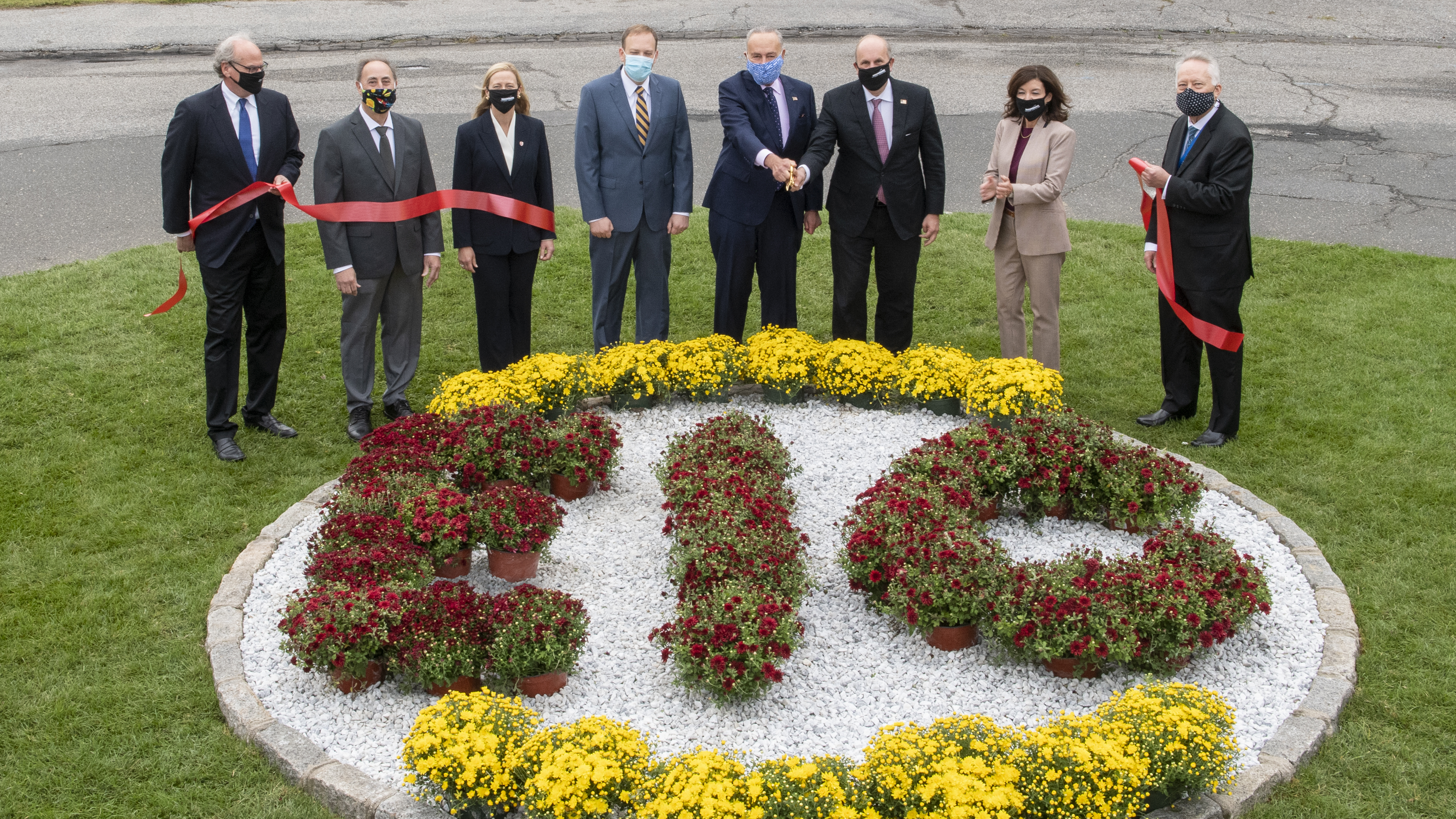
On 18 September, Brookhaven National Laboratory (BNL) officially launched the Electron-Ion Collider (EIC) — a 3.9 km-circumference collider which, once completed, will open new vistas on the properties and dynamics of quarks and gluons. The event saw elected officials from the states of New York and Virginia, in addition to senior academic representatives from BNL and beyond, voice their support for the $1.7-2.7 billion EIC, which will be built at BNL over the next decade and require the lab’s Relativistic Heavy-Ion Collider (RHIC) to be reconfigured to include a new electron storage ring to facilitate electron–ion collisions.
This project is a win-win both for scientific development and the New York economy
Andrew Cuomo
“COVID-19 has shown us how critically important it is to invest in our scientific infrastructure so we’re ready for future crises, and New York is already investing significant resources to make it a hub for scientific innovation and research,” said New York State Governor Andrew Cuomo. “The state’s $100 million investment in [the EIC] is part and parcel with that commitment, and this project is a win-win both for scientific development and the New York economy.”
The design, construction and operation of the EIC will be completed in partnership with the Thomas Jefferson National Accelerator Facility (Jefferson Laboratory). In June, BNL appointed Jim Yeck — who has held leading roles in RHIC, the IceCube neutrino observatory and the European Spallation Source — as the project director for the EIC. Yeck will head a newly created EIC directorate at BNL, working in partnership with Jefferson Laboratory and other collaborators.
“The Electron-Ion Collider, a one of a kind facility in nuclear research, is becoming a reality, and I can tell you that this news was received with great enthusiasm and excitement by the European nuclear and particle-physics communities,” said CERN Director-General Fabiola Gianotti in a video message.
Typical introductions to astrophysics range from 500 to over 1000 pages. This trend is at odds with many of today’s students, who prepare for examinations using search engines and are often put off by ponderous treatises. Steven Weinberg’s new book wisely goes in the opposite direction. The 1979 Nobel laureate, and winner last week of a special Breakthrough prize in fundamental physics, has written a self-contained and relatively short 214-page account of the foundations of astrophysics, from stars to galaxies. The result is extremely pleasant and particularly suitable for students and young practitioners in the field.
Instead of building a large treatise, Weinberg prioritises key topics that appeared in a set of lectures taught by the author at the University of Texas at Austin. The book has four parts, which deal with stars, binaries, the interstellar medium and galaxies, respectively. The analysis of stellar structure starts from the study of hydrostatic equilibrium and is complemented by various classic discussions including the mechanisms for nuclear energy generation and the Hertzsprung-Russell diagram. In view of the striking observations in 2015 by the LIGO and Virgo interferometers, the second part contains a dedicated discussion of the emission of gravitational waves by binary pulsars and coalescing binaries.
As you might expect from the classic style of Weinberg’s monographs, the book provides readers with a kit of analytic tools of permanent value. His approach contrasts with many modern astrophysics and particle-theory texts, where analytical derivations and back-of-the-envelope approximations are often replaced by numerical computations which are mostly performed by computers. By the author’s own admission, however, this book is primarily intended for those who care about the rationale of astrophysical formulas and their applications.
Weinberg’s books always stimulate a wealth of considerations on the mutual interplay of particle physics, astrophysics and cosmology
This monograph is also a valid occasion for paying tribute to a collection of classic treatises that inspired the current astrophysical literature and that are still rather popular among the practitioners of the field. The author reveals in his preface that his interest in stellar structure started many years ago after reading the celebrated book of Subrahmanyan Chandrasekhar (An introduction to Stellar Structure), which was reprinted by Dover in the late fifties. Similarly the discussions on the interstellar medium are inspired by the equally famous monograph of Lyman Spitzer Jr. (Physical Processes in the Interstellar medium 1978, J. Wiley & Sons). For the benefit of curious and alert readers, these as well as other texts are cited in the essential bibliography at the end of each chapter.
Steven Weinberg’s books always stimulate a wealth of considerations on the mutual interplay of particle physics, astrophysics and cosmology, and the problems of dark matter, dark energy, gravitational waves and neutrino masses are today so interlocked that it is quite difficult to say where particle physics stops and astrophysics takes over. Modern science calls for multidisciplinary approaches, and while the frontiers between the different areas are now fading away, the potential discovery of new laws of nature will not only proceed from concrete observational efforts but also from the correct interpretation of the existing theories. If we want to understand the developments of fundamental physics in coming years, Lectures on Astrophysics will be an inspiring source of reflections and a valid reference.
On 8 September, Fermilab senior scientist and world-leading beam physicist Yuri I Alexahin died from a sudden stroke.
Yuri was born in 1948 in the Russian town of Vorkuta. After studying physics and graduating from Moscow State University, from 1971 to 1988 he worked at the Joint Institute for Nuclear Research in Dubna and, in 1980, received his PhD in physics from the Institute of High Temperatures of the USSR Academy of Sciences. In Dubna, Yuri developed an interest in the physics of accelerators and beams and, especially, of charged-particle colliders, which remained the focus of his work throughout his career. He generated brilliant ideas and made critical contributions to a number of facilities and projects. He proposed a new scheme for a tau-charm factory based on monochromatisation to reduce the collision energy spread, addressed a problem of limited dynamic aperture at high energies faced by CERN’s LEP collider, and recommended the low-emittance option for LEP operation at the W± production energies.
Yuri published pioneering works on the theory of coherent beam–beam oscillations and their stabilisation with Landau damping, laying the foundation for a parameter optimisation of the LHC. Among many other highlights, Yuri ingeniously predicted the loss of Landau damping for the two beams colliding in the LHC, derived analytical formulae describing the emittance growth in collision with transverse feedback and noise, and produced some of the most thought-provoking articles related to the LHC design.
In 2000, Yuri joined Fermilab’s accelerator division, where he made seminal contributions to the theory of nonlinear beam–beam compensation by electron lenses and was deeply engaged in Run II of the Tevatron, playing a critical role in the luminosity increases of what was then the world’s most powerful accelerator. Widely recognised is Yuri’s leading role in the design and implementation of optimal helical orbits to minimise Tevatron beam–beam effects at injection, acceleration and squeeze, and his optimisation of the beam lifetime at injection energy via reduction of the differential chromaticity.
From 2007 to 2018 Yuri led the accelerator theory group at Fermilab. These years were another extremely productive period, as he steered the interaction-region lattice development for an energy-frontier muon collider within the US Muon Accelerator Program. He also invented the so-called “helical FOFO-snake” muon ionisation cooling channel concept. Yuri was closely involved in the operation and upgrade of the existing Fermilab accelerator complex and in other intensity-frontier accelerators worldwide. Not only was he actively taking part in many experimental beam studies, but he also proposed new theoretical and numerical algorithms for space-charge dominated beams, for the Landau damping of beam instabilities provided by electron lenses and for novel space-charge compensation techniques.
Yuri will be remembered by his colleagues, friends and family as a highly intelligent, kind and soft-spoken person. An excellent mentor, he generously shared his knowledge with students and younger colleagues, and many world-renowned physicists are happy to call him their teacher. While being a workaholic, in his leisure time he loved to ski and was an avid sports fan.
Carlo Rubbia is one of three winners of the 2020 Global Energy Prize. The 39M Rouble ($0.5M) award, announced on 8 September in Kaluga, Russia by the Global Energy Association, cites the former CERN Director General for the promotion of sustainable nuclear energy use and natural-gas pyrolysis.
A renowned particle physicist, Carlo Rubbia is more widely known as the winner, alongside Simon van der Meer, of the 1984 Nobel Prize in Physics, for turning the Super Proton Synchrotron into a particle collider and using it to discover the W and Z bosons. He was appointed Director-General of CERN in 1989 in the crucial period leading up to the presentation of the Large Hadron Collider to the CERN Council in 1993.
The same year, Rubbia proposed the “energy amplifier”, which employs a particle accelerator to generate the neutrons needed to drive a nuclear reactor. Such technology promises the production of energy under sub-critical reactor conditions using thorium, with minimal if any long-lived nuclear waste compared to uranium fuels. In more recent years, he has been an advocate for using natural gas as the main source of energy worldwide, based on new CO2-free technologies.
“You have either energy from atoms or energy from nuclei,” said Rubbia on accepting the award via videoconference. “Energy from atoms is certainly the easiest thing to do… and natural gas is clean and can be used in such a way that the CO2 emissions are under control or eliminated. And you can go on until such a time you will develop an appropriate form of nuclear, which eventually will come, but will not be the nuclear of today.”
Rubbia won in the “conventional energy” category of the 2020 prize. Peidong Yang (University of California, Berkeley) topped the “non-conventional energy” category for his pioneering work in nanoparticle-based solar cell and artificial photosynthesis, and Nikolaos Hatziargyriou (University of Athens) won in the “new ways of energy application” category for using artificial intelligence to improve the stability of power grids.
There have been 42 winners of the annual prize, with 78 scientists from 20 countries put forward this year. Previous winners include another former CERN Director-General, Robert Aymar, who was recognised in 2006 for work to develop the scientific and engineering foundation of the ITER project, which seeks to demonstrate the feasibility of nuclear fusion as an energy source.
Understanding how the strong interaction binds the ingredients of atomic nuclei is the central quest of nuclear physics. Since the 1960s CERN’s ISOLDE facility has been at the forefront of this quest, producing the most extreme nuclear systems for examination of their basic characteristic properties.
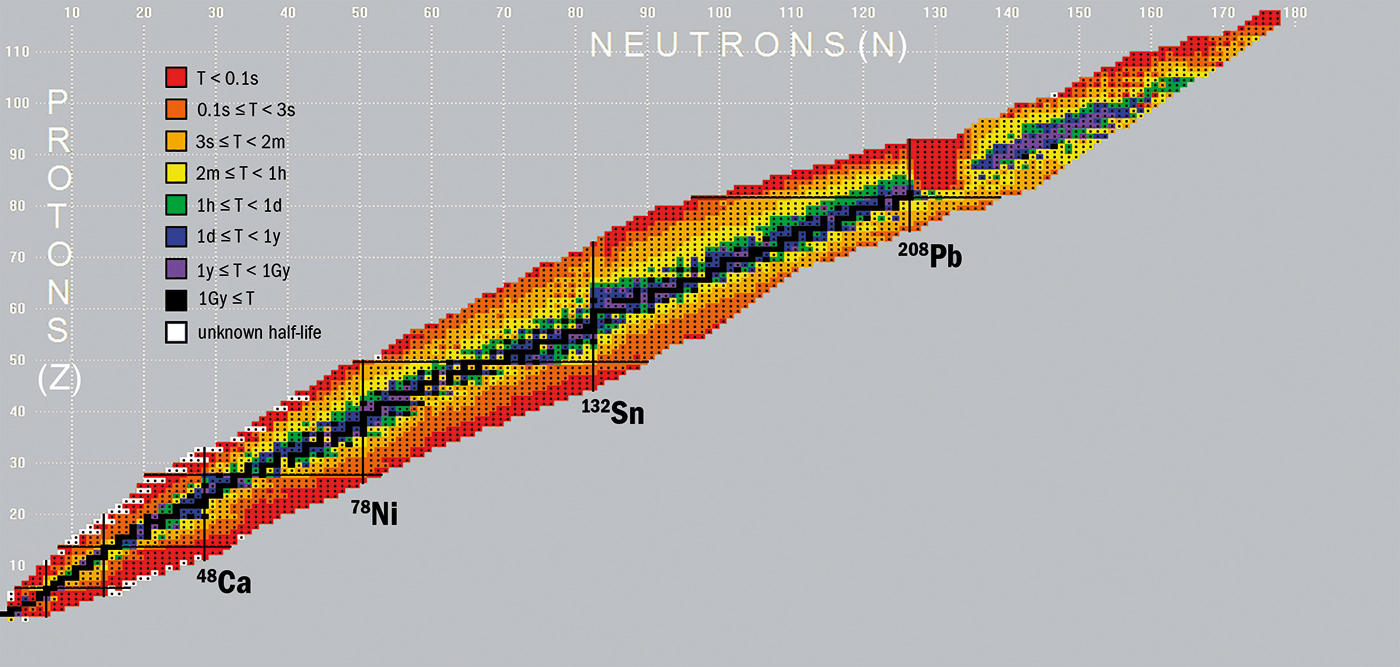
A chemical element is defined by the number of protons in its nucleus, with the number of neutrons defining its isotopes. Apart from a few interesting exceptions, all elements in nature have at least one stable isotope. These form the so-called valley of stability in the nuclear chart of atomic number versus neutron number (see “Nuclear landscape” figure). Adding or removing neutrons disturbs the nuclear equilibrium and creates isotopes that are generally radioactive; the greater the proton–neutron imbalance, the faster the radioactive decay.
Most of the developments have been exported to other radioactive beam facilities around the world
The mass of a nucleus reveals its binding energy, which reflects the interplay of all forces at work within the nucleus from the strong, weak and electromagnetic interactions. Indications of sudden changes in the nuclear shape, when adding neutrons, are often revealed first indirectly as a sudden change in the mass, and can then be probed in detail by measurements of the charge radius and electromagnetic moments. Such diagnosis – performed by ion-trapping and laser-spectroscopy experiments on short-lived (from a few milliseconds upwards) isotopes – provides the first vital signs concerning the nature of nuclides with extreme proton-to-neutron ratios.
Recent mass-spectrometry measurements and high-precision measurements of nuclear moments and radii at ISOLDE demonstrate the rapid progress being made in understanding the stubborn mysteries of the nucleus. ISOLDE’s state-of-the-art laser-spectroscopy tools are also opening an era where molecular radioisotopes can be used as sensitive probes for physics beyond the Standard Model.
Tools of the trade
Progress in understanding the nucleus has gone hand in hand with the advancement of new techniques. Mass measurements of stable nuclei pioneered by Francis Aston nearly a century ago revealed a near-constant binding energy per nucleon. This pointed to a characteristic saturation of the nuclear force, which underlies the liquid-drop model and led to the semi-empirical mass formula for the nucleus developed by Bethe and von Weizsäcker. With the advent of particle accelerators in the 1930s, more isotopic mass data became available from reactions and decays, bringing new surprises. In particular, comparisons with the liquid drop revealed conspicuous peaks at certain so-called “magic” numbers (8, 20, 28, 50, 82, 126), analogous to the high atomic-ionisation potentials of the closed electron-shell noble-gas elements. These findings inspired the nuclear-shell model, developed by Maria Goeppert-Mayer and Hans Jensen, which is still used as an important benchmark today. The difference with the atomic system is that the force that governs the nuclear shells is poorly understood. This is because nucleons are themselves composite particles that interact through the complex interplay of three fundamental forces, rather than the single electromagnetic force governing atomic structure. The most important question in nuclear physics today is to describe these closed shells from fundamental principles (e.g. the strong interaction between quarks and gluons inside nucleons), to understand why shell structure erodes and how new shells arise far from stability.
A key to reaching a deeper understanding of nuclear structure is the ability to measure the size and shape of nuclei. This was made possible using the precision technique of laser spectroscopy, which was pioneered with tremendous success at ISOLDE in the late 1970s. While increased binding energy is a tell-tale sign of a deforming nucleus, it gives no specific information concerning nuclear size or shape. Closed-shell configurations tend to favour spherical nuclei, but since these are rather rare, a particularly important feature of nuclei is their deformation. Inspecting electromagnetic moments derived from the measured atomic hyperfine structure and the change in charge radii derived from its isotopic shift provides detailed information about nuclear shapes and deformation, beautifully complementing mass measurements.
During the past half-century, nuclear science at ISOLDE has expanded beyond fundamental studies to applications involving radioactive tracers in materials (including biomaterials) and the fabrication of isotopes for medicine (with the MEDICIS facility). But the bulk of the ISOLDE physics programme, around 70%, is still devoted to the elucidation of nuclear structure and the properties of fundamental interactions. These studies are carried out through nuclear reactions, by decay spectroscopy, or by measuring the basic global properties – mass and size – of the most exotic species possible.
Half a century of history
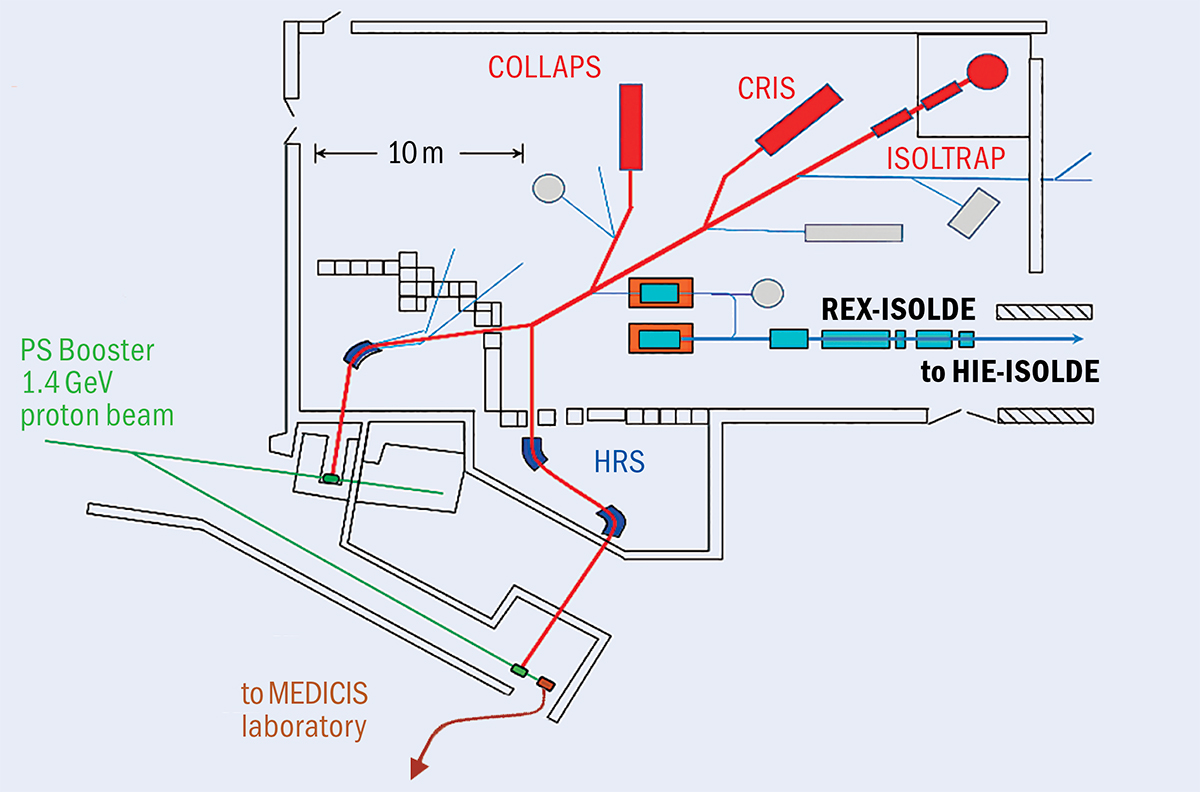
The fabrication of extreme nuclear systems requires a driver accelerator of considerable energy, and CERN’s expertise here has been instrumental. After many years receiving proton beams from a 600 MeV synchrocyclotron (the SC, now a museum piece at CERN), ISOLDE now lies just off the beam line to the Proton Synchrotron (PS), receiving 1.4 GeV beam pulses from the PS Booster (see “ISOLDE from above” figure). ISOLDE in fact receives typically 50% of the pulses in the so-called super-cycle that links the intricate complex of CERN’s injectors for the LHC.
The heart of ISOLDE is a cylindrical target that can contain various different materials. The stable nuclei in the target are dissociated by the proton impact and form exotic combinations of protons and neutrons. Heating the target (up to 2000 degrees) helps these fleeting nuclides to escape into an ionisation chamber, in which they form 1+ ions that are electrostatically accelerated to around 50 keV. Isotopes of one particular mass are selected using one of two available mass separators, and subsequently delivered to the experiments through more than a dozen beamlines. A similar number of permanent experimental setups are operated by several small international collaborations. Each year, more than 40 experiments are performed at ISOLDE by more than 500 users. More than 900 users from 26 European and 17 non-European countries around the world are registered as members of the ISOLDE collaboration.
A new era for fundamental physics research has opened up
ISOLDE sets the global standard for the production of exotic nuclear species at low energies, producing beams that are particularly amenable to study using precision lasers and traps developed for atomic physics. Hence, ISOLDE is complementary to higher energy, heavy-ion facilities such as the Radioactive Isotope Beam Factory (RIBF) at RIKEN in Japan, the future Facility for Rare Isotope Beams (FRIB) in the US, and the Facility for Antiproton and Ion Research (FAIR/GSI) in Europe. These installations produce even more exotic nuclides by fragmenting heavy GeV projectiles on a thin target, and are more suitable for studying high-energy reactions such as breakup and knock-out. Since 2001, ISOLDE has also driven low-energy nuclear-reaction studies by installing a post-accelerator that enables exotic nuclides to be delivered at MeV energies for the study of more subtle nuclear reactions, such as Coulomb excitation and transfer. Post-accelerated radioactive beams have superior optical quality compared to the GeV beams from fragment separators so that the radioactive beams accelerated in the REX and more recent HIE-ISOLDE superconducting linacs enable tailored reactions to reveal novel aspects of nuclear structure.
ISOLDE’s state-of-the art experimental facilities have evolved from more than 50 years of innovation from a dedicated and close-knit community, which is continuously expanding and also includes material scientists and biochemists. The pioneering experiments concerning binding energies, charge radii and moments were all performed at CERN during the 1970s. This work, spearheaded by the Orsay group of the late Robert Klapisch, saw the first use of on-line mass separation for the identification of many new exotic species, such as 31Na. This particular success led to the first precision mass measurements in 1975 that hinted at the surprising disappearance of the N = 20 shell closure, eight neutrons heavier than the stable nucleus 23Na. In collaboration with atomic physicists at Orsay, Klapisch’s team also performed the first laser spectroscopy of 31Na in 1978, revealing the unexpected large size of this exotic isotope. To reach heavier nuclides, a mass spectrometer with higher resolution was required, so the work naturally continued at the expanding ISOLDE facility in the early 1980s.
Meanwhile, another pioneering experiment was initiated by the group of the late Ernst-Wilhelm Otten. After having developed the use of optical pumping with spectral lamps in Mainz to measure charge radii, Otten’s group exploited ISOLDE’s first offerings of neutron-deficient Hg isotopes and discovered the unique feature of shape-staggering in 1972. Through continued technical improvements, the Mainz group established the collinear laser spectroscopy (COLLAPS) programme at ISOLDE in 1979, with results on barium and ytterbium isotopes. When tunable lasers and ion traps became available in the early 1980s, the era of high-precision measurements of radii and masses began. These atomic-physics inventions have revolutionised the study of isotopes far from stability and the initial experimental set-ups are still in use today thanks to continuous upgrades and the introduction of new measurement methods. Most of these developments have been exported to other radioactive beam facilities around the world.
Mass measurements with ISOLTRAP
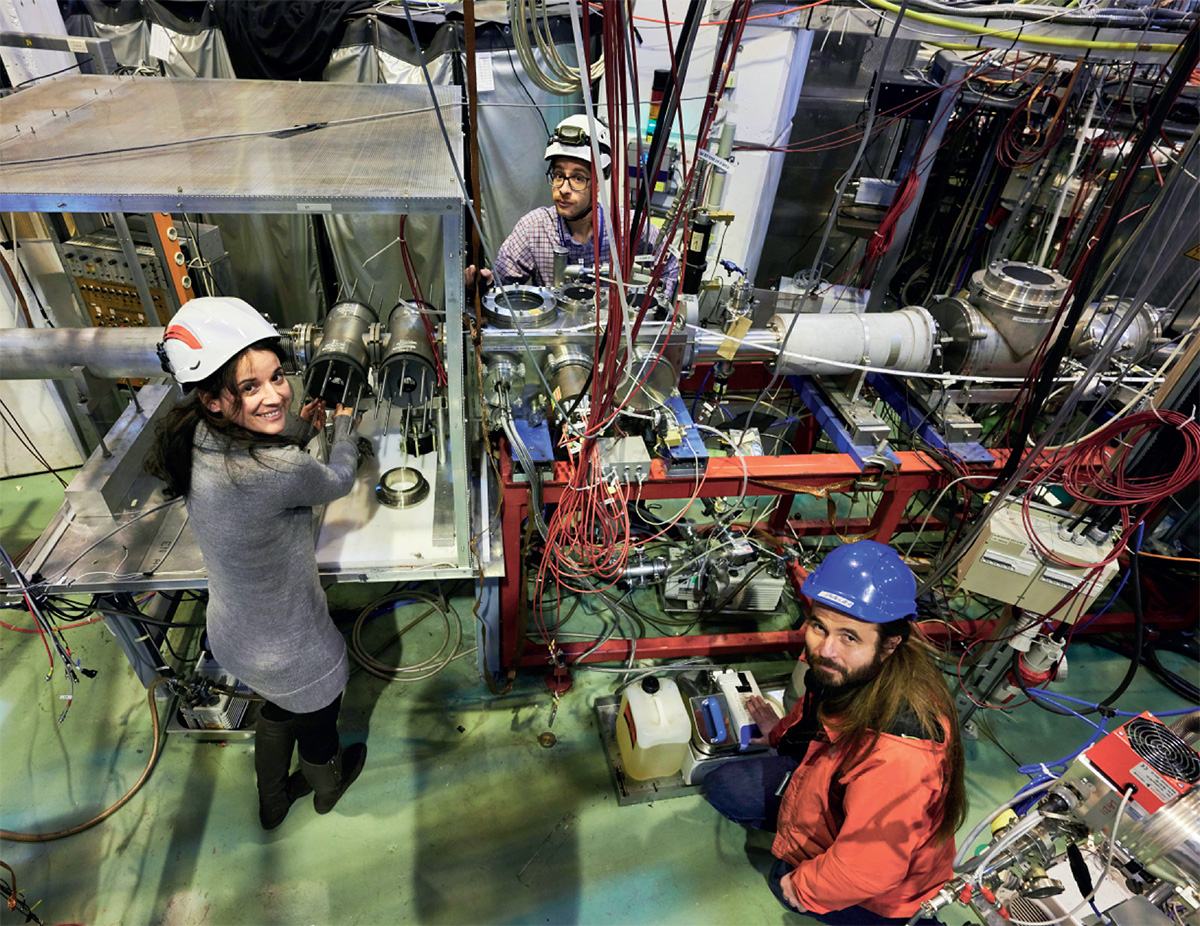
ISOLTRAP is one of the longest established experiments at ISOLDE. Installed in 1985 by the group of Hans-Jürgen Kluge from Mainz, it was the first Penning trap on-line at a radioactive beam facility, spawning a new era of mass spectrometry. The mass is determined from the cyclotron frequency of the trapped ion, and bringing the technique on line required significant and continuous development, notably with buffer-gas cooling techniques for ion manipulation. Today, ISOLTRAP is composed of four ion traps, each of which has a specific function for preparing the ion of interest to be weighed.
Since the first results on caesium, published in 1987, ISOLTRAP has measured the masses of more than 500 species spanning the entire nuclear chart. The most recent results, published this year by Vladimir Manea (Paris-Saclay), Jonas Karthein (Heidelberg) and colleagues, concern the strength of the N = 82 shell closure below the magic (Z = 50) 132Sn from the masses of (Z = 48) 132,130Cd. The team found that the binding energy only two protons below the closed shell was much less than what was predicted by global microscopic models, stimulating new ab-initio calculations based on a nucleon–nucleon interaction derived from QCD through chiral effective-field theory. These calculations were previously available for lighter systems but are now, for the first time, feasible in the region just south-east of 132Sn, which is of particular interest for the rapid neutron-capture process creating elements in merging neutron stars.
The other iconic doubly magic nucleus 78Ni (Z = 28, N = 50) is not yet available at ISOLDE due to the refractory nature of nickel, which slows its release from the thick target so that it decays on the way out. However, the production of copper – just one proton above – is so good that CERN’s Andree Welker and his colleagues at ISOLTRAP were recently able to probe the N = 50 shell by measuring the mass of its nuclear neighbour 79Cu, finding it to be consistent with that of the doubly magic 78Ni nucleus. Masses from large-scale shell-model calculations were in excellent agreement with the observed copper masses, indicating the preservation of the N = 50 shell strength but with some deformation energy creeping in to help. Complementary observables from laser spectroscopy helped to tell the full story, with results on moments and radii from the COLLAPS and the more recent Collinear Resonance Ionization Spectroscopy (CRIS) experiments adding an interesting twist.
Laser spectroscopy with COLLAPS and CRIS
Quantum electrodynamics provides its predictions of atomic energy levels mostly by assuming the nucleus is point-like and infinitely heavy. However, the nucleus indeed has a finite mass as well as non-zero charge and current distributions, which impact the fine structure. Thus, complementary to the high-energy scattering experiments used to probe nuclear sizes, the energy levels of orbiting electrons offer a marvellous probe of the electric and magnetic properties of the nucleus. This fact is exploited by the elegant technique of laser spectroscopy, a fruitful marriage of atomic and nuclear physics realised by the COLLAPS collaboration since the late 1970s. COLLAPS uses tunable continuous-wave lasers for high-precision studies of exotic nuclear radii and moments, and similar setups are now running at other facilities, such as Jyvaskyla in Finland, TRIUMF in Canada and NSCL-MSU in the US.
A recent highlight from COLLAPS, obtained this year by Simon Kaufmann of TU Darmstadt and co-workers, is the measurement of the charge radius of the exotic, semi-magic isotope 68Ni. Such medium-mass exotic nuclei are now in reach of the modern ab-initio chiral effective-field theories, which reveal a strong correlation between the nuclear charge radius and its dipole polarisability. With both measured for 68Ni, the data provide a stringent benchmark for theory, and allow researchers to constrain the point-neutron radius and the neutron skin of 68Ni. The latter, in turn, is related to the nuclear equation-of-state, which plays a key role in supernova explosions and compact-object mergers, such as the recent neutron-star merger GW170817.
Building on pioneering work by COLLAPS, the collinear laser beamline, CRIS, was constructed at ISOLDE 10 years ago by a collaboration between the groups of Manchester and KU Leuven. In CRIS, a bunched atom beam is overlapped with two or three pulsed laser beams that are resonantly laser-ionised via a particular hyperfine transition. These ions are then deflected from the remaining background atoms and counted in quasi background-free conditions. CRIS has dramatically improved the sensitivity of the collinear laser spectroscopy method so that beams containing just a few tens of ions per second can now be studied with the same resolution as the optical technique of COLLAPS.
Ruben de Groote of KU Leuven and co-workers recently used CRIS to study the moments and charge radii of the copper isotopes up to 78Cu, providing critical information on the wave function and shape of these exotic neighbours, and insight on the doubly magic nature of 78Ni. Both the ISOLTRAP and CRIS results provide a consistent picture of fragile equilibrium in 78Ni, where the failing strength of the proton and neutron shell closures is shored up with binding energy brought by slight deformation.
These precision measurements in new regions of the nuclear chart bring complementary observables that must be coherently described by global theoretical approaches. They have stimulated and guided the development of new ab-initio results, which now allow the properties of extreme nuclear matter to be predicted. While ISOLDE cannot produce absolutely all nuclides on the chart (for example, the super-heavy elements), precision tests in other, key regions provide confidence in the global-model predictions in regions unreachable by experiment.
Searches for new physics
By combining the ISOLDE expertise in radioisotope production with the mass spectrometry feats of ISOLTRAP and the laser spectroscopy prowess from the CRIS and RILIS (Resonant Ionization Laser Ion Source) teams, a new era for fundamental physics research has opened up. It is centred on the ability of ISOLDE to produce short-lived radioactive molecules composed of heavy pear-shaped nuclei, in which a putative electric dipole moment (EDM) would be amplified to offer a sensitive test of time-reversal and other fundamental symmetries. Molecules of radium fluoride (RaF) are predicted to be the most sensitive probes for such precision studies: the heavy mass and octupole-deformed (pear shape) of some radium isotopes, immersed in the large electric field induced by the molecular RaF environment, makes these molecules very sensitive probes for symmetry-violation effects, such as the existence of an EDM. However, these precision studies require laser cooling of the RaF molecules, and since all isotopes of Ra are radioactive, the molecular spectroscopy of RaF was only known theoretically.
This year, for the very first time, an ISOLDE collaboration led by CRIS collaborator Ronald Garcia Ruiz at CERN was able to produce, identify and study the spectroscopy of RaF molecules, containing different long-lived radioisotopes of radium. Specific Ra isotopes were chosen because of their octupole nature, as revealed by experiments at the REX- and HIE-ISOLDE accelerators in 2013 and 2020. The measured molecular excitation spectral properties provide clear evidence for an efficient laser-cooling scheme, providing the first step towards precision studies.
Many interesting new-physics opportunities will open up using different kinds of radioactive molecules tuned for sensitivity to specific symmetry violation aspects to test the Standard Model, but also with potential impact in nuclear physics (for example, enhanced sensitivity to specific moments), chemistry and astrophysics. This will also require dedicated experimental set-ups, combining lasers with traps. The CRIS collaboration is preparing these new set-ups, and the ability to produce RaF and other radioactive molecules is also under investigation at other facilities, including TRIUMF and the low-energy branch at FRIB. More than 50 years after its breakthrough beginning, ISOLDE continues to forge new paths both in applied and fundamental research.
Just a few years after the discovery of the neutron by James Chadwick in 1932, investigations into the properties of neutrons by Fermi and others revealed the strong energy dependence of the neutron’s interactions with matter. This knowledge enabled the development of sustainable neutron production by fission, opening the era of atomic energy. The first nuclear-fission reactors in the 1940s were also equipped with the capacity for materials irradiation, and some provided low-energy (thermal) neutron beams of sufficient intensity for studies of atomic and molecular structure. Despite the high cost of investment in nuclear-research reactors, neutron science flourished to become a mainstay among large-scale facilities for materials research around the world.
The electrical neutrality of neutrons allows them to probe deep into matter in a non-destructive manner, where they scatter off atomic nuclei to reveal important information about atomic and molecular structure and dynamics. Neutrons also carry a magnetic moment. This property, combined with their absence of electric charge, make neutrons uniquely sensitive to magnetism at an atomic level. On the downside, the absence of electric charge means that neutron-scattering cross sections are much weaker than they are for X-rays and electrons, making neutron flux a limiting factor in the power of this method for scientific research.
Throughout the 1950s and 1960s, incremental advances in the power of nuclear-research reactors and improvements in moderator design provided increasing fluxes of thermal neutrons. In Europe these developments culminated in the construction of the 57 MW high-flux reactor (HFR) at the Institut Laue-Langevin (ILL) in Grenoble, France, with a compact core containing 9 kg of highly enriched uranium enabling neutron beams with energies from around 50 μeV to 500 meV. When the HFR came into operation in 1972, however, it was clear that nuclear-fission reactors were already approaching their limit in terms of steady-state neutron flux (roughly 1.5 × 10¹⁵ neutrons per cm2 per second).
Spallation has long been hailed as the method with the potential to push through to far greater neutron fluxes
In an effort to maintain pace with advances in other methods for materials research, such as synchrotron X-ray facilities and electron microscopy, accelerator-based neutron sources were established in the 1980s in the US (IPNS and LANSCE), Japan (KENS) and the UK (ISIS). Spallation has long been hailed as the method with the potential to push through to far greater neutron fluxes, and hence to provide a basis for continued growth of neutron science. However, after nearly 50 years of operation, and with 10 more modern medium- to high-flux neutron sources (including five spallation sources) in operation around the world, the HFR is still the benchmark source for neutron-beam research. Of the spallation sources, the most powerful (SNS at Oak Ridge National Laboratory in the US and J-PARC in Japan) have now been in operation for more than a decade. SNS has reached its design power of 1.4 MW, and J-PARC is planning for tests at 1 MW. At these power levels the sources are competitive with ILL for leading-edge research. It has long been known that the establishment of a new high-flux spallation neutron facility is needed if European science is to avoid a severe shortage in access to neutron science in the coming years (CERN Courier May/June 2020 p49).
Unprecedented performance
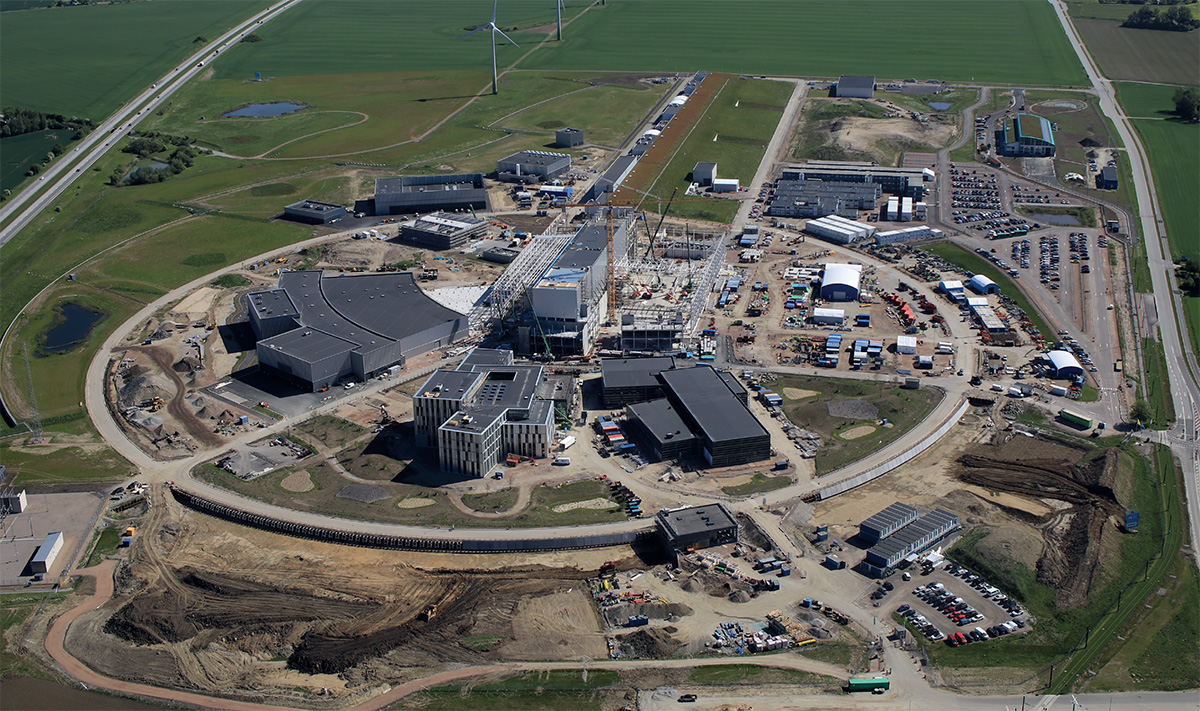
The European Spallation Source (ESS), with a budget of €1.8 billion (2013 figures), is a next-generation high-flux neutron source that is currently entering its final construction phase. Fed by a 5 MW proton linac, and fitted with the most compact neutron moderator and matched neutron transport systems, at full power the brightness of the ESS neutron beams is predicted to exceed the HFR by more than two orders of magnitude.
The idea for the ESS was advanced in the early 1990s. The decision in 2009 to locate it in Lund, Sweden, led to the establishment of an organisation to build and operate the facility (ESS AB) in 2010. Ground-breaking took place in 2014, and today construction is in full swing, with first science expected in 2023 and full user operation in 2026. The ESS is organised as a European Research Infrastructure Consortium (ERIC) and at present has 13 member states: Czech Republic, Denmark, Estonia, France, Germany, Hungary, Italy, Norway, Poland, Spain, Sweden, Switzerland and the UK. Sweden and Denmark are the host countries, providing nearly half of the budget for the construction phase. Around 70% of the funding from the non-host countries is in the form of in-kind contributions, meaning that the countries are delivering components, personnel or other support services to the facility rather than cash.
The unprecedented brightness of ESS neutrons will enable smaller samples, faster measurements and more complex experiments than what is possible at existing neutron sources. This will inevitably lead to discoveries across a wide range of scientific disciplines, from condensed-matter physics, solid-state chemistry and materials sciences, to life sciences, medicine and cultural heritage. A wide range of industrial applications in polymer science and engineering are also anticipated, while new avenues in fundamental physics will be opened (see “Fundamental physics at the ESS” panel).
Fundamental physics at the ESS
The ESS will offer a multitude of opportunities for fundamental physics with neutrons, neutrinos and potentially other secondary particles from additional target stations. While neutron brightness and pulse time structure are key parameters for neutron scattering (the main focus of ESS experiments), the total intensity is more important for many fundamental-physics experiments.
A cold neutron-beam facility for particle physics called ANNI is proposed to allow precision measurements of the beta decay, hadronic weak interactions and electromagnetic properties of the neutron. ANNI will improve the accuracy of measurements of neutron beta decay by an order of magnitude. Experiments will probe a broad range of new-physics models at mass scales from 1 to 100 TeV, far beyond the threshold of direct particle production at accelerators, and resolve the tiny effects of hadronic weak interactions, enabling quantitative tests of the non-perturbative limit of quantum chromodynamics.
Another collaboration is proposing a two-stage experiment at the ESS to search for baryon-number violation. The first stage, HIBEAM, will look for evidence for sterile neutrinos. As a second stage, NNBAR could be installed at the large beam port, with the purpose to search for oscillations between neutrons and anti-neutrons. Observing such a transition would show that the baryon number is violated by two units and that matter containing neutrons is unstable, potentially shedding light on the observed baryon asymmetry of the universe.
A design study, financed through the European Commission’s Horizon 2020 programme, is also under way for the ESS Neutrino Super Beam (ESSνSB) project. This ambitious project would see an accumulator ring and a separate neutrino target added to the ESS facility, with the aim of sending neutrinos to a large underground detector in mid-Sweden, 400–500 km from the ESS. Here, the neutrinos would be detected at their second oscillation maximum, giving the highest sensitivity for discovery and/or measurement of the leptonic CP-violating phase. An accumulator ring and the resulting short proton pulses needed by ESSνSB would open up for other kinds of fundamental physics as well as for new perspectives in neutron scattering, and muon storage rings.
Finally, a proposal has been submitted to ESS concerning coherent neutrino–nucleus scattering (CEνNS). The high proton beam power together with the 2 GeV proton energy will provide a 10 times higher neutrino flux from the spallation target than previously obtained for CEνNS. Measured for the first time by the COHERENT collaboration in 2017 at ORNL’s Spallation Neutron Source, CEνNS offers a new way to probe the properties of the neutrino including searches for sterile neutrinos and a neutrino magnetic moment, and could help reduce the mass of neutrino detectors.
From the start, the ESS has been driven by the neutron-scattering community, with strong involvement from all the leading neutron-science facilities around Europe. To maximise its scientific potential, a reference set of 22 instrument concepts was developed from which 15 instruments covering a wide range of applications were selected for construction. The suite includes three diffractometers for hard-matter structure determination, a diffractometer for macromolecular crystallography, two small-angle scattering instruments for the study of large-scale structures, two reflectometers for the study of surfaces and interfaces, five spectrometers for the study of atomic and molecular dynamics over an energy range from a few μeV to several hundred meV, a diffractometer for engineering studies and a neutron imaging station (see “ESS layout” figure). Given that the ESS target system has the capacity for two neutron moderators and that the beam extraction system allows viewing of each moderator by up to 42 beam ports, there is the potential for many more neutron instruments without major investment in the basic infrastructure. The ESS source also has a unique time structure, with far longer pulses than existing pulsed sources, and an innovative bi-spectral neutron moderator, which allows a high degree of flexibility in the choice of neutron energy.
Accelerator and target
Most of the existing spallation neutron sources use a linear accelerator to accelerate protons to high energies. The particles are stored in an accumulator ring and are then extracted in a short pulse (typically a few microseconds in length) to a heavy-metal spallation target such as tungsten or mercury, which have a high neutron yield. A notable exception is SINQ at PSI, which uses a cyclotron that produces a continuous beam.
ESS has a linear accelerator but no accumulator ring, and it will thus have far longer proton pulses of 2.86 ms. This characteristic, combined with the 14 Hz repetition rate of the ESS accelerator, is a key advantage of the ESS for studies of condensed matter, because it allows good energy resolution and broad dynamic range. The result is a source with unprecedented flexibility to be optimised for studies from condensed-matter physics and solid-state chemistry, to polymers and the biological sciences with applications to medical research, industrial materials and cultural heritage. The ESS concept is also of major benefit for experiments in fundamental physics, where the total integrated flux is a main figure of merit.
The high neutron flux at ESS is possible because it will be driven by the world’s most powerful particle accelerator, in terms of MW of beam on target. It will have a proton beam of 62.5 mA accelerated to 2 GeV, with most of the energy gain coming from superconducting radio-frequency cavities cooled to 2 K. Together with its long pulse structure, this gives 5 MW average power and 125 MW of peak power. For proton energies around a few GeV, the neutron production is nearly proportional to the beam power, so the ratio between beam current and beam energy is to a large extent the result of a cost optimisation, while the pulse structure is set by requirements from neutron science.
The neutrons are produced by spallation when the high-energy protons hit the rotating tungsten target. The 2.5 m-diameter target wheel consists of 36 sectors of tungsten blocks inside a stainless-steel disk. It is cooled by helium gas, and it rotates at approximately 0.4 Hz, such that successive beam pulses hit adjacent sectors to allow adequate heat dissipation and limiting radiation damage. The neutrons enter moderator–reflector systems above or below the target wheel. The unique ESS “butterfly” moderator design consists of interpenetrating vessels of water and parahydrogen, and allows viewing of either or both vessels from a 120° wide array of beam ports on either side. The moderator is only 3 cm high, ensuring the highest possible brightness. Thus each instrument is fed by an intense mix of thermal (room temperature) and cold (20 K) neutrons that is optimised to its scientific requirements. The neutrons are transported to the instruments through neutron-reflecting guides that are up to 165 m long. Neutron optics are quite challenging, due to the weak cross-sections, which makes the technology for transporting neutrons sophisticated. The guides consist of optically flat glass or metal channels coated with many thin alternating layers of nickel and titanium, in a sequence designed to enhance the critical angle for reflection. The optical properties of the guides allow for broad spectrum focusing to maximise intensity for varying sample sizes, typically in the range from a few mm3 to several cm3.
Under construction
Construction of the ESS has been growing in intensity since it began in 2014. The infrastructure part was organised differently compared to other scientific large-scale research facilities. A partnering collaboration agreement was set up with the main contractor (Skanska), with separate agreements for the design and target cost settled at the beginning of different stages of the construction to make it a shared interest to build the facility within budget and schedule.
Every year, up to 3000 researchers from all over the world are expected to carry out around 1000 experiments
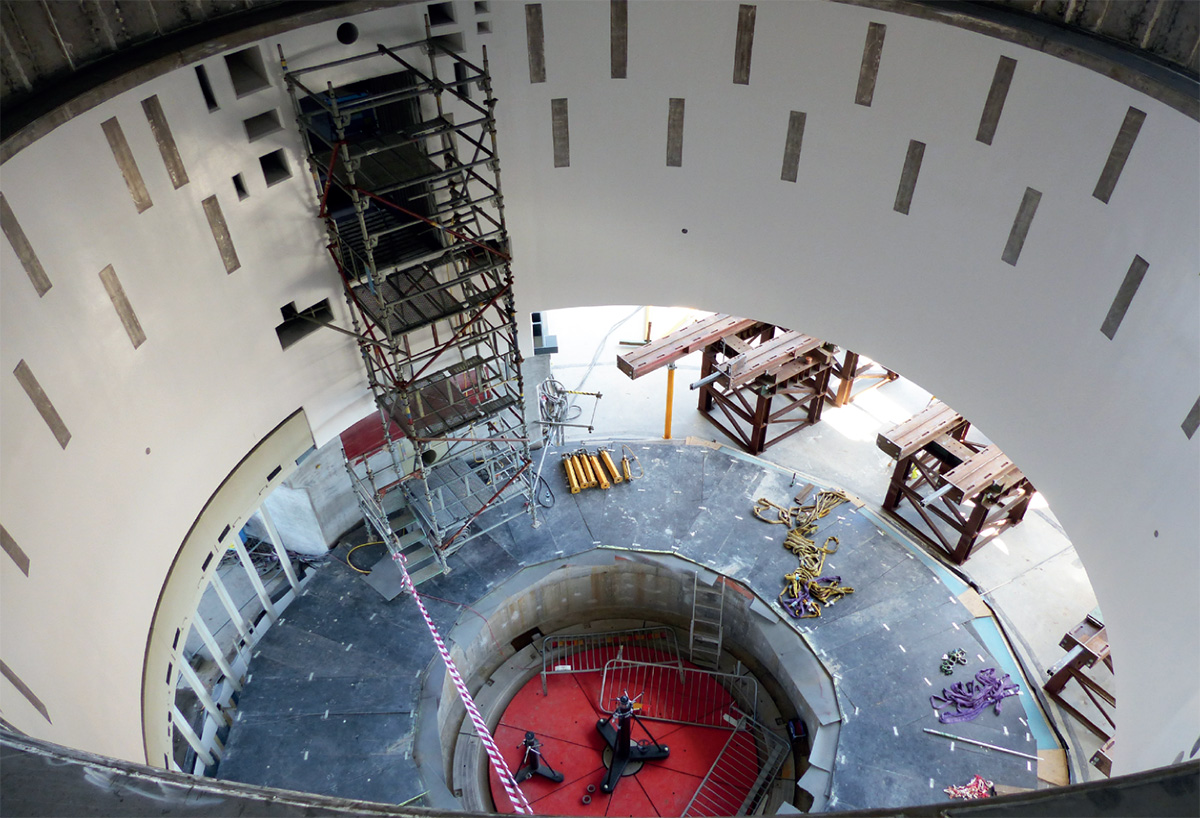
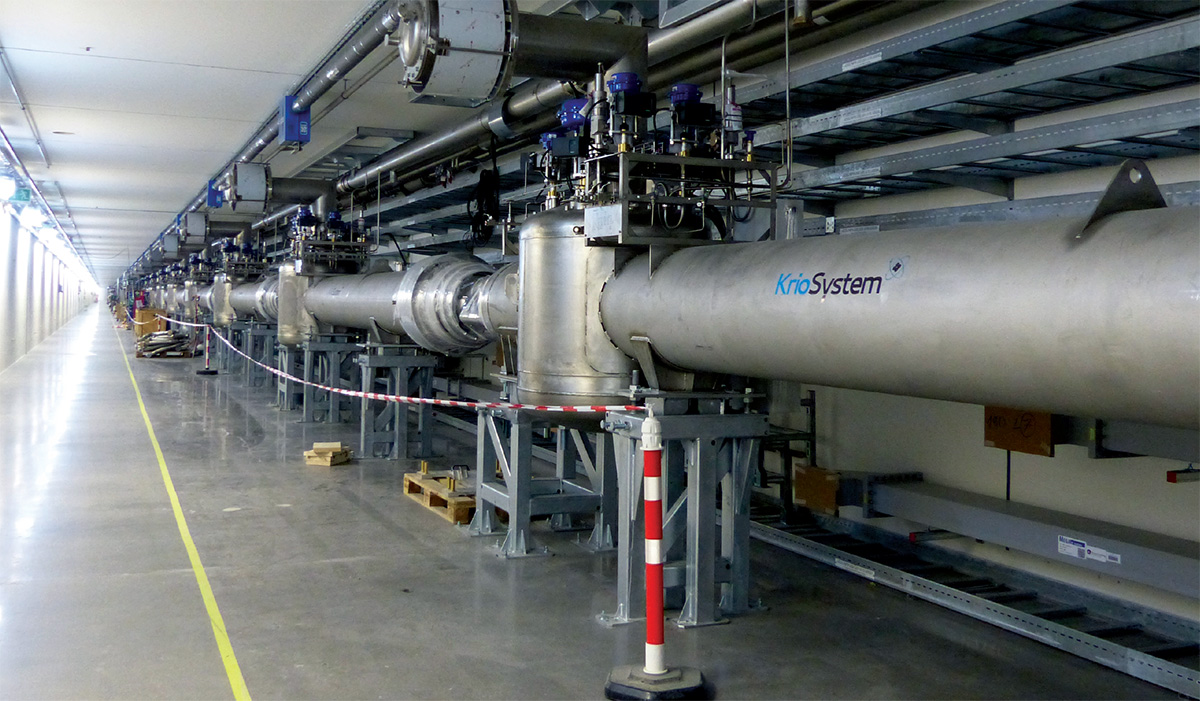
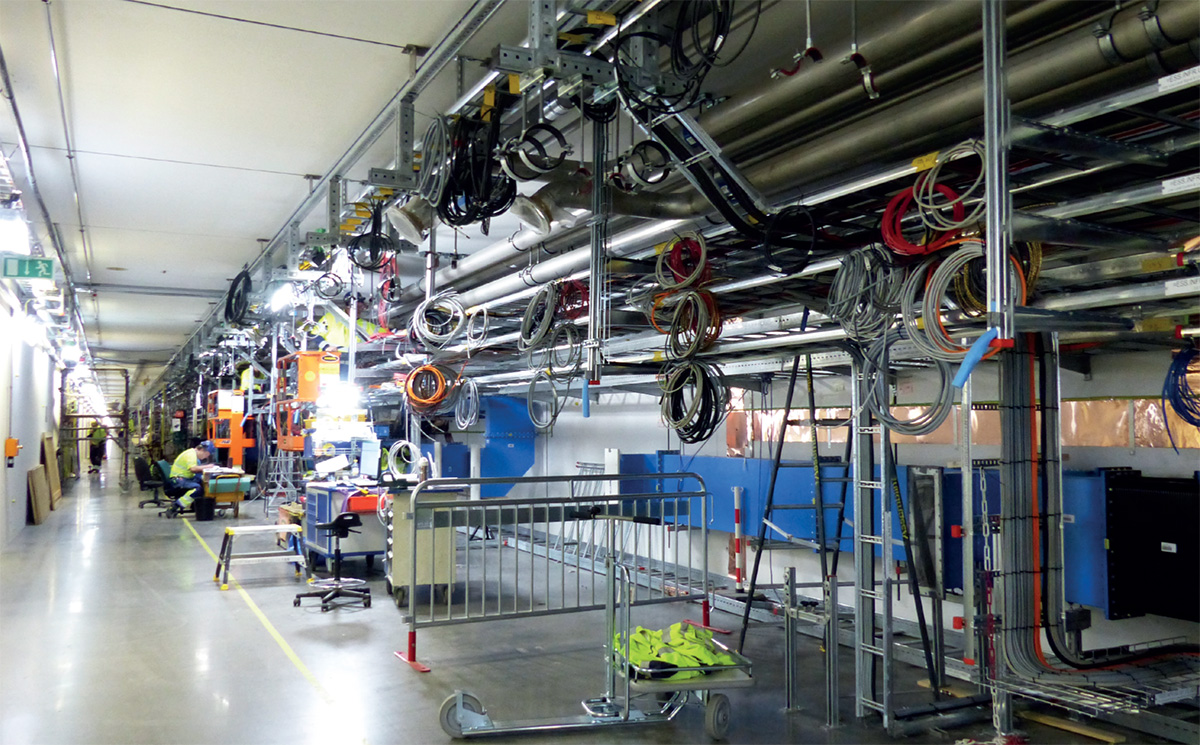
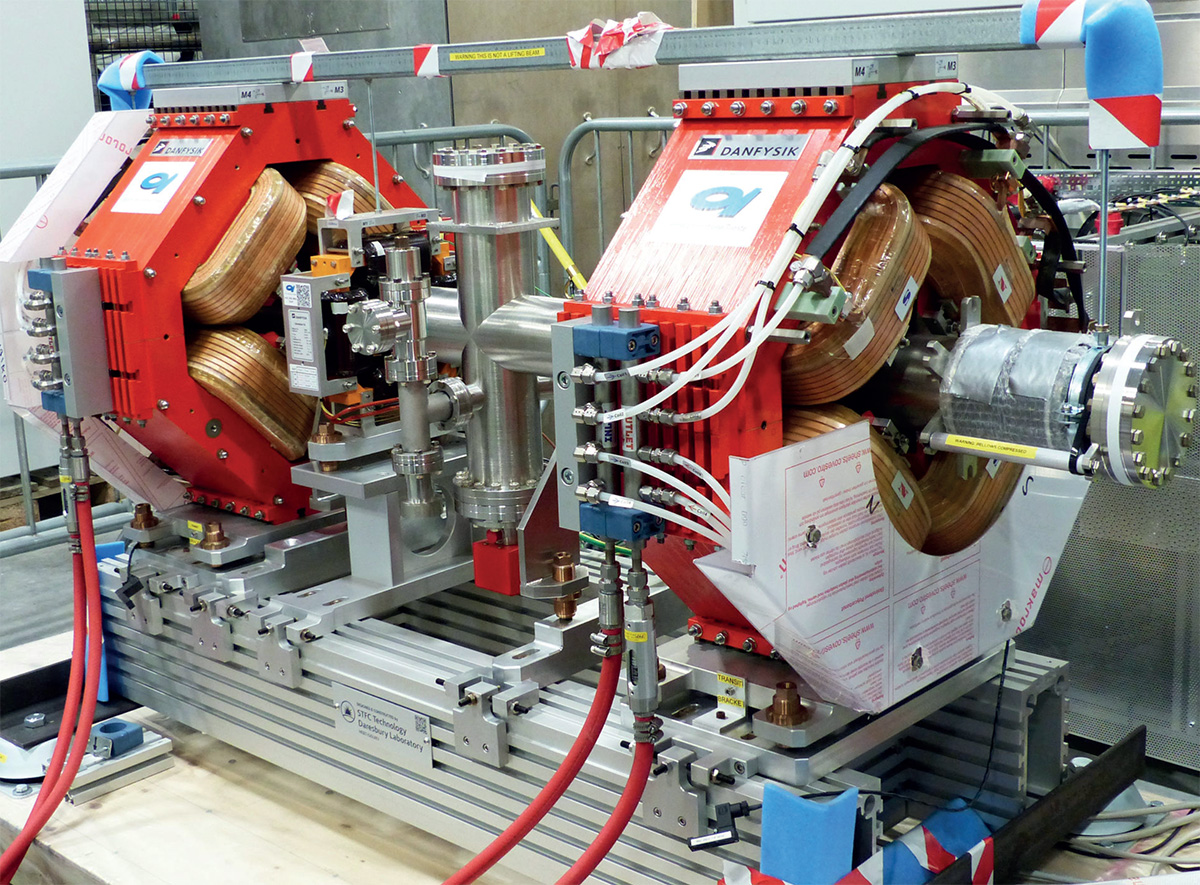
Today, all the accelerator buildings have been handed over from the contractor to ESS. The ion source, where the protons are produced from hydrogen gas, was delivered from INFN in Catania at the end of 2017. After installation, testing and commissioning to nominal beam parameters, the ion source was inaugurated by the Swedish king and the Italian president in November 2018. Since then, the radio-frequency quadrupole and other accelerator components have been put into position in the accelerator tunnel, and the first prototype cryomodule has been cooled to 2 K. There is intense installation activity in the accelerator, where 5 km of radio-frequency waveguides are being mounted, 6000 welds of cooling-water pipes performed and 25,000 cables being pulled. The target building is under construction, and has reached its full height of 31 m. The large target vacuum vessel is due to arrive from in-kind partner ESS Bilbao in Spain later this year, and the target wheel in early 2021.
The handover of buildings for the neutron instruments started in September 2019, with the hall of the long instruments along with the buildings housing associated laboratories and workshops. While basic infrastructure such as the neutron bunker and radiation shielding for the neutron guides are provided by ESS in Lund, European partner laboratories are heavily involved in the design and construction of the neutron instruments and the sample-environment equipment. ESS has developed its own detector and chopper technologies for the neutron instruments, and these are being deployed for a number of the instruments currently under construction. In parallel, the ESS Data Management and Software Centre, located in Copenhagen, Denmark, is managing the development of instrument control, data management and visualisation and analysis systems. During full operation, the ESS will produce scientific data at a rate of around 10 PB per year, while the complexity of the data-handling requirements for the different instruments and the need for real-time visualisation and processing add additional challenges.
The major upcoming milestones for the ESS project are beam-on-target, when first neutrons are produced, and first-science, when the first neutron-scattering experiments take place. According to current schedules, these milestones will be reached in October 2022 and July 2023, respectively. Although beam power at the first-science milestone is expected to be around 100 kW, performance simulations indicate that the quality of results from first experiments will still have a high impact with the user community. The initiation of an open user programme, with three or more of the neutron instruments beginning operation, is expected in 2024, with further instruments becoming available for operation in 2025. When the construction phase ends in late 2025, ESS is expected to be operating at 2 MW, and all 15 neutron instruments will be in operation or ready for hot-commissioning.
The ESS has been funded to provide a service to the scientific community for leading-edge research into materials properties. Every year, up to 3000 researchers from all over the world are expected to carry out around 1000 experiments there. Innovation in the design of the accelerator, the target system and its moderators, and in the key neutron technologies of the neutron instruments (neutron guides, detectors and choppers), ensure that the ESS will establish itself at the vanguard of scientific discovery and development well into the 21st century. Furthermore, provision has been made for the expansion of the ESS to provide a platform for leading-edge research into fundamental physics and as yet unidentified fields of research.
On 19 June the prime minister of Estonia, Jüri Ratas, and CERN Director-General, Fabiola Gianotti, signed an agreement admitting Estonia as an associate member state in the pre-stage to membership of CERN. The agreement will enter into force once CERN has been informed by the Estonian authorities that all the necessary approval processes have been finalised.
“With Estonia becoming an associate member, Estonia and CERN will have the opportunity to expand their collaboration in, and increase their mutual benefit from, scientific and technological development as well as education and training activities,” said CERN Director-General Fabiola Gianotti. “We are looking forward to strengthening our ties further.”
Many important opportunities open up for Estonian entrepreneurs, scientists and researchers
Jüri Ratas
After joining the CMS experiment in 1997, Estonia became an active member of the CERN community. Between 2004 and 2016 new collaboration frameworks gradually boosted scientific and technical co-operation. Today, Estonia is represented by 25 scientists at CERN, comprising an active group of theorists, researchers involved in R&D for the Compact Linear Collider project, a CMS team involved in data analysis and the Worldwide LHC Computing Grid, and another team taking part in the TOTEM experiment.
CERN’s associate member states are entitled to participate in meetings of the CERN Council, Finance Committee and Scientific Policy Committee. Their nationals are eligible for staff positions and fellowships, and their industries are entitled to bid for CERN contracts.
“As an associate member, many important opportunities open up for Estonian entrepreneurs, scientists and researchers to work together on innovation and R&D, which will greatly benefit Estonia’s business sector and the economy as a whole,” said Jüri Ratas, Estonia’s prime minister, at the signing ceremony. “Becoming an associate member is the next big step for Estonia to deepen its co-operation with CERN before becoming a full member.”
To provide the best experiences, we use technologies like cookies to store and/or access device information. Consenting to these technologies will allow us to process data such as browsing behavior or unique IDs on this site. Not consenting or withdrawing consent, may adversely affect certain features and functions.
Functional
Always active
The technical storage or access is strictly necessary for the legitimate purpose of enabling the use of a specific service explicitly requested by the subscriber or user, or for the sole purpose of carrying out the transmission of a communication over an electronic communications network.
Preferences
The technical storage or access is necessary for the legitimate purpose of storing preferences that are not requested by the subscriber or user.
Statistics
The technical storage or access that is used exclusively for statistical purposes.The technical storage or access that is used exclusively for anonymous statistical purposes. Without a subpoena, voluntary compliance on the part of your Internet Service Provider, or additional records from a third party, information stored or retrieved for this purpose alone cannot usually be used to identify you.
Marketing
The technical storage or access is required to create user profiles to send advertising, or to track the user on a website or across several websites for similar marketing purposes.