Comsol -leaderboard other pages

Topics

PSI pixels spin off into research with X-rays

When the CMS experiment begins recording data at the LHC the first components to detect particles produced in the head-on proton–proton collisions will be those in the layers of silicon pixels that form the inner part of the CMS tracker (figure 1). The pixel detectors in the barrel part of the cylindrical tracker are the responsibility of a Swiss collaboration based at the Paul Scherrer Institute (PSI). These specially developed detectors have to fulfil extreme requirements. In addition, their high performance in tests has resulted in similarly designed but simpler detectors for investigations into protein crystallography at the Swiss Light Source and radiography at the Swiss Spallation Neutron Source. These detectors are already in operation and a start-up company has been formed to supply them to other synchrotron light sources.

CCEpsi1_03-07

Researchers at PSI began developing a hybrid pixel detector system 12 years ago that would be suitable for the very high rates of particle tracks expected at the LHC. Roland Horisberger, project manager of the pixel project, recalls that at the time such a pixel system appeared very futuristic and posed many questions. Nevertheless, researchers from PSI, the universities of Basel and Zurich, and the ETH Zurich gathered together and formed a pixel competence centre to develop a pixel vertex detector for CMS.

Pixels at work

This new detector is in essence a very large digital camera for recording the tracks of ionizing particles. It comprises 65 million silicon pixels, each 100 μm × 150 μm, which are micro-bump-bonded to special complementary metal-oxide semiconductor (CMOS) read-out chips. This enables researchers to record precisely the position and time of a penetrating particle track. The read-out chip detects the hit pixels and records their analogue pulse height. It is then possible, using charge division, to achieve an excellent position resolution of 10–15 μm, while limiting the data transfer to the hit pixels only. For this purpose each pixel is equipped with a fast charge-sensitive amplifier with an analogue sample-and-hold circuit and a discriminating comparator circuit to perform the hit “decision”.

The pixel barrels contain as many as 768 silicon sensor modules, each of which has a sensitive area of about 10 cm2 and consists of a matrix of 160 pixels × 416 pixels. The charge produced by the 66,560 pixels is conducted through an equal number of micro-bump-bonded contacts to 16 read-out chips, each containing 4160 cells, where the charge signals are amplified and processed.
CCEpsi2_03-07

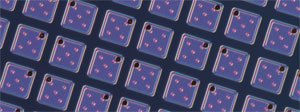
These “hybrid” pixel detectors depend on a special high-density connection technique, which was developed in co-operation with the Laboratory for Micro- and Nanotechnology at PSI. The contact between pixel and microchip – the bump – is a 17 μm solder ball of indium, a metal with a low melting point. The technique, known as bump-bonding, was taken from industry and miniaturized further to achieve the desired small bump ball size (figure 2). The work requires that the bump-bonding is achieved with a precision of 1–2 μm.

At CMS the pixel modules are placed close to the beam pipe at radii of 4, 7 and 11 cm. They provide the three innermost charged-particle tracking points of the experiment and should enable the reconstruction of the secondary displaced vertices arising from b-quark decays, a crucial signature for the discovery of new physics processes. At the design luminosity of the LHC the enormous particle flux of nearly 1010 particles per second will create 120 GB of data every second. The intensive bombardment creates an extreme radiation load on the detectors and the associated on-board electronics. Yet tests at the PSI proton accelerator have shown that this does not significantly affect the functioning of the detectors.

From the LHC to protein crystals

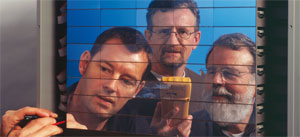
The detector technology developed for CERN measures particle tracks for high-energy particle physics, but at the Swiss Light Source the same technology operates as a very sensitive digital X-ray camera known as the PILATUS 6M detector (for “Pixel Apparatus for the SLS”; figure 3). It consists of 60 modules with 6 million pixels, making up an active area of 43 cm × 45 cm. Adapted to the needs of experiments at synchrotrons, the detector operates in single-photon counting mode – each incoming photon is counted and the number for each pixel is stored digitally.
CCEpsi3_03-07

The process has no electrical background interference, so it achieves an extremely high dynamic range. Very weak and very intense signals can therefore be measured at the same time in a single image, and exposure times can be selected freely between 1 ms and several hours. The CMOS chips and the sensors are radiation tolerant, and the PILATUS 6M detectors have a dynamic range of 20 bits, a highest sensitivity in the energy range of 3–30 keV and a read-out time of a few milliseconds.

When this equipment was being developed the focus was on its application for protein crystallography. Understanding the molecular structure of a crystal requires knowing the intensities of all the reflections as accurately as possible. Researchers can use this information to calculate the actual arrangement of the atoms and molecules in the protein, but the quality of data used to decode the molecular structure is crucial.

In these experiments the researchers fire a tightly bundled X-ray beam onto a protein crystal. This results in images that are patterns formed by thousands of scattered Bragg reflections. The advantage of pixel detectors is that they can deal with the incoming data in the most efficient way. The rate of more than 1 million X-ray photons per second hitting just a few pixels means that the reflections at the centre of the image are extremely intense; at large scattering angles towards the edge there are far fewer reflections from a few dozen photons. Molecular biologists are excited about the excellent data quality they have obtained so far with the PILATUS 6M detector.

The PILATUS 100K detector is a smaller system that was developed in parallel. This system consists of a matrix of approximately 500 pixels × 200 pixels and enables information to be recorded even faster and with greater precision than with comparable commercial detectors. The system is currently used for material science research at synchrotrons and improves insight in several research areas such as the surface properties of materials. To meet growing demands, a spin-off company was recently founded and the CEO, Christian Broennimann, leads a team of four. The market for these detectors lies mainly in the field of synchrotron radiation.

Meanwhile, the precision work on the individual modules for the CMS experiment continues. The barrel pixel modules are currently being fabricated at PSI at a rate of four to six a day, with a total of 720 modules to be delivered ready for service in late autumn 2007. The PSI pixels will then be on the look-out for passing particles and playing their part in the search for new physics at the LHC.
LUMI’06 takes strides towards LHC upgrade

Over the past two years, studies to upgrade the LHC have made great progress under the joint auspices of the European CARE accelerator network on High-Energy High-Intensity Hadron Beams (HHH) and the US LHC Accelerator Research Program (US-LARP). These efforts recently culminated in the third topical workshop of the CARE-HHH-APD network, LUMI’06, which was held in Valencia on 16–20 October 2006. About 70 members of CARE and LARP and their associated institutes attended, including 13 participants from major US laboratories and two from KEK in Japan.

CCElum1_03-07

LUMI’06 was devoted to the beam dynamics of the LHC luminosity upgrade and to high-intensity effects limiting the performance of both the LHC accelerator complex at CERN and the Facility for Antiproton and Ion Research (FAIR) at GSI. More specifically, the double objective of LUMI’06 was to establish a forward-looking baseline scenario for the LHC luminosity upgrade and to concur on a scientific rating of alternative scenarios for the upgrade of the CERN accelerator complex, while also assessing the performance of the GSI FAIR synchrotrons.

The workshop concluded an exciting year of intense HHH networking activity, in which several other workshops and conferences were devoted to various LHC upgrade issues, treating topics such as crystal collimation and channelling, rapid switching devices, superconducting magnet design, magnet optimization, super-ferric storage-ring approaches and beam dynamics in high-brightness hadron beams. Throughout the year, in preparing for LUMI’06, there had also been great progress made on the development of a web repository for accelerator physics codes, code benchmarking and on the construction of a database for superconducting cables and magnets.

Accomplishing key goals

A highlight of experimental studies just before the workshop was the first successful test of crystal reflection with a 400 GeV proton beam at CERN in the SPS North Area by the H8-RD22 collaboration. The demonstration of an extremely high effective field, together with more than 95% extraction efficiency, opens up a new perspective for the upgrade of the LHC collimator system. Such an improvement is certainly welcome, in view of the known obstacles on the way to reaching the nominal LHC performance.

CCElum2_03-07

Several speakers at LUMI’06, including CERN’s Ralph Assmann, Rudiger Schmidt and Gianluigi Arduini, surveyed the various difficulties and limitations of the nominal LHC and of the existing CERN complex – related, for example, to collimation, machine protection and the injectors – and they pointed out the challenges that need to be overcome to reach the LHC design luminosity of 1034 cm-2s-1. Nevertheless, after five days of intense discussions, the workshop participants displayed great optimism about the upgrade goal of boosting the LHC peak luminosity by another factor of 10 beyond nominal towards 1035 cm-2s-1.

A key objective that LUMI’06 successfully accomplished was to select the most promising upgrade paths and, possibly, improve them or identify new ones. The workshop considerably reduced the number of alternative scenarios for the upgrade of the interaction region by arguing against all layouts with strong separation dipoles between the collision points and the low-beta quadrupoles closest to them. A primary argument in favour of the “quadrupole-first” solutions is the different level of difficulty and implied development timescale. In particular, at present nobody in the world is actively prototyping strong superconducting dipole magnets.

In considering the technology on which to base the new low-beta quadrupoles there are two alternatives – namely “pushed” NbTi and Nb3Sn – that the workshop decided to pursue in parallel until the first results become available from long Nb3Sn prototype magnets to be built in the US. This should be within the next two or three years. CERN’s Tom Taylor in particular proposed an intriguing “hybrid” solution, combining both NbTi and Nb3Sn technologies.

CCElum3_03-07

Two novel concepts that would greatly enhance the luminosity potential of an LHC upgrade foresee complementing the interaction-region upgrade with additional slim superconducting dipole magnets (DO) or quadrupole doublets (QO), which would be embedded deeply inside the upgraded detectors. Together with other measures, such elements may allow squeezing the beta functions at the collision point by a factor of seven, as opposed to two, beyond nominal, down to a ß* of around 8 cm. Extensive studies are needed for the accelerator and detectors before these novel schemes can be soundly judged for viability.

The compensation of long-range beam–beam effects by a current-fed metre-long wire running parallel to the beam is by now almost established as a valuable and inexpensive complementary tool for enhancing performance. At LUMI’06, Fermilab’s Vladimir Shiltsev proposed the additional use at the LHC of electron lenses both for head-on beam–beam compensation and as a halo collimator. Large-angle “crab” cavities for interaction-region layouts with large crossing angles were rejected in view of numerous technical challenges, which several speakers identified, including Brookhaven’s Rama Calaga and Ramesh Gupta, and CERN’s Rogelio Tomas and Joachim Tuckmantel. Participants appreciated the high risk involved with choosing a crossing geometry that would fully rely on their functionality. In contrast, simpler small-angle crab cavities were recognized as a potentially powerful tool for realizing very small beta functions in conjunction with the detector–integrated dipole D0. KEK’s Kazuhito Ohmi presented simulations of LHC emittance-growth with crab cavities and feedback. The results of the first-ever crab cavity operation in a collider at the KEKB electron-positron machine will be the next milestone. Expected soon, these results will have a big impact on the further pursuit of using crab cavities at hadron colliders.

Figure 1 shows two example layouts of an upgraded LHC interaction region, accommodating several of the advanced elements discussed during the workshop. Advantages of the first scheme, with a detector-integrated slim dipole located about 3 m from the interaction point, are the reduced number of long-range collisions and the absence of geometric luminosity loss. The second scheme relaxes the triplet quadrupole requirements and decreases the chromaticity. A combination of the two schemes – that is an interaction region layout containing both D0 and Q0 – is another possibility, which combines all the advantages.

Tackling the beam-parameter frontier

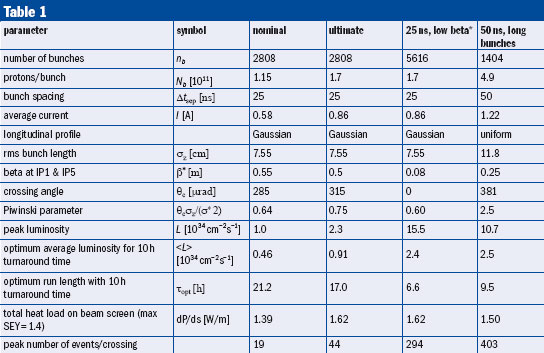
The workshop also made sigificant progress at the beam-parameter frontier. In the past, parameter sets suffered either from an unacceptable number of events per crossing or from an electron-cloud heat load that by far exceeded the available cooling capacity. LUMI’06 approved two compromise solutions with 25 ns and 50 ns bunch spacing, which the authors presented (table 1). For these new sets of beam parameters the number of events per crossing stays near the maximum acceptable value, while the predicted electron heat load remains safely below the projected cooling capability.

The 25 ns option is accompanied by an 8 cm ß*, which requires a D0 magnet inside the detector, Nb3Sn large-aperture quadrupoles and a low-angle crab cavity. The 50 ns option has ß* = 25 cm, for which optics solutions exist based on either technology for the quadrupoles. In addition it needs only the wire compensation of long-range beam-beam effects. Since LUMI’06, the two biggest LHC experiments, CMS and ATLAS, have indicated a preference for the scenario with 50 ns spacing. LUMI’06 rejected the original baseline upgrade scenario with 12.5 ns bunch spacing – half the nominal – since accelerator physicists, cryogenics experts and detector physicists now generally agree that this spacing will produce an insurmountable heat load. Indeed, at this bunch spacing the well-known heating from image currents in the resistive wall and from synchrotron radiation already require the entire local cooling capacity, leaving zero reserve for the electron cloud, which is predicted to be the dominant heat source.

For the LHC injector upgrade, LUMI’06 has endorsed the Linac4/Superconducting Proton Linac upgrade, as well as PS2, a normal-conducting replacement for CERN’s venerable Proton Synchrotron (PS) with twice the PS circumference. However, the workshop also made it clear that these new accelerators alone may not overcome existing intensity limits in the Super Proton Synchrotron (SPS) and that complementary SPS “enhancements” are likely to be required. Several participants challenged the alternative to the normal-conducting PS2, namely a fast cycling superconducting PS2+. Issues of concern here include the distributed beam losses in a cold machine, heating from the fast ramp, technological development risks, missing physics arguments and lack of human resources. In addition, preliminary simulations presented by Miguel Furman of LBNL indicate that the electron cloud could be a serious problem for new superconducting injector rings.

In summary, the LUMI’06 workshop developed novel scenarios for the upgrade of the LHC interaction regions, while eliminating a number of previous options and proposed novel sets of beam parameters better tailored to a higher-luminosity LHC. The workshop also discussed the supporting upgrades to the CERN accelerator complex, including replacement of the PS, which may be necessary for boosting the integrated LHC luminosity, as well as the peak luminosity. With a substantial participation from US-LARP, the European and US upgrade activities could successfully be re-aligned and a general consensus emerged on the future steps to be taken. According to the present schedule, the LHC interaction regions will be upgraded by around 2014. The interaction region and beam-parameter upgrades should increase the peak luminosity several times. However, harvesting the full gain in the integrated luminosity as well will almost certainly require accompanying upgrades to the CERN injector complex, improving turnaround time and removing intensity bottlenecks.

• The HHH Networking Activity is supported by the European Community Research Infrastructure Activity under the European Union’s Sixth Framework Programme “Structuring the European Research Area” (CARE, contract number RII3-CT-2003-506395).

• Dedicated to the memory of Francesco Ruggiero.

LHC on course for 2007 start-up

As the final countdown begins towards the scheduled start-up of the Large Hadron Collider at CERN later this year, work on the machine and the experiments has seen a series of achievements during the closing weeks of 2006. The cool-down of the first complete sector – an eighth of the machine – has already begun and installation of the magnets should be completed in March.

CCEnew1_01-07

At the end of October, the final sector of the cryogenic distribution line, sector 1-2, passed pressure and helium leak tests at room temperature, “completing the circle” for at least one major component of the LHC. The line will circulate helium in liquid and gas phases, at different temperatures and pressures, to provide the cryogenic conditions for the superconducting magnets. The test marked the end of a key part of the project that has had to overcome major difficulties, including manufacturing faults.

Then on 10 November the first complete sector – sector 7-8 – became operational, with the magnets, cryogenic line, the vacuum chambers and the distribution feedboxes all fully interconnected. The interconnection work had required several thousand electrical, cryogenic and insulating connections to be made on the 210 interfaces between the magnets in the arc, the 30 interfaces between the special magnets and the interfaces with the cryogenic line. Although representing only an eighth of the LHC, the fully equipped sector from points 7 to 8 will be the world’s largest operating cryogenic system.

Production of the LHC’s main magnets has finally finished, with a celebration at CERN on 27 November. In all 1232 main dipole and 392 main quadrupole magnets have been manufactured in an unprecedented collaboration effort between CERN and European industry.

The LHC experiments are also continuing to make good progress. On 8 November, the giant ATLAS barrel toroid magnet reached its nominal field of 4 T, with a current of 21 kA in the superconducting coils. At the same time, the first sections of the CMS detector had begun to arrive in the experimental cavern, 100 m below ground. The first forward hadronic (HF) calorimeter, weighing 250 tonnes, led the way on 2 November, with the second HF following a week later. The first end-cap disc, the 410 tonne YE+3, made its 10 h descent on 30 November, followed by YE+2 on 12 December. The third end-cap disc, YE+1, weighing in at nearly 1300 tonnes, was the heaviest piece so far to be lowered, taking 11 h on 9 January.

These milestones were a major feature of a confident report on the LHC to CERN Council at its 140th meeting on 15 December. The meeting also saw the election of Torsten Åkesson of the University Lund as president of Council from 1 January 2007, taking over from Enzo Iarocci. On the same date, Sigurd Lettow replaced Andre Naudi as CERN’s chief financial officer.

BEPCII makes progress towards switch-on

The BEPCII project, a major upgrade and natural extension of the Beijing Electron–Positron Collider (BEPC), has passed an important milestone with beam now circulating in the outer ring and the synchrotron radiation (SR) beam lines open to users. Obtaining colliding beams will be the next step.

CCEnew4_01-07

BEPCII consists of two storage rings, with a new ring built inside the original BEPC ring. The two rings will cross at two points to form a collider, with one ring for electrons and one for positrons. BEPCII will operate with beam energy in the range 1.0–2.1 GeV, appropriate for charm production, and with a design luminosity of 1 × 1033 cm-2s-1 at 1.89 GeV. The upgraded collider will also provide improved SR performance with higher beam energy and photon intensity than at BEPC.

Construction work on BEPCII started at the beginning of 2004. Summer that year saw the installation of new hardware subsystems for the linac injector after the old devices had been removed and commissioning of the upgraded injector linac followed, demonstrating its design performance. Then, after 16 months’ hard work, most of the components for the new inner storage ring had been manufactured and tested.

CCEnew5_01-07

Installation was completed in early November 2006 with conventional magnets installed in the interaction region to enable commissioning of the outer ring with electrons for SR operation. In the meantime, improvement of the cryogenic system and field mapping of the superconducting magnets will proceed at a position out of the beam line.

Commissioning of the outer ring started on 13 November and a beam position monitor revealed the signal for the first turn of beam on the same day. Then, in the early morning of 18 November, the operators obtained circulating beam without RF and stored beam with RF. At the same time, the hardware systems were tested and debugged. Vacuum conditioning with beam followed, and with improving vacuum, orbit correction and other measures, the beam current in the storage ring and the beam lifetime were increased step by step. At the time this issue went to press, the beam current had reached 200 mA with a lifetime of 4 h at 1.89 GeV.

CCEnew6_01-07

For SR operation, the beam energy was ramped to the required 2.5 GeV and commissioning with the SR beam lines began. The SR beams were then opened to users from 25 December. “This is a milestone of the BEPCII construction towards its final goal,” stressed Nobel laureate Tsung-Dao Lee during his recent visit to Beijing.

Commissioning with electron and positron beams in preparation for the first collisions will be carried out after one month of operation for SR users. The plan is then to install the superconducting insertion quadrupoles into the interaction region in the summer and to move the new detector BESIII into place in autumn. The first physics run of BEPCII/BESIII is scheduled to start by the end of 2007.

X-ray laser pulses light up the nano-world

An international team of scientists using the soft X-ray free-electron laser FLASH at DESY has achieved a world first by taking a high-resolution diffraction image of a non-crystalline sample with one extremely short and intense laser shot. This first successful application of “flash diffractive imaging” opens a new era in structural research.

CCEnew7_01-07

The experiment suggests that in the near future images from nanoparticles and even large individual macromolecules – viruses or cells – may be obtained using a single ultra-short high-intensity laser pulse. This would provide new possibilities for studying the structure and dynamics of nanometre-sized particles and molecules without the need for the crystallizing required in conventional X-ray structure analysis.

In the experiment at FLASH, the researchers directed a very intense free-electron laser pulse of 32 nm wavelength and 25 fs duration at a test sample, a thin membrane into which 3 μm-wide patterns had been cut (Chapman et al. 2006). The energy of the laser pulse heated the sample up to around 60,000 K, making it vaporize. However, the team was able to record an interpretable diffraction pattern before the sample was destroyed. The image obtained from the diffraction pattern showed no discernible sign of damage, and the test object could be reconstructed to the resolution limit of the detector. Damage occurred only after the ultra-short pulse traversed the sample.

In order to take images of large molecules with atomic resolution, such experiments will have to be carried out using radiation of even shorter wavelengths, i.e. hard X-rays such as the ones that will be produced from 2009 on by the Linac Coherent Light Source (LCLS) in Stanford, or by the European X-ray Free-Electron Laser (XFEL) in Hamburg, which should begin operation in 2013. Since the method demonstrated at FLASH does not require any image-forming optic, it can be extended to these hard X-ray regimes, for which no lens currently exists.

GEM structure makes self-portrait

In 1996 Fabio Sauli at CERN introduced the gas electron multiplier (GEM) – a new idea for gas amplification in particle detection. The concept has since seen increasing use in particle physics and other applications. Recently Ronaldo Bellazzini and his team at INFN/Pisa have used a GEM-based pixel detector illuminated by ultraviolet (UV) light to produce a “self-portrait” of the GEM amplification structure.

CCEnew8_01-07

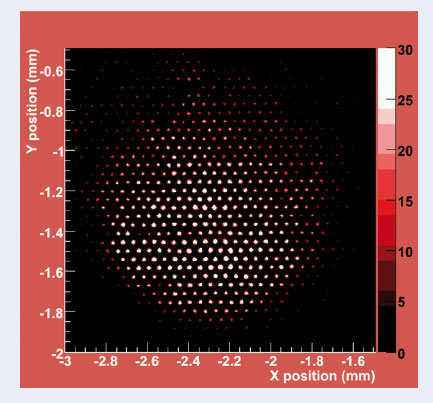
Bellazzini uses a UV lamp to illuminate a caesium-iodide photocathode that is also the entrance window of the gas pixel detector. The light intensity is sufficiently low that the device detects only one photon at a time, each producing a single electron. The electron drifts into a single GEM hole where it knocks further electrons from atoms in an avalanche effect. The avalanche due to the single electron is extracted and a fine-pitch pixel CMOS analogue chip, which is also the charge-collecting electrode, provides a direct reading of the GEM charge multipliers, measuring the centre of “gravity” of the avalanche. If the resolution is good and the noise is low, the centre of gravity corresponds to the centre of the GEM hole.

Accumulating thousands of such events produces a map, in effect a “self-portrait”, of the GEM amplification structure with individual dots only 50 μm apart. The charge-collecting chip has 100,000 pixels arranged in a honeycomb pattern also at a pitch of 50 μm, providing an intrinsic resolution of the read-out system of only 4 μm, in response to a single primary electron.

NSCL reveals plans for $500 million upgrade

A detailed white paper published on 7 December outlines plans for a capability upgrade of the National Superconducting Cyclotron Laboratory (NSCL) located at Michigan State University.

CCEnew9_01-07

The 415 page document gives a scientific and technical description of a proposed Isotope Science Facility (ISF) that will use a high-power heavy-ion driver linac capable of accelerating beams of all stable elements to 200 MeV/nucleon with up to 400 kW beam power. Rare isotopes produced and separated in flight will be available as stopped, fast and re-accelerated (up to 12 MeV/nucleon) beams.

The cost of building ISF on an undeveloped site on the university’s south campus is approximately $500 million, according to NSCL officials.

The NSCL publication was followed on 8 December by the unedited prepublication release of Scientific Opportunities with a Rare-Isotope Facility in the United States, a report by the US National Academies. This declared a next-generation rare-isotope facility to be “a high priority for the United States”. The National Academies also found that a new US facility based on a heavy-ion linear accelerator would complement existing and planned international efforts.

Funded by the US National Science Foundation, NSCL is the largest nuclear-science facility on a US university campus and educates about 10% of that country’s nuclear-science doctoral students. It serves an international user community of 700 scientists from 35 countries.

Quadripôles: un transfert réussi vers l’industrie

Mi-novembre 2006, la 392 e et dernière masse froide d’un quadripôle principal du LHC était livrée au CERN. L’arrivée de cet aimant destiné à focaliser les faisceaux du LHC concluait une collaboration de 17 ans entre le CERN, le CEA-Saclay et l’industrie européenne.

La conception, les essais et la fabrication des aimants quadri­pôles du LHC ont été réalisés dans le cadre de la contribution exceptionnelle de la France au LHC. En 1996, le CERN, le CEA et le CNRS signaient un protocole d’accord pour le futur grand accélérateur en présence du Ministre Français de l’Education nationale et du Secrétaire d’Etat à la recherche. Au terme de cet accord, le département Dapnia du CEA-Saclay réalisait l’étude, la fabrication de trois prototypes, le lancement de la production dans l’industrie et le suivi de la fabrication des masses froides des sections droites courtes. Le CNRS prenait en charge l’étude des cryostats et de l’assemblage des sections droites courtes (p27).

En réalité, l’accord venait formaliser une collaboration entamée à la fin des années 80, reposant sur le savoir faire du CEA éprouvé avec la fabrication des quadripôles supraconducteurs de la machine HERA de DESY à Hambourg. À partir de 1989, deux prototypes de quadripôles avaient été conçus par le CEA-Saclay, dont l’un avait été testé au sein de sa section droite courte dans la première chaîne de test du LHC dès 1994. La signature de l’accord de collaboration donnait toutefois un nouvel élan à la collaboration. Le CEA et le CNRS s’engageaient sur une importante contribution en ressources humaines: 200 hommes-an étaient dévolus à quatre domaines techniques spécialisés, dont 75 hommes-an du CEA pour les masses froides des quadripôles. A la fin de la collaboration, la contribution du CEA-Saclay pour les quadripôles se sera en réalité élevée à 92,5 hommes-an.

Fin 1996, les paramètres des aimants quadripôles étaient définis. Une particularité de ces aimants tient à leur grande variété. Les 360 masses froides des arcs comptent 40 variantes et les 32 unités destinées aux régions de suppression de dispersion comptent 16 variantes. Cette diversité est due aux multiples combinaisons d’aimants correcteurs montés aux deux extrémités des quadripôles, à l’intérieur des masses froides. De surcroît, les quadripôles peuvent avoir une fonction focalisante ou défocalisante. Enfin, les interfaces vers le cryostat et vers la ligne d’alimentation en hélium liquide diffèrent également.

Cette complexité et les évolutions de la machine dans son ensemble expliquent que l’appel d’offre dans l’industrie n’ait été lancé que trois ans plus tard, fin 1999. A son terme, l’entreprise allemande ACCEL Instruments s’est vue attribuer la construction des aimants quadripôles et leur assemblage dans leur masse froide. Pour accueillir cette production, ACCEL a spécialement transformé deux immenses halls industriels désertés, à Troisdorf près de Bonn. Une fosse de huit mètres de profondeur a été creusée et aménagée afin d’assurer l’assemblage des masses froides à la verticale.

L’outillage et les procédures de fabrication avaient été développés pendant la première phase de la collaboration. Pour préparer la fabrication en série dans l’industrie, le CEA-Saclay avait en effet écrit les spécifications pour les outillages de bobinage, de frettage des ouvertures et d’assemblage des culasses ainsi que pour le montage des composants dans leur masse froide. Des méthodes de vérification avaient été développées avec le CERN. Dès avril 2001, le CEA-Saclay débutait le transfert de la technologie et de l’outillage développés pour les cinq premières masses froides.

La production d’une masse froide consiste à bobiner quatre bobines supraconductrices, puis à les fretter dans des colliers en inox qui doivent résister aux forces électromagnétiques. Les performances de l’aimant dépendent de la précision et de la qualité du bobinage et du frettage. Le bobinage doit être réalisé avec une précision de l’ordre de la vingtaine de micromètres pour le positionnement du conducteur sur une longueur de 3,2 mètres. Deux ouvertures frettées sont montées dans une culasse commune constituée de tôles poinçonnées en acier à faible teneur en carbone. Afin d’augmenter sa capacité de production, ACCEL s’est équipé d’outillages supplémentaires. L’étape la plus délicate était d’obtenir des bobines régulières avec ces nouveaux outillages. Le transfert de savoir-faire et le suivi de la production impliquaient une présence régulière des experts du CEA dans l’entreprise. Deux techniciens du CEA-Saclay ont assuré le transfert de technologie chez ACCEL. De même, le démarrage de la fabrication a été suivi par deux techniciens en permanence et un ingénieur du CEA-Saclay une semaine sur deux.

Les aimants et les masses froides ont été soumis à des mesures électriques et mécaniques après chaque étape de fabrication. Avant la livraison, des tests de pression et d’étanchéité ont été exécutés avec un équipement spécifique. Un système de gestion des non-conformités constituait un outil important du suivi de fabrication. Néanmoins, le délai de plusieurs semaines entre la fabrication et le test d’un aimant à froid au CERN rendaient les corrections d’erreurs difficiles. Pendant ce laps de temps, de nombreuses masses froides étaient fabriquées. Toute déviation devait donc être connue le plus tôt possible pour être corrigée.

Mi-2002, le premier aimant quadripôle sortait de l’usine. Testé au CERN, il démontrait d’excellentes performances. Alors que le courant nominal requis est de 11,870 ampères, la première transition résistive (quench) survenait à 12,631 ampères. Ce premier essai confirmait la fiabilité de la conception et autorisait la poursuite de la fabrication de série.

La production de composants aussi complexes n’a pas été pour autant sans mal. La montée en cadence a en partie été retardée par des délais de livraison des composants fournis par le CERN et ses contractants. Une grande partie de ces composants – le câble supraconducteur, le métal des colliers et des culasses, les aimants correcteurs, les bus-bars et les diodes – étaient en effet fabriqués par d’autres firmes et laboratoires et ont subi des aléas de qualité et de délais. Alors que la fabrication était à mi-­parcours, les tests ont fait apparaître des valeurs de perméabilité magnétique trop élevées de l’acier austénitique pour environ 10% des colliers de frettage. La décision de choisir astucieusement la position dans la machine des aimants incriminés, afin que les effets parasites s’annulent, a permis de limiter le retard. Le fournisseur de l’acier a amélioré la qualité des tôles pour les lots de colliers suivants.

Au plus fort de la production, quatre masses froides étaient produites chaque semaine. En décembre 2004, la livraison de la 100 e masse froide était célébrée. En novembre 2006, 10 ans après la signature de l’accord de la collaboration CERN–CEA, et six ans après celle du contrat avec ACCEL, la production des masses froides des quadripôles principaux du LHC était terminée.

L’étroite collaboration entre le CEA-Saclay et le CERN a été le moteur de ce succès. Les deux laboratoires ont combiné leur expertise et savoir-faire dans un esprit de confiance mutuelle et en respectant des procédures de contrôle de la qualité bien élaborées. Les difficultés techniques ont ainsi pu être surmontées et la technologie innovante de fabrication a pu être transférée à une entreprise industrielle qui s’est montrée volontaire et tout à fait capable d’exécuter cette fabrication complexe.

SSS: le pari gagnant de la collaboration

SSS: a collaborative winning gamble

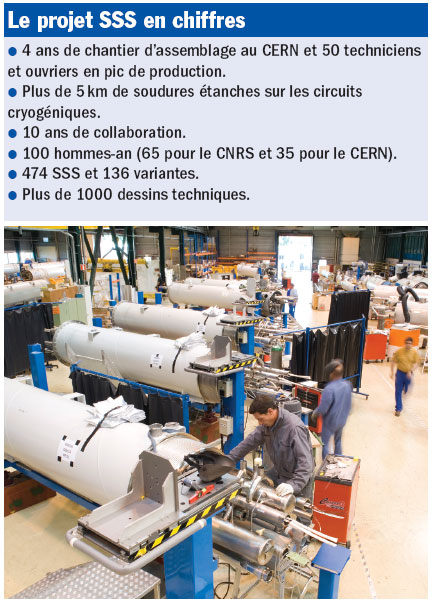
The last of the 474 short straight sections (SSS) for the LHC have been assembled at CERN. These sets of magnets to focus the beams contain, among others, the main superconducting quadrupoles, and they have been developed and produced in the context of the special French contribution to the LHC project. CNRS (Institut de physique nucléaire d’Orsay) designed and assembled the 136 variations of SSS in collaboration with CERN. More than a thousand technical drawings were needed to document the project. Following the insolvency of the company in charge of production, CERN took over the assembly, showing that a laboratory could successfully lead industrial work.

Les dernières des 474 sections droites courtes du LHC sont en cours d’achèvement sur le site de Prévessin du CERN. La réussite de cet assemblage, qui a débuté il y a quatre ans, est le fruit d’un travail étroit entre le CERN et ses partenaires industriels. Elle marque également l’aboutissement d’une collaboration de 10 ans entre le CERN et le CNRS.

CCEsss1_01-07

Les sections droites courtes (appelées SSS de l’Anglais Short Straight Sections) sont les assemblages contenant les quadripôles supraconducteurs principaux de focalisation du LHC, fabriqués par l’entreprise allemande ACCEL, ainsi que les quadripôles d’insertion assemblés au CERN. En plus de ces aimants principaux, les SSS intègrent une grande variété d’aimants correcteurs, de systèmes d’instrumentation et de diagnostic, d’amenées de courant, de composants de cryogénie et du vide.

Intégrer tous ces éléments dans l’espace étroit des cryostats, tout en respectant les spécifications rigoureuses de charges thermiques sur le système cryogénique, constituait un défi pour les ingénieurs et dessinateurs du CERN et du CNRS. La conception était également rendue complexe par les mouvements au sein du cryostat. Les contractions thermiques causées par les variations de température (les aimants du LHC sont refroidis à 2 K) entraînent en effet des mouvements des composants. La stabilité et le positionnement géométrique précis de l’ensemble doivent pour autant être respectés. Etant donné le nombre important d’unités à assembler, un autre défi tenait au développement de méthodes d’assemblage à l’échelle industrielle. Enfin, un plan d’assurance-qualité très complet devait être mis en oeuvre pour s’assurer du respect des spécifications.

CCEsss2_01-07

Après l’approbation du projet LHC en décembre 1994, la conception finale des SSS a débuté en février 1996 avec la signature par le CERN et les deux instituts français CEA et CNRS d’un protocole de collaboration prévoyant plusieurs accords techniques d’exécution. Le premier accord, entre le CEA de Saclay et le CERN, portait sur la réalisation des masses froides des quadripôles supraconducteurs (p25). Le deuxième accord, entre l’IN2P3 du CNRS et le CERN, couvrait la conception industrielle des cryostats des SSS et de tous les équipements nécessaires à leur assemblage, réalisée par le bureau d’études de la division accélérateur de l’Institut de physique nucléaire (IPN) d’Orsay.

Dans le cadre de ce deuxième accord, le CERN pouvait tirer parti de ses compétences dans la conception de cryostats et de son expérience acquise lors de la réalisation des deux premiers prototypes de SSS testés dans la première chaîne de test du LHC dès 1994. Le CERN avait la responsabilité de définir les paramètres principaux de la conception et du pilotage du projet. Le CNRS, s’appuyant sur ses ressources en ingénierie et son bureau d’étude, avait comme mission l’étude de détail du cryostat, l’étude des outillages d’assemblage des SSS, la participation à la réalisation de deux prototypes pour la deuxième chaîne de test du LHC, le lancement et la participation au suivi des fabrications et des assemblages de série.

CCEsss3_01-07

Les sections droites courtes comprennent un grand nombre de variantes et leur assemblage est complexe. Les 474 unités comptent 60 types de cryostats, ce qui donne, en ajoutant les différentes masses froides, au total 136 variantes. Pour documenter un tel ensemble, le CNRS a produit au total plus de mille dessins techniques et une quarantaine de documents, des notes de calcul aux spécifications. Tous ces documents ont été validés par les ingénieurs du CERN et sont aujourd’hui disponibles dans le système informatique de gestion de données d’ingénierie.

Pour faire face à la complexité du projet et combler les difficultés liées à la distance entre le CERN et l’IPN d’Orsay, l’utilisation des technologies de l’information pour la gestion de projet s’est avérée indispensable. Le CERN a mis au point des moyens informatiques de communication, d’approbation et d’archivage des documents et de gestion des données très adaptés à ce travail de collaboration à distance. Ces outils, tels qu’EDMS (Engineering Data Management System), CDD (CERN Drawing Directory), les routines informatiques pour le transfert de dessins CAO et la transformation en format HPGL, ont largement été utilisés. Un rôle crucial a été rempli par les réunions de revue de projet, qui se sont déroulées tout au long de la collaboration, et qui ont permis, à chaque étape critique, d’en assurer le pilotage.

A l’automne 2002, suite à l’insolvabilité de l’entreprise allemande BDT en charge de la fabrication et de l’assemblage des SSS, le CERN a repris le travail à son compte. Cette décision stratégique majeure d’internaliser l’assemblage sur son site permettait d’éviter les inévitables retards engendrés par le lancement d’un deuxième appel d’offre. Un ancien atelier du CERN fut réaménagé en quelques mois, devenant opérationnel à l’automne 2003. Pendant que le CERN reprenait en main l’approvisionnement des composants fabriqués dans une dizaine de sociétés européennes, une petite équipe d’ingénieurs et de techniciens du Laboratoire européen se chargeait d’organiser l’atelier, de planifier la production, d’élaborer les procédures d’industrialisation et de rédiger le plan d’assurance qualité. L’exécution du travail, dans le cadre d’un contrat à obligation de résultats, fut confiée au consortium ICS, déjà en charge de l’assemblage au CERN des cryostats des aimants dipôles du LHC. Deux sociétés furent choisies pour le contrôle qualité: l’Institut de Soudure français, pour contrôler la conformité des soudures, et le consortium Air Liquide-40/30, pour vérifier l’étanchéité des circuits cryogéniques et du vide.

L’assemblage d’une section droite courte consiste essentiellement à introduire une masse froide, préalablement équipée d’écrans thermiques, dans une enceinte à vide qui isole thermiquement les aimants opérant à 2 K. Mais le travail le plus important consiste à intégrer des composants spécifiques à chaque SSS. Les composants à assembler sont préalablement inspectés, testés et préparés en kits selon le type de section à assembler. Cette approche valut au chantier le qualificatif humoristique de «Legoland». Gérer les stocks de plus de 400 sortes de composants à combiner selon 136 types d’assemblages s’est avéré un vrai casse tête, justifiant la mise en place d’une plate-forme logistique dédiée, pilotée par trois personnes à temps plein. Les techniques d’assemblage couramment employées sont le montage mécanique, les travaux de chaudronnerie, le soudage TIG et MIG sur acier inoxydable et aluminium, le brasage cuivre/inox ou le brasage de câbles supraconducteurs.

Jalonnant la phase d’assemblage, les inspections et les tests intermédiaires nécessaires pour valider la qualité du travail comportent des contrôles géométriques, des tests de continuité et d’isolation sur les circuit électriques des aimants et leur instrumentation, des tests de polarité des aimants pour dépister les erreurs de câblage, des inspections de soudure (visuelles et aux rayons X). Des tests d’étanchéité des circuits de cryogénie et du vide sont également menés à l’aide de détecteurs à spectrométrie de masse d’hélium. Plus de 5 km de soudures étanches pour les circuits cryogéniques et plus de 2500 tests d’étanchéité ont été réalisés. Les tests ont permis de localiser et de réparer 73 fuites. Ce plan d’assurance qualité rigoureux a permis d’intercepter plus de 550 non-conformités critiques aussi bien au cours de l’assemblage qu’à la réception des composants.

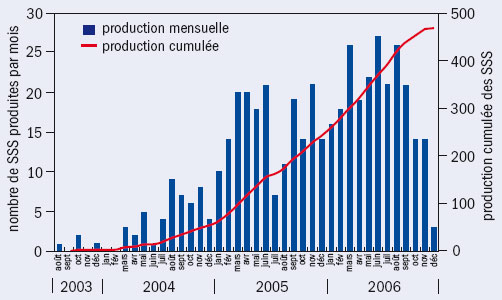
La figure, illustrant le rythme de production des SSS en fonction du temps, montre clairement la courbe d’apprentissage jusqu’à la maîtrise des procédés d’assemblage et de l’organisation de la production: une seule section droite courte était assemblée par mois en 2003, contre 20 au moins par mois en 2006. L’assemblage de chaque SSS durait entre deux et quatre semaines, selon la complexité. Lorsque l’activité a atteint son pic, 50 personnes, ouvriers et techniciens, étaient présentes dans l’atelier.

L’aboutissement de ce projet marque la fin d’une expérience très riche et unique. La durée de 10 ans de la collaboration, la complexité du LHC et les technologies de pointe auxquelles il a fallu faire appel ont constitué autant de défis pour la gestion technique, la gestion des ressources et la coopération des équipes entre deux instituts culturellement et géographiquement éloignés. Le défi de l’internalisation de l’assemblage a été gagné, prouvant qu’il est possible de mener à bien un travail industriel au sein même d’un laboratoire de recherche. Cette réintégration de l’assemblage au CERN, redoutée au début, a vite montré ses atouts: en ayant un accès immédiat et permanent à l’atelier, le CERN a pu anticiper et exercer un pilotage réactif, gage du succès.

Uppsala brings neutrino telescopes back to Earth

IceCube hot-water drill

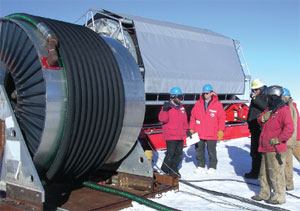
Neutrino telescopes are the biggest particle detectors. IceCube, currently being built at the South Pole, will have a 1 km3 instrumented volume when complete, and a similar project, KM3NET, is planned for the Mediterranean. Detectors such as AMANDA and the Baikal Neutrino Telescope have reached effective detection areas of tens of thousands of square metres. These huge arrays of photomultiplier tubes buried deep in clear ice or water primarily search the sky for high-energy neutrinos from violent cosmic phenomena, including gamma-ray bursts, active galactic nuclei and supernovae remnants. However, detecting extraterrestrial neutrinos can also provide a unique window on physics beyond the Standard Model of particle physics, the topics ranging from searches for new particles to the effects of extra dimensions.

On 20–22 September 2006 the Department of Nuclear and Particle Physics of Uppsala University hosted the first Workshop on Exotic Physics with Neutrino Telescopes. It focused on physics with neutrino telescopes, beyond astrophysics. The next generation of such detectors will be operational in less than a decade and will push the sensitivity of new physics to levels that can probe many existing theoretical models. At Uppsala we felt that it was timely to provide a forum to summarize the current status and where we can go in the next few years.

Research in underground labs or in accelerators is an important counterpart to searches using neutrino telescopes

Research in underground labs or in accelerators is an important counterpart to searches using neutrino telescopes. The first session reviewed accelerator results on new physics beyond the Standard Model in the post-LEP era, and discussed where the LHC will lead. It also summarized the results and perspectives of searches in underground labs. These searches complement each other, and the understanding of any new effect will need signals observed using different detection techniques to be coherently interpreted.

Searching for dark matter

There were also reviews from the smaller experiments such as MACRO, Super-Kamiokande or the Baksan Neutrino Observatory. During the 1990s, these collaborations provided the first limits on searches for new particles and dark matter, as well as on scenarios for new fundamental physics.

The search for dark-matter candidates is perhaps the most developed of the “exotic” topics covered by neutrino telescopes, both theoretically and experimentally. Particle physics provides several candidates for dark matter in the form of weakly interacting massive particles (WIMPs) that have survived from the Big Bang. The neutralino of the minimal supersymmetric Standard Model (MSSM) is one of them, but the lightest Kaluza–Klein mode, which arises in models with extra space–time dimensions, is also viable. If they exist, such particles should cluster gravitationally as halos in galaxies, and by the same principle accumulate in the centre of heavy objects, such as the Sun or the Earth. If the concentration is high enough, they could annihilate in pairs, producing neutrinos as a by-product. Neutrino telescopes are looking for an excess of neutrinos from the centre of the Sun or the Earth, which would indicate this process. There are competitive limits from the MACRO, Super-Kamiokande, Baksan, Baikal and AMANDA detectors, and experiments have begun to probe MSSM parameter space.

Survival probability

More exotic candidates of dark matter exist as non-topological solitons, or Q-balls. These are coherent stable states of quark, lepton and Higgs fields, and contrary to other WIMPS, they can be heavy, up to 100 TeV. Q-balls can leave a signature in a detector by catalysing proton decay as they pass through – the photomultiplier tubes of neutrino telescopes will record the Cherenkov light of the proton decay products. Another possibility is stable strange-quark matter in the form of nuclearites, with baryon numbers up to 1023, but low values of Z/A, the ratio of atomic number (Z) to atomic mass (A). Such particles could also explain cosmic rays above the Greisen–Zatsepin–Kuzmin (GZK) cut-off, if next-generation air-shower arrays confirm such high-energy particles.

Mini black holes and multi-bangs

The production of mini black holes in the collisions of high-energy neutrinos with the partons in matter nuclei is one manifestation of low-scale gravity. If the centre-of-mass energy of the interaction exceeds the Planck scale, a microscopic black hole can form in the interaction. However, in our 4D world, the Planck scale lies at energies of the Planck mass, around 1019 GeV, while the best man-made accelerators reach only tera-electron-volt energies (103 GeV) in the centre of mass. But in 4+D space–time dimensions the Planck scale may be much lower, and a 1010 GeV neutrino interacting with a nucleus inside the detector could produce a mini black hole. Although this might seem an extremely high energy, such neutrinos should be guaranteed by interactions of the flux of cosmic rays with the all-permeating cosmic-microwave relic photons.

A neutrino telescope could detect the immediate Hawking evaporation of a mini black hole in a burst of Standard Model particles (in around 10-27 s) through the emission of Cherenkov light by the products. There are many free parameters in models with extra dimensions and the uncertainties in the predictions are large. However, up to 10 black-hole events a year could be expected in a 1 km3 detector in the most favourable scenarios, taking into account the existing limits on the ultra-high-energy neutrino flux.

The gravity models at tera-electron-volt energies provide another intriguing possibility: elastic neutrino–parton scattering through the exchange of D-dimensional gravitons. Unlike in black-hole production, the neutrino is not destroyed, and continues on its way ready for another elastic interaction after a mean free path that, for a given energy, depends on the number of extra dimensions. The energy lost in each interaction goes into a hadronic shower, producing a very unusual signature in a neutrino telescope: multiple particle showers without a lepton among them. Current calculations predict that a 1 km3 detector could detect a handful of events each year, probing up to D = 6 extra dimensions.

Tests of fundamental physics

It is now eight years since Super-Kamiokande announced the observation of neutrino oscillations, and this effect continues to be the only established observation of physics beyond the Standard Model. We understand neutrino oscillations as a typical quantum-mechanical superposition effect between propagation (mass) and flavour states. However, there can be other causes of oscillations if certain fundamental physics laws are broken at some scale. These include violation of the equivalence principle (VEP), where the different neutrinos couple differently to the gravitational potential, violation of Lorentz invariance (VLI), where the different neutrinos can achieve different asymptotic velocities giving rise to velocity-induced oscillations, or non-standard neutrino interactions with matter at very high energies.

Fifty physicists from 16 countries attended the workshop

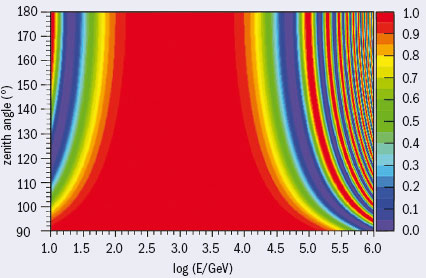
Results from Super-Kamiokande, MACRO and the Sudbury Neutrino Observatory show that, if they exist, such processes are subdominant, and there are limits on their relative strength. However, their dependence on the energy of the neutrino makes such processes interesting for large-scale neutrino telescopes. While the wavelength of standard oscillations is proportional to Eν, in the case of VEP or VLI the oscillation wavelength is proportional to 1/Eν, and neutrino telescopes will provide much better sensitivity, for example by looking for distortions of the angular dependence of the high-energy tail of the atmospheric neutrino flux.

Other contributions to the workshop covered the possibility of explaining trans-GZK cosmic rays as neutrinos with an increased interaction cross-section with matter at ultra-high energies; strongly interacting neutrinos; and how top-down scenarios can produce high-energy neutrinos from the decay products of super-massive Big Bang relics or topological defects. No doubt a discussion on vortons or monopolonia belongs to a workshop on exotic physics.

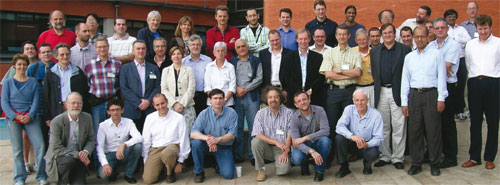
Fifty physicists from 16 countries attended the workshop. The Ångström laboratory, housing the Uppsala University physics departments and the newest building in one of the oldest universities in Europe, provided a pleasant venue for the meeting.

bright-rec iop pub iop-science physcis connect