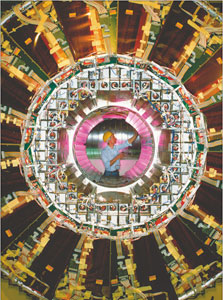
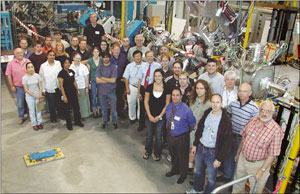
On 10 June the CMS collaboration reached another major milestone when the heart of the detector, the beam pipe, was fully installed after 15 years of complex design and manufacture. This fragile, 44 m long component is one of the last elements of the CMS experiment to be installed.
The design of the beam pipe required compromising on numerous needs of the experiment, with the physicists calling for no material, no support and virtually nothing at the collision point, while the engineers wanted a thicker pipe for greater stability of the vacuum and better electrical conductivity. The compromise is a complex beam pipe made of changing thickness and materials. For 2 m on either side of the interaction point the pipe is of 0.8 mm thick beryllium, weighing less than 1.5 kg. Beyond that for 18 m on either side, and widening towards the ends, are sections of stainless steel, which is good for welding, assembly and precision alignment.
It is very important for both the LHC machine and the detector to have a good vacuum, and a recent “bake-out” should have cleaned out stray particles to ensure that this happens. During this process the beam pipe is heated to 200–250 °C for 48 hours. The length of the pipe is coated with non-evaporable getter material, made of titanium, zirconium and vanadium, which acts as a pump, constantly absorbing residual particles even at the interaction point where no pump would fit.
The Gamma-Ray Large Area Space Telescope (GLAST) was launched by NASA on 11 June from the Cape Canaveral Air Force Station in Florida. GLAST is a next-generation, high-energy, gamma-ray observatory, designed to explore some of the most energetic phenomena in the universe and enhance knowledge of fundamental physics, astronomy and cosmology. It is an international, multi-agency mission with important contributions from research institutions in France, Germany, Italy, Japan, Sweden and the US.
GLAST will capture high-energy gamma rays (from 20 MeV to greater than 300 GeV) from a wealth of cosmic sources that are sites of very-high-energy particle acceleration. These include the supermassive black hole systems of active galactic nuclei, supernova remnants, neutron stars, galactic and solar system sources, and gamma-ray bursts (GRBs). The GLAST collaboration expects to discover thousands of new sources of different classes, which will shed light on many unresolved questions about the nature of dark matter, the origin of cosmic rays, the engines of GRBs, and acceleration mechanisms of high-energy cosmic particles. The discoveries may also provide tests of fundamental physical principles, such as Lorentz invariance.
The Large Area Telescope (LAT) is the main instrument on board (Michelson 2008). It is accompanied by the Gamma-Burst Monitor (GBM), an instrument primarily dedicated to the detection of GRBs between 8 keV and 30 MeV (von Kienlin et al. 2001). Together the GBM and LAT will cover a remarkable seven decades in energy.
The LAT is a pair-conversion telescope that measures the direction, energy and arrival time of incoming photons from the entire sky with unprecedented resolution and sensitivity. It will collect more than two orders of magnitude more gamma rays than its predecessor, EGRET (Thompson et al. 1993), and the current gamma-ray mission AGILE (Tavani et al. 2008). This leap in capabilities is made possible by combining information from three detector subsystems, all based on major developments in experimental particle physics. These are a silicon-strip tracker-converter, the largest of its class with its 70 m2. of active surface and 900,000 digital channels; an 8.5 radiation-length CsI imaging calorimeter, capable of a very large dynamic range to ensure better than 15% energy resolution over the entire acceptance; and an outer, segmented plastic scintillator anticoincidence shield, which is used to reject charged particle background.
Teams in the participating institutes built and qualified the LAT subsystems for space before they were integrated at SLAC. The Max Planck Institute for Extraterrestrial Physics in Garching produced the GBM detectors, and these were integrated at the Marshall Space Flight Center in Huntsville. Both instruments were then integrated with the spacecraft at General Dynamics, in Phoenix, Arizona, to form the GLAST observatory. Environmental testing took place both at General Dynamics and at the Naval Research Laboratory in Washington DC. The calibration of the LAT relies on a combination of charge injection, ground and in-orbit cosmic-ray data, an advanced Monte Carlo simulation based on the Geant4 toolkit, and data from particle test beams collected from a calibration unit at CERN and GSI (Baldini et al. 2007).
On 24 May, a proton beam arrived on the threshold of the LHC, passing down transfer line TI 8 to the LHC, which runs from the SPS towards the LHC, where it intersects just before point 8. The TI 8 line became operational in October 2004. Now a beam has passed along it for only the second time, on this occasion in preparation for the full LHC start-up. The beam was extracted from the SPS, sent down the 2.8 km transfer line and stopped just 15 m or so from the LHC tunnel.
During the 1990s, visitors to the experiments at LEP were usually impressed by their size and complexity and, in particular, how different subsystems constructed in a variety of different countries could fit together. The LHC has now usurped LEP, and this impression has also been replaced by either a scream or complete silence, as visitors to the experiments are overwhelmed by the size and complexity. These differences can be clearly seen by comparing the same type of detector – thin gap chambers (TGCs) – as used for calorimetry and electron identification in the OPAL experiment at LEP (figure 1) with those used for the muon trigger in the ATLAS endcaps, in part of the system known as the ATLAS Big Wheels (figure 2).
The reason for this big change is that, while for the LEP experiments every collision was of interest, at the LHC only one collision in 10 million will be kept for further analysis. In particular, high-momentum muons constitute an important element in defining which events should be kept. For this reason the ATLAS Collaboration decided to construct a large muon spectrometer, based on superconducting air toroids, which allows the precise measurement of muon momenta down to small angles with respect to the proton beam direction.
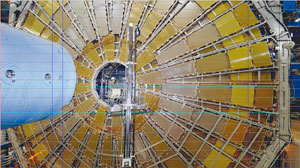
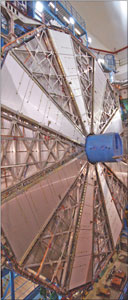
The ATLAS muon wheels are a system of 10 movable and two fixed “wheels” of muon detectors grouped at three stations in each of the two endcaps of the ATLAS detector. The fixed wheels are outermost at each end, while the intermediate stations of big wheels are located just outside the endcap toroid magnet and the edges of the coils of the barrel toroid, and the inner stations of two small wheels lie between the endcap toroids and the calorimeter (figure 3).
Each intermediate station consists of four big wheels with a diameter of 25 m, which are formed from a number of sectors built using different types of muon chamber. The wheels can be moved longitudinally along the direction of the beamline in order to gain access to the central part of ATLAS for the purposes of installation and maintenance. At each end of the barrel, three wheels are used to trigger on high-momentum muons, while one wheel provides a measurement of their trajectories in the bending plane with a precision of a fraction of the width of a human hair. The construction of such large devices was too ambitious a project for a single institution or country, so international collaborations were formed within ATLAS that ran across countries, cultures and religions, and where motivation played a cohesive role.
There are almost 1500 trigger modules on the six trigger big wheels and these were built by a collaboration between China, Israel and Japan. They are formed from TGCs, which are read out in two dimensions through wires and strips. These detectors, based on the technology used in the OPAL experiment, are constructed from lightweight composite materials combined with four million gold-plated tungsten wires. Three custom-built laboratories were made available for their construction at Shandong University, KEK and the Weizmann Institute.
The TGCs are fast and accurate enough to provide a selective trigger, which combined with the trigger electronics designed and constructed in Japan, is capable of identifying muons with large transverse momentum and to associate them with a specific bunch crossing of the LHC, occurring at a frequency of 40 MHz. The measurement of muon tracks in the non-bending plane (along an approximately azimuthal direction) is necessary for the ultimate determination of muon momenta by the chambers in the precision wheel that accompanies each set of trigger wheels.
The TGC units underwent a long series of quality-control tests. In particular, every detector was scanned with cosmic muons in one of three different laboratories (Kobe, Technion and Tel Aviv) to ensure a high uniformity of response. The majority of the detectors were also exposed to a 3 kCi 60Co source for half an hour, and finally, after transportation to CERN, they were operated for three weeks, to avoid early breakdown. This series of tests resulted in a failure rate of 1 in 1000 after the detectors were mounted on the frames. The two failed chambers were then replaced by spares.
The two precision big wheels are equipped with monitored drift tubes (MDTs), which are also present in all other stations in the endcap and in the barrel regions of the spectrometer. These detectors, developed and constructed for the ATLAS muon spectrometer by a collaboration of many institutes from Europe, Russia, the US and China, are based on drift tubes with a diameter of 3 cm and various lengths. The MDTs are arranged in two multilayers and operated at a pressure of 3 bar. They measure muon tracks with a precision of some 40 μm.
The accuracy of the spectrometer is fully exploited with a complex alignment system jointly designed and implemented by groups from France, Germany, Holland and the US. Optical devices mounted on all detectors and on reference components installed on each station of the spectrometer are capable of establishing the relative alignment of towers of detectors with a precision of about 40 μm. The system is used to correct for offsets from the nominal positions, and also for mechanical deformations induced in detectors and support structures by gravity, magnetic fields and temperature variations. These effects are small compared with the dimensions of the structures, but they may be significant on the scale of the precision of the detectors.
The 160 MDT chambers in the two precision big wheels were constructed in three production centres in the US. They are formed from a total of nearly 61,000 drift tubes, with lengths ranging from 0.8 m near the centre to 5.7 m near the outer boundary, where the largest chambers measure 1.9 × 6.0 m2. The alignment system in the precision big wheels was constructed by a collaboration of US and German institutes, and it exploits eight calibrated bars installed on each wheel and equipped with optical devices.
All of the MDT chambers were the subject of an extensive series of tests before and after shipment to CERN, including checks of gas tightness, dark current and noise, followed by a full chamber scan using cosmic muons. The geometrical accuracy in the construction of the detectors was tested at the production sites by various methods, and by a direct measurement performed on a sample of chambers in a dedicated X-ray tomograph facility at CERN.
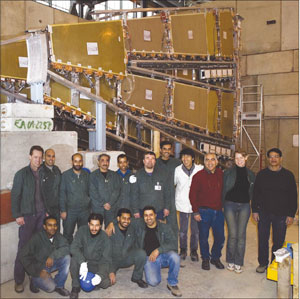
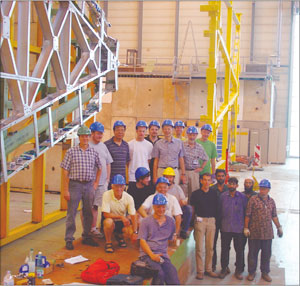
The assembly and commissioning of the 104 sectors forming the eight big wheels was a complex and intensive activity. This took place on the Meyrin site at CERN from spring 2005 to July 2007. The relatively light support structures were designed at CERN, following an initial study carried out in Russia, and they were manufactured in Israel and Russia. The assembly was performed in four working areas, and several teams contributed to the different tasks of mechanical assembly (teams from Pakistan, using assembly jigs that had been manufactured in Pakistan, together with a team from Israel), installation of services and detectors (teams from China/Israel and the US), tests of detectors and trigger electronics (Japan/Israel and the US), and engineering, survey, handling and general coordination (CERN, with the contribution of a team from JINR-Dubna). The tests performed covered all aspects of the detectors and their read-out and control systems, and they included the use of radioactive sources and cosmic rays. Out of a total of 430,000 TGC and MDT read-out channels, the number of non-operational channels was found to be at the level of a few in 10,000.
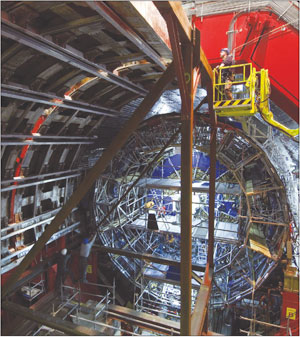
From July 2006 to September 2007, one by one the sectors were transported to Point 1 for installation in the ATLAS cavern. Sectors were then mounted against the end walls of the hall and connected to each other to form the wheels (figure 6). The mechanical accuracy of about 1 mm achieved in the construction of the sectors was essential for the smooth and fast assembly of the wheels, which was coordinated by engineers from CERN and performed by teams of the ATLAS Technical Coordination. Absolute positions of the various detectors were measured by the CERN surveying team, using photogrammetry, making it the first time that such methods had been used for such large surfaces. Alignment systems were available to confirm the assembly accuracy and the stability of the wheels when supported on two points and moved on rails. Moving the wheels was itself an exciting operation, dealing with flexible disks of about 30 tonnes in weight, 25 m diameter and as thin as 30 cm.
Following installation the full commissioning of the big wheels has progressed well, with the connection of services and integration in the read-out and in the trigger systems being completed in spring 2008. Data from both trigger and precision chambers in the muon endcaps have been available in the combined cosmic runs of the muon spectrometer and ATLAS since summer 2007. Figure 7 shows an example of a cosmic muon track recorded in the big wheels during one of the cosmic runs.
The endcap region of the ATLAS muon spectrometer has also been completed recently with the inner stations of small wheels. For the fixed wheels in the outer station, which consist of precision chambers, most of the detectors were present by December 2007. Final installation should soon be completed together with the beam-pipe and the shielding of the endcap region, as the ATLAS collaboration prepares for the first beams of the LHC.
The best-known goal of the LHC is the exploration of the “energy frontier”, using proton collisions at unprecedented beam energy and luminosity. Equally ground-breaking, the LHC will also explore the “energy density frontier” via the collision of lead nuclei at 5.5 TeV per nucleon pair. This is 30 times the collision energy of the Relativistic Heavy Ion Collider (RHIC) at Brookhaven, which is currently the world’s highest-energy nuclear accelerator. The LHC will thus extend the study of the quark–gluon plasma (QGP) and phase transitions of the strong interaction into a qualitatively new regime of temperature and density.
One of the most striking results to emerge from RHIC is the discovery of “jet quenching”. Jets are the remnants of hard scattered quarks and gluons from the collision. They are collimated sprays of stable particles (pions, kaons and the like) that occur in all types of high-energy collisions. Jets are fundamental to QCD, the underlying theory of the strong interaction, and were clearly identified for the first time by the UA1 and UA2 experiments at the SppS collider at CERN in the early 1980s. Heavy-ion collisions bring a new aspect to jet studies, because the hard scattering occurs in the midst of the hot QGP fireball. Consequently, the jet must plough through the plasma, interacting with it and losing energy, before emerging into vacuum and “fragmenting” into the stable particles seen in the detector. The process of energy loss in the plasma, known as jet quenching, modifies strongly the jet structure that is seen in proton–proton collisions. Such modifications can be calculated theoretically using perturbative QCD (pQCD), and a comparison of these calculations and jet measurements in nuclear collisions has provided an invaluable tool for looking into the early moments in the life of the QGP.
Soon after teams at the RHIC announced the initial results on jet quenching, researchers in Europe and the US began to explore ways to make similar measurements at ALICE, the only LHC detector expressly designed for high performance in the fearsome environment of high-energy nuclear collisions, where a single lead–lead collision can generate some 50,000 individual particles. The ALICE detector will measure a range of signals from the QGP, but its baseline design did not include a large-area calorimeter, which is essential for the study of jet quenching. However, the designers of ALICE had the foresight to reserve space for a calorimeter to be added as an important complement.
Detector requirements for jet quenching differ from those for more familiar measurements in high-energy physics, where hermetic calorimetric coverage is needed. The jet quenching signal lies in the modification of the distribution of particles within each jet, and this requires the sophisticated charged-particle tracking and particle identification capabilities that are specialities of ALICE. A large electromagnetic calorimeter (EMCal) would provide ALICE with a fast trigger for high-energy jets, together with a measurement of neutral particles in the jets (primarily neutral pions), which are not seen by ALICE’s charged-particle tracking system.
In 2005, US researchers interested in participating in the ALICE experiment requested funding from the US Department of Energy. They were then joined by groups from France and Italy, and in 2006 the international ALICE EMCal proposal was endorsed by the LHC committee. Funding is now in place on both sides of the Atlantic to complete the EMCal in time for the major lead–lead runs.
The ALICE EMCal is a lead-scintillator sampling calorimeter comprising almost 13,000 individual towers that are grouped into 11 “super modules” (SMs) for ease of handling and installation. The towers are read by wavelength-shifting optical fibres in a “shashlik” geometry, coupled to the same type of avalanche photodiode sensor that is used in the electromagnetic calorimeter in the CMS experiment at the LHC. The EMCal contains 100,000 individual scintillator tiles and 185 km of optical fibre, and it weighs about 100 tonnes. Three SMs will be constructed in Europe, with the remainder built in the US. As the SMs are completed they will be slipped into the EMCal support structure like cassettes. The support structure is a complex object: it weighs 20 tonnes and must support five times its own weight, with a maximum deflection of only a couple of centimetres.
The EMCal covers the full length of the ALICE time projection chamber and central detector and a third of its azimuth, and it is situated back-to-back with the smaller, highly granular lead tungstate calorimeter of the ALICE Photon Spectrometer. With the fast trigger provided by the EMCal, ALICE will measure jets in lead–lead and proton–proton collisions to energies well beyond 200 GeV, enabling a comprehensive set of measurements of jet quenching using ALICE’s unique capabilities.
Synchronization of this early upgrade with the ALICE construction and LHC operations schedule has been challenging. Much of the early work of the EMCal group focused on designing and building the mechanical support structure that had to be installed during the initial ALICE assembly. In addition, beam tests of mature prototypes at Fermilab, and at the SPS and PS at CERN, have verified the module performance. Attention is now turning to construction of the SMs, with the first modules available for installation in early 2009. The collaboration aims to complete the full detector in time for the LHC run in 2011 or if all goes smoothly, the run in 2010.
Nuclear science is undergoing a renaissance driven, not by the printing press or a breakthrough in visual art, but by an increasingly powerful set of beams of rare isotopes. Several nations around the world are competing to obtain the most exotic isotopes, the most intense beams and the most versatile detectors in pursuit of this exciting science. TRIUMF, Canada’s National Laboratory for Particle and Nuclear Physics, has occupied a leading position in this race and has just taken a stride forward with the successful commissioning of its ISAC-II facility.
New patterns in the organization within the nucleus, such as neutron halos, neutron skins and new magic numbers that appear only off the line of stability, are prompting new questions and bringing scientists closer to a systematic understanding of nuclear structure. In addition, the new experimental field of nuclear astrophysics has brought new emphasis to the importance of understanding the sophisticated reactions that potentially gave rise to all of the elements in our universe beyond iron. As a visitor to TRIUMF recently noted, “Nuclear astrophysics is invaluable because it helps us understand why gold is so rare!”
To explore this rich world of nuclei, TRIUMF has designed, built and commissioned the second phase of its Isotope Separator and Accelerator (ISAC) facility, ISAC-II, with support from the Government of Canada and the Province of British Columbia. The new facility includes a superconducting linear accelerator to boost the energies of the exotic, heavy isotopes over the Coulomb barrier. This is the energy threshold at which the nuclei have sufficient energy to come close enough to others in targets for the short-range strong interactions to take effect.
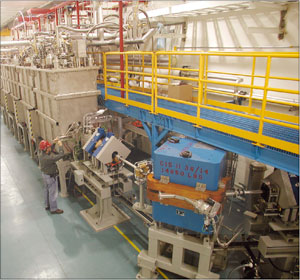
TRIUMF began developing superconducting acceleration technology in 2001 and is now a leader in the field, with a demonstrated accelerating gradient significantly above that of other operating facilities. The new superconducting beamline of ISAC-II adds 20 MV of accelerating voltage to the existing ISAC accelerator chain (figure 1). Robert Laxdal and his team at TRIUMF have developed the high-quality, low-emittance beams with high reliability that are strong features of the new facility.
Researchers have already begun to queue up to take advantage of the new beams. First in line was an experiment led by Hervé Savajols of the Grand Accelerateur National d’Ions Lourds (GANIL) in France and Tanihata from TRIUMF and Japan. They used the MAYA detector from GANIL to study the unusual structure of 11Li, which has as many as eight neutrons together with the three protons. When the first beams arrived on 5 January 2007 the experiment was ready within two hours and was taking data. For this experiment, only 11 of the 20 available superconducting niobium RF cavities were needed to accelerate the beam to the energy of 39.6 MeV required for the experiment.
11Li is an extreme example of a halo nucleus, where two of the neutrons couple together to form an extended outer “halo”, and the aim of this MAYA ISAC-II experiment was to study the pairing correlation between the two neutrons. Many of the two-neutron halo nuclei have an unusual structure and the correlation between two neutrons plays an important role in both the nuclear binding and structure. Although there have been several experiments to study the break up of the nucleus, the correlation between the two halo neutrons is still not well understood.
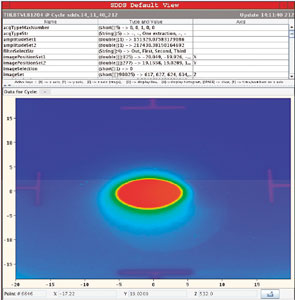
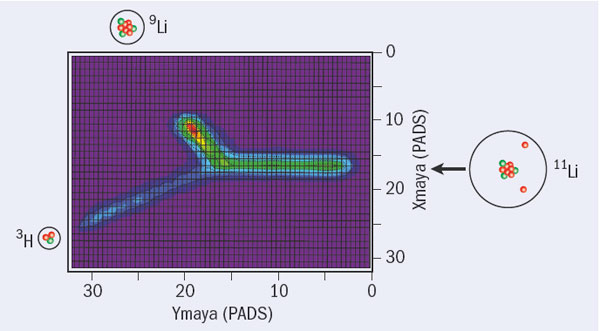
At ISAC-II, MAYA studied the two-neutron transfer reaction 11Li +p → 9Li +3H at a beam energy of 3.6A MeV (figure 2). This kind of reaction is believed to be the best tool for studying two-nucleon correlation in nuclei. ISAC-II delivered a stable 11Li beam with an intensity of about 2000 ions/s to MAYA’s active-target detector, in which isobutane gas of 150 mbar acts as both the proton target and tracking gas. A silicon-detector array and a caesium-iodide array within MAYA detected forward-going, high-energy particles that left the gas detection area. The active target provides almost 4π detection of the reaction, the thickest usable target, and an efficient detection of low-energy recoil particles. The experiment was performed by a collaboration between GANIL, the Argonne National Laboratory and TRIUMF.
Later in 2007, the TRIUMF-ISAC Gamma-Ray Escape Suppressed Spectrometer (TIGRESS) augmented by the auxiliary charged-particle detector BAMBINO was used at ISAC-II to measure the electromagnetic properties of low-lying states in the neutron-rich unstable nucleus 29Na using the Coulomb-excitation technique. TIGRESS is a next generation array of high-energy-resolution, position-sensitive gamma-ray spectrometers (figure 3). BAMBINO is a segmented-silicon detector array, built by Lawrence Livermore National Laboratory (LLNL) and the University of Rochester. A team of scientists from TRIUMF, LLNL, the University of Guelph and 12 other institutions in Canada, the UK, and the US, collaborated on this measurement and were led by Ching-Yen Wu of LLNL.
For this experiment, minimizing the isobar contamination in the main exotic beam is a major challenge for the beam-delivery group. At the full capacity, up to 600 29Na ions per second were delivered at 70 MeV on a 110Pd target. The magnitude of the electromagnetic transition rate for the first excited state in 29Na, determined from this measurement, sheds light on the quenching of magic numbers in nuclei, which is crucial to our understanding of the effective nucleon–nucleon interaction in nuclear medium with extreme isospin. The final results will complement ongoing studies of similarly exotic systems such as 11Li and provide insight into the production of heavy elements in exploding stars. Project leader Carl Svensson of the University of Guelph was recently awarded the prestigious EWR Steacie Memorial Fellowship of the Natural Sciences and Engineering Research Council of Canada for his work on TIGRESS.
After the first season of success, TRIUMF is eager to press further forward. It plans to add a complementary electron driver to the ISAC programme as well as a new beamline for protons on an actinide target, which is currently being developed. The nuclear-physics renaissance is in full swing.
Enabling Grids for E-sciencE (EGEE) is the largest multidisciplinary Grid infrastructure in the world, covering research fields from particle physics to biomedicine. Now the project has begun its third phase, EGEE III.
This phase aims to expand and optimize the Grid infrastructure, which is currently used more than 150,000 times per day by scientific users. Co-funded by the European Commission, EGEE III brings together more than 120 organizations to produce a reliable and scalable computing resource available to the European and global research community. At present it consists of 250 sites in 48 countries and more than 60,000 CPUs with more than 20 petabytes of storage, available to some 8000 users 24 hours a day, seven days a week.
These figures considerably exceed the goals planned for the end of the first four years of the EGEE programme, demonstrating the enthusiasm in the scientific community for EGEE and Grid solutions. Ultimately EGEE would like to see a unified, interoperable Grid infrastructure, and with this goal in mind it is working closely with other European and worldwide Grid projects to help to define the standards necessary to make this happen.
The tools and techniques used in one discipline can often be recycled and used elsewhere, by other scientists, or even in the world of business and finance, where EGEE is employed to find new oil reserves, simulate market behaviour and map taxation policy.
EGEE will hold its next conference, EGEE ’08, in Istanbul on 22–26 September 2008. The conference will provide an opportunity for business and academic sectors to network with the EGEE communities, collaborating projects, developers and decision makers, to realize the vision of a sustainable, interoperable European Grid.
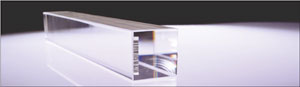
The final crystals for the CMS electromagnetic calorimeter (ECAL) arrived from China and Russia at CERN in March, completing a mammoth production process nearly 10 years after the delivery of the first production crystal in September 1998. These final crystals will be used to complete the endcaps of the ECAL, which contains more than 75,000 crystals.
The huge quantity of leadtungstate crystals used in the ECAL in CMS is the largest number produced for a single experiment. The superb quality of the crystals, in terms of both their optical properties and their radiation resistance, is the result of intense work and collaboration between the producers and ECAL groups, as well as the network of crystallography and solid-state physics experts from the Crystal Clear collaboration.
Five CMS institutes – CERN; the Italian National Agency for New Technologies, Energy and the Environment; the Swiss Federal Institute for Technology Zurich; the Institute for Nuclear Problems Minsk and Rome University I – have been prominent in monitoring and overseeing quality control of this long production process. The optical properties of each crystal were measured by custom-designed automatic equipment. Radiation resistance was systematically controlled through test sampling and required complex logistics coordinated by CERN and ETHZ for the Russian and Chinese crystals respectively. Many other institutes were also involved in their early development.
The 61,200 crystals of the ECAL barrel were successfully installed inside CMS last year and the final phase will be the installation of the endcaps, which contain 14,648 crystals. The first endcap is due to be lowered into the cavern in June and the second endcap should follow later in the summer. More than 90% of the endcap crystals have already been qualified and equipped with their photo-sensors.
The LHCb team has for the first time measured cosmic rays passing through three of the experiment’s subdetectors simultaneously, selected by muon triggers.
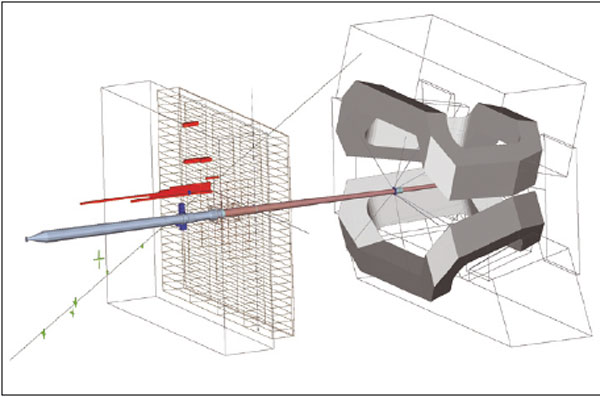
During a global-commissioning run on 3 April, the LHCb team used three of the experiment’s subdetectors – the electromagnetic calorimeter (ECAL), the hadronic calorimeter (HCAL) and the muon system – to trace the paths of cosmic-ray muons. The successful detection of cosmic rays confirms that the different detectors are synchronized, that the software chain works and that the raw data make sense. The software enabled the LHCb team to see 3D reconstructions of the tracks of the muons passing through the subdetectors, illustrating the energy deposited in each of the activated calorimeter cells and the signals in the muon chambers.
The LHCb detector looks different from the standard hadron collider detector because of its focus on heavy flavour particles, which are produced at predominantly low angles and in the same “forward” cone. The subdetectors are arranged in vertical planes along the beamline, more like a fixed-target experiment. This means that tests using cosmic rays, which are predominantly vertical, can only be carried out on certain subdetectors, such as the calorimetry and muon systems, which have large surface areas and can detect particles coming from all directions.
The Muon Ionisation Cooling Experiment (MICE) project, an accelerator research experiment for a major component of a future neutrino factory, has achieved an important milestone with the successful transport of muons along the MICE muon beamline. The international team can now turn its attention to tuning the beam and working towards the demonstration of ionization cooling.
Neutrinos, though challenging to detect because they are only weakly interacting, have already proved to harbour indications of physics beyond the Standard Model. Observations of atmospheric and solar neutrinos have shown that they oscillate between three forms – electron, tau and muon. This can only occur if they have mass, although in the Standard Model they have no mass. To learn more about these mysterious particles requires a new way to generate high-intensity, high-energy beams of neutrinos of known characteristics, such as composition and energy.
A neutrino factory would store muons inside a decay ring with long straight sections pointing to large detectors hundreds, or thousands, of kilometres away. Neutrinos produced in the decay of the muons within these straight sections would travel through the Earth to the distant detectors. Studies have shown that such a facility can be built, but a number of challenges must be solved before a technical design can be completed. One major challenge arises because the muons, produced in the decays of pions, will need “cooling” to form bunches of particles with similar momentum and direction if they are to be accelerated and stored. The problem is that muons decay in about 2 μs.
Ionization cooling is the only technique that can cool the muons fast enough. In this process, passage through matter (liquid hydrogen) reduces the momentum of the muon, and one component of the momentum is then restored by acceleration with RF electric fields. Understanding the efficiency of this cooling technique requires a detailed knowledge of the behaviour of muons in many materials, for example in the windows of the vessel containing the liquid hydrogen.
The MICE project aims to demonstrate the technologies required for ionization cooling and prove that muons can be assembled into cold bunches small enough to allow the muon beam to be accelerated and stored. The MICE collaboration is designing, building and testing a section of a realistic cooling channel on a beamline on the ISIS facility at the Science and Technology Facilities Council’s Rutherford Appleton Laboratory (RAL). Achieving this will give confidence that a full ionization-cooling channel, consisting of many cooling sections, can be designed and built economically.
The successful transport of the first muons along the new beamline is the latest of several significant steps the MICE team has taken since the formation of the collaboration in 2001, and more recently in commissioning the beamline. They have completed the installation and testing of the pion-production target in the ISIS proton synchrotron, built the pion decay line and installed beam counters and other equipment in the experimental hall. Over the coming months, the MICE spectrometer system will be installed and the experiments will finally begin. The cooling channel will be built over the next two or three years, culminating in the demonstration of ionization cooling in 2010.
• The MICE project is a major collaboration involving 150 scientists and engineers from across the world, with collaborators in Bulgaria, China, Italy, Japan, the Netherlands, Switzerland, the UK and the US.
To provide the best experiences, we use technologies like cookies to store and/or access device information. Consenting to these technologies will allow us to process data such as browsing behavior or unique IDs on this site. Not consenting or withdrawing consent, may adversely affect certain features and functions.
Functional
Always active
The technical storage or access is strictly necessary for the legitimate purpose of enabling the use of a specific service explicitly requested by the subscriber or user, or for the sole purpose of carrying out the transmission of a communication over an electronic communications network.
Preferences
The technical storage or access is necessary for the legitimate purpose of storing preferences that are not requested by the subscriber or user.
Statistics
The technical storage or access that is used exclusively for statistical purposes.The technical storage or access that is used exclusively for anonymous statistical purposes. Without a subpoena, voluntary compliance on the part of your Internet Service Provider, or additional records from a third party, information stored or retrieved for this purpose alone cannot usually be used to identify you.
Marketing
The technical storage or access is required to create user profiles to send advertising, or to track the user on a website or across several websites for similar marketing purposes.