A cross-party committee of the legislature of the Republic of Ireland has unanimously recommended joining CERN. In a report published last week, the Joint Committee on Business, Enterprise and Innovation recommended that negotiations to become an Associate Member State begin immediately. The report follows the country’s Innovation 2020 science strategy, published in 2015, which identified CERN as one of four international research bodies which Ireland would benefit from joining. Since then, Ireland has joined the other three organisations, namely the European Southern Observatory, the intergovernmental life-science collaboration ELIXIR, and the LOFAR network of radio-frequency telescopes.
Ireland is one of only three European countries that do not have any formal agreement with CERN, said committee chair Mary Butler. “Innovation 2020’s vision is for Ireland to be a global innovation leader driving a strong sustainable economy and a better society. If Ireland is to deliver on this vision, membership of organisations such as CERN, which are at the forefront of innovation, is critical.” CERN already enjoys a productive relationship with physicists in Ireland, with University College Dublin a longstanding member of the LHCb and CMS collaborations, Dublin City University working on ISOLDE, University College Cork contributing civil engineering expertise, and theorists from several institutions involved in CERN projects. In January 2016, Ireland notified CERN of its intention to initiate deliberations on potential associate membership.
“I welcome this report and endorse its recommendations, which are pragmatic and cost-effective,” says Ronan McNulty, leader of the LHCb group at University College Dublin, and witness to the committee. “Delivery of these recommendations would enormously improve Irish academic links to CERN and create a new landscape for training the next generation of scientists and engineers, as well as developing business opportunities in the technology sector, and beyond.”
Ireland has a strong particle-physics community and CERN would welcome stronger institutional links
Charlotte Warakaulle
The report envisages a “multiplier effect” for return on investment to the Irish economy as a result of joining CERN. Although around 20 Irish companies already have contracts with CERN, it notes that they are at a competitive disadvantage as the laboratory prioritises companies from member countries. Under associate membership, says the report, contracts with Irish companies could rise to one third of the country’s financial contribution to the laboratory, which for Associate Member States must be at least of 10% of the cost of full membership. The cost of full membership, which yields voting rights at the CERN Council and eliminates the investment cap, depends on a country’s GDP, and would currently be estimated to be of the order of €12.5 million per year in Ireland’s case.
“We note the positive report from the committee, which clearly sets out the opportunities that membership or associate membership of CERN would bring to Ireland,” said Charlotte Warakaulle, CERN’s director for international relations. “Ireland has a strong particle-physics community and CERN would welcome stronger institutional links, which we believe would be mutually beneficial.”
The Irish government will now consider the committee’s findings.
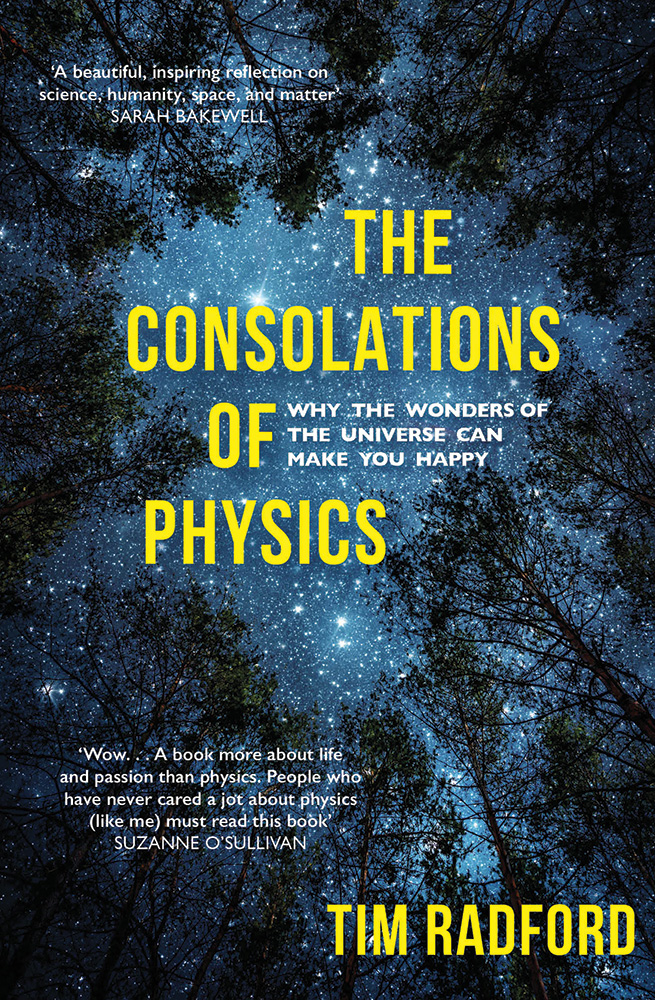
As someone who lives and breathes physics every day, I have to confess that when I curl up with a book, it’s rarely a popularisation of science. But when I saw that Tim Radford had written such a book, and that it was all about how physics can make you happy, it went straight to the top of my reading list.
Despite Radford’s refusal to be pigeonholed as a science journalist, insisting instead that a good journalist moves from beat to beat, never colonising any individual space, he was science correspondent for The Guardian for a quarter of a century. Now retired, he remains one of the most respected science writers around.
The book is a joy to read. More a celebration of human curiosity than a popular science book, it’s an antidote to the kind of narrow populism so prevalent in popular discourse today: a timely reminder of what we humans are capable of when we put differences aside and work together to achieve common goals.
Boethius, who took consolation in philosophy as he languished in a sixth-century jail is another recurring presence
The Voyager mission, along with LIGO and the LHC, serves as a guiding thread through Radford’s vast and winding exploration of human curiosity. Right from the opening lines, the reader is taken on a breathtaking tour of the full spectrum of human inventiveness, from science to religion, and from art to philosophy. On the way, we encounter thinkers as diverse as St Augustine, Dante and H G Wells. Boethius, who took consolation in philosophy as he languished in a sixth-century jail is another recurring presence, the book’s title being a nod to him.
We’re treated to a concise and clear consideration of the roles of science and religion in human societies. “Religious devotion demands unquestioning faith,” says Radford, whereas “science demands a state of mind that is always open to doubt”. While many can enjoy both, he concludes that it may be easier to enjoy science because it represents truth in a way that can be tested.
No sooner have we dealt with religion than we find ourselves listening to echoes of the great Richard Feynman as Radford considers the beauty of a dew-laden cobweb on an English autumn morning. “Does it make it any less magical a sight to know that this web was spun from a protein inside the spider?”, he asks, bringing to mind Feynman’s wonderful monologue about the beauty of a flower in Christopher Sykes’ equally wonderful 1981 documentary, The Pleasure of Finding Things Out. Both conclude that science can only enhance the aesthetic beauty of the natural world.
The overall effect is a bit like a roller-coaster ride in the dark: you’re never quite sure when the next turn will come, or where it will take you. That’s part of the joy of the book. There are few writers who could pull so many diverse threads together, spanning such a broad spectrum of time and subjects. Radford pulls it off brilliantly.
Someone expecting a popularisation of physics might be disappointed. Indeed, the physics is sometimes a little cursory. Yes, the LHC takes us back to the first unimaginably brief instants of the universe’s life, and that’s indeed something that catches the imagination. But that’s just a part of what the LHC does – it’s also about the here and now, and it’s about the future as well. But to dwell on such things would be to miss the point of this book entirely.
An elegant manifesto for physics is how the publisher describes this book, but it’s more than that. It’s a celebration of the best in humanity, built around the successes of CERN, LIGO and most of all the Voyager mission. What such projects bring us may be intangible and uncertain, but their results are available to all, and they enrich anyone who cares to look. Like any good roller coaster, when you get off, you just want to get right back on again, because if there’s something else that can make you happy, it’s Tim Radford’s writing.
Prominent French particle physicist Michel Spiro has been appointed president of the International Union of Pure and Applied Physics (IUPAP), replacing theorist Kennedy Reed of Lawrence Livermore National Laboratory. IUPAP, which aims to stimulate and promote international cooperation in physics, was established in 1922 with 13 member countries and now has close to 60 members. Spiro, who participated in the UA1 experiment, the GALLEX solar-neutrino experiment and the EROS microlensing dark-matter search, among other experiments, has held senior positions in the French CNRS and CEA, and was president of the CERN Council from 2010 to 2013.
The first direct image of a black hole, obtained by the Event Horizon Telescope (EHT, a network of eight radio dishes that creates an Earth-sized interferometer) earlier this year, has been recognised by the 2020 Breakthrough Prize in Fundamental Physics. The $3 million prize will be shared equally between 347 researchers who were co-authors of the six papers published by the EHT collaboration on 10 April. Also announced were six New Horizons Prizes worth $100,000 each, which recognise early-career achievements. In physics, Jo Dunkley (Princeton), Samaya Nissanke (University of Amsterdam) and Kendrick Smith (Perimeter Institute) were rewarded for the development of novel techniques to extract fundamental physics from astronomical data. Simon Caron-Huot (McGill University) and Pedro Vieira (Perimeter Institute) were recognised for their “profound contributions to the understanding of quantum field theory”.
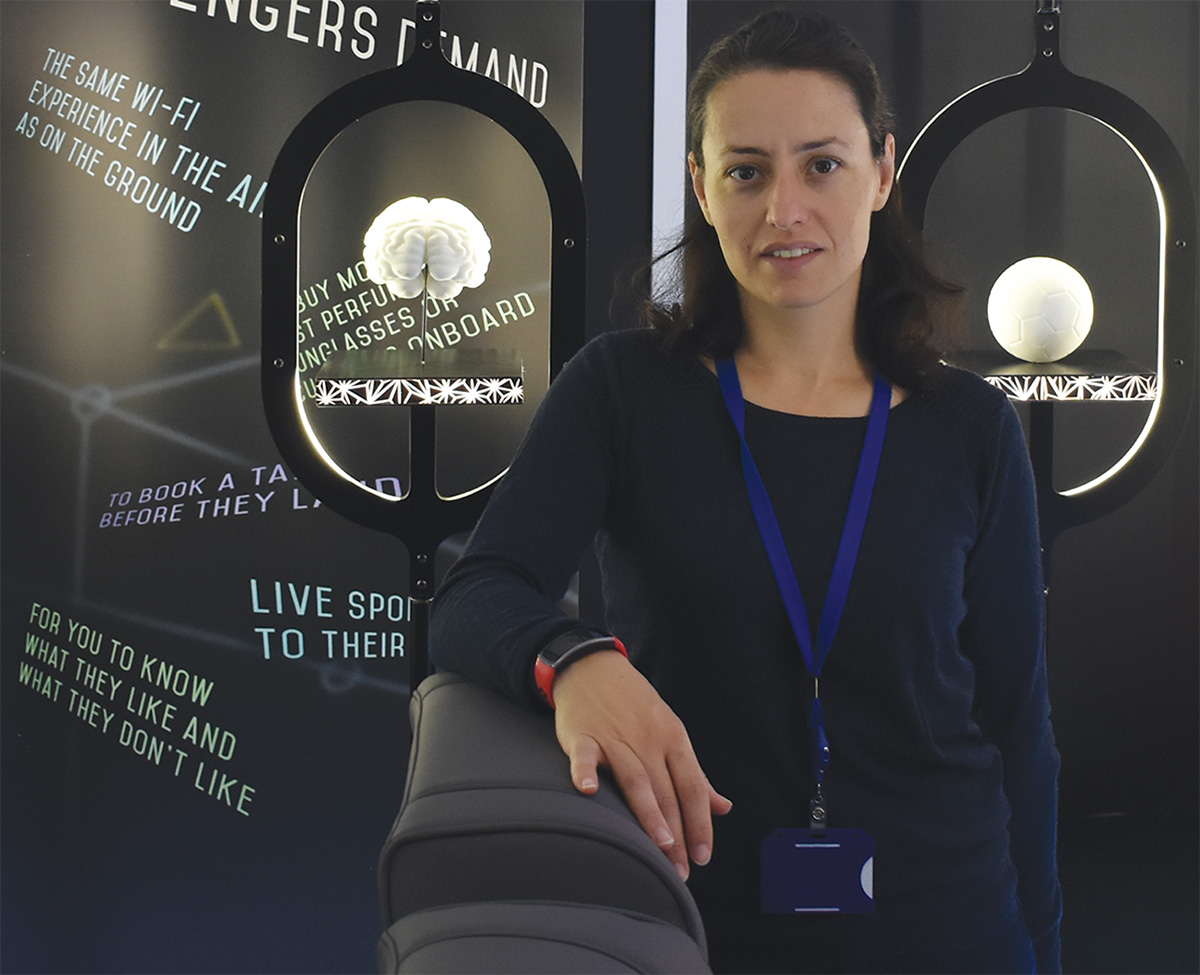
In 2018, Eleni Mountricha’s career in particle physics was taking off. Having completed a master’s thesis at the National Technical University of Athens (NTUA), a PhD jointly with NTUA and Université Paris-Sud, and a postdoc with Brookhaven National Laboratory, she had just secured a fellowship at CERN and was about to select a research topic. A few weeks later, she ditched physics for a career in industry. Having been based at CERN for more than a decade, and as a member of the ATLAS team working on the Higgs boson at the time of its discovery in 2012, leaving academia was one of the toughest decisions she has faced.
“On the one hand I was looking for a more permanent position, which looked quite hard to achieve in research, and on the other, in the years after the Higgs-boson discovery, my excitement and expectation about more new physics had started to fade,” she says. “There was always the hope of staying in academia, conducting research and exploring new fields of physics. But when the idea of possibly leaving kicked in, I decided that I should explore the potential of all alternatives.”
Mountricha had just completed initial discussions about her CERN research project when she received an offer of a permanent contract at Inmarsat – a provider of mobile satellite communications based in the nearby Swiss town of Nyon. It was unexpected, given how few positions she had applied for. “I felt a mixture of happiness and satisfaction at having succeeded in something that I didn’t expect I had many chances for, and frustration at the prospect of leaving something that I had spent many years on with a lot of dedication,” she explains. “What made it even harder was the discussions with other CERN experiments during the first month of the fellowship, which sparked my physics excitement again.”
New pastures
Mountricha’s idea to leave physics first formed after attending, out of curiosity, a career networking event for LHC-experiment physicists in November 2017. “The main benefit I got out of the event was a feeling that, even if I left, this would not be the end of the world; and that, if I searched enough, I could always find exciting things to do.” The networking event now takes place annually.
The Inmarsat job was brought to Mountricha’s attention by a fellow CERN alumnus and it was the only job that she had applied for outside physics. “I believe that I was lucky but I also had invested a lot of personal time to polish my skills, prepare for the interview and, in the end, it all came together,” she says.
People should not feel disappointed for having to move outside physics
Today, Mountricha’s official job title is “aero-service performance manager”. She works in the data-science team of the company’s aviation department collecting and reporting on data about aircraft connectivity and usage. This involves the use of Python to develop custom applications, analysing data using Python and SQL, and developing reporting and monitoring tools such as web applications. Her daily tasks vary from data analysis to developing new products. “Much of the work that I do, I had no clue about in the past and I had to learn. Some other pieces of work, like the data analytics, I used to do in a research context. However, the level at which I was doing it at CERN was much more sophisticated and complex. Many people in my team are physicists, all of them from CERN. Besides the technical aspects though, it is really at CERN that I learned how to collaborate, discuss with people, bring and collect ideas, solve problems, present arguments, and all those soft skills that are very important in my current job.”
As for advice to others who are considering taking the leap, Mountricha thinks that people should not feel disappointed for having to move outside physics. “Fundamental research is a lot of fun and does equip us with much sought-after skills and experience. On the other hand, there are many exciting projects out there, where we can apply everything that we have learned and develop much further.”
Higgs nostalgia
While happy to be on a new career path at the age of 37, working on the search for the Higgs boson will take some beating. “The announcement of the discovery was made in July, the papers were published in August and I defended my PhD thesis in September, so there was much pressure to finalise my work for all of those deadlines,” recalls Mountricha. “Even the times when I was sleeping on top of my PC, exhausted, I still remember them with love and nostalgia. In particular, I remember the day of the announcement of the discovery, there were people sleeping outside the main auditorium the night before in order to make it to the presentation. As a result, I ended up watching it remotely from building 40 together with the whole analysis team. I was slightly disappointed not to be physically present in the packed auditorium, but this nevertheless remains such an important moment of my life.”
Marcello Giorgi of the University of Pisa and Tatsuya Nakada of the Swiss Federal Institute of Technology in Lausanne (EPFL) have been awarded the Enrico Fermi Prize from the Italian Physical Society for their outstanding contributions to the experimental evidence of CP violation in the heavy-quark sector. Giorgi is cited “for his leading role in experimental high-energy particle physics with particular regard to the BaBar experiment and the discovery of CP symmetry violation in the B meson systems with beauty quarks”, while Nakada is recognised for his conception and crucial leading role in the realisation of the LHCb experiment that led earlier this year to the discovery of CP violation in D mesons with charm quarks. The prize was presented on 23 September during the opening ceremony of the 105th national congress of the Italian Physical Society in L’Aquila, Italy.
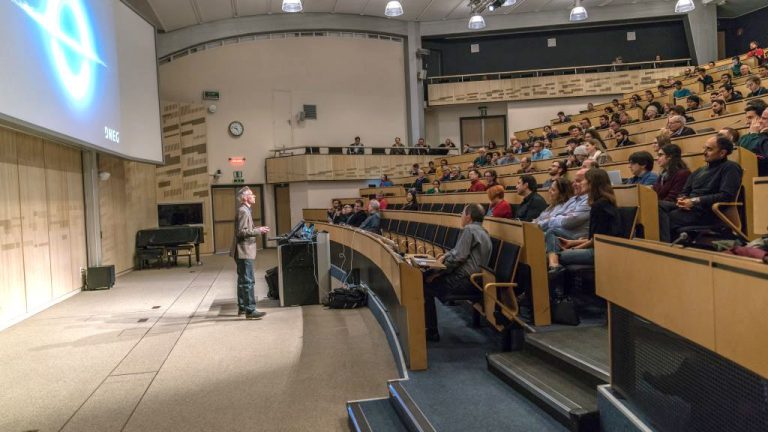
Oliver James is chief scientist of the world’s biggest visual effects studio, DNEG, which produced the spectacular visual effects for Interstellar. DNEG’s work, carried out in collaboration with theoretical cosmologist Kip Thorne, led to some of the most physically-accurate images of a spinning black hole ever created, earning the firm an Academy Award and a BAFTA. For James, it all began with an undergraduate degree in physics at the University of Oxford in the late 1980s – a period that he describes as one of the most fascinating and intellectually stimulating of his life. “It confronted me with the gap between what you observe and reality. I feel it was the same kind of gap I faced while working for Interstellar. I had to study a lot to understand the physics of black holes and curved space time.”
A great part of visual effects is understanding how light interacts with surfaces and volumes and eventually enters a camera’s lens and as a student, Oliver was interested in atomic physics, quantum mechanics and modern optics. This, in addition to his two other passions – computing and photography – led him to his first job in a small photographic studio in London where he became familiar with the technical and operational aspects of the industry. Missing the intellectual challenge offered by physics, in 1995 he contacted and secured a role in the R&D team of the Computer Film Company – a niche studio specialising in digital film which was part of the emerging London visual effects industry.
Suddenly these rag-dolls came to life and you’d find yourself wincing in sympathy as they were battered about
Oliver James
A defining moment came in 2001, when one of his ex-colleagues invited him to join Warner Bros’ ESC Entertainment at Alameda California to work on The Matrix Reloaded & Revolutions. His main task was to work on rigid-body simulations – not a trivial task given the many fight scenes. “There’s a big fight scene, called the Burly Brawl, where hundreds of digital actors get thrown around like skittles,” he says. “We wanted to add realism by simulating the physics of these colliding bodies. The initial tests looked physical, but lifeless, so we enhanced the simulation by introducing torque at every joint, calculated from examples of real locomotion. Suddenly these rag-dolls came to life and you’d find yourself wincing in sympathy as they were battered about”. The sequences took dozens of artists and technicians months of work to create just a few seconds of the movie.
Following his work in ESC Entertainment, James moved back to London and, after a short period at the Moving Picture Company, he finally joined “Double Negative” in 2004 (renamed DNEG in 2018). He’d been attracted by Christopher Nolan’s film Batman Begins, for which the firm was creating visual effects, and it was the beginning of a long and creative journey that would culminate in the sci-fi epic Interstellar, which tells the story of an astronaut searching for habitable planets in outer space.
Physics brings the invisible to life
“We had to create a new imagery for black holes; a big challenge even for someone with a physics background,” recalls James. Given that he hadn’t studied general relativity as an undergraduate and had only touched upon special relativity, he decided to call Kip Thorne of Caltech for help. “At one point I asked [Kip] a very concrete question: ‘Could you give me an equation that describes the trajectory of light from a distant star, around the black hole and finally into an observer’s eye?’ This must have struck the right note as the next day I received an email—it was more like a scientific paper that included the equations answering my questions.” In total, James and Thorne exchanged some 1000 emails, often including detailed mathematical formalism that DNEG could then use in its code. “I often phrased my questions in a rather clumsy way and Kip insisted: “What precisely do you mean”? says James. “This forced me to rethink what was lying at the heart of my questions.”
The result for the wormhole was like a crystal ball reflecting each point the universe
Oliver James
DNEG was soon able to develop new rendering software to visualise black holes and wormholes. The director had wanted a wormhole with an adjustable shape and size and thus we designed one with three free parameters, namely the length and radius of the wormhole’s interior as well as a third variant describing the smoothness of the transition from its interior to its exteriors, explains James. “The result for the wormhole was like a crystal ball reflecting each point the universe; imagine a spherical hole in space–time.” Simulating a black hole represented a bigger challenge as, by definition, it is an object that doesn’t allow light to escape. With his colleagues, he developed a completely new renderer that simulates the path of light through gravitationally warped space–time – including gravitational lensing effects and other physical phenomena that take place around a black hole.
Quality standards
On the internet, one can find many images of black holes “eating” other stars of stars colliding to form a black hole. But producing an image for a motion picture requires totally different quality standards. The high quality demanded of an IMAX image meant that the team had to eliminate any artefacts that could show up in the final picture, and consequently rendering times were up to 100 hours compared to the typical 5–6 hours needed for other films. Contrary to the primary goal of most astrophysical visualisations to achieve a fast throughput, their major goal was to create images that looked like they might really have been filmed. “This goal led us to employ a different set of visualisation techniques from those of the astrophysics community—techniques based on propagation of ray bundles (light beams) instead of discrete light rays, and on carefully designed spatial filtering to smooth the overlaps of neighbouring beams,” says James.
DNEG’s team generated a flat, multicoloured ring standing for the accretion disk and positioned it surrounding the spinning black hole. The result was a warped spac–time around the black hole including its accretion disk. Thorne later wrote in his 2014 book The Science of Interstellar: “You cannot imagine how ecstatic I was when Oliver sent me his initial film clips. For the first time ever –and before any other scientist– I saw in ultra-high definition what a fast-spinning black hole looks like. What it does, visually, to its environment.” The following year, James and his DNEG colleagues published two papers with Thorne on the science and visualisation of these objects (Am. J. Phys 83 486 and Class. Quantum Grav. 32 065001).
Another challenge was to capture the fact that the film camera should be traveling at a substantial fraction of the speed of light. Relativistic aberration, Doppler shifts and gravitational redshifts had to be integrated in the rendering code, influencing how the disk layers would look close to the camera as well as the colour grading and brightness changes in the final image. Things get even more complicated closer to the black hole where space–time is more distorted; gravitational lensing gets more extreme and the computation takes more steps. Thorne developed procedures describing how to map a light ray and a ray bundle from the light source to the camera’s local sky, and produced low-quality images in Mathematica to verify his code before giving it to DNEG to create the fast and high-resolution render. This was used to simulate all the images to be lensed: fields of stars, dust clouds and nebulae and the accretion disk around the Gargantua, Interstellar’s gigantic black hole. In total, the movie notched up almost 800 TB of data. To simulate the starry background, DNEG used the Tycho-2 catalogue star catalogue from the European Space Agency containing about 2.5 million stars, and more recently the team has adopted the Gaia catalogue containing 1.7 billion stars.
Creative industry
With the increased use of visual effects, more and more scientists are working in the field including mathematicians and physicists. And visual effects are not vital only for sci-fi movies but are also integrated in drama or historical films. Furthermore, there are a growing number of companies creating tailored simulation packages for specific processes. DNEG alone has increased from 80 people in 2004 to more than 5000 people today. At the same time, this increase in numbers means that software needs to be scalable and adaptable to meet a wide range of skilled artists, James explains. “Developing specialised simulation software that gets used locally by a small group of skilled artists is one thing but making it usable by a wide range of artists across the globe calls for a much bigger effort – to make it robust and much more accessible”.
Asked if computational resources are a limiting factor for the future of visual effects, James thinks any increase in computational power will quickly be swallowed up by artists adding extra detail or creating more complex simulations. The game-changer, he says, will be real-time simulation and rendering. Today, video games are rendered in real-time by the computer’s video card, whereas visual effects in movies are almost entirely created as batch-processes and afterwards the results are cached or pre-rendered so they can be played back in real-time. “Moving to real-time rendering means that the workflow will not rely on overnight renders and would allow artists many more iterations during production. We have only scratched the surface and there are plenty of opportunities for scientists”. Even machine learning promises to play a role in the industry, and James is currently involved in R&D to use it to enable more natural body movements or facial expressions. Open data and open access is also an area which is growing, and in which DNEG is actively involved.
“Visual effects is a fascinating industry where technology and hard-science are used to solve creative problems,” says James. “Occasionally the roles get reversed and our creativity can have a real impact on science.”
Gaurang Yodh, a passionate particle and cosmic-ray physicist and musician, passed away on 3 June at age 90. He was born in Ahmedabad in India. After graduating from the University of Bombay in 1948, he was recruited by the University of Chicago to join the group of Enrico Fermi and Herb Anderson. After Fermi’s death in 1954, he finished his PhD with Anderson in 1955, after which he moved to Stanford where he worked with Wolfgang Panofsky.
He and his wife returned to Bombay (Mumbai) in 1956, where he started accelerator physics programmes at the Tata Institute of Fundamental Research, but he was lured back to the US and took a physics faculty job at the Carnegie Institute of Technology (later Carnegie Mellon University). In 1961 he joined the physics and astronomy department at the University of Maryland and stayed there until 1988, when he moved to the University of California at Irvine, where he finished his career.
Gaurang’s PhD research work at Chicago with Anderson and Fermi studied the interactions of pions with protons and neutrons. With Panofsky he studied electron–nucleon scattering. He continued this work until the late 1960s when his interests shifted from accelerators to cosmic rays. In 1972, with Yash Pal and James Trefil, he showed that the proton–proton cross section increased with energy – a finding later confirmed at CERN.
Prominent work followed with the development of transition radiation detectors for particle identification. His 1975 paper “Practical theory of the multilayered transition radiation detector” is still a standard reference in high-energy and cosmic-ray physics. In the 1980s, Gaurang’s interests shifted again, in this case to study high-energy gamma rays from space. His ideas led to the development of ground-based water Cherenkov telescopes for the study of gamma rays and searches for sources of cosmic rays. In the 1990s and 2000s, Gaurang and collaborators pursued these detection techniques, and their high-altitude offspring, in two major collaborations – MILAGRO and HAWC – and at UC Irvine Gaurang was a contributor to the IceCube collaboration. He was also a strong advocate for the ARIANNA project, which is developing radio techniques to look for astrophysical neutrinos. Throughout his career, Gaurang mentored many PhD students and post-docs who went on to successful careers.
Gaurang was a renowned sitar player who gave concerts at universities and physics conferences, and in 1956 recorded one of the very first albums of Indian music in the US: Music of India (volumes 1 & 2). He was a gentle and caring man with an infectious optimism and a joy for life. His friends enjoyed his good humour, charm and enthusiasm. He is survived by his three children, eight grandchildren and his sister.
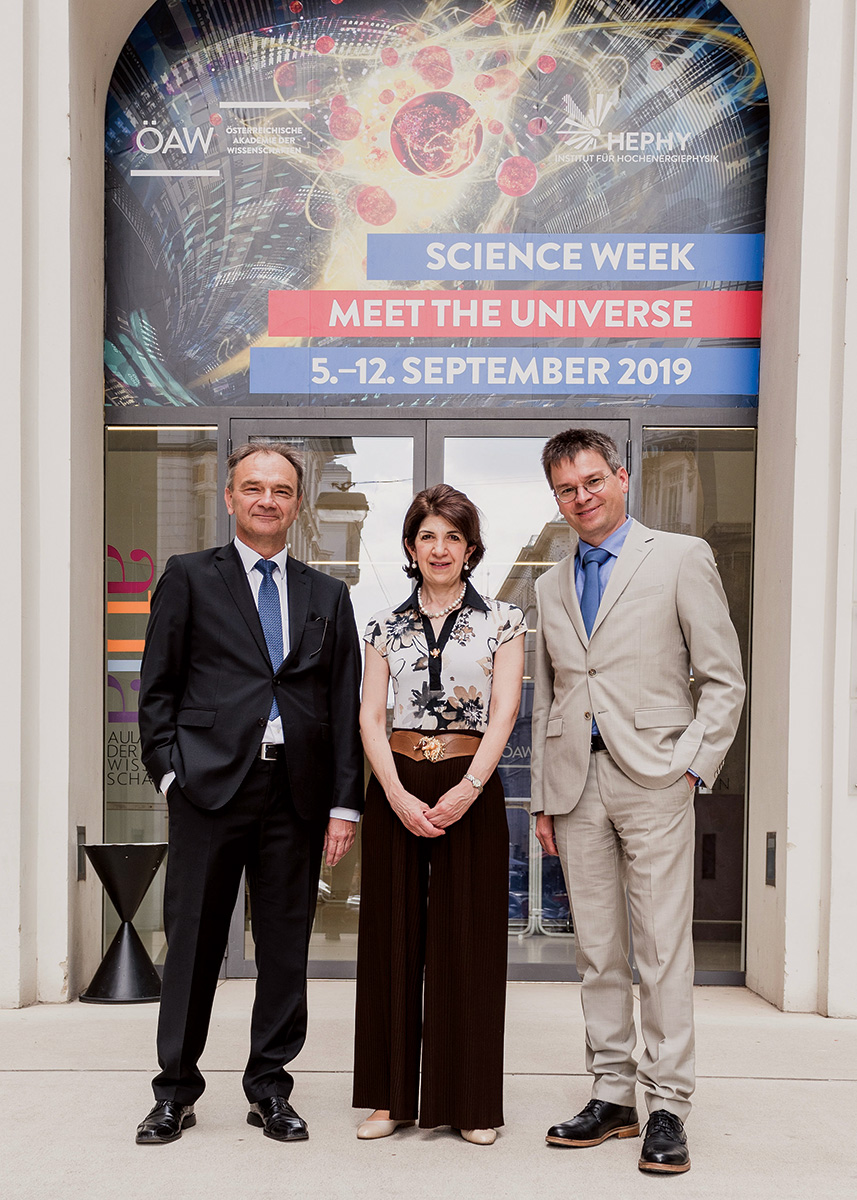
Since joining in 1959, Austria has never stopped contributing to CERN. Associated in bygone days with the UA1 experiment at the SPS, where the W and Z bosons were discovered, and later with LEP’s DELPHI experiment, which helped to put the Standard Model on a solid footing, today hundreds of Austrian scientists contribute to CERN’s experimental programme, and its institutes participate in ALICE, ATLAS, CMS and in experiments at the Antiproton Decelerator. Two of the laboratory’s directors, Willibald Jentschke and Victor Frederick Weisskopf, were born in Austria.
To celebrate the 60th anniversary of Austria’s membership, the public were invited to “Meet the Universe” during a series of exhibitions and public events from 5–12 September, organised by the Institute of High Energy Physics (HEPHY) of the Austrian Academy of Sciences. CERN Director-General Fabiola Gianotti opened proceedings by discussing the role of particle colliders as tools for exploration. The following day, 2017 Nobel Prize winner Barry Barish presented his vision for gravitational-wave detectors and the dawn of multi-messenger astronomy. The programme continued with public lectures by Jon Butterworth of University College London, presenting the various experimental paths that could reveal hints for new physics, and Christoph Schwanda of HEPHY discussing the matter–antimatter asymmetry in the universe.
“We’d like to celebrate this important anniversary and continue to contribute to this long-term endeavour together with the other countries that participate in CERN’s research programme,” said Manfred Krammer, both of HEPHY and head of CERN’s experimental physics department.
The long-standing relationship with CERN has offered broad benefits to the Austrian scientific community, a noticeable example being the Vienna Conference on Instrumentation, and since 1993 the Austrian doctoral programme, which has now trained more than 200 participants, has been fully integrated with CERN’s PhD programme. Today, Austria’s collaboration with CERN extends far beyond particle physics. Business incubation centres were launched in Austria in 2015, and the MedAustron advanced hadron-therapy centre (CERN Courier September/October 2019 p10), which was developed in collaboration with CERN, is among the world’s leading medical research facilities.
“CERN is the place to push the frontiers, and scientists from Austria will contribute to make the next steps towards the unknown,” said HEPHY director Jochen Schieck.
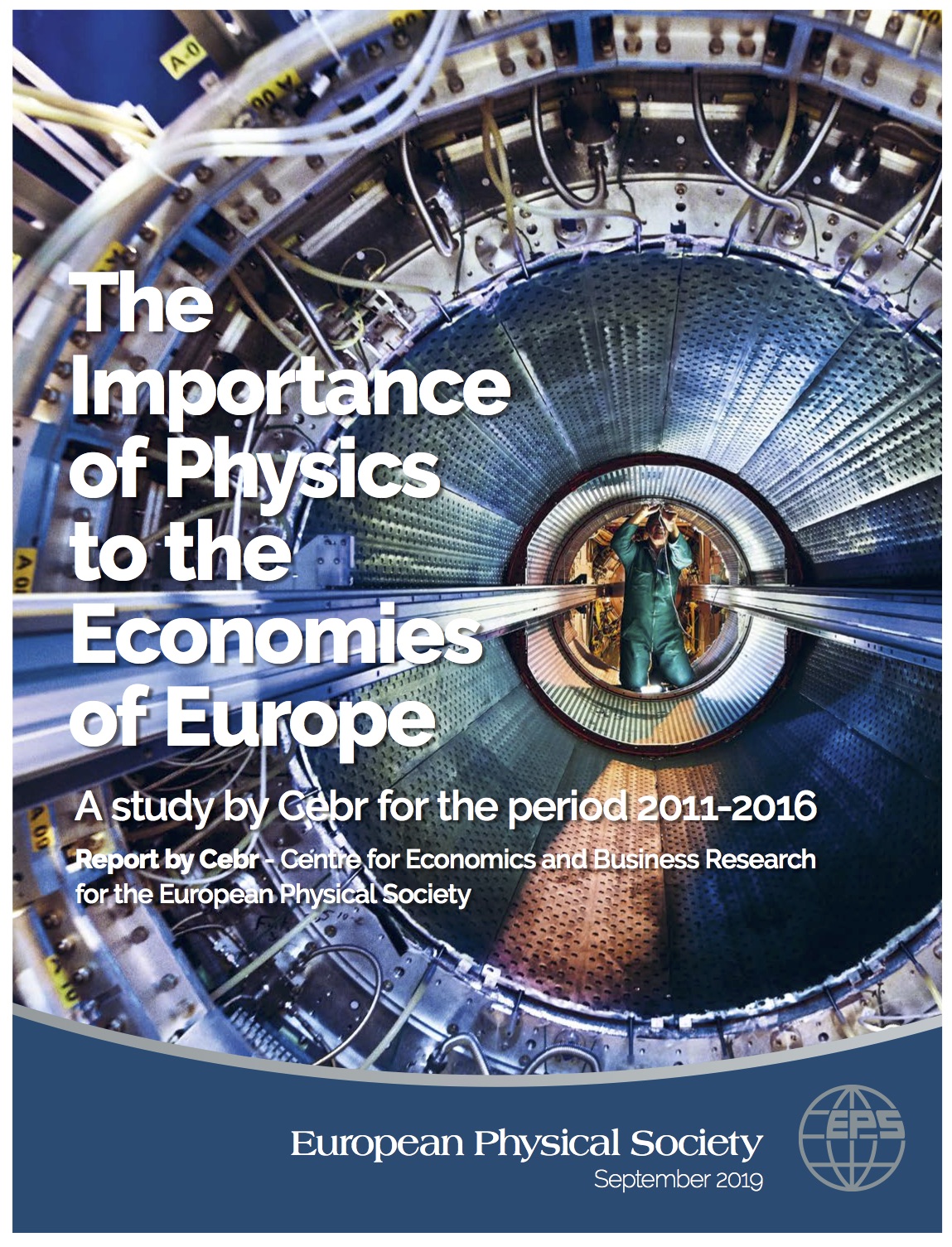
Physics-based industries generate over 16% of total turnover and more than 12% of overall employment in Europe, topping contributions from the financial services and retail sectors, according to a report published by the European Physical Society (EPS). The analysis, carried out by UK consultancy firm Cebr (Centre for Economics and Business Research), reveals that physics makes a net contribution to the European economy of at least €1.45 trillion per year, and suggests that physics-based sectors are more resilient than the wider economy.
“To give some context to these numbers, the turnover per person employed in the physics-based sector substantially outperforms the construction and retail sectors, and physics-based labour productivity (expressed as gross value added per employee) was significantly higher than in many other broad industrial and business sectors, including manufacturing,” stated EPS president Petra Rudolf of the University of Groningen. “Our hope is that the message conveyed by the EPS through the study performed by Cebr will be inspiring for the future, both at the European and national levels, making a convincing case for the support for physics in all of its facets, from education to research, to business and industry.”
The Cebr analysis examined public-domain data in 31 European countries for the six-year period 2011-2016. It defined physics-based industries as those where workers with some training in physics would be expected to be employed and where the activities rely heavily on the theories and results of physics to achieve their commercial goals, following the statistical classification of economic activities in the European community (NACE).
Germany showed the highest percentage of turnover from physics-based industries
Based on several different measures of economic growth and prosperity, the analysis found that physics-based goods and services contributed and average of 44% of all exports from the 28 European Union countries during the relevant period. The three major contributions were from manufacturing (42.5%), information & communication (14.1%), followed by professional, scientific & technical activities in physics-based fields such as architecture, engineering and R&D (14.1%). Distributions in employment data were found to be broadly similar, with professional, scientific & technical activities showing the strongest employment growth. Germany showed by far the highest percentage of turnover from physics-based industries (29%), followed by the UK (14.2%), France (12.9%) and Italy 10.4(%).
Taking into account “multiplier impacts” that capture the knock-on effect of goods and services on the wider economy, the analysis found that for every €1 of physics-based output, a total of €2.49 output is generated throughout the EU economy. The employment multiplier is higher still, meaning that for every job in physics-based industries, an average of 3.34 jobs are supported in the economy as a whole by these industries.
The report also found the European physics-based sector to be highly R&D intensive, with expenditure exceeding €22 billion in every year. “However, what seems to be difficult to comprehend for policy makers and for the general public that elects them is that keeping the physics-based sector in the economy strong and addressing global societal challenges is a process of a very long-term nature,” comments Rudolf. “Indeed, it will not suffice to develop technologies on the basis of the current knowledge: new paths and new knowledge will be needed, which can only be generated by open-ended research.”
While the report does not assess the impact of different sub-fields of physics, it is clear that high-energy physics is a major contributor, says former EPS president Rüdiger Voss of CERN. “The sheer scale and technological complexity of big-science projects, and the thousands of highly-skilled people that they produce, makes particle physics, astronomy and other research based on large-scale facilities significant contributors to the European economy – not to mention the fact that these are the subjects that often draw young people into science in the first place.”
To provide the best experiences, we use technologies like cookies to store and/or access device information. Consenting to these technologies will allow us to process data such as browsing behavior or unique IDs on this site. Not consenting or withdrawing consent, may adversely affect certain features and functions.
Functional
Always active
The technical storage or access is strictly necessary for the legitimate purpose of enabling the use of a specific service explicitly requested by the subscriber or user, or for the sole purpose of carrying out the transmission of a communication over an electronic communications network.
Preferences
The technical storage or access is necessary for the legitimate purpose of storing preferences that are not requested by the subscriber or user.
Statistics
The technical storage or access that is used exclusively for statistical purposes.The technical storage or access that is used exclusively for anonymous statistical purposes. Without a subpoena, voluntary compliance on the part of your Internet Service Provider, or additional records from a third party, information stored or retrieved for this purpose alone cannot usually be used to identify you.
Marketing
The technical storage or access is required to create user profiles to send advertising, or to track the user on a website or across several websites for similar marketing purposes.