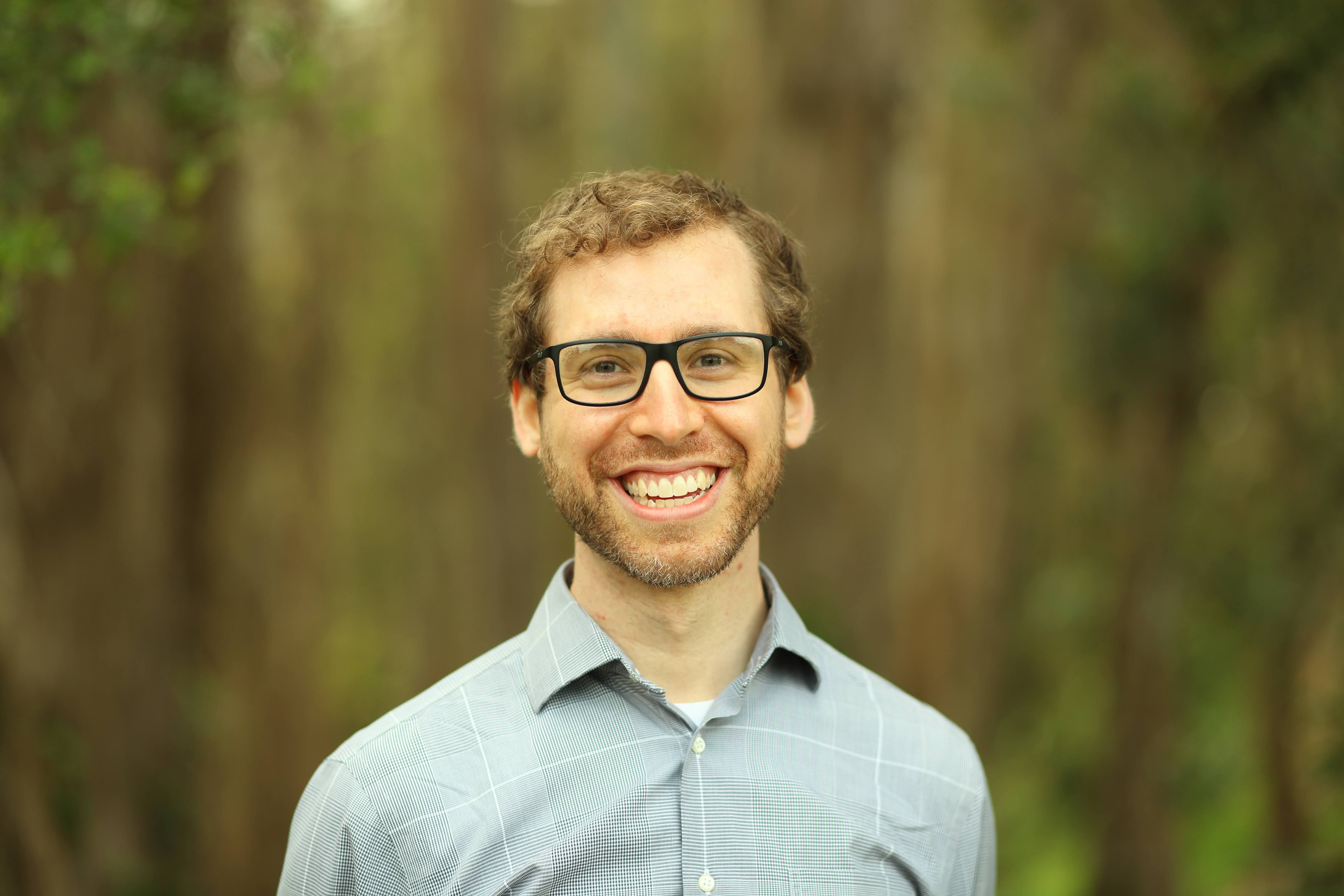
Simon Eidelman, a leading researcher at the Budker Institute of Nuclear Physics in Novosibirsk, Russia, and a professor of Novosibirsk State University (NSU), passed away on 28 June.
He was a key member of experimental collaborations at Novosibirsk, CERN and KEK, and a leading author in the Particle Data Group. Eidelman served the high-energy physics community in a variety of ways, including as Novosibirsk’s correspondent for this magazine for more than 20 years.
Simon (Semyon) Eidelman was born in Odessa in 1948. He went to Novosibirsk aged 15 to participate in a national mathematics Olympiad, and ended up staying to attend a special high school for extraordinarily gifted students. He then studied physics at NSU. Even before graduating, in 1968 Simon joined the Budker Institute and remained there his entire professional life. In parallel, he was a faculty member at NSU and held the high-energy physics chair for 10 years. Simon always cared for, helped and supported students and young colleagues.
Meson expert
Eidelman’s scientific activity mostly concerned experiments at e+e– colliders, beginning with participation in the discovery of multi-hadron events at the pioneering VEPP-2 collider.
In 1974 he moved to experiments with the OLYA detector at the upgraded VEPP-2M, where a comprehensive study of e+e– annihilation into hadrons was performed up to an energy of 1.4 GeV. Later, this detector was moved to the VEPP-4 collider, where high-precision measurements of the J/ψ and ψʹ masses were performed. Simon’s work at VEPP-2 and VEPP-4, and the analysis of the so-called box anomaly, made him one of the world’s leading experts on vector mesons. Together with Lery Kurdadze and Arkady Vainshtein, he also performed the first comparison of QCD sum rules with experiment.
Simon became one of the pioneers in the evaluation of the hadronic contribution to the anomalous magnetic moment of the muon
Simon was a key member of several major experimental collaborations: KEDR, CMD-2 and CMD-3 at Novosibirsk, LHCb at CERN and Belle, Belle II and g-2/EDM at J-PARC. Recently he contributed to the KLF proposal at JLab to build a secondary beam of neutral kaons to be used with the GlueX setup for strange-hadron spectroscopy. Just last year he proposed to measure the charged kaon mass with unprecedented precision using the Siddharta X-ray experiment at DAΦNE in Frascati – which would have yielded a dramatic improvement on determinations of the masses of charmonium-like exotic mesons.
Thanks to his deep understanding of hadron-production cross sections, Simon became one of the pioneers in the evaluation of the hadronic contribution to the anomalous magnetic moment of the muon, g-2. He was a founding member of the Muon g-2 Theory Initiative and a key contributor to its first white paper, published last year, which provides the community consensus for the Standard Model prediction. He was also an authority on strongly interacting hadrons and resonances, as well as the τ lepton and two-photon physics.
Simon was a key author in the international Particle Data Group (PDG) for 30 years, leading the PDG subgroup responsible for meson resonances since 2006. In recognition of his contributions, he was chosen to be the first author of the 2004 edition of the Review of Particle Physics. He was also a great source of inspiration for the Quarkonium Working Group (QWG). Attendees of the QWG workshops will remember his lucid presentations, his great enthusiasm for research and his keen scientific insights. Moreover, he was greatly appreciated for his wisdom and calm counsel during intense discussions.
Superb editor
Thanks to his deep knowledge and wide scientific horizons, combined with a wonderful sense of humour and a kind and friendly nature, Simon possessed a unique ability to galvanise colleagues into joint projects within many international collaborations and meetings. He was also deeply engaged in training the next generations of physicists, most recently being the driving force behind the school on muon g-2.
Simon was also a superb scientific editor. He had a rare gift of formulating scientific problems and results clearly and concisely, providing an invaluable contribution to the very large number of papers that he authored, co-authored and refereed. Several international meetings have been dedicated to Simon’s memory, including CHARM 2021 and the 4th Plenary Workshop of the Theory Initiative.
We have lost a remarkable physicist, and a dear and kind person. All who had the privilege of knowing and working with Simon Eidelman will always remember him as an invaluable colleague.
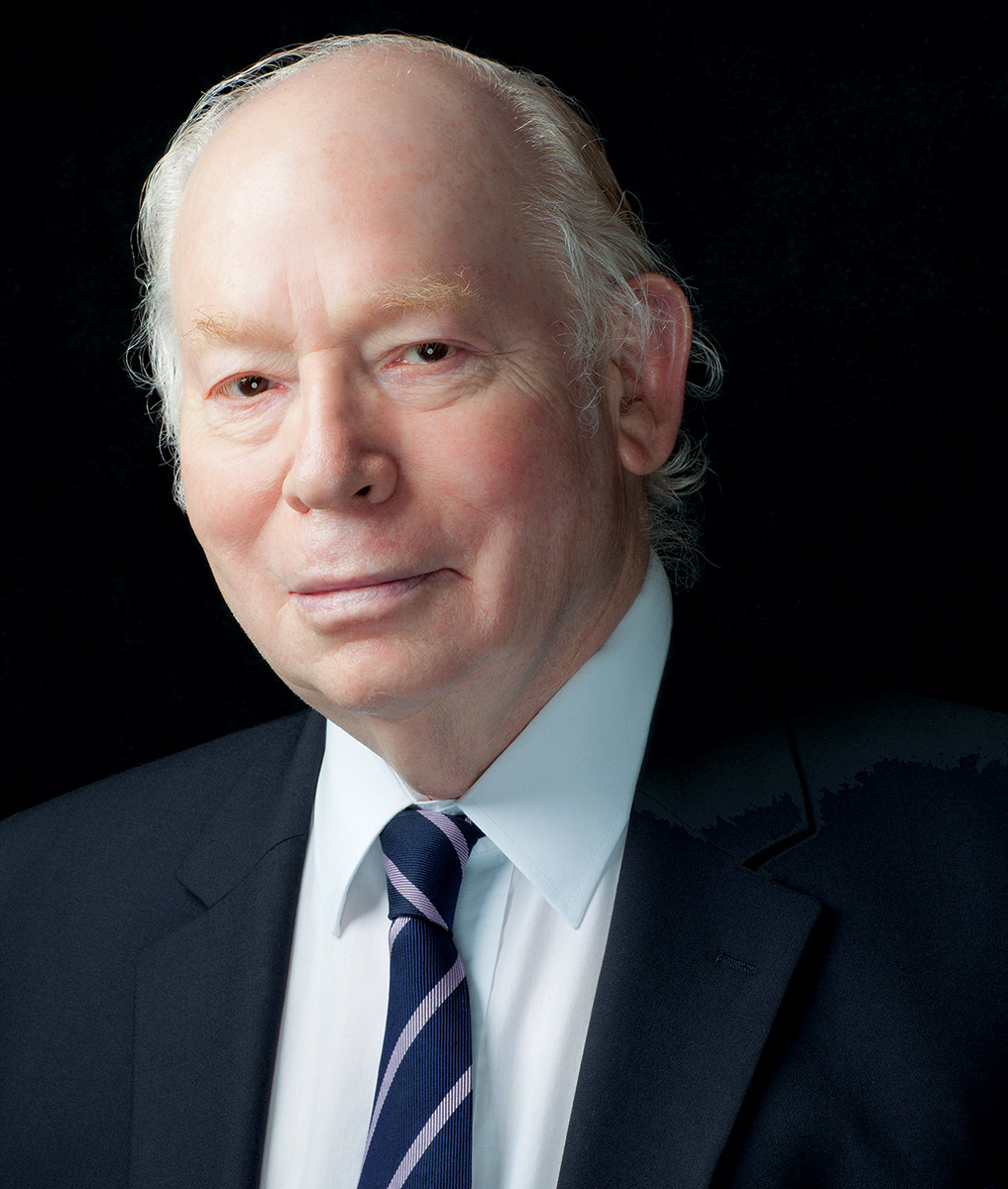
On 23 July, the great US theoretical physicist Steve Weinberg passed away in hospital in Austin, Texas, aged 88. He was a towering figure in the field, and made numerous seminal contributions to particle physics and cosmology that are part of the backbone of our current understanding of the fundamental laws of nature. He is part of the reduced rank of scientists who, in the course of history, have radically changed the way we understand the universe and our place in it.
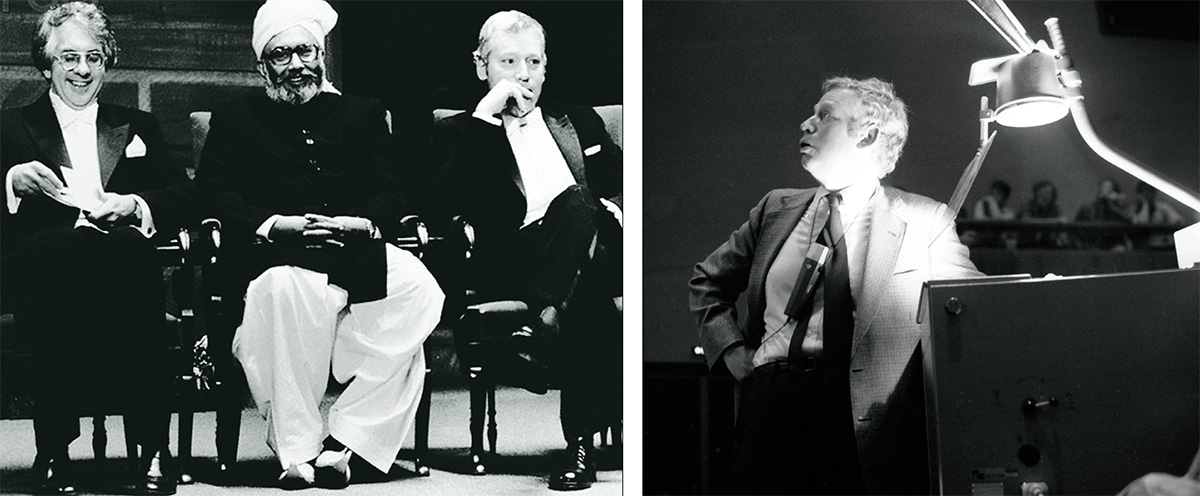
Weinberg was born in New York, the son of Jewish immigrants, Eve and Frederick Weinberg. He attended the Bronx High School of Science, where he met Sheldon Glashow, later to become his Harvard colleague and with whom he would share the 1979 Nobel Prize in Physics. Towards the end of high school, Weinberg was already set on becoming a theoretical physicist. He obtained his undergraduate degree at Cornell University in 1954, and then spent a year doing graduate work at the Niels Bohr Institute in Copenhagen, after which he returned to the US to complete his graduate studies at Princeton. His PhD advisor was Sam Treiman and his thesis topic was the application of renormalisation theory to the effects of strong interactions in weak processes. Weinberg obtained his degree in 1957 and then spent two years at Columbia University. From 1959 to 1969 he was at Lawrence Berkeley Laboratory and later UC Berkeley, where he got his tenure in 1964. He was on leave at Harvard (1966–1967) and MIT (1967–1969), where he became professor of physics (1969–1973) and then moved to Harvard (1973–1983), where he succeeded Julian Schwinger as Higgins Professor of Physics. Weinberg joined the faculty of the University of Texas at Austin as the Josey Regental Professor of Physics in 1982, and remained there for the rest of his life.
Immense contributions
Perhaps his best known contribution to physics is his formulation of electroweak unification in the context of gauge theories and using the Brout–Englert–Higgs mechanism of symmetry breaking to give mass to the W and Z bosons, while sparing the photon (CERN Courier November 2017 p25). The names Glashow, Weinberg and Salam are forever associated with the spontaneously broken SU(2) × U(1) gauge theory, which unified the electromagnetic and weak interactions and provided a large number of predictions that have been experimentally confirmed. The most concise and elegant presentation of the theory appears in Weinberg’s famous 1967 paper: “A Model of Leptons”, one of the most cited papers in the history of physics, and a great example of clear science writing (CERN Courier November 2017 p31). At the time, the first family of quarks and leptons was known, but the second was incomplete. After a substantial amount of experimental and theoretical work, we now have the full formulation of the Standard Model (SM) describing our best knowledge of the fundamental laws of nature. This is a collective journey starting with the discovery of the electron in 1897, and concluding with the discovery of the scalar particle of the SM (the Higgs boson) at CERN in 2012. Weinberg was deeply involved with the building of the SM before and beyond his 1967 paper.
Normal humans would need to live several lives to accomplish so much
It is impossible to do justice to all the scientific contributions of Weinberg’s career, but we can list a few of them. In the early 1960s he embarked on the study of symmetry breaking, and wrote a seminal contribution with Goldstone and Salam describing in detail and in full generality the mechanism of spontaneous symmetry breaking in the context of quantum field theory, providing sound bases to the earlier discoveries of Nambu and Goldstone. Around the same time, he worked out the general structure of scattering amplitudes with the emission of arbitrary numbers of photons and gravitons. It is remarkable that this work has played a very important role in the recent study of asymptotic symmetries in general relativity and gauge theories (for example, Bondi–Metzner–Sachs symmetries and generalisations, and the general theory of Feynman amplitudes).
From jets to GUTs
Together with George Sterman, Weinberg started the study of jets in QCD, whose importance in modern high-energy experiments can hardly be exaggerated. He (and independently Frank Wilczek) realised that in the Peccei–Quinn mechanism invoked to solve the strong-CP problem, there is a light pseudoscalar particle lurking in the background. This is the infamous axion, also a prime candidate for dark-matter particles and whose experimental search has been actively pursued for decades. Weinberg was one of the pioneers in the formulation of effective field theories that transformed the traditional approach to quantum field theory. He was the founder of chiral perturbation theory, one of the initiators of relativistic quantum theories at finite temperature, and of asymptotic safety, which has been used in some approaches to quantum gravity. In 1979 he (and independently Leonard Susskind) introduced the notion of technicolour – an alternative to the Brout–Englert–Higgs mechanism in which the scalar particle of the SM appears as a composite fermion, which some find more appealing, but so far has little experimental support. Finally, we can mention his work on grand unification together with Howard Georgi and Helen Quinn, where they used the renormalisation group to understand in detail how a single coupling in the ultraviolet evolves in such a way that in the infrared it generates the coupling constants of the strong, weak and electromagnetic interactions.
Astronomical arguments
Steven Weinberg also made profound contributions in his work on the cosmological constant. In 1989 he used astronomical arguments to indicate that the vacuum energy is many orders of magnitude smaller than would be expected from modern theories of elementary particles. His bound on its possible value based on anthropic reasoning is as deep as it is unsettling. And it agrees surprisingly well with the measured value, as inferred from observations of receding, distant supernovae. It shatters Einstein’s dream of unification, when he asked himself whether the Almighty had any choice in creating the universe. Anthropic reasoning opens the door to theories of the multiverse that may also be considered as inevitable in some versions of inflationary cosmology, and in the theory of the string landscape of possible vacua for our universe. Among all the parameters of the current standard models of cosmology and particle physics, the question of which are environmental and which are fundamental becomes meaningful. Some of their values may ultimately have only a purely statistical explanation based on anthropism. “It’s a depressing kind of solution to the problem,” remarked Weinberg recently in the Courier: “But as I’ve said: there are many conditions that we impose on the laws of nature, such as logical consistency, but we don’t have the right to impose the condition that the laws should be such that they make us happy!” (CERN Courier March/April 2021 p51). On the one hand, his work led to the unification of the weak and electromagnetic forces; on the other the landscape of possibilities points against a unique universe. The tension between both points of view continues.
Weinberg also mastered the art of writing for non-experts. One of the most influential science books written for the general public is his masterpiece The First Three Minutes (1977), which provides a wonderful exposition of modern cosmology, the expansion of the universe, the cosmic microwave background radiation, and of Big Bang nucleosynthesis. Towards the end of the epilogue he formulated his famous statement that generated heated discussions with philosophers and theologians: “The more the universe seems comprehensible, the more it seems pointless.” In the next paragraph he tempers the coldness somewhat: “The effort to understand the universe is one of the very few things that lifts human life a little above the level of farce, and gives it some of the grace of tragedy.” But the implied meaning that the laws of nature have no purpose continues to be as provocative as when it was made originally. The debate will linger on for a long time.
Controversies and passions
Weinberg’s non-technical books exhibit an extraordinary erudition in numerous subjects. His approach is original and thorough, and always illuminating. He did not shy away from delicate and controversial discussions. Weinberg was a declared atheist, with a rather negative opinion on the influence of religion on human history and society. He showed remarkable courage to be outspoken and to engage in public debates about it. Again in his 1977 book, he wrote: “Anything that we scientists can do to weaken the hold of religion should be done and may in the end be our greatest contribution to civilisation.” Needless to say, such statements raised a number of blisters in some quarters. He was also a champion of scientific reductionism, something that was not very well received in many philosophical communities. He was clearly passionate about science and scientific principles, and in defence of the search for truth. In Dreams of a Final Theory (2011) he described his fight to avoid the demise of the Superconducting Super Collider (SSC). His ardent and convincing argument about the value of basic science, and also its importance as a motor of economic and technological growth, were not enough to convince sufficient members of the House of Representatives and the project was cancelled in 1993. It was a very hard blow to the US and global high-energy physics communities. The discussion had another great scientist on the other side: Phil Anderson, who passed away in 2020. It is not obvious if Anderson was against particle physics, or against big science. What is clear is that given the size of the budget deficit in the US (now and then), what was saved by not building the SSC did not go to “table top” science.
In a 2015 interview to Third Way, Weinberg explained his philosophy and strategy when writing for the general public: “When we talk about science as part of the culture of our times, we would better make it part of that culture by explaining what we are doing. I think it is very important not to write down to the public. You have to keep in mind that you are writing for people who are not mathematically trained, but are just as smart as you are.”This empathy and respect for the reader is immediately apparent as soon as you open any of his books, and together with the depth and breadth of his insight, explains their success.
He also excelled in the writing of technical books. In the early 1960s Weinberg became interested in astrophysics and cosmology, leading, among other things, to the landmark Gravitation and Cosmology (1971). The book became an instant classic, and it is still useful to learn about many aspects of general relativity and the early universe. In the 1990s he published a masterful three-volume set on The Quantum Theory of Fields, which is probably the definitive treatment on the subject in the 20th century. In 2008 he published Cosmology, an important update of his 1971 work, providing self-contained explanations of the ideas and formulas that are used and tested in modern cosmological observations. He also published Lectures on Quantum Mechanics in 2015, among one of the very best books on the subject, where the depth of his knowledge and insight shine throughout. The man had not lost his grit. Only this year, he published what he described as an advanced undergraduate textbook Foundations of Modern Physics, based on a lecture course he was asked to give at Austin. What distinguishes his scientific books from many others is that, in addition to the care and erudition with which the material is presented, they are also interspersed with all kinds of golden nuggets. Weinberg never avoids some of the conceptual difficulties that plague the subjects, and it is a real pleasure to find deep and inspiring clarifications.
It is not possible to list all his awards and honours, but let’s mention that he was elected to the US National Academy of Sciences in 1972, was awarded the Dannie Heineman Prize for Mathematical Physics in 1977 and the Nobel Prize in Physics in 1979. He was also a foreign honorary member of the Royal Society of London, received a Special Breakthrough Prize in Fundamental Physics in 2020, and has been invited to give the most prestigious lectures on the planet. Normal humans would need to live several lives to accomplish so much.
A great general
Lately, Weinberg was interested in fundamental problems in the foundations and interpretation of quantum mechanics, and in the study of gravitational waves and what we can learn about the distribution of matter in the universe between us and their sources – two subjects of very active current research. In a 2020 preprint “Models of lepton and quark masses”, he returned to a problem that he last tackled in 1972, the fermion mass hierarchy.
His legacy will continue to inspire physicists for generations to come
He also continued lecturing until almost the very end. Weinberg was an avid reader of military history, as evidenced in some of his writings, and as with a great general, he died with his boots on.
The news of his demise spread like a tsunami in our community, and led us into a state of mourning. When such a powerful voice is permanently silenced, we are all inevitably diminished. His legacy will continue to inspire physicists for generations to come.
Steven Weinberg is survived by his wife Louise, professor of law at the University of Texas, whom he married in 1954, his daughter Elizabeth, a medical doctor, and a granddaughter Gabrielle.
An ATLAS researcher and a leading string theorist are among the winners of the 2021 Mustafa prize, which recognises researchers from the Islamic world. Yahya Tayalati (Mohammed V University, Rabat) was cited for contributions to searches for magnetic monopoles and his work on light-by-light scattering, which was first observed by ATLAS in 2019. Cumrun Vafa (Harvard) was recognised for developing F-theory. Among other laureates, M. Zahid Hasan (Princeton) was cited for his work on Weyl-fermion semimetals and topological insulators – materials which are insulators inside but conduct on their surfaces. Each wins $500,000.
Since its foundation in 2012, the Mustafa Prize has been announced every two years. This year is the first time that the prize has been awarded to researchers in fundamental science.
The American Physical Society (APS) W K H Panofsky Prize in Experimental Particle Physics has been awarded to Byron G Lundberg and Regina Abby Rameika (Fermilab), Kimio Niwa (Nagoya University) and Vittorio Paolone (University of Pittsburgh) “for the first direct observation of the tau neutrino through its charged-current interactions in an emulsion detector”. Lundberg, Rameika Niwa and Paolone were leaders of the DONUT collaboration, which in July 2000 reported evidence of four tau neutrino interactions (with an estimated background of 0.34 events) in a sample of 203 neutrino-nucleus interactions, consistent with the Standard Model expectation. Although earlier experiments had produced convincing indirect evidence for the ντ existence, the DONUT/Fermilab result represented the first direct observation.
The 2022 APS J J Sakurai Prize has been awarded to Nima Arkani-Hamed (Institute for Advanced Study) for the development of transformative new frameworks for physics beyond the Standard Model “with novel experimental signatures, including work on large extra dimensions, the Little Higgs, and more generally for new ideas connected to the origin of the electroweak scale”. One of the leading particle phenomenologists of his generation, Arkani-Hamed has argued that the extreme weakness of gravity relative to other forces of nature might be explained by the existence of extra spatial dimensions, and how the structure of comparatively low-energy physics is constrained within the context of string theory.
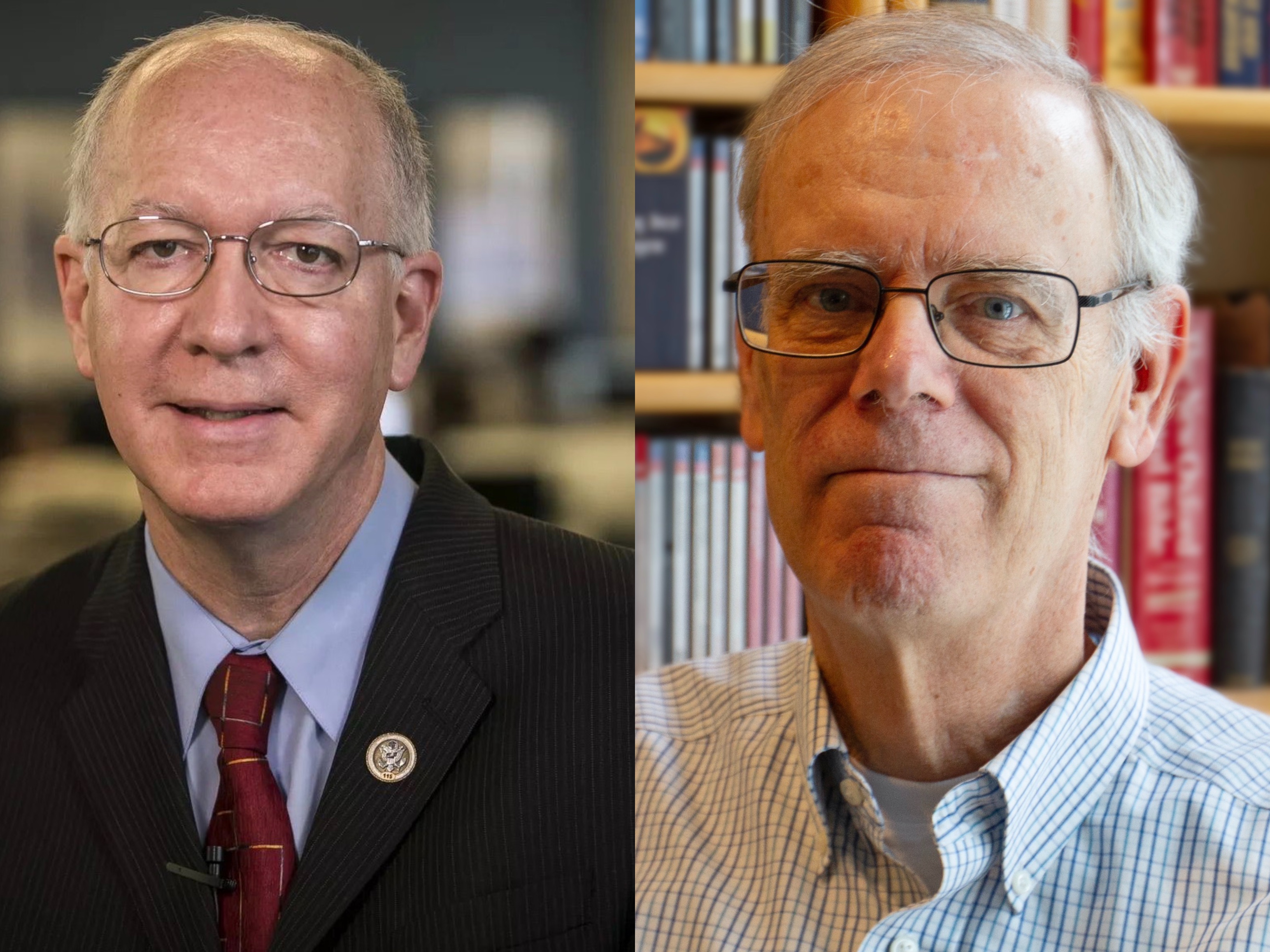
In the field of particle accelerators, the Robert R Wilson Prize has been given to Fermilab’s William G Foster and Stephen D Holmes for leadership in developing the modern accelerator complex at Fermilab, enabling the success of the Tevatron program that supports rich programs in neutrino and precision physics. In 2008, three years before the Tevatron closed down, Foster was elected to the US Congress to represent the people of Illinois. Holmes was director of Fermilab’s PIP-II project when he retired in 2018 after 35 years at Fermilab .
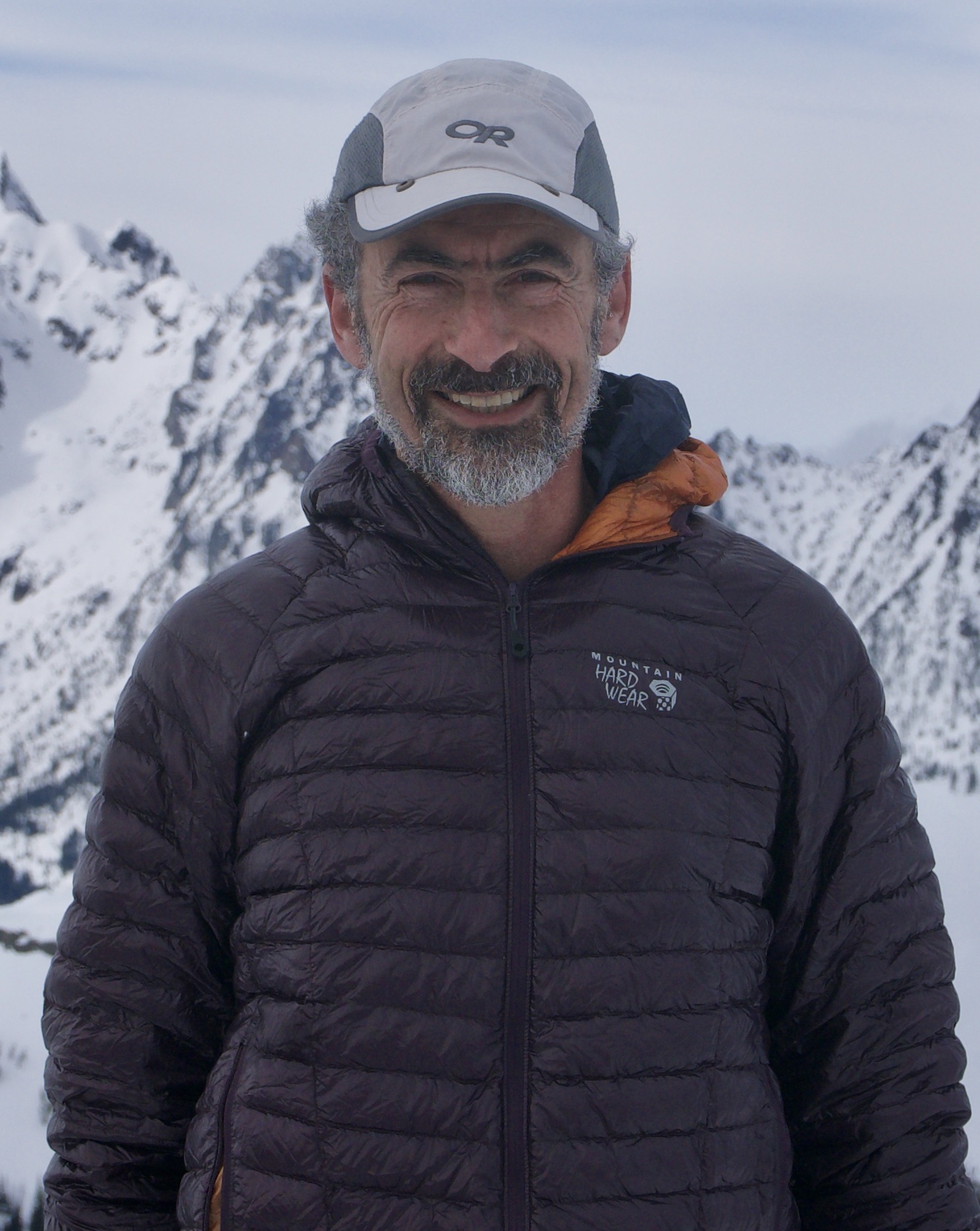
The Herman Feshbach Prize was granted to David B Kaplan (University of Washington) for multiple foundational innovations in nuclear theory, including in lattice quantum chromodynamics, effective field theories, and nuclear strangeness, and for strategic leadership to broaden participation between nuclear theory and other fields. Kaplan is director of the Institute for Nuclear Theory at Washington with research interests also including quantum computing, cosmology, and physics beyond the Standard Model.
The 2022 APS Henry Primakoff Award for Early-Career Particle Physics has been awarded to Benjamin Nachman of Lawrence Berkeley National Laboratory for innovative contributions to the search for new physics in collider data incorporating original machine learning algorithms, and for the effective communication of these new techniques to the broader physics community. A member of ATLAS, Nachman focuses on track reconstruction inside jets, and is involved in the design of a readout chip for the upgraded ATLAS pixel detector.
Sheldon Stone, who passed away on 6 October, was one of the foremost physicists of his generation. In terms of creativity and productivity he had few equals in heavy-quark physics worldwide. His skills in leadership, physics analysis and instrumentation served our field well.
Sheldon had a central role in the success of the CLEO experiment at the Cornell Electron Storage Ring, which over a period of almost 30 years laid the foundations for our current understanding of heavy-flavour physics. He served as both CLEO analysis coordinator and co-spokesperson, and had a leading role in many important discoveries such as the observation of the B+, B0, and Ds mesons. In 2000 he was one of the intellectual leaders who proposed to convert CLEO into a charm factory, subsequently leading the measurement of the charm-decay constants fD+ and fDs. These and other measurements demonstrated the applicability of lattice-QCD calculations of hadronic effects in the weak decays of hadrons with a heavy quark with precision of a few-percent, thereby enabling similar calculations to be used with confidence to interpret key measurements by other flavour-physics experiments worldwide.
His advocacy of the BTeV project at Fermilab was also vital in making the case for a forward flavour-physics detector at a hadron collider
In 2005 Sheldon became a member of the LHCb collaboration, where his and his group’s contribution to the physics exploitation of the experiment was second-to-none. Prominent examples include the first measurement of the beauty-production cross-section at the LHC, and a series of publications measuring CP-violating observables in time-dependent decays of Bs mesons. In 2015 LHCb published the first observation of structures consistent with five-quark resonances – “pentaquarks” which were predicted at the dawn of the quark model but had evaded discovery for over 50 years until Sheldon and a small team of colleagues uncovered their existence in the LHCb dataset. This result has had an enormous impact on the field of hadron spectroscopy.
Sheldon also led the design and construction of novel and high-performance detectors underpinning CLEO’s outstanding physics output. These include a thallium-doped near-4π caesium-iodide calorimeter (the first application of a precision electromagnetic calorimeter to a general-purpose magnetic spectrometer) and a Ring-Imaging Cherenkov Counter providing four-sigma kaon-pion separation over the full accessible momentum range.
His advocacy of the BTeV project at Fermilab was also vital in making the case for a forward flavour-physics detector at a hadron collider. This led him to be heavily involved in shaping phase one of the LHCb upgrade project, serving as upgrade coordinator for three years during the preparation of the Letter of Intent, and recently in making innovative proposals for the phase-two upgrade. At the time of his passing, Sheldon was deputy project leader of the upstream tracker, a project that he and his group proposed and led for a decade, and is currently undergoing final assembly. This silicon-strip based detector will play an essential role in both the triggering and offline event reconstruction from Run 3.
Exceptionally effective at guiding others both junior and senior, Sheldon was a superb mentor to graduate students and a wonderful person to collaborate with. He was known to have a strong personality. He was direct and honest, and if you won his respect he was a tremendous friend.
Sheldon’s contributions to our field were at the highest level, recognised most recently with the American Physical Society Panofsky Prize in 2019. For over 30 years he also formed a formidable scientific and life partnership with physicist Marina Artuso who survives him.
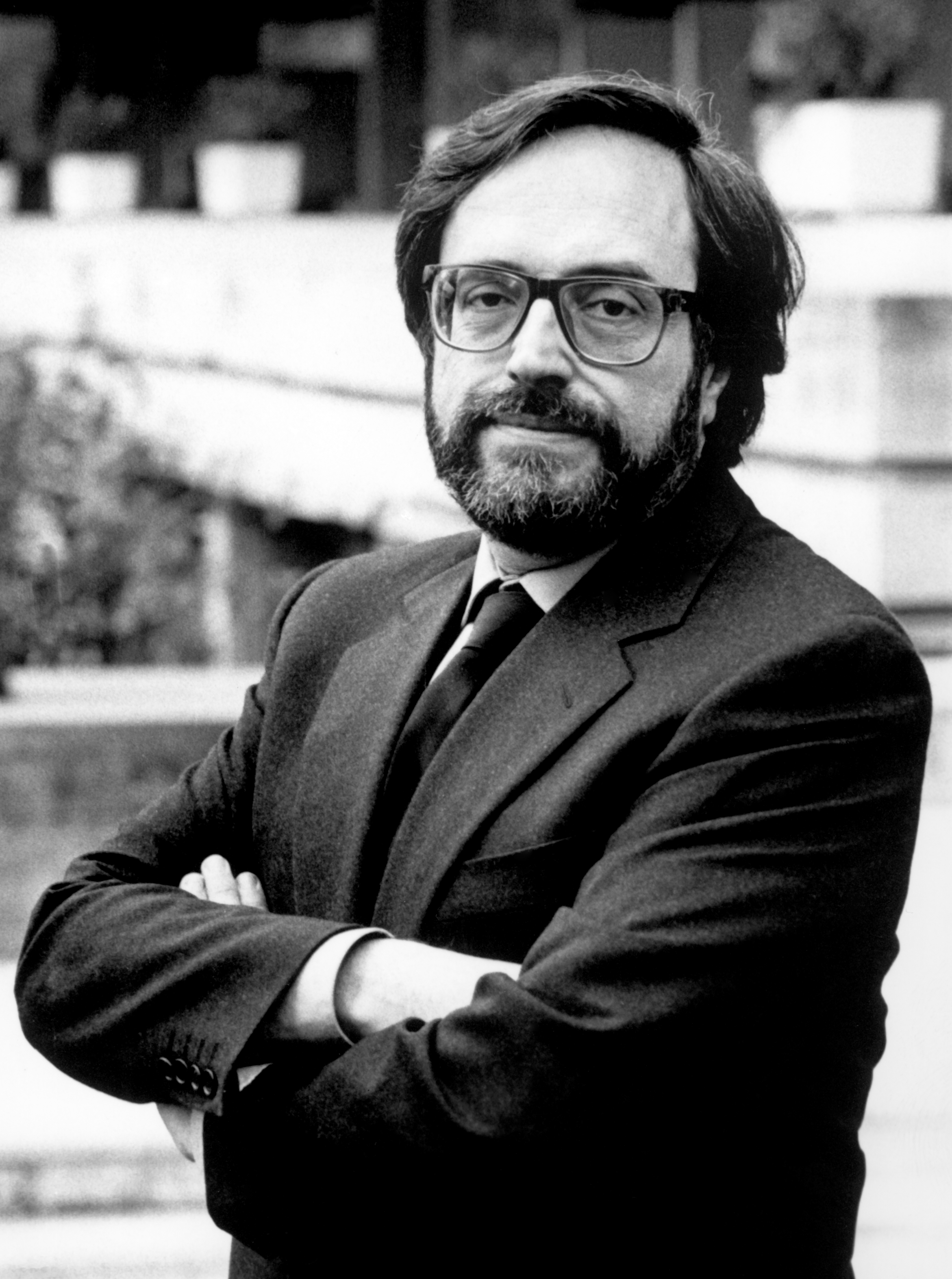
On 23 July, the Italian–Argentinian theorist Miguel Ángel Virasoro, one of the founders of string theory and an initiator of complexity studies, passed away. His scientific contributions were outstanding and stimulated an impressive number of subsequent developments. He was an extraordinarily intelligent visionary with a great sense of humour.
Born in Buenos Aires in 1940, Virasoro enrolled in physics at the University of Buenos Aires in 1958. However, in 1966 General Juan Carlos Onganía successfully led a coup d’état in Argentina, establishing a dictatorship that would last until 1973. The faculty of science at Buenos Aires became a centre of opposition: the police broke into the university, massacring the occupants. In the following months, some 300 professors emigrated abroad.
Virasoro finished his thesis working from home; at the end of 1966, as soon as he obtained his doctorate, he moved to the Weizmann Institute, Israel, invited by a newly appointed young Argentinian professor, Hector Rubinstein. A few months earlier, Gabriele Veneziano had also arrived as a graduate student. The three of them, together with Marco Ademollo, began a long series of investigations into the physics of strong interactions that eventually led to string theory. Although the first step towards string theory was Veneziano’s “open-string” model in 1968, those preliminary results established the conceptual framework in which Veneziano’s model could be conceived. A few months later, stimulated by Veneziano’s work, Virasoro extended it to a model describing closed strings.
The Virasoro condition
In the following years, first at the University of Wisconsin, then at Berkeley, Virasoro did brilliant work on string theory. In 1969 he made the fundamental observation that string theory could only be made free of pathologies by fixing a certain parameter. This “Virasoro condition” allowed for the existence of an infinite number of symmetries generated by an infinite set of operators obeying a “Virasoro algebra” – a tool at the basis of countless subsequent studies. The Virasoro condition proved to be a killer for string theory as a description of strong interactions, but it opened the way to the 1974 Scherk–Schwarz reinterpretation of it as a quantum theory of gravity, in which one particular closed string corresponds to the graviton.
In 1973 democracy was restored in Argentina; Virasoro returned to his own country and was elected, still very young, dean of the faculty of science in Buenos Aires, a politically exposed position. In 1975 he accepted an invitation to spend a year at Princeton. During his stay in the US, however, Videla’s 1976 coup d’état brought dictatorship back to Argentina, in a more cruel form than before: many professors and students were slaughtered at the university. Virasoro was not only fired, but he was told that, had he returned to Argentina, he would be arrested or worse.
Virasoro was convinced of the role that theoretical physics could have in building the capacity of developing countries
He moved to Europe, and after a year in Paris, arrived in Italy, first in Turin and then, from 1981, at La Sapienza in Rome, where he remained for 30 years as a full professor, taking Italian citizenship. Having started to investigate the relationship between the emerging theory of quarks and gluons (QCD) and string theory, in 1983 he changed direction. He began to work with Giorgio Parisi on the statistical mechanics of complex systems, first with other Parisian physicists (Marc Mézard, Nicolas Sourlas and Gerard Toulouse) and then with Mézard alone, who had moved to Rome for two years. The group obtained important results on which the bases of the physical theory of complexity rest and also wrote a book on these results. In 1988 Virasoro became passionate about studying how, starting from neural networks, we can understand the functioning of the brain.
From 1995 to 2002 he was called to direct the International Centre for Theoretical Physics (ICTP) in Trieste. Sharing the vision of its founder Abdus Salam, Virasoro was convinced of the role that theoretical physics could have in building the capacity of developing countries. He decided to enlarge and diversify ICTP’s scientific programme. Within the condensed-matter group, he established a strong subgroup in statistical mechanics and its applications, which was the beginning of quantitative biology. He established a joint project with the Beijer Institute and the Fondazione Eni Enrico Mattei in environmental and ecological economics, and founded an ICTP group devoted to the physics of weather and climate. He also succeeded in rendering compulsory the Italian contribution to the ICTP, and securing a significant increase in the contribution in 2000.
Back in Rome, in the last years before his 2011 retirement, he worked on applications of physical theories to finance, an activity that he continued in Argentina, where he returned, at the Universidad Nacional de General Sarmiento. In 2009 he received the Enrico Fermi Prize from the Italian Physical Society and in 2020 was awarded the ICTP Dirac medal for his work on string theory.
Miguel Virasoro cherished the ability to use knowledge learned in one field to make progress on a different one, opening up new vistas. He will be sorely missed.
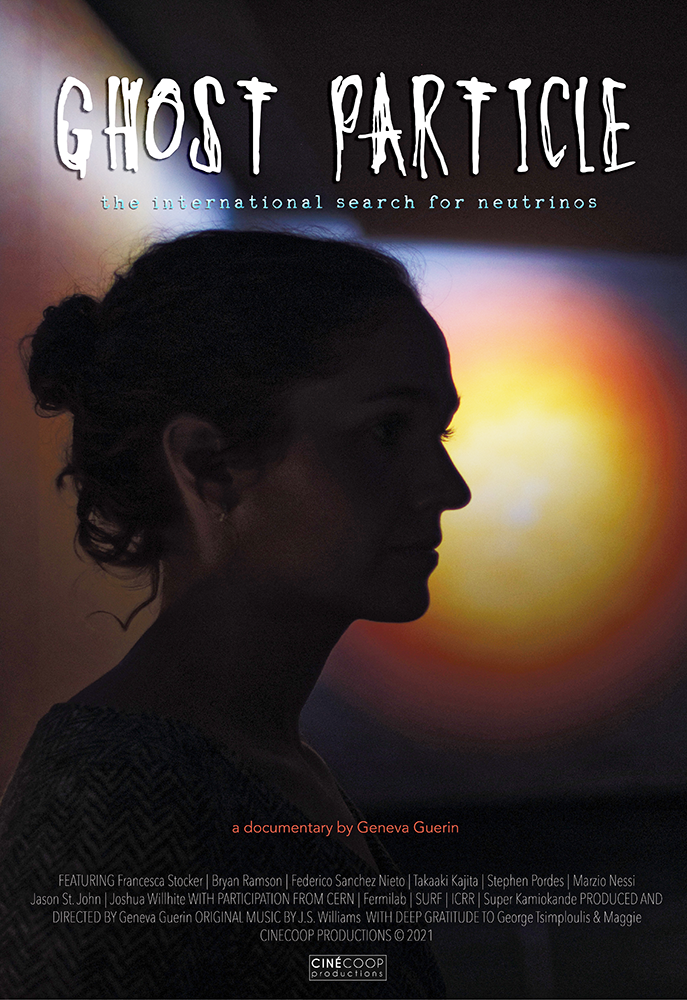
Claustrophobia. South Dakota. A clattering elevator lowers a crew of hard-hat-clad physicists 1500 metres below the ground. 750,000 tonnes of rock are about to be excavated from this former gold mine at the Sanford Underground Research Facility (SURF) to accommodate the liquid-argon time projection chambers (TPCs) of the international Deep Underground Neutrino Experiment (DUNE). Towards the end of the decade, DUNE will track neutrinos that originate 1300 km away at Fermilab in Chicago, addressing leptonic CP violation as well as an ambitious research programme in astrophysics.
Having set the scene, director Geneva Guerin, co-founder of Canadian production company Cinécoop, cuts to a wide expanse: a climber scaling a rock face near the French–Swiss border. Francesca Stocker, the star of the film and then a PhD student at the University of Bern, narrates, relating the scientific method to rock climbing. Stocker and her fellow protagonists are engaging, and the film vividly captures the human spirit surrounding the birth of a modern particle-physics detector.
I don’t think it is possible to explain a neutrino for a general audience
Geneva Guerin
But the viewer is not allowed to settle for long in any one location. After zipping to CERN, and a tour through its corridors accompanied by eerie cello music, we meet Stocker in her home kitchen, explaining how she got interested in science as a child. Next, we hop to Federico Sánchez, spokesperson of the T2K experiment in Japan, explaining the basics of the Standard Model.
T2K, and its successor Hyper-Kamiokande, DUNE’s equal in ambition and scope, both feature in the one-hour-long film. But the focus is on the development of the prototype DUNE detector modules that have been designed, built and tested at the CERN Neutrino Platform – and here the film is at its best. Guerin had full access to protoDUNE activities, allowing her to immerse the viewer with the peculiar but oddly fitting accompaniment of a solo didgeridoo inside the protoDUNE cryostat. We gatecrash celebrations when the vessel was filled with liquid argon and the first test-beam tracks were recorded. The film focuses on detailed descriptions of the workings of TPCs and other parts of the apparatus rather than accessible explanations of the neutrino’s fascinating and mysterious nature. Unformatted plots and graphics are pulled from various sources. While authentic, this gives the film an unpolished, home-made feel.
Given the density of the exposition in some parts, beyond the most enthusiastic popular-science fans, Ghost Particle seems best tailored for physics students encountering experimental neutrino physics for the first time – a point that Guerin herself made during a live Q&A following the CineGlobe screening: “I was aiming at people like me – those who love science documentaries,” she told the capacity crowd. “Originally I envisaged a three-part series over a decade or more, but I realised that I don’t think it is possible to explain a neutrino for a general audience, so maybe it’s something for educational purposes, to help future generations get introduced to this exciting programme.”
The film ends as it began, with the rickety elevator continuing its 12-minute descent into the bowels of the Earth.
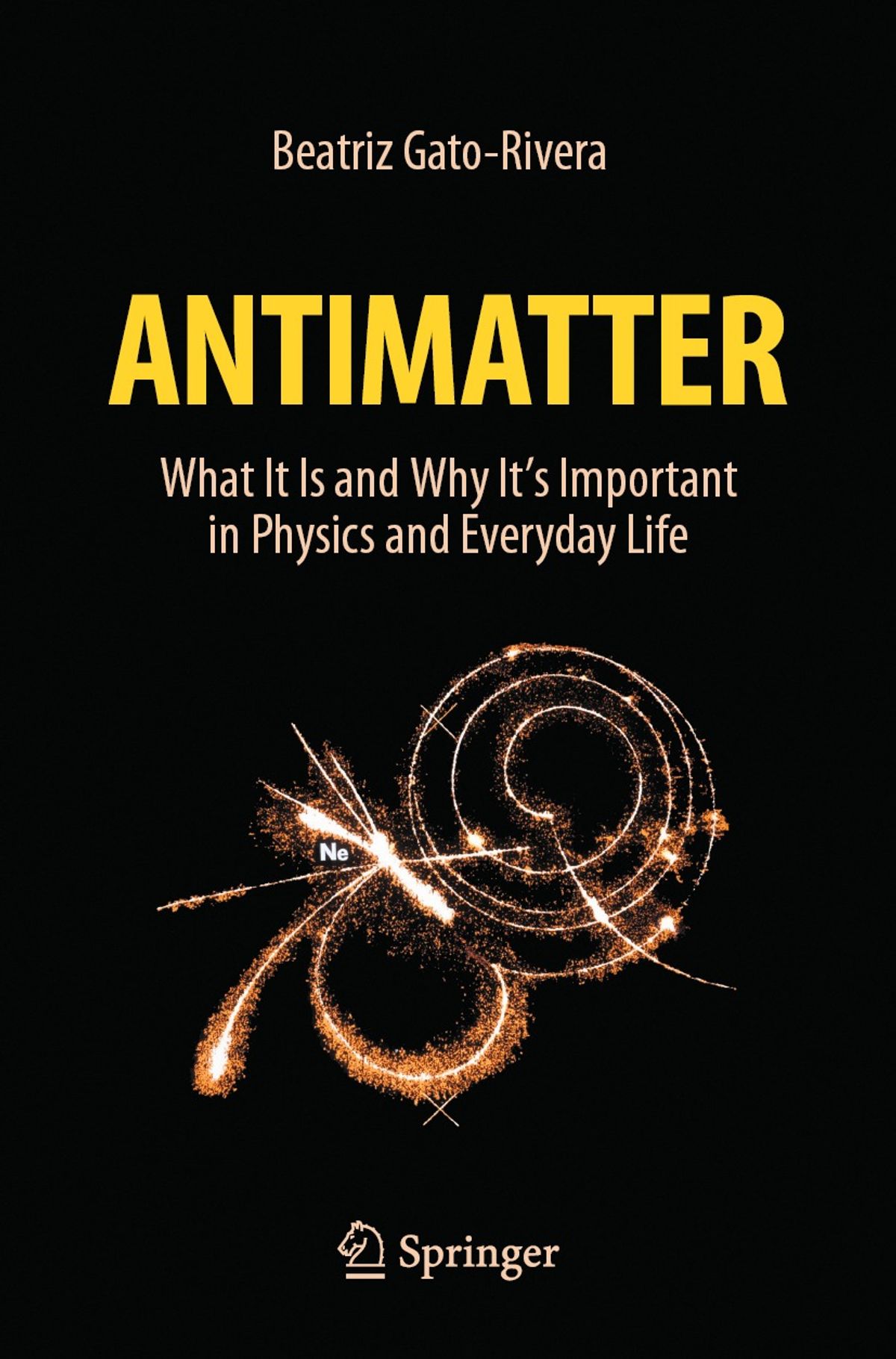
Antimatter captivates the popular imagination. Beatriz Gato-Rivera, a former CERN fellow in theoretical physics and now a researcher at the Spanish National Research Council, recently published a noteworthy book on the subject, entitled Antimatter: What It Is and Why It’s Important in Physics and Everyday Life. Substantially extending her text Antimateria, from the outreach collection “Qué Sabemos De”, this work will also be of interest to experts, thanks to well documented anecdotes of historical interest.
Gato-Rivera sets out with a detailed exploration of the differences between atoms and antiatoms, as well as of matter–antimatter annihilation, motivating the reader to delve into a fairly complete introduction to particle physics: the concepts that underpin the Standard Model, and some that lie beyond. She then focuses on diverse aspects of antimatter science, beginning with the differences between antimatter, dark matter and dark energy, and the different roles they play in the universe. This touches upon the observed accelerating expansion of the universe. In particular, Gato-Rivera discusses dark-matter and dark-energy candidates, attempts to detect dark matter and its relation to the fate of the universe. She also carefully explains the distinction between primordial and secondary antimatter, and their roles in cosmology.
Next up, a historical chapter reviews the major landmarks of the discovery of antimatter particles, from elementary antiparticles to anti-hadrons, and anti-nuclei to antiatoms. In particular, the ground-breaking discovery of the first antiparticle, the positron, is described in excellent detail. In a separate appendix, Gato-Rivera passionately clears up a historical controversy about its discovery. The positron was first found in cosmic rays by Carl Anderson and later artificially produced en masse in particle accelerators. Gato-Rivera then turns to a detailed historical overview of cosmic-ray research, from balloon experiments to large-scale ground-based detectors, finally culminating in modern space-based detectors on board satellites and the ISS. The next chapter covers the production of antimatter by particle collisions in accelerators at high energies, including a brief history of the facilities at CERN.
The focus is then put on one of the most interesting and important conundrums in particle physics and astrophysics: the apparent huge asymmetry between matter and antimatter in the observed universe. This touches upon the processes of the primordial creation of matter and antimatter, and on the open question of whether anti-stars, or even anti-galaxies, could exist somewhere in the universe.
Gato-Rivera returns to Earth to discuss current experiments in particle physics such as those at CERN’s Antimatter Factory, asking whether antiatoms really have the same properties as atoms, at least as far as their excitation spectra and gravitational pull is concerned. The author doesn’t shy away from popular questions such as whether antimatter anti-gravitates and would float up away from Earth. While the answers to these questions are firmly predicted in theory, there could be surprises, like the discovery of CP violation in the 1950s, so it is important to actually test these fundamental properties.
Sceptical words dash hopes of using antimatter as an energy source
The book finishes by exploring practical uses of antimatter in everyday life, such as the use of PET scanners to detect positrons emitted from short-lived radioactive substances administered to patients. The same principle is also used in material analysis, for example to test the mechanical integrity of turbine blades. But sceptical words dash any hopes of using antimatter as an energy source: the effort of artificially producing a single gram of antimatter would be prohibitive.
Gato-Rivera’s semi-popular text is comprehensive and well structured, with a minimum of mathematical expressions and technicalities. It will be most profitable for a scientifically educated audience with an interest in particle physics, however, experienced researchers who are interested in the history of the subject will also enjoy reading it.
Africa’s science, innovation, education and research infrastructures have over the years been undervalued and under-resourced. This is particularly true in physics. The African Strategy for Fundamental and Applied Physics (ASFAP) initiative aims to define the education and physics priorities that can be most impactful for Africa. The first ASFAP community town hall was held from 12 to 15 July. The event was virtual, with 147 people participating, including international speakers and members of the ASFAP community. The purpose of the meeting was to initiate a broad and community-driven discussion and action programme, leading to a final strategy document in two to three years’ time.
The first day began with an overview of the ASFAP by Simon Connell (University of Johannesburg) on behalf of the steering committee and addresses by Shamila Nair-Bedouelle (UNESCO assistant director-general for natural sciences), Sarah Mbi Enow Anyang Agbor (African Union commissioner for human resources, science and technology) and Raissa Malu (member of the Democratic Republic of Congo’s Presidential Panel to the African Union). These honoured guests encouraged delegates to establish a culture of gender balance in African physics. Later, in a dedicated forum for women in physics, Iroka Chidinma Joy (chief engineer at the National Space Research and Development Agency) noted that women are drastically underrepresented in scientific fields across the continent, and pointed out a number of cultural, religious and social barriers that prevent women from pursuing higher education. Barriers can come as early as primary education: in most cases, girls are not encouraged to take leading roles in conducting science experiments in classrooms. Improved strategies should include outreach, mentorship,dedicated funding for women, the removal of age limits for women wishing to conduct scientific research or further their education, and awards and recognition for women who excel in scientific fields.
Community-driven
Representatives of scientific organisations such as the African Physical Society, the Network of African Science Academies and the African Academy of Science all presented messages of support for ASFAP, and delegates from other regions, including Japan, China, India, Europe, the US and Latin America, all presented their regional strategies. The consensus is that strategic planning should be a bottom-up and community-driven process, even if this means it may take two to three years to produce a final report.
The meeting was updated on the progress of a diverse and well-established range of working groups (WGs) on accelerators, astrophysics and cosmology; computing and the fourth industrial revolution (4IR); energy needs for Africa; instrumentation and detectors; light sources; materials physics; medical physics; nuclear physics; particle physics; and community engagement (CE), which comprises physics education (PE), knowledge transfer, entrepreneurship and stakeholder and governmental-agency engagement. The WGs must also maintain dynamic communications with each other as key topics often impact multiple working groups.
Marie Clémentine Nibamureke (University of Johannesburg) highlighted the importance of the CE WG’s vision “to improve science education and research in African countries in order to position Africa as a co-leader in science research globally”. Convener Jamal Mimouni (Mentouri University) stressed that for ASFAP to establish a successful CE programme, it is crucial to reflect on challenges in teaching and learning physics in Africa – and on why students may be reluctant to choose physics as their study field. Nibamureke explained that the CE WG is seeking to appoint liaison officers between all the ASFAP working groups. Sam Ramaila (University of Johannesburg), representing the PE WG, indicated four main points the group has identified as crucial for the transformation and empowering of physics practices in Africa: strengthening teacher training; developing 21st-century skills and competences; introducing the 4IR in physics teaching and learning; and attracting and retaining students in physics programmes. Ramaila identified problem-based learning, self-directed learning and technology-enhanced learning as new educational strategies that could make a difference in Africa if applied more widely.
On the subject of youth engagement, Mounia Laassiri (Mohammed V University) led a young-person’s forum to discuss the major issues young African physicists face in their career progression: outreach, professional development and networking will be a central focus for this new forum going forwards, she explained, and the forum aims to encourage young physics researchers to take up leadership roles. So far, there are about 40 members of the young-people’s forum. Laassiri explained that the long-term vision, which goes beyond ASFAP, is to develop into an association of young physicists affiliated to the African Physical Society.
We are now soliciting inputs for the development of the African Strategy for Fundamental and Applied Physics
The ability to generate scientific innovation and technological knowledge, and translate this into new products, is vital for a society’s economic growth and development. The ASFAP is a key step towards unlocking Africa’s potential. We are now soliciting inputs for the development of the African Strategy for Fundamental and Applied Physics. Letters of interest may be submitted by individuals, research groups, professional societies, policymakers, education officials and research institutes on anything they think is an issue, needs to be improved, or is important for fundamental or applied physics education and research in Africa.
The 10th International Summer School on Hadron Collider Physics (HASCO) took place at the University of Göttingen from 18 to 26 July. After more than a year of lockdown and social isolation, we wanted to again give our young students the opportunity to attend courses and ask questions in person, meet international students of similar age, and junior and senior scientists from the particle-physics community. The school welcomed 40 undergraduate students and lecturers virtually and 50 in person. For the latter group, a highlight was a historical walkabout to the private houses of Max Born, Werner Heisenberg, Emmy Noether, Maria Goeppert-Mayer, David Hilbert, Richard Courant, James Franck and Max Planck. Students spent a week in discussion with lecturers from the University of Göttingen, partner universities and CERN. The focus was on the fundamentals of quantum field theory and current issues in hadron-collider physics, including quantum chromodynamics and jets, statistical methods of data analysis, the top quark, supersymmetry and the Higgs boson. A special focus this year was on machine learning and artificial intelligence.
To provide the best experiences, we use technologies like cookies to store and/or access device information. Consenting to these technologies will allow us to process data such as browsing behavior or unique IDs on this site. Not consenting or withdrawing consent, may adversely affect certain features and functions.
Functional
Always active
The technical storage or access is strictly necessary for the legitimate purpose of enabling the use of a specific service explicitly requested by the subscriber or user, or for the sole purpose of carrying out the transmission of a communication over an electronic communications network.
Preferences
The technical storage or access is necessary for the legitimate purpose of storing preferences that are not requested by the subscriber or user.
Statistics
The technical storage or access that is used exclusively for statistical purposes.The technical storage or access that is used exclusively for anonymous statistical purposes. Without a subpoena, voluntary compliance on the part of your Internet Service Provider, or additional records from a third party, information stored or retrieved for this purpose alone cannot usually be used to identify you.
Marketing
The technical storage or access is required to create user profiles to send advertising, or to track the user on a website or across several websites for similar marketing purposes.