On 22 May, at a dedicated session in Budapest, the CERN Council updated the European Strategy for Particle Physics. The update confirms the full exploitation of the scientific potential of the LHC, through the completion of its high-luminosity upgrade (HiLumi), as the highest medium-term priority for European particle physics. For the longer term, it recommends the electron–positron Future Circular Collider (FCC-ee) as the preferred option for the next flagship project at CERN, thereby maintaining Europe’s leadership in the field. A decision on the FCC-ee itself is targeted for 2028.
Critical importance
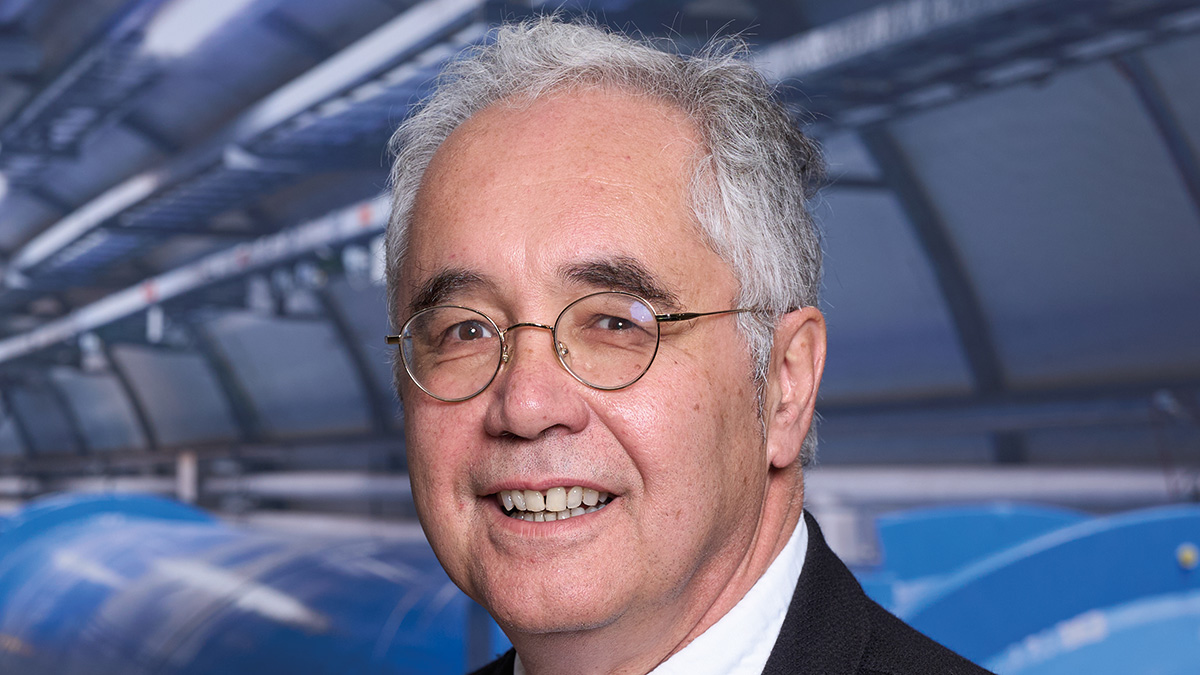
“The European Strategy reiterates the critical importance of the High-Luminosity LHC, which will use advanced accelerator and detector technologies to fully exploit the scientific potential of this incredible machine in the coming years,” said Mark Thomson, CERN Director-General. “Beyond HiLumi LHC, the FCC-ee would be a visionary global research infrastructure for the next decades that will deepen our knowledge of the fundamental building blocks of the universe through ultra-precise measurements of the Higgs boson and other elementary particles. CERN’s task now is to steer this unprecedented project towards a decision by the CERN Council.”
According to the Strategy, the FCC-ee would offer the broadest exploratory programme in fundamental physics. The feasibility study, published in March 2025 (CERN Courier May/June 2025 p9), describes a baseline machine in a 90.7-kilometre ring, running at four centre-of-mass energies: the Z pole, the WW threshold, the ZH production peak and the top-quark pair threshold. Over a 15-year programme, it would be expected to yield some 6 × 10¹² Z bosons, 2.4 × 10⁸ W-boson pairs, 2.7 × 10⁶ Higgs bosons and 2 × 10⁶ top-quark–antiquark pairs.
“The high-energy physics community and the CERN Council have been united for this critical update of the European Strategy for Particle Physics, and the FCC-ee has emerged as the preferred flagship project to maintain CERN’s world-leading role in collider physics and technology in the decades to come,” said Costas Fountas, Council president. “I wish the CERN management the greatest success in implementing the Council resolution between now and the 2028 target decision date.”
The FCC-ee would be a visionary global research infrastructure that will deepen our knowledge of the fundamental building blocks of the universe
The 2026 update follows more than two years of intense work by the European particle-physics community, under the auspices of the European Strategy Group. Initiated in March 2024, the process aimed to develop a concrete plan to advance fundamental physics by constructing a new flagship project at CERN, and drew on more than 260 written submissions. It builds on the 2020 update, which emphasised the importance of ensuring Europe’s continued scientific and technological leadership, and recommended an electron–positron “Higgs factory” as the highest-priority next facility after the LHC reaches the end of its operational lifetime in 2041.
In addition to updating the Strategy, the Council has invited CERN management to initiate discussions with the relevant authorities and entities in the Member and Associate Member States, as well as non-Member States and the European Union, with a view to developing a financially feasible funding plan for the possible FCC-ee project. In the next two years, CERN management will provide annual reports on the implementation of the Strategy update and the necessary information to support national decision-making processes so that the Council will be in a position, by 2028, to take a decision on the FCC-ee, taking into account elements such as the scientific, technical and financial feasibility of the project, as well as results from the public consultation exercises in CERN’s host states, France and Switzerland.
Strong engagement
“The Strategy process has seen a very strong engagement of the particle-physics community and has led to a very clear conclusion: the FCC-ee, if approved, would deliver the world’s broadest high-precision particle-physics programme, its technical feasibility has been demonstrated by the comprehensive FCC feasibility study, and its scope and cost are well defined,” said Karl Jakobs, Strategy secretary. “It would also pave the way for a possible future hadron collider reusing the tunnel and much of the infrastructure, providing direct discovery reach well beyond the 10 TeV parton energy scale.”
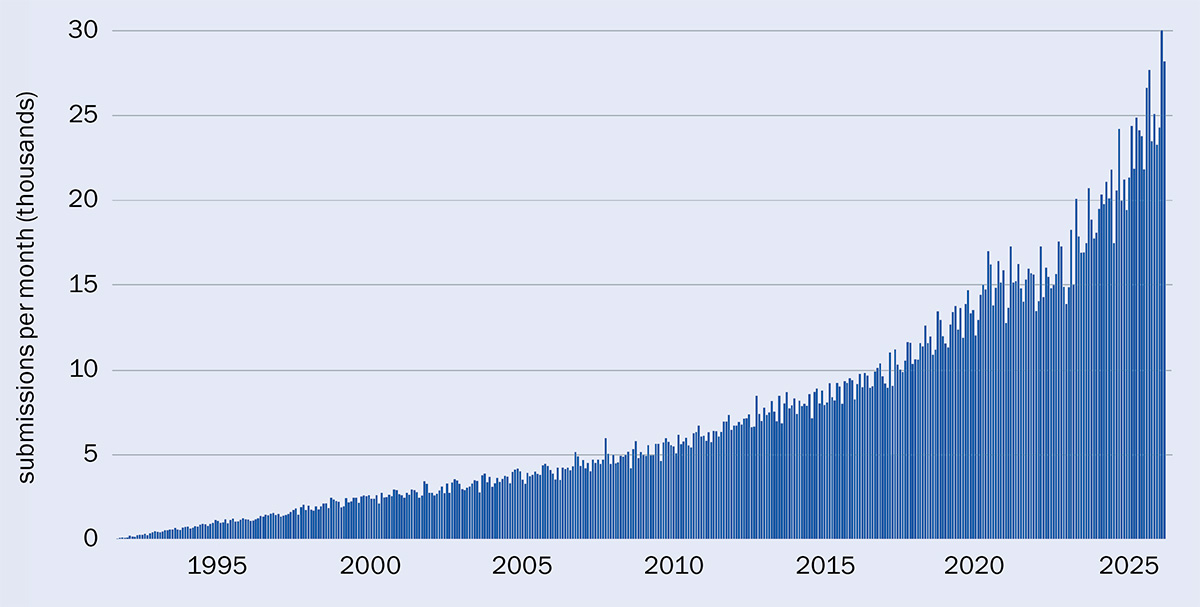
Authors who submit a paper containing unchecked output from a large language model (LLM) will risk a year’s suspension from arXiv. The preprint server, long the main channel for circulating papers in physics, mathematics, computer science and other quantitative fields before peer review, has clarified its content policy in response to a rising tide of AI-generated submissions.
The threshold for suspension is “incontrovertible evidence of hallucinatory AI generation”, in the words of the arXiv scientific director Steinn Sigurðsson. Examples include hallucinated references, citations to non-existent papers, and meta-comments left by the model, such as an instruction to fill in the real numbers from an experiment. arXiv uses a detection algorithm to identify suspect papers, with readers also able to submit “Code of Conduct” complaints if papers have been released without being caught. “After the suspension period, the author can request reinstatement,” Sigurðsson says, “but in a number of cases, depending on the reason for the suspension, the author will be asked to submit work that has passed peer review with a reputable journal or conference. Typically, after three such submissions, there is no further restraint.”
The pressure behind the move is one of volume. Rejection rates have climbed, and the number of submissions held back for review, flagged by a quality-assurance tool or a moderator and often rejected in the end, has climbed faster still. “The increase in such cases puts a major strain on both the staff and the volunteer moderators,” says Sigurðsson.
arXiv typically holds all co-authors jointly responsible for a paper’s content. But that applies only when everyone listed has consented to it, a condition a fabricated paper may not satisfy. In such cases, arXiv relies on rules it already has. “Adding an author to a paper without their knowledge is a major academic misconduct,” Sigurðsson says, “and would generally lead to referral to the relevant academic institutions.”
For an offending submission from a large team of thousands, arXiv would not suspend the entire author list. It would defer instead to the collaboration, trusting it to identify the member who posted without clearance and to impose the primary sanction. That person would still be flagged for close inspection – and may be suspended by arXiv itself. “We have had several instances,” says Sigurðsson, “both where a member of a collaboration has submitted a manuscript to arXiv without clearing it through the internal process, or even where completely unaffiliated submitting authors have added a collaboration without notifying it at all.”
The one-strike rule on AI hallucinations is a matter of enforcement, rather than a new rule. arXiv has long held broad policies on content and scholarly standards, and recent internal discussions focused on how to apply them consistently to AI-generated content.
As LLMs develop, however, quality-control mechanisms are liable to date quickly. The difficulty, Sigurðsson says, is “not the lack of possible tools and counters, but the work involved in testing the tools and implementing them in a production system. This is due especially to their short useful lifetime, as AI tools evolve and users react to arXiv measures.”
As president of the CERN Council, I have followed the updating of the European Strategy for Particle Physics (ESPP) first hand. The proposals for CERN’s future flagship project – the central goal of the ESPP 2026 update – were set out in the open, and physicists fought for their ideas with passion, as they should when the stakes are this high. Such conviction is the sign of a healthy field, and I am grateful to all who took part. Eventually, the community reached an overwhelming consensus on the electron-positron Future Circular Collider (FCC-ee), distilled in the recommendation of the European Strategy Group (ESG). When the Council met in Budapest this May, I was delighted to see it vote unanimously to update the ESPP accordingly.
The road ahead
The path to that vote is well known. The Council launched this bottom-up process in 2024, instituting the ESG, and the particle-physics community took it up with enthusiasm. Hundreds gathered to air and debate the proposals at the open symposium in Venice in June 2025 (CERN Courier September/October 2025 p24), before the recommendations were drawn together at the December drafting session in Ascona (CERN Courier January/February 2026 p7).
The ESPP’s medium-term recommendation is to complete the high-luminosity LHC upgrade and fully exploit the scientific potential of the HL-LHC. Looking further ahead, it recommends the FCC-ee as the preferred choice for CERN’s next flagship collider, aiming to maintain Europe’s leading role in particle physics. Given the clear scientific and strategic superiority of the FCC-ee relative to all other potential options, a descoped FCC-ee is recommended as the preferred option if the full machine is not considered to be feasible.
The Council invited the CERN management to use the ESPP update as input for its medium-term plan and for the ongoing studies of the FCC-ee as the possible next flagship at CERN. As a sign of its strong support, the Council further asked management to initiate discussions with the relevant authorities and entities in the Member and Associate Member States, as well as non-Member States and the European Union. The goal is to obtain pledges of additional cash and/or in-kind contributions to the cost of constructing and operating the FCC-ee, and, on this basis, to develop a financially feasible funding plan.
Securing those funds is now central, and the current CERN management continues an effort begun under its predecessor. The draft Multiannual Financial Framework (MFF) released by the European Commission in July 2025 foresees €3 billion towards the FCC, and pledges amounting to €860 million have already been secured by private donors in 2025 (CERN Courier January/February 2026 p9).
Certain Member States requested specific information to approve the FCC project through their finance agency system, and management has been instructed to provide it. It then promised to do an exercise on paper, which will result in an option analysis to assist these Member States in their approval procedures for the FCC. A large part of this information exists already in the ESPP documents. However, the Council did not support the development of alternative options in parallel with the FCC reference design.
In June, the Council approved the management’s plans and the milestones leading to a reference design for the FCC. The strategic question is now answered. From here, the task is one of carrying the project to approval, and the Council stands fully behind that effort.
The debate leading here was substantial, but it was conducted on the merits of the scientific case, and that is the common ground from which the community can now move forward. The time has come for us to unite behind the choice that has been made, see it through to success in 2028, support the management and contribute to CERN’s standing as the leading laboratory in particle physics.
Etam, Victor Hess discovered cosmic rays on a historic balloon flight in 1912. More than a century later, why is measuring them at the poles interesting?
Etam Noah Near the equator, the Earth’s magnetic field deflects the lower-energy cosmic rays arriving from space, while at the poles those same particles stream almost freely down the field lines. Although this latitude dependence has been known since the 1930s, ground-level measurements from the polar caps themselves are remarkably scarce, which is exactly the gap we wanted to close. After all, the origin of cosmic rays – at energies many orders of magnitude beyond those of the LHC – is still debated, and their secondary products continue to provide an accessible, free-of-charge source for both fundamental and applied research. CERN’s CLOUD experiment, for example, has shown that cosmic-ray-induced ionisation can influence aerosol nucleation, with implications for climate modelling.
How far north had anyone measured muons before?
Etam In 2018, the Polarquest2018 expedition (CERN Courier December 2018 p30) sailed the 18 m aluminium yacht Nanuq into the Svalbard archipelago, carrying a scintillator detector built at CERN by high-school students from Italy, Switzerland and Norway as part of the Extreme Energy Events (EEE) network proposed by Antonino Zichichi in 2004. Polarquest2018 reached 82°07′ N, setting what was then the northernmost published ground-level muon record. Around the same time, the Dutch Clean2Antarctica expedition wheeled a solar-powered cart instrumented with a HiSPARC scintillator panel from Nikhef to the South Pole, across 1200 km of Antarctic ice. Both projects were as much about education and environmental advocacy as they were about physics, which is also the spirit behind Cosmic Pi.
James Devine The story goes back to a weekend project at the 2012 CERN Webfest. There, we wired together an Arduino microcontroller, an Android phone and a single Geiger-Müller tube borrowed from the ERGO project, to demonstrate a low-cost approach to distributed cosmic-ray timing over the public internet. Our prototype was crude. Android’s USB accessory ecosystem was barely usable at the time, but it convinced us that the idea was sound. The project resumed in 2014 under the code name X1 at THE Port, a hackathon hosted at CERN’s IdeaSquare. The explicit target was to switch from Android to the new Raspberry Pi single-board computer – and to release all designed components as open hardware and open source.
And how does the detector actually work?
James The principle is simple. Each unit has two plastic scintillator slabs, one above the other, each read out by a silicon photomultiplier. A particle passing straight through both, lights them up together, and that coincidence is what picks out muons and rejects the stray background, which usually triggers only one of them. A microcontroller timestamps each event with help from a satellite navigation receiver down to 65 ns, while the Raspberry Pi handles the internet connection and logs all the data.
From the start, you wanted the detector to be cheap and widely accessible. How has that worked out?
James Not in the way we planned. We had initially hoped to crowd-fund production for less than $500 a unit, but six years of supply problems put that out of reach. The first major hiccup in the global semiconductor supply chain occurred in 2020, when COVID-19-related shutdowns at chip fabrication plants massively restricted the flow of much-needed components. This worsened in 2022, with Russia’s invasion of Ukraine. Unrestrained enthusiasm for AI has driven further chip shortages, making it almost impossible – and very expensive – to obtain a Raspberry Pi. DRAM prices have increased by more than five times in just one year. So we changed strategy, and focused on building small batches of detectors to ship as prizes to runners-up in CERN’s Beamline for Schools (BL4S) competition. More than a hundred units have now been distributed to schools and individual experimenters around the world.
So how did one of them end up on a polar expedition?
James Almost by accident. In the autumn of 2023, I got a call from Paola Catapano (CERN), leader of Polarquest2018. She had been contacted by the Transglobal Car Expedition (TGCE), which was attempting to cross both the north and south poles by car. The idea was to take the EEE detectors from the Nanuq expedition along, but they were too big to fit in the polar vehicles. Her question was straightforward: could a detector designed for the classroom survive being driven onto the sea ice, and would it be ready for the start of the expedition, in January 2024?
And, of course, the answer was yes. How did you prepare?
James The expedition was, by any measure, an incredible logistical challenge. It covered more than 92,000 km across 42 countries, including a 6000 km Arctic crossing and a 7200 km Antarctic crossing, with ambient temperatures swinging from −50 °C to +50 °C. No previous wheeled expedition had reached the geographic North Pole – and we had a very short time to get ready. So we improvised. First, I called around some other educational cosmic-ray projects to see if anyone had suitable hardware. We soon concluded that the spare parts left over from BL4S would be the best option. We knew our detectors should behave acceptably down to at least –20 °C, and we did the only test available: we put them in a domestic chest freezer overnight, and any that were still working in the morning were sent on the expedition. They were repackaged into rugged Pelican-style cases to protect against water ingress and vibration, and each was named after a polar explorer or vessel: Nansen, Amundsen, Scott, Nobile and Erebus. The last honours the HMS Erebus, which sailed to both polar regions.
Etam, how did the detectors hold up out there?
Etam As James said, we carefully packed and tested every unit before sending it out – along with as many spare parts as we could think of. The constant vibration during long overland transits can affect solder joints and the points where each scintillator’s light reaches its sensor. And then there was the extreme environment. We didn’t expect all the detectors to make it, so we were very pleased to see that three of them successfully recorded data for almost the entire North Pole leg. Power, a modest 5 W per detector, came from the expedition vehicles, and the data was relayed back to Geneva over our Starlink satellite link, a piece of infrastructure unavailable to our 2018 polar predecessors. The most surreal moment of the journey was perhaps a live call with the team at the North Pole, including expedition leader Vasily Shakhnovsky, while detector data was streaming in real time to our servers.
And what did all that data add up to?
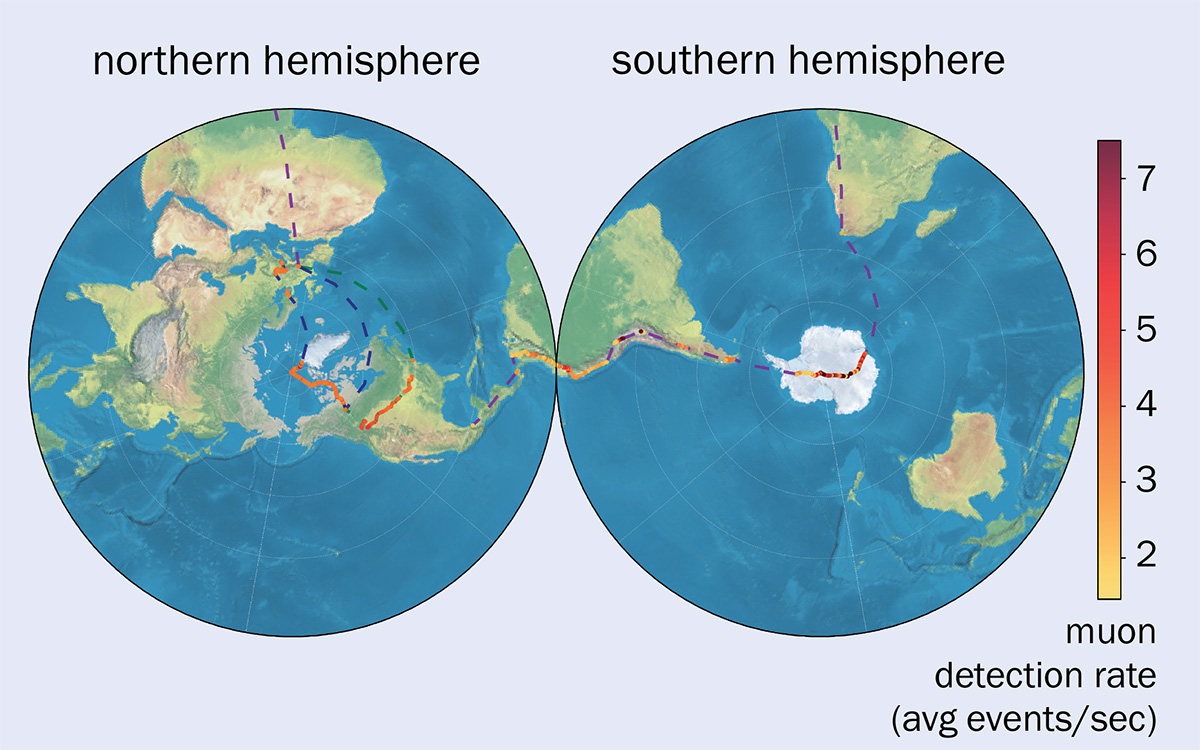
Etam The dataset covers 10 January to 12 May 2024, along a route from North America through the Arctic, to the North Pole and onward to Greenland. It includes per-second muon event counts, along with associated GPS coordinates, temperature, humidity, pressure, accelerometer and magnetometer readings. The key result is a continuous, geo-tagged record of secondary muon flux extending to 90° N, surpassing Polarquest’s 82°07′ N by nearly eight degrees of latitude.
The expedition then turned to Antarctica. What does the second pole bring?
Etam Of the units that worked in the Arctic, only one returned usable data from the Antarctic, a reminder of how tough a multi-year, multi-vehicle expedition is, even for ruggedised hardware. Yet that one unit covered Cape Town to the South Pole and back to the equator through South America. Taken together, the two datasets total 6.7 GB – a comprehensive latitude scan of secondary muon flux from approximately 90° N, crossing the equator, to approximately 90° S (see “Pole to pole” figure), all collected with the same instrumentation. Thanks to it, we can compare measurements without cross-calibration uncertainties dominating the result. The muon rate changes most clearly with latitude, but the scan also sets it against altitude, pressure, magnetic field and temperature. We hosted a workshop for high school students analysing the North Pole data at the CERN Science Gateway. We haven’t discovered anything new, but we are nonetheless very proud of what we achieved, and grateful to the expedition team for taking our detectors along.
James, how much of Cosmic Pi is open for others to build on?
James Cosmic Pi is a volunteer project, with contributors donating their own time alongside their regular work. In keeping with its origins, everything is open. The board designs are published under CERN OHL v1.2, an open-hardware licence that lets anyone reproduce and modify them. The firmware, dashboards and analysis notebooks are under GPL-3.0, the standard free-software licence, and the raw and sanitised datasets are openly available on Zenodo. We also ran outreach events along the route and kept close links with the CREDO citizen-science consortium.
Looking back over more than a decade, what did you set out to do, and where did you end up?
James We set out to make a cutting-edge cosmic-ray detector available to the whole world, and we ended up going on a fantastic journey and measuring around the whole world instead. It’s been a challenge, and an exciting one at that.
Jim Peebles won the Nobel Prize in Physics in 2019 for his work on the foundations of cosmology. Looking back at the state of his field in the early 1960s, he did not paint a pretty picture. Cosmology was, he recalled, “a limited subject … with two or three numbers.” He added, “A science with two or three numbers always seemed to me to be pretty dismal.” It was even worse than Peebles made it out to be. One of those numbers – the main number for many people – was the Hubble constant, named after Edwin Hubble, which quantified the expansion rate of the universe. Since the late 1920s, there had been a systematic campaign to measure the Hubble constant with ever-increasing precision. Yet, as the astronomer Allan Sandage showed in a 1962 review of the topic, there was no real agreement. Some astronomers found that the Hubble constant was 113 (in units of kilometres per second per megaparsec), with an uncertainty of about five. Others were getting 75, with an uncertainty of 25. Given the uncertainties, the results were remarkably discrepant – or “discordant”.
By the mid-1990s, the situation wasn’t much different. I remember attending the Critical Dialogues in Cosmology conference in Princeton in 1996, at which Wendy Freedman advocated a “high” value of the Hubble constant (above 70), while Gustav Tammann pushed for a low value (around 50). In a heated debate, they were at each other’s throats, and it became clear that the different camps weren’t going to agree, nor were they going to concede. By the early 2000s, the “Hubble battles” seemed to have ended, and a consensus was emerging that the Hubble constant was around 70. That is, until measurements became so precise that “discordance” re-emerged. This is the situation we find ourselves in now. Measurements that probe the early universe by looking at the cosmic microwave background yield a “low” value of the Hubble constant of 67, while methods that examine the late universe by measuring the properties of variable stars and supernovae give us a “high” value of 74. These numbers seem close, but the uncertainties have come down so dramatically that the difference matters.
It is a mesmerising story that has been in the background of my career as a cosmologist. On the one hand, we want the tension to go away, to see it resolved, given how successful the cosmological model is. On the other, for the more theoretically minded, there is hope that this is tantalising evidence for new physics, an undiscovered fundamental property of the universe yet to be uncovered. There is yet another possibility, which sounds much less scientific, namely that the protagonists throughout the ages have become wedded to their own favourite values, preventing convergence. Having met many of them, I can vouch that they are strong and fascinating characters.
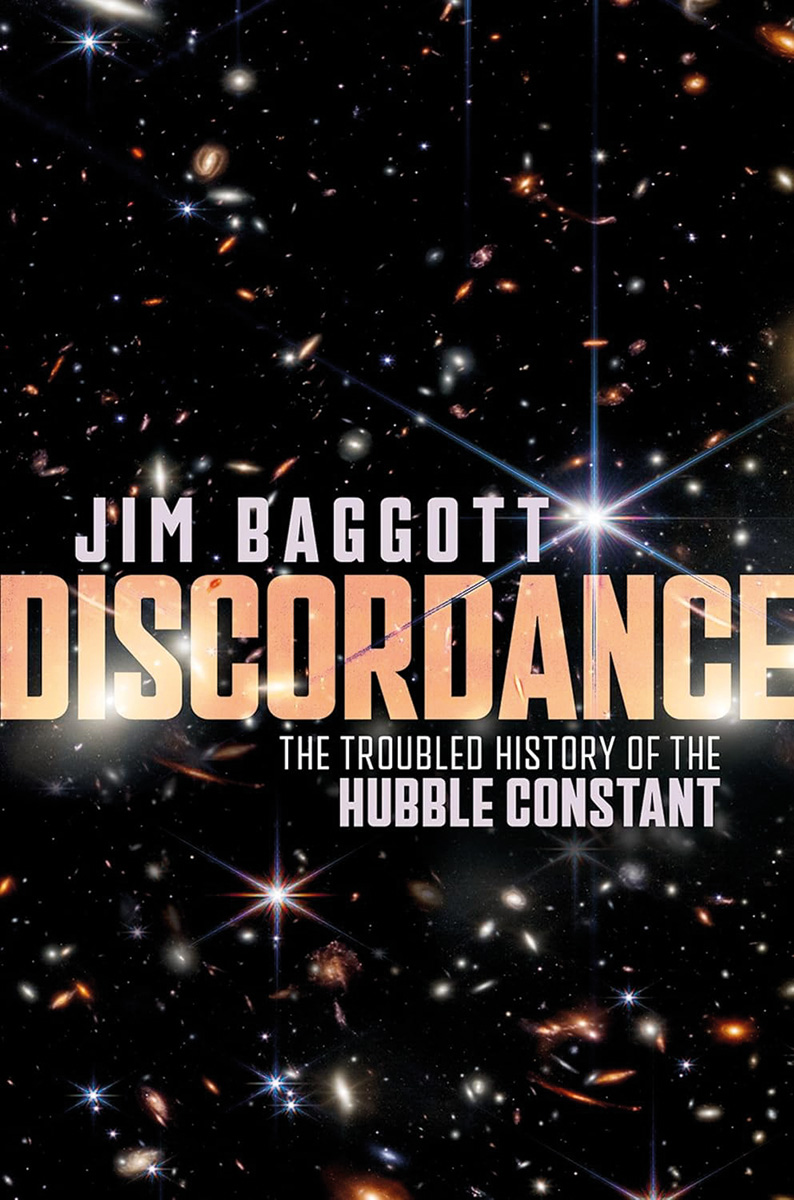
Jim Baggott’s Discordance is an attempt to describe the history of cosmology throughout the past century or more. It covers a lot of ground and delves into some of the less explored aspects of the story. For example, he describes the “Harvard computers”, a cohort of women working at the Harvard College Observatory who played an instrumental role in establishing the foundations for the distance indicators crucial in measuring the Hubble constant. Henrietta Leavitt stands out as the person who unearthed the period-luminosity relation for Cepheid variables, which are at the heart of the current Hubble debates.
He also rightly describes what I call the “golden age of cosmology”, from when Peebles and others first began building accurate mathematical models of the large-scale structure of the universe to the modern measurements of the cosmic microwave background. I grew up during this era and have been lucky enough to witness firsthand this remarkable success story, a beautiful example of theory and observation coming together. This is physics and astronomy at their best. It is not all about discordance.
What I missed was a more in-depth analysis of what is going on, of how the different camps work and interact with each other. The characters are interesting, and it would have been good to get to know them better and understand what drives them. As it stands, they are mostly two-dimensional protagonists in a whistle-stop tour through the history of cosmology. Often, I found myself reading the book as if it were a layperson’s review article, a simplified version of what one might find in the Reviews of Modern Physics or Physics Reports. The result is a useful and easy way to get up to date on what is going on in cosmology, but no more than that.
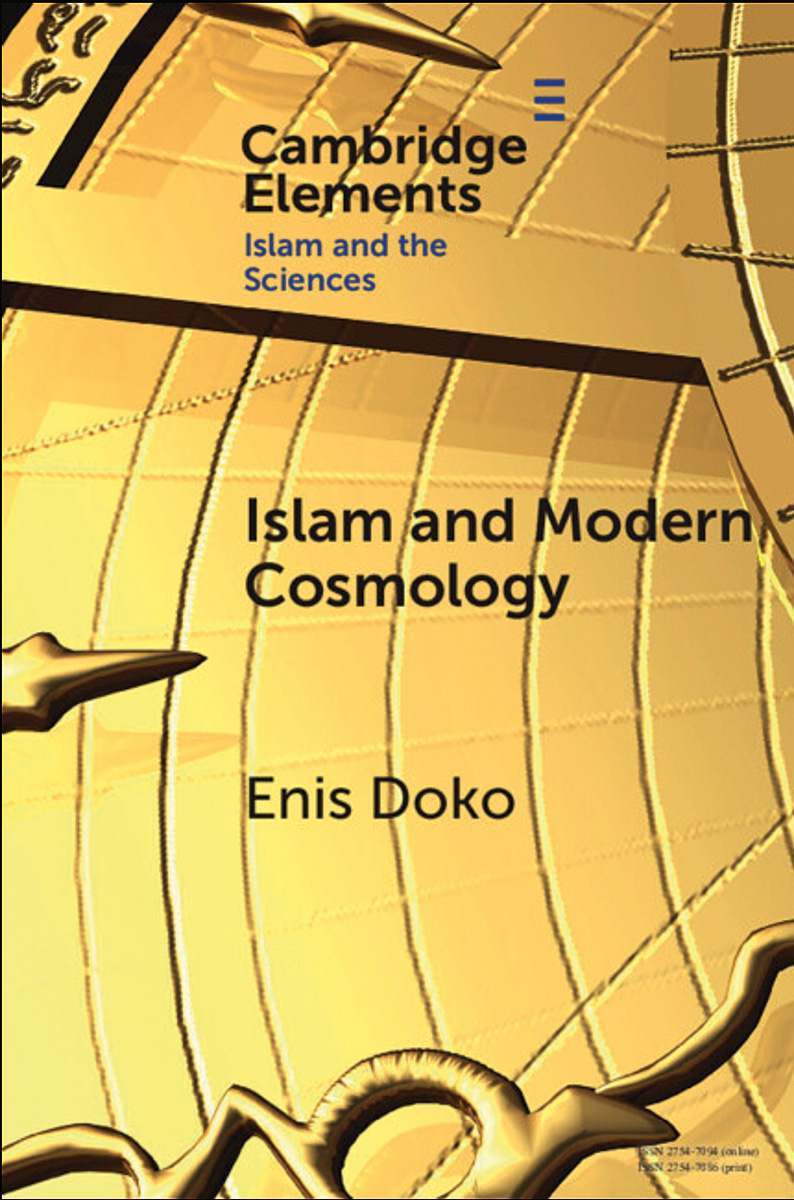
Enis Doko’s Islam and Modern Cosmology is an ambitious and intellectually serious contribution to a genre too often dominated by superficial concordism. Doko explores whether modern cosmology and Islamic intellectual traditions can enter into meaningful philosophical dialogue. In an age when “science and religion” literature often oscillates between naive scientism and mystical vagueness, this alone is noteworthy.
The work’s strongest feature is methodological. In its early chapters, Doko repeatedly emphasises that the Qur’an is not a scientific textbook and that cosmological theories remain provisional. This is a refreshing departure from the “scientific miracle” literature that continues to dominate much popular Islamic discourse. Doko is familiar with both contemporary cosmology and analytic philosophy of religion, and he treats scientific theories with seriousness and nuance. Discussions of singularities, inflation, fine-tuning, quantum cosmology and multiverse scenarios are generally informed and competently presented.
Yet the project’s very ambition also reveals some delicate tensions. The central epistemic issue, which Doko himself recognises in the earlier chapters, is that modern cosmology and “Qur’anic cosmology” do not operate within the same conceptual framework. Scientific cosmology is empirical, mathematical and inherently revisable, whereas Qur’anic cosmology is symbolic, existential and theological in orientation. The former seeks predictive explanatory models constrained by observation, while the latter addresses meaning, creation, transcendence and humanity’s place in the cosmos.
Doko is aware of this distinction, and this awareness gives the early sections of the book much of their intellectual strength. As the argument develops, however, symbolic “resonance” occasionally edges toward implied cosmological correspondence. At times, modern cosmological ideas seem to be read back into Islamic theological frameworks in ways that some readers may find historically ambitious or philosophically debatable.
This tendency becomes particularly visible in the treatment of inflationary cosmology and multiverse theories. The book often presents inflation as the dominant explanatory paradigm for the early universe – a position that reflected the optimism surrounding inflationary cosmology and landscape multiverses during the late 1990s and early 2000s. Since then, however, the intellectual landscape has become more nuanced and contested, and alternatives have shown up, even if not necessarily more credible.
Inflation was introduced to address important puzzles in Big Bang cosmology, including the horizon and flatness problems. It achieved considerable phenomenological success and remains influential, but several conceptual difficulties remain unresolved. The inflaton field itself is still hypothetical, and some critics argue that inflation shifts fine-tuning questions rather than resolving them entirely. The proliferation of inflationary models has also led some cosmologists to question how predictive the framework ultimately remains. Doko acknowledges some of these debates, though he occasionally presents inflation as closer to a stable consensus than many cosmologists today might consider warranted.
A related issue arises with string theory and landscape cosmology. Much of the speculative architecture of the later chapters draws upon ideas such as extra dimensions, branes and multiverse landscapes. Yet string theory remains experimentally unconfirmed despite decades of theoretical development, and some of the motivations that once strongly supported supersymmetric extensions of the Standard Model have weakened. This does not delegitimise such theories, but it does suggest that the broader theoretical context remains less settled than it once appeared.
In this changing scientific context, attempts to draw theological significance from speculative cosmological frameworks inevitably become more delicate. Doko sometimes moves rather quickly from mathematical possibility to metaphysical interpretation, particularly when discussing the multiverse as a possible expression of divine creativity or cosmological plurality within Islamic thought.
This does not make the project illegitimate, but it does make it historically and philosophically fragile. The effort to connect modern cosmology with the four major classical Islamic creation frameworks – emanation, temporal origination, manifestation and perpetual creation – is imaginative and stimulating, yet it also raises difficult historical questions. These classical doctrines emerged within intellectual worlds very different from those of inflationary cosmology or string landscapes, and the bridge between them is necessarily interpretive rather than direct.
One of the most thoughtful and sophisticated attempts to place Islamic thought into dialogue with contemporary cosmology
Attempting to put the Sufi doctrine, with its spectrum of rather vague and ethereal views, in resonance with some cosmological concepts – the multiverse in particular – may provide existential depth and protect cosmology from reductive scientism by allowing it to become spiritually meaningful rather than merely mechanistic.
However, a symbolic framework capable of accommodating Aristotelian cosmology, Newtonian mechanics, relativistic spacetime, inflationary multiverses and string landscapes with equal ease risks losing any explanatory claim. The issue is not that Sufi metaphysics is “wrong”, but that its interpretive openness can make it difficult to distinguish enduring metaphysical insight from retrospective symbolic accommodation.
In this respect, the later chapters increasingly read less as a study of historical Islamic cosmology and more as a contemporary philosophical synthesis shaped by Doko’s intellectual and spiritual vision. This is not necessarily a flaw, as many important philosophical works are constructive rather than purely historical, but some readers might benefit from a clearer distinction between inherited doctrine and modern reinterpretation.
Despite these reservations, Islam and Modern Cosmology remains one of the most thoughtful and sophisticated attempts in recent years to place Islamic thought into dialogue with contemporary cosmology. It is serious, learned and often genuinely illuminating. It is also a good introduction to Islamic philosophy during the formative centuries, as well as an elaborate review of modern cosmology written with as much depth and accuracy as a short monograph permits. If the book occasionally stretches the connection between speculative cosmology and theology further than some readers may find fully persuasive, this reflects less a lack of rigour than the immense difficulty of the enterprise itself. The result is a stimulating and intellectually ambitious synthesis. Its long-term significance may depend as much on where cosmology itself evolves scientifically as on how successfully the author’s work and others of the same strand engages with the theological questions it raises.
Established around the turn of the century, neutrino-flavour oscillation is among the clearest signs of physics beyond the Standard Model (BSM), as it requires neutrinos to be massive. Over the past decades, neutrino-oscillation experiments have grown in physical size, collaborative scale and scientific success.
The missing solar neutrinos identified by the Davis chlorine experiment in the 1960s brought the first hints of oscillation, while atmospheric-neutrino oscillation was established by the Super-Kamiokande experiment in 1998. This was followed by the Sudbury Neutrino Observatory’s confirmation that solar neutrinos do indeed change flavour. Since then, measurements of neutrinos from long-baseline beams and nuclear reactors have confirmed the oscillations seen in natural sources and refined the parameters of the three-flavour neutrino picture.
The current-generation long-baseline experiments are now approaching the limits of their reach, and the community are awaiting results from the next-generation large-scale experiments – the Jiangmen Underground Neutrino Observatory in China, Hyper-Kamiokande in Japan and the Deep Underground Neutrino Experiment in the US. These, along with many smaller neutrino experiments employing various technologies, are chasing down the remaining known parameters of the three-flavour paradigm, testing with precision measurements and pursuing broad searches for BSM physics.
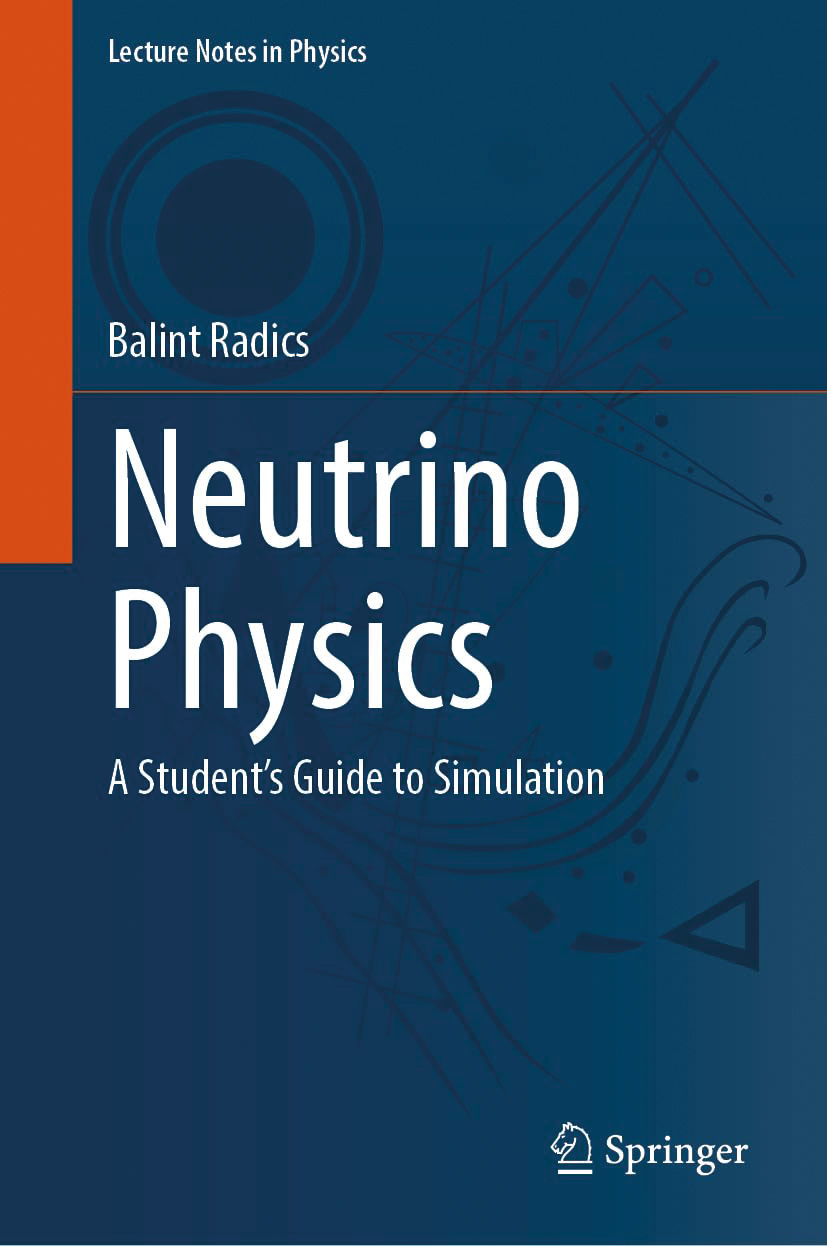
While the primary title of this book, Neutrino Physics, suggests a broad subject matter, the subtitle A Student’s Guide to Simulation immediately indicates the much more constrained scope. The material presented strongly emphasises simulation techniques of interest for neutrino-oscillation data analysis, and is of most direct relevance to long-baseline-beam oscillation experiments. Furthermore, the treatment is confined to simulating the production, oscillation and interaction of neutrinos. It stops before addressing the simulation of neutrino interactions’ final-state products in detectors. While typical expertise sought by students in the field includes detector simulation, event reconstruction from low-level data and parameter inference, these topics are mostly absent, as are many non-oscillation-related neutrino topics. Nevertheless, the topics covered are essential for any student of neutrino physics, and the material provides a clear, concise, step-by-step tutorial that develops both physical insight and practical skills. A student working through this book will gain a substantial understanding of the concepts behind neutrino-event generation and the computation of flavour-transformation effects.
An effective manual to simulate the lives of neutrinos from their birth until they touch a detector
The book is aimed at graduate students who already possess some knowledge of particle physics and basic familiarity with special relativity. For this audience, the level is exactly right. The reader is gently introduced to standard terminology as well as common tools and computational techniques. A review of relativistic kinematics follows, and then a deeper dive into applications to the specific cases most likely to arise in experimental neutrino-oscillation physics. Weak decays and neutrino scattering in the GeV regime are also covered in some detail. The text concludes with a discussion of the computation of flavour transformation in vacuum and matter.
The numerous and well-chosen code examples are a strength of this book. Some might complain that the provided examples make exclusive use of the ROOT software framework. While ROOT remains widely used in high-energy physics and is available in Python via PyROOT, many students now prefer more modern, Python-native tools. Also missing is a discussion of modern AI tools, which have by now become integrated into many code-development workflows.
Nevertheless, the core content of the examples can be easily converted to any software environment. Although it delivers a rather narrower scope than suggested by its primary title, this book is an effective manual for anyone who wishes to simulate the lives of neutrinos from their birth until they touch a detector. It will be of value to all students embarking on research in neutrino-oscillation experiments, and it contains clear pedagogical examples that are likely to be of use to others as well. I will recommend this book to my students and keep a copy on my own virtual shelf.
Some 30 kilometres from CERN, on the northern shore of Lac Léman, sits the home of European football. The Union of European Football Associations (UEFA) brings together 55 national associations from across the continent and organises its most prestigious tournaments, including the European Championship and the Champions League. It sets the rules for those competitions and allocates most of the revenue they generate back into the game.
“When I saw the job description, I remember thinking: oh my God, they are looking for a physicist,” recalls Barbara Storaci. “It didn’t make any sense, but the profile they wanted was exactly mine.”
Although the role did not explicitly mention physics, it demanded someone who could coordinate, code, analyse large volumes of information and thrive in an international environment. “Who in the world has all this in one person?” she asked. “Well, physicists do.”
From physics to football
Today, nine years on, Storaci is a senior project manager, responsible for the more than 50 draws UEFA conducts each year, as well as for coordinating projects across the organisation. Football, though, was not the original plan.
Storaci wanted to be a particle physicist from the age of 12. “I planned my studies to reach this goal. I started to collaborate with the LHCb experiment from my bachelor’s and master’s studies at the University of Milano-Bicocca, coming to CERN for the summer before my last year, and never going back.” Based at CERN throughout, she completed a PhD with Nikhef and a postdoc at the University of Zurich. Storaci spent 12 years at LHCb, rotating through nearly every role, from data analysis to data-acquisition coordination.
But the suspense of discovery came with the anxiety of instability. “At a certain point, I didn’t have fun anymore because it was more a matter of always looking for the next contract instead of actually doing research,” she says. “When I reached an age where I wanted more stability for family life, the short-term contracts made things extremely difficult.”
Getting a permanent academic position felt like a lottery. Storaci often found herself up against competent colleagues who made for tough competition, and the constant race for short-term contracts made her question whether it was wise – or healthy – to continue. She grappled with many doubts, and was hesitant to seek roles outside of academia. “For many years I wondered: am I giving up on my dream?” she recalls. “Is it a failure? Should I try a little longer?”
Curiosity is the key. If I had to select just one trait, that’s the one I’d choose
Her curiosity, and her willingness to take risks, led her to leave the lab. “All my life I have been outside my comfort zone,” she reflects. “That’s what I love about my present job: I know what I’m doing today, but I have no clue what I will be doing in two years. And that fits me extremely well.”
One of the biggest adjustments was learning to present herself as a strong candidate to people outside academia. “Physicists often believe we can do any job, but when you actually look for a job, you start wondering: is that really true?” Her advice to other researchers is to translate their skills into a language recruiters understand.
“Nobody outside of particle physics will care about your decay channel,” she says bluntly. “Forget about the jargon. What matters is what you developed to make that research happen: coding, managing projects, analysing huge datasets, coordinating teams. That’s what you have to explain.”
Practical preparation helped. Before her first UEFA interview, a friend outside academia offered to role-play as a recruiter. Storaci was sceptical. She had done plenty of academic interviews, and surely this would be no different. But when they met for coffee, some of her friend’s questions left her stumped.
“She asked me questions I had never thought about, like who my worst boss was,” she recalls. “How could anyone expect that question? It turns out I wasn’t ready at all! But it helped me approach the real interview much more calmly.”
Every job application is apt preparation for the next, she argues, even if it results in a rejection or seems out of your depth. What sets a candidate apart is the ability to demonstrate transferable skills, sustained work on long-term projects, time management and teamwork.
Same skills, new context
Storaci now applies the analytical mindset she honed at CERN to a very different environment. She insists the transition was less about leaving physics behind, and more about carrying those skills into new contexts. “It’s normal to be scared, but you have so many skills you don’t even realise you’ve developed. Once you learn how to show them, you’ll see you can succeed in very different worlds,” she says. “The ability to absorb and connect information, to see inconsistencies, to debug problems, these are skills physicists have, and they’re incredibly valuable outside academia too.”
Above all, she believes success comes down to two things: curiosity and courage. “Curiosity is the key. If I had to select just one trait, that’s the one I’d choose,” says Storaci. “If you’re curious, everything else will come. And you must be willing to step out of your comfort zone. It’s scary, of course, but that’s where growth happens.”
Bernard French, a CERN physicist who worked on and led numerous experiments, especially at the OMEGA spectrometer, died on 5 November 2025 at the age of 94. Bernard was born in Watford in the UK on 23 April 1931 and gained his PhD at Imperial College London in 1958, staying there as a research fellow before joining CERN as an associate on 1 October 1961. After becoming a staff member on 1 May 1962, he remained at CERN until his retirement in 1996.
Bernard first worked on the analysis of bubble-chamber data, focusing on the search and study of meson resonances. Then, in 1967, he joined a group proposing the OMEGA spectrometer. Conceived as an electronic bubble chamber, OMEGA offered a large magnetic volume, initially filled with spark chambers and later with wire chambers, operating with a variety of triggers and incident beams in the West Area experimental hall. The group included physicists Aldo Michelini, Emanuele Quercigh and Werner Beusch, with technical coordinator Otto Gildemeister and Mario Morpurgo – who designed the superconducting magnet. OMEGA recorded its first collisions in 1972 and ran until the end of 1996. Bernard contributed to many of the experiments performed at the spectrometer, first using beams from the PS and later from the SPS.
Bernard was known by his colleagues for his ability to do back-of-the-envelope calculations that were often better than the final calculations, as well as his remarkable pattern-recognition ability – he always claimed that if he couldn’t resolve the tracks by eye, no computer was ever going to do it! He was also known for his large collection of old cars and his lovely house on the lake, complete with a small jetty. Bernard would often be seen in the CERN canteen, even in his 90s, and his insatiable enthusiasm for physics continued until the end.
We were sad to hear of the passing of Marvin Marshak, who died on 2 April at the age of 80. Marshak was born in Buffalo, New York, on 11 March 1946. He attended Cornell University as an undergraduate and the University of Michigan for his PhD in physics, completing it in 1970. He then started a long and illustrious career at the University of Minnesota, where he served as chair of the physics department for a decade and as provost and vice-president of the university for a year.
Motivated by grand unified theories, which predicted that protons could decay with measurable rates, Marshak led one of several projects that took particle physicists away from accelerator laboratories to underground facilities – where rare processes could be studied with substantially lower cosmic-ray backgrounds. He negotiated the use of the Soudan mine in Northern Minnesota, which was being operated as a tourist attraction. Some 600 m underground, it became, from 1981, the site of the Soudan 1 and 2 experiments and later the MINOS long-baseline neutrino experiment, using the NuMI beam from Fermilab. Finally, the NOvA experiment, using the same beam, was located nearby on the surface.
Marshak’s research at the Soudan mine began by putting together a collaboration of US and UK scientists, motivated by the search for nucleon decay and the opportunity to build unique detectors in the search for new physics. While the search for nucleon decay proved unavailing, the atmospheric neutrino background serendipitously became a treasure trove of evidence for neutrino oscillations, using the differing path lengths of neutrinos from opposite sides of the Earth, created when cosmic rays strike the atmosphere. It was Soudan 2 that first confirmed the discovery of neutrino oscillations by Super-Kamiokande in 1998. The mine then became the ideal location for far detectors in the long-baseline neutrino oscillation experiments MINOS and NOvA, to which Marshak made key contributions. He also played a leading role in using underground detectors in novel ways to search for the astrophysical sources of cosmic rays. Recently, he played an important role in helping to organise the international DUNE collaboration by serving several years as the chair of the institutional board for the precursor Long-Baseline Neutrino Experiment.
Marshak had an amazingly varied skill set that helped particle physics overcome increasingly complex challenges. He had a keen intuition for worthwhile problems and for which issues to tackle. He became an expert in the challenges of underground construction engineering. He could deal with administrators and politicians at the state and federal level, successfully obtaining money for ambitious projects, and he managed the installation of the 14,000 tonne NOvA Far Detector.
However, he will be remembered best for his one-on-one interactions with students and colleagues. When he gave a seminar, his enthusiasm was infectious. He knew when to provide direction for his graduate students and when to stand back and let them struggle to find their own limitations. He could motivate undergraduates in a classroom and then find them a role in an exciting experiment. He would always take his share of the unsensational work that is required on any project, such as scanning the not-too-frequent neutrino interactions and categorising them. But what is remembered most of all by his friends and colleagues is his indomitable energy, his charm and the perpetual smile on his face.
To provide the best experiences, we use technologies like cookies to store and/or access device information. Consenting to these technologies will allow us to process data such as browsing behavior or unique IDs on this site. Not consenting or withdrawing consent, may adversely affect certain features and functions.
Functional
Always active
The technical storage or access is strictly necessary for the legitimate purpose of enabling the use of a specific service explicitly requested by the subscriber or user, or for the sole purpose of carrying out the transmission of a communication over an electronic communications network.
Preferences
The technical storage or access is necessary for the legitimate purpose of storing preferences that are not requested by the subscriber or user.
Statistics
The technical storage or access that is used exclusively for statistical purposes.The technical storage or access that is used exclusively for anonymous statistical purposes. Without a subpoena, voluntary compliance on the part of your Internet Service Provider, or additional records from a third party, information stored or retrieved for this purpose alone cannot usually be used to identify you.
Marketing
The technical storage or access is required to create user profiles to send advertising, or to track the user on a website or across several websites for similar marketing purposes.