Comsol -leaderboard other pages

Topics

Neutrinos lead beyond the desert

cerncon5_3-03

The Beyond the Desert 02 – Accelerator, Non-accelerator and Space Approaches conference was held on 2-7 June 2002. It was the third in the series of “Beyond conferences” that began in 1997. Traditionally the scientific programme has covered almost all of modern particle physics, and this meeting was no exception, ranging from SUSY and extra dimensions to dark matter and neutrino mass.

The conference began with sessions on new theoretical developments in extending the Standard Model by means of grand unified and SUSY theories, followed by new results on the search for Higgses, SUSY particles, R-parity violation, leptoquarks and excited fermions at the LEP and HERA colliders. The revival of a g-2 signal for the muon deviating from the Standard Model, and its consequences for SUGRA models, were addressed by Pran Nath of Boston who, together with Dick Arnowitt of Texas, first introduced SUGRA 20 years ago. Later, extra dimensions, M-theory and fundamental symmetries were also presented. Ignatios Antoniadis of CERN, while talking about string and D-brane physics at low energies, pointed out that although no-one has ever observed strings or the space of extra dimensions where they live, the “hidden” dimensions of string theory may be much larger than we thought in the past, and may come within experimental reach in the near future.

The long-standing and very intriguing problem of dark matter in the universe, with its connection to new physics and new phenomena, was another important topic. Results and perspectives for direct dark matter experiments with scintillators (DAMA and LIBRA) and germanium detectors with big target mass (GENIUS and GENIUS-TF) were presented by Rita Bernabei of Roma and Irina V Krivosheina of Heidelberg and Nizhnij Novgorod. These are currently the only two experiments that can in principle use seasonal modulation to see (and indeed DAMA has seen) a positive signal from the interactions of dark matter particles by direct detection. Other experiments, for example with sophisticated cryogenic detectors exploiting ionization (or scintillation)-to-heat discrimination, are currently unable to register such a modulation in WIMP interactions because of their very small detecting mass.

Astrophysical data are becoming increasingly important for modern particle physics. For example, the excellent talk by Naoshi Sugiyama of Tokyo – “Cosmic Microwave Background: a new tool for cosmology and fundamental physics” – made it evident that an unexpectedly huge amount of fundamental information can be extracted from current research into the cosmic microwave background. Astrophysical investigations are also intimately connected with the exciting question of neutrino properties. Cosmic high-energy neutrinos can interact with relic neutrinos, producing Z-bursts which could explain the mysterious origin of extremely-high-energy cosmic rays, as Sandor Katz of Eotvos, Hungary, explained. This mechanism requires the neutrino mass to be in the 0.02-2.2 eV range, which intriguingly fits with recent results obtained from neutrinoless beta decay of germanium in the Heidelberg-Moscow experiment. Neutrinos from supernovae also figure in current theoretical investigations, as Alexei Yu Smirnov of Trieste and Moscow described.

Neutrino physics was undoubtedly the central topic of the conference. Rabindra Mohapatra of Maryland presented the modern understanding and a general view of neutrino masses and mixings. This was followed by several presentations on solar neutrinos, with Oliver K Manuel of Missouri describing the Standard Solar Model and modern experimental hints for an elemental composition of the Sun that is radically different from the usual current assumptions. Extended discussion of the experimental achievements in solar and atmospheric neutrino oscillation experiments included the Sudbury Neutrino Observatory (SNO) and its results from the recent analysis with a pure heavy water target, presented by Mike Dragowsky of Los Alamos. The consequences of the neutral current rate measured in SNO for resolving the solar neutrino puzzle were discussed by Sandhya Choubey of Southampton. SNO performed the first measurements of the total active neutrino flux, and claims evidence for neutrino flavour transformation at a 5.3 sigma level.

Global MSW analysis of the neutrino oscillation experiments favours the large mixing angle (LMA) region, and can be tested in new experiments. At the conference, the running status and prospects for the new and near-future neutrino oscillation experiments KamLAND, K2K and Superkamiokande, and new facilities such as neutrino factories and the JHF-SK project, were presented and discussed. For example, KamLAND (presented by Fumihiko Suekane of Tohoku), is a very long baseline reactor neutrino oscillation experiment with a 1000 tonne liquid scintillator detector. It can directly test the MSW-LMA solution with only six months of data, and will determine the oscillation parameters with very high accuracy if the LMA case is true. The experiment started data-taking in 2002, and the first results have been announced (KamLAND experiment discovers that reactor antineutrinos ‘disappear’). Rebuilding of the Superkamiokande detector began in 2002, and full reconstruction is expected by 2007, as Takaaki Kajita of Tokyo described. The physics potential and status of the second-generation proton decay and neutrino experiment ICARUS (Imaging Cosmic And Rare Underground Signals) in the Gran Sasso Laboratory were also discussed by Fulvio Mauri of Pavia and Ines Gil-Botella of Zurich.

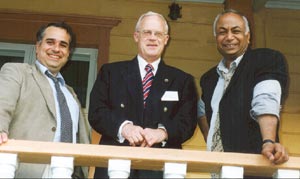
The exact nature of neutrinos remains an exciting problem. Are these most mysterious objects Dirac or Majorana particles, and what are their masses? One of the best tools to find the answer is neutrinoless double beta decay. The evidence for observation of neutrinoless double beta decay of the isotope 76Ge claimed by the Heidelberg-Moscow collaboration took a central part in the discussions. Alexander Dietz of MPI, Heidelberg, described the mathematical approach to the accurate treatment of statistics of rare events used by this collaboration. The very accurate data on the Q-value of the 76Ge double beta-decay – which are crucial to the analysis and are determined from accurate mass measurements in a Penning trap – were presented by Ingmar Bergstrom of Stockholm.
cerncon6_3-03

Hans Volker Klapdor-Kleingrothaus of Heidelberg then outlined the present evidence for neutrinoless beta decay, as well as the general future for double beta decay experiments. The Heidelberg-Moscow collaboration fixes the effective neutrino mass in the region of 0.05-0.84 eV (95% confidence level). The important question of nuclear matrix elements for double beta decay was described thoroughly by Fedor Simkovic of Bratislava, who showed that transitions to different excited daughter states could help to distinguish between different mechanisms triggering the neutrinoless beta decay process. Important new constraints on neutrino mixing parameters following from the results of the Heidelberg-Moscow collaboration were also discussed by Hiroaki Sugiyama of Tokyo.

Still on the question of the nature of the neutrino, Dharamvir V Ahluwalia of Zacatecas, Mexico, reported on a new theoretical concept concerning massive Majorana particles and outlined the consequences for the structure of space-time. He showed that the Majorana nature of the neutrino tells us that space-time has realized a construct that is central to the formulation of supersymmetric theories. These various discussions showed that neutrinos at extremely low energies, as well as at extremely high energies, are particles that can supply us with exciting discoveries in the future. Together with the other topics, they made the conference a valuable contribution to the fruitful exchange of ideas between physicists working in particle physics, nuclear physics and cosmology.

Proceedings will be published by Institute of Physics Publishing, Bristol, UK.
Understanding the physics of the universe

cernvie1_3-03

This is a great time to be an astrophysicist. Over the past 30 years, almost all of the roughly 70 octaves of the electromagnetic spectrum accessible for study have been opened up. Telescopes using new technologies have expanded our view of the cosmos far beyond what we see in the single octave available to traditional optical astronomy. The size, age and shape of the universe have been measured, and its black holes, neutron stars and extrasolar planets have been catalogued. We are on the threshold of using cosmic rays, neutrinos and gravitational waves to find new sources, and we are encountering a world of extremes. We must contemplate the diffuse intergalactic medium, as well as singularities with a nominal density more than 120 orders of magnitude larger. Similarly, we infer a difference in magnetic field strength between intergalactic space and the field in “magnetars” that ranges over 30 orders of magnitude.

Over the same period, the Standard Model of elementary particles has been largely completed. Almost all of the standard particles have been detected, and their properties fitted into a pattern. It is easy for physicists to take this for granted, but describing this framework surely ranks as one of the greatest scientific accomplishments of all time. Furthermore, the intellectual connection of this model to the equally rich fields of nuclear, atomic and condensed matter physics is well developed.

Now, in both astronomy and physics, the scientific focus is shifting from asking “what?” to trying to understand “why?” We want to understand why galaxies have the regular properties that are observed locally, just as we want to understand such things as the electron-proton mass ratio. In many cases, researchers from the two disciplines seem to be looking at the same problem from different perspectives. I expect that closer collaboration between the fields will lead to exciting advances in many areas where they intersect.

For example, astronomers have discovered that roughly seven-eighths of the matter in the universe is in a “dark” form whose properties they do not recognize. Meanwhile, physicists suspect that there is a whole new family of hitherto undetected supersymmetric partners to the standard particles. Both communities have concluded that they are probably discussing the same thing. In another instance, physicists are developing the theory of supersymmetric strings and its generalization as a tool for understanding the basis of the Standard Model, while astronomical measurements of the expansion of the universe have revealed the presence of “dark energy”, which strikes at the heart of string theory.

Recently, cosmic rays have been discovered with energies as large as 50 J – 10 million times more energetic than can be made at particle accelerators. Astronomers are divided as to whether these particles come from black holes and neutron stars, or if they derive from exotic matter left over from the Big Bang. If the former is correct, then the means by which the particles are boosted to these energies may be similar to some advanced concepts that have been developed for future particle accelerators. If the latter is correct, then nature is performing experiments for our benefit that we will never be able to carry out on Earth.

Finally, the technology and methodology of astronomical observation has changed from individual acquisition and scrutiny of mainly photographic images and spectra. The field now relies mainly on large teams of astrophysicists using modern, solid-state detectors which produce terabytes of digital data that must be processed, manipulated and archived – just as in particle physics experiments.

It is therefore clear that astronomers and physicists will be working together increasingly on everything from equations to electronics. However, this poses some interesting sociological challenges, because historically the two communities have worked in quite different ways. Physicists are used to designing active experiments, while astronomers are used to performing passive observations. The present time represents an extraordinary opportunity to build a facility capitalizing on the rich scientific heritages of astronomy and particle physics, and the complementary strengths that they bring to the emerging science at their interface.

Physicist Fred Kavli and the Kavli Foundation have pledged $7.5 million (€6.9 million) to establish an institute that will focus on recent developments in astrophysics, high-energy physics and cosmology. The new Kavli Institute for Particle Astrophysics and Cosmology will be located in a new building at the Stanford Linear Accelerator Center (SLAC), and will open its doors in 2005. I am honoured to have been chosen as the inaugural director. Steven Kahn of Columbia will join me as deputy director and assistant director of research at SLAC.

Initially, we intend to follow a balanced growth plan with theory, computational astrophysics and phenomenology on one hand, and experimental astrophysics and high-energy observing on the other. We will draw upon existing strengths at Stanford in theoretical (especially high-energy) physics and astrophysics, gamma-ray and X-ray astronomy, gravitational physics, microwave background instrumentation and underground physics.

Part of the excitement of the field is that it is impossible to predict where it will be in five years’ time and what its scientific focus will be. What is clear is that the time is right to build a world-class centre.

Supersymmetry reviewed from the past to the future

cernsusy1_1-03

The DESY laboratory in Hamburg, Germany, hosted the 10th International Conference on Supersymmetry and Unification of Fundamental Interactions (SUSY02) in June 2002, providing a forum for discussing the present status and future developments of supersymmetry (SUSY). In the week-long meeting – organized by Pran Nath of Northeastern University, US, and Peter Zerwas of DESY – theoretical ideas, analyses of experimental data, the expectations for physics at CERN’s Large Hadron Collider (LHC) and the proposed tera-electronvolt range electron-positron linear colliders were on the agenda.

A lively and exciting atmosphere prevailed, with established practitioners exchanging standard and not-so-standard views on the evolution of particle physics with enthusiastic youngsters. The excitement had its roots in the fascinating prospect of addressing fundamental problems of physics in the new generation of accelerators, and in the well-founded hope of hearing about long-awaited breakthroughs that would answer many of the outstanding questions.

Waiting for SUSY

On the experimental side, the conference marked the transition from the experiments completed at CERN’s LEP, DESY’s HERA, Fermilab’s Tevatron and SLAC’s SLC colliders, to those at Tevatron Run II and HERA-II and to preparations for physics at future collider facilities.

The experiments at LEP, reviewed by Eilam Gross of Israel’s Weizmann Institute, have covered a range of parameter space in the Higgs sector of the minimal supersymmetric extension of the Standard Model, which was summarized by Howard Haber of the University of California, Santa Cruz, US. The experiments seem to have ruled out one of the two parameter ranges singled out previously by theoretical arguments (the so-called small tanb region). However, the large tanb region was not fully covered by LEP and, as Fermilab’s Marcela Carena pointed out, it is of great interest for forthcoming Higgs searches at the Tevatron. On the other hand, Wolfgang Hollik of Karlsruhe offered strong support for a light Higgs boson as predicted by supersymmetric theories derived from the theoretical interpretation of precision data at LEP and the SLC.

Ritva Kinnunen of Helsinki, Finland, explained how LHC experiments will be able either to establish or rule out the existence of a light Higgs boson within a few years – in nearly all scenarios as pointed out by Jack Gunion of the University of California, Davis, US. Looking further ahead, CERN’s Marco Battaglia discussed how the profile of this fundamental particle could be studied experimentally at a linear collider with very high precision to establish the Higgs mechanism for generating the masses of standard particles.

Robert McPherson of Canada’s Victoria University reviewed the search for genuine supersymmetric particles at LEP. In its higher-energy phase, LEP set lower limits on the masses of the scalar partners of leptons close to the beam energy of 100 GeV. Similar limits have been achieved for the fermionic partners of W bosons, while the lightest supersymmetric particle has been constrained to a mass of more than 50 GeV, albeit in a model-dependent way. The masses of squarks and gluinos, on the other hand, have been increased by Tevatron analyses to more than 200 GeV, reported Teruki Kamon of Texas A&M University, US. This result is complemented by constraints on the stop mass in R-parity violating theories at HERA, discussed by Yves Sirois of the Ecole Polytechnique, France.

cernsusy2_1-03

The discovery range for SUSY will be extended by the LHC to values of up to 3 TeV, leaving little room in parameter space for supersymmetric particles to hide, as analysed by Brookhaven’s Frank Paige. In the future, the properties of such particles could be measured to an accuracy of parts per million in the several hundred giga-electronvolt mass range by machines such as DESY’s proposed TESLA collider – presented by Hans-Ulrich Martyn of Aachen – reducing to the percentage level in the multitera-electronvolt range that could be explored by CERN’s CLIC. This allows the fundamental parameters in supersymmetric theories to be determined precisely, as Jan Kalinowski of Warsaw, Poland, concluded. Abdel Djouadi of Montpellier, France, Walter Majerotto of Vienna, Austria, and Michael Spira of the Paul Scherrer Institute, Switzerland, described the high-precision theoretical calculations (sometimes to two-loop accuracy) that underpin all of these results and expectations.

More information on supersymmetric scenarios, including the CP-violating sector, examined by Nath, is offered by precision measurements at lower energies. B-decays are affected by supersymmetric particles through virtual-loop effects. Antonio Masiero of Padova, Italy, pointed out that the agreement between present observations and the Standard Model is not at odds with the potential intervention of supersymmetric particles, while Matthias Neubert of Cornell, US, discussed the consequences of rare decays. Errors are still too large to draw definite conclusions in multidimensional SUSY parameter space on flavour physics.

Richard Arnowitt of Texas A&M showed how the discrepancy between the anomalous muon magnetic moment measurement and the predictions of the Standard Model is compatible with wide areas of supersymmetric parameter space. New insight – as presented by Isabella Masina of Saclay, France – might soon be obtained from studying lepton-flavour-violating processes, such as radiative muon decays into electrons. CERN’s Concha Gonzales-Garcia and Rabindra Mohapatra of Maryland, US, discussed the recent observation of neutrino oscillations that has prompted new interest in the search for such phenomena in the charged-lepton sector, with novel conversion processes enhanced by virtual SUSY contributions.

Giving mass and energy to the universe

cernsusy3_1-03

It has long been speculated that the observation of cold dark matter in the universe is related to SUSY. If, as in many scenarios, the lightest supersymmetric particle is stable, it would be a perfect candidate for this new kind of matter. The signals of such particles, accounting for most of the mass of the universe, may be identified in dedicated searches or astrophysics experiments, as described by Keith Olive of Minnesota, US.

Cosmological problems are an excellent test ground for physics at very-high-energy scales. Baryogenesis – crucial for our own existence – can be explained by SUSY mechanisms if stop and Higgs masses are tightly constrained to barely above the present experimental exclusion limits, claimed Carlos Wagner of Argonne National Laboratory and Chicago University, US. A different picture emerges from leptogenesis, presented by Tsutomu Yanagida of Tokyo, Japan, where decays of heavy Majorana neutrinos with masses close to the grand unification scale are the source for the observed asymmetry of matter and antimatter in the universe.

Cosmological scenarios can cause problems for supersymmetric models. However, as Hans Peter Nilles of Bonn, Germany, explained, in detailed analyses these often appear less severe. Recent data on energy fluctuations in the cosmic microwave background and measurements of the deceleration parameter via the Hubble diagram of Type 1A supernovae suggest a positive cosmological constant. Pierre Binetruy of Orsay, France, emphasized that from a theoretical point of view, these results are more than puzzling, prompting the suggestion from Edward Copeland of Sussex University, UK, that brane-world models may offer alternative scenarios for the cosmology of the early universe.

Connecting to the Planck scale

The most compelling argument in support of the supersymmetric extension of the Standard Model is the unification of the three different gauge couplings – electromagnetic, weak and strong – at the percent level at a scale near 1016 GeV. After extrapolation over more than 14 orders of magnitude in energy, the three couplings meet in a tiny area with an accuracy that is much better than expected in many scenarios. This surprisingly successful prediction cannot be matched easily in alternative theories.

Although certain aspects of minimal versions are sometimes problematic, such as too-rapid proton decay, even conventional supersymmetric grand unified theories are still in agreement with data, said Stuart Raby of Ohio State University, US. Graham Ross of Oxford, UK, discussed the possible origin of quark and lepton mass textures in this context. Lawrence Hall of the University of California, Berkeley, US, and John March-Russell of CERN showed how higher dimensions offer additional freedom in building models, and thus are more flexible in removing the stumbling blocks of traditional grand unified theories. While Jon Bagger of Johns Hopkins University, US, discussed questions of SUSY breaking within such models, Edward Witten of Princeton, US, addressed how these models deal with the doublet-triplet splitting of the Higgs field. Riccardo Barbieri of the Scuola Normale Superiore in Pisa, Italy, covered aspects of electroweak symmetry breaking.

Peter Mayr of CERN showed how studying the phenomenological aspects of supersymmetric theories in string theory has been improved by extending the powerful techniques of mirror symmetry to theories with only N=1 SUSY. Furthermore, Jan de Boer of Amsterdam, the Netherlands, showed how string theory can also be exploited to shed new light on strongly coupled gauge theories, such as quantum chromodynamics, by means of the so-called AdS/CFT correspondence between string and field theory.

If SUSY is realized in nature, high-precision experiments at a linear collider such as TESLA followed by a second phase in a multitera-electronvolt collider such as CLIC, could determine the properties of new particles with very high precision. This is a necessary prerequisite for reconstructing the fundamental supersymmetric theory at the scale where SUSY breaking is localized, emphasized Gordon Kane of Michigan, US. If the SUSY parameters are transmitted at this scale from a hidden world to our visible eigen-world by gravitational interactions, these machines could be used as powerful telescopes to view a domain where particle physics and gravity are linked directly – a vision for the future.

A big step into the new experimental domain of high energy linked with high accuracy – successfully pioneered by LEP and the SLC – was outlined by DESY’s director-general, Albrecht Wagner, who presented the well-advanced plans for the TESLA machine, which has an energy target that is close to 1 TeV. If preparations continue as they are now, the particle physics community could be operating this unique tool for SUSY particle diagnostics by 2012.

Living in higher dimensions

The idea of the Standard Model being localized on a four-dimensional brane that is embedded in a higher dimensional space-time can be formulated in string theories. Ignatios Antoniadis of CERN, Mirjam Cvetic of Pennsylvania, US, and Luis Ibanez of Madrid’s Institute for Theoretical Physics, Spain, presented models where constructions of this type are carried out explicitly. Phenomenological aspects of extra dimensions on a tera-electronvolt scale are important for experiments at the next generation of particle accelerators. These were discussed by James Wells of the University of California, Davis, and Greg Landsberg of Brown University, US, who focused on the radiation of black holes from high-energy particle collisions.

It is likely that the structure of space-time is modified at ultrashort distances. An interesting aspect of this is the potential non-commutativity of space (and time). This would mean, for example, that measurements of the x and y co-ordinates of an event would affect each other in a similar way to the position and momentum measurements in standard quantum mechanics, albeit with the interference being characterized by a very-small-scale parameter. Volker Schomerus of Potsdam, Germany, showed that such an idea can be developed within string theory, while Julius Wess of Munich, Germany, developed similar ideas from a field-theoretical point of view.

The possibility that additional strongly coupled gauge groups on a tera-electronvolt energy scale could have a significant impact on the pattern of electroweak symmetry breaking and the Higgs sector was covered by Savas Dimopoulos of Stanford, US, Stefan Pokorski of Warsaw and Lisa Randall of Harvard, US. This possibility is also suggested by reducing elegant theoretical structures in higher dimensions to the standard 3+1 space-time dimensions.

The physics programme discussed at the conference focused on the innermost structures of the microcosm, for matter as well as space-time, but it found them deeply connected with the structure of the universe at large – the final step of ultimate unification.

Further information

The quest for unification

cernsusy4_1-03

At SUSY02, DESY launched a series of annual lectures with the aim of conveying the fascination of particle physics to a wider audience at the university and in the city of Hamburg, Germany. Edward Witten of the Institute for Advanced Study at Princeton, US, presented the first DESY Heinrich Hertz Lecture on Physics.

DESY director-general, Albrecht Wagner, introduced the series with a description of Hertz’s great theoretical and experimental achievements. Born in 1857 in Hamburg, Hertz developed an outstanding talent for physics early in life. After becoming professor of physics at the Karlsruhe Polytechnicum in 1886, he carried out one of the most important experiments of the 19th century – demonstrating the existence of electromagnetic waves. This confirmed Maxwell’s theory, in which electricity and magnetism are unified to electromagnetism.

cernsusy5_1-03

It was fitting, therefore, that Witten’s lecture covered the quest for unification. He described the steps and arguments leading us from the Standard Model of particle physics to grand unified theories at 1016 GeV. An extrapolation of precise experimental data on the three gauge couplings suggests that at this scale, weak and strong electromagnetic interactions merge to form a single unified interaction.

However, the evolution of the couplings of the individual interactions approach a single point accurately only if the Standard Model is extended to a supersymmetric theory. This may also open the door to unifying the genuine particle physics interactions with gravity. This last step may require the expansion of our four-dimensional space-time world to one of higher dimensions as required by superstring theories.

Forthcoming experiments at the LHC and future linear colliders will determine the truth of these ideas. Positive evidence would provide a more comprehensive picture of matter and forces in nature – the “ultimate unification” sought by the most eminent theorists in history.

ASACUSA measures microwave transition in antiprotonic helium

cernasa1_1-03

Recent months have seen the much-awaited synthesis of cold antihydrogen atoms by two groups working at CERN’s Antiproton Decelerator (AD; Amoretti et al.; Gabrielse et al.). The aim of these collaborations is to compare spectral features of hydrogen and antihydrogen as a test of the CPT invariance principle, which states that under certain realistic assumptions about the quantum fields that represent them, matter and antimatter will always behave in the same way. However, it is not just in antihydrogen atoms that CPT symmetry can be tested, as the ASACUSA collaboration is demonstrating.

If CPT violation occurs anywhere in nature, it must be very small, and experimental searches for it have usually been done with kaon beams. These beams are coherent superpositions of particle and antiparticle waves, and since slightly different masses imply slightly different de Broglie wavelengths, a limit of a few parts in 1019 can be placed on any kaon particle and antiparticle mass difference by a detailed study of the interference effects observed in them. However, kaons are mesons, containing both a matter and an antimatter quark, and CPT violation might not show up in conjugate pairs of this kind. Protons (p) and antiprotons (p-) are made only of quarks and antiquarks respectively; hydrogen (H) and antihydrogen (H-) atoms are made only of quarks and leptons, and of antiquarks and antileptons. In such systems, CPT violation at some small but crucially important level can certainly not be excluded with equal rigour.

Although we have no quantum interferometer for the CPT conjugate H-H- pair, we do have powerful laser beams, which we can use to probe its members with extremely high precision. Since no other assumption than CPT invariance need be made in interpreting what happens when one of them is removed from a spectrometer and replaced by the other, the H-H- pair is in many ways the ideal CPT test-bench. However, it is very difficult to produce antihydrogen atoms moving so slowly that they do not drift out of a laser beam before it can stimulate one of their spectroscopic transitions. Solutions to this problem are now evidently in sight, but many difficulties remain before the extreme sensitivity afforded by laser techniques (and indeed necessary for meaningful tests of CPT invariance) can be reached.

cernasa2_1-03

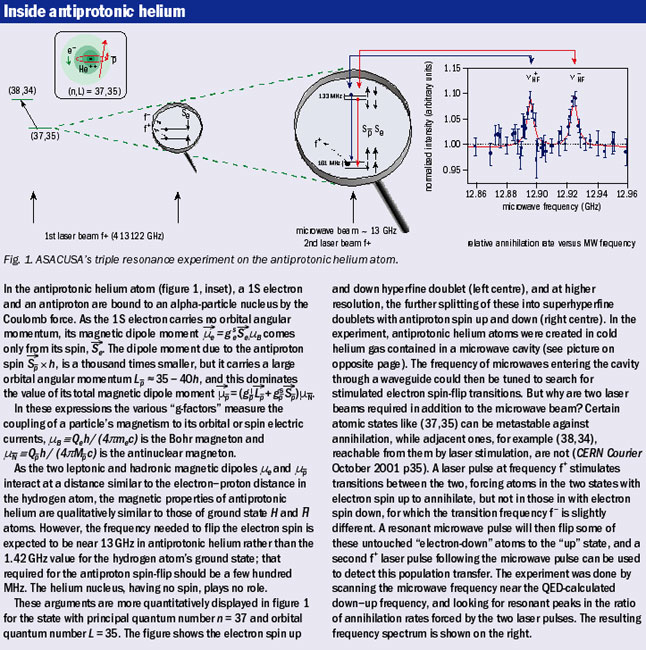
ASACUSA’s alternative approach involves the much easier task of replacing an electron in an ordinary atom by an antiproton and measuring the spectroscopic frequencies of the resulting “antiprotonic atom”. However, we do not have the CPT conjugate “protonic antiatom” with which to compare it, and must calculate its transition frequencies from quantum electrodynamics, assuming the known proton values for the antiproton (and also that the calculations were done properly). In this way, the ASACUSA collaboration has determined the relative charge and mass of the proton-antiproton pair to six parts in 108 (Hori et al.) by laser-stimulating optical-frequency transitions in antiprotonic helium (figure 1) – the only variety of antiprotonic atom known to live long enough to permit such quantum gymnastics.

How might we use this atom to investigate the antiproton’s magnetic properties? Unknown large-scale fields are sometimes measured by determining the energy required to turn over a magnetic dipole of known strength placed in them. At the atomic scale, this is the basis of classic experiments on magnetic effects like the ground-state hyperfine splitting in hydrogen. Likewise, by measuring the energy of the photon needed to flip the known magnetic dipole of the electron in the unknown magnetic field of the antiproton, we can measure the latter particle’s own dipole field.

cernasa3_1-03

ASACUSA has now carried out such an electron spin-flip experiment (Widmann et al.), in which two laser beams and a microwave beam were tuned to resonate with the antiprotonic helium atom (see figure 1 for an explanation of this “triple resonance” experiment). Microwave resonance peaks occurred at 12.89596 and 12.92467 GHz, corresponding to electron spin-flips in states of the atom with antiproton spin “up” and “down”. These values are consistent with calculated values assuming the proton’s orbital magnetic dipole moment for the antiproton, and limit any difference between them to less than six parts in 105. The measured values also depend on the antiproton’s spin magnetic moment, but the corresponding limit for this (1.6%) is not yet as good as the value (0.3%) deduced from the fine structure of X-ray spectra in heavy antiprotonic atoms. A precision measurement of this latter quantity will require major improvements in the laser system. Therefore what will probably come next from ASACUSA are even tighter limits on the orbital moment, charge and mass.

The present result has an unusual feature. According to the equation for mp (see figure 1), what is being measured is mainly the ratio g1p- / g1p of the factors defining the orbital current magnetism relationship for the members of the CPT conjugate pair. However, we have no atoms with orbiting protons in our matter world, and g1p has always implicitly been taken by definition to be equal to 1. Thus while CPT invariance is respected within the six parts in 105 limit given above, we do not know, in the empirical sense, that either g-factor really has the value unity.

In a spin at Brookhaven

cernspin1_1-03

The 15th biennial International Spin Physics Symposium (SPIN2002) was held at Brookhaven National Laboratory on 9-14 September 2002. Some 250 spin enthusiasts attended, including experimenters and theorists in both nuclear and high-energy physics, as well as accelerator physicists and polarized target and polarized source experts. The six-day symposium included 23 plenary talks and 150 parallel talks. SPIN2002 was preceded by a one-day spin physics tutorial for students, postdocs, and anyone else who felt the need for a refresher course.

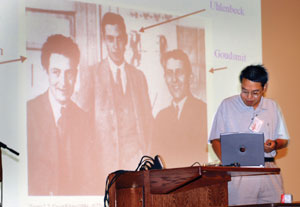
In the opening talk, “A Beautiful Spin”, Xiang-dong Ji of Maryland reviewed the history of spin, starting with the 1925 publication by George Uhlenbeck and Samuel Goudsmit that introduced spin as a fundamental property of most subatomic particles. Ji noted that our 3+1-dimensional space-time is symmetrical under translation and rotation; this symmetry results in two universal observables, mass and spin. Understanding these two fundamental quantities has been a central goal of particle and nuclear physics throughout much of the 20th century. He went on to describe the invaluable role that spin plays in uncovering physics beyond the Standard Model, nucleon structure and nonperturbative quantum chromodynamics (QCD).

Quark structure

Over the last decade, great progress has been made in measuring the quark spin structure functions of the nucleon with the SMC experiment at CERN, HERMES at Hamburg’s DESY laboratory, and at the Stanford Linear Accelerator Center (SLAC) in California. Todd Averett of the University of William and Mary and Andrew Miller of TRIUMF summarized this progress. Inclusive deep inelastic scattering (DIS) measurements have established that quarks and antiquarks combined (valence and sea) contribute only a small fraction of the nucleon spin on average. Therefore there must be a significant contribution from gluons and/or orbital angular momentum. It is possible that the valence quark contribution to the nucleon spin is large, but is offset by a negative sea quark polarization.

Semi-inclusive DIS data, where an outgoing hadron is observed, should separate the contributions from valence and sea quarks. New results were presented from HERMES showing little or no sea polarization, but with large errors, so it is difficult to draw a conclusion at this stage. The indication of a positive strange quark polarization is quite interesting. Future parity-violating W-boson production from high-energy polarized proton collisions should directly measure antiquark polarization, separated by flavour. Scaling violations in DIS data at different energies provide a first glimpse of gluon polarization, which appears to be significant. Future results from the experiments COMPASS at CERN, E-160 at SLAC, and PHENIX and STAR at Brookhaven, with complementary kinematic coverage, are eagerly awaited. Richard Milner of MIT-Bates showed recent plans for the next-generation measurements of polarized DIS using a proposed high-luminosity electron-ion collider (EIC).

On the theory front, Marco Stratmann of Regensburg reviewed the theoretical framework for describing longitudinal spin asymmetries in perturbative QCD, and the progress made in the corresponding higher-order calculations. He then ventured into the domain of high-energy polarized proton collisions and outlined the framework for global QCD analyses. Kostas Orginos of the RIKEN-Brookhaven Research Center (RBRC) reviewed the progress, results and future prospects for learning about nucleon spin structure from lattice QCD. Philip Ratcliffe of the University of Insubria expanded on the latest attempts to explain the large observed single-spin transverse asymmetries in inclusive hyperon and pion production, as well as lepton-induced production. Recent theoretical advances calculate such asymmetries perturbatively in terms of intrinsic transverse-momentum degrees of freedom in hadrons, and of higher-twist effects. He highlighted the re-emerging domain of transversity and how to access it in polarized hadron production processes such as Drell-Yan, as well as semi-inclusive processes in polarized lepton-nucleon collisions. Inevitably, he pleaded for additional experimental data. Marc Vanderhaeghen of Mainz reviewed the relatively new and exciting field of DIS exclusive processes and generalized parton distributions, which could provide information on the orbital angular momentum of partons in the nucleon.

cernspin2_1-03

Klaus Helbing of Erlangen reviewed the status of the experimental verification of the Gerasimov-Drell-Hearn (GDH) sum rule, which relates a weighted integral of the spin-dependent photon-nucleon absorption cross-section to the anomalous magnetic moment of the nucleon, and is widely believed to stand on very solid ground in QCD. Proton results from the Mainz Microtron and ELSA machine at Bonn have now verified this sum rule at the 5% level. Further experimental information in the resonance region and at high energies from laboratories such as Jefferson Laboratory (JLab) in Virginia will be important. This is especially true for the neutron. The rich spectrum of low-energy electron and photon-induced experiments from HIGS at Duke University, LEGS at Brookhaven, GRAAL in Grenoble and LEPS at Harima, Japan (listed in increasing energy from 0.6 to 2400 MeV) were covered by Andrew Sandorfi of Brookhaven. He detailed work on the GDH sum rule and lambda production with an effort to understand the 1405 MeV resonance. He looked to the future EIC and back-scattered photons to extend the reach to 6500 MeV.

Brookhaven’s Haixin Huang reported on the first operation of the Relativistic Heavy Ion Collider (RHIC) as a polarized proton collider. Polarized proton beams in RHIC were recently accelerated to 100 GeV without significant loss of polarization; this confirmed that the two Siberian snakes installed in each ring indeed work as predicted at Novosibirsk by Yaroslav Derbenev and Anatoly Kondratenko about 25 years ago. The world’s first polarized proton collisions in a collider were observed at RHIC at a centre-of-mass energy of 200 GeV and a luminosity of about 1.5 x 1030 cm_2s_1. However, due to a significant polarization loss in the Alternating Gradient Synchrotron (AGS), which serves as the injector for RHIC, the maximum beam polarization was only about 25%. This can be partly ascribed to a weak temporary replacement for the AGS’s failed 30 MW motor-generator. The proton beam polarization was measured by the proton-carbon Coulomb nuclear interference reaction, a topic that was also covered by Boris Kopeliovich of the Max Planck Institute in Heidelberg in his theoretical review of proton-proton elastic scattering. Brookhaven’s Les Bland reported on the hadron spin physics experiments during RHIC’s first short three-week polarized data run. These included the observation of large asymmetries in neutral pion production by the STAR experiment, and in neutron production by the PHENIX experiment at large Feynman-x (the ratio of observed longitudinal momentum to the maximum allowed) in polarized proton-proton collisions at 200 GeV in the centre of mass.

cernspin3_1-03

Representing the next generation of spin physicists, Michigan graduate student Vassili Morozov presented some other impressive polarized beam efforts. During the venerable Indiana University Cyclotron Facility (IUCF) cooler ring’s final year, Morozov and his colleagues spin-flipped both vector and tensor polarized deuterons for the first time. They also spin-flipped polarized protons with a measured spin-flip efficiency of 99.93 ± 0.02%. There were many reports of the impressive progress on polarized sources and polarized solid and gas targets. Their ever-increasing intensities and polarizations are essential to the field of spin physics, and were highlighted in a review by Erhard Steffens of Erlangen, and in workshop summaries by Vladimir Derunchuck of IUCF) and Manouchehr Farkhondeh of MIT-Bates.

Beyond the Standard Model

Turning to probes of physics beyond the Standard Model, Ernst Sichtermann of Yale presented the recent highly precise measurement of the muon anomalous magnetic moment (g-2) using the high-intensity polarized positive muon storage ring that is fed by the AGS. The latest result is about a two-sigma deviation from the Standard Model. Considerable theory work is in progress, and negative muon data are being analysed by the experiment. New experiments are planned to measure the neutron electric dipole moment using polarized neutrons at Los Alamos.

Krishna Kumar of Massachusetts reviewed parity violation in polarized electron scattering. Two major experiments – SAMPLE at Bates and HAPPEX at JLab – are using parity violation to study the strangeness content of the proton. The new high-precision E158 experiment’s measurement of parity violation in Moller scattering at SLAC will test the Standard Model predictions for the electron’s weak charge.

The last day of SPIN2002 focused mostly on the future. Gudrid Moortgat-Pick of DESY discussed polarized electron-positron linear colliders and supersymmetry. Gordon Cates of Virginia described some impressive advances using spin physics in the field of medicine. Jacques Soffer of Marseilles ended the symposium with confidence that we are poised to witness significant progress in our understanding of spin and QCD in the near future. He also echoed the sentiment of the opening presentation: that the universe without spin would collapse. This happy note set the stage for the 16th International Spin Physics Symposium, SPIN2004, which will take place at the International Centre for Theoretical Physics in Trieste, Italy, in early autumn 2004. The many dedicated spin physicists attending SPIN2002 can now look forward to more exciting results, and a deeper understanding of the mysterious quantity that is spin.

Proceedings to be published by the American Institute of Physics.

ATRAP looks inside antihydrogen

The ATRAP experiment at CERN’s Antiproton Decelerator has detected and measured large numbers of cold antihydrogen atoms. Relying on ionization of the cold antiatoms when they pass through a strong electric field gradient, the ATRAP measurement provides the first glimpse inside an antiatom, and the first information about the physics of antihydrogen.

ATRAP’s technique relies on trapping positrons between two bunches of antiprotons in a nested trap structure. The positrons are used to cool the antiprotons, and when they both reach a similar temperature, some combine to form antihydrogen atoms (a positron orbiting an antiproton nucleus). Being electrically neutral, these antiatoms drift out of the trap. Those that move along the axis of the apparatus soon find themselves traversing a strong electric field that strips off the positrons, thereby allowing the negatively charged antiprotons to be trapped and counted. “This measurement is completely background-free,” explains ATRAP spokesperson Jerry Gabrielse of Harvard University, “since the only way that a signal is detected is if antiprotons escape the nested trap in the form of neutral antihydrogen atoms.”

The ATRAP team has measured the field needed to ionize the antihydrogen atoms. The result shows that the antiatoms are formed in highly excited states (between n = 43 and n = 55). This is being interpreted as pointing to a three-body recombination scheme where a third body carries away the energy and momentum liberated by the antiatom’s formation. The ATRAP method has allowed the first measurement of the physics of antihydrogen, and is a step towards the precision measurements that will allow matter-antimatter comparisons to be made. The ultimate goal is to trap antihydrogen atoms and study their spectra with the same precision as for plain hydrogen (a few parts in 1014 for an analysis of the transition from the n = 2 to the n = 1 state).

The news comes shortly after another CERN experiment, ATHENA, announced its observation of cold antihydrogen. Using a completely different detection technique to ATHENA, and providing the first glimpse into the internal structure of antihydrogen, ATRAP has shown that CERN researchers are well on the way to understanding the first entry in the periodic table of the anti-elements. ATHENA and ATRAP use similar techniques for trapping the ingredients of antihydrogen, developed over many years by Gabrielse’s team. The fact that they use different detection methods reinforces the result, and is a good omen for future studies of antihydrogen at CERN.

DASI measures CMB polarization

cernastrow1_12-02

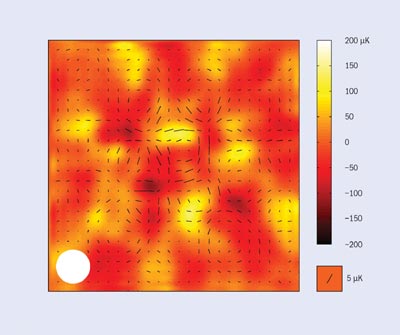
Another big step forward has been made in the study of the early universe. The Degree Angular Scale Interferometer (DASI) has announced the first measurements of the polarization of cosmic microwave background (CMB) radiation. The new results are a strong validation of the theoretical framework for the origin of fluctuations in the CMB, and also lend confidence to the values of the cosmological parameters that have been derived from CMB measurements.

CMB radiation dates from 300 000 years after the Big Bang, when radiation decoupled from matter. Fluctuations in the CMB are evidence for the first clumping of matter particles – the seeds of the galaxies that we see today. The radiation is polarized because atoms moving in the early universe scattered light differently, depending on whether the light was heading towards or away from them. The faster the speed of the atoms, the more pronounced the polarization. Measuring the polarization of the CMB is a direct measure of the dynamics of the early universe.

cernastrow2_12-02

This exciting field of study has seen many advances in observing capabilities over recent years, and new discoveries have been coming thick and fast. Just last year, DASI and also the BOOMERANG balloon experiment announced measurements of the angular power spectrum of the CMB. Plotting the observed power as a function of the angular size of emitting regions gives a constraint on cosmological parameters, such as W – the ratio of matter in the universe to the critical level needed to halt its expansion, and also the amount of ordinary matter and dark matter in the universe. The polarization signal is more difficult to detect. For the temperature measurements, 32 different areas of the sky were observed for relatively short time scales. For the polarization measurements, 271 days of observation were needed for just two areas of sky to reach the required signal level.

DASI is a 13-element interferometer located at the south pole. Observers and the telescope must survive freezing antarctic conditions, not without difficulties. However, their endurance has certainly paid off, with some extremely interesting results.

Multiparticle dynamics goes to Crimea

cernmulti1_12-02

This year’s International Symposium on Multiparticle Dynamics (ISMD), which took place in the Crimean town of Alushta, Ukraine, was the first to be held in the Commonwealth of Independent States. It was organized by the Joint Institute for Nuclear Research (JINR) in Dubna, Russia, and the Bogoliubov Institute of Theoretical Physics (BITP) of the National Academy of Sciences of the Ukraine. JINR’s vice-director, Alexei Sissakian, and László Jenkovszky of BITP co-chaired the organizing committee.

More than 100 scientists from 20 countries, as well as CERN and JINR, took part in the symposium. Topics covered a wide range of problems in elementary particle-production physics: particle fluctuations and correlations; diffraction processes; soft and hard processes in quantum chromodynamics; heavy-ion physics, production of particles with large multiplicity; and cosmology problems of elementary particle dispersion.

The symposium opened with a special session dedicated to the memory of Bo Andersson, an outstanding scientist as well as an active organizer and a participant in a number of ISMD meetings, who died in March. Gösta Gustafson, now a professor at Andersson’s home university of Lund, Sweden, spoke first about his former supervisor’s works and latest papers. He was followed by Fredrik Soderberg of Lund, Mike Seymour of the University of Manchester, UK, and Alessandro de Angelis of Udine University, Italy, who all paid tribute to Andersson.

The success of research in heavy-ion physics at CERN’s SPS, and more recently at the Brookhaven Laboratory’s Relativistic Heavy Ion Collider in the US, was thoroughly discussed at the meeting, with sessions being devoted to experimental and theoretical aspects of the field. In the area of electron-positron physics, the penetrating analysis of the data obtained in the experiments at CERN’s Large Electron Positron collider, which closed down in 2000, were still at the fore. Several speakers, including Sissakian, Jenkovszky, and Joseph Manjavidze of JINR, stressed that it is most important in modern physics to consider theoretically those problems that are associated with high-multiplicity particle production. Many speakers talked about the kind of experiments that might build on such theoretical work, making proposals for experiments at existing and future accelerators. JINR’s Vladimir Nikitin proposed studies of low-energy direct photons in multiparticle hadronic interactions at the U-70 proton synchrotron in Protvino, Russia. Yuri Kulchitsky, also of JINR, proposed a study of energy correlations in very high multiplicity at CERN’s Large Hadron Collider, while Andrey Korytov of the University of Florida discussed similar possibilities for Fermilab’s Tevatron.

Much interest was aroused by reports on the problems of strong interactions and diffraction in modern elementary particle physics presented by Dmitrij Shirkov of JINR, Nikolai Nikolaev of Julich, Lev Lipatov of St Petersburg, Alexei Kaidalov of Moscow’s Institute of Theoretical and Experimental Physics, Victor Fadin of Novosibirsk, and Paul Laycock of Liverpool University, UK. Sissakian presented a new vision of the process of thermalization processes in hadron interactions at high energies. Closing talks were given by Viatcheslav Kuvshinov of the Institute of Physics at the National Academy of Sciences, Belarus (for theory) and by Korytov (for experiment).

Following tradition, the conclusions of the symposium were brought in by the committee of elders, which consists of an international group of scientists involved with initiating the research that ISMD meetings cover, and who continue to actively influence these meetings. The committee, chaired by Norbert Schmitz of Munich, remarked upon the high scientific quality of the presentations and professional organization of the symposium. To bring the meeting to a close, the committee of elders endorsed the continuing relevance of the ISMD meetings, and set the venue for the 33rd symposium, which will be held in September 2003 in Kraków, Poland.

Researchers observe two-proton radioactivity

An atomic nucleus is an ensemble of nucleons – protons and neutrons. To bind these nucleons and to form a stable nucleus, a subtle equilibrium of the number of protons and the number of neutrons is needed. For light species, a stable nucleus is formed from an equal number of protons and neutrons. Above the nucleon number A = 40, more neutrons than protons have to be added to form a stable atomic nucleus to overcome the Coulomb repulsion of the charged protons.

cerntwo1_12-02

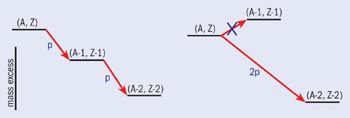
If the equilibrium between protons and neutrons is disturbed, a nucleus becomes unstable and decays; for a slight imbalance it decays by b-decay (transformation of a proton into a neutron or vice versa), whereas for a large disequilibrium it will emit nucleons. This kind of particle emission from a nucleus was first observed for heavy nuclei, which may emit a particles (helium nuclei) to gain stability. For lighter very proton-rich nuclei with an odd number of protons (Z), proton emission was observed for the first time during the early 1980s at the GSI laboratory in Darmstadt, Germany. According to theoretical predictions, simultaneous two-proton emission from nuclear ground states should occur for even-Z nuclei. This two-proton radioactivity is only observable if the sequential emission of two independent protons is energetically forbidden (figure 1). This is the case for medium-mass proton-rich nuclei around A = 40-50. Due to the gain of stability from the pairing energy, the mass of the even-Z two-proton emitter is smaller than the mass of the odd-Z one-proton daughter, and therefore one-proton emission cannot occur. The only open decay branch is simultaneous two-proton decay.

First observations

Experimental efforts have focused on the observation of this decay mode since its theoretical prediction in the 1960s, and in particular since the first observation of two-proton emission from excited states after b-decay in the 1980s. The first case of two-proton emission was that of aluminium-22, observed at Berkeley, US. However, the decay of this nucleus as well as those of all other b-delayed two-proton emitters turned out to be sequential (the decay proceeds via a well defined intermediate state in the one-proton daughter). No direct two-proton emission could be observed.

The situation is similar for the very-light, even-Z, proton drip-line nuclei beryllium-6 and oxygen-12, studied during the 1990s (a drip line is the boundary beyond which nuclei decay by proton or neutron emission). Although for these light nuclei, the intermediate one-proton daughter state may lie higher in energy than the two-proton emitting state, the sequential branch is always found open, because all the states involved are very broad, a consequence of the small Coulomb barrier for these light nuclei.

Theoretical predictions therefore pointed rather to medium-mass proton drip-line nuclei, and found iron-45, nickel-48 and zinc-54 to be the most promising candidates for direct two-proton ground-state decay. For these nuclei, the energy available for the two protons (the Q value) was found to be large enough to yield a reasonable probability for the two protons to traverse the Coulomb barrier fast enough so that two-proton radioactivity could dominate over b-decay (the competing decay), but not too large to make the decay too fast to be observed.

Following recent observations of iron-45 and nickel-48, experiments were planned to study their radioactive decay. Due to the fact that iron-45 is somewhat less exotic (less far away from stability) than nickel-48, and therefore its production rates are about an order of magnitude higher, iron-45 turned out to be the prime candidate for two-proton radioactivity. Its decay by this new type of radioactivity has now been observed in two independent experiments at the GANIL laboratory in Caen, France, and at GSI (see further reading).

cerntwo2_12-02

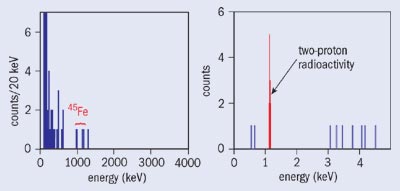
Both experiments used projectile fragmentation of a stable nickel-58 beam on a beryllium (GSI) or nickel (GANIL) target. The fragments of interest were selected by a fragment separator and directed to a detection station, where the decay of iron-45 was observed after its implantation in a stack of silicon detectors. The GSI experiment identified four decays of iron-45 with decay energy of about 1.1 MeV, whereas in the GANIL experiment 12 correlated decays were measured with the same energy. The half-lives determined in both experiments agree nicely and yield an average value of about 3.8 ms. The decay energy and half-life are in beautiful agreement with theoretical predictions using a shell-model approach combined with Coulomb-barrier penetration calculations. However, the most important piece of evidence comes from the fact that both experiments looked for b particles from a possible b-decay of iron-45. In the GSI experiment, a sodium iodide barrel would have detected the 511 keV photons from annihilation of the b particles, whereas in the GANIL experiment, a silicon detector was used to observe any b particles directly. No such coincident radiation was observed for any of the events consistent with two-proton radioactivity. Therefore both experiments excluded the possibility that the 1.1 MeV decay signal of iron-45 is due to a b-delayed decay branch, the concurrent decay possibility of this nucleus.

Both experiments observed only the total energy released in the decay. Neither was designed to identify the individual protons and measure their energies and relative emission angles. However, from theoretical predictions it is clear that the emission must have taken place simultaneously. None of the commonly used models predicts any significant sequential emission branch. But even in the case of simultaneous emission, two extreme pictures can be designed. One is an emission process whereby the two protons are emitted independently and therefore fill the whole phase space (there is no particular energy or angular correlation between the two protons). This decay mechanism is usually referred to as three-body decay. The other decay mechanism is known as helium-2 emission, where the two protons are strongly correlated and one could expect an angular and/or energy correlation between them. For both pictures, theoretical descriptions are available. However, a complete model should accommodate both pictures simultaneously and describe them as extremes of a more realistic modelling of the process. These types of descriptions are now being developed, mainly in close connection with the models used for two-neutron halo nuclei on the opposite side of the valley of stability.

Testing the models

cerntwo3_12-02

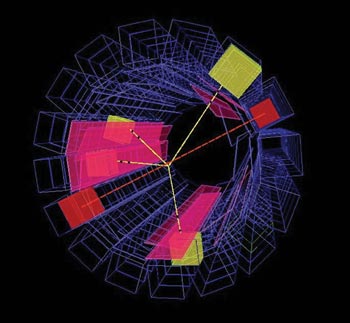
To test these models in more detail, better experimental data and more theoretical development are needed. It is of particular importance, for example, to go beyond a measurement of only the total decay energy. By measuring the individual proton energies and their relative emission angles, conclusions about the decay mechanism can probably be drawn. However, for these kinds of measurements, the silicon detection set-ups used in the GANIL and GSI experiments can no longer be used. In such set-ups, the decay protons cannot escape from the detector, and therefore no information about the individual energies and the proton-proton angles can be gained. This problem can be overcome by using gas tracking detectors, so that the tracks of the emitted protons can be observed. A development recently started at the Centre d’Etudes Nucléaires (CEN) Bordeaux-Gradignan, whereby a time-projection chamber (TPC) will be used to visualize the tracks of the two protons in three dimensions. With such a set-up, the two-proton emitter will no longer be implanted deeply into a silicon detector, but will be in the centre of a gas cell used as the active volume of the TPC.

Another research direction will be to identify new two-proton emitters. Nickel-48 and zinc-54 are especially accessible for experiments, and are ready to be studied. These investigations may then allow the decay mechanism of two-proton radioactivity to be studied. In particular, two-proton decay may open an original route towards studying pairing in the atomic nucleus. In addition, masses will be determined for nuclei beyond the limits of stability via the measurement of the two-proton Q value, which then allows mass-model predictions far away from the stability line to be tested. By comparing experimental results and theoretical calculations, the single-particle structure of extremely proton-rich nuclei might become accessible. It is commonly felt that a deeper understanding of nuclear structure can only be obtained by studying nuclei far away from stability. Two-proton radioactivity is now set to provide an interesting probe for this endeavour.

Cold antiatoms produced at CERN

cernnews1_11-02

Physicists working at CERN’s Antiproton Decelerator (AD) have announced the first controlled production of large numbers of antihydrogen atoms at low energies. This is an important step on the way to testing the fundamental symmetry CPT through comparison of hydrogen with antihydrogen.

The hydrogen atom is the most completely understood atomic system, with its first excited state being pinned down to just 1.8 parts in 1014. Antihydrogen, on the other hand, is almost completely unknown. A comparison of the two systems would give a very precise test of CPT symmetry, which is assumed to be conserved in the Standard Model of particle physics. CPT is the combination of charge conjugation, parity and time reversal. The violation of the CP combination is well established in kaon and B-meson decays, but so far, no experiments have shown evidence that CPT is not conserved in nature.

This latest development at CERN follows the production of small numbers of fast-moving antihydrogen atoms at CERN and Fermilab in the US in the mid-1990s. It is the result of several years of development work into the antiparticle trapping and mixing systems needed to produce slow (cold) antihydrogen atoms that can themselves be trapped for further study. ATHENA, one of two CERN experiments that plan to study antihydrogen, has been the first to produce cold antihydrogen atoms.

Says CERN director-general, Luciano Maiani: “The controlled production of antihydrogen observed in ATHENA is a great technological and scientific event. Even more so because ATHENA has produced antihydrogen in unexpectedly abundant quantities.” Giving due credit to the ATRAP experiment (which also aims to study antihydrogen), he went on to say: “I’d like to recognize the contribution of ATRAP, which has pioneered the technology of trapping cold antiprotons and positrons, an essential step towards the present discovery.” Last year the ATRAP experiment was the first to use cold positrons to cool antiprotons.

The ATHENA collaboration of 39 scientists from nine institutions worldwide has built on these techniques with the addition of a high-yield positron accumulator and powerful particle detector. The abundant numbers of positrons from the accumulator, coupled with good granularity and background rejection from the detector, allowed the collaboration to see its first clear signals for antihydrogen in August – appropriately, the 100th anniversary of the birth of theorist Paul Dirac, who predicted the existence of antimatter in the late 1920s.

The ATHENA collaboration estimates that some 50 000 antihydrogen atoms were created in its apparatus before announcing their result. Antiprotons decelerated by the AD to a leisurely pace – by CERN’s standards – of a tenth of the speed of light were first trapped in an electromagnetic cage. From each AD pulse of 2 ¥ 1o7 antiprotons, some 10,000 were caught. The next stage was to mix them with about 75 million cold positrons collected from the decay of a radioactive isotope and caught within a second trap. Finally, the trap doors were opened, allowing the antiprotons and positrons to mix in a third trap. It is here that cold antihydrogen atoms formed.

ATHENA observes antihydrogen atoms when they annihilate with the walls of the mixing trap. Two photons from the positron annihilation are localized in space and time with charged particles coming from the antiproton annihilation. The next steps are to trap antihydrogen atoms and add a laser spectroscopy system. This will allow the CPT studies to begin.

bright-rec iop pub iop-science physcis connect