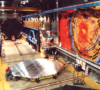
 Read article 'Underground lab open for business'
Underground lab open for business
The expansion of the University of Minnesota's Soudan underground laboratory is now complete.

 Read article 'Underground lab open for business'
The expansion of the University of Minnesota's Soudan underground laboratory is now complete.
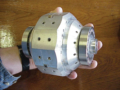 Read article 'Record-breaking magnet has five-tesla field'
A group of laboratories in Grenoble has built a permanent magnet that produces a world-record field of 5 T at room temperature.
 Read article 'Polarized protons collide in RHIC'
The Brookhaven National Laboratory's Relativistic Heavy-Ion Collider (RHIC) collided its first polarized protons last November.
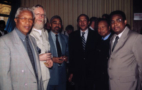 Read article 'Mad about physics in Antananarivo'
The Malagasy capital of Antananarivo welcomed HEP-MAD '01, Madagascar's first conference on high-energy physics, at the end of September last year
 Read article 'The end of the universe may be frozen in time'
The long-term future of extragalactic astronomy could be dark and dreary, according to new theoretical research. Such a prediction might have not have been taken so seriously, had it not originated fr...
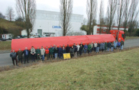 Read article 'Dipole magnets transfer to industry'
The LHC will use some 1248 superconducting dipole magnets to keep its proton beams on course.
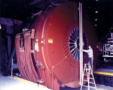 Read article 'Rare kaon decay tests Standard Model'
An experiment at Long Island's Brookhaven laboratory has just reported a long-awaited result: the observation of only the second decay of a positive kaon into a positive pion accompanied by a neutrino...
 Read article 'Quantum gravity comes in from the cold'
Gravity and quantum mechanics rarely mix in laboratory circles.
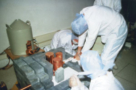 Read article 'Team reports neutrinoless double beta decay'
Scientists at the Max Planck Institute for Nuclear Physics in Heidelberg, Germany, have reported evidence of neutrinoless double beta decay.
 Read article 'Pierre Auger Observatory in action'
On a cold, clear night last May the shutters rolled away from the aperture window.