Are we at the vanguard of every facet of our field? In our quest for knowledge, physicists have charted nebulae, quantified quarks and built instruments and machines at the edge of technology. Yet, there is a frontier that remains less explored: leadership. As a field, particle physics has only just begun to navigate the complexities of guiding our brightest minds.
Large-experiment collaborations such as those at the LHC achieve remarkable feats. Indeed, social scientists have praised our ability to coordinate thousands of researchers with limited “power” while retaining individual independence. Similarly, as we continuously optimise experiments for performance and quality, and there also exist opportunities to refine behaviours and practices to facilitate progress and collective success.
A voice for all
Hierarchies in any organisation can inadvertently become a barrier rather than a facilitator of open idea exchange. Often, decision-making is confined to higher levels, reducing the agency of those implementing actions and leading to disconnects in roles and responsibilities. Excellence in physics doesn’t guarantee the interpersonal skills that are essential for inspiring teams. Moreover, imposter syndrome infects us all, especially junior collaborators who may lack soft-skills training. While striving for diversity we sometimes overlook the need to embrace different personality types, which, for example, can make large meetings daunting for the less outspoken. Good leadership can help navigate these challenges, ensuring that every voice contributes to our collective progress.
Leadership is not management (using resources to get a particular job done), nor is it rank (merely a line on a CV). It is guidance and influence of others towards a shared vision – a pivotal force as essential as any tool in our research arsenal. Good leadership is a combination of strategic foresight, emotional intelligence and adaptive communication; it creates an inclusive environment where individual contributions are not commanded but empowered. These practices would improve any collaboration. In large physics experiments this type of leadership is incidental instead of being broadly acknowledged and pursued.
Luckily, leadership is a skill that can be taught and developed through training. True training is a craft and is best delivered by experts who are not just versed in theory but are also skilled practitioners. Launched in autumn 2023 based on the innovative training approach of Resilient Leaders Elements, a new course “Leading in Collaborations” is tailored specifically for our community. The three-month expert-facilitated course includes four half-day workshops and two one-hour clinics, addressing two main themes: “what I do”, which equips participants with decision-making skills to set clear goals and navigate the path to achieving them; and “who I am”, which encourages participants to channel their emotions positively and motivate both themselves and others effectively. The course confronts participants with the question “What is leadership in a large physics collaboration?” and provides a new framework of concepts. Through self-assessment, peer-feedback sessions, individualised challenges and buddy-coaching, participants are able to identify blind spots and hidden talents. A final assessment shows measurable change in each skill.
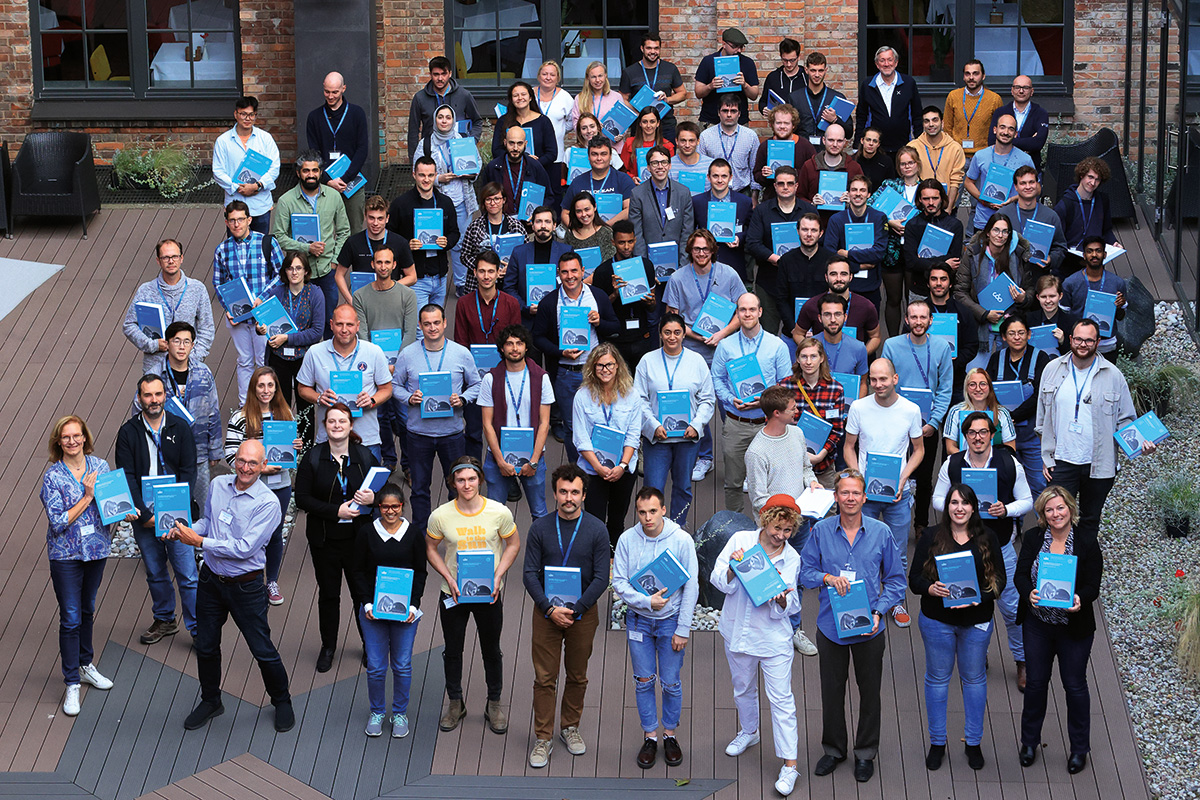
The first cohort of 20 participants, displaying a diverse mix of physics experience from various institutions and nationalities, was welcomed to the programme at University College London on 14 and 15 November 2023. More than half of the participants were women – in line with the programme’s aim to ensure that those often overshadowed are given the visibility and support to become more impactful leaders. The lead facilitator, Chris Russell, masterfully connected with the audience via his technical physics background and proceeded to build trust and impart knowledge in an open and supportive atmosphere. When discussing leadership, the initial examples given cited military and political figures; reframing led to a participant’s description of a conductor giving their orchestra space to play through an often-rehearsed tough section as an example of great leadership.
Crucial catalyst
Building on the experience of the first cohort, the aim is to offer the programme more broadly so that we can encourage common practice and change the culture of leadership in large collaborations. Given that the LHC hosts the largest collaborations in physics, the programme also hopes to find a home within CERN’s learning and development portfolio.
The Leading in Collaborations programme is a crucial catalyst in the endeavour to ensure that our precious resources are wielded with precision and purpose, and thus to amplify our collective capacity for discovery. Join the leadership revolution by being the leader you wish you had, no matter your rank. Together, we will become the cultural vanguard!
The Conference of Technology and Instrumentation in Particle Physics (TIPP) is the largest conference of its kind. The sixth edition, which took place in Cape Town from 4 to 8 September 2023 and attracted 250 participants, was the first in Africa. More than 200 presentations covered state-of-the-art developments in detector development and instrumentation in particle physics, astroparticle physics and closely related fields.
“As South Africa, we regard this opportunity as a great privilege for us to host this year’s edition of the TIPP conference,” said minister of higher education, science and innovation Blade Nzimande during an opening address. He was followed by speeches from Angus Paterson, deputy CEO of the National Research Foundation, and Makondelele Victor Tshivhase, director of the national research facility iThemba LABS.
The South African CERN (SA–CERN) programme within the National Research Foundation and iThemba LABS supports more than 120 physicists, engineers and students that contribute to the ALICE, ATLAS and ISOLDE experiments, and to theoretical particle physics. The SA–CERN programme identifies technology transfer in particle physics as key to South African society. This aligns symbiotically with the technology innovation platform of iThemba LABS to create a platform for innovation, incubation, industry collaboration and growth. For the first time, TIPP 2023 included a dedicated parallel session on technology transfer, which was chaired by Massimo Caccia (University of Insubria), Paolo Giacomelli (INFN Bologna) and Christophe De La Taille (CNRS/IN2P3).
The scientific programme kicked off with a plenary presentation on the implementation of the ECFA detector R&D roadmap in Europe by Thomas Bergauer (HEPHY). Other plenary presentations included overviews on bolometers for neutrinos, the Square Kilometre Array (SKA), technological advances by the LHC experiments, NaI experiments, advances in instrumentation at iThemba LABS, micro-pattern gaseous detectors, inorganic and liquid scintillator detectors, noble liquid experiments, axion detection, water cherenkov detectors for neutrinos, superconducting technology for future colliders and detectors, and the PAUL facility in South Africa.
A panel discussion between former CERN Director-General Rolf Heuer (DESY), Michel Spiro (IRFU) and Manfred Krammer (CERN), Imraan Patel (deputy director general of the Department of Science and Innovation), Angus Paterson and Rob Adam (SKA) triggered an exchange of insights about international research infrastructures such as CERN and SESAME for particle physics and science diplomacy.
Prior to TIPP2023, 25 graduate students from Botswana, Cameroon, Ghana, South Africa and Zambia participated in a school of instrumentation in particle, nuclear and medical physics held at iThemba LABS, comprising lectures, hands-on demonstrations, and insightful presentations by researchers from CERN, DESY and IJCLAB, which provided a global perspective on instrumentation.
The 13th Higgs Hunting workshop, organised in Orsay and Paris from 11 to 13 September 2023, was a timely opportunity to gather theorists and experimentalists interested in recent results related to the Higgs sector. While the large 140 fb–1 dataset collected by the ATLAS and CMS experiments during LHC Run 2 is still being exploited to measure the Higgs-boson properties in more detail, the first results based on Run 3 data collected since 2022 were also shown, along with searches for phenomena beyond the Standard Model.
Experimental highlights focused on the latest results from CMS and ATLAS. CMS presented a new measurement of the associated production of a Higgs boson with top quarks decaying into b quarks, while ATLAS showed a new measurement of the associated production of a vector boson and a boosted Higgs boson in fully hadronic final states. A major highlight was a new CMS measurement of the Higgs-boson mass in the four-lepton decay channel, reaching the highest precision to date in a single decay channel as well as placing indirect constraints on the Higgs-boson width. Precision measurements were also shown in the framework of effective field theory, which allows potential subtle deviations with respect to the Standard Model to be probed. A small number of intriguing excesses observed, for instance, in the search for partners of the Higgs boson decaying into W-boson or photon pairs were also extensively discussed.
Following a historical talk on the “long and winding road” that led particle physicists from LEP to the discovery of the Higgs boson by Steve Myers, who was CERN director of accelerators and technology when the LHC started up, a dedicated session discussed Higgs-physics prospects at colliders beyond the High-Luminosity LHC (HL-LHC). Patrizia Azzi (INFN Padova) presented the experimental prospects at the proposed Future Circular Collider, and Daniel Schulte (CERN) described the status of muon colliders, highlighting the strong interest within the community and leading to a lively discussion.
The latest theory developments related to Higgs physics were discussed in detail, starting with state-of-the-art predictions for the various Higgs-boson production modes by Aude Gehrmann-De Ridder (ETH Zurich). Andrea Wulzer (CERN) overviewed the theory prospects relevant for future collider projects, while Raffaele Tito D’Agnolo (IPhT, Saclay) presented the connections between the properties of the Higgs boson and cosmology and Arttu Rajantie (Imperial College) focused on implications of the Higgs vacuum metastability on new physics. Finally, a “vision” talk by Matthew McCullough (CERN) questioned our common assumption that the Higgs boson discovered at the LHC is really compatible with Standard Model expectations, considering the current precision of the measurements of its properties.
During several experimental sessions, recent results covering a wide range of topics were presented – in particular those related to vector-boson scattering, since their high-energy behaviour is driven by the properties of the Higgs boson. The Higgs-boson self-coupling was another topic of interest. The best precision on this measurement is currently achieved by combining indirect constraints from processes involving a single Higgs boson together with direct searches for the rare production of a Higgs-boson pair. While the Run 3 data set will provide an opportunity to further improve the sensitivity to the latter, its observation is expected to take place towards the end of HL-LHC operations. Finally, Stéphanie Roccia (LPSC) presented the implications of experimental measurements of the neutron electron dipole moment on the CP-violating couplings of the Higgs boson to fermions, absent in the Standard Model. Concluding talks were given by Massimiliano Grazzini (University of Zurich) and Andrea Rizzi (University and INFN Pisa). The next Higgs Hunting workshop will be held in Orsay and Paris from 23 to 25 September 2024.
The golden jubilees of the International Meeting on Fundamental Physics (IMFP23) and the National Centre for Particle Physics, Astroparticles and Nuclear Physics (CPAN) Days were celebrated from 2 to 6 October 2023 at Palacio de la Magdalena in Santander, Spain, organised by the Institute of Physics of Cantabria (IFCA). More than 180 participants representing the entire Spanish community in these disciplines, together with several international researchers, convened to foster cooperation between Spanish research groups and identify key priorities.
The congress started with parallel meetings on LHC physics, astroparticle physics, nuclear physics and theoretical physics. Two extra sessions were held, one covering technology transfer and the other discussing instrumentation R&D aimed at supporting the HL-LHC, future Higgs factories, and other developments in line with the European strategy for particle physics. The opening ceremony was followed by a lecture by Manuel Aguilar (CIEMAT), who gave an overview of the past 50 years of research in high-energy physics in Spain and the IMFP series. The first edition, held in Formigal (Spanish Pyrenees) in February 1973, was of great significance given the withdrawal of Spain from CERN in 1969, which put high-energy physics in Spain in a precarious position. The participation of prestigious foreign scientists in the first and subsequent editions undoubtedly contributed to the return of Spain to CERN in 1983.
LHC physics was one of the central themes of the event, in particular the first results from Run 3 as well as improvements in theoretical precision and Spain’s contribution to the HL-LHC upgrades. Other discussions and presentations focused on the search for new physics and especially dark-matter candidates, as well as new technologies such as quantum sensors. The conference also reviewed the status of studies related to neutrino oscillations and mass measurements, as well as searches for neutrinoless double beta decay and high-energy neutrinos in astrophysics. Results from gamma-ray and gravitational-wave observatories were discussed, as well as prospects for future experiments.
The programme included plenary sessions devoted to nuclear physics (such as the use of quantum computing to study the formation of nuclei), QCD studies in collisions of very high-energy heavy ions and in neutron stars, and nuclear reactions in storage rings. New technologies applied in nuclear and high-energy physics and their most relevant applications, especially in medical physics, complemented the programme alongside an overview of observational cosmology.
Roundtable discussions focused on grants offered by the European Research Council, R&D strategies and, following a clear presentation of the perspectives of future accelerators by ECFA chair Karl Jacobs (University of Freiburg), possible Spanish strategies for future projects with the participation of industry representatives. The congress also covered science policy, with the participation of the national programme manager Pilar Hernández (University of Valencia).
Prior to the opening of the conference, 170 students from various schools in Cantabria were welcomed to take part in an outreach activity “A morning among scientists” organised by IFCA and CPAN, while Álvaro de Rújula (University of Boston) gave a public talk on artificial intelligence. Finally, an excellent presentation by Antonio Pich (University of Valencia) on open questions in high-energy physics brought the conference to a close.
Twenty years ago, the participants of the UNESCO-sponsored Balkan Workshop BW2003 in Vrnjačka Banja, Serbia came to a common agreement on the creation of the Southeast European Network in Mathematical and Theoretical Physics (SEENET-MTP). The platform for the network was provided by the 1999–2003 Julius Wess initiative “Wissenschaftler in Global Verantwortung” (WIGV), which translates to “scientists in global responsibility”. Starting with a focus on the former Yugoslavia, WIGV aimed to connect and support individual researchers, groups and institutions from all over the Balkan region. The next natural step was then to expand the WIGV initiative to bridge the gap between the southeast region and the rest of Europe. Countries to the east and south of former Yugoslavia – such as Bulgaria, Greece, Romania and Turkey – have a reasonably strong presence in high-energy physics. On the other hand, they share similar economic and scientific problems, with many research groups facing insufficient financing, isolation and lacking critical mass.
The SEENET–MTP network has since grown to include 24 institutions from 12 countries, and more than 450 individual members. There are also 13 partner institutions worldwide. During its 20 years of existence, the network has undertaken: more than 20 projects; 30 conferences, workshops and schools; more than 360 researcher and student exchanges and fellowships; and more than 350 joint papers. Following initial support from CERN’s theoretical physics department, a formal collaboration agreement resulted in the joint CERN–SEENET–MTP PhD training programme with at least 150 students taking part in the first two cycles from 2015 to 2022. Significant support also came from the European Physical Society and ICTP Trieste, and the third cycle of the PhD programme will start in June 2024 in Thessaloniki, Greece.
Networking is the most promising auxiliary mechanism to preserve and build local capacity in fundamental physics in the region
Unfortunately, the general focus on (Western) Balkan states has shifted during the past few years to other parts of the world. However, networking is the most natural and promising auxiliary mechanism to preserve and build local capacity in fundamental physics in the region. The central SEENET-MTP event in this anniversary year, the BWXX workshop held in Vrnjačka Banja from 29 to 31 August 2023, marked the endurance of the initiative and offered 30 participants an opportunity to consider topics such as safe supersymmetry breaking (B Bajc, Slovenia), string model building using quantum annealers (I Rizos, Greece), entropy production in open quantum systems (A Isar, Romania), advances in noncommutative field theories and gravity (M Dimitrijević Ćirić, Serbia), and the thermodynamic length for 3D holographic models and optimal processes (T Vetsov, Bulgaria).
A subsequent meeting held during an ICTP workshop on string theory, holography and black holes from 23 to 27 October 2023, partially supported by CERN, invited participants to brainstorm about future SEENET–MTP activities – the perfect setting to trace the directions of this important network’s activity in its third decade.
The fourth edition of the Fast Machine Learning for Science Workshop was hosted by Imperial College London from 25 to 28 September 2023, marking its first venture outside the US. The series was launched in response to the need for microsecond-speed machine-learning inference for the High-Luminosity LHC (HL-LHC)detectors, in particular in the hardware trigger systems of the ATLAS and CMS experiments. Achieving this level of speed requires non-standard and generally custom hardware platforms, which are traditionally very challenging to program. While machine learning is becoming widespread in society, this ultrafast niche is not well served by commercial tools. Consequently, particle physicists have developed tools, techniques and an active community in this area.
The workshop gathered almost 200 scientists and engineers in a hybrid format. Students, including undergraduates, and early-career researchers were strongly represented, as were key industry partners. A strong aim of the conference was to engage scientific communities outside particle physics to develop areas where the tools and techniques from particle physics could be game-changing.
The workshop focused on current and emerging techniques and scientific applications for deep learning and inference acceleration, including novel methods for efficient algorithm design, ultrafast on-detector inference and real-time systems. Acceleration as a service, hardware platforms, coprocessor technologies, distributed learning and hyper-parameter optimisation. The four-day event consisted of three workshop-style days with invited and contributed talks, and a final day dedicated to technical demonstrations and satellite meetings.
The tools and techniques from particle physics could be game-changing
The interdisciplinary nature of the workshop – which encompassed particle physics, free electron lasers, nuclear fusion, astrophysics, computer science and biology – made for a varied and interesting agenda. Attendees heard talks on how fast machine learning is being harnessed to speed up the identification of gravitational waves, and how it is needed to handle the high data rates and fast turnaround of experiments at free-electron lasers. In the medical arena, speakers addressed the need for faster image processing and data analysis for diagnosis and treatment, and the use of fast machine learning in biology to search for known and unknown features in large, heterogeneous datasets. The use of machine learning in control systems and simulations was discussed in the context of laser-driven accelerators and nuclear-fusion experiments, while in theoretical physics the application of machine learning to solve the electron wave equation in condensed matter, working towards a detailed and fundamental understanding of superconductivity, was presented.
Industry partners including AMD, Graphcore, Groq and Intel discussed current- and future-generation hardware platforms and architectures, and facilitated tutorials on their development toolchains. Researchers from Groq and Graphcore presented their latest dedicated chips for artificial-intelligence applications and showed that they have interesting applications to problems in particle physics, weather forecasting, protein folding, fluid dynamics, materials science and solving partial differential equations. AMD and Intel demonstrated the flexibility of their FPGA platforms and explained how to optimise them for scientific machine-learning applications.
A highlight of the social programme was a public lecture from Grammy Award-winning rapper Lupe Fiasco, who discussed his work with Google on large-language models. The workshop will return to the US next year, before landing in Zurich in 2025.
The first ICFA Beam Dynamics workshop on Cold Copper Accelerator Technology and Applications was held at Cornell University from 31 August to 1 September 2023. Nearly 100 people came together to discuss the technology and explore next directions for R&D. Originally conceived at SLAC as an attractive approach to a linear-collider Higgs factory (dubbed the Cool Copper Collider, C3), interest in the technology has expanded to other areas.
Following opening presentations by Julia Thom-Levy (Cornell associate vice provost for research and innovation) and Jared Maxson (who leads the cold copper programme at Cornell), Emilio Nanni (SLAC) presented an overview of radio-frequency (RF) breakthroughs using cold copper cavities. He described three major advantages over conventional materials such as superconducting niobium: increased material conductivity at cryogenic temperatures (a reduction in resistance by a factor of three), significant reduction in pulsed heating, and improved yield strength and thermal diffusion. Combined, these lead to a high potential acceleration gradient of 70–120 MV/m, and an estimated 8 km footprint for a 550 GeV Higgs factory.
The optimised C-band cavity design enables a novel coupling of RF signals into each of the 40 cells along the cavity. A 9 m-long cryomodule would provide 1 GeV of acceleration. Some challenges identified for future R&D in the coming years are vibration control, meeting linac alignment specifications of 10 microns, and reducing the cost via optimised RF. Other applications of cold-copper technology include an ultra-compact free-electron laser (FEL) with 10–100 fs timing resolution as well as synergies with other proposed colliders such as ILC and FCC, where it could be used for positron production or as an injector, respectively. Walter Wuensch (CERN) summarised the extensive work over the past two decades on high-field limitations to copper performance. Breakdowns, field emission current and pulsed heating are fundamental limitations to performance, along with some practical ones such as limited RF power, conditioning time, small-aperture requirements, wakefields, power feeds and cooling capacity. Wuensch concluded that the community has a reasonably good understanding of copper, but that the demands for higher gradients and more performant cavities require careful optimisation.
The accelerator R&D community has a reasonably good under-standing of copper, but the demands for higher gradients and more performant cavities require careful optimisation
The workshop also delved into the details of cryomodule design, fabrication and damping, as well as the progress of relevant developments at LANL and INFN Frascati. Numerous industry participants gave presentations, including researchers from Radiabeam, Scandinova, Canon, EEC Permanent Magnets and Calabazas Creek.
Day two started with Caterina Vernieri (SLAC) presenting the C3 ambition for a Higgs factory based on extensive, recently published studies. Jamie Rosenzweig (UCLA) presented the design for an ultra-compact FEL and Paul Gueye (Michigan State) provided an overview of a potential high-gradient linac at the Facility for Rare Isotope Beams. Sami Tantawi (SLAC) presented potential medical applications of the technology, aimed at FLASH and very-high-energy-electron treatment modalities. Xi Yang (BNL) reviewed ultrafast electron diffraction devices and how moving from keV to MeV energies using compact copper accelerators could open new research opportunities. A session devoted to sustainability at CERN was covered by Maxim Titov (CEA Saclay), while Sarah Carsen (Cornell) presented the renewable programme at Cornell, which includes lake-source cooling of the campus and CESR accelerator complex, 28 MW of installed solar power, as well as geothermal plans. The successful mini-workshop concluded with a request to complete a report summarising the R&D discussions and post them on the Indico workshop site.
The accelerator R&D community awaits the P5 report (see p7) and the resulting strategies of the Department of Energy and National Science Foundation for accelerator research over the next decade.
Forty years ago, the accelerator world looked quite different to what it is now. With the web yet to be invented, communication relied on telephones and written texts received via faxes or letters. Available information existed in the form of published books, conference proceedings or scripts from university lectures. Accelerator-physics models were essentially based on approximate solutions of differential equations, or on even simpler linearisation of the problem at hand. Technologies relied on experience from accelerators that had previously worked well, with new concepts tested after sometimes cumbersome calculations and usually by building prototypes. Completely new accelerator technologies such as superconducting magnets required the construction of full-size accelerators (such as the Tevatron at Fermilab) to learn, often painfully, about the phenomenon and impact of persistent current decays.
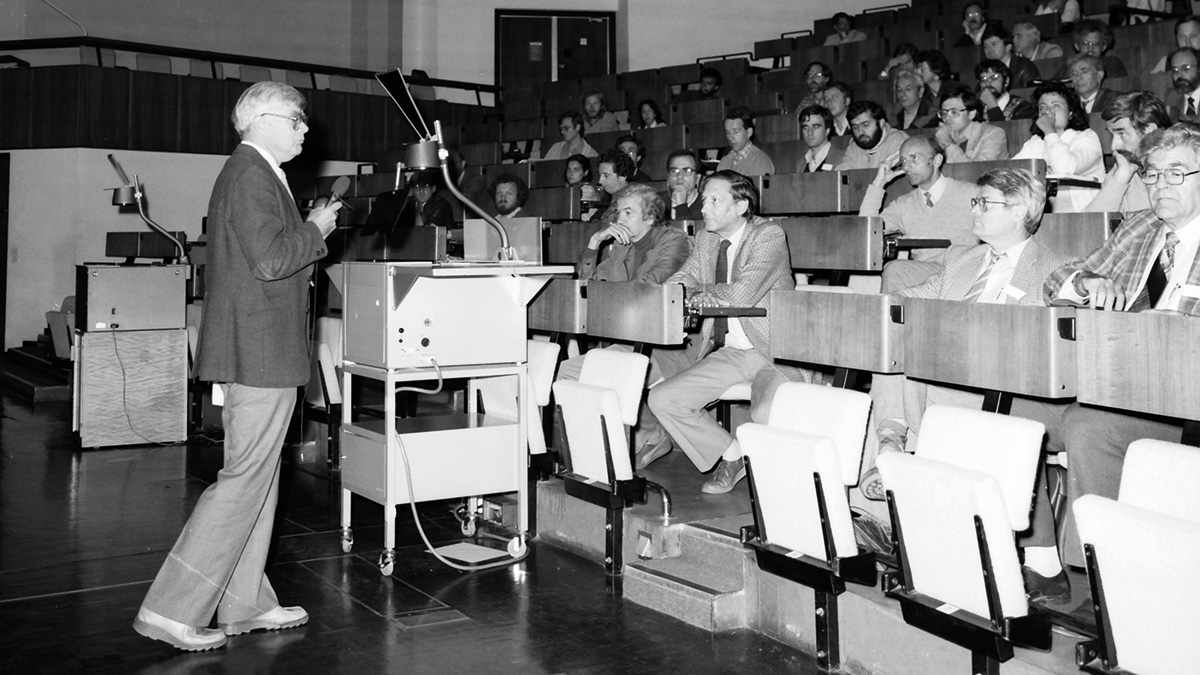
It is into this landscape that the CERN Accelerator School (CAS) was born in 1983. CAS lectures at that time were based on hand-written transparencies, sometimes pictures and sketches, or transparency copies from books. On some occasions, the transparencies were “hot off the press”, edited only the night before the presentation, using whisky as a solvent for the ink, with some traces remaining quite visible. The CAS lectures had to fulfil several objectives, notably the communication of deep knowledge and how to team-build at a time when significant progress could still be achieved by a single inventive scientist.
During the decades since, there has been a continuous evolution of the field of accelerators, driven by the rapid development of computing and telecommunications, and by the need for higher performance, leading to tighter tolerances or even novel acceleration technologies. Nowadays, much of the necessary information is only a mouse-click away, at any moment, at any location. Video, telephone and messenger exchanges are part of daily practice. The available computing power allows researchers to carry out complex simulations of beam behaviour by tracking thousands of particles over millions of turns in a reasonable time. No single accelerator component is built without extensive computer simulations beforehand, and the available simulation tools are extremely powerful and reliable. They do not yet, however, replace an innovative mind.
Collaboration
In this context, the present-day CAS has to play a new and even more demanding role. Knowledge about accelerators is available to every participant well before a CAS course begins. The multitude of information is enormous, which means that each CAS course, in particular the annual introductory course on accelerator physics, has to concentrate on the essential elements. Lecturers certainly have to be experts in their domain, but they also must have the capacity to explain their topic in simple terms.
The concept of the ingenious physicist designing an accelerator all by themselves also belongs in the past. Today, any new accelerator is the result of international collaborations featuring many individual contributions. CAS supports this development concept by fostering collaboration right from the start of the initial courses, ensuring that the students work in teams and that the links established during the courses are maintained throughout their professional lives.
The 40th anniversary of CAS offers an ideal opportunity to reflect on the school’s history, its educational approach, its impact and its bright future.
The seeds for the CERN Accelerator School were sown in the early 1980s by a group of visionary scientists and engineers at CERN. Driven by the high specialisation of the field, this group recognised the need for a dedicated educational programme that could provide comprehensive training in the rapidly evolving field of accelerator physics and technology. Textbooks on accelerator physics were sparse at the time, and courses at universities were practically non-existent. As Herwig Schopper, CERN Director-General at the time, put it: “An enormous amount of expertise is stored in the brains of quite a number of people […]. However, very little of this knowledge has so far been documented or published in book form.”
The first CAS course took place in Geneva in 1983 and attracted an impressive 107 participants. It focused on the special topic of colliding antiprotons. The W and Z bosons had just been discovered at CERN’s Super Proton–Antiproton Synchrotron (SppS), making this topic fully justified, as Kjell Johnson, the first CAS head, noted in his opening speech. This course was followed just a year later by a general one in accelerator physics, which is a classic today and remains one of the pillars of CAS. The general physics course covers topics such as beam dynamics, magnet technology, beam diagnostics, radiofrequency and vacuum systems. In this way, the school represents various types of accelerators and different accelerator components.
As the demand for specialised knowledge in accelerator physics grew, so did the CAS curriculum. While historically courses were more focused on high-energy colliders for particle physics, the scope broadened due to the development of applications in other fields, such as light sources, industry use and medicine. Over the years, the school has introduced a wide range of new topical courses to its portfolio, including radiofrequency systems, beam diagnostics, normal- and superconducting magnets, general superconductivity and cryogenics, vacuum systems and technology, high-gradient wakefield acceleration, high-intensity accelerators, medical accelerators and many more. This diversification has ensured that all participants are provided with up-to-date training in the latest developments. The curricula of the courses in “General Introduction to Accelerator Physics” and “Advanced Accelerator Physics” are also constantly adapting to the evolving landscape.
The success of CAS in Europe quickly caught the attention of the global accelerator community, leading to a surge in demand for its courses. To accommodate this growing interest, CAS began organising courses outside Europe from 1985 in collaboration with other institutions and organisations working in accelerator physics, such as the US Particle Accelerator School (USPAS), as well as the Joint Institute for Nuclear Research (JINR) in Russia and the High Energy Accelerator Research Organization (KEK) in Japan. Since then, these joint schools have trained more than 1000 participants via 16 courses in Asia, Europe and the Americas.
Educational approach
A key factor to the school’s success has been its innovative educational approach and the flexibility to adapt to new learning processes. Participants attend lectures delivered by selected lecturers, including some of the world’s foremost experts in accelerator physics, who willingly share their knowledge and insights in an engaging and accessible manner. By recognising the diverse backgrounds and needs of its participants, CAS offers courses at both the introductory and advanced physics levels. The former provide a solid foundation in the fundamental concepts of accelerator physics and technology, while the latter cater to participants with prior experience, act as a motivating refresher, or offer a deeper dive into specialised topics and the latest developments.
Today’s CAS experience is not limited to classroom lectures. The extensive availability of powerful computational tools has led to the introduction of hands-on sessions, first introduced in 2001, during which participants are not only put in touch with experimental set-ups but also dedicated expert-tool programmes. Particle-tracking codes or numerical-simulation programmes are examples where the participants are exposed to case studies and challenged to solve actual problems with expert guidance. Today, the introductory course offers hands-on software training in transverse and longitudinal beam dynamics as a regular course session. The advanced course, on the other hand, offers practical insight into beam optics as well as accelerator components from radiofrequency to beam diagnostics. Truckloads of equipment are shipped to the course venues, and the most recent topical CAS course on normal and superconducting magnets brought set-ups to perform superconducting experiments cooled down with liquid nitrogen to provide a real laboratory frame for teaching.
The heart of the CAS educational approach is clearly beating for an emphasis on problem-solving and collaborative learning. Participants are encouraged to work together on exercises and projects, fostering a sense of community and teamwork that extends beyond the classroom. It is the CAS spirit to work hand-in-hand with colleagues from different fields to solve a given task, very much as in a real work setting. This collaborative atmosphere not only enhances the learning experience but also offers the opportunity to build lasting relationships and to lay the ground for professional networks among participants. Throughout the CAS courses, participants profit from direct contact with the lecturers and their availability. Almost every lecturer has fond memories of long evening discussions with particularly interested participants – often fruitful for both sides. Equally legendary are the midnight hands-on sessions, carried out on request when all of a sudden another interest peak is sparking.
More to come
As the CERN Accelerator School celebrates its 40th anniversary, it is clear that its legacy of excellence, innovation and collaboration has left an indelible mark on the world of accelerator physics and technology. CAS has been instrumental in nurturing generations of experts who are continuing to push the boundaries of scientific knowledge, contributing significantly to our understanding of the universe. Over its 40 year-long history, more than 6000 participants from across the globe have been trained. Many of its alumni have gone on to play crucial roles in the development, construction and operation of particle accelerators around the world, including the LHC, to date still the largest machine ever built. However, no celebration would be complete without a projection into an even more promising future.
The variety of accelerator technologies, as much as the diversity and complexity of accelerator theory, will continue to grow. While the pre-education at European universities concerning basics in mathematics, electronics or computing already varies significantly between countries, worldwide collaborations make this aspect even more of a challenge. Over the years, the CAS teams have noticed, in particular in the introductory physics course, an ever-increasing spread in the basic accelerator-related knowledge that participants bring. Consequently, the CAS curriculum has been revised, but the problem persists: some participants are overwhelmed by the complexity of the course materials, whereas another large fraction is happily satisfied with the course and the progress they are able to make. As a first measure, the presently non-residential one-week “basic” CAS course on accelerator physics and technology will now be held on a yearly basis, and future participants of the introductory physics course will be strongly recommended to follow the basic CAS course first. If required, further adjustments for the general physics course will be made in the years to come.
With the ever-increasing diversity in technological disciplines and related scientific descriptions, CAS has stepped up the number of courses from two to four per year and, in addition, to offer at least two topical CAS courses per year. This allows the school to keep pace with the fast technological progress by teaching the major accelerator technologies (beam instrumentation, accelerator magnets, radiofrequency and superconductivity) roughly every five years, compared to every 10 years previously. While from a financial and organisational point of view four courses per year seem to be the maximum that can be offered, with the strong support of the CERN management this established rhythm can be maintained. In keeping with the long CAS tradition of publishing comprehensive proceedings for most of the courses, the higher frequency of courses has significantly increased the associated workload for authors and editors. Nevertheless, experience shows that these proceedings are vital to support the “post learning-process” of the CAS participants.
CAS has been instrumental in nurturing generations of experts who are continuing to push the boundaries of scientific knowledge
Finally, two years ago, a project called CASopedia was launched to record the CAS lectures. Fully in line with the CAS spirit, CASopedia aims to complement the regular written proceedings with a new learning approach where all recorded CAS lectures will be equipped with a catalogue of keywords and associated software with competent markers that allows topics to be searched via a keyword marker directly in the video material. Although a lot of work on this has already been done, significant effort is still needed to insert the many video-markers and to link them with the keyword database and the related time-code marker.
With these prospects in mind, and a rich legacy to build on, the school will undoubtedly continue to play a crucial role in the development of accelerator science by ensuring that future generations of physicists, engineers and technicians are well-equipped to tackle the ongoing challenges as well as the vast opportunities that always lie ahead. In this sense: happy birthday CAS, with hopes for an even bigger party to come in 10 years’ time!
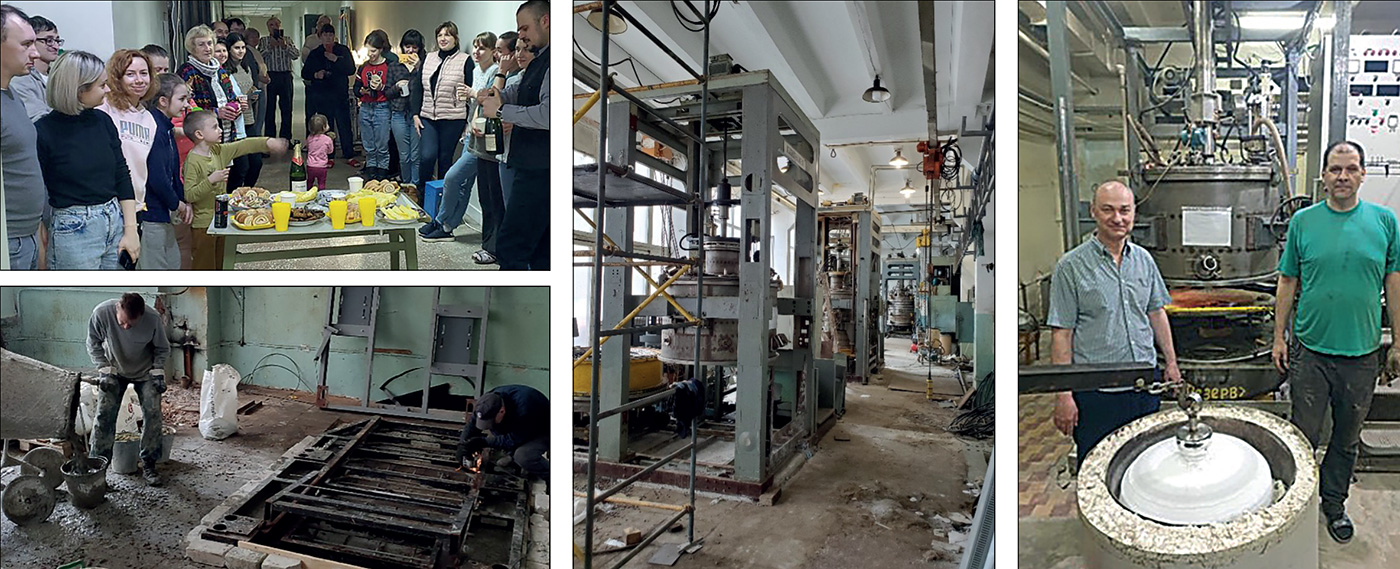
Located in Kharkiv, the Institute for Scintillation Materials (ISMA) of Ukraine has both a large scientific base and technological facilities for the production of scintillation materials and detectors. It has been a member of the CMS collaboration for about 20 years, including participation in the production of scintillation tiles for the current calorimeter and as a potential manufacturer of tiles for the HGCAL upgrade. Since 2021, ISMA has also been a technical associate member of LHCb hosted by the University of Bologna, where we participate in the PLUME (probe for luminosity measurement) project. ISMA is also a member of the Crystal Clear Collaboration at CERN and, since 2019, of the 3D printed detectors (3DET) project (see p8). In addition, ISMA is a supplier of scintillation materials and detectors for projects outside CERN.
With the outbreak of the war in Ukraine, the Institute became a home for many. In the months following March 2022, about 50 staff members lived in the basement with their families and pets. In addition, some 300 people who were living nearby moved into the Institute’s bomb shelter, where staff provided food and helped people to adapt.
At the beginning of March 2022, one of our processing areas for crystal growth was damaged due to an air raid. This was shocking not only to us, but also for our partners for whom we serve as the main supplier of products. It was necessary to make a quick and important decision: wait until the end of active hostilities and then reconstruct infrastructure and technology, or start doing something now. We realised that technological downtime would result in the loss of a market that had been developed over decades and would also make it economically impossible for us to restart production cycles with the necessary volumes. We got together with our staff, who were living on the Institute’s territory. Some people even came to besieged Kharkiv from other cities to help. Between alarms and artillery shelling, the guys were coming out of the bomb shelters to go to work. Just one month after the war started, products were already being shipped to our customers. Once temperatures started to rise above zero, we started to move the processing equipment and growth units out of the damaged processing area. Not only did we have to repair these, but we also had to clear the premises of other equipment, calculate and pour new foundations, hook up the entire infrastructure and lay the lines for services – all in a period of a few months. By May 2022, we had already started growing large crystals of up to 500 mm in diameter at the new location. Some of our partners did not even notice the delays in delivery and we were able to meet our delivery commitments for 2022 in full.
We are very grateful to our colleagues, and to our friends at CERN, who offered their help and supported us from the early days of the war. They were not only CERN staff members, but also people from other institutes and organisations who called and wrote letters every day. They even organised a special programme to welcome families who had to leave Kharkiv at that time, and helped to persuade those who did not want to leave to move to safer cities in Ukraine or in Europe, at least temporarily.
By mid-summer, ISMA resumed the production of experimental scintillator tiles for CMS
In April 2022 we started discussions on future cooperation with our colleagues at CERN. Unfortunately, it was impossible to continue any work during the first two months of the war. However, we agreed that work should not stop and that some of it could be carried out in the organisations of our partners. We collected all the materials from Kharkiv that our colleagues needed and sent it to them. Some female colleagues, who could leave Ukraine, were also invited temporarily to continue their work abroad in these organisations. This allowed us to continue joint research programmes with our European partners. All our R&D projects were maintained either in Kharkiv or at the partner institutes abroad.
In May 2022 we were informed that ISMA, together with CNRS, Université Claude Bernard Lyon 1 and CERN, had won a project financed from the European Union’s Horizon Europe programme to develop inorganic scintillation crystals for innovative calorimeters for high-energy physics. By mid-summer, ISMA resumed the production of experimental scintillator tiles for CMS. We also continued work on developing technology for the synthesis of scintillation granules based on inorganic crystals. At the end of summer 2022, the crystals had already been shipped to our partners. Work on the 3D printing of scintillators in Kharkiv continued unabated.
Despite the war and its impact on life in Kharkiv and work at our Institute, over the past 18 months ISMA was able to contribute to all of the ongoing projects at CERN, and even expanded its capacity by transferring some work to other European institutes – strengthening our capabilities to do world-class research. The technological aspect of scintillator production has been restored and ISMA is receiving new requests to design and manufacture scintillators for international projects. We are grateful to our partners for their support and cooperation.
Andriy Boyaryntsev deputy director ISMA.
Taras Shevchenko National University of Kyiv
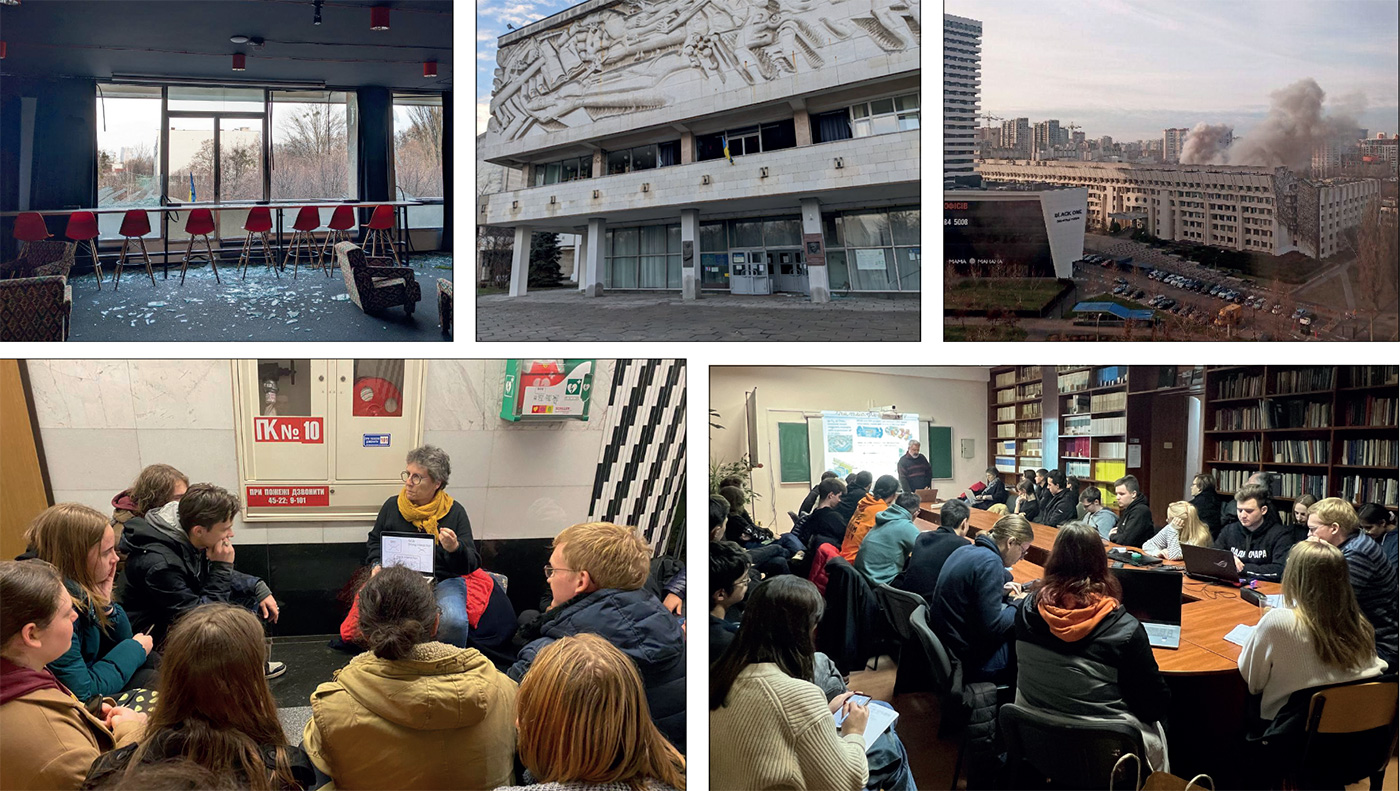
Our group at Kyiv has cooperation with many European universities and groups. We collaborate on LHCb and on the proposed SHiP experiment at CERN, and the International Large Detector – a general-purpose detector for an electron–positron collider, primarily the ILC. The group has many scientific contacts with IJCLab at Paris-Saclay and cooperates with ETH Zurich on the study of perovskite materials. Before the war and COVID periods, our students had many internships in various European institutes and staff travelled regularly to Europe.
In the first weeks of the war, there was a serious disruption to life and to hopes for the future. Many of the women and girls were evacuated from Kyiv to the west of Ukraine and abroad. With the help of our graduates and foreign colleagues, I sent 17 female students to various European cities for long-term internships. Many other teachers also helped some travel to Europe.
At that time, we were really expecting a nuclear strike from a maddened neighbour. Thanks to our colleagues abroad, the registration of internships took place instantly, in just a few days. Meanwhile, the men in Kyiv were preparing for battles on the streets. I actively read how to use various types of weapons, even though I was not accepted due to my age. I was sure that I would find weapons on the streets during the fighting, and I collected equipment and materials for actions after a nuclear explosion (nuclear physics is our department specialty). Now it already looks childish, but at the beginning of March 2022 I said goodbye to my wife, who was evacuated to Europe to join her daughter, because we thought that we would never meet again.
I was not afraid: there were almost only men left in the city, and those who remained were ready to stand to the death. The general feeling of a joint struggle united us and supported our spirit. It was clear in those weeks that this was not the time for science. I did some volunteering, first buying body armour and other military equipment, then collecting money for the purchase of jeeps for the front line and prostheses for crippled soldiers. We (with the alumni of our department in Ukraine and abroad) collected for the army very quickly, raising the necessary several thousand euros in a few days.
Since autumn 2022, we have resumed our scientific work and the connections with students
After the defeat of the Russian forces near Kyiv and Kharkiv, and especially after the return of Kherson, it became a little easier and we began to implement grants for students. This partially compensated for the decrease in real salaries and scholarships, and the high inflation of the hryvnia. Since autumn 2022, we have resumed our scientific work and the connections with students. We also have a lot of volunteer work as physicists and engineers. Many of the women and children have returned home – as has my wife. The main problem now is a more than two-fold drop in wages, taking into account inflation.
On 31 December 2022 a large Russian missile exploded between the buildings of the university. The explosion occurred at a height of several metres (the rocket had impacted a large tree), completely or partially destroying more than 500 large windows in seven buildings, including two thirds of the windows in our building.
Our small group now has acceptable working conditions. Currently, quite a lot of European and partial US grants are provided to our students for remote work. However, the necessary restriction during the war period on trips abroad for boys and men of conscription age has greatly hindered both scientific work and effective teaching. There has been a rapid washout of qualified personnel from scientific groups, especially young people who have been driven to look elsewhere for acceptable wages in Ukraine or abroad. After the end of the war, it will be difficult (or even impossible in some areas) to restore an effective group composition. Obtaining scientific grants during the war can significantly stop this degradation of science in our country.
Ukrainian science has been seriously affected due to the constant bombing of buildings and scientific facilities, the large outflow of personnel (especially women) to institutes and universities abroad, the decrease in real salaries, and the blocking of international internships and scientific travel for male scientists. I am sure that, step by step, we will restore lost contacts with foreign scientific centres and rebuild the scientific and educational resources of Ukraine that have been destroyed by the Russian invasion.
Oleg Bezshyyko associate professor, Taras Shevchenko National University of Kyiv.
Odesa National University
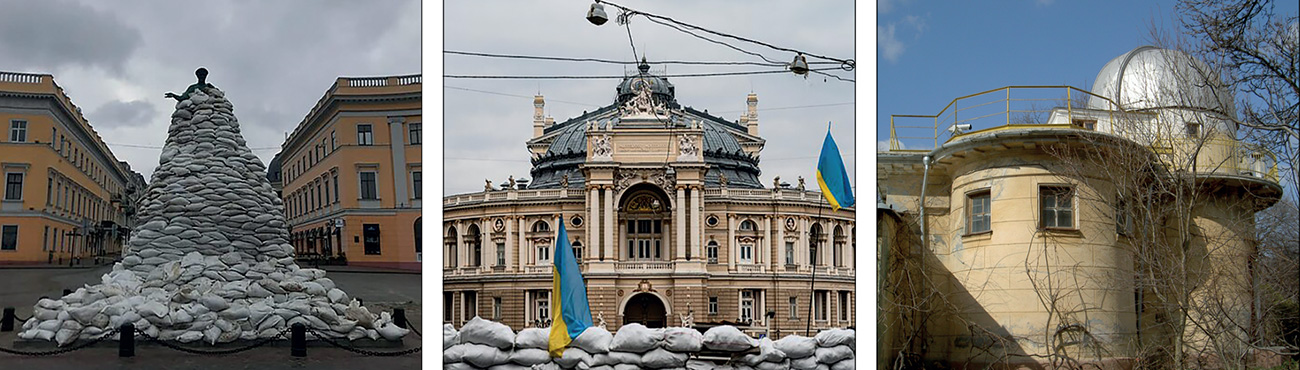
When the war started on 24 February 2022, I was with my family in Odesa. At around 4 a.m. I saw from the window in my flat how Russia had bombed Odesa port. In that moment, it was very difficult to understand what was going on and how to act. Yet, within a week, when it became clear that this was a real war, I received invitations from people in the physics department of the Jagiellonian University in Krakow, Poland, to visit them in the capacity of a visiting professor. I drove with my family through Moldova, Romania, Hungary, Slovakia and finally arrived in Krakow, where the people from the department adopted us. The children went to school the next day. There is only a small difference in language between Polish and Ukrainian, so it was not too difficult for them to adapt. Two months later I received an invitation from a new institute near Dresden called the Сenter for Advanced System Understanding (CASUS), where I have been based ever since.
As a theoretical physicist, and a frequent visitor to the CERN theory department, it’s much easier for me to move than it is for those who are connected to an experiment. Many of the laboratories in Ukraine have been completely destroyed. How they manage is difficult for me to comprehend. Odesa was not occupied, so it was possible to remain there. But in winter there was no electricity or heating, and during the day there were often air alarms when residents had to go to shelters. We were also worried about our grandchildren. A few weeks after the war started, a rocket fell a couple of hundred metres from my apartment.
Prior to the invasion, I would travel to Russia for conferences but I didn’t have any collaborations with Russian institutes. For me to work abroad is quite a normal situation. But I thought it was just my own will. Now I will stay here because of the war. But I also miss Ukraine and Odesa. The question is what will happen when we win? The answer is not so simple.
Without investing money into science it is impossible to build a strong country
Without investing money into science it is impossible to build a strong country. But to have that requires a good level of education, and that’s not easy because many young people are abroad. Will they go back, and how? If we have a good scientific climate, I think many would like to return. But if there is no money for science, then no. The government situation is not easy. The eastern part of the country is completely destroyed. Up to now only a small percent of the nation’s budget goes to science. The level of education and science in Ukraine already went down in the 1990s compared to when it was part of the Soviet Union. Many good scientists went abroad and have not returned.
We are currently living in a state of stress and uncertainty. Our minds are completely occupied by the news. The situation is even worse for those who stay in Ukraine. Many young scientists would like to go to foreign institutions and many foreign universities and institutes have adopted Ukrainian people, especially female scientists. But for boys it is forbidden. The border is closed. How many cross it illegally is probably only a small percentage. They stay mainly inside of Ukraine, often to fight against Russia. I know many people who were killed, including a former astronomy student who was educated at Odesa University.
The second year of the war is ending. A difficult winter is ahead. Russia will again try to destroy infrastructure with missiles and drones, so that people have neither heat nor light, so that they lose the will to win. The situation is very difficult. I don’t know what will happen next year or the year after. I can’t imagine where my family and I will live. I really want to return to Odesa. But for this, Ukraine must win.
Oleksandr Zhuk Odesa National University; currently CASUS Germany.
Uzhhorod National University
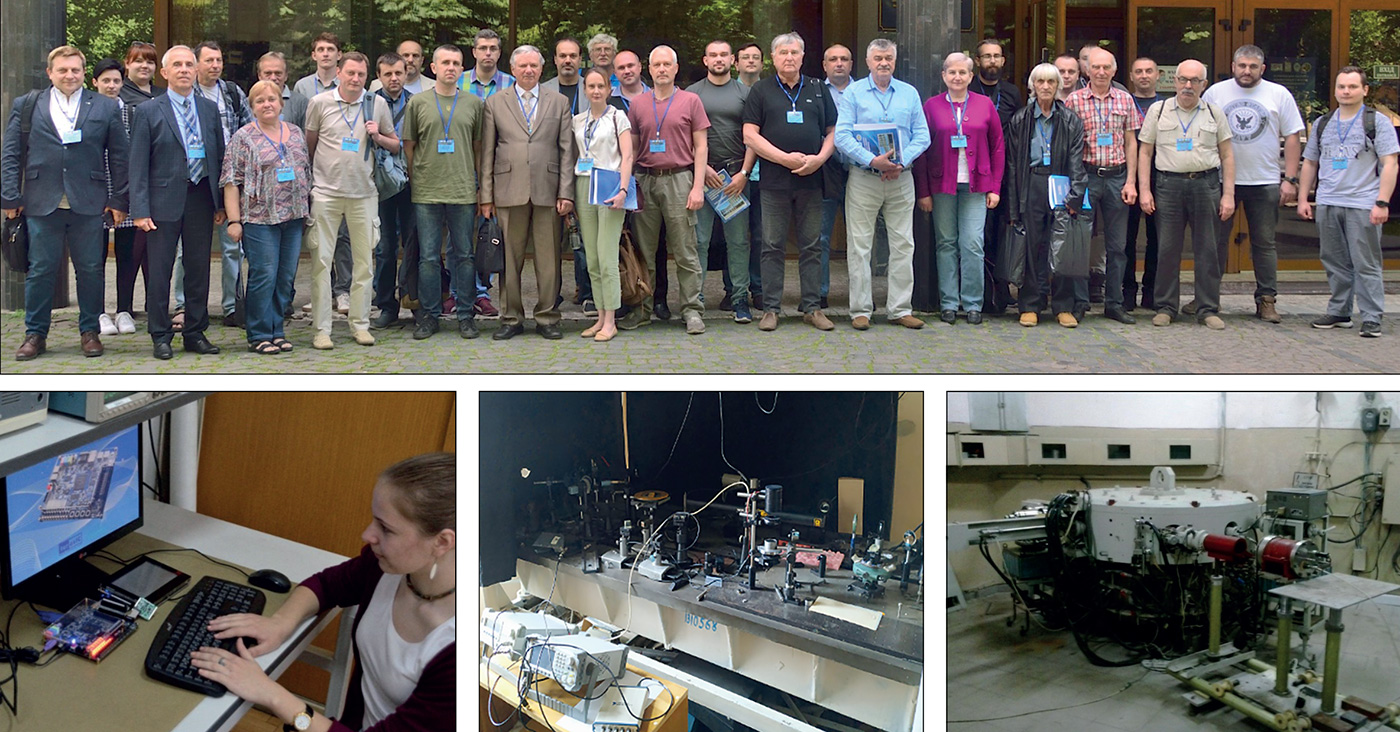
Uzhhorod National University was established in 1945, and five years later the faculty of physics and mathematics began its work. Today, the university has cooperation with around 90 institutions worldwide. We have activities in solid-state physics, optics and laser physics, physics of electron–atom collisions and plasma, quantum theory of scattering, and astrophysics and astronomy. For the past five years our group (comprising 10 engineers, technicians, senior scientists and PhD students) has been cooperating with the ISOLDE facility at CERN. At the beginning this was a multidisciplinary project to investigate materials that have spontaneous magnetisation and polarisation. We have published several articles in this area and in particular have proposed layered van-der-Waals crystals – a promising field for applications that can be further investigated with ISOLDE.
Uzhhorod is located just at the western Ukrainian border towards Slovakia and 20 km to the border with Hungary. While there were a few attacks from Russian forces, the situation here is relatively okay compared to other parts of Ukraine. We have the possibility to work, although there were times where we wouldn’t have electricity, so we couldn’t do any measurements or calculations. When the war started I immediately received calls from many colleagues outside Ukraine, who asked me to come to their labs. I did not expect this at all. Generally, many scientists left, especially from Kharkiv. Many of them came to Uzhhorod, others went abroad, for example to Poland, the US, the UK or France. For many who are from highly bombarded regions, this was certainly the correct decision; otherwise, they could have been killed. We keep in touch and continue our work.
After the first week of the invasion, we evaluated the situation and hoped that Kyiv would remain unoccupied. After about a month, we fully resumed work. It took some time to get back to a reality where you can concentrate. Looking back, it felt like a state of hypnosis, because the situation was so bad. Now, it’s better. I have published three papers in Physical Review since the beginning of the war. I hope we continue to receive support from European countries, the US, Canada, Australia and Japan.
Long before the invasion, I often participated in meetings and worked with Russian scientists. After the annexation of Crimea in 2014, I stopped. Many others continued to collaborate after 2014. We are academics after all, and we work in science. Maybe after the war, some peace regulation will make scientific and diplomatic co-operations possible again. To use an analogy from solid-state physics, the 2014 invasion of Crimea was a first-order transition whereas this one was a second-order transition that continues with a modulated phase.
It took some time to get back to a reality where you can concentrate
Since the invasion, we have prepared and submitted a proposal to the European Union Horizon programme. After successful evaluation at the beginning of October, together with scientists from Portugal, Spain, Denmark, Poland and from Kyiv, we have started the Piezo2D project to investigate piezoelectricity in 2D materials and their relevant device performance.
It is crucial to have Ukrainian universities participate in academic European programmes, not just formally on paper but to be actively involved. We don’t ask for any preference. We want to have the same possibilities as any other country to participate and for our people have the experience to be part of it.
As I am over 60 years old, I am allowed to leave the country. But younger male scientists can’t leave unless they have a permit for special services or duties. Some find special permission to study abroad as PhD students. Many others went to join the Ukrainian army. Some of us, especially physicists and chemists, are involved in special technology R&D programmes.
I’m sure that Ukraine will win the war. Then we will rebuild the economy, society and science. The latter will be especially important. Our government understands that science produces knowledge, and now is the time for it. For now, however, we must hope and work with the situation at hand. And here goes a big “thank you” from me and my colleagues to all those helping and supporting us at CERN and beyond.
Yulian Vysochanskii head of the semiconductor physics department, Uzhhorod National University.
Kharkiv Institute of Physics and Technology
Our institute, founded in 1928, has a long connection with high-energy physics and with CERN. Theorists Dmitrij Volkov and Vladimir Akulov played a crucial role in the development of supergravity and supersymmetry, for example, and for more than 20 years researchers at Kharkiv Institute of Physics and Technology (KIPT) have been actively working with the LHC experiments. In CMS, for which we contributed to the endcap hadron calorimeters, we host a Tier-2 computational cluster that is considered one of the best; in LHCb we have participated in the calorimeter system maintenance and support. In collaboration with colleagues at Bogolyubov Institute for Theoretical Physics in Kyiv, we participate in the inner tracking project for ALICE and are working on ITS3 upgrade. We also have collaborations with CERN concerning new theoretical and experimental proposals, for instance on the interaction of half-bare particles with matter. The first electron accelerator with an energy of 2 GeV in Europe was created and launched at KIPT in 1965. Before February 2022, the institute continued to operate a number of electron accelerators of lower energies and several large installations, such as the stellarator and quasi-stationary plasma accelerator.
Prior to the Russian invasion, our institute had a staff of more than 2000 people. In former Soviet Union times it was three times larger, and subordinate to the ministry within which the atomic project was performed (our institute had the status of laboratory no. 1). It was not so well known at the time because we were a closed-regime facility. In 1993 our institute became the first national scientific centre of Ukraine, with the full name National Science Centre “Kharkiv Institute of Physics and Technology” (NSC-KIPT), and our scientists started to cooperate actively with CERN and other international centres. NSC KIPT consists of institutes devoted to theoretical physics, high-energy and nuclear physics, solid-state physics, plasma physics, plasma electronics and new methods of acceleration, in addition to a number of quite large scientific complexes. A significant portion of the institute’s work centres around the Neutron Source facility (which is being created jointly with the US Department of Energy) and R&D into fuels for nuclear power plants. Based on this setup we are promoting the creation of an international centre for nuclear physics and medicine, a preliminary proposal for which has been supported by the US and the IAEA. COVID, followed by the full-scale invasion of the Russian army, have temporarily put this project on hold.
The institute has sharply increased cooperation with major international scientific centres
At the beginning of the invasion, an idea was spread quickly by Russian media that our institute was still working on the creation of nuclear weapons. It was a lie. Similar things were also said by the Russian media, incorrectly, to be taking place at Chernobyl. On 6 March 2022 we got together with the head of the institute of safety operations for nuclear power plants in Kyiv and made a joint declaration rejecting these accusations. Since 1994, and especially lately (even during the war), the institute has been regularly inspected by the IAEA. Of course, no violations were discovered, nor was any work on the creation of nuclear weapons discovered.
Our institute is located around 30 km from the border of Russia. Since 24 February 2022, it has been repeatedly shelled and has suffered significant damage. More than 100 shells, rockets and bombs fell on its territory. At the very beginning, Russian troops started their movement to Kharkiv along the road near our institute; it was stopped by our soldiers. About one month later, Russia made a second attempt to take Kharkiv, which came within 500 m of our institute before being stopped. Outside the institute in a residential area called Piatykhatky, where many staff members live, multiple buildings were destroyed. For 40 days following the shelling of 31 March 2022, the entire area didn’t have water, electricity or phone networks. Thanks to the hard work of the staff who remained, we managed to restore everything, often while bombs were falling.
With the start of military activity, many specialists from the institute left Kharkiv and continued to work remotely. Some large installations intended for conducting physical experiments have remained operational. The institute has sharply increased cooperation with major international scientific centres such as CERN, DESY, Orsay, the Italian centres at Frascati and Ferrara, and others.
With great hope, enthusiasm and optimism we believe that it will be possible to defend the territorial integrity of Ukraine and look to reviving its economic and scientific potential.
Mykola Shulga director-general National Science Centre Kharkiv Institute of Physics and Technology.
The anomalous magnetic moment of the muon has long exhibited an intriguing tension between experiment and theory. The latest measurement from Fermilab is around 5σ higher than the official Standard Model prediction, but newer calculations based on lattice-QCD reduce the gap significantly. Confusion surrounds how best to determine the leading quantum correction to the muon’s magnetic moment: a process called hadronic vacuum polarisation (HVP), whereby a virtual photon briefly transforms into a hadronic blob before being reabsorbed.
While theorists are working hard to resolve this tension, the MUonE project aims to provide an independent determination of HVP using an intense muon beam from the CERN Super Proton Synchrotron. Whereas HVP is traditionally determined via hadron-production cross sections in e+e– data, or via theory-based estimates from recent lattice calculations, MUonE would make a very precise measurement of the shape of the differential cross section of μ+e–→ μ+e– scattering. This will enable a direct measurement of the hadronic contribution to the running of the electromagnetic coupling constant α, which governs the HVP process.
MUonE was first proposed in 2017 as part of the Physics Beyond Colliders initiative, and a test run in 2018 was performed to validate the basic idea of a detector. Following a decision by CERN in 2019 to carry out a three-week long pilot run to validate the experimental idea, the MUonE team collected data at the M2 beamline from 21 August to 10 September 2023, using a 160 GeV/c muon beam fired at atomic electrons in a fixed target located at CERN’s North Area. The main purpose of the run was to verify the system’s engineering and to attempt to measure the leptonic corrections to the running of α, for which an analysis is in progress.
The full experiment would have 40 stations comprising a 1.5 cm thick beryllium target followed by a tracking system, which can measure the scattering angles with high precision; further downstream lies an electromagnetic calorimeter and a muon detector. During the 2023 run, two MUonE stations followed by a calorimeter were installed, and a further tracking station without target was placed upstream of the apparatus to detect the incoming muons; the upstream station, towards the beam and without target, was dedicated to tracking the incoming muons. The next step is to install further detetor stations in stages.
“The original schedule has been delayed, partly due to the COVID pandemic, and the final measurement is expected to be performed after Long Shutdown 3,” explains MUonE collaboration board chair Clara Matteuzzi (INFN Milano Bicocca). “A first stage with a scaled detector, comprising a few stations followed by a calorimeter and a muon identifier, which could provide a very first measurement of HVP with low accuracy and a demonstration of the whole concept before the full final run, is under consideration.”
The overall goal of the experiment is to gather around 3.5 × 10¹² elastic scattering events with an electron energy larger than 1 GeV, during three years of data-taking at the M2 beam. This would allow the team to achieve a statistical error of 0.3% and thus make MUonE competitive with the latest HVP results computed by other means. The challenge, however, is to keep the systematic error at the level of the statistical one.
“This successful test run gives MUonE confidence that the final goal can be reached, and we are very much looking forward to submitting the proposal for the full run,” adds Matteuzzi.
To provide the best experiences, we use technologies like cookies to store and/or access device information. Consenting to these technologies will allow us to process data such as browsing behavior or unique IDs on this site. Not consenting or withdrawing consent, may adversely affect certain features and functions.
Functional
Always active
The technical storage or access is strictly necessary for the legitimate purpose of enabling the use of a specific service explicitly requested by the subscriber or user, or for the sole purpose of carrying out the transmission of a communication over an electronic communications network.
Preferences
The technical storage or access is necessary for the legitimate purpose of storing preferences that are not requested by the subscriber or user.
Statistics
The technical storage or access that is used exclusively for statistical purposes.The technical storage or access that is used exclusively for anonymous statistical purposes. Without a subpoena, voluntary compliance on the part of your Internet Service Provider, or additional records from a third party, information stored or retrieved for this purpose alone cannot usually be used to identify you.
Marketing
The technical storage or access is required to create user profiles to send advertising, or to track the user on a website or across several websites for similar marketing purposes.