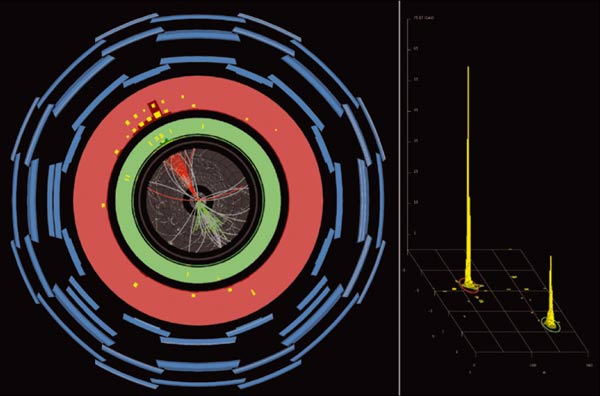
The ATLAS experiment at the LHC has set the world’s best known limits for the mass of a hypothetical excited quark, q*. The analysis, accepted for publication by Physics Review Letters, represents ATLAS’s first exclusion of physics outside the Standard Model and extends the scientific reach of previous experiments. The existence of such a state would indicate that a quark is a composite particle as opposed to an elementary one as the Standard Model assumes.
The search was based on a sample of 315 nb–1 of proton–proton collision data collected at 7 TeV in the centre-of-mass. Looking at the mass distribution of measured dijets – events with two jets – the analysis used six different model-independent statistical tests to hunt for narrow resonances that could indicated the production of new heavy particles. The lack of evidence for such resonances allows the collaboration to set limits on the existence of the hypothesized q*, in particular, because predictions indicated a chance that it could be observed in the first samples of data at the LHC.
The results exclude at the 95% confidence level the existence of a q* with a mass in the range 0.40–1.26 TeV. With further data ATLAS will continue its searches to exclude or discover hypothesized particles such as the q* over greater ranges in mass.
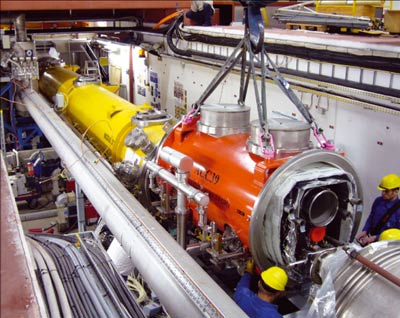
Recent work by the operations team at the LHC has focused on pushing the machine’s performance towards higher luminosity and into new territory in terms of stored beam power.
Moving to 25 bunches per beam with almost nominal bunch intensities at the beginning of August implied operation with a stored energy in each beam of more than 1 MJ. This corresponds to the current record for stored beam energy in existing hadron accelerators and marks an energy regime where a sudden loss of beam or operational errors can result in serious damage to equipment: an energy of 1 MJ is sufficient to melt 2 kg of copper. Extreme care and a thorough optimization of all operational procedures are therefore required in making this important transition in the machine’s performance. The work during August has included optimizing the operational procedures and the machine protection systems, with the aim of gaining experience with the reliability and reproducibility of the operation of the machine at such a high stored beam energy.
Early August also saw record results for the LHC performance in terms of delivered luminosity. For the first time the peak luminosity surpassed 4 × 1030 cm–2s–1 and the total integrated luminosity delivered to the experiments passed the milestone of 1 inverse picobarn (1 pb–1 or 1000 nb–1) over the weekend of 7–8 August. Another step towards higher luminosity occurred on 19 August, when the number of bunches in each beam was increased from 25 to 49. By the end of August the total integrated luminosity passed the threshold of 3 pb–1, about half being delivered in just one week of running with the higher number of bunches.
In parallel, the operations team has been conducting several tests for improving the LHC performance still further. The ramp speed of the magnets (the rate at which the electrical current can be changed in the LHC main dipoles) has been increased from 2 A/s to 10 A/s for the pre-cycle (without beam) of the magnet system. The ramp speed of 10 A/s has also been successfully tested for acceleration with beam, but the final implementation must wait until the LHC starts operation with bunch “trains”, in which the bunches of protons are grouped closely together, in contrast to the present operation with widely separated bunches. The faster ramp speed reduces significantly the minimum required time between two physics fills and therefore increases the overall machine performance in terms of integrated luminosity,
Operating the machine with bunch trains will open the door for increasing the total number of bunches in successive steps, so improving the LHC’s luminosity over the coming months by another factor of 10 to 100. For this the operations team is working with bunch trains with 150 ns spacing between bunches (the current minimum spacing is 1000 ns). This involves making the necessary changes throughout the injector chain, as well as in the LHC itself. In the LHC, bunch trains imply working with a defined crossing angle between the beams throughout the machine cycle, in order to avoid unwanted parasitic collisions. This means that the whole process of injection, ramp and squeeze has to be re-commissioned.
The task also includes re-commissioning all of the protection systems, both at injection and elsewhere in the cycle. This is particularly important now that the energy stored in each beam is about 3 MJ and is set to increase further in the coming weeks. Alongside these operations, the LHC teams will bring the higher-speed energy ramp (10A/s) into operation, which will reduce the time needed to fill the machine. The initial aim of this re-commissioning phase is to bring a few high-intensity bunches in trains into collision for physics and later move from 50 up to 96 bunches injected in each direction. Once again, this should result in a significant increase in the luminosity delivered to the experiments.
On 2 September, user operation resumed at the FLASH free-electron laser (FEL) at DESY in Hamburg after a major upgrade that boosted its energy to 1.2 GeV and its wavelength to 4.45 nm. The third user run will last a year and comprise more than 350 twelve-hour shifts. It is already overbooked by a factor of three.
FLASH, the world’s first soft X-ray FEL, has been available to photon-science users for experiments since 2005. Last winter, the facility underwent an extensive five-month upgrade. The photo-injector was replaced with a new electron source that generates considerably less dark current and features a low transverse emittance. A further superconducting accelerator module – a prototype for the European XFEL hard X-ray laser – was added to the six that are already installed, increasing the beam energy from 1 to 1.2 GeV. This enabled the FLASH team to set a new record for the facility, pushing the wavelength from 6.5 nm to 4.45 nm in June.
Another key element is a new module with four superconducting cavities operating at 3.9 GHz rather than the 1.3 GHz customary at FLASH. This third-harmonic RF system – built at Fermilab in collaboration with DESY – flattens the energy distribution of the electrons in the bunch, leading to a linearization of the longitudinal phase space. The system is now routinely in operation, allowing a considerable increase in the energy of a single photon pulse to a couple of hundred microjoules and more flexibility in adjusting the duration of the photon pulse. This also constitutes an important test for the European XFEL, which is to be equipped with similar modules.
In addition, the FLASH team installed a seeding experiment (sFLASH) in which light amplification will be triggered using an optical laser – as opposed to the current self-amplified spontaneous emission (SASE) process in which amplification is started by the stochastic radiation that the electron bunches emit along the undulator. The optical laser provides the seed radiation with a wavelength of 38 nm by generating higher harmonics of the optical wavelength in a gas cell. The seeding will make it possible to reduce significantly the intensity fluctuations between individual pulses and enhance further the laser properties of the radiation. The radiation produced this way will be made available at a separate beamline, without interfering with the rest of the FLASH operations.
FLASH thus continues to offer new and unique experimental possibilities. The shortest wavelengths may even allow for first experiments on carbon in organic molecules, while magneto-dynamics experiments, with the third-harmonic wavelength, will benefit from the substantially increased intensities.
DESY’s new X-ray source, PETRA III, has begun operating for the international scientific community, with the first external users welcomed at the third-generation synchrotron source. The first user period, which will last until Christmas, is already overbooked, indicating the user community’s enormous interest in the new facility.
In this period, 32 scientific workgroups will carry out experiments at the first three measuring stations at PETRA III. They were selected from a total of 54 applications for beam time, through an international peer-review process. The experiments cover a variety of science, from high-temperature superconductivity and magnetism to the mapping of biological nanostructures. In parallel with the start of research activities, the remaining measuring stations in the PETRA III experimental hall are being equipped and put into operation. Light will reach 14 beam lines by the end of the year. PETRA III, with a circumference of 2.3 km, is the third reincarnation of the PETRA storage ring, which began life as a leading electron–positron collider in the 1980s. In the newly erected 300-m long experimental hall, it will ultimately be possible to carry out up to 16 experiments simultaneously at 30 measuring stations.
The World Meteorological Organization (WMO) and the World Intellectual Property Organization (WIPO), both based in Geneva, have signed co-operation agreements with CERN. This follows the signing of an agreement with the International Telecommunication Union in May. A common thread in the three agreements is the stimulation of technological innovation.
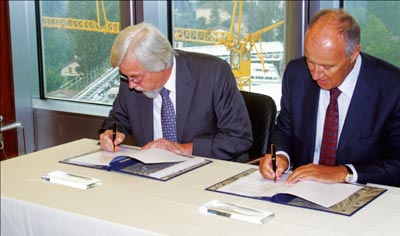
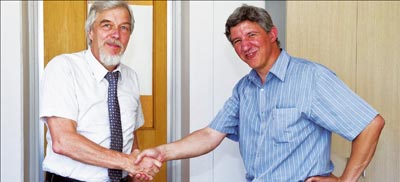
The director-general of WIPO, Francis Gurry, and CERN’s director-general, Rolf Heuer, signed an agreement on 20 August to strengthen collaboration between the two organizations. The co-operation agreement, which is to be ratified by the WIPO Co-ordination Committee, focuses on four main areas: capacity building, awareness raising and knowledge sharing; transfer of technology and know-how; co-operation in the area of technological, scientific and patent information and options for alternative dispute resolution for IP-related matters.
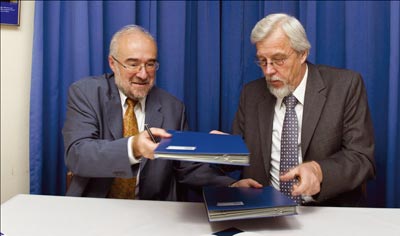
The co-operation agreement with WMO is to promote the sharing of information and knowledge in information technologies, in line with WMO’s policy to foster global scientific and technical collaboration. It was signed by WMO secretary-general Michel Jarraud and CERN’s director-general, Rolf Heuer, on 26 August. Areas of potential collaboration include: high-bandwidth-capacity networks for exchange of observations and information; collaborative on-line software tools for data and information analysis; management of mass data and storage systems; and capacity building and e-education tools, especially in developing nations.
Equipment destined for a new project at JINR, Dubna, has been shipped from CERN. A tracking detector manufactured by the NA48 collaboration at CERN will be used in the Multipurpose Detector (MPD) in the Nuclotron-based Ion Collider Facility (NICA), which is aimed at studying maximally high baryonic densities.
The shipment marks the beginning of a renewed partnership between the two international physics centres within the context of a new co-operation agreement, which was signed in January. The previous co-operation agreement, which had been in force since 1992, defined the participation of JINR’s scientists and specialists in the research programme carried out at CERN. The new agreement introduces more symmetry into the relationship, with mutual participation in the research programmes of both laboratories. In particular, it foresees the help of experts from CERN in the realization of JINR’s research programme.
JINR has contributed for almost two decades to the construction of the accelerator and detectors for the LHC project, which is now successfully completed, with data-taking and data analysis underway. In the meantime JINR has developed its own exciting research programme. This programme will renew JINR’s experimental base, and CERN will help with its expertise in accelerator and detector technology.
The NICA/MPD project was initiated by former director of JINR, Alexei Sissakian, who sadly passed away on 1 May. The studies of hot and dense baryonic matter at the facility, together with the search for the quark-hadron mixed phase, could make Dubna one of the most attractive centres in this domain, together with GSI and Brookhaven.
The equipment transported to Dubna in July consists of a tracking detector, which includes four drift chambers with a diameter of 2.6 m – optimal for use as end-cap tracking systems in the MPD as well as for the future Spin Physics Detector. It was shipped together with data read-out electronics.
The Australian Collaboration for Accelerator Science (ACAS) – a new Australian institute for accelerator science launched in July – has become the latest participant in the CLIC/CTF3 collaboration, working on the Compact Linear Collider (CLIC) study for a future linear electron–positron collider and the CLIC Test Facility 3 (CTF3) at CERN. ACAS is a collaboration between the Australian National University, the Australian Nuclear Science and Technology Organization, the Australian Synchrotron and the University of Melbourne. This brings not only a new country – Australia – to the collaboration, but equally a new continent and even a new hemisphere.
The agreement, which is an addendum to the standard CLIC/CTF3 memorandum of understanding, specifies the contribution of ACAS to the CLIC/CTF3 Collaboration. This focuses on studies for the damping rings and for the accelerating RF test modules. The agreement was signed on 26 August by the ACAS director, Roger Rassool from the University of Melbourne, and witnessed by CERN’s director-general, Rolf Heuer.
Measurements by the Pierre Auger Observatory may provide evidence of natural nuclear accelerators at work in the local galaxy, the Milky Way. Alexander Kusenko of the University of California, Los Angeles, his student Antoine Calvez, and Shigehiro Nagataki, from Kyoto University, have found that possible sources such as gamma-ray bursts (GRBs) or rare types of supernova explosions could produce the observed energy-dependent composition of ultrahigh-energy cosmic rays.
Earlier this year, the Pierre Auger Collaboration published an analysis of cosmic rays with energies above 1018 eV (1 EeV), which indicated a gradual increase in the average mass of the cosmic rays with energy, up to about 59 EeV (Abraham et al. 2010). In other words, these ultrahigh-energy cosmic rays appear to be heavier nuclei, rather than protons. Previous results, such as the lack of anisotropy in their arrival direction have indicated an extragalactic origin for the highest-energy cosmic rays. However, it seemed surprising that nuclei would travel such long journeys without disintegrating into protons. Moreover, it is unlikely that a cosmic accelerator could accelerate nuclei better than protons at these high energies.
Kusenko and colleagues have now proposed an explanation in which the nuclei originate from sources within the Galaxy (Calvez, Kusenko and Nagataki 2010). Stellar explosions, such as GRBs, can accelerate protons and nuclei but, while the protons leave the Galaxy promptly, the heavier and less mobile nuclei become trapped in the turbulent magnetic field of the source, lingering longer than protons. As a result, the local density of nuclei is increased, so they bombard Earth in greater numbers, as seen by the Pierre Auger Observatory. The nuclei detected will have been trapped by Galactic magnetic fields for millions of years, so their arrival directions have been completely randomized. However, protons escaping from other galaxies should still be seen at the highest energies, and should point back to their sources.
Like Ben Johnson’s explosive jump out of the starting blocks for 100 m, the growth of supermassive black holes had a “jump start” in the early universe. What triggered this fast build-up has long been a mystery, but now a detailed numerical simulation shows that a major collision between two galaxies rapidly drives huge amounts of gas towards the centre, where it collapses into a supermassive black hole.
How is it possible that fully mature quasars are already observed at a redshift, z, of around 6, corresponding to a time when the universe was only about 1000 million years old? How could their central engine – a supermassive black hole of about 1000 million times the mass of the Sun – have grown so quickly? This rapid spurt has puzzled theorists for many years (CERN Courier July/August 2005 p10).
Whether the starting point is a black hole of about 100 solar masses, which could be the remnants from the first generation of stars, or a larger one of 100,000 solar masses resulting from the gas that can accumulate and collapse in the centre of an isolated protogalaxy, the problem is basically the same. The black hole must be continuously fed at – or close – to its maximum rate, which is controlled by the balance between gravitational attraction and radiation pressure. The surrounding matter is either of too low density or undergoes strong stellar formation, both of which prevent the black hole from effectively capturing the gas.
Numerical simulations have shown that the collision and merging of two galaxies can rapidly drive most of their gas content within about 100 light-years from the centre, but it remained unclear whether this gas could be channelled towards the very centre of the galaxy and collapse into a black hole. This issue has now been addressed by Lucio Mayer from the University of Zurich and colleagues. The trick they use to go to smaller spatial scales with current supercomputer facilities is to split the fluid particles describing the gas into eight lighter particles. They do this in a limited volume, only slightly before the final merger of the two galaxies. This allows them to study the infall of the gas on scales 100 times smaller than previously achieved.
The new simulation, published in Nature, starts with two identical, and relatively large, disc galaxies. The results reveal the formation of a central disc of turbulent gas with a strong spiral pattern that further channels the matter towards the central light-year. The dense, central gas cloud with a mass of about 260 million solar masses suddenly becomes unstable towards gravitational collapse and forms a supermassive black hole in only about 100,000 years after the completion of the merger. Additional simulations show that this direct-collapse scenario would also work for mergers of galaxies with a 10 times lower mass, but for still lighter ones the central gas cloud remains stable, which could explain the absence of supermassive black holes in most dwarf galaxies.
The study has several cosmological implications. The common idea that galaxies grow in parallel with their supermassive black hole needs to be revised. The simulations suggest that the heaviest black holes form first and that galaxy growth is modulated by the size of the black hole, rather than the opposite. Furthermore, the rapid growth of big galaxies seems to be in contradiction with hierarchical structure formation (CERN Courier September 2007 p11). Stelios Kazantzidis, a co-author of the study, solves the paradox by explaining that only dark matter builds up slowly from smaller to larger structures, whereas ordinary, baryonic matter collapses more efficiently.
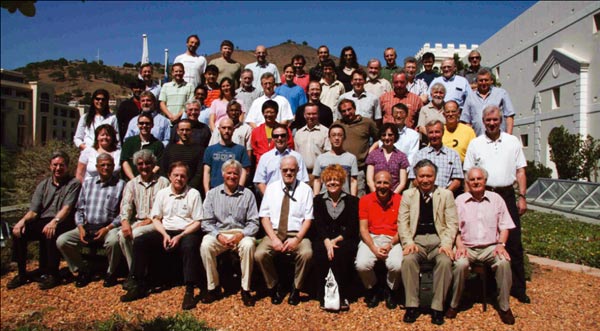
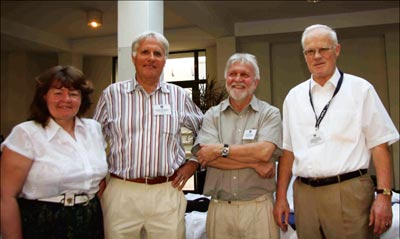
The Fifth International Conference on Beyond the Standard Models of Particle Physics, Cosmology and Astrophysics (BEYOND 2010) took place earlier this year in Cape Town. With 87 participants from all over the world and 73 presentations, it gave a broad view of the status and future of particle physics beyond the Standard Model. Although the meeting took place just before the LHC entered a new energy region at 7 TeV in the centre of mass, it allowed the presentation of some first results from 2009 and a look at what lies in store. Other highlights centred on areas beyond the Standard Model that are already under investigation, either theoretically or experimentally. This report, however, can mention only part of the broad range of topics and a few of the excellent speakers.
With the prospect of a few 100 pb–1 integrated luminosity to be delivered by the LHC during 2010, Claude Guyot of Saclay discussed the discovery potential of the ATLAS experiment. Silvia Costantini of CERN and the CMS experiment pointed out the challenges of the search for a fourth generation of quarks and for exotic partners of the top quark. An additional quark generation could account for the asymmetry between matter and antimatter; and natural, nonsupersymmetric solutions of the hierarchy problem generally require fermionic partners of the top quark with masses that are not much heavier than about 500 GeV. The LHC also has exciting potential in the areas of B physics and CP violation, particularly with the LHCb detector, as Jacopo Nardulli of the Rutherford Appleton Laboratory outlined. On the theoretical side, Thomas Appelquist of Yale reviewed recent work on the role of approximate conformal symmetry in strongly coupled theories, on which the LHC will begin to shed light. Flavour physics in warped extra dimensions is another topic on this level, with hidden sectors and hidden extra dimensions discussed by CERN’s Ignatios Antoniadis. More down to Earth, the Minimal Supersymmetric Standard Model allows estimates of the possible production rates at the LHC of long-lived superparticles.
From neutrinos to Q balls
Neutrinos have already provided the first hints of new physics through their non-zero mass, which leads to neutrino oscillations. The study of their elusive properties continues in experiments on double-beta-decay, tritium-decay and reactor neutrinos, as well at accelerators. Present and near future double-beta-decay experiments, including a variant of the Cryogenic Underground Observatory for Rare Events (CUORE) called LUCIFER, are still far from being able to test the 6.4 σ evidence for neutrinoless double-beta decay observed in the Heidelberg-Moscow experiment, which took data in the Gran Sasso National Laboratory for 13 years. Even the huge KATRIN tritium-decay experiment at Karlsruhe can check for a neutrino mass of 0.2 eV – the lower limit for the electron-neutrino mass from the Heidelberg-Moscow experiment – only at the 1 σ level. The fastest independent measurement of the neutrino mass (and independent confirmation of the Heidelberg-Moscow result) might come from the PLANCK mission and – eventually – the Experimental Probe of Inflationary Cosmology (EPIC), NASA’s post-PLANCK mission. EPIC should have a neutrino-mass sensitivity of Σmν <0.05 eV and should test Super-Kamiokande’s result of Δm2 = 2 × 10⁻³ eV2, from atmospheric-neutrino oscillations.
Reactor-neutrino experiments aim to determine the mixing angle Θ13 in the Maki-Nakagawa-Maskawa matrix. The Double Chooz experiment is expected to improve the current limit of sin22Θ13 <0.15 down to 0.03, and similar limits of 0.02 and 0.01 are expected from the Reactor Experiment for Neutrino Oscillation (RENO) at Younggwang and the Daya Bay experiment, respectively. This would allow, in three years or so from now, a check of the first hints for a non-vanishing Θ13, which were obtained in 2008 in a global fit of all neutrino-oscillation data to a three-flavour scenario. At accelerators, the long-baseline experiments OPERA and MINOS have not yet yielded results. The T2K experiment, using an intense muon-neutrino beam generated by the new J-PARC facility at Tokai, with the detector 295 km away at Kamioka, aims at measuring Θ13 down to sin22Θ13 <0.008. This ambitious experiment started operation in March. In the more distant future, neutrino factories (producing neutrinos by muon decay) will be important for determining Θ13 if the sensitivity of T2K proves to be insufficient, as Osama Yasuda of Tokyo Metropolitan University discussed. Neutrino factories will also tackle topics such as violation of unitarity arising from heavy particles, or schemes with light and sterile neutrinos.
Leptogenesis can provide a solution to the baryon asymmetry of the universe and here, as Marta Losada of Bogota outlined, the focus has moved from understanding the qualitative features to detailed quantitative analysis. Neutrino masses and mixings consistent with recent neutrino data can lead to the correct baryon/photon ratio of 10–10. The special case of electromagnetic leptogenesis considers the electromagnetic dipole-moment coupling between the light and heavy neutrinos, instead of the minimal Yukawa interactions, and again there is a strong connection between light-neutrino parameters and leptogenesis, as Sandy Law of Chung-Yuan University explained.
The decay μ→eγ, which is under study by the MEG experiment at PSI, is radiatively induced by neutrino mass and mixings, and extensions of the Standard Model enhance the rate through mixing in the high-energy sector of the theory. The result of the 2008 run, presented at the conference, gives the branching ratio for the decay as 3 × 10–11, with a limit of 5 × 10–12 expected for this year’s data. A positive result would yield evidence for physics beyond the Standard Model.
The search for exotic particles continues at accelerators and in cosmic rays. The best limit for penetrating grand-unified theory monopoles in cosmic radiation is still provided by the MACRO detector at Gran Sasso, and is close to the extended Parker bound, except at very high energies, where the best limits come from the AMANDA experiment at the South Pole and the Lake Baikal experiment. At the LHC, the MoEDAL detector – housed in the cavern of the LHCb detector – will search for magnetic monopoles. In the case of nuclearites, MACRO and the SLIM experiment (at a height of 5230 m at Chacaltaya, Bolivia) give the best limits, as Laura Patrizii of INFN Bologna outlined. The best limits for strangelets also come from the SLIM detector, with improvements expected from the Alpha Magnetic Spectrometer (AMS-02) mission, to be launched in February 2011. For charged Q balls, the best limits are from AMS-01, SLIM and MACRO.
Dark matter provided a vibrant topic for discussion. Rita Bernabei of Rome presented data taken over 13 years by the DAMA/LIBRA (Large sodium Iodide Bulk for Rare processes) experiment, which show behaviour consistent with an annual modulation signature from dark matter in the galactic halo at a confidence level of 8.8 σ. The Cryogenic Dark Matter Search (CDMS) II ended operations in March 2009. This experiment looked for elastic scatters of weakly interacting massive particles (WIMPs) from germanium nuclei in a detector array of a few kilograms. From the start it was somehow the object of debate for its selection of data. After 612 kg days searching for WIMPs between July 2007 and September 2008 (compared with 317 697 kg days, or 0.87 tonne years collected by DAMA/LIBRA), the final result shows no significant signal for dark matter.
Imaging atmospheric Cherenkov telescopes (IACTs) can search for annihilations of WIMPs that could occur in high-density regions of our galaxy, such as the galactic centre. They look for high-energy gamma rays produced by effects of constraints on subhalo formation scenarios, such as spikes of dark matter around black holes of intermediate mass. Other theoretical candidates for dark matter, beyond the neutralinos that are a natural explanation in supersymmetry, include Kaluza-Klein particles, which arise in models with extra dimensions. Annihilation of such particles, gravitationally bound to the Sun, would produce neutrinos that could then give rise to muons and antimuons in Earth’s matter. The ICECUBE detector, at the South Pole, can put constraints on the parameter space for models with only one of two types of the lightest Kaluza-Klein particles.
Dark energy was another hot topic. QCD provides an exciting approach that avoids the long-known discrepancy of the order of 10120 between the usual quantum vacuum-energy predictions of particle theory and the observed cosmological constant. QCD contains a massless dipole (the Veneziano “ghost”) that contributes to the vacuum energy and could make it numerically close to what is observed, as Federico Urban of British Columbia described. Lattice tests could confirm the existence of a Casimir QCD energy. A next step would be to gain a better theoretical understanding of the dynamics of the “ghost” in the expanding universe and to work out the consequences of its magnetic field in more detail. Another approach, presented by Gerard Stephenson of the Los Alamos theory group, investigates a connection between interacting Majorana fermions and cosmic acceleration. A system of fermions interacting through scalar exchange exhibits negative pressure when perturbed to densities less than the equilibrium density. On the basis of an adiabatic approximation, there are parameter ranges compatible with cosmic acceleration; the lightest supersymmetric particle could be a viable candidate fermion. A Majorana neutrino of mass around 0.26 eV would also be a candidate, which may be exciting in view of the neutrinoless double-beta-decay result from the Heidelberg–Moscow experiment.
An interesting, nonmainstream view of understanding dark energy was presented by Chris Clarkson of Cape Town. He argues that the huge Hubble-scale inhomogeneity has not been investigated in detail and could conceivably be the cause of apparent acceleration. If this is indeed the case, then we exist in a highly exceptional corner of the universe. The void models offer the possibility of describing dark energy as a radical inhomogeneity in a dynamically predictable model, rather than as an unknown dynamical degree of freedom in a postulated homogeneous model.
Astroparticle physics
A highlight of the conference was the presentation by NASA’s Malcolm Niedner of the potential of the rejuvenated Hubble Space Telescope and some early results. The Hubble Ultra Deep Field Infrared Survey is entering new territory in the redshift region z = 8–10. Within just a few weeks of operation, the new Cosmic Origin Spectrograph will probe more of the cosmic web than all previous Hubble spectrographs combined.
Back on Earth, at the South Pole the ICECUBE detector will start operation in 2011, following on from AMANDA, which was decommissioned in 2009, to study high-energy neutrino astronomy, atmospheric neutrinos and nonstandard oscillations. The ANTARES experiment, running in the Mediterranean Sea since 2006, has similar goals, focusing on high-energy cosmic neutrinos, the production mechanism of high-energy cosmic rays, high-energy processes in gamma-ray bursts and the study of binary systems and micro-quasars. ANTARES and ICECUBE cover complementary regions of the sky.
At lower energies, the BOREXINO experiment at Gran Sasso has new results on solar neutrinos. With the first real-time and simultaneous measurement of solar neutrinos from the vacuum-dominated region (7Be-neutrinos) and from the matter-enhanced oscillation regions (8B-neutrinos), the experiment claims to confirm the Mikheyev-Smirnov-Wolfenstein large mixing-angle solution of solar-neutrino oscillations at a 4 σ level. It has also improved the best limit on the neutrino magnetic moment. Future plans include a check of the 7% seasonal variation of the neutrino flux so as to confirm its solar origin.
The direct detection of gravitational waves would test general relativity in the strong-field regime and provide essential new information on objects such as neutron stars, black holes and the Big Bang.
Understanding the origin and composition of ultrahigh-energy cosmic rays (UHECRs) may shed light not only on astrophysical acceleration processes but also on fundamental particle interactions – hence the excitement surrounding the Pierre Auger Observatory in South America. However, the latest results on the energy spectrum of UHECRs beyond the Greisen-Zatsepin-Kuzmin (GZK) cut-off show that there is still no hint of physics beyond the Standard Model. The strategy for the future lies in Auger North, an array that is seven times larger, which is hoped will be sufficient for discovering new physics.
Very high-energy, gamma-ray observation of supernova remnants interacting with molecular clouds seems to be a new way to reveal cosmic-ray accelerators. Thanks to a high sensitivity and good angular resolution, the HESS IACT array in Namibia produces detailed images of galactic sources in the tera-electron-volt energy range. Several supernova remnants show a similar pattern, where an excess of very high-energy photons coincides with a maser (or possibly laser) signal, typical of a shocked molecular cloud, situated on the rim of the supernova remnant.
In the search for gravitational waves the first generation of interferometers is now operating at the design sensitivity. The direct detection of gravitational waves would test general relativity in the strong-field regime and provide essential new information on objects such as neutron stars, black holes and the Big Bang. As Peter Aufmuth of the Max Planck Institute for Gravitational Physics in Hannover explained, while no signal has yet been seen, the detectors should be close to making observations. As for the future, an advanced LIGO/Virgo detector is scheduled for 2014, to be followed in 2025 by the Einstein Gravitational Wave Telescope, with 10 times higher sensitivity, as well as NASA’s Laser Interferometer Space Antenna in 2022. All models for the unification of general relativity with quantum-field theory lead to (small) deviations from general relativity, which are least constrained experimentally at small and large scales. The CAsimir FORce and Gravitation (FORCA-G) experiment allows the exploration of gravity at short range using complementary physics to existing experiments, while the Search for Anomalous Gravitation with Atomic Sensors (SAGAS) investigates gravitation at large scales.
Back to Earth
Andrej Popeko of Dubna and Fritz-Peter Hessberger of GSI reported on the formation of superheavy elements at their respective laboratories, with exciting results that extend our understanding of element synthesis in the universe. The naming of the new element copernicium (112Cn) was celebrated at GSI shortly after the conference. The elements 113 to 118 synthesized at Dubna have also been recently independently confirmed at GSI. Physics beyond the Standard Model may become accessible in nuclear physics through measurements of correlation coefficients in neutron decay. Possible topics include the search for right-handed weak currents, for scalar and tensor interactions (leptoquarks, charged Higgs bosons), for supersymmetric particles (via loop corrections in the beta-decay coupling constants), and tests of the unitarity of the Cabibbo-Kobayashi-Maskawa matrix. The new spectrograph aSPECT at the Institut Laue-Langevin will help to exploit this potential.
Ideas for future high-energy accelerators that could access physics beyond the Standard Model include an International Linear Collider (ILC), a muon acceleration facility and 100 TeV boson–boson collisions in the PETAVAC – a project proposed for the tunnel of the aborted Superconducting Super Collider and presented by Peter McIntyre of Texas A&M University. Yosuke Takubo of Sendai pointed out that one of the goals of the ILC would be to measure the parameters of heavy gauge-bosons, “little Higgs” partners of the Standard Model gauge-bosons, one of which is a dark-matter candidate. An intense cooled low-energy muon beam could provide extraordinarily precise lepton-flavour-violating experiments, while the same muons, accelerated and held in a storage ring, could be used for a neutrino factory.
In conclusion, the lively, enthusiastic and highly stimulating atmosphere of BEYOND 2010 raises the expectation of an exciting future for particle physics and cosmology beyond their standard models. The organizers thank all of the speakers and participants who made this meeting an unusually successful one scientifically.
• The conference chairs were Hans Volker Klapdor-Kleingrothaus, Heidelberg, founder of the BEYOND series, and local host Raoul Viollier of the Centre for Theoretical Physics and Astrophysics, University of Cape Town. Irina Krivosheina of Heidelberg and Nishnij Novgorod was scientific secretary.
To provide the best experiences, we use technologies like cookies to store and/or access device information. Consenting to these technologies will allow us to process data such as browsing behavior or unique IDs on this site. Not consenting or withdrawing consent, may adversely affect certain features and functions.
Functional
Always active
The technical storage or access is strictly necessary for the legitimate purpose of enabling the use of a specific service explicitly requested by the subscriber or user, or for the sole purpose of carrying out the transmission of a communication over an electronic communications network.
Preferences
The technical storage or access is necessary for the legitimate purpose of storing preferences that are not requested by the subscriber or user.
Statistics
The technical storage or access that is used exclusively for statistical purposes.The technical storage or access that is used exclusively for anonymous statistical purposes. Without a subpoena, voluntary compliance on the part of your Internet Service Provider, or additional records from a third party, information stored or retrieved for this purpose alone cannot usually be used to identify you.
Marketing
The technical storage or access is required to create user profiles to send advertising, or to track the user on a website or across several websites for similar marketing purposes.