 Read article 'Ten thousand magnets later'
Ten thousand magnets later
Superconductivity, first observed by Heike Kamerlingh Onnes in 1911, has come to drive CERN's colliders.

 Read article 'Ten thousand magnets later'
Superconductivity, first observed by Heike Kamerlingh Onnes in 1911, has come to drive CERN's colliders.
 Read article 'HL-LHC magnets reach full current'
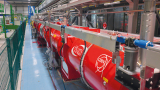
The focusing magnets for the High-Luminosity LHC have reached their nominal operating current.
 Read article 'Helsinki muses on the FCC'
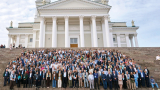
The FCC Week brought scientists, engineers, industry representatives and policymakers from 38 countries to the University of Helsinki.
 Read article 'The LHC completes its third run'
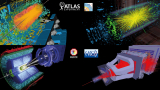
The LHC has entered its third Long Shutdown after a Run 3 that surpassed expectations, beginning four years of upgrades towards the High-Luminosity LHC.
 Read article 'Accelerator experts meet in Normandy'
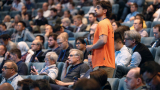
IPAC'26 drew more than 1500 accelerator physicists to Deauville to discuss flagship colliders, light sources, novel acceleration techniques and machine learning.
 Read article 'The FCC, half a century on'
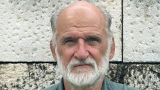
The European Strategy has recommended the FCC-ee as CERN’s next flagship collider. The case for it, Alain Blondel argues, rests on 50 years of inventions and discoveries.
 Read article 'Final collisions for the RHIC'
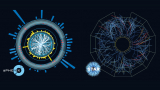
On 6 February 2026, beams of oxygen ions circulated through the Relativistic Heavy Ion Collider at Brookhaven National Laboratory for the last time.
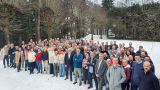 Read article 'Scaling new heights towards Long Shutdown 3'
The 28th Chamonix Workshop took place from 2 to 5 February 2026, with around 130 participants from CERN and several international guests.
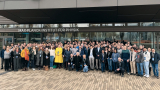 Read article 'Garching gathers for the FCC'
From 26 to 30 January 2026, the Max Planck Institute for Physics in Garching hosted the 9th FCC Physics Workshop, a major gathering of theorists and experimentalists working on the proposed Future Cir...
 Read article 'Accelerators feel the chill'
Stochastic Cooling of Particle Beams, by Dieter Möhl, is a remarkably thorough treatment of a technique that remains central to hadron-beam physics decades after its invention at CERN.