Comsol -leaderboard other pages

Topics

Accelerating a better world

IAEA

Tens of thousands of accelerators around the world help create radiopharmaceuticals, treat cancer, preserve food, monitor the environment, strengthen materials, understand fundamental physics, study the past, and even disclose crimes.

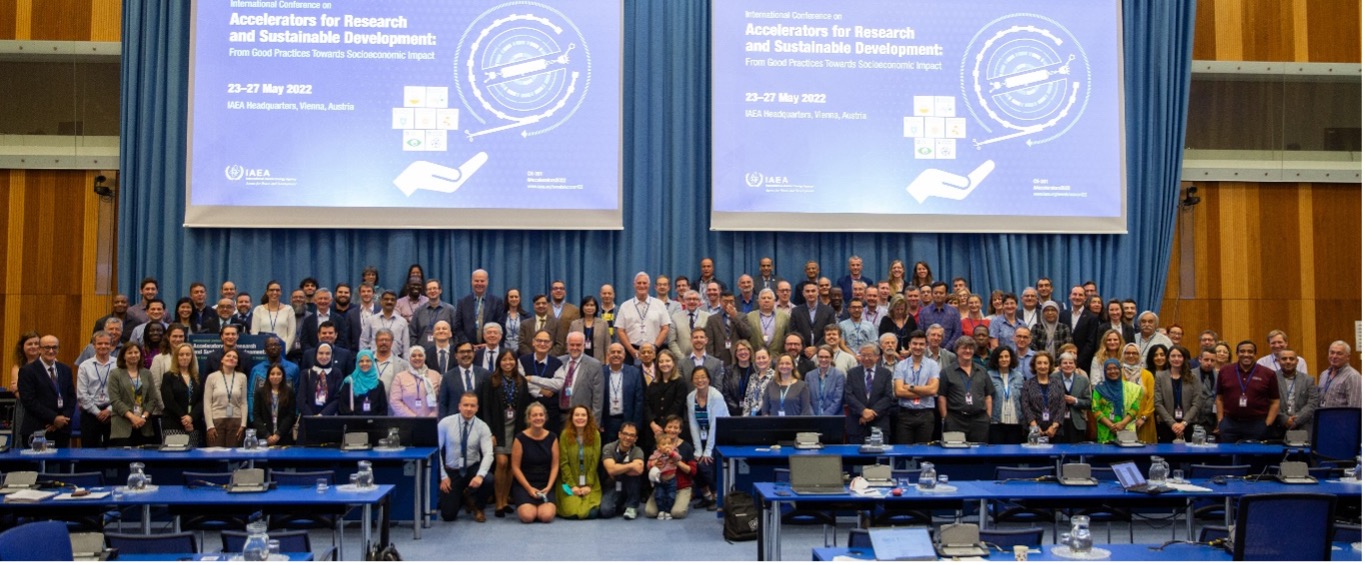
A first of its kind international conference, Accelerators for Research and Sustainable Development: From Good Practices Towards Socioeconomic Impact was organised by the International Atomic Energy Agency (IAEA) at its headquarters in Vienna from 23 to 27 May. It was held as a hybrid event attended by around 500 scientists from 72 IAEA member states. While focusing mainly on applications of accelerator science and technology, the conference was geared towards accelerator technologists, operators, users, entrepreneurs, and other stakeholders involved in applications of accelerator technologies as well as policy makers and regulators.

The far-reaching capabilities of accelerator technology help countries progress towards sustainable development

Rafael Mariano Grossi

“The far-reaching capabilities of accelerator technology help countries progress towards sustainable development,” said IAEA director general Rafael Mariano Grossi in his opening address. “IAEA’s work with accelerators helps to fulfil a core part of its ‘Atoms for Peace and Development’ mandate.” He also highlighted how accelerator technology plays a critical role in two IAEA initiatives launched over the past year: Rays of Hope, aimed at improving access to radiotherapy and cancer care in low- and middle-income countries, and NUTEC plastics, supporting countries in addressing plastic waste issues in the ocean and on land. Finally, he described IAEA plans to establish an accelerator of its own: a state-of-the-art ion-beam facility in Seibersdorf, Austria that will support research and help educate and train scientists.

The conference included sessions dedicated to case studies demonstrating socioeconomic impact as well as best practices in effective management, safe operation, and the sustainability of present and future accelerator facilities. It showcased the rich diversity in types of accelerators – from large-scale synchrotrons and spallation neutron sources, or medical cyclotrons and e-beam irradiators used for industrial applications, to smallscale electrostatic accelerators and compact-accelerator based neutron sources – and included updates in emerging accelerator technologies, such as laser-driven neutron and X-ray sources and their future applications. Six plenary sessions featuring 16 keynote talks captured the state of the art in various application domains, accompanied by 16 parallel and two poster sessions by young researchers.

During the summary and highlights session, important developments and future trends were presented:

• Large-scale accelerator facilities under development across the world – notably FAIR in Germany, SPIRAL-2 in France, FRIB in the US, RIBF in Japan, HIAF in China, RAON in Korea, DERICA in Russia and MYRRHA in Belgium – boost the development of advanced accelerator technologies, which are expected to deliver high-impact socioeconomical applications. Substantial interdisciplinary research programmes are foreseen from their beginning, and the IAEA could play an important role by strengthening the links and cooperation between all parties.

• Recent technology developments in Compact-Accelerator Neutron Sources (CANS) or High-Power CANS (HiCANS) are very promising. Among many projects, ERANS at RIKEN in Japan aims to realise a low-cost CANS capable of providing 1012 n/s for applications in materials research and ERANS-III a transportable CANS for testing the structure of bridges. On the HiCANS front, the French SONATE project aims to reach neutron flux levels comparable to the ageing fleet of low and medium power research reactors at least for some applications.

• CANS technology is promising for tools to fight cancer, for example via the Boron Neutron Capture Therapy (BNCT) method. Japan leads the way by operating or constructing 10 such in-hospital based facilities, with only a few other countries, e.g. Finland, considering similar technologies. Recent developments suggest that accelerator based BNCT treatments become soon more acceptable. IAEA could play an important coordinating role and as a technology bridge to developing countries to enable more widespread adoption.

• The role of accelerators in preserving cultural heritage objects and in detecting forgeries is becoming more vital, especially in countries that do not have the required capabilities. Ion-beam analysis and accelerator massspectrometry techniques are of particular relevance, and, again, the IAEA can assist by coordinating actions to disseminate knowledge, educating the relevant communities and possibly centralising the demands for expertise.

• The IAEA could simplify the supply of accelerator technologies between the different member states, enabling the installation and operation of facilities in low- and middle income countries, for example by structuring the scientific and technical accelerators communities, and educating young researchers and technicians via dedicated training schools.

• One of IAEA’s projects is to establish a stateof-the-art ion beam facility in Austria. This will enable applied research and provision of analytical services, as well as help educate and train scientists on the diverse applications of ion beams (including the production of secondary particles such as neutrons) and will enhance collaborations with both developed and developing countries.

• Ion-beam analysis (IBA) together with accelerator-mass spectroscopy (AMS) techniques are unique, reliable and costeffective for Environmental Monitoring and Climate Change Related Studies, for example in characterising environmental samples and investigating isotope ratio studies for chronology and environmental remediation AMS facilities with smaller footprints have increased their distribution worldwide, resulting in accessible and affordable measurements for interdisciplinary research, while other IBA techniques offer efficient analytical methods to characterise the chemical composition of particles from air pollution.

• Materials science and accelerators are now moving ahead hand in hand, from characterisation to modification of technologically important materials including semiconductors, nano-materials, materials for emerging quantum technologies and materials relevant to energy production. Testing materials with accelerator-based light and heavy-ion beams remains a unique possibility in the case of fusion materials and offers much faster radiation-damage studies than irradiation facilities at research reactors. Equally important is the accelerator-assisted creation of gaseous products such as hydrogen and helium that allows testing the radiation resilience in unmoderated neutron systems such as fast fission and fusion reactors.

• New developments in electron-beam accelerators for industrial applications were also mentioned, in particular their application to pollution control. E-beam system technologies are also widely employed in food safety. Reducing spoilage by extending the shelf-life of foods and reducing the potential for pathogens in and on foods will become major drivers for the adoption of these technologies, for which a deeper understanding of the related effects and resistance against radiation is mandatory.

Accelerator technologies evolve very fast, presenting a challenge for regulatory bodies to authorise and inspect accelerator facilities and activities. This conference demonstrated that thanks to recent technological breakthroughs in accelerator technology and associated instrumentation, accelerators are becoming an equally attractive alternative to other sources of ionising radiation such as gamma irradiators or research reactors, among other conventional techniques. Based on the success of this conference, it is expected that the IAEA will start a new series of accelerator community gatherings periodically from now on every two to three years.

 

Karl von Meyenn 1937–2022

Karl Von Meyenn

Physicist and historian of science Karl von Meyenn passed away on 18 June 2022 in his hometown of Neuburg an der Donau. Karl was a CERN associate for many years, often to be found in Salle Pauli amongst the archive and library of Wolfgang Pauli, on whom he was one of the world’s leading experts. 

Karl was born in Potsdam in 1937 and began studying physics in Chile, where his parents emigrated. He completed his doctorate in 1971 with Siegfried Flügge in Freiburg im Breisgau, then returned with his wife to Chile and taught at the Pontificia Universidad Católica until the military coup of 1973. Back in Germany, he worked first as a senior assistant to Helmut Reik at the faculty of physics in Freiburg, before specialising in the history of science with Armin Hermann at the Historical Institute of the University of Stuttgart in 1975. From 1985 to 1990 he was a professor of history of science at the Universitat Autònoma in Barcelona, after which he joined Hans-Peter Dürr at the Max Planck Institute for Physics in Munich. He also carried out research at the Institute of Theoretical Physics (with Frank Steiner) at the University of Ulm, and at CERN, where he devoted himself to Pauli’s scientific legacy.

Franca Pauli donated her husband’s scientific writings, library and other items to CERN during the 1960s and 1970s, and CERN took responsibility for safeguarding and making this valuable collection available. The Pauli Committee turned to Karl von Meyenn, who tracked down copies of other letters in public or private ownership, then collated this wealth of material into publishable form. Besides the monumental eight volumes of Pauli correspondence, Karl published a biographical anthology on the great physicists (Die großen Physiker) in 1997–1999, a two-volume selection of Erwin Schrödinger’s correspondence in 2011, and numerous essays, lectures and collaborative books on individual scientists and their interactions in developing new concepts in physics. In 2000 he was awarded the Marc-Auguste Pictet Medal of the Société de Physique et d’Histoire Naturelle de Genève for his work on the history of modern physics. Karl was a member of the Pauli Committee from 1994 and an honorary councillor at ETH Zurich since 2006. The library he leaves in Neuburg is a testimony to his great love of classical culture and broad cultural life. Combining great learning and rigorous scholarship with an engaging curiosity and enthusiasm, Karl was a stimulating and extremely likeable colleague. He will be sadly missed. 

Run 3 physics gets under way

The start of Run 3 physics

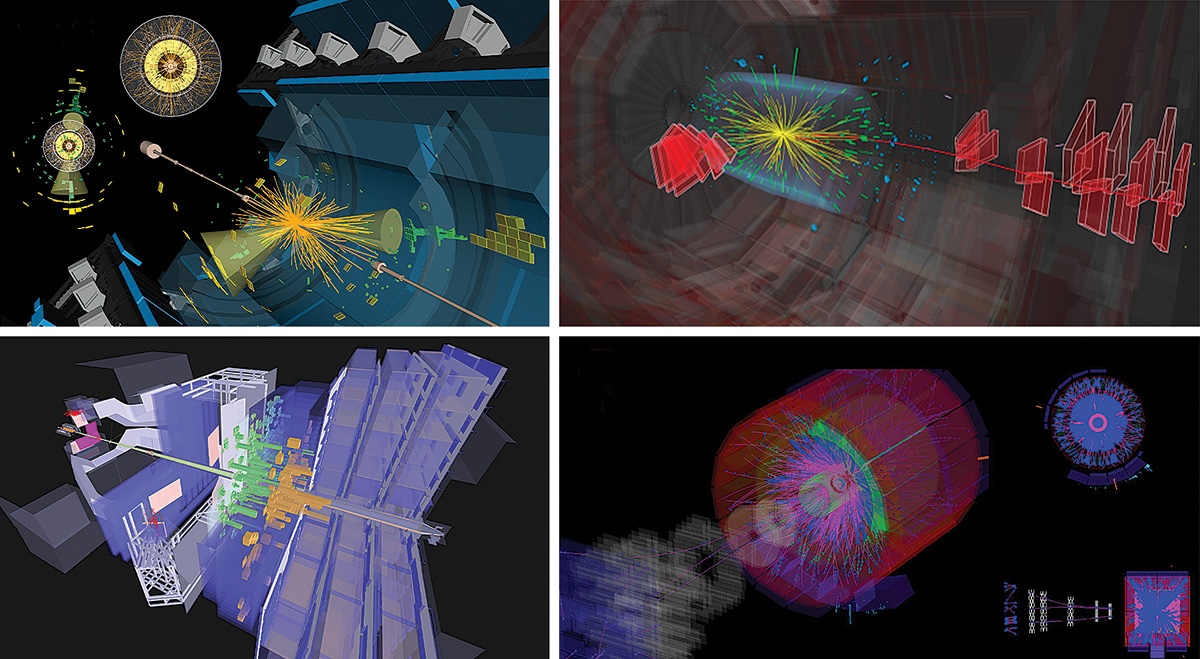
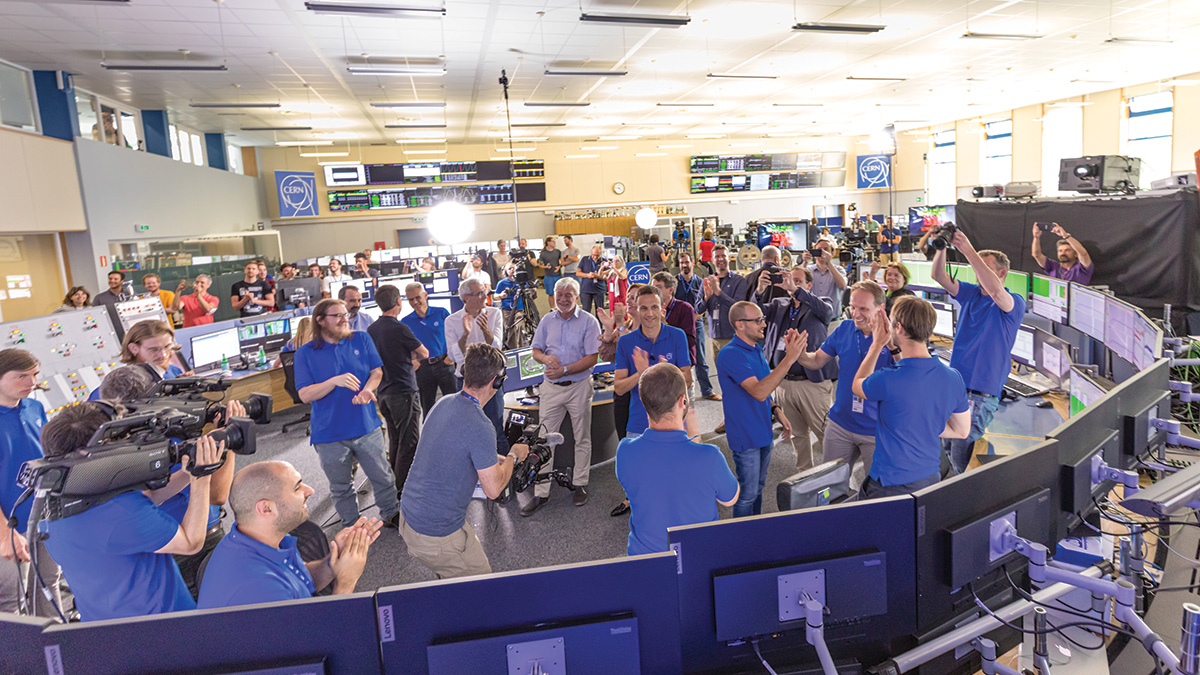
At 4.47 p.m. on Tuesday 5 July, applause broke out in the CERN Control Centre as LHC operators declared Stable Beams. After more than three years of upgrade and maintenance work across the machine and experiments, ALICE, ATLAS, CMS and LHCb started recording their first proton–proton collisions at an unprecedented energy of 13.6 TeV. 

LHC Run 3 is set to last until December 2025. In addition to a slightly higher centre-of-mass energy than Run 2, the machine will operate at an increased average luminosity thanks to larger proton intensities and smaller transverse beam sizes. New or upgraded detectors and improved data readout and selection promise the experiments their greatest physics harvests yet. ATLAS and CMS each expect to record more collisions during Run 3 than in the two previous runs combined, while LHCb and ALICE hope for three and 50 times more data, respectively. Two new forward experiments, FASER and SND@LHC (CERN Courier July/August 2021 p7), also join the LHC-experiment family. 

While pilot beams circulated in the LHC for a brief period in October 2021, the countdown to LHC Run 3 began in earnest on 22 April, when two beams of protons circulated in opposite directions at their injection energy of 450 GeV. Since then, operators have worked around the clock to ensure the smooth beginning of the LHC’s third run, which was livestreamed to the media on the afternoon of 5 July. True to form, the machine added drama to proceedings: a training quench that morning generated enough heat to warm up several magnets well above their operating temperature. The cryogenics team sprang into action, managing to recuperate operational conditions just in time for the live event, watched by more than 1.5 million people. 

First 13.6 TeV collisions

Since then, the intensity of the beams has been increased in carefully monitored steps. As the Courier went to press, 900 bunches each containing around 120 billion protons were circulating, with 2748 bunches expected by September. “Run 3 is going to be a game-changer for us,” says operations group leader Rende Steerenberg. “In Run 2, we exploited the LHC in its ‘normal’ hardware configuration as constructed. Now, after the injectors have been adapted, we can push the brightness and the intensity of the beams much more. Run 3 is also an important stepping-stone to the High-Luminosity LHC upgrade.” 

Schedule change

In March, the CERN management announced a change to the LHC schedule. Long Shutdown 3 will now start in December 2025, one year later than in the previous baseline, and last for three instead of 2.5 years. Production schedules across the LHC’s lifetime will remain unaffected, while the change will allow work for the HL-LHC to be completed with appropriate schedule margins. The extended year-end technical stop (EYETS) is now scheduled to take place in 2024/2025 and to last for 17 weeks, while the two preceding EYETSs will be of the standard length of 13 weeks beam-to-beam. 

The preferred scenarios and duration of ion runs during Run 3 remain to be confirmed, but are likely to take place in four week-long periods towards the end of each year. While the majority of the LHC’s heavy-ion runs employ lead ions, a novel addition to the Run 3 programme will be a short period of collisions between oxygen ions in 2024. As with the first xenon runs in 2017, colliding ions with masses that are intermediate between protons and lead allows the experiments to scan important physics regimes relevant to the study of high-energy QCD. 

“Every time you make a step in energy, even if it’s not that large, and a step in the amount of data, you open up new physics opportunities,” said CERN Director-General Fabiola Gianotti. “And every time we start a new run, it’s always a new adventure. You have to recalibrate the detectors and the accelerator, so it’s always uncharted territory and always a big emotion.” 

  • For full coverage of the physics targets at LHC Run 3, please see the May/June 2022 issue of CERN Courier.

Accelerating knowledge transfer with physics

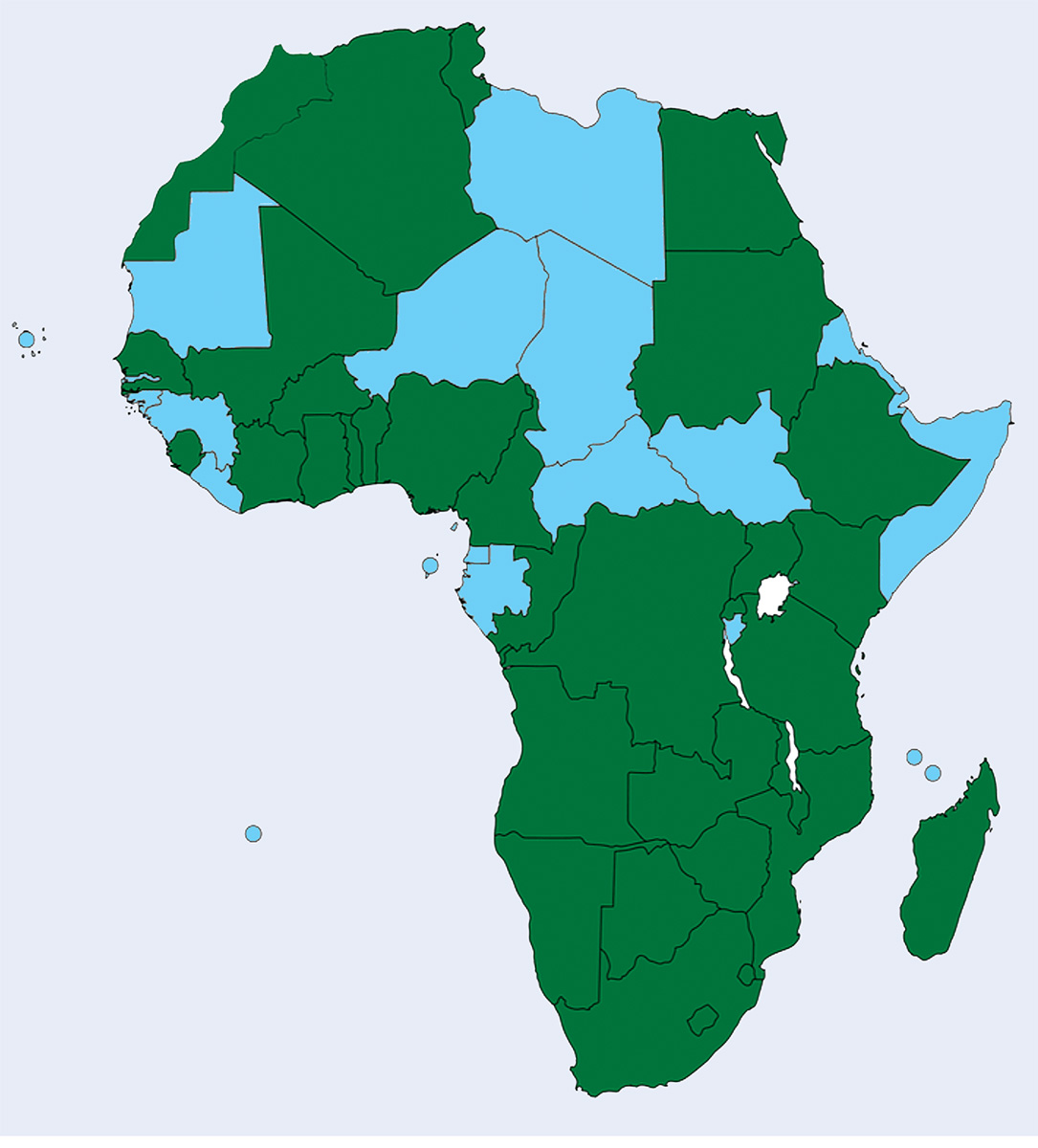
Countries in Africa participating in ACP2021

Science and technology are key instruments for a society’s economic growth and development. Yet Africa’s science, innovation and education have been chronically under-funded. Transferring knowledge, building research capacity and developing competencies through training and education are major priorities for Africa in the 21st century. Physics combines these priorities by extending the frontiers of knowledge and inspiring young people. It is therefore essential to make basic knowledge of emerging technologies available and accessible to all African citizens to build a steady supply of trained and competent researchers. 

In this spirit, the African School of Fundamental Physics and Applications was initiated in 2010 as a three-week biennial event. To increase networking opportunities among participants, the African Conference on Fundamental and Applied Physics (ACP) was included as a one-week extension of the school. The first edition was held in Namibia in 2018 and the second, co-organised jointly by Mohammed V University and Cadi Ayyad University in Morocco, was rebranded ACP2021, originally scheduled to take place in December but postponed due to COVID-19. The virtual event held from 7 to 11 March attracted more than 600 registrants, an order of magnitude higher than its first edition. 

The ACP2021 scientific programme covered the three major physics areas of interest in Africa defined by the African Physical Society: particles and related applications; light sources and their applications; and cross-cutting fields covering accelerator physics, computing, instrumentation and detectors. The programme also included topics in quantum computing and quantum information, as well as machine learning and artificial intelligence. Furthermore, ACP2021 focused on topics related to physics education, community engagement, women in physics and early-career physicists. The agenda was stretched to accommodate different time zones and 15 parallel sessions took place.

Welcome speeches by Hassan Hbid (Cadi Ayyad University) and by Mohammed Rhachi (Mohammed V University) were followed by a plenary talk by former CERN Director-General Rolf Heuer, “Science bridging Cultures and Nations” and an overview of the African Strategy for Fundamental and Applied Physics (ASFAP). Launched in 2021, the ASFAP aims to increase African education and research capabilities, build the foundations and frameworks to attract the participation of African physicists, and establish a culture of awareness of grassroots physics activities contrary to the top-down strategies initiated by governments. Shamila Nair-Bedouelle (UNESCO) conveyed a deep appreciation of and support for the ASFAP initiative, which is aligned with the agenda of the United Nations Sustainable Development Goals. A rich panel discussion followed, raising different views on physics education and research roadmaps in Africa.

A central element of the ACP2021 physics programme is the ASFAP community planning meeting, where physics and community-engagement groups discussed progress in soliciting the community input that is critical for the ASFAP report. The report will outline the direction for the next decade to encourage and strengthen higher education, capacity building and scientific research in Africa.

The motivation and enthusiasm of the ACP2021 participants was notable, and the efforts in support of research and education across Africa were encouraged. The next ACP in 2023 will be hosted by South Africa. 

Future Circular Collider workshop debuts in Italy

FCC’s Rome workshop

The first Italian workshop on the Future Circular Collider (FCC) took place in Rome from 21 to 22 March and was attended by around 120 researchers.

The FCC study is exploring the technical and financial feasibility of a 91 km-circumference collider situated under French and Swiss territory near CERN, thus exploiting existing infrastructures. In a first phase (FCC-ee) the tunnel would host an electron–positron collider at energies from 90 to 365 GeV, which would be replaced by a proton–proton collider (FCC-hh) with a centre-of-mass energy of at least 100 TeV, almost an order of magnitude higher than that of the LHC. The proposed roadmap foresees the R&D for the 16 T superconducting dipole magnets needed to keep the FCC-hh proton beams on track to take place in parallel with FCC-ee construction and operation. 

“The FCC is a large infrastructure that would allow Europe to maintain its worldwide leadership in high-energy physics research. This project is therefore of strategic importance in the international science scenario of the coming years,” remarked INFN president Antonio Zoccoli in his introduction. “INFN has great potential and could make a significant contribution to its implementation. In this perspective, it is important to clearly identify the main activities in which to invest, assemble the necessary human resources and identify possible industrial partners.”

The workshop was opened by FCC study leader Michael Benedikt, who gave an overview of the FCC feasibility study, while deputy study leader Frank Zimmermann covered the technological challenges, design features and machine studies for FCC-ee. Opportunities for technological development related to the FCC-ee were then presented, along with machine studies, in which INFN are already involved. Scientific and technological R&D areas where collaborations could be strengthened or initiated were also identified, prompting an interesting discussion with CERN colleagues. 

INFN is already well integrated both in the FCC coordination structure and several ongoing studies, having participated in the project since its beginning, and provides important contributions on all aspects of the FCC study. These range from accelerator and detector R&D, such as the development of superconducting magnets, to experimental and theoretical physics studies. This is made evident by the strong Italian involvement in FCC-related European programmes, such as EuroCirCol for FCC-hh and FCC-IS for FCC-ee, and AIDAinnova on innovative detector technologies for future accelerators. INFN is committed to the development of superconducting magnets for FCC-hh, for which substantial additional funding could come from a project in the context of the next-generation funding programme Horizon Europe.

The second day of the workshop focused on the work that experimental and theoretical physicists have been carrying out to deeply understand the scientific potential of the visionary FCC project, the specific requests for the detectors and the associated R&D activities.

This workshop was the first in a series organised by INFN to promote and support the FCC project and pursue the key technological R&D needed to demonstrate its feasibility by the next update of the European strategy for particle physics.

Seminar remembers eminent David Cox

Statistician David Cox

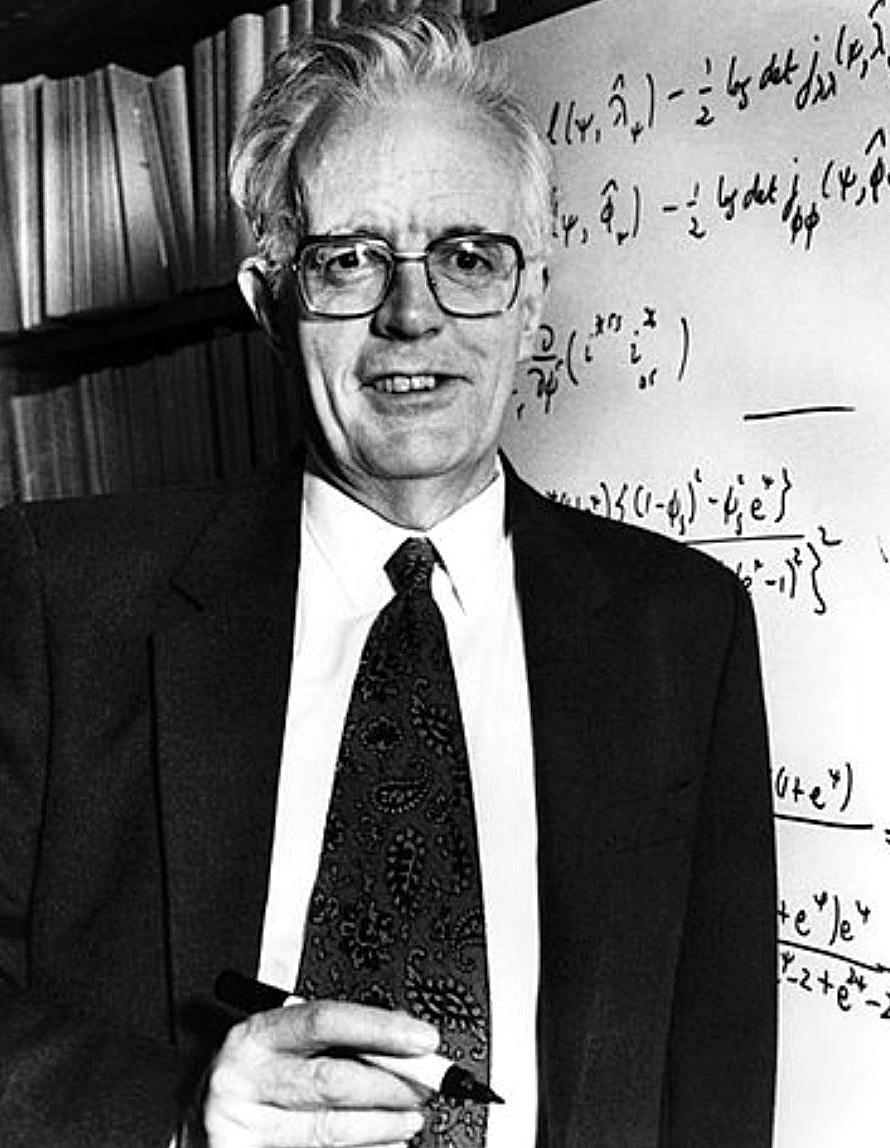
David Cox, a giant in the world of statistics, passed away earlier this year at the age of 97. As he had been a contributor to PHYSTAT workshops and was a supporter of its activities, a seminar held on 23 March was dedicated to his memory. Brad Efron (Stanford) referred to Cox as the world’s most famous statistician – an assessment confirmed by Cox being the first recipient of the International Prize in Statistics, roughly the equivalent of a Nobel Prize. The citation mentioned a lifelong series of contributions to statistics spanning many subjects. In particular, it emphasised his work on what is now called Cox’s proportional hazards model, which provides a very useful way to implement regression analysis of survival times (the times to an event of interest such as the death of a person or failure of a machine). His contribution is ranked 16th in Nature’s list of most-cited papers in any subject.

Heather Battey (Imperial College), who collaborated closely with Cox for the past five years, described how he was still very active until his very last days, and highlighted his helpful and charming personality. 

Long-time collaborator Nancy Reid (Toronto) concurred, admiring his ability to see through extraneous detail and concentrate on the essence of the problem. She remembers going with him to watch Verdi’s Ernani, sung in Italian, in Budapest when they were both attending a statistics meeting there. So that Reid wouldn’t be completely lost, Cox kindly summarised the lengthy and convoluted plot by telling her “The tenor is in love with the soprano, and the baritone is trying to keep them apart.” 

It was a special pleasure to have Cox available at our meetings, and he was always prepared to explain statistical issues in informal discussions with particle physicists. Bob Cousins (UCLA) recalled the talks Cox had given at PHYSTAT meetings in 2005, 2007 and 2011. He compared and contrasted frequentist statistics and the “five faces” of Bayesian statistics, repeatedly warning of the dangers of “treacherous” uniform prior probability densities used in attempts to represent ignorance. He alluded to a general key problem in frequentist statistics, that of ensuring that the long run used to calibrate coverage is relevant to the specific data sample being analysed. He also discussed in more technical detail issues of testing multiple hypotheses, including graphical methods. Cox and Reid further offered published thoughts on problems presented to them by LHC physicists. Cousins concluded that we would do well to read Cox’s contributions again.

PHYSTAT is pleased and honoured to have had the opportunity of paying its respect to a very eminent statistician and a wonderful person. His memory will long be with us.

Fostering cross-disciplinarity

Irradiating biomaterial

Despite several COVID waves, the organisers of the 6th edition of the International Summer School on Intelligent Signal Processing for Frontier Research and Industry (INFIERI) made this school an in-person event. The INFIERI school was successfully held at UAM from August 23 to September 4 thanks to the unprecedented speed of the vaccine roll out, the responsible behaviour of the school participants and the proper applied logistics.

Against a backdrop of topics ranging from cosmology to the human body and particle physics, the programme covered advanced technologies such as semiconductors, deep sub-micron 3D technologies, data transmission, artificial intelligence and quantum computing.

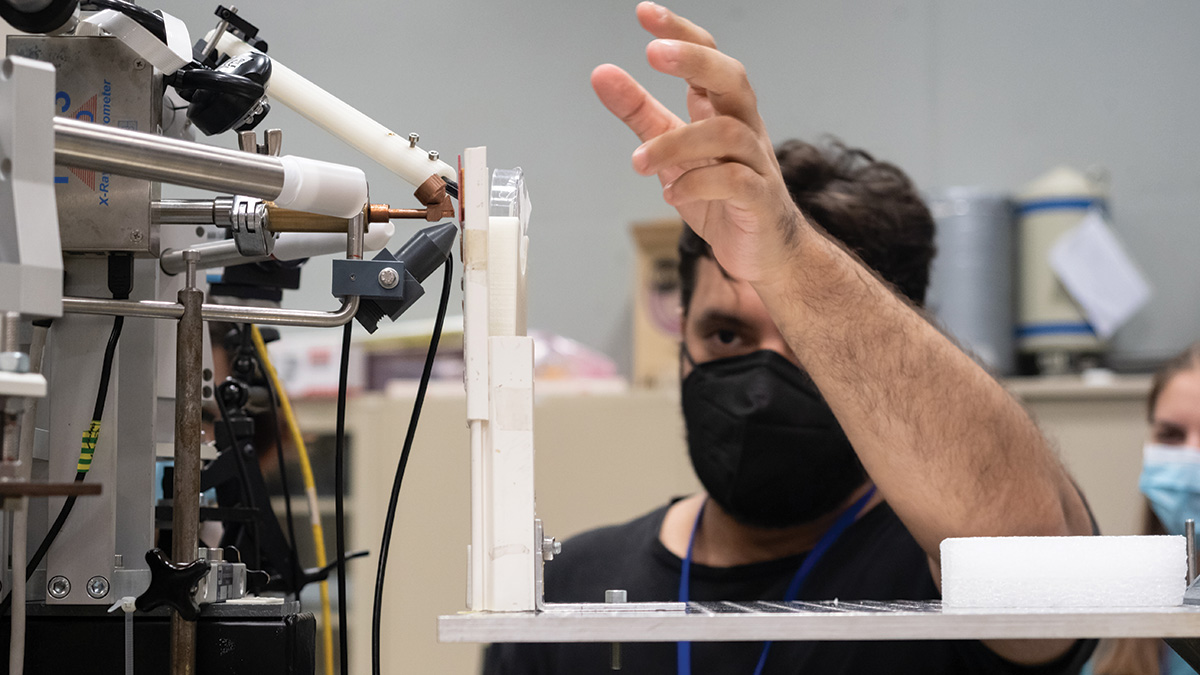
Topics were presented in lectures and keynote speeches, and the teaching was reinforced via hands-on laboratory sessions, allowing students to practise applications in realistic conditions across a range of areas, such as: theoretical physics, accelerators, quantum communication, Si Photonics and nanotechnology. The latter included medical applications to new mRNA vaccines, which have long been under investigation for cancer treatment, besides their use against COVID-19. For instance, they could analyse combined real PET/MRI images using machine-learning techniques to find biomarkers of illness in a hospital setting, or study the irradiation of a biomaterial using a proton beam. Worldwide experts from academia, industry and laboratories such as CERN either gave lectures or ran lab sessions, most of them attending in person, often for the entire duration of the school.

During the last day, the students presented posters on their own research projects – the high number and quality of presentations reflecting the cross-disciplinary facets and the excellence of the participants. Many were then selected to be part of the in-preparation proceedings of the Journal of Instrumentation.

The next INFIERI school will only offer in-person attendance, which is considered essential to the series, but if the pandemic continues it will exploit some of the learning gained from the 6th edition.

Antinucleosynthesis beyond the average

ALICE figure 1

Despite two decades of extensive studies, the production of antinuclei in heavy-ion collisions is not yet fully understood. Antinuclei production is usually modelled by two conceptually different theoretical models, the statistical hadronisation model (SHM) and coalescence models. In the SHM, deuteron antinuclei are produced from a locally thermally equilibrated source, while antinuclei are formed from the binding of constituent nucleons, which are close in momentum and position phase space in the coalescence model. Both models predict very similar production yields of, for example, deuteron antinuclei, bound states of an antiproton and an antineutron. This calls for new experimental observables that discern different production models.

Measuring higher moments of the multiplicity distribution of antinuclei as well as the correlation with antinucleons produced in the collision have been recently proposed as sensitive variables to antinucleosynthesis processes in heavy-ion collisions. The first measurement of the variance to mean ratio of the multiplicity distribution of antideuterons is compared to the predictions of the SHM and coalescence models (figure 1). The coalescence model fails to describe the observed ratio of the variance and mean of the multiplicity distribution of antideuterons. The measurements are consistent with the statistical baseline, a Poissonian distribution, as well as with the SHM in the presence of baryon number conservation. However, this observable proves insensitive to the size of the correlation volume used in the SHM to conserve the baryon number.

The Pearson correlation coefficient between the number of produced antideuterons and antiprotons constrains the latter effectively. The small negative correlation reflects that there are less protons observed in events with at least one deuteron than in an average event (figure 1). The coalescence model does not reproduce the measurement, whereas it is possible to fit the measurement to extract the correlation volume out of the SHM. The obtained correlation volume is 1.6 times the volume of the fireball per unit of rapidity, which is smaller compared to those describing proton yields and a similar measurement of net-proton number fluctuations. These findings point to a later formation of the correlation among protons and deuterons compared to that among antiprotons and protons.

Overall, these results present a severe challenge to the current understanding of antinuclei production in heavy-ion collisions at the LHC energies. With the LHC Run 3 data it will be possible to extend these measurements to heavier antinuclei and to higher order correlation coefficients and moments of the antinuclei multiplicity distribution that are even more sensitive to details of the nucleosynthesis process in heavy-ion collisions.

Introduction to the Standard Model and Beyond

Introduction to the Standard Model and Beyond

Stuart Raby has written a modern, comprehensive textbook on quantum field theory, the Standard Model (SM) and its possible extensions. The focus of the book is on symmetries, and it contains a wealth of recent experimental results on Higgs and neutrino physics, which sets it apart from other textbooks addressing the same audience. It is published at a time when the incredible success story of the SM has come to a close with the discovery of the Higgs boson, and when the upcoming neutrino experiments promise to probe beyond-the-SM physics.

Raby is the author of some of the most important papers on supersymmetric grand unified theories and the book reflects that. It is no easy task to cover such a wide range of topics, from the basics of group theory to very advanced concepts such as gauge and gravity-mediated supersymmetry breaking, in one book. Raby devotes 120 pages to the basics of group theory, representations of the Poincaré group and the construction of the S matrix to provide the necessary foundations for the introduction to quantum electrodynamics in part III. Parts IV–VI introduce the reader to discrete symmetries, flavour symmetries and spontaneous symmetry breaking. Next, Raby describes two “Roads to the Standard Model” following the development of quantum chromodynamics and of electroweak theory, before arriving at the SM in part IX. The remaining parts deal with neutrino physics, grand unified theories and the minimal supersymmetric SM. 

There are no omissions topic-wise, which makes the book very comprehensive. This comes at a price, however. In several places, complicated topics are discussed with only the most minimal of context, reading like a collection of equations rather than a textbook. Two examples of this are the discussion of causality for fermionic fields or the step from global to local supersymmetry, to which the author devotes only half a page each. In other places, more cross-referencing would improve legibility. For example, the chapter on SU(5) grand unified theory does not mention the automatic cancellation of gauge anomalies, a topic previously introduced in the context of the SM.

The use of materials is very distinctive. I doubt there is another book on the market that presents the reader with such a wealth of plots, figures and sketches, including recent experimental results on all the important topics discussed. The most important plots are reproduced in 12 pages of colour tables in the centre. There are exercises for the first five parts and a single Mathematica notebook is printed for Wigner rotations. Another distinguishing feature are the detailed suggested projects to use during a two-term course based on the book.

A very useful resource for designing a lecture of quantum field theory and beyond-the-SM physics

Although advertised as useful for both theorists and experimentalists, it is undeniably a book written from a theorist’s perspective. This becomes most clear in the latter parts, where relevant sections of the plots presenting experimental results remain unexplained. That being said, other very important experimental topics are explained, which you will not find in other textbooks about the SM. Raby explains how the anomalous magnetic moments of the electron and the muon are measured, and goes into quite some detail on neutrino experiments. 

The book would benefit from improved editing. For example, the units are sometimes in italics, sometimes not, some equations are double tagged, some plots do not have axes labels, and there is inconsistent use of wavy and curly lines in the Feynman diagrams. Raby does make good use of references though, and points the reader to other textbooks and original literature; although the index needs to be extended significantly to be useful.

I recommend this book for advanced undergraduates, graduate students and lecturers. It provides a very useful resource for designing a lecture of quantum field theory and beyond-the-SM physics, and the amount of material covered is impressive and comprehensive. Beginners might be overwhelmed by Raby’s compact style , so I would recommend those who are new to quantum field theory to read a more accessible textbook in parallel.

The A-to-Z of CERN: Universe Unlocked

The A-to-Z of CERN

This book by CERN’s Archana Sharma and her two students Robin Mathews and Ben Richardson merges the classic A-to-Z formula with CERN concepts, making it suitable for all audiences. Each letter is divided into four categories: physics, accelerator, computing and experiments, allowing the reader to get a good understanding of each area.

All concepts are described in a simple and understandable way, such as antimatter being the same particles of matter with opposite charge. More complex concepts are explained with fun facts to help the reader: the temperature of the quark–gluon plasma is 100,000 times hotter than the centre of the Sun, and the time it takes to record a video call of 1 exabyte is 237,823 years. Each description is accompanied by a photograph, logo or simulation representing the described concept, which makes the book visually attractive for the reader.

Born at the start of the global pandemic, the A-to-Z of CERN arose from the need to tell science and technology stories at CERN when internships and summer lectures were either limited or cancelled. Overall, it provides an informative and entertaining glossary of CERN and particle physics in general, peppered with some general physics and technology concepts, such as the SI-unit system and even some non-CERN experiments, such as the former ZEUS experiment at DESY. 

bright-rec iop pub iop-science physcis connect