With so many new hadronic states being discovered at the LHC (67 and counting, with the vast majority seen by LHCb), it can be difficult to keep track of what’s what. While most are variations of known mesons and baryons, LHCb is uncovering an increasing number of exotic hadrons, namely tetraquarks and pentaquarks. A case in point is its recent discovery, announced at CERN on 5 July, of a new strange pentaquark (with quark content ccuds) and a new tetraquark pair: one constituting the first doubly charged open-charm tetraquark (csud) and the other a neutral isospin partner (csud). The situation has prompted the LHCb collaboration to introduce a new naming scheme. “We’re creating ‘particle zoo 2.0’,” says Niels Tuning, LHCb physics coordinator. “We’re witnessing a period of discovery similar to the 1950s, when a ‘zoo’ of hadrons ultimately led to the quark model of conventional hadrons in the 1960s.”
While the quark model allows the existence of multiquark states beyond two- and three-quark mesons and baryons, the traditional naming scheme for hadrons doesn’t make much allowance for what these particles should be called. When the first tetraquark candidate was discovered at the Belle experiment in 2003, it was denoted by “X” because it didn’t seem to be a conventional charmonium state. Shortly afterwards, a similarly mysterious but different state turned up at BaBar and was denoted “Y”. Subsequent exotic states seen at Belle and BESIII were dubbed “Z”, and more recently tetraquarks discovered at LHCb were labelled “T”.
Complicating matters further, the subscripts added to differentiate between the various states lack consistency. For example, the first known tetraquark states contained both charm and anticharm quarks, so a subscript “c” was added. But the recent discoveries of tetraquarks and pentaquarks containing a single strange quark require an extra subscript “s”. On top of all of that, explains LHCb’s Tim Gershon, who initiated the new naming scheme, tetraquarks discovered by LHCb in 2020 contain a single charm quark. “We couldn’t assign the subscript ‘c’ because we’ve always used that to denote states containing charm and anticharm, so we didn’t know what symbols to use,” he explains. “Things were starting to become a bit confusing, so we thought it was time to bring some kind of logic to the naming scheme. We have done this over an extended period, not only within LHCb but also involving other experiments and theorists in this field.”
Helpfully, the new proposal labels all tetraquarks “T” and all pentaquarks “P”, with a set of rules regarding the necessary subscripts and superscripts. In this scheme, the two different spin states of the open-charm tetraquarks discovered by LHCb in 2020 become Tcs0(2900)0 and Tcs1(2900)0 instead of X0(2900)0 and X1(2900)0, for example, while the latest pentaquark is denoted PΛψs(4338)0. The collaboration hopes that the new scheme, which can be extended to six- or seven-quark hadrons, will make it easier for experts to communicate while also helping newcomers to the field.
The new scheme could make it easier to spot patterns that might have been missed before
Importantly, it could make it easier to spot patterns that might have been missed before, perhaps shedding light on the central question of whether exotic hadrons are compact tightly bound multi-quark states or more loosely bound molecular-like states. The new LHCb scheme might even help researchers predict new exotic hadrons, just as the multiplets arising from the quark model made it possible to predict new mesons and baryons such as the Ω–.
“Before this new scheme it was almost like a Tower of Babel situation where it was difficult to communicate,” says Gershon. “We have created a document that people can use as a kind of dictionary, in the hope that it will help the field to progress more rapidly.”
The radio-frequency (RF) cavities that accelerate charged particles in machines like the LHC are powered by devices called klystrons. These electro-vacuum tubes, which amplify RF signals by converting an initial velocity modulation of a stream of electrons into an intensity modulation, produce RF power in a wide frequency range (from several hundred MHz to tens of GHz) and can be used in pulsed or continuous-wave mode to deliver RF power from hundreds of kW to hundreds of MW. The close connection between klystron performance and the power consumption of an accelerator has driven researchers at CERN to develop more efficient devices for current and future colliders.
The efficiency of a klystron is calculated as the ratio between generated RF power and the electrical power that is delivered from the grid. Experience with many thousands of such devices during the past seven decades has established that at low frequency and moderate RF power levels (as required by the LHC), klystrons can deliver an efficiency of 60–65%. For pulsed, high-frequency and high peak-RF power devices, efficiencies are about 40–45%. The efficiency of RF power production is a key element of an accelerator’s overall efficiency. Taking the proposed future electron–positron collider FCC-ee as an example: by increasing klystron efficiency from 65 to 80%, the electrical power savings over a 10-year period could be as much as 1 TWhr. In addition, reduced demand on the electrical power storage capacity and cooling and ventilation may further reduce the original investment cost.
In 2013 the development of high-efficiency klystrons started at CERN within the Compact Linear Collider study as a means to reduce the global energy consumed by the proposed collider. Thanks to strong support by management, this evolved into a project inside the CERN RF group. A small team of five people at CERN and Lancaster University, led by Igor Syratchev, developed accurate computer tools for klystron simulations and in-depth analysis of the beam dynamics, and used them to evaluate effects that limit klystron efficiency. Finally, the team proposed novel technological solutions (including new bunching methods and higher order harmonic cavities) that can improve klystron efficiency by 10–30% compared to commercial analogues. These new technologies were applied to develop new high-efficiency klystrons for use in the high-luminosity LHC (HL-LHC), FCC-ee and the CERN X-band high-gradient facilities, as well as in medical and industrial accelerators. Some of the new tube designs are now undergoing prototyping in close collaboration between CERN and industry.
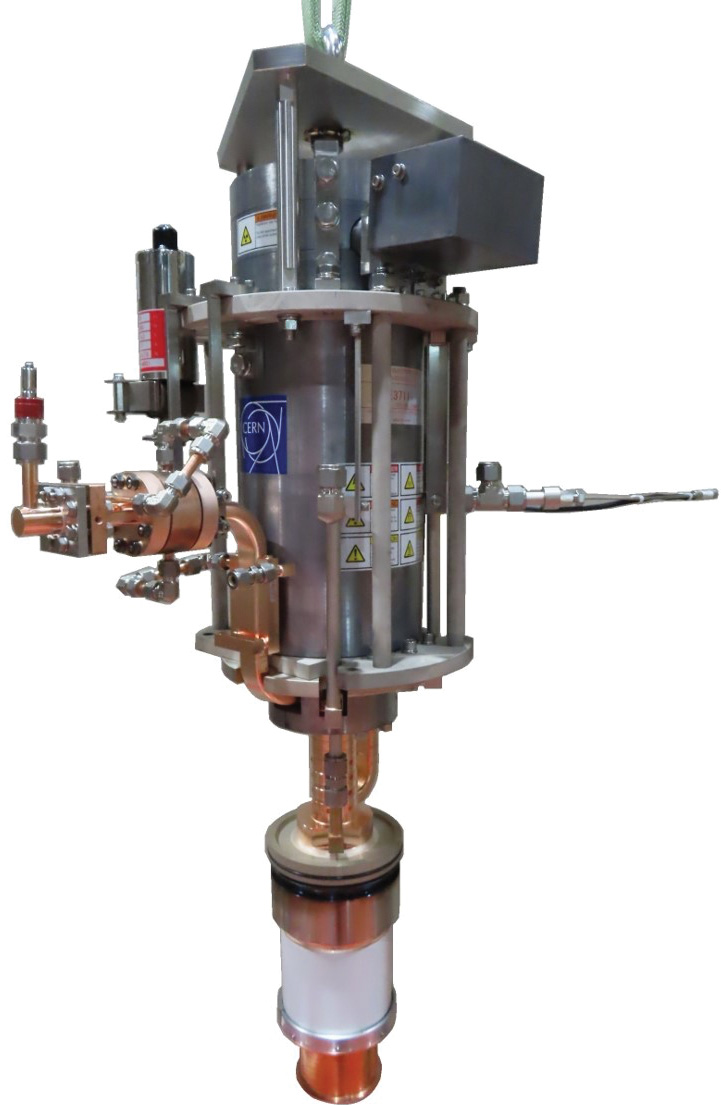
The first commercial prototype of a high-efficiency 8 MW X-band klystron developed at CERN was built and tested by Canon Electron Tubes and Devices in July this year. Delivering an expected power level with an efficiency of 53.3% measured at their factory in Japan, it is the first demonstration of the technological solution developed at CERN that showed an efficiency increase of more than 10% compared to commercially available devices. In terms of RF power production, this translates to an overall increase of 25% using the same wall-plug power as the model currently working at CERN’s X-band facility. Later this year the klystron will arrive at CERN and replace Canon’s conventional 6 MW tube. The next project in progress aims to fabricate a high-efficiency version of the LHC klystron, which, if successful, could be used in the HL-LHC.
“These results give us confidence for the coming high-efficiency version of the LHC klystrons and for the development of FCC-ee,” says RF group leader Frank Gerigk. “It is also an excellent demonstration of the powerful collaboration between CERN and industry.”
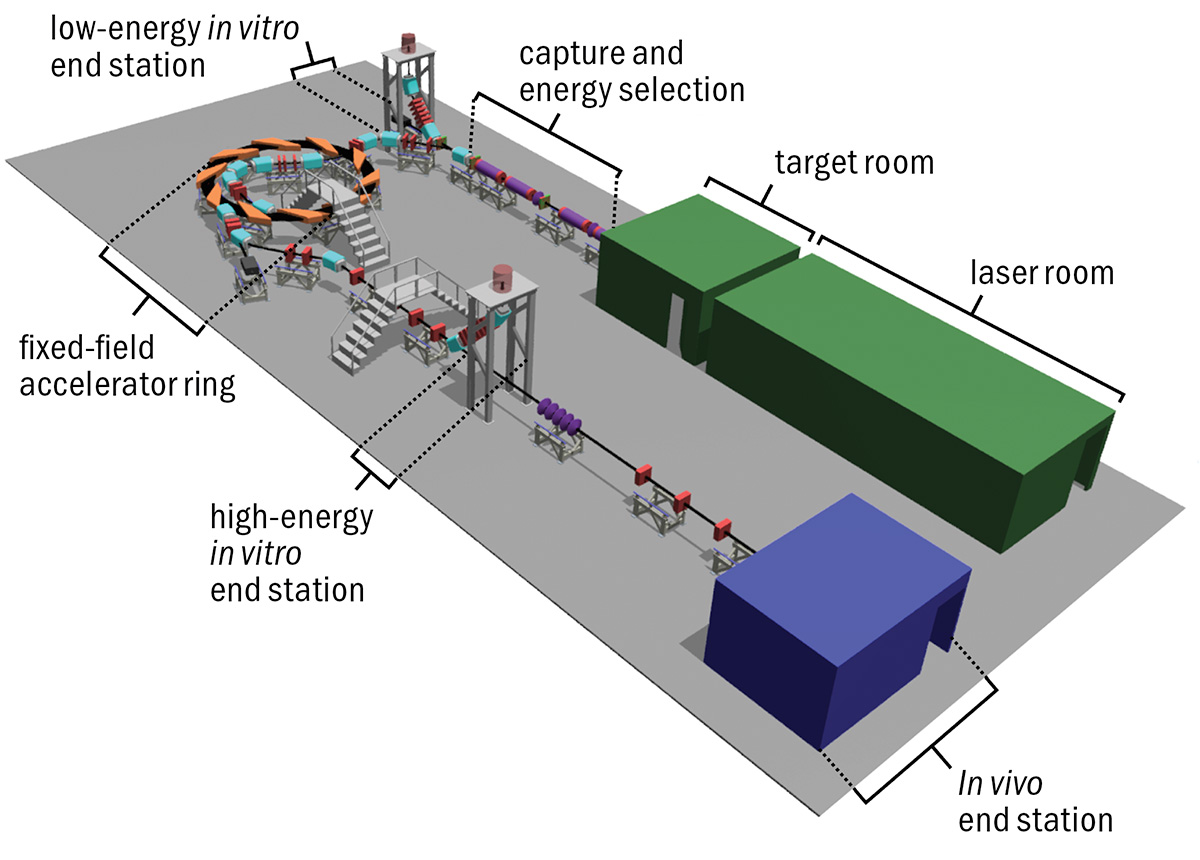
A multidisciplinary team in the UK has received seed funding to investigate the feasibility of a new facility for ion-therapy research based on novel accelerator, instrumentation and computing technologies. At the core of the facility would be a laser-hybrid accelerator dubbed LhARA: a high-power pulsed laser striking a thin foil target would create a large flux of protons or ions, which are captured using strong-focusing electron–plasma lenses and then accelerated rapidly in a fixed-field alternating-gradient accelerator. Such a device, says the team, offers enormous clinical potential by providing more flexible, compact and cost-effective multi-ion sources.
High-energy X-rays are by far the most common radiotherapy tool, but recent decades have seen a growth in particle-beam radiotherapy. In contrast to X-rays, protons and ion beams can be manipulated to deliver radiation doses more precisely than conventional radiotherapy, sparing surrounding healthy tissue. Unfortunately, the number of ion treatment facilities is few because they require large synchrotrons to accelerate the ions. The Proton-Ion Medical Machine Study undertaken at CERN during the late 1990s, for example, underpinned the CNAO (Italy) and MedAustron (Austria) treatment centres that helped propel Europe to the forefront of the field – work that is now being continued by CERN’s Next Ion Medical Machine Study (CERN Courier July/August 2021 p23).
“LhARA will greatly accelerate our understanding of how protons and ions interact and are effective in killing cancer cells, while simultaneously giving us experience in running a novel beam,” says LhARA biological science programme manager Jason Parsons of the University of Liverpool. “Together, the technology and the science will help us make a big step forward in optimising radiotherapy treatments for cancer patients.”
A small number of laboratories in Europe already work on laser-driven sources for biomedical applications. The LhARA collaboration, which comprises physicists, biologists, clinicians and engineers, aims to build on this work to demonstrate the feasibility of capturing and manipulating the flux created in the laser-target interaction to provide a beam that can be accelerated rapidly to the desired energy. The laser-driven source offers the opportunity to capture intense, nanosecond-long pulses of protons and ions at an energy of 15 MeV, says the team. This is two orders of magnitude greater than in conventional sources, allowing the space-charge limit on the instantaneous dose to be evaded.
In July, UK Research and Innovation granted £2 million over the next two years to deliver a conceptual design report for an Ion Therapy Research Facility (ITRF) centred around LhARA. The first goal is to demonstrate the feasibility of the laser-hybrid approach in a facility dedicated to biological research, after which the team will work with national and international partnerships to develop the clinical technique. While the programme carries significant technical risk, says LhARA co-spokesperson Kenneth Long from Imperial College London/STFC, it is justified by the high level of potential reward: “The multidisciplinary approach of the LhARA collaboration will place the ITRF at the forefront of the field, partnering with industry to pave the way for significantly enhanced access to state-of-the-art particle-beam therapy.”
The keenly awaited first science-grade images from the James Webb Space Telescope were released on 12 July – and they did not disappoint. Thanks to Webb’s unprecedented 6.5 m mirror, together with its four main instruments (NIRCam, NIRSpec, NIRISS and MIRI), the $10 billion probe marks a new dawn for observational astrophysics.
The past six months since Webb’s launch from French Guiana have been devoted to commissioning, including alignment and calibration of the mirrors and bringing temperatures to cyrogenic levels to minimise noise from heat radiated from the equipment (CERN Courier March/April 2022 p7). Unlike the Hubble Space Telescope, Webb does not look at ultraviolet or visible light but is primarily sensitive to near- and mid-infrared wavelengths. This enables it to look at the farthest galaxies and stars, as early as a few hundred million years after the Big Bang.
Wealth of information
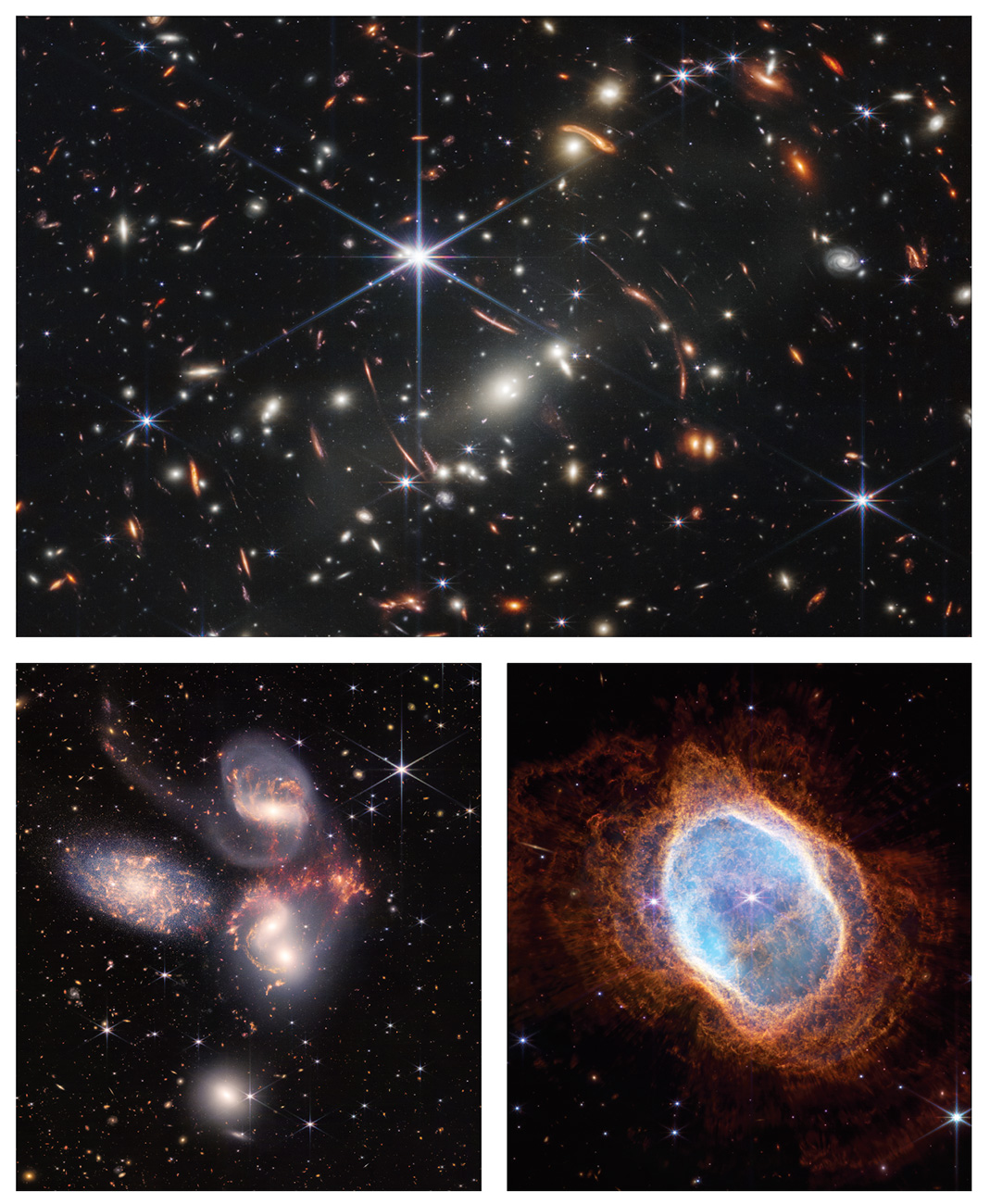
Pictured here are some of Webb’s early-release images. The first deep-field image (top) covers the same area of the sky as a grain of sand held at arm’s length, and is swarming with galaxies. At the centre is a cluster called SMACS 0723, whose combined mass is so high that its gravitational field bends the light of objects that lie behind it (resulting in arc-like features), revealing galaxies that existed when the universe was less than a billion years old. The image was taken using NIRCam and is a combination of images at different wavelengths. The spectrographs, NIRSpec and NIRISS, will provide a wealth of information on the composition of stars, galaxies and their clusters, offering a rare peak into the earliest stages of their formation and evolution.
Stephan’s Quintet (bottom left) is a visual group of five galaxy clusters that was first discovered in 1877 and remains one of the most studied compact galaxy groups. The actual grouping involves only four galaxies, which are predicted to eventually merge. The non-member, NGC 7320, which lies about 40 million light years from Earth rather than 290 million for the actual group, is seen on the left, with vast regions of active star formation in its numerous spiral arms.
A third stunning image, the Southern Ring nebula (bottom right), shows a dying star. With its reservoirs of light elements already exhausted, it starts using up any available heavier elements to sustain itself – a complex and violent process that results in large amounts of material being ejected from the star in intervals, visible as shells.
These images are just a taste, yet not all Webb data will be so visually spectacular. By extending Hubble’s observations of distant supernovae and other standard candles, for example, the telescope should enable the local rate of expansion to be determined more precisely, possibly shedding light on the nature of dark energy. By measuring the motion and gravitational lensing of early objects, it will also survey the distribution of dark matter, and might even hint at what it’s made of. Using transmission spectroscopy, Webb will also reveal exoplanets in unprecedented detail, learn about their chemical compositions and search for signatures of habitability.
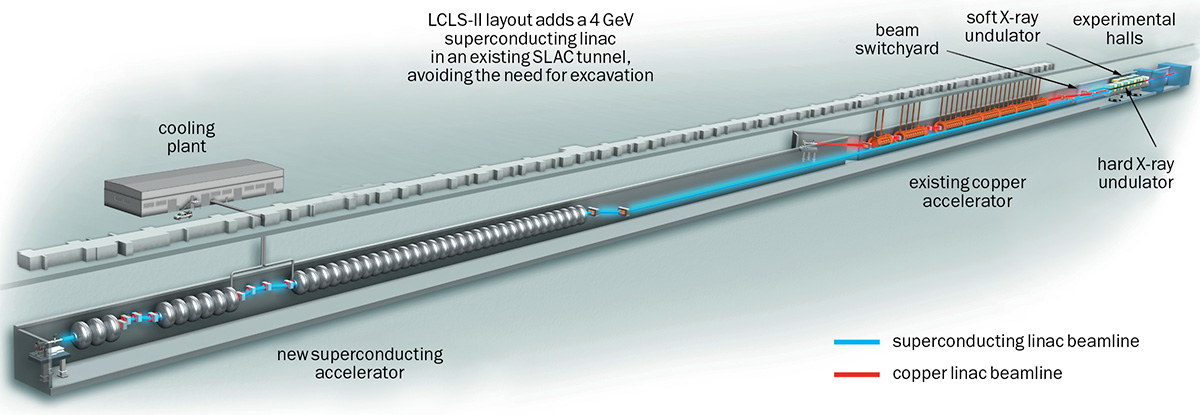
An ambitious upgrade of the US’s flagship X-ray free-electron-laser facility – the Linac Coherent Light Source (LCLS) at SLAC in California – is nearing completion. Set for “first light” early next year, LCLS-II will deliver X-ray laser beams that are 10,000 times brighter than LCLS at repetition rates of up to a million pulses per second – generating more X-ray pulses in just a few hours than the current laser has delivered through the course of its 12-year operational lifetime. The cutting-edge physics of the new facility – underpinned by a cryogenically cooled superconducting radio-frequency (SRF) linac – will enable the two beams from LCLS and LCLS-II to work in tandem. This, in turn, will help researchers observe rare events that happen during chemical reactions and study delicate biological molecules at the atomic scale in their natural environments, as well as potentially shed light on exotic quantum phenomena with applications in next-generation quantum computing and communications systems.
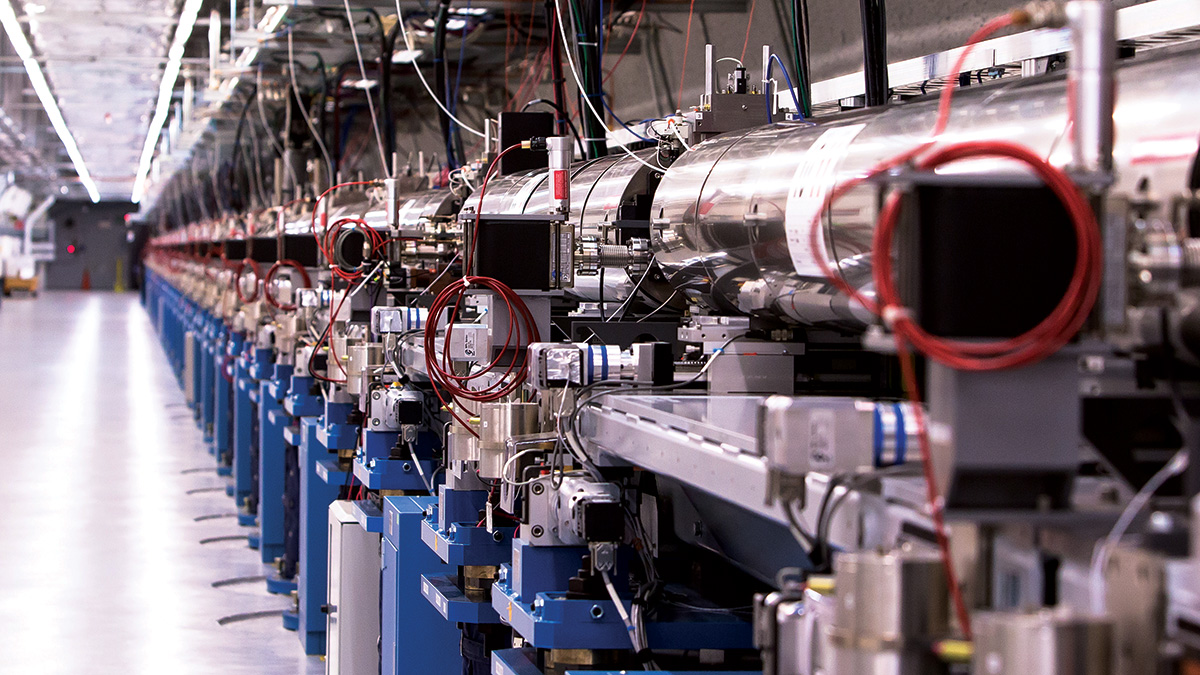
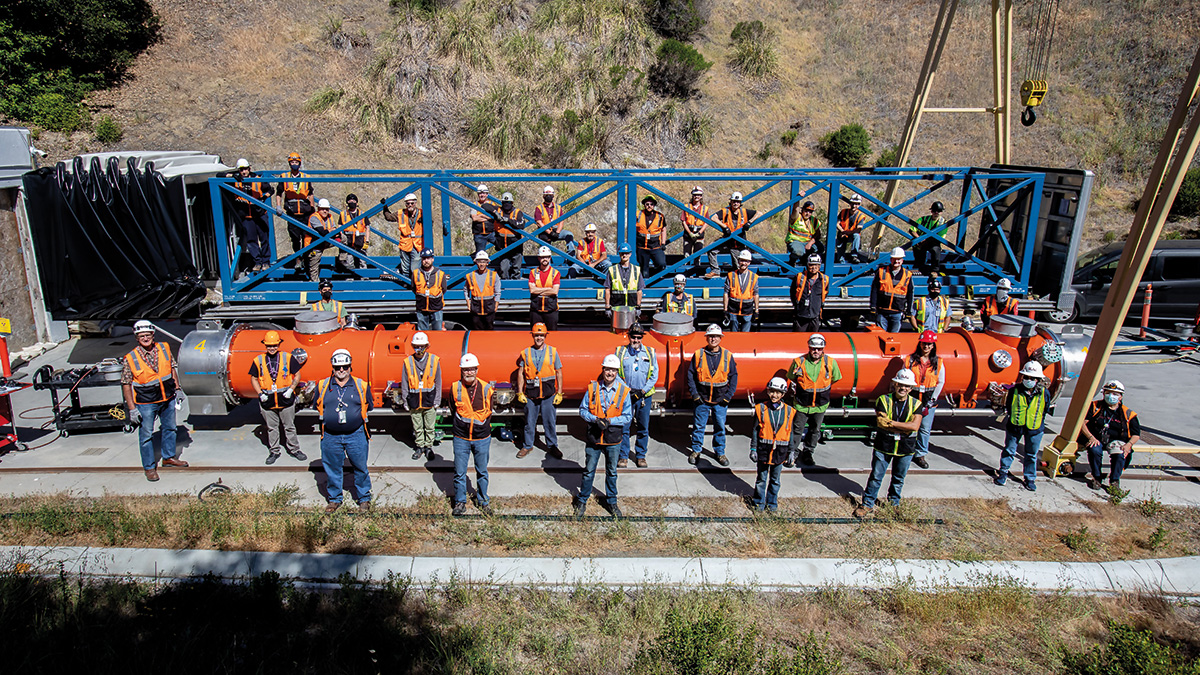
Successful delivery of the LCLS-II linac was possible thanks to a multi-centre collaborative effort involving US national and university laboratories, following the decision to pursue an SRF-based machine in 2014 through the design, assembly, test, transportation and installation of a string of 37 SRF cryomodules (most of them more than 12 m long) into the SLAC tunnel. All told, this major undertaking necessitated the construction of forty 1.3 GHz SRF cryomodules (five of them spares) and three 3.9 GHz cryomodules (one spare) – with delivery of approximately one cryomodule per month from February 2019 until December 2020 to allow completion of the LCLS-II linac installation on schedule by November 2021.
This industrial-scale programme of works was shaped by a strategic commitment, early on in the LCLS-II design phase, to transfer, and ultimately iterate, the established SRF capabilities of the European XFEL in Hamburg into the core technology platform used for the LCLS-II SRF cryomodules. Put simply: it would not have been possible to complete the LCLS-II project, within cost and on schedule, without the sustained cooperation of the European XFEL consortium – in particular, colleagues at DESY, CEA Saclay and several other European laboratories as well as KEK – that generously shared their experiences and know-how.
Better together
These days, large-scale accelerator or detector projects are very much a collective endeavour. Not only is the sprawling scope of such projects beyond a single organisation, but the risks of overspend and slippage can greatly increase with a “do-it-on-your-own” strategy. When the LCLS-II project opted for an SRF technology pathway in 2014 to maximise laser performance, the logical next step was to build a broad-based coalition with other US Department of Energy (DOE) national laboratories and universities. In this case, SLAC, Fermilab, Jefferson Lab (JLab) and Cornell University contributed expertise for cryomodule production, while Argonne National Laboratory and Lawrence Berkeley National Laboratory managed delivery of the undulators and photoinjector for the project. For sure, the start-up time for LCLS-II would have increased significantly without this joint effort, extending the overall project by several years.
Each partner brought something unique to the LCLS-II collaboration. While SLAC was still a relative newcomer to SRF technologies, the lab had a management team that was familiar with building large-scale accelerators (following successful delivery of the LCLS). The priority for SLAC was therefore to scale up its small nucleus of SRF experts by recruiting experienced SRF technologists and engineers to the staff team. In contrast, the JLab team brought an established track-record in the production of SRF cryomodules, having built its own machine, the Continuous Electron Beam Accelerator Facility (CEBAF), as well as cryomodules for the Spallation Neutron Source (SNS) linac at Oak Ridge National Laboratory in Tennessee. Cornell, too, came with a rich history in SRF R&D – capabilities that, in turn, helped to solidify the SRF cavity preparation process for LCLS-II.
Finally, Fermilab had, at the time, recently built two cutting-edge cryomodules of the same style as that chosen for LCLS-II. To fabricate these modules, Fermilab worked closely with the team at DESY to set up the same type of production infrastructure used on the European XFEL. From that perspective, the required tooling and fixtures were all ready to go for the LCLS-II project. While Fermilab was the “designer of record” for the SRF cryomodule, with primary responsibility for delivering a working design to meet LCLS-II requirements, the realisation of an optimised technology platform was a team effort involving SRF experts from across the collaboration.
Collective problems, collective solutions
While the European XFEL provided the template for the LCLS-II SRF cryomodule design, several key elements of the LCLS-II approach subsequently evolved to align with the continuous-wavelength (CW) operation requirements and the specifics of the SLAC tunnel. Success in tackling these technical challenges – across design, assembly, testing and transportation of the cryomodules – is testament to the strength of the LCLS-II collaboration and the collective efforts of the participating teams in the US and Europe.
Challenges are inevitable when developing new facilities at the limits of known technology
For one, the thermal performance specification of the SRF cavities exceeded the state-of-the-art and required development and industrialisation of the concept of nitrogen doping (a process in which SRF cavities are heat-treated in a nitrogen atmosphere to increase their cryogenic efficiency and, in turn, lower the overall operating costs of the linac). The nitrogen-doping technique was invented at Fermilab in 2012 but, prior to LCLS-II construction, had been used only in an R&D setting.
The priority was clear: to transfer the nitrogen-doping capability to LCLS-II’s industry partners, so that the cavity manufacturers could perform the necessary materials-processing before final helium-vessel jacketing. During this knowledge transfer, it was found that nitrogen-doped cavities are particularly sensitive to the base niobium sheet material – something the collaboration only realised once the cavity vendors were into full production. This resulted in a number of process changes for the heat treatment temperature, depending on which material supplier was used and the specific properties of the niobium sheet deployed in different production runs. JLab, for its part, held the contract for the cavities and pulled out all stops to ensure success.
At the same time, the conversion from pulsed to CW operation necessitated a faster cooldown cycle for the SRF cavities, requiring several changes to the internal piping, a larger exhaust chimney on the helium vessel, as well as the addition of two new cryogenic valves per cryomodule. Also significant is the 0.5% slope in the longitudinal floor of the existing SLAC tunnel, which dictated careful attention to liquid-helium management in the cryomodules (with a separate two-phase line and liquid-level probes at both ends of every module).
However, the biggest setback during LCLS-II construction involved the loss of beamline vacuum during cryomodule transport. Specifically, two cryomodules had their beamlines vented and required complete disassembly and rebuilding – resulting in a five-month moratorium on shipping of completed cryomodules in the second half of 2019. It turns out that a small (what was thought to be inconsequential) change in a coupler flange resulted in the cold coupler assembly being susceptible to resonances excited by transport. The result was a bellows tear that vented the beamline. Unfortunately, initial “road-tests” with a similar, though not exactly identical, prototype cryomodule had not revealed this behaviour.
Such challenges are inevitable when developing new facilities at the limits of known technology. In the end, the problem was successfully addressed using the diverse talents of the collaboration to brainstorm solutions, with the available access ports allowing an elastomer wedge to be inserted to secure the vulnerable section. A key take-away here is the need for future projects to perform thorough transport analysis, verify the transport loads using mock-ups or dummy devices, and install adequate instrumentation to ensure granular data analysis before long-distance transport of mission-critical components.
Upon completion of the assembly phase, all LCLS-II cryomodules were subsequently tested at either Fermilab or JLab, with one module tested at both locations to ensure reproducibility and consistency of results. For high Q0 performance in nitrogen-doped cavities, cooldown flow rates of at least 30 g/s of liquid helium were found to give the best results, helping to expel magnetic flux that could otherwise be trapped in the cavity. Overall, cryomodule performance on the test stands exceeded specifications, with a total accelerating voltage per cryomodule of 158 MV (versus specification of 128 MV) and average Q0 of 3 × 10¹⁰ (versus specification of 2.7 × 10¹⁰). Looking ahead, attention is already shifting to the real-world cryomodule performance in the SLAC tunnel – something that was measured for the first time in 2022.
Transferable lessons
For all members of the collaboration working on the LCLS-II cryomodules, this challenging project holds many lessons. Most important is to build a strong team and use that strength to address problems in real-time as they arise. The mantra “we are all in this together” should be front-and-centre for any multi-institutional scientific endeavour – as it was in this case. Solutions need to be thought of in a more global sense, as the best answer might mean another collaborator taking more onto their plate. Collaboration implies true partnership and a working model very different to a transactional customer–vendor relationship.
From a planning perspective, it’s vital to ensure that the initial project cost and schedule are consistent with the technical challenges and preparedness of the infrastructure. Prototypes and pre-series production runs reduce risk and cost in the long term and should be part of the plan, but there must be sufficient time for data analysis and changes to be made after a prototype run in order for it to be useful. Time spent on detailed technical reviews is also time well spent. New designs of complex components need a comprehensive oversight and review, and should be controlled by a team, rather than a single individual, so that sign-off on any detailed design changes are made by an informed collective.
LCLS-II science: capturing atoms and molecules in motion like never before
The strobe-like pulses of the LCLS, which produced its first light in April 2009, are just a few millionths of a billionth of a second long, and a billion times brighter than previous X-ray sources. This enables users from a wide range of fields to take crisp pictures of atomic motions, watch chemical reactions unfold, probe the properties of materials and explore fundamental processes in living things. LCLS-II will provide a major jump in capability – moving from 120 pulses per second to 1 million, enabling experiments that were previously impossible. The scientific community has identified six areas where the unique capabilities of LCLS-II will be essential for further scientific progress:
Nanoscale materials dynamics, heterogeneity and fluctuations
Programmable trains of soft X-ray pulses at high rep rate will characterise spontaneous fluctuations and heterogeneities at the nanoscale across many decades, while coherent hard X-ray scattering will provide unprecedented spatial resolution of material structure, its evolution and relationship to functionality under operating conditions.
Fundamental energy and charge dynamics
High-repetition-rate soft X-rays will enable new techniques that will directly map charge distributions and reaction dynamics at the scale of molecules, while new nonlinear X-ray spectroscopies offer the potential to map quantum coherences in an element-specific way for the first time.
Catalysis and photocatalysis
Time-resolved, high-sensitivity, element- specific spectroscopy will provide the first direct view of charge dynamics and chemical processes at interfaces, characterise subtle conformational changes associated with charge accumulation, and capture rare chemical events in operating catalytic systems across multiple time and length scales – all of which are essential for designing new, more efficient systems for chemical transformation and solar-energy conversion.
Emergent phenomena in quantum materials
Fully coherent X-rays will enable new high- resolution spectroscopy techniques to map the collective excitations that define these new materials in unprecedented detail. Ultrashort X-ray pulses and optical fields will facilitate new methods for manipulating charge, spin and phonon modes to both advance fundamental understanding and point the way to new approaches for materials control.
Revealing biological function in real time
The high repetition rate of LCLS-II will provide a unique capability to follow the dynamics of macromolecules and interacting complexes in real time and in native environments. Advanced solution-scattering and coherent imaging techniques will characterise the conformational dynamics of heterogeneous ensembles of macromolecules, while the ability to generate “two-colour” hard X-ray pulses will resolve atomic-scale structural dynamics of biochemical processes that are often the first step leading to larger-scale protein motions.
Matter in extreme environments
The capability of LCLS-II to generate soft and hard X-ray pulses simultaneously will enable the creation and observation of extreme conditions that are far beyond our present reach, with the latter allowing the characterisation of unknown structural phases. Unprecedented spatial and temporal resolution will enable direct comparison with theoretical models relevant for inertial-confinement fusion and planetary science.
Work planning and control is another essential element for success and safety. This idea needs to be built into the “manufacturing system”, including into the cost and schedule, and to be part of each individual’s daily checklist. No one disagrees with this concept, but good intentions on their own will not suffice. As such, required safety documentation should be clear and unambiguous, and be reviewed by people with relevant expertise. Production data and documentation need to be collected, made easily available to the entire project team, and analysed regularly for trends, both positive and negative.
Supply chain, of course, is critical in any production environment – and LCLS-II is no exception. When possible, it is best to have parts procured, inspected, accepted and on-the-shelf before production begins, thereby eliminating possible workflow delays. Pre-stocking also allows adequate time to recycle and replace parts that do not meet project specifications. Also worth noting is that it’s often the smaller components – such as bellows, feedthroughs and copper-plated elements – that drive workflow slowdowns. A key insight from LCLS-II is to place purchase orders early, stay on top of vendor deliveries, and perform parts inspections as soon as possible post-delivery. Projects also benefit from having clearly articulated pass/fail criteria and established procedures for handling non-conformance – all of which alleviates the need to make critical go/no-go acceptance decisions in the face of schedule pressures.
As with many accelerator projects, LCLS-II is not an end-point in itself, more an evolutionary transition within a longer term roadmap
Finally, it’s worth highlighting the broader impact – both personal and professional – on individual team members participating in a big-science collaboration like LCLS-II. At the end of the build, what remained after designs were completed, problems solved, production rates met, and cryomodules delivered and installed, were the friendships that had been nurtured over several years. The collaboration amongst partners, both formal and informal, who truly cared about the project’s success, and had each other’s backs when there were issues arising: these are the things that solidified the mutual respect, the camaraderie and, in the end, made LCLS-II such a rewarding project.
First light
In April 2022 the new LCLS-II linac was successfully cooled to its 2 K operating temperature. The next step was to pump the SRF cavities with more than a megawatt of microwave power to accelerate the electron beam from the new source. Following further commissioning of the machine, first X-rays are expected to be produced in early 2023.
As with many accelerator projects, LCLS-II is not an end-point in itself, more an evolutionary transition within a longer term roadmap. In fact, work is already under way on LCLS-II HE – a project that will increase the energy of the CW SRF linac from 4 to 8 GeV, enabling the photon energy range to be extended to at least 13 keV, and potentially up to 20 keV at 1 MHz repetition rates. To ensure continuity of production for LCLS-II HE, 25 next-generation cryomodules are in the works, with even higher performance specifications versus their LCLS-II counterparts, while upgrades to the source and beam transport are also being finalised.
While the fascinating science opportunities for LCLS-II-HE continue to be refined and expanded, of one thing we can be certain: strong collaboration and the collective efforts of the participating teams are crucial.
What happened? A tragedy fell upon Ukraine and found many in despair or in a dilemma. After 70 mainly peaceful years for much of Europe, we were surprised by war, because we had forgotten that it takes an effort to maintain peace.
Having witnessed the horrors of war first hand, several years as a soldier and then as a displaced person, I could not imagine that humanity would unleash another war on the continent. As one of its last witnesses, I wonder what advice should be passed on, especially to younger colleagues, about what to do in the short term, and perhaps more importantly, what to do afterwards.
Scientists have a special responsibility. Fortunately, there is no doubt today that science is independent of political doctrines. There is no “German physics” any more. We have established human relationships with our colleagues based on our enthusiasm for our profession, which has led to mutual trust and tolerance.
This has been practised at CERN for 70 years and continued at SESAME, where delegates from Israel, Palestine, Iran, Cyprus, Turkey and other governments sit peacefully around a table. Another offshoot of CERN, the South East European International Institute for Sustainable Technologies (SEEIIST), is in the making in the Balkans. Apart from fostering science, the aim is to transfer ethical achievements from science to politics: science diplomacy, as it has come to be known. In practice, this is done, for example, in the CERN Council where each government sends a representative and an additional scientist who work effectively together on a daily basis.
In the case of imminent political conflicts, “Science for Peace” cannot of course help immediately, but occasionally opportunities arise even for this. In 1985, when disarmament negotiations between Gorbachev and Reagan in Geneva reached an impasse, one of the negotiators asked me to invite the key experts to CERN on neutral territory, and at a confidential dinner the knot was untied. This showed how trust built up in scientific cooperation can impact politics.
Hot crises put us in particularly difficult dilemmas. It is therefore understandable that the CERN Council has to follow, to a large extent, the guidelines of the individual governments and sometimes introduce harsh sanctions. This leads to considerable damage for many excellent projects, which should be mitigated as much as possible. But it seems equally important to prevent or at least alleviate human suffering among scientific colleagues and their families, and in doing so we should allow them tolerance and full freedom of expression. I am sure the CERN management will try to achieve this, as in the past.
Day after
But what I consider most important is to prepare for the situation after the war. Somehow and sometime there will be a solution to the Russian invasion. On that “day after”, it will be necessary to talk to each other again and build a new world out of the ruins. This was facilitated after World War II because, despite the Nazi reign of terror, some far-sighted scientists maintained human relations as well as scientific ones. I remember with pleasure how I was invited to spend a sabbatical year in 1948 in Sweden with Lise Meitner. I was also one of the first German citizens to be invited to a scientific conference in Israel in 1957, where I was received without resentment.
CERN was the first scientific organisation whose mission was not only to conduct excellent science, but also to help improve relations between nations. CERN did this initially in Europe with great success. Later, during the most intense period of the Cold War, it was CERN that signed an agreement with the Russian laboratory in Serpukhov in the 1960s. Together with contacts with JINR in Dubna, this offered one of the few opportunities for scientific West–East cooperation. CERN followed these principles during the occupation of the Czechoslovak Socialist Republic in 1968 and during the Afghanistan crisis in 1979.
The aim is to transfer ethical achievements from science to politics
CERN has become a symbol of what can be achieved when working on a common project without discrimination, for the benefit of science and humanity. In recent decades, when peace has reigned in Europe, this second goal of CERN has somewhat receded into the background. The present crisis reminds us to make greater efforts in this direction again, even more so when many powers disregard ethical principles or formal treaties by pretending that their fundamental interests are violated. Science for Peace tries to help create a minimum of human trust between governments. Without this, we run the risk that future political treaties will be based only on deterrence. That would be a gloomy world.
A vision for the day after requires courage and more Science for Peace than ever before.
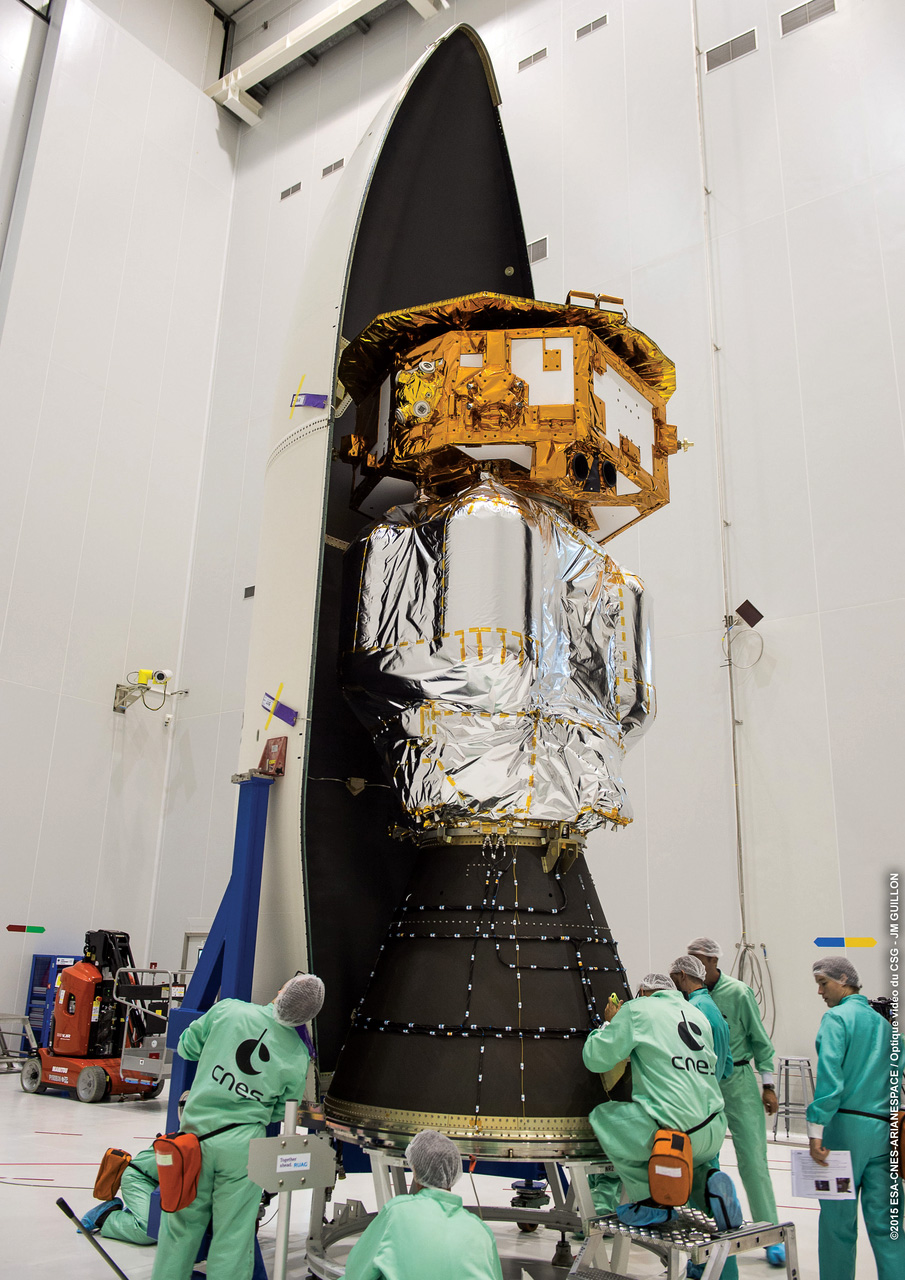
LISA (Laser Interferometer Space Antenna) is a giant Michelson interferometer comprising three spacecraft that form an equilateral triangle with sides of about 2.5 million km. You can think of one satellite as the central building of a terrestrial observatory like Virgo or LIGO, and the other two as the end stations of the two interferometer arms. Mirrors at the two ends of each arm are replaced by a pair of free-falling test masses, the relative distance between which is measured by a laser interferometer. When a gravitational wave (GW) passes, it alternately stretches one arm and squeezes the other, causing these distances to oscillate by an almost imperceptible amount (just a few nm). The nature and position of the GW sources is encoded in the time evolution of this distortion. Unlike terrestrial observatories, which keep their arms locked in a fixed position, LISA must keep track of the satellite positions by counting the millions of wavelengths by which their separation changes each second. All interferometer signals are combined on the ground and a sophisticated analysis is used to determine the differential distance changes between the test masses.
What will LISA tell us that ground-based observatories can’t?
Most GW sources, such as the merger of two black holes detected for the first time by LIGO and Virgo in 2015, consist of binary systems; as the two compact companions spiral into each other, they generate GWs. In these extreme binary mergers, the frequency of the GWs decrease both with the increasing mass of the objects and with increasing distance from their final merger. GWs with frequencies down to about a few Hz, corresponding to objects with masses up to a few thousand solar masses, are detectable from the ground. Below that, however, Earth’s gravity is too noisy. To access milli-Hertz and sub-milli-Hertz frequencies we need to go to space. This low-frequency regime is the realm of supermassive objects with millions of solar masses located in galactic centres, and also where tens of thousands of compact objects in our galaxy, including some of the Virgo/LIGO black holes, emit their signals for years and centuries as they peacefully rotate around each other before entering the final few seconds of their collapse. The LISA mission will therefore be highly complementary to existing and future ground-based observatories such as the Einstein Telescope. Theorists are excited about the physics that can be probed by multiband GW astronomy.
When and how did you get involved in LISA?
LISA was an idea by Pete Bender and colleagues in the 1980s. It was first proposed to the European Space Agency (ESA) in 1993 as a medium-sized mission, an envelope that it could not possibly fit. Nevertheless, ESA got excited by the idea and studies immediately began toward a larger mission. I became aware of the project around that time, immediately fell in love with it and, in 1995, joined the team of enthusiastic scientists, led by Karsten Danzmann. At the time it was not clear that a detection of GWs from ground was possible, whereas unless general relativity was deadly wrong, LISA would certainly detect binary systems in our galaxy. It soon became clear that such a daring project needed a technology precursor, to prove the feasibility of test-mass freefall. This built on my field of expertise, and I became principal investigator, with Karsten as a co-principal investigator, of LISA Pathfinder.
Pathfinder essentially squeezed one of LISA’s arms from millions of kilometres to half a metre and placed it into a single spacecraft: two test masses in a near-perfect gravitational freefall with their relative distance tracked by a laser interferometer. It launched in December 2015 and exceeded all expectations. We were able to control and measure the relative motion of the test masses with unprecedented accuracy using innovative technologies comprising capacitive sensors, optical metrology and a micro-Newton thruster system, among others. By reducing and eliminating all sources of disturbance, Pathfinder observed the most perfect freefall ever created: the test masses were almost motionless with respect to each other, with a relative acceleration less than a millionth of a billionth of Earth’s gravitational acceleration.
What is LISA’s status today?
LISA is in its final study phase (“B1”) and marching toward adoption, possibly late next year, after which ESA will release the large industrial contracts to build the mission. Following Pathfinder, many necessary technologies are in a high state of maturity: the test masses will be the same, with only minor adjustments, and we also demonstrated a pm-resolution interferometer to detect the motion of the test masses inside the spacecraft – something we need in LISA, too. What we could not test in Pathfinder is the million-kilometre-long pm-resolution interferometer, which is very challenging. Whereas LIGO’s 4 km-long arms allow you to send laser light back and forth between the mirrors and reach kW powers, LISA will have a 1 W laser: if you try to reflect it off a small test-mass 2.5 million km away, you get back just 20 photons per second! The instrument therefore needs a transponder scheme: one spacecraft sends light to another, which collects and measures the frequency to see if there is a shift due to a passing GW. You do this with all six test masses (two per spacecraft), combining the signals in one heck of an analysis to make a “synthetic” LIGO. Since this is mostly a case of optics, you don’t need zero-g space tests, and based on laboratory evidence we are confident it will work. Although LISA is no longer a technology-research project, it will take a few more years to iron out some of the small problems and build the actual flight hardware, so there is no shortage of papers or PhD theses to be written.
How is the LISA consortium organised?
ESA’s science missions are often a collaboration in which ESA builds, launches and operates the satellite and its member states – via their universities and industries – contribute all or part of the scientific instruments, such as a telescope or a camera. NASA is a major partner with responsibilities that include the lasers, the device to discharge the test masses as they get charged up by cosmic rays, and the telescope to exchange laser beams among the satellites. Germany, which holds the consortium’s leadership role, also shares responsibility for a large part of the interferometry with the UK. Italy leads the development of the test-mass system; France the science data centre and the sophisticated ground testing of LISA optics; and Spain the science-diagnostics development. Critical hardware components are also contributed by Switzerland, the Netherlands, Belgium, the Czech Republic, Denmark and Poland, while scientists worldwide contribute to various aspects of the preparation of mission operation, data analysis and science utilisation. The LISA consortium has around 1500 members.
What is the estimated cost of the mission, and what is industry’s role?
A very crude estimate of the sum of ESA, NASA and member-state contributions may add up to something below two billion dollars. One of the main drivers of ESA’s scientific programme is to maintain the technological level of European aerospace, so the involvement of industry, in close cooperation with scientific institutes, is crucial. After having passed the adoption phase, ESA will grant contracts to prime industrial contractors who take responsibility for the mission. To foster industrial competition during the study phase, ESA has awarded contracts to two independent contractors, in our case Airbus and Thales Alenia. In addition, international partners and member-state contributions often, if not always, involve industry.
What scientific and technological synergies exist with other fields?
LISA will look for deviations from general relativity, in particular the case where compact objects fall into a supermassive black hole. In terms of their importance, deviations in general relativity are a very close cousin of deviations from the Standard Model of particle physics. Which will come first we don’t know, but LISA is certainly an outstanding laboratory for fundamental gravitational physics. Then there are expectations for cosmology, such as tracing the history of black-hole formation or maybe detecting stochastic backgrounds of GWs, such as “cusps” predicted in string theory. Wherever you push the frontiers to investigate the universe at large, you push the frontiers of fundamental interactions – so it’s not surprising that one of our best cosmologists now works at CERN! Technologically speaking, we just started a collaboration with CERN’s vacuum group. In LISA we have a tiny vacuum volume in the region where the test masses are located, and it is full of components and cables. It was a big challenge for Pathfinder, but for LISA we definitely need to understand more. The CERN vacuum group is really interested in understanding this, so we are very happy with this new collaboration. As with LIGO, Advanced Virgo and the Einstein Telescope, LISA is a CERN-recognised experiment.
There is no other space mission with as many papers published about its science expectations before it even leaves the ground
What’s the secret to maintaining the momentum in a complex, long-term global project in fundamental physics?
The LISA mission is so fascinating that it is “self-selling”. Scientists liked it, engineers liked it, industry liked it, space agencies like it. Obviously Pathfinder helped a lot – it meant that even in the darkest moments we knew we were “real”. But in the meantime, our theory colleagues did so much work. As far as I know, there is no other space mission with as many papers published about its science expectations before it even leaves the ground. It’s not just that the science is inspiring, but the fact that you can calculate things. The instrumentation is also so fascinating that students want to do it. With Pathfinder, we faced many difficulties. We were naïve in thinking that we could take this thing that we built in the lab and turn it into an industrial project. Of course we needed to grow and learn, but because we loved the project so much, we never ever gave up. One needs this mind-set and resilience to make big scientific projects work.
When do you envision launch?
Currently it’s planned for the mid-2030s. This is a bit in the future at my age, but I am grateful to have seen the launch of LISA Pathfinder and I am happy to think that many of my young colleagues will see it, and share the same emotions we did with Pathfinder, as a new era in GW astronomy opens up.
As the LHCb experiment prepares for data taking with an upgraded detector for LHC Run 3, the rich harvest of results using data collected in Run 1 and Run 2 of the LHC continues.
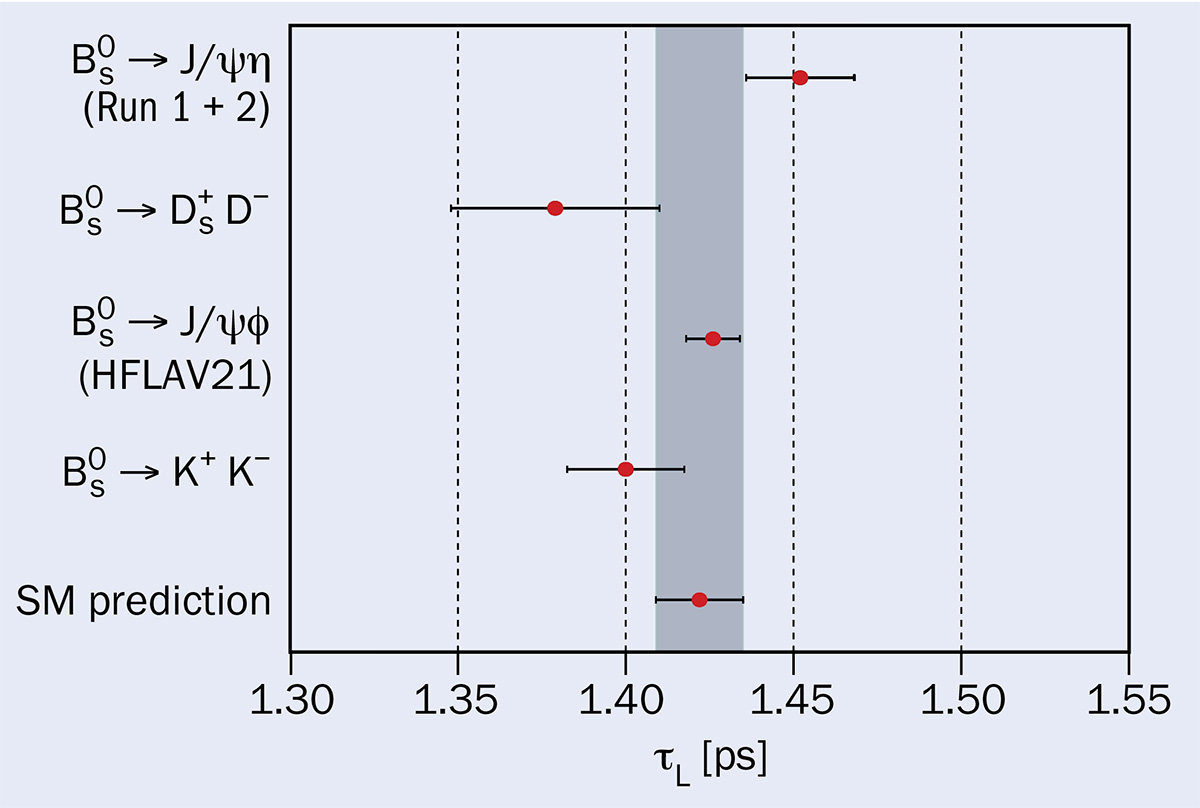
A fascinating area of study is the quantum-mechanical oscillation of neutral mesons between their particle and antiparticle states, implying a coupled system of two mesons with different lifetimes. The phenomenology of the Bs system is particularly interesting as it provides a sensitive probe to physics beyond the Standard Model. A Bs meson oscillates with a frequency of about 3 × 10¹² Hz, or on average about nine times during its lifetime, τ. In addition, a sizeable difference between the decay widths of the heavy (ΓH) and light (ΓL) mass eigenstates is expected. Measuring the lifetime of a CP-even Bs-decay mode determines τL = 1/ΓL.
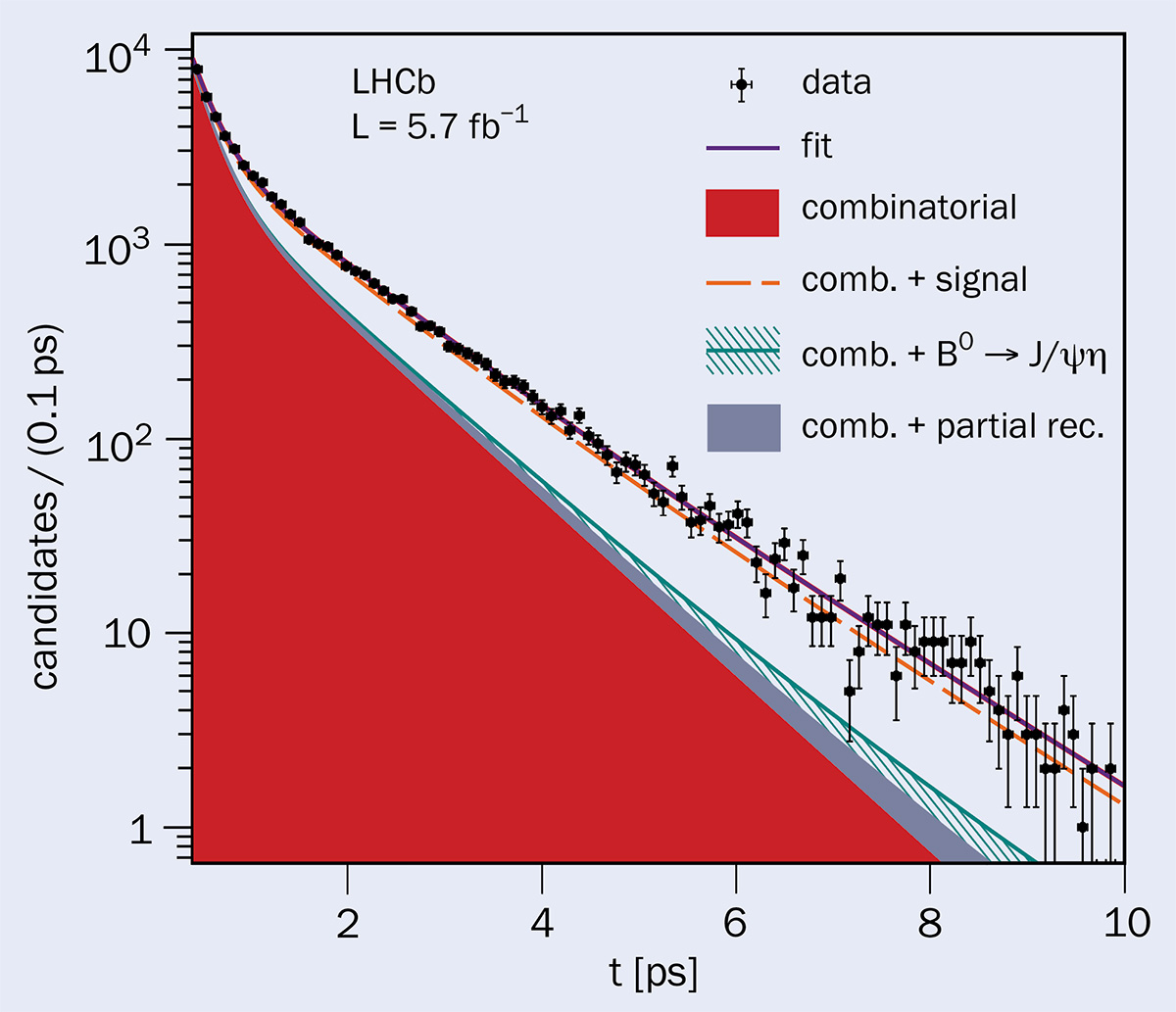
LHCb has recently released a new and precise measurement of this parameter, making use of Bs→ J/ψη decays selected from 5.7 fb–1 of Run 2 data. The study improves the previous Run 1 precision by a factor of two. Due to the combinatorial background, the reconstruction of the η meson via its two-photon decay mode is a particular challenge for this analysis. Despite this, and even with the modest energy resolution of the calorimeter leading to a relatively broad mass peak overlapping partially with the signal from the B0→ J/ψη decay, a competitive accuracy has been achieved. By exploiting the latest machine-learning techniques to reduce the background and the well understood LHCb detector, the Bs→ J/ψη decay is observed (figure 1), and τL is extracted from a two-dimensional fit to the mass and decay time.
The analysis finds τL = 1.445 ± 0.016 (stat) ± 0.008 (syst) ps, which is the most precise measurement of this quantity. Combined with the LHCb Run 1 study of this and the Bs→ Ds+ Ds– decay mode, τL = 1.437 ± 0.014 ps, which agrees well both with the Standard Model expectation (τL = 1.422 ± 0.013 ps) and the value inferred from measurements of Γs and ΔΓs in Bs→ J/ψφ decays. Further improvement in the knowledge of τL is expected both by considering other CP-even Bs decays to final states containing η or η′ mesons, the Bs→ Ds+ Ds– dataset collected during Run 2 and from the upcoming Run 3.
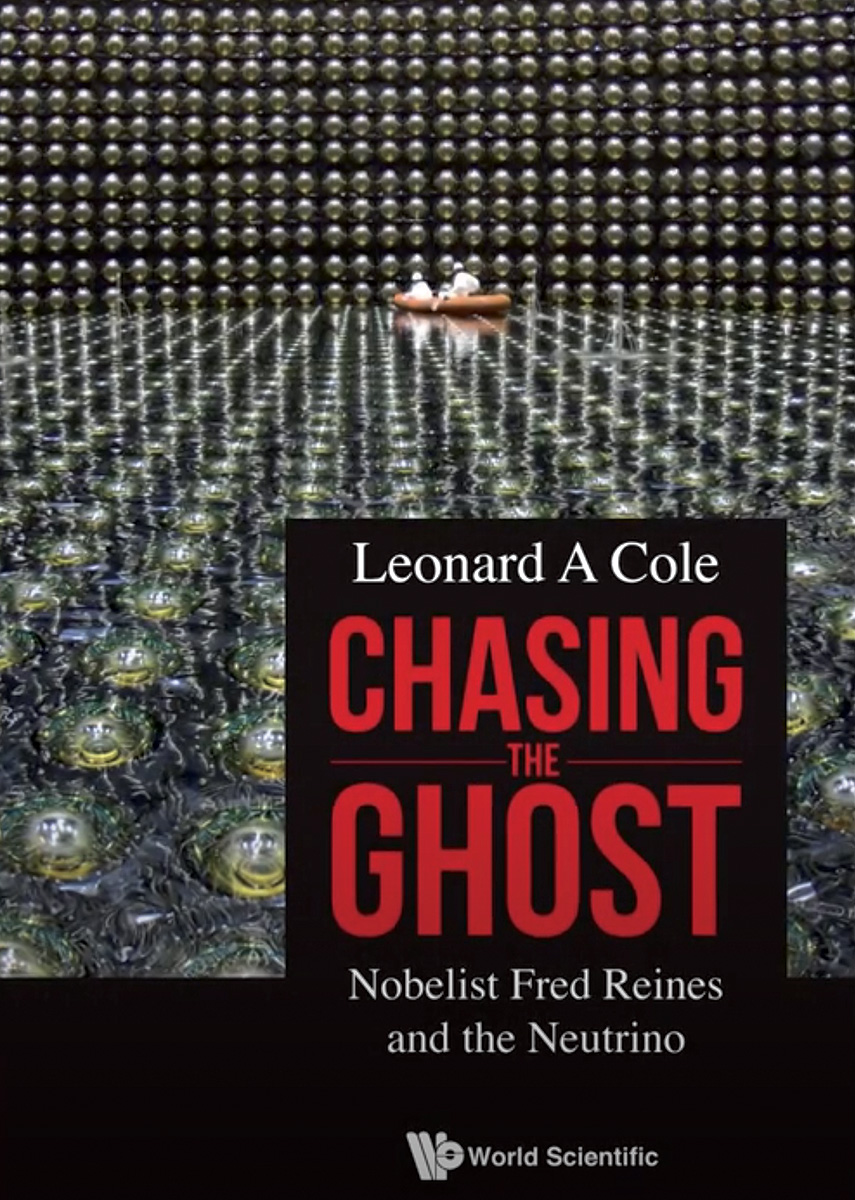
Every Nobel Prize comes with a story, and Leonard A Cole’s Chasing the Ghost offers a new perspective on that of Fred Reines, best known for discovering the electron neutrino with Clyde Cowan in 1956. While Cowan passed away in 1974, Reines went on to win the Nobel Prize in Physics for their discovery in 1995. Cole, Reines’s cousin, describes the life of Fred Reines – focusing on both his scientific career and extracurricular interests – in a personal way, showing obvious admiration for his elder cousin.
After participating in the Manhattan Project and assisting in developing nuclear weapons in the 1940s, Reines pivoted to study neutrinos, the fundamental particles emitted in nearly every nuclear reaction, which he describes as “the tiniest quantity of reality ever imagined by a human being”. While being tiny quantities, neutrinos are abundant, yet mysterious, and Reines’s work opened the door to better understand these particles. His research spanned the next five decades, and positions at universities and laboratories across the US, and the techniques that he developed to study neutrinos are used to this day.
Rainbows and Things
Throughout Chasing the Ghost, Cole splits his time between describing Reines’s career and his extracurricular pursuits. Even among his colleagues, Reines was known to be a prolific singer, performing with groups including the Los Alamos Light Opera Association and the Cleveland Orchestra Chorus. Time spent pondering these activities allowed Reines to connect better with non-science-major students when lecturing at universities. Reines famously taught his course “Rainbows and Things” to much acclaim at the University of California, Irvine, where he encouraged students to think deeply about the connection between classroom physics and the natural world. Cole explains that the course name, and much of its philosophy, stems from the play Finian’s Rainbow, which Reines performed in 1955.
Throughout his later life, it became apparent that Reines thought his accomplishments deserved more praise than they had received. In fact, it was only after he gave up hope of winning the Nobel Prize that he won it in 1995. Reines had been passed up on many occasions, including in 1988 when the team that discovered the second type of neutrinos was awarded the prize before him. Cole shares a humorous anecdote (in hindsight): at a CERN conference with both Reines and 1988 laureate Leon Lederman in attendance, a speaker suggested an experiment to search for the third type of neutrino, the tau neutrino. However, as the speaker lamented, it seemed as if no one would perform this type of experiment, “because evidently they only give a Nobel Prize for the detection of every other neutrino.” While the room may have burst into laughter, Fred Reines didn’t budge.
Regardless, Reines’s dedication to understand neutrinos persisted until the end of his life. Shortly before passing, when he heard of the ground-breaking news from Super-Kamiokande that neutrinos oscillate, he astutely asked “What’s the mass?”, understanding the implications of this result.
The work spearheaded by Reines and his contemporaries has made a lasting impact on the field of particle physics, that continues today. As Cole explains, the subfield of neutrino physics has blossomed to include large, international experimental collaborations, which have found even more unexpected results. Those results have spurred investigators to plan ambitious projects, such as the IceCube experiment in Antarctica, the DUNE experiment in the US, and Hyper-Kamiokande in Japan.
Inspiration
Today’s neutrino detectors are getting bigger and bigger. However, their forerunners can still serve a purpose: inspiration. Several detectors from Reines’s era are now exhibited, such as the Gargamelle detector at CERN. After discovering the electron neutrino, the race was on to build experiments to better understand neutrino properties, and Gargamelle was one such detector. Today, it is on display at the CERN Microcosm, perhaps inspiring a new generation of neutrino physicists.
Overall, Leonard A Cole’s Chasing the Ghost will inspire readers, especially those new to thinking about neutrino physics. Fred Reines’s work, with its focus on a deep understanding of these mysterious, abundant particles, continues to bear fruit to this day. There is no telling what the next neutrino experiments will uncover, but it’s a guarantee that sharp thinkers like Reines will be necessary in this field in the generations to come.
The Synchrotron-light for Experimental Science and Applications in the Middle East (SESAME) is a 2.5 GeV third-generation synchrotron radiation (SR) source developed under the auspices of UNESCO and modelled after CERN. Located in Allan, Jordan, it aims to foster scientific and technological excellence as well as international cooperation amongst its members, which are currently Cyprus, Egypt, Iran, Israel, Jordan, Pakistan, Palestine and Turkey. As a user facility, SESAME hosts visiting scientists from a wide range of disciplines, allowing them to access advanced SR techniques that link the functions and properties of samples and materials to their micro, nano and atomic structure.
The location of SESAME is known for its richness in archaeological and cultural heritage. Many important museums, collections, research institutions and universities host departments dedicated to the study of materials and tools that are inextricably linked to prehistory and human history, demanding interdisciplinary research agendas and teams. As materials science and condensed-matter physics play an increasing role in understanding and reconstructing the properties of artefacts, SESAME offers a highly versatile tool for the researchers, conservators and cultural-heritage specialists in the region.
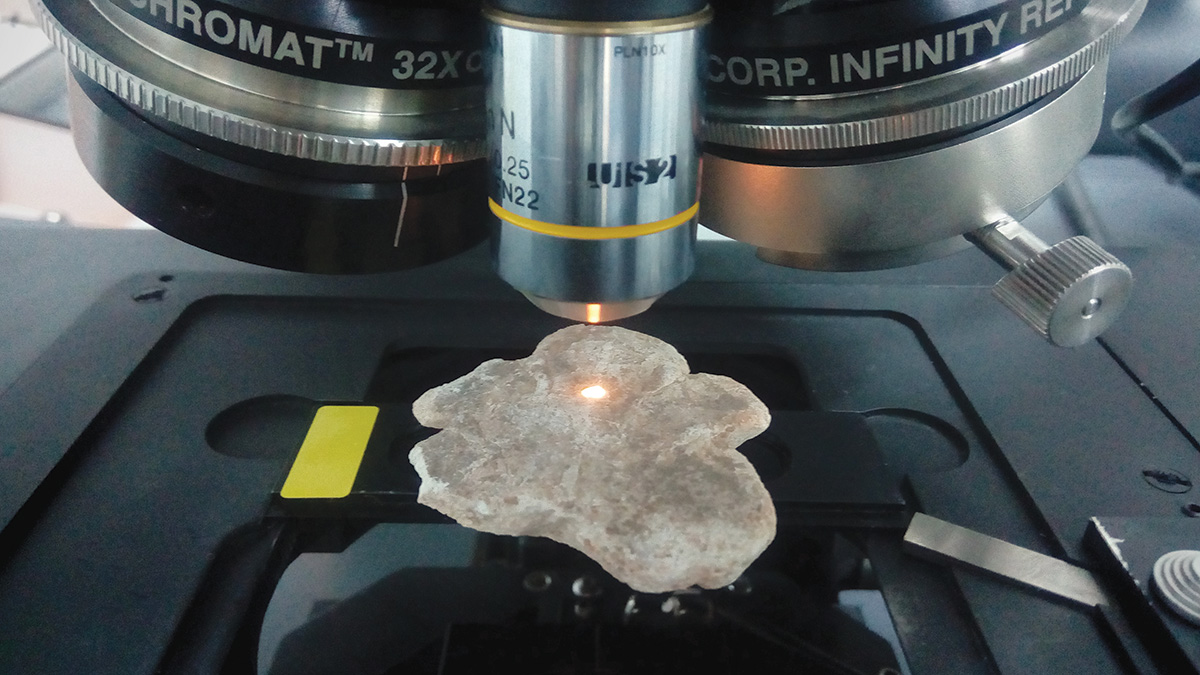
The high photon flux, small source size and low divergence available at SR sources allow for advanced spectroscopy and imaging techniques that are well suited for studying ancient and historical materials, and which often present very complex and heterogeneous structures. SR techniques are non-destructive, and the existence of several beamlines at SR facilities means that samples can easily be transferred and reanalysed using complementary techniques.
SESAME offers a versatile tool for researchers, conservators and cultural-heritage specialists in the region
At SESAME, an infrared microspectroscopy beamline, an X-ray fluorescence and absorption spectroscopy beamline, and a powder diffraction beamline are available, while a soft X-ray beamline called “HESEB” has been designed and constructed by five Helmholtz research centres and is now being commissioned. Next year, the BEAmline for Tomography at SESAME (BEATS) will also be completed, with the construction and commissioning of a beamline for hard X-ray full-field tomography. BEATS involves the INFN, The Cyprus Institute and the European SR facilities ALBA-CELLS (Spain), DESY (Germany), ESRF (France), Elettra (Italy), PSI (Switzerland) and SOLARIS (Poland).
To explore the potential of these beamlines, the First SESAME Cultural Heritage Day took place online on 16 February with more than 240 registrants in 39 countries. After a welcome by SESAME director Khaled Toukan and president of council Rolf Heuer, Mohamed ElMorsi (Conservation Centre, National Museum of Egyptian Civilization), Marine Cotte (ESRF) and Andrea Lausi (SESAME) presented overviews of ancient Egyptian cultural heritage, heritage studies at the ESRF, and the experimental capabilities of SESAME, respectively. This was followed by several research insights obtained by studies at SESAME and other SR facilities: Maram Na’es (TU Berlin) showed the reconstruction of colour in Petra paintings; Heinz-Eberhard Mahnke and Verena Lepper (Egyptian Museum and Papyrus Collection, FU/HU Berlin and HZB) explained how to analyse ancient Elephantine papyri using X-rays and tomography; Amir Rozatian (University of Isfahan) and Fatma Marii (University of Jordan) determined the material of pottery, glass, metal and textiles from Iran and ancient glass from the Petra church; and Gonca Dardeniz Arıkan (Istanbul University) provided an overview of current research into the metallurgy of Iran and Anatolia, the origins of glassmaking, and the future of cultural heritage studies in Turkey. Palaeontology with computed tomography and bioarchaeological samples were highlighted in talks by Kudakwashe Jakata (ESRF) and Kirsi Lorentz (The Cyprus Institute).
During the following discussions, it was clear that institutions devoted to the research, preservation and restoration of materials would benefit from developing research programmes in close cooperation with SESAME. Because of the multiple applications in archaeology, palaeontology, palaeo-environmental science and cultural heritage, it will be necessary to establish a multi-disciplinary working group, which should also share its expertise on practical issues such as handling, packaging, customs paperwork, shipping and insurance.
To provide the best experiences, we use technologies like cookies to store and/or access device information. Consenting to these technologies will allow us to process data such as browsing behavior or unique IDs on this site. Not consenting or withdrawing consent, may adversely affect certain features and functions.
Functional
Always active
The technical storage or access is strictly necessary for the legitimate purpose of enabling the use of a specific service explicitly requested by the subscriber or user, or for the sole purpose of carrying out the transmission of a communication over an electronic communications network.
Preferences
The technical storage or access is necessary for the legitimate purpose of storing preferences that are not requested by the subscriber or user.
Statistics
The technical storage or access that is used exclusively for statistical purposes.The technical storage or access that is used exclusively for anonymous statistical purposes. Without a subpoena, voluntary compliance on the part of your Internet Service Provider, or additional records from a third party, information stored or retrieved for this purpose alone cannot usually be used to identify you.
Marketing
The technical storage or access is required to create user profiles to send advertising, or to track the user on a website or across several websites for similar marketing purposes.




 What happened? A tragedy fell upon Ukraine and found many in despair or in a dilemma. After 70 mainly peaceful years for much of Europe, we were surprised by war, because we had forgotten that it takes an effort to maintain peace.