From 11 to 18 January 2026, the SciArtDialogue Week brought 36 students, researchers, artists and educators to CERN’s IdeaSquare for a week of joint scientific and artistic work, marking the centenary of the quantum wave function. Organised by art@CMS/ORIGIN, an art-and-science education programme rooted in the CMS collaboration, the event drew support from institutions across Austria, Germany, the US and Australia.
The wave function entered physics in the first half of 1926, when Erwin Schrödinger reformulated quantum theory as a form of wave mechanics. Its meaning, though, was disputed from the beginning. Schrödinger himself took it to be a real wave of matter propagating through space. Within months, Max Born linked its squared modulus to the probabilities of measurement outcomes, and this settled the matter for all practical purposes. Yet whether the wave function describes the world itself or only our knowledge of it is still debated, and the week set scientists and artists to explore this tension together.
A comprehensive visit programme immersed participants in CERN’s unique scientific infrastructure. Based at IdeaSquare, they encountered large-scale experiments, gained insights into how data is collected and processed, reflected on the technological ingenuity behind particle physics and gathered important personal connections with the CERN scientific community. These experiences were complemented by in-depth contributions on quantum mechanics, the historical significance of Schrödinger’s work and the broader evolution of contemporary scientific paradigms.
ORF Ö1 journalist Susanna Niedermayr accompanied the whole workshop, documenting discussions among professors of fine arts, musicology and religious studies, and tracing how scientific concepts migrate into artistic practice. For the Austrian students, the week doubled as the start of a semester-long university course, in which they will further develop their projects. The resulting works, spanning sound, performance, visual media and conceptual installations, will be shown at the ORF festival in Graz, from 8 to 11 October. Whether art can bring an advanced scientific idea to a wider public is the question the initiative exists to test, and the answer will be on display there. The SciArtDialogue Week will return to CERN IdeaSquare in February 2027 to mark the centenary of the fifth Solvay Conference.
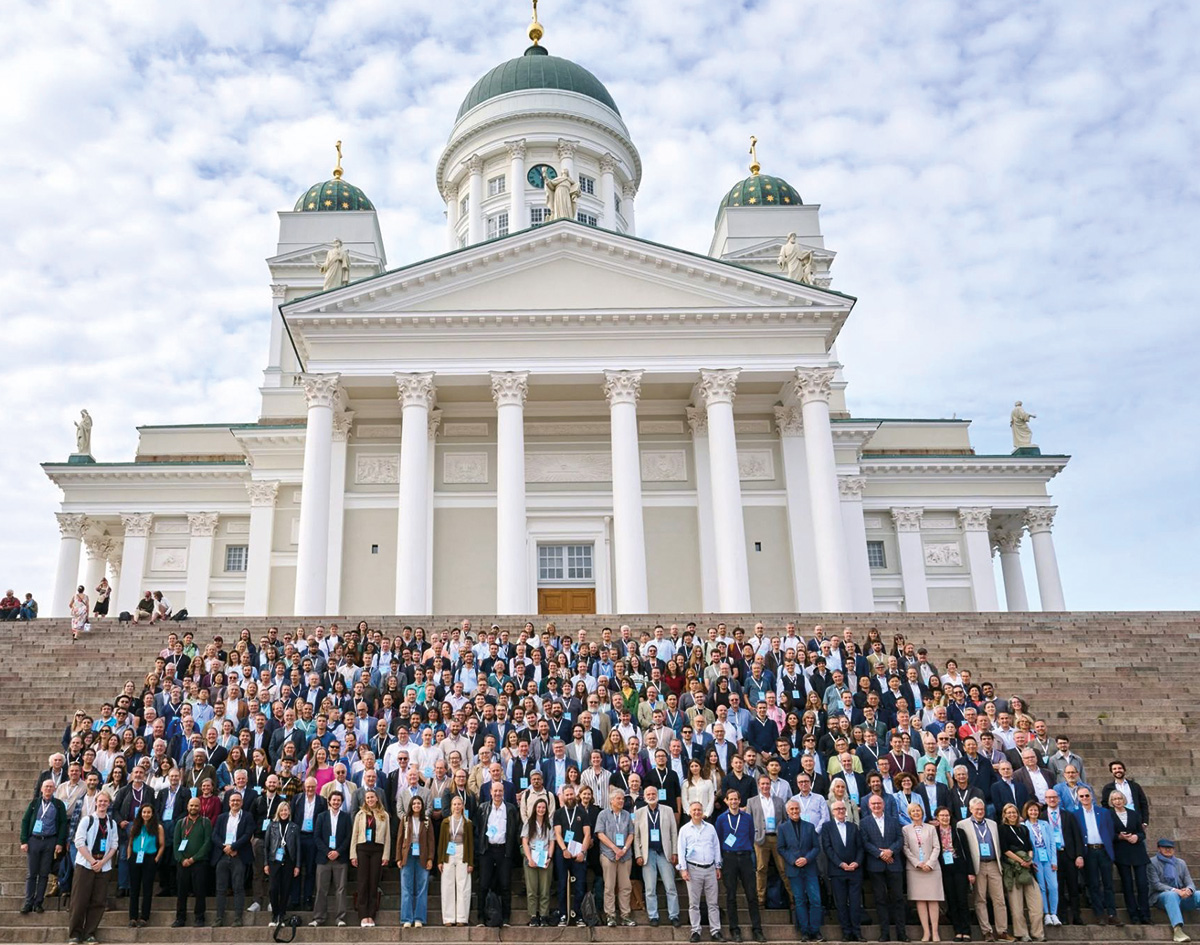
From 8 to 12 June, FCC Week brought 656 scientists, engineers, industry representatives and policymakers from 38 countries to the University of Helsinki. With its primary focus on FCC-ee, the meeting examined how the FCC study can progress from demonstrating feasibility to a coherent reference design, treating physics goals, accelerator parameters, detector concepts, theory, software and the machine–detector interface as parts of a single system.
Paula Eerola, president of the Research Council of Finland, opened the week by reflecting on CERN as a place where scientific responsibility is carried across borders and generations. CERN Director-General Mark Thomson described the coming years as a critical period, in which CERN must deliver the High-Luminosity LHC while advancing the FCC-ee as a possible next flagship project (CERN Courier July/August 2026 p7). Both efforts will rely on CERN’s close cooperation with its Member States, and Costas Fountas, president of the CERN Council, underlined their growing alignment with the laboratory and the particle-physics community. For European Commissioner Valdis Dombrovskis, the same model of international cooperation underpins Europe’s competitiveness, its technological capacity and its ability to invest over the long term.
Broad programme
The scientific case for the FCC-ee is often summarised in terms of the Higgs boson, but the programme discussed in Helsinki was considerably broader. Runs at the Z resonance, the W-pair threshold, the Higgs-production maximum and the top-quark threshold would yield around six trillion Z bosons and hundreds of millions of W pairs, improving statistical precision by three orders of magnitude and probing the Standard Model as an interconnected whole. The top-threshold run, for example, would determine the top mass, width, Yukawa coupling and strong coupling in a uniquely controlled environment, and a precise top mass is needed in turn to exploit the projected W-mass precision. The FCC-ee would also be a major flavour facility, with its clean initial state, vertex reconstruction and near-complete angular coverage, enabling studies of beauty, charm and tau decays, many of which are statistically limited today. As a precision-QCD machine, it could determine the strong coupling at the per-mille level (see How strong is the strong interaction?).
Discovery potential would not depend solely on producing new particles. Heavy states can alter measured quantities through quantum effects, leaving correlated deviations across electroweak, Higgs, flavour and top observables that global analyses could trace well beyond the machine’s direct reach. Direct searches would complement this programme, with the enormous Z and Higgs samples providing sensitivity to long-lived particles, heavy neutral leptons, axion-like particles and other hidden-sector states. The projected precision also creates a theoretical challenge. For the W-boson mass, a possible experimental uncertainty of about 0.24 MeV stands against a current theoretical uncertainty of several MeV, and closing such gaps will require higher-order calculations, better event generators and improved control of hadronisation, in a coordinated effort lasting many years.
On the accelerator side, the main news concerned the radiofrequency system. Studies indicate that it could be built entirely from 800 MHz superconducting cavities, instead of the planned mix of 400 and 800 MHz, and still reach the target collision rate with the new beam optics, although beam lifetime and the mutual disturbance of the colliding beams remain to be assessed. That collision rate calls for beams that are exceptionally flat, their vertical spread up to 2000 times smaller than the horizontal, demanding tight control of alignment, vibration and focusing. The rings would also need continuous refilling to hold the luminosity steady, a top-up injection that simulations now show can be performedwith efficiencies above 90%.
Advancing hardware
Hardware is advancing too. Drawings for the 400 MHz superconducting cavities are nearly complete, and a first integrated cryomodule demonstrator is due by 2031. The cavities will only be as efficient as the klystrons that power them, and these are gaining ground, with a single-beam device in China reaching 78% and a CERN tristron targeting above 90%. Magnet studies now feed manufacturing imperfections into predictions of field quality, and alignment on the supporting girders aims at 10 to 20 micrometres. The synchrotron radiation emitted by the circulating electrons, an intense X-ray glare, would deposit its power along the vacuum chamber, with absorbers every 5 to 6 m to intercept it. At the Z pole, however, where the circulating current would be highest, the budget for the chamber’s electromagnetic response to the beam remains tight, and the effects of stray-electron clouds in the pipe are not yet fully resolved.
Six detector concepts are under study, providing redundancy and comparative optimisation
The interaction region is where accelerator and detector choices meet most directly. A longitudinal detector-opening scenario is now the baseline, and a full-scale mock-up of the cooled central beam pipe and vertex detector has validated assembly and cooling. Moving the first final-focus element to 2.4 m from the interaction point has reduced the radiation load on the superconducting coils. Synchrotron-radiation backgrounds, however, have emerged as one of the most serious potential problems. Current estimates indicate that unless the radiation can be reduced by orders of magnitude, it would leave unacceptably high hit rates in the trackers. Masks, revised beam-pipe geometry, shielding and optics changes all show promise, but a final solution is still to be defined, making the interaction region a defining test of the integrated design.
Detailed simulation
Six detector concepts are under study, providing redundancy and comparative optimisation. All concepts place silicon pixel sensors closest to the beam, in chips that combine sensor and readout. Ideas diverge further out. Calorimeter concepts range from silicon-tungsten and crystal systems to noble-liquid and dual-readout approaches, while trackers include full-silicon, drift-chamber and time-projection-chamber solutions. Comparing the concepts, and finding their weaknesses early, takes detailed simulation, and simulation in turn calls for common tools. The shared software platform Key4hep has matured, and a distributed computing model is already operating ahead of formal collaborations.
The Industry and Technology Day, opened by Finland’s minister of economic affairs Sakari Puisto, asked how companies can become involved early enough to shape the design, from superconducting RF and cryogenics to civil construction. Many technologies will need to be adapted, scaled up or made more efficient, while others will have to be co-developed.
The FCC-ee tunnel could later host a much higher-energy proton collider, the FCC-hh, which Helsinki discussed as a possible second stage rather than as the justification for the whole programme. The case for the FCC-ee rests on its own precision measurements, flavour physics and direct searches, while the FCC-hh would extend direct searches to masses of tens of TeV and improve the measurement of the Higgs self-coupling.
FCC Week 2026 showed substantial progress in all project domains, and equally how much remains to be done. Synchrotron-radiation backgrounds must fall dramatically, theory precision must catch up with experimental ambition, and industrial capacity and long-term expertise need sustained investment. The central outcome was the growing integration of the many strands of a credible international project.
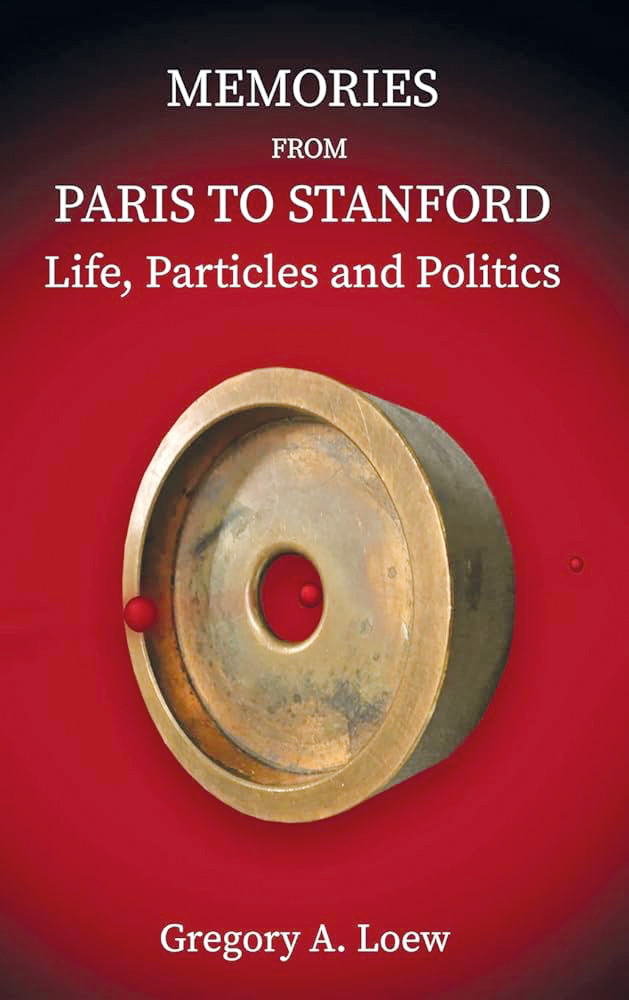
Memories from Paris to Stanford is a deeply personal account of the fascinating and varied life of Gregory Loew. A renowned accelerator physicist, Loew made seminal contributions to the accelerators at the Stanford Linear Accelerator Center (SLAC) that underpinned its Nobel Prize-winning scientific programme. Among them were the klystron drive and phasing systems for the 20 GeV linac, the S-band radiofrequency (RF) particle separators for the initial linac-based experiments, and the electron–positron injection system for the B-factory. He also directed the three-year effort that cured the beam breakup plaguing early operation, and through the 1970s, as head of the Accelerator Physics Department, led all the linac improvement projects. Later, Loew went on to chair two large international committees, whose comparisons of the competing linear-collider proposals paved the way for the 2004 selection of the superconducting technology of the DESY-led TESLA collaboration.
Core values
The memoir is divided into three parts: his early life and education, his career at SLAC, and his later engagement in politics. The diverse cultural environments and upheavals of his pre-college years recur throughout, intertwined with his science and activism, and matched by the value he places on family, friendship and collegiality.
The early chapters follow a childhood scattered by war. Loew was born in Vienna in 1930 to Jewish parents, with roots in Prague and Hamburg. In 1932, the family moved from Bucharest to Paris and switched their home tongue from German to French. In 1939, with antisemitism rife and war declared, they were forced out again, reaching Buenos Aires on 1 January 1940 – two weeks after the German battleship Admiral Graf Spee was scuttled off Montevideo. Somewhat screened in Argentina from the ravages of the war, the family nonetheless followed its perils, finding immense relief in the liberation of Paris in August 1944. A three-month visit to New York at the end of the same year marked his first encounter with the United States of America. There, operas at the Met and concerts conducted by Toscanini and Stravinsky sparked a lifelong love of the performing arts.
Loew knew from an early age that he wanted to pursue a career in physics, a desire cemented by excellent maths and science teachers at his high school in Buenos Aires. He returned to Paris in 1948 for undergraduate studies at the Sorbonne, and his account of those four highly eventful years is captivating. After his licence-ès-sciences in mathematics, physics, chemistry and radioactivity, he chose Caltech for his PhD studies, where he enjoyed easy access to figures such as Richard Feynman, Robert Millikan, Fred Hoyle and James Watson. Gregarious by nature, Loew never quite took to campus life at Caltech and, on completing his master’s in electrical engineering, accepted a generous scholarship from Stanford University to do his PhD. So began an illustrious 54-year career at Stanford and SLAC, including about five years as deputy director from 2001 to 2005.
The heart of the book, and its strongest claim on a physicist’s attention, is Loew’s chronicle of the internationally competitive development of linear electron accelerators from its Stanford origins. It began with William Hansen in the 1930s and advanced when the Varian brothers, Sigurd and Russell, arrived in 1937. That year, they built the first working klystron, a technology that still powers RF cavities today (CERN Courier May/June 2025 p30). After the war, Hansen resumed the work with Ed Ginzton and Richard Neal. Hansen died in 1949, and in 1951 Wolfgang “Pief” Panofsky arrived from Berkeley and carried the programme forward. By the mid-1950s, Stanford had a machine capable of delivering electron beams up to 1 GeV, which Robert Hofstadter used for his Nobel Prize-winning study of the structure of protons and neutrons. Loew himself arrived in 1954 as an electrical-engineering graduate student. His thesis, fortuitous given his later role, involved a microwave amplifier and oscillator system much like those used in the 1 GeV machine.
The Monster
Panofsky had larger ambitions. In 1957, he led a Stanford group that audaciously proposed Project M, the Monster, a two-mile accelerator for electron beams of up to 20 GeV. Loew completed his PhD in 1958 and joined the project, taking on the critical task of designing copper microwave structures to accelerate the electrons. Project M was funded in 1961, with Panofsky as SLAC’s first director, and construction began in 1962.
SLAC’s scientific breakthroughs resulted from decade after decade of far-reaching technical invention driven by a group of brilliant, ambitious and colourful scientists. And who better to describe that history than Loew? From the start until his retirement in 2008, he contributed to the technical development, the unfolding science and the laboratory’s management. His astute people skills and benevolent character enliven his account and lend it veracity.
One further thread gives these chapters their texture: the laboratory’s role, largely driven by Panofsky, in building relationships and intergovernmental agreements with high-energy physics laboratories in Russia, Japan and China. Those friendships outlasted the science and at times served as back channels during political tension, and Loew’s insider account of those brave endeavours opens a window onto their workings.
Ambassador extraordinaire
As SLAC’s “ambassador extraordinaire”, Loew was often called on to host its most prominent visitors. He describes two, the visits of French president Georges Pompidou in 1970 and of the emperor and empress of Japan in 1994. He also devotes a chapter to his wife of 30 years, Gilda, who passed away in 2001. She was a PhD quantum chemist, with an adjunct professorship at Stanford, and worked with Nobel laureate Joshua Lederberg.
A fascinating blend of Stanford and SLAC’s groundbreaking accelerator-based science
The third part of the book steps outside SLAC. Loew had been alert to politics and the causes of war since boyhood, and a call from the Stanford administration prompted him, in 1970, to devise a one-quarter course on the origins of war. It proved popular enough to run for more than a decade. Its range, from international relations and history to economics, anthropology and biology, later fed his first book, The Human Condition: Reality, Science and History (CERN Courier March/April 2020 p68). Since 1995, he has been active in democratic politics, serving on local and national committees and as a delegate to the 2012 convention. He closes with chapters on the threats to democracy and the existential threat of global warming.
Memories from Paris to Stanford is a fascinating blend of Stanford and SLAC’s groundbreaking accelerator-based science from the early 1950s to the present and the socio-political currents that shaped that post-WWII period. The scientific reader will likely be captivated by the discovery potential unleashed by innovative technology in the hands of brilliant practitioners and by how world events played into that adventure. The non-scientific reader can equally appreciate the transformative nature of the technology, but for them the primary fascination may well be how dramatic world events shaped the multifaceted career of a brilliant scientist and humanitarian.
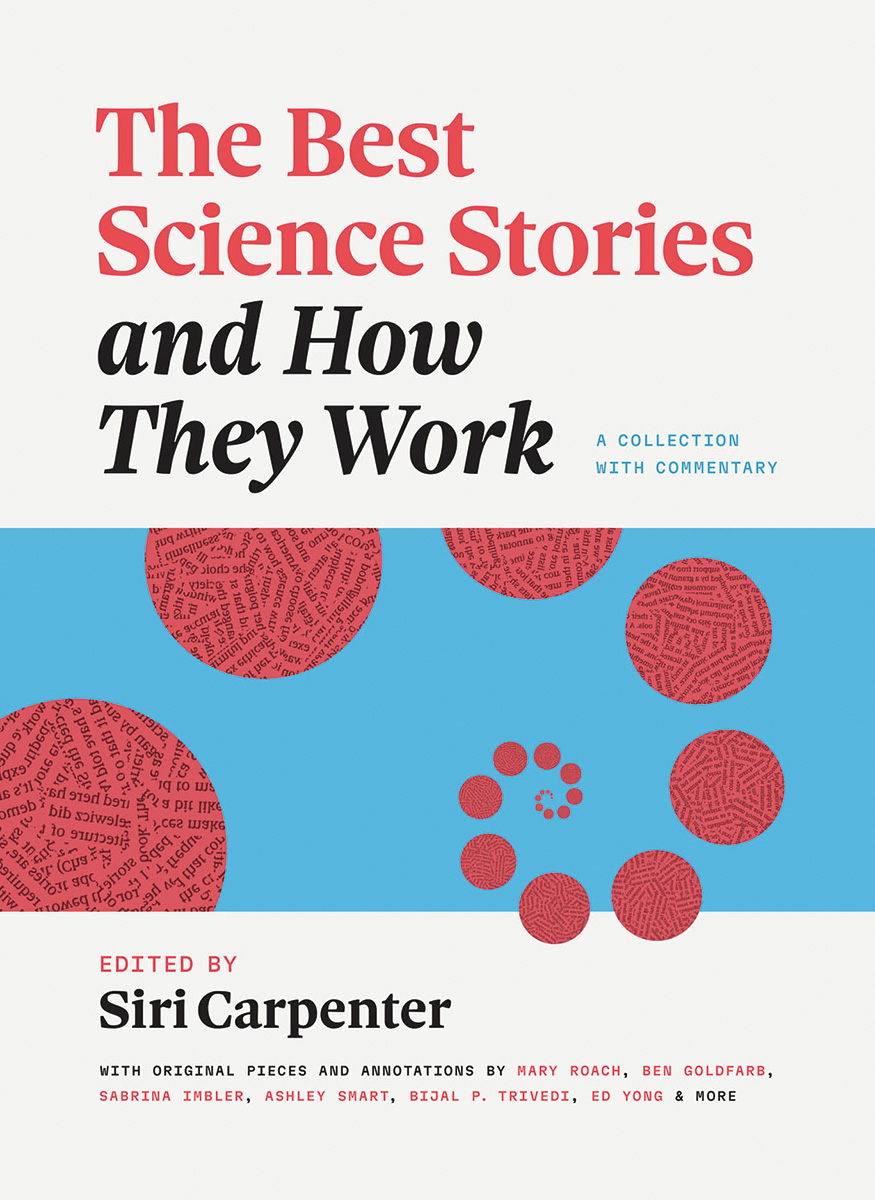
Science journalism has the difficult task of making complex ideas accessible without sacrificing the uncertainty, nuance and sometimes messiness that accompany scientific research. Yet when it succeeds, much of the work involved is invisible. Readers encounter the finished story, not the reporting decisions, discarded approaches, structural choices and conversations with sources that produced it. The Best Science Stories and How They Work turns its attention to this hidden process. Each of its 11 reprinted stories comes with an introduction and annotations by a fellow science journalist, followed by a conversation in which writer and annotator discuss how the piece came together. The result is both an anthology of contemporary science writing and an attempt to take that writing apart and see what makes it work.
A wide world of topics
The subjects are remarkably varied, encompassing medicine, climate change, genetics, conservation, mathematics and space exploration, and drawing on journalism originally published in outlets including Nature, Scientific American, The Atlantic, MIT Technology Review and The New York Times Magazine. Ed Yong’s “Fatigue can shatter a person”, for example, examines the debilitating experience of pathological fatigue, particularly in the context of long COVID, while Kendra Pierre-Louis investigates “How rising groundwater caused by climate change could devastate coastal communities”. Juxtaposing such different stories is crucial, as it shows how similar questions about evidence, explanation, narrative and human experience arise across scientific disciplines.
What makes the collection distinctive, however, is what happens around each article. Rather than asking readers simply to admire a successful piece of journalism, the annotations encourage them to notice its construction. Why does a story begin where it does? How is technical information introduced without interrupting the narrative? What makes a source compelling, and how should a journalist balance curiosity with scepticism? Such questions turn reading into a more active exercise. The conversations between writers and annotators add another layer by focusing attention on the decisions and challenges behind each piece.
A persuasive case for paying closer attention to how science stories are assembled
This emphasis on process makes the book relevant beyond aspiring science journalists. Communicating science is often described as a problem of translation: taking specialist knowledge and making it understandable to a non-specialist audience. The examples collected here suggest something much richer. Good communication also depends on judgement – what a reader needs to know, what can safely be omitted, where uncertainty matters and where explanation should give way to narrative. These decisions will be recognisable to any scientist who has tried to explain a result outside their immediate field.
There is inevitably a degree of artificiality in dismantling writing that was designed to be experienced as a whole. Not every reader will want to interrupt an engaging story to consider its underlying mechanics, and those looking primarily for physics or another particular discipline will find much of the collection removed from the subject of their interest. But that breadth is also one of the book’s strengths. Moving between very different flavours of science and storytelling, it resists the idea that successful science communication can be reduced to a single template. It offers instead something closer to a workshop built around examples: read the story, examine the choices behind it and consider what might be learnt.
The Best Science Stories and How They Work makes a persuasive case for paying closer attention to how science stories are assembled, as well as to what they say. To early-career journalists, it offers an opportunity to examine the working methods behind effective reporting. To scientists, it provides a reminder that making science understandable involves more than simplifying terminology.
As the recent dramatic improvement in AI leads to its increasingly widespread adoption, many of us are left unsure how to respond. The narrative, particularly among digital natives, is that we are living through an experience without precedent. Of course, to some extent, we are – AI is a technology unlike anything that came before it. However, this does not mean history has nothing to teach us.
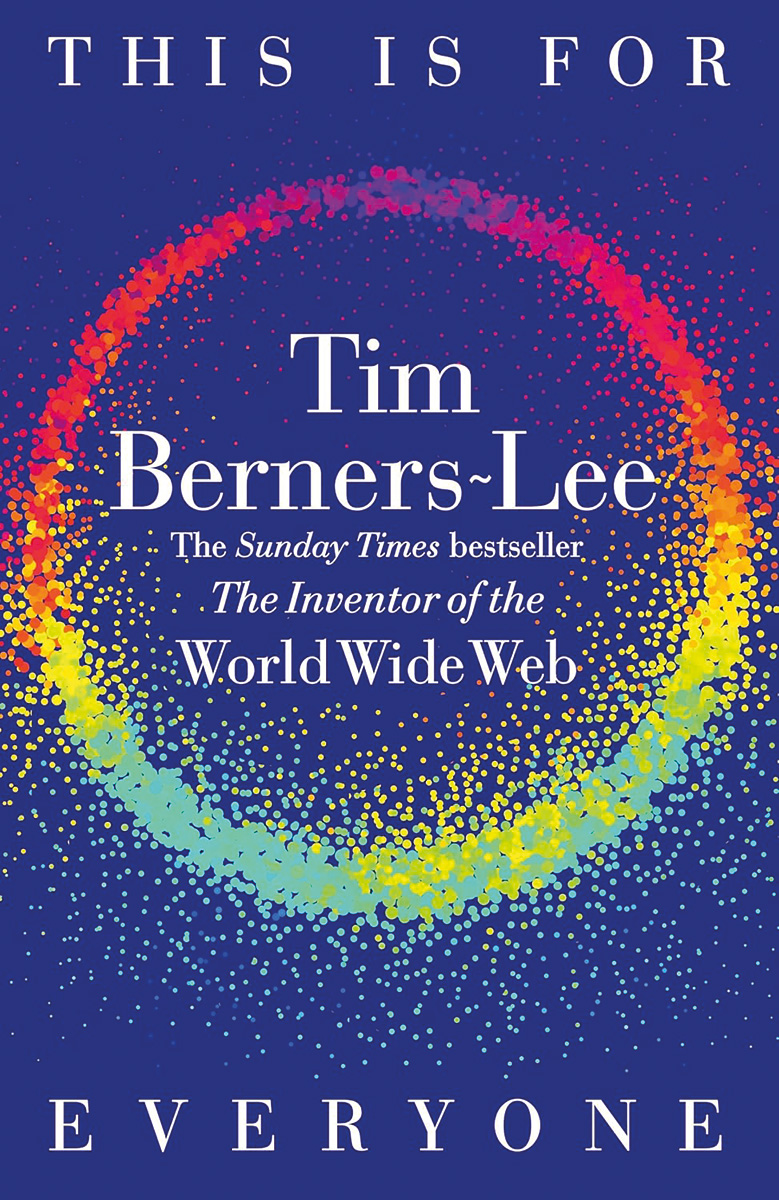
Tim Berners-Lee’s invention of the World Wide Web in 1989 went on to transform global communication, economics, and societies, leaving many scrambling to keep up. While his latest book does not attempt to comprehensively answer every question sparked by the rise of AI, it provides a useful reference for anyone grappling with them. This Is for Everyone delivers a detailed yet compact history of the web, accompanied by its inventor’s reflections on what it has and could become.
The book starts by describing Berners-Lee’s childhood in London, where – raised by parents who were both mathematicians and electronic engineers – he was constantly exposed to technology. Born in 1955, he discusses his cohort’s “magic-carpet ride through the wave of tech”, where computing was developing at a perfect pace for their education and career development.
The CERN years
His interest in technology eventually took him to CERN. The book contains a positive description of the Organization, set alongside a relatable caveat of how challenging it was to facilitate communication within its community. It was this challenge that he sought to address through inventing the web, supported by many CERN colleagues he describes with great affection.
The story of the web’s origin is relatively well known within the particle-physics community, but perhaps less so is what happened next. Depicted in detail in the book is the work of the World Wide Web Consortium (W3C), which brought together companies, non-profits, universities and governments to develop standards that would help preserve the web’s “universal” nature. The history of the governance of the web is set alongside Berners-Lee’s own memories of its increasingly widespread adoption. His joy in the many products of his creation leaps off the page, from the first online museum exhibitions of the nascent web to the later growth of Wikipedia and podcasts.
When describing some early side-effects of the web, Berners-Lee is sometimes too dismissive of their significance. He does not, however, shy away from describing how the negative impact of the web has grown with time, alongside his despair at modern social media. While the book regrettably does not thoroughly discuss what could have been done to prevent social media from reaching their current state, it does include some ideas on how to improve them. Berners-Lee believes that online lack of compassion is a design issue, not a human failing, and that the solution is mostly technical. He proposes a switch to algorithms trained for constructive engagement, similar to those used by music apps, which could be designed to give us more of the things we enjoy.
Berners-Lee also outlines his belief in the importance of data privacy and sovereignty, lamenting how web users have often become products for advertisers, as well as the web’s abuse by authoritarian governments. The book explains how this led him to develop the web decentralisation protocol Solid, which gives people ownership of their data through a “pod” they control, and his company Inrupt – a part of his career many may be unfamiliar with. Although Berners-Lee has an obvious vested interest in the protocol, it certainly appears to be an interesting approach to data sovereignty.
The book states Berners-Lee’s concern that the rise of AI risks exacerbating current problems with the web and broader digital landscape. Although he emphasises his excitement about AI’s potential to benefit the world, he also stresses the need to act quickly to mitigate “the risk that it turns into something darker, more coercive and exploitative, as happened with social media.” It is in this area that his experience spearheading a new technology provides some necessary weight to his often bold arguments. His rejection of the false dichotomy between AI “doomers” and “boomers”, and his push for a nuanced discussion of its development, reflect the careful approach of the W3C. His emphasis on the need to avoid monopolies and prioritise the rights of the end user for the AI-powered web is likewise a continuation of his original principles for the web. His belief in the importance of international collaboration, first sparked during his time at CERN, leads him to call for “a CERN-like institution for AI before something catastrophic happens.”
Although the book is not the most fluently written, it is generally easy to understand, even for readers with no expertise in web development or computing. The anecdotes included about the early web community will likely pique the interest of many Courier readers. As seems characteristic of its author, the book presents a very idealistic vision of the future of technology. Given the often toxic nature of debate in this area, however, such optimism is refreshing.
This Is for Everyone will leave you in no doubt that building an AI-powered web with humanity’s best interest at heart is one of the most significant global challenges today. Luckily, as Berners-Lee concludes, “There’s still time.”
François Englert died on 18 June in Uccle, in the Brussels region, aged 93. Beyond his major contributions to fundamental physics, he had a profound, if discreet, influence on the Belgian scientific community.
He was born on 6 November 1932 in Etterbeek (Brussels), to a family of Jewish immigrants from Poland. During World War II, François and his older brother Marc became enfants cachés – hidden children – finding refuge in the countryside at great risk to those who sheltered them. For a child so young, it was a traumatic experience, which François long kept to himself. After the war, he enrolled at the Université Libre de Bruxelles (ULB) in the Faculty of Applied Sciences, a frequent choice at the time, as it guaranteed employment and claimed to offer the same training as a physics degree. After graduating in 1955 he switched to physics, quickly completing a licence in 1958 and a PhD, under the supervision of Jules Géhéniau, the following year.
A turning point in his career came with a postdoctoral stay at Cornell University, where Robert Brout, at first his adviser, became a lifelong colleague. He came back to ULB in 1961, as a lecturer in general physics, and Robert soon followed him. Only later, in 1980, would they formally found the Theoretical Physics group – a generic name chosen to avoid dissecting physics into separate specialities.
Open culture
From Cornell, they had brought back an informal culture: the door was always open to anyone who wanted to discuss physics. As students, we were completely immersed in the research, spending whole afternoons with the two leaders in a sort of musical-chairs brainstorming at the blackboard. They also made sure that a permanent position could be considered only after a postdoctoral stay abroad, an attitude that eventually spread to other departments, reversing a long tradition of internal recruitment.
In the early 1960s, François and Robert were looking for a way to formulate short-distance interactions in the formalism of quantum field theory (QFT). Gauge-invariant QFT was known to describe quantum electrodynamics, but dealt only with massless gauge bosons and hence long-distance interactions. The mechanism they found was submitted to Physical Review Letters in June 1964, in a paper that showed diagrammatically how gauge bosons could acquire mass. Independently, in July, Peter Higgs approached the problem focusing on the elimination of unwanted Goldstone bosons, and included the mass of the gauge bosons in a later paper.
That short paper by François and Robert was in fact remarkably complete: it included the basic spontaneous symmetry breaking by a fundamental scalar field, as is now standard, but also a dynamical approach assuming fermion condensates, and it covered the non-abelian case. The mechanism also opened the way to the proof of the renormalisability of the theory. At the time, both the strong and the weak interactions were candidates for such symmetry breaking, but a concrete realisation awaited a 1967 paper by Steven Weinberg. A different mechanism, confinement, was eventually shown to operate in strong interactions.
François and Robert soon turned their attention to cosmology, first joined by Edgard Gunzig, then by Philippe Spindel and eventually by the whole Brussels group – an exceptional case, as they had insisted that its members operate as independent individuals. One puzzle, in particular, drew them. In an expanding universe, regions thought never to have been in causal contact show almost the same temperature in the cosmic microwave background, the fossil radiation of the Big Bang. Their explanation relied on a fast initial expansion phase, a scenario they called the “causal universe”. Here, too, they were precursors. François’s curiosity extended to a wide variety of topics, with more interest in finding mechanisms than in a tedious zoology of nature. These ranged from generating the spacetime metric out of a fractal structure to the classification of monopoles and even the structure of viruses!
While François and Robert played a formative role in the Belgian physics community, François never mentioned his role in the student revolts at ULB in 1968, since the structures that emerged from them had fallen short of his hopes. In fact, he kept clear of institutional academic roles altogether. His influence was felt otherwise. Formal recognition, too, was long in coming. It began with the Gravity Research Foundation award (1978), followed by the Francqui Prize (1982), the European Physical Society Prize (1997), the Wolf Prize (2004) and the Sakurai Prize (2010). In 2013 came the Prince of Asturias Award and the Nobel Prize, awarded to François and Peter Higgs, Robert Brout having died in 2011. King Albert II made François a baron in the same year, and he was also appointed professor at Tel Aviv University.
A point of reference
It must be realised that, by the time of François’s and Robert’s seminal paper, QFT itself had fallen out of fashion. Despite its success in quantum electrodynamics, the framework could not be applied to short-distance interactions, and many preferred more holistic approaches, such as the unitary S-matrix. Interest returned progressively as spontaneous symmetry breaking gained acceptance, a shift that can be followed in the paper’s own citation curve, and François and Robert embarked on an inter-university series of lectures and seminars. Despite the philosophical and linguistic differences between the universities, this seeded or cemented the contacts between the theoretical physics groups of Brussels, Leuven and Louvain-la-Neuve. The effort made them a point of reference for Belgian physics.
Interestingly, this path had been trodden before them by Monsignor Georges Lemaître, father of the Big Bang, who visited ULB frequently. To celebrate these unifying efforts, the Belgian Senate, later joined by the Brussels Region, encouraged the formation of the Brout–Englert–Lemaître (BEL) Centre, common to ULB, the Vrije Universiteit Brussel (VUB), the Université Catholique de Louvain (UCLouvain) and the Katholieke Universiteit Leuven (KU Leuven).
Guenakh Mitselmakher, an experimental high-energy physicist of international stature, passed away on 28 January at the age of 80. He was born on 5 December 1945 in Vilnius, Lithuania. After graduating from Moscow State University in 1968, Guenakh started his professional career at the Joint Institute for Nuclear Research (JINR) in Dubna, Russia. He often recalled that his mentor Bruno Pontecorvo made the largest impact on his scientific vision and “physics taste”.
For his PhD, he joined a collaboration of four that was designing an experiment to search for the charged-lepton flavour violating decay μ → 3e. The result, published in 1976, improved on the best previous limit by two orders of magnitude. Next, he took part in the first measurement of the charged-pion radius at the Serpukhov accelerator, published in 1974. He then proposed and co-led an experiment that yielded the first measurements of the pion’s polarisability and the γ → 3π coupling in 1983 and 1986, respectively. In the mid-1980s, he and his group joined the DELPHI experiment at LEP. Guenakh co-led the construction of the DELPHI hadron calorimeter and made critical contributions to the measurement of the number of light neutrinos coupling to the Z boson. To this end, he co-initiated the collaboration of theorists and experimentalists that developed the analysis framework later known as ZFITTER.
Guenakh moved to the US in 1991, to join the Superconducting Super Collider (SSC) laboratory in Texas. After the closure of the SSC, in 1993, and having worked briefly at Fermilab, he joined the University of Florida (UF) physics department in 1995. There, he spearheaded a vigorous experimental hadron-collider programme, building a group that at its peak counted seven faculty and more than 40 members, including students, postdocs and engineers. Together they made major contributions to the CDF experiment at Fermilab and to the CMS experiment at CERN, where Guenakh led the design and construction of the endcap muon system.
In both experiments, the UF group held leading roles in the physics programme, most notably in the Higgs-boson discovery in 2012, in precision measurements of the new particle’s properties, and in many searches for new physics. Among them, the recent search for the charged-lepton flavour violating decay τ → 3μ echoes Guenakh’s research from the early years of his career. He was also the driving force behind UF joining the Laser Interferometer Gravitational-Wave Observatory (LIGO) in 1996, where the group contributed prominently to the design and construction of the apparatus and to data analysis. Indeed, the first gravitational-wave event, in 2015, was initially identified by coherent WaveBurst, a real-time analysis algorithm conceived in a 2008 paper that Guenakh co-authored.
Guenakh Mitselmakher was a relentless advocate for the pursuit of physics of pivotal significance. His scientific legacy will persist through the many scientists he mentored during his career.
It is with great sadness that we learned George Kalmus passed away on 27 May, at the age of 91. George had a long and distinguished career in particle physics, which took him from the early days of bubble chambers to the LHC and beyond.
Born in Beočin, Yugoslavia, on 21 April 1935, George moved to London with his family in 1939. He obtained his physics degrees at University College London (UCL), gaining his PhD in 1959 with the pioneering study “Physical properties of bubble chambers”. As a research assistant at UCL, he was responsible for the design and specification of the magnet for the British Heavy Liquid Bubble Chamber. He also studied semileptonic decays of Λ hyperons with UCL colleagues and a group at the Lawrence Radiation Laboratory in Berkeley, later the Lawrence Berkeley Laboratory (LBL), using their 30-inch heavy liquid chamber.
From 1962 to 1967, apart from one year back at UCL, he worked at LBL as a research assistant, studying semileptonic Λ decays and all aspects of K+ meson decays, especially the rare semileptonic four-body K+e4 channel. He became a tenured senior physicist at LBL in 1967, switching to the study of hadron resonances using K– and π+ beams.
In 1972, George returned to Europe to lead the bubble-chamber group at the Rutherford Appleton Laboratory (RAL). His large group participated in various collaborations, with George himself proposing and working on K–p and K0Lp experiments in the 2 m hydrogen bubble chamber at CERN.
Following the discovery of open charm in 1976, he proposed and led a major experiment to investigate direct electron production by hadrons using a track-sensitive target in the Big European Bubble Chamber at CERN. He subsequently led a collaboration at the SLAC Hybrid Facility, where he instigated the addition of a high-resolution camera. This was crucial to the successful measurement, in 1982, of the decays of D mesons produced by 20 GeV photons in the 1 m hydrogen bubble chamber. His exploitation of bubble chambers and work on kaon and charm physics contributed to his election as fellow of the Royal Society in 1988.
George went on to establish the UK collaboration working on DELPHI at CERN’s LEP collider, where he applied his formidable expertise to all aspects of the experiment: design, realisation and analysis. He led RAL’s involvement in the construction of the superconducting solenoid – at the time the largest in the world – and pushed for the addition of a silicon microvertex detector, one of the first at LEP. He was elected deputy spokesman for DELPHI and chaired its collaboration board from 1986 to 1993.
George was director of RAL’s Particle Physics Department from 1986 to 1997, with wide-ranging responsibilities for the whole of the UK’s particle-physics programme, latterly including the preparation of the LHC experiments. He was appointed to CERN’s Scientific Policy Committee from 1990 to 1997 – a time that saw the approval of the LHC – and chaired it from 1999 to 2001.
In 1998 George returned to his earlier interest in ultra-rare kaon decays by joining the NA48 experiment at CERN. He retired from RAL in 2000, but not from physics, joining the ZEPLIN-III experiment to search for dark matter in the Boulby Underground Laboratory in Yorkshire, UK.
George had a special combination of scientific ability, integrity and human skills, all greatly appreciated by those who knew and worked with him. He helped many careers and led UK particle physics with a sure hand through sometimes tempestuous waters for more than a decade. We owe him a great deal. He was survived by his brother, Peter, professor at Queen Mary University of London, his three daughters and his grandchildren. Our deepest sympathy goes to the whole family.
• We are very saddened to have learned that Peter Kalmus passed away on 2 August. A full obituary will appear in a later edition of CERN Courier.
To the shock of family, colleagues and friends, Norman McCubbin died suddenly at his home in Oxford on 22 June. His long and distinguished career included vital roles in UK particle physics and at CERN.
Norman was born in north London on 27 June 1948, the eldest of three sons. His family later left Leicester for Kenya, where Norman attended Kenton College in Nairobi. He then boarded at the prestigious Repton School in Derbyshire, to which he jokingly ascribed his success in winning ballot tickets to England test cricket matches. He attended New College, University of Oxford, achieving a first-class honours degree and a doctorate. His thesis contained an analysis of K–p interactions in the CERN 2 m bubble chamber.
Norman moved to CERN as a Lancaster postdoc, working on the CHLM experiment at the Intersecting Storage Rings. After joining the Rutherford Appleton Laboratory (RAL) as a postdoc in 1976, he moved to the British–French–Scandinavian collaboration on the Wide-Angle Spectrometer and then the Axial Field Spectrometer, where he worked on the world’s first uranium compensating calorimeter. After getting tenure at RAL, Norman joined the HELIOS fixed-target heavy-ion experiment, of which he became spokesperson.
He was involved in the early stages of the ZEUS experiment at DESY, becoming leader of the RAL ZEUS group in 1990, and managed a large group of capable technical staff and research associates who worked on the construction and commissioning of the central tracking detector. Norman also played an important role in developing the experiment’s software and held senior positions, including simulation coordinator. He remained closely involved throughout ZEUS’s running.
As ZEUS matured, he began to work on ATLAS, again leading the development of the software. He was computing coordinator from 1999 to 2003, steering the decision on computing language with typically consummate tact. His advice was greatly valued by successive ATLAS spokespersons, who gave him numerous important responsibilities, including chairing the committee that in 2007 recommended task-sharing algorithms and criteria for ATLAS membership, authorship and financial contributions. He was assiduous in employing his exceptional command of English to correct and polish ATLAS papers, and maintained his keen interest in heavy ions as an expert within ATLAS.
Norman was a leader of UK particle physics, becoming first division leader and, from 2007, director of RAL’s Particle Physics Department, while gaining the admiration and respect of all who worked with him. After officially retiring from RAL in 2012, Norman continued to contribute to ATLAS and taught physics to undergraduates at St Anne’s College, Oxford. He inspired many generations of students and was an extremely popular tutor, relishing the core subjects of thermodynamics, statistical mechanics, relativity and symmetries.
Norman McCubbin was a Renaissance man, learned but never pedantic, broad in interests and expertise. He loved cricket and golf, music and current affairs. He was an exceptional physicist, publishing both cutting-edge particle-physics papers and articles on the history of physics. He will be greatly missed by his family and his many colleagues and friends.
• A fund has been set up in Norman’s memory to endow an annual prize for the best physics student at the college at which he taught, St. Anne’s Oxford.
Once in a while, the particle-physics community takes stock of its own history. The latest such occasion was the 4th International Symposium on the History of Particle Physics, held at CERN from 10 to 13 November 2025.
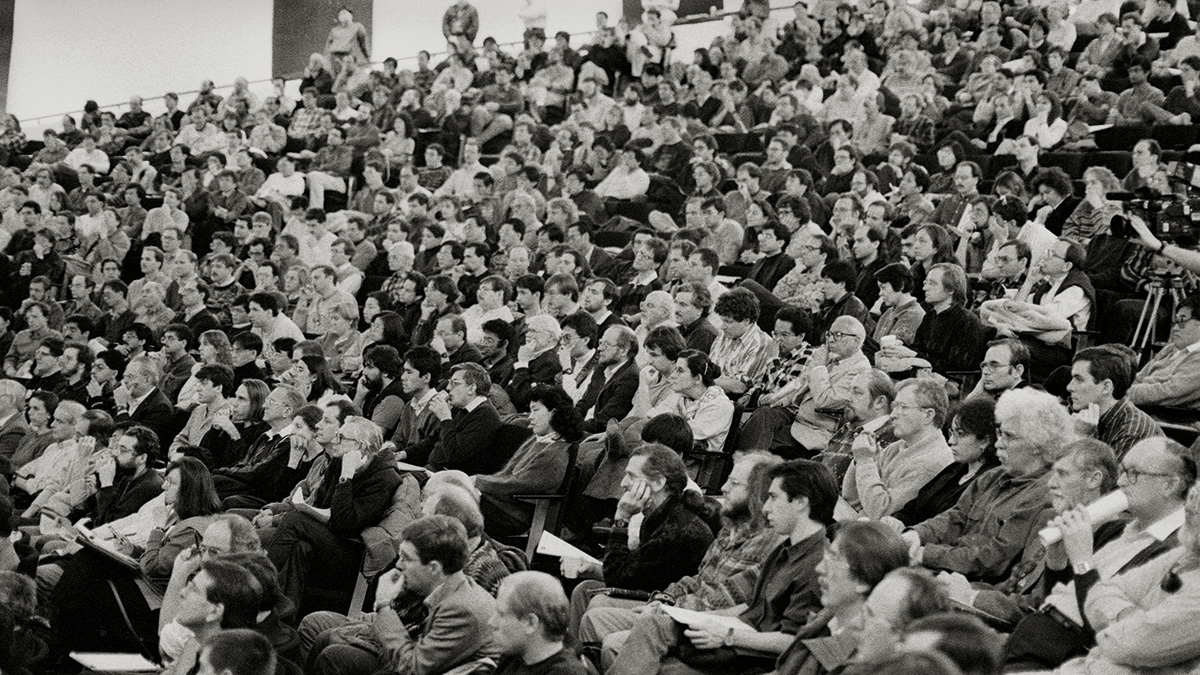
The series began at Fermilab, with meetings in 1980 and 1985 that traced the field from its origins to the particle zoo of the 1950s. A third, at SLAC in 1992, took the story through the 1960s and 1970s, when much of the Standard Model (SM) fell into place. The 2025 edition brought together about 200 physicists and historians, with many more following online, to pick up where its predecessor left off, turning to the period from 1980 to 2000. With some 40 contributions across four days, the programme was far richer than any single report can convey. The symposium’s Indico page (indico.cern.ch/event/1480892) carries it in full, along with recordings of most of the talks.
Strong foundations
By the end of the 1970s, the foundations were laid. Quarks had been accepted as physical constituents of matter, neutral currents had validated the electroweak theory in its SU(2) × U(1) form – ruling out an alternative that contained no Z – and the proof that gauge theories yield finite predictions had given the SM its mathematical backbone. The talks painted a shiny and coherent image of what came next: fundamental discoveries of new particles, the stabilisation of the SM, outstanding – and sometimes revolutionary – progress in the construction of accelerators and detectors. These achievements were spread across laboratories worldwide, and made possible by two seemingly contradictory forces: fierce international, national and “intramural” competition, and close cooperation among thousands of dedicated scientists and engineers, on a scale unheard of in civilian industry. A unique and precious ecosystem, that of the high-energy physics community, had established this “coopetition” as its own modus operandi.
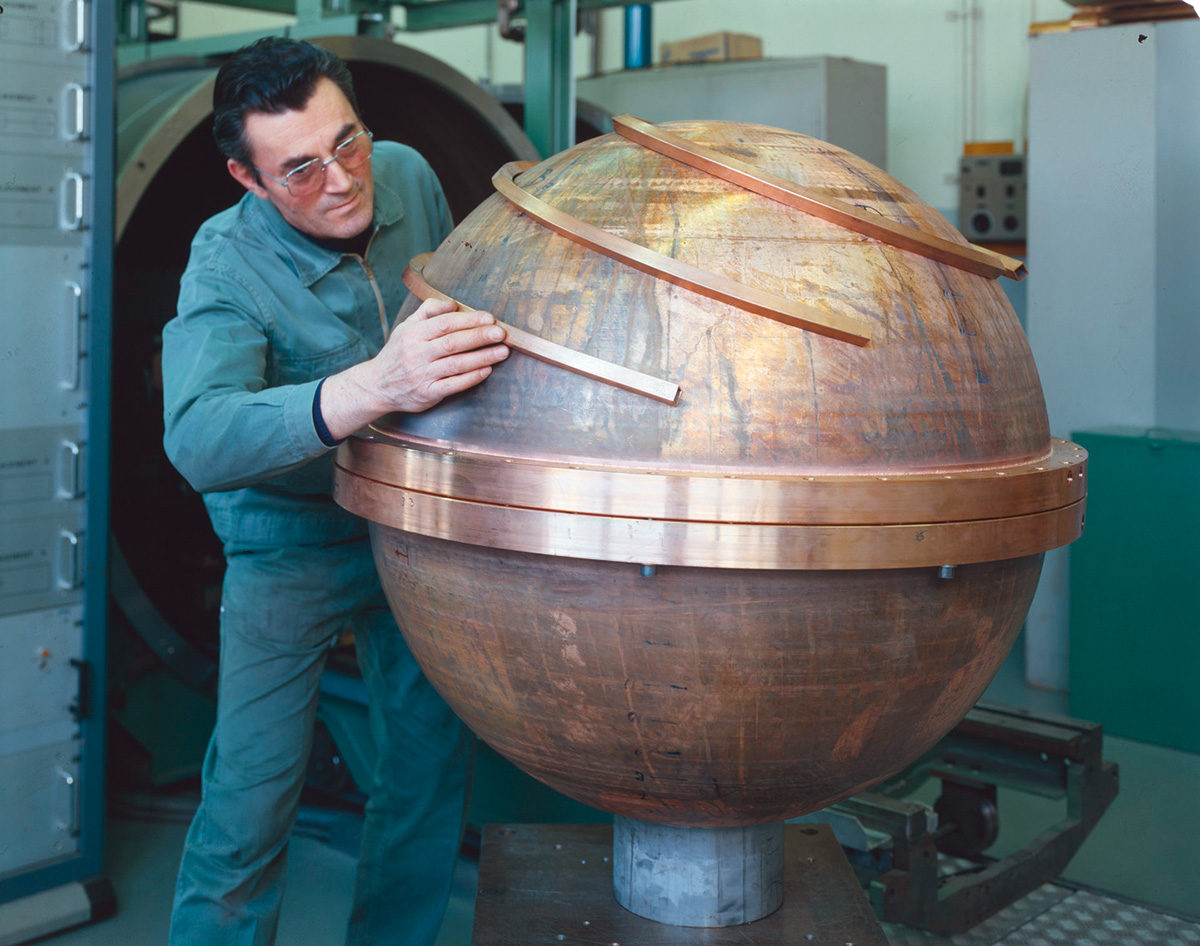
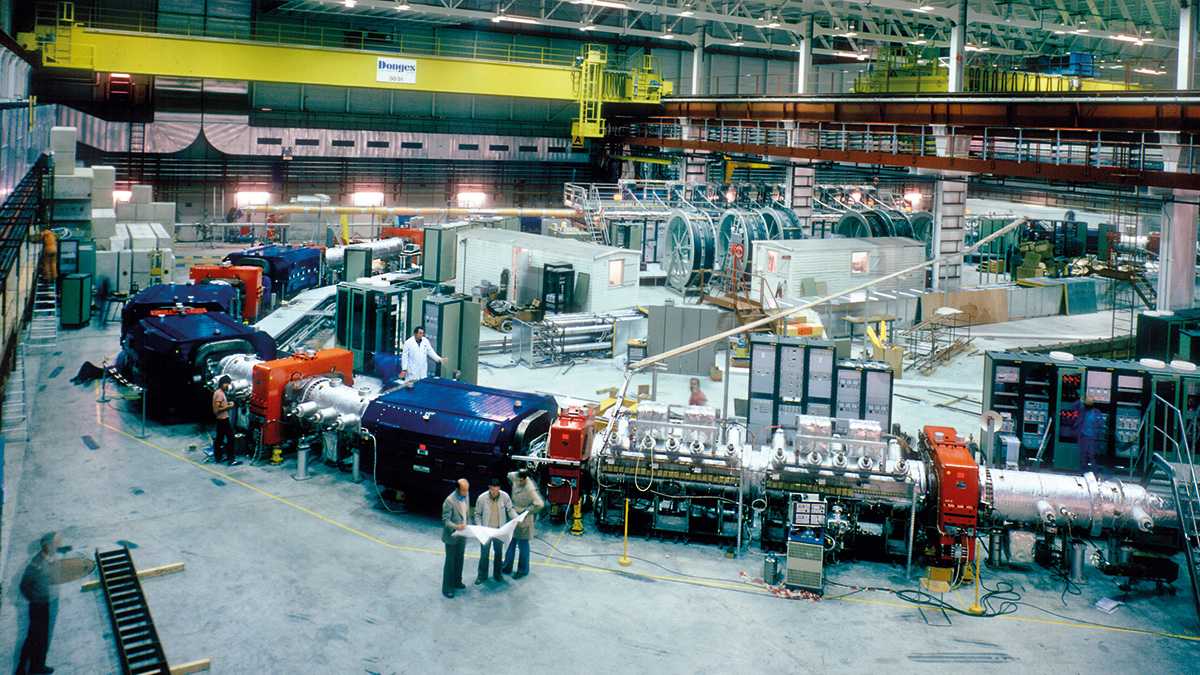
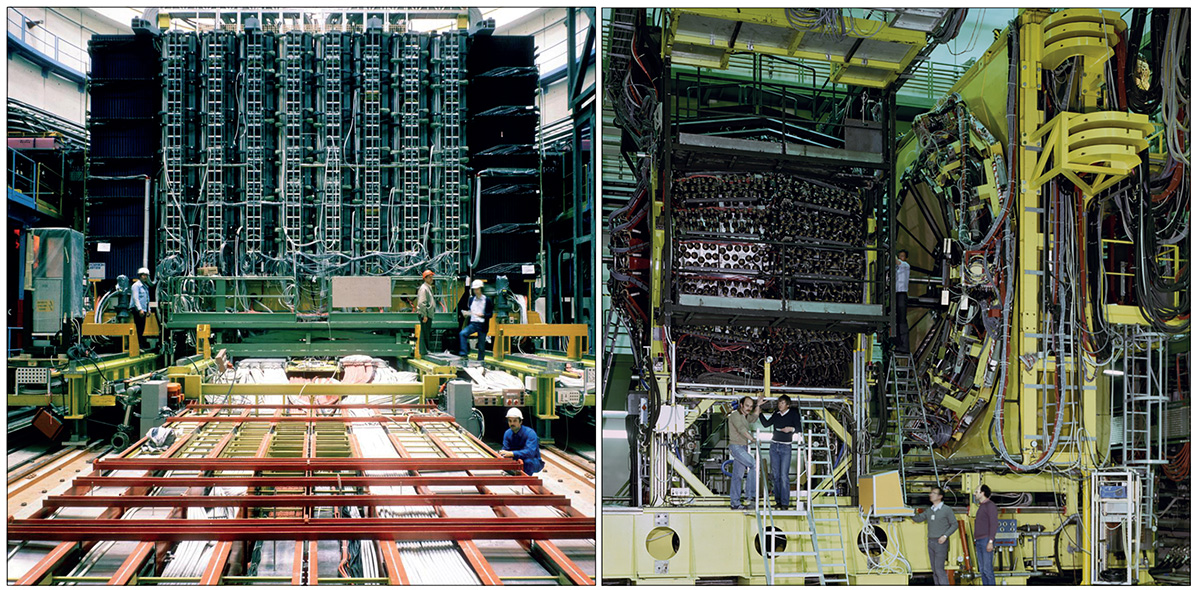
Starting from the early 1980s, discovery truly became a global endeavour, against a steady shift in experimental activity from the US to Europe. The W and Z bosons, massive carriers of the weak force, were found at CERN’s SPS (Super Proton Synchrotron) collider by the pioneering UA1 and UA2 experiments between 1982 and 1983 (see “The opening act” and “Sharing the ring” images). The top quark eluded a long search before being found at Fermilab in 1995, at the mass scale of the weak interaction. Its existence, required by anomaly cancellation, completed the third generation of quarks (see “Top, at last” image). Three years later, Super-Kamiokande caught neutrinos oscillating between flavours, building on a tradition of neutrino physics to which Soviet groups had made decisive contributions.
At both LEP (Large Electron–Positron collider) and the SLC (Stanford Linear Collider) at SLAC, the number of light neutrino species coupling to the Z was measured to be three, implying no more were left to find. Cornell’s CESR/CLEO explored the upsilon family and the physics of the b-quark, while ARGUS, at DESY’s DORIS storage ring, made the first observation of B-meson mixing in 1987. The B-factory programmes at KEK and SLAC then opened the door to the observation of charge–parity (CP) violation in B-meson decays. Not all searches bore fruit: no leptoquarks appeared at HERA and no supersymmetric particles at LEP. These null results, too, shaped the direction of the field.
Still, participants could revel in how one prediction of the SM after another found experimental confirmation, be it the nature of the particles discovered or the detailed structure of hadronic jets, the most direct way quarks and gluons can manifest themselves as constituents of hadrons in a detector far from the interaction region. The same holds for the deep-inelastic structure functions measured at HERA, which mapped the proton’s internal structure with unprecedented precision.
On the theoretical side, several talks described the laborious process of assembling the many pieces of the SM jigsaw, a striking example of a concise and predictive compendium of human knowledge. The Brout–Englert–Higgs mechanism received particular attention, along with the emergence of the concrete Higgs-hunting strategies that would ultimately lead to the 2012 discovery at the LHC (Large Hadron Collider). The solar neutrino problem, a persistent and puzzling shortfall in the detected flux of electron neutrinos from the Sun, found its resolution in the conjecture that neutrinos are massive and can oscillate between flavours, later confirmed experimentally. More broadly, the talks exposed the characteristic dissatisfaction of theorists with any present state of understanding, paired with a restless curiosity for finding in it clues to the next frontier.
The hunt for new physics
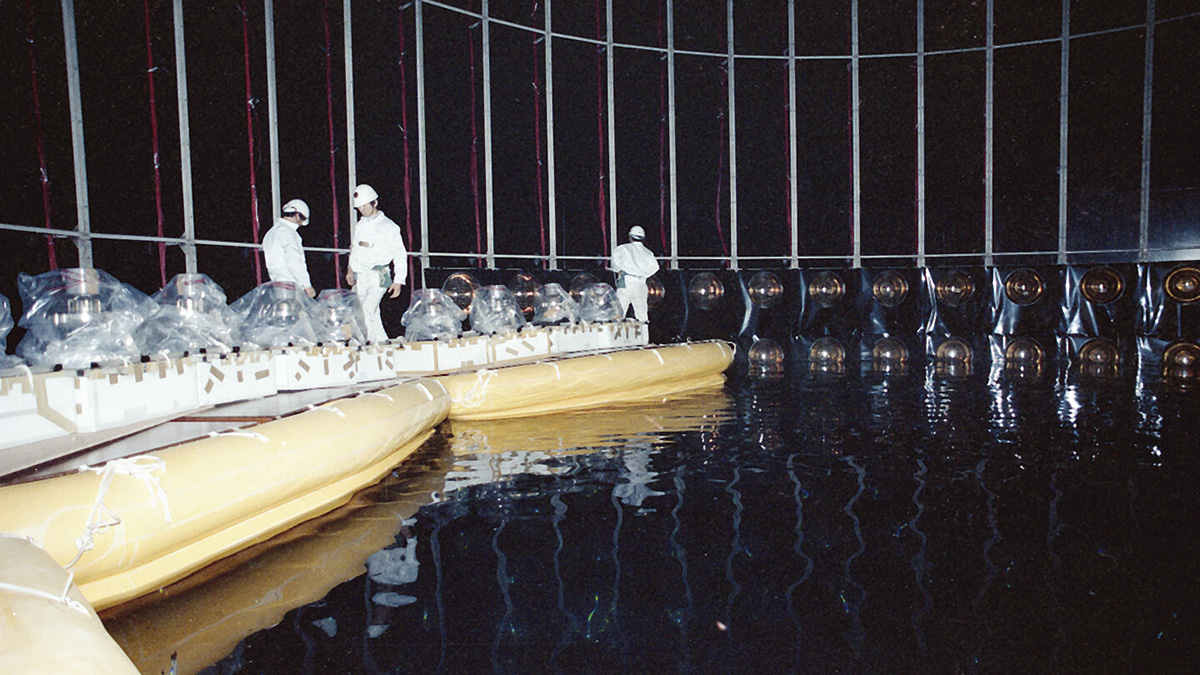
The Peccei–Quinn solution to the strong CP problem, proposed in 1977, was soon shown to imply a new pseudoscalar boson: the axion (CERN Courier January/February 2026 p21). By the 1980s, the idea was mature enough to start searching for it. Grand unified theories (GUTs) sought to merge the electroweak and strong forces at energies not far below the Planck scale, corresponding to the shortest distance our current physics allows us to contemplate, and at which quantum gravitational effects become unavoidable, but the early predictions for proton decay were soon contradicted at the Irvine–Michigan–Brookhaven (IMB) detector and Kamiokande (see “The proton stays” image). Supersymmetry offered a potential resolution of the naturalness problem, the puzzle of why the Higgs-boson mass is so much lighter than the Planck scale, and predicted a host of new particles. Its presence would soothe the nagging concern that a long energy desert might separate the electroweak scale from any new physics. Spoiler alert: at the time this article goes to press, no sign of supersymmetry has yet emerged.
The 1980s also witnessed the resuscitation of string theory, following a rather technical proof that specific string theories could be made free of quantum anomalies – a problem most theoretical physicists were unaware of anyway. The mid 1990s brought matrix models, the non-local objects called D-branes and the unifying vision of M-theory, drawing much of the theoretical community into the programme. Unexpected connections between gauge theory and gravitational physics followed, culminating in the AdS/CFT correspondence at the decade’s end. String theory, when combined with supersymmetry, provided a first candidate for a finite quantum theory of gravity, turning questions such as the number of flavour generations, their mass structure and even the number of spacetime dimensions from speculations suitable only for after-dinner talks into scientific ones. Finally, the period saw astrophysicists, cosmologists and particle physicists joining forces, giving rise to the new field of particle cosmology. The absence of the abundant monopoles predicted by GUTs was among the puzzles that led to inflation, the conjecture that the very early universe underwent a brief phase of exponential expansion.
Technology was celebrated in its own right. Talks traced the development of the superconducting magnets and cooling methods that made the great colliders possible. One could hear of the Rutherford cables wound into the superconducting coils of the Tevatron, HERA, RHIC and the LHC, with precision collars and yoke structures containing the enormous magnetic forces. Impressive advances in detector technology, data management, computing and analysis were also reviewed. It was made clear that without tight international collaboration and knowledge flow extending from KEK and Novosibirsk through Europe to the USA and down to Antarctica, among many competing groups, such progress would have been extremely unlikely. The lesson for those now planning future colliders like the FCC (Future Circular Collider) was explicit: even more than for the LHC, pull together the centres of excellence well in advance and concretely prepare what is needed for the construction of both the accelerators and the detectors.
Successes and setbacks
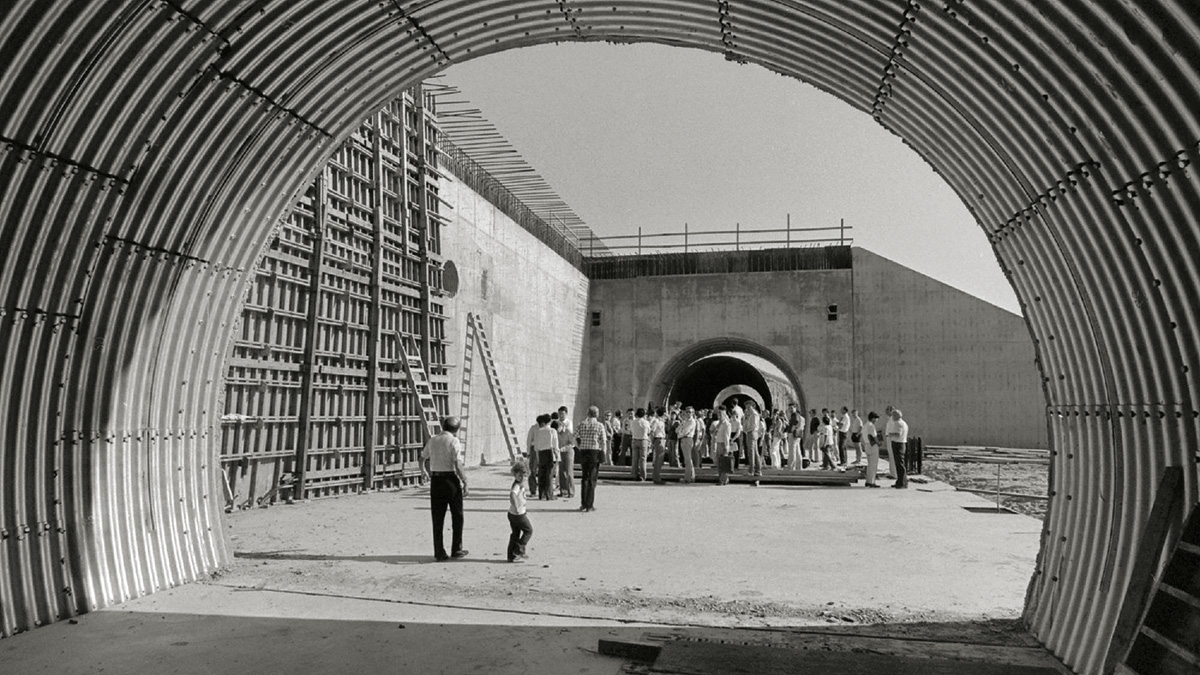
The 1980s and 1990s were good years for opening champagne bottles in accelerator labs. Insightful talks stressed the pioneering role of the ISR (Intersecting Storage Rings) and described how the SPS and the Tevatron were built. The challenges and successes of HERA, the first and only electron–proton collider so far, were described, as were the birth pains and rewarding growth of the SLC, which demonstrated that linear colliders could do precision physics. The triumphs all involved facing and overcoming substantial scientific, engineering and financial challenges. Side by side with the exhilarating successes were the setbacks. Perhaps it was less pleasant to dwell on failures, but studying them while planning future projects is as important as basking in the description of successes.
A very telling story was that of ISABELLE, a high-energy proton collider planned at Brookhaven National Laboratory that ran into magnet trouble in the early 1980s. A proposal to double the energy fared no better, especially after the discoveries of the W and Z at CERN made the original physics case less compelling. Yet its rebirth as RHIC, the Relativistic Heavy Ion Collider, opened a whole new field of research for the community (see “Second life” image), allowing physicists to recreate and study the quark–gluon plasma that filled the universe microseconds after the Big Bang. A case of snatching victory from the jaws of defeat, and an important trajectory to keep in mind for the future.
A different story was that of the Superconducting Super Collider (SSC), cancelled by the US Congress in 1993 after construction began in Texas. Understanding all the causes of this failure and appreciating its full impact on both the US and the CERN programmes is still fertile ground for historians, and should be required reading for those planning new frontier colliders.
The 1980s and 1990s were good years for opening champagne bottles in accelerator labs
The dissolution of the Soviet Union terminated the UNK programme, which envisaged a 3 + 3 TeV proton collider at IHEP Protvino. The impact on high-energy research in Russia was profound, yet the community showed remarkable resilience, sustaining the heavy-ion programme at JINR in Dubna and continuing neutrino experiments in politically challenging times. A silver lining was the international call for scientific solidarity that crossed geopolitical lines, helping keep Soviet colleagues part of the high-energy physics community.
The protagonists of the 1980s and 1990s fulfilled, with honour, their duty – passed down from generation to generation – to lay the groundwork for their successors. Many of them were in the room, recounting their own experience. All endeavours were extremely challenging. Some overcame the obstacles and reaped success, some had to reconcile themselves with descoping, and some failed. All left lessons for the future.
Free energy
As Winston Churchill himself put it in the House of Commons, it is “much better by all parties to leave the past to history, especially as I propose to write that history myself.” Inevitably, those who lived through the events are not always best placed to write the conclusive story. Future editions would benefit from a larger contribution by historians of science, offering independent analysis of the processes, credits and timelines to which the physicists themselves may be too close. Still, many words of wisdom emerged from the combined experience of the speakers. Among them, a remark redefined “free energy” as the small reserve of discretionary funds that a visionary director-general can deploy to test major breakthrough ideas, free from the scrutiny of funding agencies.
Various flavours of human behaviour in competition and in collaboration found expression throughout the talks: the intramural rivalry between UA1 and UA2 at CERN, the national competition between SLAC and Cornell, the international contests between LEP and the SLC, and between KEK and SLAC at the B-factories. All these stories contain lessons for the future. For me, none matters more than coopetition.
The symposium was dedicated to the memory of Herwig Schopper, who passed away in August 2025 at the age of 101 (CERN Courier November/December 2025 p32). He was CERN Director-General from 1981 to 1988, in the years of the SPS collider, of LEP’s approval and of the early conception of the LHC.
Interactive map A selection of discoveries, machines and ideas from 1980 to 2000, pinned to the places where they happened, with each pin opening a short account of its site. Progress relied on shared technologies, from the Rutherford cables wound into the superconducting coils of the Tevatron, HERA, RHIC and, later, the LHC, to the era’s advances in detectors and computing.
To provide the best experiences, we use technologies like cookies to store and/or access device information. Consenting to these technologies will allow us to process data such as browsing behavior or unique IDs on this site. Not consenting or withdrawing consent, may adversely affect certain features and functions.
Functional
Always active
The technical storage or access is strictly necessary for the legitimate purpose of enabling the use of a specific service explicitly requested by the subscriber or user, or for the sole purpose of carrying out the transmission of a communication over an electronic communications network.
Preferences
The technical storage or access is necessary for the legitimate purpose of storing preferences that are not requested by the subscriber or user.
Statistics
The technical storage or access that is used exclusively for statistical purposes.The technical storage or access that is used exclusively for anonymous statistical purposes. Without a subpoena, voluntary compliance on the part of your Internet Service Provider, or additional records from a third party, information stored or retrieved for this purpose alone cannot usually be used to identify you.
Marketing
The technical storage or access is required to create user profiles to send advertising, or to track the user on a website or across several websites for similar marketing purposes.