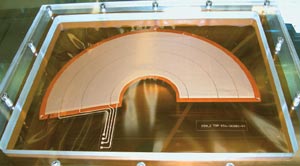
On 20 June, the SPring-8 Compact SASE Source (SCSS) prototype accelerator generated its first pulses at a wavelength of 49 nm in the vacuum ultraviolet (VUV) region. This was achieved using an ultra-low emittance beam provided by an electron gun with a newly developed single-crystal CeB6 thermionic cathode.
The SCSS prototype accelerator is a self-amplified spontaneous emission (SASE) free-electron laser (FEL), similar to the FLASH laser at the TESLA Test Facility. Built during 2004–2005 at the SPring-8 synchrotron radiation facility in Japan, the SCSS has recently been commissioned. Its main purpose is to test components developed at the RIKEN/SPring-8 centre in R&D for an X-ray FEL to generate wavelengths of 0.1 nm (1 ångstrom) using an 8 GeV electron beam. Funded by the Japanese Ministry of Education, Culture, Sports, Science and Technology, construction of this X-ray FEL is scheduled for 2006–2010.
One of the most challenging features of the SCSS is the use of the CeB6 single-crystal cathode to generate an ultra-low emittance beam. The 500 kV electron gun produces a beam current of 1 A, which feeds an injector system of RF cavities and magnetic lenses that have been carefully designed to perform velocity bunching without allowing the emittance to deteriorate. Here the bunch length is compressed several hundred times to produce a beam of a few hundred amps. Then after four C-band accelerating stages, the beam energy reaches 250 MeV.
During beam commissioning, an emittance of 2.9 π mm mrad normalized was measured in the injector, for a bunch charge of 0.25 nC and a bunch length of 1 ps at 50 MeV. Then the SCSS team closed the upstream undulator, and after an hour of tuning observed a narrow spectrum peaked at 49 nm in the VUV. This was totally different to the natural undulator radiation (spontaneous mode). After further careful measurements, first lasing was announced on 20 June.
First collisions in the Large Hadron Collider (LHC) will occur in November 2007, LHC project leader Lyn Evans told the 137th meeting of the CERN Council on 23 June. A two month run in 2007, with beams colliding at an energy of 0.9 TeV, will give the accelerator and detector teams the opportunity to run-in their equipment, ready for a run at the full collision energy of 14 TeV to start in Spring 2008.
The schedule announced to the Council ensures the fastest route to a high-energy physics run with substantial quantities of data in 2008, while optimizing the commissioning schedules for the accelerator and the detectors that will study the particle collisions. It foresees closing the 7 km ring of the LHC in August 2007 for equipment commissioning. Two months of running will start the following November, allowing the accelerator and detector teams to test their equipment with low-energy beams. After a winter shutdown, during which commissioning will continue without beam, the full-energy run will begin. Data collection will then continue until a predetermined amount of data has been accumulated, allowing the experimental collaborations to announce their first results.
Progress with the LHC project is being closely followed by a machine advisory committee composed of experts from around the world. This committee believes that “experience indicates that [the proposed schedule] is the most efficient way to get to high-energy, high-luminosity operation at the earliest date”.
Meanwhile, installation of the LHC accelerator has reached full speed, and all of the industrial procurement projects are coming to a conclusion. The last magnet for the LHC will be delivered to CERN in October 2006 and magnet testing will conclude by December. The last magnet will be installed in the LHC ring in March 2007, after which the machine will be closed ready for commissioning in August, with first collisions scheduled for November.
At the meeting the Council also unanimously approved a preliminary draft budget for 2007 and took note of projections for 2008-2012, with no new initiatives in the scientific programme. However, this exercise is continuing in parallel with the definition of a European strategy for particle physics. If approved by the Council at its meeting in Lisbon on 14 July, this strategy will have financial implications and will require new resources, which will have to be taken into account when the medium-term plan for CERN is discussed later this year.
Researchers at the Nuclotron at the Laboratory for High Energies at the Joint Institute for Nuclear Research (JINR), Dubna, have observed parametric X-ray radiation (PXR) from moderately relativistic nuclei interacting with crystals. Predicted theoretically in 1971, PXR has already been detected and investigated in electron beams at various energies, but this is the first time that it has been observed for heavy charged particles. It could lead to a new diagnostic method for use in nuclear beams at high-energy accelerators.
PXR emission by fast charged particles in crystals occurs when the virtual-photon field of the particles is diffracted by the crystallographic planes. The radiation arises from the uniform straight-line motion of the charged particle in the crystal and the yield depends only weakly on the value of the particle’s relativistic factor γ. It was natural to assume that the observation of PXR from heavy charged particles – relativistic nuclei – was a real possibility. Moreover, PXR from nuclei with a charge Z > 1 should be more intense than PXR from electrons, because the parametric-radiation yield is proportional to the square of Z.
The variation of the yield with γ contrasts with the case for radiation produced by the change of a particle’s velocity, such as bremsstrahlung and synchrotron radiation, where there is a strong dependence on γ. Both bremsstrahlung and synchrotron radiation are practically absent for protons and nuclei with the energies typical of the Nuclotron in contrast with electrons with the same energies.
The measurements at the Nuclotron were performed by a collaboration from JINR, the Institute of Physical-Technical Problems in Dubna, the Nuclear Physics Institute in Tomsk Polytechnical University and the Moscow State Institute of Electronic Technology. The team used silicon and graphite crystals in extracted beams of 5 GeV protons and 2.2 GeV/u carbon nuclei. The beam fell onto a thin (001) silicon-crystal target, inclined to the beam axis at an angle, θB, near 20°. The detector was placed close to an angle 2θB, which is the diffraction angle of virtual photons in a particle field from the (001) planes.
The figures show the X-ray spectra measured for a 5 GeV proton beam and a 2.2 GeV/u carbon-nuclei beam incident on the silicon crystal. The peaks α and β correspond to the characteristic radiation of nickel atoms that were excited in the detector casing by secondary particles. The peaks Eγ are due to parametric radiation.
The angular density of the parametric radiation was found to be 2.25 × 10⁻⁶ and 9.76 × 10⁻⁵ photon/(particle·sr) from protons and carbon nuclei, respectively, for a crystal inclination angle θB = 22.5°. The considerably higher radiation density from carbon nuclei confirms qualitatively the dependence of the parametric-radiation yield on particle charge Z.
This observation of parametric X-ray radiation from relativistic nuclei in the experiments at the Nuclotron opens possibilities for applications of the effect as a nuclear-beam diagnostic at other high-energy accelerators. The significant advantage is the large angle of PXR photons to the beam direction. The crystal target for the diagnostics can be made very thin – less than 100 μm – to decrease its influence on the beam. The application of bent crystals for collimation of the LHC beams is also under investigation. Detection of PXR generated by the beam halo particles in the crystal collimator could provide information about the stability of its angular position and also, as a by-product, about the structure of the crystal.
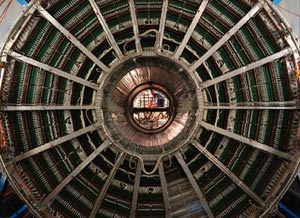
On 16 June the time projection chamber (TPC) for the ALICE experiment at the Large Hadron Collider (LHC) started to record its first real events, reconstructing the tracks of cosmic rays. ALICE will search for evidence for quark-gluon plasma in head-on collisions of lead ions at the LHC. This requires precise tracking to record the paths of thousands of particles produced in the collisions. ALICE is therefore built around the largest TPC in the world. Based on a cylindrical field cage 5 m long and 5 m in diameter, the TPC is now nearing completion, with all the read-out chambers installed and the custom electronics complete for the approximately 560,000 read-out channels.
The TPC consists of a field cage made of carbon-fibre composites, which contains the central high-voltage electrode and four potential-divider chains to create a uniform electric drift field in the active volume of 95 m3, filled with a mixture of Ne, CO2 and N2. The high-voltage electrode is run at 100 kV and shielded to the outside by containment vessels filled with CO2 gas. The detector is now running stably at 100 kV with the final gas mixture.
The TPC read-out system on the aluminium endplates is partitioned into 18 sectors on each side. Each sector comprises an inner (small) and outer (large) trapezoidal read-out chamber based on multiwire proportional chambers with pad read-out. The signals from the pads are passed via flexible Kapton cables to 4356 front-end cards located some 10 cm away from the pad plane. In the front-end cards, the signals are amplified, converted to digital format, and then pre-processed by a specially designed combination of read-out chips. With the ultra-low power consumption of its electronics (<45 mW/channel), the whole TPC requires about 25 kW of electrical power for full operation. However, only a fraction of the power and of the corresponding water-cooling plant is available in the clean room, so commissioning is proceeding with two sectors at a time.
The tests use the ALICE cosmic muon trigger detector ACORDE, as well as a specially designed UV laser system, to produce tracks in the detector. Preliminary analysis of the cosmic-ray events and the laser-induced tracks indicate that the drift velocity and diffusion of electrons liberated by traversing charged particles, as well as the spatial resolution, are very close to the design values. Commissioning, during which every one of the 36 sectors will be turned on and its performance studied, will last until October. The TPC will then be transferred into the ALICE underground area prior to installation and final connection of all services ready for first collisions in November 2007.
In 1938, Pierre Auger and colleagues in Paris discovered that showers of cosmic rays can extend over wide areas when they recorded simultaneous events in detectors placed about 30 m apart. Nearly 70 years later, on the pampas of western Argentina, a cosmic-ray observatory bearing Auger’s name is studying extensive air showers over a much wider area, many times the size of Paris itself. These showers are generated by particles with far higher energies than any man-made accelerator can reach, and they continue to challenge our understanding.
The nature and origin of the highest-energy cosmic rays remain obscure. Above 1019 eV (10 EeV) the rate of particles falling on the Earth’s atmosphere is about 1/km2 a year while at 100 EeV, where a small number of particles may have been identified, it falls to less than 1/km2 a century. Thus detectors must be deployed over vast areas to accumulate useful numbers of events. Remarkably, this approach is practical because the cosmic rays generate giant cascades, or air showers, with more than 1010 particles at shower maximum for a 10 EeV primary cosmic ray. Some of the shower particles reach ground-level where they are spread over about 20 km2. The particles also produce fluorescence light by the excitation of atmospheric nitrogen, which provides an alternative and powerful means of detecting the showers and useful complementary information.
The strategy behind the design of the Pierre Auger Observatory is to study showers through detecting not only the particles, with an array of 1600 water Cherenkov detectors, but also the fluorescence light, using four stations, each with six telescopes overlooking the particle detectors. The water tanks are used to measure the energy flow of electrons, photons and muons in the air showers, while the faint light emitted isotropically as the shower moves through the atmosphere can be detected with the fluorescence telescopes. The observatory is now around 70% complete and has been taking data for more than two years.
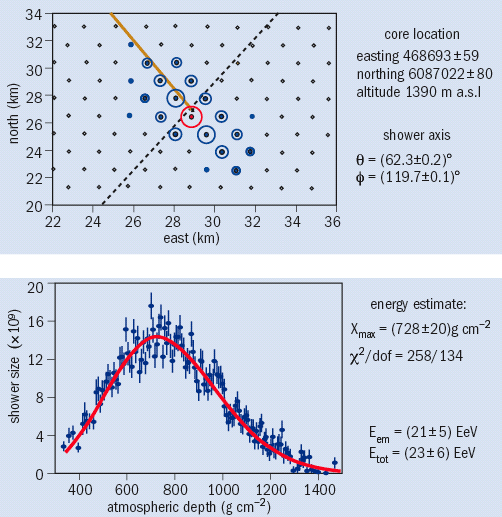
Unlike previous observatories for ultra-high-energy cosmic rays, the Pierre Auger Observatory combines the potential of high statistics from the water tanks, which are on nearly all of the time, with the power of a calorimetric energy determination from the fluorescence devices; it has become known as a hybrid detector. Figure 2. shows an event in which signals are seen in water tanks and in a fluorescence detector.
Alone, the signals from the tanks can be related to the energy of the primary cosmic ray by making assumptions about hadronic interactions. Our limited knowledge about such interactions at the relevant energies will be enhanced by the LHC at CERN, particularly from the forward-physics projects that are being prepared. For now, the energy transferred into the leading particle, the multiplicity and the cross-section for the interaction must all be estimated, while the sparse information on pion-nucleus collisions can be boosted by fixed-target experiments. Additionally, assumptions about the mass of the primary particle must be made, as an iron nucleus, for example, will yield a smaller number of particles at ground level than a proton. With the fluorescence technique, however, these problems can be finessed, and the primary energy can be deduced rather directly.
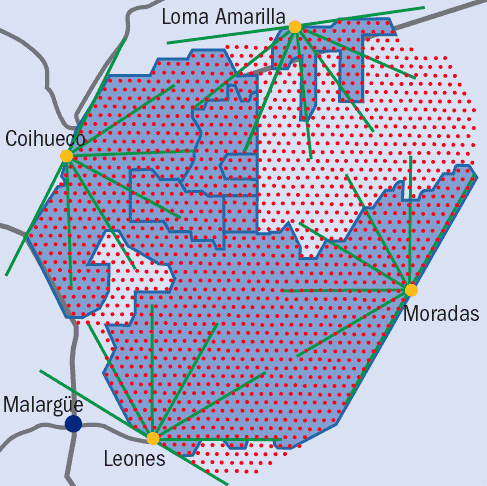
Figure 3 shows the layout of the Pierre Auger Observatory on 31 March, by which time 1113 tanks had been deployed with all but five of them filled with 12 tonnes of pure water; 953 are fitted with electronics and are fully operational. Three of the four fluorescence stations are taking data; the building for the fourth is under construction and telescopes will be installed there in late 2006. When completed, the area covered will be about 30 times bigger than Paris.
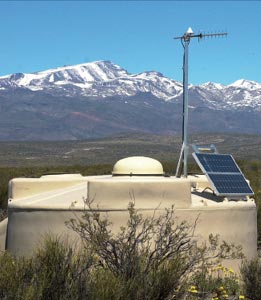
All the water tanks operate in an autonomous mode: three 9 inch photomultipliers view each volume of water (10 m2 × 1.2 m) with a trigger rate set at about 20 Hz. The tank signals are calibrated in units of vertical equivalent muons, each of which gives a summed signal of around 300 photoelectrons. The time of each trigger, determined using a GPS receiver, is sent to a central computer using a purpose-built radio system coupled to a microwave link. The computer is used to find detectors clustered in space and time in the manner expected for an air shower, and when a grouping is identified a signal is sent to each detector requesting that other data be transmitted. Currently about 50 events are recorded every hour above a threshold below 1 EeV, with about two events a day from primaries with energies above 10 EeV. Solar cells provide 10 W for the electronics of each tank. Once in position and operational, as in the example in figure 1, these detectors need little attention except replacing the batteries every four years.
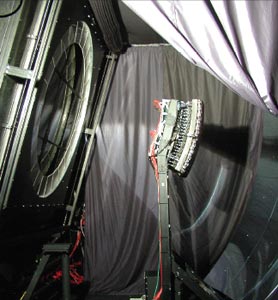
A single fluorescence station contains six telescopes, each fitted with a camera that collects light falling on an 11 m2 mirror (see figure 4). The camera has 440 hexagonal photomultipliers (40 mm across), each viewing a different part of the sky. Nitrogen fluorescence at wavelengths of 300-400 nm is observed through a filter, which also keeps out dust. Schmidt optics eliminate coma aberration, achieving a spot size of 0.5°. The trigger for these detectors requires that one of a pre-defined set of patterns is recognized within a group of five photomultiplier pixels. Trigger details are then transmitted to the computer that records the water-tank information. Data from the fluorescence signal about the plane in space that contains the shower direction are combined with the time at which water tanks are struck to define the core position and direction with high precision. The core can be located to about 60 m while the direction is obtained to within around 0.5°. This accuracy is much higher than is possible with either detector type alone. Large showers are sometimes seen in stereo by two fluorescence detectors and a few tri-ocular triggers have been obtained: such events allow the accuracy of event reconstruction to be cross-checked.
A major goal of the Pierre Auger Observatory is to make a reliable measurement of the cosmic-ray energy spectrum above 10 EeV. In particular, the researchers aim to answer the question as to whether or not the spectrum steepens above around 50 EeV, as predicted by Kenneth Greisen, Georgi Zatsepin and Vadim Kuzmin shortly after the discovery of the 2.7 K microwave background. The point is that for protons above this energy the microwave radiation is seen Doppler-shifted to the extent that the Δ+ resonance is excited. This reaction drains a proton of energy so rapidly that for a proton to be detected at 100 EeV, the cosmic-ray source is expected to lie within 50 Mpc. If there are heavy nuclei in the primary beam, they will be fragmented through photo-disintegration, with the diffuse infrared photon field as important as the 2.7 K radiation. The spectrum at the sources will also, of course, be reflected in the details of the spectrum shape.
A further key quantity at the highest energies is the mass of the primary cosmic-ray particles
To determine the spectrum, the Auger Collaboration aim to collect as many events as possible with the surface detectors and to measure the energy of a sub-sample using the fluorescence detectors. The hybrid event shown in figure 2 serves as an example, though in this case reconstruction of the fluorescence light curve, and hence the shape of the cascade, was somewhat simplified because the shower axis was nearly at right-angles to the direction of view. At other orientations the received light is a mixture of fluorescence and Cherenkov radiation arising from high-energy electrons traversing the air. The latter is a particularly serious problem when the trajectory of the shower is towards a telescope.
The data reported so far are from an exposure of 1750 km2 steradian years a year, slightly larger than that achieved by the Akeno Giant Air Shower Array (AGASA) group in Japan. The energy spectrum has been derived from around 3500 events above 3 EeV. Above this energy, the full geometrical area of the detector, defined by the layout of the water tanks, is sensitive so that determination of the flux of events is relatively straightforward. The calibration of the tank signals against the fluorescence detector currently contains relatively large systematic uncertainties (about 30% at 3 EeV and around 50% near 100 EeV), which arise from statistical limitations and uncertainties in the fluorescence yield. The former issue will improve as more data are analysed, while the absolute value of the fluorescence yield is being measured in accelerator laboratories by a small team from the collaboration. Just as with a calorimeter operating in a particle-physics detector, missing energy must be taken into account: although the estimate of this is model- and mass-dependent, the systematic uncertainty in the correction is understood at the 10% level.
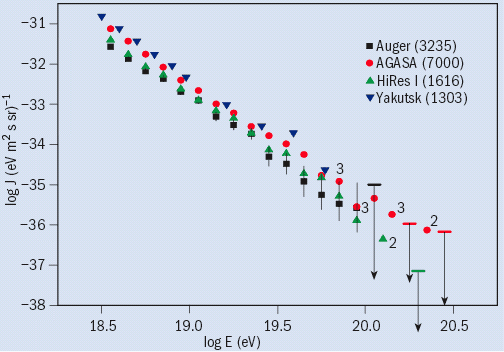
The spectrum from the Auger data is shown in figure 5, where it is compared with those from AGASA, HiRes in the US, and the Yakutsk Extensive Air Shower Array in Russia. The general form is similar but, even allowing for the systematic uncertainties still present, it appears that at the highest energies significantly fewer events are seen than expected from the AGASA analysis. The claim of the HiRes team that the spectrum steepens at the highest energies can neither be confirmed nor denied with the present exposure. One event was recorded in April 2004 for which the fluorescence reconstruction gives an energy greater than 140 EeV, but the particle array was small at that date and the shower core fell outside of the fiducial area. Details of the spectrum will be greatly clarified with the data that have been accumulated since June 2005.
A further key quantity at the highest energies is the mass of the primary cosmic-ray particles. This is a significant challenge because of the uncertainties in our understanding of hadronic interactions. Showers produced by iron nuclei will contain more muons than protons, but the magnitude of the difference is relatively small, muons are expensive to identify and model predictions are uncertain. A practical approach is to study the change of the depth of shower maximum as a function of energy. Again it is necessary to make comparisons with models, but here an additional variable – the magnitude of the fluctuation in the depth of shower maximum – is probably less sensitive to details of different models. The fluctuation in the position of shower maximum is smaller for iron nuclei than for protons. To increase statistics, it is desirable to find a parameter measurable with the surface detectors, so the researchers are exploiting both the fall-off of signal size with distance, and features of the time structure of the tank signals measured with 25 ns flash ADCs.
The collaboration has also developed techniques to search for the photon flux that is expected if the highest-energy cosmic rays arise from the decay of super-heavy relic particles, such as cryptons or wimpzillas, which some theorists speculate were produced in the early universe. On average, showers generated by photons are expected to have maxima deeper in the atmosphere by around 200 g/cm2. However, account has to be taken of the orientation of the photon with respect to the Earth’s magnetic field, as electron-pair production is possible and this elevates the depth of maximum. The Landau-Pomeranchuk-Migdal effect must also be accounted for as it leads to significant fluctuations in the shower maximum. A first study has established a limit of 16% above 10 EeV with only 29 events. This limit is not yet very discriminatory, but the technique has significant potential and the result has been submitted to Astroparticle Physics.
Another goal is to search for anisotropies in arrival directions with detection of point sources being the “Holy Grail”. Claims of significant effects at high energies have never been confirmed by independent work with higher statistics. So far, the analysis of data from the Pierre Auger Observatory repeats that story. A search for anisotropies associated with the galactic centre near 1 EeV claimed by the Adelaide group in a re-analysis of material from the Sydney array and by the AGASA group has failed to provide confirmation. Searches at the highest energies have so far been similarly unrewarding.
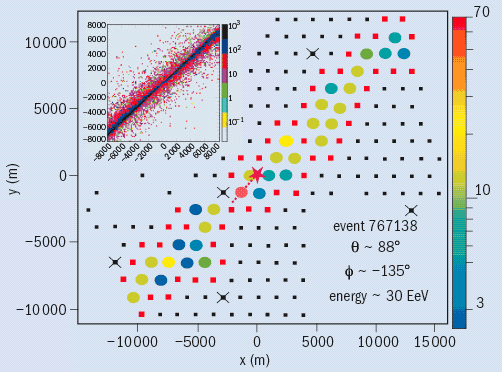
The Pierre Auger Collaboration is developing the study of inclined events, and showers with zenith angles above 85° have been seen. This was expected as they had been detected long ago with much smaller arrays, but the richness of the new data is impressive. Figure 6 shows an event at about 88° with 31 detectors, and even the present array is too small to contain it. A preliminary estimate of its energy is around 30 EeV. An understanding of these events will lead to additional aperture for collection of the highest-energy particles and also give additional routes to understanding the mass composition. Further, these events form the background against which a neutrino flux might be detectable. There is an exciting future ahead.
The concept for the COmmon Muon and Proton Apparatus for Structure and Spectroscopy (COMPASS) experiment first appeared on paper in a proposal submitted to CERN in 1996. A decade later, COMPASS has reached maturity, and is again taking data after the shut-down of most of the CERN accelerator complex during 2005. The year-long break provided the opportunity to carry out important upgrades to the experiment’s spectrometer, and the configuration is now very close to the one first envisaged 10 years ago. The first years of running have in the meantime already shed important light on our understanding of spin in the proton and neutron.
The goal of the COMPASS experiment is to investigate hadron structure and spectroscopy, both of which are manifestations of non-perturbative quantum chromodynamics (QCD). At large scales, QCD appears as a simple and elegant theory. However when it comes to hadrons, it is difficult to link some of their fundamental properties to quarks and gluons. Questions such as “How is the proton spin carried by its constituents?” and “Do exotics, non-qqbar mesons or non-qqq baryons exist?” still do not have clear answers. In this article we will focus on the contribution of COMPASS to the problem of nucleon spin, as it follows in the footsteps of earlier experiments at CERN.
Investigations of the spin structure of the nucleon are best performed by measuring double spin asymmetries in the deep inelastic scattering (DIS) of polarized leptons (electrons or muons) on polarized proton and neutron targets. These measurements allow the spin-dependent structure function g1(x) for the proton and for the neutron to be extracted.
The first measurements of polarized electron-proton scattering were performed at SLAC in the 1980s by the E80 and E130 Collaborations, and yielded results that were consistent with the Ellis-Jaffe sum rule. The comparison with the Bjorken sum rule is particularly important, but could not be performed at the time as the SLAC experiments did not measure the neutron. Derived as early as 1966 using current algebra tools, this sum rule relates the difference of the first moments of g1 for the proton and the neutron to GA/GV, that is, to fundamental constants of the weak interaction.
A breakthrough occurred when the European Muon Collaboration (EMC) at CERN extended these measurements to a much larger kinematic range. Using a polarized muon beam with an energy 10 times higher than at SLAC, and the largest solid polarized target ever built (about 2 l), in 1988 the collaboration reported a significant violation of the Ellis-Jaffe sum rule for the proton. In the context of the quark-parton model this implied that the total contribution of the quark spins to the proton spin is small – a major surprise that soon came to be known as the “spin crisis”. Soon after, the Spin Muon Collaboration (SMC) experiment was proposed to CERN, with the aim of improving the measurement of g1 for the proton and performing the same measurement with a polarized deuteron target.
Early results
SMC soon achieved a major accomplishment with the first measurement of g1 for the deuteron in 1992. The result, when combined with the EMC result, was in agreement with the Bjorken sum rule, and implied that the Ellis-Jaffe sum rule was also violated for the neutron. This result was particularly important because the first evidence from a competing experiment at SLAC (E142) was quite different, which suggested that either the EMC result or the Bjorken sum rule was wrong. Given the extremely sound theoretical foundations of the Bjorken sum rule, the obvious inference was that experimental finding at CERN was wrong.
However, this was not the case. Both the EMC and the SMC experiments were right, and the original discrepancy with E142 turned out to be mostly driven by higher-order QCD corrections. So it was already safe to conclude in 1993 that the spin crisis was a well-established phenomenon for both the proton and the neutron, and that it occurred within the boundaries given by the Bjorken sum rule.
The SMC experiment also provided another important result, determining for the first time the separate contributions of the valence and sea quarks to the nucleon spin via semi-inclusive DIS measurements. Given the large range in x covered by the measurement, the polarized quark distributions could be integrated to obtain the first moments, Δq = ∫10xΔ q(x)dx, with resulting values Δuv = 0.77±0.10±0.08, Δdv = -0.52±0.14±0.09 and Δqbar = 0.01±0.04±0.03 (Adeva 1998). The polarization of the strange sea could not be accessed as this requires full particle identification, which the SMC spectrometer could not provide.
Several experiments at SLAC (E143, E154, E155, E155x), and more recently HERMES at HERA, have confirmed the results from SMC on the structure functions g1. The HERMES Collaboration has also recently reported results on the strange sea polarization.
All these measurements accurately determine ΔΣ, the contribution of both valence and sea quark spins to the nucleon spin, to be only 20%. However it was already clear in the mid-1990s that a better understanding of nucleon spin structure demanded separate measurements of the missing contributions, i.e. the gluon polarization ΔG/G and the orbital angular momentum of both the quarks and the gluons. In particular, several theoretical analyses suggested a large contribution ΔG as a solution to the spin crisis.
Progress required a new experimental approach, namely semi-inclusive DIS with the identification of the hadrons in the current jet, because the determination both of Δq and Δqbar and of ΔG requires a flavour-tagging procedure to identify the struck parton. A suggestion to isolate the photon-gluon fusion (PGF) process and measure ΔG directly had been put forward several years previously, and implied measuring the cross-section asymmetry of open charm in DIS. A new experiment, with full hadron identification and calorimetry, therefore seemed to be necessary.
At the same time, transversity, an interesting new physics case for semi-inclusive DIS measurements, was also developing rapidly. To specify the quark state completely at the twist-two level, it was realized that the transverse spin distribution ΔTq(x) has to be added to the momentum distribution q(x) and to the helicity distribution Δq(x). The DTq(x) distribution is difficult to measure because, owing to its chiral-odd nature, it cannot be measured in inclusive DIS processes. A possible way to access DTq(x) is via the Collins asymmetry, that is, an azimuthal asymmetry of the final hadron with respect to the direction of the transversely polarized quark.
Today transversity is a big issue and is a major part of the programme of many experiments. Originally the idea was much debated in the US, where it was largely responsible for the Spin Project at the Relativistic Heavy Ion Collider (RHIC) at Brookhaven. In Europe, a few enthusiasts met at a workshop in March 1993, organized by the late Roger Hess of the University of Geneva, and set down the case for a proposal (called HELP). This was submitted to CERN in the autumn, but was not accepted. However, the physics case was not given up, and, together with the measurement of ΔG, it became one of the important goals laid down in the proposal for a new experiment, COMPASS.
The COMPASS two-stage spectrometer, with particle identification and calorimetry, and the capability to handle a muon beam rate of 108 s-1, was proposed for hall 888 at CERN, after completion of the SMC experiment. Submitted in March 1996, the proposal was fully approved in October 1998 with the first physics run in 2002.
The COMPASS spectrometer
The ambitious goals of the COMPASS experiment required an entirely new spectrometer, making use of state-of-the-art detector technology and data-acquisition systems. A huge step forward had to be made in statistical accuracy and particle identification. In comparison with the SMC experiment, the incident muon flux was increased by a factor of five and a deuteron target material (6LiD) with a dilution factor roughly two times better was chosen, together accounting for a 20 fold improvement with respect to SMC. The angular acceptance for particles produced at the primary vertex was increased from ±70 mrad to ±180 mrad by a new superconducting target magnet system. The 3 m long COMPASS solenoid, with a 60 cm diameter, provides a magnetic field with a homogeneity of ±3 × 10⁻⁵ over the 1.3 m long target volume; it is being used for the first time in the 2006 run. Oppositely polarized target sections permit a direct measurement of the cross-section asymmetry.
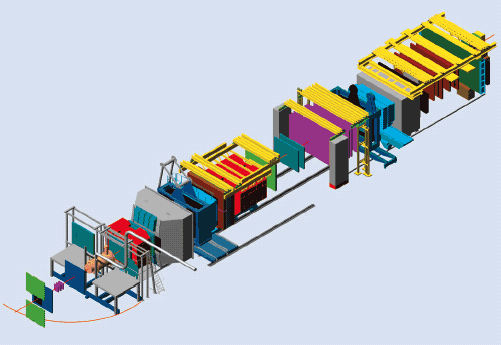
The large acceptance requires a two-stage spectrometer. Figure 1 shows an artistic view of the apparatus, which including the beam detection fills the 100 m long experimental hall. Particles with large angles and relatively low momentum are detected in the first stage, while the fast, more central particles are analysed in the second stage, which comprises a spectrometer magnet with a stronger field and a smaller gap.
A ring imaging Cherenkov (RICH) detector provides charged particle identification. This has 116 UV-reflective mirrors forming upper and lower spherical surfaces, which focus the photons onto the upper and lower photon detectors. These detectors are multiwire proportional chambers (MWPCs) with CsI photocathodes and 80,000 pixelized read-out channels. With an area of 5.3 m2, they represent the largest such system ever deployed. A new dead-time-less APV-based read-out system for the MWPCs will be in operation for the 2006 run, while the central quarter of the system has been replaced by multi-anode photomultipliers, each with an individual lens system. This technique, which has developed enormously since the RICH was originally designed, will considerably improve background rejection and rate capability.
Photons, and therefore also neutral pions, are analysed in two electromagnetic lead-glass calorimeters, one in each spectrometer stage. The larger one, ECAL1, is being used for the first time in the 2006 run. Two hadron calorimeters reinforce particle identification and support the formation of the trigger, which is based on an array of scintillator hodoscopes and is formed in the 500 ns following the interaction. For the detector control the supervisory control and data-acquisition system selected for the LHC was chosen. Here as in many other areas COMPASS has done pioneering work that will benefit the LHC.
The high particle rates in COMPASS present a real challenge for the central particle tracking, as conventional tracking detectors would suffer from big inefficiencies. COMPASS has therefore turned to novel technologies, using micromesh gaseous structure (Micromegas) and gaseous electron-multiplier (GEM) techniques in large sizes and in large quantities for the first time. Both techniques are based on the concept of minimizing the distance that positive ions can travel by confining the gas amplification region to 50-100 μm. The Micromegas technology is based on an idea by Nobel Prize winner Georges Charpak, while the GEM is a development by Fabio Sauli’s group at CERN. Both detector types have been operating for three years in the intense muon beam of COMPASS without any sign of deterioration. Another new concept, to be employed when COMPASS uses a hadron beam, concerns cold silicon-strip detectors, which reduce the aging effect to a large extent.
To complete the overall detector assembly, precise timing information is provided by scintillating fibre trackers placed throughout the spectrometer close to the beam region. In the more peripheral region multiwire proportional chambers, drift chambers, drift tubes and straw chambers perform the large-angle particle tracking.
To cope with the high data rate arising from 250,000 read-out channels at a trigger rate of up to 20 kHz, the data acquisition has also had to enter new territory. Once the trigger is formed, the data are taken from the memory of custom-made front-end electronics, transferred to the event-building computers and stored on tape, at a rate of about 5 TB/day. Data storing and handling represent a challenge in themselves. The offline system is dealing with a raw data size of 400 TB/year, and once again COMPASS has been the guinea pig for the future experiments at the LHC. In the first three years of operation 20 billion events have been put on tape and processed several times.
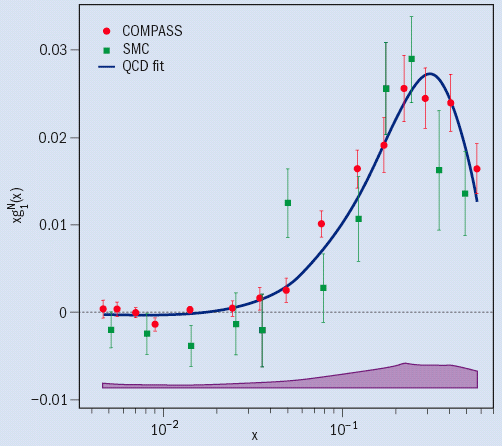
The first important results have already been obtained from the huge amount of data collected by COMPASS. The g1 structure function of the deuteron has been measured with unprecedented accuracy in the low-x region, improving by at least a factor of six the precision of the SMC measurement (Ageev et al. 2005). Essential data for g1 come from SLAC and HERA (and recently from Jefferson Lab), but the CERN experiments are unique at low x, giving an invaluable contribution to the evaluation of the first moment of g1 and thus ΔΣ, which requires the data to be extrapolated to x = 0. The Q2 evolution of g1 also contains important information on ΔG. Here the COMPASS data have a particular impact, since they lie at the high-Q2 end of the available experimental information. The new preliminary COMPASS data are shown in figure 2, together with the SMC data and the result of a recent QCD fit to the world data set comprising 230 data points. Recent fits now suggest rather small values for ΔG.
Competition breeds innovation
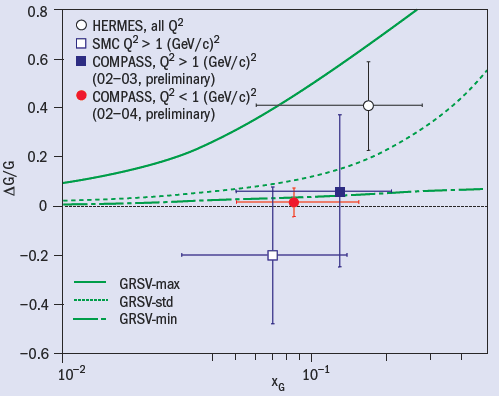
Direct measurements of ΔG are particularly important. In this field COMPASS is in competition with the experiments at RHIC, which look at the cross-section asymmetry of prompt photons or π0s produced in collisions between polarized protons to estimate ΔG. Three independent measurements have been performed by COMPASS using the cross-section asymmetry of (i) open-charm production (detecting either D or D* charmed mesons); (ii) high-pT hadron pairs in DIS events (Q2 > 1 GeV2); and (iii) high-pT hadron pairs in photoproduction (Q2 < 1 GeV2). In all these processes, the PGF contribution is important, but the background is different. COMPASS is unique in the open-charm measurement. The high-pT hadron-pairs method was invented within the COMPASS Collaboration while setting up the experiment, and has already been applied to estimate ΔG by HERMES (all Q2) and SMC (Q2 > 1 GeV2).
The COMPASS results (Ageev et al. 2006) are shown in figure 3 together with the results from the other collaborations and next-to-leading order QCD fits corresponding to a first moment of ΔG at Q2 = 3 GeV2 of 2.5, 0.6 and 0.2 for the maximum, standard and minimum scenarios, respectively. Small values for ΔG are favoured, and method (iii) from COMPASS now provides fairly precise information.
Another prime objective of COMPASS is the investigation of transverse spin effects
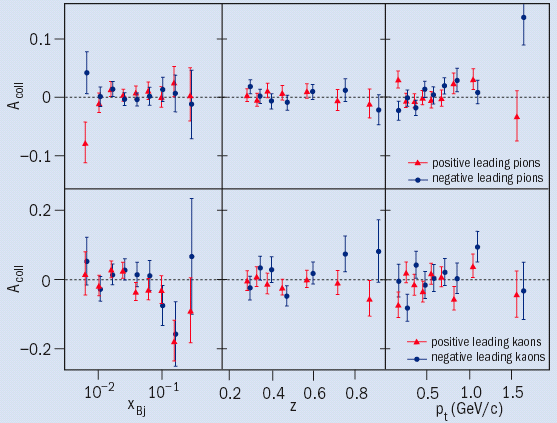
Another prime objective of COMPASS is the investigation of transverse spin effects. The transversity distributions are difficult to measure because they can be obtained from the transverse spin asymmetries only after unfolding the Collins effect. This requires a global analysis of transverse spin asymmetries of several identified hadrons produced in semi-inclusive DIS, as well as the analysis of spin asymmetries in e+e– → 2 hadrons, as currently measured by the BELLE Collaboration. In this worldwide effort, COMPASS has provided the first asymmetry data for the deuteron. The measured asymmetries are very small (Alexakhin et al. 2005) (figure 4). Taking into account the fact that the HERMES Collaboration has measured non-zero Collins asymmetries on a transversely polarized proton target, the COMPASS result very likely points to a cancellation between proton and neutron, much as for the longitudinal case where g1 for the neutron has the opposite sign to g1 for the proton. Further investigations of transverse-spin effects are related to ongoing measurements of the Sivers asymmetry, the two-hadron interference function and the Λ polarization transfer.
The search continues
The COMPASS analysis group is currently investigating many more physics channels. The wealth of data allows for the search for new states in quasi-real photoproduction; the recently announced pentaquark states Θ+(1530) and the Ξ–(1860) have been looked for here, but so far with negative results. Very large samples of Λ hyperons allow the study of reaction mechanisms and polarization transfer. In a similar way, the measurement of the spin density matrix of vector mesons (ϕ, ρ, ρ’) provides stringent tests on reaction mechanisms, such as s-channel helicity conservation; a phase-shift analysis of the π+ π+ π– π– has recently begun.
Running-in the new spectrometer has taken some time. Owing to the non-availability of the COMPASS polarized-target magnet, the experiment has until now used the SMC target system, which has a much smaller acceptance. Physics data were collected in 2002, 2003 and 2004, doubling the amount of data each year, thanks to several improvements in the apparatus. This should again be the case for the 2006 run, when the new COMPASS polarized-target magnet is used for the first time.
COMPASS is scheduled to take data until the end of the decade both for its hadron programme and for its muon programme with a polarized proton target. An Expression of Interest has been put forward for a new experimental programme, based on an upgraded COMPASS spectrometer (COMPASS-II) and an even higher beam flux. The emphasis of the future programme will be on the still unknown orbital angular momentum of the partons inside the nucleon. This will be addressed in two different ways, first by the measurement of generalized parton distributions in deeply virtual Compton scattering and in hard exclusive meson production processes, and second by a precise determination of the first moments of the transversity distributions that are linked to the orbital angular momentum via the Bakker-Leader-Trueman sum rule. Of course, an important part of the COMPASS-II programme will still be spectroscopy, where many open questions remain.
After many years of hard work and long hours, the team building the CMS detector at CERN will get the chance to test the giant magnet in the final stage of commissioning, together with pieces of all the sub-detectors, in the magnet test and cosmic challenge (MTCC). Over the past year one set of end-cap disks has been completely equipped with its muon detection system, the end-cap hadron calorimeters have been put in place and most of the barrel muon detectors have been installed and commissioned. In mid-July the CMS superconducting coil, the barrel rings containing pieces of the inner detectors and the semi-equipped endcaps, were pushed together to be tested for the first time. CMS is unique among the experiments for the Large Hadron Collider (LHC) as it is being assembled on the surface at intersection point 5 in Cessy, France.
Meanwhile, a great opportunity exists for the collaboration to understand parts of the detector that have already been installed, including the hadronic calorimeter (HCAL – all of which is installed although only one section is being operated during the test), two supermodules of the electronic calorimeter (ECAL) and some pieces of the prototype tracker as well as the muon chambers. These sub-detectors will be read out using the real data-acquisition system when cosmic muons are detected during the cosmic challenge. This “slice testing” will continue for two months to ensure the correct alignment and synchronization of the detectors, as well as to confirm that the event builder works as expected and that the software is flexible enough to make any changes needed.
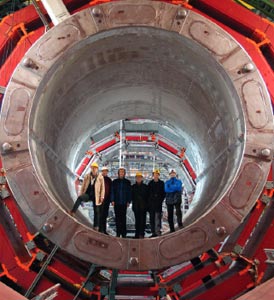
The gigantic CMS solenoid has already been cooled to 4.5 K, the operating temperature reached on 25 February after cooling began 23 days earlier. The magnet will be operated at this temperature throughout the summer, while the magnet team commission it and test all the systems. The huge coil consists of 14.5 tonnes of niobium-titanium superconducting cables embedded in 74 tonnes of aluminium, with 126 tonnes of high-mechanical-strength aluminum alloy and 9 tonnes of insulation. The temperature is extremely well contained inside the outer covering, enabling engineers to stand within the solenoid during cooldown (figure 1).
After cooling the magnet, the next step was to turn on the current. However, before that could happen, the yoke had to be closed to channel the return flux. The CMS Magnet and Infrastructure Group tested the first low currents to check the control and safety systems before the yoke was closed. Final tests were then made on all auxiliary systems, including cryogenics, electronics and fine-tuning the control system and the power supply. During commissioning the current will rise from 1 kA to 19.5 kA before reaching the nominal magnetic field.
At the beginning of March the first half of the barrel HCAL was tested using a radioactive source before insertion into the solenoid in early April (figure 2). The second HCAL half-barrel was inserted a month later. Both operations involved moving the HCAL pieces from their storage alcoves on an air-pad system and then sliding the halves onto rails welded to the inside of the solenoid. The HCAL comprises layers of brass interleaved with plastic scintillators embedded with wavelength-shifting optical fibres. The light is read out via hybrid photodiodes.
Step three: the ECAL supermodules
Two out of 36 supermodules that make up the barrel ECAL have been installed specifically for the MTCC using a rotatable insertion device known as the “squirrel cage”. This is no easy task, as each section weighs more than 3 tonnes and is very delicate (figure 3). Inside each of these boxes lie 1700 lead-tungstate crystals inserted into glass-fibre “alveolar” structures. Scintillation light produced in the crystals by incident electrons and photons is detected by avalanche photodiodes glued to the back of the crystals. The supermodules also contain the associated front-end electronics, laser monitoring and cooling systems.
Step four: the prototype tracker
During the early hours of 19 May, a special climate- and humidity-controlled truck transported a prototype particle tracker to the CMS site. To avoid shocks to the delicate parts, the truck travelled at a maximum speed of 10 km an hour. Once it arrived, crews hoisted the 2 tonne apparatus up 10 m to the opening of the solenoid (figure 4). Surveyors then aligned the pieces, using the two supermodules of the ECAL for reference. While the prototype tracker is equipped with 2 m2 of silicon sensors, the real tracker will comprise 16,000 strip sensors and about 900 pixel sensors – around 200 m2 of sensors.
Once the MTCC is complete, CMS will be pulled apart in preparation for lowering the sections into the cavern (due to start in October/November). However, before the tracker is removed, an important test will be made of procedures to remove and replace one of the supermodules while the tracker remains inside. CMS plans to install all 36 supermodules into the HCAL on the surface before the real tracker is inserted, but if the schedule slips some supermodules may need to be installed underground with the tracker in situ. This is a demanding task, as neither piece can touch each other and there is only about a centimetre of clearance between them.
After the MTCC is complete, the team will remove the tracker and the ECAL, close CMS and conduct a magnetic-field map test. This will show how uniform the field is and where there are discrepancies. With this information, the differences can be incorporated into the operating software of the experiment.
The MTCC provides a unique opportunity for the CMS collaboration to test installation procedures and to commission a large fraction of the detector, including the data-acquisition and online-monitoring system. The lessons learned will be invaluable for the final push – the full installation of all elements for start-up in late summer 2007.
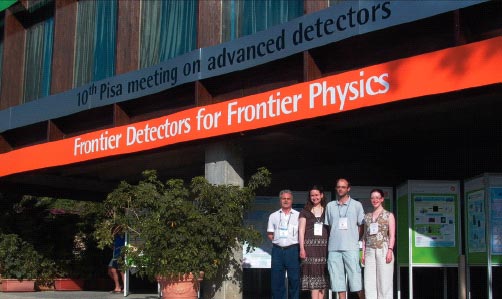
The Pisa meetings on Frontier Detectors for Frontier Physics (FD4FP) began 25 years ago as a small gathering in Tirrenia, near the INFN Pisa Laboratory. This year more than 300 participants from 21 countries attended the 10th in the series, held on Elba on 21-27 May. Lello Stefanini, chair of the FD4FP executive board, reminded the audience in his opening address that, after beginning in Pisa, the meeting moved to Castiglione della Pescaia in 1983 and 1986, and finally settled in La Biodola on Elba in 1989. This year it attracted about 200 selected contributions. As detector development and construction takes place in close collaboration with industries, hi-tech firms from all over the world displayed their products alongside presentations and direct interaction with researchers.
To mark the 10th meeting, there were two main modifications to the schedule. The first was a special session on experiments for the Large Hadron Collider (LHC) at CERN. Following an introduction by Michelangelo Mangano of CERN and John Carr of Centre de Physique des Particules de Marseille to the future of high-energy and astroparticle physics, a number of speakers described the main features and the status of the LHC detectors. After years of detector R&D and construction, four large devices are becoming reality and beginning to take data with cosmic rays in preparation for the real beams.
In a second innovation, day two of the meeting included a round table on strategies for future accelerators, chaired by Albrecht Wagner, chair of the International Committee for Future Accelerators and director of DESY. Fermilab’s Jim Strait showed how the laboratory is running the Tevatron while broadening both its neutrino programme (with the MINOS and NoVA experiments) and its effort on the R&D for a future International Linear Collider (ILC).
During the round table, Jos Engelen of CERN stressed the importance at CERN of R&D for the Compact Linear Collider (CLIC) and SuperLHC studies while keeping the main focus of the laboratory on the start-up and the exploitation of the physics capabilities of the long awaited proton-proton collider, the LHC. Barry Barish, director of the ILC Global Design Effort, outlined how a triadic approach – with facilities for neutrino physics, an exploratory high-energy frontier with proton-proton colliders and a precision high-energy frontier with e+e- colliders – would address most of the open problems in particle physics. He also showed how the efforts of a large community that is gathered to design a baseline ILC are making progress towards a Reference Design Report to be available by the end of 2006.
Atsuto Suzuki of KEK showed the impressive results from the KEK-B facility and progress with the Japan Proton Accelerator Research Complex. The multipurpose accelerator complex is on schedule to provide beams to the users by 2008. At the same time the Japanese community is fully involved in the R&D for the ILC to be ready either to participate in an early built ILC or to upgrade the KEK-B facility. Finally in the round table, Roberto Petrozio, INFN president and chair of the Funding Agencies for the Linear Collider (FALC) committee, presented the INFN’s strategies for future accelerators aimed mainly at e+e– (low and high energy) colliders, high-intensity radioactive beams for nuclear physics, and the exploitation of hadron beams for medical applications. He clearly indicated how the synergy among different projects is key to the approach. As chair of FALC, Petrozio later reported on recent discussions aimed at harmonizing and optimizing the human and financial resources in high-energy physics in the near future.
A discussion ended the round-table session, with several questions and comments raised from the floor, mainly aimed at understanding how the field will be able to widen the support for its projects and fulfil its promises with the resources available. There was a consensus that a successful start-up of the LHC will be a testbed for the capability of the particle-physics community and might boost it to become bolder and seek even more ambitious goals.
The remaining sessions followed the established tradition, covering all aspects of design, development and running of detectors for high-energy physics. Topics ranged from calorimetry to gas detectors, from solid-state devices to electronics, from particle identification to devices designed for astroparticle physics and cosmology, in so many presentations that only a few aspects can be highlighted here.
Silicon represented the lion’s share among the contributions. Over the years, the use of this material has extended from tracking detectors to calorimetry and particle identification, because the only limitation seems to be our own imagination. What was once used to miniaturize particle detectors and make them more compact is now the base for large-scale devices, for example for trackers for the LHC experiments and for the Gamma-ray Large Area Space Telescope. The need for a further reduction in the amount of material used and the requirements of the next generation of colliders demand an even closer integration of electronics and detectors, so more groups are now involved in developing and understanding monolithic devices.
Moving away from planar devices, 3D silicon detectors, presented at the ninth FD4FP meeting, are now better understood and seem able to provide detectors that are almost free from dead zones. At the ninth meeting, Valery Saveliev of Obninsk State University proposed silicon photomultipliers (SiPM). The past three years have seen a number of groups developing detectors based on this original R&D concept, so it is not surprising that several contributions presented results on SiPM or on devices based on similar concepts that are now being built by several firms around the world.
Several contributions focused on detectors based on gas, showing that they have a future besides the LHC, both on the ground and in space. Richard Wigmans of Texas Tech University presented the results of the dual read-out calorimeter project, DREAM. The separate measurement of the electromagnetic and hadronic component of a hadron shower seems the best way to a precise determination of its energy. It will be interesting to see whether in the near future an experiment will translate this R&D into a full-scale detector.
The growing application of high-energy physics techniques in other fields of research (mainly, but not exclusively, in medicine and biology) was well described in a dedicated session of posters and presentations. Reports on the results of two field studies in archaeological sites, at the Aquileia port near Udine and at the Traiano and Claudio port near Rome Airport, showed an intriguing use of muons, detected by scintillating fibres, for underground mapping.
Three young participants received the 2006 FD4FP Young Physicist Award for their work and presentations. Nicola Cesca, who has a fellowship at the University of Ferrara reported on the semiconductor small-animal scanner, SiliPET; Bilge Demirkoz, a graduate student at Oxford University, presented the ATLAS Semiconductor Tracker; and Judith McCarron, a graduate student at Edinburgh University, presented tests and results of the hybrid photon detector for the ring imaging Cherenkov detector of the LHCb experiment for the LHC.
On 26 April, the vacuum-ultraviolet and soft X-ray free-electron laser (FEL) facility at DESY generated pulses at the shortest wavelength yet, using electron bunches supplied by the TESLA Test Facility (TTF) linac. The laser facility already produced the shortest wavelengths achieved with a FEL, with pulses at 32 nm. Now it has reached a new record with a wavelength of only 13.1 nm.
Equipped with five superconducting accelerator modules, the TTF linac can accelerate electron bunches to an energy of 700 MeV. This is sufficient for the bunches to emit laser pulses at 13.1 nm as they subsequently traverse the undulator. A sixth module, to be installed in 2007, will allow a further increase in energy to 1 GeV, making it possible to generate wavelengths as low as 6 nm. The pulses produced are shorter than 50 fs, leading appropriately to the new name for the facility, FLASH, which was chosen to be simpler and more attractive than VUV-FEL.
After a successful first data-taking run that ended in February, on 8 May the newly named FLASH began once again to serve its users for a second measuring period.
Two hundred people gave a warm reception to Nobel laureate and detector pioneer Georges Charpak when he gave the opening talk at the Workshop on Micro-Pattern Gas Detectors at CERN on 20 January. The meeting began with a welcome from Jean-Jacques Blaising, head of CERN’s Physics Department, and continued with considerations of future challenges for particle detectors, overviews of the progress made on micro-pattern gas-detector technologies, and detailed presentations that emphasized production and running with these detectors. As the first in a series of workshops dedicated to reviewing the status of various particle-detector technologies, the formula adopted for this meeting was approved by the accumulated experts.
Aurore Savoy-Navarro of LPNHE-Université de Paris 6 addressed the basic questions surrounding the challenging future for particle detectors. With the Large Hadron Collider (LHC), particle physics will penetrate into the tera-electron-volt world, in explorations that will later be pursued together with another machine characterized by more stringent parameters. So what challenges do we expect? There will be increases in both the importance of the physics and the difficulty of the environment in the forward and very forward regions; increases in the number of jets and in the dynamic range required to observe them; an increase in the need for tagging particle flavours; increases in the flow of information, in the need for real-time decision-making, filtering and full processing of the data, together with an increasing demand for easy and worldwide access to the data; and there will, of course, be a need for increased robustness and reliability. So how do we cope with such a demanding future? Savoy-Navarro encouraged the exchange of information, Ramp;D and the pioneering of new technologies, also in collaboration with industry. However, the core question at the meeting was: “Can the micro-pattern gas detectors be an appropriate technology for future experiments?”
CERN’s Fabio Sauli described the recent developments and applications of the gas electron multiplier (GEM), a powerful detector concept that he introduced several years ago. In a GEM, a thin, metal-plated polymer foil is chemically pierced by a high density of microscopic holes. When a suitable voltage difference is applied between the two sides of the foil, each hole acts as an individual proportional counter, amplifying the ionization charge released in the gas. Several electrodes can be cascaded, leading to large gains and stable operating conditions in harsh radiation environments – a major point for the four speakers supporting GEM technology.
Sauli underlined two innovations in GEMs. With a caesium-iodide photosensitive layer deposited on the first electrode in a cascade, GEM devices provide efficient and fast detection of photoelectrons. With a resolution of a few nanoseconds and single-photon position accuracies better than a tenth of a millimetre, a GEM-based detector could form the basis of a new generation of ring-imaging Cherenkov particle identifiers. A large “hadron blind” detector exploiting these principles is being constructed for the upgrade of the PHENIX detector at the Brookhaven National Laboratory. Recent work at the Budker Institute for Nuclear Physics in Novosibirsk has demonstrated that GEM detectors can also work at cryogenic temperatures, which could lead to electronic bubble chambers.
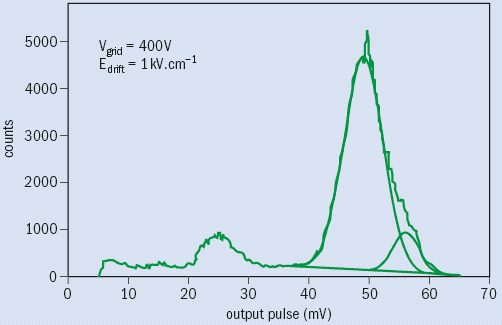
Ioannis Giomataris of the Commissariat à l’Energie Atomique (CEA), Saclay, reviewed the micromesh gaseous structure chamber (Micromegas) detector. He recalled that the amplification process in a small gap has a fundamental feature: the gain reaches its maximum value for gaps in the range 30-150 μm. This key point in the Micromegas operation leads to extraordinary performance in several areas: stability, relative immunity to defects in flatness, and excellent energy resolution. The small amplification gap produces a narrow ionized avalanche, giving rise to excellent spatial and time resolution – several experiments measure 12 μm accuracy and time resolutions in the sub-nanosecond range. Giomataris pointed out that thanks to the fast collection of ions, the Micromegas can safely sustain particle fluxes larger than 105 mm-2s-1. He also introduced the Micromegas bulk, a new technology that is easy to implement, which has recently been developed in collaboration with the printed circuit board workshop at CERN. The detector, built in a single process, is light, low cost and robust.
In addition, Giomataris also presented applications of Micromegas in areas other than high-energy physics. These included a high-resolution detector for thermal neutron tomography; a detector with high time resolution for fast neutron detection in inertial confinement fusion experiments; and the novel compact, sealed Piccolo Micromegas detector, designed to provide in-core measurements of the neutron flux at a nuclear reactor and to give an estimation of the neutron energy.
The COMPASS fixed-target experiment at CERN has pioneered the use of multi-GEM and Micromegas detectors for tracking close to the beam line with particle rates of 25 kHz/mm2. Both technologies have shown excellent performance. Bernhard Ketzer of the Technischen Universität München and CERN gave a detailed description of the production and running experience accumulated with 22 large (31 cm2) GEM detectors with a triple amplification stage. All detectors operate with single-plane efficiencies greater than 97%, with a spatial resolution of 70 µm at a rate of 4 × 10⁷/s. In addition, Fabienne Kunne of CEA-Saclay emphasized the excellent tracking capabilities of the largest Micromegas built to date, with an area of 40 cm2: they achieve a spatial resolution of 90 µm with full efficiency at a moderate gain.
Both speakers pointed out that no degradation of performance was observed in the COMPASS detectors after several years of operation with an accumulated charge of a few millicoulombs/cm2. With these results COMPASS has demonstrated the large-scale feasibility and reliability of the micro-pattern detector concept, and several years of flawless running have demonstrated its robustness and resistance to high radiation levels.
A Micromegas detector has also been developed for the CERN Axion Solar Telescope (CAST) experiment, which is searching for axions produced in the Sun’s core. George Fanourakis of the National Centre for Scientific Research “Demokritos”, Athens, explained that to find these rare events, the CAST Micromegas required demanding features – efficient detection of photons of 1-10 keV, stability, linearity and very good spatial and energy resolution with low background – all of which have been achieved. The detector has an X-Y strip structure on the same plane and reaches, after software filtering, an average background event rate of 5 × 10⁻⁵ keV-1 cm-2 s-1. In this way, the Micromegas detector at CAST has established the enormous potential of the technique in experiments to study rare events.
The NA48 experiment at CERN is using Micromegas detectors, and Kunne presented the spectrometer comprising three Micromegas stations coupled to a time projection chamber (TPC). Tracking of kaons, at rates exceeding several 107/s, is performed with a time resolution of 0.6 ns and a spatial resolution better than 100 μm. Kaons are tagged with a momentum resolution of 0.6%, which improves the resolution on missing masses significantly. A thin-gap (25 µm) Micromegas was also developed for the new proposal, P326, where the study of the rare decay K+ → pi;+νν requires tracking a flux of around 1.5 × 10⁸/cm2/s.
Exploiting the technology
For the new LHC programme, two experiments, TOTEM and LHCb, have adopted GEM technology. Leszek Ropelewski of CERN described the TOTEM telescopes, made of triple-GEM detectors, which will be placed in the forward region of the CMS detector, where the charged-particle densities are estimated to be in the region of 106 cm-2s-1. Each of the telescopes will contain 20 half-moon detectors arranged in 10 planes, with an inner radius matching the beam pipe. TOTEM will exploit the full decoupling of the charge-amplification and charge-collection regions, which allows freedom in the optimization of the readout structure, a unique property of GEM detectors.
LHCb will use triple-GEM detectors with digital-pad readout to generate a fast and selective level-0 muon trigger in a small region close to the beam pipe. To trigger at 40 MHz a very fast gas mixture is needed. Alessandro Cardini from INFN Cagliari presented a detailed study performed on fast gas mixtures and showed that a triple-GEM detector fulfils the LHCb requirements in terms of efficiency in a 25 ns window, pad multiplicity, cross-talk and radiation hardness.
A key point that must be solved to promote micro-pattern detectors: industrialization of the production and manufacture of larger-size detectors.
Many groups worldwide develop the GEM and Micromegas technologies for future experiments at accelerators. An interesting use is in end-cap detectors for the TPCs of detectors for the International Linear Collider (ILC). The physics goals at the ILC require a detector with unprecedented tracking capabilities to be developed. Two major questions on the feasibility of a TPC based on a gas micro-pattern detector were addressed at the meeting, namely the problem of ion feedback and the two-track separation ultimately reachable. Stefan Roth of RWTH (Rheinisch-Westfälische Technische Hochschule) Aachen and Vincent Lepeltier of the Laboratoire de l’accelérateur linéaire, Orsay, responded by showing the excellent results obtained in a 4 T magnetic field with TPCs based on GEM and Micromegas detectors, namely a relative ion feedback of a few per-mille and position resolutions of less than 100 µm.
Harry Van der Graaf of NIKHEF presented two new detector concepts suitable for coupling to a TPC. The GridPix detector (95% efficient for single primary electrons) consists of a grid placed directly on top of the MediPix2 chip. A modification of MediPix2 is foreseen so as to record the arrival time of the drifted charges, allowing full 3D track reconstruction. With the InGrid technique, the grid is produced in wafer post-processing technology and integrated with a complementary-metal-oxide semiconductor pixel chip. This detector has shown an unprecedented energy resolution.
In the concluding discussion session, chaired by CERN’s Lucie Linssen, the community underlined a key point that must be solved to promote micro-pattern detectors: industrialization of the production and manufacture of larger-size detectors. There was applause for the team at CERN that optimized the production technique and that still devotes a great deal of effort to fulfilling the increasing demands for micro-pattern detectors.
The meeting unanimously agreed a concluding statement: the high radiation resistance and excellent time and spatial resolution, combined with a light structure, make these detectors attractive for high-precision tracking in future high-rate projects. It also became evident that pioneering and Ramp;D in detector technology are fundamental for cultivating synergy between the LHC and the ILC communities. There are many common issues to resolve and a mixture of the two cultures of e+e– and pp colliders, along with an adventurous mind, is what we need to confront future detector challenges successfully.
To provide the best experiences, we use technologies like cookies to store and/or access device information. Consenting to these technologies will allow us to process data such as browsing behavior or unique IDs on this site. Not consenting or withdrawing consent, may adversely affect certain features and functions.
Functional
Always active
The technical storage or access is strictly necessary for the legitimate purpose of enabling the use of a specific service explicitly requested by the subscriber or user, or for the sole purpose of carrying out the transmission of a communication over an electronic communications network.
Preferences
The technical storage or access is necessary for the legitimate purpose of storing preferences that are not requested by the subscriber or user.
Statistics
The technical storage or access that is used exclusively for statistical purposes.The technical storage or access that is used exclusively for anonymous statistical purposes. Without a subpoena, voluntary compliance on the part of your Internet Service Provider, or additional records from a third party, information stored or retrieved for this purpose alone cannot usually be used to identify you.
Marketing
The technical storage or access is required to create user profiles to send advertising, or to track the user on a website or across several websites for similar marketing purposes.