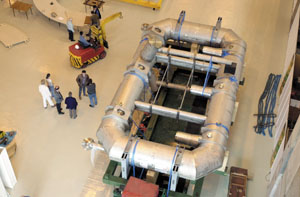
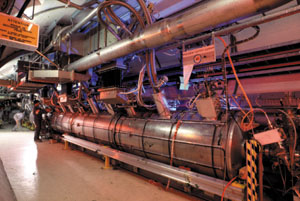
The title of “largest superconducting toroid magnet in the world” has traditionally been bestowed on the magnets of nuclear fusion reactors. However, that all changed in September when engineers from France’s CEA-Saclay and Italy’s INFN-LASA put the finishing touches to the ATLAS experiment’s barrel module zero (B-0) toroid coil at CEA laboratories near Paris.
The ATLAS collaboration, which is preparing to do physics at CERN’s Large Hadron Collider, is building a particle detector like none before. Instead of constructing a compact detector based around a solenoid magnet, ATLAS has opted to use a large air-cored toroidal system enclosing a small central solenoid. Not surprisingly, the collaboration’s B-0 toroid coil is a prototype like no other. At 9 m in length it is already by far the largest toroid coil ever built, but it will be dwarfed by the eight 25 m coils forming the toroid of the final magnet system. Its purpose has been to test each stage of the manufacturing process, with the results from each step being fed directly into the manufacture of the larger modules – already well under way. The rationale is that to go from the 5 m dimensions of existing toroids to 25 m in a single step would be too much of a leap into the unknown. CERN therefore entered into partnership with CEA-Saclay and INFN-LASA to produce a coil of intermediate size. Supported by the ATLAS collaboration, CEA and INFN have worked together to finance and build the device, which was delivered to CERN in October for testing to begin early next year.
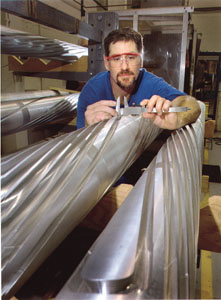
Although an important milestone for ATLAS in their own right, the tests represent just a small part of the B-0 coil’s importance to the ATLAS magnet project. Fabrication of its superconductor was complete by 1998, and with lessons learned from that, production of the superconductor for the full-scale toroids began the same year. Similarly, coil winding for the B-0 coil immediately fed into the winding of the full-scale coils, B-0 cryostat manufacture fed into the full-scale cryostats, and the recently learned lessons of integrating the 9 m coils into their cryostat will soon be helping the companies making the full-scale toroid coils with their integration.
All along, progress on the full-scale coils has proceeded in lock-step with that of their smaller relative, to the extent that when CEA and INFN were preparing to integrate their coil and cryostat in July, the Italian firm Ansaldo was putting the finishing touches to the first of its full-scale coil windings. ATLAS’s first 25 m toroid coil is due to arrive at CERN by the end of 2001 for testing at a recently-completed test facility. By that time the B-0 will have fulfilled its final role as commissioning coil of the new test set-up.
On 20 October, CERN director-general Luciano Maiani bravely took over the controls of an excavator for the groundbreaking of the CERN Neutrinos to Gran Sasso project. In this scheme, approved by the CERN Council in December 1999, a beam of high-energy neutrinos will be sent from CERN to detectors at the Italian Gran Sasso laboratory 730 km away.
To provide the neutrinos, high-energy protons will be tapped from the SPS synchrotron via a new extraction line. Mesons produced when these protons strike a target will be focused by a magnetic horn and reflector system into a well-defined beam pointing towards Gran Sasso.
The focused mesons will decay in an underground tunnel over a flight path of about 1 km, producing a neutrino beam. A beam stop will remove most of the residual particles. As highly penetrating particles, neutrinos need no tunnel, and will coast at the speed of light under Geneva Airport, the bedrock of the Alps and the spine of Italy. Arriving at their destination, even then most of them will pass through the waiting detectors and continue on their way – 1 tonne of dense matter can stop only a few in every billion billion neutrinos.
The aim of the project is to study the behaviour of high-energy neutrinos over a long distance. Most of the neutrinos created at CERN are of the muon variety, releasing muons if they interact with matter. In order to explain the behaviour of neutrinos arriving from the Sun and from cosmic-ray interactions in the upper atmosphere, physicists suspect that muon-type neutrinos tend to change their ticket during a long haul flight, sometimes instead producing tau particles.
The plan is that the OPERA detector, to be built at Gran Sasso, will look for these transformed neutrinos as soon as the first neutrinos are delivered, with the ICARUS detector subsequently providing additional capabilities.
The PEP-II B-factory at the Stanford Linear Accelerator Center (SLAC) completed its first experimental run at the end of October after achieving record collision rates and producing more than 23 million pairs of B mesons. Funded by $177 million from the US Department of Energy, this innovative electron-positron collider has exceeded most of its challenging design goals.
PEP-II was originally designed to attain a peak luminosity of 3.0 x 1033/cm2/s. Its designers expected the collider to take about two years to reach such a high luminosity, well beyond that of any other machine before, especially given the added complexity of its unequal beam energies. However, the team of physicists commissioning the machine, led by John Seeman of SLAC, passed this mark on Sunday 29 October – hardly 17 months after the first collisions had been recorded in May 1999. PEP-II now holds the world’s record for peak luminosity, at 3.1 x 1033/cm2/s.
In machine physics runs during the last three days of October, PEP-II also hit a new record for positron current, reaching the design value of 2.14 A in 1660 circulating bunches. Things look good for the upcoming 2001 run, which will begin in February and have a luminosity goal of 5 x 1033/cm2/s.
Soon after commissioning with high-energy beams of heavy nuclei, Brookhaven’s Relativistic Heavy Ion Collider (RHIC) tested the second string to its bow when it underwent its first two-week test of transferring, storing, measuring and accelerating polarized (spin-oriented) protons. The run culminated in the acceleration of polarized protons to 32 GeV.
Spin is an intrinsic angular momentum of elementary particles and nuclei. To collect and then accelerate protons where most of the spins are in the same direction requires a special source. Special equipment is also required to keep the protons spinning in the same direction as they are accelerated.
A new polarized proton source was installed for the RHIC experiments, a new device was installed to measure the proton degree of polarization, and a special string of magnets was installed to maintain the polarization through acceleration.
The type of magnet string to control polarization was invented at Novosibirsk, Russia, and therefore dubbed a “Siberian Snake” in the trade. In the Brookhaven test, polarized protons from the new source were accelerated in the Alternating Gradient Synchrotron before being transferred to RHIC.
The new polarimeter measured stable polarization in RHIC at injection and after acceleration. When the Siberian Snake was turned off, no polarization was seen after acceleration.
The ultimate goal is to collide spin-polarized proton beams together next year to yield insight into the spin structure inside the proton. RHIC is the first machine in the world capable of colliding such beams.
In 1995, the Japanese Institute of Physical and Chemical Research, RIKEN, first agreed to provide funding to equip RHIC for work with high-energy spin-polarized protons. This led to the establishment of the RIKEN Research Centre at Brookhaven, a major partner in this work, along with groups from Brookhaven and across the world, including RIKEN and KEK in Japan, ITEP Moscow, Argonne, the Universities of New Mexico and Indiana, and members of the STAR and PHENIX experimental collaborations at RHIC. RIKEN also provided funds for the Siberian Snake and polarimeter.
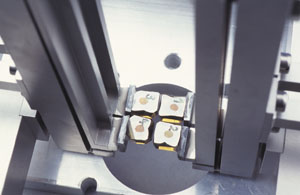
At a graduation ceremony at Witwatersrand University, Johannesburg, South Africa, technician Mik Rebak was awarded an honorary MSc for his ingenious work in engineering diamond targets in nuclear and atomic physics. These targets have been used in research at (among others) Witwatersrand, CERN, the Paul Scherrer Institute (Switzerland), the European Synchrotron Radiation Facility (Grenoble), the Rutherford Appleton Laboratory (UK), TRIUMF (Canada), Darmstadt Technical University, the Max Planck Institutes of Nuclear Physics at Heidelberg and Solid State Physics at Stuttgart, Aarhus (Denmark), the US Naval Laboratory in Washington, and Vanderbilt University, Tennessee.
The diamonds are both natural and synthetic, supplied by De Beers Industrial Diamonds. At CERN, the diamond targets were used in experiments using electron beams with energies of up to 250 GeV to investigate strong field and coherent effects in quantum electrodynamics, and are being used as a quarter-wave plate to produce high energy circularly polarized photons.
At the same ceremony, Achim Richter of Darmstadt Technical University and former chairman of CERN’s ISOLDE Experiments Committee was awarded an honorary doctorate.
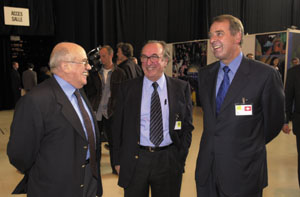
On 9 October, CERN revelled in the kind of festival of pomp and protocol that only large international organizations can enjoy. In a proud display on a scale not seen at the laboratory since the official inauguration of the LEP electron-positron collider in November 1989, VIP representatives, including Swiss President Adolf Ogi, came from all 20 CERN Member States, and from countries further afield participating in CERN’s research programme, together with local dignitaries. They converged on a soccer-pitch sized experimental hall specially converted into an indoor amphitheatre and exhibition area.
The occasion – the LEP celebration – marked the end of the era of CERN’s LEP electron-positron collider – more than 20 years of detailed preparation, planning and construction, including 11 years of operation which changed the face of physics. LEP is scheduled to be dismantled soon so that its 27 km tunnel can become the home for the ambitious LHC proton collider, which is due to come into operation in 2005.
LEP was supposed to be switched off in September to allow LHC construction proper to get underway, but tentative glimpses of new physics results motivated additional LEP running. The carefully collected new data have yet to reveal all their secrets.
The possibility is that the LEP experiments might have caught a glimpse of the long-awaited Higgs particle, which breaks electroweak symmetry and pervades the whole of space to endow particles with mass.
After the proceedings were opened by CERN director-general Luciano Maiani, 1999 Nobel laureate Martin Veltman summarized the state of our knowledge of the world of elementary particles.
“It happens that the theory and the data found by LEP allow us to guess properties of the Higgs particle. On the basis of that, we have a reasonable hope that it may be seen with the LHC, the machine that will take the place of LEP,” maintained Veltman.
“This is by no means sure, but there is reasonable hope. It may in fact just be within reach of LEP, that by means of an unbelievable tour de force of the CERN engineering staff has been upgraded substantially. However, seeing it is one thing, studying it is another matter.
“Thus, to us, this extremely strange Higgs force may be the door to understanding other mysteries of particle physics. No one can even guess what there is. It may be utterly strange. It may have enormous consequences for our understanding of this world, including the structure of the whole universe. We must know. The LHC may well be the key to this knowledge.”
Opening the galaxy of speeches from high-level government representatives was an ebullient Adolf Ogi, President of the Swiss Confederation. “CERN is shaping the scientific future of our continent,” he said.
Ministerial speeches came in turn from French Minister of Research Roger-Gérard Schwartzenberg, German Minister of Education and Research Edelgard Bulmahn, UK Science Minister Lord Sainsbury, Italian Minister for Universities, Science and Technology Ortensio Zecchino, Spanish Minister of Science and Technology Anna Birules, Polish Minister of Science Andrzej Wiszniewski, Slovak Deputy Prime Minister Lubomir Fogas, Bulgarian Minister of Education and Science Dimitar Dimitrov, Portuguese Minister of Science and Technology Mariano Gago, and European Commissioner for Research Philippe Busquin.
“CERN is a convincing demonstration of the level of excellence which Europeans can achieve when they combine their forces. Its example should encourage us to pursue these efforts as far and for as long as necessary,” said Commissioner Busquin.
CERN Member States Austria, Belgium, the Czech Republic, Denmark, Finland, Greece, Hungary, Norway, the Netherlands and Sweden were also represented.
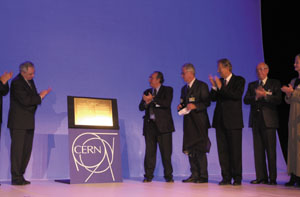
For CERN Observer States and other countries participating in the CERN research programme were Russian First Minister for Science Mikhail Kirpichnikov, Turkish State Minister Edip Safter Gaydali, John O’Fallon of the US Department of Energy, Director of Monbusho (Japan) International Scientific Affairs Keisuke Yoshio, and Indian Ambassador Savitri Kunadi. Following the speeches, delegates formally unveiled a commemorative plaque (see “LEP commemorative plaque” below).
Especially memorable was a ballet performance by the Rudra-Béjart Ballet School, Lausanne, for which pupils from all over the world are selected by Maurice Béjart himself. The elements of the show were prepared by School Director Michel Gascard, while Béjart mounted the ballet and integrated its separate elements.
The area adjoining the indoor theatre/auditorium housed a specially-mounted exhibition of CERN’s proud achievements – the World Wide Web, LEP’s physics accomplishments, and some examples of the technology and construction for major experiments.
After the show, the amphitheatre was taken over for a two-day science symposium covering the inception and construction of LEP and its experiments, and the science and developments that have emerged.
“We, the Participating Countries, recognize the outstanding scientific achievements of LEP that have illuminated the family structure of fundamental particles and the texture of our universe.
“LEP has stimulated new ideas and technologies with applications reaching far beyond the realms of fundamental physics – best known in the World Wide Web.
“LEP has set new standards for international scientific collaboration, giving scientists from all over the world the opportunity to work together and push back the limits of the unknown. Worldwide contacts and relations have been established by using the new instruments and techniques developed at CERN and by the particle physics community.
“LEP achievements open the way for a new challenge, the Large Hadron Collider (LHC), which will allow us to go deeper in the exploration of the structure of matter, space and time.
“The LHC goes beyond international collaboration towards true global partnership in science. This partnership is enhanced by technical excellence and improved communications networks.
“CERN shall remain at the forefront of science as a world-class laboratory to broaden our knowledge and train young generations of scientists. CERN shall continue its role as a vehicle for innovation to improve the quality of life and mutual understanding among people.
“We congratulate CERN and its partners on their exciting achievements with LEP. Now the baton is passed to the LHC. We look forward to launching soon the new scientific programme that will lead to more far-reaching discoveries.”
Increasingly in physics and astrophysics research the challenge lies in extracting very rare events from a tangle of unwanted but inescapable background processes.
In the Borexino experiment (currently under construction), one of the objectives is to measure the rate of neutrino events from the very low-energy beryllium-7 process, originating in the Sun. The energies of interest are lower than those of other neutrino experiments requiring a detection threshold of less than 1 MeV in a scintillator medium of some 300 t.
An important aspect of this experiment is the continuous purification of the scintillator, which involves the formidable industrial process of reverse osmosis on a grand scale. Needless to say, those parts of the experiment that cannot be continuously refined, such as the photomultiplier, need to be intrinsically pure.
In the dark-matter experiments of DAMA at Gran Sasso, Italy, and UKDMC at Boulby, UK, WIMP and other rare events from weakly interacting particles are being sought in scintillator-based detectors. Experiments using massive NaI(Tl) crystals, with elaborate anticoincidence, operating deep underground, use highly refined scintil lator material and demand special photomultipliers.
Low radioactivity
To match the advances achieved in reducing levels of radioactivity in the scintillators, manufacturers have had to scrutinize the materials used in the internal metal and ceramic parts of the photomultiplier, as well as in the glass envelope, where major sources of activity lie.
Fused silica (quartz) has very low radioactivity and is commercially available as an optional window material in photomultipliers. However, the highly desirable all-quartz photomultiplier is unattainable – essentially because of the mismatch in the expansion coefficients of quartz, and also the metal pins at the base of the photomultiplier making it impossible to manufacture.
Potassium is an important constituent of all commercial glass because its addition to the melt facilitates the working of the glass and ensures the optical quality. However, it contains a small proportion of the long-lived radioactive isotope potassium-40, making its presence in glass unacceptable from an experimental physics perspective.
The long-lived decay products of thorium and uranium are ubiquitous, particularly in sand, a major constituent of all glass. Radioactive decays from these sources produce a spectrum of gammas, ranging from 100 to 2700 keV, which encroach on the low-energy region of interest to low background experiments.
The practicalities of manufacturing low-background photomultipliers ultimately rely on the use of glass. Electron Tubes Ltd has located a source of low-activity sand and has worked with specialist glass companies to devise suitable manufacturing processes.
The glass mixture has to be maintained at extremely high temperatures, making it very corrosive. The design and material of the melting pot are critical to avoid contributing radioactive isotopes to the glass mixture or cracking within the first few days of operation. Glassblowing lasts only a few hours of each day. The pot is filled with material, and only when the melt is judged to be of acceptable quality and optimal working temperature does blowing begin.
Glassblowers work rapidly, producing a bulb every 1 or 2 min. When the level of the melt drops below some desirable level, or it ceases to work properly, the process is abandoned until the next day, when the cycle is repeated. A good day may produce 20 envelopes, a bad day nothing and the mechanical properties of the pot are continually degrading under continuous heat cycling. Replacing the pot and commissioning the furnace takes up to one month with a complete break in output.
The progress that has been made in the attainable radiopurity levels of low-background glass is shown below. Levels of potassium, thorium and uranium are measured in parts per million or billion.
Standard glass contains <60>Low background glass contains 300 ppm K, 250 ppb Th and 100 ppb U Ultra-low background glass contains 60 ppm K, 30 ppb Th and 30 ppb U Fused silica (quartz) contains <10>
In conclusion, current experiments at the forefront of science rely on a technology that has hardly changed over the centuries. Glassblowing demands the skills of a dwindling group of craftsmen, working by feel and by eye, unsung and largely unappreciated. How different the world of physics – or is it?
Photon detection for biomedical applications
Instrumentation for clinical analysis increasingly depends on bioluminescence, chemiluminescence and fluorescence. The amounts of light are small and often require photon counting, so highly sensitive, low-noise detectors are needed. The most flexible and cost-effective detector for this purpose is a photomultiplier tube (PMT), which in most cases is the only option.
Electron Tubes has developed a range of integrated light-detection assemblies specifically aimed at the needs of the biomedical instrument designer. These include a PMT and all associated electronics and signal processing, so the customer needs to provide only a low-voltage input and interface to a digital (normally TTL) or analogue current or voltage output.
Compact Peltier coolers are available that maintain the PMT at a constant temperature up to 40 °C below ambient.
The mechanical design can be customized to simplify final assembly of the instrument by the customer.
With possible signs of the elusive Higgs particle on the horizon, on 14 September CERN decided to
extend the life of its flagship LEP electron-positron collider until 2 November 2000.
LEP’s 11 year period of physics research was scheduled to finish at the end of September, to allow commencement of serious engineering for the installation of CERN’s new Large Hadron Collider (LHC). However, the new Higgs hints from the LEP experiments justify this change of plan. The construction schedule for LHC – expected to begin operations in 2005 – will not be affected by the prolonged LEP operation.
One of LEP’s main physics aims has always been to search for the missing link of the Standard Model of particle physics – the Higgs particle, which breaks electroweak symmetry. The Higgs field pervades the whole of space and endows particles with mass.
During LEP’s first phase of operations from 1989 until 1995, the collision energy was set at just over 91 GeV (the mass of the Z particle, the neutral carrier of the weak force), and searches showed that the Higgs must be heavier than 65 GeV. From 1996, Higgs searches at LEP continued as successive collision energy increases reached 202 GeV in 1999, showing that the Higgs must be heavier than 108 GeV.
In April the stage was set for a final push. Everything was done to boost the energy of LEP’s particle beams as high as possible. Excellent work by CERN teams has allowed LEP to achieve collision energies of up to 209 GeV, well beyond the original design energy.
As experimental data started to accumulate above 206 GeV, a number of events compatible with a Higgs production with mass around 114-115 GeV were reported in the combined results of the four LEP experiments, ALEPH, DELPHI, L3 and OPAL. In these events, a LEP electron-positron pair could produce a back-to-back Z and Higgs particle. However, these signals are difficult to disentangle from more common processes, notably the production of Z and W particle pairs.
The prolongation of the LEP running in October 2000 is the response to this intriguing situation. The extension, the maximum still compatible with the tight LHC construction schedule, should effectively double the experimental data at collision energies above 206 GeV, allowing the candidate Higgs signal at 114 GeV to be tested. Such light Higgs particles would be copiously produced at the LHC.
The decision to extend LEP’s experimental programme set the scene for a cliffhanger finish to its career. Many eyes are scrutinizing the latest data.
On 9-11 October, a series of major events at CERN marked the imminent end of the LEP era. Reports of these events will feature in the next issue.
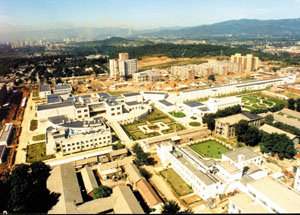
The lifetime of a modern electron-positron collider seems to span about a decade – witness LEP at CERN, commissioned in 1989 and now being decommissioned. At Beijing, the Beijing Electron Positron Collider (BEPC) was commissioned in 1988 and physicists are now considering the next step.
Beam energy at BEPC ranges from 1 to 2.8 GeV. The Beijing Spectrometer (BES) is the only detector with the major goal focused on tau-charm physics. Since data collection began in 1989, BES has collected large data samples of J/psi, psi´, Ds and tau particles.
Many important results have been obtained, including the precision measurement of the tau mass, decay properties of J/psi and psi´, and the observation of new decay channels of the x(2230). Recently, the cross-section scan between 2 and 5 GeV has provided key input to Standard Model consistency calculations, with significant impact on the prediction of the mass of Higgs.
During the 1999-2000 running period, more than 20 million J/psi hadronic events were collected in five months. Peak luminosity was 5 × 1030/cm2/s at a collision energy of 3.1 GeV. Many interesting new results will be published soon. As well as providing beams for particle physics, BEPC also provides synchrotron radiation light for many other research areas. Typically, the beam current is 130 mA at 2.2 GeV with a lifetime of 20-30 h.
There has been much discussion about the future of BEPC. There are two possibilities – construction of a new two-ring collider (tau-charm factory) with the luminosity increased by two orders of magnitude, or upgrade of BEPC (BEPC II) with the luminosity increased by one order of magnitude. The feasibility study on the tau-charm factory was carried out in 1995-1996.
Considering the latest developments of high-energy physics experiments and the successful running of B-factories, the best physics window for the future development of BEPC is foreseen as the charm sector, mainly in the J/psi and psi´ energy region, including searches for glueballs and quark-gluon hybrid particles, the study of light hadron spectroscopy, the J/psi family, and charmed and excited baryons. These studies are very important for the development of theoretical understanding.
BEPC has unique advantages for these physics topics, which cannot be covered by B-factories. Since the machine will run mainly on the J/psi and psi´ peaks, where the reaction rates are very high, BEPC II can provide enough statistics. BEPC II could be constructed at reasonable cost within a relatively short time.
Recently the Chinese Academy of Sciences chose the BEPC II option for the future development of BEPC, an upgrade of both the machine and the detector. The upgrade of the detector will improve its resolution to reduce systematic errors and to adapt to the higher event rate.
Achieving higher luminosity means squeezing the colliding beams more tightly together, reducing the bunch length and increasing the beam current. Some key technical modifications are under discussion, such as using a 500 MHz radiofrequency system and superconducting cavities, reducing the impedance of the vacuum chambers, installing a micro-beta quadrupole to further squeeze the beams, and using interlaced pretzel orbits for multiple bunches and bunch trains. The injection rate from the linac must also be increased by a factor of five with the full beam energy.
The upgrade of the BES detector currently foresees new barrel shower counters made of lead-scintillator fibres, new readout electronics, trigger and data acquisition system, new time-of-flight counters, new vertex chambers, etc.
The Chinese government supports the decision of the Chinese Academy of Sciences, and ratified the BEPC II project in principle in July. The Institute of High Energy Physics is working on the detailed BEPC II design, and will submit the proposal, including the budget and schedule, to the government soon.
BEPC was the outcome of close cooperation in the world high-energy physics community. BES is also an international collaboration, including many physicists from the US, the UK, Japan and Korea. Continuing international cooperation on the construction of both the machine and the detector of BEPC II is very important for its success, and Chinese physicists sincerely hope that the international community will continue its tradition.
The demands that CERN’s forthcoming Large Hadron Collider (LHC) place on detectors have led the LHCb collaboration to look to Latin flair for a solution. A group from the Laboratorio de Particulas Elementares (LAPE) at the Physics Institute of Brazil’s Federal University of Rio de Janeiro (UFRJ) has been working with the CERN microelectronics group to develop readout chips for the experiment’s muon detectors.
LHCb is a collaboration dedicated to the study of CP violation, the mechanism responsible for the matter antimatter imbalance in the universe. It will do so by observing the decays of B-mesons, particles containing b quarks, emerging from high-energy proton-proton collisions in the LHC.
Since such decays frequently involve muons, the collaboration’s muon system is a key element of the detector, both for triggering and measurement purposes. LHCb’s muon detector is a combination of resistive plate chamber (RPC) and multi-wire proportional chamber (MWPC) technologies. While RPCs cover the region with a modest particle flux, MWPCs are used in a higher radiation environment, placing stringent demands on the readout electronics.
Some 600 MWPCs with a total of around 125 000 readout channels will make up the LHCb muon system. Efficiency above 99% in a 20 ns time window with rates up to 800 kHz is required, and the readout electronics must also withstand an integrated radiation dose of one megarad over the experiment’s lifetime.
This has led to the choice of quarter-micron CMOS technology, which is known for its radiation hardness when designed according to a particular layout technique, and which has been adopted by all the LHC’s experiments. LHCb’s particular requirement derives from the fact that the muon system’s readout pads cover a large range of sizes, leading to capacitances varying from 10 to 200 pF.
A preliminary chip designed by the CERN-UFRJ group, CARIOCA (CERN And RIO Current Amplifier), was tested at CERN in September. Optimized for an input capacitance of 120 pF, the CARIOCA chip has so far performed well. The time for the signal to peak rises linearly with input capacitance from a pedestal value of 14 ns to 22 ns at 120 pF, while sensitivity remains constant across the full range at around 8 mV/fC. Low noise performance has also been achieved, with 2000 electrons for a detector capacitance of 50 pF. Radiation measurements have yet to be done, but so far the CARIOCA chip’s performance is living up to expectations. A second-generation prototype is expected soon, with the goal of optimizing for an input capacitance of 200 pF.
Elsewhere in LHCb, progress is equally positive. Following the collaboration’s first technical design report (TDR), which covered the magnet and was submitted in December 1999 and approved in March, two further TDRs were submitted to the LHC Committee in September. These cover the Ring-Imaging Cherenkov counter and calorimeters.
A tender has recently been issued for the magnet, which bucks the trend in particle physics in that it is not superconducting. For LHCb, the ability to switch polarity during a run is vital to reduce systematic errors on sensitive CP-violation measurements, and that is more easily achievable with a warm magnet.
A further seven TDRs are scheduled to be submitted up to mid-2002, covering all of the remaining LHCb sub detectors. That for the muon system is scheduled for May 2001, with the final TDR covering the experiment’s computing needs to take full advantage of Moore’s Law. Like all the LHC’s experiments, LHCb is relying on computing components whose development timetable matches that of the experiment itself.
To provide the best experiences, we use technologies like cookies to store and/or access device information. Consenting to these technologies will allow us to process data such as browsing behavior or unique IDs on this site. Not consenting or withdrawing consent, may adversely affect certain features and functions.
Functional
Always active
The technical storage or access is strictly necessary for the legitimate purpose of enabling the use of a specific service explicitly requested by the subscriber or user, or for the sole purpose of carrying out the transmission of a communication over an electronic communications network.
Preferences
The technical storage or access is necessary for the legitimate purpose of storing preferences that are not requested by the subscriber or user.
Statistics
The technical storage or access that is used exclusively for statistical purposes.The technical storage or access that is used exclusively for anonymous statistical purposes. Without a subpoena, voluntary compliance on the part of your Internet Service Provider, or additional records from a third party, information stored or retrieved for this purpose alone cannot usually be used to identify you.
Marketing
The technical storage or access is required to create user profiles to send advertising, or to track the user on a website or across several websites for similar marketing purposes.