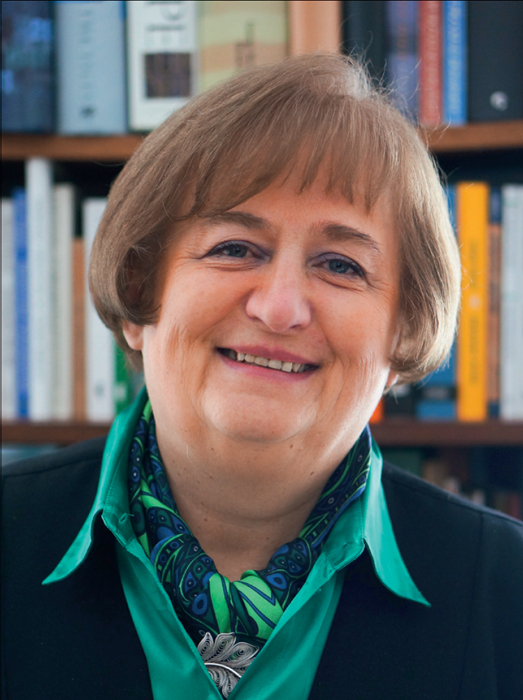
After intense preparations and consensus building, the SCOAP3 open-access publishing initiative started on 1 January. With the support of partners in 24 countries, a large proportion of scientific articles in the field of high-energy physics will become open access at no cost for any author: everyone will be able to read them; authors will retain copyright; and generous licences will enable wide re-use of this information. Convened at CERN, this is the largest-scale global open-access initiative ever built, involving an international collaboration of more than 1000 libraries, library consortia and research organizations. SCOAP3 enjoys the support of funding agencies and has been established in co-operation with leading publishers.
Eleven publishers of high-quality international journals are participating in SCOAP3. Elsevier, IOP Publishing and Springer, with their publishing partners, have been working with the network of SCOAP3 national contact points. Reductions in subscription fees for thousands of participating libraries worldwide have been arranged, making funds available for libraries to support SCOAP3.
The objective of SCOAP3 is to grant unrestricted access to articles appearing in scientific journals, which so far have been available to scientists only through certain university libraries, and generally unavailable to the wider public. Open dissemination of preliminary information, in the form of pre-peer-review articles known as preprints, has been the norm in high-energy physics and related disciplines for two decades. SCOAP3 sustainably extends this opportunity to high-quality peer-review service, making the final version of articles available within the open-access tenets of free and unrestricted dissemination of science with intellectual property rights vested in the authors and wide re-use opportunities. In the SCOAP3 model, libraries and funding agencies pool resources that are currently used to subscribe to journals, in co-operation with publishers, and use them to support the peer-review system directly instead.
• Partners in the following countries have formalized their participation in SCOAP3: Austria, Belgium, Canada, China, Denmark, France, Germany, Italy, Japan, Norway, Portugal, Sweden, Switzerland, United Kingdom and the United States of America. Partners in the following countries are completing the final steps to formally join SCOAP3: the Czech Republic, Finland, Greece, Hungary, Korea, the Netherlands, Spain, South Africa and Turkey.
The following publishers and scientific societies are participating in SCOAP3 with 10 high-quality peer-reviewed journals in the field of high-energy physics and related disciplines: the Chinese Academy of Sciences, Deutsche Physikalische Gesellschaft, Elsevier, Hindawi, Institute of Physics Publishing, Jagellonian University, Oxford University Press, Physical Society of Japan, SISSA Medialab, Springer, Società Italiana di Fisica.
When the CERN Council approved the updated European Strategy for Particle Physics at a special meeting in Brussels last May, it recognized the High Luminosity LHC (HL-LHC) project as the top priority for CERN and Europe. A month later, after Council had approved its integration into the CERN Medium Term Plan for 2014–2018, the HL-LHC entered a new phase, as it passed from design study to an approved project.
To mark this approval, the 3rd joint annual meeting of the HiLumi LHC Design Study and the US LHC Accelerator Research Program (LARP) took place in conjunction with the HL-LHC kick-off meeting. The event was held in November at Daresbury Laboratory in the UK, bringing together more than 160 scientists from countries around the world, including Japan, Russia and the US. Directors of major accelerator laboratories were present as invited speakers.
The kick-off meeting underlined the role of the HL-LHC as a necessary tool for extending physics beyond the LHC. The important roles of CERN and the high-energy physics community were also emphasized. Developing new technologies – for example, magnets with a field 50% above the present LHC technology – opens the way for a future higher-energy machine requiring even higher magnetic fields, such as the recently proposed Future Circular Collider.
Highlights reported by the design-study work-package leaders at the meeting included final parameters for the layout and finalized main layout for the machine; important developments in crab-cavity hardware; a detailed layout for improving collimation; and the assembly and characterization of two 10-m-long MgB2 cables that have been tested up to 5 kA and at 20 K in the superconducting-link configuration.
The HL-LHC project is currently in the design and prototyping phase and should release a Preliminary Design Report in the middle of 2014, with the Technical Design Report for construction at the end of 2015.
Given the broad international collaborations involved in major scientific user facilities, timely formal and informal discussions among leaders of physics societies worldwide contribute to fortifying the scientific case that is needed to justify large, new enterprises. The past year, 2013, proved to be one of focused introspection and planning for major research facilities, conducted by learned societies and by government agencies in Asia, Europe and the US. All three regions developed visions for particle physics and in the US the government developed priorities and plans for a broad spectrum of scientific user facilities.
The Asia-Europe Physics Summit
In July, in Makuhari, Chiba, Japan, the third Asia-Europe Physics Summit (ASEPS3) – a collaboration between the Association of Asia Pacific Physical Societies and the European Physical Society – provided a forum for leaders in the respective physics communities to discuss strengthening the collaboration between Europe and the Asia-Pacific region (Barletta and Cifarelli 2013). These summits have three main goals: to discuss the scientific priorities and the common infrastructure that could be shared between European and Asian countries in various fields of physics research; to establish a framework to increase the level of Euro-Asia collaborations during the next 20 years; and to engage developing countries in a range of physics research. This year’s summit centred on international strategic planning for large research facilities. It also included a significant US perspective in three of the four round-table discussions.
High-energy physics programmes received particular focus
Round Table 1 offered perspectives on the technologies that enable major research facilities, while Round Table 2 looked to the issues of policy and co-operation inherent in the next generation of large facilities. High-energy physics programmes received particular focus in the discussion, where the three regions of Asia, Europe and the US have their own road maps and strategies. This round table clearly provided a special opportunity for a number of leaders and stakeholders to exchange their views. Participants in Round Table 4 discussed training, education and public outreach – in particular the lessons learnt and challenges from large research laboratories. Although the science motivations for major user facilities differ widely, many of the underlying accelerator and detector technologies – as well as issues of policy, international co-operation and training the next generation of technical physicists and engineers – are nonetheless in common.
Because both the update to the European Strategy for Particle Physics and the Technical Design Report for the International Linear Collider (ILC) had been issued by the time of the summit, and because the Snowmass process in the US was well under way, major facilities for particle physics set a primary, although far from exclusive, context for the discussions.
The European Strategy for Particle Physics
In January, a working group of the CERN Council met in Erice to draft an updated strategy for medium and long-term particle physics. That document was remitted to the Council, which formally adopted the recommendations in a special meeting hosted by the European Commission in Brussels in May. As expected, the updated strategy emphasizes the exploitation of the LHC to its full potential across many years through a series of planned upgrades. It also explicitly supports long-term research to “continue to develop novel techniques leading to ambitious future accelerator projects on a global scale” and to “maintain a healthy base in fundamental physics research, in universities and national laboratories”. In a period in which research funding is highly constrained worldwide, these latter points are a strong cautionary note that maintaining “free energy” in national research budgets is essential for innovation.
Beyond the focus on the LHC, the strategy recommends being open to engaging in particle-physics projects outside of the European region. In particular, it welcomes the initiative from the Japanese high-energy-physics community to host the ILC in Japan and “looks forward to a proposal from Japan to discuss a possible participation”. That sentiment resonated strongly with many participants in the 2013 Community Summer Study in the US, especially in the study groups on the energy-frontier study and accelerator capabilities. In September, the Asia-Pacific High Energy Physics Panel and the Asian Committee for Future Accelerators issued a statement that “the International Linear Collider (ILC) is the most promising electron positron collider to achieve the objectives of next-generation physics.”
The 2013 US Community Summer Study
In the spring of 2012, the Division of Particles and Fields of the American Physical Society (APS) commissioned an independent, bottom-up study that would give voice to the aspirations of the US particle-physics community for the future of high-energy physics. The idea of such a non-governmental study was welcomed by the relevant offices of both the US Department of Energy (DOE) and the National Science Foundation (NSF). The APS study explicitly avoided prioritizing proposed projects and experiments in favour of providing a broad perspective of opportunities in particle physics that would serve as a major input to an official DOE/NSF Particle Physics Project Prioritization Panel (P5). The study was broadly structured into nine working groups along the lines of the “physics frontiers” – energy, intensity and cosmic – introduced in the 2008 P5 report and augmented with studies of particle theory, accelerator capabilities, underground laboratories, instrumentation, computing and outreach. In turn, the two conveners of each working group divided their respective studies into several sub-studies, each with three conveners, generally.
Beginning with a three-day organizational meeting in October 2012 and culminating in a nine-day session at the end of July/beginning of August 2013 – “Snowmass on the Mississippi” – the 2013 Community Summer Study involved nearly 1000 physicists from the US plus many participants from Europe and Asia. Roughly 30 small workshops were held in 2013 to prepare for the “Snowmass” session at the University of Minnesota, which was attended by several hundred physicists.
Snowmass activities connected with the energy frontier were strongly influenced by the discovery of a Higgs boson at the LHC. Not surprisingly, the scientific opportunities offered by the LHC and its series of planned upgrades received considerable attention. The study welcomed the initiative for the ILC in Japan, noting that the ILC is technically ready to proceed to construction. One idea that gained considerable momentum during the Snowmass process was the renewed interest in a very large hadron collider with an energy reach well beyond the LHC.
The conclusions of each of the nine working groups are presented in a summary report, which defines the most important questions for particle physics and identifies the most promising opportunities to address them in several strategic physics themes:
• Probe the highest possible energies and distance scales with the existing and upgraded LHC and reach for even higher precision with a lepton collider. Study the properties of the Higgs boson in full detail.
• Develop technologies for the long-term future to build multi-tera-electron-volt lepton colliders and 100 TeV hadron colliders.
• Execute a programme with the US as host that provides precision tests of the neutrino sector with an underground detector. Search for new physics in quark and lepton decays in conjunction with precision measurements of electric dipole and anomalous magnetic moments.
• Identify the particles that make up dark matter through complementary experiments deep underground, on the Earth’s surface and in space, and determine the properties of the dark sector.
• Map the evolution of the universe to reveal the origin of cosmic inflation, unravel the mystery of dark energy and determine the ultimate fate of the cosmos.
The study further identifies and recommends opportunities for investment in new enabling technologies of accelerators, instrumentation and computation. It recognizes the need for theoretical work, both in support of experimental projects and to explore unifying frameworks. It calls for new investments in physics education and identifies the need for an expanded, co-ordinated communication and outreach effort.
Summary
Although the activities of 2013 on possible perspectives and scenarios for major science facilities were neither a worldwide physics summit nor a worldwide physics study, they served to open the door for extensive engagement by physicists to build a compelling science case for major research facilities in Asia, Europe and the US. They identified ways to increase the scientific return on society’s investment and to spread the benefits of forefront physics research to developing countries.
During the meetings in 2013, it became clear that a possible future picture could be construction of the ILC in Japan and a long baseline neutrino programme in the US, while Europe exploits the LHC and prepares for the next machine at the energy frontier, which can be defined only after LHC data obtained at 14 TeV in the centre of mass have been analysed. Therefore, despite highly constrained research budgets worldwide, future prospects look bright and promising. They represent today’s challenge for the next generation(s) of scientists in a knowledge-based society.
Following the presentations at the Open Symposium in Cracow in September 2012 and a great deal of work by the European Strategy Group for Particle Physics, the update to the 2006 European Strategy for Particle Physics was published in 2013 and adopted at a special European Strategy Session of CERN Council in Brussels on 30 May (CERN Courier July/August 2013 p9). In developing its vision for the future, the updated strategy took full account of the massively important discovery of a Higgs boson at the LHC in 2012 and of the global research landscape. For the programme at CERN, it contains the clear message: “Europe’s top priority should be the exploitation of the full potential of the LHC, including the high-luminosity upgrade of the machine and detectors with a view to collecting ten times more data than in the initial design, by around 2030. This upgrade programme will also provide further exciting opportunities for the study of flavour physics and the quark–gluon plasma.”
The priority given to the high-luminosity upgrade, dubbed the High-Luminosity LHC (HL-LHC), underlines the importance of the ongoing machine and detector developments for this facility, including supporting studies on performance and physics reach. Indeed, there has been highly active R&D in the required accelerator and detector technologies, following the recommendations of the 2006 strategy document. Much of this work has been conducted within the four large LHC experimental collaborations or – for the accelerator complex – within the framework of the EU-funded HiLumi LHC Design Study (CERN Courier March 2012 p19).
A three-day forum
With the recent update of the European Strategy, the HL-LHC project is expanding rapidly and the idea of an HL-LHC Experiments Workshop sponsored by the European Committee for Future Accelerators (ECFA) was conceived to offer a forum for the experimental collaborations to share results, explore synergies and to strengthen links with the machine and theoretical communities. After a concerted effort, colleagues in theory, the four big LHC collaborations and the accelerator community – co-ordinated through eight preparatory groups – organized three intensive days of workshop at the Centre des Congrès, Aix-les-Bains, on 1–3 October.
After an opening on behalf of ECFA by its chair Manfred Krammer, CERN’s Frédérick Bordry presented the latest plans for the accelerator upgrade. The ALICE, ATLAS, CMS and LHCb collaborations then gave overviews of their strategy to follow the planned increase in machine luminosity. This will proceed with staged upgrades, installed across a decade during end-of-year technical stops and two long access periods (long shutdowns) required for the major modifications. Many of the detailed plans are already documented in reports to CERN’s LHC Committee (LHCC) and more are in advanced stages of preparation. To round off the first morning, CERN’s director-general, Rolf Heuer, gave the laboratory’s perspective on the HL-LHC programme, underlining planning for the next 20 years at the LHC and the thinking on future directions, taking CERN forward to its centenary celebrations in 2054.
The HL-LHC is designed to deliver in every year of operation 10 times the number of collisions collected at the LHC to date
The experimental collaborations presented many updates to the studies on physics’ prospects that were documented at the Cracow Open Symposium and at the “Snowmass” meeting in Minneapolis in summer 2013, based on a better understanding of the expected experimental performance. This was complemented with a broad theoretical survey of the rich physics programme at the energy frontier offered by the HL-LHC facility. The extremely high number of collisions to be recorded in a year at the HL-LHC provides the opportunity to look for rare processes, study systems with high mass and make high-precision measurements.
The HL-LHC is designed to deliver in every year of operation 10 times the number of collisions collected at the LHC to date, yielding 10 times more data by the end of HL-LHC operation than the LHC is expected to have delivered by around 2022. This gives unprecedented sensitivity in measurements of a range of properties of the newly found Higgs boson, as well as in searches for new high-mass particles, and allows precision studies of a variety of fundamental particles and processes. In addition, should the 13–14 TeV running this decade lead to further discoveries of new particles, the HL-LHC will be essential to measure their properties.
Discussion then focused on areas where the machine and experiment teams need to work most closely: beam parameters, instrumentation and interfaces, shutdown planning and radiation protection. There were presentations of exciting new ideas that might allow the inherent problem of high-luminosity operation – the huge number of interactions every bunch crossing – to be mitigated by extending the interaction region along the beam direction.
This “pile-up” of interactions, the high data rates and the level of integrated radiation doses, will be the major experimental challenges for operation in the HL-LHC’s beam conditions. For the workshop, the areas of detector-upgrade preparations were split into those relating to tracking, calorimetry, muon systems, read-out electronics and triggering, data acquisition, offline software and computing. Each topic was covered in a dedicated session, where joint presentations across the four big experiments addressed the motivation, requirements and conceptual designs for upgrades, as well as the ongoing R&D programmes to provide efficient and cost-effective technical solutions.
For HL-LHC operation, major activities in ATLAS and CMS are related to the replacement of the tracker, owing to the high number of tracks per bunch crossing, the read-out bandwidth limitations and the integrated radiation levels that go far beyond the capabilities of available technologies at the time of their original construction. The much higher data rates also motivate a number of upgrades to other parts of the experiments, especially to their read-out electronics. In particular, the complexity of the collision events will complicate greatly the ability of the vital on-detector data-reduction (triggering) to retain only those events that are interesting to physics. Many improvements are aimed at refining this online selection. The detector, electronics, trigger and data-acquisition upgrades in ATLAS and CMS have been designed to optimize the physics acceptance, especially for the key decay channels of the Higgs boson, including those rare decays that can be reached only at the HL-LHC.
The rich programmes in flavour and heavy-ion physics were discussed from the perspective of all four experiments, but the focus for upgrades was on the dedicated experiments, LHCb and ALICE, which are designed to optimize their sensitivity to these areas of physics. Detector upgrades will extend that sensitivity and allow a greatly increased number of collisions to be recorded, improving the statistical precision for measurements and studies of rare processes significantly. These upgrades do not rely on implementing the HL-LHC machine upgrades and so can be undertaken earlier to bring these improvements sooner.
There were a number of closing presentations emphasizing the key themes from the workshop, which were formulated in a short report to ECFA at its meeting on 21–22 November. This report reflects the interest of those organizing the sessions in seeing more specialist follow-up meetings and a similar plenary meeting, possibly in autumn 2014.
The organizers would like to thank all those who contributed to the work of the preparatory groups, the speakers and chairs, the conference support from CERN and particularly the ATLAS and CMS secretariats. The success of the event was a great testament to the enthusiasm of the 326 registered participants and the many more researchers worldwide working on R&D towards this major further step in the LHC’s unique adventure at the high-energy frontier.
The EuCARD project for accelerator R&D came to an end on 31 July 2013, more than four years after starting on 1 April 2009. The project’s focus has been generic and targeted R&D for frontier accelerators in the fields of particle physics, nuclear physics and synchrotron radiation applications. Many accelerator infrastructures or projects were involved, including the upgrades for the LHC at CERN; the Facility for Antiproton and Ion Research (FAIR); the European free-electron laser project, XFEL, and FLASH at DESY; and the studies for the Compact Linear Collider (CLIC) and International Linear Collider (ILC).
A framework for collaborative R&D finds its justifications in the extreme technological challenges, the synergies between projects or studies and the complementary competences of laboratories, universities and institutes. R&D naturally precedes the design stage but is not confined to it. It continues during the lifetime of the accelerator to allow the large infrastructures to remain at the forefront of research and make the best use of society’s significant investments.
The EuCARD project was initiated by the European Steering Group on Accelerator R&D (ESGARD) as successor to the Coordinated Accelerator Research in Europe (CARE) project, which ran under FP6 from 2004 to 2008. Its total cost was €36 million, with €10 million covered by a European Union Seventh Framework Programme (FP7) grant. The remaining €26 million came through matching funds from the 38 EuCARD partners, who represent most of the European accelerator laboratories, as well as a large number of universities and specialized institutes. CERN provided co-ordination and project management. The project’s work was organized around three poles: scientific networks, open access to facilities and collaborative research activities.
Following CARE, the EuCARD networks have consolidated their positions as recognized platforms for the international exchange of ideas and experts – from Europe, Japan, the US, and beyond. Providing support for accelerator centres, they organized more than 50 topical workshops on diverse themes, from electron-cloud mitigation, through RF test stations, crab cavities and so on, to long-term visions of future developments.
The networks originally included neutrino facilities, accelerators and colliders (performance and RF technologies). Later, another network was launched on laser-plasma acceleration, with the primary goal of federating the many European research teams around a common road map. The ambitious objective was to collaborate on a transition from the demonstration of the plasma-wakefield concept to operational accelerators. The network bridges the gap between accelerator, laser and plasma communities and after a successful start is now funded fully in EuCARD’s successor – EuCARD-2.
A main objective and result of the neutrino networks was to contribute to the update to the European Strategy for Particle Physics by allowing the community to discuss strategies and prepare summary documents, one of which was submitted to the update process. The community acknowledges the conclusions of the updated strategy, which recognizes the need to re-establish an accelerator-based programme at CERN.
A major outcome of the accelerator networks is an ambitious vision for future facilities for high-energy physics, from the LHC luminosity and energy upgrades through unconventional lepton and photon colliders to hadron colliders in the 100 TeV range (figure 1). This effort, which included helping to define key R&D areas for the coming decades, has the potential to guide debates on the future of frontier accelerators at a European level.
Transnational access
Two test facilities were open in EuCARD to transnational access: HiRadMat at CERN’s Super Proton Synchrotron (SPS) and MICE at the Rutherford Appleton Laboratory (RAL). The European Commission funding of these activities was dedicated mostly to the support of visits and research by new users.
HiRadMat – the High Irradiation to Materials facility – was constructed at CERN in 2011 to provide high-intensity pulsed beams to an irradiation area where material samples as well as accelerator components can be tested (figure 2). During the duration of EuCARD, nine user projects and 19 users were supported via transnational access (HiRadMat@SPS). When the SPS restarts in autumn 2014, the facility will be open to transnational access in the framework of EuCARD-2. Several communities have already expressed interest.
The UK’s Science and Technology Facilities Council (STFC) provided transnational access to a specialized precision beamline at the Muon Ionization Cooling Experiment (MICE) at the ISIS facility at RAL. A total of 19 researchers from eight institutes were supported for 131 visits during EuCARD’s lifetime.
Joint research activities had the lion’s share in EuCARD, with 87% of the total budget, about 50 objectives that led to concrete results and as many reports containing scientific results. Many of the developments are described in the EuCARD Final Report, soon to be published as a EuCARD monograph. Here are a few highlights.
Under EuCARD, R&D was initiated in Europe for the first time on high-field Nb3Sn magnets (figure 3) and on high-temperature superconducting (HTS) yttrium barium copper oxide (YBCO) inserts. Together, these initiatives are ushering in the era of magnets with fields in the 20 T range. After overcoming many challenges with these delicate superconductors – such as the high strains, insulation and required resistance to radiation – the work is well advanced, with the final results expected in two years. Success will open the door to a new generation of accelerators at the energy frontier, including the energy upgrade of the LHC. In the nearer future, it will allow the upgrade of CERN’s FRESCA test station for superconducting cables, which is used also by the ITER fusion project, for example. Other possible application areas could be nuclear magnetic resonance and magnetic resonance imaging.
The HTS electrical-link demonstrator at CERN is fully operational. It will allow energy-efficient remote powering of magnets. This will have a positive impact on the LHC upgrade, allowing powering away from radiation areas. The principle, studied in collaboration with industry, may also find applications in the energy domain.
Studies of new robust materials for beam collimation have pointed to metal–diamond or metal–graphite composites that offer promising solutions when increasing the energy or power of accelerator beams. The use of HiRadMat was instrumental in the characterization of these novel, more robust materials. The “smart” LHC collimator and the cryo-catcher for FAIR (figure 4) were designed, built and successfully tested with beams.
EuCARD’s contribution to linear colliders is deeply integrated in the CLIC and ILC studies. Significant progress was made in the ultra-precise assembly and integration of RF modules, thermal stabilization, ultra-precise phase control to 20 fs and beam control. The active mechanical stabilization of magnets to a fraction of a nanometre is especially impressive, as are the highly sophisticated simulations of RF breakdowns, which show new microscopic mechanisms and offer directions for mitigation. The study of an innovative compact crab cavity also gave momentum to this R&D line, going well beyond the original plans with the fabrication of a bulk-niobium superconducting unit. This is now part of the baseline LHC luminosity upgrade project.
In other work on superconducting RF, the strategy for fabrication and processing of cavities for proton linacs should set a new higher standard for accelerating gradients. This is of relevance for all proton linacs, for example for the European Spallation Source and accelerator-driven systems. Progress has been made on the delicate process of sputtering a thin film of niobium onto a copper RF cavity, but full validation remains to be done. Experts believe that this technique – pioneered for phase 2 of CERN’s Large Electron-Positron collider – could reach much higher gradients, well in excess of the performance of bulk niobium, which has reached close to its theoretical limit. High-performance cavities also require higher-performance RF couplers to feed them. The R&D on an automatic cleaning machine is a step forward, needing a demonstrator, and promises to decrease significantly the cost and duration of the processing of couplers for large accelerators.
In the field of diagnostics and control, FLASH is benefiting from an upgraded modular low-level RF, with the novelty that it is based on a commercial telecommunication standard. Already being commissioned, it provides a significant gain in field stability. Such a control system could be used by the XFEL or adapted for the ILC.
EuCARD also set aside about 10% of its budget for joint research studies on unconventional concepts, such as crab-waist crossing, diagnostics for the nonscaling fixed-field alternating gradient machine EMMA at Daresbury Laboratory, and emittance measurements for the widely diverging beams of laser-plasma accelerators. This could lead to interesting contributions to the field.
Making an impact
By co-funding scientific research, the European Union (EU) aims to strengthen the collaboration between European institutes and universities, to implement the well-known adage “union is strength”. Therefore each project must evaluate its impact on a progressive integration of effort.
EuCARD’s main impact has probably been to encourage scientists at accelerator centres to adapt to collaborative working methods that involve distributed work and decision making. Challenges are, in a first phase, the minimization of overheads as a result of collaborative working methods requiring more reporting, for example; and in a second phase, to make best use of the added potential of collaborative work. Like CARE and other European projects, EuCARD has provided invaluable hands-on experience in this context to its members – inspired by the organization of the particle-physics community, but adapted to the field of accelerators with its different boundary conditions.
Beyond this qualitative impact, EuCARD’s legacy will include a series of scientific monographs on accelerator sciences. In addition, a quarterly newsletter, Accelerating News, created by EuCARD, was extended to all EU accelerator projects and beyond, and now reaches more than 1100 subscribers. Both will continue serving the community via EuCARD-2 and the TIARA project.
The project has contributed to the birth of other FP7 ventures, such as HiLumi-LHC
Other impact has been at the EU policy level, where accelerator R&D was ranked highly in a survey among EU project co-ordinators. The project has contributed to the birth of other FP7 ventures, such as HiLumi-LHC, and allowed stronger co-operation via networks with laboratories in the US and with KEK in Japan, the latter now being a full member of HiLumi-LHC. EuCARD also established a bridge with the FP7 project ICAN, with its focus on high-power high-repetition-rate lasers potentially suitable for laser acceleration.
Experience with EuCARD has enabled the concept for Enhanced European Coordination for Accelerator R&D – EuCARD-2 – to be defined in ESGARD. This next phase of co-ordinated accelerator R&D started on 1 May. It will run for four years with a total budget of €23.4 million and provide a framework for 40 research institutes across the world. EuCARD-2 has networks on innovation, energy efficiency, accelerator applications, extreme beams, low-emittance rings, and novel accelerators. HiRadMat@SPS will continue to provide access for new users, as will the Ionisation Cooling Test Facility – ICTF@RAL. The R&D activities will address the technological limits of current machines with regard to magnetic fields, RF gradients and technologies, and collimator materials. There will also be dedicated activity on plasma-wakefield acceleration as an alternative to current approaches.
The story of the world’s first electron–positron storage ring, the Anello di Accumulazione (AdA), started in Italy at INFN’s Frascati National Laboratory (LNF). Built there under the leadership of Bruno Touschek, it stored its first beams in February 1961. A year later, the machine travelled to France, to the Laboratoire de l’Accélérateur Linéaire (LAL) in Orsay – now part of CNRS/IN2P3 and Paris Sud University – so that it could benefit from the new state-of-the-art linac as injector. The first electron–positron collisions were observed and studied there from late 1963 to spring 1964, laying the foundations for a technique that would revolutionize investigations of fundamental particles and their interactions.
To celebrate this anniversary, LAL and LNF organized a special meeting in the series of Bruno Touschek Memorial Lectures, BTML 2013, which took place at LAL on Friday 13 September – a date chosen to take advantage of the following weekend of European Heritage Days in France. Associated public events took place during the three days, including a public lecture on “LAL and CERN” in the evening of 13 September and open days at LAL on 14–15 September.
The special BTML 2013 meeting began with a talk about Touschek and the memorial lectures. This was followed by recollections from LAL’s Jacques Haïssinski – who did his doctoral thesis work at AdA – and by the first showing of a new film on the period when AdA was at LAL. A second session focused on accelerators, their applications in society and the future programmes for both LAL and LNF. The afternoon’s more ceremonial events took place in the Pierre Marin hall, which hosts the Anneau de Collisions d’Orsay (ACO) – AdA’s successor at LAL (1965–1988) and now the core of the Sciences ACO museum. Events included the inauguration at the museum of the historic linac’s restored control room, which has been moved and reassembled exactly as it was.
The linac at LAL delivered its first beam of electrons, at 3 MeV, near the end of 1958. By 1964 the beam energy reached 1.3 GeV – a world record for electron linacs at that time. However, from 1963, the accelerator was also equipped to deliver a positron beam, and this would become a valuable tool in the implementation of collider and storage rings at LAL, beginning with the pioneering studies on AdA.
AdA and LAL become EPS Historic Sites
In a ceremony on 5 December at the LNF, the European Physical Society (EPS) declared AdA an EPS Historic Site. The ceremony, which was chaired by LNF’s director, Umberto Dosselli, featured talks by Giorgio Salvini, LNF’s director in 1961 at the time that construction of AdA was agreed, and Carlo Bernardini, who gave a personal recollection of the main steps in building AdA and the exciting atmosphere pervading the LNF at that time. INFN’s president, Fernando Ferroni, also had the opportunity to comment briefly on the present status of the laboratory and its future perspectives. EPS vice-president, Luisa Cifarelli, spoke on the EPS Historic Sites initiative and also described the society’s foundation, development and links with INFN. The EPS Historic Site plaque was then unveiled by Ferroni and Cifarelli. The programme continued in the afternoon with the Frascati edition of BTML 2013, in which Samuel Ting, of the Massuchusetts Institute of Technology, presented the latest results from the Alpha Magnetic Spectrometer, which is studying antiparticle production in cosmic rays (CERN Courier October 2013 p22). CERN’s Luigi Rolandi then gave a public lecture on the recent discovery of a Higgs boson.
Two months earlier, during the special edition of BTML 2013, LAL and the LURE complex became the 8th EPS Historic Site. AdA’s shutdown at LAL was followed by the start-up of the ACO ring in 1965, allowing important measurements in accelerator and particle physics. Later, ACO and then SuperACO became leaders in the use of synchrotron light for other research fields, such as materials science and chemistry. The Laboratoire pour l’Utilisation du Rayonnement Électromagnétique (LURE) was created in 1973 to develop this activity, becoming independent from LAL in 1985. Today, LURE has led to the SOLEIL synchrotron on the Saclay plateau, a first-class third-generation light source.
The story of AdA
At the start of the 1960s, several groups worldwide were following up ideas for electron–electron and proton–proton colliders. In contrast, Touschek’s vision was to make electrons and positrons collide and annihilate in such a way that the centre of mass of the system is at rest in the laboratory frame and to produce time-like photons with enough energy to excite resonant modes of the vacuum corresponding to the masses of the vector mesons. With the blessing of Giorgio Salvini, LNF’s director at the time, a small group of inspired physicists started work on designing and building a prototype electron–positron storage ring, which they named AdA (Bernardini 2004).
AdA consisted of a ring-shaped vacuum chamber, 160 cm in diameter, which was embedded in a magnet of 8.5 tonnes to keep beams circulating with energies up to 200 MeV. Challenges included maintaining a high vacuum to guarantee the lifetime of the beam and working out how to inject both electrons and positrons. Injection was achieved through the conversion of γ rays in a tantalum plate installed in the vacuum chamber, the γ rays being produced by bremsstrahlung from the electron beam of LNF’s electron synchrotron. The first stored electrons and positrons circulated on 27 February 1961, but difficulties in siting AdA close to the synchrotron meant that the stored intensities were low and proof of collisions had to wait until the storage ring was taken to Orsay.
The move to LAL stemmed from a visit to Frascati in the summer of 1961 by Pierre Marin, who found AdA to be un vrai bijou. By the end of the year, preliminary studies for a 1.3 GeV electron–positron storage ring at LAL had started, but the project was soon considered too close to the proposal for the ADONE collider at Frascati. In early 1962, a small group of scientists and engineers from Orsay went to Frascati to discuss, among other items, ways of operating AdA at the Orsay linac to benefit from the high beam intensity and easier photo-injection from the linac. At the beginning of July, AdA was packed onto a lorry and set off across the Alps with a fully evacuated beam pipe, and batteries to last about three days to power the vacuum pumps and avoid losing the high vacuum that had taken months to obtain. A month later, the collider was installed in Orsay – although not without incident. While being positioned by a crane, AdA was almost smashed against a wall. Later, a heavy detector tipped over while being moved close to the ring and broke Marin’s foot.
In Orsay, in a series of runs between December 1963 and April 1964, collisions were finally observed and important aspects of beam dynamics studied (Bernardini et al. 1964). One important effect was immediately explained by Touschek. Large-angle Coulomb collisions in the electron (or positron) bunches give rise to momentum transfers into the longitudinal phase space, which can in turn lead to particle loss, limiting the machine luminosity. Known as the Touschek effect, it is manifest through a progressive decrease in the beam lifetime while the number of stored particles increases – and it remains one of the factors that limit the beam lifetime in accelerators.
Experiments with AdA ended with these results. The project to build ADONE – a bigger 1.5 GeV collider proposed at the end of 1960 by Touschek and his collaborators – had already been approved at LNF and was to start up in 1967. However, despite AdA’s short scientific life, it remains a milestone in the history of science because it set the stage for many future electron–positron colliders. The configuration became one of the most powerful tools in modern high-energy physics, allowing, in 1974, the discovery of the J/ψ – a particle built of a new type of quark, charm, and its antiquark – and culminating in the late 1980s with the Large Electron–Positron collider at CERN.
LAL today
Although the large linear accelerator, which gave its name to LAL, was turned off at the end of 2003, the lab’s involvement in the particle-accelerator field continues to be important. R&D activities at PHIL – a 10 MeV electron accelerator built in the lab and recently completed – will allow the development of future particle injectors (CERN Courier September 2008 p9). The facility will also be open to a large community that will use its unique beam-properties for dedicated experiments. The lab is also responsible for the building and conditioning of the 640 couplers for the new free-electron laser, XFEL, under construction at DESY.
In addition, LAL has started the construction of an innovative X-ray source, ThomX. This first-class equipment – designated Equipement d’Excellence by the French National Research Agency in 2011 – will have many applications, from medical research to non-invasive studies of art masterpieces. Thanks to its small size and limited cost, it is likely to interest many labs and private companies worldwide. More fundamental activities are also ongoing, such as the commissioning of beams with record emittance at the Accelerator Test Facility 2 at KEK, in Japan, and the UA9 experiment at CERN, which is investigating a new collimation method for beam-halo studies in the Super Proton Synchrotron and LHC.
Today, the Particle Physics Masterclasses are so well established that they seem always to have been there. As many as 10,000 school students in 37 countries participate each year at an international level. Perhaps those who are involved in these events that enthuse and inform the younger generation never wonder about how they started. But there was a time when there were no such things as masterclasses in particle physics and they had to be invented.
The start can be dated precisely: it was in a discussion between Ken Long and myself that took place during a coffee break at the committee meeting of the UK Institute of Physics (IOP) High-Energy Particle Physics (HEPP) group on 17 October 1996. We were frustrated at difficulties with outreach – or the public understanding of science, as it was then called – to schools. Particle physics had a great story to tell, with fine pictures and enthusiastic speakers, but schools were slow to respond to our offers to visit and give talks. Our words and pictures could not compete with the colour and noise of chemists and the experiments they included in their lectures. Surely it was impossible to show real particle physics in the classroom? As Ken and I talked, bits of the answer came together and more followed over e-mail discussions in the succeeding weeks:
• Rather than go to schools and talk to a dozen pupils, we would invite them to come to us, in university lecture theatres that could accommodate hundreds of people.
• A full-day event would make the trip worth their while and allow time for a range of topics and activities.
• We would run the event from local universities but consider it a national event and organize publicity centrally using the IOP.
• Most important, we would use the new computer clusters that were being installed for undergraduates but not used much outside of university term time.
The computer clusters could run serious software experiments directly related to real particle physics – participants could learn through doing. The World Wide Web, which was new at that time, could be used for distributing the programs and data. Today, we just point and click, but in the early days we had to be concerned with network speed, so the programs were painstakingly pre-loaded to each PC before the sessions.
I suggested the name “Masterclasses” with some hesitation because it seemed pretentious: we were not offering one-to-one violin tuition with Yehudi Menuhin. However, it did capture something of what we were trying to do and the name has stuck. At the meeting of the IOP HEPP group committee in January 1997, Ken and I presented our plans for Imperial College and Manchester University (where I worked then), and people liked them. Christine Sutton at Oxford, Mike Pennington at Durham and Tim Greenshaw at Liverpool decided to take part. These were the individual enthusiasts but we also received tremendous support from many colleagues, both in the particle-physics groups and from the computing staff.
We decided that although we could not provide a big-name speaker for every session, we could distribute a video of a public session arranged as part of the IOP HEPP group conference, which in 1997 was to be held in Cambridge to celebrate the centenary of J J Thomson’s discovery of the electron at the Cavendish Laboratory. Ken arranged for video recording (with all of the legal and copyright details) of the talks given by Stephen Hawking and Frank Close. The videos were shown at the masterclasses just a few days later and each participating school was given a copy to take home.
While Ken was arranging the video, I was organizing the universities. On 13 February we had a planning meeting in Manchester, with Swansea and Lancaster joining as well. We also discussed publicity, arrangements and the provision of “goody bags” for pupils and teachers. We tried out the software, which included the Lancaster relativistic-kinematics package and Terry Wyatt’s web-based “Identifying Interesting Events at LEP”.
The real thing
Terry’s package was revolutionary in that it gave school students real particle-physics data and real tools, and asked them to make decisions. Presented with simple Z decays from the OPAL experiment at CERN’s Large Electron–Positron (LEP) collider, the students had to classify them as electron, muon, tau or quark decays, according to the patterns in the detector. The only difference from actual analysis was that such a classification would not be done by a physicist, but by a program using criteria devised by a physicist. Terry and I had spent a lot of time puzzling over the OPAL event display to understand the detector for the first muon-pair results, so I can certify that this exercise was close to real research.
After the annual IOP conference in Cambridge I came back to Manchester, and the next day – 11 April – we ran our first Particle Physics Masterclass. In my journal I wrote “nice talks, kids co-operate and teachers are enthusiastic and appreciative”. The only glitch was that we under-estimated appetites and lunch ran out. We learnt our lesson and the following year we provided smaller plates. The other pilot sites were similarly positive. There was high demand from the schools – some places ran a second day – and both pupils and teachers who attended were enthusiastic afterwards.
The basis for the masterclasses was “Think globally, act locally”. It was a national campaign – we always specifically referred to it as the National Particle Physics Masterclass – with central publicity and preparation of materials. However, the shows were run by local groups, in their own way and with local variations. They could plug their own institution as much as they pleased – the Oxford website managed to include the word “Oxford” six times on one small page – and adapt the material freely, using events from the DELPHI experiment, rather than OPAL, for example.
The scheme was written up in the HEPP group newsletter (January 1998), stressing what we saw as the key parts of the scheme:
• It is not just talks. Using PC clusters can get the participants involved in an activity that is not far from real research.
• A central organization spreads the administrative load.
• A national scheme spreads the publicity.
• It runs every year at the same time, linked to the annual IOP HEPP group conference in the spring vacation, so there is no problem in deciding when to do it.
The idea snowballed, so that in 1998 nearly every university particle-physics group in the UK ran a masterclass – and have done ever since. The national Rutherford and Daresbury labs joined a year or so later.
There was continued strong support from the IOP HEPP group
The Particle Physics Masterclasses have flourished. There was continued strong support from the IOP HEPP group – Val Gibson took over the co-ordination when I came off the committee – and from the Particle Physics and Astronomy Research Council, where Andrew Morrison did a splendid job of liaison. They provided co-ordination and literature, respectively, but not money. We received repeated offers of financial assistance but turned them down as the scheme basically cost nothing. It was run by enthusiast particle physicists who did not need extra support.
Onwards and upwards
The masterclasses have adapted with time. The LEP events were replaced by ones from the Tevatron and from the LHC. The number of pupils who have attended the classes must be into the tens of thousands. A prime minister has been photographed with participants, and the masterclasses idea has spread to continental Europe and across the Atlantic.
I think this success comes from a combination of many factors. Particle physics has, of course, a great story to tell. Masterclasses are run by enthusiasts who do it purely for fun and because they want to, and they treat the material with familiarity rather than respectful awe. We grasped the technical development of the university PC clusters for analysis and the power of the web for distribution at the right moment.
This success has brought benefits: applications to study physics in UK universities are rising, and the public and the media are interested and excited about the LHC and the Higgs boson. Agreed, the masterclasses cannot claim all of the credit for this, but they can certainly claim some of it.
Now, the Particle Physics Masterclasses face the challenge of evolving as technology moves on and people – especially young people – change with it. I hope they see continued success by building on the basic ideas that they started with, and that they will continue to provide fun for students and organizers for many years to come.
On 29 September 1954, the European Organization for Nuclear Research officially came into being, after the convention to establish the organization had been ratified by a sufficient number of the 12 founding member states. Since then, CERN has in many ways become a model for what Europe can do when it unites, bridging nationalities and bringing different cultures together to work towards a common goal.
During the past 60 years, CERN has grown to become a world-leading physics laboratory, fulfilling the dreams of its founders as summarized in the convention, which states that “The Organization shall provide for collaboration among European States in nuclear research of a pure scientific and fundamental character, and in research essentially related thereto. The Organization shall have no concern with work for military requirements and the results of its experimental and theoretical work shall be published or otherwise made generally available.” The convention goes on to assert that, in addition to the construction of accelerators, experiments and infrastructure, the basic programme should encompass international co-operation in research, along with the promotion of contact between scientists, training of scientists and dissemination of knowledge across borders.
Times have changed, but the spirit of openness and peaceful collaboration enshrined in the visionary words of the convention continues to shape CERN to this day. The nature of the laboratory’s research has gone far beyond the atomic nucleus to encompass the basic particles of matter and how they interact through fundamental forces to form the fabric of the universe. The organization’s collaboration now extends far beyond the boundaries of Europe, as scientists and engineers from around the world work together at CERN – and those from CERN contribute to projects around the world. The dissemination of information, education and training also continue to be key guiding factors in the programme today – all in the spirit of the convention. Knowledge gained through the laboratory’s frontier research is made available for applications that benefit society. CERN schools held in many different countries allow a new generation of scientists and engineers not only to learn about frontier research but also to form friendships across national boundaries.
As we advance further into the 21st century, the organization is still going strong and maintaining its attraction of international scientific collaboration. It has grown steadily since 1954, with the latest country to join – Israel – bringing the total number of member states to 21. Other countries are in the stages leading up to becoming members or associates and still others are expressing interest. CERN is becoming a global success, while retaining its original, European flavour.
This year’s events for the 60th anniversary will celebrate the theme of international collaboration. In particular, there will be activities in all of the member states, reflecting the fact that CERN is their laboratory. While the main celebration at CERN will be on 29 September – the exact anniversary of when the organization came into being – an earlier event will take place at the headquarters of the United Nations Educational, Scientific and Cultural Organization (UNESCO) in Paris on 1 July. CERN was born under the umbrella of UNESCO, and it was in Paris on that day in 1953 that the convention was signed.
What drives this huge collaborative effort is, of course, the science – the fundamental physics remains as exciting as ever and continues to attract people to CERN, from bright young scientists and engineers to the general public of all ages and from all walks of life. The discovery of a new particle at the LHC and the confirmation last year that it was indeed a Higgs boson, emissary of the Brout–Englert–Higgs mechanism that endows fundamental particles with mass, has been the latest success – and a major reward for the effort, in many countries, that went into the design, construction and running of the LHC and its experiments. The award of the 2013 Nobel Prize in Physics to François Englert and Peter Higgs (Robert Brout sadly passed away in 2011), which recognized the importance of this key piece of fundamental physics, was a marvellous early 60th birthday present.
The result of more than two decades of effort by thousands of scientists and engineers from around the world, this discovery exemplifies the collaborative nature of research at CERN. It also reflects the freedom to work together with open minds towards a common goal – a freedom that has underpinned advances in science throughout the ages. This freedom to think and to communicate was prominent in the minds of those who came together more than 60 years ago to establish an organization in which fundamental science could flourish. Thanks to the work of the many people who have been involved with the organization since then, I believe that CERN has more than fulfilled the hopes and dreams of advancing science for peace.
By Edoardo Amaldi (Saverio Braccini, Antonio Ereditato and Paola Scampoli eds.) Springer
Paperback: £44.99 €52.70 $49.95
E-book: £35.99 €41.64 $39.95
Before visiting a university or physics laboratory, most people imagine today’s physicists as peaceful men or women wearing white lab coats and dealing with test tubes, clouds of coloured smoke and mathematical equations. Although the description would be more appropriate for ancient alchemists rather than modern physicists, one word should still stand out – peaceful. However, there was a time when physicists were investigating dangerous radiation, fissile nuclei and particles to trigger a nuclear-reaction chain. These were also the times when Europe was a battlefield and scientific results were regarded as potential material for spies and the tellers of spy stories. In those days, almost every scientist could have made a good subject for writers and Hollywood.
Friedrich “Fritz” Houtermans is no exception. Indeed, his private and professional lives make a good subject for a book. However, in my opinion, the most intriguing aspect of this book is the author – Edoardo Amaldi – and the reason why he decided to write about Fritz, a man who was married four times, spent a few years in Lubianka and other prisons and published several important physics results along the way. Amaldi had seen L’Aveu – the film by Costa Gravas about Artur London, the Czechoslovakian communist minister falsely arrested and tried for treason and espionage – and was struck by similarities with the story of Houtermans. Amaldi began to write about Houtermans but died in 1989. Twenty years later, Edoardo Amaldi’s son Ugo gave his father’s unpublished manuscript to the Laboratory for High Energy Physics at the University of Bern, where Fritz had done much to initiate research on particle physics. I share the fascination of the editors when they describe how grateful they were to have the opportunity to “meet two outstanding physicists” – Fritz and Edoardo.
The result is a detailed description of both the life of Houtermans and the lives of other friends of Amaldi. It is a beautiful description of Europe and science during the years before, during and after the Second World War. The words Amaldi uses – which are well edited – are not those of a storyteller. Instead, he provides a detailed – almost scientific – report of this almost unknown physicist.
Although Houtermans is an interesting subject, more interesting to me are the chapters where Amaldi explains the “making of” the book and his research into accurate information sources about its subject. I think that soon I will be looking for an equivalent book about Amaldi’s life.
By Lee Smolin Allen Lane
Hardback: £20
E-book: £11.99
This is a fascinating and thought-provoking book about the nature of time and its role in explaining the universe. Smolin is an original thinker who is unafraid to challenge established orthodoxy. He argues that modern attempts to understand the universe have reached an impasse as a result of the extraction of time from our concept of reality.
The book is presented in two parts. The first offers an historical and philosophical account of how we have arrived at a timeless view of the world. The second develops ideas for a new approach to physics, which incorporates time as a central and fundamental theme. While both parts are interesting and relevant, physicists might find it more satisfying to read the second part first. There is also an epilogue where Smolin discusses some of the implications of redefining our concept of time and reality and how we might meet the challenges of the future, such as climate change and market economics. Finally, he considers the nature of consciousness.
Smolin begins by illustrating, with the simple example of projectile motion, how time can be excluded from our understanding of a physical system by using mathematical constructs. The role of mathematics is to make a physical system abstract, rendering it eternal and timeless. Here Smolin gives an excellent account of the history of the Copernican Revolution, Johannes Kepler and Galileo Galilei. His unique perspective gives new insight into how each world view might have developed and persisted. At each stage the concept of time becomes increasingly obsolete, culminating in the determinism of the Newtonian paradigm. Relativity is no less deterministic, leading us to a timeless “block universe” picture where reality is the whole history of the universe at once.
In what he calls “doing physics in a box”, Smolin examines the applicability of the Newtonian paradigm to cosmology. A physical system can never be isolated from external influences, so the solutions are an approximation to reality. The approximation can be removed by taking the universe as a whole into consideration but such a step cannot be justified because the Newtonian paradigm necessarily applies to a system that is part of a whole. Smolin calls the inappropriate application of physical laws to the universe a “cosmological fallacy”. His reasoning draws attention to the distinction between physics-in-a-box and cosmology. “The universe is an entity different in kind from any of its parts.”
Smolin is a strong proponent of Leibnitz and the principle of sufficient reason, which states that if there is more than one possibility for things to be as they are, then there must be a sufficient reason for the actual outcome being the case. He uses this to great effect in defining his principles for a new cosmology. In particular, “there should be nothing in the universe that acts on other things without itself being acted upon.” This expresses the philosophy of relationism, where every entity in the universe evolves dynamically, including the physical laws governing the universe. These laws then “become explicable only when they participate in the dance of change and mutual influence that makes the world a whole”. A consequence of relationism, Smolin argues, is that symmetries and conservation laws can only be approximations to reality.
Smolin is keen to emphasize a new approach to a theory of the universe that is not constrained by the Newtonian paradigm. He attempts to provide a framework for a new theory, insisting that it must be able to provide falsifiable predictions. In this sense he is less speculative than those who opt for a multiverse of universes that are not causally connected to our own. He proposes the existence of many universes but with causal connections, which in principle allow their existence to be detected. A possible candidate for the new theory is cosmological natural selection – the subject of his earlier book The Life of the Cosmos – in which universes reproduce through the creation of new universes within black holes. The presence of a large number of black holes in a universe is a measure of its fitness in evolutionary terms. The analogy with Darwinian evolution raises the fascinating possibility of novel outcomes, similar to the emergence of new species through natural selection.
This book is great for providing numerous thought-provoking ideas. The reader does not have to agree with all of them to be stimulated into pondering the nature of time. Unsettling and controversial in places, it offers a much needed re-examination of some of our most cherished views.
To provide the best experiences, we use technologies like cookies to store and/or access device information. Consenting to these technologies will allow us to process data such as browsing behavior or unique IDs on this site. Not consenting or withdrawing consent, may adversely affect certain features and functions.
Functional
Always active
The technical storage or access is strictly necessary for the legitimate purpose of enabling the use of a specific service explicitly requested by the subscriber or user, or for the sole purpose of carrying out the transmission of a communication over an electronic communications network.
Preferences
The technical storage or access is necessary for the legitimate purpose of storing preferences that are not requested by the subscriber or user.
Statistics
The technical storage or access that is used exclusively for statistical purposes.The technical storage or access that is used exclusively for anonymous statistical purposes. Without a subpoena, voluntary compliance on the part of your Internet Service Provider, or additional records from a third party, information stored or retrieved for this purpose alone cannot usually be used to identify you.
Marketing
The technical storage or access is required to create user profiles to send advertising, or to track the user on a website or across several websites for similar marketing purposes.