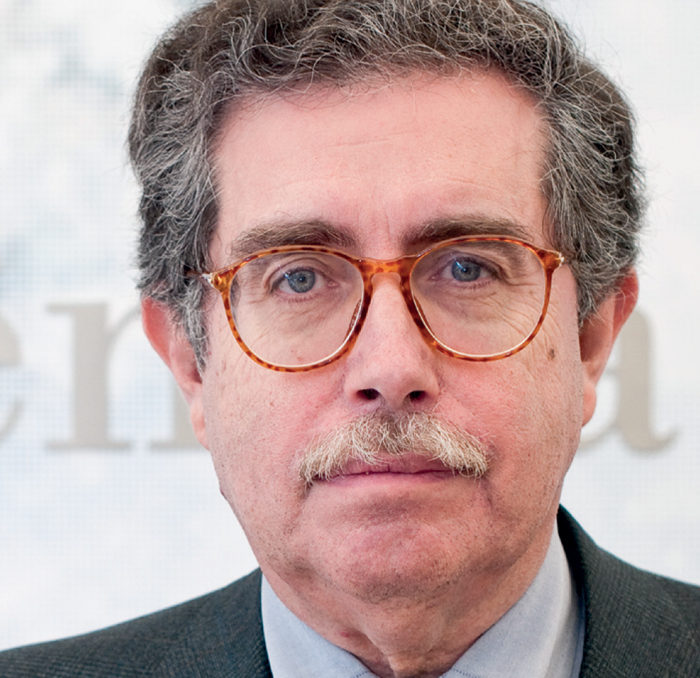
By Andrew Sessler and Edmund Wilson World Scientific
Hardback: £58
Paperback: £32
E-book: £24
Also available at the CERN bookshop
The first edition of Engines of Discoverywas published seven years ago to wide acclaim. Since then, particle physics has seen the dramatic start up of the LHC and the subsequent discovery of a Higgs boson – a long-awaited missing piece in the Standard Model of particles and their interactions. At the same time, the field of accelerators has seen further developments to push back frontiers in energy, intensity and brightness, together with growth in the use of accelerators in other areas of science, medicine and industry.
In the revised and expanded edition of their book, Sessler and Wilson have aimed to match this growth, in particular through a number of essentially new chapters. These naturally cover the work that is going into developing new machines for fundamental physics, from high-intensity super-beams and factories for neutrino physics, to future high-energy linear colliders, and back to the low energies of rare-isotope facilities and, lowest of all, the production of antihydrogen. However, most of the new chapters focus on applications beyond the confines of particle and nuclear physics, with dedicated chapters on the use of accelerators in isotope production and cancer therapy, industry, national security, energy and the environment. Here, for example, spallation neutron sources have been promoted to merit a chapter of their own.
Last, the authors have brought the future and the young more into focus by directing all of the final chapter, rather than only the last paragraph, “mainly to the young”. Sadly, Andrew Sessler – a visionary leader in the field of accelerator science – died earlier this year, but this book will stand as part of his legacy to future generations. It would have appealed greatly to me when I was young, and the hope is that it will inspire budding young scientists and engineers today, for they are the future of the field.
By Jaan Einasto World Scientific
Hardback: £82
E-book: £61
This book describes the contributions that led to a paradigm shift from the point of view of a scientist from behind the “Iron Curtain”. It describes the problems with the classical view, the attempts to solve them, the difficulties encountered by those solutions, and the conferences where the merits of the new concepts were debated. Amid the science, the story of scientific work in a small country – Estonia – occupied by the Soviet Union, and the tumultuous events that led to its break up, are detailed as well.
By Tom Francke and Vladimir Peskov IGI Global
Hardback: $215
E-book: $215
Research in nuclear physics is inconceivable without the Geiger counter. This gas-filled instrument allows both the presence and the energy of ionizing particles and radiation to be measured. It is now 100 years since Hans Geiger designed the arrangement of its electrodes, but this construction is still used in most current gaseous detectors. In this arrangement, the electrons produced by collision and ionization of the gas atoms are multiplied in the electric field around a thin wire, and the resulting avalanche of electrons delivers an easily detectable signal.
It is only recently that other electrode arrangements for gas counters have been proposed and tested. Besides offering improved properties such as higher counting rates, a certain number of prior conceptions of the electron amplification process had to be revised. These new counters are called “micro-pattern gaseous detectors” because the same lithographic technique is used for their production as is employed in the semiconductor industry.
In their book, Francke and Peskov describe the complete historical development of these counters and discuss the properties and special features of each type. Smaller detectors with a sensitive window of up to 30 × 30 cm2 can be built using the lithographic technique exclusively. These are mainly detectors in a hermetically sealed housing filled with high-pressure gas. Detectors of this type are very stable for many years. For example, the detector of the two-axis diffractometer D20 at the Institut Laue–Langevin has been operating for 14 years. Detectors with larger sized windows work at normal gas pressure and with constant gas current. Their electrodes still have to be assembled precisely by hand.
This handbook should allow every research scientist to choose and produce the best detector possible for a specific application. Numerous pictures with descriptions and many diagrams assist in making a good choice, while the detailed bibliography is particularly helpful.
This book is extremely interesting. Mainly a collection of testimonies, it helps in understanding the special personality of Gunnar Källén – his kindness and aggressiveness. Cecilia Jarlskog is named as “editor”, but she is more than an editor in having written an informative biography.
Källén worked in the “Group of Theoretical Studies” – one of three groups that were set up as part of the “provisional CERN” in 1952 – which was based in Copenhagen until it was officially closed in 1957. He later became professor at Lund University, and tragically died in 1968 when his plane crashed while he was flying it from Malmö to CERN.
I was impressed by Steve Weinberg’s admiration for Källén – he considers himself a student of Källén, although he was Sam Treiman’s student – as well as by that of James Bjorken and Wolfgang Pauli, who wanted Källén as professor at ETH Zurich. I cannot comment on the fact that it was finally Res Jost who was appointed, because I have the highest esteem for him also.
It is interesting that Pauli disapproved of Källén’s work on the n-point function. It was only long after Pauli’s death that Källén quit this subject, and took a 90° turn with the writing of his book on elementary particles. It is true that Källén failed, while being critical of Jacques Bros, Henri Epstein and Vladimir Glaser because they were not using invariants. However, Bros–Epstein–Glaser succeeded and proved crossing symmetry, allowing proof of the Froissart bound without dispersion relations, and providing a starting point for the Pomeranchuk theorem.
Because the book is based on testimonies, there is a certain redundancy, in particular about the accident, but this is unavoidable. Overall, Cecilia Jarlskog has done an excellent job. The plane crash was a tragedy, and if he had lived, Källén would certainly have made further important contributions. (His two passengers – his wife Gunnel and Matti von Dardel – survived the crash. Matti has told me that her husband Guy von Dardel and Källén were planning a collaboration between a theoretician and an experimentalist. The accident put an end to that.)
CERN is a unique institution, born from the ashes of war as a beacon of science and peace. Ben Lockspeiser, the first president of CERN Council, encapsulated the spirit of CERN succinctly when he said: “Scientific research lives and flourishes in an atmosphere of freedom – freedom to doubt, freedom to enquire and freedom to discover. These are the conditions under which this new laboratory has been established.”
Today, CERN has 21 member states and collaboration agreements with around 40 other countries. More than 10,000 people from around the world, representing nearly 100 nationalities, come to the laboratory on the Franco-Swiss border to carry out their research. At CERN, you find collaborations between people from countries more often associated with conflict than with reconciliation, which is the way it has always been at CERN.
The following short articles, written mainly from personal experience, highlight what CERN has meant to people in various regions of the world, from the Europe of the 1960s through to later decades, and the laboratory’s wider engagement with countries in other regions, such as Asia, Australasia and South America.
In July 1946, at the invitation of the Physical Society of London, physicists met at the Cavendish Laboratory in Cambridge for the International Conference on Fundamental Particles and Low Temperatures. This was the first such meeting in Europe since the conference on New Theories in Physics, which had been organized in part under the auspices of the International Institute for Intellectual Cooperation, a branch of the League of Nations, in Warsaw eight years earlier. As nobody from the so-called Eastern block was present in Cambridge, it seems that new clouds were already forming over the world – and over science.
Ten years later, in July 1956, CERN organized the Symposium on High-Energy Accelerators and Pion Physics, less than two years after its official foundation. Held at the Institut de Physique in Geneva, it attracted more than 300 participants from 22 countries, including some 50 scientists from the US and about the same number from the USSR, all of whom had been invited by CERN and were able, for the first time, to exchange information freely and compare ideas. Highly interesting papers dealing, in particular, with new principles for the acceleration of particles and with pion physics, were presented and discussed. According to CERN’s Annual Report for 1956, the conference was a landmark in the history of the organization.
It followed an opening in the West–East relationship around 1955. In August that year, the International Conference on the Peaceful Uses of Atomic Energy – “Atoms for Peace” – took place in Geneva, attended by a delegation from the USSR that included a number of scientists, among them Vladimir Veksler. A year later, the Joint Institute of Nuclear Research (JINR) was established with a charter very similar to the CERN convention, and with Dmitri Blokhintsev as the first director. It was based on scientific institutions that had grown up after the Second World War in a town on the Volga that eventually was named Dubna – city of sciences. At the same time, Soviet scientific work previously recorded in internal reports was declassified and published in scientific journals. English translations were published, mainly in the US, and learning Russian became popular among physicists.
It was the first time that a large delegation of Soviet scientists working in particle physics took part in a scientific conference in the West
The symposium organized by CERN in July 1956 offered the opportunity for many people to make personal contacts, and especially during an excellent reception held by the Soviet delegation at the Hotel Metropole, where they were all lodged for security reasons. Vodka ran abundantly. Many of the Soviet physicists subsequently became directors of the different laboratories of JINR and/or were to have important roles in Soviet physics. It was the first time that a large delegation of Soviet scientists working in particle physics took part in a scientific conference in the West.
The scientific sessions included reports from the Soviet delegation on the work done during the years 1950–1955 at the synchrocyclotron of the Institute of Nuclear Problems, which in 1956 became the Laboratory of Nuclear Problems, JINR. This was when the whole world learnt that the USSR had what was then the largest synchrocyclotron ever built – with a diameter of 6 m. At the same time, the world learnt that Bruno Pontecorvo had an active part in the scientific work with that machine. Although he was not present in Geneva, he had contributed to a paper on the synchrocyclotron’s beams and their use.
Adolf Mukhin presented results on π+p scattering at energies in the 176–310 MeV range. These results, together with those on pion production from other experiments, created some embarrassment in the physics community interested in performing similar experiments at the CERN Synchrocyclotron (SC). In 1956 the SC was still being constructed, and pion beams for users were foreseen only for early in 1958. Fortunately nature was kind, because weak interactions were soon to come to the fore, and experiments at the SC were able to make an important impact. Later, in 1961, Mukhin was one of the first two experimental physicists from the USSR to visit CERN for a long period – the other was Vladimir Nikitin – during which he joined an experiment on muon nuclear capture at the SC.
After 40 years at CERN, what have I Iearnt? From a Russian: the meaning of 8 March, how communication can be achieved with few words, and friendship, even if interrupted abruptly, can remain for life. From a Chinese: is the insurmountable really insurmountable? From an Iranian: what is important is not appearance but that you are respected. This is a short list – in reality, I was always learning something from the people I met at CERN. If nothing else, new recipes, what to see in their countries, or new cultural insights.
When I arrived at CERN in 1969, I thought I was a rare being – not only an academic woman but also a biologist. However, time showed that the biggest rarity was the place where I had come to work. During the first month, I was invited for dinner to the home of my boss, Johan Baarli, a Norwegian physicist who was head of the Health Physics Group. Travelling there on the bus, I met a Polish radiation-dosimetry physicist, Mieczyslaw Zielczyn´ski, who was also invited. At that time it was a great rarity to encounter someone from behind the “Iron Curtain”, and although we could not talk much because of our different languages, we became lifelong friends. A still bigger surprise came in April 1971, when the International Congress on Protection against Accelerator and Space Radiation was held at CERN, and Russian, American and European physicists and engineers could speak freely with each other.
As a collaborator on studies towards the possible applications of high-energy particle beams for cancer therapy, a Russian biologist, Valentina Kurnaeva, was working with me, whose husband was with the Serpukhov collaboration at the Proton Synchrotron. I still have many memories of good work and warm hospitality – invited for lunch, I arrived at noon, but the meal did not start until 2:00 p.m., and at 10:00 p.m. we were still there, singing, talking, eating and drinking. Sadly, it ended abruptly when one of the Russians disappeared mysteriously. My friends had to leave within a week, and we cried knowing that there was not much hope that we would see each other again.
By the end of the 1970s, Chinese physicists were appearing at CERN, with three in the Radiation Protection Group. They were friendly and eager to know everything. The Chinese philosophy on life helped me a great deal, not only because they were hard workers, no matter what time of day or night, but also because of their kindness and politeness. When I organized the farewell party after the decision was taken to end radiobiological activity at CERN in 1981, one of them did me a drawing. Even now, when I feel down, I look at it and it cheers me up. It is true that there is always light somewhere, one just has to pass over the mountain.
Later, when I was doing the safety courses for the physicists who had to work underground at the Large Electron–Positron (LEP) collider, I needed translations of a safety note and a sticker to call the fire brigade, in as many languages as possible. It was simple to find help with Chinese, Russian and many other languages, but the adventure was to find someone to help with Arabic and Turkish. Finally, I found assistance with the Turkish version by asking a worker who drove a truck in the Transport Group to help me. He was so proud that he introduced me to all of his family on a CERN open day, and I regularly met him thereafter and discussed safety issues.
What a big family CERN is and, I hope, will remain. It has opened my eyes and my mind to the world
During the LEP era in the 1990s, I would meet and lunch with an Iranian engineer. At that time Iran was closed to the West and pictures showed completely veiled women. She wore blue jeans and had studied in the US and UK, so I decided to ask her, how was it when she went home? Was it hard to switch from a typical western mode to the other? I was astonished by her answer. At home she felt free, respected for her knowledge and capabilities and not at all devalued as a woman – just the opposite of what I thought from reading the press.
During my last period of time at CERN, a rose left on my table on 8 March by Dmitry Rogulin, a Russian computer scientist working on a technology-transfer project, brought back sweet memories. It took me back to when I was first told by Valentina of what the date means, some time before International Women’s Day became recognized in the West.
What a big family CERN is and, I hope, will remain. It has opened my eyes and my mind to the world. For anyone working there, CERN truly is knowledge, understanding and peace.
• Marilena Streit-Bianchi worked at CERN for 41 years, first in radiobiological research, then later in safety training and finally technology transfer. She is also responsible for CERN’s Oral History Project.
From physics in Poland to medicine in America – via CERN
My formative years as a young Polish experimental high-energy physicist were spent at CERN, starting in 1974 and lasting, with breaks, until 1984, when I emigrated from Europe to the US. Today, I am a research faculty member in the radiology department in a medical centre – quite a transformation for a person with PhD training in experimental high-energy physics, who specialized initially in the development of gaseous particle detectors.
CERN had a special ambiance and offered tremendous opportunities to any young particle physicist, not only those from Poland. However, the Polish contingent at CERN was always disproportionally large compared with the size of the country in the Soviet block. We always had much more freedom to travel than others from the block, and I benefited 200% from that opportunity. I owe much gratitude to all who were supportive. Luckily for my family and me, we left Poland before martial law was imposed in December 1981.
At CERN I worked in several groups, but I owe the most to Georges Charpak and Fabio Sauli, and to the “Nucleus Heidelberg” group. Whatever I learned later after emigrating to the US was a natural continuation and expansion of that initial training – not just in a technical sense, but mostly in a cultural sense, with the mindset that everything is possible. This was the message from Georges, at least to young people like us. It was Georges who got me interested in imaging in nuclear medicine, and throughout my life I have repeated to all who would listen that I would not have been able to invent the breast-specific gamma imaging (BSGI) camera followed by other medical imagers, were it not for Georges. I was lucky to be able to tell him this in person – he did not believe me – in Paris, about six months before his death. On that trip I also stopped by the Hôtel Dieu hospital in Paris where I could see one of the BSGI cameras that I invented in operation. What satisfaction! And it all started at CERN.
I am still a proud member of the international particle-physics community, all these years after I left CERN and then Fermilab. What is exciting is that I still communicate with many of my colleagues and friends from the CERN-related community who are now working in medical imaging, including David Townsend, Paul Lecoq, Stefaan Tavernier, José Maria Benlloch, Franco Garibaldi, Alberto Del Guerra and João Varela. I cannot imagine my career without CERN.
• Stan Majewski is a faculty member at Radiology Research, Department of Radiology, University of Virginia.
Two generations of Chinese collaboration with CERN
The first official approach from CERN to China was in January 1966, when Bernard Gregory, then director-general, sent a letter to the director of the Institute of Atomic Energy (IAE) at the Chinese Academy of Sciences (CAS), expressing the wish to establish a scientific exchange programme between CERN and China. The IAE director at that time happened to be my father, Sanqiang Qian. Unfortunately, the letter arrived on the eve of the disastrous so-called “Cultural Revolution” in China (1966–1976), and my father never saw this letter because he was among the first people to be wrongly criticized, even before the “Cultural Revolution” started. Together with my mother, Zehui He – one of the deputy directors of the IAE (CERN Courier December 2011 p29) – my father was banished in 1969 to the remote countryside to work in agriculture, until he was allowed to return to Beijing for medical treatment in 1972 and then returned gradually to work at the IAE and CAS.
Meanwhile, part of the IAE was separated out to establish a new independent institute of CAS – the Institute of High Energy Physics (IHEP) – at the start of 1973, and my mother was appointed one of the IHEP deputy directors until 1984. The first director of IHEP was Wenyu Chang, who had some private contact with high-energy physicists in the US prior to 1972, and then exchanged official letters with CERN during 1972 and into 1973. He led the first delegation from China to visit CERN in June and July 1973. This was followed by the milestone visit to China in September 1975 by Victor Weisskopf, Willibald Jentschke and Léon Van Hove – respectively, CERN’s former, then current, and elect director-generals – together with Georges Charpak. During the visit, the CERN delegation had extensive discussions with their Chinese counterparts led by Sanqiang Qian who, as vice-president of CAS, visited CERN in June 1978.
Since then, CERN–Chinese collaboration has grown steadily from the visits of a few theorists and accelerator experts from a couple of Chinese institutes in the 1970s and 1980s, through larger groups on the L3 and ALEPH experiments at the Large Electron–Positron collider, to groups on all of the four major LHC experiments, with contributions from more than 10 Chinese universities and research institutes and more than 100 physicists and students.
My own work at CERN started in 1988, following my PhD from Illinois Institute of Technology in 1985 and work as a postdoc at Fermilab. The first five years of my work were with the INFN/Frascati group (based at CERN) on the ZEUS experiment at DESY. I was fortunate to work with top experts so that I could learn new techniques and skills more efficiently and make contributions, in particular in developing track-reconstruction algorithms by the Kalman filtering method. I’m pleased to see that this algorithm is used today by almost all experiments in high-energy physics, including the major LHC experiments.
Since 1994 I have worked on the CMS experiment, helping Peking University (PKU) to join the CMS collaboration in 1996, and proposing that PKU participate in the resistive-plate-chamber (RPC) system for forward muon detection. With strong support from the Chinese funding agencies, and with many colleagues from PKU and other countries, I was able to contribute to the entire RPC process, from prototyping and co-ordinating the chamber construction, through testing and installation, to commissioning and monitoring during Run I of the LHC. Muon triggering and reconstruction were to be crucial to the Higgs-boson discovery.
I felt extremely fortunate and excited when ATLAS and CMS announced the discovery of a Higgs boson in 2012, and when the award of the Nobel Prize in Physics to François Englert and Peter Higgs was announced in 2013. These achievements were the consequence of the tremendous hard work and close collaboration among thousands of physicists from more than 30 countries for about 20 years, which is nearly two-thirds of my physics career!
• Sijin Qian is a professor at Peking University (PKU) and deputy team leader of the PKU group in CMS. He represented China and 18 other non-member states of CERN on the CMS Management Board from 2008 to 2010. Chinese involvement in CMS is supported by NSFC, MoST and CAS.
In Argentina, the situation in 1975 was already becoming desperate. Then on 24 March 1976, a military junta was installed. Some of my friends in the faculty had disappeared, and I with my beard – something that made me look suspicious at the time – was saved by chance.
Knowing about CERN, and wishing as a young engineer to specialize, I applied for a job. Being from a non-member state, it was not easy to be selected, but chance, tenacity and probably the type of expertise helped. In September, I obtained authorization for leave from the National University of La Plata, where I was working as a researcher, and moved to the extraordinary international scientific research centre that CERN had already become. When I arrived, I was immediately taken by the spirit of universality that reigned there. This was surely the experience that changed my life and my way of thinking and looking at things forever. Few places in the world were so open in spirit. Science was above any political, social, religious or racial difference. It was the common objective that was important. Ask, and there was always someone ready to help or teach you, and it has remained so throughout the 38 years I have been collaborating with CERN.
When I went back to Argentina in 1978 at the end of the first military government, I tried without success to get an agreement signed between the government and CERN. After much toing and froing, and following my second stay at CERN in 1988 and 1989, a first agreement was set up finally. This was not a particularly fruitful agreement, but it led to the act of intent signed in 2006 by Lino Barañao – currently the minister of science in Argentina – who at the time was president of the National Agency for Science and Technology (ANPCyT). In turn, this was followed in 2007 by a framework agreement concerning both physics and technological collaboration between Argentina and CERN. Then, in 2009, the first protocol for collaboration between CERN and the Laboratory of Instrumentation and Control (LIC) of the National University of Mar del Plata, was signed.
About 30 students and researchers from the laboratory that I have been working for and leading have collaborated, either from Argentina or by being at CERN, and this has been beneficial to both partners. The developments carried out for CERN accelerators for many years – including most recently work for Linac4 – have undoubtedly contributed to improving the technology and the academic level of our research. Moreover, not only scientific achievements but also human relationships have been part of these wonderful 38 years of fruitful collaboration, for which I am grateful and proud.
• Mario Benedetti, director of LIC at the University of Mar del Plata (1983–2012), has worked at CERN’s Proton Synchrotron and most recently for the LHC upgrade.
In 1943, Mark Oliphant, an Australian physicist who had been working at Birmingham in the UK, took up a post as Ernest Lawrence’s deputy at Oak Ridge. In his spare time, Oliphant proposed a new method of accelerating particles – the synchrotron. Upon his return to England, he completed in 1953 the construction of the Birmingham 1 GeV proton synchrotron, one of the world’s first high-energy particle accelerators. Another Australian, Colin Ramm, joined Oliphant at Birmingham to work on the synchrotron. Ramm’s exceptional talents in instrumentation led to an invitation to join CERN soon after the organization’s foundation – initially to work on the design and construction of the magnet system of CERN’s Proton Synchrotron and later as leader of the Nuclear Physics Apparatus Division. This division built the famous heavy-liquid bubble chamber that made the first observations of high-energy neutrino interactions. In 1972, Ramm joined Melbourne University, where he continued analysing neutrino data from CERN.
In the mid-1960s, David Caro and Geoff Opat founded the Melbourne High Energy Physics Group, Australia’s first experimental particle-physics group. Its initial research programme, carried out at Brookhaven, searched for excited sub-nuclear species by observing interactions of antiprotons with deuterons in a bubble chamber. The 250,000 frames of 70-mm film were analysed at Melbourne.
A key appointment at Melbourne was that of Stuart Tovey, recruited in 1975 from CERN as an experienced experimentalist. Tovey was to become a pioneer of Australian involvement at CERN (CERN Courier March 2011 p46). He was prominent in the 1960s and 1970s in the study of hyperons and kaons, and later participated in the discovery of the W and Z bosons in the UA2 experiment.
The foundations for strengthening the involvement of Australia at CERN were laid towards the end of the 1980s, with the return to Australia of Geoffrey Taylor to work alongside Tovey at Melbourne. In 1991, Australia and CERN signed an International Co-operation Agreement. The group led by Lawrence Peak at Sydney University, which had a strong programme in cosmic rays, neutrino physics and fixed-target accelerator experiments at Fermilab, evolved towards accelerator-based experiments at CERN. The groups at ANSTO, Melbourne and Sydney participated in NOMAD in the mid-1990s – an important milestone because the Australian groups participated for the first time as equals in all stages of a major CERN experiment. Melbourne and Sydney have also participated in the Belle experiment at KEK since 1997.
A major highlight is Australia’s involvement in ATLAS. The international engagement and solid personal and professional ties with CERN of both Taylor and Tovey ensured strong participation of the Melbourne and Sydney groups from the early 1990s. They contributed to the construction of silicon modules for the end-cap wheels of the semiconductor tracker, through Australian industry delivered large precision-machined alloy plugs serving as ATLAS radiation shields, and set up a Tier-2 centre of the Worldwide LHC Computing Grid. Australian physicists have subsequently made significant contributions to the ATLAS Higgs analysis. An experimental particle-physics group led by Paul Jackson at Adelaide University also joined ATLAS in 2012.
The successful Centre of Excellence for Particle Physics at the Terascale, which incorporates Adelaide, Melbourne, Monash and Sydney Universities under the exceptional leadership of Taylor, will no doubt continue to build on these achievements in the years to come. The future looks bright and the only way for “down under” is up.
It was a great privilege and honour to have been part of the stimulating intellectual environment at Melbourne in the 1980s, and to be mentored and introduced by the likes of Opat, Peak, Ramm, Taylor and Tovey to the magical world of particles and fields.
• Emmanuel Tsesmelis is CERN’s deputy head of international relations. He has worked on UA2, NOMAD and CMS, and has led the LHC experimental areas group.
With CERN as his scientific home since 1961, Carlo Rubbia is unique in the organization. One of the three Nobel laureates who received their prizes for research done at the laboratory, he was also director-general from 1989 to 1993 – during the crucial years when the ground for the future LHC was prepared. Rubbia’s fame, both at CERN and worldwide, is related closely to his work in the early 1980s, when the conversion of the Super Proton Synchrotron (SPS) to a proton–antiproton collider led to the discovery of the W and Z bosons. The Nobel Prize in Physics was awarded in 1984 jointly to Rubbia and Simon van der Meer “for their decisive contributions to the large project, which led to the discovery of the W and Z field particles, communicators of weak interaction”.
However, Rubbia is much more than an exceptional CERN physicist awarded a Nobel prize, who also became director-general. As a child he was forced to flee his home in Gorizia in north-eastern Italy during the Second World War. He went on to become a brilliant physics student at Scuola Normale in Pisa, after almost taking up engineering; a scientist who continues to push the frontiers of knowledge; a volcano of ideas whose inextinguishable fuel is his relentless curiosity and vision; and a courageous citizen of the world, convinced of the duty of science to find solutions to today’s global emergencies. In August 2013, the president of the Italian Republic, Giorgio Napolitano, recognized Rubbia’s contribution to the history and prestige of CERN, and to a field “vital to our country”, as he put it, when he appointed Rubbia “senator for life” (CERN Courier November 2013 p37).
The path that would take Carlo Rubbia to Stockholm for the Nobel prize started in the Scuola Normale in Pisa, just one year before CERN was founded, in September 1953. There he chose physics against the will of his parents.
My family would have preferred that I took engineering, but I wanted to study physics. So we agreed that if I passed the entrance exams for the Scuola Normale in Pisa, I could study physics there, otherwise I would have to do engineering. There were only 10 places for Pisa, and I was ranked 11th, so I lost – and I started engineering at Milan. Luckily an unknown student among the first 10 in Pisa (whom I’d be curious to meet one day) gave up and left a place open to the next applicant on the waiting list. So, three months later, I was in Pisa, studying physics, and I stayed there and had a lot of fun.
It’s not unusual to hear research physicists speak about their job in terms of “fun”. In Rubbia’s case, physics is still a huge part of his life and is a real passion. Why is this?
“New” is the keyword. Discovering something new creates alternatives, generates interest and fuels the world. The future is not repeating what you’ve done in the past. Innovation, driven by curiosity, the desire to find out something new, is one of the fundamental attributes of mankind. We did not go to the Moon because of wisdom, but because of curiosity. This is part of human instinct, it is true for all civilizations, and is unavoidable.
After obtaining his degree from Pisa in 1957 in record time – three years, including the doctoral thesis – Rubbia spent a year on research at Columbia University in the US, followed by a year at La Sapienza university in Rome as assistant professor to Marcello Conversi – whom he remembers as “a great friend in addition to being a great mentor, someone with whom the transition from student to colleague happened very smoothly” – before landing at CERN in 1961.
I thought Europe was the real future for someone who wanted to do research. Europe needed to resurrect in science in general, and physics in particular. [After the US] my interest was not in going back to Italy, but rather to go back to Europe. So I left Rome after a year of teaching and went to CERN.
When Rubbia arrived, CERN’s active laboratory life was just beginning.
When I arrived, none of the buildings you see today were there. There was no cafeteria. We took coffee and our meals at a restaurant near the airport [Le Café de l’Aviation] and the University of Geneva offered us space to carry out our work while CERN was under construction. In this group of CERN pioneers there were also two others who received the Nobel prize: Simon van der Meer and Georges Charpak. All three of us were among the few who have experienced CERN since its early days.
CERN was the stage for Rubbia’s greatest scientific adventure, which led to the discovery of the W and Z bosons. He convinced the director-general at the time – John Adams – to modify the programme of the SPS and transform it into a proton–antiproton collider, with technology that all had to be developed.
My first proposal was written for the US, because I was teaching at Harvard and therefore part of the US system – the most advanced research system in the world at the time. But this did not work for a number of reasons, among them the bureaucracy that was starting to grow there. CERN was a new place, there were people like Léon van Hove and John Adams who had a vision for the future, and they supported my idea that soon became a possible solution. Clearly this kind of idea involves a lot of pressure, hard work, and competition with alternative ideas. There were many competing projects, all aiming to become the new big project for CERN, for which there were funds. Bjorn Wiik wanted to make an electron–proton machine, Pierre Darriulat was pushing for a super-ISR, a superconducting one. All of these ideas were part of a purely scientific debate, without any political influence, and this was very healthy.
Making collisions between two beams, especially between protons and antiprotons, required enormous development, but not that many people. The number of people who developed the proton–antiproton collider – I mean those who made a real intellectual contribution, those who did 99% of the work – were no more than a dozen. We were looking for an answer to a very specific question and we had a very clear idea of what we were looking for.
I left an LHC minus the SSC to the CERN community
Rubbia’s next big challenge after the discovery of the W and Z bosons was his mandate as CERN’s director-general, from January 1989 to December 1993, at a crucial time for setting up CERN’s next big project – the LHC.
The name LHC was invented by us – by myself and a small group of people around me. I remember Giorgio Brianti saying that the acronym LHC could not be used, because it already meant Lausanne Hockey Club, which was, at the time, much more popular for the lay public than a machine colliding high-energy protons. Nowadays things are quite different! We started with a programme that was much less ambitious than the US programme. The Americans were still somehow “cut to the quick” by our proton–antiproton programme, so they had started the SSC project – the Superconducting Super Collider – which would be a huge machine, a much more expensive one, but which was later abandoned. So, when my mandate as director-general finished, I left an LHC minus the SSC to the CERN community.
On 4 July 2012, when CERN announced to the world the discovery of “a new boson”, 30 years after his discovery of the W and Z bosons, Rubbia’ s reaction – from the press conference held at the annual Nobel gathering in Lindau that he was attending – was as enthusiastic as ever.
“This result is remarkable, no question. To get the line at 125 GeV – or 150 protons in terms of mass – which is extremely narrow, has a width of less than 1%, and comes out exactly with a large latitude of precision, with two independent experiments that have done the measurements separately and found the same mass and the same very, very narrow width…well, it’s a fantastic experimental result! It doesn’t happen every day. The last time, as far as I know, was when we discovered the W and Z at CERN and the top at Fermilab. We are in front of a major milestone in the understanding of the basic forces of nature.”
The basic forces of nature are not the only fodder to feed Rubbia’s inextinguishable curiosity and craving for innovation. After his mandate as CERN’s director-general finished at the end of 1993, he fought to bring accelerator technology to a variety of fields, from the production of “sustainable” nuclear energy to the production of new radioisotopes for medicine, from a new engine to shorten interplanetary journeys to innovative solar-energy sources.
“Homo” is essentially “faber” – born to build, to make. Today there are many things that need development and innovation. One of the most urgent problems we have is that the population on our planet is growing too fast. Since I was born, the number of people on Earth has multiplied by a factor of three, but the energy used has grown as the square of the number of people, because each of us consumes more energy. We know today that the primary energy produced is 10 times the quantity produced when I was born – and the planet is paying a price. So I find it normal to wonder, where are we going in the future? Will the children born today have 10 times the energy produced today? Will we have three times the population of today? This is the famous reasoning started by Aurelio Peccei, founder of the Club of Rome – the well-known “limits to growth”, discussed in Italy at least a quarter of a century ago. This is still an important issue and it’s all about energy. And this opens up the question of nuclear energy – the old one versus the new one.
Clearly, nuclear energy has gone through a lot of development, but still the nuclear energy that we have today is fundamentally the same as yesterday’s, based on the ideas brought about by Enrico Fermi in the 1940s. It’s part of the era of the Cold War, of development projects for nuclear energy as a weapon rather than basic research. Today the stakes have changed. So if we want to use nuclei to make energy, which we should, we have to do it on a different basis, with elements and conditions that are fundamentally different from yesterday’s. Three aspects of yesterday’s/today’s nuclear energy are worrying: Hiroshima, Chernobyl, and, more recently, Fukushima is also now part of the family of disasters. And of course there’s the problem of radioactive waste. These aspects are no longer manageable in the same way that they were during the Cold War’s golden era. We obviously have to change. And it’s the scientist’s task to improve things. Planes in the 1940s and 1950s scared everybody. My father never boarded a plane. Today everyone does. Why? Because we accepted and modified the technology to make planes super safe. We have to make nuclear energy super safe.
How does someone who has witnessed the entire history of CERN – often first-hand – see its future, and the future of physics?
The LHC brought an enormous change to CERN, whereby today the collaboration with the rest of the world, with non-European countries like the US and Japan, is rather a co-operation than a competition. The LHC transformed CERN from a European laboratory into the main laboratory for an entire research field across the whole world. But this is not without disadvantages, because competition has its benefits. Having a single world-laboratory doing a specific thing is a big risk. If there is only one way of doing things, there is no alternative, unless alternatives come from the inside. But alternatives coming from the inside have a difficult life because the feeling of continuity prevails over innovation. Fortunately, we have an experimental programme and all the elements are now there to conduct high-precision research, and we are on the verge of turning a new page.
I do not know what the next page will be and I would prefer to let nature decide what we physicists will find next. But one thing is clear: with 96% of the universe still to be fathomed, we are faced with an absolutely extraordinary situation, and I wonder whether a young person who wants to study physics today, and is told that 96% of the mass and energy of the universe is yet to be understood, feels excited. Obviously they should feel as excited as I did when I was told about elementary particles. Innovative knowledge, the surprise effect, exists today, still continues to exist and is very strong, provided there are people capable of perceiving it.
CERN will have to choose a new director-general soon. If you had a chance to take that position again, what would your policy for the laboratory be?
I always said that physics at CERN has to be “broad band”. It cannot be “narrow band”. Transforming the SPS into a p–p collider and cooling antiprotons were not part of the programme, and we had the flexibility and freedom to do it. We built the LHC while LEP was still functioning – that was a broad-band scientific policy. The problem is, you never know where the next discovery will come from! Our field is made of surprises, and only a broad-band physics programme can guarantee the future of CERN.
On its 60th birthday, CERN should, first of all, be justly praised for its scientific results – results that stem from the organization’s unique model, which has allowed the modernization of fragmented, hierarchical and largely closed scientific and academic systems in Europe. In my view, CERN’s indirect influence on the evolution of research institutions and universities has not been sufficiently recognized yet.
As a European intergovernmental scientific organization, CERN has proved a robust and sustainable model. Its institutional framework has inspired other successful international collaboration endeavours in science and technology in Europe. CERN owes part of this success to its special way of being European, therefore becoming a model for a certain humanist idea of Europe. The organization has evolved legally to allow for wider participation, and has “implicitly” created new entities that operate as “world organizations”, such as ATLAS and CMS. In the long run, this fruitful evolution could require visionary choices at a global level: CERN must remain firmly European to be globally attractive.
CERN’s intergovernmental nature has also provided a progressive balance of collective ambition and self-interest. It allows small and large nations, including non-member states, to contribute according to their specificities and size, and to extend their contributions by investing in experiments and in technological R&D.
Building on the recognition of all of these factors is key for the future institutional evolution of CERN itself.
In this respect, CERN needs to address the challenge to intergovernmental organizations that is triggered by the incomplete EU institutional framework. Moreover, current EU financial rules are largely unspecialized, and therefore less appropriate for the specificity of research, even if much has been done to minimize these difficulties. However, intergovernmental research organizations have accumulated a vast experience in responsibly managing public funding and stimulating industrial innovation under rules appropriate to frontier science and technology. As EU budgets for research are likely to be strengthened in the future, the EU’s role in new international research ventures might be expected to increase. Contributing to the right institutional environment is, therefore, an issue that we must address.
CERN is also recognized for attracting to Europe talent, ideas and resources from the world at large. However, keeping this unique role requires aiming relentlessly at locating the heart of the world’s best research infrastructure in Europe. The issue of the location of the next generation of accelerators will, therefore, be decisive – both for CERN and for Europe.
Becoming a world leader comes with a price. Could CERN act as an incubator for a new world organization for non-accelerator particle physics, namely astroparticle physics research? The infrastructure in this field must be widely distributed, but the evaluation of priorities – as a result of joint scientific, political and technical expertise – could sit together at CERN, or at a new organization outside Europe that CERN might help to frame.
CERN is also justly recognized as a driver for networking with other fields of science and technology, as well as for new applications. We might expect Europe’s pressing social and economic needs to increasingly require research organizations to improve their direct contribution to the creation of new start-up companies, products and services, and new jobs in Europe. This should be seen as a challenge to be met.
A major opportunity seems now to be at hand. CERN’s initiative for a new R&D international open facility for the biomedical, biophysical and bioengineering communities (e.g. medical imaging and new accelerators for hadron therapy) should, in my view, be considered as an important priority for the laboratory and for its member states.
On the other hand, the societal responsibility of research is bound to increase sharply if science development in Europe progresses faster. Under economic constraints, strengthening and widening the social constituencies for science becomes more important. CERN contributes generously to formal and informal science education. I would, however, suggest that fundamental physics has not yet contributed to its full potential to the needs of general experimental science education in schools, or to the demands of modern science centres.
Finally, CERN is justly proud of having continuously pursued one of the original purposes for its creation in the aftermath of the Second World War: science for peace. Its commitment to peace has been greatly influential in the discreet and stable support for scientists and students from regions of conflict and in painful periods, as well as in more visible support to the Synchrotron-light for Experimental Science and Applications in the Middle East (SESAME) project in Jordan.
However, much more is now needed from us all. The social responsibility of scientists for peace is now desperately needed against war, oppression and misery, increased fanaticism, and against national stereotyping as an insidious prelude to blind acceptance of the inevitability of war. Let us hope that science continues to make bridges for peace.
By Dan Green World Scientific
Hardback (with DVD): £48
Paperback (with DVD: £23
E-book: £17
The aim of this book is to have an interactive MATLAB script where the user can vary parameters in a specific problem and then immediately see the outcome by way of dynamic “movies” of the response of the system in question. MATLAB tools are used throughout, and the software scripts accompany the text in symbolic mathematics, classical mechanics, electromagnetism, waves and optics, gases and fluid flow, quantum mechanics, special and general relativity, and astrophysics and cosmology. The emphasis is on building up an intuition by running many different parametric choices chosen actively by the user and watching the subsequent behaviour of the system.
By Herbert M Fried World Scientific
Hardback: £65
E-book: £49
These pages offer a simple, analytic, functional approach to non-perturbative QFT, using a frequently overlooked functional representation of Fradkin to calculate explicitly relevant portions of the Schwinger generating functional. In QED, this corresponds to summing all Feynman graphs representing virtual photon exchange between charged particles. It is then possible to see, analytically, the cancellation of an infinite number of perturbative, UV logarithmic divergences, leading to an approximate but reasonable statement of finite-charge renormalization. A similar treatment of QCD is then able to produce a simple, analytic derivation of quark-binding potentials. An extension into the QCD binding of two nucleons to make an effective deuteron presents a simple, analytic derivation of nuclear forces. Finally, a new QED-based solution of vacuum energy is presented as a possible candidate for dark energy.
By Dean Rickles Springer
Hardback: £35.99 €32.12 $49.99
E-book: £27.99 €42.79 $39.99
Also available at the CERN bookshop
String theory provides a theoretical framework for unifying particle physics and gravity that is also consistent at the quantum level. Apart from particle physics, it also sheds light on a vast range of problems in physics and mathematics. For example, it helps in understanding certain properties of gauge theories, black holes, the early universe and even heavy-ion physics.
This new book fills a gap by reviewing the 40-year-plus history of the subject, which it divides into four parts, with the main focus on the earlier decades. The reader learns about the work of researchers in the early days in detail, where so-called dual models were investigated with the aim of describing hadron physics. It took ingenious insights to realize that the underlying physical interpretation is in terms of small, oscillating strings. Some of the groundbreaking work took place at CERN – for example, the discovery of the Veneziano amplitude.
The reader obtains a good impression of how it took many years of collective effort and struggle to develop the theory and understand it better, often incrementally, although sometimes the direction of research changed drastically in a serendipitous manner. For example, at some point there was an unexpected shift of interpretation, namely in terms of gravity rather than hadron physics. Supersymmetry was discovered along the way as well, demonstrating that string theory has been the source and inspiration of many ideas in particle physics, gravity and related fields.
The main strength of the book is the extensively and carefully researched history of string theory, rather than profound explanations of the physics (for which enough books are available). It is full of anecdotes, quotations of physicists at the time, and historical facts, to an extent that makes it unique. Despite the author’s avoidance of technicalities, the book seems to be more suitable for people educated in particle physics, and less suitable for philosophers, historians and other non-experts.
One caveat, however: the history covered in the book more or less stops at around the mid-1990s, and as the author emphasizes, the subject becomes much harder to describe after that, without going into the details more deeply. While some of the new and important developments are mentioned briefly in the last chapter – for example, the gauge/gravity correspondence – they do not get the attention that they deserve in relation to older parts of the history. In other words, while the history has been quite accurately presented until the mid-1990s, the significance of some of its earlier parts is rather overrated in comparison with more recent developments.
In summary, this is a worthwhile and enjoyable book, full of interesting details about the development of one of the main research areas of theoretical physics. It appears to be most useful to scientists educated in related fields, and I would even say that it should be a mandatory read for young colleagues entering research in string theory.
To provide the best experiences, we use technologies like cookies to store and/or access device information. Consenting to these technologies will allow us to process data such as browsing behavior or unique IDs on this site. Not consenting or withdrawing consent, may adversely affect certain features and functions.
Functional
Always active
The technical storage or access is strictly necessary for the legitimate purpose of enabling the use of a specific service explicitly requested by the subscriber or user, or for the sole purpose of carrying out the transmission of a communication over an electronic communications network.
Preferences
The technical storage or access is necessary for the legitimate purpose of storing preferences that are not requested by the subscriber or user.
Statistics
The technical storage or access that is used exclusively for statistical purposes.The technical storage or access that is used exclusively for anonymous statistical purposes. Without a subpoena, voluntary compliance on the part of your Internet Service Provider, or additional records from a third party, information stored or retrieved for this purpose alone cannot usually be used to identify you.
Marketing
The technical storage or access is required to create user profiles to send advertising, or to track the user on a website or across several websites for similar marketing purposes.