Comsol -leaderboard other pages

Topics

Strong interactions

Murray Gell-Mann’s scientific career began at the age of 15, when he received a scholarship from Yale University that allowed him to study physics. Afterwards he went to the Massachusetts Institute of Technology and worked under Victor Weisskopf. He completed his PhD in 1951, at the age of 21, and became a postdoc at the Institute for Advanced Study in Princeton.

The following year, Gell-Mann joined the research group of Enrico Fermi at the University of Chicago. He was particularly interested in the new particles that had been discovered in cosmic rays, such as the six hyperons and the four K-mesons. Nobody understood why these particles were created easily in collisions of nucleons, yet decayed rather slowly. To understand the peculiar properties of the new hadrons, Gell-Mann introduced a quantum number, which he called strangeness (S): nucleons were assigned S = 0; the Λ hyperon and the three Σ hyperons were assigned S = (–1); the two Ξ hyperons had S = (–2); and the negatively charged K-meson had S = (–1).

Strange assumptions

Gell-Mann assumed that the strangeness quantum number is conserved in the strong and electromagnetic interactions, but violated in the weak interactions. The decays of the strange particles into particles without strangeness could only proceed via the weak interaction.

The idea of strangeness thus explained, in a simple way, the production and decay rates of the newly discovered hadrons. A new particle with S = (–1) could be produced by the strong interaction together with a particle with S = (+1) – e.g. a negatively charged Σ can be produced together with a positively charged K meson. However, a positively charged Σ could not be produced together with a negatively charged K meson, since both particles have S = (–1).

In 1954 Gell-Mann and Francis Low published details of the renormalisation of quantum electrodynamics (QED). They had introduced a new method called the renormalisation group, which Kenneth Wilson (a former student of Gell-Mann) later used to describe the phase transitions in condensed-matter physics. Specifically, Gell-Mann and Low calculated the energy dependence of the renormalised coupling constant. In QED the effective coupling constant increases with the energy. This was measured at the LEP collider at CERN, and found to agree with the theoretical prediction.

In 1955 Gell-Mann went to Caltech in Pasadena, on the invitation of Richard Feynman, and was quickly promoted to full professor – the youngest in Caltech’s history. In 1957, Gell-Mann started to work with Feynman on a new theory of the weak interaction in terms of a universal Fermi interaction given by the product of two currents and the Fermi constant. These currents were both vector currents and axial-vector currents, and the lepton current is a product of a charged lepton field and an antineutrino field. The “V–A” theory showed that since the electrons emitted in a beta-decay are left-handed, the emitted antineutrinos are right-handed – thus parity is not a conserved quantum number. Some experiments were in disagreement with the new theory. Feynman and Gell-Mann suggested in their paper that these experiments were wrong, and it turned out that this was the case.

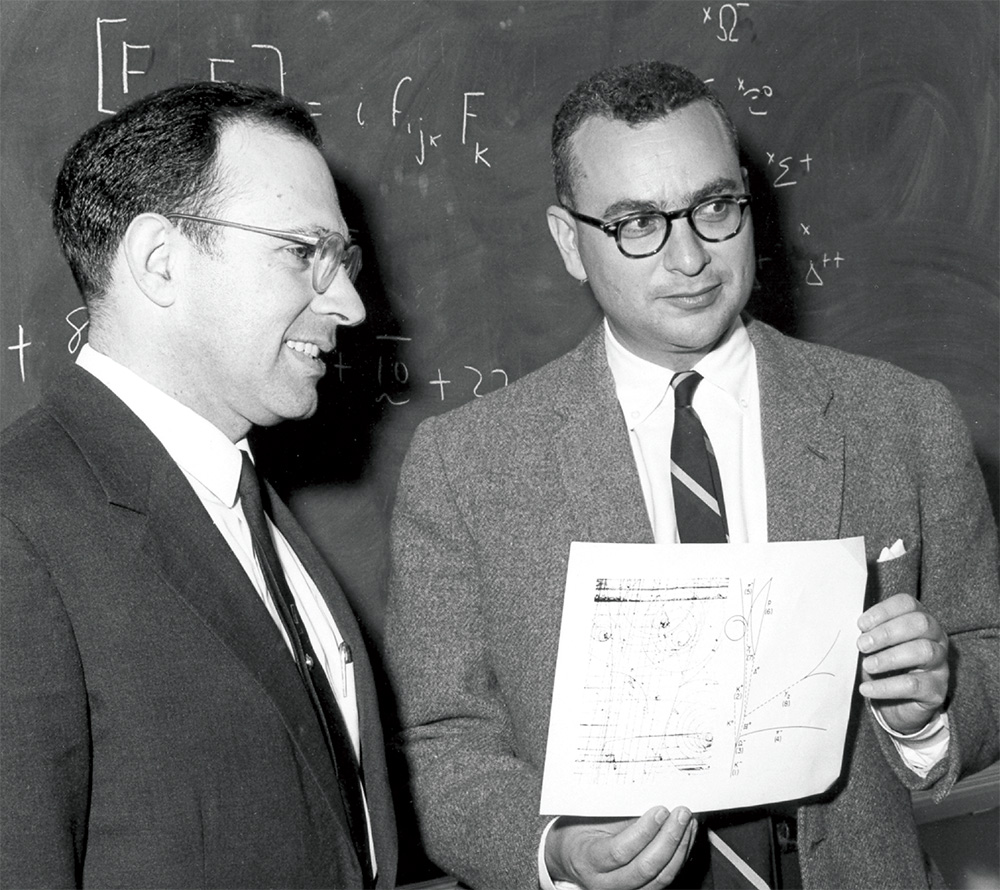
In 1960 Gell-Mann invented a new symmetry to describe the new baryons and mesons found in cosmic rays and in various accelerator experiments. He used the unitary group SU(3), which is an extension of the isospin symmetry based on the group SU(2). The two nucleons and the six hyperons are described by an octet representation of SU(3), as are the eight mesons. Gell-Mann often described the SU(3)-symmetry as the “eightfold way” in reference to the eightfold path of Buddhism. At that time, it was known that there exist four Δ resonances, three Σ resonances and two χ resonances. There is no SU(3)-representation with nine members, but there is a decuplet representation with 10 members. Gell-Mann predicted the existence and the mass of a negatively charged 10th particle with strangeness S = (–3), which he called the Ω particle.

The Ω is unique in the decuplet: due to its strangeness it could only decay by the weak interaction, and so would have a relatively long lifetime. This particle was discovered in 1964 by Nicholas Samios and his group at Brookhaven National Laboratory, at the mass Gell-Mann had predicted. The SU(3) symmetry was very successful and in 1969 Gell-Mann received the Nobel Prize in Physics “for his contributions and discoveries concerning the classification of elementary particles and their interactions.”

In 1962 Gell-Mann proposed the algebra of currents, which led to many sum rules for cross sections, such as the Adler sum rule. Current algebra was the main topic of research in the following years and Gell-Mann wrote several papers with his colleague Roger Dashen on the topic.

Quark days

In 1964 Gell-Mann discussed the triplets of SU(3), which he called “quarks”. He proposed that quarks were the constituents of baryons and mesons, with fractional electric charges, and published his results in Physics Letters. Feynman’s former PhD student George Zweig, who was working at CERN, independently made the same proposal. But the quark model was not considered seriously by many physicists. For example, the Ω is a bound state of three strange quarks placed symmetrically in an s-wave, which violated the Pauli principle since it was not anti-symmetric. In 1968, quarks were found indirectly in deep-inelastic electron–proton experiments performed at SLAC.
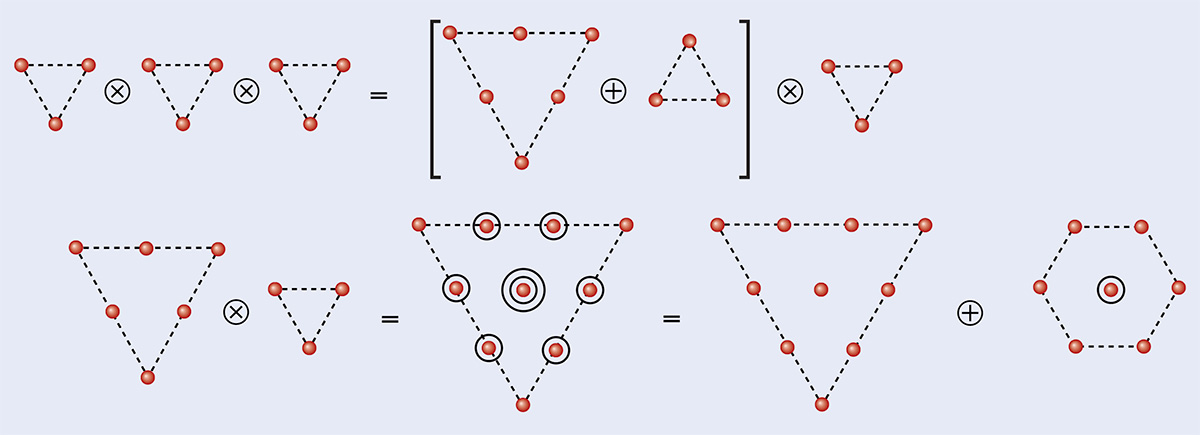
By then it had been proposed, by Oscar Greenberg and by Moo-Young Han and Yoichiro Nambu, that quarks possess additional properties that keep the Pauli principle intact. By imagining the quarks in three “colours” – which later came to be called red, green and blue – hadrons could be considered as colour singlets, the simplest being the bound states of a quark and an antiquark (meson) or of three quarks (baryon). Since baryon wave functions are antisymmetric in the colour index, there is no problem with the Pauli principle. Taking the colour quantum number as a gauge quantum number, like the electric charge in QED, yields a gauge theory of the strong interactions: colour symmetry is an exact symmetry and the gauge bosons are massless gluons, which transform as an octet of the colour group. Nambu and Han had essentially arrived at quantum chromodynamics (QCD), but in their model the quarks carried integer electrical charges.

The quark model was not considered seriously by many physicists

I was introduced to Gell-Mann by Ken Wilson in 1970 at the Aspen Center of Physics, and we worked together for a period. In 1972 we wrote down a model in which the quarks had fractional charges, proposing that, since only colour singlets occur in the spectrum, fractionally charged quarks remain unobserved. The discovery in 1973 by David Gross, David Politzer and Frank Wilczek that the self-interaction of the gluons leads to asymptotic freedom – whereby the gauge coupling constant of QCD decreases if the energy is increased – showed that quarks are forever confined. It was rewarded with the 2004 Nobel Prize in Physics, although a rigorous proof of quark confinement is still missing.

Gell-Mann did not just contribute to the physics of strong interactions. In 1979, along with Pierre Ramond and Richard Slansky, he wrote a paper discussing details of the “seesaw mechanism” – a theoretical proposal to account for the very small values of the neutrino masses introduced a couple of years earlier. After 1980 he also became interested in string theory. His wide-ranging interests in languages, and other areas beyond physics are also well documented.

I enjoyed working with Murray Gell-Mann. We had similar interests in physics, and we worked together until 1976 when I left Caltech and went to CERN. He visited often. In May 2019, during a trip to Los Alamos Laboratory, I was fortunate to have had the chance to visit Murray at his house in Santa Fe one last time. 

Further memories of Gell-Mann can be found at Gell-Mann’s multi-dimensional genius and Memories from Caltech.

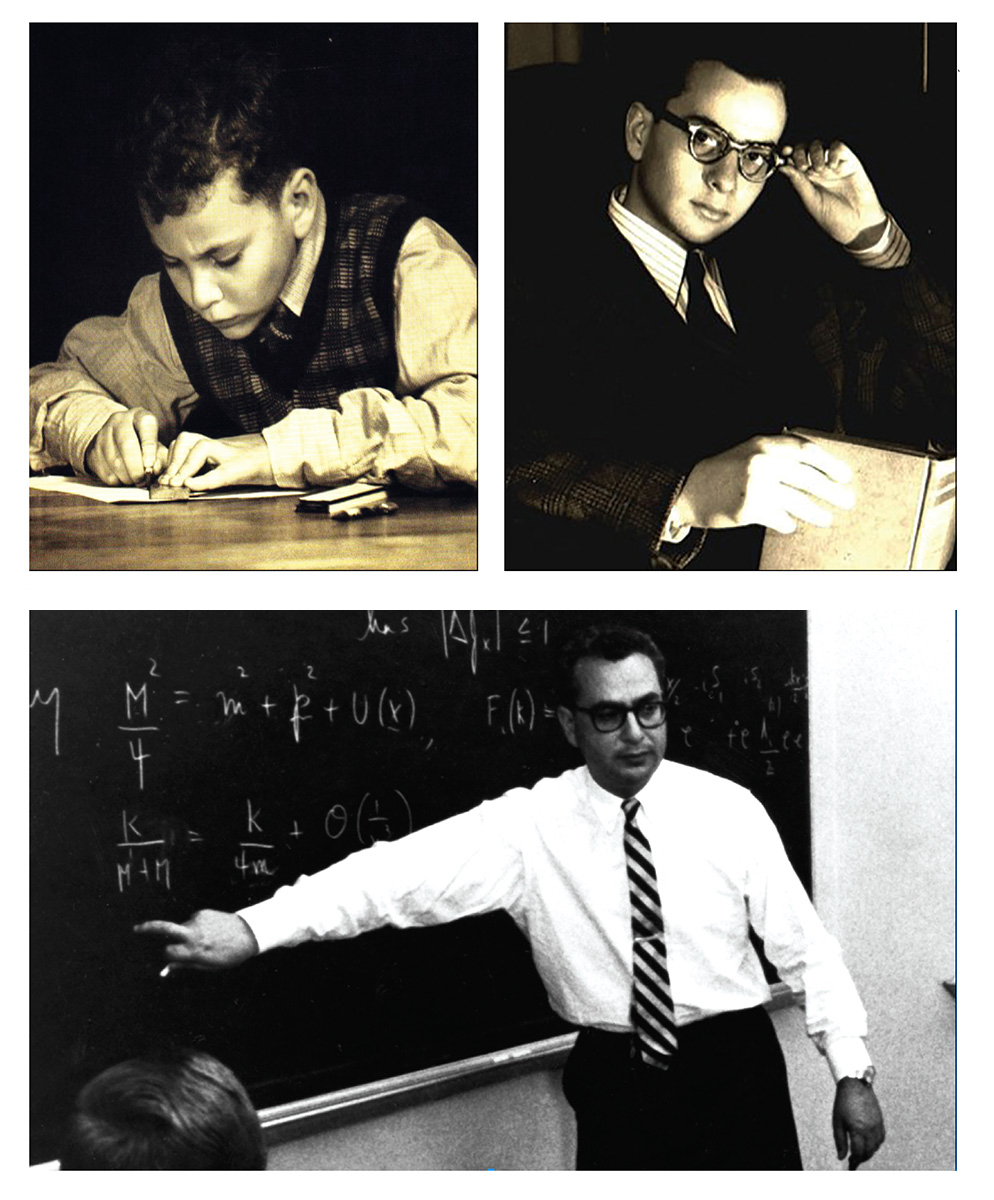
Gell-Mann’s multi-dimensional genius

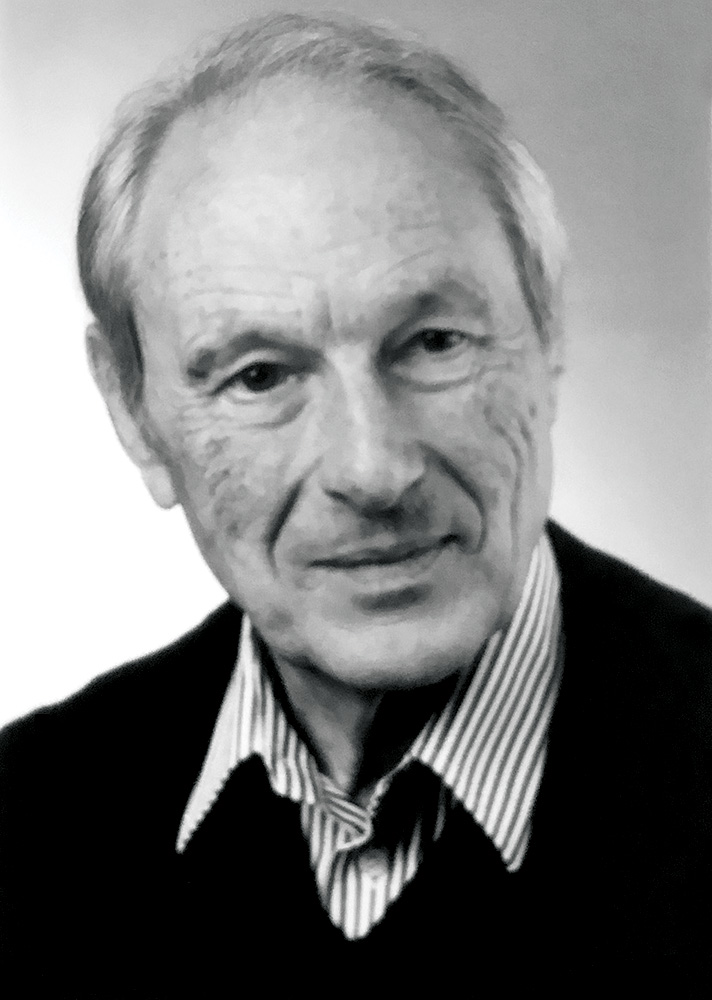
One of the 20th century’s most amazing brains has stopped working. Nobel laureate Murray Gell-Mann died on 24 May at the age of 89. It is impossible to write a complete obituary of him, since he had so many dimensions that some will always be forgotten or neglected.

Murray was the leading particle theorist in the 1950s and 1960s in a field that had attracted the brightest young stars of the post-war generation. But he was also a polyglot who could tell you any noun in at least 25 languages, a walking encyclopaedia, a nature lover and a protector of endangered species, who knew all the flowers and birds. He was an early environmentalist, but he was so much more. It has been one of the biggest privileges in my life to have worked with him and to have been a close friend of his.

Murray Gell-Mann was born into a Jewish immigrant family in New York six weeks before the stock-market crash of October 1929. He was a trailing child, with a brother who was nine years older and relatively aged parents. He used to joke that he had been born by accident. His father had failed his studies and, after Murray’s birth, worked as a guard in a bank vault. Murray was never particularly close to father, but often talked about him.

Child prodigy

According to family legend, the first words that Murray spoke were “The lights of Babylon”, when he was looking at the night sky over New York at the age of two. At three, he could read and multiply large numbers in his head. At five he could correct older people about their language and in discussions. His interest for numismatics had already begun: when a friend of the family showed him what he claimed was a coin from Emperor Tiberius’ time, Murray corrected the pronunciation and said it was not from that time. At the age of seven, he participated in – and won – a major annual spelling competition in New York for students up to the age of 12. The last word that only he could spell and explain was “subpoena”, also citing its Latin origins and correcting the pronunciation of the moderator.

By the age of nine he had essentially memorised the Encyclopaedia Britannica. The task sounds impossible, but some of us did a test behind his back once in the 1970s. The late Myron Bander had learnt and studied an incomprehensible word and steered the discussion on to it over lunch. Of course Murray knew what the word was. He even recalled the previous and subsequent entries on the page.

Murray’s parents didn’t know what to do with him, but his piano teacher (music was not his strong side) made them apply for a scholarship so that he could start at a good private school. He was three years younger than his classmates, yet they always looked to him to see if he approved of what the teachers said. His tests were faultless, except for the odd exception. Once he came home and had scored “only” 97%, to which his father said: How could you miss this? His brother, who was more “normal”, was a great nature lover and became a nature photographer and later a journalist. He taught Murray about birds and plants, which would become a lifelong passion.

At the age of 15, he finished high school and went to Yale. He did not know which subject he would choose as a major, since he was interested in so many subjects. It became physics, partly to please his father who had insisted on engineering such that he could get a good job. He then went to MIT for his doctoral studies, receiving the legendary Victor “Viki” Weisskopf as his advisor. Murray wanted to do something pioneering, but he didn’t succeed. He tried for a whole semester and at the same time studied Chinese and learnt enough characters to read texts. He finally decided to present a thesis in nuclear physics, which was approved but that he never wanted to talk about. When Weisskopf, later in life, was asked what his biggest contribution to physics was, he answered: “Murray Gell-Mann”.

At the age of 21 Murray was ready to fly and went to the Institute for Advanced Study (IAS) as one of Robert Oppenheimer’s young geniuses. In the next year he went to the University of Chicago under Enrico Fermi, first as an instructor and in a few years became an associate professor. Even though he had not yet produced outstanding work, when he came to Chicago he was branded as a genius. At the IAS he had started to work on particle physics. He collaborated with Francis Low on renormalisation and realised that the coupling constant in a renormalisable quantum field theory runs with energy. As would happen so often, he procrastinated with the publication until 1954, by which time Petermann and Stückelberg had published this result.

This was during the aftermath of QED and Gell-Mann wanted to attack the strong interactions. He started his odyssey to classify all the new particles and introduced the concept of “strangeness” to specify the kaons and the corresponding baryons. This was also done independently by Kazuhiko Nishijima. When he was back at the IAS in 1955, Murray solved the problem with KL and Ks, the two decay modes of the neutral kaons in modern language (better known as the τ–θ puzzle). According to him, he showed this to Abraham Pais who said, “Why don’t we publish it?”, which they did. They were never friends after that. Murray also once told me that this was the hardest problem that he had solved.

A cavalcade of results

Aged 26, he lectured at Caltech on his renormalisation and kaon work. Richard Feynman, who was the greatest physicist at the time, said that he thought he knew everything, but these things he did not know. Feynman immediately said that Murray had to come to Caltech and dragged him to the dean. A few weeks later, he was a full professor. A large cavalcade of new results began to come out. Because he had difficulty relinquishing his works, they numbered just a few a year. But they were like cathedrals, with so many new details that he came to dominate modern particle physics.

After the ground-breaking work of T D Lee and C N Yang on parity violation in the weak interactions, Gell-Mann started to work on a dynamical theory – as did Feynman. In the end the dean of the faculty forced them to publish together, and the V–A theory was born. George Sudarshan and Robert Marshak also published the same result, and there was a long-lasting fight about who had told who before. Murray’s part of the paper, which is the second half, is also a first sketch of the Standard Model, and every sentence is worth reading carefully. It takes students of exegetics to unveil all the glory of Murray’s texts. Murray was to physics writing what Joseph Conrad was to novel writing!

Sometimes there are people born with all the neurons in the right place

Murray then turned back to the strong interactions and, with Maurice Lévy, developed the non-linear sigma model for pion physics to formulate the partially conserved axial vector current (PCAC). This was published within days of Yoichiro Nambu’s ground-breaking paper where he understood pion physics and PCAC in terms of spontaneous breaking of the chiral symmetry. In a note added to the proof they introduced a “funny” angle to describe the decay of 14O, which a few years later became the Cabibbo angle in Nicola Cabibbo’s universal treatment of the weak interactions.

Gell-Mann then made the great breakthrough when he classified the strongly interacting particles in terms of families of SU(3), a discovery also made by Yuval Ne’eman. The paper was never published in a journal and he used to joke that one day he would find out who rejected it. With this scheme he could predict the existence of the triply strange Ω– baryon, which was discovered in 1964 right where he predicted it would be. It paved the way for Gell-Mann’s suggestion in 1963 that all the baryons were made up of three fundamental particles, which in the published form he came to call quarks, after a line in James Joyce’s Finnegans Wake, “three quarks for Muster Mark”. The same idea was also put forward by George Zweig who called them “aces”. It was a very difficult thing for Murray to propose such a wild idea, and he formulated it extremely carefully to leave all doors open. Again, his father’s approval loomed in the background.

With the introduction of current algebra he had laid the ground for the explosion in particle theory during the 1970s. In 1966, Weisskopf’s 60th birthday was celebrated, and somehow Murray failed to show up. When he later received the proceedings, he was so ashamed that he did not open it. Had he done so, he would have found Nambu’s suggestion of a non-abelian gauge field theory with coloured quarks for the strong interactions. Nambu did not like fractional charges so he had given the quarks integer charges. Murray later said that, had he read this paper, he would have been able to formulate QCD rather quickly.

Legacy

When, at the age of 40 in 1969, he received the Nobel Prize in Physics as the sole recipient, he had been a heavily nominated candidate for the previous decade. Next year the Nobel archives for this period will be open, and scholars can study the material leading up to the prize. Unfortunately, his father had died a few weeks before the prize announcement. Murray once said to me, “If my father had lived two weeks longer, my life would have been different.”

During the 1950s and 1960s Gell-Mann had often been described in the press as the world’s most intelligent man. With a Nobel Prize in his pocket, the attraction to sit on various boards and committees became too strong to resist. His commitment to conserving endangered species also took up more of his time. Murray had also become a great collector of pre-Columbian artefacts and these were often expensive and difficult to obtain.

In the 1970s, he was displaced from the throne by people from the next generation. Murray was still the one invited to give the closing lectures at major conferences, but his own research started to suffer somewhat. In the mid-1970s, I came to Caltech as a young postdoctoral fellow. I had met him in a group before, but trembled like an aspen leaf when I first met him there. He had, of course, found out from where in Sweden I came and pronounced my name just right, and demanded that everyone else in the group do so. Pierre Ramond also arrived as a postdoc at that time, having been convinced by Murray to leave his position at Yale. After a few months we started to work together on supergravity. We did the long calculations, since Murray was often away. But he always contributed and could spot any weak links in our work immediately. Once, when we were in the middle of solving a problem after a period of several days, he came in and looked at what we did and wrote the answer on the board. Two days later we came to exactly that result. John Schwarz, who was a world champion in such calculations, was impressed and humbled.

When I left Caltech I got a carte blanche from Murray to return as often as I wanted, during which I worked with Schwarz and Michael Green developing string theory. Murray was always very positive about our work, which few others were. It was entirely thanks to him that we could develop the theory. Eventually, I couldn’t go to the US quite as often. Murray had also lost his wife in the early 1980s and never really recovered from this. In the mid-1980s he got the chance to set up a new institute in Santa Fe, which became completely interdisciplinary. He loved nature in New Mexico and here he could work on the issues that he now preferred, such as linguistics and large-scale order in nature. He dropped particle physics but was always interested in what happened in the field. Edward Witten had taken over the leadership of fundamental physics and Murray could not compete there.

Being considered the world’s most intelligent person did not make Murray very happy. He had trouble finding real friends among his peers. They were simply afraid of him. I often saw people looking away. The post-war research world is a single great world championship. For us who were younger, it was so obvious that he was intellectually superior to us that we were not disturbed by it. All the time, though, the shadow of his father was sitting on his shoulder, which led him too often to show off when he did not need to.

Sometimes people are born with all the neurons in the right place. We sometimes hear about the telephone-directory geniuses or people who know railway schedules by heart, but who otherwise are intellectually normal, if not rather weak. The fact that a few of them every century also get the neurons to make them intellectually superior is amazing. Among all Nobel laureates in physics, Murray Gell-Mann stands out. Others have perhaps done just as much in their research in physics and may be remembered longer, but I do not think that anyone had such a breadth in their knowledge. John von Neumann, the Hungarian–American mathematician who, among other things, was the first to construct a computer was another such universal genius. He could show off knowing Goethe by heart and on his death bed he cited the first sentence on each page of Faust for his brother. Murray was certainly a pain for American linguists, as he could say so many words in so many languages that he could always gain control over a discussion.

There are so many more stories that I could tell. Once he told me “Just think what I could have done if I had worked more with physics.” His almost crazy interest in so many areas took a lot of time away from physics. But he will still be remembered, I hope, as one of the great geniuses of the 20th century.

High-energy physics flourishes in Latin America

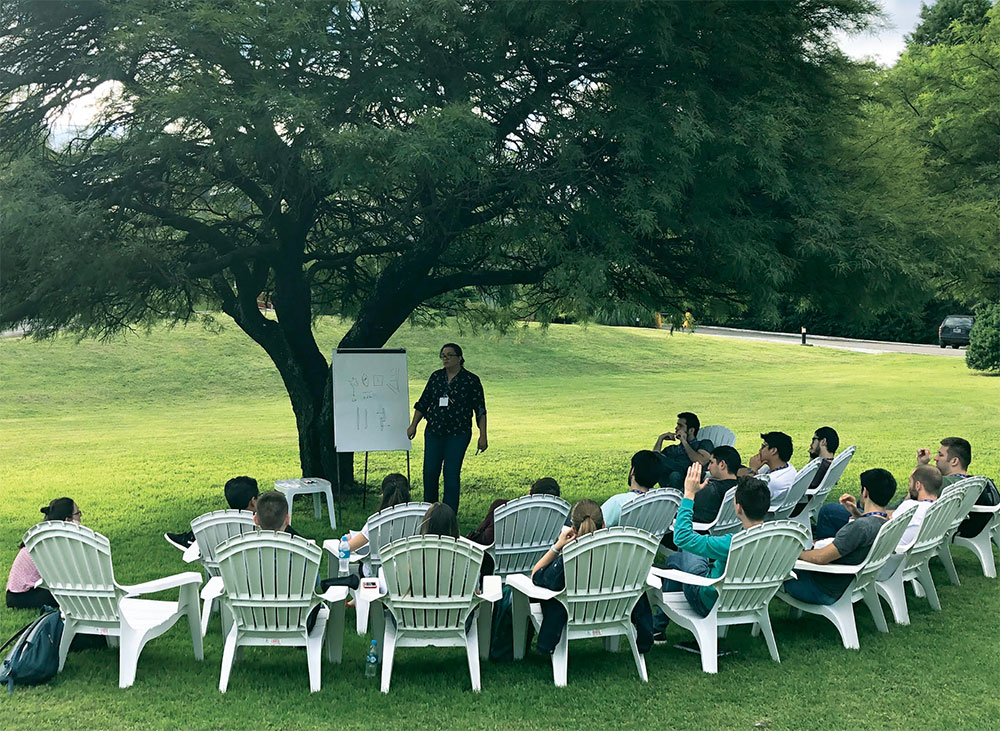
The 10th edition of the CERN–Latin- American School of High-Energy Physics (CLASHEP) hosted 75 students from 13 to 26 March in Villa General Belgrano in the Argentinian province of Cordoba. CLASHEP is a biennial series that takes place in different Latin-American locations. Since the first school in 2001, there has been a dramatic increase in the involvement of Latin-American groups in experimental HEP, including collaboration in the ALICE, ATLAS, CMS and LHCb experiments at CERN. The schools have played an important role in fostering this increased interest and participation in HEP in the region, as well as reinforcing existing activities and training young scientists.

The first schools in 2001 and 2003 took place in Brazil and Mexico, two countries in Latin America that already had substantial involvement in experimental HEP, followed by Argentina in 2005. María Teresa Dova of the Universidad Nacional de La Plata (UNLP) recalled that this first Argentinian school was a “strong catalyst” for Latin-American groups joining the LHC experimental programme. In due course, both UNLP and the Universidad de Buenos Aires formally joined ATLAS with support from the national funding agencies ANPCyT and CONICET.

The fourth school in Chile in 2007 gave unprecedented visibility for CERN and the LHC in a country which, until then, had no experimental HEP activity. Claudio Dib, the local director of the school, remarked that this was a key event in reaching agreements for the inclusion of Chile in the ATLAS experiment, and CERN and ATLAS representatives who were present were personally introduced to the authorities of the universities and the national funding agency, Conicyt. Following the fifth event in Colombia, in 2009, where there were also constructive meetings with the national funding agency and universities, the school returned to Brazil for a second time in 2011.

The Pontificia Universidad Católica del Perú celebrated the seventh school in Peru in 2013 with a special supplement of the university magazine dedicated to the work of local school director Alberto Gago’s group, which participates in the ALICE experiment and in neutrino experiments at Fermilab. Gago commented that the impact of the school had been “impressive and far beyond [his] expectations”. Similarly, discussions connected with the eighth school in Ecuador in 2015 were very important in stimulating interest in HEP within the universities and government agencies. This advanced the plans for the Escuela Politécnica Nacional and the Universidad San Francisco de Quito (USFQ) to join the CMS collaboration, supported by the national funding agency, Senescyt. USFQ’s rector Carlos Montúfar Freile described the school as a milestone for physics in Ecuador. In 2017 the school returned to Mexico for a second time, with strong interest and encouragement from the national funding agency, CONACyT.

There has been a dramatic increase in the involvement of Latin-American groups in experimental HEP

The 75 students attending this year’s school were of 17 different nationalities and more than 30% were women. Most came from universities in Latin America, while 15 were from European institutes. Lectures on HEP theory and experiment were given by leading scientists from both sides of the Atlantic, with special lectures on gravitational waves and cosmological collider physics by prominent Argentinian physicists Gabriela González (spokesperson of LIGO when gravitational waves were discovered in 2016) and Juan Martín Maldacena (winner of the 2012 Breakthrough Prize in Fundamental Physics). In addition to 50 hours reserved for plenary lectures, parallel group discussions were held for 90 minutes most afternoons. CERN Director-General Fabiola Gianotti took part in a lively Q&A session by video link.

The school also received visits from senior representatives of the Universidad Nacional de Córdoba (UNC), including Gustavo Monti, who is president of the Argentinean Physical Society, and Francisco Tamarit, a director of the national research council CONICET.

Building on the tradition of the last few schools in the series, outreach activities were organised at UNC in the city of Cordoba. María Teresa Dova from UNLP, again the local director of the school, explained experimental particle physics to a general audience, and Juan Martín Maldacena, who was awarded an honorary doctorate, talked about black holes and the structure of space–time.

The next CLASHEP is set to take place in 2021.

Kilogram joins the ranks of reproducible units

On 20 May, 144 years after the signing of the Metre Convention in 1875, the kilogram was given a new definition based on Planck’s constant, h. Long tied to the International Prototype of the Kilogram (IPK) – a platinum-iridium cylinder in Paris – the kilogram is the last SI base unit to be redefined based on fundamental constants or atomic properties rather than a human-made artefact.

The dimensions of h are m2 kg s–1. Since the second and the metre are defined in terms of a hyperfine transition in caesium-133 and the speed of light, knowledge of h allows the kilogram to be set without reference to the IPK.

Measuring h to a suitably high precision of 10 parts per billion required decades of work by international teams across continents. In 1975 British physicist Bryan Kibble proposed a device, then known as a watt balance and now renamed the Kibble balance in his honour, which linked h to the unit of mass. A coil is placed inside a precisely calibrated magnetic field and a current driven through it such that an electromagnetic force on the coil counterbalances the force of gravity. The experiment is then repeated thousands of times over a period of months in multiple locations. The precision required is such that the strength of the gravitational field, which varies across the laboratory, must be measured before each trial.

Once the required precision was achieved, the value of h could be fixed and the definitions inverted, removing the kilogram’s dependence on the IPK. Following several years of deliberations, the new definition was formally adopted at the 26th General Conference on Weights and Measures in November last year. The 2019 redefinition of the SI base units came into force in May, and also sees the ampere, kelvin and mole redefined by fixing the numerical values for the elementary electric charge, the Boltzmann constant and the Avogadro constant, respectively.

“The revised SI future-proofs our measurement system so that we are ready for all future technological and scientific advances such as 5G networks, quantum technologies and other innovations that we are yet to imagine,” says Richard Brown, head of metrology at the UK’s National Physical Laboratory.

But the SI changes are controversial in some quarters. While heralding the new definition of the kilogram as “huge progress”, CNRS research director Pierre Fayet warns of possible pitfalls of fixing the value of the elementary charge: the vacuum magnetic permeability (μo) then becomes an unfixed parameter to be measured experimentally, with the electrical units becoming dependent on the fine structure constant. “It appears to me as a conceptual weakness of the new definitions of electrical units, even if it does not have consequences for their practical use,” says Fayet.

One way out of this, he suggests, is to embed the new SI system within a larger framework in which c = ħ = μo = εo = 1, thereby fixing the vacuum magnetic permeability and other characteristics of the vacuum (C. R. Physique 20 33). This would allow all the units to be expressed in terms of the second, with the metre and joule identified as fixed numbers of seconds and reciprocal seconds, respectively. While likely attractive to high-energy physicists, however, Fayet accepts that it may be some time before such a proposal could be accepted.

Computing boost for Lebanon and Nepal

In the heart of Beirut in a five-storey house owned by the Lebanese national telecommunication company, floors are about to be coated to make them anti-static, walls and ceilings will be insulated, and cabling systems installed so wires don’t become tangled. These and other details are set to be complete by mid-2020, when approximately 3000 processor cores, donated by CERN, will arrive.

The High-Performance Computing for Lebanon (HPC4L) project is part of efforts by Lebanese scientists to boost the nation’s research capabilities. Like many other countries that have been through conflict and seen their highly-skilled graduates leave to seek better opportunities, Lebanon is trying to stem its brain-drain. Though the new facility will not be the only HPC centre in the country, it is different because it involves both public and private institutions and has the full support of the government. “There are a few small-scale HPC facilities in different universities here, but they suffer from being isolated and hence are quickly outdated and underused,” says physicist Haitham Zaraket of Lebanese University in Beirut. “This HPC project puts together the main players in the realm of HPC in Lebanon.”

Having joined the LHC’s CMS experiment in 2016, Lebanese physicists want to develop the new facility into a CMS Tier-2 computing centre. High-speed internet will connect it to universities around the world and HPC4L has a mandate to ensure operation, maintenance, and user-interfacing for smooth and effective running of the facility. “We’ve been working with the government, private and public partners to prepare not just the infrastructure but also the team,” explains HPC4L project coordinator Martin Gastal of CERN. “CERN/CMS’s expertise and knowledge will help set up the facility and train users, but the team in Lebanon will run it themselves.” The Lebanese facility will also be used for computational biology, oil and gas discovery, financial forecasting, genome analysis and the social sciences.

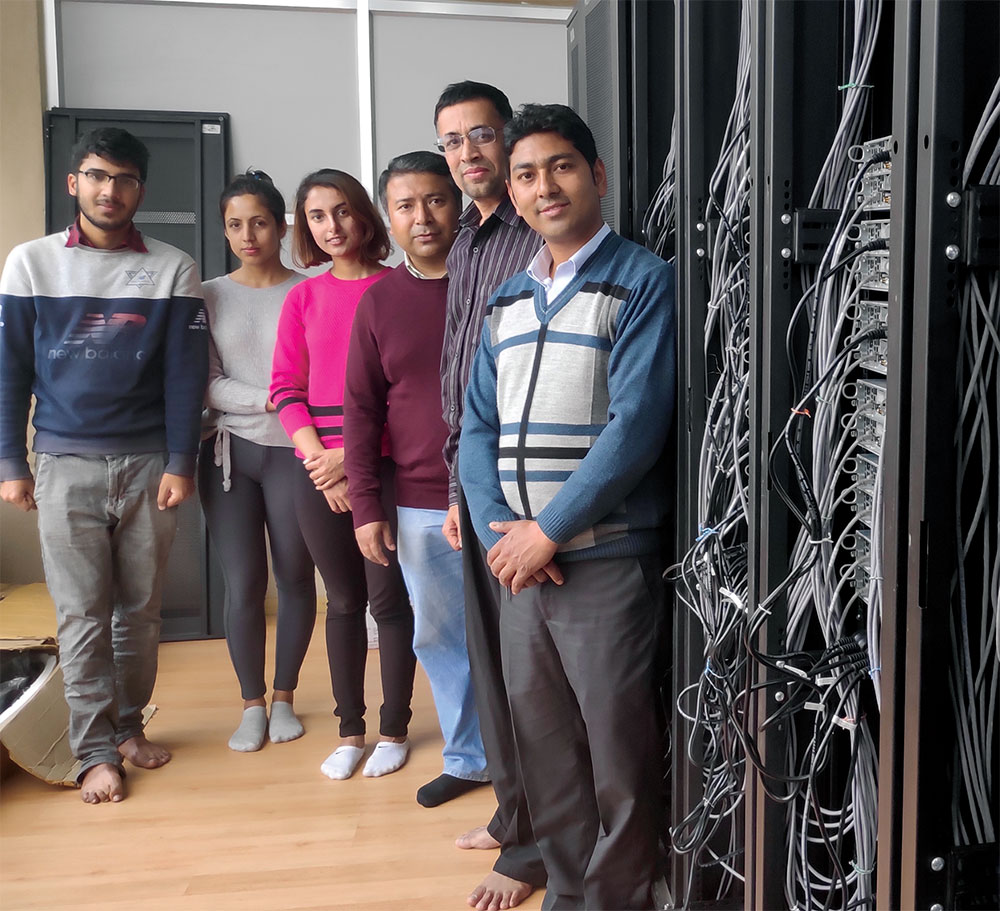
Nepal is another country striving for greater digital storage and computing power. In 2017 Nepal signed a cooperation agreement with CERN. The following year, around 2500 cores from CERN enabled an HPC facility to be established at the government-run IT Park, with experts from Kathmandu University forming its core team. Rajendra Adhikari, project leader of Nepal’s HPC centre (pictured, second from right), also won an award from NVIDIA for the latest graphics card worth USD 3000 and added it to the system. Nepal has never had computing on such a scale before, says Adhikari. “With this facility, we can train our students and conduct research that requires high-performance computing and data storage, from climate modelling, earthquake simulations to medical imaging and basic research.”

The Nepal facility is planning to store health data from hospitals, which is often deleted because of lack of storage space, and tests are being carried out to process drone images taken to map topography for hydropower feasibility studies. Even in the initial phases of the new centre, says Adhikari, computing tasks that used to take 45 days can now be processed in just 12 hours.

The SESAME light source in Jordan, which itself received 576 cores from CERN in 2017, is also using its experience to assist neighbouring regions in setting up and maintaining HPC facilities. “High-performance computing is a strong enabler of research capacity building in regions challenged by limited financial resources and talent exodus,” says Gastal. “By supporting the set up of efficient data processing and storage facilites, CERN, together with affiliated institutes, can assist fellow researchers in investing in the scientific potential of their own countries.”

Europe seed-funds 170 technologies

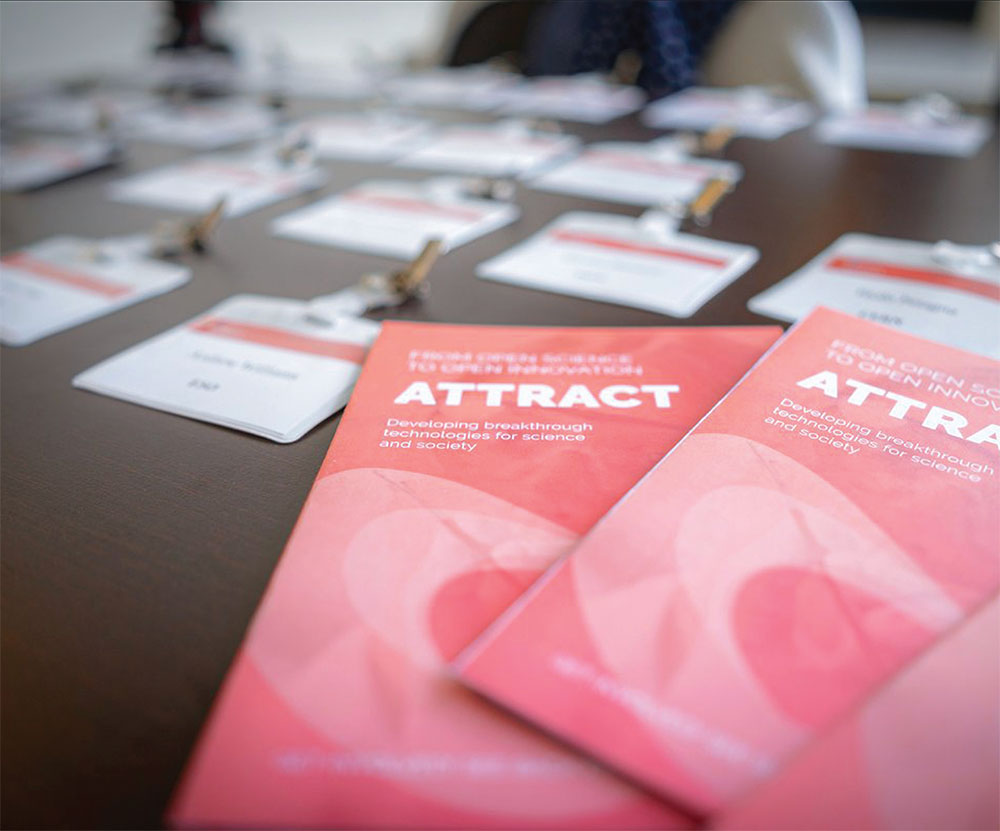
An event held at CERN on 20–21 May revealed 170 projects that have been granted €100,000 of European Union (EU) funding to develop disruptive detection and imaging technologies. The successful projects, drawn from more than 1200 proposals from researchers in scientific and industrial organisations across the world, now have one year to prove the scientific merit and innovation potential of their ideas.

The 170 funded projects are part of the Horizon 2020 ATTRACT project funded by the EU and a consortium of nine partners, including CERN, the European Southern Observatory (ESO), European Synchrotron Radiation Facility (ESRF), European XFEL and Institut Laue-Langevin. The successful projects are grouped into four broad categories: data acquisition systems and computing; front-end and back-end electronics; sensors; and software and integration.

CERN researchers are involved in 19 of the projects, in areas from magnets and cryogenics to electronics and informatics. Several of the selected projects involve the design of sensors or signal-transmission systems that operate at very low temperatures or in the presence of radiation, and many target applications in medical imaging and treatment or in the aerospace sector. Others seek industrial applications, such as 3D printing of systems equipped with sensors, the inspection of operating cryostats or applications in environmental monitoring.

ESO’s astronomical technology and expertise will be applied to an imaging spectrograph suitable for clinical cancer studies and to single-photon visible-light imagers for adaptive optics systems and low-light-level spectroscopic and imaging applications. Among other projects connected with Europe’s major research infrastructures, four projects at the ESRF concern adaptive algebraic speckle tomography for clinical studies of osteoarticular diseases, a novel readout concept for 2D pixelated detectors, the transferral of indium-gallium-nitride epilayers onto substrates for full-spectrum LEDs, and artificial intelligence for the automatic segmentation of volumetric microtomography images.

“170 breakthrough ideas were selected based on a combination of scientific merit, innovation readiness and potential societal impact,” explained Sergio Bertolucci, chair of ATTRACT’s independent research, development and innovation committee. “The idea is to speed up the process of developing breakthrough technologies and applying them to address society’s key challenges.”

The outcomes of the ATTRACT seed-funding will be presented in Brussels in autumn 2020, and the most promising projects will receive further funding.

Granada symposium thinks big

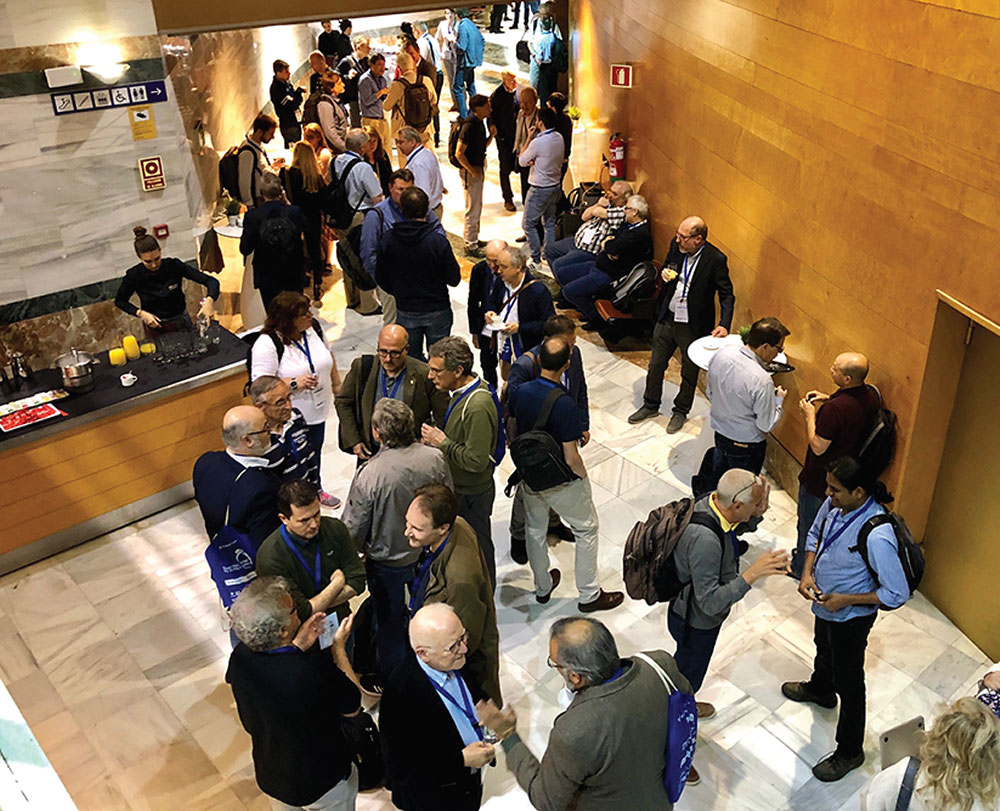
The open symposium of the European Strategy for Particle Physics (ESPP), which took place in Granada, Spain, from 13–16 May, revealed a vibrant field in flux as it grapples with how to attack the next big questions. Opening the event, chair of the ESPP strategy secretariat, Halina Abramowicz, remarked: “This is a very strange symposium. Normally we discuss results at conferences, but here we are discussing future results.” More than 10 different future-collider modes were under discussion, and the 130 or so talks and discussion sessions showed that elementary particle physics – in the wake of the discovery of the Higgs boson but so far no evidence of particles beyond the Standard Model (SM) – is transitioning into a new and less well-mapped realm of fundamental exploration.

Plain weird

Theorist Pilar Hernández of the University of Valencia described the SM as plain “weird”. The model’s success in describing elementary particles and their interactions is beyond doubt, but as an all-encompassing theory of nature it falls short. Why are the fermions arranged into three neat families? Why do neutrinos have an almost imperceptibly small mass? Why does the discovered Higgs boson fit the simplest “toy model” of itself? And what lies beneath the SM’s numerous free parameters? Similar puzzles persist about the universe at large: the mechanism of inflation; the matter–antimatter asymmetry; and the nature of dark energy and dark matter.

While initial results from the LHC severely constrain the most natural parameter spaces for new physics, said Hernández, the 10–100 TeV region is an interesting scale to explore. At the same time, she argued, there is a shift to more “bottom-up, rather than top-down”, approaches to beyond-SM (BSM) physics. The new quarries includes axion-like and long-lived particles, and searches for hidden, dark and feebly-interacting sectors – in addition to studying the Higgs boson, which has deep connections to many puzzles in the SM, with much greater precision. “Particle physics could be heading to crisis or revolution,” said Hernández.

Normally we discuss results at conferences, but here we are discussing future results

The accelerator, detector and computing technology needed for future fundamental exploration are varied and challenging. Reviewing Higgs-factory programmes, Vladimir Shiltsev, head of Fermilab’s Accelerator Physics Center, weighed up the pros and cons of linear versus circular machines. The former includes the International Linear Collider (ILC) and the Compact Linear Collider (CLIC); the latter a future circular electron–positron collider at CERN (FCCee) and the Circular Electron Positron Collider in China (CEPC). Linear colliders, said Shiltsev, are based on mature designs and organisation, are expandable to higher energies, and draw a wall-plug power similar to that of the LHC. On the other hand, they face challenges including their luminosity and number of interaction points. Circular Higgs factories offer a higher luminosity and more interaction points than linear options but require R&D into high-efficiency RF sources and superconducting cavities, said Shiltsev.

For hadron colliders, the three current options – CERN’s FCC-hh (100 TeV), China’s SppC (75 TeV) and a high-energy LHC (27 TeV) – demand next-generation superconducting dipole magnets. Akira Yamamoto of CERN/KEK said that while a lepton collider could begin construction in the next few years, the dipoles necessary for a hadron collider might take 10 to 15 years of R&D before construction could start.

The symposium also saw much discussion about muon colliders, which offer an energy-frontier lepton collider but for which it was widely acknowledged the technology is not yet ready. Concerning more futuristic acceleration technologies based on plasma wakefields, impressive results at facilities such as BELLA at Berkeley and AWAKE at CERN were on show.

Thinking ahead

From colliders to fixed-target to astrophysics experiments, said Francesco Forti of INFN and the University of Pisa, detectors face a huge variety of operating conditions and employ technologies deeply entwined with developments in industry. Another difficulty, he said, is how to handle non-standard physics signals, such as long-lived particles and monopoles. Like accelerators, detectors require long time scales – it was the very early 1990s when the first conceptual design reports for the LHC detectors were written.

In terms of data processing, the challenges ahead are immense, said Simone Campana of CERN and the HEP software foundation. The high-luminosity LHC (HL-LHC) presents a particular challenge, but DUNE, FAIR, BELLE II and other experiments will also create unprecedented data samples, plus there is the need to generate ever-more Monte Carlo samples. At the same time, noted Campana, the rate of advance in hardware performance has slowed in recent years, forcing the community to towards graphics processing units, high-performance computing and commercial cloud services. Forti and Campana both argued for better career opportunities and greater recognition for physicists who devote their time to detector and computing efforts.

The symposium also showed that the strategic importance of communications, education and outreach is becoming increasingly recognised.

Discussions in Granada revealed a community united in its desire for a post-LHC collider, but not in its choice of that collider’s form. Stimulating some heated exchanges, the ESPP saw proposals for future machines pitted against each other and against expectations from the HL-LHC in terms of their potential physics reach for key targets such as the Higgs boson.

Big questions

Gian Giudice, head of CERN’s Theory Department, said that the remaining BSM-physics space is “huge”, and pointed to four big questions for colliders: to what extent can we tell whether the Higgs is fundamental or composite? Are there new interactions or new particles around or above the electroweak scale? What cases of thermal relic WIMPs are still unprobed and can be fully covered by future collider searches? And to what extent can current or future accelerators probe feebly interacting sectors?

Though colliders dominated discussions, the enormous progress in neutrino physics since the previous ESPP was clear from numerous presentations. The open-symposium audience was reminded that neutrino masses, as established by neutrino oscillations, are the first particle-physics evidence for BSM phenomena. A vibrant programme is under way to fully measure the neutrino mixing matrix and in particular the neutrino mass ordering and CP violation phase, while other experiments are probing the neutrino’s absolute mass scale and testing whether they are of a Dirac or Majorana nature.

New working group to address ILC concerns

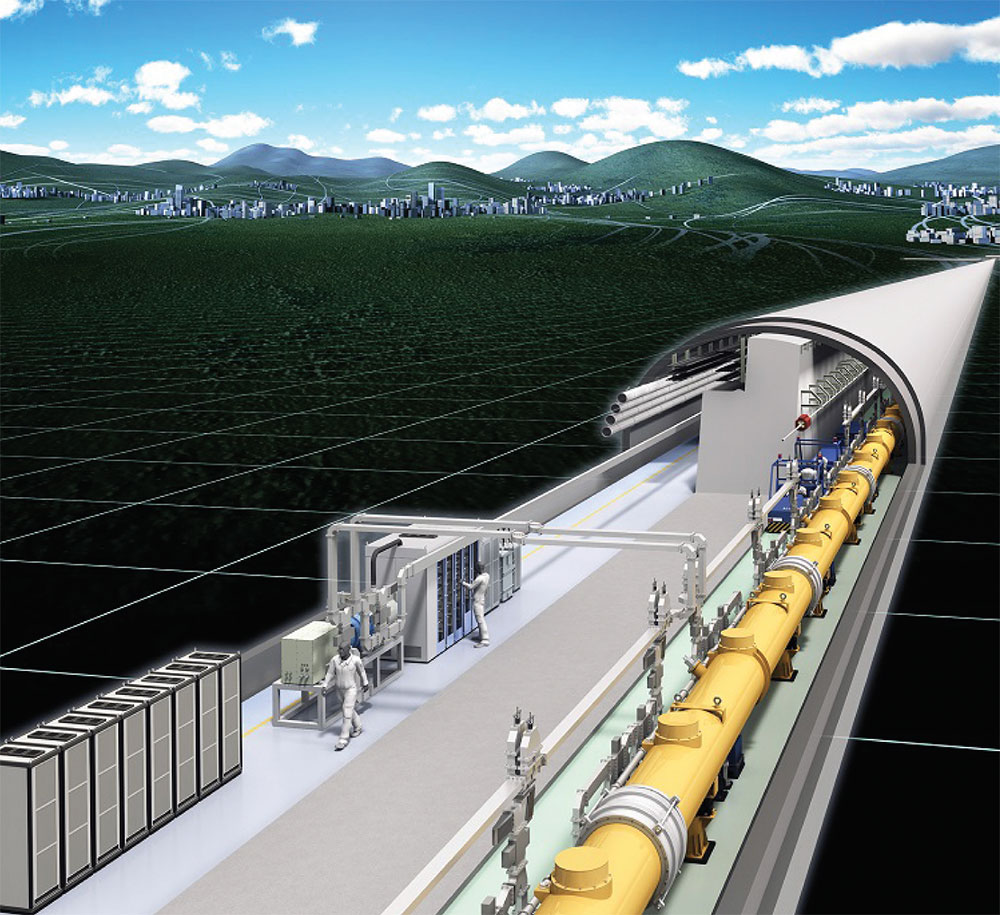
An illustration of the proposed ILC in Japan. Credit: R Hori/KEK.

On 17 May in Granada, following the open symposium of the European Strategy for Particle Physics, the first meeting of a new international working group on the International Linear Collider (ILC) took place. The ILC is the most technologically mature of all current future-collider options, and was at the centre of discussions at the previous strategy update in 2013. Although its technology and costs have been revised since then, there is still no firm decision on the project’s location, governance or funding model. The new working group was set up by Japan’s KEK laboratory in response to a recent statement on the ILC from Japan’s Ministry of Education, Sports, Culture, Science and Technology (MEXT) that called for further discussions on these thorny issues. Comprising two members from Europe, two from North America and three from Asia (including Japan), the group will investigate and update several points, including: cost sharing for construction and operation; organisation and governance of the ILC; and the international sharing of the remaining technical preparations. The working group will submit a report to KEK by the end of September 2019 and the final report will be used by MEXT for discussions with other governments.

Around a fifth of the 160 input documents to the ESPP were linked to flavour physics, which is crucial for new-physics searches because it is potentially sensitive to effects at scales as high as 105 TeV, said Antonio Zoccoli of INFN. Summarising dark-matter and dark-sector physics, Shoji Asai of the University of Tokyo said that a shift was taking place from the old view, where dark-matter solutions arose as a byproduct of beyond-SM approaches such as supersymmetry, to a new paradigm where dark matter needs an explanation of its own. Asai called for more coordination and support between accelerator-based direct detection and indirect detection dark-sector searches, as exemplified by the new European Center for Astro-Particle Theory.

Jorgen D’Hondt of Vrije Universiteit Brussel listed the many dedicated experiments in the strong-physics arena and the open questions, including: how to reach an adequate precision of perturbative and non-perturbative QCD predictions at the highest energies? And how to probe the quark–gluon plasma equation of state and to establish whether there is a first-order phase transition at high baryon density?

Of all the scientific themes of the week, electroweak physics generated the liveliest discussions, especially concerning how well the Higgs boson’s couplings to fermions, gauge bosons and to itself can be probed at current and future colliders. Summary speaker Beate Heinemann of DESY cautioned that such quantitative estimates are extremely difficult to make, though a few things stand out. One is the impressive estimated performance from the HL-LHC in the next 15 years or so; another is that a long-term physics programme based on successive machines in a 100 km-circumference tunnel offers the largest overall physics reach on the Higgs boson and other key parameters. There is broad agreement, however, that the next major collider immediately after the LHC should collide electrons and positrons to fully explore the Higgs and make precision measurements of other electroweak parameters.

The big picture

The closer involvement of particle physics with astroparticle physics, in particular following the discovery of gravitational waves, was a running theme. It was argued that, in terms of technology, next-generation gravitational-wave detectors such as the Einstein Telescope are essentially “accelerators without beams” and that CERN’s expertise in vacuum and cryogenics would help to make such facilities a reality. Inputs from the astroparticle– and nuclear-physics communities, in addition to dedicated perspectives from Asia and the Americas, brought into sharp focus the global nature of modern high-energy physics and the need for greater coordination at all levels.

The open symposium of the ESPP update was a moment for physicists to take stock of the field’s status and future. The community rose to the occasion, aware that the decisions ahead will impact generations of physicists yet to be born. A week of high-quality presentations and focused discussions proved how far things have moved on since the previous strategy update concluded in 2013. Discussions illuminated both the immensity of efforts to evaluate the physics reach of the HL-LHC and future colliders, and the major task faced by the European Strategy Group (ESG) in plotting a path to the future. It is clear that new thinking, from basic theory to instrumentation, computing, analysis and global organisation, is required to sustain progress in the field.

No decisions were taken in Granada, stresses Abramowicz. “During the open symposium we mainly discussed the science. Now comes the time to assess the capacity of the community to realise the proposed scientific goals,” she says. “The Physics Preparatory Group is preparing the briefing book, which will summarise the scientific aspirations of the community, including the physics case for them.”

The briefing book is expected to be completed in September. The ESG drafting session will take place on 20–24 January 2020 in Bad Honnef, Germany, and the update of the ESPP is due to be completed and approved by CERN Council in May 2020.

Dieter Renker 1944–2019

Dieter Renker, who made some key contributions to the design and construction of the CMS experiment at the LHC, passed away on 16 March after a short illness. Dieter was born in Bavaria and studied physics in Munich and Berlin. He obtained his PhD from the Ludwig Maximilian University in Munich, based on experiments performed at SIN, now the Paul Scherrer Institute (PSI), in Villigen, Switzerland. In 1982 he joined SIN as a staff physicist, where he remained until his retirement at the end of 2009.

At SIN/PSI he participated in many experiments, providing excellent technical support, as well as designing new beamlines at the accelerator there. His technical aptitude in due course turned to detector development, which led to his greatest achievement. In the early days of CMS there were various ideas for the design of the electromagnetic calorimeter. Among these was the use of lead tungstate crystals, which although having many suitable properties for operation at the LHC, have a relatively small scintillation-light yield. Dieter contributed the key measurements which showed that avalanche photodiodes (APDs), with their key properties of internal gain and insensitivity to shower leakage, could be used to read out the crystals. This led to lead-tungstate crystals being adopted by CMS for the design of the calorimeter. Not only did they provide superb energy resolution for electrons and photons, enabling key discoveries such as the Higgs boson in 2012, but they also enabled a more compact detector with significantly reduced overall cost.

The development of the final APD was carried out over a period of many years by Hamamatsu Photonics (Japan), but under the close guidance of Dieter. Nearly 100 different APD prototypes were tested before the technology was deemed fit to be used in CMS. The size, capacitance, speed and, above all, radiation tolerance were the key parameters that needed to be improved, and the final choice was made very close to the deadline for commencing construction of the calorimeter. A complex multi- step screening process involving gamma irradiation and annealing also needed to be developed to ensure that the APDs installed met the demanding reliability requirements of CMS. Until now there has been no recorded failure of any of the 122,000 APDs installed in CMS.

Later, Dieter turned his attention to Geiger-mode APDs, which are now widely used in particle and astroparticle physics, as well as in PET scanners. Together with researchers at ETH Zurich, he started the development of the first camera based on these novel photo sensors for Cherenkov telescopes to measure very high-energy gamma rays from astrophysical sources. This camera was installed at the FACT telescope, located in La Palma, Spain, where the HEGRA experiment had also been operated with Dieter’s active participation. The FACT telescope has now been operating successfully for more than seven years, without any sensor-related problems.

After his retirement Dieter returned to his spiritual home, Munich, where he continued his work at the Technical University.

Dieter was a curious physicist with an exceptional talent for novel detector concepts. He pursued new ideas with a strong focus on achieving his goals. He had a very open mind, and was willing to advise and assist colleagues with great patience and good humour. In his free time his interests included classical music and cooking as well as searching the woods for unusual edible mushrooms. Many colleagues and visitors have fond memories of invitations to his home, embellished with fine cooking.

His sudden illness was a shock to many. Dieter leaves behind his partner, Ulrike.

Olga Borisovna Igonkina 1973–2019

Nikhef particle physicist and prominent member of the ATLAS experiment at CERN, Olga Igonkina, passed away on 19 May in Amsterdam at the age of 45.

Olya, as she was known to most of us, was born in 1973 in Moscow. Her father was an engineer, her mother a biological scientist. At age 14 she went to a special school for children talented in mathematics and in 1991 started her studies in physics at the Moscow Institute for Physics and Technology. Two years later Olya moved to the ITEP institute to specialise in particle physics, working at the ARGUS experiment and later the HERA-B experiment at DESY.

Olya wrote her dissertation about J/ψ production in HERA-B, with Mikhail Danilov as her supervisor. In 2002 she moved to BaBar at SLAC as a postdoc with the University of Oregon in the group of Jim Brau, where she worked on searches for lepton-flavour-violating tau decays and became convener of the BaBar tau working group. In 2006 she moved to CERN to spearhead Oregon’s new ATLAS group. Her work in ATLAS concentrated on the trigger, where she contributed to many activities with great ideas and enthusiasm, in particular as the trigger-menu coordinator during the startup of the LHC, and later on physics with tau leptons. She began her appointment at Nikhef in 2008 and in 2015 became a professor at Radboud University in Nijmegen.

For her efforts on the ATLAS trigger, Olya was given an ATLAS outstanding achievement award in 2018. Physics-wise, her passion was lepton flavour violation, in particular in tau decays. Intrigued by the hints of lepton-flavour violation in B decays reported by the LHCb experiment and B factories, and always on the lookout for a niche in a large collaboration, in 2018 Olya moved some of her efforts from tau to B physics. She took responsibility for the B-hadron triggers with the aim of collecting an even larger sample of B decays in ATLAS for the final year of Run 2. She was working on preparations for an RK measurement until her very last days.

Besides being a talented scientist, Olya was a dedicated teacher. She supervised an impressive number of PhD students and was very successful in obtaining research grants. She was also very active in outreach activities, with masterclasses and open days at Nikhef, and in community building at ATLAS. Recently she organised the 15th International Workshop on Tau Lepton Physics conference in Amsterdam.

Olya was a passionate physicist who was bursting with ideas. Among several tributes from her colleagues, Olya was described as a future experiment leader. She had a memorably strong work ethos, and until the very last moment refused to let her illness affect her work. She was always cheerful and always positive. Her attitude to work and life will remain a source of inspiration to many of us.

Olya leaves behind her husband, Wouter Hulsbergen of Nikhef, and two children.

Hans-Jürg Gerber 1929–2018

Swiss physicist Hans-Jürg Gerber passed away on 28 August last year. Born in Langnau/Kanton Bern, he studied and did his PhD from 1949 to 1959 at ETH Zurich on “Scattering and polarization effects of 3.27 MeV neutrons on deuterons”. He then worked at the University of Illinois in the US, before joining CERN from 1962 to 1968. There, he carried out experiments at the 28 GeV Proton Synchrotron (PS). He studied high-energy neutrino interactions using a spark chamber, and performed measurements of lepton universality. He also tested time-reversal invariance in the charged decay mode of the Λ hyperon. He was also PS coordinator from 1965 to 1966.

In 1968, Gerber became head of the research department at the Swiss Institute for Nuclear Physics (SIN). He was elected by the Swiss Federal Council to become associate professor of experimental physics in 1970, and in 1977 promoted to full professor. Gerber initiated basic research at SIN and later at the Paul Scherrer Institute (PSI) with his precision experiments on the decay of charged muons – experiments that continue to this day at PSI (see p45). His flair for the fundamental led to the most general determination of the leptonic four-fermion interaction for the normal and inverse muon decay using experimental data, which brought him international recognition.

In the 1980s and 1990s, Hans-Jürg returned to CERN to help set up and operate experiment PS195 (CPLEAR) for studying CP violation using a tagged neutral-kaon beam. The concept of the experiment, which involved tagging the flavour of the neutral kaon at the point of production, was opposite to already operational kaon experiments based on K-short and K-long beams. As a skilled experimenter, he contributed significantly to the success of CPLEAR with unconventional ideas. For example, during a crisis when the liquid-scintillator started to develop air bubbles due to the heat from nearby electronics, he invented a system to remove the air dissolved in the liquid using ultrasound. CPLEAR’s measurements on the violation of time-reversal invariance (T-invariance) and tests of quantum mechanics were the starting point for significant theo­retical work he undertook on T, CP and CPT invariance.

While he retired in the spring of 1997 after a long and extremely successful career, he still continued working on particle physics with various publications on the interpretation of the CPLEAR results regarding testing of quantum mechanics, T- and CPT-violation.  He was also a contributor to the review of particle physics in the Particle Data Group.

Experiment, theory and teaching formed a unity for Hans-Jürg. This was particularly evident in his lectures, in which he enthusiastically conveyed the joy of physics to his students. We also remember dinners with Hans-Jürg after long working days setting up experiments, where we talked about all possible physics questions.

He is survived by his wife Hildegard, his three children and grandchildren.

bright-rec iop pub iop-science physcis connect