Comsol -leaderboard other pages

Topics

ICTP announces next director

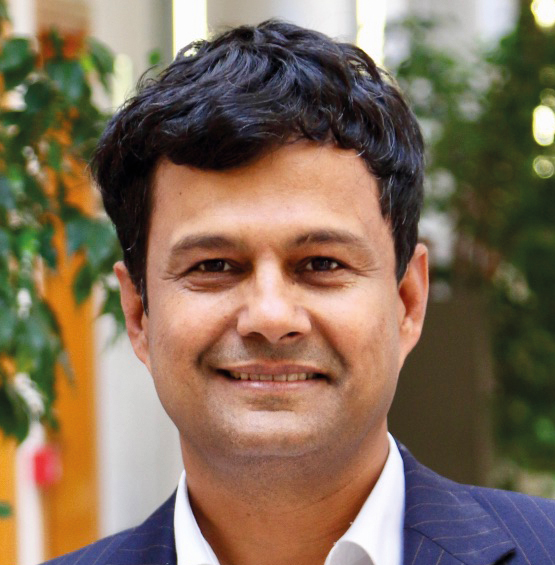
Atish Dabholkar

Atish Dabholkar, a theorist from India, has been appointed the next director of the International Centre for Theoretical Physics (ICTP) in Trieste, Italy. Currently head of ICTP’s high-energy, cosmology and astroparticle physics section, Dabholkar will take up his new position in November. He will succeed Fernando Quevedo, who has led the centre since 2009. Dabholkar’s research has focused on string theory and quantum black holes, and his appointment comes at a time of expansion for ICTP. Over the past 10 years, the centre has hired more researchers and created new research initiatives in quantitative life sciences, high-performance computing, renewable energies and quantum technology. In addition, ICTP has increased its presence with the opening of four partner institutes in Brazil, China, Mexico and Rwanda. “Directing ICTP is a once in a lifetime opportunity due to its unique mission and its big impact in developing countries. I am glad that when I leave in November the institute will be in very good hands,” says Quevedo.

Guido Altarelli Award 2019

Jonathan Gaunt
Josh Bendavid

The fourth edition of the Guido Altarelli Award, which recognises exceptional achievements from young scientists in the field of deep inelastic scattering and related subjects, was awarded during the DIS2019 workshop in Torino, Italy, on 8 April. Jonathan Gaunt of CERN was recognised for his pioneering contributions to the theory and phenomenology of double and multiple parton scattering. Josh Bendavid, also CERN, and a member of the CMS collaboration, received the award for his innovative contributions with original tools to Higgs physics and proton parton density functions at the LHC. The brother of the late Guido Altarelli, Massimo Altarelli, was present at the ceremony and handed the certificates to the two winners.

2019 Dirac Medal and Prize

Viatcheslav Mukhanov, Alexei Starobinsky and Rashid Sunyaev

The International Centre for Theoretical Physics (ICTP) in Italy has awarded its 2019 Dirac Medal and Prize to three physicists whose research has made a profound impact on modern cosmology. Viatcheslav Mukhanov (Ludwig Maximilian University of Munich), Alexei Starobinsky (Landau Institute for Theoretical Physics) and Rashid Sunyaev (Max Planck Institute for Astrophysics) share the prize for “their outstanding contributions to the physics of the cosmic microwave background with experimentally tested implications that have helped to transform cosmology into a precision scientific discipline by combining microscopic physics with the large-scale structure of the universe”.

Julius Wess Award 2018

Sally Dawson

Sally Dawson of Brookhaven National Laboratory has been granted the 2018 Julius Wess Award by the KIT Elementary Particle and Astroparticle Physics Center of Karlsruhe Institute of Technology. She is recognised for her outstanding scientific contributions to the theoretical description and in-depth understanding of processes in hadron colliders, in particular her work relating to the physics of the Higgs boson and top quark. The Julius Wess Award is endowed with €10,000 and is granted annually to elementary particle and astroparticle physicists for exceptional experimental or theoretical scientific achievements.

Winners of 2019 Beamline for Schools competition

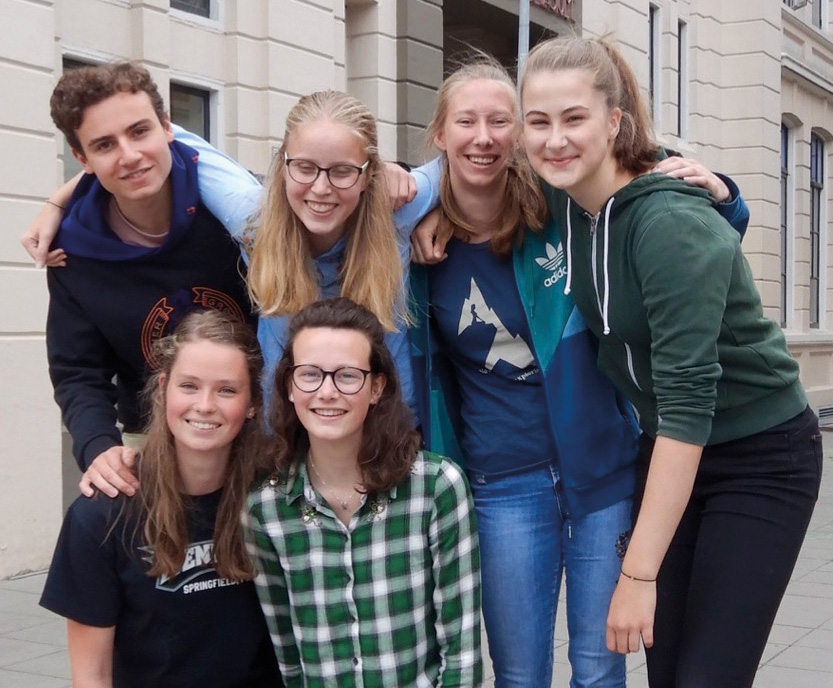
Students from the Praedinius Gymnasium in Groningen

Two teams of high-school students, one from the Praedinius Gymnasium in Groningen, Netherlands (pictured), and one from the West High School in Salt Lake City, US, have won CERN’s 2019 Beamline for Schools competition. In October, the teams will travel to DESY in Germany to carry out their proposed experiments together with scientists from CERN and DESY. The Netherlands team “Particle Peers” will compare the properties of the particle showers originating from electrons with those created from positrons, while the “DESY Chain” team from the US will focus on the properties of scintillators for more efficient particle detectors. Since Beamline for Schools was launched in 2014, almost 10,000 students from 84 countries have participated. This year, 178 teams from 49 countries worldwide submitted a proposal for the sixth edition of the competition. Due to the current long shutdown of CERN’s accelerators for maintenance and upgrade, there is currently no beam at CERN, which has opened up opportunities to explore partnerships with DESY and other laboratories.

Building Balkan bridges in theory

SEENET-MTP logo

Twenty years ago, distinguished Austrian theorist and co-inventor of supersymmetric quantum field theory, Julius Wess, concluded that something must be done to revitalise science in former Yugoslavia. One of the 12 founding members of CERN, Yugoslavia was a middle-sized European country with corresponding moderate activities in high-energy physics. Its breakup resulted in a dramatic deterioration of conditions for science, the loss of connections and an overwhelming sense of isolation inside the region.

Wess strongly believed that science is a powerful means to influence the development of society. From 1999 to 2003, his initiative “Wissenschaftler in Global Verantwortung” (WIGV), which translates to “Scientists in Global Responsibility”, provided a platform to connect and support individual researchers, groups and institutions with a focus on former Yugoslavia. Much was achieved during this short time, such as the granting of scholarships in mathematics and theoretical physics, a revival of interrupted schools and conferences and the modernisation of intranet at several Serbian institutions. Funding, initially from Germany, provided an opportunity to researchers from former Yugoslavia to establish contacts and cooperation with many excellent researchers from all around the world.

Goran Djordjevic

It was natural to expand the WIGV initiative to bridge the gap between southeastern and the rest of Europe. Countries to the east and south of Yugoslavia – such as Bulgaria, Greece, Romania and Turkey – have a reasonably strong presence in high-energy physics. On the other hand, they share some similar economic and scientific problems, with many research groups facing insufficient financing, isolation and lacking critical mass.

Therefore, the participants of the UNESCO-sponsored Balkan Workshop 2003 held in Serbia created the southeastern European Network in Mathematical and Theoretical Physics (SEENET-MTP). The network has since grown to include 16 full and seven associated member institutions from 11 countries, and more than 450 individual members. There are also 13 partner institutions worldwide. During its 15 years SEENET-MTP has undertaken: more than 18 projects, mostly concerning mobility and training; 30 conferences, workshops and schools; more than 300 researcher and student exchanges and fellowships; and more than 250 joint papers. Following initial support from CERN’s theory department, a formal collaboration agreement resulted in the joint CERN–SEENET-MTP PhD Training Program with at least 80 students taking part in the first cycle from 2015 to 2018. Vital support also came from the European Physical Society and ICTP Trieste.

In total, the investment provided for SEENET-MTP from international funds, its members, national funds and in-kind support amounts to almost €1 million. It is quite an achievement – if we consider that the results rely mostly on the efforts and good will of many individuals – but it is still much less than an average “EU project”. This raises important questions about maintaining SEENET-MTP’s efforts. 

SEENET-MTP has “thermalised” the system – the network has made people in the region interact. Yet today, we find ourselves asking similar questions that its founders asked themselves 15 years ago. Is there something specific to southeast Europe that deserves special treatment? Is there something specific in high-energy theoretical physics that merits specific funding? Is the financing of high-energy physics primarily a responsibility of governments? And, if so, can Balkan countries do it properly?

Is there something specific to southeast Europe that deserves special treatment?

If the answers to the first three questions are “yes”, and to the last one “no”, a pressing issue concerns extra funding and the role of the European Union (EU). In the six or seven countries in the region that are not yet members of the EU (and which have a very unclear perspective about joining), we need to work out how to fund fundamental sciences in a similar way that Poland, Czech Republic, or “older” EU countries do. At the same time, it is important to consider the future roles of non-EU institutions such as CERN and the ICTP. The recent accession of Serbia to CERN as a full member state, and with Croatia and Slovenia in the process of joining, are promising signs towards closer European integration.

Networking is the most natural and promising auxiliary mechanism to preserve and build local capacity in fundamental physics in the region. The next SEENET Scientific-Advisory Committee and its Council meeting will take place at ICTP Trieste from 20 to 23 October. It will be the right place, if not the last possibility, to transfer the initial ideas and achieved results to an EU-supported project to bolster best practice in the Balkans.

www.seenet-mtp.info/bridges

The cutting edge of cancer research

Breast cancer cells

Cancer is a heterogeneous phenomenon that is best viewed as a complex system of cells interacting in a changing micro-environment. Individual experiments may fail to capture this reality, given spatially and temporally limited scales of observation, however, in recent years, physicists have contributed insights into the interplay of phenomena at different scales: gene regulatory networks and communities of cells or organisms are two examples of systems whose properties emerge from the behaviour of individual components. Unfortunately, however, such research is usually confined to journals and specialised conferences, hindering the entry of interested physicists into the field. The publication of a new interdisciplinary textbook is therefore most welcome.

La Porta and Zapperi’s The Physics of Cancer, one of the few books devoted to this subject, brings 15 years of exciting and important results in cancer research to a wide audience. The book approaches the subject from the perspective of physics, chemistry, mathematics and computer science. As a result of the vastness of the subject and the brevity of the book, the discussion can occasionally feel superficial, but the main concepts are introduced in a manner accessible to physicists. The authors follow a logical thread within each argument, and furnish the reader with abundant references to the original literature.

The book begins by observing that the “hallmarks” of cancer are not only yet to be understood, but have increased in number. Published at the turn of the millennium, Douglas Hanahan and Robert Weinberg’s seminal paper identified six: sustaining proliferative signalling; evading growth suppressors; enabling replicative immortality; activating invasion and metastasis; inducing angiogenesis; and resisting cell death. Just 11 years later the same authors published an updated review adding four more hallmarks: avoiding immune destruction; promoting inflammation; genome instability and mutation; and deregulating cellular energetics. The amount of research that has been distilled into a handful of concepts is formidable. However, La Porta and Zapperi argue that a more abstract and unifying approach is now needed to gain a deeper understanding. They advocate studying cancer as a complex system with the tools of several disciplines, in particular subfields of physics such as biomechanics, soft-condensed-matter physics and statistical mechanics.

The book is structured in 10 self-contained chapters. The first two present essential notions of cell and cancer biology. The subsequent chapters deal with different features of cancer from an interdisciplinary perspective. A discussion on statistics and computational models of cancer growth is followed by a chapter exploring the generation of vascular networks in its biological, hydrodynamical and statistical aspects. Next comes a mathematical discussion of tumour growth by stem cells – the active and self-differentiating cells thought to drive the growth of cancers. A couple of chapters treat the biomechanics of cancer cells and their migration in the body, before La Porta and Zapperi turn to the dynamics of chromosomes and the origin of the genetic mutations that cause cancer. The final two chapters focus on how to fight tumours, from the perspectives of both the immune system and pharmacological agents.

La Porta and Zapperi’s book isn’t just light reading for curious physicists – it can also serve to guide interested researchers into a rich interdisciplinary area.

CERN and the Higgs Boson

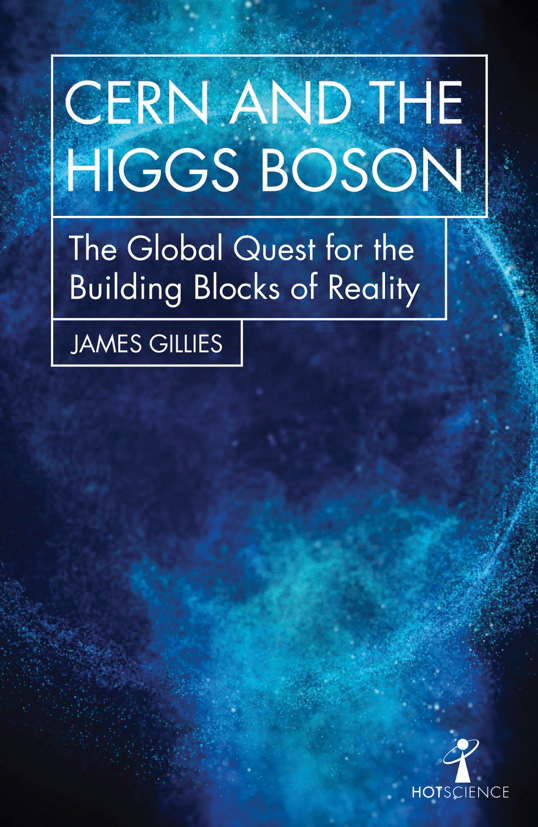
CERN and the Higgs Boson, by James Gillies

James Gillies’ slim volume CERN and the Higgs Boson conveys the sheer excitement of the hunt for the eponymous particle. It is a hunt that had its origins at the beginning of the last century, with the discovery of the electron, quantum mechanics and relativity, and which was only completed in the first decades of the next. It is also a hunt throughout which CERN’s science, technology and culture grew in importance. Gillies has produced a lively and enthusiastic text that explores the historical, theoretical, experimental, technical and political aspects of the search for the Higgs boson without going into oppressive scientific detail. It is rare that one comes across a monograph as good as this.

Gillies draws attention to the many interplays and dialectics that led to our present understanding of the Higgs boson. First of all, he brings to light the scientific issues associated with the basic constituents of matter, and the forces and interactions that give rise to the Standard Model. Secondly, he highlights the symbiotic relationship between theoretical and experimental research, each leading the other in turn, and taking the subject forward. Finally, he shows the inter-development of the accelerators, detectors and experimental methods to which massive computing power had eventually to be added. This is all coloured by a liberal sprinkling of anecdotes about the people that made it all possible.

Complementing this is the story of CERN, both as a laboratory and as an institution, traced over the past 60 years or so, through to its current pre-eminent standing. Throughout the book the reader learns just how important the people involved really are to the enterprise: their sheer pleasure, their commitment through the inevitable ups and downs, and their ability to collaborate and compete in the best of ways.

A ripping yarn, then, which it might seem churlish to criticise. But then again, that is the job of a reviewer. There is, perhaps, an excessively glossy presentation of progress, and the exposition continues forward apace without conveying the many downs of cutting-edge research: the technical difficulties and the many immensely hard and difficult decisions that have to be made during such enormous endeavours. Doing science is great fun but also very difficult – but then what are challenges for?

There is, perhaps, an excessively glossy presentation of progress

A pertinent example in the Higgs-boson story not emphasised in the book occurred in 2000. The Large Electron Positron collider (LEP) was due to be closed down to make way for the LHC, but late in the year LEP’s ALEPH detector recorded evidence suggesting a Higgs boson might be being observed at a mass of 114–115 GeV – although, unfortunately, not seen by the other experiments (see p32). Exactly this situation had been envisaged when not one but four LEP experiments were approved in the 1980s. After considerable discussion LEP’s closure went ahead, much to the unhappiness and anger of a large group of scientists who believed they were on the verge of a great discovery. This made for a very difficult environment at CERN for a considerable time thereafter. We now know the Higgs was found at the LHC with a mass of 125 GeV, vindicating the original decision of 2000.

A few more pictures might help the text and fix the various contributors in readers’ minds, though clearly the book, part of a series of short volumes by Icon Books called Hot Science, is formatted for brevity. I also found the positioning of the important material on applications such as positron emission tomography and the world wide web to be unfortunate, situated as it is in the final chapter, entitled “What’s the use?” Perhaps instead the book could have ended on a more upbeat note by returning to the excitement of the science and technology, and the enthusiasm of the people who were inspired to make the discovery happen.

CERN and the Higgs Boson is a jolly good read and recommended to everyone. Whilst far from the first book on the Higgs boson, Gillies’ offering distinguishes itself with its concise history and the insider perspective available to him as CERN’s head of communications from 2003 to 2015: the denouement of the hunt for the Higgs.

From SUSY to the boardroom

Former particle physicist Andy Yen has set himself a modest goal: to transform the business model of the internet. In the summer of 2013, following the Snowden security leaks, he and some colleagues at CERN started to become concerned about the lack of data privacy and the growing inability of individuals to control their own data on the internet. It prompted him, at the time a PhD student from Harvard University working on supersymmetry searches in the ATLAS experiment, and two others, to invent “ProtonMail” – an ultra-secure e-mail system based on end-to-end encryption.

The Courier met with Yen and Bart Butler, ProtonMail’s chief technology officer and fellow CERN alumnus, at the company’s Geneva headquarters to find out how a discussion in CERN’s Restaurant 1 was transformed into a company with more than 100 employees serving more than 10 million users.

If you are a Gmail user, then you are not Google’s customer, you are the product that Google sells to its real customer, which is advertisers

“The business model of the internet today really isn’t compatible with privacy,” explains Yen. “It’s all about the relationship between the provider and customer. If you are a Gmail user, then you are not Google’s customer, you are the product that Google sells to its real customer, which is advertisers. With ProtonMail, the people who are paying us are also our users. If we were ever to betray the trust of the user base, which is paying us precisely for reasons of privacy, then the whole business model collapses.”

Anyone can sign up for a ProtonMail account. Doing so generates a pair of public and private keys based on secure RSA-type encryption implementations and open-source cryptographic libraries. User data is encrypted using a key that ProtonMail does not have access to, which means the company cannot decrypt or access a user’s messages (nor offer data recovery if a password is forgotten). The challenge, says Yen, was not so much in developing the underlying algorithms, but in applying this level of security to an e-mail service in a user-friendly way.

In 2014 Yen and ProtonMail’s other co-founders, Jason Stockman and Wei Sun, entered a competition at MIT to pitch the idea. They lost, but reasoned that they had already built the thing and got a couple of hundred CERN people using it, so why not open it up to the world and see what happens? Within three days of launching the website 10,000 people had signed up. It was surprising and exciting, says Yen, but also scary. “E-mail has to work. A bank or something might close down their websites for an hour of maintenance once in a while, but you can’t do that with e-mail,” he says.

ProtonMail’s CERN origins (the name came from the fact that its founders were working on the Large Hadron Collider) meant that the technology could first come under the scrutiny of technically minded people – “early adopters”, who play a vital role in the life cycle of new products. But what might be acceptable to tech-minded people is not necessarily what the broader users want, says Yen. He quickly realised that the company had to grow, and that he had been forced into a “tough and high-risk” decision between ProtonMail and his academic career. Eventually deciding to take the leap, Harvard granted him a period of absence, and Yen set about dealing with the tens of thousands of users who were waiting to get onto the service.

In need of cash, the fledgling software outfit decided to try something unusual: crowd funding. This approach broke new ground in Switzerland, and ProtonMail soon became a test case in tax law as to whether such payments should be considered revenue or donation (the authorities eventually ruled on the former). But the effort was a huge success, raising 0.5 million Swiss Francs in a little over two months. “Venture capital (VC) was a mystery to us,” says Yen. “We didn’t know anybody, we didn’t have a business plan, we were just a few people writing code. But, funnily enough, the crowd sourcing, in addition to the money itself, got a lot of attention and this attracted interest from VCs.” A few months later, ProtonMail had received 2 million Swiss Francs in seed funding.

“It is one thing to have an idea – then we had to actually do what we’d promised: build a team, hire people, scale up the product and have some sort of company to run things, with corporate identity, accounting, tax compliance, etc. There wasn’t really a marketing plan… it was more of a technical challenge to build the service,” says Yen. “If I was to give advice to someone in my position five years ago, then there isn’t a lot I could say. Starting a company is something new for almost everybody who does it, and I don’t think physicists are at a disadvantage compared to someone who went to business school. All you have to do is work hard, keep learning and you have to have the right people around you.”

It’s not a traditional company – 10–15% of the staff today is CERN scientists

It was around that time, in 2015, when Butler, also a former ATLAS experimentalist working on supersymmetry and one-time supervisor of Yen, joined ProtonMail. “A lot of that year was based around evolving the product, he says. “There was a big difference between what the product originally was versus what it needed to be to scale up. It’s not a traditional company – 10–15% of the staff today is CERN scientists. A lot of former physicists have developed into really good software engineers, but we’ve had to bring in properly trained software engineers to add the rigour that we need. At the end of the day, it’s easier to teach a string theorist how to code than it is to teach advanced mathematics and complex cryptographic concepts to someone who codes.”

With the company, Proton Technologies, by then well established – and Yen having found time to hotfoot it back to Harvard for one “very painful and ridiculous” month to write up his PhD thesis – the next milestone came in 2016 when ProtonMail was actually launched. It was time to begin charging for accounts, and to provide those who already had signed up with premium paid-for services. It was the ultimate test of the business model: would enough people be prepared to pay for secure e-mail to make ProtonMail a viable and even profitable business? The answer turned out to be “yes”, says Yen. “2016 was make or break because eventually the funding was going to run out. We discussed whether we should raise money to buy us more time. But we decided just to work our asses off instead. We came very close but we started generating revenue just as the VC cash ran out.”

Since then, ProtonMail has continued to scale up its services, for instance introducing mobile apps, and its user base has grown to more than 10 million. “Our main competitors are the big players, Google and Microsoft,” says Yen. “If you look at what Google offers today, it’s actually really nice to use. So the longer vision is: can we offer what Google provides — services that are secure, private and beneficial to society? There is a lot to build there, ProtonDrive, ProtonCalendar, for example, and we are working to put together that whole ecosystem.”

A big part of the battle ahead is getting people to understand what is happening with the internet and their data, says Butler. “Nobody is saying that when Google or Facebook began they went out to grab people’s data. It’s just the way the internet evolved: people like free things. But the pitfalls of this model are becoming more and more apparent. If you talk to consumers, there is no choice in the market. It was just e-mail that sold your data. So we want to provide that private option online. I think this choice is really important for the world and it’s why we do what we do.”

 

Music of the muons

Subatomic Desire

Swiss composer Alexandre Traube and the Genevan video-performer Silvia Fabiani have collaborated to form music and dance troupe Les Atomes Dansants, with the aims of using CMS data to explore the links between science and art, and of establishing a dialogue between Eastern and Western culture. Premiering their show Subatomic Desire at CERN’s Globe of Science and Innovation on 21 June during Geneva’s annual Fête de la Musique, they took the act to the detector that served as their muse by performing in the hangar above the CMS experiment.

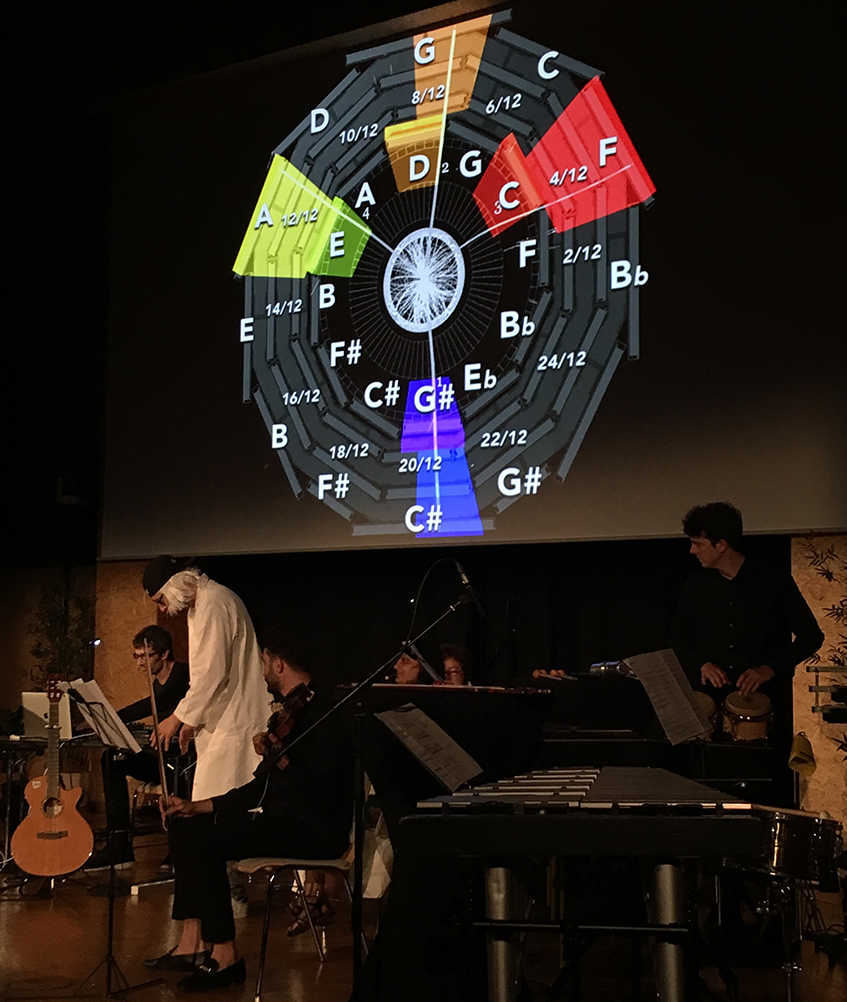
Muon tracks from W, Z and Higgs events served as inspiration for Traube, who was advised by CMS physicist Chiara Mariotti of INFN. He began by associating segments of the CMS’s muon system to notes. Inspired by the detectors’ arrangement as four nested dodecagons, he assigned a note from the chromatic scale to each of the 12 sides of the innermost layer, and to each note a sonorous perfect fourth above to the corresponding segment in the outer layer. Developing an initial plan to also link the intermediate two layers of the muon system to specific frequencies, he associated two intermediate microtonal notes to the transverse momentum and rapidity of the tracks. At several moments during the performance the musicians improvise using the resulting four-note sequences: an expression of quantum indeterminacy, according to Traube. Fabiani’s video projections add to the surreal atmosphere by transposing the sequences into colours, with an animation of bullets referencing the Russian Second World War navy shells that were used to build the CMS’s hadronic calorimeter.

Clad in lab coat, Einstein wig and reversed baseball cap, Doc MC Carré raps formulas and boogies around the stage

In concert with the audiovisual display, three performers sing about their love for the microcosm. Clad in lab coat, Einstein wig and reversed baseball cap, Doc MC Carré (David Charles) raps formulas and boogies around the stage. He is accompanied by Doc Lady Emmy, played by the soprano Marie-Najma Thomas, and Poète Atomique – the Persian singer Taghi Akhabari – who peppers the performance with mystical extracts from Sufi poets Rûmi and Attâr, and medieval German abbess Hildegard of Bingen, each of whom explores themes of the natural world in their writings. The performers contend that the lyrics speak about desire as the fuel for everything at the micro- and macroscale. Elaborate, contemporary and rich in metaphors, this is an experience that some will find abstruse but others will love.

Subatomic Desire will next be performed in Neuchâtel, Switzerland on 14 September.

bright-rec iop pub iop-science physcis connect