Comsol -leaderboard other pages

Topics

John Flanagan 1964–2020

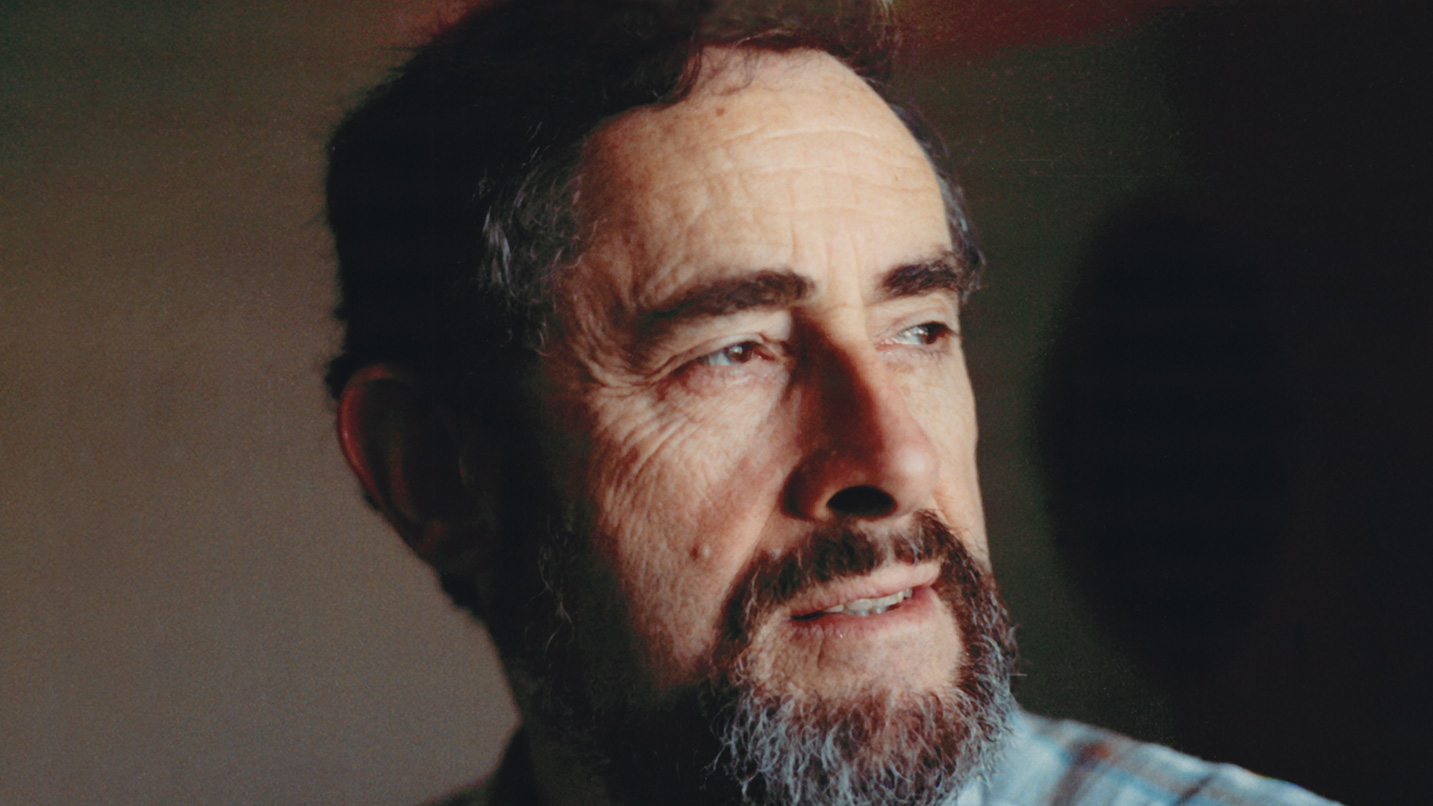
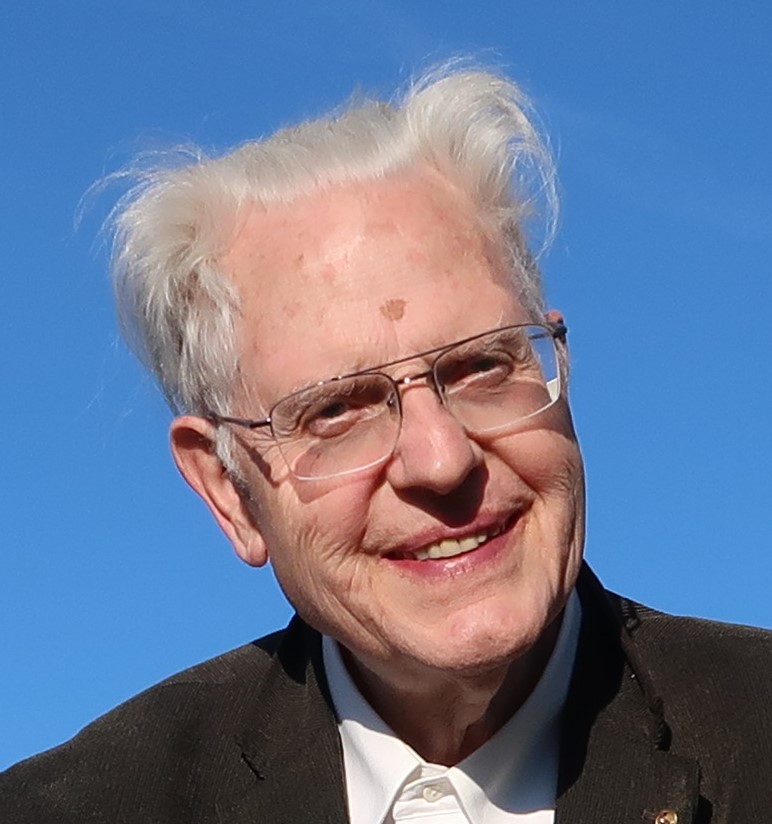
John Flanagan. Credit: M Masuzawa

Accelerator physicist John Flanagan, who made important contributions to beam instrumentation for the KEKB and SuperKEKB projects in Japan, passed away on 13 March.

John Flanagan was born in 1964 and grew up in The Valley of Vermont, attending Philips Academy and graduating from Harvard University in 1987 with a degree in physics, astronomy and astrophysics. After working for a few years at software companies and at the Space Sciences Laboratory at Berkeley, he attended graduate school in physics at the University of Hawai’i at Manoa in 1992. Emeritus professor Steve Olsen recalls: “John was one of our best ever graduate students at the UH. Although he was initially attracted to Hawaii because of his love for scuba diving, his deepest dive as a grad student was to the bottom of the Super-Kamkiokande water tank.”

John joined the Super-Kamkiokande experiment at an early stage. He was a beloved member of the construction team and quite a favourite of the miners at Kamioka, who presented him with the snake’s beating heart at the mine-tunnel dedication. John took the first data-taking shift on the experiment on 1 April 1996 and the following year married Mika Masuzawa, who was at that time a postdoc from Boston University working on the Super-K construction. This was around the time John completed his thesis on the first observation of atmospheric neutrino oscillations at Super-Kamkiokande, supervised by John Learned. After completing his PhD, he moved back to Japan and was a research fellow in the KEK accelerator division. His talent was quickly recognised. He was appointed as an assistant professor in 1999, an associate professor in 2008 and promoted to full professor in 2016.

He was also known for his activities on gender-equality issues

A world-leading accelerator physicist, John was well known for his immense contributions to the KEKB and SuperKEKB projects. His work on the photoelectron instability, monitoring of the beam size via synchrotron radiation light and X-rays, and feedback systems played a key role in KEKB’s achievement of the world highest luminosity at an electron-positron accelerator. Flanagan-san (sometimes nicknamed “furigana-san”) participated in nearly every aspect of the construction, monitoring and operation of KEKB. He is most celebrated for his outstanding work on the synchrotron radiation (SR) light monitor using interferometery, which allows real-time measurement of micron-level beam sizes. For SuperKEKB, he greatly improved the SR monitor by using a diamond mirror; this eliminated the systematics from thermal expansion of the mirror that had plagued the SR monitoring system in KEKB.

John also led work on the remediation of the electron-cloud effect, in particular concerning the onset of the electron-cloud blowup and its relation to the head-tail instability, which has been quite visible in the global accelerator community. In addition to being one of the key accelerator problems for KEKB and SuperKEKB, a solution to the electron-cloud problem is also needed for successful operation of the damping rings for the future International Linear Collider. Finally, he developed an innovative X-ray beam profile monitoring technique by adapting techniques from X-ray astronomy and using innovative high-speed electronics. John carried out early tests of the system in collaboration with colleagues at CESR-TA (Cornell Electron Storage Ring Test Accelerator) in Cornell and at the ATF2 (Accelerator Test Facility) at KEK. He also developed a collaboration with SLAC and the University of Hawai’i within the framework of the US-Japan Cooperation Program in High Energy Physics. In the near future, an upgraded version of this X-ray monitor will be used to realise John’s dream of bunch-by-bunch measurements of small vertical beam sizes.

In addition to his fluent command of the Japanese language and understanding of Japanese manners, John was a modest and kind person who was beloved by his colleagues in the KEK accelerator division and by those on the Belle and Belle II experiments. He was also known for his activities on gender-equality issues including participation in the Japanese Physical Society taskforces and committees as well as serving as an instructor at the Rikejo science camp for high-school girls.

John is survived by his wife, a professor at KEK, and by his daughter Mariko. We will all remember him with the greatest respect as a splendid person, as innovative scientist, and someone who we are very proud to have had the opportunity to work with.

European strategy update unveils ambitious future

An artist

The discovery of the Higgs boson by the ATLAS and CMS collaborations at the LHC in 2012 marked a turning point in particle physics. Not only was it the last of the Standard Model particles to be found, but it is completely different to any particle seen before: a fundamental scalar, with profound connections to the structure of the vacuum. Extensive measurements so far suggest that the particle is the simplest possible version that nature permits. But the study of the Higgs boson is still in its infancy and its properties present enigmas, including why it is so light, which the Standard Model cannot explain. Particle physics is entering a new era of exploration to address these and other outstanding questions, including unknowns in the universe at large, such as the nature of dark matter.

The 2020 update of the European strategy for particle physics (ESPPU), which was released today during the 199th session of the CERN Council, sets out an ambitious programme to carry the field deep into the 21st century. Following two years of discussion and consultation with particle physicists in Europe and beyond, the ESPPU has identified an electron–positron Higgs factory as the highest priority collider after the LHC. The ultraclean collision environment of such a machine (which could start operation at CERN within a timescale of less than 10 years after the full exploitation of the high-luminosity LHC in the late 2030s) will enable dramatic progress in mapping the diverse interactions of the Higgs boson with other particles, and form an essential part of a research programme that includes exploration of the flavour puzzle and the neutrino sector.

We have started to concretely shape CERN’s future after the LHC

Ursula Bassler

To prepare for the longer term, the ESPPU prioritises that Europe, together with its international partners, explore the technical and financial feasibility of a future proton–proton collider at CERN with a centre-of-mass energy of at least 100 TeV. In addition to allowing searches for new phenomena at unprecedented scales, this machine would enable the detailed study of how the Higgs boson interacts with itself – offering a deeper understanding of the electroweak phase transition in the early universe after which the vacuum gained a non-zero expectation value and particles were enabled to acquire mass.

“The strategy is above all driven by science and presents the scientific priorities for the field,” said Ursula Bassler, president of the CERN Council. “We have started to concretely shape CERN’s future after the LHC, which is a difficult task because of the different paths available.”

Setting the stage
The strategy update is the second since the process was launched in 2005. It aims to ensure the optimal use of global resources, serving as a guideline to CERN and enabling a coherent science policy in Europe. Building on the previous strategy update, which concluded in 2013, the 2020 update states that the successful completion of the high-luminosity LHC should remain the focal point of European particle physics, together with continued innovation in experimental techniques. Europe, via the CERN neutrino platform, should also continue to support the Long Baseline Neutrino Facility in the US and neutrino projects in Japan. Diverse projects that are complementary to collider projects are an essential pillar of the ESPPU recommendations, which urge European laboratories to support  experiments enabling, for example, precise investigations of flavour physics and electric or magnetic dipole moments, and searches for axions, dark-sector candidates and feebly interacting particles.

The continuing ability of CERN, European laboratories and the particle-physics community to realise compelling scientific projects is essential for scientific progress, states the report. Cooperative programmes between CERN and research centres and national institutes in Europe should be strengthened and expanded, in addition to building strong collaborations with the astroparticle and nuclear physics communities.

Exploring the next frontier
The 2013 ESPPU recommended that options for CERN’s next machine after the LHC be explored. Today, there are four possible options for a Higgs factory in different regions of the world: an International Linear Collider (ILC) in Japan, a Compact Linear Collider (CLIC) at CERN, a Future Circular Collider (FCC-ee) at CERN, and a Circular Electron Positron Collider (CEPC) in China. As Higgs factories, the ESPPU finds all four to have comparable reach, albeit with different time schedules and with differing potentials for the study of physics topics at other energies. While not specifying which facility should be built, the ESPPU states that the large circular tunnel necessary for a future hadron collider at CERN would also provide the infrastructure needed for FCC-ee as a possible first step. In addition to serving as a Higgs factory, FCC-ee is able to provide huge numbers of weak vector bosons and their decay products that would enable precision tests of electroweak physics and the investigation of the flavour puzzle.

Considering colliders at the energy frontier, a 3 TeV CLIC and a 100 TeV circular hadron collider (FCC-hh) were considered in depth. While the proposed 380 GeV CLIC also offers a Higgs factory as a first stage, the dramatic increase in energy possible with a future hadron collider compared to the 13 TeV of the LHC has led the ESPPU to consider this technology as the most promising for a future energy-frontier facility. Europe together with international partners will therefore begin a feasibility study into building such a machine at CERN with the FCC-ee Higgs and electroweak factory as a possible first stage, to be established as a global endeavour and completed on the timescale of the next strategy update later this decade. It is also expected that Europe invests further in R&D for the high-field superconducting magnets for FCC-hh while retaining a programme in the advanced accelerator technology developed for CLIC, which also has significant potential applications in accelerator-based science beyond high-energy physics.

Europe should keep the door open to participate in other headline projects

Halina Abramowicz

The report also notes that the timely realisation of the ILC in Japan would be compatible with this strategy and, in that case, the European particle physics community would wish to collaborate. “The natural next step is to explore the feasibility of the highest priority recommendations, while continuing to pursue a diverse programme of high-impact projects,” explains Halina Abramowicz, chair of the European Strategy Group, which was charged with organizing the 2020 update. “Europe should keep the door open to participate in other headline projects which will serve the field as a whole.”

Ramping up accelerator R&D
To achieve the ambitious ESPPU goals, particle physicists are urged to undertake vigorous R&D on advanced accelerator technologies, in particular concerning high-field superconducting magnets including those based on high-temperature superconductors. Europe should develop a technology roadmap, taking into account synergies with international partners and other communities such as photon and neutron science, fusion energy and industry, urges the ESPPU report, which also stresses the proven ability of innovative accelerator technology to drive many other fields of science, industry and society. In addition to high-field magnets, the roadmap should include R&D for plasma-acceleration schemes, an international design study for a muon collider, and R&D on high-intensity, multi-turn energy-recovery linacs.

It is an historic day for CERN and for particle physics in Europe and beyond

Fabiola Gianotti

The ESPPU recommendations strongly emphasise the need to continue with efforts to minimise the environmental impact of accelerator facilities and maximise the energy efficiency of future projects. Europe should also continue to vigorously support theoretical research covering the full spectrum of particle physics, pursuing new research directions and links with cosmology, astroparticle physics and nuclear physics. The development of software and computing infrastructures that exploit recent advances in information technology and data science are also to be pursued in collaboration with other fields of science and industry, while particle physicists should forge stronger relations with the European Commission and continue their leadership in promoting knowledge-sharing through open science.

“It is an historic day for CERN and for particle physics in Europe and beyond. We are all very excited and we are ready to work on the implementation of this very ambitious but cautious plan,” said CERN Director-General Fabiola Gianotti following the unanimous adoption of the resolution to update the strategy by the CERN Council’s national representatives. “We will continue to invest in strong cooperative programmes between CERN and other research institutes in CERN’s member states and beyond. These collaborations are key to sustained scientific and technological progress and bring many societal benefits.”

LHCb hosts Guido Altarelli awards

This year’s Guido Altarelli awards, which recognise exceptional achievement by young scientists in the field of deep inelastic scattering (DIS), and related topics, have been presented to Pier Francesco Monni of CERN and Philip Ilten of the University of Birmingham. Monni was recognised for his pioneering contributions to the theory and phenomenology of multi-scale QCD resummation, and Ilten, a member of the LHCb collaboration, for his exceptional contributions to bridging the gap between experiment and phenomenology in QCD and proton structure.

The prizes, now in their fifth iteration, and sponsored this year by European Physical Journal C, World Scientific and Centro Fermi, are awarded each year to a theorist and an experimentalist with a maximum of eight years of research experience following their PhD. The ceremony took place last week during the LHCb collaboration meeting, as its traditional venue, the annual DIS conference, had to be cancelled due to the ongoing coronavirus pandemic.

“Guido Altarelli was one of the founders of QCD and one of the fathers of the DIS conferences,” explains chair of the selection committee Elisabetta Gallo. “His legacy and his mentorship of young scientists inspired the leaders of the DIS conference series to honour his legacy through this prize.”

EPS announces 2020 accelerator awards

The European Physical Society’s accelerator group (EPS-AG) has announced the winners of its 2020 prizes, which are awarded every three years for outstanding achievements in the accelerator field. The prizes will be presented on 14 May during the International Particle Accelerator Conference (IPAC), which was planned to be held at the GANIL laboratory in Caen, France, and will now take place from 11-14 May in a virtual format due to restrictions resulting from the COVID-19 epidemic.

Lucio Rossi

The EPS-AG Rolf Widerøe Prize for outstanding work in the accelerator field has been given to Lucio Rossi of CERN, who is project leader for the high-luminosity LHC. Rossi, who initially worked in plasma physics before moving into applied superconductivity for particle accelerators, was rewarded “for his pioneering role in the development of superconducting magnet technology for accelerators and experiments, its application to complex projects in high-energy physics including strongly driving industrial capability, and for his tireless effort in promoting the field of accelerator science and technology”.

Hideaki Hotchi

The Gersch Budker Prize for a recent significant, original contribution to the accelerator field, has been awarded to Hideaki Hotchi of J-PARC in Japan. He receives the prize for his achievements “in the commissioning of the J-PARC Rapid Cycling Synchrotron, with sustained 1 MW operation at unprecedented low levels of beam loss made possible by his exceptional understanding of complex beam dynamics processes, thereby laying the foundations for future high power proton synchrotrons worldwide”.

The Frank Sacherer Prize, for an individual in the early part of his or her career goes, to Johannes Steinmann of Argonne national Laboratory for his “significant contribution to the development and demonstration of ultra-fast accelerator instrumentation using THz technology, having the potential for major impact on the field of electron bunch-by-bunch diagnostics”.


Applicants for the EPS-AG Bruno Touschek prize, which is awarded to a student or trainee accelerator physicist or engineer, will be judged on the quality of the work submitted to the IPAC conference.

The previous (2017) EPS-AG prizewinners were: Lyn Evans of CERN (Rolf Widerøe Prize); Pantaleo Raimondi of the ESRF (Gersh Budker Prize), Anna Grassellino of Fermilab (Frank Sacherer Prize); and Fabrizio Giuseppe Bisesto of INFN-LNF (Bruno Touschek Prize).

Opening doors with a particle-physics PhD

Alexandra Martín Sánchez

Alexandra Martín Sánchez began her studies in particle physics at the University of Salamanca, Spain, in 2003, during which she had an internship at the University of Paris-Sud at Orsay working in the LHCb collaboration. This prompted her to take a master’s degree in particle physics, followed by a PhD at Laboratoire de l’Accélérateur Linéaire (LAL) in Orsay. She worked on CP violation in B0 DK*0 decays and hadronic trigger performance with the LHCb detector, and the subject fascinated her. She recalls with emotion witnessing the announcement of the Higgs-boson discovery in July 2012 from Melbourne, Australia, where the ICHEP conference was being held and where she was presenting her work: “Despite the distance, the atmosphere was super-charged with excitement.”

Getting a permanent position is particularly hard nowadays

Alexandra Martín Sánchez

Yet, one year later, Alexandra decided to leave the field. Why? “There were possibilities to do a postdoc in Marseille for LHCb, or elsewhere for other experiments, but I had already changed countries once and had created strong links in Paris,” she explains. “I loved working in research at CERN, and if it had been easier to continue in this way I would have, but getting a permanent position is particularly hard nowadays and you need to do several postdocs, often switching countries.”

After submitting her thesis, she consulted the careers office at Orsay to discuss her options. But it was word-of-mouth and friends who had already made the transition from research to industry that were the biggest help. After attending an IT careers fair in Paris in 2013, she was offered a job with French firm Bertin Technologies, who were looking for skills in scientific computing, in particular to offer consulting services for large groups including French energy giant EDF. Reckoning that this first step into industry could open the door to a large company, she took the plunge.

“Bertin Technologies had recruited me without having a clear idea regarding the profile of a particle-physics researcher, but they were immediately very satisfied with the way I worked. My recruiters were surprised to see me at ease in all aspects of the job, whether it was coding, functioning in teams or collaborating with other services.”

Moving on

After one year with the firm, Alexandra was recruited by EDF R&D, just as she had hoped for. Initially joining as a research engineer, five years later she is now project manager of open-source software called SALOME and leads a team of seven people. SALOME is used for industrial studies that need physical simulations, making it possible to model EDF’s operation of facilities and means of production, such as nuclear power plants or hydroelectric dams. “Computer science is the same as at CERN, even if it is applied to different data. Programming is also done in Python and C++. The code used is also that generated by researchers, that is to say, more or less ‘industrial’ and I easily found my way around, as we share the same development work habits. At CERN we work on software developed by CERN, and at EDF on software developed by EDF. In both cases it is also teamwork. The principles remain the same,” she explains.

“Large groups like EDF are of course fairly hierarchical companies, but CERN is also very large and very hierarchical. One can feel protected by such structures. On the other hand, they have a cumbersome administrative side, which means that things do not necessarily move as quickly as we would like. What I miss, however, is the international aspect of the collaborations. Today I’m thinking of staying at EDF because I’m happy there. The career paths are varied and the company motivates its engineers to change jobs every four or five years, unless they wish to become specialists in their fields.”

The thesis is a real professional experience!

Alexandra Martín Sánchez

The biggest lesson is that the skills she had learned during the process of obtaining a PhD in an environment like CERN are extremely transferable. “During my recruitment interviews, I highlighted my programming experience, my ability to communicate and present my work, and especially my ability to complete a thesis project over several years,” she says. “My advice to alumni looking for a job is to make the most of this PhD experience. Both sides of the job are of interest to recruiters: the technical part but also the communication and collaboration skills with researchers and engineers from all over the world. This makes a real difference from candidates coming from an engineering school: the thesis is a real professional experience!”

Bridging Europe’s neutron gap

The Institut Laue-Langevin

In increasing its focus towards averting environmental disaster and maintaining economic competitiveness, both the European Union and national governments are looking towards green technologies, such as materials for sustainable energy production and storage. Such ambitions rely on our ability to innovate – powered by Europe’s highly developed academic network and research infrastructures.

Neutron science holds enormous potential at every stage of innovation

Europe is home to world-leading neutron facilities that each year are used by more than 5000 researchers across all fields of science. Studies range from the dynamics of lithium-ion batteries, to developing medicines against viral diseases, in addition to fundamental studies such as measurements of the neutron electric-dipole moment. Neutron science holds enormous potential at every stage of innovation, from basic research through to commercialisation, with at least 50% of publications globally attributed to European researchers. Yet, just as the demand for neutron science is growing, access to facilities is being challenged.

Helmut Schober

Three of Europe’s neutron facilities closed in 2019: BER II in Berlin; Orphée in Paris; and JEEP II outside Oslo. The rationale is specific to each case. There are lifespan considerations due to financial resources, but also political considerations when it comes to nuclear installations. The potentially negative consequences of these closures must be carefully managed to ensure expertise is maintained and communities are not left stranded. This constitutes a real challenge for the remaining facilities. Sharing the load via strategic collaboration is indispensable, and is the motivation behind the recently created League of advanced European Neutron Sources (LENS).

We must also ensure that the remaining facilities – which include the FRM II in Munich, the Institut Laue-Langevin (ILL) in France, ISIS in the UK and the SINQ facility in Switzerland – are fully exploited. These facilities have been upgraded in recent years, but their long-term viability must be secured. This is not to be underestimated. For example, 20% of the ILL’s budget relies on the contributions of 10 scientific members that must be renegotiated every five years. The rest is provided by the ILL’s three associate countries (France, Germany and the UK). The loss of one of its major scientific members, even only partially, would severely threaten the ILL’s upgrade capacity.

Accelerator sources

The European Spallation Source (ESS) under construction in Sweden, which was conceived more than 20 years ago, must become a fully operating neutron facility at the earliest possible date. This was initially foreseen for 2019, now scheduled for 2023. Europe must ask itself why building large scientific facilities such as ESS, or FAIR in Germany, takes so long, despite significant strategic planning (e.g. via ESFRI) and sophisticated project management. After all, neutron-science pioneers built the original ILL in just over four years, though admittedly at a time of less regulatory pressure. We must regain that agility. The Chinese Spallation Neutron Source has just reached its design goal of 100 kW, and the Spallation Neutron Source in Oak Ridge, Tennessee, is actively pursuing plans for a second target station.

The value of neutron science will be judged on its contribution to solving society’s problems

We therefore need to look to next-generation sources such as Compact Accelerator driven Neutron Sources (CANS). Contrary to spallation sources that produce neutrons by bombarding heavy nuclei with high-energy protons, CANS rely on nuclear processes that can be triggered by proton bombardment in the 5 to 50 MeV range. While these processes are less efficient than spallation, they allow for a more compact target and moderator design. Examples of this scheme are SONATE, currently under development at CEA-Saclay and the High Brilliance Source being pursued at Jülich. CANS must now be brought to maturity, requiring carefully planned business models to identify how they can best reinforce the ecosystem of neutron science.

It is also important to begin strategic discussions that aim beyond 2030, including the need for powerful new national sources that will complement the ESS. Continuous (reactor) neutron sources must be part of this because many applications, such as the production of neutron-rich isotopes for medical purposes, require the highest time-averaged neutron flux. Such a strategic evaluation is currently under way in the US, and Europe should soon follow suit.

Despite last year’s reactor closures, Europe is well prepared for the next decade thanks to the continuous modernisation of existing sources and investment in the ESS. The value of neutron science will be judged on its contribution to solving society’s problems, and I am convinced that European researchers will rise to the challenge and carve a route to a greener future through world-leading neutron science.

CERN establishes COVID-19 task force

The CERN-against-COVID-19 logo. Credit: CERN.

The CERN management has established a task force to collect and coordinate ideas from the global CERN community to fight the COVID-19 pandemic. Drawing on the scientific and technical expertise of some 18,000 people worldwide who have links with CERN, these initiatives range from the production of sanitiser gel to novel proposals for ventilators to help meet rising clinical demand.

CERN-against-COVID-19 was established on 27 March, followed by the launch of a dedicated website on 4 April. The group aims to draw on CERN’s many competencies and to work closely with experts in healthcare, drug development, epidemiology and emergency response to help ensure effective and well-coordinated action. The CERN management has also written directly to the director general of the World Health Organization, with which CERN has an existing collaboration agreement, to offer CERN’s support.

It’s not about going out there and doing things because we think we know best, but about offering our services and waiting to hear from the experts as to how we may be able to help

Beniamino Di Girolamo

The initiative has already attracted a large number of suggestions at various stages of development. These include three proposals by particle physicists for stripped-down ventilator designs, one of which is led by members of the LHCb collaboration. Other early suggestions range from the use of CERN’s fleet of vehicles to make deliveries in the surrounding region, to offers of computing resources and 3D printing of components for medical equipment. From 3-5 April, CERN supported a 48-hour online hackathon organised by the Swiss government to develop “functional digital or analogue prototypes” to counter the virus. Other ways in which computing resources are being deployed include the deployment of distance-learning tools such as Open Up2U, coordinated by the GÉANT partnership. CERN is also producing sanitiser gel and Perspex shields which will be distributed to gendarmeries in the Pays de Gex region.

Another platform, Science Responds, has been established by “big science” researchers in the US to facilitate interactions between COVID-19 researchers and the broader science community.

“It has been amazing to see so many varied and quality ideas,” says Beniamino Di Girolamo of CERN, who is chair of CERN-against-COVID-19 task force. “It’s not about going out there and doing things because we think we know best, but about offering our services and waiting to hear from the experts as to how we may be able to help. This is also much wider than CERN – these initiatives are coming from everywhere.”

Proposals and ideas can be made by members of the CERN community via an online form, and questions to the task force may be submitted via email.


The Human Condition: Reality, Science and History

The Human Condition: Reality, Science and History

“Homo has much work left to become Sapiens,” is Gregory Loew’s catchphrase in The Human Condition: Reality, Science and History. An accelerator physicist with an illustrious 50-year-long career at the SLAC National Accelerator Laboratory in California, Loew also taught a seminar at Stanford University that ran the gamut from psychology and anthropology to international relations and arms control. His new book combines these passions.

This reviewer must admit to being inspired by the breadth of Loew’s poly­mathic ambition, which he has condensed into 200 colourful pages. The author compares his work to noted Israeli historian Yuval Harari’s hefty tomes Sapiens and Homo Deus, but The Human Condition is more idiosyncratic, and peppered with fascinating titbits. He points out the difficulties in connecting free will with quantum indeterminacy. He asks what came first: the electron or the electric field? Neglecting to mention the disagreement with the long-accepted age of the universe inferred from fits to the cosmic microwave background, he breathlessly slips in a revised-down value of 12.8 billion years, tacitly accepting the 2019 measurement of the Hubble constant based on observations by the Hubble Space Telescope. He even digresses momently to note the almost unique rhythmic awareness of cockatoo parrots.

But this is not a scenic drive through the nature of existence. Loew wants to be complete. He reverses from epistemology to evolution and the nature of perception, before pulling out onto the open road of mathematics and the sciences, both fundamental and social, via epigenetics, Thucydides and the Cuban missile crisis. The final chapter, which looks to the future, is really a thoughtful critique of Harari’s books, which he discovered while writing. It’s heartening to join Loew on an expansive road trip from metaphysics and physics to economic theory and realpolitik.

No scientific knowledge or mathematical training is necessary to enjoy The Human Condition, which will entertain and intrigue physicists and lay audiences alike. While some subjects, such as homosexuality, are treated with inappropriate swiftness, in that case with a rapid and highly questionable hop from Freud to Kinsey to Schopenhauer to Pope Francis, in general Loew writes with a refreshing élan. His final thought is that “if all Homo Sapientes became wiser, they would certainly be happier.” Here, he flirts with contradicting Kant, a philosopher he frequently esteems, who wrote that the cultivation of reason sooner leads to misery than happiness. But perhaps the key word is “all Homo Sapientes”. If every one of us became wiser, perhaps through the utopic initiatives advocated by Loew, we would indeed be happier.

Fiction, in theory

French actor Irène Jacob rose to international acclaim for her role in the 1991 film The Double Life of Véronique. She is the daughter of Maurice Jacob (1933 – 2007), a French theoretical physicist and Head of CERN’s Theory Division from 1982 to 1988. Her new novel, Big Bang, is a fictionalised account of the daughter of a renowned physicist coming to terms with the death of her father and the arrival of her second child. Keen to demonstrate the artistic beauty of science, she is also a Patron of the Physics of the Universe Endowment Fund established in Paris by George Smoot.

When Irène Jacob recites from her book, it is more than a reading, it’s a performance. That much is not surprising: she is after all the much-feted actor in the subtly reflective 1990s films of Krzysztof Kieślowski. What did come as a surprise to this reader is just how beautifully she writes. With an easy grace and fluidity, she weaves together threads of her life, of life in general, and of the vast mysteries of the universe.

The backdrop to the opening scenes is the corridors of the theory division in the 70s and 80s

Billed as a novel, Big Bang comes across more as a memoir, and that’s no accident. The author’s aim was to use her entourage, somewhat disguised, to tell a universal story of the human condition. Names are changed, Irène’s father, the physicist Maurice Jacob, becomes René, for example, his second name. The true chronology of events is not strictly observed, and maybe there’s some invention, but behind the storytelling there is nevertheless a touching portrait of a very real family. The backdrop to the opening scenes is CERN, more specifically the corridors of the theory division in the 70s and 80s, a regular stomping ground for the young Irène. The reader discovers the wonders of physics through the wide-open eyes of a seven-year-old child. Later on, that child-become-adult reflects on other wonders – those related to the circle of life. The book ties all this together, seen from the point in spacetime at which Irène has to reconcile her father’s passing with her own impending motherhood.

For those who remember the CERN of the 80s, the story begins with an opportunity to rediscover old friends and places. For those not familiar with particle physics, it offers a glimpse into the field, to those who devote their lives to it, and to those who share their lives with them. The initial chapters open the door to Irène Jacob’s world, just a crack.

The atmosphere soon changes, though, as she flings the door wide open. More than once I found myself wondering whether I had the right to be there: inside Irène Jacob’s life, dreams and nightmares. It is a remarkably intimate account, looking deep in to what it is to be human. Highs and lows, loves and laughs, kindnesses and hurts, even tragedies: all play a part. Irène Jacob’s fictionalised family suffers much, yet although Irène holds nothing back, Big Bang is essentially an optimistic, life affirming tale.

Science makes repeated cameo appearances. There’s a passage in which René is driving home from hospital after welcoming his first child into the world. Distracted by emotion, he’s struck by a great insight and has to pull over and tell someone. How often does that happen in the creative process? Kary Mullis tells a similar story in his memoirs. In his case, the idea for Polymerase Chain Reaction came to him at the end of hot May day on Highway 128 with his girlfriend asleep next to him in the passenger seat of his little silver Honda. Mullis got the Nobel Prize. Both had a profound impact on their fields.

Bohr can be paraphrased as saying: the opposite of a profound truth is another profound truth

Alice in Wonderland is a charmingly recurrent theme, particularly the Cheshire cat. Very often, a passage ends with nothing left but an enigmatic smile, a metaphor for life in the quantum world, where believing in six impossible things before breakfast is almost a prerequisite.

Big Bang is not a page turner. Instead, each chapter is a beautifully formed vignette of family life. Take, for example, the passage that begins with a quote from Niels Bohr taken René’s manuscript, Des Quarks et des Hommes (published as Au Coeur de la Matière). Bohr can be paraphrased as saying: the opposite of a profound truth is another profound truth. As the passage moves on, it plays with this theme, ending with the conclusion: if my story does not stand up, it’s because reality is very small. And if my story is very small, it is because reality does not stand up.

Whatever the author’s wish, Big Bang comes across as an admirably honest family portrait, at times uncomfortably so. It’s a portrait that goes much deeper than the silver screen or the hallowed halls of academia. The cast of Big Bang is a very human family, and one that this reader came to like very much.

European strategy update postponed

The European strategy for particle physics. Credit: CERN.

During its 197th session, which took place for the first time by videoconference on 19-20 March, the CERN Council addressed the impact of the current COVID-19 situation on the update of the European strategy for particle physics (ESPPU).

The ESPPU got under way in September 2017, when the CERN Council appointed a European Strategy Group (ESG) – headed by Halina Abramowicz of Tel Aviv University and comprising a scientific delegate from each of CERN’s member and associate-member states, plus directors and representatives of major European laboratories and organisations and invitees from outside Europe – to organise the process. Following two years of discussions and consultation with the high-energy physics and related communities, the ESPPU entered its final stages in January with a week-long drafting session in Bad Honnef, Germany. Afterwards, the ESG released a statement reporting convergence on recommendations to guide the future of high-energy physics in Europe. These were due to be submitted for final approval at an extraordinary session of the CERN Council on 25 May in Budapest, Hungary, before being publicly released.

Discussing with various stakeholders in the Member States will take more time

Ursula Bassler

Acknowledging that the COVID-19 outbreak threatens the lives and health of hundreds of thousands of people, and affects the everyday lives of millions, the CERN Council has now agreed that it would not be appropriate to release the ESG update (and an accompanying deliberation document) to a wider audience, nor for the Council to make any further comment on the contents of the documents for the time being. The Budapest event has been cancelled and replaced by a new extraordinary session, to be held by videoconference on the same date, at which the Council will further discuss how to proceed.

“In these exceptional circumstances it is not the right time to release the strategy, and discussing with various stakeholders in the Member States will take more time,” says Ursula Bassler, president of the CERN Council. “Even though this will come as a disappointment to many physicists after all the effort put into the ESPPU, everyone can understand, that in this situation, the process will last longer.”


bright-rec iop pub iop-science physcis connect