A particle physics-led experiment called AION (Atomic Interferometric Observatory and Network) is one of several multidisciplinary projects selected for funding by the UK’s new Quantum Technologies for Fundamental Physics programme. The successful projects, announced in January following a £31 million call for proposals from UK Research and Innovation (UKRI), will exploit recent advances in quantum technologies to tackle outstanding questions in fundamental physics, astrophysics and cosmology.
We have an opportunity to change the way we search for answers to some of the biggest mysteries of the universe
Mark Thomson
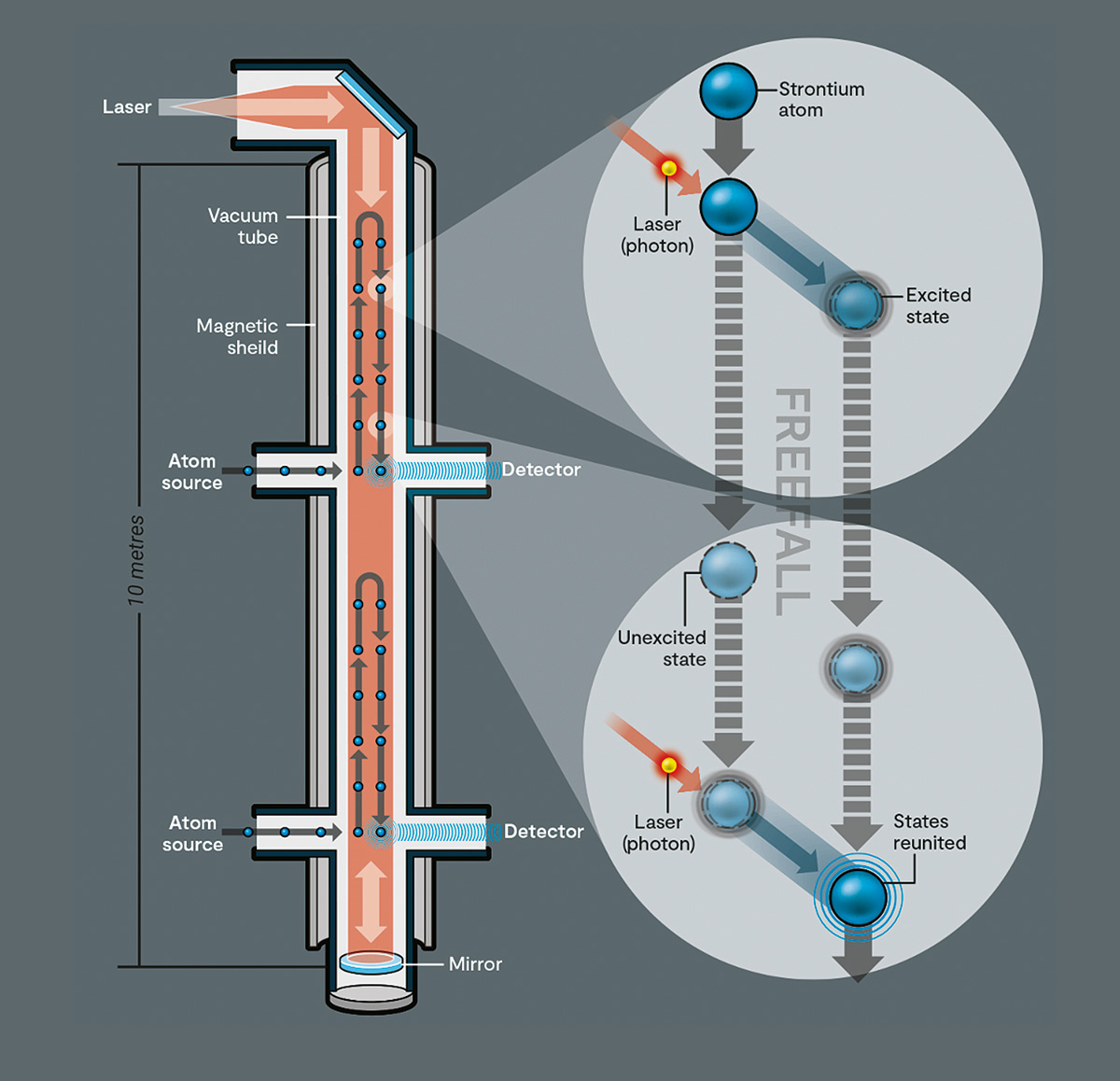
UKRI and university funding of about £10 million (UKRI part £7.2 million) will enable the AION team to prepare the construction of a 10 m-tall atomic interferometer at the University of Oxford to explore ultra-light dark matter and provide a pathway towards detecting gravitational waves in the unexplored mid-frequency band ranging from several mHz to a few Hz. The setup will use lasers to drive transitions between the ground and excited states of a cloud of cold strontium atoms in free fall, effectively acting as beam splitters and mirrors for the atomic de Broglie waves (see figure). Ultralight dark matter and exotic light bosons would be expected to have differential effects on the atomic transition frequencies, while a passing gravitational wave would generate a strain in the space through which the atoms fall freely. Either would create a difference between the phases of atomic beams following different paths – the greater their separations, the greater the sensitivity of the experiment.
“AION is a uniquely interdisciplinary mission that will harness cold-atom quantum technologies to address key issues in fundamental physics, astrophysics and cosmology that can be realised in the next few decades,” says AION principal investigator Oliver Buchmueller of Imperial College London, who is also a member of the CMS collaboration. “The AION project will also significantly contribute to MAGIS, a 100 m-scale partner experiment being prepared at Fermilab, and we are exploring the possibility of utilising a shaft in the UK or at the LHC for a similar second 100 m detector.”
Six other quantum-technology projects involving UK institutes are under way thanks to the UKRI scheme. One, led by experimental particle physicist Ruben Saakyan of University College London, will use ultra-precise B-field mapping and microwave spectrometry to determine the absolute neutrino mass in tritium beta-decay beyond the 0.2 eV sensitivity projected for the KATRIN experiment. Others include the use of new classes of detectors and coherent quantum amplifiers to search for hidden structure in the vacuum state; the development of ultra-low-noise quantum electronics to underpin searches for axions and other light hidden particles; quantum simulators to mimic the extreme conditions of the early universe and black holes; and the development of quantum-enhanced superfluid technologies for cosmology.
The UKRI call is part of a global effort to develop quantum technologies that could bring about a “second quantum revolution”. Several major international public and private initiatives are under way. Last autumn, CERN launched its own quantum technologies initiative.
“With the application of emerging quantum technologies, I believe we have an opportunity to change the way we search for answers to some of the biggest mysteries of the universe,” said Mark Thomson, executive chair of the UK’s Science and Technology Facilities Council. “These include exploring what dark matter is made of, finding the absolute mass of neutrinos and establishing how quantum mechanics fits with gravity.”
Most travellers know that it is essential to have a good travel guide when setting out into unexplored territory. A book where one can learn what previous travellers discovered about these surroundings, with both global information on the language, history and traditions of the land to be explored, and practical details on how to overcome day-to-day difficulties. Andrzej Buras’s recent book, Gauge Theory of Weak Decays, is the ideal guide for both new physicists and seasoned travellers, and experimentalists and theoreticians alike, who wish to start a new expedition into the fascinating world of weak meson decays, in pursuit of new physics.
The physics of weak decays is one of the most active and interesting frontiers in particle physics, from both the theoretical and the experimental points of view. Major steps in the construction of the Standard Model (SM) have been made possible only thanks to key observations in weak decays. The most famous example is probably the suppression of flavour-changing neutral currents in kaon decays, which led Glashow, Iliopoulos and Maiani to postulate, in 1970, the existence of the charm quark, well before its direct discovery. But there are many other examples, such as the heaviness of the top quark, inferred from the large matter-to-antimatter oscillation frequency of neutral B mesons, again well before its discovery. In the post-Higgs-discovery era, weak decays are a privileged observatory in which to search for signals of physics beyond the SM. The recent “B-physics anomalies”, reported by LHCb and other experiments, could indeed be the first hint of new physics. The strategic role that weak decays play in the search for new physics is further reinforced by the absence on the horizon, at least in the near future, of a collider with a centre-of-mass energy exceeding that of the LHC, while the LHC and other facilities still have a large margin of improvement in precision measurements.
As Buras describes with clarity, signals of new physics in the weak decays of K, D, and B mesons, and other rare low-energy processes, could manifest themselves as deviations from the precise predictions of the corresponding decay rates that we are able to derive within the SM. In the absence of a reference beyond-the-SM theory, it is not clear where, and at which level of precision, these deviations could show up. But general quantum field theory arguments suggest that weak decays are particularly sensitive probes of new physics, as they can often be predicted with high accuracy within the SM.
The two necessary ingredients for a journey in the realm of weak decays are therefore precise SM predictions on the one hand, and a broad-spectrum investigation of beyond-the-SM sensitivity on the other. These are precisely the two ingredients of Buras’s book. In the first part, he guides the reader though all the steps necessary to arrive to the most up-to-date predictions for rare decays. This part of the book offers different paths to different readers: students are guided, in a very pedagogical way, from tree-level calculations to high-precision multi-loop calculations. Experienced readers can directly find up-to-date phenomenological expressions that summarise the present knowledge on virtually any process of current experimental interest. This part of the book can also be viewed as a well-thought-out summary of the history of precise SM calculations for weak decays, written by one of its most relevant protagonists.
Beyond the Standard Model
The second part of the book is devoted to physics beyond the SM. Here the style is quite different: less pedagogical and more encyclopaedic. Employing a pragmatic approach, which is well motivated to discuss low-energy processes, extensions of the SM are classified according to properties of hypothetical new heavy particles, from Z′ bosons to leptoquarks, and from charged Higgs bosons to “vector-like” fermions. This allows Buras to analyse the impact of such models on rare processes in a systematic way, with great attention paid to correlations between observables.
To my knowledge, this book is the first comprehensive monograph of this type, covering far more than just the general aspects of SM physics, as may be found in many other texts on quantum field theory. The uniqueness of this book lies in its precious details on a wide variety of interesting rare processes. It is a key reference that was previously missing, and promises to be extremely useful in the coming decades.
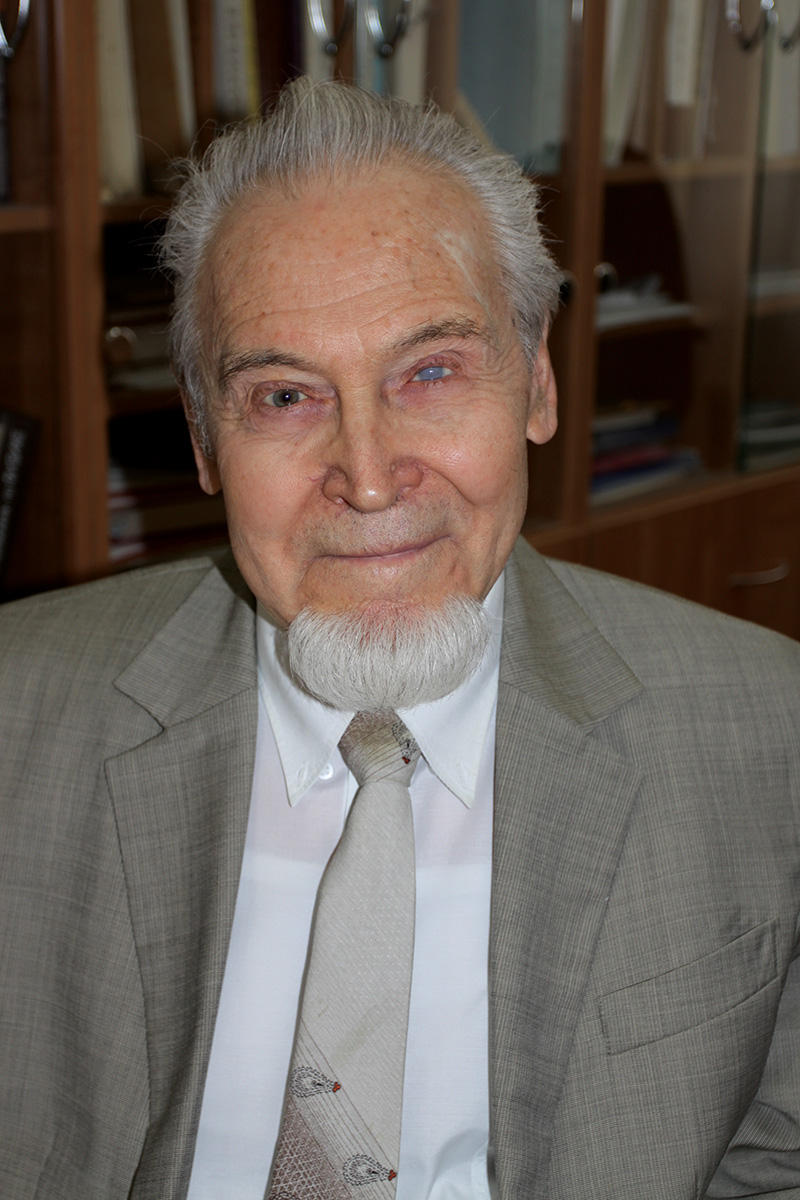
Alexei Onuchin, one of the pioneers of experiments at colliding beams, passed away on 9 January in Novosibirsk, Russia.
Onuchin was born in 1934 in a small village in the Gorky (Nizhny Novgorod) region. After graduating from high school with honours, he decided to try his hand at science and in 1953 he entered the physics department of Moscow State University. In 1959 he graduated with honours and was invited by Gersh Budker to work at the newly organised Institute of Nuclear Physics at Novosibirsk (INP).
At INP, Onuchin enjoyed many important roles. He took part in experiments at the world’s first electron–electron collider (VEP-1), actively worked on the preparation of a detector for the electron–positron collider VEPP-2, supervised the construction of the MD-1 detector for the VEPP-4 collider, was one of the leaders of the KEDR detector experiment at the VEPP-4M collider and was a great enthusiast of the detector project for the proposed Super Charm-Tau Factory. He was also an organiser and for many years the leader of the Budker INP group working at the BaBar experiment at SLAC.
During his career, Alexei made a great contribution to the development of experimental techniques in particle physics. It was this that determined the high level of experiments carried out at Budker INP and other laboratories. These include the development and production of multiwire proportional chambers for the MD-1, various counters based on Cherenkov radiation and the creation of a calorimeter based on liquid krypton, among many others.
Cherenkov counters held a special place in Alexei’s heart from the very beginning of his career as a student in the laboratory of Nobel-laureate Pavel Cherenkov. Starting from pioneering water-threshold counters in the experiment at VEPP–2, he later developed the MD–1 Cherenkov counters filled with ethylene pressurised to 25 bar, and finally suggested the aerogel counters with wavelength shifters (ASHIPH) now operating in the KEDR detector. For this work, in 2008 Alexei Onuchin was awarded the Cherenkov Prize of the Russian Academy of Sciences.
Alexei was a great teacher. Among his former students are professors, group leaders and members of the Russian Academy of Sciences. He was also a caring father and loving husband, who raised a large family with four children, five grandchildren and three great-grandchildren. He will always be remembered by his family, friends and colleagues.
Outreach must continue, even in a pandemic: if visitors can’t come to the lab, we need to find ways to bring the lab to them. Few outreach initiatives do this as charmingly as “A day with particles” — a short independent film by three ATLAS physicists at Charles University in Prague. Mixing hand-drawn animations, deft sound design and a brisk script targeted at viewers with no knowledge of physics, the 30 minute film follows a day in the life of postdoc Vojtech Pleskot. In its latest pitstop in a worldwide tour of indie film festivals, it won “BEST of FEST (Top Geek)” last week at GeekFestToronto.
We want to break stereotypes about scientists
Vojtech Pleskot
“We just want to show that scientists are absolutely normal people, and that no one needs to fear them,” says Pleskot, who wrote and directed the film alongside producer Martin Rybar and animator Daniel Scheirich. Modest and self-effacing when I interviewed them, the three physicists produced the film with no funding and no prior expertise, beating off competition from well funded projects to win the Canadian award. Even within the vibrant but specialist niche of high-energy-physics geekery, competition included “The world of thinking”, featuring interviews with Ed Witten, Freeman Dyson and others, and a professionally produced film dramatising a love letter from Richard Feynman to his late wife Arline, who passed away while he was working on the Manhattan Project. But Pleskot, Rybar and Scheirich won the judges over with their idiosyncratic distillation of life at the rock-face of discovery. The trio place their film in the context of growing scepticism of science and scientists. “We want to break stereotypes about scientists,” adds Pleskot.
Not every stereotype is broken, and there is room to quibble about some of the details, but grassroots projects such as A Day With Particles boast a quirky authenticity which is difficult to capture through institutional planning, and is well placed to connect emotionally with non-physicists. The film is beautifully paced. Wide-eyed enthusiasm for physics cuts to an adorable glimpse of Pleskot’s two “cute little particles” having breakfast. A rapid hop from Democritus to Rutherford to the LHC cuts to tracking shots of Pleskot making his way through the streets of Prague to the university. The realities of phone conferences, failed grid jobs and being late for lab demonstrations are interwoven with a grad student dancing to discuss her analysis, conversations on free-diving with turtles and the stories of beloved professors recalling life in the communist era. Life as a physicist is good. And life as a physicist is really like this, they insist. “I hope that science communicators will share it far and wide,” says Connie Potter (CERN and ATLAS), who commissioned the film for the 2020 edition of ICHEP, and who was also recognised by the Toronto festival for her indefatigable “indie spirit” in promoting it.
A Day With Particles will next be considered at the World of Film International Festival in Glasgow in June, where it has been selected as a semi-finalist.
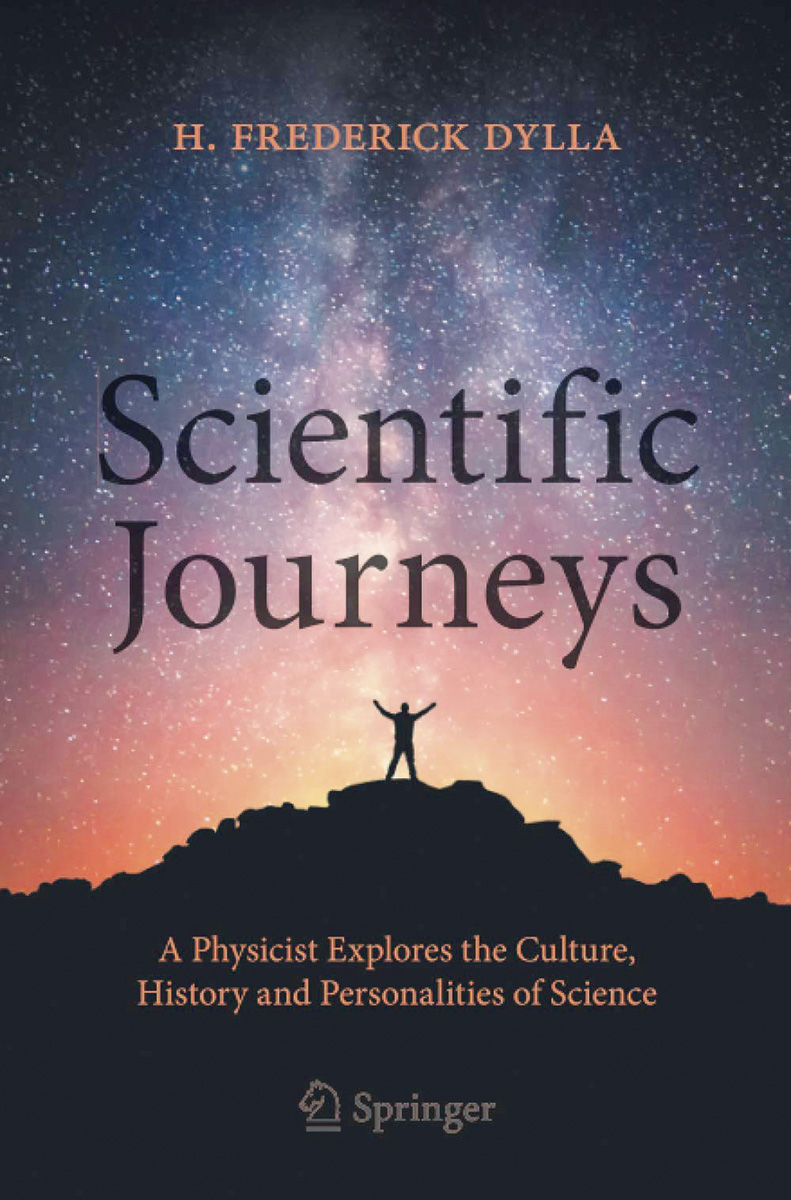
H Frederick Dylla is a “Sputnik kid”, whose curiosity and ingenuity led him on a successful 50-year career in physics, from plasma to accelerators and leading the American Institute of Physics. His debut book, Scientific Journeys: A Physicist Explores the Culture, History and Personalities of Science, is a collection of essays that puts a multidisciplinary historical perspective on the actors and events that shaped the world of science and scholarly publishing. Through geopolitical and economic context and a rich record of key events, he highlights innovations that have found their use in social and business applications. Those cited as having contributed to global technological progress range from the web and smartphones to medical imaging and renewable energy.
Dylla begins with the story of medieval German abbess, mystic, composer and medicinal botanist Hildegard of Bingen
The book is divided in five chapters: “signposts” (in the form of key people and events in scientific history); mentors and milestones in his life; science policy; communicating science; and finally a brief insight into the relationship between science and art. He begins with the story of medieval German abbess, mystic, composer and medicinal botanist Hildegard of Bingen: “a bright signpost of scholarship”. Dylla goes on to explore the idea that a single individual at the right time and place can change the course of history. Bounding through the centuries, he highlights the importance of science policy and science communication, the funding of big and small science alike, and the contemporary challenges linked to research, teaching science and scholarly publishing. Examples among these, says Dylla, are the protection of scientific integrity, new practices of distance learning and the weaknesses of the open-access model. The book ends bang up to date with a thought on the coronavirus pandemic and science’s key role in overcoming it.
Intended for teachers, science historians and students from high school to graduate school, Dylla’s book puts a face on scientific inventions. The weightiest chapter, mentors and milestones, focuses on personalities who have played an important role in his scientific voyage. Among the many named, however, Mildred Dresselhaus – the “queen of carbon” – is the only female scientist featured in the book besides Hildegard. Though by beginning the book with a brilliant but at best scientifically adjacent abbess who preceded Galileo by four centuries Dylla tacitly acknowledges the importance of representing diversity, the book unintentionally makes it discomfortingly clear how scarce role models for women can be in the white-male dominated world of science. The lack of a discussion on diversity is a missed opportunity in an otherwise excellent book.
The European strategy for particle physics (ESPP), updated by the CERN Council in June 2020, lays the foundations for a bright future for accelerator-based particle physics. Its 20 recommendations – covering the components of a compelling scientific programme for the short, medium and long terms, as well as the societal and environmental impact of the field, public engagement and support for early-career scientists – set out an ambitious but prudent approach to realise the post-LHC future in Europe within the worldwide context.
Full exploitation of the LHC and its high-luminosity upgrade is a major priority, both in terms of its physics potential and its role as a springboard to a future energy-frontier machine. The ESPP identified an electron–positron Higgs factory as the highest priority next collider. It also recommended that Europe, together with its international partners, investigate the technical and financial feasibility of a future hadron collider at CERN with a centre-of-mass energy of at least 100 TeV, with an electron–positron Higgs and electroweak factory as a possible first stage. Reinforced R&D on a range of accelerator technologies is another ESPP priority, as is continued support for a diverse scientific programme.
Implementation starts now
It is CERN’s role, in strong collaboration with other laboratories and institutions in Europe and beyond, to help translate the visionary scientific objectives of the ESPP update into reality. CERN’s recently approved medium-term plan (MTP), which covers the period 2021–2025, provides a first implementation of the ESPP vision.
Starting this year, CERN will deploy efforts on the feasibility study for a Future Circular Collider (FCC) as recommended by the ESPP update. One of the first goals is to verify that there are no showstoppers to building a 100 km tunnel in the Geneva region, and to gather pledges for the necessary funds to build it. The estimated FCC cost cannot be met only from CERN’s budget, and special contributions from non-Member States as well as new funding mechanisms will be required. Concerning the enabling technologies, the first priority is to demonstrate that the superconducting high-field magnets needed for 100 TeV (or more) proton–proton collisions in a 100 km tunnel can be made available on the mid-century time scale. To this end CERN is implementing a reinforced magnet R&D programme in partnership with industry and other institutions in Europe and beyond. Fresh resources will be used to explore low- and high-temperature superconducting materials, to develop magnet models towards industrialisation and cost reduction, and to build the needed test infrastructure. These studies will also have vast applications outside the field. Minimising the environmental impact of the tunnel, the colliders and detectors will be another major focus, as well as maximising the benefits to society from the transfer of FCC-related technologies.
The 2020 MTP includes resources to continue R&D on key technologies for the Compact Linear Collider and for the establishment of an international design study for a muon collider. Further advanced accelerator technologies will be pursued, as well as detector R&D and a new initiative on quantum technologies.
Continued progress requires a courageous, global experimental venture involving all the tools at our disposal
Scientific diversity is an important pillar of CERN’s programme and will continue to be supported. Resources for the CERN-hosted Physics Beyond Colliders study have been increased in the 2020 MTP and developments for long-baseline neutrino experiments in the US and Japan will continue at an intense pace via the CERN Neutrino Platform.
Immense impact
The discovery of the Higgs boson, a particle with unprecedented characteristics, has contributed to turning the focus of particle physics towards deep structural questions. Furthermore, many of the open questions in the microscopic world are increasingly intertwined with the universe at large. Continued progress on this rich and ambitious path of fundamental exploration requires a courageous, global experimental venture involving all the tools at our disposal: high-energy colliders, low-energy precision tests, observational cosmology, cosmic rays, dark-matter searches, gravitational waves, neutrinos, and many more. High-energy colliders, in particular, will continue to be an indispensable and irreplaceable tool to scrutinise nature at the smallest scales. If the FCC can be realised, its impact will be immense, not only on CERN’s future, but also on humanity’s knowledge.
To explore all our coverage marking the 10th anniversary of the discovery of the Higgs boson ...
You started out studying electrical engineering. Why the switch to physics, and what have been your main research interests?
Actually, I studied them both in parallel, having started out in electrical engineering and then attending physics courses after I found myself getting a bit bored. I graduated with a Masters in electrical engineering, and then pursued a PhD in particle physics, working on the MARK-J experiment at DESY studying muon pairs, which allowed us to make estimates of the Z mass and sin2θ. To some level at MARK-J we could already test electroweak theory. Afterwards, I did a postdoc at CERN for two years on the L3 experiment, and ended up staying on L3 for 12 years. My background in engineering has helped several times during my career. For example, I acted as an interface between the physicists at CERN and the engineers in Aachen who designed and built the complicated L3 readout electronics, as they couldn’t always speak the same language.
How do you remember your LEP days?
It was a marvellous time, certainly some of the best years of my life. For the firsts few years at L3 I didn’t do any physics analysis – I was down in the tunnel dealing with the readout electronics. After a few years I was able to pick up physics again, going back to electroweak physics, and becoming the coordinator of the line-shape group that was in charge of measurements of Z parameters. I later became L3 analysis coordinator. I was there for essentially the whole duration of LEP, leaving CERN at the end of 1999 and joining the CMS group at Aachen University.
What are your key achievements since becoming DESY’s director for particle and astroparticle physics in 2009?
I came to DESY shortly before the experiments at HERA stopped and became director as the analyses were ramping down and LHC activities were ramping up. Certainly, one of the biggest achievements during this time was helping DESY transition from having local experiments onsite to a laboratory that now plays a key role in the CMS and ATLAS experiments. DESY became one of the largest Tier-2 data centres of the worldwide LHC computing grid, plus it had a lot of experts on proton structure and in detector operation who were highly welcomed by the LHC experiments. DESY joined the LHC relatively late, in 2008, but now has a very strong involvement in the ATLAS and CMS trackers, for example, and has set up a large infrastructure to build one end-cap tracker for ATLAS and one for CMS. DESY also joined the Belle experiment at KEK, and continues to be one of the leading labs in the development of detector R&D for future colliders. Smaller scale experiments at DESY also picked up speed, in particular axion searches. Recently the 24th dipole for the ALPS-II experiment was installed, which is really impressive. The motivation for astroparticle physics was always more concentrated at DESY’s Zeuthen site, and two years ago it was decided to create an independent division for astroparticle physics to give it more visibility.
How has the transition from collider physics to X-ray science changed life at DESY?
Well, there is no longer the burden at DESY to operate large accelerators and other facilities for particle physics, so those resources are now all directed towards photon science, such as the operation of the PETRA light source, the FLASH facility and the European XFEL. On the other hand, the laboratory has also grown over the last decade, to the benefit of photon science. However, if you count the number of DESY authors in ATLAS and CMS, it is still the second or third largest laboratory, so DESY is still very significant in particle physics.
How would you sum-up the state of high-energy physics today?
I’m optimistic, otherwise I wouldn’t be here! Often when I talk to students, I tell them that the best is yet to come in particle physics. Yes it’s true, we do not have at the moment a scenario like we had for the LHC, or for the SppS, which had clear targets to discover new particles, but if you look back in history, this hasn’t been the case very often. We would not have built several machines, including LEP, if that was the case. Discovery doesn’t have to necessarily mean new particles. So that’s why I am optimistic for the future of the field, because we have the Higgs boson now, which is a very special particle. It’s the first of its kind – not another quark or lepton. Studying the Higgs in detail might be the key to new insights into fundamental physics. This is also the central theme of the recent European strategy update.
I don’t think the question of linear vs circular is a technology one
What do you see as your main opportunities and challenges during the next five years?
CERN is a very complicated thing. I have been away for 20 years now, so I am still in a learning phase. It is very clear what our challenges are though. We have to make the next LHC run a success, and we also need to prepare for the HL-LHC. The world is looking on us for that. The second most important thing is the implementation of the European strategy update, and in particular, the preparation for the longer-term future of CERN. We have to prepare a convincing plan for the post-LHC collider, to be ready for decision at the next strategy update at the latest.
What is in store for computing?
Computing will remain a major challenge. LHC Run 3 will start soon and we have to prepare for it now, including securing the necessary funds. On the horizon there is the high-luminosity LHC, with an enormous increase in data volumes that would by far exceed the available capacities in a flat-budget scenario. We will have to work in close collaboration with the experiments and our international partners to address this challenge and be open to new ideas and emerging technologies. I believe that the new Prévessin Computing Centre will be instrumental and enhance collaboration among the experiments and the IT department.
What involvement did you have in the European strategy update?
I was a member of the European strategy group in my capacity as research director for particle physics at DESY. The strategy group contained the scientific delegates to council, plus about a dozen people from the national laboratories. I was in Bad Honnef in January 2020 for the final drafting session – it was an interesting time. If you had asked me on the Monday of that week what the result at the end would be, I would have said there was no way that we could reach consensus on a strategy. But we did, even if deciding on the specific facility to be built was beyond the ESPP mandate.
Should a post-LHC electron–positron Higgs factory be linear or circular?
Its shape is not my principal concern – I want one to be built, preferably at CERN. However, if we can get additional resources from outside the field to have one built in Japan or China, then we should grab the opportunity and try a global collaboration. I think even for the next project at CERN, we also need support from outside Europe. I don’t think the question of linear vs circular is a technology one – I think we have already mastered both technologies. We have pros and cons for both types of machine, but for me it is important that we get support for one of them, and the feasibility study that has been requested for a large circular tunnel in the Geneva area is an important step.
Young people ask me which horse will win the race – I don’t know. I consider it as my task as CERN’s director for research and computing to unite the community behind the next collider because that will be vital for our success. The next collider will be a Higgs factory and there are so many things in common between the various proposals if you consider the detectors or the physics. People should come together and try to push the idea of a Higgs factory in whatever topology. Look, I am a scientist. At DESY I have been working on linear colliders. And in the European XFEL we essentially already have a prototype for the International Linear Collider. But if CERN or China build a circular collider, I will be the first one who signs up for an experiment! I think many others think like me.
What are the main challenges in getting the next collider off the ground?
We have competition now – very severe competition. I see that in Germany everybody is now speaking about life science and biology because of the pandemic, plus there are other key societal challenges such as climate and energy. These are topics that also have an interesting story to tell, and one which might be easier to understand. If someone asks me what the applications of the Higgs boson are, I reply that I don’t know. However, I am convinced that in 50 or 100 years from now, people will know. As particle physicists we have to continue to point out our role in society to motivate the investments and resources for our future plans, not just in science, but in technology and impact on society. If you look at the first accelerators, they were not built with other applications in mind – they were built to understand what the core of matter is. But look at the applications of accelerators, detectors and computing that have spun-off from this. X-ray science is one very strong, unforeseen example.
Would a lack of consensus for the next collider risk making physicists appear unsure about their ambitions?
Of course, there will be people who think that. However, there are also politicians, who I know in the US for instance, who are very supportive of the field. If you compare us to the synchrotron field for instance, there are dozens of light-source facilities around the world. This discipline has the benefit of not having to converge on only one – each country can essentially build its own facility. We have the challenge that we have to get a global consensus. I think many politicians understand this. While it is true that particle physics is not a decisive topic in elections, we have a duty to share our scientific adventure and results with the public. We are very fortunate in Germany that we have had a scientist as chancellor for the past 15 years, which I think this is one of the main reasons Germany is flourishing.
I consider it as my task as a CERN director for research to unite the community
What would be the implication for European particle physics were Japan or China to proceed with a Higgs factory?
I do not have a “gold-plated” answer for this. It really depends on things that are beyond our direct control as physicists. It could be an opportunity for CERN. One of the things that the strategy update confirms is that Europe is the leader of the field scientifically and also technologically, thanks mainly to the LHC. One of the arguments that CERN could profit from is the fact that Europe should want to remain the leader, or at least “a leader” in the field. That might be very helpful for CERN to also get a future project on track. Being the leader in the field is something that CERN, and Europe, can build upon.
What is your philosophy for successful scientific management?
I believe in flat hierarchies. Science is about competition for the best ideas, and the capital of research laboratories like CERN are the people, their motivation and their creativity. Therefore, I intend to foster the CERN spirit of fruitful collaboration in our laboratory but also with all our partners in Europe and the rest of the world.
The recently completed European strategy for particle physics (ESPP) outlines a coherent and fascinating vision for an effective and efficient exploration of the most fundamental laws of physics. Scientific recommendations for the field provide concrete guidance and priorities on future research facilities and efforts to expand our current knowledge. The depth with which we can address open mysteries about the universe depends heavily on our ability to innovate instrumentation and research infrastructures.
The ESPP calls upon the European Committee for Future Accelerators (ECFA) to develop a global detector R&D roadmap to support proposals at European and national levels. That roadmap will define the backbone of the detector R&D needed to implement the community’s vision for both the short and long term. At its plenary meeting in November, ECFA initiated a roadmap panel to develop and organise the process to realise the ESPP goals in a timely fashion. In addition to listing the targeted R&D projects required, the roadmap will also consider transformational, blue-sky R&D relevant to the ESPP.
Six technology-oriented task forces will capture each of the major components in detector instrumentation: gaseous and liquid detectors; solid-state detectors; photon detection and particle-identification; calorimetry; and quantum and emerging technologies. Along with three cross-cutting task forces devoted to electronics, integration and training, these efforts will proceed via in-depth consultation with the research community. An open symposium for each task force, due to be held in March or April 2021, will inform discussions that will eventually culminate in a roadmap document in the summer. To identify synergies and opportunities with adjacent research fields, an advisory panel – comprising representatives from the nuclear and astrophysics fields, the photon- and neutron-physics communities, as well as those working in fusion and space research – will also be established.
The roadmap will also consider transformational, blue-sky R&D relevant to the ESPP
In parallel, with a view to stepping up accelerator R&D, the European Laboratory Directors Group is developing an accelerator R&D roadmap as a work-plan for this decade. Technologies under consideration include high-field magnets, high-temperature superconductors, plasma-wakefield acceleration and other high-gradient accelerating structures, bright muon beams, and energy-recovery linacs. The roadmap, to be completed on a similar timeline as that for detectors, will set the course for R&D and technology demonstrators to enable future facilities that support the scientific objectives of the ESPP.
Gathering for a Higgs factory
The global ambition for the next-generation accelerator beyond the HL-LHC is an electron–positron Higgs factory, which can include an electroweak and top-quark factory in its programme. Pending the outcome of the technical and financial feasibility study for a future FCC-like hadron collider at CERN, the community has at this stage not concluded on the type of Higgs factory that is to emerge with priority. The International Linear Collider (ILC) in Japan and the Future Circular Collider (FCC-ee) at CERN are listed, with the Compact Linear Collider (CLIC) as a possible backup.
It goes without saying, and for ECFA within its mandate to explore, that the duplication of similar accelerators should be avoided and international cooperation for creating these facilities should be encouraged if it is essential and efficient for achieving the ESPP goal. At this point, coordination of R&D activities is crucial to maximise scientific results and to make the most efficient use of resources.
Recognising the need for the experimental and theoretical communities involved in physics studies, experiment designs and detector technologies at future Higgs factories to gather, ECFA supports a series of workshops from 2021 to share challenges and expertise, and to respond coherently to this ESPP priority. An international advisory committee will soon be formed to further identify synergies both in detector R&D and physics-analysis methods to make efforts applicable or transferable across Higgs factories. Concrete collaborative research programmes are to emerge to pursue these synergies. With the strategy discussion behind us, we now need to focus on getting things done together.
The recent update of the European strategy for particle physics (ESPP) offered a unique opportunity for early-career researchers (ECRs) to shape the future of our field. Mandated by the European Committee for Future Accelerators (ECFA) to provide input to the ESPP process, a diverse group of about 180 ECRs were nominated to debate topics including the physics prospects at future colliders and the associated implications for their careers. A steering board comprising around 25 ECRs organised working groups devoted to topics including detector and accelerator physics, and key areas of high-energy physics research. Furthermore, working groups were dedicated to the environment and sustainability, and to human and social factors – aspects that have been overlooked in previous ESPP exercises. A debate took place in November 2019 and a survey was launched to obtain a quantitative understanding of the views raised.
The feedback from these activities was combined into a report reflecting the opinions of almost 120 signed authors. The survey suggests that more than half of the respondents are postdocs, around two-fifths PhD students and approximately a tenth staff members. Moreover, roughly one-third were female and two-thirds male. Several areas, such as which collider should follow the LHC and environmental and sustainability considerations, were highlighted by the participating ECRs. Among the many topics discussed, we highlight here a handful of aspects that we feel are key to the future of our field.
Building a sustainable future
A widespread concern is that the attractiveness of our field is at risk, and that dedicated actions need to be taken to safeguard its future. Certain areas of work are vital to the field, but are undervalued, resulting in shortages of key skills. Due to significant job insecurity many ECRs struggle to maintain a healthy work–life balance. Moreover, the lack of attractive career paths in science, compared to the flexible working hours and family-friendly policies offered by many companies these days, potentially compromises the ability of our field to attract and retain the brightest minds in the short- and long-term future. With the funding for the proposed Future Circular Collider (a key pillar of the ESPP recommendations) not yet clear, and despite it receiving the largest support among future-collider scenarios in CERN’s latest medium-term financial plan, an additional risk arises for ECRs to back the wrong horse.
The future of the field will depend on the success of reaching a diverse community
It is imperative to holistically include social and human factors when planning for a sustainable future of our field. Therefore, we strongly recommend that long-term project evaluations and strategy updates assess and include the impact of their implementation on the situation of young academics. Specifically, equal recognition and career paths for domains such as computing and detector development have to be established to maintain expertise in the field.
Next-generation colliders beyond the LHC will need to overcome major technical challenges in detector physics, software and computing to meet their ambitious physics goals. Our survey and debate showed that young researchers are concerned about a shortage of experts in these domains, where very few staff positions and even less professorships are open for particle physicists specialised in detector development and software and computing. In particular in the light of ever increasing project time scales, a sizable fraction of funding for non-permanent positions must be converted to funding for permanent positions in order to establish a sustainable ratio between fixed-term postdocs and staff scientists.
The possibility for a healthy work–life balance and the reconciliation of family and a scientific career is a must: currently, most of the ECRs consulted think that having children could damage their future and that moving between countries is generally a requirement to pursue a career in particle physics. These might constitute two reasons why only 20% of the polled ECRs have children. Put in a broader perspective, the future of the field will depend on the success of reaching a diverse community, with viable career paths for a wide spectrum of schemes of life. In order to reach this diverse community, it is not enough to simply offer more day-care places to parents. Similarly, the #BlackInTheIvory movement in 2020 shone a spotlight on the significant barriers faced by the Black community in academia – an issue also shared by many other minority groups. Discrimination in academia has to be counteracted systematically, including the filling of positions or grant-approval processes, where societal and diversity aspects must be taken into account with high priority.
The environmental sustainability of future projects is a clear concern for young researchers, and particle-physics institutes should use their prominent position in the public eye to set an example to other fields and society at large. The energy efficiency of equipment and the power consumption of future collider scenarios are considered only partially in the ESPP update, and we support the idea of preparing a more comprehensive analysis that includes the environmental impact of the construction as well as the disposal of large infrastructures. There should be further discussion of nuclear versus renewable energy usage and a concrete plan on how to achieve a higher renewable energy fraction. The ECRs were also of the view that much travel within our field is unnecessary, and that ways to reduce this should be brought to the fore. Since the survey was conducted, due to the ongoing COVID-19 pandemic, various conferences have already moved online, proving that progress can be made on this front.
Collider preference
In the context of the still-open questions in particle physics and potential challenges of future research programmes, the ECRs find dark matter, electroweak symmetry breaking and neutrino physics to be the three most important topics of our field. They also underline the importance of a European collider project soon after the completion of the HL-LHC. Postponing the choice of the next collider project at CERN to the 2030s, for example, would potentially negatively impact the future of the field: there could be fewer permanent jobs in detector physics, computing and software if preparations for future experiments cannot begin after the current upgrades. Additionally, it could be difficult to attract new, young bright minds into the field if there is a gap in data-taking after the LHC. While physics topics were already discussed in great detail during the broader ESPP process, many ECRs stated their discomfort about the way the next-generation scenarios were compared, especially by how the different states of maturity of the projects were not sufficiently taken into account.
About 90% of ECRs believe that the next collider should be an electron–positron machine
About 90% of ECRs believe that the next collider should be an electron–positron machine, concurring with the ESPP recommendations, although there is not a strong preference if this machine is linear or circular. While there was equal preference for CLIC and FCC-ee as the next-generation collider, a clear preference was expressed for the full FCC programme over the full CLIC programme. Given the diverse interest in future collider scenarios, and keeping in mind the unclear situation of the ILC, we strongly believe that a robust and diverse R&D programme on both accelerators and detectors must be a high priority for the future of our field.
In conclusion, both the debate and the report were widely viewed as a success, with extremely positive feedback from ECFA and the ECRs. Young researchers were able to share their views and concerns for the future of the field, while familiarising themselves with and influencing the outcome of the ESPP. ECFA has now established a permanent panel of ECRs, which is a major milestone to make such discussions among early-career researchers more regular and effective in the future.
In June 2020, the CMS collaboration submitted a paper titled “Observation of the production of three massive gauge bosons at √s= 13 TeV” to the arXiv preprint server. A scientific highlight in its own right, the paper also marked the collaboration’s thousandth publication. ATLAS is not far from reaching the same milestone, currently at 964 publications. With the rest of the LHC experiments taking the total number of papers to 2852, the first ten years of LHC operations have generated a bumper crop of new knowledge about the fundamental particles and interactions.
The publication landscape in high-energy physics (HEP) is very exceptional due to a long-held preprint culture. From the 1950s paper copies were kept in the well-known red cabinets outside the CERN Library (pictured), but since 1991 they have been stored electronically at arXiv.org. Preprint posting and actual journal publication tend to happen in parallel, and citations between all types of publications are compiled and counted in the INSPIRE system.
Particle physics has been at the forefront of the open-science movement, in publishing, software, hardware and, most recently, data. In 2004, former Director-General Robert Aymar encouraged the creation of SCOAP3 (Sponsoring Consortium for Open Access Publishing in Particle Physics) at CERN. Devoted to converting closed access HEP journals to open access, it has grown extensively and now has over 3000 libraries from 44 different countries. All original LHC research results have been published open access. The first collaboration articles by the four main experiments, describing the detector designs, and published in the Journal of Instrumentation, remain amongst the most cited articles from LHC collaborations and — despite being more than a decade old — are some of the most recently read articles of the journal.
Closer analysis
Since then, along with the 2852 publications by CERN’s LHC experiments, a further 380 papers have been written by individuals on behalf of the collaboration, and another 10,879 articles (preprints, conference proceedings, etc.) from the LHC experiments that were not published in a journal. However, this only represents part of the scientific relevance of the LHC. There were tens of thousands of papers published over the past decade that write about the LHC experiments, use their data or are based on the LHC findings. The papers published by the four experiments received on average 112 citations per paper, compared to an average of 41 citations per paper across all experimental papers indexed in INSPIRE and even 30 citations per paper across all HEP publications (4.8 million citations across 163,000 documents since 2008). Unsurprisingly, the number of citations peaks with the CMS and ATLAS papers on the Higgs discovery, with 10,910 and 11,195 citations respectively, which at the end of 2019 were the two most cited high-energy physics papers released in the past decade.
Large author numbers are another exceptional aspect of LHC-experiment publishing, with papers consistently carrying hundreds or even thousands of names. This culminated in a world record of 5,154 authors on a joint paper between CMS and ATLAS in 2015, which reduced the uncertainty on the measurement of the Higgs-boson mass to ±0.25%.
Teasing fluctuations
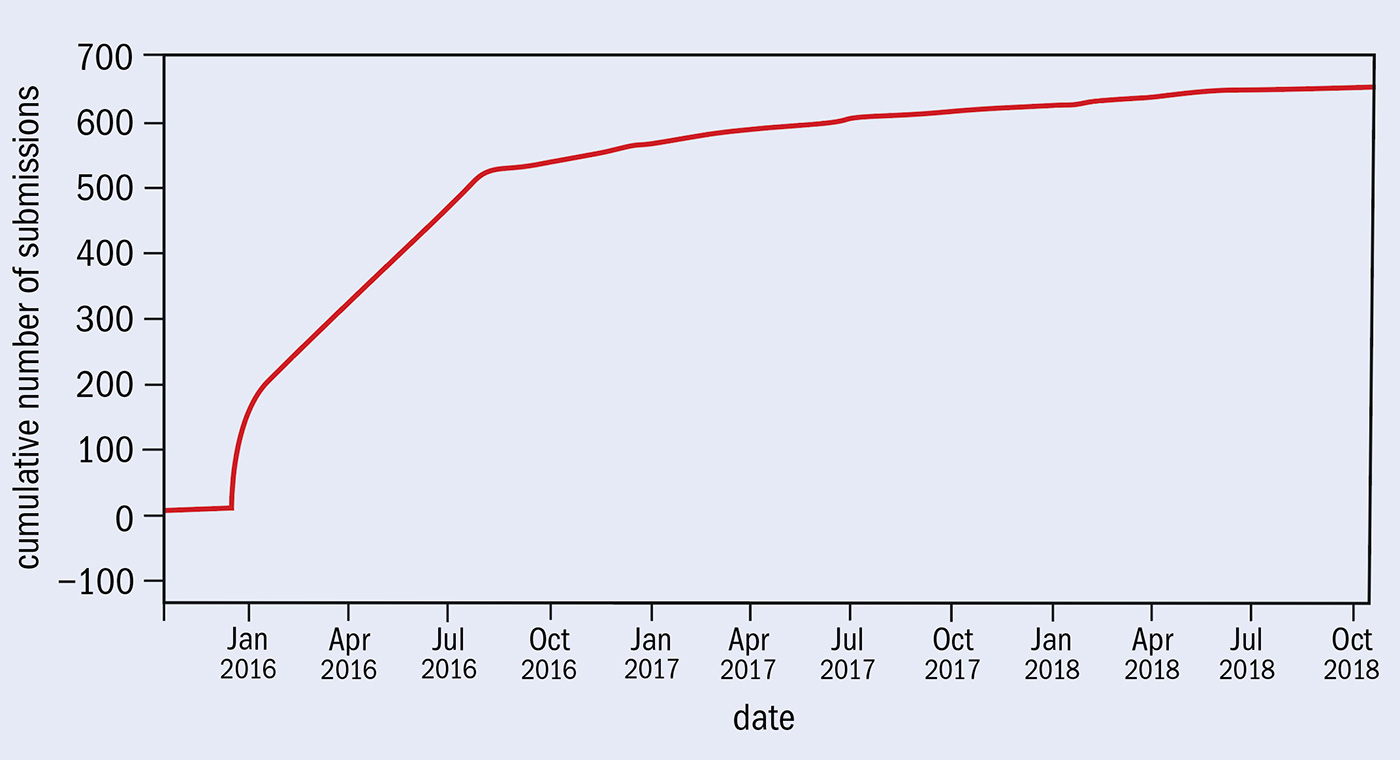
Ten years of LHC publications have established the Standard Model at unprecedented levels of precision. But they also reveal the hunger for new physics, as illustrated by the story of the 750 GeV diphoton ‘bump’. On 15 December 2015, ATLAS and CMS presented an anomaly in data that showed an excess of events at 750 GeV in proton collisions, fueling rumours a new particle could be showing itself. While the significance of the excess was only 2σ and 1.6σ respectively, theorists were quick to respond with an influx of hundreds of papers (see “750 shades of model building”). This excitement was however damped by the release of the August 2016 data, where there was no further sign of the anomaly, and it became commonly recognised as a statistical fluctuation – part and parcel of the scientific process, if ruining the fun for the theorists.
With the LHC to continue operations to the mid-2030s, and only around 6% of its expected total dataset collected so far, we can look forward to thousands more publications about nature’s basic constituents being placed in the public domain.
To provide the best experiences, we use technologies like cookies to store and/or access device information. Consenting to these technologies will allow us to process data such as browsing behavior or unique IDs on this site. Not consenting or withdrawing consent, may adversely affect certain features and functions.
Functional
Always active
The technical storage or access is strictly necessary for the legitimate purpose of enabling the use of a specific service explicitly requested by the subscriber or user, or for the sole purpose of carrying out the transmission of a communication over an electronic communications network.
Preferences
The technical storage or access is necessary for the legitimate purpose of storing preferences that are not requested by the subscriber or user.
Statistics
The technical storage or access that is used exclusively for statistical purposes.The technical storage or access that is used exclusively for anonymous statistical purposes. Without a subpoena, voluntary compliance on the part of your Internet Service Provider, or additional records from a third party, information stored or retrieved for this purpose alone cannot usually be used to identify you.
Marketing
The technical storage or access is required to create user profiles to send advertising, or to track the user on a website or across several websites for similar marketing purposes.