Comsol -leaderboard other pages

Topics

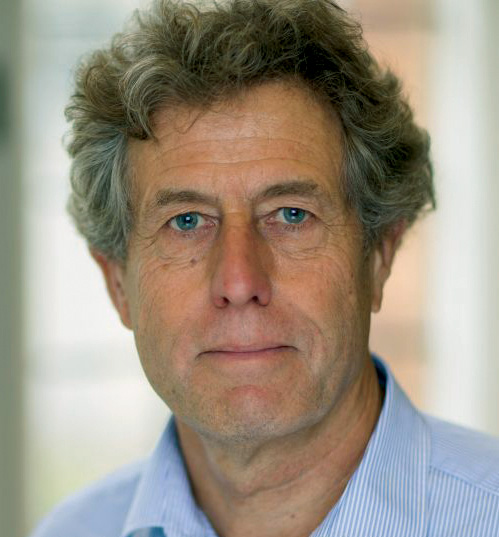
Jürgen Hans Garlef Körner 1939–2021

Jürgen Körner

Jürgen G Körner, a well-known German theor­etical physicist at the Johannes Gutenberg University in Mainz, passed away after a brief illness on 16 July 2021 at the age of 82. 

Jürgen was born in Hong Kong in 1939, as the fourth child of a Hamburg merchant’s family. After the family returned to Germany in 1949, he attended the secondary school in Blankenese and studied physics at the Technical University of Berlin and the University of Hamburg. He received his PhD from Northwestern University, Illinois, in 1966 under Richard Capps. He then held research positions at Imperial College London, Columbia University, the University of Heidelberg and DESY. He completed his habilitation at the University of Hamburg in 1976. 

In 1982 Jürgen became a professor of theoretical particle physics at Johannes Gutenberg University, where he remained for the rest of his career. His research interests included the phenomenology of elementary particles, heavy-quark physics, spin physics, radiative corrections and exclusive decay processes. He made pioneering contributions to the heavy-quark effective theory with applications to exclusive hadron decays. He also studied mass and spin effects in inclusive and exclusive processes in the Standard Model, and developed the helicity formalism describing angular distributions in exclusive hadron decays. Jürgen’s other notable contributions include the Körner–Pati–Woo theorem providing selection rules for baryon transitions and a relativistic formalism for electromagnetic excitations of nucleon resonances.

Jürgen collaborated with theoretical physicists worldwide and published about 250 papers in leading physics journals, including several influential reviews on the physics of baryons. He also contributed to the development of strong relations between German and Russian particle physicists. Together with colleagues from the Joint Institute for Nuclear Research, Dubna, and leading German and Russian universities he initiated a series of international workshops on problems in heavy-quark physics (Dubna: 1993–2019, Bad Honnef: 1994 and Rostock: 1997). 

Jürgen was a cheerful person, attentive to the needs of his colleagues and friends, and always ready to help. He liked to travel and was actively involved in sports, especially football and cycling. Despite various commitments, he always found time for discussions. He cherished good conversations about physics and made a lasting impact on our lives. We will always remember him. 
Steven Weinberg 1933–2021

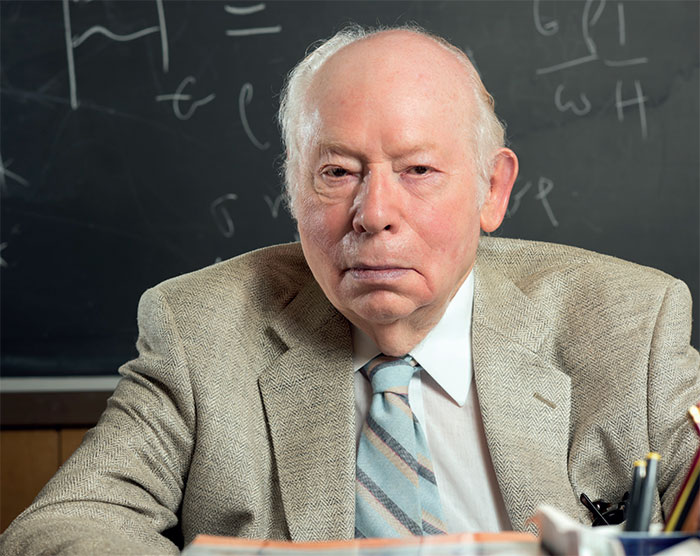
Steven Weinberg 1933-2021

Steven Weinberg, one of the greatest theoretical physicists of all time, passed away on 23 July, aged 88. He revolutionised particle physics, quantum field theory and cosmology with conceptual breakthroughs that still form the foundation of our understanding of physical reality.

Weinberg is well known for the unified theory of weak and electromagnetic forces, which earned him the Nobel Prize in Physics in 1979, jointly awarded with Sheldon Glashow and Abdus Salam, and led to the prediction of the Z and W vector bosons, later discovered at CERN in 1983. His breakthrough was the realisation that some new theoretical ideas, initially believed to play a role in the description of nuclear strong interactions, could instead explain the nature of the weak force. “Then it suddenly occurred to me that this was a perfectly good sort of theory, but I was applying it to the wrong kind of interaction. The right place to apply these ideas was not to the strong interactions, but to the weak and electromagnetic interactions,” as he later recalled. With his work, Weinberg had made the next step in the unification of physical laws, after Newton understood that the motion of apples on Earth and planets in the sky are governed by the same gravitational force, and Maxwell understood that electric and magnetic phenomena are the expression of a single force.

In my life, I have built only one model

Steven Weinberg

In his research, Weinberg always focused on an overarching vision of physics and not on a model description of any single phenomenon. At a lunch among theorists, when a colleague referred to him as a model builder, he jokingly retorted: “I am not a model builder. In my life, I have built only one model.” Indeed, Weinberg’s greatest legacy is his visionary approach to vast areas of physics, in which he starts from complex theoretical concepts, reinterprets them in original ways, and applies them to the description of the physical world. A good example is his construction of effective field theories, which are still today the basic tool to understand the Standard Model of particle interactions. His inimitable way of thinking has been the inspiration and guidance for generations of physicists, and it will certainly continue to serve future generations.

Steven Weinberg is among the very few individuals who, during the course of the history of civilisation, have radically changed the way we look at the universe.

Latvia to become Associate Member of CERN

Lativan prime minister Krišjānis Kariņš and Fabiola Gianotti

On 14 April, representatives of CERN and the Republic of Latvia gathered in a virtual ceremony to sign an agreement admitting Latvia as an Associate Member State. 

Latvia, which is the third of the Baltic States to join CERN in recent years after Lithuania and Estonia, first became involved with CERN activities in the early 1990s. Latvian researchers have since participated in many CERN projects, including contributions to the CMS hadron calorimeter and, more recently, participation in the Future Circular Collider study.

“As we become CERN’s newest Associate Member State, we look forward to enhancing our contribution to the Organization’s major scientific endeavours, as well as to investing the unparalleled scientific and technological excellence gained by this membership in further building the economy and well-being of our societies,” said Latvian prime minister Krišjānis Kariņš. 

As an Associate Member State, Latvia will be entitled to appoint representatives to attend meetings of the CERN Council and Finance Committee. Its nationals will be eligible for staff positions, fellowships and studentships, and its industries will be entitled to bid for CERN contracts, increasing opportunities for collaboration in advanced technologies.

“We are delighted to welcome Latvia as a new Associate Member State,” said CERN Director-General Fabiola Gianotti. “The present agreement contributes to strengthening the ties between CERN and Latvia, thereby offering opportunities for the further growth of particle physics in Latvia through partnership in research, technological development and education.”

Sustainable high-energy physics

SustHEP 2021

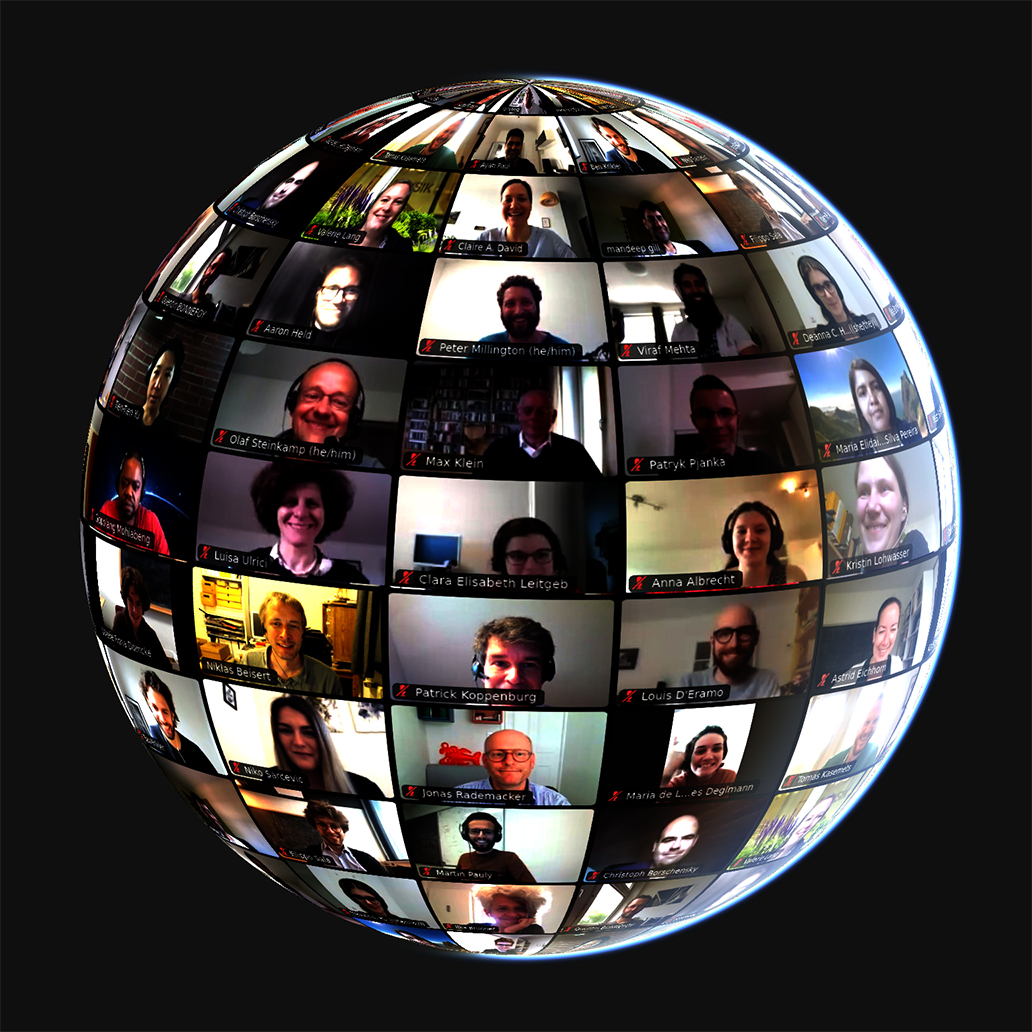
COVID-19 put the community on a steep learning curve regarding new forms of online communication and collaboration. Before the pandemic, a typical high-energy physics (HEP) researcher was expected to cross the world several times a year for conferences, collaboration meetings and detector shifts, at the cost of thousands of dollars and a sizeable carbon footprint. The online workshop Sustainable HEP — a new initiative this year — attracted more than 300 participants from 45 countries from 28 to 30 June to discuss how the lessons learned in the past two years might help HEP transition to a more sustainable future.

The first day of the workshop focused on how new forms of online interaction could change our professional travel culture. Shaun Hotchkiss (University of Auckland) stressed in a session dedicated to best-practice examples that the purpose of online meetings should not simply be to emulate traditional 20th-century in-person conferences and collaboration meetings. Instead, the community needs to rethink what virtual scientific exchange could look like in the 21st century. This might, for instance, include replacing traditional live presentations by pre-recorded talks that are pre-watched by the audience at their own convenience, leaving more precious conference time for in-depth discussions and interactions among the participants.

Social justice

The second day highlighted social-justice issues, and the potential for greater inclusivity using online formats. Alice Gathoni (British Institute in Eastern Africa) powerfully described the true meaning of online meetings to her: everyone wants to belong. It was only during the first online meetings during the pandemic that she truly felt a real sense of belonging to the global scientific community.

The third day was dedicated to existing sustainability initiatives and new technologies. Mike Seidel (PSI) presented studies on energy-recovery linacs and discussed energy-management concepts for future colliders, including daily “standby modes”. Other options include beam dynamics explicitly designed to maximise the ratio of luminosity to power, more efficient radio-frequency cavities, the use of permanent magnets, and high-temperature superconductor cables and cavities. He concluded his talk by asking thought-provoking questions such as whether the HEP community should engage with its international networks to help establish sustainable energy-supply solutions.

The workshop ended by drafting a closing statement that calls upon the HEP community to align its activities with the Paris Climate Agreement and the goal of limiting global warming to 1.5 degrees. This statement can be signed by members of the HEP community until 20 August.

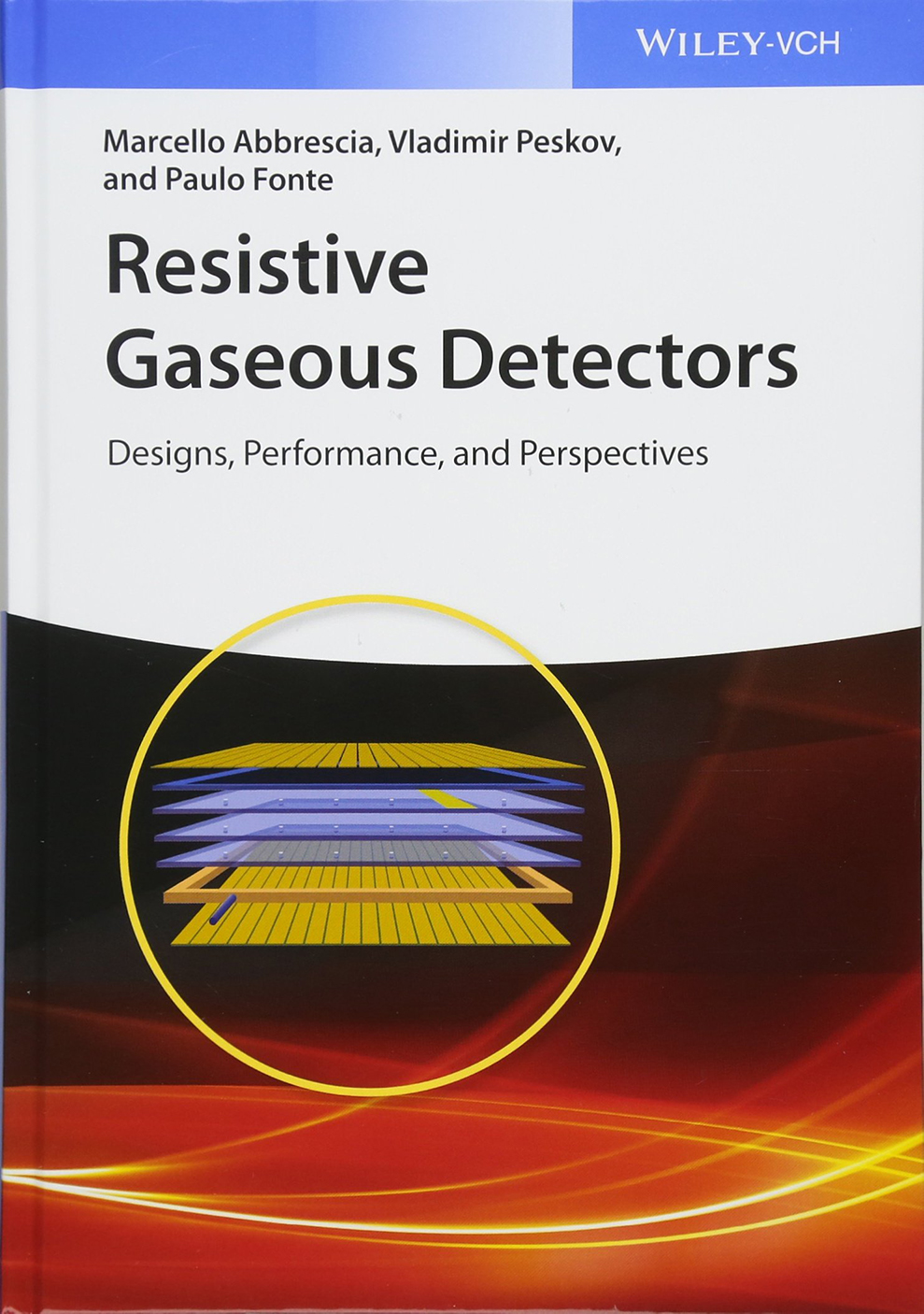
Resistive Gaseous Detectors: Designs, Performance, and Perspectives

The first truly resistive gaseous detector was invented by Rinaldo Santonico and Roberto Cardarelli in 1981. A kind of parallel-plate detector with electrodes made of resistive materials such as Bakelite and thin-float glass, the design is sometimes also known as a resistive-plate chamber (RPC). Resistive gaseous detectors use electronegative gases and electric fields that typically exceed 10 kV/cm. When a charged particle is incident in the gas gap, the working operational gas is ionised, and primary electrons cause an avalanche as a result of the high electric field. The induced charge is then obtained on the readout pad as a signal. RPCs have several unique and important practical features, combining good spatial resolution with a time resolution comparable to that of scintillators. They are therefore well suited for fast spacetime particle tracking, as a cost-effective way to instrument large volumes of a detector, for example in muon systems at collider experiments.

Resistive gaseous detectors use electronegative gases and electric fields which typically exceed 10 kV/cm

Resistive Gaseous Detectors: Designs, Performance, and Perspectives, a new book by Marcello Abbrescia, Vladimir Peskov and Paulo Fonte, covers the basic principles of their operation, historical development, the latest achievements and their growing applications in various fields from hadron colliders to astrophysics. This book is not only a summary of numerous scientific publications on many different examples of RPCs, but also a detailed description of their design, operation and performance.

Resistive Gaseous Detectors

The book has nine chapters. The operational principle of gaseous detectors and some of their limitations, most notably the efficiency drop in a high-particle-rate environment, are described. This is followed by a history of parallel-plate detectors, the first classical Bakelite RPC, double-gap RPCs and glass-electrode multi-gap timing RPCs. A modern design of double-gap RPCs and examples for the muon systems like those at ATLAS and CMS at the LHC, the STAR detector at the Relativistic Heavy-Ion Collider at Brookhaven and the multi-gap timing RPC for the time-of-flight system of the HADES experiment at GSI are detailed. Advanced designs with new materials for electrodes for high-rate detectors are then introduced, and ageing and longevity are elaborated upon. A new generation of gaseous detectors with resistive electrodes that can be made with microelectronic technology is then introduced: these large-area electrodes can easily be manufactured while still achieving high spatial resolutions up to 12 microns.

Homeland security

The final chapter covers applications outside particle physics such as those in medicine exploiting positron-emission tomography. For homeland security, RPCs can be used in muon-scattering tomography with cosmic-ray muons to scan spent nuclear fuel containers without opening them, or to quickly scan incoming cargo trucks without disrupting the traffic of logistics. A key subject not covered in detail, however, is the need to search for environmentally friendly alternatives to gases with high global-warming potential, which are often needed in resistive gaseous detectors at present to achieve stable and sustained operation (CERN Courier July/August 2021 p20).

Abbrescia, Peskov and Fonte’s book will be useful to graduates specialising in high-energy physics, astronomy, astrophysics, medical physics and radiation measurements in general for undergraduate students and teachers.

What if scientists ruled the world?

A chemistry professor invents a novel way to produce chemical compounds, albeit with a small chance of toxicity. A paper is published. A quick chat with a science communicator leads to a hasty press release. But when the media picks up on it, the story is twisted.

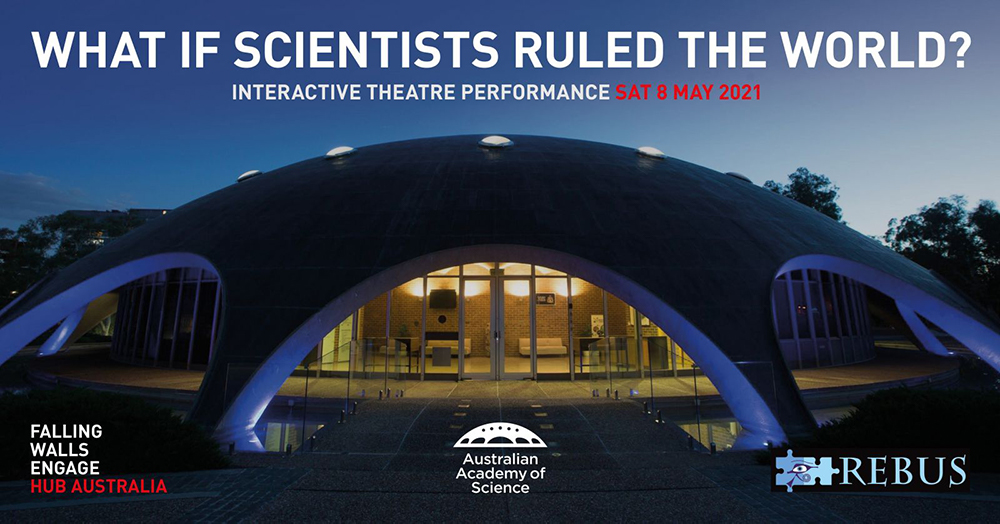
“What if scientists ruled the world?” — a somewhat sensational but thought-provoking title for a play — is an interactive theatre production by the Australian Academy of Science in partnership with Falling Walls Engage. Staged on 8 May at the Shine Dome in Canberra, Australia, a hybrid performance explored the ramifications of an ill-considered press release, and provided a welcome opportunity for scientists to reflect on how best to communicate their research. The dynamic exchange of ideas between science experts and laypeople in the audience highlighted the power of words, and how they are used to inform, persuade, deceive or confuse. 

What if scientists ruled the world?

After setting the scene, director Ali Clinch invited people participating remotely on Zoom and via a YouTube livestream to guide the actors’ actions, helping to advance and reframe the storyline with their ideas, questions and comments. Looking at the same story from different points of view invited the audience to think about the different stakeholders and their responsibility in communicating science. In the first part of the performance, for example, the science communicator talks excitedly about her job with students, but later has to face a crisis that the busy professor is unable or unwilling to deal with. At a critical point in the story, when a town-hall meeting is held to debate the future of a company that employs most of the people in the town, but which probably produced the same toxic chemical, everybody felt part of the performance. The audience could even take the place of an actor, or act in a new role.

The play highlighted the pleasures and tribulations of work at the interface between research and public engagement

The play highlighted the pleasures and tribulations of work at the interface between research and public engagement during euphoric discoveries and crisis moments alike, and has parallels both with the confusion encountered during the early stages of the COVID-19 pandemic and misguided early fears that the LHC could generate a black hole. In an age of fake news, sensationalism and misinformation, the performance adeptly highlighted the complexities and vested interests inherent in science communication today.

A relational take on quantum mechanics

Helgoland

It is often said that “nobody understands quantum mechanics” – a phrase usually attributed to Richard Feynman. This statement may, however, be misleading to the uninitiated. There is certainly a high level of understanding of quantum mechanics. The point, moreover, is that there is more than one way to understand the theory, and each of these ways requires us to make some disturbing concessions.

Carlo Rovelli’s Helgoland is therefore a welcome popular book – a well-written and easy-to-follow exploration of quantum mechanics and its interpretation. Rovelli is a theorist working mainly on quantum gravity and foundational aspects of physics. He is also a very successful popular author, distinguished by his erudition and his ability to illuminate the bigger picture. His latest book is no exception.

Helgoland is a barren German island of the North Sea where Heisenberg co-invented quantum mechanics in 1925 while on vacation. The extraordinary sequence of events between 1925 and 1926, when Heisenberg, Jordan, Born, Pauli, Dirac and Schrödinger formulated quantum mechanics, is the topic of the opening chapter of the book. 

Helgoland cover

Rovelli only devotes a short chapter to discuss interpretations in general. This is certainly understandable, since the author’s main target is to discuss his own brainchild: relational quantum mechanics. This approach, however, does not do justice to popular ideas among experts, such as the many-worlds interpretation. The reader may be surprised not to find anything about the Copenhagen (or, more appropriately, Bohr’s) interpretation. This is for very good reason, however, since it is not generally considered to be a coherent interpretation. Having mostly historical significance, it has served as inspiration to approaches that keep the spirit of Bohr’s ideas, like consistent histories (not mentioned in the book at all), or Rovelli’s relational quantum mechanics.

Relational quantum mechanics was introduced by Rovelli in an original technical article in 1996 (Int. J. Theor. Phys. 35 1637). Helgoland presents a simplified version of these ideas, explained in more detail in Rovelli’s article, and in a way suitable for a more general audience. The original article, however, can serve as very nice complementary reading for those with some physics background. Relational quantum mechanics claims to be compatible with several of Bohr’s ideas. In some ways it goes back to the original ideas of Heisenberg by formulating the theory without a reference to a wavefunction. The properties of a system are defined only when the system interacts with another system. There is no distinction between observer and observed system. Rovelli meticulously embeds these ideas in a more general historical and philosophical context, which he presents in a captivating manner. He even speculates whether this way of thinking can help us understand topics that, in his opinion, are unrelated to quantum mechanics, such as consciousness.

Helgoland’s potential audience is very diverse and manages to transcend the fact that it is written for the general public. Professionals from both the sciences and the humanities will certainly learn something, especially if they are not acquainted with the nuances of the interpretations of modern physics. The book, however, as is explicitly stated by Rovelli, takes a partisan stance, aiming to promote relational quantum mechanics. As such, it may give a somewhat skewed view of the topic. In that respect, it would be a good idea to read it alongside books with different perspectives, such as Sean Carroll’s Something Deeply Hidden (2019) and Adam Becker’s What is Real? (2018).

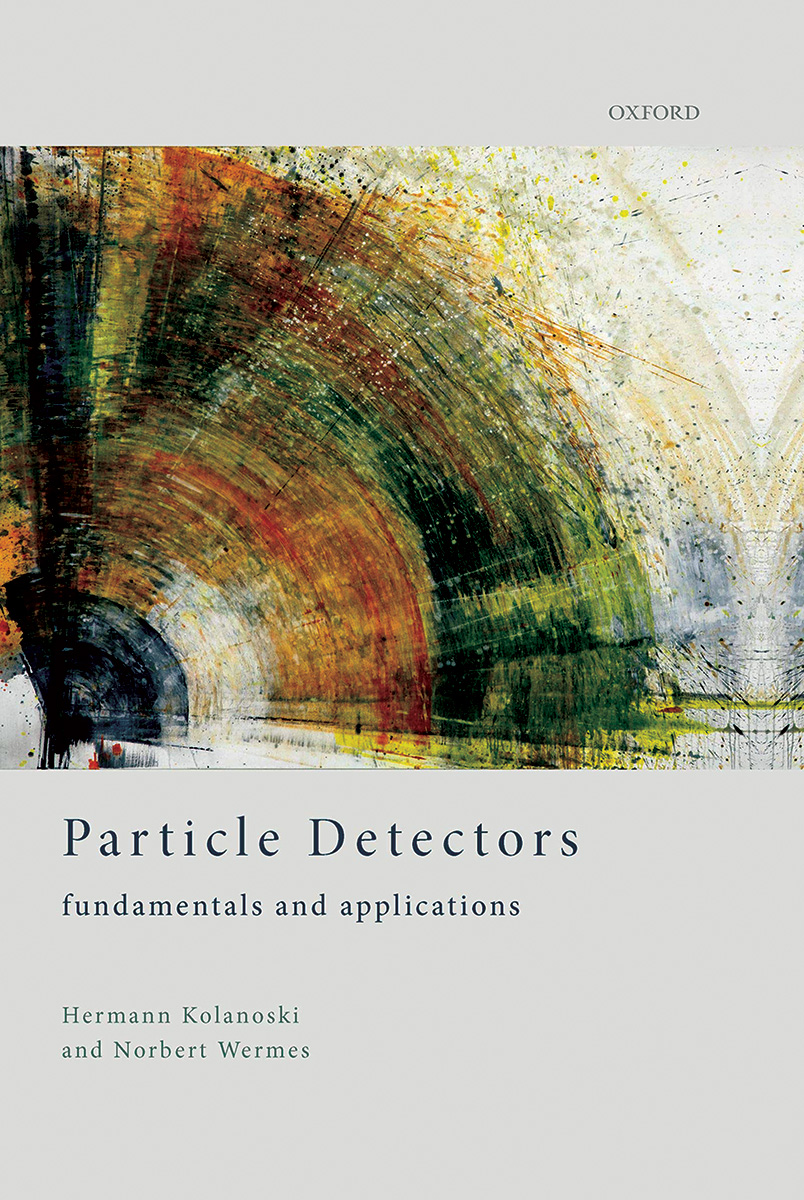
Particle Detectors – Fundamentals and Applications

Particle Detectors – Fundamentals and Applications

Throughout the history of nuclear, particle and astroparticle physics, novel detector concepts have paved the way to new insights and new particles, and will continue to do so in the future. To help train the next generation of innovators, noted experimental particle physicists Hermann Kolanoski (Humboldt University Berlin and DESY) and Norbert Wermes (University of Bonn) have written a comprehensive textbook on particle detectors. The authors use their broad experience in collider and underground particle-physics experiments, astroparticle physics experiments and medical-imaging applications to confidently cover the spectrum of experimental methods in impressive detail.

Particle Detectors – Fundamentals and Applications combines in a single volume the syllabus also found in two well-known textbooks covering slightly different aspects of detectors: Techniques for Nuclear and Particle Physics Experiments by W R Leo and Detectors for Particle Radiation by Konrad Kleinknecht. Kolanoski and Wermes’ book supersedes them both by being more up-to-date and comprehensive. It is more detailed than Particle Detectors by Claus Grupen and Boris Shwartz – another excellent and recently published textbook with a similar scope – and will probably attract a slightly more advanced population of physics students and researchers. This new text promises to become a particle-physics analogue of the legendary experimental-nuclear-physics textbook Radiation Detection and Measurement by Glenn Knoll.

The book begins with a comprehensive warm-up chapter on the interaction of charged particles and photons with matter, going well beyond a typical textbook level. This is followed by a very interesting discussion of the transport of charge carriers in media in magnetic and electric fields, and – a welcome novelty – signal formation, using the method of “weighting fields”. The main body of the book is devoted first to gaseous, semiconductor, Cherenkov and transition-radiation detectors, and then to detector systems for tracking, particle identification and calorimetry, and the detection of cosmic rays, neutrinos and exotic matter. Final chapters on electronics readout, triggering and data acquisition complete the picture. 

Particle Detectors – Fundamentals and Applications is best considered a reference for lectures on experimental methods in particle and nuclear physics for postgraduate-level students. The book is easy to read, and conceptual discussions are well supported by numerous examples, plots and illustrations of excellent quality. Kolanoski and Wermes have undoubtedly written a gem of a book, with value for any experimental particle physicist, be they a master’s student, PhD student or accomplished researcher looking for detector details outside of their expertise.

Leadership in superconductors recognised

Amalia Ballarino

Amalia Ballarino of CERN has received the 2021 James Wong Award from the Institute of Electrical and Electronics Engineers (IEEE) for her significant and continuing contributions in the field of superconducting materials. The IEEE citation recognises her for: “leading successful R&D programs that establish a winning role for high temperature and MgB2 superconductors in accelerator applications; piloting the development of MgB2 wire suitable for cabling and its incorporation into a multi-kA power transmission system operating at 25 K, and directing the project to industrialise eight such systems for which over 1000 km of wire have been produced; promoting fruitful cooperation between research and industry; and launching R&D activity based on the use of superconductors (Nb-Ti, Nb3Sn, MgB2 and high-temperature superconductors) for future particle accelerators.

Ballarino was responsible for the several-thousand current leads that power the superconducting magnets of the LHC, including those based on the high-temperature superconductor BSCCO-2223, which have been the first large-scale commercial application of high-temperature superconductors. She was awarded Superconducting Week’s “Superconductor Industry Person of the Year 2006” for the development. Following work on the commissioning of the LHC, Ballarino proposed cold-powering systems that use high-current MgB2 transfer lines for feeding the new superconducting magnets of the High-Luminosity LHC (HL-LHC). She started a collaboration with industry to develop the conductor in the form of wire suitable for cabling. The wire has been successfully delivered to CERN in large quantities, while the cold-powering systems have been developed and qualified and they are now being industrialised.

CERN is home to more winners than any other institution

Ballarino joined CERN as PhD student. She is section leader in CERN’s magnets, superconductors and cryostats group and, as from January 2021, deputy group leader. The IEEE cited her service to the community as lecturer, member of program committees for international conferences, and technical editor and reviewer of papers for scientific journals. “In my opinion, this recognition has been a long time in coming,” says Bruce Strauss, past president and treasurer of the IEEE council on superconductivity.

The IEEE James Wong Award (formally named “Award for Continuing and Significant Contributions in the Field of Applied Superconductivity” until 2013) comes with a $5000 honorarium and a pure-niobium medal. It has been granted annually by the IEEE council on superconductivity since 2000, and CERN is home to more winners than any other institution, with Daniel Leroy, Lucio Rossi, Herman ten Kate, Robert Aymar, Arnaud Devred and Luca Bottura recognised in previous years.

Ballarino will receive the award during the MT27 International Conference on Magnet Technology in November.

‘A CERN for climate change’

Climate models

In the early 1950s, particle accelerators were national-level activities. It soon became obvious that to advance the field further demanded machines beyond the capabilities of single countries. CERN marked a phase transition in this respect, enabling physicists to cooperate around the development of one big facility. Climate science stands to similarly benefit from a change in its topology.

Modern climate models were developed in the 1960s, but there weren’t any clear applications or policy objectives at that time. Today we need hard numbers about how the climate is changing, and an ability to seamlessly link these changes to applications – a planetary information system for assessing hazards, planning food security, aiding global commerce, guiding infrastructural investments, and much more. National centres for climate modelling exist in many countries. But we need a centre “on steroids”: a dedicated exascale computing facility organised on a similar basis to CERN that would allow the necessary leap in realism.

Quantifying climate

To be computationally manageable, existing climate models solve equations for quantities that are first aggregated over large spatial and temporal scales. This blurs their relationship to physical laws, to phenomena we can measure, and to the impacts of a changing climate on infrastructure. Clouds, for example, are creatures of circulation, particularly vertical air currents. Existing models attempt to infer what these air currents would be given information about much larger scale 2D motion fields. There is a necessary degree of abstraction, which leads to less useful results. We don’t know if air is going up or down an individual mountain, for instance, because we don’t have individual mountains in the model, at best mountain ranges. 

Tim Palmer

In addition to more physical models, we also need a much better quantification of model uncertainty. At present this is estimated by comparing solutions across many low-resolution models, or by perturbing parameters of a given low-resolution model. The particle-physics analogy might be that everyone runs their own low-energy accelerators hoping that coordinated experiments will provide high-energy insights. Concentrating efforts on a few high-resolution climate models, where uncertainty is encoded through stochastic mathematics, is a high-energy effort. It would result in better and more useful models, and open the door to cooperative efforts to systematically explore the structural stability of the climate system and its implications for future climate projections.

Working out climate-science’s version of the Standard Model thus provides the intellectual underpinnings for a “CERN for climate change”. One can and should argue about the exact form such a centre should take, whether it be a single facility or a federation of campuses, and on the relative weight it gives to particular questions. What is important is that it creates a framework for European climate, computer and computational scientists to cooperate, also with application communities, in ways that deliver the maximum benefit for society.

Building momentum

A number of us have been arguing for such a facility for more than a decade. The idea seems to be catching on, less for the eloquence of our arguments, more for the promise of exascale computing. A facility to accelerate climate research in developing and developed countries alike has emerged as a core element of one of 12 briefing documents prepared by the Royal Society in advance of the United Nations Climate Change Conference, COP26, in November. This briefing flanks the European Union’s “Destination Earth” project, which is part of its Green Deal programme – a €1 billion effort over 10 years that envisions the development of improved high-resolution models with better quantified uncertainty. If not anchored in a sustainable organisational concept, however, this risks throwing money to the wind.

Bjorn Stevens

Giving a concrete form to such a facility still faces internal hurdles, possibly similar to those faced by CERN in its early days. For example, there are concerns that it will take away funding from existing centres. We believe, and CERN’s own experience shows, that the opposite is more likely true. A “CERN for climate change” would advance the frontiers of the science, freeing researchers to turn their attention to new questions, rather than maintaining old models, and provide an engine for European innovation that extends far beyond climate change.

bright-rec iop pub iop-science physcis connect