At an extraordinary session of the CERN Council on 8 March, the 23 Member States of CERN condemned, in the strongest terms, the military invasion of Ukraine by the Russian Federation on 24 February. The Council deplored the resulting loss of life and humanitarian impact, as well as the involvement of Belarus in the unlawful use of force against Ukraine.
Ukraine joined CERN as an Associate Member State in 2016 and Ukrainian scientists have long been active in many of the laboratory’s activities. Russian scientists also have a long and distinguished involvement with CERN, and Russia was granted Observer status in recognition of its contributions to the construction of the LHC.
The Council decided that: CERN will promote initiatives to support Ukrainian collaborators and Ukrainian scientific activity in high-energy physics; the Observer status of Russia is suspended until further notice; and CERN will not engage in new collaborations with Russia and its institutions until further notice. In addition, the CERN management stated that it will comply with all applicable international sanctions.
The Council also expressed its support to the many members of CERN’s Russian scientific community who reject the invasion: “CERN was established in the aftermath of World War II to bring nations and people together for the peaceful pursuit of science: this aggression runs against everything for which the Organization stands. CERN will continue to uphold its core values of scientific collaboration across borders as a driver for peace.”
Two weeks later at its March session, strongly condemning statements by those Russian institutes that have expressed support for the invasion and stressing that its decisions are taken to express its solidarity with the Ukrainian people and its commitment to science for peace, the Council decided to suspend the participation of CERN scientists in all scientific committees of institutions located in Russia and Belarus, and vice versa. It also decided to suspend or, failing that, cancel all events jointly arranged between CERN and institutions located in those countries, and to suspend the granting of contracts as associated members of the CERN personnel to any new individuals affiliated to home institutions in Russia and Belarus.
CERN was established to bring nations and people together for the peaceful pursuit of science
Measures were also introduced regarding the Joint Institute of Nuclear Research (JINR), with which CERN has had scientific relations for more than 60 years. The Council decided to suspend the participation of CERN scientists in all JINR scientific committees, and vice versa; to suspend or, failing that, cancel all events jointly arranged between CERN and JINR; that CERN will not engage in new collaborations with JINR until further notice; and that the Observer status of JINR at the Council is suspended and CERN will not exercise the rights resulting from its Observer status at JINR, until further notice.
At its June session, the Council will decide on further measures regarding the suspension of international cooperation agreements and related protocols, as well as any other agreements concerning participation in CERN’s scientific programme.
Science for peace
Other European institutions with longstanding scientific relationships with Russia, such as DESY and the ESRF, have also taken measures in response to the invasion. On 4 March the European Commission suspended co-operation with Russia on research and innovation, and on 28 February ESA announced that it will fully implement sanctions imposed on Russia by its 22 member states, making a scheduled 2022 launch for the ExoMars programme “very unlikely”. Russia’s future cooperation on the International Space Station is also uncertain.
The EPS, APS and national physical societies in Europe have released statements strongly condemning the Russian invasion and announcing various measures, as have organisations including IAEA, IUPAP and EUROfusion. A declaration initiated by the Max Planck Society and supported by the Lindau Nobel Laureate Meetings has been signed by 150 Nobel Laureates, while 77 Breakthrough Prize Laureates have signed an open letter standing in solidarity with the people of Ukraine. A letter from Russian scientists and science journalists attracted around 5000 signatories, while almost 200 Russian researchers participating in CERN experiments have signed an open letter standing strongly for resolving the conflict through diplomacy and negotiations.
At CERN, actions have been initiated to support employed and associated members of personnel of Ukrainian nationality and their families. The CERN community has also raised funds for the Red Cross’s operations in Ukraine. With the CERN directorate deciding to match, from the CERN budget, donations made by the personnel, and in addition to a financial contribution from the CERN Staff Association, the collection raised 820,000 Swiss francs by the time of closing on 22 March.
The initiatives of many members of the personnel further demonstrate CERN’s solidarity and community spirit. The theoretical physics department has created a web page listing initiatives from the scientific community, and the users office also has useful information.
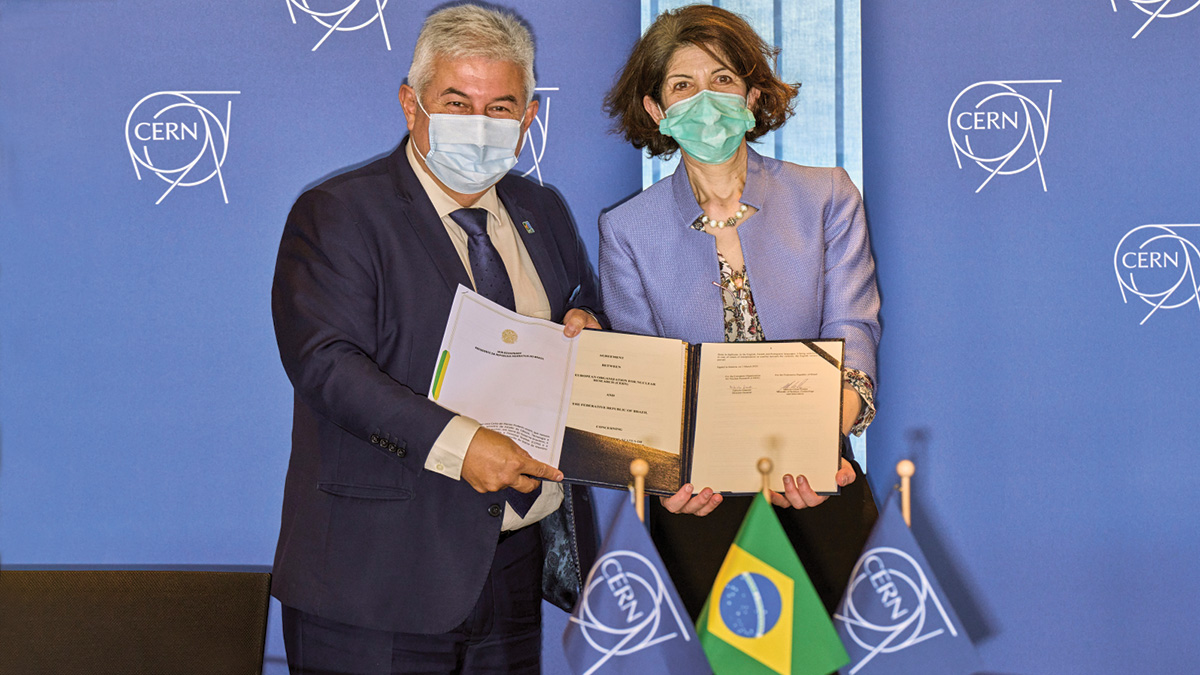
On 3 March, CERN Director-General Fabiola Gianotti and Brazilian minister for science, technology and innovation Marcos Pontes signed an agreement admitting Brazil as an Associate Member State of CERN. The associate membership will enter into force once Brazil has completed all necessary accession and ratification processes.
Brazil will be the first country in Latin America to join CERN as an Associate Member State, marking a significant step in a geographical enlargement process that was initiated in 2010. Formal cooperation between CERN and Brazil started in 1990 with the signature of an international cooperation agreement, allowing Brazilian researchers to participate in the DELPHI experiment at LEP. Today, Brazilian institutes participate in all the main experiments at the LHC and are also involved in other experiments, such as ALPHA, ProtoDUNE at the Neutrino Platform, ISOLDE, Medipix and RD51. Brazilian nationals also participate very actively in CERN training and outreach programmes, including the summer student programme, the Portuguese- language teacher programme and the Beamline for Schools competition.
Over the past decade, Brazil’s experimental particle-physics community has doubled in size. At the four main LHC experiments alone, more than 180 Brazilian scientists, engineers and students collaborate in fields ranging from hardware and data processing to physics analysis. Beyond particle physics, CERN and Brazil’s National Centre for Research in Energy and Materials have also been formally cooperating since December 2020 on accelerator R&D and applications.
“The accession of Brazil to CERN Associate Membership creates a robust framework for collaboration in research, technology development and innovation,” said Marcos Pontes. “I am certain that this partnership will take the Brazilian science, technology and innovation sector to a whole new level of development.”
As an Associate Member State, Brazil will attend meetings of the CERN Council and finance committee. Brazilian nationals will be eligible for limited-duration staff positions, fellowships and studentships, while Brazilian companies will be able to bid for CERN contracts, increasing opportunities for industrial collaboration in advanced technologies.
“We are very pleased to welcome Brazil as an Associate Member State,” said Fabiola Gianotti. “Over the past three decades, Brazilian scientists have contributed substantially to many CERN projects. This agreement enables Brazil and CERN to further strengthen ourcollaboration, opening up a broad range of new and mutually beneficial opportunities in fundamental research, technological developments and innovation, and education and training activities.”
An advisory panel to the Japanese Ministry of Education, Culture, Sports, Science and Technology (MEXT) has called on proponents of the International Linear Collider (ILC) to re-evaluate their plans. In particular, noting the global situation and the progress in other future-collider proposals, the expert panel recommends that the issue of Japan hosting the ILC should be temporarily shelved in forthcoming ILC activities.
The Japanese high-energy physics community proposed Japan to host the ILC shortly after the discovery of the Higgs boson in 2012. Since then, MEXT and bodies including the Science Council of Japan (SCJ) have been examining all aspects of the estimated $7 billion project, which would collide electrons and positrons to study the Higgs boson in detail. In 2018 the International Committee for Future Accelerators (ICFA) backed a 20 km-long ILC operating at a centre-of-mass energy of 250 GeV – half the energy set out in the 2013 technical design report. But the following year MEXT, with input from the SCJ, announced that it had “not yet reached declaration” for hosting the ILC and that further discussion and greater international commitment were necessary.
Planning and progress
In June 2021, a 50 page-long report published by the ILC International Development Team (IDT), which was established in 2020, set out the organisational framework, implementation model, work plan and required resources for an ILC “pre-lab”. At the same time, KEK and the Japan Association of High Energy Physicists submitted a report to MEXT summarising progress on ILC activities over the past three years. Having evaluated this progress, the ILC advisory panel to MEXT released its findings on 14 February.
While recognising the academic significance of particle physics, the importance of a Higgs factory and the value of international collaborative research, the panel concluded that there is no progress in the international cost sharing for the ILC and that it is premature to proceed with an ILC pre-lab based on the premise that the Japanese government will express its interest in hosting the facility. It recommended that ILC proponents reflect upon the increasing strain in the financial situation of the related countries and reevaluate the plan in a global manner, in particular taking into account the progress in studies such as the Future Circular Collider (FCC). The question of hosting the ILC in Japan should be “decoupled”, recommended the report, and development work in key technological areas be carried out by further strengthening the international collaboration among institutes and laboratories. The panel also urged the research community to continue efforts to expand the broad support from various stakeholders in Japan and abroad by building up trust and mutual understanding.
Responding to the advisory panel’s findings on 22 March, KEK stated that it will re-examine the path for realising the ILC as a Higgs factory, taking into account the progress in various fronts including the FCC feasibility study. Also, in collaboration with the ILC-IDT, KEK will propose a framework to ICFA to address some of the pressing accelerator R&D issues for the ILC pre-lab. “KEK and the Japanese ILC community is committed to further advance important technological and engineering development in the accelerator area,” stated KEK, also announcing a new centrally managed organisation to strengthen ILC communications to the public, academia and industry.
Writing in ILC Newsline on 22 March, ILC-Japan chair Shoji Asai of the University of Tokyo sought to clarify the advisory panel’s statements, pointing out the “rather ambiguous” Japanese language: “It is easy to react by saying ‘ILC is dead’ or ‘Japan is not interested’. However, this is not a project that can be talked about in such a simple manner.” Regarding the panel’s statement about the FCC: “Some interpret this line as the recommendation to choose between the ILC and the FCC. It is NOT. There is a clear understanding of the timing difference between the two projects.”
On 11 April, ICFA published a statement reaffirming its position that the concept for the ILC is technically robust and has reached a level of maturity “which supports its moving forward with the engineering design study toward its timely realisation”. ICFA commits to continuing efforts within the IDT over the next year to coordinate the global research community’s activities, in particular to further strengthen international collaboration among institutes and laboratories to advance international collaboration toward important R&D activities, and will continue to encourage intergovernmental discussion between Japan and potential partner nations on the ILC.
“Since Japan has never hosted a large international research facility in the past, the cautious attitude of the Japanese government is in some way understandable,” says Tatsuya Nakada, head of the ILC-IDT. “Linear colliders should remain as a viable option for the future Higgs factory and beyond. In this context, ICFA support for the Japanese community proposing the ILC as a global project hosted in Japan is very important.”
Around 140 physicists convened for one of the first in-person international particle-physics conferences in the COVID-19 era. The Moriond conference on electroweak interactions and unified theories, which took place from 12 to 19 March on the Alpine slopes of La Thuile in Italy, was a wonderful chance to meet friends and colleagues, to have spontaneous exchanges, to listen to talks and to prolong discussions over dinner.
The LHC experiments presented a suite of impressive results based on increasingly creative and sophisticated analyses, including first observations of rare Standard Model (SM) processes and the most recent insights in the search for new physics. ATLAS reported the first observation of the production of a single top quark in association with a photon, a rare process that is sensitive to the existence of new particles. CMS observed for the first time the electroweak production of a pair of opposite-sign W bosons, which is crucial to investigate the mechanism of electroweak symmetry breaking. The millions of Higgs bosons produced so far at the LHC have enabled detailed measurements and open a new window on rare phenomena, such as the rate of Higgs-boson decays to a charm quark–antiquark pair. CMS presented the world’s most stringent constraint on the coupling between the Higgs boson and the charm quark, improving their previous measurement by more than a factor of five, while ATLAS measurements demonstrated that it is weaker than the coupling between the Higgs boson and the bottom quark. On the theory side, various new signatures for extended Higgs sectors were proposed.
The LHC experiments presented a suite of impressive results based on increasingly creative and sophisticated analyses
Of special interest is the search for heavy resonances decaying to high-mass dijets. CMS reported the observation of a spectacular event with four high transverse-momentum jets, forming an invariant mass of 8 TeV. CMS now has two such events, exceeding the SM prediction with a local significance of 3.9σ, or 1.6σ when taking into account the full range of parameter space searched. Moderate excesses with a global significance of 2–2.5σ were observed in other channels, for example in a search by ATLAS for long-lived, heavy charged particles and in a search by CMS for new resonances that decay into two tau pairs. Data from Run 3 and future High-Luminosity LHC runs will show whether these excesses are statistical fluctuations of the SM expectation or signals of new physics.
Flavour anomalies
The persistent set of tensions between predictions and measurements in semi-leptonic b → s ℓ+ℓ– decays (ℓ = e, μ) were much discussed. LHCb has used various decay modes mediated by strongly suppressed flavour-changing neutral currents to search for deviations from lepton flavour universality (LFU). Other measurements of these transitions, including angular distributions and decay rates (for which the predictions are affected by troublesome hadronic corrections) as well as analyses of charged-current b→ cτ–ν decays from BaBar, Belle and LHCb also show a consistent pattern of deviations from LFU. While none are individually significant enough to constitute clear evidence of new physics, they represent an intriguing pattern that can be explained by the same new-physics models. Theoretical talks on this subject proposed additional observables (based on baryon decays or leptons at high transverse momenta) to get more information on operators beyond the SM that would contribute to the anomalies. Updates from LHCb on several b → s ℓ+ℓ–-related measurements with the full Run 1 and Run 2 datasets are eagerly awaited, while Belle II also has the potential to provide essential independent checks. The integrated SuperKEKB luminosity has now reached a third of the full Belle dataset, with Belle II presenting several impressive new results. These include measurements of the b → s ℓ+ℓ– decay branching fractions with a precision limited by the sample size and precise measurements of charmed particle lifetimes, including the individual world-best D and Λ+c lifetimes, proving the excellent tracking and vertexing capabilities of the detector.
The other remarkable deviation from the SM prediction is the anomalous magnetic moment of the muon (g–2)μ, for which the SM prediction and the recent Fermilab measurement stand 4.2σ apart – or less, depending on whether the hadronic vacuum polarisation contribution to (g–2)μ is calculated using traditional “dispersive” methods or a recent lattice QCD calculation. The jury is still out on the theory side, but the ongoing analysis of Run 2 and Run 3 data at Fermilab will soon reduce the statistical uncertainty by more than a factor of two. The hottest issues in neutrinos – in particular their masses and mixing – were reviewed. The current leading long-baseline experiments – NOvA in the US and T2K in Japan – have helped to refine our understanding of oscillations, but the neutrino mass hierarchy and CP-violating phase remain to be determined. A great experimental effort is also being devoted to the search for neutrinoless double-beta decay (NDBD) which, if found, would prove that neutrinos are Majorana particles and have far-reaching implications in cosmology and particle physics. The GERDA experiment at Gran Sasso presented its final result, placing a lower limit on the NDBD half-life of 1.8 × 1026 years.
While tensions between solar-neutrino bounds and the reactor antineutrino anomaly are mostly resolved, the gallium anomaly remains
Another very important question is the possible existence of “sterile” neutrinos that do not participate in weak interactions, for which theoretical motivations were presented together with the robust experimental programme. The search for sterile neutrinos is motivated by a series of tensions in short-baseline experiments using neutrinos from accelerators (LSND, Mini-BooNE), nuclear reactors (the “reactor antineutrino anomaly”) and radioactive sources (the “gallium anomaly”), which cannot be accounted for by the standard three-neutrino framework. In particular, MicroBooNE has neither confirmed nor excluded the electron-like low-energy excess observed by MiniBooNE. While tensions between solar-neutrino bounds and the reactor antineutrino anomaly are mostly resolved, the gallium anomaly remains.
Dark matter and cosmology
The status of dark-matter searches both at the LHC and via direct astrophysical searches was comprehensively reviewed. The ongoing run of the 5.9 tonne XENONnT experiment, for example, should elucidate the 3.3σ excess observed by XENON1T in low-energy electron recoil events. The search for axions, which provide a dark-matter candidate as well as a solution to the strong-CP problem, cover different mass ranges depending on the axion coupling strength. The parameter space is wide, and Moriond participants heard how a discovery could happen at any moment thanks to experiments such as ADMX. The status of the Hubble tension was also reviewed.
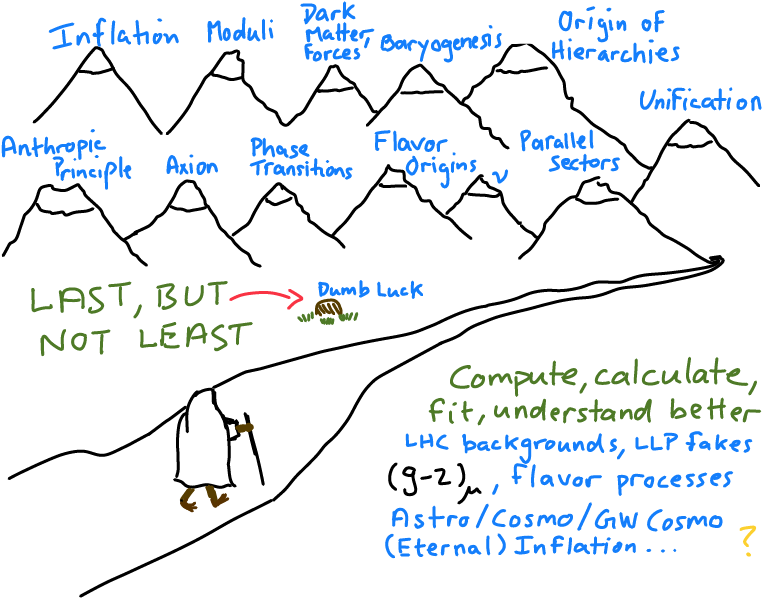
The many theory talks described various beyond-the-SM proposals – including extra scalars and/or fermions and/or gauge symmetries – aimed at explaining LFU violation, (g–2)μ, the hierarchy among Yukawa couplings, neutrino masses and dark matter. Overall, the broad spectrum of informative presentations brilliantly covered the present status of open questions in phenomenological high-energy physics and shine a light on the many rich paths that demand further exploration.
Between February 23-25, the Kavli Institute of Theoretical Physics (KITP) in Santa Barbara, California, hosted the Theory Frontier conference of the US Particle Physics Community Planning Exercise, “Snowmass 2021“. Organised by the Division of Particles and Fields of the American Physical Society (APS DPF), Snowmass aims to identify and document a scientific vision for the future of particle physics in the U.S. and abroad. The event brought together theorists from the entire spectrum of high-energy physics, fostering dialogue and revealing common threads, to sketch a decadal vision for high-energy theory in advance of the main Snowmass Community Summer Study in Seattle on 17-26 July.
It was also one of the first large in-person meetings for the US particle physics community since the start of the COVID-19 pandemic.
The conference began in earnest with Juan Maldacena’s (IAS) vision for formal theory in the coming decade. Highlighting promising directions in quantum field theory and quantum gravity, he surveyed recent developments in “bootstrap” techniques for conformal field theories, amplitudes and cosmology; implications of quantum information for understanding quantum field theories; new dualities in supersymmetric and non-supersymmetric field theories; progress on the black-hole information problem; and constraints on effective field theories from consistent coupling to quantum gravity. Following talks by Eva Silverstein (U. Stanford) on quantum gravity and cosmology and Xi Dong (UC Santa Barbara) on geometry and entanglement, David Gross (KITP) brought the morning to a close by recalling the role of string theory in the quest for unification and emphasising its renewed promise in understanding QCD.
Clay Cordova (Chicago), David Simmons-Duffin (Caltech), Shu Heng Shao (IAS) and Ibrahima Bah (Johns Hopkins) followed with a comprehensive overview of recent progress in quantum field theory. Cordova’s summary of supersymmetric field theory touched on the classification of superconformal field theories, improved understanding of maximally supersymmetric theories in diverse dimensions, and connections between supersymmetric and non-supersymmetric dynamics. Simmons-Duffin made a heroic attempt to convey the essentials of the conformal bootstrap in a 15-minute talk, while Shao surveyed generalised global symmetries and Bah detailed geometric techniques guiding the classification of superconformal field theories.
The first afternoon began with Raman Sundrum’s (Maryland) vision for particle phenomenology, in which he surveyed the pressing questions motivating physics beyond the Standard Model, some promising theoretical mechanisms for answering them, and the experimental opportunities that follow. Tim Tait (UC Irvine) followed with an overview of dark- matter models and motivation, drawing a contrast between the more top-down perspective on dark matter prevalent during the previous Snowmass process in 2013 (also hosted by KITP) and the much broader bottom-up perspective governing today’s thinking. Devin Walker (Dartmouth) and Gilly Elor (Mainz) brought the first day’s physics talks to a close with bosonic dark matter and new ideas in baryogenesis.
The final session of the first day was devoted to issues of equity and inclusion in the high-energy theory community, with DPF early-career member Julia Gonski (Columbia) making a persuasive case giving a voice to early-career physicists in the years between Snowmass processes. Connecting from Cambridge, Howard Georgi (Harvard) delivered a compelling speech on the essential value of diversity in physics, recalling Ann Nelson’s legacy and reminding the packed auditorium that “progress will not happen at all unless the good people who think that there is nothing they can do actually wake up and start doing.” This was followed by a panel discussion moderated by Devin Walker (Dartmouth) and featuring Georgi, Bah, Masha Baryakhtar (Washington), and Tien-Tien Yu (Oregon) in dialogue about their experiences.
Developments across all facets of the high-energy theory community are shaping new ways of exploring the universe from the shortest length scales to the very longest
The second and third days of the conference spanned the entire spectrum of activity within high-energy theory, consolidated around quantum information science with talks by Tom Hartman (Cornell), Raphael Bousso (Berkeley), Hank Lamm (Fermilab) and Yoni Kahn (Illinois). Marius Wiesemann (MPI), Felix Kling (DESY) and Ian Moult (Yale) discussed simulations for collider physics, and Michael Wagman (Fermilab), Huey-Wen Lin (Michigan State) and Thomas Blum (Connecticut) emphasised recent progress in lattice gauge theory. Recent developments in precision theory were covered by Bernhard Mistlberger (CTP), Emanuele Mereghetti (LANL) and Dave Soper (Oregon) and the status of scattering-amplitudes applications by Nima Arkani-Hamed (IAS), Mikhail Solon (Caltech) and Henriette Elvang (Michigan). Masha Baryakhtar (Washington), Nicholas Rodd (CERN) and Daniel Green (UC San Diego) reviewed astroparticle and cosmology theory, followed by an overview of effective field theory approaches in cosmology and gravity by Mehrdad Mirbabayi (ICTP) and Walter Goldberger (Yale); Isabel Garcia Garcia (KITP) discussed alternative approaches to effective field theories in gravitation. Recent findings in neutrino theory were covered by Alex Friedland (SLAC), Mu Chun Chen (UC Irvine) and Zahra Tabrizi (Northwestern). Bridging these themes with talks on amplitudes and collider physics, machine learning for particle theory and cosmological implications of dark sector models were talks by Lance Dixon (SLAC), Jesse Thaler (MIT) and Neal Weiner (New York). Connections with the many other “frontiers” in the Snowmass process were underlined by Laura Reina (Florida State), Lian-Tao Wang (Chicago), Pedro Machado (Fermilab), Flip Tanedo (UC Riverside), Steve Gottlieb (Indiana), and Alexey Petrov (Wayne State).
The rich and broad programme of the Snowmass Theory Conference demonstrates the vibrancy of high-energy theory at this interesting juncture for the field, following the discovery of the final missing piece of the Standard Model, the Higgs boson, in 2012. Subsequent developments across all facets of the high-energy theory community are shaping new ways of exploring the universe from the shortest length scales to the very longest. The many thematic threads and opportunities covered in the conference bode well for the final Snowmass discussions with the whole community in Seattle this summer.
New frontiers in gravitational-wave (GW) astronomy were discussed in the charming and culturally vibrant region of Oaxaca, Mexico from 14 to 19 November. Around 37 participants attended the hybrid Banff International Research Station for Mathematical Innovation and Discovery (BIRS) “Detection and Analysis of Gravitational Waves in the Era of Multi-Messenger Astronomy: From Mathematical Modelling to Machine Learning’’ workshop. Topics ranged from numerical relativity to observational astrophysics and computer science, including the latest applications of machine-learning algorithms for the analysis of GW data.
GW observations are a new way to explore the universe’s deepest mysteries. They allow researchers to test gravity in extreme conditions, to get important clues on the mathematical structure and possible extension of general relativity, and to understand the origin of matter and the evolution of the universe. As more GW observations with increased detector sensitivities spur astrophysical and theoretical investigations, the analysis and interpretation of GW data faces new challenges which require close collaboration with all GW researchers. The Oaxaca workshop focused on a topic that is currently receiving a lot of attention: the development of efficient machine-learning (ML) methods and numerical-analysis algorithms for the detection and analysis of GWs. The programme gave participants an overview of new-physics phenomena that could be probed by current or next-generation GW detectors, as well as data-analysis tools that are being developed to search for astrophysical signals in noisy data.
Since their first detections in 2015, the LIGO and Virgo detectors have reached an unprecedented GW sensitivity. They have observed signals from binary black-hole mergers and a handful of signals from binary neutron star and mixed black hole-neutron star systems. In discussing the role that numerical relativity plays in unveiling the GW sky, Pablo Laguna and Deirdre Shoemaker (U. Texas) showed how it can help in understanding the physical signatures of GW events, for example by distinguishing black hole-neutron star binaries from binary black-hole mergers. On the observational side, several talks focused on possible signatures of new physics in future detections. Adam Coogan (U. de Montréal and Mila) and Gianfranco Bertone (U. of Amsterdam, and chair of EuCAPT) discussed dark-matter halos around black holes. Distinctive GW signals could help to determine whether dark matter is made of a cold, collisionless particle via signatures of intermediate mass-ratio inspirals embedded in dark-matter halos. In addition, primordial black holes could be dark-matter candidates.
Bernard Mueller (U. Monash) and Pablo Cerdá-Durán (U. de Valencia) described GW emission from core-collapse supernovae. The range of current detectors is limited to the Milky Way, where the rate of supernovae is about one per century. However, if and when a galactic supernova happens, its GW signature will be within reach of existing detectors. Lorena Magaña Zertuche (U. of Mississippi) talked about the physics of black-hole ringdown – the process whereby gravitational waves are emitted in the aftermath of a binary black-hole merger – which is crucial for understanding astrophysical black holes and testing general relativity. Finally, Leïla Haegel (U. de Paris) described how the detection of GW dispersion would indicate the breaking of Lorentz symmetry: if a GW propagates according to a modified dispersion relation, its frequency modes will propagate at different speeds, changing the phase evolution of the signals with respect to general relativity.
Machine learning Applications of different flavours of ML algorithms to GW astronomy, ranging from the detection of GWs to their characterisation in detector simulations, were the focus of the rest of the workshop.
ML has seen a huge development in recent years and has been increasingly used in many fields of science. In GW astronomy, a variety of supervised, unsupervised, and reinforcement ML algorithms, such as deep learning, neural networks, genetic programming and support vector machines, have been developed. They have been used to successfully deal with noise in the detector, signal processing, data analysis for signal detections and for reducing the non-astrophysical background of GW searches. These algorithms must be able to deal with large data sets and demand a high accuracy to model theoretical waveforms and to perform searches at the limit of instrument sensitivities. The next step for a successful use of ML in GW science will be the integration of ML techniques with more traditional numerical-analysis methods that have been developed for the modelling, real-time detection, and analysis of signals.
The BIRS workshop provided a broad overview of the latest advances in this field, as well as open questions that need to be solved to apply robust ML techniques to a wide range of problems. These include reliable background estimation, modelling gravitational waveforms in regions of the parameter space not covered by full numerical relativity simulations, and determining populations of GW sources and their properties. Although ML for GW astronomy is in its infancy, there is no doubt that it will play an increasingly important role in the detection and characterization of GWs leading to new discoveries.
Ten years after the discovery of a Standard Model-like Higgs boson at the LHC, particle physicists face profound questions lying at the intersection of particle physics, cosmology and astrophysics. A visionary new research infrastructure at CERN, the proposed Future Circular Collider (FCC), would create opportunities to either answer them or refine our present understanding. The latest activities towards the ambitious FCC physics programme were the focus of the 5th FCC Physics Workshop, co-organised with the University of Liverpool as an online event from 7 to 11 February. It was the largest such workshop to date, with more than 650 registrants, and welcomed a wide community geographically and thematically, including members of other “Higgs factory” and future projects.
The overall FCC programme – comprising an electron-positron Higgs and electroweak factory (FCC-ee) as a first stage followed by a high-energy proton-proton collider (FCC-hh) – combines the two key strategies of high-energy physics. FCC-ee offers a unique set of precision measurements to be confronted with testable predictions and opens the possibility for exploration at the intensity frontier, while FCC-hh would enable further precision and the continuation of open exploration at the energy frontier. The February workshop saw advances in our understanding of the physics potential of FCC-ee, and discussions of the possibilities provided at FCC-hh and at a possible FCC-eh facility.
The overall FCC programme combines the two key strategies of high-energy physics: precision measurements at the intensity frontier and the open exploration at the energy frontier
The proposed R&D efforts for the FCC align with the requests of the 2020 update of the European strategy for particle physics and the recently published accelerator and detector R&D roadmaps established by the Laboratory Directors Group and ECFA. Key activities of the FCC feasibility study, including the development of a regional implementation scenario in collaboration with the CERN host states, were presented.
Over the past several months, a new baseline scenario for a 91 km-circumference layout has been established, balancing the optimisation of the machine performance, physics output and territorial constraints. In addition, work is ongoing to develop a sustainable operational model for FCC taking into account human and financial resources and striving to minimise its environmental impact. Ongoing testing and prototyping work on key FCC-ee technologies will demonstrate the technical feasibility of this machine, while parallel R&D developments on high-field magnets pave the way to FCC-hh.
Physics programme A central element of the overall FCC physics programme is the precise study of the Higgs sector. FCC-ee would provide model-independent measurements of the Higgs width and its coupling to Standard Model particles, in many cases with sub-percent precision and qualitatively different to the measurements possible at the LHC and HL-LHC. The FCC-hh stage has unique capabilities for measuring the Higgs-boson self-interactions, profiting from previous measurements at FCC-ee. The full FCC programme thus allows the reconstruction of the Higgs potential, which could give unique insights into some of the most fundamental puzzles in modern cosmology, including the breaking of electroweak symmetry and the evolution of the universe in the first picoseconds after the Big Bang.
Presentations and discussions throughout the week showed the impressive breadth of the FCC programme, extending far beyond the Higgs factory alone. The large integrated luminosity to be accumulated by FCC-ee at the Z-pole enables high-precision electroweak measurements and an ambitious flavour-physics programme. While the latter is still in the early phase of development, it is clear that the number of B mesons and tau-lepton pairs produced at FCC-ee significantly surpasses those at Belle II, making FCC-ee the flavour factory of the 2040s. Ongoing studies are also revealing its potential for studying interactions and decays of heavy-flavour hadrons and tau leptons, which may provide access to new phenomena including lepton-flavour universality-violating processes. Similarly, the capabilities of FCC-ee to study beyond-the-Standard Model signatures such as heavy neutral leptons have come into further focus. Interleaved presentations on FCC-ee, FCC-hh and FCC-eh physics also further intensified the connections between the lepton- and hadron-collider communities.
The impressive potential of the full FCC programme is also inspiring theoretical work. This ranges from overarching studies on our understanding of naturalness, to concrete strategies to improve the precision of calculations to match the precision of the experimental programme.
The physics thrusts of the FCC-ee programme inform an evaluation of the run plan, which will be influenced by technical considerations on the accelerator side as well as by physics needs and the overall attractiveness and timeliness of the different energy stages (ranging from the Z pole at 91 GeV to the tt threshold at 365 GeV). In particular, the possibility for a direct measurement of the electron Yukawa coupling by extensive operation at the Higgs pole (125 GeV) raises unrivaled challenges, which will be further explored within the FCC feasibility study. The main challenge here is to reduce the spread in the centre-of-mass energy by a factor of around ten while maintaining the high luminosity, requiring a monochromatisation scheme long theorised but never applied in practice.
Detectors status and plan Designing detectors to meet the physics requirements of FCC-ee physics calls for a strong R&D programme. Concrete detector concepts for FCC-ee were discussed, helping to establish a coherent set of requirements to fully benefit from the statistics and the broad variety of physics channels available.
The primary experimental challenge at FCC-ee is how to deal with the extremely high instantaneous luminosities. Conditions are the most demanding at the Z pole, with the luminosity surpassing 1036 cm-2s-1 and the rate of physics events exceeding 100 kHz. Since collisions are continuous, it is not possible to employ “power pulsing” of the front-end electronics as has been developed for detector concepts at linear colliders. Instead, there is a focus on the development of fast, low-power detector components and electronics, and on efficient and lightweight solutions for powering and cooling. With the enormous data samples expected at FCC-ee, statistical uncertainties will in general be tiny (about a factor of 500 smaller than at LEP). The experimental challenge will be to minimise systematic effects towards the same level.
The mind-boggling integrated luminosities delivered by FCC-ee would allow Standard Model particles – in particular the W, Z and Higgs bosons and the top quark, but also the b and c quarks and the tau lepton – to be studied with unprecedented precision. The expected number of Z bosons produced (5×10¹²) is more than five orders of magnitude larger than the number collected at LEP, and more than three orders of magnitude larger than that envisioned at a linear collider. The high-precision measurements and the observation of rare processes made possible by these large data samples will open opportunities for new-physics discoveries, including the direct observation of very weakly-coupled particles such as heavy-neutral leptons, which are promising candidates to explain the baryon asymmetry of the universe.
With overlapping requirements, designs for FCC-ee can follow the example of detectors proposed for linear colliders.
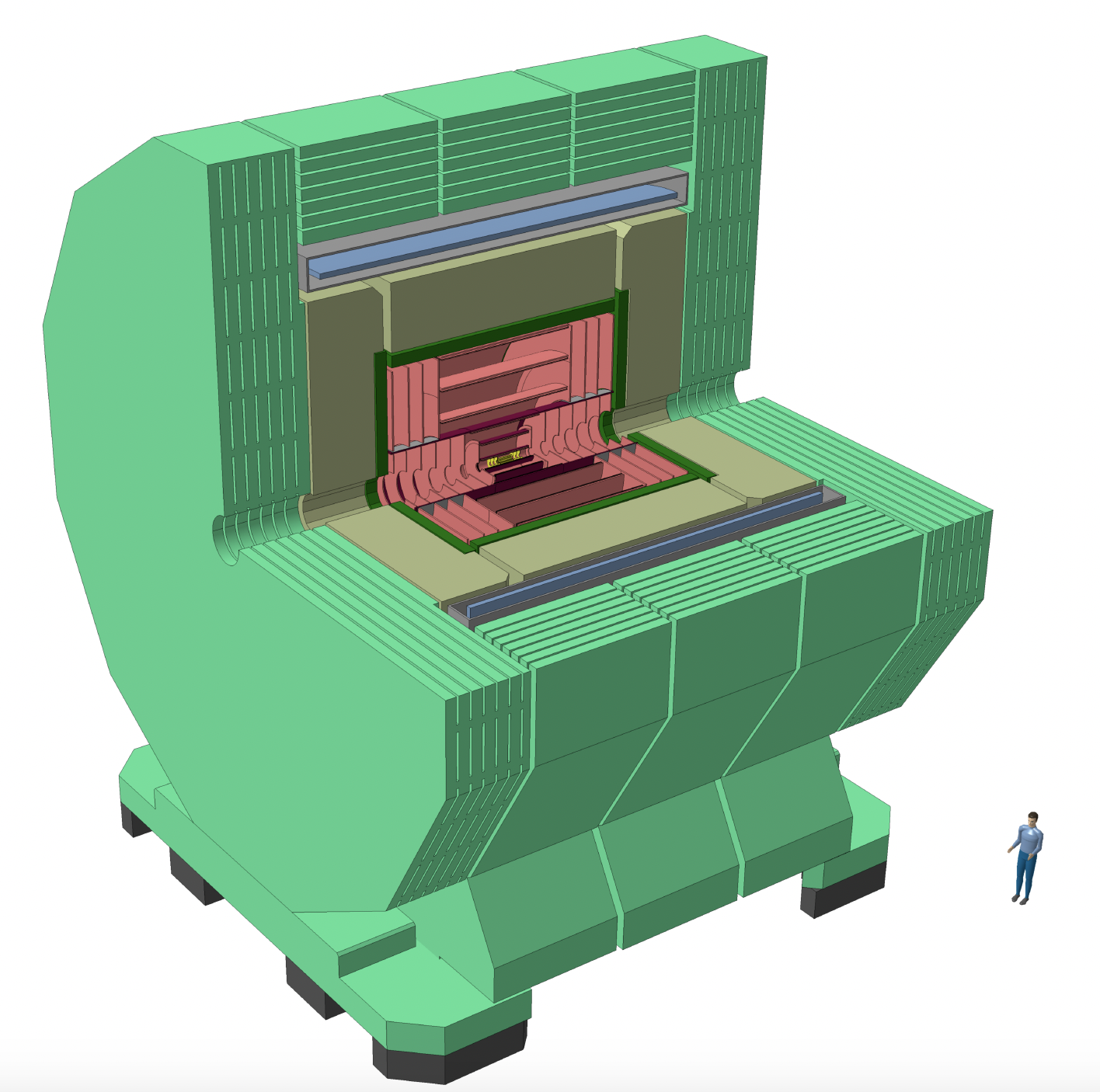
The detectors that will be located at two (possibly four) FCC-ee interaction points must be designed to fully profit from the extraordinary statistics. Detector concepts under study feature: a 2 T solenoidal magnetic field (limited in strength to avoid blow-up of the low-emittance beams crossing at 30 mrad); a small-pitch, thin-layers vertex detector providing an excellent impact-parameter resolution for lifetime measurements; a highly transparent tracking system providing a superior momentum resolution; a finely segmented calorimeter system with excellent energy resolution for electrons and photons, isolated hadrons and jets; and a muon system. To fully exploit the heavy-flavour possibilities, at least one of the detector systems will need efficient particle-identification capabilities allowing π/K separation over a wide momentum range, for which there are ongoing R&D efforts on compact, light RICH detectors.
With overlapping requirements, designs for FCC-ee can follow the example of detectors proposed for linear colliders. The CLIC-inspired CLD concept – featuring a silicon-pixel vertex detector and a silicon tracker followed by a 3D-imaging, highly granular calorimeter system (a silicon-tungsten ECAL and a scintillator-steel HCAL) surrounded by a superconducting solenoid and muon chambers interleaved with a steel return yoke – is being adapted to the FCC-ee experimental environment. Further engineering effort is needed to make it compatible with the continuous-beam operation at FCC-ee. Detector optimisation studies are being facilitated by the robust existing software framework which has been recently integrated into the FCC study.
The IDEA (International Detector for Electron-positron Accelerator) concept, specifically developed for a circular electron-positron collider, brings in alternative technological solutions. It includes a five-layer vertex detector surrounded by a drift chamber, enclosed in a single-layer silicon “wrapper”. The distinctive element of the He-based drift chamber is its high transparency. Indeed, the material budget of the full tracking system, including the vertex detector and the wrapper, amounts to only about 5% (10%) of a radiation length in the barrel (forward) direction. The drift chamber promises superior particle-identification capabilities via the use of a cluster-counting technique that is currently under test-beam study. In the baseline design, a thin low-mass solenoid is placed inside a monolithic, 2 m-deep, dual-readout fibre calorimeter. An alternative (more expensive) design also features a finely segmented crystal ECAL placed immediately inside the solenoid, providing an excellent energy resolution for electrons and photons.
Recently, work has started on a third FCC-ee detector concept comprising: a silicon vertex detector; a light tracker (drift chamber or full-silicon device); a thin, low-mass solenoid; a highly-granular noble liquid-based ECAL; a scintillator-iron HCAL; and a muon system. The current baseline ECAL design is based on lead/steel absorbers and active liquid-argon, but a more compact option based on tungsten and liquid-krypton is an interesting option. The concept design is currently being implemented inside the FCC software framework.
All detector concepts are under evolution and there is ample room for further innovative concepts and ideas.
Closing remarks Circular colliders reach higher luminosities than linear machines because the same particle bunches are used over many turns, while detectors can be installed at several interaction points. The FCC-ee programme greatly benefits from the possibility of having four interaction points to allow the collection of more data, systematic robustness and better physics coverage — especially for very rare processes that could offer hints as to where new physics could lie. In addition, the same tunnel can be used for an energy-frontier hadron collider at a later stage.
The FCC feasibility study will be submitted by 2025, informing the next update of the European strategy for particle physics. Such a machine could start operation at CERN within a few years after the full exploitation of the HL-LHC in around 2040. CERN, together with its international partners, therefore has the opportunity to lead the way for a post-LHC research infrastructure that will provide a multi-decade research programme exploring some of the most fundamental questions in physics. The geographical distribution of participants in the 5th FCC physics workshop testifies to the global attractiveness of the project. In addition, the ongoing physics and engineering efforts, the cooperation with the host states, the support from the European physics community and the global cooperation to tackle the open challenges of this endeavour, are reassuring for the next steps of the FCC feasibility study.
In the 1970s, the study of low-energy (few GeV) hadron–hadron collisions in bubble chambers was all the rage. It seemed that we understood very little. We had the SU(3) of flavour, Regge theory and the S-matrix to describe hadronic processes, but no overarching theory. Of course, theorists were already working on perturbative QCD and this started to gain traction when experimental results from the Big European Bubble Chamber at CERN showed signs of the scaling violations and made an early measurement of the QCD scale, ΛQCD. We have been living with the predictions of perturbative QCD ever since, at increasingly higher orders. But there have always been non-perturbative inputs, such as the parton distribution functions.
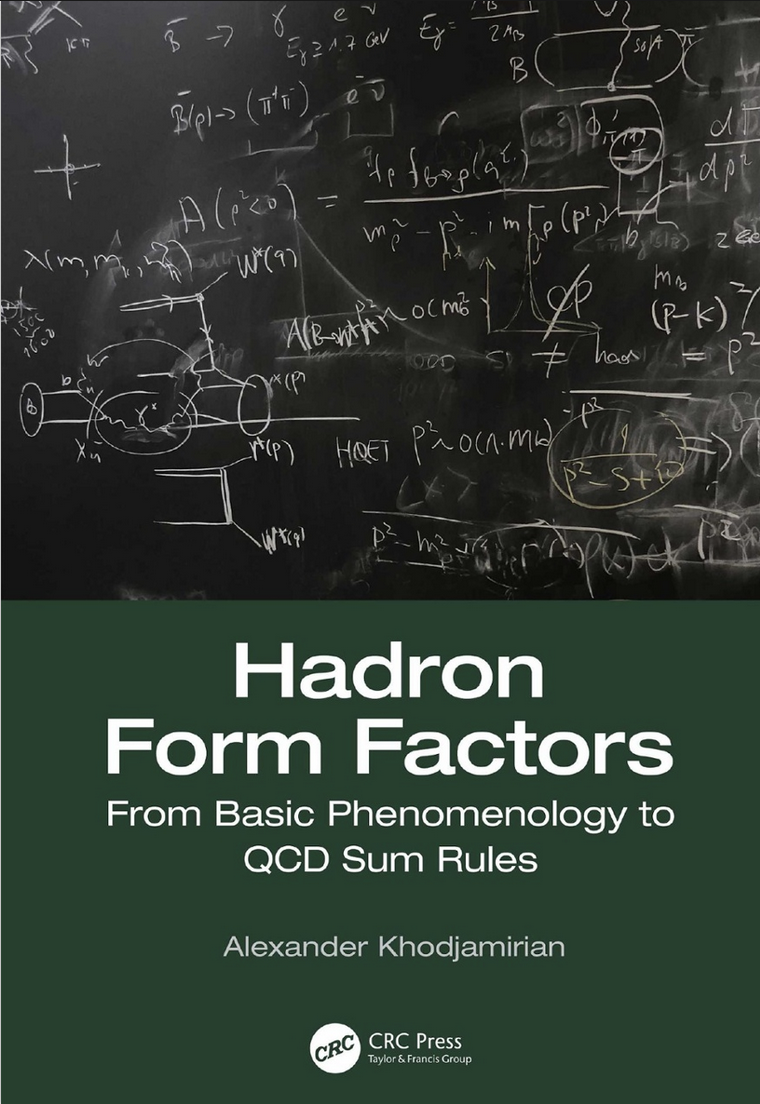
Hadron Form Factors: From Basic Phenomenology to QCD Sum Rules takes us back to low-energy hadron physics and shows us how much more we know about it today. In particular, it explores the formalism for heavy-flavour decays, which is particularly relevant at a time when it seems that the only anomalies we observe with respect to the Standard Model appear in various B-meson decays. It also explores the connections between space-like and time-like processes in terms of QCD sum rules connecting perturbative and non-perturbative behaviour.
The book takes us back to low-energy hadron physics and shows us how much more we know about it today
The general introduction reminds us of the formalism of form factors in the atomic case. This is generalised to mesons and baryons in chapters 2 and 3, after the introduction of QCD in chapter 1, with an emphasis on quark and gluon electroweak currents and their generalisation to effective currents. Hadron spectroscopy is reviewed from a modern perspective and heavy-quark effective theory is introduced. In chapter 2, the formalism for the pion form factor, which is related to the pion decay constant, is introduced via e-π scattering. Due emphasis is placed on how one may measure these quantities. I also appreciated the explanation of how a pseudoscalar particle such as the pion can decay via the axial vector current – a question
often raised by smart undergraduates. (Clue: the axial vector current is not conserved). Next, the πe3 decay is considered and generalised to K-, D- and B-meson semileptonic decays. Chapter 3 covers the baryon form factors and their decay constants, and chapter 4 considers hadronic radiative transitions. Chapter 5 relates the pion form factor in the space-like region to its counterpart in the time-like region in e+e– → π+π–, where one has to consider resonances and widths. Relationships are developed, whereby one can see that by measuring pion and kaon form factors in e+e– scattering one can predict the widths of decays such as τ → ππν and τ → KKν. In chapter 6, non-local hadronic matrix elements are introduced to extend the formalism to deal with decays such as π → γγ and B → Kμμ.
The book shifts gears in chapters 7–10. Here, QCD is used to calculate hadronic matrix elements. Chapter 7 covers the calculation of the form factors in the infinite momentum frame, whereby the asymptotic form factor can be expressed in terms of the pion decay constant and a pion distribution amplitude describing the momentum distribution between two valence partons in the pion. In chapter 8, the QCD sum rules are introduced. The two-point correlation of quark current operators can be calculated in perturbative QCD at large space-like momenta, and the result is expressed in terms of perturbative contributions and the QCD vacuum condensates. This can then be related through the sum rule to the hadronic degrees of freedom in the time-like region. Such sum rules are used to gain information on both condensate densities or quark masses from accurate hadronic data and hadronic decay constants and masses from QCD calculations. The connection is made to parton–hadron duality and to the operator product expansion. Some illustrative examples of the technique, such as the calculation of the strange-quark mass and the pion decay constant, are also given. Chapter 9 concerns the light-cone expansion and light-cone dominance, which is then used to explain the role of light-cone sum rules in chapter 10. The use of these sum rules in calculating hadron form factors is illustrated with the pion form factor and also with the heavy-to-light form factors necessary for B → π, B → K, D → π, D → K and B → D decays.
Overall, this book is not an easy read, but there are many useful insights. This is essentially a textbook, and a valuable reference work that belongs in the libraries of particle-physics institutes around the world.
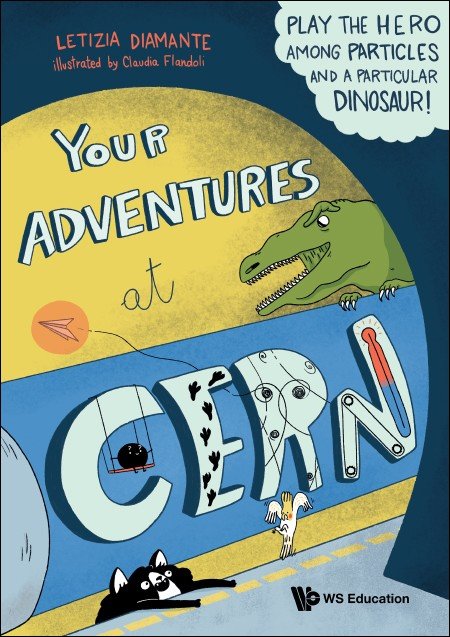
Billed as a bizarre adventure filled with brain-tickling facts about particles and science wonders, Your Adventures at CERN invites young audiences to experience a visit to CERN in different guises.
The reader can choose one of three characters, each with a different story: a tourist, a student and a researcher. The stories are intertwined, and the choice of the reader’s actions through the book changes their journey, rather than following a linear chronology. The stories are filled with puzzles, mazes, quizzes and many other games that challenge the reader. Engaging physics references and explanations, as well as the solutions to the quizzes, are given at the back of the book.
Author Letizia Diamante, a biochemist turned science communicator who previously worked in the CERN press office, portrays the CERN experience in an engaging and understandable way. The adventures are illustrated with funny jokes and charismatic characters, such as “Schrödy”, a hungry cat that guides the reader through the adventures in exchange for food. Detailed hand-drawn illustrations by Claudia Flandoli are included, together with photographs of CERN facilities that take the reader directly into the heart of the lab. Moreover, the book includes several historical facts about particle physics and other topics, such as the city of Geneva and the extinct dinosaurs from the Jurassic era, which is named after the nearby Jura mountains on the border between France and Switzerland. A particle-physics glossary and extra information, such as fun cooking recipes, are also included at the end.
Although targeted mainly at children, this book is also suitable for teenagers and adults looking for a soft introduction to high-energy physics and CERN, offering a refreshing addition to the more mainstream popular particle-physics literature.
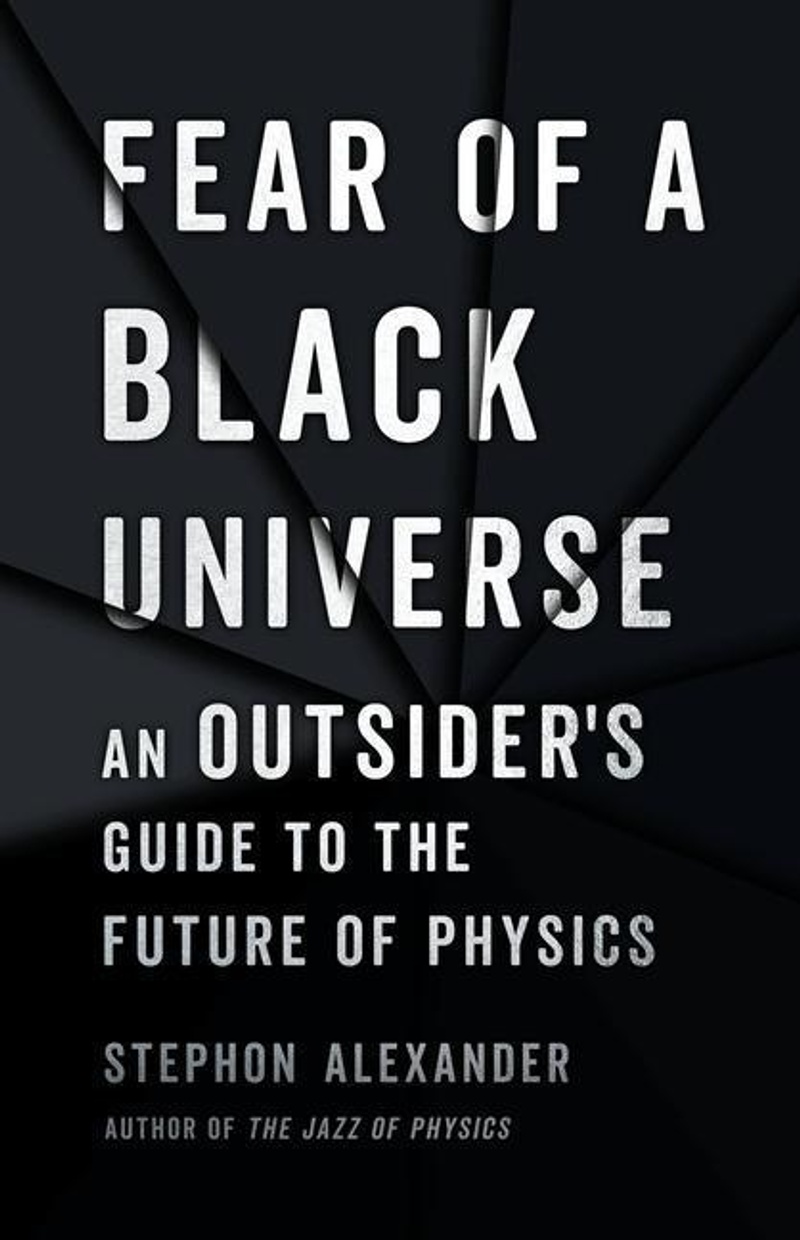
Stephon Alexander is a professor of theoretical physics at Brown University, specialising in cosmology, particle physics and quantum gravity. He is also a self-professed outsider, as the subtitle of his latest book Fear of a Black Universe suggests. His first book, The Jazz of Physics, was published in 2016. Fear of a Black Universe is a rallying cry for anyone who feels like a misfit because their identity or outside-the-box thinking doesn’t mesh with cultural norms. By interweaving historical anecdotes and personal experiences, Alexander shows how outsiders drive innovation by making connections and asking questions insiders might dismiss as trivial.
Alexander is Black and internalised his outsider sense early in his career. As a postdoc in the early 2000s, he found that his attempts to engage with other postdocs in his group were rebuffed. He eventually learned from his friend Brian Keating, who is white, the reason why: “They feel that they had to work so hard to get to the top and you got in easily, through affirmative action”. Instead of finding his peers’ rejection limiting, Alexander reinterpreted their dismissal as liberating: “I’ve come to realise that when you fit in, you might have to worry about maintaining your place in the proverbial club… so I eventually became comfortable being the outsider. And since I was never an insider, I didn’t have to worry that colleagues might laugh at me for my unlikely approach.”
Instead of finding his peers’ rejection limiting, Alexander reinterpreted their dismissal as liberating
Alexander argues that true breakthroughs come from “deviants”. He draws parallels between outsiders in physics and graffiti artists, who were considered vandals until the art world recognised their talent and contributions. Alexander recounts his own “deviance” in a humorous and sometimes self-deprecating manner. He recalls a talk he gave at a conference about his first independent paper, which involved reinterpreting the universe as a three-dimensional membrane orbiting a five-dimensional black hole. During the talk he was often interrupted, eventually prompting a well-respected Indian physicist to stand up and shout “Let him finish! No one ever died from theorising.”
Alexander took these words to heart, and asks his readers to do the same during the speculative discussions in the second part of his book. Here, Alexander intersperses mainstream physics with some of his self-described “strange” ideas, acknowledging that some readers might write him off as an “oddball crank”. He explores the intersection of physics with philosophy, biology, consciousness, and searches for extraterrestrial life. Some sections – such as the chapter on alien quantum computers generating the effect of dark energy – feel more like science fiction than science. But Alexander reassures readers that, while many of his ideas are strange, so are many experimentally verified tenants of physics. “In fact, the likelihood that any one of us will create a new paradigm because we have violated the norms… is very slim” he observes.
Science wise, this book is not for the faint-hearted. While many other public-facing physics books slowly wade readers into early-20th-century physics and touch on more abstract concepts only in the final chapters, part I of Fear of a Black Universe dives directly into relativity, quantum mechanics and emergence. Part II then launches into a much deeper discussion about supersymmetry, baryogenesis, quantum gravity and quantum computing. But the strength of Alexander’s new work isn’t in its retellings of Einstein’s thought experiments or even its deconstruction of today’s cosmological enigma. More than anything, this book makes a case for cultivating diversity in science that goes beyond “gesticulations of identity politics”.
Fear of a Black Universe is both mind-bending and refreshing. It approaches physics with a childlike curiosity and allows the reader to playfully contemplate questions many have but few discuss for fear of sounding like a crank. This book will be enjoyable for scientists and science enthusiasts who can set cultural norms aside and just enjoy the ride.
To provide the best experiences, we use technologies like cookies to store and/or access device information. Consenting to these technologies will allow us to process data such as browsing behavior or unique IDs on this site. Not consenting or withdrawing consent, may adversely affect certain features and functions.
Functional
Always active
The technical storage or access is strictly necessary for the legitimate purpose of enabling the use of a specific service explicitly requested by the subscriber or user, or for the sole purpose of carrying out the transmission of a communication over an electronic communications network.
Preferences
The technical storage or access is necessary for the legitimate purpose of storing preferences that are not requested by the subscriber or user.
Statistics
The technical storage or access that is used exclusively for statistical purposes.The technical storage or access that is used exclusively for anonymous statistical purposes. Without a subpoena, voluntary compliance on the part of your Internet Service Provider, or additional records from a third party, information stored or retrieved for this purpose alone cannot usually be used to identify you.
Marketing
The technical storage or access is required to create user profiles to send advertising, or to track the user on a website or across several websites for similar marketing purposes.