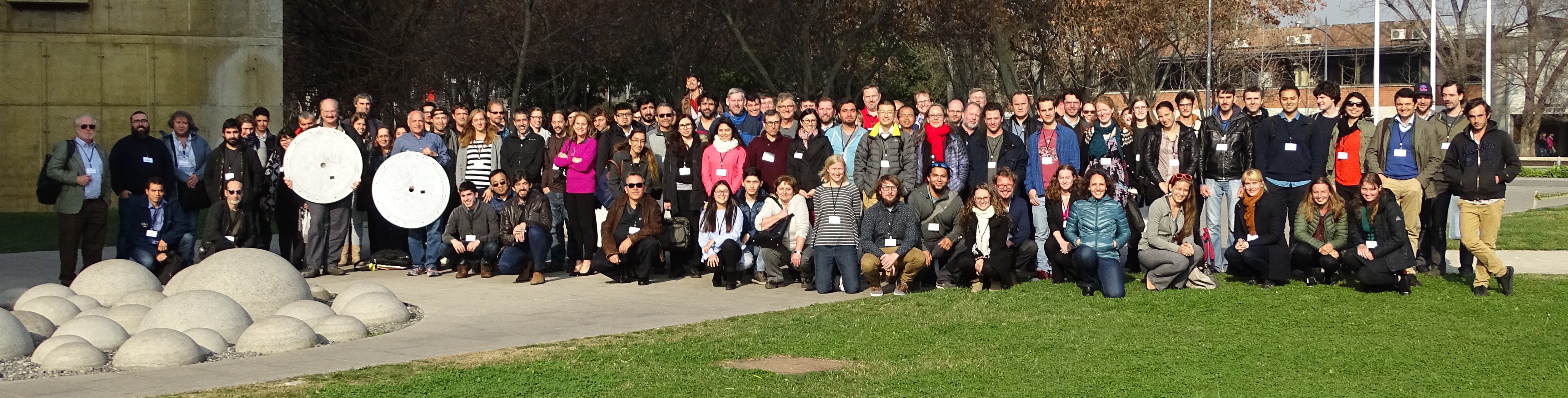
A one-of-a-kind conference MMAP (Macrocosmos, Microcosmos, Accelerator and Philosophy) 2020 was held in May last year in Kolkata, India, attracting 200 participants in person and remotely. An unusual format for an international conference, it combined the voyage from the microcosmos of elementary particles to the macrocosmos of our universe up to the horizon and beyond with accelerator physics and philosophy through the medium of poetry and songs, as inspired by the Indian poet Rabindranath Tagore and the creative giant Satyajit Ray.
The first presentation was by Roger Penrose, who talked about black holes, singularities and conformal cyclic cosmology. He discussed the cosmology of dark matter and dark energy, and inspired participants with the fascinating idea of one aeon going over to another aeon endlessly with no beginning or end of time and space.
Larry McLerran’s talk “Quarkyonic matter and neutron stars” provided an intuitive understanding of the origin of the equation of state of neutron stars at very high density, followed by Debadesh Bandyopadhyay’s talk on unlocking the mysteries of neutron stars. Jean-Paul Blaziot talked about the emergence of hydrodynamics in expanding quark–gluon plasma, whereas Edward Shuryak discussed the role of sphaleron explosions and baryogengesis in the cosmological electroweak phase transition. Subir Sarkar’s talk “Testing the cosmological principle” was provocative, as usual, and Sunil Mukhi and Aninda Sinha described the prospects for string theory. Sumit Som, Chandana Bhattacharya, Nabanita Naskar and Arup Bandyopadhyay discussed the low- and medium-energy physics possible using cyclotrons at Kolkata.
Moving to extreme nuclear matter, Barbara Jacak talked about experimental studies of transport in dense gluon matter. Jurgen Schukraft, Federico Antinori, Tapan Nayak, Bedangadas Mohanty and Subhasis Chattopadhyay spoke on signatures for the early-universe quark-gluon plasma and described the experimental programme of the ALICE experiment at the LHC, and Dinesh Srivastava focussed on the electromagnetic signatures of quark-gluon plasma.
A carnival of ideas, a mixture of low- to high-energy physics on the one hand and the cosmology of the creation of the universe on the other
Amanda Cooper-Sarkar emphasised the role of parton distribution functions in searches for new physics at colliders such as the LHC. Shoji Nagamiya presented the physics prospects of the J-PARC facility in Japan, Paolo Giubellino described the evolution of the latest FAIR accelerator at GSI, and Horst Stöcker discussed how to observe strangelets using fluctuation tools. In his presentation on the history of CERN, former Director-General Rolf Heuer talked about the marvels of large-scale collaboration capturing the thrill of a big discovery.
The MMAP 2020 conference witnessed a carnival of ideas, a mixture of low- to high-energy physics on the one hand and the cosmology of the creation of the universe on the other.
Coherent elastic neutrino–nucleus scattering (CEvNS) is a new neutrino-detection channel with the potential to test the Standard Model (SM) at low-momentum transfer and to search for new physics beyond the SM (BSM). It also has applications in nuclear physics, such as measurements of nuclear form factors, and the detection of solar and supernova neutrinos. In the SM, neutrinos interact with the nucleus as a whole, enhancing the cross section by approximately the neutron number squared. However, detection is challenging as the observable is the tiny recoil of the nucleus, which has an energy ranging from sub-keV to a few tens of keV depending on the nucleus and neutrino source. Several decades after its prediction, CEvNS was measured for the first time in 2017 by the COHERENT experiment and the field has grown rapidly since.
The aims of the Magnificent CEvNS workshop, named after the Hollywood Western, are to bring together the broad community of researchers working on CEvNS and promote student engagement and connection among experimentalists, theorists and phenomenologists in this new field. The first workshop was held in 2018 in Chicago, and the most recent in Munich from 22 to 24 March with 96 participants.
Examining CEvNS opens a multitude of promising ways to look for BSM interactions. Improved limits on generalised neutrino interactions, new light mediators and sterile neutrinos derived from the complete COHERENT dataset were presented. These data enable the nuclear radius to be probed in a new way. More physics potential was highlighted in talks showing limits on the Weinberg angle and dark matter (axion-like particles). Notable advances by reactor experiments include new limits on CEvNS on germanium by the CONUS and NuGen experiments, which disagree with the previously published Dresden-II results.
The talks underlined the large experimental effort toward a complete mapping of the neutron and energy dependence of the CEvNS cross section. The observation of CEvNS on CsI and Ar by the COHERENT experiment will be complemented with future measurements on targets ranging from light (sodium) to heavy (tungsten) elements in COHERENT and new facilities such as NUCLEUS and Ricochet. Precision will be achieved by increasing statistics in CEvNS events with larger target masses, lower detection thresholds and increased neutrino flux. Reducing systematic effects by characterising backgrounds and detector responses is also critical. The growing precision will trigger studies on BSM physics in the near future, complementing high-energy experimental efforts.
A half-day satellite workshop “Into the Blue Sky” was dedicated to new ideas related to the CEvNS community. These included measurements of neutrino-induced fission, and detector concepts based on latent damage to the crystalline structure of minerals and superconducting crystals. The workshop was followed by a school organised by the Collaborative Research Center “Neutrinos and Dark Matter in Astro- and Particle Physics” at TU Munich from 27 to 29 March. Six lectures covered the fundamentals of low-energy neutrino physics with a focus on CEvNS, backgrounds, neutrino sources and detectors. The 40 participants then applied this knowledge by creating a fictional micro-CEvNS experiment.
Half a century since it was proposed theoretically, the physics accessible with CEvNS is proving to be extensive. The next Magnificent CEvNS workshop will take place next year at a new location and the participants are looking forward to further exploration of the CEvNS frontier.
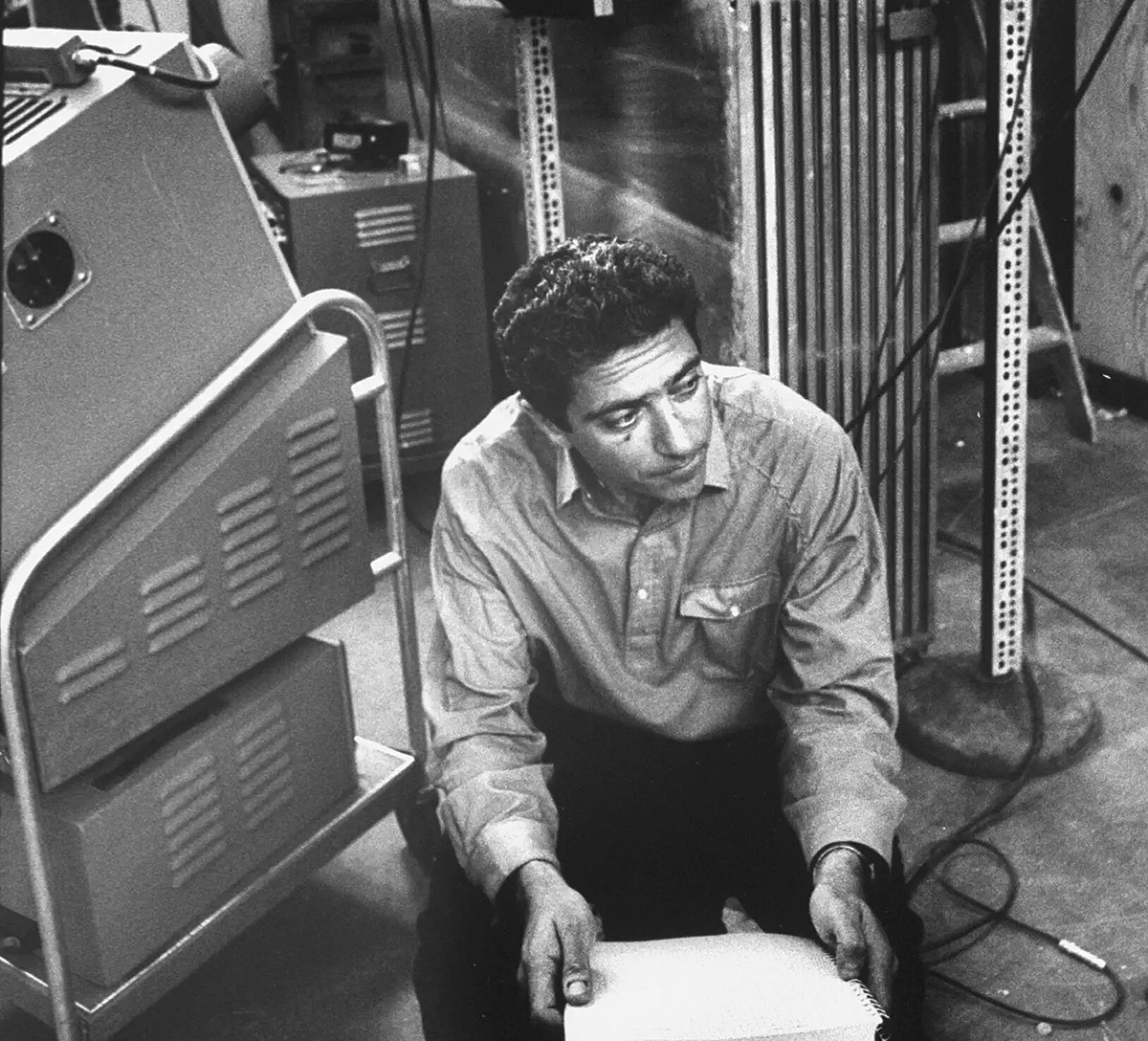
This book was written on the occasion of the 100th anniversary of the birth of Jack Steinberger. Edited by Jack’s former colleagues Weimin Wu and KK Phua with his daughter Julia Steinberger, it is a tribute to the important role that Jack played in particle physics at CERN and elsewhere, and also highlights many aspects of his life outside physics.
The book begins with a nice introduction by his daughter, herself a well-known scientist. She describes Jack’s family life, his hobbies, interests, passions and engagement, such as with the Pugwash conference series. The introduction is followed by a number of short essays by former friends and colleagues. The first is a transcript of an interview with Jack by Swapan Chattopadhyay in 2017. It contains recollections of Jack’s time at Fermilab, with his PhD supervisor Enrico Fermi, and concludes with his connections with Germany later in life.
Drive and leadership
The next essays highlight the essential impact that Jack had in all the experiments he participated in, mostly as spokesperson, and underline his original ideas, drive and leadership, not just professionally but also in his personal life. Stories include those by Hallstein Høgåsen, a fellow in the CERN theory department, who describes the determination and perseverance he had in mountaineering. S Lokanathan worked with Jack as a graduate student in the early 1950s in Nevis Labs and remained in contact with him, including later on when he became a professor in Jaipur. Jacques Lefrançois covers the ALEPH period, and Vera Luth the earlier kaon experiments at CERN. Italo Mannelli comments on both the early times when Jack visited Bologna to work with Marcello Conversi and Giampietro Puppi, and then turns to his work at the NA31 experiment on direct CP violation in the Ko system.
Gigi Rolandi emphasises the important role that Jack played in the design and construction of the ALEPH time projection chamber. Another good essay is by David N Schwartz, the son of Mel Schwartz who shared the Nobel prize with Jack and Leon Lederman. When David was born, Jack was Mel Schwartz’s thesis supervisor. As Jack was a friend of the Schwartz family, they were in regular contact all along. David describes how his father and Jack worked together and how, together with Leon Lederman, they started the famous muon neutrino experiment in 1959. As David Schwartz later became involved in arms control for the US in Geneva, he kept in contact with Jack, who had always been very passionate about arms control. David also remembers the great respect that Jack had for his thesis supervisor Enrico Fermi. The final essay is by Weimin Wu, one of the first Chinese physicists to join the international high-energy physics research community. Weimin started to work on ALEPH in 1979 and has remained a friend of the family since. He describes not only the important role that Jack played as a professor, mentor and role model, but also for establishing the link between ALEPH and the Chinese high-energy physics community.
All these essays describe the enormous qualities of Jack as a physicist and as a leader. But they also highlight his social and human strengths. The reader gets a good feeling of Jack’s interests and hobbies outside of physics, such as music, climbing, skiing and sailing. Many of the essays are also accompanied by photographs, covering all parts of his life, and they are free from formulae or complicated physics explanations.
For those who want to go deeper into the physics that Jack was involved with, the second part of the book consists of a selection of his most important and representative publications, chosen and introduced by Dieter Schlatter. The first two papers from the 1950s deal with neutral meson production by photons and a possible detection of parity non-conservation in hyperon decays. They are followed by the Nobel prize-winning paper “Possible Detection of High-Energy Neutrino Interactions and the Existence of Two Kinds of Neutrinos” from 1962, three papers on CP violation in kaon decays at CERN (including first evidence for direct CP violation by NA31), then five important publications from the CDHS neutrino experiment (officially referred to as WA1) on inclusive neutrino and anti-neutrino interactions, charged-current structure functions, gluon distributions and more. Of course, the list would not be complete without a few papers from his last experiment, ALEPH, including the seminal one on the determination of the number of light neutrino species – a beautiful follow-up of Jack’s earlier discovery that there are at least two types of neutrinos.
This agreeable and interesting book will primarily appeal to those who have met or known Jack. But others, including younger physicists, will read the book with pleasure as it gives a good impression of how physics and physicists functioned over the past 70 years. It is therefore highly recommended.
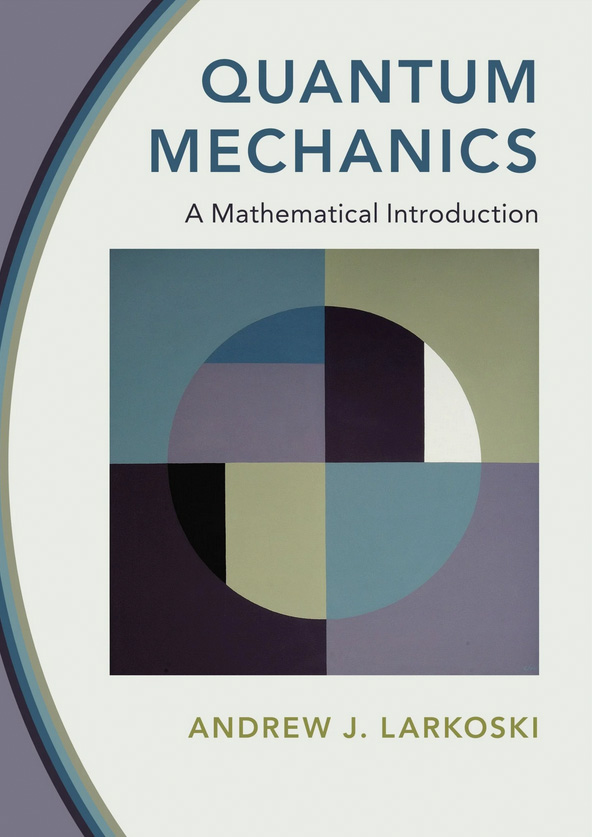
Andrew Larkoski seems to be an author with the ability to write something interesting about topics for which a lot has already been written. His previous book Elementary Particle Physics (2020, CUP) was noted for its very intuitive style of presentation, which is not easy to find in other particle-physics textbooks. With his new book on quantum mechanics, the author continues in this manner. It is a textbook for advanced undergraduate students covering most of the subjects that an introduction to the topic usually includes.
Despite the subtitle “a mathematical introduction”, there is no more maths than in any other textbook at this level. The reason for the title is presumably not the mathematical content, but the presentation style. A standard quantum-mechanics textbook usually starts with postulating Schrödinger’s equation and then proceeds immediately to applications on physical systems. For example, the very popular Introduction to Quantum Mechanics by Griffiths and Schroeter (2018, CUP) introduces Schrödinger’s equation on the first page and, after some discussion on its meaning and basic computational techniques, the first application on the infinite square well appears on page 31. Larkoski aims to build an intuitive mathematical foundation before introducing Schrödinger’s equation. Hilbert spaces are discussed in the context of linear algebra as an abstract complex vector space. Indeed, space is given at the very beginning for ideas, such as the relation between the derivative and a translation, that are useful for more advanced applications of quantum mechanics, for example in field theory, but which seldom appear in quantum-mechanics textbooks so early. Schrödinger’s equation does not appear until page 58, and the first application in a system (which, as usual, is the infinite square well) appears only on page 89.
The book is concise in length, which means that the author has had to carefully choose the areas that are beyond the standard quantum-mechanics material covered in most undergraduate courses. Larkoski’s choices are probably informed by his background in quantum field theory, since path integral formalism features strongly. Perhaps the price for keeping the book short is that there are topics, such as identical particles or Fermi’s golden rule, that are not covered.
Some readers will find the book’s style of delaying a mathematical introduction unnecessary and may prefer a more direct approach to the topic, which might also be related to the duration of the teaching period at university. I would not agree with such an assessment. Taking the time to build a basis early on helps tremendously with understanding quantum mechanics later on in a course – an approach that it is hoped will find its way to more classrooms in the near future.
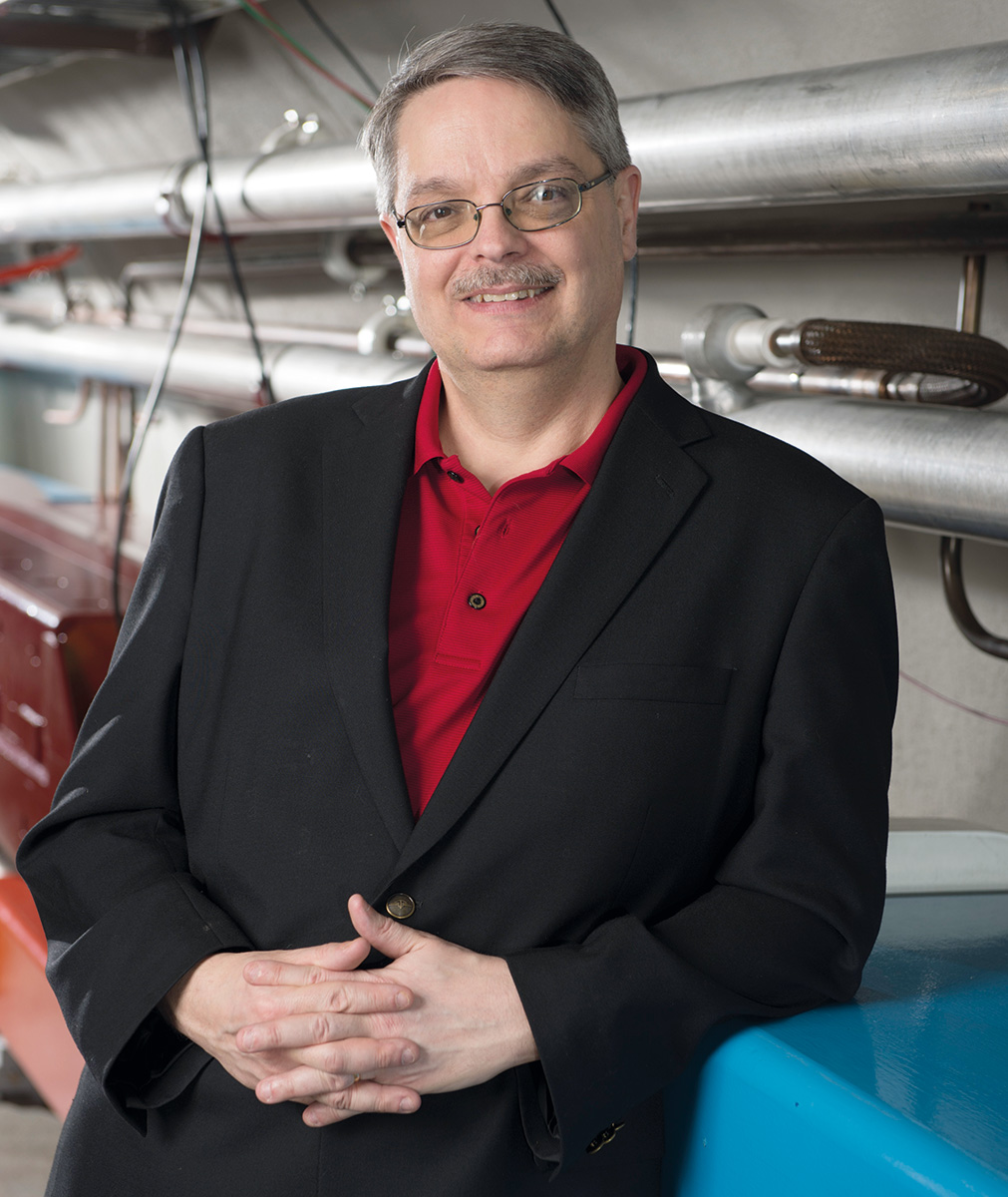
I have always been interested in what one might call existential questions: those that were originally theological or philosophical, but are now science, such as “why are things the way they are?” When I was young, for me it was a toss-up: do I go into particle physics or cosmology? At the time, experimental cosmology was less developed, so it made sense to go towards particle physics.
What has been your research focus?
When I was a graduate student in college, I was intrigued by the idea of quantum mechanical spin. I didn’t understand spin and I still don’t. It’s a perplexing and non-intuitive concept. It turned out the university I went to was working on it. When I got there, however, I ended up doing a fixed-target jet-photoproduction experiment. My thesis experiment was small, but it was a wonderful training ground because I was able to do everything. I built the experiment, wrote the data acquisition and all of the analysis software. Then I got back on track with the big questions, so colliders with the highest energies were the way to go. Back then it was the Tevatron and I joined DØ. When the LHC came online it was an opportunity to transition to CMS.
Why and when did you decide to get into communication?
It has to do with my family background. Many physicists come from families where one or both parents are already from the field. But I come from an academically impoverished, blue-collar background, so I had no direct mentors for physics. However, I was able to read popular books from the generation before me, by figures such as Carl Sagan, Isaac Asimov or George Gamow. They guided me into science. I’m essentially paying that back. I feel it’s sort of my duty because I have some skill at it and because I expect that there is some young person in some small town who is in a similar position as I was in, who doesn’t know that they want to be a scientist. And, frankly, I enjoy it. I am also worried about the antiscience sentiment I see in society, from the antivaccine movement to climate-change denial to 5G radiation fears. If scientists do not speak up, the antiscience voices are the only ones that will be heard. And if public policy is based on these false narratives, the damage to society can be severe.
Scientists doing outreach create goodwill, which can lead to better funding for research-focused scientists
How did you start doing YouTube videos?
I had got to a point in my career where I was fairly established, and I could credibly think of other things. When you’re young, you are urged to focus entirely on research, because if you don’t, it could harm your research career. I had already been writing for Fermilab Today and I kept suggesting doing videos, as YouTube was becoming a thing. After a couple of years one of the videographers said, “You know, Don, you’re actually pretty good at explaining this stuff. We should do a video.” My first video came out a year before the Higgs discovery, in July 2011. It was on the Higgs boson. When the video came out, a few of the bigger science outlets picked it up and during the build-up to the Higgs excitement it got more and more views. By now it has more than three million clicks, which for a science channel is a lot. We do serious science in our videos, but there is also some light-heartedness in them.
Do you try to make the videos funny?
This has more to do with me not taking anything seriously. I have found that irreverent humour can be disarming. People like to be entertained when they are learning. For example, one video was about “What was the real origin of mass?” Most people think that the Higgs boson is giving mass, but it’s really QCD. It’s the energy stored inside nucleons. In any event, in this video I start out with a joke about going into a Catholic church. The Higgs boson tries to say “I’m losing my faith,” and the priest replies: “You can’t leave the church. Without you how can we have mass?” For a lot of YouTube channels, viewership is not just about the material. It’s about the viewer liking the presenter. I’d say people who like our channel appreciate the combination of reliable science facts, but also subscribe for the humour. If a viewer doesn’t like a guy who does terrible dad jokes, they just go to another channel.
During the Covid-19 pandemic your videos switched to “Subatomic stories”. How do they differ?
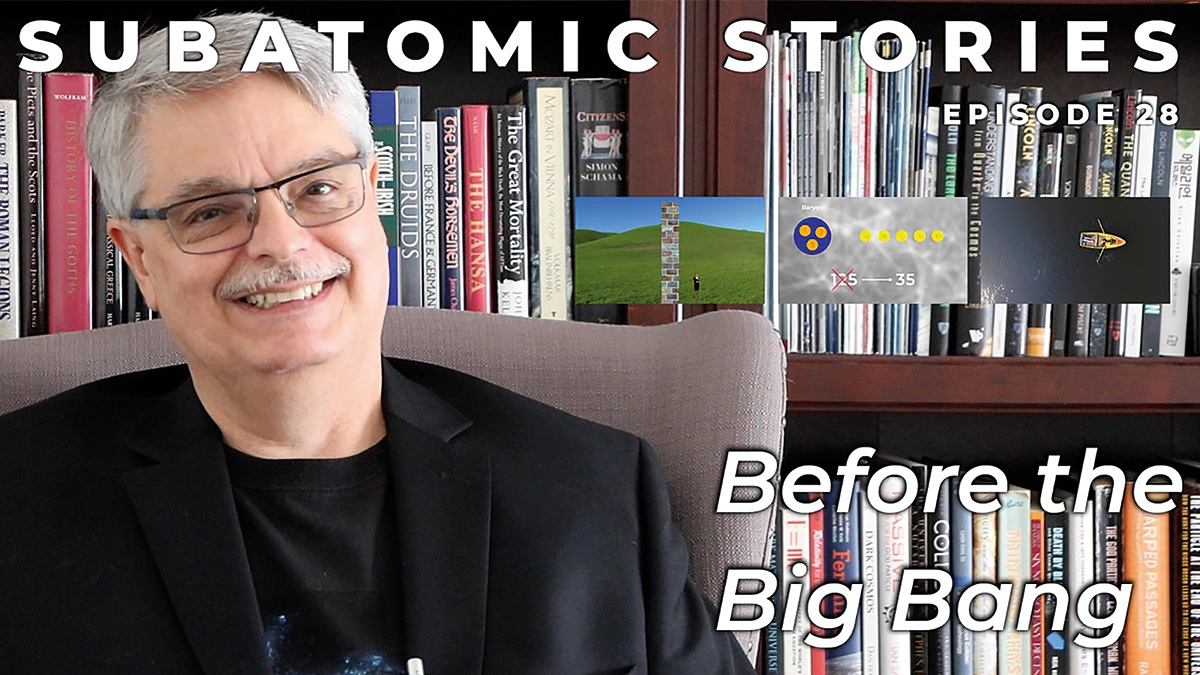
Most of my videos are done in a studio on green screen so that we can put visuals in the background, but that was not possible during the lockdown. We then did a set up in my living room. I had an old DSLR camera and a recorder, and would record the video and the audio, then send the files to my videographer, Ian Krass, who does all the magic. Our usual videos don’t have a real story arc; they are just a series of topics. With “Subatomic stories” we began with a plan. I organised it as a sort of self-contained course, beginning with basic things, like the Standard Model, weak force, strong force, etc. Towards the end, we introduced more diverse, current research topics and a few esoteric theoretical ideas. Later, after Subatomic stories, I continued to film in my basement in a green-screen studio I built. We’ve returned to the Fermilab studio, but the basement one is waiting should the need arise.
You are quite the public face of Fermilab. How does this relationship work?
It’s working wonderfully. I have no complaints. I can’t say that was always true in the past, because, when you’re young, you’re advised to focus on your research; it was like that for me. At the time there was some hostility towards science communicators. If you did outreach, you weren’t really considered a serious scientist, and that’s still true to a degree, although it is getting better. For me, it got to the point where people were just used to me doing it, and they tolerated it. As long as it didn’t bother my research, I could do this on my time. Some people bowl, some people knit, some people hike. I made videos. As I started becoming more successful, the laboratory started embracing the effort and even encouraged me to spend some of my work day on it. I was glad because in the same way that we encourage certain scientists to specialise in AI or computational skills or detector skills, I think that we as a field need to cultivate and encourage those scientists who are good at communicating our work. The bottom line is that I am very happy with the lab. I would like to see other laboratories encourage at least a small subset of scientists, those who are enthusiastic about outreach, to give them the time and the resources to do it, because there’s a huge payoff.
What are your favourite and least favourite things about doing outreach?
I think I’m making an impact. For instance, I’ve had graduate students or even postdocs ask me to autograph a book saying, “I went into physics because I read this book.” Occasionally I’m recognised in public, but the viewership numbers tell the story. If a video does poorly, it will get 50,000 viewers. And a good video, or maybe just a lucky one, can get millions. The message is getting out. As for the least favourite part, lately it is coming up with ideas. I’ve covered nearly every (hot) topic, so now I am thinking of revisiting early topics in a new way.
What would be your message to physicists who don’t have time or see the need for science communication?
Let’s start with the second type, who don’t see the value of it. I would like to remind them that essentially, in any country, if you want to do research, your funding comes from taxpayers. They work hard for their money and they certainly don’t want to pay taxes, so if you want to ask them to support this thing that you’re interested in, you need to convince them that it’s important and interesting. For those who don’t have time, I’m empathetic. Depending on your supervisor, doing science communication can harm a young career. However, in that case I think that the community should at least support a small group of people who do outreach. If nothing else, the scientists doing outreach create goodwill, which can lead to better funding for research-focused scientists.
Where do you see particle physics headed and the role of outreach?
The problem is that the Standard Model works well, but not perfectly. Consequently, we need to look for anomalies both at the LHC and with other precision experiments. I imagine that the next decade will resemble what we are doing now. I think it would be of very high value if we could spend some money on thinking about how to make stronger magnets and advanced acceleration technologies, because that’s the only way we’re going to get a very large increase in energy. The scientists know what to do. We are developing the techniques and technologies needed to move forward. On the communication side, we just need to remind the public that the questions particle physicists and cosmologists are trying to answer are timeless. They’re the questions many children ask. It’s a fascinating universe out there and a good science story can rekindle anyone’s sense of child-like wonder.
The standard criterion for claiming a discovery in particle physics is that the observed effect should have the equivalent of a five standard-deviation (5σ) discrepancy with already known physics, i.e. the Standard Model (SM). This means that the chance of observing such an effect or larger should be at most 3 × 10⁻⁷, assuming it is merely a statistical fluctuation, which corresponds to the probability of correctly guessing whether a coin will fall down heads or tails for each of 22 tosses. Statisticians claim that it is crazy to believe probability distributions so far into their tails, especially when systematic uncertainties are involved; particle physicists still hope that they provide some measure of the level of (dis)agreement between data and theory. But what is the origin of this convention, and does it remain a relevant marker for claiming the discovery of new physics?
There are several reasons why the stringent 5σ rule is used in particle physics. The first is that it provides some degree of protection against falsely claiming the observation of a discrepancy with the SM. There have been numerous 3σ and 4σ effects in the past that have gone away when more data was collected. A relatively recent example was an excess of diphoton events at an energy of 750 GeV seen in both the ATLAS and CMS data of 2015, but which was absent in the larger data samples of 2016.
Systematic errors provide another reason, since such effects are more difficult to assess than statistical uncertainties and may be underestimated. Thus in a systematics-dominated scenario, if our estimate is a factor of two too small, a more mundane 3σ fluctuation could incorrectly be inflated to an apparently exciting 6σ effect. A potentially more serious problem is a source of systematics that has not even been considered by the analysts, the so-called “unknown unknowns”.
Know your p-values
Another reason underlying the 5σ criterion is the look-elsewhere effect, which involves the “p-values” for the observed effect. These are defined as the probability of a statistical fluctuation causing a result to be as extreme as the one observed, or more so, assuming some null hypothesis. For example, in tossing an unbiased coin 10 times, and observing eight of them to be tails when we bet on each of them being heads, it is the probability of being wrong eight or nine or 10 times (5.5%). A small p-value indicates a tension between the theory and the observation.
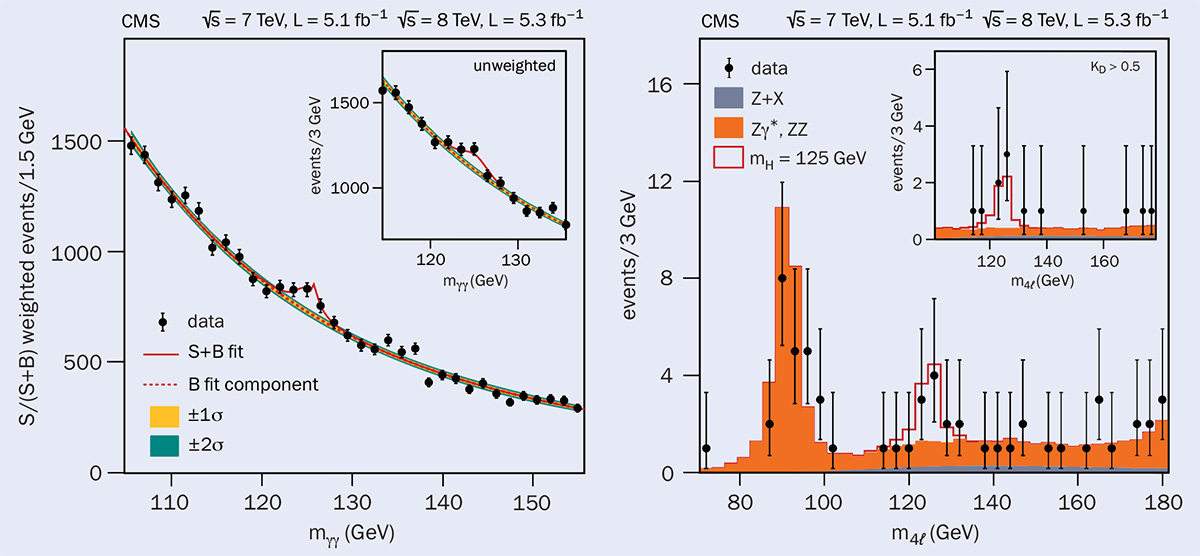
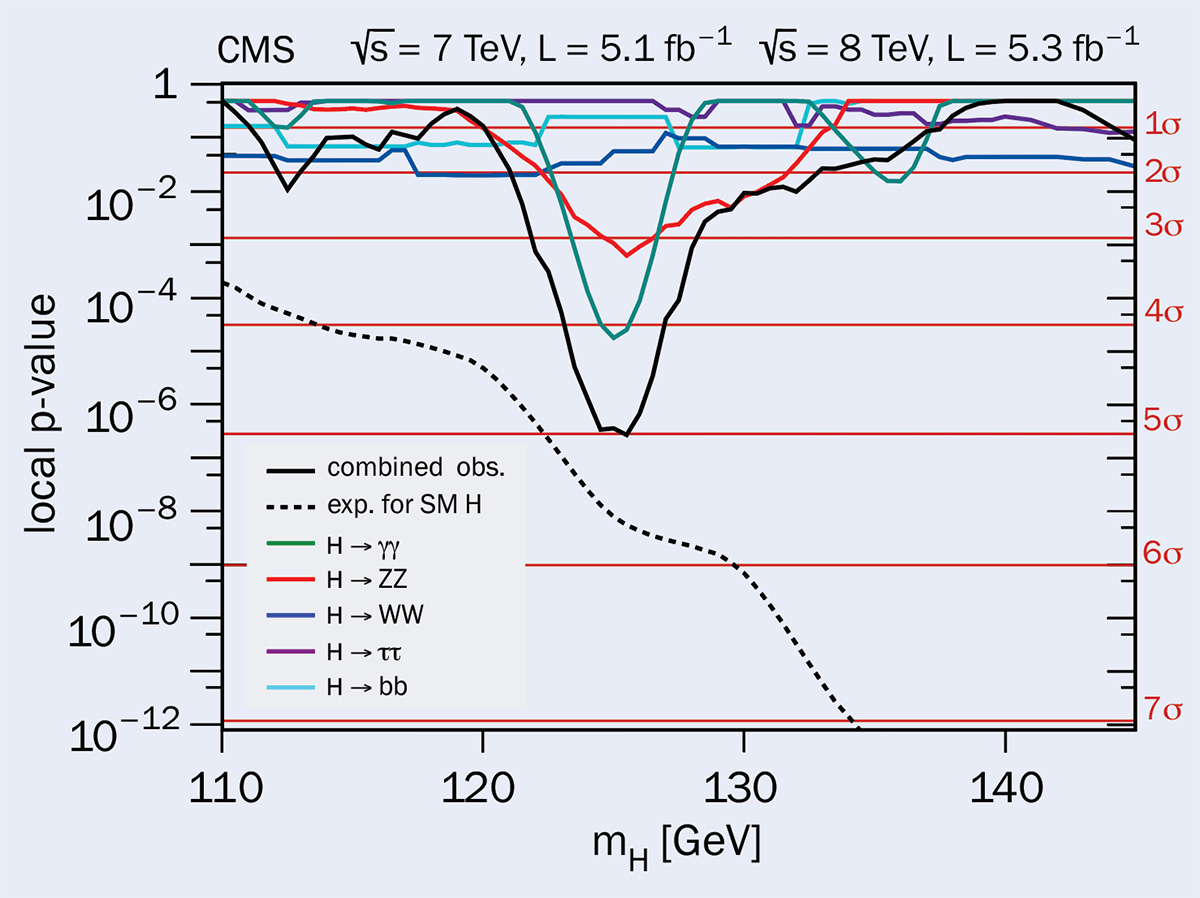
Particle-physics analyses often look for peaks in mass spectra, which could be the sign of a new particle. An example is shown in the “Higgs signals” figure, which contains data from CMS used to discover the Higgs boson (ATLAS has similar data). Whereas the local p-value of an observed effect is the chance of a statistical fluctuation being at least as large as the observed one at its specific location, more relevant is a global p-value corresponding to a fluctuation anywhere in the analysis, which has a higher probability and hence reduces the significance. The local p-values corresponding to the data in “Higgs signals” are shown in the figure “p-values”.
A non-physics example highlighting the difference between local and global p-values was provided by an archaeologist who noticed that a direction defined by two of the large stones at the Stonehenge monument pointed at a specific ancient monument in France. He calculated that the probability of this was very small, assuming that the placement of the stones was random (local p-value), and hence that this favoured the hypothesis that Stonehenge was designed to point in that way. However, the chance that one of the directions, defined by any pair of stones, was pointing at an ancient monument anywhere in the world (global p-value) is above 50%.
Current practice for model-dependent searches in particle physics, however, is to apply the 5σ criterion to the local p-value, as was done in the search for the Higgs boson. One reason for this is that there is no unique definition of “elsewhere”; if you are a graduate student, it may be just your own analysis, while for CERN’s Director-General, “anywhere in any analysis carried out with data from CERN” may be more appropriate. Another is that model-independent searches involving machine-learning techniques are capable of being sensitive to a wide variety of possible new effects, and it is hard to estimate what their look-elsewhere factor should be. Clearly, in quoting global p-values it is essential to specify your interpretation of elsewhere.
A fourth factor behind the 5σ rule is plausibility. The likelihood of an observation is the probability of the data, given the model. To convert this to the more interesting probability of the model, given the data, requires the Bayesian prior probability of the model. This is an example of the probability of an event A, assuming that B is true, not in general being the same as the probability of B, given A. Thus the probability of a murderer eating toast for breakfast may be 60%, but the probability of someone who eats toast for breakfast being a murderer is thankfully much smaller (about one in a million). In general, our belief in the plausibility in a model for a particular version of new physics is much smaller than for the SM, thus being an example of the old adage that “extraordinary claims require extraordinary evidence”.Since these factors vary from one analysis to another, one can argue that it is unreasonable to use the same discovery criterion everywhere.
There are other relevant aspects of the discovery procedure. Searches for new physics can be just tests for consistency with the SM; or they can see which of two competing hypotheses (“just SM” or “SM plus new physics”) provides a better fit to the data. The former are known as goodness-of-fit tests and may involve χ2, Kolmogorov–Smirnov or similar tests; the latter are hypothesis tests, often using the likelihood ratio. They are sometimes referred to as model-independent and model-dependent, respectively, each having its own advantages and limitations. However, the degree of model dependence is a continuous spectrum rather than a binary choice.
It is unreasonable to regard 5.1σ as a discovery, but 4.9σ as not. Also, should we regard the one with better observed accuracy or better expected accuracy as the preferred result? Blind analyses are recommended, in that this removes the possibility of the analyser adjusting selections to influence the significance of the observed effect. Some non-blind searches have such a large and indeterminate look-elsewhere effect that they can only be regarded as hints of new physics, to be confirmed by future independent data. Theory calculations also have uncertainties, due for example to parameters in the model or difficulties with numerical predictions.
Discoveries in progress
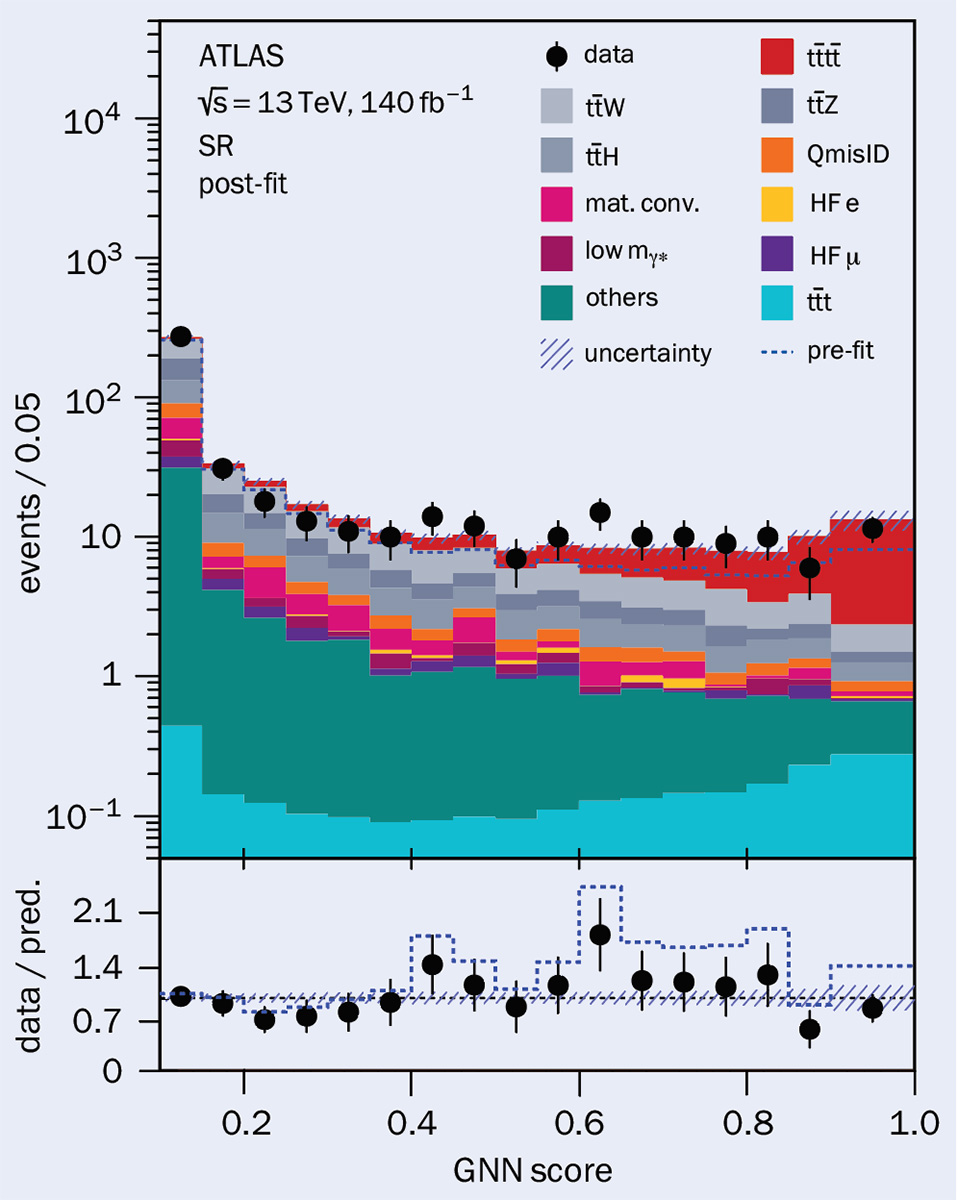
A useful exercise is to review a few examples that might be (or might have been) discoveries. A recent example involves the ATLAS and CMS observation of events involving four-top quarks. Apart from the similarity of the heroic work of the physicists involved, these analyses have interesting contrasts with the Higgs-boson discovery. First, the Higgs discovery involved clear mass peaks, while the four-top events simply caused an enhancement of events in the relevant region of phase space (see “Four tops” figure). Then, the four-top production is just a verification of an SM prediction and indeed it would have been more of a surprise if the measured rate had been zero. So this is just an observation of an expected process, rather than a new discovery. Indeed, both preprints use the word “observation” rather than “discovery”. Finally, although 5σ was the required criterion for discovering the Higgs boson, surely a lower level of significance would have been sufficient for the observation of four-top events.
Going back further in time, an experiment in 1979 claimed to observe free quarks by measuring the electrical charge of small spheres levitated in an oscillating electric field; several gave multiples of 1/3, which was regarded as a signature of single quarks. Luis Alvarez noted that the raw results required sizeable corrections and suggested that a blind analysis should be performed on future data. The net result was that no further papers were published on this work. This demonstrates the value of blind analyses.
A second historical example is precision measurements at the Large Electron Positron collider (LEP). Compared with the predictions of the SM, including the then-known particles, deviations were observed in the many measurements made by the four LEP experiments. A much better fit to the data was achieved by including corrections from the (at that time hypothesised) top quark and Higgs boson, which enabled approximate mass ranges to be derived for them. However, it is now accepted that the discoveries of the top quark and the Higgs boson were subsequently made by their direct observations at the Tevatron and at the LHC, rather than by their virtual effects at LEP.
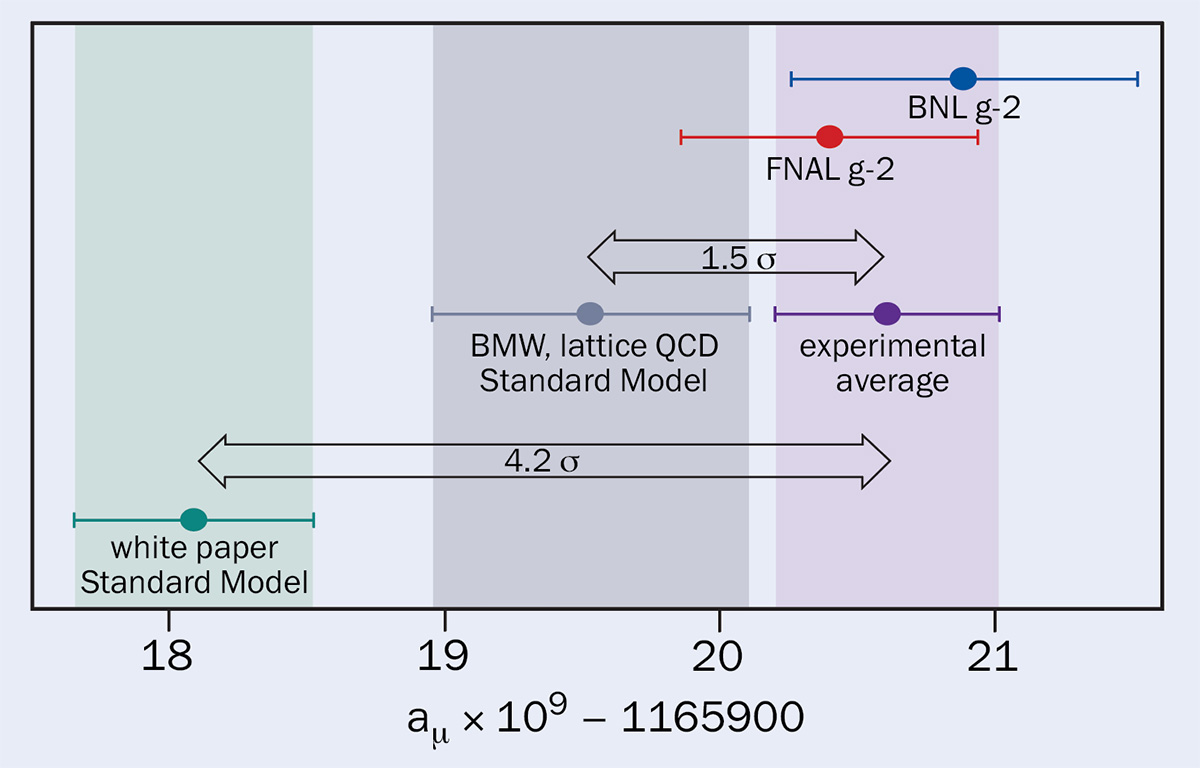
The muon magnetic moment is a more contemporary case. This quantity has been measured and also predicted to incredible precision, but a discrepancy between the two values exists at around the 4σ level, which could be an indication of contributions from virtual new particles. The experiment essentially measures just this one quantity, so there is no look-elsewhere effect. However, even if this discrepancy persists in new data, it will be difficult to tell if it is due to the theory or experiment being wrong, or whether it requires the existence of new, virtual particles. Also, the nature of such virtual particles could remain obscure. Furthermore, a recent calculation using lattice gauge theory of the “vacuum hadronic polarisation” contribution to the predicted value of the magnetic moment brings it closer to the observed value (see “Measurement of the moment” figure). Clearly it will be worth watching how this develops.
Our hope for the future is that the current 5σ criterion will be replaced by a more nuanced approach for what qualifies as a discovery
The so-called flavour anomalies are another topical example. The LHCb experiment has observed several anomalous results in the decays of B mesons, especially those involving transitions of a b quark to an s quark and a lepton pair. It is not yet clear whether these could be evidence for some real discrepancies with the SM prediction (i.e. evidence for new physics), or simply and more mundanely an underestimate of the systematics. The magnitude of the look-elsewhere effect is hard to estimate, so independent confirmation of the observed effects would be helpful. Indeed, the most recent result from LHCb for the R(K) parameter, published in December 2022, is much more consistent with the SM. It appears that the original result was affected by an overlooked background source. Repeated measurements by other experiments are eagerly awaited.
A surprise last year was the new result by the CDF collaboration at the former Tevatron collider at Fermilab, which finished collecting data many years ago, on the mass of the W boson (mW), which disagreed with the SM prediction by 7σ. It is of course more reasonable to use the weighted average of all mW measurements, which reduces the discrepancy, but only slightly. A subsequent measurement by ATLAS disagreed with the CDF result; the CMS determination of mW is awaited with interest.
Nuanced approach
It is worth noting that the muon g-2, flavour and mW discrepancies concern tests of the SM predictions, rather than direct observation of a new particle or its interactions. Independent confirmations of the observations and the theoretical calculations would be desirable.
One of the big hopes for further running of the LHC is that it will result in the “discovery” of Higgs pair production. But surely there is no reason to require a 5σ discrepancy with the SM in order to make such claim? After all, the Higgs boson is known to exist, its mass is known and there is no big surprise in observing its pair-production rate being consistent with the SM prediction. “Confirmation” would be a better word than “discovery” for this process. In fact, it would be a real discovery if the di-Higgs production rate was found to be significantly above or below the SM prediction. A similar argument could be applied to the searches for single top-quark production at hadron colliders, and decays such as H → μμ or Bs→ μμ. This should not be taken to imply that LHC running can be stopped once a suitable lower level of significance is reached. Clearly there will be interest in using more data to study di-Higgs production in greater detail.
Our hope for the future is that the current 5σ criterion will be replaced by a more nuanced approach for what qualifies as a discovery. This would include just quoting the observed and expected p-values; whether the analysis is dominated by systematic uncertainties or statistical ones; the look-elsewhere effect; whether the analysis is robust; the degree of surprise; etc. This may mean leaving it for future measurements to determine who deserves the credit for a discovery. It may need a group of respected physicists (e.g. the directors of large labs) to make decisions as to whether a given result merits being considered a discovery or needs further verification. Hopefully we will have several of these interesting decisions to make in the not-too-distant future.
In no other field of science is the promise of revolutionary discovery the only standard by which future proposals are held. Yet in particle physics a narrative persists that the current lack of new physics beyond the Standard Model (SM) is putting the future of the field in doubt. This pessimism is misguided.
Take cosmology and astrophysics. These are fundamental sciences whose aim is nothing more than to better understand the objects within their remit. Telescopes and other instruments point at the universe at large, observing to ever higher precision, farther than ever before, in new, previously inaccessible regimes. The Gaia, JWST and LIGO instruments, which cost between $1–10 billion each, had clear scientific cases: to simply do better science.
Not once in ESA’s list of Gaia science objectives is dark matter or dark energy mentioned. Gaia’s scientific potential is fulfilled not by the promise of new physics discoveries but by improving precision astrometry, uncovering more of the known astrophysical objects and testing further the standard cosmological model. JWST is a success if it makes sharper observations and peers out farther than ever, regardless of whether it discovers new types of exotic phenomena or sees the same objects as before but better. LIGO was not considered a failure for having discovered gravitational-wave signals in agreement with Einstein’s general theory of relativity; nor is the future of gravitational-wave observatories in doubt as a consequence.
Particle physics is pushing the boundaries of our understanding in the other direction – looking inwards rather than outwards. The discovery of the Higgs boson, like that of gravitational waves, opens an entirely new window for probing our universe. Its agreement with the SM until now does nothing to diminish the need for a future Higgs observatory. Higgs aside, new elementary particle processes are continually being unveiled, from the long-predicted quantum scattering of light by light to complex interactions involving multiple bosons or fermions, most recently in the spectacular observation of four top quarks by ATLAS and CMS.
Gaia, JWST and LIGO had clear scientific cases: to simply do better science
Moreover, unlike cosmology and astrophysics, particle physics can do more than observe. It is an experimental science in the truest sense: set up the initial conditions, repeat the experiment, then analyse what comes out. The ability to directly manipulate the elementary building blocks of our world both complements and works symbiotically with astrophysical and cosmological observations. We need all eyes open on the universe to make progress; blinding one eye will not make the other sharper.
A better name can help
In this spirit, the CERN Future Circular Collider (FCC) is a bold and ambitious proposal for ensuring another thriving century of particle physics. As a multi- generational project, it would be our era’s cathedral to knowledge and wonder about the universe. However, the FCC cannot always remain a future collider if it ever becomes reality. When it comes to be renamed, the CERN International Particle Observatory would be more apt. This better reflects the role of colliders as general-purpose tools to do good science.
The International Particle Observatory will cost around $10 billion for a high-precision observatory, starting in the 2040s. A high-energy observatory would then follow in the 2070s. Is it worth it? Should we not be more concerned with climate change? Both questions must be put in the context of other areas of government spending and the value of fundamental physics. For example, an Olympic Games funded by a single nation, for a month’s worth of entertainment, costs about $10 billion. The same price tag shared across multiple countries over decades, to uncover fundamental knowledge that stands for all time, is a pittance by comparison. Furthermore, studies have shown that the economic return of investment in CERN outweighs the cost. We get back more than we put in.
The value of the enterprise itself benefits society in myriad indirect ways, which does not place it at odds with practical issues such as climate change. On the contrary, a new generation of particle-physics experiments stimulating cutting-edge engineering, technology, computing and data analysis, while fostering international collaboration and inspiring popular culture, creates the right conditions for tackling other problems. Particle physics helps humanity prosper in the long run, and has already played an indispensable role in creating our modern world.
Building an International Particle Observatory is a win–win proposition. It pays for itself, contributes to a better society, improves our understanding of the universe by orders of magnitude, and advances our voyage of exploration into the unknown. We just need to shift our narrative to one that emphasises the tremendous range of fundamental science to be done. A better name can help.
The EPS High Energy and Particle Physics Prize is awarded for an outstanding contribution in a experimental, theoretical or technological achievement. This year, the recipients are Cecilia Jarlskog for the discovery of an invariant measure of CP violation in both quark and lepton sectors; and the Daya Bay and RENO collaborations for the observation of short-baseline reactor electron-antineutrino disappearance, providing the first determination of the neutrino mixing angle, which paves the way for the detection of CP violation in the lepton sector.
The 2023 Giuseppe and Vanna Cocconi Prize (honouring contributions in particle astrophysics and cosmology in the past 15 years) is awarded to the SDSS/BOSS/eBOSS collaborations for their outstanding contributions to observational cosmology, including the development of the baryon-acoustic oscillation measurement into a prime cosmological tool, using it to robustly probe the history of the expansion rate of the Universe back to one-fifth of its age providing crucial information on dark energy, the Hubble constant, and neutrino masses.
The 2023 Gribov Medal is awarded to Netta Engelhardt for her groundbreaking contributions to the understanding of quantum information in gravity and black-hole physics. This medal goes to early-career researchers working in theoretical physics or field theory.
The 2023 Young Experimental Physicist Prize of the High Energy and Particle Physics Division of the EPS – for early-career experimental physicists – is awarded to Valentina Cairo for her outstanding contributions to the ATLAS experiment: from the construction of the inner tracker, to the development of novel track and vertex reconstruction algorithms and to searches for di-Higgs boson production.
Honouring achievements in outreach, education, and the promotion of diversity, the 2023 Outreach Prize of the High Energy and Particle Physics Division of the EPS is awarded to Jácome (Jay) Armas. It recognizes his outstanding combination of activities on science communication, most notably for the “Science & Cocktails” event series, revolving around science lectures which incorporate elements of the nightlife such as music/art performances and cocktail craftsmanship and reaching out to hundreds of thousands in five different cities world-wide.
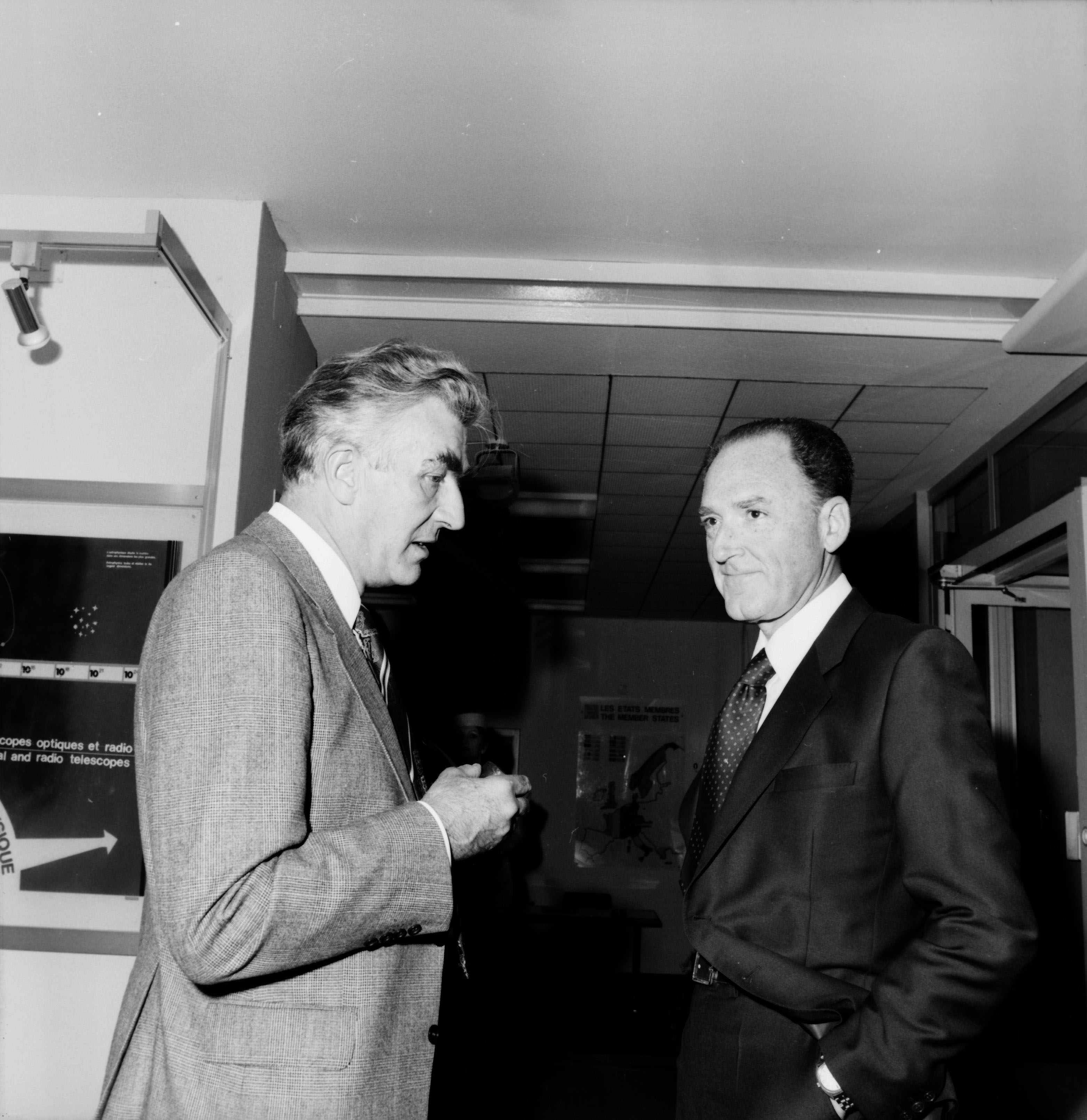
Giorgio Brianti, a pillar of CERN throughout his 40-year career, passed away on 6 April at the age of 92. He played a major role in the success of CERN and in particular the LEP project, and his legacy lives on across the whole of the accelerator complex.
Giorgio began his engineering studies at the University of Parma and continued them for three years in Bologna, where he obtained his laurea degree in May 1954. Driven by a taste for research, he learned, thanks to his thesis advisor, that Edoardo Amaldi was setting up an international organization in Geneva called CERN and was invited to meet him in Rome in June 1954. In his autobiography – written for his family and friends – Giorgio describes this meeting as follows: “Edoardo Amaldi received me very warmly and, after various discussions, he said to me: ‘you can go home: you will receive a letter of appointment from Geneva soon’. I thus had the privilege of participating in one of the most important intellectual adventures in Europe, and perhaps the world, which in half a century has made CERN ‘the’ world laboratory for particle physics.”
Giorgio had boundless admiration for John Adams, who had been recruited by Amaldi a year earlier, recounting: “John was only 34 years old, but had a very natural authority. To say that we had a conversation would be an exaggeration, due to my still very hesitant English, but I understood that I was assigned to the magnet group”. After participating in the design of the main bending magnets for the Proton Synchrotron, Giorgio was sent by Adams to Genoa for three years to supervise the construction of 100 magnets made by the leading Italian company in the sector, Ansaldo. Upon his return, he was entrusted with the control group and in 1964 he was appointed head of the synchro-cyclotron (SC) division. After only four years he was asked to create a new division to build a very innovative synchrotron – the Booster – capable of injecting protons into the PS and significantly increasing the intensity of the accelerated current. He described this period as perhaps his happiest from a technical point of view. Adams – who had been appointed Director General of the new CERN-Lab II to construct the 400 GeV Super Proton Synchrotron (SPS) – also entrusted Giorgio with designing and building the experimental areas and their beam lines. The 40th anniversary of their inauguration was celebrated with him in 2018 and the current fixed-target experimental programme profits to this day from his foresight.
Giorgio has left us not only an intellectual but also a spiritual legacy
In January 1979 Giorgio was made head of the SPS division, but only two years later he was called to a more important role, that of technical director, by the newly appointed Director General Herwig Schopper. As Giorgio writes: “The main objectives of the mandate were to build the LEP… which was to be installed in a 27 km circumference tunnel over 100 m deep, and to complete the SPS proton-antiproton program, a very risky enterprise, but whose success in 1982 and 1983 was decisive for the future of CERN”. The enormous technical work required to transform the SPS into a proton-antiproton collider that went on to discover the W and Z bosons took place in parallel with the construction of LEP and the launch of the Large Hadron Collider (LHC) project, which Giorgio personally devoted himself to starting in 1982.
The LHC occupied Giorgio for nearly 15 years, starting from almost nothing. As he writes: “It was initially a quasi-clandestine activity to avoid possible reactions from the delegates of the Member States, who would not have understood an initiative parallel to that of the LEP. The first public appearance of the potential project, which already bore the name Large Hadron Collider, took place at a workshop held in Lausanne and at CERN in the spring of 1984.”
The LHC project received a significant boost from Carlo Rubbia, who became Director General in 1989 and appointed Giorgio as director of future accelerators. While LEP was operating at full capacity during these years, under his leadership new technologies were developed and the first prototypes of high-field superconducting magnets were created. The construction programme for the LHC was preliminarily approved in 1994, under the leadership of Chris Llewellyn Smith. In 1996, one year after Giorgio’s retirement, the final approval was granted. Giorgio continued to work, of course! In particular, in 1996 he agreed to chair the advisory committee of the Proton Ion Medical Machine Study, a working group established within CERN aimed at designing and developing a new synchrotron for medical purposes for the treatment of radio-resistant tumours with carbon ion beams. The first centre was built in Italy, in Pavia, by the Italian Foundation National Centre for Oncological Hadrontherapy (CNAO). He was also an active member of the editorial board of the book “Technology meets Research,” which celebrated 60 years of interaction at CERN between technology and fundamental science.
Giorgio has left us not only an intellectual but also a spiritual legacy. He was a man of great moral rigour, with a strong and contemplative Christian faith, determined to achieve his goals but mindful not to hurt others. He was very attached to his family and friends. His intelligence, kindness, and generosity shone through his eyes and – despite his reserved character – touched the lives of everyone he met.
On 27 March, during the 30th edition of the Deep-Inelastic Scattering and Related Subjects workshop (DIS2023) held in Michigan, Adinda de Wit and Yong Zhao received the 2023 Guido Altarelli Awards for experiment and theory. The prizes, named after CERN’s Guido Altarelli, who made seminal contributions to QCD, recognise exceptional achievements from young scientists in deep-inelastic scattering and related subjects.
CMS collaborator Adinda de Wit (University of Zurich) was awarded the experimental prize for her achievements in understanding the nature of the Higgs boson, including precision studies of its couplings and decay channels. She received her PhD from Imperial College London, then took up a postdoc position at DESY followed by the University of Zurich and is presently at LLR. Co-convener of the CMS Higgs physics analysis group and past co-convener of the CMS Higgs combination and properties group, de Wit also received the Herta-Sponer-Prize by the German Physical Society.
Yong Zhao (Argonne National Laboratory) was awarded the theory prize for fundamental contributions to ab initio calculations of parton distributions in lattice QCD. He received his PhD from the University of Maryland, and then held postdoc positions at Brookhaven and MIT before joining Argonne laboratory as an assistant physicist. Yong also received the 2022 Kenneth G. Wilson Award for Excellence in Lattice Field Theory for fundamental contributions to calculations of parton physics on lattice.
During the award ceremony, Nobel laureate Giorgio Parisi joined in via Zoom to reminisce about his collaboration with Altarelli. Together they contributed to QCD evolution equations for parton densities, known as the Altarelli-Parisi or DGLAP equations.
The DIS series covers a large spectrum of topics in high-energy physics. One part of the conference is devoted to the most recent results from large experiments at Brookhaven, CERN, DESY, Fermilab, Jlab and KEK, as well as corresponding theoretical advances. The workshop demonstrated how DIS and related subjects permeate a broad range of physics topics from hadron colliders to spin physics, neutrino physics and more. The next workshop will be held in Grenoble, France from 8-12 April 2024.
To provide the best experiences, we use technologies like cookies to store and/or access device information. Consenting to these technologies will allow us to process data such as browsing behavior or unique IDs on this site. Not consenting or withdrawing consent, may adversely affect certain features and functions.
Functional
Always active
The technical storage or access is strictly necessary for the legitimate purpose of enabling the use of a specific service explicitly requested by the subscriber or user, or for the sole purpose of carrying out the transmission of a communication over an electronic communications network.
Preferences
The technical storage or access is necessary for the legitimate purpose of storing preferences that are not requested by the subscriber or user.
Statistics
The technical storage or access that is used exclusively for statistical purposes.The technical storage or access that is used exclusively for anonymous statistical purposes. Without a subpoena, voluntary compliance on the part of your Internet Service Provider, or additional records from a third party, information stored or retrieved for this purpose alone cannot usually be used to identify you.
Marketing
The technical storage or access is required to create user profiles to send advertising, or to track the user on a website or across several websites for similar marketing purposes.