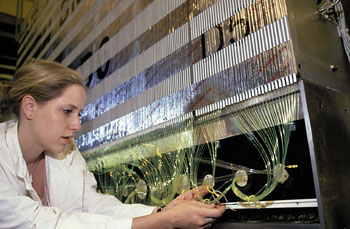
Photodetector supplier Delft Electronic Products (DEP), now in its 30th year of manufacturing for the worldwide image intensifier market, has signed a distributor agreement with Photonic Science Ltd (PSL) for the UK, Eire and France.
PSL, established in the UK in 1985, and with a French office since 1995, specializes in high-technology detector systems, covering imaging applications from X-ray diffraction to night vision. PSL incorporated specially developed DEP intensified tubes into a unique design for what is claimed to be the world’s smallest high resolution intensified camera.
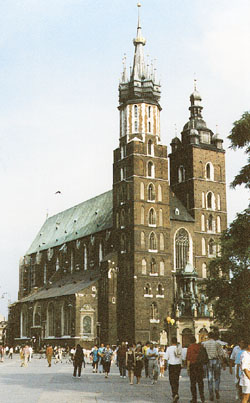
Jagiellonian University’s tradition of natural sciences dates back to the 15th century, when its famous student Nicholas Copernicus revolutionized our view of the universe. Another student, five and a half centuries later, was Karol Wojtyla, Pope John Paul II, who had to receive clandestine education during the Second World War.
The ECFA participants were welcomed by the Dean of the Faculty of Mathematics and Physics of the University, Krzysztof Fialkowski, a theoretical particle physicist. The Jagiellonian University has a strong theoretical physics tradition and has some 40 theorists who carefully follow experimental results.
The University is also well known as the organizer of the Annual Cracow School of Theoretical Physics (Zakopane), that had its 38th session this year. Other schools of theoretical physics in southern Poland are the biennial Katowice School of Theoretical Physics and the annual Cracow Epiphany Conference on Particle Physics. These schools play an essential role in keeping Polish theorists at the forefront of knowledge. The international “Rochester” meeting, held in Warsaw in 1996, also helped put the nation on the world physics map.
Polish theoretical particle physics is very healthy, with about 160 tenured staff, with large concentrations in the Cracow and Warsaw regions, working on many different topics such as electroweak interactions, QCD, neutrino masses and mixing, physics at future accelerators, baryogenesis and cosmology.
In the Cracow region, experimental activities are carried out at the Henryk Niewodniczanski Institute of Nuclear Physics as well as at the Faculty of Physics and Nuclear Techniques of the University of Mining and Metallurgy,
one of the largest academic schools of technology in Poland. These Institutes take part in several high-energy physics experiments at CERN: ATLAS, DELPHI, ALICE, and NA49 as well as EMU13. Moreover, the Cracow groups contribute to both the major experiments at the HERA accelerator at DESY and are in the PHOBOS Collaboration at RHIC, Brookhaven.
Another major centre for experimental research is Warsaw. The researchers from University of Warsaw, Warsaw University of Technology, the Andrzej Soltan Institute for Nuclear Studies, together with colleagues from Bialystok and Kielce, are contributing to several experiments at CERN: DELPHI, NA48, NA49, and WA98 as well as to CMS and ALICE. At DESY, researchers from Warsaw take part in ZEUS and in the TESLA project for the construction of an electronpositron linear collider.
About 190 Polish experimentalists, engineers and technicians are working at CERN and DESY. Around 50 more are involved in a large variety of experiments elsewhere, the biggest groups among them participating in heavy ion experiments to be carried out at RHIC and in the Pierre Auger Observatory air-shower project currently under construction.
A characteristic feature of Polish experimental groups has been their rather large number of highly qualified engineers and technicians. Polish scientists have therefore been able to contribute significantly to detector construction, maintenance and operation. Developing software for event simulation and reconstruction is another speciality. In a number of cases, Poles have made outstanding contributions to physics analysis.
Funding structure and academia
Polish universities are funded by the Ministry of National Education. However, to obtain research grants Polish physicists usually have to apply to the State Committee for Scientific Research (KBN), created in 1991. For institutes outside universities, the KBN may also cover salaries. KBN is independent and objective as it has no institutions of its own to finance. The main disadvantage is, however, that it has too little money for the wide spectrum of activities that fall within its responsibility. Polish scientists are unhappy that the percentage of the GNP allocated to research and development has been steadily decreasing, from 0.76% in 1991 to 0.47% in 1998.
A third major source of funding is the National Atomic Energy Agency (PAA) that supervises a number of Institutes in the atomic, nuclear and plasma physics sectors. It is also responsible for signing agreements with organizations such as CERN and DESY. From 1999 this body will be in charge of paying for the Polish participation in the Joint Institute for Nuclear Research (JINR), Dubna, and CERN. Unfortunately state funding has been insufficient: “We are only getting 40% of what we need.”
Poles working at DESY have also had resources from the PolishGerman Foundation as well as from the German Ministry of Research and Technology, which have made it possible for Polish scientists to work at DESY.
Low salaries
A particularity of the Polish system is that there are practically no fixed-term positions for researchers. A researcher is either a graduate student or is tenured. Low salaries are a major problem. Young people offered a permanent position in the academic sector find it difficult to make ends meet. Graduate students tend to accept hardship for four or five years as an investment in a more profitable future elsewhere. There are also serious difficulties in keeping technical staff. The Warsaw groups, for example, have lost a major proportion of their young and dynamic technical personnel. Another serious problem is that it is expensive to send graduate students to work at CERN.
Some of these points were stressed in a talk by PhD student Anna Stasto. She is a theorist working on QCD, structure functions and neutrino physics. A PhD student earns $200 monthly, about 40% of subsistence level, so many have to find part-time jobs. In spite of this, the number of students has increased. Most of them go on to find jobs at banks, computer and mobile phone companies etc. Only a minority end up as teachers at schools. Some international programmes for student mobility, particularly from Germany and sometimes from national funds, are a boon.
Naturally, the international collaboration in high-energy physics has been very important for raising the level of education of young people, including engineers, and for technology transfer.
Experimental work has led to interesting new partnerships. In Cracow, for example, researchers from the Institute of Nuclear Physics are collaborating with faculty specialists in electronics as well as with specialists in physics and nuclear techniques from the University of Mining and Metallurgy.
High-energy physics has also contributed in some unexpected ways. For example, the former Mayor of Cracow contributed to design work for the HI detector at DESY and the Vice-Mayor was responsible for the mechanical construction of the forward RICH detector in DELPHI.
There seems to be a great public interest in particle physics. A CERN Microcosm exhibition, “From Quarks to Stars”, organized in Cracow and Warsaw three years ago, was a tremendous success. In Cracow, it was visited by more than 25 000 people. Several leading Polish scientists are actively popularizing particle physics, and such efforts are greatly appreciated.
Curie effect
The spirit of Marie Sklodowska Curie (1867-1934) seems to prevail. She was the only person ever to receive Nobel prizes both in physics and in chemistry, in 1903 and 1911 respectively. That was a long time ago, yet Polish women still constitute a large fraction of physicists working in the field of experimental high energy physics – a Curie effect?
A new committee, PaNAGIC (Particle And Nuclear Astrophysics and Gravitational International Committee), was created last October by IUPAP (International Union of Pure and Applied Physics) to support the international exchange of ideas and to nurture the emerging field of particle and nuclear astrophysics and cosmology.
Against the need for larger experiments with increasing costs, the Committee will promote worldwide collaboration and ensure the organization of future experiments.
The Committee will cover the following fields: basic constituents of matter and their interactions by non accelerator means; sources, acceleration mechanisms and the propagation of high-energy particles in the universe; nuclear and particle properties and processes of astrophysical interest in the universe; gravity, including sources of gravitational waves.
The annual CERN School of Computing displays the continual close symbiosis between computing and physics. For the 1998 (21st) CERN School of Computing in Madeira, the programme was organized around four themes: agent and distributed computing technology; intelligent monitoring and control; petabyte storage (databases); and software evolution.
The School was organized by CERN in collaboration with LIP, Lisbon and the University of Madeira. 67 students (from 45 institutes, 22 countries and of 22 nationalities) attended, of which 14 were funded by the European Commission and by UNESCO.
After general lectures in the first week, the second week was oriented towards computing problems for particle physics and the LHC programme.
Practical exercises are an important part of the programme and require a complex computing infrastructure. Computing and peripheral equipment was provided by and via CERN. Equipment lent by various manufacturers was delivered to CERN where it was set up, tested, dismantled and shipped to Funchal, Madeira. Portuguese colleagues ensured the provision of the necessary network connection from Funchal via the University of Madeira, Lisbon and CERN and, together with students from Madeira, helped in the installation. Setting up this complex computing facility, even if only needed for a short time, needed close collaboration and was widely appreciated.
The 22nd CERN School of Computing will take place in Stare Jablonki, Poland, from 12-25 September, organized in collaboration with Warsaw University (IFD) and the Department “Internet For Schools” of the Foundation in Support of Local Democracy (IdS). The themes for 1999 are: advanced topics; LHC experiments data communication and data processing systems; software building; and Internet software technologies.
The School is open to postgraduate students and research workers with a few years’ experience in elementary particle physics, computing or related fields. The number of participants will be about 80, mostly from the CERN Member States or from laboratories closely associated with CERN, but a few may come from elsewhere.
The LHC will collide protons at higher energies (7 TeV per beam) than ever achieved before under laboratory conditions to penetrate still further into the structure of matter and recreate the conditions of the universe just 1012 seconds after the Big Bang when the temperature was 1016 degrees. Designing and building a particle physics detector like ATLAS – 7000 tonnes of high technology equipment involves more than just following a sheet of instructions. In a modern-day parallel of a potential Tower of Babel scenario, scientists have to work together as a team while remaining thousands of miles apart.
What is the balance between individual creativity and being part of such a large collaboration?
The successful design and construction of a large and complex state-of-the-art detector requires the creative participation of many people. It is not the collaboration that is creative, but the sum of its individual members. There are many subsystems, so that people mostly work in small groups, contributing creatively. Ensuring that all systems fit and work together, and are affordable, constrains the creative process, but good ideas will make their way!
How are important decisions made? How are individuals heard?
Many important decisions involve just one or two subsystems. They are discussed initially in the subsystem plenary meetings, where everybody can participate and make their voices heard. Recommendations are then discussed in the ATLAS Executive Board, and presented in plenary meetings which play a primary role in forming a consensus when decisions are required. The leadership can only “lead” the collaboration to decisions which are understandable to all, or at least to a large majority. Practical constraints costs, schedule, the availability of manpower etc also come into the equation. There is a clear sequence of steps from subsystem to systems, with the vote by the Collaboration Board being the ultimate step for major decisions.
How is such a large and far-flung collaboration managed?
Each subsystem has its own management team. At the same time, the Executive Board and Spokesperson maintain general oversight.
The Technical Coordination team is responsible for making sure that all subsystems fit together. In parallel, there are national representatives who monitor the use of resources from their respective countries and make sure they are well used.
The Collaboration Board sets out policy issues, and is not involved with execution, which is a management responsibility. However, frequent contacts, between for example the Spokesperson and the Collaboration Board Chair, ensure that policy issues are properly handled, and that fair solutions are found for difficult problems. Finally, direct contacts between individuals and teams with the collaboration management also play an important role.
How do 1800 people communicate among themselves? How do you bridge large distances and overcome time differences?
Electronic communication (e-mail, Web, telephone, video conferencing) is obviously very important. However, regular direct human contacts are crucial. Meetings play a significant role.
How are tasks apportioned?
By trying to match the interests and resources of the participating teams to the tasks. This can succeed only if everyone is also willing to share the less interesting but necessary tasks such as building support structures, contributing to buying cables, writing utility software etc. This works because the physicists are motivated by the prospect of exciting results, which depend on having a complete, working detector system. Of course it is not always easy to arrive at an optimal task-sharing to everyone’s satisfaction, with all tasks assigned.
How are the costs apportioned?
There is no absolute formula. Large teams from wealthy countries are expected to carry a larger share of the costs than small teams from countries with developing economies. Matching the possible contributions of teams and countries to the overall effort is a central part of forming the collaboration.
Where does the money come from?
Mostly from the funding agencies of the various participating countries. There are also significant contributions from CERN, and some resources from individual universities.
How do people join?
Teams interested in ATLAS may contact the Spokesperson, and their interest is then brought to the attention of the Collaboration Board (CB). After examining their resources, their potential share of the work, their relationships with other teams already working on ATLAS etc, the CB votes on their admission.
How do you ensure that all the detector pieces fit together?
The Technical Coordinator, supported by the Technical Coordination Team, works with all the subsystem groups to ensure that the separate pieces will fit together without interfering with each other, and that the full detector can be assembled.
How will data analysis be shared among 1800 people?
The data will provide experimental input for many separate research topics. ATLAS scientists will pursue these research areas mostly in small groups working at their home institutions. All collaborators will be invited to analyse the data by being part of analysis teams.
In some respects data analysis by individual ATLAS physicists can be compared to data analysis by astronomers using the Hubble Space Telescope. In both cases, scientists choose the research areas and data that interest them most.
How does a collaborator get credit for his/her contributions?
This is of course a major question. Internal publications within the collaboration, usually with one or a few authors, will document individual contributions. These can be made known to the whole scientific community. Also, leading contributions are often recognized by asking the person to speak at conferences. However, the large collaborations still have to learn how to handle this question. Major results are obtained collectively, because people are willing to share the tasks. It is not only the final analysis which counts, but all the work which makes it possible to collect the data, and calibrate and prepare it for final analysis.
What is the impact of the global spread of the collaboration? How does one contribute from 6000 miles away?
The global spread implies that factors such as transport of components need to be taken into account during the construction, and that communication logistics play a major role. Full information, eventually including data analysis, must be available simultaneously all over the world. Nevertheless, it also implies that scientists from outside Europe have to travel long distances to participate in discussions and meetings, in the detector assembly and testing, and eventually in the operation of the experiment. They may have to spend extended periods away from their homes and home institutions. However, all ATLAS scientists are after the same goal of doing frontline LHC physics, and are therefore willing to endure these inconveniences to achieve that goal. But being away from home is not necessarily always a disadvantage. In particular young people are stimulated by such experience.
The turn of the year was significant for the Dutch NIKHEF laboratory: 1998 was the last year in which data were taken at the institute’s Amsterdam Pulse Stretcher (AmPS). Even before the AmPS was built, funding organizations had decided that it would only be exploited from 1992 to 1998 because it was a heavy load on the Dutch science budget.
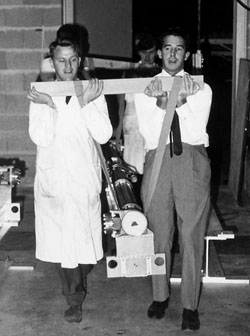
The first steps towards electron scattering experiments in Amsterdam were taken at the beginning of the 60s when institute director Prof. Gugelot sent his former PhD student Conrad de Vries to Stanford. There, at the cradle of electron scattering, de Vries worked in Robert Hofstadter’s group. The 3 km linear electron accelerator was being designed next door at SLAC. On his return to Amsterdam, de Vries convinced the institute (then called IKO, the Instituut voor Kernfysisch Onderzoek) that electron scattering provided the best possibilities for future nuclear physics experiments.
While de Vries formed a research group and designed experiments, a linear accelerator was constructed in a joint effort by IKO and the Philips company. In 1946 Philips had built the synchrocyclotron at IKO the first in Europe. Now it wanted to gain experience in constructing linear accelerators, thereby using superconductivity. It was an ambitious goal, and when the detectors were ready there were still problems with the accelerator. Long delays were foreseen and de Vries turned to his former colleagues in Stanford. In 1966 the US Atomic Energy Commission approved a plan to send two spare SLAC sections to Amsterdam officially “on permanent loan”. The two 3 metre sections formed a 90 MeV linear accelerator (with the Dutch acronym EVA), which became operational in 1968.
Since the Netherlands could not go for large accelerators or huge projects, de Vries decided to aim for precision measurements. Very precise data on the charge radius of carbon-12 are still standard today. The spatial magnetic distribution was measured for a variety of nuclei, ranging from lithium-6 to indium-115. At these low energies it is difficult to separate the small magnetic contribution from the much larger charge contribution, with one exception: at a scattering angle of 180° only the magnetic component contributes. In a specially built 180° arrangement comparable to the one built by Barber and Peterson at SLAC magnets were used to separate back-scattered electrons from the incoming electron beam. The resulting data were complementary to higher energy results at the 600 MeV electron accelerator (ALS) at Saclay.
From the start it was clear that a larger accelerator than EVA was needed, and the first plans for a medium-energy accelerator (MEA) were submitted at the end of the 60s. The cost of this 500 MeV machine about 40 million guilders for construction was very high by Dutch standards, and the project required much prior organization. Construction started only in 1975 and the first measurements with MEA electrons were made in 1981. In 1973 MEA could deliver up to 40 microamps at a duty factor of 1%. This was lower than the 10% originally aimed for, but much higher than the 0.02% of EVA.
The European Physical Society’s Interdivisional Group on Accelerators prizes, awarded at the European Particle Accelerator Conference in Stockholm this year, reflect the traditional resourcefulness and ingenuity that keeps this field of physics so dynamic.
In 1996 the Austrian Government declared its intention to aim for a large-scale international research facility,
and the AUSTRON proposal was submitted by the Ministry of Science and Research to the European Science Foundation (ESF) for assessment.
In November 1997 the ESF panel recommended the AUSTRON project as a potential candidate for a medium- to large-scale international research facility based on a pulsed high-flux neutron spallation source. It was suggested that some aspects of the regional impact and specific issues regarding the instrumentation should be added. The Ministry requested a project group to gather the extra information and to prepare a project proposal for international presentation.
Based on a decision of the Austrian Government dated 20 August 1998, Austria is offering to contribute one-third of the total cost of the AUSTRON, and international partners are now invited to participate. Although the AUSTRON offers obviously attractive and unique possibilities for research with neutrons, extensive political negotiations with potential transnational partners will be needed to conclude such co-financing agreements. The partners may contribute to the project both in cash or in kind. Political as well as financial decisions need to be taken within the next few months.
Around 1000 users of neutron facilities have been identified within the Central European Region (the catchment area of AUSTRON) according to a report by the European Neutron Scattering Association. And the number is growing, particularly in the eastern countries.
In contrast, the number of neutron sources in Europe (today more than 20) will have dropped to less than six by 2015. The proposed AUSTRON project for a pulsed neutron spallation source is a great opportunity for the neutron scattering community in Europe to counteract this developing “neutron gap”.
Accelerator
The AUSTRON is based on an accelerator design using state-of-the-art technologies to allow for a relatively short construction period and a favourable ratio of cost to scientific and technological potential. The proposal is for a 0.5 MW neutron source which can be operated with 10 Hz repetition rate. To generate a proton beam with 1.6 GeV energy per particle and an average beam current of 0.311 mA, the accelerator chain comprises an H-ion source, a radiofrequency quadrupole and a drift tube linac, providing a final ion energy of 130 MeV, from which the ions enter a rapid-cycling synchrotron via a stripper foil which removes their electrons to enable the acceleration of a high-intensity proton beam to a final energy of 1.6 GeV. Using a dual-frequency magnetic cycle, losses should be kept to about 0.5%, occurring at lowest energies during trapping only.
The operation frequency of the acceleration process has been determined to be 50 Hz. In principle, all neutron scattering instruments could be operated at this repetition rate. Since, however, there is strong emphasis on cold neutron instrumentation, a preference for a lower operation frequency was expressed for these instruments.
This can be achieved by adding an additional storage ring which works as a bunch accumulator for the proton bunches leaving the rapid-cycling synchroton (RCS). With such an installation, stacking of up to four proton bunches is feasible. Extracting these bunches together with the bunch which has just reached its final energy in the RCS gives a 10 Hz source with 1.6 GeV protons (some 2×10¹⁴ protons in total), which deposit 50 kJ per pulse on the spallation target.
The average thermal neutron flux is expected to be 7×10¹² neutrons cm-2 s-1 with a peak flux of some 3.5×10¹⁶. This configuration will make AUSTRON truly unique among present neutron sources. The effective flux for certain classes of neutron instruments will be increased by a factor of 15-20 compared to present standards.
With more than an order of magnitude higher performance, the exploration of completely new fields of research can be envisaged. Furthermore, the 10 Hz option takes the increasing demand for cold neutron scattering into account and no flux penalty will be experienced by those instruments usually operated at higher frequencies.
Concerning AUSTRON’s relation to the proposed European Spallation Source (ESS ), these facilities will belong to two different generations of neutron sources which will be separated by a decade in time and an order of magnitude in beam power.
For the target design, a flat target geometry is proposed. The target material under consideration is solid tungsten/5%-rhenium with its excellent thermal and mechanical properties. The target block will be 10 cm high, 30 cm wide and 60 cm long. Due to the edge-cooling concept, cooling channels are only installed within 2 cm of the top and bottom surfaces.
Calculations of the temperature distribution in the target, based on a 0.5 MW version of AUSTRON running at 50 Hz, yield a maximum of 1200-1300 °C. Edge-cooling is possible under these conditions and an improved cooling system has been designed. Material properties such as ductility, thermal conductivity or self-healing after irradiation damage look favourable for this temperature range. From the present point of view, a 50 Hz, 0.5 MW solid W5%Re target is feasible. Operation with 10 Hz/0.5 MW leads to a marginal temperature increase of less than 10 °C.
The suggestion has also been made to operate the target at even higher temperatures, above 2000 °C, and to cool by radiation cooling only, which would help to avoid thermally induced stress inside the target block. The final decision on the target design will take place in the design phase immediately after approval of the project.
Within the framework of the CERNAsia Fellows and Associates Programme, CERN offers three grants every year to young East, Southeast and South Asia* postgraduates under 33, to participate in its scientific programme in the areas of experimental and theoretical physics and of accelerator technologies. The appointment will be for one year, which might, exceptionally, be extended to two years.
Applications will be considered by the CERN Fellowship Selection Committee at its meeting on 26 January 1999. An application consists of a completed application form on which it should be stated “CERNAsia Programme”, three separate reference letters, a curriculum vitae including a list of scientific publications and any other information in favour of the quality of the candidate. Applications, reference letters and any other information must be provided in English only.
Application forms can be obtained from: Recruitment Service, CERN, Personnel Division, 1211 Geneva 23, Switzerland. E-mail: “Recruitment.Service@cern.ch“. Fax: +41 22-767 2750. Applications should reach the Recruitment Service at CERN before the deadline of 12 November 1998.
The CERNAsia Fellows and Associates Programme also offers a few short term Associateship positions to scientists under 40 who wish to spend a fraction of the year at CERN or a Japanese laboratory and who are “on leave of absence” from their institute. Applications are accepted from scientists who are nationals of the East, South-east and South Asian* countries and from members of the CERN personnel who are nationals of a CERN Member State.
*Candidates are accepted from Afghanistan, Bangladesh, Bhutan, Brunei, Cambodia, China, India, Indonesia, Japan, Korea, the Laos Republic, Malaysia, the Maldives, Mongolia, Myanmar, Nepal, Pakistan, the Philippines, Singapore, Sri Lanka, Taiwan, Thailand and Vietnam.
The Abdus Salam International Centre for Theoretical Physics (ICTP) in Trieste has awarded its Dirac Medal this year to Stephen Adler of Princeton’s Institute for Advanced Study and Roman Jackiw of MIT. This medal, widely viewed by theorists as highly prestigious, is given each year to scientists who have made outstanding contributions to theoretical physics and mathematics.
Adler and Jackiw are honoured for their work on the “triangle anomaly”. CERN theoretician John Bell, who died in 1990, also played a major role in this work. It underlies the process by which a neutral pion transforms into two photons, the calculation of which was first carried out by Jack Steinberger in 1949. Such processes place severe strains on the underlying formalism hence “anomaly”. For the mathematics to work properly, several such anomalies should mutually cancel, placing important restrictions on modern grand unified theories.
To provide the best experiences, we use technologies like cookies to store and/or access device information. Consenting to these technologies will allow us to process data such as browsing behavior or unique IDs on this site. Not consenting or withdrawing consent, may adversely affect certain features and functions.
Functional
Always active
The technical storage or access is strictly necessary for the legitimate purpose of enabling the use of a specific service explicitly requested by the subscriber or user, or for the sole purpose of carrying out the transmission of a communication over an electronic communications network.
Preferences
The technical storage or access is necessary for the legitimate purpose of storing preferences that are not requested by the subscriber or user.
Statistics
The technical storage or access that is used exclusively for statistical purposes.The technical storage or access that is used exclusively for anonymous statistical purposes. Without a subpoena, voluntary compliance on the part of your Internet Service Provider, or additional records from a third party, information stored or retrieved for this purpose alone cannot usually be used to identify you.
Marketing
The technical storage or access is required to create user profiles to send advertising, or to track the user on a website or across several websites for similar marketing purposes.