by H V Klapdor-Kleingrothaus, World Scientific, ISBN 9810237790, 147.
A useful review (62 pages) and bibliography (33 pages), with 1200 pages of reprinted papers, including pioneer neutrino papers (at the front) and extracts from CERN Courier (at the back).
On 4 June in Washington’s National Building Museum, Les Robertson, deputy leader of CERN ‘s information technology division, accepted a 21st-century Achievement award from the Computerworld Honors Program, on behalf of the laboratory.
This prestigious award was made to CERN for its innovative application of information technology to the benefit of society, and it followed the laboratory’s nomination by Lawrence Ellison, chairman and CEO of the Oracle Corporation. Ellison nominated CERN in the science category in recognition of “pioneering work in developing a large-scale data warehouse” – an innovative computing architecture that responds precisely to the global particle physics community’s needs.
The kind of computing needed to analyse particle physics data is known as high-throughput computing – a field in which CERN has played a pioneering role for over a decade. In the early 1990s a collaboration of computer scientists from the laboratory, led by Les Robertson, and physicists from many of CERN’s member states developed a computing architecture called SHIFT, which allowed multiple tape, disc and CPU servers to interact over high-performance network protocols. SHIFT’s modular design simultaneously allowed scalability and easy adoption of new technologies.
Over the years, CERN has proved these features by evolving SHIFT from the systems of the 1990s, based on RISC (reduced instruction set computer) workstations and specialized networks, to today’s massive systems. These include thousands of Linux PC nodes linked by gigabit Ethernet to hundreds of Terabytes of automated tape storage cached by dozens of Terabytes of caches based on commodity disk components.
CERN has since worked on evolving SHIFT in collaboration with physicists and engineers from universities and laboratories around the world. Several collaborations with industrial partners have been formed as successive technologies were integrated into the system. Today, SHIFT is in daily use by the many physics experiments that use CERN’s facilities, providing a computing service for more than 7000 researchers worldwide.
For the future, CERN and other particle physics institutes are working on scaling up this innovative architecture to handle tens of thousands of nodes, and incorporating computational grid technology to link the CERN environment with other computing facilities, easing access to the colossal quantities of data that will be produced by experiments at the laboratory’s forthcoming particle accelerator, the Large Hadron Collider, which will switch on in 2006.
Welcoming the award, CERN director-general, Luciano Maiani said: “This is an important recognition of CERN’s excellence in information technology. In particular, it is a reward for the teams of physicists on CERN’s LEP experiments who contributed to the development and implementation of this new architecture. The prize is also an encouragement for the physicists working on the complex challenges of LHC computing.”
Hans Hoffmann, CERN’s director of scientific computing, commented: “In addition to its major contribution to physics, CERN has been a consistent innovator in information technology, from the Web to its current work on grid computing. We are delighted with this prize; particularly as it demonstrates recognition for CERN’s computing initiatives, not from the academic world but from industry’s leading computing experts.”
Also among the winners this year was Tim Berners-Lee, who received the Cap Gemini Ernst & Young Leadership award for Global Integration in recognition of his pioneering work on the World Wide Web – work carried out while he was at CERN in the early 1990s.
* More information on the Computerworld Honors Programme is available at “http://www.cwheroes.org”.
The first school of high-energy physics organized jointly by CERN and CLAF (Centro latinoamericano de física), Rio de Janeiro was held in Itacuruçá, Brazil on 6-19 May and it hopefully marked the opening of a close collaboration between CERN and physicists in Latin America.
This new series of biennial schools is modelled on the school of physics organized by CERN and the Joint Institute for Nuclear Research in Dubna near Moscow, which was, and continues to be, instrumental in fostering relations between CERN and former socialist countries.
Some 71 students attended the inaugural CERN-CLAF school, 56 of them coming from eight Latin-American countries (17 from Mexico, 16 from Brazil, 11 from Argentina and 12 from other countries), 13 from Europe and two from the US.
The Latin-American students were centrally funded for all of their travel, board and lodging, while other students were funded by their home institutes. Financial support came from CERN, Spain, France, Portugal and Italy, in addition to Brazil, Mexico and CLAF.
The students were accommodated in twin and triple rooms with students from different countries and regions sharing the same room. This was an important factor contributing to the success of the school.
The 11 lecturers came from Europe, Latin America and the US. The lectures, which were in English, were complemented by daily discussion sessions led by seven physicists from Latin America. The students presented their work in an enthusiastic poster session.
A survey carried out at the end of the school revealed that:
* the school was an undisputed success;
* the level of the students was high, and all profited from the lectures, in spite of minor language problems;
* the mixing of nationalities was important, and students were convinced that contact with other students and with lecturers of international reputation would be significant for their future careers as well as in building up an inter-regional network of young physicists;
* the contacts made at the school were also believed to be important in strengthening the collaboration between individuals and institutions inside Latin America;
* there was a unanimous wish for the school to be continued, and the Mexican physics community and authorities expressed their willingness to host the next event in 2003.
At the conclusion of the school, a meeting with representatives from CERN, several Latin-American countries (Argentina, Brazil and Mexico) and funding agencies discussed strategies for continued and possibly permanent support for the CERN-CLAF School and for strengthening the collaboration between Latin-American countries and CERN. The following actions, mainly in the context of CERN’s LHC project, were agreed:
* to continue the biennial CERN-CLAF School;
* to promote the existing and potential collaborations by developing ad hoc protocols between Latin-American funding agencies and CERN, to ensure a stable financial framework for the long timespans of current high-energy physics activities;
* CERN could grant Latin-American groups access to facilities and other services, and give them priority for recuperating surplus equipment;
* CERN will continue to investigate additional funding from the European Union, UNESCO and CERN member states with the aim of increasing the exchange of scientists and to enlarge the duration and number of positions for Latin-American scientists, engineers and trainees at CERN;
* CERN can help by investigating possibilities of scientific, technical, industrial and public education co-operation with Latin America;
* opportunities and conditions under which some Latin-American countries could become CERN observer states would be investigated.
A joint CERN Latin-American steering committee would be set up with the goal of preparing a plan of action. The draft plan will be submitted, for approval, to the authorities of CERN, CLAF and the Latin-American funding agencies. It will also be submitted by CERN’s director general to those CERN European member states willing to co-operate, as well as to the European Union and UNESCO. Spain and Portugal have expressed an intention of submitting the plan to the next Ibero-American meeting of presidents and prime ministers which is planned for 2002.
As one of the students at the first school of high-energy physics organized jointly by CERN and CLAF, here are my personal impressions of the school, which I believe represent the feelings of the other students.
The school’s structure was basically the same as the traditional European school of high-energy physics: two weeks of excellent courses, discussion sessions and free time for amusement, in physics or other leisure activities.
The European school is designed mainly to teach theoretical physics to experimental physicists. The CERN-CLAF School was wisely adapted to the Latin-American reality – young theorists were also accepted and lectures on experimental physics were added. In addition, students from the US and Europe participated.
The lectures motivated our curiosity and provided material for discussion during the free time and the sessions.
The poster session was a very good occasion to show our work and to learn what others are doing. We had about three hours of stimulating exchange of information and many of us came back during
the free time to continue the discussions.
The mixture of young theorists and experimentalists was also very fruitful. The students had different physics backgrounds, so the discussions were enriched by different viewpoints.
The students from Europe and the US, with their different culture and experience in high-energy physics, were well integrated. Their participation was also important to encourage discussion in English.
For all of these reasons, the CERN-CLAF school of high-energy physics seems to be mandatory. It will certainly become instrumental in introducing the Latin-American community to the experimental particle physics world.
The KEK high-energy physics laboratory in Japan has established a new prize – the KEK Technology prize – to encourage its engineers to tackle technical challenges.
The first winners were five KEK engineers who contributed to outstanding advancements in technology related to KEK’s research activities.
Takashi Koriki developed a high-density read-out PC board made of a copper polyimid hybrid film and carbon radiator fins for the ATLAS silicon strip module.
Takashi Kosuge received his award for his invention of an intelligent interlock system for the beamline area in the synchrotron radiation facility.
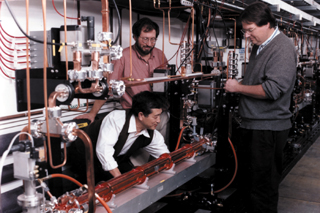
Hirokatsu Ohata and Masahisa Iida’s team were also among the winners for their innovative refrigerator system – using two existing small refrigerators – that provided liquid helium to the team developing focusing magnets for CERN’s LHC machine.
The fourth prize, which went to Toshikazu Takatomi, was for the ultraprecision machining for the proposed X band linear accelerator. The unprecedented precision made it possible to build the accelerating structure by a unique method – the diffusion bonding of discs.
With the increasing importance of technical breakthroughs to the future of high-energy physics, the management at KEK is keen to encourage its engineers to exercise their creativity, and hopes to continue to award the prize in the coming years.
On 13-14 May, CERN hosted a meeting for a taskforce aiming to develop a set of recommendations for the reconstruction of scientific collaboration with the countries of south-east Europe.
In the past, CERN’s involvement in particle physics has provided a valuable catalyst in overcoming political obstacles. During the Cold War, scientific exchange between CERN and the former Soviet Union helped to prepare the ground for the establishment of today’s cordial relations. It is hoped that scientific collaboration in and with south-east Europe will be similarly fruitful.
The meeting at CERN followed a conference, organized in the framework of UNESCO’s Regional Office for Science and Technology for Europe, that was held in Venice on 24-27 March. It was attended by delegates from south-east Europe and international experts including representatives of the European Science Foundation, the European Union and the Academia Europaea, as well as observers from CERN.
The aim of the conference was to seek resources and assess the prospects for integrating R&D in south-east Europe into the infrastructure of other European countries. With these goals in mind, the taskforce that met at CERN drew up a number of recommendations that will be forwarded to UNESCO and submitted at its General Conference in Paris on 6-7 November.
Among other things, the taskforce recommends the promotion of educational exchanges between the countries of south-east Europe, with the assistance of scientists in neighbouring countries (Hungary, Italy and Greece) and observer countries (France, Poland, Germany and the UK). The taskforce is also recommending the development of high-capacity electronic networks to offer the same opportunities for access to information to all scientists in the countries of south-east Europe.
*The countries of south-east Europe are: Albania, Bosnia and Herzegovina, Bulgaria, Croatia, the former Yugoslav Republic of Macedonia, Greece, Romania, Slovenia, Turkey and Yugoslavia.
Every two years since 1987 the ICFA Instrumentation Panel, as an activity of the International Committee for Future Accelerators, has organized an international school of instrumentation. The main aim of the school is to promote interest in nuclear instrumentation among graduate students and young researchers from developing countries. ICFA2001, which was held from 25 March to 8 April, was hosted by the National Accelerator Centre in Faure, near Cape Town, South Africa. It was the first such school to be held on the African continent.
ICFA2001 was devoted to the physics and technologies of instrumentation in elementary particle physics, with a slant towards devices and applications that generate and process image-like information from radiation detectors on a quantum-by-quantum basis. The basic research and spin-offs from the application of such instrumentation to high-energy physics, medicine, microbiology and nuclear sciences, as well as research and development for non-destructive testing in industry, attest to the importance of this vital and continuously growing field.
Instrumentation is usually developed in university laboratories with relatively low investment costs, but access to the latest technology is possible by means of co-operative ventures with other institutes, and in particular with large international research centres and industry. Access to instrumentation technology is a key tenet for the ICFA Instrumentation Panel. At ICFA2001, the organizers, speakers and instructors joined with Kobus Lawrie, Naomi Haasbroek and the rest of the National Accelerator Centre staff in an effort not only to provide access to instrumentation technology and stimulate development in experimental particle physics instrumentation, but also to reinforce the “Science for Africa” motto of South Africa’s National Accelerator Centre.
As far as content and structure were concerned, the main feature of this school – unique to high-energy physics – was its direct, hands-on approach. Students attended morning lectures, after which there were afternoon laboratory sessions lasting four to six hours. Lecture topics this year were wide-ranging, including introductory courses on the physics of particle detection, gaseous detectors, particle identification, calorimetry, silicon detectors, signal processing and data acquisition, as well as several review talks devoted to new technologies, applications in medical physics, molecular biology, astrophysics and data acquisition.
The laboratory classes were state-of-the-art instrumentation sessions, led by researchers in the fields in question from universities and research labs all over the world. In some cases they had simply packed up their current research project and shipped it to South Africa, so that students could get a true taste of what is currently of interest.
Students worked in small groups to carry out selected experimental techniques, using multiwire proportional chambers; drift chambers; silicon detectors; microstrip gas chambers; analogue and digital circuits; and data acquisition. They also worked with specific applications in medical imaging, cosmic rays and protein crystallography.
Satisfied students
A measure of its success is that the anonymous student evaluations that were collected at the end of the school overwhelmingly reflected the enthusiasm and satisfaction of the students. As was the case in previous schools, the students placed a strong emphasis on the importance of the laboratory sessions. The labs provided many students with their first hands-on experience of nuclear instrumentation, and offered those students who were well versed in issues of instrumentation a varied and challenging “playground”.
The school also provided a stimulating human experience for its students, some of whom had never attended a scientific meeting abroad, and for whom it was their first excursion outside their home country.
Those involved in running the school also found it rewarding, owing to the energy and enthusiasm that was generated by all who took part. One student even asked if she could skip lunch in order to return to the lab to finish a measurement from the day before. In another instance, Michel Spiro was bombarded with more than 20 questions during his evening public lecture on astrophysics and cosmology. A number of lecturers and instructors are continuing the discussions that they began with students at the school, with a view to potential scientific collaboration.
The decision to hold the school in Africa was made in an attempt to make an impact on young African researchers and postgraduate students who were interested in nuclear instrumentation. Previous workshops had attracted, on average, only one or two African students.
ICFA2001 achieved this goal and was a resounding success. Of the 96 students in the school, 45 were African, and they represented 12 different countries. Not only was the students’ level of preparation high, but all brought with them a remarkable enthusiasm for the subject. Many had a clear understanding of the instrumentation needs faced by their home countries, which were, in general, related to applications such as nuclear medicine and ambient protection (as in the case of a student from Sierra Leone who was working on radioactive waste management). Yet it was clear that such pragmatism is balanced by a common sentiment that involvement in basic research might be a way to slow down the “brain drain” from their home countries.
Follow-up programme
To promote “Science for Africa” further, ICFA has launched a new programme this year that provides a follow-up to the school, by means of a number of summer student placements offered by CERN and DESY (and Fermilab is expected to participate next year). Suitable candidates were easily identified among the students of the school, and all studentships have been accepted.
It was also clear that South Africa might be able to act as a catalyst for science, and, in particular, nuclear physics, at a regional level, providing higher education to students from countries such as Kenya, Zambia and Mozambique. African students who distinguished themselves came not only from South Africa (primarily from the National Accelerator Centre) but also from Kenya, Nigeria and Tanzania.
With “Science for Africa” as its motto, the National Accelerator Centre has made its objectives clear. Indeed, the centre’s leading role in African science was apparent throughout the school, as was the significant support given by local scientific authorities.
Small but active
The facilities at the National Accelerator Centre are good, despite the cashflow crisis in the past couple of years that has triggered a downsizing of its workforce. The centre has overcome that hurdle and has a stable workforce of about 200 staff. Its experimental physics group is small but active and includes several young postgraduates who are working on MScs and PhDs. Significant effort is being made to bridge the age gap and remedy racial disparity.
With these resources the centre carries out several programmes. Its radiation therapy programme includes impressive facilities for neutron and proton therapy with which hundreds of patients have been treated, while its production of isotopes for medical applications brings in additional income for the centre through their sale on both the national and the international markets. The centre also runs a nuclear physics programme, including the use of a spectrometer to study nuclear reactions, and a new state-of-the-art “gamma ball” (Afrodite), which has attracted foreign experimentalists from such laboratories as INFN-Milano, Italy; and another on material science, using a nuclear microprobe on a 6 MV Van de Graaff accelerator.
Activities are based on a large separated sector cyclotron that accelerates protons to energies of 200 MeV, and heavier particles to much higher energies. Two smaller cyclotrons are also used to provide intense beams of light ions, polarized light ions or heavy ions for injection into the large cyclotron. The beam time from the cyclotron is shared equally among the three main programmes, with some beam allocated specifically to the experimental physics community at weekends, when users come in from several South African universities and from abroad.
ICFA2001 was the eighth edition of the school. Previous editions took place at ICTP Trieste, Italy, in 1987, 1989 and 1991; in Rio de Janeiro, Brazil, in 1990; in Bombay, India, in 1993; in Ljubljana, Slovenia, in 1995; in Léon, Guanajuato, Mexico, in 1997; and in Istanbul, Turkey, in 1999.
The ICFA2001 instrumentation school was jointly supported by the National Research Foundation, DACST, ESCAM and NESCA of South Africa, and by CERN, DESY, INFN, ICTP, IN2P3, RAL, DOE and NSF.
In September 1997, PhD student Torsten Schmidt began working at DESY Zeuthen, near Berlin. Three months later he was visiting the realm of perpetual ice at the South Pole. The 30-year-old has now been to Antarctica four times to help to build the neutrino telescope AMANDA-II, most recently in December 2000. CERN Courier asked him about his experiences.
Is it difficult to endure three to four weeks at the Pole?
It varies from person to person. I really like it there. Four weeks is a good time limit. As far as life at the station goes, you could hold out for longer, but since you go down there to work, you keep working more or less continuously for the whole four weeks.
So there’s no time left to have a look around?
There isn’t much to see there, actually. It’s flat, cold and there are at most two “sights” worth seeing: a crashed aeroplane at the end of a runway, which is a trip of two to three hours; and a ski cabin about 10 km away – but trips there will be prohibited next season.
Why is that?
The pole is run by a company, and the company – for whatever reason – has stopped allowing people to go there.
So a company runs the South Pole?
To be more exact, the company was hired by the US National Science Foundation to take care of transportation, logistics and operations. NSF is the real host of the Amundson-Scott station and determines the various science programmes at the Pole.
Another example of a prohibited location is the old station, which was abandoned in the early 1970s. It’s located in the so-called dead sector, which in reality means that anyone who goes there will be on the next plane north and won’t be allowed back to the Pole ever again. It’s simply too dangerous there. The station has been standing there deserted for over 30 years. It’s covered with snow and ice and could collapse at any time.
Isn’t it much too cold, in the winter at least, to do any work outside?
Well, it does get very cold, but in the first few weeks after the last plane left there were days when it was only -40 °C. Deepest winter temperatures are around -80 °C.
Is the new station right at the Pole?
Yes, but so was the old one at one time. The ice actually moves about 10 m each year. So every year on New Year’s Eve, the “new” South Pole is measured, and on New Year’s Day a post is driven into the ice at that point. That’s always a big party for the whole station.
There are, in general, many social events. One might think that it’s boring and lonely at the Pole, but that’s not true. There’s something going on every day. That’s because only 50 of the 250 people who live there are scientists. The rest are “support” people: electricians, roofers or crane operators, both men and women. They work their 8 to 10 hours a day and then they’re done – unlike us researchers. And, of course, they want to enjoy their leisure.
So there are weeks and weekends. What about days and nights?
There is, so to speak, a day and a night for the support people because of their shifts, but there are no routine hours for us researchers. Of course, when work is done in the group, a time has to be agreed upon, but otherwise you’re completely free in that regard. You can’t sleep much anyway because the sun is always shining, but there are hot meals every six hours.
I can live any way that I want, which is something I like very much. If I don’t have to work with other people, then I work for as long as I can, and then go to sleep and lose all sense of time in a flash.
How many hours do you work and sleep in that kind of system?
On average, it’s 12-15 hours of work a day, but if necessary we can work for as long as 30 hours non-stop. After that come five hours of rather fitful sleep. It’s hard to rest any longer. We sleep in huge military tents with about 20 people in each. And since it’s always daytime, there’s no regular lights-out time either.
The result is that people are constantly trudging through the tent in heavy boots and slamming the door. Outside, aeroplanes are landing around the clock. You really have to be dead tired to be able to sleep at all.
The tents must make the place look like a campsite.
Actually, the Amundsen-Scott station is a high-tech place, with a huge metallic dome and several elevated houses. The summer population, however, lives in those 20-30 tents. In the middle is the bathhouse, which includes a very well frequented toilet – the reason being that the dry air means you need to drink as much and as often as possible. But it’s unpleasant when you’ve just lain down to sleep and then have to go outside again – in your whole outfit including trousers, boots and anorak. How often have I cursed that toilet! Some people avoid the trip and put a bottle next to their beds.
What other problems does the Pole novice have to reckon
with?
Along with the small amount of sleep, there’s also the physical strain because of the high altitude. After all, the station is nearly 3000 m above sea level. The air is thin, cold and dry, and you become dehydrated very quickly.
Things are particularly bad in the first few days: every step is a strain; you collapse into bed wearily but still can’t sleep. Even the small climb of 5 m at the exit of the winter camp makes newcomers break into a sweat.
After the weariness has faded, you live very well at the Pole for a few weeks, but then you start to feel the lack of sleep and the exhaustion from the work. At that point it’s time to begin the trip home.
Are there moments that allow you to forget all of the exertions of polar life?
One particularly nice social event is Christmas, of course. Christmas at the Pole is really good fun. On Christmas Eve the Americans organize a party. On Christmas morning there’s the “race around the world” – three laps around the South Pole. After that comes the Christmas meal, which is actually served three times because the team is so large.
New Year’s Eve is naturally a big celebration too. Last time some of the hard-core types even celebrated the New Year in a different time zone every hour – that’s possible at the Pole.
Other highlights last season were bocci-ball and golf. We also go to the sauna at least once a year and then run around the South Pole almost naked.
In a refreshing alternative to books that try to promote elegance, as opposed to correctness, as a reason to accept scientific theories, Trinh Xuan Thuan takes his readers on a fascinating romp through the world of modern physics. Starting with a discussion of truth and the elusive concept of beauty as opposed to elegance (a difference that he carefully explains), Thuan zeroes in on inevitability, simplicity and congruence as the key guiding notions in the search for the beautiful theories of nature. Much to his credit, he nevertheless makes it clear that, while truth is ultimately something that is decided by experiment, beauty is a subjective concept.
Although the subject matter of this book is deeply philosophical, it is discussed in wonderfully concrete terms. Rather than making vague statements about staggering cosmic or microcosmic magnitudes, Thuan offers hard facts (e.g. that the Sun turns 400 million tonnes of hydrogen into helium per second). A refreshingly down-to-earth follow-up to the esoteric discussion of truth and beauty is a description of the solar system, and the complex interplay between the strict laws of physics and plain random chance that gives rise to the world we so often take for granted.
In subsequent chapters Thuan describes chaos – with its range of applications from meteorology to medicine – and symmetry, emphasizing the symmetries between electricity and magnetism, and between space and time. A recurring theme in the book is the way in which seemingly opposing principles like these actually work together.
Moving on from classical mechanics and the need for both ordering and disordering principles in order to obtain structure, we meet quantum mechanics. A clear – if perhaps rather standard – introduction, with no mathematics, leads the reader to the inevitable conflict between that greatest of classical theories – Einstein’s General Theory of Relativity – and quantum mechanics. Here the author allows himself a few pages of deviation from the otherwise strict adherence to established fact that forms a great part of the book’s not inconsiderable charm.
A mercifully brief discussion of higher dimensional unification and string theory outlines the basic idea in a balanced way without any Bible-thumping. There’s little hope of steering clear of strings and other speculations these days, but the author makes a good job of maintaining a healthy perspective. The book could, in good faith, be recommended to the lay reader without fear that the line between established fact and interesting speculation be too blurred.
The last two chapters are delightful, and unusual in a book of this kind. The penultimate one invites the reader to think about the nature of life and the origins of its highly sophisticated and diverse structures – and to consider to what degree we can begin to understand these as coming from physics. Thuan discusses how one can find the appropriate level of description for the task, and suggests that we should hope not for detailed explanations of single phenomena but rather for an understanding of the global organizing principles that give rise to life and other complex structures.
The final chapter echoes Wigner’s famous concerns about what he called the “unreasonable effectiveness of mathematics” and asks why thought itself should be so effective – that is, why it is that we are able to make sense of anything, let alone the panoply of physics presented in the foregoing six chapters. Here the text takes an almost metaphysical turn, but, given the nature of the questions being asked, this is to be expected. While the practising scientist is unlikely to find much here that s/he hasn’t already thought about, the discussion is well suited to a layperson and offers quite a range of concepts to consider, from the idea of a Platonic world of mathematical forms, through the limits imposed by Gödel’s theorem, to the question of whether a God is needed, and the issue of why there should be such a thing as consciousness at all.
All in all, at a time when it is becoming increasingly difficult to find popular science books that are suitable for the intelligent non scientist, and that make clear distinctions between known fact and speculation, this book is a winner. The writing is graceful, smooth and rich in historical and cultural background, while at the same time keeping real physics close to the forefront. Perhaps most compelling is the book’s remarkable coherence. Topics flow easily and naturally into each other and one would be hard pressed to guess that it is a translation into English. Most people I know, practising physicists included, could learn something from this book, in addition to enjoying its style. To my high-energy physics colleagues: ask yourself how much you really know about the mechanisms involved in getting matter to clump together and make a planet. After all, there aren’t many of them in this solar system, are there? Get the book and have a look at Chapter 2!
The development of more efficient and faster optical detectors is the subject of a prestigious Ý2 million Research Technology & Development contract awarded by the EC to Sussex University, together with two UK companies, Photek Ltd and Electron Tubes, the Laser Centrum (Hanover), the Autonoma University (Madrid), CIEMAT (Spain) and Novara Technology (Italy).
The project, known as “Impecable” (standing for Improved Photon Efficient Cathodes with Applications in Biological Luminescence), will fund the development of more efficient and faster optical detectors by the newly formed consortium, leading to their subsequent production by Photek and Electron Tubes. Existing industrial and research uses for photon counting, detection and imaging are already immense, but the particular thrust of these new developments should greatly increase their value for medical diagnostics, with medical, biological and new sensor applications.
The new concepts have arisen partly as a result of friendly collaborations over the last ten years between Photek and Peter Townsend at Sussex University: Townsend constructed a new standard for spectral analysis of thermoluminescence based on the Photek photon counting cameras. That equipment has not only advanced basic research into new optical and photonic materials, but is also being applied to problems of mineralogy and geological dating.
Although the Sussex system is still well regarded, there is now a major need to improve the sensitivity for long wavelengths (near infra-red) signals and to have much faster sensors. The work at Sussex led to a patent for a development that can, potentially, give much greater sensitivity and has already established a new technique to speed up the response time of Photek detectors into the sub-nanosecond range. The new grant will take this research further and faster with the aim of giving European dominance to both the subject and any resulting products.
The partners have already begun to interact – the Laser Centrum in Hanover is collaborating with Photek on another EC-funded project (Femto) on laser machining. Electron Tubes and Photek have had discussions in the past, and Sussex-UAM -CIEMAT have also worked on joint projects over many years.
The collaboration between Sussex University and Electron Tubes began more recently when the latter was launched independently of Thorn/EMI. Electron Tubes is a leading European manufacturer of photomultipliers and detector modules that detect light down to single photons. Its role will be the development of new high efficiency photocathode layers and the fundamental measurements on the cathodes to be used in this project.
The detection of low light levels is also critical to a wide variety of industrial and scientific instrumentation. Industrial applications range from the measurement of steel thickness as it is rolled from the furnace through to the identification of oil-bearing rock immediately behind the drill bit as an oil well is formed. Scientific applications range from the detection of solar neutrinos deep underground to astronomical observations of distant stars. The target processes for the new high-efficiency photocathodes will be in the very challenging area of the detection of light emitted during biological processes or from luminescence which distinguishes between healthy and imperfect cells.
Among the applications foreseen for this technology is a new technique for the early diagnosis and subsequent monitoring of Alzheimer’s disease, and luminescence analysis for a variety of types of cancer. Demonstrations of such possibilities are planned within the three-year programme but routine applications will take longer.
The CMS and ATLAS collaborations currently building experiments for CERN’s LHC collider have recently been handing out their very own Oscars to their most meritorious suppliers.
At the second such ceremony held at the recent CMS week at CERN, four CMS suppliers received Gold Awards, and the exceptional work by two of them was further rewarded with the CMS Crystal Award for innovation and management.
One Crystal Award went to Japanese firm Kawasaki Heavy Industries which, under a contract with the University of Wisconsin, manufactured six steel discs 15 m in diameter making up the two endcaps of the yoke. Reassembled, the two thinner discs at each end will weigh 300 tonnes, the two intermediate ones 700 tonnes and the two innermost discs 1250 tonnes.
The other Crystal Award recipient was Fermilab contractor Felguera Construcciones Mecanicas, the Spanish firm which produced the wedge-shaped structures for the two 550 tonne half-barrels of the CMS hadron calorimeter. This involved in the region of 1100 tonnes of brass plates, the largest some 4 m in length and weighing in at more than a tonne.
The two other companies to receive CMS Gold Awards were Hudong Heavy Machinery, under the CERN-China agreement, for the 30 tonne support carts for each endcap disc, and the American firm Superbolt for more than 1500 high-strength bolts for the endcap discs.
CMS also presented its prize for the most outstanding PhD thesis of 2000. It was the first time such an award has been handed out to underline the important contribution made by students’ work. The winner was Pascal Vanlaer of the Université Libre de Bruxelles for his R&D work on microstrip gas counters and the reconstruction of charged particle tracks.
Just four days earlier, the ATLAS collaboration had organized its first supplier award ceremony. “Firms really appreciate this,” explained ATLAS financial coordinator Markus Nordberg, “because being a CERN supplier is a reference and generates important marketing spin-offs.”
One ATLAS award went to a small UK family business, Lamina Dielectrics, which manufactured the 180 000 straws for the Transition Radiation Tracker. These 1.66 m long polyimide (Kapton) tubes are just 4 mm in diameter and are manufactured to a tolerance of 15 µm. Each straw is produced by winding and bonding together two thin strips of film coated with aluminium and graphite on one side and polyurethane on the other.
The other ATLAS award-winner was Czech firm Valvovna, supplier of 3000 tonnes of steel sheeting for the ATLAS barrel’s tile hadron calorimeter. Even more impressive than the quantity was the precision obtained over the entire manufacturing process. The trapezoidal plates, 4 and 5 mm thick, were manufactured to a tolerance of 0.04 mm.
To provide the best experiences, we use technologies like cookies to store and/or access device information. Consenting to these technologies will allow us to process data such as browsing behavior or unique IDs on this site. Not consenting or withdrawing consent, may adversely affect certain features and functions.
Functional
Always active
The technical storage or access is strictly necessary for the legitimate purpose of enabling the use of a specific service explicitly requested by the subscriber or user, or for the sole purpose of carrying out the transmission of a communication over an electronic communications network.
Preferences
The technical storage or access is necessary for the legitimate purpose of storing preferences that are not requested by the subscriber or user.
Statistics
The technical storage or access that is used exclusively for statistical purposes.The technical storage or access that is used exclusively for anonymous statistical purposes. Without a subpoena, voluntary compliance on the part of your Internet Service Provider, or additional records from a third party, information stored or retrieved for this purpose alone cannot usually be used to identify you.
Marketing
The technical storage or access is required to create user profiles to send advertising, or to track the user on a website or across several websites for similar marketing purposes.