Comsol -leaderboard other pages

Topics

CERN reacts to increased LHC costs

At its December meeting, CERN’s governing Council decided on new measures to react to the increased costs that emerged last year for its future Large Hadron Collider.

The collider (LHC), which is being constructed in the 27 km tunnel that was built in the 1980s for the LEP collider, will be packed with high-technology equipment and, in particular, will need 1232 superconducting dipole magnets to control its high-energy proton beams. Approval of the contract for these magnets – a final major supply item – clarified the LHC’s “cost to completion”.

CERN now has to look for ways of finding the extra money needed. A first proposal will be submitted to Council in March, and this will evolve into a medium- and long-term plan, which will be presented in June.

CERN has set up five Task Forces to study scientific programmes, possible areas of saving, restructuring, and improving resource management. Karl-Heinz Kissler has been appointed as CERN programme controller.

In another major move, Council approved a proposal to establish an External Review Committee (ERC) to  examine two main areas: the LHC, its experimental areas and CERN’s share of LHC detector construction; and CERN’s scientific programme not directly related to the LHC.

The ERC’s comprehensive review will be carried out in parallel with the work of the internal Task Forces. The ERC’s interim report in March will be taken into consideration for the revised medium- and long-term plans. The final report will be presented in June.

cernnews1_1-02

Robert Aymar of France, director of the International Project for an Experimental Thermonuclear Fusion Reactor (ITER), was appointed ERC chairman. The other members of the committee are Stephan Bieri of ETH Zurich; Bjorn Brandt of the Swedish Foundation for Strategic Research; Enrique Fernández of the Universidad Autónoma de Barcelona; Italo Mannelli of the Scuola Normale Superiore, Pisa; Sigurd Lettow of the Forschungszentrum Karlsruhe; Marc Pannier of the French Ministry of Finance, Economy and Industry; John Peoples of Fermilab; and David Saxon of Glasgow University.

On the financial front, Council took the unusual step of stipulating that 5% (SwF53 million) of CERN’s 2002 budget would initially be frozen. Council will decide how to release this money in line with the new medium- and long-term plans.

For more information see “http://www.cern.ch/info/LHCCost”.

Subpanel recommends a collision course

cernnews4_1-02

“We recommend that the highest priority of the US programme be a high-energy, high-luminosity, electron positron collider, wherever it is built in the world. This facility is the next major step in the field and should be designed, built and operated as a fully international effort.”

This forthright statement is one of the main recommendations of a subpanel set up by the US Department of Energy and the National Science Foundation to chart a 20 year “roadmap” for the future of fundamental physics research. The subpanel’s report states that this future begins with a thorough exploration of the TeV energy scale at CERN’s LHC, but that it does not end there. An electron-positron linear collider is seen as the next step after the LHC.

“We also recommend that the US take a leadership position in forming the international collaboration needed firstly to develop a final design, and then to build and operate this machine,” continues the report. “We recommend that the US prepare to bid to host the linear collider in a facility that is international from the inception.”

Regarding where such a machine would be built, the report adds: “If it is built in the US, the linear collider should be sited to take full advantage of the resources and infrastructure available at SLAC (Stanford, California), and Fermilab (near Chicago).”

The introduction to the report concludes: “The 20th century can be characterized by an increasingly global economic interdependence, as well as by many shared problems, including the health of the human race and of the Earth itself. It is becoming increasingly important to find successful international models for solving such problems. Particle physics represents one of the most successful areas of international co-operation. From the pivotal role of CERN in postwar Europe to the global collaborations of today, particle physicists have worked together with great success on problems of common interest. The construction of a linear collider will break new ground as an international partnership and provide a useful model for other areas of human endeavour.”

Au Coeur de la Matière 

by Maurice Jacob, Editions Odile Jacob, ISBN 2738109802.

cernbooks2_12-01

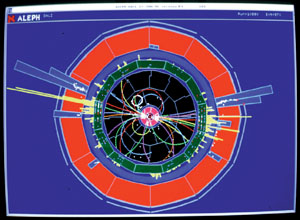
In this topical book, CERN theorist Maurice Jacob glibly traces the evolution of our understanding of the underlying structure of matter, from atoms to quarks – and its implications for cosmology. While the subject is not easy, the author manages to attain a remarkably deep level of insight without writing any equations. The many difficult concepts encountered en route are not glossed over or paraphrased (even though some of them could be). The presentation of the “Schrödinger’s cat” enigma is well done. A few explanations, like parity violation, would have benefited from an explanatory diagram. However, event displays from CERN’s LEP collider provide vivid examples of basic types of interaction.

An introduction manages to bring into the very first paragraph the enigma of quarks – unlike all other constituents of nature, quarks resist being isolated. The meat of the book goes on to trace in detail the mechanisms of the microworld, to climax on the one hand with the Standard Model and the state of particle physics today and on the other its implications for the Big Bang and the birth of the universe, which was initially just a big particle physics experiment.

Then comes a series of essays examining basic questions – the baffling concept of time, antimatter and the structure of the vacuum. Two more chapters look at the sociology of particle physics – how post-Second World War collaboration between scientists has catalysed new international understanding and helped overcome political barriers once perceived as insurmountable, and how this collaboration has attained a truly planetary level for the construction of the new LHC collider at CERN.

The final chapter examines the value of particle physics and its contributions to other branches of science – imaging for medicine and other applications, high-performance detectors, new techniques for data handling and parallel computing and underlines the value of research in education and training.

The book always uses CERN as its focus and reflects the vision of the organization’s spiritual fathers like Louis de Broglie who first saw the need for large-scale international scientific collaboration amid the ruins of post-war Europe.

The New World of Mr Tompkins

by George Gamov and Russell Stannard, Cambridge University Press, ISBN 0521639921, pbk £10.95/$16.95.

cernbooks3_12-01

Mr Tompkins is a dreamy, bemused character who blunders his way through the intricacies of modern physics.

Russell Stannard’s update of George Gamov’s famous portrayal appeared in 1999. At that time, Gamov’s 1965 “science fantasy” anthology was also reissued in paperback. Now the wheel has turned full circle with a paperback version of the new edition. Gamov’s original “Mr Tompkins in Wonderland” story appeared in 1940. Clearly there is still a lot of mileage left in Tompkins.

The Genius of Science: A Portrait Gallery

by Abraham Pais, Oxford University Press,
ISBN 0198506147, hbk £26.50.

cernbooks1_12-01

The Genius of Science is the last of many books written by Abraham Pais, who died last year.

Pais was an eminent theoretical physicist who gradually became more and more interested in the history of science and produced the much acclaimed biographies of Einstein and Bohr. He was very interested in people and over the years accumulated a large number of friends, many of whom have made very important contributions to physics. Being an excellent speaker, Pais was often invited to address meetings organized in honour of his prestigious colleagues.

The extended versions of these talks make up most of the contents of this book, which Pais also calls A portrait gallery of twentieth-century physicists. Like all of Pais’s books, it is very readable and describes in more or less detail the work and characters of 17 physicists who have left their mark on the development of physics – Niels Bohr, Max Born, Paul Dirac, Albert Einstein, Mitchell Feigenbaum, Res Jost, Oskar Klein, Hendrik Kramers, Tsung Dao Lee and Chen Ning Yang, Wolfgang Pauli, Isidor Rabi, Robert Serber, John von Neumann, Viktor Weisskopf, Eugene Wigner and George Uhlenbeck.

The book is well researched and contains countless interesting anecdotes. One sees clearly that the best work is done by young researchers, and that theoretical physicists can be classified as either “golfers or tennis players” – the former do their creative work alone, while the latter are most creative when they can exchange ideas with others. Luckily, Pais was a tennis man who with this book shares with us his love of physics and his deep interest in people.

Database lists the top-cited physics papers

cernpapers1_12-01

The SPIRES-HEP database maintained by the library at the Stanford Linear Accelerator Center (SLAC) connects preprint or eprint versions to articles published in journals or conference proceedings, providing access to all phases of the publication history. The database lists virtually every high-energy physics paper published or even preprinted over the past 30 years.

In addition, most papers now have backward links to the papers that they cite and forward links to the papers citing them. These citation links provide a very effective means of searching the literature. In the past few years SPIRES-HEP has been automatically harvesting reference citations from eprints, creating a web of links that thoroughly indexes the literature.

As a by-product of this citation linkage, SPIRES-HEP can easily search out the papers most cited by publications in high-energy physics. The list of papers with the most citations in a given year provides a snapshot of the hottest topics that have engaged the attention of theorists and experimenters. For the past few years, SPIRES HEP has posted a scientific review of the year’s top-cited papers.

We have recently posted the “top-cited” lists for 2000. These materials include a list of the papers with more than 100 citations in the past year and a list of the papers with more than 1000 citations over the history of the SPIRES-HEP database.

So what are, by this measure, the hottest topics of 2000? Table 1 lists the top 10 cited papers and the number of citations of those papers in 2000. These papers represent major areas of activity that are discussed further in the review posted at the SPIRES Web site. The top-cited reference in high-energy physics is always the Review of Particle Properties. Below this in the list, the following areas are represented. (Papers appearing in the “top 10 cited list” are referred to by a number that indicates their position on the list.)

Maldacena’s duality

A broad swath of developments in string theory and related areas of mathematical physics has resulted from Maldacena’s 1997 paper (2), which propose a relation between supergravity and superstring theories in (d+1) dimensional anti-de Sitter space and supersymmetric Yang-Mills theories in d-dimensions.

Anti-de Sitter space, the homogeneous space of constant negative curvature, has a boundary in the sense that light signals propagate to space-like infinity in finite time. Maldacena proposed that, for a gravity theory living in the interior of the space, there would be a corresponding, and equivalent, scale-invariant quantum field theory living on the boundary. Subsequently, Witten (7), and Gubser, Klebanov and Polyakov (9), gave a precise relation between correlation functions in the boundary theory and S-Matrix elements for the gravity theory in the interior.

These developments have led to many insights, illuminating both the properties of strongly coupled Yang-Mills theory and quantum gravity theories. It is remarkable that Maldacena’s paper has managed, in just three years, to accumulate more than 1600 citations and to vault to position 25 on the all-time citation list.

Extra space dimensions

Though string theory predicts the existence of seven extra space dimensions, these have conventionally been considered to be unobservably small and irrelevant to ordinary particle physics. However, the next three papers on the “top-cited” list involve theoretical models in which extra space dimensions play a direct role in particle physics and, in particular, explain the mass scale of the Higgs boson. Randall and Sundrum (3, 4) have proposed two different scenarios in which our four-dimensional universe is a flat, three-dimensional surface in anti-de Sitter space.

Arkani-Hamed, Dimopoulos and Dvali (5) have proposed a scenario in which our universe is a surface in a large, flat space-time, the size of which may approach the millimetre scale. Further consequences of this model are developed in paper 10. Both of the models 4 and 5 will have crucial tests at CERN’s LHC collider, which may give direct experimental evidence for the presence of new space dimensions (Discovering new dimensions at LHC).

Non-commutative field theory

Many ideas about quantum gravity lead to the idea that space-time co-ordinates are non-commuting operators. Non-commutative Yang-Mills theory, which was invented by Connes, gives a simple field theory model in which consequences of the possible non-commutativity of space can be studied. Paper 6, by Seiberg and Witten, explained the connection between Connes’ model and various compactifications of string theory, launching an intense investigation into non-commutative dynamics.

Neutrino physics

In experimental particle physics the most surprising development of the past few years has been the discovery by the Super-kamiokande collaboration of atmospheric neutrino oscillations (8). This experimental result indicates the presence of neutrino mass and large mixing among the lepton generations. It has led to many speculations on the origin of flavour mixing and to a new, intense level of experimentation on neutrino properties.

The complete list of the top 40 cited papers of 2000 and a more detailed scientific review can be found at the SLAC Web site. The site also includes a “top-cited” list for each eprint archive relevant to high-energy physics. In Table 2 the top-cited paper (exclusive of the Particle Data Group’s Review of Particle Properties) in each archive is shown.

We make no claim that the papers that we have listed here are currently the most important papers in high energy physics. Year-by-year accounting is influenced as much by fashion as by logical scientific development. Both the standard electroweak model and string theory spent many years in the cellar of the citation counts before rising to their current prominence. If you favour a trend, a model or an experiment that is not listed here, more power to you. We hope that your insights will be well represented on our lists before the end of the decade.

Table 1: Top-cited articles of 2000

Article No. of
citations
Article No. of
citations
1 Particle Data Group, 1998 Review of particle
physics Eur. Phys. J. C3 1-794
1236 6 Nathan
Seiberg and Edward Witten, String theory and noncommutative geometry
(hep-th/9908142)
397
2 Juan Maldacena, 1998 The large
N limit of superconformal field theories and supergravity Adv. Theor. Math.
Phys.
2 231-252 (hep-th/9711200)
498 7 Edward
Witten, 1998 Anti-de Sitter space and holography Adv. Theor. Math. Phys.
2 253-291 (hep-th/9802150)
347
3 Lisa Randall
and Raman Sundrum, 1999 An alternative to compactification Phys. Rev.
Lett.
83 4690-4693 (hep-th/ 9906064)
446 8 Y Fukuda
et al., 1998 Evidence for oscillation of atmospheric neutrinos Phys. Rev.
Lett.
81 1562-1567 (hep-ex/ 9807003)
325
4
Lisa Randall and Raman Sundrum, 1999 A large mass hierarchy from a small extra
dimension Phys. Rev. Lett. 83 3370-3373
(hep-ph/9905221)
414 9 S S Gubser et al., 1998 Gauge theory
correlators from noncritical string theory Phys. Lett. B428105-114
(hep-th/ 9802109)
316
5 Nima Arkani-Hamed, Savas
Dimopoulos and Gia Dvali, 1998 The hierarchy problem and new dimensions at a
millimeter Phys. Lett. B249 263
(hep-ph/9803315)
403 10 Ignatios Antoniadis et al., 1998
New dimensions at a millimeter to a Fermi and superstrings at a TeV Phys.
Lett.
B436 257-263
(hep-ph/9804398)
301

Table 2: Top citations within each eprint archive

Archive Article No. of
citations
GR-QC S W Hawking, 1975 Particle creation by black
holesCommun. Math. Phys. 43
199-220
61
HEP-EX Torbjorn Sjostrand, 1994
High-energy physics event generation with PYTHIA 5.7 and JETSET 7.4 Comput.
Phys. Commun.
82
74-90
94
HEP-LAT Herbert Neuberger, 1998
Exactly massless quarks on the lattice Phys. Lett. B417 141-144
(hep-lat/9707022)
68
HEP-PH Y Fukuda et
al.,
1998 Evidence for oscillation of atmospheric neutrinos. Phys. Rev.
Lett.
81 1562-1567
(hep-ex/9807003)
265
HEP-TH Juan
Maldacena, 1998 The Large N limit of superconformal field theories and supergravity
Adv. Theor. Math. Phys. 2 231-252
(hep-th/9711200)
465
NUCL-EX J P Bondorf
et al., 1995 Statistical multifragmentation of nuclei Phys. Rept.
257 133-221
16
NUCL-TH R Wiringa,
V Stoks and R Schiavilla, 1995 An accurate nucleon-nucleon potential with charge
independence breaking Phys. Rev. C51 38-51 (nucl-th/
9408016)
53

Spin in Particle Physics

Elliot Leader, Cambridge University Press, ISBN 0521352819, hbk £90/$130.

9780521020770 feature

Elliot Leader’s book – in the series of Cambridge Monographs on Particle Physics, Nuclear Physics and Cosmology – is a thorough introduction to the theory and experimental study of high-energy spin physics.

Both theoretically and experimentally, spin physics has always been a challenge. In recent years there has been considerable growth in research activities related to spin phenomena and their theoretical interpretation. There is an extensive list of review papers but few books devoted to the subject.

However, Leader’s book provides a comprehensive introduction, with a pedagogical approach to high-energy spin physics. The novelty of the book is also in the rather detailed description of experimental techniques and apparatus, as well as the standard theoretical part. A large number of appendices with technical details and formalism are valuable for the pedagogical treatment of spin problems and make for quick reference.

A significant part of the monograph deals with the problem of nucleon spin structure – the topic widely discussed since 1988 when the results of the European Muon Collaboration showed that the spin of the proton is not the sum of the spins of its individual quarks.

The small-x behaviour of the polarized structure function is one of the unsolved problems en route to a final resolution of the overall nucleon spin puzzle and is discussed from different points of view. The gluon anomaly and a general perturbative QCD approach to the nucleon spin problem are discussed in detail, including the evolution, scheme-dependence and phenomenology of the polarized parton distributions.

Alongside these topics, an introduction to the parton model, the Standard Model, QCD and the general formalism of polarized deep-inelastic scattering is presented. The helicity structure of QCD interactions is considered thoroughly and fermion spin structure is analysed for the case of massive and massless spinors. Possibilities of testing Standard Model and perturbative QCD predictions in the two-spin and parity-violating single-spin asymmetries measured at large angles are listed. Such experiments are useful tools for the detection of gluon polarization, which is a possible solution of the nucleon spin problem.

Another outstanding problem of spin physics is the observation of significant single-spin transverse asymmetry. In the framework of perturbative QCD, the polarization of an individual quark in a hard subprocess should vanish because of the vector type of the QCD interaction, which leads to chirality conservation. However, experimentally there is a mass of data showing large asymmetries or large polarizations, in both elastic and semi-inclusive reactions.

The different mechanisms for producing non-zero, single-spin transverse asymmetries, including final-state interactions, are considered. All such explanations are in fact beyond the standard QCD parton model. The most prominent single-spin asymmetry was observed in inclusive hyperon production, where over two decades ago it was discovered that highly polarized , L hyperons are produced in the collision of unpolarized protons. Most dramatic is that despite the large hyperon polarization, it has no tendency to decrease with the transverse momentum of the produced hyperon, as could be expected from perturbative QCD mechanisms. This whole area of high-energy physics is a challenge for the theory of strong interactions. Only phenomenological models have had any success in the quantitative description of hyperon polarization data.

One chapter is devoted to spin effects in elastic scattering at high energy, which is a most fundamental type of reaction and where a lot of experimental data exist at low and medium energies. There are also high-energy data that demonstrate a rising dependence of analysing power in proton-proton scattering with transferred momentum. A conclusion made in the book clearly indicates that QCD demands the opposite behaviour of the analysing power in elastic proton-proton scattering, but there are no specific predictions for analysing power based on QCD and it does not provide an estimate for where the decreasing behaviour begins. The experimental study of this process is an indispensable source of knowledge on the nucleon wavefunction and a clear and unambiguous way to check perturbative QCD as well as the models based on the non-perturbative approaches to hadron dynamics.

Significant attention is devoted to technical problems, in particular the mechanisms of polarized hadron and electron production and acceleration. In particular, polarized proton sources, polarized targets, difficulties in the acceleration of polarized particles (including “Siberian snakes”) and polarization at LEP, HERA and SLC are described. This increases the potential reader audience. Besides these problems, the book treats in detail the polarimetry issues that are essential for modern experimental high-energy spin physics, especially for the experimental programme with polarized protons at RHIC.

The first five chapters of the book consider the basic formalism and definitions of spin, helicity, spin-density matrix, transition amplitudes and observables of a reaction. The properties of helicity states and wavefunctions under Lorentz and discrete transformations are described in a clear, pedagogical manner. For example, an intelligible derivation of the famous Thomas precession is presented.

In conclusion, it should be stressed that in the light of ongoing major experimental studies (for example, COMPASS at CERN, RHIC-SPIN at Brookhaven and SPIN@U70 at IHEP), this book is useful and timely, describing the state of the field and providing reference points for the interpretation of forthcoming experimental data in high-energy spin physics – a subject that underwent rapid growth during the last decades of the past century. The book is suitable for students at graduate level and will be of interest to the broad high-energy physics community.

History centre publishes archiving guidelines

According to a recently released report by the American Institute of Physics (AIP) Center for the History of Physics, the documentation of collaborative scientific research needs urgent attention. The problems that need to be addressed range from the way in which the contributions of distinguished individuals (or records of a project conducted by one institution) are preserved, to the fact that, almost without exception, research institutions and federal science agencies fail to provide adequate support to programmes to save records of significant research.

To remedy this, the AIP History Center has issued Documenting Multi-Institutional Collaborations – the final report of its decade-long study of multi-institutional collaborations in physics and allied fields.

The main recommendations of the report are that:

* scientists and others should take special care to identify past collaborations that have made significant contributions;

* research laboratories and other centres should set up a mechanism to secure records of future significant experiments;

* institutional archives should share information.

The report makes a broad distinction between “core records” – to be saved for all collaborations – and other records to be saved for “significant collaborations”.

School returns to Switzerland

cernnews3_11-01

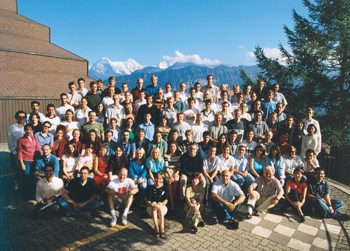
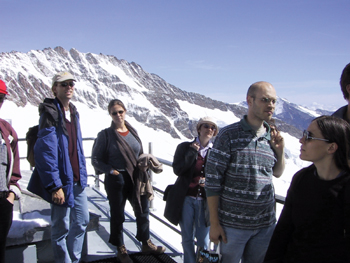
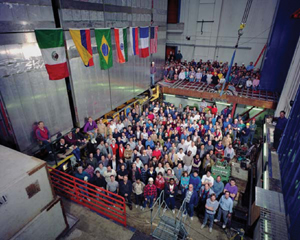
For the first time since its inception nearly 40 years ago, the European School of High-Energy Physics was held in Switzerland at Beatenberg in the Bernese Oberland. Running from 26 August to 8 September, it attracted 95 students from 30 countries. This year’s event was organized in association with the University of Bern, with Klaus Pretzl as school director. Funds for students from former Soviet Union countries came from the INTAS international association.

These schools have become a major event in the particle physics calendar. The tradition began in 1962 with a one-week course at St Cergue, Switzerland, for young students and senior physicists using the emulsion technique at CERN. The 1963 school also took place at St Cergue, but with the emphasis on physics rather than on techniques.

In 1964 the courses moved outside Switzerland and the programme was extended to include bubble chamber as well as emulsion techniques. By 1965 the focus had switched to teaching theoretical elementary particle physics to young experimentalists, where it has remained ever since.

International participation widened in 1970 when the school was held in Finland, in collaboration with the Joint Institute for Nuclear Research (JINR), which is based in Dubna, near Moscow. The following year, JINR organized a school in Bulgaria, in collaboration with CERN, after which biennial joint schools continued up to and including 1991, when the last JINR-CERN school has held in the Crimea in the USSR.

With the changed political scene in Europe, schools continued to be organized jointly every year, but under the title European School for High-Energy Physics, and with a four-year cycle consisting of three annual schools in CERN member states and the fourth in a JINR member state.

cernnews4_11-01

In 1993 the first such school took place, appropriately, in Zakopane, Poland, a member state of both CERN and JINR. Since then the school has been held in Sorrento, Italy (1994); Dubna, Russia (1995); Carry-le-Rouet, France (1996); Menstrup, Denmark (1997); St. Andrews, Scotland (1998); Bratislava, Slovakia (1999); Caramulo, Portugal (2000); and Beatenberg, Switzerland (2001).

Quaero makes particle detector datasets available for all

cernnews5_11-01

A major step towards “transparent” particle physics has come from a new scheme that opens up data collected by the D0 experiment at Fermilab’s Tevatron proton-antiproton collider.

When physicists started to study the behaviour of the atomic nucleus 90 years ago, they carefully watched scintillating screens for the tiny flashes produced as alpha particles were scattered by nuclear targets. The scintillating screen was the detecting medium and the experimenters’ own eyes provided the “read-out”.

Later came track chambers, such as cloud and bubble chambers. These were of immense appeal because physicists could directly see what happened in particle interactions. However, these instruments have been relegated to science museums, and today’s research relies instead on fast electronics. When today’s high-energy particle beams are made to collide, the big detectors surrounding the collision point are the physicists’ “eyes”.

One of the big challenges facing a newborn baby is to make sense of all of the jumbled visual signals that it sees and to learn to recognize and interpret patterns – people, objects and their surroundings. In the same way, the physicists operating a large electronic detector have to convert the raw impulses received by the various detector components and be able to say, for example, that a certain bunch of signals represents a 50 GeV pion travelling in a certain direction. Tracking is still there but the tracks are the results of computers analysing the impulses recorded in successive layers of the detector rather than direct “snapshots”.

Analysing the results of an experiment thus has to be carried out by physicists who “know” the detector. Another physicist who is not intimately acquainted with the detector but who has a hypothesis and wants to test this against actual data has to ask physicists from the experiment for help.

cernnews6_11-01

In the new development – called Quaero from the Latin for “I search” – the interpretation of certain datasets collected by the Fermilab D0 experiment from 1992 to 1996 has already been done and is openly available to other physicists to use as a testbed for models and theories. The data are classified according to the type of particles produced and include several of the datasets that led to the discovery of the top quark at Fermilab in 1995. This opening up of carefully collected data has become standard practice in astronomy.

Chicago physicist Bruce Knuteson, who masterminded Quaero, is currently at CERN to see if similar procedures can be established for the data archives of the four big experiments at CERN’s LEP electron-positron collider, which closed last year. He is optimistic. Electrons and positrons are pointlike, so electron_positron collisions are “cleaner” and less complicated than the proton-antiproton interactions studied at the Tevatron. Protons and antiprotons are in fact bunches of quarks and gluons, each of which can have its own collision products.

In the past, testing a model against actual data could take at least a few years. Quaero can do this in an hour. Until now there was no way of publishing a complete dataset of a high-energy physics experiment. Published plots show data in just two dimensions, making it difficult for another physicist to take the data as presented in a publication and translate them into some other context. The Quaero paper has been accepted for publication in Phsical Review Letters.

If Quaero is extended to LEP data, then anyone who wants will be able to sift for Higgs particles or other physics.

bright-rec iop pub iop-science physcis connect