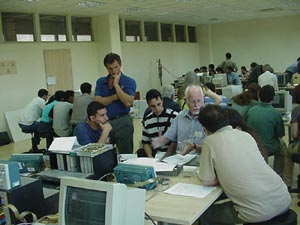
The SESAME (Synchrotron Radiation Light for Experimental Science and Applications in the Middle East) project to build a synchrotron light source in the Middle East took a step closer to reality in May, when it received unanimous approval from the UNESCO executive board. The board endorsed SESAME as “a model that should be made known to other regions”, and described it as a quintessential UNESCO project.
The idea for SESAME dates back to 1997 when, at a seminar on Middle East Scientific Co-operation (initiated by CERN’s Sergio Fubini), Herman Winick of SLAC and Gustav-Adolf Voss from DESY suggested using components of Berlin’s BESSY 1 machine, scheduled to be closed down in 1999, as the core facility for a new laboratory in the Middle East. Soon after, an interim council was established along identical lines to CERN under the auspices of UNESCO. Like CERN before it, SESAME is a project designed not only to advance science and technology, but equally importantly to help bring peace and stability to a troubled region through scientific collaboration. Former CERN director-general, Herwig Schopper, chairs its interim council.
In 2000, Jordan was chosen to host the new facility; 13 interim council member states undertook to provide $50,000 (€50,000) per year each for three years from 1 January 2001 for preparatory work, and the US State Department and Department of Energy contributed $200,000.
The endorsement of the SESAME project by UNESCO’s executive board is an important step towards establishing SESAME as an independent international scientific organization. As soon as six potential member states have deposited their agreement of the new laboratory’s statutes with UNESCO, SESAME will gain its independence and the interim council will give way to a governing council, again based on the CERN model.
So far Bahrain, Iran, Jordan, the Palestinian Authority and Turkey have formally decided to join SESAME. Other member states of the interim council are Egypt, Greece, Israel, Morocco, Oman, Pakistan and the United Arab Emirates. Armenia and Cyprus, originally members of the interim council, have changed their status to observer. For Armenia, the change of status came when the country took the decision to build its own light source. Other observers are France, Germany, Italy, Japan, Kuwait, the Russian Federation, Sudan, Sweden, the UK and the US. Kuwait has indicated that it intends to become a full member of SESAME.
Originally conceived as a 1 GeV machine, the interim council has already approved plans presented by technical director Dieter Einfeld to upgrade SESAME from the 0.8 GeV BESSY 1 machine to 2 GeV, resulting in a third-generation light source with 13 positions for insertion devices. Advisory committees have been appointed, and tangible progress was made in June, when the BESSY 1 machine set sail from Germany bound for the Jordanian port of Al-Aqabe. A request has been made to the European Union (EU) for €8 million for the installation and upgrade of the machine. An evaluation panel has submitted a report to the EU, but its contents have not yet been made public.
A seminar organized and financed by the Japanese Society for the Promotion of Science to discuss the scientific programme, including the first beamlines, was held in the Jordanian capital Amman in October. Several laboratories have offered beamline equipment, and financial support for beamlines is being sought from the International Atomic Energy Authority in Vienna and from US agencies. Meanwhile, the Jordanian government has agreed to finance the building that will house the centre at a campus of the Al-Balqa’ Applied University in Allan, 30 km from Amman. A ground-breaking ceremony in the presence of the Jordanian king, HM Abdullah II, and the director-general of UNESCO, Koïchiro Matsuura, is planned for 6 January 2003.
Fermilab and SLAC announced the launch of an email news wire for high-energy physics and related fields in September. Available at http://www.interactions.org/, the news wire is the first element of a service that aims to group information from the world’s particle physics laboratories on a single website.
The tide of the Second World War turned in the Allies’ favour in 1943. In January the siege of Leningrad ended, and in February the Germans surrendered at Stalingrad and were in retreat before the Soviet Armies. The Anglo-American carpet-bombing of German cities was under way. In the Pacific, Japanese aggression had been checked the previous May in the battle of the Coral Sea. The fear that the German war machine might use atomic bombs1 was abating. However, many Manhattan Project scientists found another fear was taking its place – that of a post-war nuclear arms race with worldwide proliferation of nuclear weapons.
Physicists had little doubt in 1944 that the bombs would test successfully, though the first test was not until 16 July 1945. In the Los Alamos Laboratory there was a race against the clock to assemble the bombs. It is perhaps remarkable that in spite of Germany’s imminent defeat, and the fact that it was common knowledge that Japan did not have the resources needed for atomic bomb manufacture, 2 few lab workers questioned whether they should continue work on the bombs. Joe Rotblat, the president of the Pugwash Conferences on Science and World Affairs and a recipient of the 1995 Nobel Peace Prize, was a notable exception (see http://www.pugwash.org/award/Rotblatnobel.htm and http://www.nobel.se/peace/laureates/1995/rotblat-cv.html). Richard P Feynman, in an interview with the BBC shortly before his death, was asked how he felt about his participation in the effort, and rather ruefully replied that in the race against time he forgot to think about why he joined it.
At the University of Chicago Metallurgical Laboratory (Met Lab), the pace of work was less intense. The major problems there were largely solved, and scientists and engineers began to discuss uses for nuclear energy in the post-war world. Realizing the devastation that nuclear weapons could cause, and that they could be made and delivered much more cheaply than conventional weapons of the same power, scientists tried to inform policy makers that the ideas underlying the Manhattan Project could not be kept secret, and that many nations and non-governmental entities would be able to make atomic bombs if fissionable material were available. Prominent among these were Leo Szilard and James A Franck. In their view, international control of fissionable materials was needed. There was discussion of forgoing even a test detonation of the bomb, and then a recommendation that it be used in an uninhabited area to demonstrate its power. They were concerned that actual military use would set a dangerous precedent and compromise the moral advantage the US and Britain might have to bring about international agreements to prevent the use of nuclear energy for weapons of war. Eventually they expressed these views in a report for the secretary of war and President Truman, now famous as the Franck Report (Stoff et al. 1991, 49). The report was classified top secret when first submitted, and only declassified years later. Various versions of it have now been published (Grodzins and Rabinowitch 1963; Smith 1965; Dannen 1995).
As the Manhattan Project went forward, some scientists in its leadership became prominent advisers in high government circles. Contrary to the Franck Report proposals, they advised immediate military use of the bombs. However, these scientists, in particular Arthur H Compton and J Robert Oppenheimer, actually mediated between their colleagues – who wished to deny the US and Britain the overwhelming political advantage sole possession of atomic bombs would bring – and political leaders such as Winston Churchill and James F Byrnes, Truman’s secretary of state, who wished to have this advantage. In the case of Oppenheimer, it is unclear where his sympathies lay, and this article has no light to shed on that. In the case of Compton, his sympathy with the nationalist goals of government officials is clear from in his own writings. He had a political philosophy markedly different from that of the Franck group. In his book, Atomic Quest (Compton 1956), he wrote: “In my mind General Groves3 stands out as a classic example of the patriot. I asked him once whether he would place the welfare of the United States above the welfare of mankind. ‘If you put it that way,’ the General replied, ‘there is only one answer. You must put the welfare of man first. But show me if you can,’ he added, ‘an agency through which it is possible to do more for the service of man than can be done through the United States.'”
Bohr, Roosevelt, Churchill and Einstein
Niels Bohr was deeply concerned about a predictable post-war nuclear arms race. In 1944 he urged Manhattan Project leaders and government officials, including President Roosevelt and Prime Minister Churchill, to consider open sharing with all nations, including the Soviet Union, the technology to lay the groundwork for international control of atomic energy. Felix Frankfurter arranged an interview with Roosevelt, who listened sympathetically and suggested they find out what the Prime Minister had to say about this. Bohr then went with his son to London and met with Churchill, who angrily rejected Bohr’s suggestion (Gowing 1964). Churchill prevailed, and at their September 1944 Hyde Park meeting Roosevelt and Churchill signed an aide-mémoire rejecting Bohr’s proposal. 4 Albert Einstein learned of Bohr’s failed efforts, and suggested they could take steps on their own and inform leading scientists whom they knew in key countries. 5 Bohr felt they should abide by wartime security restrictions and not do this.
The decision to drop the bombs
John A Simpson, a young Met Lab physicist, later recalled that “the wartime scientists and engineers recognized early what the impact of the release of nuclear energy would mean for the future of society and grappled with the question from 1944 onward…I was unaware that James Franck, Leo Szilard and others at the senior level already were exploring these questions deeply. Under the prevailing security conditions the younger scientists had not had an opportunity to become acquainted with these higher-level discussions” (Simpson 1981). These younger scientists organized seminars and discussions despite US Army orders that they meet only in twos and threes6, and later joined Szilard, Franck and others at the senior level. Eugene Rabinowitch prepared summary documents (Smith 1965). There were two main areas of concern: the urgent question of bombing a Japanese city; and the international control of fissionable materials and the problem of inspection and verification of agreements. Considerations and conclusions can be found in the Franck Report, and some are discussed below.
Undoubtedly aware of the Bohr meetings with Roosevelt and Churchill, Szilard tried to see Roosevelt to urge that the long-range consequences of the use of nuclear weapons should be taken into account alongside immediate military expediency. He enlisted his friend Einstein’s help in getting an appointment.7 Einstein wrote to Roosevelt urging him to meet Szilard immediately, saying: “I have much confidence in Szilard’s judgement.” Szilard’s memo, prepared in March 1945 for submission to the president, is remarkably prescient (Grodzins and Rabinowitch 1963). He foresaw our present predicament. He wrote: “The development of the atomic bomb is mostly considered from the point of view of its possible use in the present war…However, their role in the years that follow can be expected to be far more important, and it seems the position of the United States in the world may be adversely affected by their existence…Clearly, if such bombs are available, it is not necessary to bomb our cities from the air in order to destroy them. All that is necessary is to place a comparatively small number of such bombs in each of our major cities and to detonate them at some later time. The United States has a very long coastline which will make it possible to smuggle in such bombs in peacetime and to carry them by truck into our cities. The long coastline, the structure of our society, and our very heterogeneous population may make effective control of such ‘traffic’ virtually impossible.” Roosevelt died on 12 April, the letter from Einstein unopened on his desk.
After Roosevelt died Szilard tried, through an acquaintance with connections in Kansas City, to see President Truman. He was given an appointment with James F Byrnes, Truman’s designated secretary of state. He brought his memo to Byrnes and tried to discuss the importance of an international agreement to control nuclear energy. He did not get a sympathetic hearing, later recalling that “Byrnes was concerned about Russia’s having taken over Poland, Romania and Hungary, and…thought that the possession of the bomb by America would render the Russians more manageable” (Dannen 1995). Leaving the meeting, he said to Harold Urey and Walter Bartky, who had accompanied him: “The world would be much better off if Jimmy Byrnes had been born in Hungary and become a physicist and I had been born in the United States and become secretary of state.”
Germany’s surrender on 8 May 1945 had little effect on planning the atomic bomb drops. Several historians who have made extensive study of the documentary evidence have concluded that the use of the bomb in Europe was never systematically considered (Stoff et al. 1991; Dannen 1995; Sherwin 1975). No mention is found of a drop in Germany or in Europe. On the other hand, documents indicate a common expectation that Japanese forces would be targeted. The minutes of the Military Policy Committee meeting of 5 May 1943 state: “The point of use of the first bomb was discussed and the general view appeared to be that its best point of use would be on a Japanese fleet concentration…it was pointed out that the bomb should be used where, if it failed to go off, it would land in water of sufficient depth to prevent easy salvage. The Japanese were selected as they would not be so apt to secure knowledge from it as would the Germans” (Sherwin 1975). Another indication that the focus was Japan is in the 1944 aide-mémoire of Roosevelt and Churchill where they agreed that “when a ‘bomb’ is finally available, it might perhaps, after mature consideration, be used against the Japanese” (Stoff et al. 1991, 26). General Groves’ record of a discussion he had with the undersecretary of war on 27 March 1945 is also of interest in this regard. He says he was asked “whether there was any indication of anyone flinching from the use of the [atomic bomb]. I stated that I had heard no rumours to that effect. I expressed my views as to what a complete mess any such action would make of everything including the reputations of everyone who had authorized or urged or even permitted the work in the first place. It was agreed that the effect of the defeat of Germany would remove the race element from the picture but would not remove the necessity for going ahead” (this now declassified memo was obtained from the National Archives; see Dannen 1995).
After Roosevelt’s death a committee was formed by the secretary of war Henry L Stimson to directly advise the president and Congress on issues relating to both civilian and military use of nuclear energy. It was called the Interim Committee because it was constituted without the knowledge of Congress. The members of the committee were Secretary Stimson (chair); Vannevar Bush, director of the Office of Scientific Research and Development; James Conant, president of Harvard University and director of defense research; Karl Compton, president of MIT; assistant secretary of state William Clayton; undersecretary of the Navy Ralph Bard; and secretary of state-to-be Byrnes. This committee appointed an advisory Scientists Panel consisting of Oppenheimer (chair), Enrico Fermi, E O Lawrence and Arthur Compton. The Interim Committee seems to have played an important, if not crucial, role in President Truman’s decision to use the bombs. Notes of its 1 June meeting (Stoff et al. 1991, 44) record that “Mr Byrnes recommended and the committee agreed that the secretary of war be advised that, while recognizing that the final selection of the target was essentially a military decision, the present view of the committee was that the bomb should be used against Japan as soon as possible.” Historians believe Truman met with Byrnes later that day and made this decision (Rhodes 1986).8
The Scientists Panel was present at the previous 31 May Interim Committee meeting where it was agreed that the scientists inform colleagues about the committee (Stoff et al. 1991, 41). Arthur Compton told senior staff in the Met Lab about the committee but seems not to have informed them that the committee would advise immediate wartime use (Compton 1956; Smith 1965). Perhaps he didn’t know, but that seems unlikely – his brother Karl was on the committee.
The Franck Report was then written, dated 11 June 1945, and sent to Stimson and the Interim Committee. The preamble reads: “We felt it our duty to urge that the political problems arising from the mastering of atomic power be recognized in all their gravity, and that appropriate steps be taken for their study and the preparation of necessary decisions. We hope that the creation of the committee by the secretary of war to deal with all aspects of nucleonics indicates that these implications have been recognized by the government. We feel that our acquaintance with the scientific elements of the situation and prolonged preoccupation with its worldwide implications imposes on us the obligation to offer to the committee some suggestions as to the possible solution of these grave problems.” As regards immediate military use of the bombs, they disagreed with the Interim Committee’s advice to the president. They found “use of nuclear bombs for an early, unannounced attack against Japan inadvisable. If the United States would be the first to release this new means of indiscriminate destruction upon mankind, she would sacrifice public support throughout the world, precipitate the race of armaments, and prejudice the possibility of reaching an international agreement on the future control of such weapons. Much more favourable conditions for the eventual achievement of such an agreement could be created if nuclear bombs were first revealed to the world by a demonstration in an appropriately selected uninhabited area…To sum up, we urge that the use of nuclear bombs in this war be considered as a problem of long-range national policy rather than military expediency, and that this policy be directed primarily to the achievement of an agreement permitting an effective international control of the means of nuclear warfare.”
The authors were the Committee on Political and Social Problems of the Metallurgical Laboratory of the University of Chicago, better known as the Franck Committee. The members were Franck (chair), Donald J Hughes, J J Nickson, Rabinowitch, Glenn T Seaborg, J C Stearns and Szilard. The report is a lengthy, deliberative document consisting of five sections: Preamble; Prospectives of Armament Race; Prospectives of Agreement; Methods of Control; and Summary. Compton, director of the Met Lab, submitted the report to Stimson with a covering memo dated 12 June (Stoff et al. 1991, 48). Reading this memo, one cannot help but think that Compton’s intention was to obviate the effect of the report.
The memo suggested that the report need not be given much attention, assuring the secretary that the Scientists Panel would consider it and report back in a few days. Indeed, the panel’s report was submitted four days later. It disagrees with the recommendations of the Franck Report and supports the advice the Interim Committee had given. It is relatively brief, essentially reiterating the two considerations Compton erroneously claims were not mentioned in the Franck Report.9 Entitled “Recommendations on the Immediate Use of Nuclear Weapons”, it begins: “You have asked us to comment on the initial use of the new weapon,” and goes on to say: “We see no acceptable alternative to direct military use” (Stoff et al. 1991, 51). Given Compton’s views, and given Oppenheimer’s deep involvement with General Groves and the Target Committee, it is not surprising that the Scientists Panel endorsed the immediate use of the bomb.10
Arthur Compton’s political philosophy was very different from that of the Franck group. He believed that every effort should be taken by the United States to “keep nuclear weapons out of the hands of totalitarian regimes.” In 1946 he suggested how to keep the peace in an essay entitled “The Moral Meaning of the Atomic Bomb”, published in the collection Christianity Takes a Stand. He wrote: “It is now possible to equip a world police with weapons by which war can be prevented and peace assured. An adequate air force equipped with atomic bombs, well dispersed over the earth, should suffice…we must work quickly. Our monopoly of atomic bombs and control of the world’s peace is short-lived. It is our duty to do our utmost to effect the establishment of an adequate world police…This is the obligation that goes with the power God has seen fit to give us” (Johnston 1967). Some might conjecture that this sharp difference in political philosophy reflects a European, as opposed to an American, approach to the problem. Some Americans, like Compton, may have had a more naïve and trusting view of their government than Europeans tend to do, but it is worth noting that there were many Americans who believed, as did the Franck group, that international agreements were necessary to keep the peace.11
Massive loss of life was expected in the Allies’ invasion of the Japanese islands. The invasion was due to begin on 1 November. In June there was still fighting on Okinawa, but it was drawing to a close. Major military actions planned for summer and autumn were blockade and continuation of the bombing campaign. “Certain of the United States commanders and representatives of the Survey [US Strategic Bombing Survey] who were called back from their investigations in Germany in early June 1945, for consultation, stated their belief that by the coordinated impact of blockade and direct air attack, Japan could be forced to surrender without invasion” (US Strategic Bombing Survey 1946). Nevertheless, following the Interim Committee’s advice for immediate military use, the bombs were dropped on 6 and 9 August. Little is said about the drops having been made as soon as the bombs were ready rather than later in the summer or early autumn. Whether or not the bombs were necessary to force a Japanese surrender prior to invasion is still being debated by historians (Nobile 1995; Bernstein 1976). The Strategic Bombing Survey (US Strategic Bombing Survey 1946) concluded that: “Certainly prior to 31 December 1945, and in all probability prior to 1 November 1945, Japan would have surrendered even if the atomic bombs had not been dropped, even if Russia had not entered the war, and even if no invasion had been planned or contemplated.” The Soviet Union had massed a very large and well-equipped army on the Manchurian border in the summer of 1945, and on 8 August, precisely three months after VE day, declared war on Japan in accordance with the 11 February 1945 Yalta agreement, which states that: “The Soviet Union, the United States and Great Britain agreed that in two or three months after Germany has surrendered and the war in Europe is terminated, the Soviet Union shall enter into war against Japan on the side of the Allies.” The Soviet invasion of occupied Korea and Manchuria began on 9 August, the day Nagasaki was bombed.
It seems that there would have been time before the planned 1 November invasion to attempt to get the Japanese to surrender with a demonstration of the bomb’s power, as the Franck Committee suggested. However, this would have been much more complicated than a drop on a city. In his 1960 interview (Dannen 1995), Szilard said: “I don’t believe staging a demonstration was the real issue, and in a sense it is just as immoral to force a sudden ending of a war by threatening violence as by using violence. My point is that violence would not have been necessary if we had been willing to negotiate. After all, Japan was suing for peace.”12
There are many explanations offered for the immediate military use of the bombs. P M S Blackett concluded that it was a clever and highly successful move in the field of power politics (Blackett 1949). I tend to agree with him, especially in light of the post-war years and of the events of today. It is unlikely that the Franck group believed they could influence the course of events. Nevertheless, they tried very hard to have their voices heard. Many felt along with Leo Szilard that “it would be a matter of importance if a large number of scientists who have worked in this field went clearly and unmistakably on record as to their opposition on moral grounds to the use of these bombs in the present phase of the war” (Dannen 1995). The scientists’ main message, unheeded then and very relevant now, is that worldwide international agreements are needed to provide for inspection and control of nuclear weapons technology. Their memoranda and reports remain as historic documents eloquently testifying to their concern.
Further reading
B J Bernstein (ed.) 1976 The Atomic Bomb: the Critical Issues (Little, Brown & Co, Boston).
P M S Blackett 1949 Fear, War, and the Bomb (McGraw-Hill Book Co, New York). Blackett received a Nobel Prize in Physics in 1948 for his work on cosmic rays.
A H Compton 1956 Atomic Quest (Oxford University Press, New York).
G Dannen 1995 http://www.dannen.com/szilard.html. This is a very rich website on which a selection of historical documents from Dannen’s archive is posted. An interview with Szilard published in US News & World Report on 15 August 1960 is reproduced verbatim.
M Gowing 1964 Britain and Atomic Energy 1939-1945 (Macmillan & Co, London).
M Grodzins and E Rabinowitch (eds) 1963 The Atomic Age: Scientists in National and World Affairs in Articles from the Bulletin of the Atomic Scientists 1945-1962 (Basic Books, New York). Szilard’s memo can also be found as document 38 in Stoff et al. 1991 and is on the Web (Dannen 1995).
M Johnston (ed.) 1967 The Cosmos of Arthur Holly Compton (Alfred A Knopf Inc, New York).
P Nobile (ed.) 1995 Judgement at the Smithsonian (Marlowe & Co, New York).
R Rhodes 1986 The Making of the Atomic Bomb (Simon and Schuster, New York).
M J Sherwin 1975 A World Destroyed (Alfred A Knopf Inc, New York). See footnote on p209 of First Vintage Books edition (January 1977).
J A Simpson 1981 Some personal notes The Bulletin of the Atomic Scientists37:1 26.
A K Smith 1965 A Peril and a Hope (University of Chicago Press, Chicago).
M B Stoff, J F Fanton and R H Williams (eds) 1991 The Manhattan Project: a Documentary Introduction to the Atomic Age (Temple University Press, Philadelphia). There are 95 documents reproduced in this book; many, including the Franck Report, were classified secret or top secret and declassified years after the end of the war. In this article they are referenced by the document number given by Stoff et al. (for example, the Franck Report is document 49). The Franck Report can also be found in Smith 1965, Grodzins and Rabinowitch 1963 and Dannen 1995.
US Strategic Bombing Survey 1946 (Washington DC Government Printing Office).
*This article is adapted from “Fermi and Szilard” (http://xxx.lanl.gov/html/physics/0207094) by the author.
<textbreak=Footnotes>1. Though nuclear more accurately describes the energy source, the term atomic rather than nuclear was chosen by Henry deWolf Smyth in the first published description of the work of the Manhattan Project, 1945 Atomic Energy for Military Purposes (US Government Printing Office, Washington DC). He explained this choice was because atomic would be more cognitive to the general public.
2. Nishina, Hagiwara and other Japanese physicists were working on the problem, but it was realized inter alia that hundreds of tonnes of uranium ore and a tenth of Japanese electrical capacity would be needed for 235U separation (Rhodes 1986 pp 457-459).
3. Brigadier General Leslie R Groves was the US Army general in charge of the Manhattan Project.
4. The aide-mémoire signed by the two heads of state states that “the suggestion that the world should be informed regarding Tube Alloys [the British term for the bomb project], with a view to an international agreement regarding its control and use, is not accepted” (Stoff et al. 1991, 26).
5. See Gowing 1964; also F Jerome 2002 The Einstein File (St Martin’s Press, New York).
6. This order was evaded by scheduling these meetings in a small room with a large anteroom. While a scheduled meeting took place, people waiting in the anteroom could have a discussion.
7. In 1939 Szilard had enlisted Einstein’s help in obtaining government funding for studies of neutron-induced uranium fission, and the result was the famous 2 August 1939 letter from Einstein to President Roosevelt informing him of the possibility of an atomic bomb.
8. Stimson recorded in his diary for 6 June a conversation with Truman indicating that the decision had been already made (Stoff et al. 1991, 45).
9. It is clear the Franck Committee was fully aware of Compton’s point (1), had given it serious consideration and concluded that in the long run many more lives could be saved if effective international, worldwide control of nuclear power were achieved. Compton’s important consideration (2) is, remarkably, a weak statement of a concern dealt with in depth in the Frank Report (figure 1).
10. Compton reports that Lawrence was reluctant to go along with this advice but was persuaded to do so (Compton 1956).
11. Among them were Robert Wilson, Glenn Seaborg, Katherine Way and others who signed Szilard’s petition to the president (Dannen 1995). See http://www.dannen.com/decision/45-07-17.html.
12. According to the Strategic Survey Report (US Strategic Bombing Survey 1946): “Early in May 1945 the Supreme War Direction Council [of Japan] began active discussion of ways and means to end the war, and talks were initiated with Soviet Russia, seeking her intercession as mediator.”
The US National Accelerator Laboratory formally saw the light of day on 21 November 1967, when President Johnson signed the bill that brought it into existence. Robert R Wilson moved from Cornell to become its founding director, and two years later he famously told Congress that the laboratory’s contribution was not to the defence of America, but rather to what made the nation worth defending. In 1974, the National Accelerator Laboratory became the Fermi National Accelerator Laboratory – Fermilab – at a dedication ceremony attended by Enrico Fermi’s widow, Laura.
Fermilab has since gone on to gain an enviable reputation as a place where discoveries are made. The bottom quark made its first appearance there in 1977, and the top quark joined it in 1995. In 2000, Fermilab researchers announced the first direct observation of the tau neutrino, filling the final slot in the Standard Model’s three families of matter particles. The laboratory is justifiably proud of these achievements, and quietly reminds the world of them in its generic email address of topquark@fnal.gov.
Today, all eyes are on run II of Fermilab’s Tevatron proton-proton collider, but that is just one part of a broad research programme. The laboratory is also a focus for US involvement in CERN’s Large Hadron Collider (LHC), and the Compact Muon Solenoid (CMS) experiment preparing for physics at the LHC. A two-pronged neutrino programme is just getting under way (MiniBOONE goes live at Fermilab), and with leading roles in the Pierre Auger project, the Cryogenic Dark Matter Search (CDMS) and the ambitious Sloan Digital Sky Survey, Fermilab is increasingly involved in non-accelerator research.
Tevatron’s run II started in April 2001 and is scheduled to last six years. After a slow start, the collider’s luminosity is steadily climbing. Run II makes the two collider experiments CDF and D0 the main focus of Fermilab’s research in the short term. With the Tevatron being the world’s highest-energy particle collider until the LHC assumes that mantle in 2007, they represent Fermilab’s best immediate hope of adding new discoveries to its already impressive tally in the coming years.
Both CDF and D0 have undergone major upgrades for run II, and the collaborations have also experienced important demographic changes, reflecting the increasing globalization of particle physics. The CDF experiment began as a collaboration of physicists from the US, Italy and Japan. Today, it has 600 members from 11 countries. At D0, the change has been even more dramatic. Since 1996, when the French Saclay laboratory was the collaboration’s sole non-US institution, the number has grown to 30. D0’s upgrade has seen an order-of-magnitude jump in the number of detector readout channels, and the establishment of a computing grid structure for data analysis connecting data farms at Fermilab, Lyons in France, Lancaster in the UK, and Amsterdam in the Netherlands. Both experiments list their priorities for run II as top quark studies and the search for Higgs bosons.
Looking towards the medium term, Fermilab is developing a broad neutrino programme based on two complementary new neutrino beams. One uses a short baseline and a low-energy beam, while the other has a long-baseline, high-energy beam configuration. The Mini Booster Neutrino Experiment (MiniBOONE) is the first experiment to begin data-taking. It is a 500 m baseline experiment that started up in September. Using a proton beam from Fermilab’s 8 GeV booster ring, the MiniBOONE collaboration has optimized the energy-to-baseline ratio to test the contested oscillation result announced by the Los Alamos laboratory’s LSND experiment in 1996. By looking for electron-neutrinos in the essentially pure muon-neutrino beam from the booster, MiniBOONE aims to provide the first unambiguous accelerator-based observation of neutrino oscillations. If oscillations are observed, the “Mini” prefix will be dropped and a second detector will be added further downstream. This will allow the collaboration to make precision measurements of oscillation parameters, and to search for violation of charge-parity (CP) and time-reversal (T) symmetry in the neutrino system.
Fermilab’s second neutrino experiment, the Main Injector Neutrino Oscillation Search (MINOS), is scheduled to start data-taking in 2005. MINOS will have a near detector on the Fermilab site and a far detector some 735 km away in Minnesota’s Soudan mine. It takes its primary beam from the 120 GeV main injector, providing a very different energy-to-baseline ratio from MiniBOONE. Fermilab neutrino physicists are also enthusiastic about developing the neutrino programme to include experiments that will probe the strange quark content of the proton through neutrino-proton elastic scattering.
Completing the accelerator research picture are two more fixed-target experiments foreseen for the main injector. The CKM experiment received scientific approval in 2001. Starting in 2006, it will study the decay of positive kaons into pions accompanied by a neutrino-antineutrino pair. This rare decay, forbidden in the Standard Model at tree level but possible through quark loops, gives a direct measure of the Cabbibo-Kobayashi-Maskawa (CKM) quark mixing matrix element Vtd that describes transitions between top and down quarks. Two years later, CKM is scheduled to be joined by BTeV, an experiment dedicated to advancing the study of CP violation in B mesons, recently begun at SLAC’s BaBar experiment in California and the Belle experiment at Japan’s KEK laboratory.
With a $167 million (€167 million) share of the total US contribution of $531 million to the LHC project, Fermilab has a major stake in what will soon be the world’s flagship particle physics research facility. Fermilab coordinates both the US-LHC accelerator project and US participation in the CMS experiment.
The US LHC accelerator project involves Fermilab, Brookhaven and the Lawrence Berkeley National Laboratory (LBNL). It is responsible for the four interaction regions and the radiofrequency straight section of the LHC, for testing superconducting cable for the main magnets, and for accelerator physics calculations. Integrated “inner-triplet” magnet systems will bring the LHC’s proton beams into collision. They are being built at Fermilab using high-gradient quadrupoles produced by Fermilab and KEK, corrector coils provided by CERN, dipoles from Brookhaven, cryogenic feedboxes from LBNL, and absorbers provided by LBNL to protect the superconducting magnets from collision debris. The inner triplets have now entered the production phase, and are on schedule to be delivered to CERN by the end of 2004.
The US contribution to CMS is also coordinated from Fermilab. US CMS researchers account for around 20% of the collaboration’s total, and are involved in many of the detector’s subsystems. There are plans to establish a virtual CMS control room at the laboratory, so that US physicists don’t have to cross the Atlantic to run shifts.
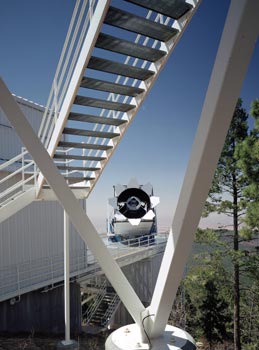
With the growing convergence between astrophysics and particle physics, Fermilab is playing an increasingly important role in non-accelerator-based studies. The laboratory has responsibility for data handling for the ambitious Sloan Digital Sky Survey. Using an observatory at Apache Point in New Mexico, the survey aims to map in detail over a quarter of the entire sky, determining the distance and brightness of more than 100 million celestial objects over a period of five years. The data amassed by the survey will provide invaluable information about the large-scale structure of the universe, allowing discrimination between models of the universe’s evolution.
Fermilab also plays a managerial role in the Pierre Auger Project. With two giant detector arrays each covering an area of 3000 km2, the Auger observatory will study the direction and composition of the cosmic ray showers above 1019 eV that arrive at the Earth in apparent defiance of the Greisen-Zatsepin-Kuzmin (GKZ) cut-off. According to this, space should be opaque to cosmic rays of such high energy, making their origin something of a mystery.
Completing Fermilab’s triplet of non-accelerator experiments is CDMS, currently installed at an underground facility at Stanford, California. For its second stage, the detector will move to the Soudan mine to carry out its search for weakly interacting massive particle (WIMP) candidates for dark matter.
Accelerators for the future
Fermilab’s 2001-2006 institutional plan states that the post-LHC energy frontier is the challenge of the future, and outlines its plans to meet that challenge. The laboratory is engaged in research and development projects for a possible muon collider, with work concentrating on the cavities embedded in a solenoidal field that would form part of the cooling scheme for a muon beam. A small study group has also investigated the possibility of a Very Large Hadron Collider with energies up to 100 TeV. Research continues on next-generation accelerator magnets, both superconducting and superferric.
Top priority, however, is a linear collider. Fermilab is involved in the Next Linear Collider and TESLA projects; it built the photoinjector for the TESLA Test Facility at Hamburg’s DESY laboratory, and retains an identical device that is being used with teams from UCLA to study plasma acceleration. Most particle physicists agree that a linear collider is the logical next step for high-energy physics, and many laboratories are involved in preparatory work for such a machine. When it comes to choosing a location, Fermilab’s director Mike Witherell believes his laboratory has much to offer. Keeping a major regional facility for particle physics in the US remains a priority for Fermilab.
When Victor Weisskopf became director-general of CERN in July 1961, the laboratory had just about concluded a time of transition. With the commissioning of the Proton Synchrotron (PS) the year before, the European particle-physics community had turned to CERN, hoping to participate in the most advanced experimental possibilities available in Europe at the time. This had made it necessary to devise a procedure to decide which experiments to run and, hence, which groups to admit.
In setting up the Emulsion Experiments Committee, Track Chamber Committee, Electronic Experiments Committee and, coordinating their propositions, the Nuclear Physics Research Committee, the organization tried to channel the ideas of the groups that requested access to precious machine time. Among the groups that declared their interest were some from Eastern Europe; thus one of the political issues Weisskopf had to face during his term was how to deal with requests from institutes on the other side of the Iron Curtain. In his autobiography, The Joy of Insight, Weisskopf commented that he found it deplorable that CERN did not have any Eastern European members, and he tried to secure the participation of these countries by other means, despite difficulties on both sides.
The role of cosmic-ray physics
One assumes that the question of East German access to CERN must have been particularly delicate. In August 1961, the Berlin Wall was erected, and the West German government continued to threaten diplomatic sanctions to every country or international organization that dared to recognize East Germany as a veritable state (the so-called Hallstein doctrine). Yet in 1963, Karl Lanius, the head of the Research Laboratory for High Energy Physics in Zeuthen near the southern outskirts of East Berlin, was already preparing for the first one-year stay of one of his scientists at CERN. How did this come about?
To answer this question we need to go back to the days before the big accelerators took over and high-energy physics was primarily the study of cosmic rays. These studies lived through a golden age after the end of the Second World War and played, in the shadow of nuclear energy (the physics topic of the time), an important political role. First, a number of sensational discoveries were made by two English groups; the identification of the pion (by Powell) and the so-called V particles or kaons (by Rochester and Butler) led many nuclear physicists to turn to the study of cosmic rays. Second, the equipment needed to work on the topic was such that many groups all over Europe could afford it, no matter how strongly their science and economy had been affected by the war. Finally, this type of physics was so basic that politics interfered far less than in so many other, more applied fields of research. The particle physicists, building up old and new personal networks throughout the 1950s, therefore became forerunners in the establishment of multinational collaborations, and helped to bridge the gap between Eastern and Western European science in the first post-war years.
A major figure at the time was Cecil Powell, the discoverer of the pion and Nobel laureate for physics in 1950. Powell, who later became a prominent figure in the Pugwash movement, believed that science should endeavour to overcome political tensions. In those days his laboratory in Bristol became a meeting place for many young scientists from various Western European countries. Klaus Gottstein, a student of Heisenberg, later remembered his stay in Bristol: “Young people from a dozen nations or more worked together, discussed together, fought together, celebrated their parties together long before CERN existed. I could not help thinking that the world would be better off if a similar spirit of co-operation would be prevailing in the field of politics also…”
Powell’s is the most prominent example for the establishment of a principle that rules high-energy physics to this day – the international distribution of labour. The principle also worked in Eastern Europe, but for a number of years contact between the East and West remained scarce. However, all this was to change.
JINR and CERN
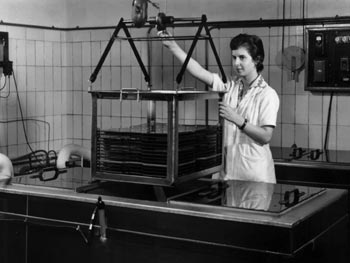
In October 1955, Powell, in collaboration with several Italian institutes, exposed emulsions in the Po Valley. To this end he and his team launched balloons that carried the photosensitive material to heights of about 30 km above sea level. Developing and studying the emulsions was tedious, and any help and financial support, however modest, was welcome. To secure such assistance Powell had proposed involving East European institutes and had travelled, with the silent consent of the British Foreign Office, to Moscow for consultations in September. As a result universities in Moscow (Dobrotin and Vernov) and Warsaw (Danysz) were to receive two of the five emulsion packages to be exposed, of which they eventually passed on plates to groups in Budapest, Prague, Krakow and Zeuthen.
Powell’s initiative had followed the first International Conference on the Peaceful Uses of Atomic Energy held in Geneva in August 1955, an event that facilitated a first wave of visits and collaborations across the Iron Curtain. Already during the conference, a number of East European and Soviet scientists took the opportunity to visit the CERN site. Yet the underlying political motive of the Soviet Union and the US was not so much to allow free collaboration, but rather to draw third countries onto their respective sides. Therefore, when the Soviet Union noticed that CERN had started to attract the interest and attention of some of its satellite states, it hastened to propose the foundation of an “Eastern Institute for Nuclear Research”. The proposal could not be refused by countries such as Poland, Hungary, Czechoslovakia or East Germany, but it must be noted that the Soviet Union added considerable weight to its initiative by offering to include the 10 GeV Synchrophasotron in the new institute, which became the most powerful accelerator in the world between 1957 and the advent of the PS. Eventually, in March 1956, 11 East European and Asian countries gathered in Moscow to found the Joint Institute for Nuclear Research (JINR), situated in Dubna.
After this political act, scientific interests regained ground, and in 1957, JINR proposed an exchange of scientists between CERN and Dubna. For several reasons it took two years before the administrative and political questions connected to such a collaboration were answered. All CERN member states agreed that from a scientific point of view such an exchange would be highly desirable; only the German delegation to CERN voiced the concern that the “Soviet-occupied zone” (i.e. East Germany) could attempt to send physicists to Geneva via Dubna in order to bring itself closer to international recognition. The first exchange started in the latter half of 1960. As the group that arrived at CERN consisted of three Russian theorists, the German reservation did not come to bear. However, a second group, which came to CERN in autumn 1961, included an East German by the name of Walter Zöllner. Had the position of the West German government changed?
The friendly relations between JINR and CERN, but also shortcomings in the political and scientific situation in Dubna, encouraged groups in Eastern Europe to seek direct admission to CERN. One of the first to do so was Marian Danysz of Poland. Lanius, in turn, received word from West Germany, where he had established various valuable contacts in previous years. In December 1960, Gottstein in Munich advised him to send a letter of interest to the newly formed Emulsion Experiments Committee if he wanted to participate in the exposure of emulsions at the PS. Lanius did this, and was immediately invited to the next meeting of the committee in February 1961.
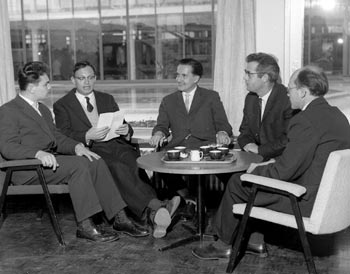
The man who answered Lanius’s request was Owen Lock, one of the two secretaries of the committee. Before sending his telegram to Zeuthen he had asked his former teacher and chairman of the committee, Powell, for his consent. Powell agreed without hesitation. In an exchange of letters after the meeting, Lock also mentioned to Lanius that he had spoken with Weisskopf, the director-general designate, about “the development of good contacts between CERN and groups of non-member state countries. He was much in favour of such contacts and asked us to do everything possible to foster them.” Three months later Lanius became one of three co-opted members of the committee. The two others were Cormac O’Ceallaigh of Ireland, and Danysz.
This was a considerable success for Lanius, whose new status was imperilled by the erection of the Berlin Wall, which began on 13 August 1961. For a few months travel to the West was almost impossible, and Lanius did not get permission to go to the meeting in October. Yet through the intercession of several government officials, he was allowed to travel to Geneva again in November 1961.
Eventually, the institute in Zeuthen did not take part in emulsion experiments; rather Lanius used his visits to CERN to ensure participation in a collaboration that carried out a bubble chamber experiment with 4 GeV pions. Again, it was his West German contacts – Gottstein in Munich and Martin Teucher in Hamburg – that helped him in this. Asked if it would be all right to pass exposed films to East Germany, Weisskopf replied that there was no objection at all on the part of CERN to give pictures to Dr Lanius in East Berlin.
Up to this point Weisskopf had preferred not to make this a political issue. This changed in 1962 when the “eminence grise” of East German physics, Robert Rompe, sent him a letter asking if it were possible to delegate two young scientists to CERN for a few months. This question tackled a central point of the organization’s policy, and thus Weisskopf had to put it before the CERN Council. The outcome was quite diplomatic: CERN could not, Weisskopf wrote to Rompe, accept requests from governments of non-member states, but only from individual institutes. “Any political motives are to be left completely out of consideration in this.” Unfortunately, the minutes of the relevant Council meeting are lost, but Weisskopf’s Solomonic statement indicates that the political body of CERN followed the director-general in his will not to let politics interfere in improving relations with the Eastern European physics community.
A year later, Lanius felt it was time to prepare the first long-term delegation of one of his scientists. Weisskopf’s consent was easily received; the problem was rather to “sell” the importance of the CERN collaboration to the appropriate political institutions in his country. Thus, when in June 1963 Lanius wrote to a government official that it was unknown if Weisskopf’s successor would be similarly interested in fostering the ties with the socialist countries, he certainly anticipated that this argument was a good way to get visa formalities dealt with more quickly. On 4 March the second highest party committee, the secretariat of the East German communist party, agreed to the delegation of Dr Arnold Meyer to CERN for one year. Interestingly, Meyer had already left for Geneva a few days earlier.
In the following years, Lanius succeeded in sending further staff members to CERN for longer stays, and with the establishment of a separate budget for visiting scientists from non-member states, these were usually even paid for by CERN funds.
The files in the CERN archives do not reflect why the West German government loosened its formerly rigid position towards the admission of East German physicists to CERN. The most obvious explanation seems to be that the crisis in German-German relations, which followed the erection of the Berlin Wall, brought about a subtle but decisive change. Bonn kept insisting that CERN should give no pretext to the East German government to use the international laboratory to legitimize its existence. However, it obviously wished to counter the terrible act of the East German government by demonstrating the advantages of a liberal, open science community.
The decision adopted in 1962 by CERN Council referred the matter back to the merely administrative level, and to the benevolence of the director-general. The trick was simply to keep contacts and exchanges as far away from politics as possible. By leaving it at this, East German high-energy physics could participate in various CERN experiments throughout the decades until 1990, when the two German states finally reunited.
Weisskopf lived to see his dream of the 1960s fulfilled in ample measure. CERN is now a truly international laboratory with almost all of the Eastern European countries as member states, and close contacts via co-operation agreements with effectively all of the remaining nations, in addition to organizations and countries such as UNESCO, Russia, Israel, Brazil and the US.
Would E O Lawrence recognize his laboratory today? Founded in 1931 by the University of California as a venue for Lawrence’s successive generations of ever-larger cyclotrons, today’s Lawrence Berkeley National Laboratory (LBNL) is a thriving multidisciplinary institution pursuing basic and applied research across a broad front, with many of the most exciting discoveries occurring at the boundaries between disciplines. Strength in nuclear and particle physics, the foundational sciences of LBNL, is evident in key contributions to the Asymmetric B-factory at SLAC; the development of silicon vertex detectors for CDF, BaBar and ATLAS; major roles in building STAR for the Relativistic Heavy Ion Collider at Brookhaven and the detector for the Sudbury Neutrino Observatory; and the discovery of the accelerating expansion of our universe – to mention a few prominent examples. Yet the activities in these areas comprise only 10% of LBNL’s programme.
Growth and diversification notwithstanding, Lawrence would recognize at least three features that continue to define today’s laboratory. First, the campus connection. The Radiation Laboratory (Rad Lab) was first established as an entity within UC Berkeley’s Physics Department, and though most of its activities migrated in the 1940s to a hillside site adjacent to the campus – and though it is now an institution independent of the campus – the link remains firm. More than 200 faculty scientists and well over 300 graduate students pursue research at the laboratory, and it extends well beyond its physical boundaries to encompass a host of research labs and facilities on the Berkeley campus. Disciplinary strength from the campus faculty – joined with the orientation of the laboratory to solve problems of scale, and the enthusiasm of students and postdocs – create an effervescent mixture that drives the laboratory.
A second constant has been the central role of major facilities. Times have changed, of course, and so has the nature of the facilities appropriate to our urban site. The big, single-purpose machines of particle physics have been replaced with state-of-the-art facilities of a different scale, which cater to broader, multidisciplinary audiences. The 88 inch Cyclotron remains a productive tool dedicated to the national nuclear science community, but the newer National Center for Electron Microscopy, National Energy Research Scientific Computing Center (NERSC) and Advanced Light Source (ALS) are emblematic of today’s multidisciplinary reach. The ALS in particular ties the past to the future; it resides under the dome of the dismantled cyclotron whose size forced the Rad Lab off campus and onto its current hillside site. Its design in the late 1980s relied on the expertise of accelerator physicists who traced their intellectual lineage to Lawrence’s hand-picked colleagues. But there ends the resemblance to machines of the past; the ALS is an electron storage ring, a source of synchrotron radiation serving chemists, surface and materials scientists, atomic physicists and structural biologists from around the country. Also notable, but without even a distant parallel from Lawrence’s era, NERSC is one of the largest massively parallel computers in the civilian sector, serving more than 2000 users nationally.
Third, and most important, Lawrence would recognize the enduring spirit of team science that gave birth to the oldest of our national laboratories in the first place. Most surprising to him, perhaps, would be the extension of this spirit to encompass much of modern biology. Indeed, the Human Genome Project was the brainchild of the Department of Energy, overseer and principal funding source for the national laboratories, in recognition that old-fashioned bench biology would never get the job done. Three labs, including Berkeley, joined to form the Joint Genome Institute in 1997, a paradigm of team science and a key producer of human genome sequence data. Today, the era of modern biology is well launched – an era characterized by interdisciplinary teamwork. Engineers contribute instrumentation and robotic automation to ongoing genome-sequencing efforts. Computational scientists work to make sense of an exploding quantity of genomic and structural data. And even physicists have turned to such biological challenges as how proteins fold to assume their unique active configurations.
Teamwork and disciplinary fuzziness are also evident at the “nano” frontier. The next national user facility at Berkeley Lab is likely to be the Molecular Foundry, 7500 m2 of research laboratories and advanced instrumentation designed to bring together biologists, materials scientists, chemists and physicists working at the nanoscale. Cross-fertilization in this area is already evident in such concepts as protein nanowires, DNA scaffolds to array nanostructures, nanocomposites for bone replacement, quantum dots and magnetic nanoparticles as biological probes, and nanomaterials for efficient solar cells.
The constancy of teamwork is perhaps the key point. Computational power and instrumental probes capable of molecular or atomic-level resolution and manipulation are now exposing the physical roots even of fields recently dominated by individual investigators at their workbenches. Thus, a laboratory born of accelerator physics and nurtured by one man’s concept of team science has evolved into a multidisciplinary institution and now, logically, a truly interdisciplinary one – a laboratory still recognized for its contributions to particle physics and nuclear science, but increasingly committed to uniting the biological and physical sciences at the frontiers of knowledge.
The first International Committee on Future Accelerators (ICFA) regional instrumentation school was held in June at the new instrumentation centre at Istanbul Technical University, Turkey, marking a new departure for this traditional series of schools. ICFA instrumentation schools are normally held every two years to provide education in the field of nuclear instrumentation for students of all nationalities, with the particular aim of giving students from developing countries first-hand access to information and equipment that may not be available in their home institutes. The last school was held in 2001 at South Africa’s national accelerator centre near Cape Town, and 2002 would usually have been an off-year.
A new ICFA initiative, however, aims to establish regional schools that will have the same aims as the main schools, but will use local teachers and target a regional audience. The Istanbul school’s 29 lecturers came from high-energy physics institutes around the world, selected by the ICFA instrumentation panel under the chairmanship of Albert-Heinrich Walenta of Siegen University, Germany. Laboratory demonstrators spent several months before the school preparing experiments on a range of subjects including medical imaging, high-precision spectroscopy and silicon detector applications, so that the 91 students could gain real hands-on experience. Many of the institutes that provided practical demonstrations have donated equipment so that the school can be repeated with local tutors for students from Turkey and surrounding countries.
The Istanbul school was sponsored by the Scientific and Technical Research Council of Turkey, the US National Science Foundation and Department of Energy, the University of Siegen, Fermilab and ICFA. A second regional school organized along similar lines will be held in November at the University of Michoacan in Mexico.
“Brilliant work by many people has resulted in an extraordinarily profound, precise description of the physical world,” concluded Frank Wilczek of MIT, in summarizing the 31st International Conference on High-Energy Physics in Amsterdam. “Because of this we can ask, and formulate plans to answer, some truly awesome questions.” Examples of new high-precision results presented at the conference included the measurements of the mass and width of the W boson at LEP and the Tevatron; the strong coupling constant at HERA and LEP; and CP violation in B mesons from the BaBar and Belle experiments, which Yossi Nir from the Weizmann Institute described in terms of the first successful precision test of the Kobayashi-Maskawa mechanism of CP violation. A full report of the conference will appear in next month’s issue of CERN Courier.
The 2002 edition of the Review of Particle Physics appears in the 1 July edition of Physical Review D (K Hagiwara et al. 2002 Phys. Rev. D66 010001). Full details and ordering information for the review and the accompanying particle physics booklet are available at http://pdg.lbl.gov/ and its mirror sites around the world.
The European Southern Observatory (ESO) celebrates its 40th anniversary on 5 October. Next month, Astrowatch will report on the proceedings and focus on the important contributions of ESO astronomy.
To provide the best experiences, we use technologies like cookies to store and/or access device information. Consenting to these technologies will allow us to process data such as browsing behavior or unique IDs on this site. Not consenting or withdrawing consent, may adversely affect certain features and functions.
Functional
Always active
The technical storage or access is strictly necessary for the legitimate purpose of enabling the use of a specific service explicitly requested by the subscriber or user, or for the sole purpose of carrying out the transmission of a communication over an electronic communications network.
Preferences
The technical storage or access is necessary for the legitimate purpose of storing preferences that are not requested by the subscriber or user.
Statistics
The technical storage or access that is used exclusively for statistical purposes.The technical storage or access that is used exclusively for anonymous statistical purposes. Without a subpoena, voluntary compliance on the part of your Internet Service Provider, or additional records from a third party, information stored or retrieved for this purpose alone cannot usually be used to identify you.
Marketing
The technical storage or access is required to create user profiles to send advertising, or to track the user on a website or across several websites for similar marketing purposes.