Comsol -leaderboard other pages

Topics

Giuseppe Cocconi and his love of the cosmos

CCnew9_05_09

In 1938 Giuseppe Cocconi published his first paper, “On the spectrum of cosmic radiation”. His last unpublished note of December 2005 bore the title “Arguments in favour of a personal interpretation of extra galactic cosmic rays”. No better indication could be given of his deep interest in astronomy and astrophysics, which lasted until he died in November 2008 aged 94.

The fields that he pioneered are now witnessing exciting new developments. Over the past six months they have reminded us of his many contributions to physics; his simple, direct way to conceive and perform experiments; and his unique way of presenting the subjects that he loved. In this article we describe some of these events and recall what Giuseppe contributed to the various fields.

Ultra-high-energy cosmic rays

CCtri5_06_09

Giuseppe’s interest in the cosmos began when he was in his teens. He would design sundials for friends’ villas around his home town of Como, observe the sky and read as much about it as he could. Late one evening, he happened to observe the fall of some Perseid meteors at an unexpected time. Noting quickly their number and time he transmitted the information to a fellow astronomer – probably the first of his observations to be “published”.

He entered the cosmic-ray scene in February 1938 when he was invited to Rome for six months by Edoardo Amaldi and started working with Enrico Fermi on the construction of a cloud chamber to study cosmic radiation. When Giuseppe returned to Milan he continued to pursue his new interest in cosmic rays, in particular extensive air showers, using Geiger counters to detect them. This was to be the focus of his research for the next 22 years.
CCtri1_06_09

At the time, Pierre Auger had just begun his intensive investigations of air showers. Today this work is honoured in the name of the Pierre Auger Observatory, which is taking the study of the highest-energy cosmic rays to new levels through the detection of very widespread showers. In 1938, electromagnetic showers were understood; mesotrons (muons) were known, but not their interactions; and pions were yet to be discovered. The existence of multiple-particle showers, spread over many square metres, was known – nothing, however, of their origins and little about their composition.

Giuseppe’s work concentrated on the study of the composition of such showers – as a function of their lateral extent, zenith angle, and altitude – in experiments both at sea level and at 2200 m above sea level, at Passo Sella in the Dolomites. Many of these experiments were conducted with Vanna Tongiorgi, who became his wife in 1945. The couple moved to Cornell in 1947 and continued their experiments (some in collaboration with Kenneth Greisen) at Echo Lake on Mt Evans, Colorado, as well as at sea level and at 1600 m water equivalent underground. This vast range of experiments, from 1939 to 1958, contributed considerably to the understanding of cosmic-ray showers: they are produced by the interaction of high-energy nuclei – chiefly protons – with the nuclei of the upper atmosphere.

Even before the discovery of the feature called the “ankle” in the energy spectrum of the primaries in 1960s, Giuseppe realized clearly that the charged primaries with an energy in excess of 1019 eV must come from extragalactic sources because their radius of curvature in the galactic magnetic field is of the same order as the size of our galaxy. In a talk at the 5th International Cosmic Ray Conference (ICRC) in Guanajuato, Mexico, in 1955, he said: “These particles are cosmic, indeed, because even the galaxy seems too small to contain them.”

Giuseppe maintained his great interest in the physics of cosmic rays throughout his life. When he was informed that the Pierre Auger Observatory had started to operate in 2002 and had detected high-energy showers, he replied by writing “Mi ringiovanisci di cinquant’anni rinfrescando i miei primi amori (You make me 50 years younger by reminding me of my first love)”. His first love was, of course, the physics of cosmic rays. Jim Cronin, founder and first spokesperson of the observatory, recalls receiving “a wonderful congratulatory letter following our publication on 28 November 2007”, when the collaboration announced the discovery that active galactic nuclei are the most likely candidates for the source of the ultra-high-energy cosmic rays arriving on Earth. The discovery confirmed Giuseppe’s hypothesis from 50 years earlier that the highest-energy component in cosmic rays is of extragalactic origin. The Pierre Auger Observatory was inaugurated a year later, on 14 November 2008, only a few days after he passed away. One of us (GM), a long-time collaborator of Giuseppe, gave a speech as the current spokesperson of the collaboration.

Gamma rays from the cosmos
CCtri2_06_09

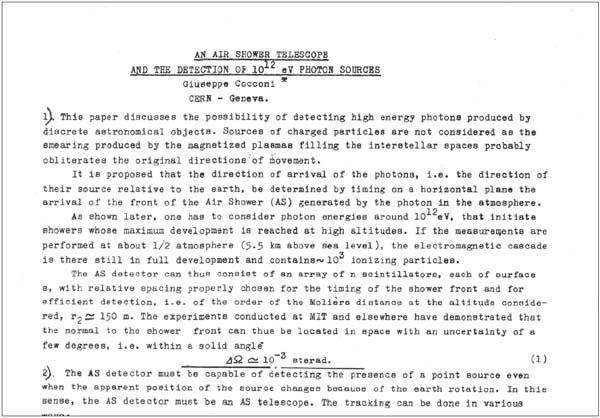
The vast majority of cosmic-ray showers originate with charged primary particles, mainly protons and nuclei not heavier than iron, but a small fraction arise from the interaction of high-energy gamma rays in the atmosphere. At the 1959 ICRC in Moscow, while on leave at CERN from Cornell, Giuseppe suggested the possibility of detecting cosmic sources of high-energy photons using coincidence techniques to separate unidirectional photons from the isotropic background. He proposed that the Crab Nebula might be a strong source of gamma-rays in the tera-electron-volt range. The paper motivated Aleksandr Chudakov of the Lebedev Institute to build a pioneering gamma-ray telescope in the Crimea, designed to detect the short bursts of Cherenkov light generated in the atmosphere by extensive air showers, which had been first observed by Bill Galbraith and John Jelley at Harwell in the UK in 1953. Finally, in 1989, the Whipple air-Cherenkov telescope in the US detected the Crab Nebula as, indeed, a source of tera-electron-volt gamma rays.

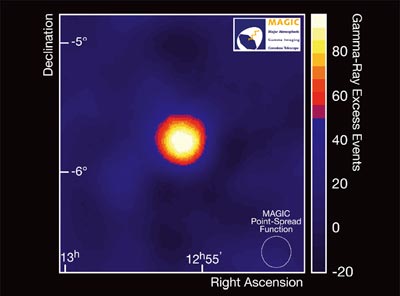
Second-generation imaging air-Cherenkov telescopes (IACTs) – HESS, MAGIC and VERITAS – now cover the northern and southern hemispheres, detecting point-like and extended sources with a typical angular resolution of an arcminute. This means that galactic sources, such as supernova remnants (SNRs), can be imaged with a resolution smaller than their angular extension. A recent result from the HESS telescopes in Namibia on the emission from the nearest active galactic nucleus, Centaurus A, could explain the small cluster of a few events of ultra-high-energy cosmic rays that the Pierre Auger Observatory has observed in this direction.

Giuseppe enjoyed the discovery last year by MAGIC of very high-energy gamma rays from the active nucleus of the 3C279 galaxy. This quasar is at a distance of roughly half the radius of the universe, which is more than twice the distance of objects previously observed in gamma rays. The MAGIC Collaboration thus concludes that the universe appears more transparent at cosmological distances than previously believed, precluding significant contributions from light other than from sources observed by current optical and infrared telescopes.

The new IACTs are now complementing observations by gamma-ray telescopes in space. Giuseppe was interested in the results from two recent missions: AGILE, launched on 23 April 2007; and Fermi, launched on 11 June 2008. These missions are collecting important data on galactic and extragalactic sources in the energy range 100 MeV–100 GeV and should provide a wealth of information for understanding the sources of particle acceleration. These include gamma-rays bursts (GRBs), which are the highest-energy phenomena occurring in the universe since the Big Bang. It is no surprise that Giuseppe developed a recent interest in GRBs, reinforced by frequent discussions on the subject with Alvaro de Rújula at CERN. In 2008 the Fermi mission detected the most energetic GRB so far observed, GRB 080916C, at a distance of 12.2 thousand million light-years.

It was his interest in gamma rays that sparked the work for which Giuseppe became most widely known outside particle and astrophysics, after he and Philip Morrison (visiting CERN from Cornell) published a two-page article in Nature on “Searching for interstellar communications”. Morrison recalled that: “One spring day in 1959, my ingenious friend Giuseppe Cocconi came into my office and posed an unlikely question: would not gamma rays, he asked, be the very medium of communication between stars?” Morrison agreed but suggested that they should consider the entire electromagnetic spectrum. In the resulting paper they argued for searching around the emission frequency at 1420 MHz, corresponding to the 21 cm line of neutral hydrogen. Giuseppe contacted Sir Bernard Lovell at Jodrell Bank in the UK, which had the largest radio telescope at the time, but Lovell was sceptical, and nothing came of the proposal to devote some time towards searching for an extraterrestrial signal. The first radio search for an alien signal was left to others, initially to the Ozma project, which was started independently by Frank Drake in 1959. Later, the Search for Extraterrestrial Intelligence (SETI) became a serious research topic, capturing the public’s imagination. Now, anyone with a computer can contribute to the search through SETI@home.

Rising cross-sections

The letter quoted above written to one of us (GM) in 2002 ends as follows: “We do not yet know from where the local cosmic rays are coming. Will I live long enough to know? Move fast and keep me informed … Meanwhile cross-sections and scatterings continue their quiet life, following the new machine with the square of the logarithm.” The last sentence refers, of course, to the LHC and to the proton–proton total cross-section experiments planned by the TOTEM Collaboration. Giuseppe’s second main physics interest, after cosmic rays, was proton–proton scattering. This began at CERN at the PS in 1961, continuing at Brookhaven with measurements at the highest momentum transfer so far and, from 1971, at the Intersecting Storage Rings (ISR).

In 1965 Giuseppe proposed with Bert Diddens and Alan Wetherell the use of the first extracted proton beam from the PS to measure elastic and inelastic cross-sections. The first experiment was on proton–proton scattering with large momentum-transfer. A few years earlier the same group had measured the shrinking of the forward elastic peak. This discovery gave an enormous boost to the phenomenology of Regge poles, which was fashionable at the time. The ensuing interpretation of the energy dependence of the total hadron–hadron cross-sections in terms of Pomeron exchange predicted an almost constant value of the cross-section with energy – a high-energy regime called “asymptopia”, which seemed to be round the corner and would be characterized by increasing interaction radii and decreasing central opacity.
CCtri4_06_09

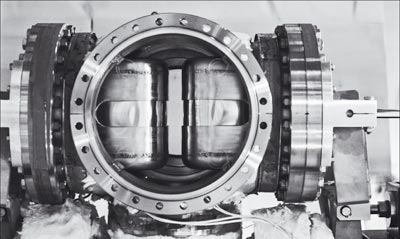
In 1970 Giuseppe’s group joined the Rome ISS group of two of us (UA and GM), who had proposed to the ISR Committee the measurement of elastic-scattering events through the detection of protons scattered only a few millimetres from a circulating-proton current of many amperes. The movable parts that contained the detectors were soon called “Roman pots”. Giuseppe very much enjoyed such a small and delicate experiment. He would spend long hours gluing together thin scintillators and measuring the position of the counters in the ISR reference frame with theodolites.

By applying the optical theorem, the CERN–Rome group found that the proton–proton cross-section rises with energy. The results were published together with a paper by the Pisa–Stony Brook collaboration, who had detected the same phenomenon by measuring the total interaction rate. In parallel, the movable pots were used to measure the interference between the Coulomb amplitude and the nuclear amplitude, which was discovered to be positive and rising with energy; a consequence – through dispersion relations – of the fact that the total cross-section continues to rise at collision energies that were not directly attainable at the ISR.

The ISR best-fit gave a total proton–proton cross-section that rose as the square of the logarithm of the energy, behaviour that was confirmed by later experiments with Roman pots at the SPS and the Tevatron. It was to this that Giuseppe was referring when he wrote of cross-sections “continuing their quiet life” while waiting for TOTEM. He may have been disappointed that most physicists did not seem to realize the importance of this discovery. In the 1960s, asymptopia dominated; essentially, nobody thought that the cross-sections could rise with energy. Even Vladimir Gribov made the hypothesis that they might be slowly decreasing, despite the observation at Serpukhov that the kaon–proton cross-section was increasing slightly. Some theoreticians – such as Marcel Froissart and André Martin, Nick Khuri and Tom Kinoshita – envisaged, from a purely mathematical point of view, that there could be a rising cross-section and tried to see the consequences. The only serious model was the one proposed by H Cheng and T T Wu in 1968.

Giuseppe was very interested in seeing what would be found in the new energy range and one of his last topics of conversation was the incident on 19 September that brought the commissioning of the LHC to a halt. He was clearly disappointed because he hoped to see proton–proton collisions at really high energies.

Unity in physics

Whenever he could Giuseppe would use accelerator data to illuminate an open problem in cosmic-ray physics, and vice versa. A typical example is the paper published with one of us (GB) in Nature in 1987 in which a relevant limit is put on the neutrino electric charge by calculating the dispersion of the time of flight of the neutrinos produced by SN1987a and detected by Kamiokande. He later applied a similar method to the photon pulses emitted by the millisecond pulsar PSR 1937+21 to get a limit on the photon’s electric charge.

His view of a basic unity in physical science, from galaxies to elementary particles, was clear in a series of lectures that he delivered at CERN more than 20 years ago. Following an invitation from André Martin, who at the time was chairperson of the Academic Training Committee, Giuseppe gave a course on “Correlations between high-energy physics and cosmology” in 1980. In these lectures he illustrated what he believed, at the time, were the important problems that could strengthen the relations between particle physics and cosmology – the field now known as astroparticle physics. The main themes of the past 20 years were all present: from the analysis of extragalactic emissions (with particular attention to the cosmic microwave background radiation) to the measurements of the deceleration parameter of the cosmic expansion. The series was so successful that the committee invited him to lecture again in 1984, this time on “A new branch of research: Astronomy of the most energetic gamma rays”. It, too, was a great success.

In a paper written to celebrate Edoardo Amaldi’s 60th birthday, Giuseppe expressed his continuing vision of science: “A common aim of people interested in science is that of improving the comprehension of phenomena that can be observed in the world.” Throughout his long life in science he made many contributions to improving this comprehension, through his particular approach to research. Many years after his retirement, he continued to impress younger colleagues at CERN, some of whom would hand him their recent papers for comments and advice, as Massimo Giovannini recalls. “His comments were always sharp and precise … for Giuseppe one aspect of research was the art of phrasing the complications of a phenomenon in simple numerical terms.” This was perhaps best summarized by Nobel laureate Sam Ting in his Nobel prize speech in 1976: “…I went to CERN as a Ford Foundation Fellow. There I had the good fortune to work with Giuseppe Cocconi at the Proton Synchrotron, and I learned a lot of physics from him. He always had a simple way of viewing a complicated problem, did experiments with great care and impressed me deeply.”

• The authors are grateful to Jack Steinberger and André Martin for contributions on Cocconi’s cosmic-ray experiments and on the meaning of the discovery of the rising proton–proton cross-section.
1959: the birth of the CERN Courier

CCann1_06_09

The story of CERN Courier all began about a year earlier when an advertisement in the Belgian press mentioned that a international research organization based in Geneva was going to start its own periodical. It was intended to be an internal public-relations gesture meant to inform its staff of what was going on within its premises. The organization’s acronym, CERN, meant little, to say nothing, to the average reader – this writer included. Nevertheless, some months later he found himself the new member of the organization’s diminutive Public Information Office. Here he was endowed with the task of initiating a publication that reflected the high motivation of a staff dedicated towards building and operating a couple of large “atom-smashing” accelerators.

The job was a typical public-relations venture aimed at fewer than 900 souls, which may nowadays seem mild and benign compared with the complexity of today’s communication assignments. Still, the task featured several aspects that had to be addressed by a newcomer in a foreign environment. This was to be carried out within an organization that, for all its culture of openness, was far from familiar with disseminating its doings in simple terms.

Questions first

Among the challenges to be resolved, the most prominent was: what support could be expected from management? Fortunately, this proved to be just an academic question because the project was the brainchild of Cornelis Bakker. As director-general, his ideas on the subject were not challenged by his administration.

Then, among the practical problems, one had to secure a budget, which meant coaxing the finance office (FO) into allocating the odd sum. In fact, the amount was small enough that it could not be found recently in the FO’s archives. Fortunately the princely figure of SFr 7200 a year has surfaced out of this writer’s notes from the time. No need then, to wonder why the inclusion of paying advertisements in an international house publication was also first invented at CERN. This “invention”, although not quite as resounding as that of Tim Berners-Lee 30 years later, certainly helped in the survival of the infant CERN Courier. It must be said, however, that the scheme did not prove easy to manage, leading to some controversies about what contents could or could not be accepted. Still, the proof of the idea’s soundness was in its longevity and that the model was soon borrowed by other organizations.

The format was a major topic that covered several questions such as title, contents and illustration, language, size, paper weight, periodicity and distribution. Considerations on the publication’s title led to some hesitation. The name CERN Reporter was initially suggested but finally our one-man, self-appointed committee stumbled on CERN Courier, a “nom de guerre” that was accepted by the powers that were. It has stuck so far.

Deciding what the contents would include was perhaps the easier part of the production chain to tackle. Indeed, the development phase of CERN, with its two large (for the time) contraptions called accelerators – a 600 MeV synchrocyclotron and the 25 GeV (initially 24.3 GeV at 12 kG) proton synchrotron – was ripe with a myriad of possible stories that were both scientific and mundane. Editorial content that involved policies was routinely submitted to the director-general, who was always readily available for advising or checking. The approval of “reported” articles was, of course, always obtained from the interviewees themselves. As for illustrations, financial considerations (restricted to between 25% and 30% of the budget) and printing state-of-the-art limited them to black and white.

Another question concerned which language (or languages) to use but the answer was obvious, because English and French were the two official languages of the organization – and still are. Initially, and for many years, two separate editions came out – Courrier CERN and CERN Courier. A decision by the CERN management in 2005 reduced the French edition of the current Courier to an embryo-sized state, thus jeopardizing the interest of a large segment of non-English-speaking staff and workers. Perhaps a bilingual formula could have been chosen to alleviate production costs.

Deciding what format, frequency and circulation should be adopted for the publication proved to be tricky questions, with answers that were, of course, set by costs. However, another factor soon came to light: the time available for editorial production. Indeed, the choice of a monthly versus weekly periodical suddenly became self-evident when, in view of his superior’s untimely death, the budding editor found himself responsible not only for his newborn publication but also for most of CERN’s other public relations involvements such as visits – be they general or by VIPs – and press contacts. The initial print run of 1000 copies allowed for a distribution to staff, who numbered 886 at the end of 1959. However, the interest generated from outside circles – the press, individuals and other organizations and labs – warranted that circulation quickly rose to 2000 copies by March 1960.

Meanwhile, the choice of a printer had arisen. Who could supply an 8-page, A4-size product printed on machine-finish paper? Three quotes were obtained from local printers and Chérix & Filanosa Cy in Nyon was selected. For distribution it was decided to have the publication sent through external post, primarily to the homes of staff members – with the hope of involving and interesting their respective families, whose influence on staff morale could not be underestimated.

The world premiere

CCann2_06_09

With all of those items mastered, the first issue appeared in mid-August 1959. It was a modest 8-page endeavour but even so it was well received by the “Cernois/Cernites” (yes, we coined the name that early!). Even outsiders responded favourably as witnessed among others by Albert Picot, a Geneva statesman doubling as an inveterate autodidact, and by a British member of CERN Council, H L Verry, who found it “excellent”.

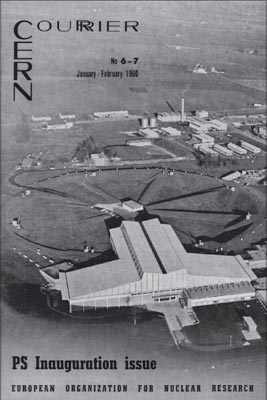
Over the years, the advent of the Weekly Bulletin in 1965 allowed the CERN Courier to switch from being the house publication to a scientific journal. The Courier thus became the ambassador of CERN and particle physics to a large community of knowledgeable specialists and inquisitive people. Indeed, the trend had been set when, soon after its inception, a special issue of the Courier was devoted entirely to the PS, coming out in time for the machine’s inauguration on 5 February 1960.

Today, reflecting on the perspective of the CERN Courier after 50 years, it is rewarding to see that the once-straightforward attempt at promoting subnuclear research survived the vagaries of time. Personally, the privilege of having worked at CERN half a century ago makes one proud to have been associated – albeit in a small way – in the building and strengthening of what was, as the then president of council, François de Rose, said, “the greatest venture in international co-operation ever undertaken in the world of science”.

CERN Courier Archives: 1959–2009

Beam in four months

CCcca1_06_09

The most important event that has yet happened at CERN is the subject of the press release issued on 25 November. This news, which came just as the first proofs of this issue were coming off the press, was important enough to warrant rearranging the lay-out.

On July 27th the 100 units forming the magnet of the proton synchrotron were energized for the first time … On 13 October, after the radio frequency accelerating system had come into operation, events moved fast. On the 15th, an accelerated beam was observed during a few milliseconds. On 22 October the energy reached 400 MeV.

It was 7.40 p.m. on 24 November when the beam was accelerated to approximately 24 GeV, twenty-four thousand million electronvolt, i.e. the maximum energy under normal operating conditions. The acceleration was steady; moreover, 90% of the proton beam trapped by the synchrotron reached maximum energy. According to the physicists, this proportion is surprisingly high.

On the morning of 25 November all of the members of the Proton Synchrotron Division gathered in the main auditorium. John B Adams, under whose leadership CERN’s gigantic project has been successfully carried out, gave an account of the operations of the last few days. Expressing his gratitude to all those who, at CERN, had played a part in constructing and bringing the accelerator into operation, he announced: “Nuclear physicists will soon be able to use the machine.”

Next, Professor C J Bakker, director-general of CERN, said: “Of course, such a machine could only be the result of team work. But the team could not have worked at full pitch without the impetus of a leader: this leadership was provided by J B Adams. It is with the greatest of pleasure that I convey to him and his division the warmest congratulations of the president of the Council.”

• November 1959 pp1, 6–7 (extract)


Quarks and aces come to CERN

In February, a number of events combined to provide the kind of excitement for the physicists that more than makes up for the long periods of monotony and to make the rest of the staff somewhat more aware than usual that interesting things were happening.

The clues to part of the excitement had, in fact, been available in the library for a week or two, in the form of “preprints” of two theoretical papers, one by M Gell-Mann, of the California Institute of Technology, US, and the other by G Zweig, of the same Institute but at present a visiting scientist at CERN. Gell-Mann’s paper was published in Physics Letters on 1 February; Zweig’s, the more detailed of the two, is expected to appear later in Physical Review. Produced independently, both papers put forward a possible new way of looking at the theory of “unitary symmetry” known as SU3…

…The new ideas had a basic simplicity that was very appealing, and difficulties that had to be explained away in the former versions of the theory did not seem to arise this time, yet the idea of fractionally charged particles seemed quite preposterous. Even those who had suggested it seemed to share the doubts; Gell-Mann called his new particles “quarks”, bringing together literature and science with a reference to Finnegans Wake! Zweig turned to the field of card games for inspiration, and called his particles “aces”, with their combinations “deuces” and “treys”.

• March 1964 pp26–27 (extract).


Inauguration of the PS

Prof. J Robert Oppenheimer, director, Institute for Advanced Study, Princeton, speaking on behalf of the American Physical Society and of the National Academy of Sciences: “We wish you a future of new discovery, of increased understanding of nature, as a bright example of that co-operation which is required of us, for our survival and for the flourishing of high culture.

…We salute the vision and devotion of those who have made possible the proton synchrotron. We recognize not only that it marks a technical achievement of high significance, but also that it is a symbol of the common enterprise of people from many nations to give to all mankind new understanding of the forces that shape our physical environment.

…May those that work at CERN in the years to come find there, in steadily growing knowledge of the wondrous order of nature and of nature’s laws, ever renewed challenge for the questing mind and ever deepening satisfaction for the questing spirit.”

• March 1960 pp6–12 (extract).


The first g-2 experiment

CCcca2_06_09

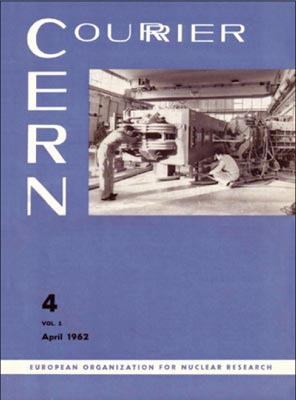
The issue for April 1962 featured the g-2 experiment, with a photo of the 6 m magnet appearing on the cover. The magnet was the heart of the first g-2 experiment, the aim of which was to measure accurately the anomalous magnetic moment, or g-factor, of the muon. This experiment was one of CERN’s outstanding contributions to physics and for many years was unique to the laboratory. Indeed, three generations of the experiment were performed at CERN during its first 25 years.

Happy 50th, CERN Courier

CC50y1_06_09

This August, the CERN Courier is 50 years old. That’s a good excuse to take stock of what’s changed and what’s stayed the same, so I found myself a copy of issue number 1 (reprinted in the following pages). With the Courier, it’s remarkable to see the ambition contained in that first edition, and to see how much the magazine has remained faithful to its founder Cornelis Bakker’s original vision.

Visually the CERN Courier has changed beyond recognition, as has the laboratory itself. The audience has changed too. Originally conceived as an internal newsletter, the Courier today addresses a global readership of more than 25,000. One thing that has stayed the same, however, is the magazine’s openness to the world. Issue number 1 reported not only on progress towards starting up the PS, but also carried news of the City of Hamburg’s purchase of a 40 MeV linac for a new lab known as the Deutsches Elektronen Synchrotron. Back then, the Courier felt the need to spell out the DESY acronym. There was also news from the US, including bold ambitions for linear accelerator developments at Stanford University. CERN’s mission of bringing nations together for peaceful collaboration is witnessed by a report from a trip to the USSR, precursor to a long and fruitful collaboration with the Joint Institute for Nuclear Research at Dubna.

The introduction on the first page of that first issue asks the question “what will the CERN Courier be?” It goes on to explain that it is there to “maintain the ideal of European co-operation and the team spirit which are essential to the achievement of our final aim: scientific research on an international scale”. Fifty years on, the world has changed immeasurably, but those words still ring true. Let’s look forward to the next 50 years!

Rolf Heuer, director-general.

To celebrate the 50th anniversary of the CERN Courier, in this issue we have reproduced the original edition in its entirety. Since then the magazine has covered numerous dramatic discoveries and breakthroughs at CERN and elsewhere. On pages 25–28 we give just a small selection of highlights.


Editor’s note

CCnew9_05_09

It is 400 years since Galileo Galilei looked at the heavens through a telescope and changed our view of the universe for ever. In celebration and to stimulate worldwide interest in astronomy and science, the International Astronomical Union (IAU) and UNESCO have initiated the International Year of Astronomy 2009 (IYA2009).

Particle and nuclear physics may deal with the smallest components of matter, but both have strong links with astronomy – the news story above is just one example. This issue of CERN Courier celebrates IYA2009 with this and several longer articles. Nobel laureate George Smoot considers the exciting times in modern cosmology (Cosmology’s golden age), while features on Borexino and MAGIC (Borexino homes in on neutrino oscillations and A MAGIC touch brings astronomical delights) look at two of the many experiments in the new field of astroparticle physics. Lastly, Viewpoint (Big Science, bigger outreach) considers a valuable message these “big” sciences offer to the public at large.

Big Science, bigger outreach

CCvie1_05_09

In 1609 Galileo Galilei made the first recorded telescope observations of the night sky – an event that is being celebrated all through 2009 in the International Year of Astronomy. He soon ran into trouble with the ecclesiastical authorities, partly because he used Italian instead of Latin in many of his letters and books, which gave people access to his new scientific interpretation of the world. Fortunately things have changed since then and today the scientific community and the relevant authorities on scientific policies share a general consensus on the importance of conveying to society the main results and general consequences of research.

Take high-energy physics as an example: over the past few years, dedicated working groups and projects have been set up to develop outreach activities. A good example of an annual activity of this kind, aimed at young students in physics and high-school teachers, is the EPPOG Masterclasses, which involves the participation of some 80 research institutes and universities across Europe. Recently several African and American institutes joined the project.

Permanent or travelling exhibitions are another interesting means for the “large-scale” dissemination of high-energy physics information, showing the public the still-unresolved mysteries of the universe and the gigantic equipment needed in particle accelerators (such as the LHC), detectors and computing systems (such as the Grid).

These valuable initiatives have been unquestionably successful but their real reach to society is limited because of the relatively reduced number of participants and the competition from other fields (scientific or not) already on the market, such as websites, video games and so on. We can think of taking advantage of these more loosely related activities such as the film adaptation of Dan Brown’s bestselling novel, Angels & Demons, currently in cinemas around the world. While artists should be allowed creative freedom and their view on science should not be rejected, they sometimes risk being somewhat misleading. I am not particularly enthusiastic about spreading the idea that a bomb made of antimatter stolen from CERN could destroy the Vatican (or any other city). Nonetheless, the association of physics (and more generally, science) with other social and cultural manifestations should be mutually beneficial and deserves closer attention.

Despite the universality of its principles, methodology and objectivity of results, the advancement of scientific knowledge has proved to be socially dependent, from the golden age of Pericles and the “invention” of democracy to the Renaissance and the rise of humanism together with the birth of modern science. Society itself may fuel scientific advancement in a particular direction: thermodynamics was driven by the need for building more efficient heat engines at the beginning of Industrial Revolution, thereby decisively contributing to the foundations of classical physics in the 19th century.

As an example from particle physics, CERN was created as a free forum for nuclear science in a Europe devastated by the Second World War “to encourage the formation of research laboratories in order to increase international scientific collaboration&ellip;” (as stated at the Fifth UNESCO Conference in Florence, 1950). The CERN convention was gradually ratified during 1953–54 by the 12 founding member states, while the Treaty of Rome that founded the European Union was signed in 1957. Science often goes ahead of society.

In this regard the Web – born at CERN – has represented a dramatic democratization of knowledge, teaching and information. Virtually free for everybody on the planet (wherever electricity is available), it was an almost direct consequence of the free circulation of scientific data among researchers. More generally, big scientific collaborations are genuine examples of worldwide co-operation between different scientists and technicians regardless of their age, gender, religious beliefs or nationality.

Social needs, in turn, continuously demand technological achievements that ultimately stem from fundamental research. Nuclear and particle physics, for instance, have provided crucial tools for medical diagnosis, from the discovery of X-rays to modern medical-imaging techniques.

Undoubtedly outreach must convey to society the excitement of scientific discovery and the importance of technological returns. However, in my opinion, the message from science should not stop there. Galileo’s Sidereus Nuncius (Sidereal Messenger) was heralding in 1610 not only the existence of mountains on the Moon or satellites around Jupiter, but also the dawn of a new epoch. Indeed, the social impact and controversy turned out to be much greater than with De revolutionibus by Nicolaus Copernicus (1543) or Johannes Kepler’s Astronomia nova (1609) – because it was easier to read.

We are currently witnessing crucial developments of society globally, from a more just economy to extended human rights, environmental protection and nature conservation. While keeping the possible misuse of scientific and technological applications in mind as a warning, we should ensure that the virtues that are traditionally associated with “Big Science”, historically entangled in the social progress of humanity, are praised as an example to counteract ignorance, obscurantism and fanaticism.

Happy 20th birthday, World Wide Web

In March 1989 Tim Berners-Lee, a physicist at CERN, handed a document entitled “Information management: a proposal” to his group leader Mike Sendall. “Vague, but exciting”, were the words that Sendall wrote on the proposal, allowing Berners-Lee to continue with the project. Both were unaware that it would evolve into one of the most important communication tools ever created.

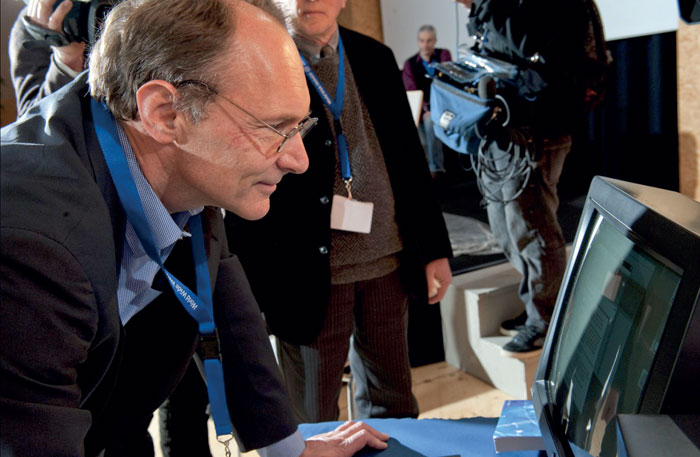
Berners-Lee returned to CERN on 13 March this year to celebrate the 20th anniversary of the birth of the World Wide Web. He was joined by several web pioneers, including Robert Cailliau and Jean-François Groff, who worked with Berners-Lee in the early days of the project, and Ben Segal, the person who brought the internet to CERN. In between reminiscing about life at CERN and the early years of the web, the four gave a demonstration of the first ever web browser running on the very same NeXT computer on which Berners-Lee wrote the original browser and server software.

The event was not only about the history of the web; it also included a short keynote speech from Berners-Lee, which was followed by a panel discussion on the future of the web. The panel members were contemporary experts who Berners-Lee believes are currently working with the web in an exciting way.

Berners-Lee’s original 1989 proposal showed how information could easily be transferred over the internet by using hypertext, the now familiar point-and-click system of navigating through information pages. The following year, Cailliau, a systems engineer, joined the project and soon became its number-one advocate.

The birth of the web
Berners-Lee’s idea was to bring together hypertext with the internet and personal computers, thereby having a single information network to help CERN physicists to share all of the computer-stored information not only at the laboratory but around the world. Hypertext would enable users to browse easily between documents on web pages that use links. Berners-Lee went on to produce a browser-editor with the goal of developing a tool to make a creative space to share and edit information and build a common hypertext. What should they call this new browser? “The Mine of Information”? “The Information Mesh”? When they settled on a name in May 1990 – before even the first piece of code had been written – it was Tim who suggested “the World Wide Web”, or “WWW”.

Development work began in earnest using NeXT computers delivered to CERN in September 1990. Info.cern.ch was the address of the world’s first web site and web server, which was running on one NeXT computer by Christmas of 1990. The first web-page address was http://info.cern.ch/hypertext/WWW/TheProject.html, which gave information about the WWW project. Visitors to the pages could learn more about hypertext, technical details for creating their own web page and an explanation on how to search the web for information.

Although the web began as a tool to aid particle physicists, today it is used in countless ways by the global community

To allow the web to extend, Berners-Lee’s team needed to distribute server and browser software. The NeXT systems, however, were far more advanced than the computers that many other people had at their disposal, so they set to work on a far less sophisticated piece of software for distribution. By the spring of 1991, testing was under way on a universal line-mode browser, created by Nicola Pellow, a technical student. The browser was designed to run on any computer or terminal and worked using a simple menu with numbers to provide the links. There was no mouse and no graphics, just plain text, but it allowed anyone with an internet connection to access the information on the web.

Servers began to appear in other institutions across Europe throughout 1991 and by December the first server outside the continent was installed in the US at the Stanford Linear Accelerator Center (SLAC). By November 1992 there were 26 servers in the world and by October 1993 the number had increased to more than 200 known web servers. In February 1993 the National Center for Supercomputing Applications (NCSA) at the University of Illinois at Urbana-Champaign released the first version of Mosaic, which made the web easily available to ordinary PC and Macintosh computers.

The rest, as they say, is history. Although the web began as a tool to aid particle physicists, today it is used in countless ways by the global community. Today the primary purpose of household computers is not to compute but “to go on the web”.

Berners-Lee left CERN in 1994 to run the World Wide Web Consortium (W3C) at the Massachusetts Institute of Technology and help to develop guidelines to ensure long-term growth of the web. So what predictions do Berners-Lee and the W3C have for the future of the web? What might it look like at the age of 30?

In his talk at the WWW@20 celebrations Berners-Lee outlined his hopes and expectations for the future: “There are currently roughly the same number of web pages as there are neurons in the human brain”. The difference, he went on to say, is that the number of web pages increases as the web grows older.

One important future development is the “Semantic Web” – a place where machines can do all of the tedious work. The concept is to create a web where machines can interpret pages like humans. It will be a “move from using a search engine to an answer engine,” explains Christian Bizer of the web-based system groups at Freie Universität Berlin. “When I search the web I don’t want to find documents, I want to find answers to my questions!” he says. If a search engine can understand a web page then it can pick out the exact answer to a question, rather than simply presenting you with a list of web pages.

As Berners-Lee put it: “The Semantic Web is a web of data. There is a lot of data that we all use every day, and it’s not part of the web. For example, I can see my bank statements on the web, and my photographs, and I can see my appointments in a calendar, but can I see my photos in a calendar to see what I was doing when I took them? Can I see bank-statement lines in a calendar? Why not? Because we don’t have a web of data. Because data is controlled by applications, and each application keeps it to itself.”

“Device independence” is a move towards a greater variety of equipment that can connect to the web. Only a few years ago, virtually the only way to access the web was through a PC or workstation. Now, mobile handsets, smart phones, PDAs, interactive television systems, voice-response systems, kiosks and even some domestic appliances can access the web.

The mobile web is one of the fastest-developing areas of web use. Already, more global web browsing is done on hand-held devices, like mobile phones, than on laptops. It is especially important in developing countries, where landlines and broadband are still rare. For example, African fishermen are using the web on old mobile phones to check the market price of fish to make sure that they arrive at the best port to sell their daily catch. The W3C is trying to create standards for browsing the web on phones and to encourage people to make the web more accessible to everyone in the world.

• The full-length webcast of the WWW@20 event is available at http://cdsweb.cern.ch/record/1167328?ln=en.

ATLAS makes a smooth changeover at the top

CCint1_04_09

If you think that it might be time to retire after more than 15 years of leading a constantly growing international collaboration and of constructing the world’s largest-volume particle detector, then Peter Jenni would disagree. Nicknamed the “father of ATLAS” by his colleagues, Jenni was there in 1992 when the ATLAS collaboration was born out of two early proto-collaborations. Initially co-spokesperson, he was spokesperson from 1995 until March 2009, when he handed over to Fabiola Gianotti. Now he looks forward to getting back to the main purpose of ATLAS: the physics.

“I am very proud to have helped the collaboration to construct ATLAS. Twenty years ago we could only imagine the experiment in our dreams and now it exists,” says Jenni. “I could lead the collaboration for so long because I was supported by very good ATLAS management teams where the right people, such as Fabiola Gianotti, Steinar Stapnes, Marzio Nessi and Markus Nordberg over the past five years, were in the right places.”

As with most particle-physics experiments, the management of one of the two largest detectors at the LHC is a challenge that changes during the lifetime of the collaboration: it starts with the design phase, continues with the R&D and the construction and ends up with the data-taking and analysis. “Over the years I tried to balance the emphasis given by the collaboration to the different aspects, that is, the hardware part (initially very strong), the data preparation, computing and software,” confirms Jenni.

Originally “only” about 800-strong, the ATLAS collaboration today has almost 3000 members from all over the world. “Keeping the groups united, inviting new groups to join the collaboration, negotiating to find the funds necessary for the construction… these have been among my key tasks during the past 15 years,” he explains. “My efforts also went into keeping groups whose technologies were not retained in the collaboration. Most of the time we managed to have everyone accept the best arguments, but unfortunately there were a few exceptions.”

With such a vast amount of experience, what does Jenni regard as the key element for managing a successful collaboration? “Talking with as many people as possible is a key factor,” he says. “ATLAS members, even the youngest ones, knew that I was available to discuss all problems or issues at any time. With the exception of the Christmas period, I have tried to reply to all e-mails within 24 hours. By the way, that is why my son thinks physics is crazy and decided to study microtechnologies instead!”

While Jenni’s functions have changed, his engagement with ATLAS definitely has not. “A significant part of my work remains the same, particularly in the relationships of ATLAS with the outside world. My main duty is to help obtain a smooth transition, which is facilitated by the fact that Fabiola was one of my two deputies – and I have enjoyed working with her before.” Indeed, having more freedom now, he can think of doing more than just sharing some management duties. “In the medium term I have the ambition to study physics with ATLAS,” he says. “I am already ‘selling’ LHC physics in many public talks but I would like to contribute some real physics myself.”

The ATLAS collaboration is clearly appreciative of its father’s dedication over the years. At the party organized in Jenni’s honour on 19 February, the Collaboration Board (CB) chairs directed by Katie McAlpine – the author and singer of the LHC rap – sang: “We’ve been CB chairs/and we’re here to affirm /Peter’s time was more an era/ than just a few terms/ leading ATLAS to completion/ like no one else can/ Of course he did it/ Jenni is the man.”

The changeover

Now with the construction complete, it’s Gianotti’s turn to fill the spokesperson’s many shoes, after Jenni passed her the leadership baton in March. At the very beginning she joined LHC R&D activities and then the proto-ATLAS collaboration in 1990. “Heading such an ambitious scientific project, and a large and geographically distributed collaboration, is certainly a big honour, responsibility and challenge,” she says. “However, I have inherited a very healthy situation from Peter: the experiment has already shown that it performs well, the collaboration is united and strong, and we can continue to prepare for the first collisions without any major worry.”

Indeed, activity on ATLAS hasn’t stopped since the LHC incident on 19 September 2008. “The first single beams that circulated in the machine before the incident were very useful for studying several aspects of the experiment, such as the timing of the trigger system. After the LHC stopped, we decided to focus on some repairs to the detector and on the optimization of the software and computing infrastructure, of the data distribution chain, and of the event simulation and reconstruction,” confirms Gianotti.

An effective distribution of data to the worldwide community is a key point for the new ATLAS spokesperson because she thinks that this is the prime requisite for a motivated and successful collaboration. “The crucial challenge for me is to make sure that each single member of ATLAS can participate effectively and successfully in the adventure that this experiment represents. ATLAS has a very exciting future ahead, with many possible discoveries that will change the landscape of high-energy physics. I consider it very important that each individual in this experiment can actively participate in the data analysis, regardless of whether he or she can physically be at CERN or not. In particular, we have to make sure the younger generations are nurtured in a stimulating environment, share the excitement for the wonderful physics opportunities and are given visibility and recognition,” she explains.

While the sharing of data relies mostly on the performance of the Grid and the software and computing infrastructure put in place by the collaboration, it cannot occur without the other side of the coin – effective and open communication in real-time with all members of the collaboration. “The solution we have envisaged is a web space where ATLAS people will be able to find updated ‘on-line’ news about the machine, the experiment, the physics results, anything that is relevant to ATLAS’ life,” explains Gianotti.

Asked about the potential “competition” among many people working on the same analysis, she says: “I think it is healthy that people from different groups work on the same topic with a collaborative and constructive spirit. This will allow us to produce solid, verified and fully understood results.” Regarding the relationship with CMS, the other general-purpose LHC experiment, she says, “There is a healthy competition, but also collaboration. For instance, ATLAS and CMS have set up a common group that works on statistics tools and how to combine the information coming from both experiments.”

The excitement about the restart of the LHC is growing again at CERN and around the world, and the experiments all have their own plans and strategies. “Before undertaking the path towards discoveries, we will need to understand the performance of our detector in all details and ‘rediscover’ the Standard Model,” says Gianotti. “I believe that we will be ready to start investigating new territories when we have observed top-quark production. Indeed, final states arising from the production of top quark–antiquark pairs contain most of the interesting physics objects, from leptons to missing energy and light- and heavy-flavour jets. In addition, this process is the main background to many searches for new physics. Being able to reconstruct these events successfully, and perform our first measurements of the top production cross-section and mass, will give us a clear indication that we are ready for discoveries.”

When does Gianotti expect ATLAS to release the first results? “It all depends on the performance of the machine – and its luminosity and energy profile. If everything goes well we expect to have first results, mainly addressing the detector performance, for the winter physics conferences early in 2010; then we hope to present the first interesting physics results at the summer conferences of the same year.”

Franco Bonaudi: wise spirit of the early CERN

CCbon1_03_09

Franco Bonaudi, who died on 21 December 2008, was one of the first electronic engineers to work for CERN. In July 1952, two years before the organization was formally created, he was sent from Rome by Edoardo Amaldi to Liverpool, to learn about synchrocyclotrons. Speaking only some basic English, he arrived in Liverpool with Frank Krienen, assistant to Cornelis Bakker, the newly appointed team leader for the 600 MeV Synchrocyclotron (SC) that was to be CERN’s first accelerator facility. Bonaudi got on so well with his hosts and his new boss that, as well as perfecting his English and learning about accelerators, he acquired valuable training in dealing with industrial firms, as Krienen had earlier worked in the research laboratories of Philips at Hilversum. Krienen and Bonaudi left Liverpool when the CERN staff started to gather close to the Geneva site where the new European laboratory was to be built. Most of the SC team were housed in barracks at Geneva’s airport, but Bonaudi, with Joop Vermeulen, was soon dispatched to a hut on the Meyrin site to oversee the construction of the accelerator. The staff of the infant CERN numbered around 150 at that time and were of many different nationalities and nearly all strangers to the region. Communicating in poor English, they worked together as family and friends – the first CERN telephone directory contained private numbers. Bonaudi said of that period: “We made real friendships”. At the same time, they rapidly completed their professional task and the first beam circulated in the SC on 1 August 1957.

Meanwhile, a much larger undertaking was progressing well, with the construction of the 24 GeV PS. Before the machine saw its own first beam on 24 November 1959, Bonaudi had become leader of the Apparatus Layout Group and so taken his first steps from machine builder towards experimental support, which was to become his greatest strength. Theo Kröwerath, a charismatic figure who progressed from driving a tank to being responsible for CERN’s Transport Group, still remembers the trips to suppliers that he made with Bonaudi at that time and believes that he owes his professional success to those, like Bonaudi, whose approach epitomized the spirit of the early CERN. This ethos was grounded in a tremendous respect for the work of all members of a team, whether they were engineers, physicists, technicians, mechanics or crane drivers, with – an added speciality of CERN – the more nationalities in a group, the better.

CCbon2_03_09

In 1963, with construction of the SLAC 20 GeV linear accelerator just beginning, Bonaudi went to California for a year to help to design the experimental areas. He shared an office with David Coward, who remembers that Bonaudi’s experience proved invaluable. He made significant contributions to designs of radiation shielding, for both personnel and experimental equipment, and to the design of the distribution of utilities throughout the SLAC experimental areas. He also actively participated in the physics meetings that helped to establish the nascent SLAC experimental physics programme. At the same time, Bonaudi made friends for life and helped to initiate a successful series of exchanges of physicists and engineers.

Back at CERN, Bonaudi was asked to design the experimental areas for the Intersecting Storage Rings (ISR), based on the space and facilities indicated by some initial ideas for experiments. Construction began in 1966, with CERN’s Meyrin site extended into France to accommodate the machine. Bonaudi, as head of the ISR General Layout Group, was responsible for building the halls for experiments and the tunnels for the whole machine.

The group included its own civil engineering section and later had sections for both electrical cabling and power distribution. Taking over responsibility for the control and signal cabling – invariably underestimated for physics and machines alike – revealed another insight into Bonaudi’s way of solving problems. When cabling teams fell behind schedule, he would invite all of the members of the group to join him on a cable-pulling weekend. Such was his popularity that it was always a huge success, with everybody knowing that “the boss” would be working harder than anyone, on the worst part of the task. His unspoken motto was: “Let’s get the job done as simply and quietly as possible.”

From the ISR to LEP

With the ISR construction satisfactorily completed and first beams colliding in January 1971, Bonaudi converted his construction team into the ISR Experimental Support Group, which offered extensive assistance to the many and diverse experiments. It is worth noting that, while it was necessary to excavate a few pits to create more space under the collision regions for some of the later, larger experiments, the halls proved to be correctly dimensioned, though some of the built-in flexibility, such as demountable machine piers, was never needed.

CCbon3_03_09

Both John Adams and Léon Van Hove, as executive and research directors-general respectively, recognized Bonaudi’s success at the ISR. As a result, he became a much appreciated member of the directorate with responsibility for the entire CERN accelerator complex. His mandate included the period when the SPS was converted into a proton–antiproton collider, following the proposal by Carlo Rubbia. Bonaudi chaired the committee of accelerator experts that defined the final layout of the whole project and chose stochastic cooling, invented by Simon van der Meer at the ISR, to produce the low-emittance, 3.5 GeV beams of antiprotons. This latter choice, together with the decision to accelerate the antiproton beam in the PS before injection into the SPS – an essential point that Bonaudi recognized and finally decided – was the key to the success of the Nobel Prize-winning project.

After completing his three-year term in the directorate, Bonaudi was delighted to be invited to join the UA2 experiment and work hands on with particle detectors, namely the central calorimeter, from testing to data taking. Pierre Darriulat, who was the spokesman of the UA2 experiment, recalls that Bonaudi’s colleagues on UA2 liked him a lot, and respected him highly for his wisdom. On many occasions where a difficult decision had to be made, his advice was taken and followed. In Darriulat’s words: “He visibly enjoyed the exciting research atmosphere and the contacts with younger colleagues, and his relations with the members of the collaboration were of a very close and profound friendship.” Bonaudi’s wisdom was soon required again by CERN for the LEP project. He was invited to join the project management team with responsibility for the experimental areas. The four, deep, underground areas in CERN’s first project to be classified as an Installation Nucléaire de Base by the French government required a new approach to safety throughout the construction and installation phase. Bonaudi took these aspects seriously and the low accident rates during the project show how successful he was.

The director-general of the time, Herwig Schopper, notes that Bonaudi’s responsibilities for the infrastructure of the LEP experiments – which involved getting the complicated detectors and all of the necessary services installed in time – represented a formidable challenge. It was made particularly tricky by the changing time-schedule that arose from difficulties with the LEP tunnelling. “If the experiments were ready to take data at the turn on of the machine, it was in great part thanks to the untiring efforts of Franco,” says Schopper. Both Schopper and Emilio Picasso, the LEP project leader, stress the importance of Bonaudi’s presence on the LEP Management Board. “Franco’s regular contributions at meetings were always appreciated for the competence of his intervention, and we always followed his suggestions,” Picasso recalls. “I also greatly appreciated that, thanks to him and his group, the collaboration with the physics community was smooth and successful.”

CCbon4_03_09

Once the LEP beams were successfully circulating in 1989, Bonaudi’s attention returned to particle detectors, this time taking on the task of scientific secretary of the Detector Research and Development Committee, which advised the director-general on the numerous detector R&D projects being launched for the future high-luminosity LHC. While some might see this as a routine task, for Bonaudi it was an opportunity to work with friends and colleagues from the detector community, as he prepared for retirement from CERN in March 1993.

Retirement meant more time to devote to helping people in other ways, and Bonaudi immediately became involved in training and education, in particular in his home city of Turin, where he was appointed a member of the Academy of Science in 1991. He gave lectures on detectors and accelerators at both Turin University and the Politecnico, where he had completed his own studies in 1950. Even before retiring, in 1988 he became an active member of the scientific committee of the Associazione Sviluppo Piemonte (ASP: the Association for the Development of Piedmont), taking care of the relationship between ASP and CERN.

Throughout the 1990s, Bonaudi gave seminars and lectures to complement courses at Turin University on accelerators and detectors. In 1991 he was one of the founding organizers of the successful school for Italian young researchers and doctoral students, Giornate di studio dei Rivelatori. Emilio Chiavassa, professor of physics at Turin, recalls: “Franco was not only a promoter and organizer of the school, but actively participated every year with enthusiasm and competence.” Now in its XIX edition, the school held on 10–13 February was subtitled “Scuola F Bonaudi” in his memory. In addition, he gave many courses on accelerator physics and detectors at the Politecnico, where he was, says Piero Quarati, “a reference point for all the engineering students who went to work at CERN for their laurea or PhD”. Elsewhere, Bonaudi was sought after as a member of several advisory committees, notably at the INFN-Frascati Laboratory.

Andrew Hutton, director of the Accelerator Division at the US Thomas Jefferson Laboratory, who chaired the DAΦNE Machine Advisory Committee, particularly appreciated his experience at the interface between the accelerator builders and the experimenters. “While Franco had the technical understanding of both groups,” says Hutton, “more importantly, he had the personality to be able to bridge the mutual incomprehension between them. Franco always aimed to help everyone see the best way forward and to understand the point of view of the other side, so everyone left his meetings with the sense that they had gained something – a rare talent.” Bonaudi organized a series of meetings between the DAΦNE accelerator builders and the future experimenters, bringing to the Machine Advisory Committee the results of the consensus that he had engineered. “In the committee he was always low key, adding a word here and there to facilitate the discussions,” remembers Hutton. “What I came to realize only later was that he was aware that I had never chaired a committee like this before, and he was steering me away from pitfalls and mistakes without anyone, including me, being aware of it.”

This ability was also appreciated outside Italy. For a number of years Bonaudi was invited ad personam to be a member of more than one advisory committee for the European Southern Observatory (ESO), and he also chaired a working group. Per Olof Lindblad, who was the representative of the ESO Council on another group, recalls that Bonaudi made particularly constructive contributions concerning the roles of a project scientist and the need for a project manager for the Very Large Telescope.

Bonaudi’s concern for others was always evident, whether driving the elderly and needy for a Swiss charitable organization or actively participating in the Middle East Scientific Collaboration (MESC). Eliezer Rabinovici, professor of physics at the Racah Institute of Physics, the Hebrew University, Jerusalem, recalls: “The group of scientists and interested people that gathered under the umbrella of the MESC was very colourful. We prepared together the activities highlighted by the very special meetings in Dahab and Turin.” In particular, the meeting in Turin was the first occasion when the idea of the Synchrotron-light for Experimental Science and Applications in the Middle East – SESAME, the synchrotron radiation laboratory created under the auspices of UNESCO in Jordan – was introduced to a middle-eastern audience.

Franco Bonaudi’s contribution to CERN is obvious and inestimable. He helped to shape the successful, world-renowned research organization that we know today. His influence went far beyond the boundaries of CERN and, no matter where, all of his colleagues remember him as a great friend, the wisest of men, who will be sorely missed. It was a privilege to know and work with him.

Knowledge transfer: from creation to innovation

There have been many studies of economic returns to member states from purchasing. The most recent report to be published clearly indicates that European industry values highly the benefits that result from technological learning. In the LHC experiments almost half of the participants are from non-member states of CERN and many contracts are placed in nonaffiliated countries. Thus the spillover of technological learning from high-energy physics now extends worldwide. However, CERN’s potential may well be underutilized when it comes to industry.

It could probably enhance the spectrum of its technological impact by paying more attention to the management of technological learning and by fostering more-explicit exchanges of new technological developments outside the needs of just the purchasing sphere. This is particularly important today because developments in high energy physics can take up to 20 years before their impact is felt outside the field.

The basis for the study

A recent study by Helsinki University and CERN, entitled Knowledge Creation and Management in the Five LHC Experiments at CERN: Implications for Technology Innovation and Transfer, has made a detailed analysis of knowledge transfer in the context of the LHC experiments ALICE, ATLAS, CMS, LHCb and TOTEM. This both conceptualizes and confirms with quantitative data CERN’s role in the creation of knowledge.

Each year hundreds of young people join CERN as students, fellows, associates or staff members taking up their first employment. This continuous flow of people – who come to CERN, are trained by working with CERN’s experts and then return to their home countries – provides a useful example of knowledge and technology transfer through people. The new study provides evidence that the social process of participation in meetings, the acquisition of skills in different areas and the development of interests through interaction with colleagues are key elements in the learning process.

The study analysed 291 replies to a questionnaire handed out during LHC-experiment collaboration meetings, which asked questions concerning individual perception and assessment of knowledge acquisition and transfer, as well as the means used to communicate knowledge. The respondents consisted of CERN users (79%) and staff members (21%), with 80% of them physicists. Some 70% of respondents were younger than 40.

CCktt1_03_09

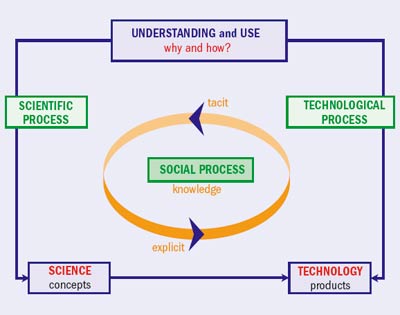
Figure 1 illustrates the model for the pattern of knowledge acquisition and transfer on which the study was based. It is important to underline that within this scheme, and indeed in general, only individuals can create knowledge, which expands from tacit-to-explicit knowledge through social interaction. Tacit knowledge is essentially individual and cannot necessarily be communicated and shared in a systematic or logical manner. It has to be converted into words or numbers that are understood easily enough to be shared and become explicit. However, not all individual tacit knowledge becomes explicit. Explicit knowledge is something more formal and systematic. It can be expressed in words and numbers, is easily communicated and shared in the form of written and spoken language, hard data, scientific formulae and codified procedures.

For organizations to be effective in the process of knowledge transfer they must provide a context in which individuals can hold both formal and informal discussions to steer new ideas as well as foster collective learning. Economists and sociologists see this knowledge generation as being particularly important because it underlies societal and technological innovation and is of relevance to the industrial and wider world. One of CERN’s core assets is individual and organizational learning – the latter being the social process where a group of people collectively enhance their capacities to produce an outcome. The creation of organizational knowledge amplifies the knowledge that is created by individuals who spread it at the group level through dialogue, discussion, experience sharing or observation.

Learning benefits

CCktt2_03_09

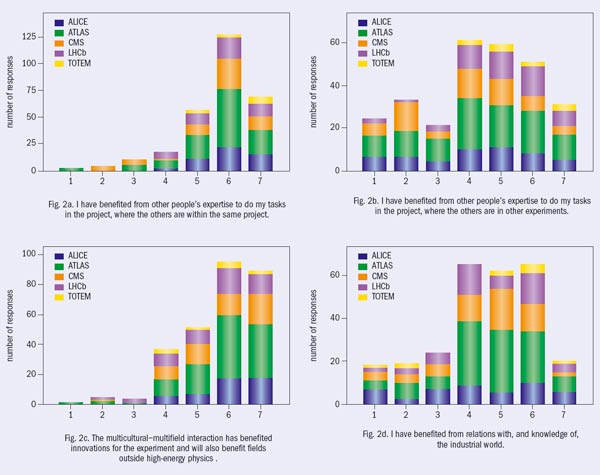
Large experiments, such as those at the LHC, form the hub of an institutional and organizational network. The interactions between individuals – both among teams and within teams that share a common interest – as well as between experiments, are important routes for knowledge transfer, according to the study (figures 2a and 2b).

Such interactions are enabled by the organizational structure of the collaboration and by the frequent use of modern communication tools, such as e-mail and websites. Furthermore, the results indicate that knowledge acquisition in the multicultural environment plays a mediating role in the interaction between social capital constructs (social interaction, relationship quality and network ties) and outcomes related to competitive advantage (invention development and technological distinctiveness). In short, the fertile environment of the LHC experiments fosters a dynamic, interactive and simultaneous exchange of knowledge both inside and outside the collaborations (figure 2c).

Individuals can create and expand knowledge through the social process, which also involves industry at various phases of project development. The study was unable to assess the interaction with industry completely because it was carried out towards the end of the installation phase, when R&D was over and most of the important, challenging orders had already been placed. There was, therefore, not much need of follow-up and contact with industry. Nevertheless, the respondents generally agreed that they had benefited from relationships with and knowledge of industry (figure 2d). It was clear that only a select group of people had been in charge of relations with industry; the scarcity of data (for the reasons explained previously) did not allow their profile to be characterized.

The study also assessed the personal outcomes of knowledge transfer, which were found to be substantial in all of the experiments. These were evaluated in terms of the widening of scientific interests and knowledge; the expansion of social networks; and the enhancement of scientific skills at many different levels (planning, data analysis, paper writing) with the acquisition of new technical and technological skills. These positive outcomes span a wide age-range, demonstrating a benefit to both young and experienced physicists. The domains of useful technological learning ranged from physics to detector technologies, electronics, information technologies and management. The many innovative developments can be categorized as follows: 41% in detector technologies; 33% in computing; 25% in electronics: and 1% in other areas.

The results also show the importance of management in large physics collaborations (94 of 291 respondents had a management and co-ordination role in addition to their physics or engineering functions). Almost 50% of the respondents underlined the positive effect on their career of having performed managerial functions.

The development of these personal skills, which fall into four categories (learning technical skills, learning scientific skills, improving social networking, and increasing employment potential in the labour market) should be managed, used and catalysed to target individual development to improve opportunities in the labour market for individuals working in high-energy-physics environments. The researchers who responded to the study also showed a certain amount of entrepreneurship, with a positive approach towards going to work for companies or towards creating their own company (˜6%). Of those who would consider going to work for a company, about half are below the age of 55. These results should encourage further research studies into how best to foster learning and innovation of “big science” enterprises.

bright-rec iop pub iop-science physcis connect