As a grad student at Columbia around 1950, I had the rare opportunity of meeting Albert Einstein. We were instructed to sit on a bench that would intersect Einstein’s path to lunch at his Princeton home. A fellow student and I sprang up when Einstein came by, accompanied by his assistant who asked if he would like to meet some students.
“Yah,” the professor said and addressed my colleague, “Vot are you studying?”
“I’m doing a thesis on quantum theory.”
“Ach!” said Einstein, “A vaste of time!” He turned to me: “And vot are you doing?”
I was more confident: “I’m studying experimentally the properties of pions.”
“Pions, pions! Ach, vee don’t understand de electron! Vy bother mit pions? Vell, good luck boys!”
So, in less than 30 seconds, the Great Physicist had demolished two of the brightest – and best-looking – young physics students. But we were on cloud nine. We had met the greatest scientist who ever lived!
Some years before this memorable event, I had recently been discharged from the US army, having been drafted three years earlier to help General Eisenhower with a problem he had in Europe. It was called World War II. Our troop ship docked at the Battery and, having had a successful poker-driven ocean crossing, I taxied to Columbia University and registered as a physics grad student for the fall semester.
I was filled with enthusiasm to resume my study of physics but also exhausted by three years of mostly mindless military service. Things quickly degenerated towards disaster. I had indeed forgotten simple equations, how to study and, most crucially, forgotten the joy that I had found in my college physics classes. Full-time, intense study did not seem to help. I failed the crucial qualifying exam, twice. I was ready to quit.
I had been assigned a lab on the 10th floor of the Pupin Physics Building where I had been given the job of making a cloud chamber work. This was a 12-inch cylinder of glass and plastic filled with N2 alcohol vapour. This device can render the path of a nuclear particle visible since the “wake” of the intruder particle produces a trail of disturbed atoms. This encourages alcohol vapour to coalesce from vapour to drops of liquid. A flash photograph then captures a record of the nuclear particle – much like the vapour trail of a jet airliner. But as much as I tried, my cloud chamber produced no tracks, only a cloud of white smoke. This failure, added to the failed tests and joyless lectures, brought me misery and to the point of quitting. I decided to take the PhD qualifying test once more and took two weeks to study.
After the test (I felt only slightly better), I returned to the lab to find a janitor mopping the wire-strewn floor and singing an Italian operatic tune. As I entered, the guy shouted something in Italian and offered a handshake.
I said, “Okay, but be careful. The wires are carrying a high current and your wet mop may produce a short circuit.” He stared cluelessly and, in total disgust, I walked out in the hall to wait for the guy to leave.
In the hall, there was the department chairman. “We have a new, dumb janitor, huh?” I said.
“New? No, wait! You mean the guy in your lab?”
“Yeah.”
“That’s no janitor, dummy, that’s Professor Gilberto Bernardini, a world-famous Italian cosmic-ray expert whom I invited to spend a year here to help you in your research.”
“Oh, my God!” I gasped and rushed in to repair my damage.
Over time, Bernardini and I learnt how to communicate and I began to watch Gilberto. There was his habit of entering a dark room, pushing the light switch: light. Pushing it again: off. On, off five or six times. Each time there would be a loud “fantastico!” Why? He seemed to have this remarkable sense of wonder about simple things.
Then the cloud chamber.
Gilberto: “Wat’s dat wire in de middle?”
Leon: “That’s carrying the radioactive source.”
Gilberto: “Tayk id oud.”
Leon: “It makes tracks.”
Gilberto: “Tayk id oud.”
After a few minutes, tracks appeared. My source had been far too radioactive for the chamber! Now we had a success.
But this was only the beginning of my learning from Bernardini. Next, we constructed a kind of Geiger counter. We machined, soldered, polished, flushed with clean argon gas and watched the oscilloscope. Soon we had tracks.
Bernardini went nuts. “Izza counting!” he screamed. Half of my height and weight, he lifted me and danced me round the lab to the music of Bernardini’s sense of wonder. He explained: “Dese particles, cosmic ray, come from billions of miles away to say buonjourno to us on de tenth floor of Pupin Physics Building. Izza beautiful! So little particle, so long da trip.”
So, through Bernardini, I began to recover my love of physics, of searching for simplicity and elegance of how the world works. I recovered academically and eventually graduated to a professorship.
Gilberto warned me about what happened next. Some years into my Columbia career, I was on the night shift of an experiment. It was 3 a.m.; I had checked that all the apparatus was working when one computer began to beep out of tune. I tuned it to scan the data and – there it was, the most spectacularly beautiful track I had ever seen. What I was seeing was a muon entering from a thin metal plate and passing through 10 more plates. A muon! The only explanation was that a neutrino had generated this track – a muon neutrino! Its implications dawned on me – two neutrinos – this would change how we taught physics; this would make headlines from Scotland to Argentina… My palms were wet, my breathing became difficult. I tested everything, but only confirmed the discovery. At 4 a.m. I telephoned Gilberto, who was then visiting in Illinois. His wonderful “fantastico!” had been Americanized and when I told him what we had found, out came “Holy shit!”
Gilberto knew everybody. Fermi, Amaldi, Bohr, Schrödinger, … Einstein. At a meeting (after receiving my PhD), we heard Einstein describe relativity: “scarcely anyone who truly understands this theory can escape its magic.”
As Keats said: “Truth is Beauty and Beauty Truth. That is all ye know of Earth.” And Plato: “The soul is awestruck and shudders at the sight of the beautiful.”
Some years later, Gilberto and my wife, Ellen, were in Sweden to help me receive the Nobel prize. Gilberto’s “fantastico!” was ubiquitous. And I said to Ellen, “Did you ever in your wildest dreams imagine that we would be in Sweden dining with the king and queen?” Ellen, as ever sceptical, said, “You were never in my wildest dreams!”
Science has always been and will continue to be a mixture of 96% frustration and (if lucky) 4% elation. But having a Bernardini to restore that crucial sense of wonder sure helps.
In the mid-1930s, physics was heavily attacked by the most famous Italian philosopher of the time, who called physicists “vile mechanicians”. It was on this occasion that Enrico Fermi told his young fellows: “Don’t worry. Physics is the queen of all sciences.”
We physicists cannot remain silent and keep ignoring the cultural debate on “Intelligent Design”. Other scientists discuss what their observations allow them to say about Intelligent Design: practically all fields of science are present in the debate. Physics, however, is absent. But it is the only science that studies the fundamental logic of nature. Therefore we are the most involved in the hypothesis of Intelligent Design. The purpose of this note is to review, briefly, the scientific basis for this hypothesis, which I describe more fully elsewhere (Zichichi 2008).
Mankind has always been concerned with this extremely important problem but it is only in the past four centuries that, following Galileo Galilei, an impressive series of experimental discoveries has allowed us to reach the conclusion that a fundamental logic of nature exists. The point I would like to make clear is that all other fields of scientific research are not in a position to study this logic for the very simple reason that, no matter what the field may be, the root of our existence has to be investigated in order to overcome the basic difficulty in dealing with the foundations of this logic.
For example, whether we study the evolution of inert matter or the evolution of matter endowed with the property of life, at the very end we discover that all forms of matter – with or without life – have to obey the same fundamental logic. No matter what form of evolution we attempt to study, the key issue is that if a fundamental logic exists, then nature – including its evolution – has to obey this logic.
For the universe to be as it is now, three basic transitions are needed and each must obey the logic of nature.
The field of research where this logic is studied is physics. For the universe to be as it is now, endowed with the properties of life and reason, three basic transitions are needed and each must obey the logic of nature.
The first of these transitions is the Big Bang, which describes how the universe – consisting of inert matter – came into being from a vacuum and subsequently evolved. I call this Big Bang 1. There are many problems to be studied for Big Bang 1 to be rigorously described on the basis of first-level “Galilean Science”; that is, through experimentally reproducible results that can be described with the rigour of mathematical formalism. Although Big Bang 1 and the subsequent cosmic evolution are a one-off event, every step must obey the fundamental logic discovered with first-level Galilean science; this logic is based on three fundamental forces (electroweak, strong and gravitational) and three families of elementary particles.
The second transition in the universe, Big Bang 2, deals with the problem of how to describe the transition from inert matter to living matter. So far no one has been able to solve this problem but once it is solved, the evolution of all different forms of living matter must be studied and referred to the fundamental logic of nature before the evolution of the living matter can be classified as Galilean science.
Then, Big Bang 3 – the transition from living matter without reason to living matter endowed with reason – must be described. It is thanks to Big Bang 3 that we are able to discuss Big Bang 2 and Big Bang 1. The fact that out of the innumerable number of different forms of living matter, there is only one endowed with the property called reason, needs to be examined in detail.
Once all of these problems have been solved we will be able to say that we have a scientific description of the theory of evolution. The present status of our culture takes for granted that the Darwinistic approach to the theory of evolution is scientifically founded. As I have outlined above, this is not the case.
The basic message coming from science is that a fundamental logic exists that governs all forms of inert and living matter. If a fundamental logic exists then the author of this logic must exist too. The atheistic culture claims that the author is not there, but no one is able to prove, using either theoretical logic (mathematics) or experimental logic (science), that this is the case. Those who claim that this logic does not exist are in conflict with science and its most advanced achievements.
Four centuries ago Galilei discovered why it is not enough to be “smart” in order to understand the logic of nature. He pointed out that experiments need to be implemented if we want to know the correct answers to our questions. To express a question in a rigorous way – as is the case, for example, for a supersymmetric world, using a relativistic quantum string-like theory – is not enough; experimental proof of its existence is needed. The reason is that the fellow who created the world is smarter than all of us, no one excluded.
This is at present all that physics can say on the author of Intelligent Design. The hypothesis of which, to the extent that it is based on the argument that this fundamental logic exists, proposes nothing other than that there is an intelligence that designed such logic. And this is in perfect agreement with the most advanced frontier of our field of activity which was defined by Fermi as “the queen of all sciences”.
• A Zichichi 2008 Rigorous Logic in the Theory of Evolution, presented at the Plenary Session on “Scientific Insights into the Evolution of the Universe and of Life”. Proceedings of the Pontifical Academy of Sciences (Vatican, 31 October – 4 November 2008), pp101-178.
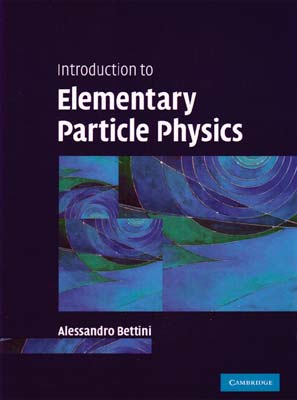
I was a graduate student when the first version of Introduction to High Energy Physics by Donald H Perkins appeared; the slim one with the plain grey cover, written before the discovery of charm. This book was a welcome sight to many of us “youngsters” because it contained a wealth of concentrated information so valuable to the budding experimentalist. The book began with a nice discussion of the passage of radiation through matter in a form that was not as dated or cumbersome as the two must-read classics by Bruno Rossi and Emilio Segrè. It was also sufficiently detailed to call upon as a ready reference for an upcoming oral exam. Since then, perhaps in part because I have lived through all subsequent discoveries in particle physics, I have not been impressed with any of the rather few particle-physics texts that have appeared; not, at least, until the publication of Alessandro Bettini’s Introduction to Elementary Particle Physics. Like Perkins before him, Bettini’s expertise as a careful, methodical and experienced experimentalist shines brightly throughout the text. The reader is never left in any doubt that physics is an experimental science.
The choice of topics and the level of detail are excellent and the explanations are clear. The book is rich in physics content, especially its emphasis of important concepts, including relativistic kinematics, the wave nature of particles and quantization of fields. Some of my favourite examples are determination of the spin and parity of the pion and why this is important, the Lamb shift in quantum electrodynamics and the discussion of αs and the proton mass. The author is an expert in neutrino physics and this comes through in the material clearly. He does a good job of emphasizing the physics at an appropriate level without getting absorbed in the mathematics of Feynman diagrams, which belongs in a course on field theory. The text is sprinkled with a few historic gems, such as the story of Marty Block asking Dick Feynman who asked C-N Yang at the 1956 Rochester conference: “Is it possible to think that parity is not conserved?” The book is extremely well written, topically informative and easy to read – but best of all it is full of physics.
Bettini’s text is suited for a one-semester introductory course in particle physics; the one I have taught at Boston University is attended by a mixture of beginning graduate students and advanced undergraduates. The text (431 pages) is organized into 10 chapters, which can be easily covered in 16 weeks. Each chapter contains a number of accessible and readable references, as well as a generous number of end-of-chapter problems. A complete instructors’ solution manual is also available in electronic form.
After this well deserved praise, do I have any complaints? Sure, but they are relatively minor: the use of dashed lines instead of wavy lines for W and Z propagators; time not going “up” in Feynman diagrams; and &Lamda;QCD written unconventionally as &lamda;QCD. I would personally have introduced several aspects of the weak interaction much earlier, such as parity violation in beta decay, helicity in pion decay, and the discovery of the τ. I would also have covered deep-inelastic scattering before QCD and included more details on hadron jets, but these are largely personal choices. I was somewhat disappointed that a large number of complete solutions to end-of-chapter problems are available in the text, limiting what I could assign from the book as homework. The bottom line, however, is that as a particle physicist I enjoyed Bettini’s book three times – not unlike a fine wine: the first time when admiring its contents; the second when reading it; and a third time when teaching from it. Bravo, Sandro!
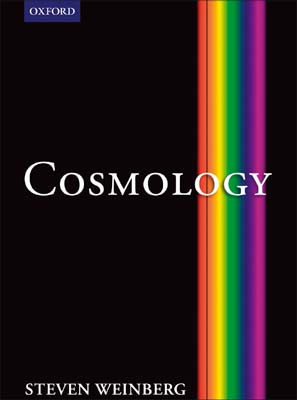
Those who think that a book on cosmology and gravitation overlaps with science fiction should probably not even try to flick through the latest treatise by Nobel laureate Steven Weinberg. Conversely, those who believe that gravitation, astrophysics and cosmology could offer fertile playgrounds for the analytical methods of theoretical physics will find in Cosmology a stimulating source of intellectual excitement. Finally, those who think that the physics of the early universe is a mere mathematical game with no observational relevance will also be disappointed, because observations play a central role in the book’s nearly 600 pages.
On the 30th anniversary of the discovery of neutral currents by Gargamelle, a round-table discussion took place in the main auditorium of CERN. Various Nobel laureates, including Weinberg, were present. Some of the questions from the audience addressed the worries of the particle-physics community, always anxious about novelty and excitement; some of Weinberg’s replies in that discussion reverberate in the preface of this book: “Today cosmology offers the excitement that particle physicists had experienced in the 1960s and 1970s”.
The treatise consists of 10 chapters organized around the three observational pillars of the standard cosmological paradigm, i.e. the physics of the cosmic microwave background (CMB), the analysis of supernova light-curves and the observations of large-scale structures. The first four chapters, following a didactical trail, cover the basic aspects of the standard paradigm, often dubbed the &Lamda;CDM scenario, where &Lamda; stands for the dark-energy component and CDM refers to the cold dark-matter component. The remaining six chapters cover, with more theoretical emphasis, the description (chapter 5), the evolution (chapter 6), the effects (chapters 7, 8 and 9) and the normalization (chapter 10) of inhomogeneities in Friedmann–Robertson–Walker universes.
Readers will not find the usual pretty pictures and maps that often decorate cosmology books. Instead the author adapts the style of theoretical particle physics to cosmology and gravitation: solid, analytical calculations and semi-analytical estimates are preferred over fully numerical results. Analytical methods are implicitly viewed as a mandatory step for an effective comprehension of natural phenomena. The latter aspect is evident in the discussion of the anisotropies in the CMB, where the author exploits some of his own results that have appeared over the past five years in Physical Review. The book contains eight assorted appendices, which are useful for both newcomers and experienced readers. The notations used by the author are unusual at times but may quickly become a standard.
While the relevant technical aspects of the presentation can only be fully appreciated after a careful reading, a clear message emerges with vigour after the first reading: atomic physics, nuclear physics, field theory, high-energy physics and general relativity all come together in the description of our universe. In other words, Cosmology provides a vivid example of the basic unity of physics, which is something to bear in mind during the decades to come.
by Graham Farmelo, Faber. Hardback ISBN 9780571222780, £22.50.
On 13 November 1995 the president of the Royal Society, Sir Michael Atiyah, unveiled a plaque in the nave of Westminster Abbey in London commemorating the life of Paul Dirac. Speaking at the ceremony, Stephen Hawking summed up Dirac’s life: “Dirac has done more than anyone this century, with the exception of Einstein, to advance physics and change our picture of the universe.” The plaque depicted Dirac’s equation in a compact relativistic form and the man himself would no doubt have appreciated its terse style. At the time of his passing in 1984 Dirac ranked among the greatest physicists of all time. With the publication of Graham Farmelo’s book The Strangest Man, we have an account of Dirac’s life that is a tour de force.
Dirac’s Swiss father, Charles, taught French at the Merchant Venturers’ Technical College in Bristol and married Florence Holten in 1899. They had three children, Beatrice, Reginald (who committed suicide in 1924) and Paul, who was born on 8 August 1902 – the same year that Einstein started work at the patent office in Bern and Planck initiated the quantum theory of matter and light. This was the start of the modern era in which classical physics was revolutionized by two great advances – special relativity and quantum mechanics.
Dirac’s early years were overshadowed by his domineering father and a browbeaten, needy mother. “I never knew love nor affection when I was a child,” Dirac once remarked. Certainly, his difficult childhood seems to have deeply influenced the development of his “strange” character. Farmelo also explores another explanation for Dirac’s introversion, literality, rigid behaviour patterns and egocentricity: perhaps Dirac, like his father, was autistic. Nonetheless, in his thirties, Dirac met and married Manci Balázs, an extroverted and passionate woman – his “antiparticle”. Farmelo’s candid and sympathetic account of the couple’s improbable life together makes compelling reading. Yet, according to Farmelo, Dirac only cried once in his life, and that was when Einstein died.
Dirac’s seminal contribution to physics was the unification of Heisenberg and Schrödinger’s quantum mechanics with Einstein’s special relativity, which allowed him to write down a relativistic equation for the electron – the famous Dirac equation. With it he revealed the concept of spin and predicted the existence of antiparticles, subsequently discovered in studies of cosmic rays. In 1933, aged 31, he shared the Nobel prize with Schrödinger.
Dirac was also the creator of quantum electrodynamics and one of the chief architects of quantum-field theory. For him, the beauty of mathematical reasoning and physical argument were instruments for discovery that, if used fearlessly, would lead to unexpected but valid conclusions. Perhaps the single contribution that best illustrates Dirac’s courage is his work on the magnetic monopole, the existence of which would explain the quantization of electric charge. The monopole’s story is still far from complete and more revelations could be forthcoming.
Farmelo succeeds brilliantly in unifying all of the shadowy and contradictory perspectives of Dirac’s character with his life as a scientific genius, and creates a complete picture of the man who played a leading role in the growth of modern physics. The book reveals how Dirac, although aloof and unworldly, was deeply affected by the turbulent and troubled history of the 20th century.
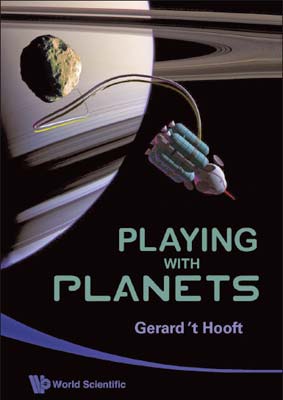
At the Rijksmuseum in Amsterdam they currently offer an audio tour by the artist Jeroen Krabbé. In a lovely, soft-accented English he recounts his personal experiences with the various exhibits over the many years that he has been visiting the museum – from the view as a child, a painter and actor, a parent and as a grand parent. His insights are both moving as well as fascinating and deep.
While reading Playing with Planets, I heard a similar voice in my head. Starting with personal experiences, Gerard ‘t Hooft lets his mind wander over the various aspects of life, speculating on the affects of new scientific developments on our lives in the future. The topics that he covers include flying kites (What is the highest you can possibly let a kite fly?), rising sea levels from global warming, modern dike construction and building floating cities on the ocean or in the sky. The topic that really grips his mind, however, seems to be space travel and colonization (mainly by robots), as well as ultimately moving around asteroids or even planets. (The latter is the origin of the title of the book.)
It is clearly important to ‘t Hooft that each of these speculations is firmly based on current scientific knowledge. They can thus be a motivation or even inspiration for actual scientific progress or technical developments. On this point he seems to take issue with the unfounded, wild speculations that he perceives to feature in most, if not all of, science-fiction writing. I am not much of a sci-fi buff myself, but to me such novels were always more of an enquiry into human nature – by placing people in unusual circumstances – rather than a real attempt at predicting or driving scientific progress. All the same, the author is well aware that he is stretching the limits of the possible when considering astro-mechanics.
My only criticism of his space-related speculations is that I believe they are severely constrained by the limited resources on Earth. When we realize that we have hit Peak Oil (or the equivalent for other materials), any interest in space travel and colonization will be put on the back burner. Nevertheless, I much enjoyed wandering the world, following this enquiring and original mind.
The music was enchanting. The Dysons stopped before the door, not wanting to break the magic of the superbly played Bach prelude. When the last cadence had rung down they walked in to find Edward Teller sitting at the piano apologizing that he was just passing by and that the instrument begged to be played while he was waiting for them to return home. It was a remarkable journey that had brought Teller, best known as the father of the hydrogen bomb, to the Dysons’ home at Berkeley. Even more remarkably, his journey was not without parallels.
If we were to trace back the wordlines of influential physicists to their birth, we would find several of them to converge in a tiny domain of space–time: Budapest, fin de siècle. In fact, those of Theodore von Kármán, Leo Szilard, Eugene Wigner, John von Neumann and Edward Teller never really diverged significantly. These compatriots all went from Hungary to Germany and eventually to the US. And they all changed the history of the 20th century.
Kármán Tódor, Szilárd Leó, Wigner Jeno˝, Neumann János and Edward Teller (Teller Ede in Hungarian) were all born to well-to-do Jewish families living within walking distance of each other. They all completed their studies in Germany, learning from masters such as Ludwig Prandtl, Albert Einstein and Werner Heisenberg. Eventually they found refuge in the US from the menace of anti-Semitism, where they all joined the defence effort: von Kármán helped establish the modern US Air Force and founded the Jet Propulsion Laboratory; Szilard patented the nuclear chain reaction and triggered the Manhattan Project, through a letter signed by Einstein to President Roosevelt; Wigner played an instrumental role in building the first nuclear reactor; von Neumann did important calculations for the Manhattan Project and described the principle of modern computer architecture; and Teller drove the creation of thermonuclear weapons.
In his book, first published in 2006 and now available in paperback, István Hargittai follows the lives of these five “Martians of Science”, and asks the inevitable questions: What was behind this remarkable surge of talent? Was it just a random rogue wave? What made these broadly educated, brilliant men seek the ultimate weapon? How did they see the role of scientists in society?
The author makes a critical assessment in the final chapter of their roles and weightings in science in comparison with other scientists of the 20th century. He even ventures to answer the intriguing counterfactual: What if they had stayed in Hungary?
That these five represented just the crest of a bigger wave is borne out in George Marx’s Voice of the Martians (Akademiai Kiado 2001). In addition to them, Marx presents personalities such as Dennis Gabor, the inventor of hologram; Arthur Koestler, the writer whose Darkness at Noon can be compared in its influence to George Orwell’s 1984; Paul Erdõs, the vagabond mathematician of “Erdõs number 0”; Val Telegdi, whose experiments explored the nature of weak interactions and who spent much of his time at CERN until his death a few years ago; and many others. From this long list of portraits a broader picture emerges, that of the fate of the central-European scientist in the 20th century.
Both authors draw on existing biographies but they supplement them with a wealth of detail from their personal conversations with their subjects or their respective colleagues, friends and family. Even so, with their scope and emphasis on exploring trends and connections, these books cannot do justice to each individual. They are instead excellent introductions that invite, and provide a guide to, further reading.
In the mid-1970s quantum chromodynamics (QCD) was generally referred to as the “candidate” theory of the strong interactions. It was known to be asymptotically free and was the only plausible field-theoretical framework for accommodating the (approximate) scaling seen in deep-inelastic scattering, as well as having some qualitative success in fitting the emerging pattern of scaling violations. Moreover, QCD could be used to explain qualitatively the emerging spectrum of charmonia and had some semi-quantitative successes in calculating their decays. No theorist seriously doubted the existence of the gluon but direct proof of its existence, a “smoking gluon”, remained elusive.
In parallel, jet physics was an emerging topic. Statistical evidence was found for two-jet events in low-energy electron–positron annihilation into hadrons at SPEAR at SLAC, but large transverse-momentum jets had not yet been observed at the Intersecting Storage Rings, CERN’s pioneering proton–proton collider. There, it was known that the transverse-momentum spectrum of individual hadron production had a tail above the exponential fall-off seen in earlier experiments, but the shape of the spectrum did not agree with naive predictions that were based on the hard scattering of quarks and gluons, so rival theories – such as the constituent-interchange model – were touted.
The three-jet idea
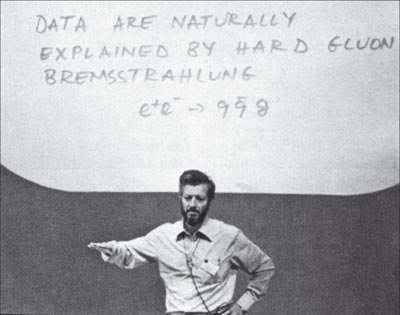
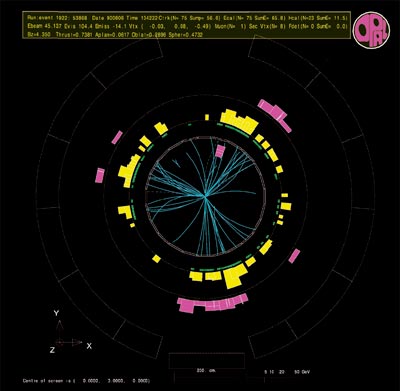
This was the context in 1976 when I was walking back over the bridge from the CERN cafeteria to my office one day. As I turned the corner by the library, it occurred to me that the simplest experimental situation to search directly for the gluon would be through production via bremsstrahlung in electron–positron annihilation. Two higher-energy collider projects were in preparation at the time, PETRA at DESY and PEP at SLAC, and I thought that they should have sufficient energy to observe clear-cut three-jet events. My theoretical friends Graham Ross, Mary Gaillard and I then proceeded to calculate the gluon bremsstrahlung process in QCD, demonstrating how it would manifest itself via jet broadening and the appearance of three-jet events featuring the long-sought “smoking gluon”. We also contrasted the predictions of QCD with a hypothetical theory based on scalar gluons.
I was already in contact with experimentalists at DESY, particularly my friend the late Bjørn Wiik, who shared my enthusiasm about the three-jet idea. Soon after Mary, Graham and I had published our paper, I made a trip to DESY to give a seminar about it. The reception from the DESY theorists of that time was one of scepticism, even hostility, and I faced fierce questioning on why the short-distance structure of QCD should survive the hadronization process. My reply was that hadronization was expected to be a soft process involving small exchanges of momenta and that two-jet events had already been seen at SPEAR. At the suggestion of Bjørn Wiik, I also went to Günter Wolf’s office to present the three-jet idea: he listened much more politely than the theorists.
The second paper on three-jet events was published in 1977 by Tom Degrand, Jack Ng and Henry Tye, who contrasted the QCD prediction with that of the constituent-interchange model. Then, in 1978, George Sterman and Steve Weinberg published an influential paper showing how jet cross-sections could be defined rigorously in QCD with a careful treatment of infrared and collinear singularities. In our 1976 paper we had contented ourselves with showing that these were unimportant in the three-jet kinematic region of interest to us. Sterman and Weinberg opened the way to a systematic study of variables describing jet broadening and multi-jet events, which generated an avalanche of subsequent theoretical papers. In particular, Alvaro De Rújula, Emmanuel Floratos, Mary Gaillard and I wrote a paper showing how “antenna patterns” of gluon radiation could be calculated in QCD and used to extract statistical evidence for gluon radiation, even if individual three-jet events could not be distinguished.
Meanwhile, the PETRA collider was being readied for high-energy data-taking with its four detectors, TASSO, JADE, PLUTO and Mark J. I maintained regular contact with Bjørn Wiik, one of the leaders of the TASSO collaboration, as he came frequently to CERN around that time for various committee meetings. I was working with him to advocate the physics of electron–proton colliders. He told me that Sau Lan Wu had joined the TASSO experiment and that he had proposed that she prepare a three-jet analysis for the collaboration. She and Gus Zobernig wrote a paper describing an algorithm for distinguishing three-jet events, which appeared in early 1979.
Proof at last
During the second half of 1978 and the first half of 1979, the machine crews at DESY were systematically increasing the collision energy of PETRA. The first three-jet news came in June 1979 at the time of a neutrino conference in Bergen. The weekend before that meeting I was staying with Bjørn Wiik at his father’s house beside a fjord, when Sau Lan Wu arrived over the hills bearing printouts of the first three-jet event. Bjørn included the event in his talk at the conference and I also mentioned it in mine. I remember Don Perkins asking me whether one event was enough to prove the existence of the gluon: my tongue-in-cheek response was that it was difficult to believe in eight gluons on the strength of a single event!
The next outing for three-jet events was at the European Physical Society conference in Geneva in July. Three members of the TASSO collaboration, Roger Cashmore, Paul Söding and Günter Wolf, spoke at the meeting and presented several clear three-jet events. The hunt for gluons was looking good!
The public announcement of the gluon discovery came at the Lepton/Photon Symposium held at Fermilab in August 1979. All four PETRA experiments showed evidence: Sam Ting’s Mark J collaboration presented an analysis of antenna patterns; while JADE and PLUTO followed TASSO in presenting evidence for jet broadening and three-jet events. One three-jet event was presented at a press conference and a journalist asked which jet was the gluon. He was told that the smart money was on the left-hand one (or was it the right?). Refereed publications by the four collaborations soon appeared and the gluon finally joined the Pantheon of established particles as the first gauge boson to be discovered after the photon.
An important question remained: was the gluon a vector particle, as predicted by QCD, or was it a scalar boson? In 1978 my friend Inga Karliner and I wrote a paper that proposed a method for distinguishing the two possibilities, based on our intuition about the nature of gluon bremsstrahlung. This was used in 1980 by the TASSO collaboration to prove that the gluon was indeed a vector particle, a result that was confirmed by the other experiments at PETRA in various ways.
Gluon-jet studies have developed into a precision technique for testing QCD. One-loop corrections to three-jet cross-sections were calculated by Keith Ellis, Douglas Ross and Tony Terrano in 1980 and used, particularly by the LEP collaborations, to measure the strong coupling and its running with energy. The latter also used four-jet events to verify the QCD predictions for the three-gluon coupling, a crucial consequence of the non-Abelian nature of QCD.
In the words of Mary Hopkin’s song in 1968, “those were the days, my friends”. A small group of theoretical friends saw how to discover the gluon and promptly shared the idea with some experimental friends, who then seized the opportunity and the rest – as the saying goes – is history. To my mind, it is a textbook example of how theorists and experimentalists, working together, can advance knowledge. The LHC experiments will be a less intimate environment but let us hope that strong interactions between theorists and experimentalists will again lead to discoveries for the textbooks!
In 1938 Giuseppe Cocconi published his first paper, “On the spectrum of cosmic radiation”. His last unpublished note of December 2005 bore the title “Arguments in favour of a personal interpretation of extra galactic cosmic rays”. No better indication could be given of his deep interest in astronomy and astrophysics, which lasted until he died in November 2008 aged 94.
The fields that he pioneered are now witnessing exciting new developments. Over the past six months they have reminded us of his many contributions to physics; his simple, direct way to conceive and perform experiments; and his unique way of presenting the subjects that he loved. In this article we describe some of these events and recall what Giuseppe contributed to the various fields.
Giuseppe’s interest in the cosmos began when he was in his teens. He would design sundials for friends’ villas around his home town of Como, observe the sky and read as much about it as he could. Late one evening, he happened to observe the fall of some Perseid meteors at an unexpected time. Noting quickly their number and time he transmitted the information to a fellow astronomer – probably the first of his observations to be “published”.
He entered the cosmic-ray scene in February 1938 when he was invited to Rome for six months by Edoardo Amaldi and started working with Enrico Fermi on the construction of a cloud chamber to study cosmic radiation. When Giuseppe returned to Milan he continued to pursue his new interest in cosmic rays, in particular extensive air showers, using Geiger counters to detect them. This was to be the focus of his research for the next 22 years.
At the time, Pierre Auger had just begun his intensive investigations of air showers. Today this work is honoured in the name of the Pierre Auger Observatory, which is taking the study of the highest-energy cosmic rays to new levels through the detection of very widespread showers. In 1938, electromagnetic showers were understood; mesotrons (muons) were known, but not their interactions; and pions were yet to be discovered. The existence of multiple-particle showers, spread over many square metres, was known – nothing, however, of their origins and little about their composition.
Giuseppe’s work concentrated on the study of the composition of such showers – as a function of their lateral extent, zenith angle, and altitude – in experiments both at sea level and at 2200 m above sea level, at Passo Sella in the Dolomites. Many of these experiments were conducted with Vanna Tongiorgi, who became his wife in 1945. The couple moved to Cornell in 1947 and continued their experiments (some in collaboration with Kenneth Greisen) at Echo Lake on Mt Evans, Colorado, as well as at sea level and at 1600 m water equivalent underground. This vast range of experiments, from 1939 to 1958, contributed considerably to the understanding of cosmic-ray showers: they are produced by the interaction of high-energy nuclei – chiefly protons – with the nuclei of the upper atmosphere.
Even before the discovery of the feature called the “ankle” in the energy spectrum of the primaries in 1960s, Giuseppe realized clearly that the charged primaries with an energy in excess of 1019 eV must come from extragalactic sources because their radius of curvature in the galactic magnetic field is of the same order as the size of our galaxy. In a talk at the 5th International Cosmic Ray Conference (ICRC) in Guanajuato, Mexico, in 1955, he said: “These particles are cosmic, indeed, because even the galaxy seems too small to contain them.”
Giuseppe maintained his great interest in the physics of cosmic rays throughout his life. When he was informed that the Pierre Auger Observatory had started to operate in 2002 and had detected high-energy showers, he replied by writing “Mi ringiovanisci di cinquant’anni rinfrescando i miei primi amori (You make me 50 years younger by reminding me of my first love)”. His first love was, of course, the physics of cosmic rays. Jim Cronin, founder and first spokesperson of the observatory, recalls receiving “a wonderful congratulatory letter following our publication on 28 November 2007”, when the collaboration announced the discovery that active galactic nuclei are the most likely candidates for the source of the ultra-high-energy cosmic rays arriving on Earth. The discovery confirmed Giuseppe’s hypothesis from 50 years earlier that the highest-energy component in cosmic rays is of extragalactic origin. The Pierre Auger Observatory was inaugurated a year later, on 14 November 2008, only a few days after he passed away. One of us (GM), a long-time collaborator of Giuseppe, gave a speech as the current spokesperson of the collaboration.
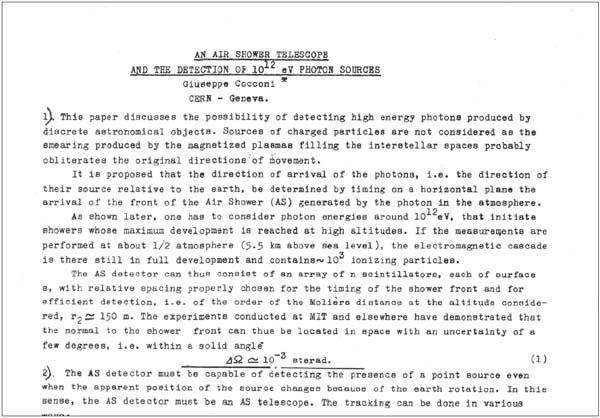
The vast majority of cosmic-ray showers originate with charged primary particles, mainly protons and nuclei not heavier than iron, but a small fraction arise from the interaction of high-energy gamma rays in the atmosphere. At the 1959 ICRC in Moscow, while on leave at CERN from Cornell, Giuseppe suggested the possibility of detecting cosmic sources of high-energy photons using coincidence techniques to separate unidirectional photons from the isotropic background. He proposed that the Crab Nebula might be a strong source of gamma-rays in the tera-electron-volt range. The paper motivated Aleksandr Chudakov of the Lebedev Institute to build a pioneering gamma-ray telescope in the Crimea, designed to detect the short bursts of Cherenkov light generated in the atmosphere by extensive air showers, which had been first observed by Bill Galbraith and John Jelley at Harwell in the UK in 1953. Finally, in 1989, the Whipple air-Cherenkov telescope in the US detected the Crab Nebula as, indeed, a source of tera-electron-volt gamma rays.
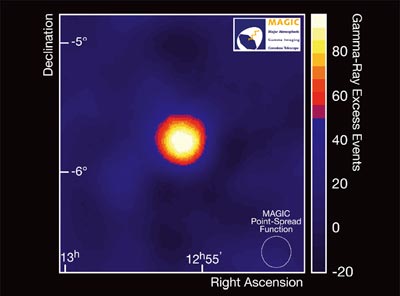
Second-generation imaging air-Cherenkov telescopes (IACTs) – HESS, MAGIC and VERITAS – now cover the northern and southern hemispheres, detecting point-like and extended sources with a typical angular resolution of an arcminute. This means that galactic sources, such as supernova remnants (SNRs), can be imaged with a resolution smaller than their angular extension. A recent result from the HESS telescopes in Namibia on the emission from the nearest active galactic nucleus, Centaurus A, could explain the small cluster of a few events of ultra-high-energy cosmic rays that the Pierre Auger Observatory has observed in this direction.
Giuseppe enjoyed the discovery last year by MAGIC of very high-energy gamma rays from the active nucleus of the 3C279 galaxy. This quasar is at a distance of roughly half the radius of the universe, which is more than twice the distance of objects previously observed in gamma rays. The MAGIC Collaboration thus concludes that the universe appears more transparent at cosmological distances than previously believed, precluding significant contributions from light other than from sources observed by current optical and infrared telescopes.
The new IACTs are now complementing observations by gamma-ray telescopes in space. Giuseppe was interested in the results from two recent missions: AGILE, launched on 23 April 2007; and Fermi, launched on 11 June 2008. These missions are collecting important data on galactic and extragalactic sources in the energy range 100 MeV–100 GeV and should provide a wealth of information for understanding the sources of particle acceleration. These include gamma-rays bursts (GRBs), which are the highest-energy phenomena occurring in the universe since the Big Bang. It is no surprise that Giuseppe developed a recent interest in GRBs, reinforced by frequent discussions on the subject with Alvaro de Rújula at CERN. In 2008 the Fermi mission detected the most energetic GRB so far observed, GRB 080916C, at a distance of 12.2 thousand million light-years.
It was his interest in gamma rays that sparked the work for which Giuseppe became most widely known outside particle and astrophysics, after he and Philip Morrison (visiting CERN from Cornell) published a two-page article in Nature on “Searching for interstellar communications”. Morrison recalled that: “One spring day in 1959, my ingenious friend Giuseppe Cocconi came into my office and posed an unlikely question: would not gamma rays, he asked, be the very medium of communication between stars?” Morrison agreed but suggested that they should consider the entire electromagnetic spectrum. In the resulting paper they argued for searching around the emission frequency at 1420 MHz, corresponding to the 21 cm line of neutral hydrogen. Giuseppe contacted Sir Bernard Lovell at Jodrell Bank in the UK, which had the largest radio telescope at the time, but Lovell was sceptical, and nothing came of the proposal to devote some time towards searching for an extraterrestrial signal. The first radio search for an alien signal was left to others, initially to the Ozma project, which was started independently by Frank Drake in 1959. Later, the Search for Extraterrestrial Intelligence (SETI) became a serious research topic, capturing the public’s imagination. Now, anyone with a computer can contribute to the search through SETI@home.
Rising cross-sections
The letter quoted above written to one of us (GM) in 2002 ends as follows: “We do not yet know from where the local cosmic rays are coming. Will I live long enough to know? Move fast and keep me informed … Meanwhile cross-sections and scatterings continue their quiet life, following the new machine with the square of the logarithm.” The last sentence refers, of course, to the LHC and to the proton–proton total cross-section experiments planned by the TOTEM Collaboration. Giuseppe’s second main physics interest, after cosmic rays, was proton–proton scattering. This began at CERN at the PS in 1961, continuing at Brookhaven with measurements at the highest momentum transfer so far and, from 1971, at the Intersecting Storage Rings (ISR).
In 1965 Giuseppe proposed with Bert Diddens and Alan Wetherell the use of the first extracted proton beam from the PS to measure elastic and inelastic cross-sections. The first experiment was on proton–proton scattering with large momentum-transfer. A few years earlier the same group had measured the shrinking of the forward elastic peak. This discovery gave an enormous boost to the phenomenology of Regge poles, which was fashionable at the time. The ensuing interpretation of the energy dependence of the total hadron–hadron cross-sections in terms of Pomeron exchange predicted an almost constant value of the cross-section with energy – a high-energy regime called “asymptopia”, which seemed to be round the corner and would be characterized by increasing interaction radii and decreasing central opacity.
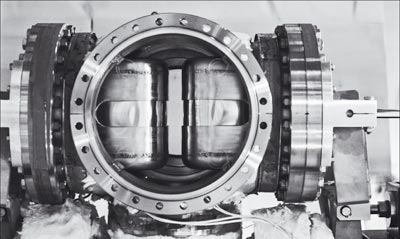
In 1970 Giuseppe’s group joined the Rome ISS group of two of us (UA and GM), who had proposed to the ISR Committee the measurement of elastic-scattering events through the detection of protons scattered only a few millimetres from a circulating-proton current of many amperes. The movable parts that contained the detectors were soon called “Roman pots”. Giuseppe very much enjoyed such a small and delicate experiment. He would spend long hours gluing together thin scintillators and measuring the position of the counters in the ISR reference frame with theodolites.
By applying the optical theorem, the CERN–Rome group found that the proton–proton cross-section rises with energy. The results were published together with a paper by the Pisa–Stony Brook collaboration, who had detected the same phenomenon by measuring the total interaction rate. In parallel, the movable pots were used to measure the interference between the Coulomb amplitude and the nuclear amplitude, which was discovered to be positive and rising with energy; a consequence – through dispersion relations – of the fact that the total cross-section continues to rise at collision energies that were not directly attainable at the ISR.
The ISR best-fit gave a total proton–proton cross-section that rose as the square of the logarithm of the energy, behaviour that was confirmed by later experiments with Roman pots at the SPS and the Tevatron. It was to this that Giuseppe was referring when he wrote of cross-sections “continuing their quiet life” while waiting for TOTEM. He may have been disappointed that most physicists did not seem to realize the importance of this discovery. In the 1960s, asymptopia dominated; essentially, nobody thought that the cross-sections could rise with energy. Even Vladimir Gribov made the hypothesis that they might be slowly decreasing, despite the observation at Serpukhov that the kaon–proton cross-section was increasing slightly. Some theoreticians – such as Marcel Froissart and André Martin, Nick Khuri and Tom Kinoshita – envisaged, from a purely mathematical point of view, that there could be a rising cross-section and tried to see the consequences. The only serious model was the one proposed by H Cheng and T T Wu in 1968.
Giuseppe was very interested in seeing what would be found in the new energy range and one of his last topics of conversation was the incident on 19 September that brought the commissioning of the LHC to a halt. He was clearly disappointed because he hoped to see proton–proton collisions at really high energies.
Unity in physics
Whenever he could Giuseppe would use accelerator data to illuminate an open problem in cosmic-ray physics, and vice versa. A typical example is the paper published with one of us (GB) in Nature in 1987 in which a relevant limit is put on the neutrino electric charge by calculating the dispersion of the time of flight of the neutrinos produced by SN1987a and detected by Kamiokande. He later applied a similar method to the photon pulses emitted by the millisecond pulsar PSR 1937+21 to get a limit on the photon’s electric charge.
His view of a basic unity in physical science, from galaxies to elementary particles, was clear in a series of lectures that he delivered at CERN more than 20 years ago. Following an invitation from André Martin, who at the time was chairperson of the Academic Training Committee, Giuseppe gave a course on “Correlations between high-energy physics and cosmology” in 1980. In these lectures he illustrated what he believed, at the time, were the important problems that could strengthen the relations between particle physics and cosmology – the field now known as astroparticle physics. The main themes of the past 20 years were all present: from the analysis of extragalactic emissions (with particular attention to the cosmic microwave background radiation) to the measurements of the deceleration parameter of the cosmic expansion. The series was so successful that the committee invited him to lecture again in 1984, this time on “A new branch of research: Astronomy of the most energetic gamma rays”. It, too, was a great success.
In a paper written to celebrate Edoardo Amaldi’s 60th birthday, Giuseppe expressed his continuing vision of science: “A common aim of people interested in science is that of improving the comprehension of phenomena that can be observed in the world.” Throughout his long life in science he made many contributions to improving this comprehension, through his particular approach to research. Many years after his retirement, he continued to impress younger colleagues at CERN, some of whom would hand him their recent papers for comments and advice, as Massimo Giovannini recalls. “His comments were always sharp and precise … for Giuseppe one aspect of research was the art of phrasing the complications of a phenomenon in simple numerical terms.” This was perhaps best summarized by Nobel laureate Sam Ting in his Nobel prize speech in 1976: “…I went to CERN as a Ford Foundation Fellow. There I had the good fortune to work with Giuseppe Cocconi at the Proton Synchrotron, and I learned a lot of physics from him. He always had a simple way of viewing a complicated problem, did experiments with great care and impressed me deeply.”
• The authors are grateful to Jack Steinberger and André Martin for contributions on Cocconi’s cosmic-ray experiments and on the meaning of the discovery of the rising proton–proton cross-section.
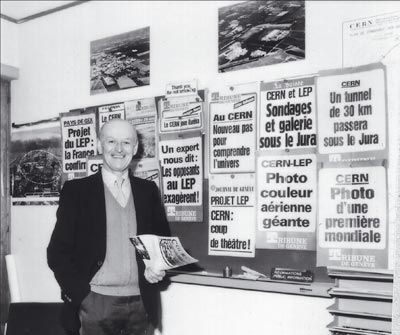
The story of CERN Courier all began about a year earlier when an advertisement in the Belgian press mentioned that a international research organization based in Geneva was going to start its own periodical. It was intended to be an internal public-relations gesture meant to inform its staff of what was going on within its premises. The organization’s acronym, CERN, meant little, to say nothing, to the average reader – this writer included. Nevertheless, some months later he found himself the new member of the organization’s diminutive Public Information Office. Here he was endowed with the task of initiating a publication that reflected the high motivation of a staff dedicated towards building and operating a couple of large “atom-smashing” accelerators.
The job was a typical public-relations venture aimed at fewer than 900 souls, which may nowadays seem mild and benign compared with the complexity of today’s communication assignments. Still, the task featured several aspects that had to be addressed by a newcomer in a foreign environment. This was to be carried out within an organization that, for all its culture of openness, was far from familiar with disseminating its doings in simple terms.
Questions first
Among the challenges to be resolved, the most prominent was: what support could be expected from management? Fortunately, this proved to be just an academic question because the project was the brainchild of Cornelis Bakker. As director-general, his ideas on the subject were not challenged by his administration.
Then, among the practical problems, one had to secure a budget, which meant coaxing the finance office (FO) into allocating the odd sum. In fact, the amount was small enough that it could not be found recently in the FO’s archives. Fortunately the princely figure of SFr 7200 a year has surfaced out of this writer’s notes from the time. No need then, to wonder why the inclusion of paying advertisements in an international house publication was also first invented at CERN. This “invention”, although not quite as resounding as that of Tim Berners-Lee 30 years later, certainly helped in the survival of the infant CERN Courier. It must be said, however, that the scheme did not prove easy to manage, leading to some controversies about what contents could or could not be accepted. Still, the proof of the idea’s soundness was in its longevity and that the model was soon borrowed by other organizations.
The format was a major topic that covered several questions such as title, contents and illustration, language, size, paper weight, periodicity and distribution. Considerations on the publication’s title led to some hesitation. The name CERN Reporter was initially suggested but finally our one-man, self-appointed committee stumbled on CERN Courier, a “nom de guerre” that was accepted by the powers that were. It has stuck so far.
Deciding what the contents would include was perhaps the easier part of the production chain to tackle. Indeed, the development phase of CERN, with its two large (for the time) contraptions called accelerators – a 600 MeV synchrocyclotron and the 25 GeV (initially 24.3 GeV at 12 kG) proton synchrotron – was ripe with a myriad of possible stories that were both scientific and mundane. Editorial content that involved policies was routinely submitted to the director-general, who was always readily available for advising or checking. The approval of “reported” articles was, of course, always obtained from the interviewees themselves. As for illustrations, financial considerations (restricted to between 25% and 30% of the budget) and printing state-of-the-art limited them to black and white.
Another question concerned which language (or languages) to use but the answer was obvious, because English and French were the two official languages of the organization – and still are. Initially, and for many years, two separate editions came out – Courrier CERN and CERN Courier. A decision by the CERN management in 2005 reduced the French edition of the current Courier to an embryo-sized state, thus jeopardizing the interest of a large segment of non-English-speaking staff and workers. Perhaps a bilingual formula could have been chosen to alleviate production costs.
Deciding what format, frequency and circulation should be adopted for the publication proved to be tricky questions, with answers that were, of course, set by costs. However, another factor soon came to light: the time available for editorial production. Indeed, the choice of a monthly versus weekly periodical suddenly became self-evident when, in view of his superior’s untimely death, the budding editor found himself responsible not only for his newborn publication but also for most of CERN’s other public relations involvements such as visits – be they general or by VIPs – and press contacts. The initial print run of 1000 copies allowed for a distribution to staff, who numbered 886 at the end of 1959. However, the interest generated from outside circles – the press, individuals and other organizations and labs – warranted that circulation quickly rose to 2000 copies by March 1960.
Meanwhile, the choice of a printer had arisen. Who could supply an 8-page, A4-size product printed on machine-finish paper? Three quotes were obtained from local printers and Chérix & Filanosa Cy in Nyon was selected. For distribution it was decided to have the publication sent through external post, primarily to the homes of staff members – with the hope of involving and interesting their respective families, whose influence on staff morale could not be underestimated.
With all of those items mastered, the first issue appeared in mid-August 1959. It was a modest 8-page endeavour but even so it was well received by the “Cernois/Cernites” (yes, we coined the name that early!). Even outsiders responded favourably as witnessed among others by Albert Picot, a Geneva statesman doubling as an inveterate autodidact, and by a British member of CERN Council, H L Verry, who found it “excellent”.
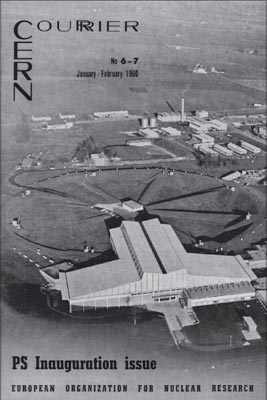
Over the years, the advent of the Weekly Bulletin in 1965 allowed the CERN Courier to switch from being the house publication to a scientific journal. The Courier thus became the ambassador of CERN and particle physics to a large community of knowledgeable specialists and inquisitive people. Indeed, the trend had been set when, soon after its inception, a special issue of the Courier was devoted entirely to the PS, coming out in time for the machine’s inauguration on 5 February 1960.
Today, reflecting on the perspective of the CERN Courier after 50 years, it is rewarding to see that the once-straightforward attempt at promoting subnuclear research survived the vagaries of time. Personally, the privilege of having worked at CERN half a century ago makes one proud to have been associated – albeit in a small way – in the building and strengthening of what was, as the then president of council, François de Rose, said, “the greatest venture in international co-operation ever undertaken in the world of science”.
To provide the best experiences, we use technologies like cookies to store and/or access device information. Consenting to these technologies will allow us to process data such as browsing behavior or unique IDs on this site. Not consenting or withdrawing consent, may adversely affect certain features and functions.
Functional
Always active
The technical storage or access is strictly necessary for the legitimate purpose of enabling the use of a specific service explicitly requested by the subscriber or user, or for the sole purpose of carrying out the transmission of a communication over an electronic communications network.
Preferences
The technical storage or access is necessary for the legitimate purpose of storing preferences that are not requested by the subscriber or user.
Statistics
The technical storage or access that is used exclusively for statistical purposes.The technical storage or access that is used exclusively for anonymous statistical purposes. Without a subpoena, voluntary compliance on the part of your Internet Service Provider, or additional records from a third party, information stored or retrieved for this purpose alone cannot usually be used to identify you.
Marketing
The technical storage or access is required to create user profiles to send advertising, or to track the user on a website or across several websites for similar marketing purposes.