de Michel Crozon, Editions Vuibert. Broché ISBN 2711771539, €28.
Sous un titre évocateur des grandes offensives aériennes des années quarante, voici un nouveau compendium du rayonnement cosmique. Ces corpuscules naturellement accélérés depuis le fin fond de l’univers jusqu’à des énergies susceptibles de faire pâlir d’envie le physicien moderne, ont été mis en évidence voici bientôt un siècle grâce aux pacifiques ballons de l’Autrichien Viktor Hess.
Plus tard une foule d’autres pionniers tels que Robert Millikan et Carl Anderson traquèrent le mystérieux rayonnement. Ils furent suivis en Europe par Pierre Auger et Louis Leprince-Ringuet avec son école du Pic du Midi de Bigorre, lesquels ne tardèrent pas à se tourner vers l’exploitation des appareillages d’un CERN pas encore adulte. Aujourd’hui la chasse aux rayons cosmiques dispose de vastes installations de détection comparables de par leur ampleur à celles ceinturant le futur accélérateur européen LHC. Implantés dans les entrailles du globe, sous les glaces du Pole Sud, en Méditerranée, voire en de profondes mines, ces instruments tentent d’expliquer l’origine de corpuscules extra-galactiques dont l’énergie peut frôler les 1020 électronvolts.
L’ouvrage survole l’essentiel des expériences réalisées avant et depuis la guerre afin de mieux connaître ces messagers célestes. Au fil de 240 pages bien illustrées, l’auteur situe cette expérimentation dans le contexte des développements de la physique corpusculaire. Son approche n’en demeure cependant pas liée aux seuls développements théoriques. Elle décrit aussi l’outillage de plus en plus perfectionné mis en œuvre: émulsions, compteurs Geiger-Müller, ballons, chambres à brouillard ou à bulles, détecteurs souterrains ou sondes embarquées sur satellites.
L’auteur qualifie son travail d’ouvrage de vulgarisation. Toutefois, à destination du lecteur plus féru de détails technico-scientifiques, l’usage de caractères d’imprimerie différents permet occasionnellement de passer à un registre plus avancé. Le livre ne manque d’ailleurs pas d’autres atouts, à commencer par une table des matières commodément située en début de volume, et un lexique bien charpenté. En contrepartie il faut se satisfaire de quelques inconvénients tels que la sempiternelle orthographe d’électronvolt en deux mots ou, moins mineure, l’absence d’index.
En bref, le lecteur avide de science et désireux de mieux cerner la physique des corpuscules de hautes énergies pourra assouvir sa curiosité grâce à cette incursion dans le royaume de la plus gigantesque des machine accélératrices de particules: l’univers lui-même.
At the heart of the ATLAS experiment at the Large Hadron Collider (LHC), silicon sensors will provide accurate detection of charged particles produced in the collisions. The Semiconductor Tracker (SCT) consists of silicon microstrip sensors located 25-55 cm from the LHC beams, subdivided in a central part of four concentric barrels around the beam pipe, and endcaps of nine discs on either side. February saw two major milestones for the ATLAS tracker within a week – the first stage of the integration of the barrels with other parts of the tracking system and the arrival of the endcap silicon tracker that has been assembled in Liverpool.
The ATLAS tracker project was conceived in 1993 at a meeting in the UK where a small international group of physicists and engineers sketched out plans for a tracking system for the LHC. After four years of development, 40 institutes around the world agreed to start the construction of the SCT. Eight years later the tracker is now a reality at CERN and is being integrated into ATLAS ready for physics.
The central barrels and two endcaps of the SCT together hold 4088 silicon modules (60 m2 of silicon), which can record the trajectory of charged particles with 20 μm precision (less than the diameter of a human hair). The complete system comprises 6 million detector elements, each with its own amplifier and memory. It is larger than any existing silicon tracking system. Careful work at each stage of the project has ensured that more than 99.5% of the channels are working.
The modules for the SCT barrels were produced by four collaborations centred in Japan, Scandinavia, the UK and the US, and sent to the UK for precision assembly on cylindrical structures at Oxford University. The fourth and final barrel arrived at CERN in September 2005 and was integrated into the full barrel assembly shortly afterwards. In the latest integration stage, on 17 February, dozens of physicists and engineers from the collaboration gathered to witness the insertion of the barrel SCT into the Transition Radiation Tracker (TRT). The SCT and the TRT are two of the three major parts of the ATLAS inner detector – the third and final part is the pixel detector, which will be added in the very centre of the tracker.
While the SCT central detector is already complete at CERN, the two endcaps are making good progress as well. More than 2000 modules with sensors and readout electronics have been produced in laboratories in the UK, Spain, Germany, the Czech Republic, the Netherlands, Switzerland and Australia, and were then sent to the two endcap assembly sites at the University of Liverpool, and NIKHEF in Amsterdam.
Each endcap is a 2 m long, light and strong carbon-fibre cylinder containing a series of nine discs on which the modules are mounted in rings, so as to surround the LHC beams. Each disc contains cooling circuits to take away the excess heat produced by the electronics, to maintain an operating temperature of -7 °C, which is chosen to minimize radiation damage in the harsh LHC environment. Control signals and data are sent through optical fibres to and from each sensor, minimizing noise and heavy cabling. On 23 February the first endcap arrived safely at CERN from Liverpool and the second is nearing completion at NIKHEF
An experiment at the Institut Laue Langevin (ILL), Grenoble, has produced a new, tighter limit on the electric-dipole moment (EDM) of the neutron. This result has a high potential impact for theories beyond the Standard Model that attempt to explain the origin of CP violation and hence the baryon asymmetry of the universe.
One way to test theories likely to explain the matter-antimatter asymmetry that characterizes our universe is to study the corresponding asymmetry in sub-atomic particles, by looking for slight distortions in their charge distributions. The existence of such an EDM in the neutron, and in other particles, would violate time-reversal and hence CP symmetry. While the Standard Model predicts an immeasurably small neutron EDM and a baryon asymmetry that is far too modest, theories that go beyond it almost invariably predict values for both that are many orders of magnitude larger. Accurate measurements of EDMs thus provide strong constraints on such theories.
The neutron EDM has been sought for more than 50 years, and many candidate theories have been eliminated along the way. Experiments are now sensitive enough to test currently popular theories such as supersymmetry. The experiment that has recently been carried out at ILL by a collaboration from the University of Sussex, the Rutherford Appleton Laboratory and ILL, has produced an upper limit on the absolute value of the neutron EDM of 3 × 10-26 ecm (Baker et al. 2006). This represents an improvement of a factor of two over its intermediate result and almost a factor of four with respect to earlier measurements (Harris et al. 1999).
The experiment used ultracold neutrons produced at the high-flux ILL reactor. These neutrons were stored in batches in a trap permeated by uniform electric and magnetic fields. Spurious signals from magnetic-field fluctuations were reduced to insignificance by the use of a cohabiting atomic-mercury magnetometer (Green et al. 1998). The ratios of neutron to mercury-atom precession frequencies were measured; shifts in this ratio that are proportional to the applied electric field may in principle be interpreted as EDM signals.
The collaboration, which has now expanded to include Oxford University and the University of Kure in Japan, is constructing a new version of the experiment in which the neutron trap will be submerged in a bath of liquid helium, half a degree above absolute zero. The increase in neutron density and electric field strength that this will allow should yield a hundredfold increase in sensitivity.
On 14 February, the minister of finance of the Republic of Cyprus, Michalis Sarris, visited CERN, accompanied by a distinguished delegation, including Christos Schizas, the vice-rector of the University of Cyprus, Costas Kounnas of Ecole Normale and Panos Razis of the University of Cyprus. During the visit, Sarris and CERN’s director-general, Robert Aymar, signed a co-operation agreement.
The new agreement provides the framework for strengthening the scientific and technical co-operation between CERN and Cyprus, giving the opportunity for scientists from Cypriot institutes to participate in CERN’s scientific programme in experimental high-energy physics, theoretical physics, information technology and accelerator development. In addition, university students and professionals will be able to take part in training and educational programmes, as well as in jointly organized workshops and conferences.
Cyprus was already an active member of the L3 experiment at the Large Electron-
Positron collider, when it joined the CMS collaboration in 1995, preparing for the Large Hadron Collider (LHC). A memorandum of understanding was signed in 1999.
In work for CMS, the Cypriot high-energy physics group joined a consortium with responsibility for manufacturing the barrel yoke and the vacuum tank of the CMS solenoid. Construction of both systems is now complete. In addition, members of the Cypriot team have also developed specialized equipment for performing control and calibration tests of the “very front-end” electronic boards of the CMS calorimeter. The groups from Cyprus are also currently seeking an upgrade of their high-performance computer clusters for Monte Carlo simulation and analysis of LHC data, as a valuable component of the Grid initiative.
The co-operation agreement between CERN and Cyprus will soon be followed by the signing of the corresponding protocols, upgrading the scientific and technical links in the areas of experimental and theoretical particle physics, high-performance computing and applications, and other projects subject to prior formal agreement between Cyprus and CERN.
The Australian Synchrotron under construction in Melbourne is due to begin operation in April 2007. This third-generation light source is an electron-accelerator laboratory comprising a full-energy injection system (linac plus booster synchrotron) and a 3 GeV storage ring. It has the capacity for more than 30 beamlines, with nine to be built in the first phase of facility development.
Although Australia has a long and distinguished history in nuclear and particle physics, the Australian Synchrotron is the largest accelerator in the country and the only one of its type in the Antipodes. The storage ring has a circumference of 216 m and is housed in a building with office and laboratory space for more than 100 staff and beamline users.
Commissioning of the injection system is well under way, with the 100 MeV linac now in routine operation. The first turn in the booster was achieved in February, rapidly followed by hundreds of thousands of turns. The beam has been stored at 100 MeV for 1 s from one injection to the next. The injection system ramps at a rate of 1 Hz to accelerate the beam from 100 MeV to 3 GeV in a few hundred milliseconds. Conditioning of the booster RF system is under way and the electron beam will soon be accelerated to full energy.
Installation of the storage ring is almost complete, with only a few of the magnets and vacuum chambers left to assemble. The klystrons that will provide the RF power to the storage-ring accelerating cavities are being commissioned on site during March and will be ready for the first injected beam, which is scheduled for June. The front ends that interface the beamlines to the storage ring are being installed, while beamline installation is due to start in December. Beamline commissioning with photons on sample is expected to be well under way by March 2007.
The Australian science community recommended consideration of an initial suite of 13 beamlines to cover almost the whole range of research being done in Australia, aiming to meet 95% of the anticipated needs of the Australian Synchrotron research community. Nine of these are being developed now, and others will be developed as funding allows. Contracts have been awarded for beamlines for powder diffraction, protein crystallography, X-ray absorption spectroscopy, infrared spectroscopy and soft X-ray spectroscopy beamlines, and the infrared spectroscopy beamline contract is imminent. Designs are well advanced for small- and wide-angle scattering, microspectroscopy and imaging, and medical therapy beamlines, as is design of a second protein-crystallography beamline that will also cater for small-molecule research.
The accelerator systems and building were funded entirely by the Victorian State government at a cost of AU$157 m. The beamlines are being funded through a partnership to which state governments, leading universities, research institutions and the New Zealand government have already committed AU$40 m.
There would be great benefits if clinicians around the world could gain access to a common support resource in diagnosing breast cancer. MammoGrid, a three-year project under the Fifth Framework Programme (FP5) of the European Community was completed in 2005 and its partners are now exploring the possibilities for developing a commercial product based on the project’s results.
Led by CERN, MammoGrid involves the universities of Oxford, Cambridge and the West of England in the UK, together with Mirada Solutions of Oxford, and the universities of Pisa and Sassari and hospitals in Udine and Torino in Italy. The project was conceived within the Technology Transfer Group and the Physics Department at CERN, and an FP5 project was established with total resources of €1.9 m.
Breast cancer is the most common cancer in women, and mammograms as images are extremely complex with many degrees of variability across the population. Breast-cancer screening procedures suffer from several complications with a relatively high error rate. It is estimated that around 30% of mammograms give false results. Early and unequivocal diagnosis is therefore a fundamental requirement for early diagnosis and reduced cancer mortality.
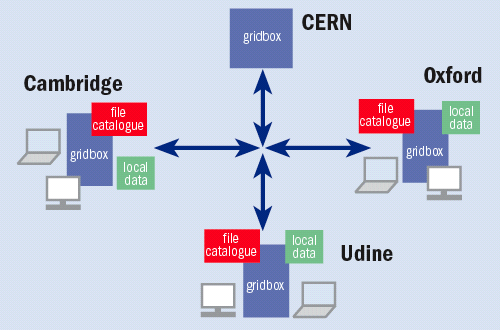
One effective way to manage disparate sources of mammogram data is through a federation of autonomous multi-centre sites spanning national boundaries. Such collaboration is now being facilitated by Grid-based technologies, which are emerging as open-source standards-based solutions for managing distributed resources. In the light of these new computing solutions, the goal of the MammoGrid project was to develop a Grid-aware medical application to manage a Europe-wide database of mammograms.
The MammoGrid solution utilizes Grid technologies in seamlessly linking distributed data sets and allowing effective co-working among mammogram analysts throughout Europe. Thanks to the Grid infrastructure it is possible to exchange data and images, and carry out remote and more accurate radiological diagnosis. This in turn should lead to decreasing biopsies, standardization of quality-control procedures, improvements in the training of radiologists and provision of sufficient statistics for complex epidemiological studies.
One of the aims of the project was to build a demonstrator for testing in hospitals in Cambridge and Udine. Since the project reached its completion in 2005, the MammoGrid partners have been negotiating a licence and a partnership agreement with an industrial company. Commercialization is still at an early stage, however, and CERN’s Technology Transfer Group is exploring opportunities to disseminate the project results further, both to hospitals and industry. A non-exclusive licence based on the results of the MammoGrid project has been made available and a few companies are interested in using the demonstrator to build a fully functioning operational tool for oncological studies and cancer screening.
Sincrotrone Trieste has announced a call for letters of intent to participate in developing and using a new fourth-generation light source, FERMI@Elettra, operating alongside the present ELETTRA source near Trieste. The FERMI@Elettra source will be added to the existing 2.0-2.4 GeV synchrotron and will be one of the first single-pass free-electron laser (FEL) facilities in the world.
FERMI@Elettra will operate in harmonic generation mode at wavelengths in the UV to soft X-ray range. It will initially have two FELs covering the wavelength ranges of 100-40 nm and 40-10 nm. The existing ELETTRA linac will be extended with a new 70 m long klystron gallery; a 65 m shielded undulator hall and a new experimental hall with eight beamlines will also be added. Support laboratories will be built at the end of the chain. The technical design study has been completed, the commissioning of the new booster is planned for summer 2007 and the two FELs are expected to be operational by the end of 2009.
ELETTRA, which is managed by the non-profit organization Sincrotrone Trieste, currently has more than 800 users a year; 86% are from European countries, working on research in physics, chemistry, earth science, material and life science. Proposals for FERMI@Elettra should be submitted before 30 April. Proponents selected by the international advisors will be involved in developing the scientific-exploitation programme (beam lines, end stations and Ramp;D projects), to be defined by the end of 2006.
An international team of astronomers using the Parkes radio telescope in Australia has detected very short radio flashes from 11 sources distributed in the plane of our galaxy. The isolated flashes last typically no more than 10 ms and are separated by relatively long periods of quiescence of several minutes. The detection of periodicities in the signal suggests that these new sources are rotating neutron stars, but of a different class to pulsars and magnetars.
The 11 sources were detected in data recorded between January 1998 and February 2002 as part of a pulsar survey by the 64 m Parkes radio telescope in New South Wales, operated by the Commonwealth Scientific and Industrial Research Organisation (CSIRO). This survey found more than 800 pulsars and is the most successful in history. Rather than searching only for the periodic trains of pulses, the astronomers, led by a team from the University of Manchester’s Jodrell Bank Observatory in the UK, developed new techniques for detecting single short bursts of radiation.
After confirmation of their celestial origin, all sources have been re-observed several times since August 2003 and they all showed repeated bursts, from four to more than 200 bursts in total for each source. The pulses last for 2-30 ms and occur with an average rate of one every 4 minutes to one every 3 hours. For all but one source it was possible to identify periodicities in the arrival times of the bursts. The period range from 0.4 to 7 s suggests that the new sources are likely to be rotating neutron stars. Half of the sources have periods exceeding 4 s, which is very unusual for radio pulsars, but is similar to the periods measured for magnetars: neutron stars with a very strong magnetic field, which can produce recurrent flashes of soft gamma-rays (see CERN Courier June 2005 p12).
The relatively high periodicities and the transient nature of the pulses suggest that these neutron stars are of a new class, which the team has named rotating radio transients, (RRATs). These sources seem to need several hundred of rotations to gather enough energy for a flash. The properties of RRATs resemble those of magnetars, so it is possible that they are neutron stars evolving to or from magnetars.
The new objects appear to be distributed preferentially along the galactic plane and they might even be several times more numerous than radio pulsars. This estimate is based on their ephemeral nature, which makes them shine in total for only about 0.1 s each day. This also explains why these sources, which are among the brightest radio sources when flaring, remained unnoticed until now, and it opens a new field of investigation for the emerging generation of wide-field radio telescopes.
Research on elementary particles – a frontier area of physics – emerged as a distinct field during the mid-20th century, following the discovery of the pion and strange particles, and the construction of particle accelerators reaching energies of more than 100 MeV. The first high-energy physicists had grown up as nuclear or cosmic-ray scientists, but in subsequent years the liaison between cosmic-ray physics and accelerator-based elementary particle physics seemed to fade, with little communication between these two lively and interesting areas of physics. Recently this situation has begun to change, with closer interaction between the two fields. Cosmic-ray physicists need better data on particle interactions and production, and particle physicists at accelerators are interested in exploring phenomena reported from cosmic-ray studies. Also, some theorists are looking at effects that should be detectable at the future Large Hadron Collider (LHC) and may be even more notable at cosmic-ray energies.
It was in this spirit that physicists at the Institute of Physics of the Czech Academy of Sciences, the Czech Technical University and Charles University in Prague organized the conference From Colliders to Cosmic Rays (C2CR) in September 2005. Their aim was to bring together cosmic-ray and particle-accelerator physicists to discuss their latest results and problems common to both communities. An International Advisory Committee was established, representing a broad spectrum of universities and laboratories in Europe and America, with Jan Ridky of the Institute of Physics as head of the Local Organizing Committee.
A significant antecedent to the C2CR meeting was the Needs from Accelerator Experiments for the Understanding of High-Energy Extensive Air-Showers (NEEDs) workshop held in Karlsruhe in April 2002. Also relevant was the 12th (biennial) International Symposium on Very High Energy Cosmic Ray Interactions, which was held at CERN in July 2002.
A common thread in these discussions is the fact that the flux of primary cosmic rays of energies above a few hundred tera-electron-volts is so low that direct observation is not practical from balloon- or satellite-borne detectors. Our understanding of the composition and energy spectra of these cosmic rays is totally dependent on ground-level observations, and on the simulation of primary interactions and atmospheric cascades based on accelerator data. In this context, there are constant efforts to improve the interaction Monte Carlo simulation programs, which are essential components for the interpretation of the cosmic-ray data. At C2CR, Sergey Ostapchenko from the Forschungszentrum Karlsruhe presented the theoretical input into his latest version of the QGSJET program, where gluon saturation is taken into account, while his colleague Tanguy Pierog described numerical methods used in the simulation of showers that involve tens of billions of secondary particles. CERN’s Hans-Peter Wellisch also raised interest by his claim that extensive cosmic-ray air showers can be simulated within the framework of GEANT4, the latest version of the well-known toolkit for simulating the passage of particles through matter.
The experimental information available and efforts or proposals to carry out new measurements of hadronic interactions at accelerator and collider energies formed a major topic. Representatives from the experimental collaborations presented recent results from the CDF and D0 experiments at Fermilab’s Tevatron collider, from the HERA collider at DESY, and from the Hadron Production Experiment at the Proton Synchrotron accelerator at CERN. Heavy-ion physics results were also reported from experiments at CERN’s Super Proton Synchrotron and from the BRAHMS and PHOBOS experiments at Brookhaven’s Relativistic Heavy Ion Collider. Martin Block of Northwestern University presented a projection of the proton-proton total cross-section to LHC energies, and both he and Leonid Frankfurt of Tel Aviv discussed other cross-sections, such as proton-air and nucleus-nucleus, at higher energies.
The observables from cosmic-ray interactions are dominated by the most energetic final-state particles and these are mostly produced at small forward angles. Among the talks on this topic, Mark Strikman of Penn State University discussed small-x physics and forward dynamics in proton-proton and proton-nucleus ultra-high-energy collisions. Others described the discovery potential of the LHC, as well as the potential in diffraction and forward physics of the CMS/TOTEM/CASTOR experiment complex at the LHC, and LHCf, a proposed zero-degree calorimeter at the LHC.
Currently, the Karlsruhe Shower Core and Array Detector (KASCADE) with its associated muon and hadron detectors is the most sophisticated and productive cosmic-ray air-shower experiment in operation, and the Karlsruhe group was well represented in Prague. Marcus Risse, Andreas Haungs and Holger Ulrich discussed different aspects of the KASCADE data, results and interpretation, including the sensitivity of the interpretation of their data to models of the primary hadron interaction.
The intercommunication between accelerator-based and cosmic-ray physicists is perhaps nowhere more apparent than in the area of neutrino physics, with the studies of neutrino masses and mixing. The meeting heard about various aspects of neutrino physics, including results from existing detectors, theoretical ideas and plans for new detectors. For example, the Antarctic Impulsive Transient Antenna and the Salt Shower Array are planned to detect radio pulses from coherent Cherenkov radiation produced by the reaction products of ultra-high-energy cosmic-ray neutrinos interacting in ice and rock salt, respectively.
No cosmic-ray conference nowadays would be complete without some discussion of the highest-energy cosmic rays and indeed C2CR had several excellent reports. These covered the current status of the problem with ultra-high-energy cosmic rays, the latest from the High Resolution Fly’s Eye experiment, and the status and first results from the Pierre Auger Observatory. Jim Cronin of Chicago, one of the founders of the observatory and spokesman emeritus for the collaboration, was a lively and valuable participant.
An interesting cross-link between the cosmic-ray and accelerator physics communities is the use of the large detectors at colliders for studies of cosmic-ray muons. The meeting heard reports on physics results obtained with cosmic-ray muons in the detectors for the Large Electron-Positron collider at CERN. These included muon multiplicity studies and absolute differential muon spectra, both of which have been obtained with greater precision than was previously possible with detectors built for cosmic-ray studies.
Participants also heard about the latest generation of cosmic-ray detectors, with talks on Super-Kamiokande, the BAIKAL experiment, the Search for Light Magnetic Monopoles on Mount Chacaltaya in Bolivia, the AMANDA and IceCube detectors at the South Pole, the satellite-borne Cosmic Ray Energetics and Mass detector, and the planned 1 km3 Neutrino Mediterranean Observatory.
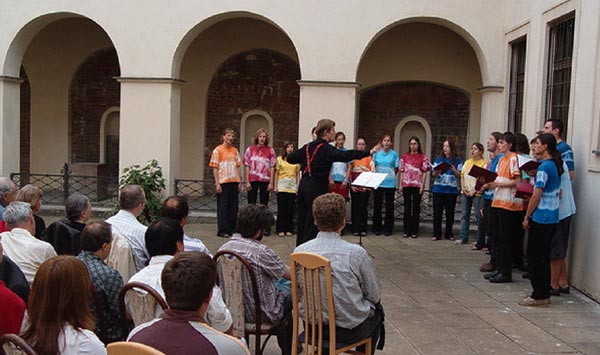
Around 60 people attended the conference, which proved a successful opportunity for the participants to learn new physics, to interact with colleagues in other areas of elementary-particle physics and particle astrophysics – and also to enjoy Prague, with a trip to the nearby Konopiste Castle over the weekend and the conference banquet aboard a river cruise boat.
During the discussions at the meeting’s final session, it was suggested that the topic of colliders and cosmic rays might appropriately become the theme of a biennial conference series. A probable site and time for the next conference is the Granlibakken Conference Center on Lake Tahoe, California, 25 February – 1 March 2007.
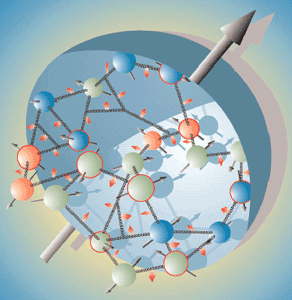
At the end of the 1980s, a major part of the nucleon’s spin suddenly went missing. The European Muon Collaboration at CERN uncovered what has since been called the “spin puzzle” – the fact that the spins of the valence quarks that make up the nucleon account for only about 25-30% of the nucleon’s spin. The finding was soon confirmed by second-generation experiments at CERN and SLAC. Designed to determine the total spin contribution of the quarks, however, they left several questions unanswered. If the quark spin contribution is so small, what then are the main contributions? What is the contribution of the different quark flavours? Is there a polarization in the quark sea that could account for the missing spin? In 1995, the HERMES experiment at DESY’s HERA electron-proton collider in Hamburg took over the search, with the goal of finding an answer to just these questions.
In contrast to its predecessors, most of which could detect only the scattered electron and thus measure inclusive deep inelastic scattering (DIS) reactions, the HERMES collaboration took a new experimental approach. Its combination of a longitudinally polarized high-energy electron beam from the HERA storage ring incident on undiluted polarized atomic gas targets is unique in the field, and its spectrometer is designed to identify all types of hadrons produced in coincidence with the scattered electron. Using such semi-inclusive DIS reactions on longitudinally polarized targets, the HERMES team achieved the world’s first assumption-free flavour separation of the quark contributions to the nucleon spin, thereby slotting a major new piece into the nucleon-spin puzzle.
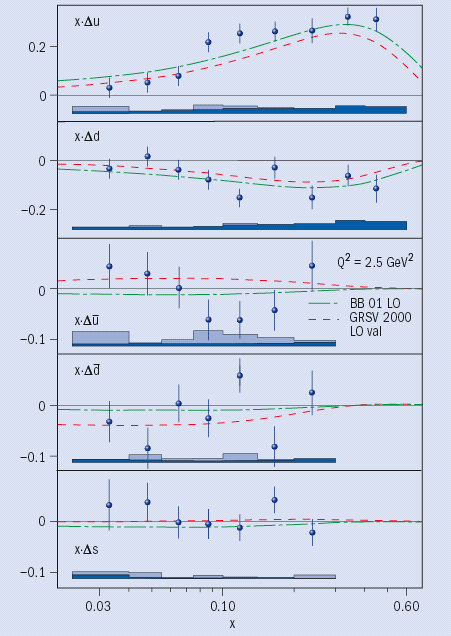
The results obtained from data taken during HERMES’ first run (1995-2000) are the most precise information available so far on quark helicity distributions – the spin alignment of the quarks with respect to the nucleon spin – and they provide for the first time separate determinations of the polarizations of the up, down and strange sea quarks (figure 3). They reveal that the largest contribution to the nucleon spin comes from the valence region, where the up quarks give a positive contribution as their spin is preferably aligned with the spin of the nucleon, while the down quarks give a contribution with opposite sign. The polarizations of the sea quarks are all consistent with zero – an especially important result.
The interpretation of the inclusive data from previous experiments was based on the assumption of SU(3) flavour symmetry – the postulation that all flavours of quark, including up, down and the virtual strange quarks, behave in the same way dynamically inside the nucleon despite the substantially greater mass of the strange quark. The older analyses therefore led to the conclusion that the strange quarks play a significant, cancelling, role in the nucleon spin, even though their existence there is fleeting. The HERMES results now show that the polarizations of the sea quarks are all small: there is thus little evidence for such a “cancellation” between the contributions of valence and sea quarks. In particular, there is no evidence in the measured range in x, the momentum fraction carried by the quarks, that the contribution of the strange quarks is negative, as was indicated by the model-dependent analysis.
Taken together, all these measurements definitely show that the spin of the quarks generates less than half of the spin of the nucleon, and that the quark spins that do contribute come almost exclusively from the valence quarks. The proton-spin puzzle thus continues to evolve and the contributions of the orbital angular momenta of the quarks, as well as the spins and orbital angular momenta of the gluons, are now expected to be important.
The HERMES team has already reported the first evidence that the gluon polarization could make a positive contribution to the nucleon spin and new results will follow soon. The gluon polarization is also currently being investigated in the COMPASS experiment at CERN and at the Relativistic Heavy Ion Collider at the Brookhaven National Laboratory. As recent theoretical insights have shown, the orbital angular momentum can in principle be probed by hard exclusive processes leaving the target nucleon intact – a field that HERMES is now exploring in detail during its ongoing second run, which will last until summer 2007.
During HERMES’ first run, the emphasis was on the determination of the helicity structure of the nucleon using longitudinally polarized targets and beam. For HERA Run II, the collaboration has turned its attention to transversely polarized targets (i.e. with polarizations perpendicular to the electron beam direction) to extract the so-called transversity distribution – the last unknown leading-twist quark distribution function of the nucleon.
Probing transversity
Phenomenologically, the nucleon can be characterized in terms of parton distribution functions that describe how often the constituents of the nucleon will be found in a certain state. Within this framework, there are three fundamental quark distributions: the quark number density, which has been measured with very high precision, for example with the HERA collider experiments H1 and ZEUS; the helicity distribution, which was the main result of the HERMES run on longitudinally polarized targets; and the transversity distribution, which describes the difference in the probabilities to find quarks in a transversely polarized nucleon with their spin aligned to the spin of the nucleon and quarks with their spin anti-aligned.
In absence of relativistic effects, the transversity and helicity distributions should be the same. A difference between the two distributions would therefore be a measure of the extent to which relativistic effects have to be considered in the description of the nucleon.
Transversity has remained unmeasured so far because it is odd under chirality transformations, whereas hard interactions conserve chirality (they are chiral even). However, it may be probed by a process involving some additional chiral-odd structure. In semi-inclusive DIS, as done at HERMES, this could be a chiral-odd fragmentation function. The so-called Collins fragmentation function is the most prominent candidate, as this gives rise to an asymmetry in the angular distribution of the hadrons produced during the scattering process if they are generated from a transversely polarized quark. Results from the BELLE collaboration at KEK suggest that the Collins function has a substantial magnitude, and thus measurements of single-spin asymmetries in semi-inclusive DIS employing transverse target polarization are expected to constrain transversity itself.
There is even more to explore, however. Using a transversely polarized target one can also study a new class of more complex distribution functions that depend not only on the longitudinal momentum fraction carried by the quarks, but also on their transverse momentum inside the nucleon. One such function is the so-called Sivers distribution function, which describes an asymmetry in the distribution of unpolarized quarks in a transversely polarized nucleon.
The Sivers function generates transverse single-spin asymmetries. As such it is a so-called T-odd distribution function. The time-reversal symmetry properties of quantum chromodynamics should therefore forbid its existence, or so it was believed for a long time. Only recently has it become clear that there are loopholes in the theory, for example, missing gauge links in the description of nucleon structure, which permit such T-odd distribution functions. The study of the Sivers function is thus doubly interesting. On one hand, it may be used to test the validity of these theoretical considerations, and may lead to a better understanding of results from hadron-hadron collision experiments where large but unexplained transverse single-spin asymmetries have been observed. On the other hand, the Sivers function must vanish in the absence of quark orbital angular momentum. A measurement of the Sivers function may thus provide important constraints on this missing piece in the nucleon-spin puzzle.
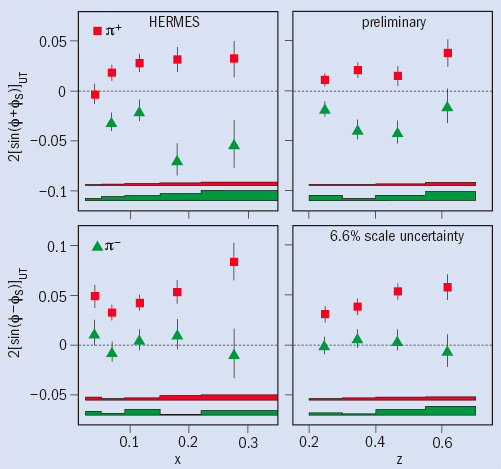
The measurement both of transversity and of the Sivers function can be carried out using semi-inclusive DIS events. By reversing the spin direction of the nucleon, one can study the dependence of the preferred direction of the outgoing hadron on the nucleon’s spin direction. After its first year of data-taking with a transversely polarized target, HERMES has observed enough scattering events of this kind to venture a worldwide first look at these angular dependencies (figure 4).
One striking result is the comparably large signal for the π– Collins effect. This came as quite a surprise, since a behaviour similar to that seen with a longitudinally polarized target had been expected, namely a signal that is larger in size for the π+ than for the π–. This result will have important consequences for understanding how the hadron is formed from the struck quark. Currently the statistical significance is insufficient to make definite statements about the exact behaviour of the involved functions. However, since the Collins asymmetries are clearly non-vanishing, the HERMES team has good reason to hope that the data collected in 2005, which are more than doubling the statistics taken in the years before, will indeed allow them to achieve a first measurement of transversity using the information on the Collins fragmentation function collected by BELLE.
An equally interesting result is the observation that for the π+ the signal for the Sivers function is significantly positive. This is the first confirmation that the Sivers function is indeed non-zero and thus some first evidence for a non-vanishing T-odd parton distribution function. More data on the Sivers asymmetries from HERMES up to November 2005 should allow an extraction of the Sivers function for up and down quarks.
Exclusive reactions
The contributions of the orbital angular momenta of quarks and gluons are the last unknown pieces in the puzzle of the spin content of the nucleon; how to determine them has been hotly debated for several years. In the middle of the 1990s, it was realized that the framework of generalized parton distributions (GPDs) might give access to these orbital angular momentum contributions. Quite apart from that, the study of these off-forward extensions of the standard parton distribution functions can provide a wealth of new information on the structure of the nucleons.
The GPDs can be determined in exclusive reactions – scattering processes in which the target nucleon does not fragment but instead remains in its ground state, or close to it. The various scattering reactions provide access to different GPDs: exclusive vector-meson production allows the determination of unpolarized GPDs, whereas the exclusive production of pseudoscalar mesons can be used to measure the polarized GPDs. Because of the multidimensional structure of the GPDs, it is essential to study as many different processes as possible to be able to disentangle the functions from the measured observables. In particular, measurements with the transversely polarized target at HERMES are sensitive to the two main GPDs (H and E) necessary to determine Jq, the total orbital angular momentum of quarks in the nucleon.
The cleanest example of a reaction that provides direct access to GPDs is deeply virtual Compton scattering (DVCS), an exclusive reaction in which a real photon is created. This type of reaction was identified for the first time in 2001 by the H1, ZEUS and HERMES experiments at DESY, and the CEBAF Large Angle Spectrometer in Hall B at Jefferson Lab. Since then, a large body of data has been collected on DVCS. Here, HERMES is in a rather fortunate position. Despite the DVCS cross-section being usually much lower than that of an indistinguishable process – the Bethe-Heitler process – with identical final state, the interference term between the processes allows the study of DVCS because it leads to observable asymmetries in the azimuthal angular dependence of the real photons produced from the nucleon. As HERMES can measure all azimuthal asymmetries involving polarized beams and/or polarized targets and different charges, the collaboration was able to determine the DVCS target-spin asymmetry by using an unpolarized beam incident on a transversely polarized target. This asymmetry is sensitive to the GPD E and thus allowed HERMES to realise the first model-dependent extraction of Ju, the total angular momentum of the up quark (figure 5).
To study these asymmetries in even more detail, the HERMES collaboration decided to run during its final phase from 2006 to 2007 with a new recoil detector in combination with an unpolarized target. The device will employ silicon detectors and scintillating fibre trackers as well as a detector to measure photons. It will sit closely around the target and detect the slow-moving recoil proton in coincidence with the electron and the photon, thus ensuring full exclusivity of the data sample.
The enhanced selectivity of these measurements will provide a unique opportunity to assess the promise of GPDs as the next step in understanding the spin structure of the nucleon. In particular, data taken with this new detector will put serious constraints on the GPD H. In combination with the already existing DVCS data and measurements of the only other known reaction to access the GPD E on a proton target – the elastic electroproduction of ρ0 vector mesons with the proton being transversely polarized, already measured at HERMES (2002-2005) – these forthcoming results will eventually allow an extraction of the total angular momentum of the up quark in the nucleon through the remaining GPD models.
In addition to these studies on polarized targets, the physics programme at HERMES also includes a great variety of other points of interest, such as measurements of unpolarized DIS events. These allow the collaboration to search for pentaquark exotic baryon states, give insight into quark propagation in nuclear matter and quark fragmentation, and provide a rigorous test of factorization. DESY’s HERA accelerator will continue operations through to summer 2007. Every effort is being made at HERMES to maximize the impact of the remaining beam time, with the goal of fitting in as many pieces of the nucleon-spin puzzle as possible.
To provide the best experiences, we use technologies like cookies to store and/or access device information. Consenting to these technologies will allow us to process data such as browsing behavior or unique IDs on this site. Not consenting or withdrawing consent, may adversely affect certain features and functions.
Functional
Always active
The technical storage or access is strictly necessary for the legitimate purpose of enabling the use of a specific service explicitly requested by the subscriber or user, or for the sole purpose of carrying out the transmission of a communication over an electronic communications network.
Preferences
The technical storage or access is necessary for the legitimate purpose of storing preferences that are not requested by the subscriber or user.
Statistics
The technical storage or access that is used exclusively for statistical purposes.The technical storage or access that is used exclusively for anonymous statistical purposes. Without a subpoena, voluntary compliance on the part of your Internet Service Provider, or additional records from a third party, information stored or retrieved for this purpose alone cannot usually be used to identify you.
Marketing
The technical storage or access is required to create user profiles to send advertising, or to track the user on a website or across several websites for similar marketing purposes.