July saw some major manoeuvres for the CMS detector, as the collaboration prepares to lower it into its final position on the Large Hadron Collider (LHC) at CERN. The two Forward Hadronic Calorimeters (HFs) were transported from CERN’s Meyrin site to the surface assembly hall at LHC Point 5 in Cessy, France, during the first part of the month. Then, on 24 July, the CMS magnet yoke was fully closed and locked for the first time.
Transporting the two HFs, which each weigh about 300 tonnes, involved constructing a 65 m trailer around them, which was simultaneously pushed and pulled by trucks at either end. The main road between St Genis, close to CERN, and Cessy was closed during each operation and the police escorted the trucks during each five-hour long journey.
The HFs will be the first major elements to be lowered into the underground experimental cavern by gantry crane near the middle of September. In the meantime, the 11 large elements (six endcap disks and five barrel wheels mounted with muon chambers) that form the magnet return yoke were closed together for the first time on 24 July, to allow the tests of the giant solenoid to begin (see CERN Courier July/August 2006 p28). During this process all the yoke elements were precisely aligned with respect to the magnetic axis. The closing procedure was initially quite time-consuming, but progress became quicker with about one working day required to close and lock each element. This is close to the design goal of half a day for each element.
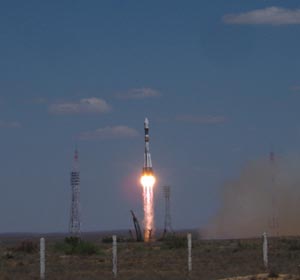
On 15 June, at midday Moscow time, the Bajkonur Cosmodrome in Kazakhstan launched a Soyuz-TM2 rocket carrying the Russian satellite Resurs DK-1. This carried the Payload for Antimatter Matter Exploration and Light-nuclei Astrophysics (PAMELA), which will investigate antimatter and dark matter. A week later, the first scientific data were received, and after a series of tests on the satellite and all the on-board instruments, PAMELA entered continuous data-taking mode on 11 July.
PAMELA will stay in space for at least three years, on a 70° elliptic orbit at an altitude of 300–600 km. Its instruments will measure the flux, energy and characteristics of extragalactic, galactic, solar and interplanetary cosmic rays; it will also investigate dark matter and antimatter in cosmic radiation. More specifically, it will measure cosmic-ray antiproton and positron spectra over the largest energy range ever achieved and will search for antinuclei with unprecedented sensitivity. It will also measure the light nuclear component of cosmic rays and explore phenomena connected with solar and terrestrial physics.
The payload, which is 1.3 m high and weighs 470 kg, consists of a magnetic spectrometer comprising a silicon tracker in a 0.48 T field produced by a permanent magnet, together with a time-of-flight system, an electromagnetic silicon tungsten calorimeter, a “shower-tail catcher” scintillator and a neutron detector, all of which are shielded by an anticoincidence system. Transmission of data takes place several times a day (one complete orbit lasts about 90 minutes) through a telemetry system connected to a main ground station in Moscow. Data are then forwarded to the participating institutes through high-speed connections: an average of 10–20 GB a day (both engineering and scientific information) are collected and transmitted when PAMELA is fully operating.
PAMELA is the result of a collaboration between the Italian National Institute of Nuclear Physics and the Russian Space Agency and research institutes, with the contribution of the Italian Space Agency, and participation in particular of the Swedish Space Agency, the Royal Institute of Technology in Stockholm, the German Space Agency and the University of Siegen, as well as institutes in India and the US. PAMELA is also a recognized experiment, RE2B, at CERN. Tests were conducted in beams at CERN and elsewhere on prototypes, as well as on the detectors in the final flight configuration.
On 20 June, the SPring-8 Compact SASE Source (SCSS) prototype accelerator generated its first pulses at a wavelength of 49 nm in the vacuum ultraviolet (VUV) region. This was achieved using an ultra-low emittance beam provided by an electron gun with a newly developed single-crystal CeB6 thermionic cathode.
The SCSS prototype accelerator is a self-amplified spontaneous emission (SASE) free-electron laser (FEL), similar to the FLASH laser at the TESLA Test Facility. Built during 2004–2005 at the SPring-8 synchrotron radiation facility in Japan, the SCSS has recently been commissioned. Its main purpose is to test components developed at the RIKEN/SPring-8 centre in R&D for an X-ray FEL to generate wavelengths of 0.1 nm (1 ångstrom) using an 8 GeV electron beam. Funded by the Japanese Ministry of Education, Culture, Sports, Science and Technology, construction of this X-ray FEL is scheduled for 2006–2010.
One of the most challenging features of the SCSS is the use of the CeB6 single-crystal cathode to generate an ultra-low emittance beam. The 500 kV electron gun produces a beam current of 1 A, which feeds an injector system of RF cavities and magnetic lenses that have been carefully designed to perform velocity bunching without allowing the emittance to deteriorate. Here the bunch length is compressed several hundred times to produce a beam of a few hundred amps. Then after four C-band accelerating stages, the beam energy reaches 250 MeV.
During beam commissioning, an emittance of 2.9 π mm mrad normalized was measured in the injector, for a bunch charge of 0.25 nC and a bunch length of 1 ps at 50 MeV. Then the SCSS team closed the upstream undulator, and after an hour of tuning observed a narrow spectrum peaked at 49 nm in the VUV. This was totally different to the natural undulator radiation (spontaneous mode). After further careful measurements, first lasing was announced on 20 June.
A team at Harvard University has made a new precise measurement of the electron magnetic moment, which in turns allows the fine structure constant to be determined with an uncertainty 10 times smaller than previously attained.
Gerald Gabrielse and colleagues have measured the value of the constant g of the electron, which relates its magnetic moment to the Bohr magneton, ehbar/2m, where e is the size of the charge on the electron, and m is the electron’s mass. For a Dirac point particle of spin 1/2, g should have a value of 2, but quantum electrodynamics (QED) predicts a value slightly higher, owing to vacuum fluctuations and polarizations effects.
To measure g more precisely than before, the Harvard team has resolved the cyclotron and spin energy levels of an electron confined for several months in a cylindrical Penning trap cooled to 100 mK (Odum et al. 2006). The value they obtained is g/2 = 1.00115965218085(76); the uncertainty of 0.76 ppt is nearly six times lower than the most recent accepted value, measured nearly 20 years ago (Van Dyck et al. 1987).
Working with Cornell University and RIKEN in Japan, Gabrielse and colleagues have used this new value of g with a prediction from QED involving 891 eighth-order Feynman diagrams, to determine a new value for the fine structure constant, α. They obtain α–1 = 137.035999710(96), that is, with an uncertainty of 0.70 ppb – an uncertainty that is about 10 times smaller than for any rival method to determine a (Gabrielse et al. 2006).
Observations of old pulsars by the European Space Agency’s XMM-Newton satellite fail to detect the 1 million-degree hot spots seen around the pole of younger pulsars. The absence of polar X-ray emission in old pulsars casts doubt on the belief that hot spots are produced when charged particles collide with the pulsar’s surface at the poles. It suggests instead that the hot spots are heated from inside the neutron star.
Pulsars are strongly magnetized spinning neutron stars, which emit pulsed radiation, first detected at radio frequencies by Cambridge astronomers Jocelyn Bell-Burnell and Anthony Hewish in 1967. Almost 40 years later, these extremely dense stars, which have roughly the mass of the Sun squeezed into a sphere of only about 20 km across, still hold many mysteries. Astronomers think that neutron stars are formed with temperatures of more than a billion degrees (1012 K) during the collapse of massive stars.
Observations with previous X-ray satellites have shown that the X-rays from cooling neutron stars come from three regions of the pulsar. First, the whole surface is so hot that it emits X-rays. Second, there are charged particles in the pulsar’s magnetic surroundings that also emit X-rays as they move outwards, along the magnetic field lines. Third, younger pulsars show X-ray hot-spots at their magnetic poles.
Until now, astronomers believed that the hot spots are heated by the collision of surrounding particles onto the surface of the neutron star. This happens naturally at the poles owing to the channelling of the charged particles along the magnetic field lines. Such a process is expected to be rather independent of the temperature and hence the age of the pulsar. However, this is not what the XMM-Newton satellite observed for five pulsars. Werner Becker from the Max-Planck Institut für Extraterrestrische Physik (MPE) in Garching and collaborators found no evidence of surface emission, nor of polar hot spots in these pulsars, although they did see emission from the outwardly moving particles.
The lack of surface emission is not surprising because these older pulsars have had several million years to cool down to less than 500,000 °C, the temperature below which they become undetectable by XMM-Newton. However, the lack of polar hot spots is a surprise and means that the particle bombardment of the polar surface is not efficient enough to produce a significant thermal X-ray component.
The XMM-Newton results show that the hot spots fade from view in the same way as the surface-wide emission, thus suggesting a link with the temperature inside the neutron star. As the heat trapped in the pulsar since its birth is carried by electrons, it can be guided to the poles by the intense magnetic field within the pulsar. The new XMM-Newton results support this alternative theory for the origin of the hot spots at the poles of young pulsars. It would mean that the energy heating these polar regions comes predominantly from within the pulsar, rather than from the collision of particles from outside the pulsar.
Further reading
Werner Becker et al. 2006 Astrophysical Journal645 1421.
On 14 February 2006 the first fully instrumented ANTARES detector line was deployed and placed at a predetermined place on the bottom of the Mediterranean Sea, about 40 km off the coast of Toulon, and at a depth of 2500 m. On 2 March, a remote-controlled submarine connected the line to the junction box, the terminal at the end of the 40 km telecommunications cable that leads to the shore station at La Seyne-sur-Mer. On the same day the line recorded the first cosmic-ray tracks. This is the first of 12 lines to be deployed over the next 18 months, after many years of tests that have investigated conditions at the detector site and parts of the detector set-up. An instrumentation line has been taking data smoothly since April 2005 (Aguilar et al. 2006).
ANTARES is one of only a few detectors employing natural seawater or ice as the detector medium to search for neutrinos of extraterrestrial origin. These neutrinos may have been produced in high-energy events in the cosmos, travelling towards us undisturbed by intervening matter or magnetic fields. If their direction can be determined then their origin in the universe can be identified. High-energy neutrinos could also be indicators for certain types of dark matter.
The neutrino is weakly interacting and this sets the scale of the detectors. Only truly gargantuan sizes allow the detection of neutrinos with sufficient sensitivity to be useful. It was an idea of Moissey Markov in 1960 that gave impetus to the possibility of neutrino astronomy. He reasoned that if one concentrated on muon-neutrinos through the detection of a muon produced in a charged-current interaction, then the large range of the muon in matter would allow for large effective volumes. The direction of the muon is closely related to the direction of the neutrino, and if the detection medium is water or transparent ice then the muon can be tracked through its emission of Cherenkov radiation.
For ANTARES, the Mediterranean Sea and the rock below the seabed provide the interaction volume, and the water provides the detection medium. Because of its large scattering length for Cherenkov light, the seawater allows excellent timing and, consequently, good directional accuracy can be obtained. The Mediterranean was chosen because it is in the Northern Hemisphere and provides complementary sky coverage, including the centre of our galaxy, to the AMANDA and IceCube detectors that are operating in the Antarctic ice.
The overall detector consists of storeys suspended at intervals of 14.5 m along a 500 m vertical cable, which is anchored to the sea floor and held vertical by a buoy at the top of the cable. The storeys begin at 100 m above the seabed and there are 25 such storeys on a line. Placing more of these cables at distances of 70 m increases the volume of the detector.
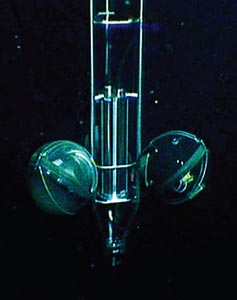
Figure 1 shows a storey in situ in the sea, with the glass pressure spheres housing the 25 cm diameter photomultiplier tubes (PMTs) that are used to detect the Cherenkov light. The PMTs point downwards at an angle of 45° with respect to the vertical. Two are clearly visible, whereas the third is hidden behind the titanium cylinder that contains the electronics for the readout and control of the storey, and an electronic compass, plus a tilt meter. A hydrophone, used for acoustic positioning, is located at the bottom of the storey.
The PMTs operate at a threshold of 0.4 photoelectrons. All the data produced by the tubes are transferred via an optical cable to the shore, where a farm of computers processes the data to extract interesting events. Because of radioactive potassium present in the seawater, each PMT has a base rate of about 60 kHz; bioluminescent life in the seawater may increase this rate. It is the task of the software running on the computer farm to recognize the presence of a muon track among the background hits. At present the software is able to perform this task up to about five times the base rate. However, conditions at the bottom of the sea can vary significantly. There was a period of relative calm just after deployment, followed by two months of high bioluminescent activity, making data-taking difficult; now the background activity has subsided and normal data-taking has resumed.
The present software selects slices in time and searches for the passage of muons through their time patterns in the PMTs along the string. The final stage of the process is a χ2 minimization fit to the height versus time pattern. The reconstructed data set is dominated by down-going muons originating from high-energy cosmic-ray showers in the atmosphere. The main signature of a neutrino-induced muon is that it originates from below, in which case the Earth acts as a very effective filter against the directly produced muons.
Figure 2 shows two examples of reconstructed tracks from data from the first ANTARES line. Figure 2a shows a vertical muon track, where the signal propagates down the line with the velocity of the muon, and figure 2b shows a slightly more inclined track identified by the change in the signal’s vertical propagation velocity, before and after the closest approach. So far several thousand tracks of down-going muons have been reconstructed and a few candidates for up-going muons have also been observed.
The ANTARES Collaboration is now in full swing analysing the data coming from this first detector line. The experience of the first line shows that we are on track towards a full neutrino telescope in the Mediterranean and we look forward to several years of data-taking.
Understanding our universe from basic physics is an ambitious goal involving many disciplines in physics. One key ingredient is nuclear astrophysics, with its focus on explaining energy production and chemical evolution in the universe – topics that are coupled through nuclear reactions that transform elements and may also release energy. The first overview of the synthesis of elements was about 50 years ago, with the work of Geoffrey and Margaret Burbidge, Willy Fowler and Fred Hoyle, and, independently, Al Cameron. Although there had been some important work earlier in the 20th century, this was the defining moment for nuclear astrophysics.
At the end of June, nearly 250 astronomers, astrophysicists, cosmologists and nuclear physicists met at CERN for the ninth Nuclei in the Cosmos meeting to summarize the status of the field. Organized by a team from the Isotope Separator On Line (ISOLDE) and Neutron Time-of-Flight (n_TOF) facilities at CERN, it was dedicated to the memory of Al Cameron, Ray Davis and John Bahcall, all of whom have recently died and had played major roles in helping to understand the production and role of nuclei in the cosmos.
Nuclei, of course, consist of smaller particles and the meeting reviewed recent developments in cosmology and their possible connection to particle physics. While at one time particle physics provided input for calculating the abundances of elements created during the early universe in Big Bang nucleosynthesis, nowadays the results from the Wilkinson Microwave Anisotropy Probe yield the baryonic density of the universe, which is used in calculating the abundances. However some problems in reconciling observations and calculations for the primordial elements remain, in particular for the two stable lithium isotopes, 6Li and 7Li.
Analysing nuclear ashes
Optical observations of stars reveal their element abundances. Old stars are metal-poor (following the convention in astronomy that all elements above helium are metals) and the heavy elements in them appear to be made exclusively by rapid neutron capture – the r-process. Only later in galactic evolution does the s-process – slow neutron capture – begin to contribute as well. The relative abundances for elements above barium fit well with r-process abundances deduced for solar-system material, but for lighter elements there are differences that could indicate the presence of a second (“weak”) r-process. The coming years should bring clarification as the amount of observational data will increase significantly owing to the large-scale surveys, the Hamburg/ESO R-process Enhanced Star survey and the Sloan Digital Sky Survey.
Another fruitful source of abundance data comes from presolar grains embedded in primitive meteorites. Here a recent breakthrough has been the extraction of isotopic ratios for many different grains. Such detailed information about isotope abundance helps in constraining the astrophysical conditions in which the grains were formed.
Refinements in knowledge of element abundances are not restricted to distant stars. An improved modelling of the solar atmosphere indicates that solar abundances of most “metals” should be decreased by more than a third. This change arises from a more careful and more dynamic treatment of the outer solar layers.
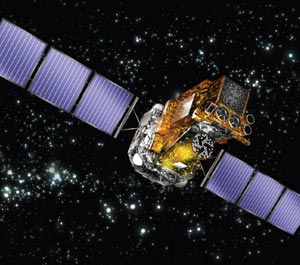
More direct evidence for nuclear processes in stars comes from the observation of the radioactive isotopes that are produced. High-resolution gamma-ray spectrometers have operated in space for some years, for example on the INTEGRAL satellite (figure 1). Several galactic radioactive decays have been observed through their gamma-emission lines, such as those of 26Al, 44Ti and 60Fe, although the decay of 22Na and positron emission both remain to be seen. Many of the radioactive isotopes found on Earth also stem from stellar events. A recent addition to the list is 60Fe, which has been identified in deep-ocean material by the highly sensitive accelerator mass spectrometer technique, indicating that a supernova exploded near the Earth about 2.4 million years ago.
Modelling the evolution of stars and their sometimes violent end requires the coordinated work of many people. It is rather like assembling a giant multi-dimensional jigsaw puzzle, but one in which the pieces have first to be found. Some researchers concentrate on finding these pieces, while others focus on how to fit them together to form a coherent picture. However, we have still not identified the important ingredients for all stellar events.
For normal, “quiet” stellar burning, the nuclear reactions take place between stable isotopes, but with extremely small cross-sections that are hard to reproduce in the laboratory. Major efforts during the past decade have improved the situation, and participants at the meeting heard of progress on one of the remaining challenges, the reaction 12C(α,γ)16O, which is a key reaction for the processes responsible for the production of many elements.
At higher temperatures reaction rates increase and reactions involving radioactive nuclei need also to be known. A major highlight at the meeting in terms of nuclear data is a recent good estimate of the reaction rate for the key radiative alpha-capture process on 15O, which has been pursued for more than 20 years. The direct measurement of radiative proton-capture on 26gAl and alpha-capture on 40Ca was also presented. Lastly, reaction rates for several neutron-induced reactions were reported; these will have important implications for understanding the synthesis of elements heavier than iron – the “neutron capture elements”.
Very high temperatures belong to the domain of cosmic explosions – novae, supernovae, X-ray bursts and gamma-ray bursts – which have a fascinating history and rightly continue to attract attention. Numerical results presented at the meeting indicate that first-generation nova explosions occur at higher temperatures than classical novae. They could therefore be more important players in the early universe, but more studies are needed to confirm this.
A highlight of the conference was the presentation of successful computer simulations of supernova explosions (figure 2). Here, the key new ingredient is to follow the two-dimensional hydrodynamic evolution to long durations after the core-collapse, when the inner part has become a highly non-spherical object with significant fluctuations. The violent conditions in a supernova are perfect for cooking elements and the meeting heard about a new mechanism, the np-process, in which the strong neutrino fluxes play a more versatile role in the nucleosynthesis than imagined earlier. An exciting report on quantitative calculations of the r-process suggested that nuclear fission, and in particular neutron-induced fission, might play a very important role for the dynamics in later stages of the r-process.
It was clear from the meeting that nuclear astrophysics is rapidly evolving. The next meeting in the series will provide another snapshot of the status of the field, when it takes place in the US in 2008, hosted by the Michigan State University/National Superconducting Cyclotron Laboratory and the Joint Institute for Nuclear Astrophysics.
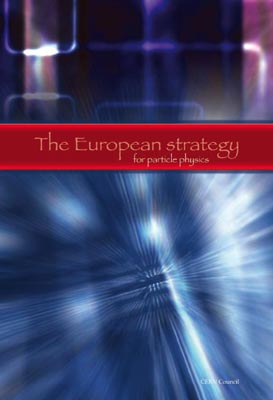
In June 2005, the president of the CERN Council, Enzo Iarocci, proposed that an ad hoc scientific advisory group be established to produce a draft European strategy for particle physics. The Strategy Group was charged to meet at a one-week workshop during the first week of May at Zeuthen, near Berlin, to work out the draft strategy. Council met in Lisbon on 14 July 2006, discussed this draft, and adopted the European strategy for particle physics.
The Strategy Group brought together a broad competence. It had one member nominated by each of the CERN member states and the directors of the major European particle physics laboratories. In addition, there were eight members from the CERN Scientific Policy Committee and the European Committee for Future Accelerators, who, together with the scientific secretary and the co-chairs, made up the Preparatory Group charged with the work needed to bring the meeting in Berlin to a successful conclusion.
For the Strategy Group meeting seven representatives were also invited from the CERN observer states, and from the Astroparticle Physics European Coordination (ApPEC) Committee, the Nuclear Physics European Collaboration Committee (NuPECC) and the Funding Agencies for the Linear Collider (FALC).
The process towards the European strategy for particle physics had four essential elements: the Strategy Group Web page, an open symposium held in Orsay from 29 January – 1 February, a Briefing Book containing the information needed to develop the strategy, and the Zeuthen meeting of the Strategy Group.
The Strategy Group Web page was the main channel for communication with the community. Minutes of the Preparatory Group meetings were posted on the website, usually within 24 hours of the meeting. More importantly, it was possible to submit contributions to the discussions through the website; 71 individuals and groups did so. The website also provided a set of links to background material.
The Open Symposium hosted by the Laboratoire de l’Accélérateur Linéaire in Orsay was a key stage in, the process. It was attended by more than 400 people, with at least 70 more following the proceedings via a webcast. The programme comprised of a series of talks aimed at identifying the key issues for a range of different topics. A particular feature of the symposium was that more than half of the time was devoted to discussions, and this time was indeed filled with a lively exchange of views.
The Briefing Book consisted of three volumes, all of which are accessible from the Strategy Group Web page. The first volume was written by the Preparatory Group, and covered scientific activities (largely based on the presentations and discussions in Orsay) and more general issues. The second volume covered the input received via the website, reports from laboratories, funding agencies and others in response to written requests, and other information that the Preparatory Group felt would assist the development of the strategy. The third volume contained the agenda for the meeting in Zeuthen, procedural details, a standardized vocabulary to describe projects and scientific objectives, and the templates for the strategy statement itself.
The full Strategy Group and official observers met at DESY in Zeuthen on 2 May. This first day was open to anyone and was also broadcast via the Web. It was devoted to talks from three invited speakers, the directors of the invited laboratories and the representatives of the observer states. On the second day, six groups studied the frontier questions in particle physics; improved understanding of the Standard Model; non-accelerator physics and the interface to cosmos; the strong interaction and the interface with nuclear physics; organization issues for the universities, national laboratories and CERN; and inter-regional collaboration. On day three, a plenary session covered the reports from the working groups and agreed preliminary conclusions on elements of the strategy. The next day, while a draft working document was assembled based on the previous day’s discussions, five groups worked in parallel on the needs of theoretical particle physics, industry, technology and knowledge transfer, education and outreach.
The draft strategy document was discussed at Zeuthen in a plenary session on the fifth day. Participants reached a consensus on the general statements, scientific activities and organizational issues, and provided detailed guidance on the complementary issues, which were incorporated following consultations with the chairs of the appropriate working group, thus fulfilling the remit.
Now that Council has adopted the European strategy for particle physics, and with it the responsibility to maintain and update it, the work is done, and the Strategy Group has been dissolved.
Many people were engaged in this process: local organizing committees, speakers and participants at the different discussions. Colleagues submitted opinions and ideas, and all involved people were very committed. We are all very grateful for these contributions.
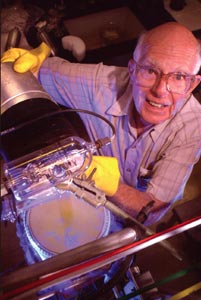
Raymond Davis Jr, discoverer and grand pioneer of the solar-neutrino problem, died on 31 May at the venerable age of 91. In 1968 he discovered the solar-neutrino anomaly and more than three decades later he received the 2002 Nobel Prize in Physics. This followed other experiments based on different techniques, which demonstrated that the anomaly was neither an artifact of his experiment nor an error in the late John Bahcall’s theoretical calculations of the neutrino flux from the Sun; it was indeed a real physical effect. Simultaneously, Davis had shown that the Sun generates its energy by nuclear fusion of hydrogen into helium, and that the electron-type neutrinos created in this process change into other types of neutrino during their eight minute journey to Earth.
By his own account, Davis was drawn to the study of neutrinos out of a sense of adventure. He was invited to join the fledgling Brookhaven National Laboratory in 1948 and asked the chairman of the chemistry department about his duties. To his “surprise and delight” Davis was told to choose his own project. In the library he found a review article on neutrinos by H R Crane that clearly indicated that the field was wide open for exploration and rich in problems. Here was the path, leading he knew not where, which would enable Davis to follow his goal of studying nuclear physics using the techniques of physical chemistry.
His vehicle was a nuclear reaction suggested by Bruno Pontecorvo in 1946: a neutrino captured by a specific isotope of chlorine produces an electron and a radioactive isotope of argon. Sources of chlorine were plentiful and cheap, and argon, a noble gas, could easily be extracted from a chlorine solution. Davis counted the atoms of the argon isotope by observing the decay back to chlorine. Over the years, he tested and refined the method so that it became totally reliable as a procedure for measuring even a tiny number of argon atoms produced in Pontecorvo’s chlorine reaction.
The only copious sources of low-energy neutrinos are nuclear reactors and the Sun. Reactors produce antineutrinos from the beta-decay of heavy nuclei following the fission of uranium, while the Sun produces neutrinos in the fusion of hydrogen nuclei into helium. When Davis was beginning his experiments, the distinction between neutrino and antineutrino was not well understood and there was a serious possibility that they were identical particles. It was therefore natural for him to use reactors as the neutrino source. In fact, he worked at the Savannah River reactor at the time when Clyde Cowan and Fred Reines were performing their Nobel prize-winning experiment there using inverse beta-decay as their signal. Whereas they obtained a positive result, making the first observation of the antineutrino, Davis obtained a null result with the chlorine reaction, indicating a distinction between neutrino and antineutrino.
Davis then turned his attention to detecting neutrinos from the Sun and recognized that it was necessary to go deep underground to avoid cosmic-ray backgrounds. He also realized that observing neutrinos from the Sun would be a way of demonstrating that it generates its energy via nuclear fusion. In the early 1950s, it was known that the proton–proton fusion chain did not produce neutrinos of sufficient energy to reach the threshold for the chlorine reaction, but by the end of the decade new discoveries in nuclear physics suggested that there were additional fusion chains that produced neutrinos well above the threshold. Davis began to collaborate with Bahcall to design an experiment to observe these neutrinos.
By 1964, they were ready to propose an experiment and they published side-by-side papers in Physical Review Letters. Bahcall combined the standard model of the Sun with the relevant nuclear physics to calculate the energies and fluxes of the various branches of the solar-neutrino spectrum. Davis described an experiment to observe the higher-energy neutrinos using a 100,000 gallon tank of cleaning fluid (perchlorethylene) located deep underground. Bahcall tells an interesting story of how Davis persuaded Maurice Goldhaber, then director of Brookhaven National Laboratory, to support the experiment. Knowing that Goldhaber was very sceptical of astrophysical calculations, Davis instructed Bahcall not to mention the solar astrophysics, but to emphasize instead the novel nuclear physics involved in the chlorine reaction. Goldhaber loves a clever idea, having generated many himself, and so, as Davis predicted, he responded positively to Davis’ request.
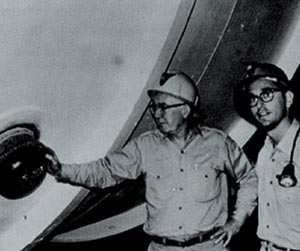
In 1968, Davis reported that the first measurements from the experiment carried out 4850 ft underground in the Homestake gold mine in Lead, South Dakota, yielded a solar-neutrino capture rate approximately a third of that predicted by Bahcall and G Shaviv. This “socially unacceptable result”, as Bahcall later described it, caused widespread concern among both physicists and astrophysicists. Some thought that the problem lay with the experiment, others with the theory and a few with the neutrino. In the end the third option turned out to be correct, but it required an experimental and theoretical odyssey that lasted three and a half decades and ranged all over the world, from the mine in South Dakota to other mines and laboratories deep inside mountains in Japan, Russia and Italy, and finally to a nickel mine at Sudbury in northern Ontario, Canada.
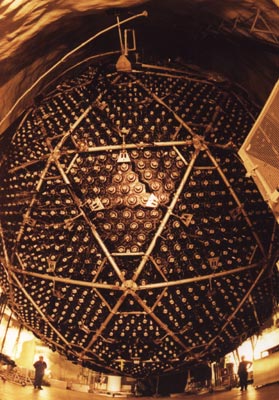
The experiments themselves were remarkable in their uniqueness. Davis’ experiment required a 100,000 gallon tank specially built by the Chicago Bridge and Iron Company, and it took 10 railroad tank cars of cleaning fluid to fill it. The detector in Japan was the size of a 10 storey building. It was filled with extremely pure and continuously purified water and was surrounded by 11,000 20-inch phototubes. The neutrino detector in Russia, located deep inside the Caucasus Mountains, contained the world’s total supply of gallium, about 60 tonnes. It took two years to produce an additional 30 tonnes of gallium for an independent experiment under the Gran Sasso Mountain of central Italy. The experiment in Canada, originally proposed by the late Herbert Chen many years ago, would not have been possible without the loan of a kilotonne of heavy water from the Canadian government.
Throughout this journey, Davis continued his role as grand pioneer of the solar-neutrino problem. He kept the chlorine experiment going long after he retired from Brookhaven National Laboratory in 1984. He helped to develop the radiochemical experiment based on gallium, sensitive to the most-copious and lowest-energy solar neutrinos from the proton–proton chain, and he followed all the latest developments with a keen interest. Ultimately, at the beginning of the 21st century, the heavy-water experiment at Sudbury measured both the total highest-energy neutrino flux from the Sun and its electron–neutrino component. It confirmed Davis’ original results as well as Bahcall’s theoretical calculations, and it crowned Davis’ claim on the Nobel prize.
Davis had a truly inquiring and adventurous mind. “When I began my work, I was intrigued by the idea of learning something new,” he once said. “The interesting thing about doing new experiments is that you never know what the answer is going to be!” He was a scientist of great integrity and modesty: what mattered to him was not himself, but the science in which he was involved. Whenever colleagues asked questions or offered criticisms of his experiment, he would always devise new tests to check their ideas and make any necessary corrections. But he also had a wry sense of humour: when asked at a conference in the 1970s how much his experiment cost, he replied: “Ten minutes time on commercial television.”
Through his persistence, integrity and humility Davis spawned a revolution in neutrino physics and gave us a beautiful example of how different sciences can help one another to make fundamental discoveries. He stands as a model for all aspiring scientists to emulate.
I am not a particle physicist. I have spent most of my career as an economist and a university president with a sustained interest in science policy and its relationship to the health of the scientific enterprise and to long-term economic growth. But when the US National Research Council asked me to chair an independent committee of both physicists and non-physicists to look at the future role of the US programme in elementary-particle physics, I welcomed the chance to learn more about this intriguing area of science.
Some might wonder why such an unusual group of experts would be convened to provide advice to the US federal government on particle physics. Indeed, the committee that I chaired included members with expertise in particle physics, other branches of physics, engineering, scientific fields outside of physics, and even several non-scientists. Members from the larger international community of particle physicists were included as well. In many respects the nature of the strategic issues facing the US programme in particle physics required both fresh perspectives from a broader context and penetrating analysis to provide a credible path forward. To be frank, one of the first questions facing the committee was simply, “Does particle physics, especially accelerator-based experiments, still matter?”
During its work, the committee engaged in a comprehensive set of data-gathering activities, including public meetings, letters to and from the global community, and numerous formal and informal discussions with stakeholders around the world. As part of our work, I travelled to the major particle-physics facilities in the US, Europe and Japan. In the US, most of the major facilities are scheduled to be shut down or converted to other uses within the next few years. Europe and Japan, in contrast, have recognized the scientific potential of particle physics and have been increasing their investments.
With respect to the US programme, what I found was a scientific field at a crossroads. Particle physicists could be on the verge of answering questions that human beings have asked for millennia. What are the origins of mass? Can the basic forces of nature be unified? How did the universe evolve? Why does it have the properties that it does? But even as the scientific opportunities have blossomed, our political and social will to sustain US commitment to this field has faltered. US leadership, together with that of our colleagues abroad, is important because it is critical to reaping the scientific, technological, economic and cultural dividends that come from advancing the scientific frontier.
As the field of particle physics took shape in the middle of the 20th century, America’s scientists focused on experiments designed to measure and explain the properties and forces governing the ultimate constituents of matter. Since then, even as the field became increasingly internationalized with distinguished centres abroad, the US has been home to some of the world’s most accomplished theorists, a diverse array of experiments, and some of the largest particle accelerators. Moreover the US has welcomed and greatly benefited from the intellectual and financial input of scientists from around the world. The US role in particle physics both anchored and symbolized the growing distinction and reach of the overall US scientific enterprise.
Before continuing, let me say something about the word “leadership,” especially with such an international audience where this term may carry nationalistic or even imperialistic overtones. In the context of current discussions about globalization, “the flat world” and the growing interdependence of national efforts around the world, what does leadership mean for the US in a field such as particle physics? Leadership does not mean dominance, but rather taking initiative at the frontiers, accepting appropriate risks, and catalysing partnerships both at home and abroad. Given the wide distribution of talent and facilities it is not only futile but an irresponsible use of public resources for any country or region to aspire to dominance. In the world that lies before us, leadership will be a shared phenomenon that flows from developing and brokering mutual gains among equal partners. In articulating a strategy for the US, the committee sought a path that leveraged US strengths for the benefit of not only the domestic programme, but also the global enterprise. In terms of scientific facilities, this means that we must move from a paradigm of “We’re going to build this, will you help us?” to one of “What can we build together that will benefit us all?”
The US is now on the verge of forfeiting its role among the international leaders in particle physics. Operations at the Large Hadron Collider (LHC) in Europe will soon begin and it will become the world’s most powerful accelerator. Like many other fields in the physical sciences, federal funding for particle physics in the US has stagnated for more than a decade, and the field is gradually losing US researchers and students. Within a few years, the majority of US experimental particle physicists will be working on experiments that are being conducted in other countries. Simply put, the intellectual centre of gravity is moving abroad and the US has not put forward a compelling strategic vision to contribute to the global enterprise.
This potential retreat of the US programme in particle physics from the scientific frontiers could not be happening at a worse time. Particle physics is entering one of the most exciting periods in its history. The technologies needed to do experiments at the terascale are now available, and both theoretical and experimental results point towards revolutionary new discoveries that will be made at this scale. Physicists could not only discover new dimensions and the particles responsible for mass (or other phenomena unimagined today), but these experiments could also provide clues to the nature of dark energy and dark matter, which are essential to our comprehension of the universe. Indeed in the next few decades particle physics could yield a radical new view of the cosmos.
Even as the Europeans have been finishing the LHC, particle physicists worldwide have been designing the next generation of particle accelerator. Known as the International Linear Collider (ILC), this new tool would comprise two accelerators that fire electrons and anti-electrons at each other head-on, probing conditions that existed just a fraction of a second after the birth of the universe. The ILC is so important and so large an undertaking that it can only arise from a global effort. The potential role of the US in building, supporting, and perhaps hosting the ILC is now a key to the continued distinction of the US programme. Indeed, participation in the scientific opportunities addressed by the ILC is likely to be important for any nation actively engaged in particle physics, but it is particularly important now for the US because of the absence of any other key strategic focus.
To ensure its vitality in particle physics and to contribute effectively to the global effort, the US must be willing to do three things. First, it must maintain a broad range of theoretical and experimental programmes, since new discoveries often come from unexpected places. Second, it must make a commitment to participating in the direct and controlled exploration of the terascale. In part, that means supporting the work of US scientists at the LHC. It also means investing the risk capital so that the US can be in a position, four or five years from now, to mount a compelling bid to host the ILC – if the US decides then that it is still in its best interests to compete for the ILC. For the US to mount a compelling bid, however, it must not only demonstrate the technical capabilities and economic resources necessary for hosting the ILC, but it must also demonstrate the energy, enthusiasm and commitment that are required to be a credible international partner. Moreover, the science of the terascale is so compelling that the US should play a strong role in the ILC no matter where it is sited. Third, to ensure a responsible use of public funds, the US must make an increased commitment to establishing mutually advantageous joint ventures with its colleagues abroad.
Scientific leadership, like competitiveness, is won generation by generation, but once it is lost it is difficult for the next generation to win it back. Students stop enrolling in graduate programmes, university departments scale back or shut down, researchers emigrate, retire or move to other fields. Maintaining the leading role of the US will need continued federal support, probably at a greater level than at present if the US mounts a compelling bid and is chosen to host the ILC. But the history of science demonstrates that our investments can be expected to repay themselves many times over.
To provide the best experiences, we use technologies like cookies to store and/or access device information. Consenting to these technologies will allow us to process data such as browsing behavior or unique IDs on this site. Not consenting or withdrawing consent, may adversely affect certain features and functions.
Functional
Always active
The technical storage or access is strictly necessary for the legitimate purpose of enabling the use of a specific service explicitly requested by the subscriber or user, or for the sole purpose of carrying out the transmission of a communication over an electronic communications network.
Preferences
The technical storage or access is necessary for the legitimate purpose of storing preferences that are not requested by the subscriber or user.
Statistics
The technical storage or access that is used exclusively for statistical purposes.The technical storage or access that is used exclusively for anonymous statistical purposes. Without a subpoena, voluntary compliance on the part of your Internet Service Provider, or additional records from a third party, information stored or retrieved for this purpose alone cannot usually be used to identify you.
Marketing
The technical storage or access is required to create user profiles to send advertising, or to track the user on a website or across several websites for similar marketing purposes.