Comsol -leaderboard other pages

Topics

CMS installs the world’s largest silicon detector

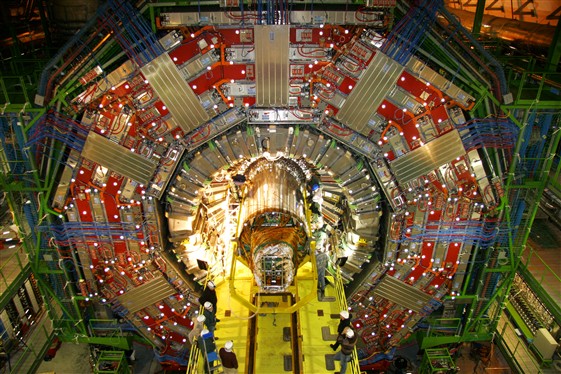
insertion of the CMS microstrip tracker

In December 1999 the CMS collaboration made the daring decision to change its tracking detector from a design that included gaseous detectors to one constructed entirely from silicon sensors, using both microstrip and pixel technology. On 15 December 2007, teams working in the cavern at Point 5 on the LHC installed the microstrip tracking system into the experiment. The pixel detector will soon follow, completing the CMS Tracker and marking the culmination of eight years of careful work to design, prototype, construct and commission the largest silicon detector ever built.

The collaboration envisaged a tracking system 40 times larger than any existing silicon detector system, with a performance comparable to the vertex detectors used at LEP. The detector would house about 205 m2 of silicon sensors (approximately the area of a tennis court) comprising 9.3 million microstrips and 66 million pixels. The aim was to achieve a precision of about 10 μm in spatial and vertex reconstruction resolutions – enough for excellent identification of heavy flavour hadrons – and excellent momentum measurement over a wide momentum range at the LHC. The readout would require 73,000 radiation-hard, low-noise microelectronics chips, almost 40,000 analogue optical links, 1000 power supply units and 500 off-detector readout and control modules. The complete system would be constructed in two halves from nine separate subdetector units: two each of microstrip inner barrels, outer barrels and endcaps, three pixel units in the form of a barrel system and two identical forward units.
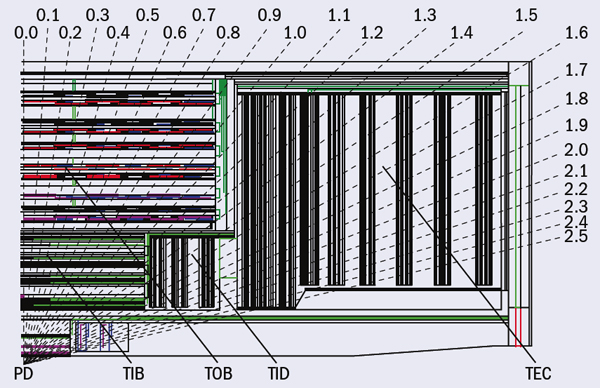
diagram of a quarter of the detector

In June 2000, the LHC Committee approved the Technical Design Report for the new design and the project formally got underway. A collaboration of more than 500 physicists and engineers from 51 institutions based in Austria, Belgium, Finland, France, Germany, Italy, Switzerland, the UK and the US, as well as from CERN, took joint responsibility for the project. They agreed that the inner barrel would be constructed by an Italian consortium, the outer barrel system by CERN together with Finnish and US groups, and the two endcaps by European teams. Swiss groups would build the central barrel region of the pixel system and a US collaboration would provide the forward pixel units.

The assembly project
The detailed design of each of the subdetector units took several years, including extensive testing of prototype sensors, modules and the readout, cooling and power systems. Production of the microstrip detector modules began in November 2004 using the sensors, hybrids and electronic components developed during the earlier phase – all of which had been thoroughly studied and evaluated to ensure maximum reliability and performance. Production of these modules was complete by March 2006. Then, after further substantial testing and thermal cycling, they were ready for mounting onto low-mass carbon fibre substructures with pre-assembled cooling circuits.

The project also became a massive worldwide logistical activity. The microstrip sensors were manufactured in Japan, with contributions from Italian industry, and shipped to Europe and the US for evaluation. The sensors were then moved to other European and US destinations for construction into modules using customized automated assembly equipment that CMS engineers had devised; and they journeyed further still for assembly into sub-units such as rods for the outer barrel, shells and discs for the inner barrel, and petals for the endcaps. The pixel system involved a similar transporting of parts, starting with commercially manufactured sensors from Norway.

The electronic readout system relied on developments in radiation-hard electronics and innovations in optical links, technologies that evolved rapidly in the 1990s. The CMS system culminated with the APV25 – the first large readout chip for a particle-physics experiment to use 0.25 μm CMOS integrated circuit technology – and novel analogue fibre-optic links. Much of this development was the responsibility of groups in the UK and teams at CERN, who worked closely with other CMS groups to assemble the elements of the readout system. CERN designed a set of control and ancillary chips using 0.25 μm CMOS technology, extensively exploited both in the Tracker and throughout CMS.

The collaboration also subcontracted a great deal of the assembly work to industries in several countries, including Austria, France, Italy, Japan, Switzerland and the UK

The automated assembly pioneered for this enormous system was vital for constructing thousands of modules quickly, so that the 15,200 required could be delivered on time. It also generated a huge interconnection requirement. Each module was assembled from one or two microstrip sensors, which had to be connected to the APV25 readout chip. The module chips also had to be bonded to their low-mass carrier. The intensive use of automatic-wire bonders met this demand and maintained consistent throughput with few delays, despite occasional variations in bond quality and rejection of sub-optimal modules.

The collaboration also subcontracted a great deal of the assembly work to industries in several countries, including Austria, France, Italy, Japan, Switzerland and the UK. In partnership with CMS institutes, the companies manufactured components and produced electronics boards, mounting and aligning semiconductor lasers, optical fibres, photodiodes, and analogue and digital electronics, including field-programmable gate arrays that were then state of the art. All modules were thoroughly tested in industry – often using CMS-constructed test equipment – then re-tested for acceptance in CMS laboratories. It is impossible here to do justice to the efforts of the CMS institutes, all of which took on significant tasks in assembly, evaluation and procurement.

Collaboration members constructed new facilities in many institutions for assembling the subdetectors, as well as expanding and utilizing large laboratories such as at CERN, Fermilab and Pisa. Aachen assembled one of the Tracker endcaps, while Florence, Pisa and Torino jointly integrated the inner barrels and discs. There were intensive reviews at all system levels for each stage of production and integration to ensure that quality and performance were maintained.
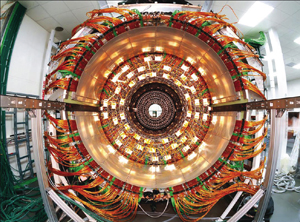
microstrip tracker

On the main CERN site, CMS built a facility to assemble the final detector and to provide an environment where a substantial fraction of it could be fully commissioned before final installation into CMS at Point 5. The Tracker Integration Facility is a 350 m2 class 100,000 cleanroom, which was also used to integrate the entire outer-barrel system and the second endcap. Each subdetector underwent testing and thermal cycling before transportation to CERN. Further acceptance tests took place after arrival before final integration into the support structure.

The two halves of the outer barrel were built inside the Tracker support tube, which is a low-mass carbon fibre cylinder 5.4 m long and 2.5 m in diameter. The outer-barrel subdetector was completed in November 2006. The inner-barrel halves arrived at CERN in April and September 2006 for final testing before insertion into the outer barrel. The first half section was placed in position in December 2006 and the second half inner barrel and the endcap followed rapidly, with integration of the second endcap completed on 22 March 2007.

As each subdetector was assembled, the teams re-tested it to ensure that it continued to achieve the required performance. The integration facility included rack-mounted electronics, cooling and air-conditioning, which allowed the Tracker to observe cosmic-ray events before installation underground. This incorporated a quarter of the complete safety, control, power, data-acquisition and computing systems for the Tracker – destined eventually for the CMS caverns – including electrical and optical cables, which were to be re-used to keep down costs.

From March until August 2007, all aspects of the Tracker underwent testing, including safety, control and monitoring systems.Several million cosmic-ray events were recorded at five operating temperatures ranging between –15 °C and +15 °C. The data were reconstructed using the CMS-distributed computing Grid and were analysed throughout the world. All systems operated reliably during this five-month period and the collaboration verified that the assembled detector met the performance specifications.

Analysis of the cosmic-ray data shows that the performance of the microstrip tracker is excellent. The number of inactive strips is below one part in 2000; noisy strips do not exceed 0.5%. The signal-to-noise ratio, which depends on sensor thickness, was about 28 for 300 μm sensors. Measurements showed the track cluster finding efficiency to be better than 99.8%. All of these results meet or exceed expectations, which bodes well for LHC physics.
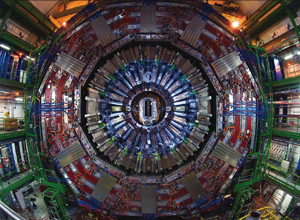
Final installation
At the CMS experimental area at Point 5, preparation for installing the Tracker began before the solenoid magnet was even lowered into the cavern in February 2007. Installation and testing of the cooling plants, power systems and off-detector readout electronics, as well as control and data-acquisition systems took place throughout 2007.

The final performance of the subdetectors in LHC collisions is crucially dependent on the electrical quality of the underground environment, which will only become fully understood after the experiment is complete. The Tracker’s electronics are exquisitely sensitive to tiny signals and must be protected against unwanted noise. To achieve this, 32 interconnection units (patch panels) serving different sectors of the Tracker were installed at the edge of the CMS solenoid, through which all electrical power and cooling services – as well as optical fibres and monitoring wires – pass. The patch panels filter electronic noise and will permit in situ optimization of the detector’s grounding. They also provide termination for cooling, optical links and electrical cables so that all services could be tested as far as possible in CMS before the Tracker arrived.

By late September 2007, the installation teams had completed the massive task of installing cooling systems for 450 loops, 2300 power and 400 fibre-optic cables. The microstrip tracker was transported overnight to Point 5 on 12 December and installation into CMS was completed over the following two days. Connection of the services from the patch panels to the Tracker, and commissioning the Tracker with the rest of CMS, will be completed this spring.

The pixel system
Although a physically smaller device, the pixel system has about a factor of seven more channels. Being at the centre of the detector, concern about minimum material budget and higher radiation levels necessitates even greater attention. Interconnection technologies – especially fine-pitch bump bonding, which were not yet mature for applications in particle physics – had to be studied and, in some cases, developed in CMS labs to allow construction of the detector. The pixel assembly project followed a similar course to the microstrip tracker, with significant transport of parts around the world. Fermilab was at the centre of US activity, and was where the final assembly of the forward system was completed following plaquette construction at Purdue University. The team at the Paul Scherrer Institute (PSI) assembled the barrel subdetector with the collaboration of Swiss universities. PSI also designed the pixel readout chip, while other chips were developed in PSI and the US; the pixel detectors have also exploited components from the microstrip tracker.

The pixel system is scheduled for insertion into CMS following the installation and bake out of the LHC beam pipe in April. The complete forward subdetector was transported to CERN from Fermi-lab in December 2007 and is now undergoing extensive system tests at the Tracker Integration Facility. The barrel subdetector is also complete and currently being commissioned at PSI. It will be transported to CERN in April.

New symposium links the vacuum and the universe

CCvac1_02_08

The first Austria–France–Italy (AFI) symposium, From the Vacuum to the Universe, took place on 19–20 October at the University of Innsbruck. Inspired by developments in particle and astrophysics, it explored the physics of the vacuum, its manifestations in the subatomic world and its consequences for the large-scale structure of the universe. Studies of quark confinement; searches for the Higgs boson and other LHC physics; neutrinos; cosmic rays; and astrophysical probes of dark matter – all promise to reveal vital information about the structure of the universe, from the scale of QCD to tera-electron-volts.

The physical world is built from spin-1/2 fermions interacting through the exchange of gauge bosons: massless spin-1 photons and gluons; massive W and Z bosons; and gravitational interactions. The Pauli exclusion principle (PEP), which says that two identical fermions cannot exist in the same quantum state, is responsible for the stability of the physical world and is a pillar of chemistry. Further ingredients are needed to allow the formation of large-scale structures on the galactic scale and to explain the accelerating expansion of the universe. These are the mysterious dark matter and dark energy, respectively. Current observations point to an energy budget of the universe where just 4% is composed of atoms, 23% involves dark matter (possibly made of new elementary particles) and 73% is dark energy (the energy density of the vacuum perceived by gravitational interactions).

The AFI meeting, with a mix of colloquium talks and discussion sessions, deliberated the interplay of this physics and possible synergies between different methods to learn about the physics of the vacuum. It also considered the use of particle physics to understand problems in astrophysics and the large-scale structure of the universe.

The vacuum is associated with various condensates. The QCD scale associated with quark and gluon confinement is around 1 GeV, while the electroweak mass scale associated with the W and Z boson masses is around 100 GeV. These scales are many orders of magnitude less than the Planck-mass scale of around 1019 GeV, where gravitational interactions are supposed to be sensitive to quantum effects. The vacuum energy density associated with dark energy is characterized by a scale around 0.002 eV, typical of the range of possible light neutrino masses, and a cosmological constant, which is 54 orders of magnitude less than the value expected from the Higgs condensate and no extra new physics. Finally, the mass scale associated with dark matter remains to be determined. The physics of confinement, the origin of electroweak symmetry breaking, the nature of dark matter and why the dark-energy scale is finite and so much less than the electroweak and QCD scales, are fundamental questions for sub-atomic physics and its consequences for the macroscopic world.

For fermions, the VIP Collaboration at Frascati and Gran Sasso is performing precise new tests of the PEP for electrons, as Johann Marton of the Austrian Academy of Science described. These experiments look for anomalous 2p → 1s X-ray transitions in copper. Recent results have reduced the probability of a violation of the PEP by two orders of magnitude, with results of tests to a further two orders of magnitude expected shortly. The parameter characterizing possible PEP violation is currently measured to be β2/2 < 6 × 10–29.

CCvac2_02_08

The origin of mass is a fundamental problem in QCD and electroweak physics. In QCD the coupling constant that describes the strength of quark–gluon interactions (and gluon–gluon) grows in the infrared. It becomes so large that the quarks and gluons are confined, and in isolation particles carrying the colour quantum number can propagate a maximum distance of only around 1 fm. Reinhard Alkofer of Karl-Franzens University, Graz, explained that recent studies suggest that confinement works differently in the pure gluon theory and in QCD with light quarks. Ghost loops seem to be important. The physical-confinement mechanism is associated with dynamical breaking of the chiral symmetry between left and right-handed quarks; 98% of the proton’s mass is produced by the binding energy between quarks.

The subtle role of spin-1/2 quarks in the proton is further highlighted by the proton-spin problem, as Fabienne Kunne of CEA/Dapnia described. Polarized deep inelastic scattering experiments at CERN, DESY and SLAC have revealed that only about 30% of the spin of the proton comes from the intrinsic spin of the quarks that it contains. Where is the “missing” spin and why is the quark contribution so small? Possibilities include a topological effect where the spin becomes in part delocalized in the proton, or sea quarks polarized against the direction of the spin of the proton. The COMPASS experiment at CERN, as well as spin experiments at RHIC and Jefferson Lab, are currently investigating these issues.

QCD and electroweak interactions are governed by Yang–Mills fields – the gluons and W and Z bosons, respectively. The interactions appear fundamentally different because of the large mass of the W and Z bosons. This means that the electroweak force has a short range of around 0.01 fm, which stops the electroweak coupling from increasing to be large enough in the infrared to produce confinement: electrons and neutrinos are not confined. Electroweak interactions are also characterized by parity violation and CP violation. Furthermore, only neutrinos with left-handed chirality are observed.

The origin of the W and Z boson masses is believed to be associated with the Higgs mechanism, a major target for LHC physics. The LHC’s 14 TeV collisions will eventually cover the entire mass range, with an integrated luminosity of around 30 fb–1. Joachim Mnich of DESY, Hamburg, presented the status of the collider and early expectations. The LHC experiments will also look for new physics such as the lightest supersymmetric-particle (LSP) candidate for dark matter, possible extra dimensions, and strong WW scattering if the Higgs mechanism proves to be an electroweak dynamical effect – topics described by Caroline Collard of the Laboratoire de l’Accélérateur Linéaire, Orsay. LHC physics and its interface with gravitational interactions pose many challenges. The Higgs mechanism required to explain the W and Z boson masses with no additional physics yields a cosmological constant larger than the observed value by a factor around 1054.

These experiments, as well as those at the LHC, will look for new particles that help to explain the mysterious dark matter.

Silvia Pascoli of Durham University talked about the neutrino sector, where evidence from solar, atmospheric and reactor experiments points to oscillations with a different mixing pattern from that of quarks. Oscillations between different neutrino species require small but finite neutrino masses. Open questions for future experiments include possible CP violation for neutrinos, the order of masses (is the flavour hierarchy the same as for quarks?), the absolute mass determination, and whether neutrinos are their own antiparticles.

The origin of cosmic radiation has been a mystery since its discovery by Victor Hess in 1912. Neutrinos have no electromagnetic interaction and do not bend in magnetic fields in space. Neutrino telescopes that look for point sources of neutrinos in space are probing the origin of cosmic rays, complementing studies at the Pierre Auger Observatory. These use kilometre-scale detectors in the sea or ice, which act as transparent media. Mieke Bouwhuis of Nikhef and Carlos de los Heros of Uppsala University presented the status and plans for ANTARES in the Mediterranean and IceCube at the South Pole, respectively.

These experiments, as well as those at the LHC, will look for new particles that help to explain the mysterious dark matter, described by Antonaldo Diaferio of Torino, which is needed to account for structure formation in galaxies and the large-scale structure of the universe. Galaxy rotation curves reveal that the variation of the velocity, v, of the stars with the distance, r, from the centre of the galaxy is approximately flat, rather than v2 falling off as 1/r, which should occur if gravity couples only to the visible matter. Extra mass must be present and to explain this, either extra matter or some modification to gravity over large distances is required. It is a mystery whether this dark matter is made of fermions, bosons or of both. Possible candidates for dark matter include weakly interacting massive particles with no electro-magnetic interactions, which behave almost like collisionless particles and yield cold dark matter in the outer halos of galaxies. Celine Boehm of the Laboratoire d’Annecy-le-Vieux de Physique Théorique described how, for dark matter at the tera-electron-volt scale, the LHC collisions might produce and reveal the conjectured fermionic LSP. If the dark matter is bosonic, new particles of lighter mass are possible. The 511 keV positron-annihilation radiation observed from the centre of the galaxy could be evidence for light-mass dark matter.

The nature of the missing galaxy mass and its connection to possible new physics is undoubtedly an open question. While the masses of the known fermions may depend on the same mechanism of electroweak symmetry breaking that produces the W and Z boson masses, the origin of dark-matter mass will involve new physics. The connections between particle physics and gravitation, taking us from the very small to the very large, promise to inspire much experimental and theoretical investigation in the decades ahead.

• The AFI symposium was organized in collaboration with the Frankreich Schwerpunkt and Italien Zentrum of the University of Innsbruck whose mandates are to develop and promote scientific and cultural relations between the West Austrian University and French and Italian experts and institutes. It was further supported by the BMWF, the Austrian Science Fund FWF and the University of Innsbruck. For more information, see www.uibk.ac.at/italienzentrum/italienzentrum/afi-meeting.html.

Quarkonium physics at the dawn of the LHC era

Résumé

La physique du quarkonium à l’aube du LHC

Le groupe de travail sur le quarkonium a été constitué en 2002 pour faire avancer la recherche et promouvoir la communication entre théoriciens et expérimentateurs dans ce domaine. La dernière en date des réunions organisées par ce groupe a eu lieu à DESY, à Hambourg, en octobre 2007. Au programme, des nouvelles de la théorie de la production de quarkoniums au Tevatron et dans les usines à B, la production de quarkoniums et leur comportement dans les collisions d’ions lourds, les nouveaux états à résonance étroite découverts à Belle, BaBar et CLEO, les applications aux recherches sur la physique au-delà du modèle standard, et les expériences sur les quarkoniums à l’ère du LHC.

The Quarkonium Working Group (QWG) formed in 2002 to further research in all aspects of quarkonium physics and to bridge communication between theory and experiment in the field. The group has since sponsored a series of workshops on quarkonium physics, starting at CERN in November 2002 (CERN Courier March 2003 p6 and CERN Courier September 2006 p46). The latest meeting took place at DESY, Hamburg, on 17–20 October 2007. Hot topics included recent advances in the theory of quarkonium production at the Tevatron and the B-factories; quarkonium production and in-medium behaviour in heavy-ion collisions; the new narrow-resonance states discovered by the Belle, BaBar and CLEO experiments; applications of quarkonium physics to the search for physics beyond the Standard Model; and quarkonium experiments in the LHC era.

Quarkonium physics has played an important role in establishing QCD as the accepted theory of strong interactions. It has decisively contributed to the development of the quark model of hadrons and to the understanding of the properties of QCD. It also provides a unique window into the interplay between perturbative and nonperturbative QCD. As such, quarkonium physics remains at the forefront of QCD research and is an important testing ground for state-of-the-art computational tools for QCD, such as effective field theories, factorization theorems, higher-order perturbative calculations and lattice QCD. The insights gained from quarkonium studies build greater confidence in predictions for Standard Model processes and, consequently, in predictions of new physics backgrounds at the LHC. The recent discovery of remarkable new resonance states in the charmonium region of the spectrum – exciting in its own right – provides further opportunities to test the theoretical framework of quarkonium physics.

Participants at the DESY meeting learnt of the first complete next-to-leading-order (NLO) QCD corrections to colour-singlet quarkonium production at the Tevatron (figure 1). Surprisingly, these corrections enhance the colour-singlet production rate by an order of magnitude. Such an unprecedented enhancement could potentially lead to a better understanding of the dominant quarkonium-production mechanisms in hadronic collisions and may eventually explain, along with other puzzles of quarkonium production, the absence of the predicted transverse polarization of J = 1 quarkonia at large transverse momenta in the Tevatron measurements. There is also a possible resolution of the apparent order-of-magnitude discrepancy between theory and experiment in exclusive double-quarkonium production at the B-factories – a long-standing puzzle in quarkonium physics. New calculations of corrections at NLO in the strong coupling constant, and at NLO and higher in the nonrelativistic expansion, have brought theory and experiment into agreement, albeit with large uncertainties.

With the advent of the LHC, high-energy physics is entering an exciting and crucial period with great potential for discoveries. The LHC experiments will explore a new energy scale and provide stringent tests of many models, theories and scenarios, both within and beyond the Standard Model. The high-energy frontier, where the increased centre-of-mass energy can lead to the observation of new phenomena, complements high-precision experiments at lower energies. The LHC will provide a laboratory for studying quarkonium production mechanisms in matter, both in the collisions of protons and in the high-density environment that is formed in ultra-relativistic heavy-ion collisions.

The LHC’s heavy-ion programme is not only of great relevance to quarkonium production, but also for finite-temperature studies. Heavy-ion collisions at the LHC will form a hadronic medium with the highest energy density ever produced in a laboratory. Quarkonium studies play a particularly crucial role here since the quarkonium suppression pattern in heavy-ion collisions should serve as a thermo-meter for the hadronic medium. During the four days at DESY, speakers revealed important new insights into the behaviour of the quarkonium states in a hot medium, arising both from finite-temperature lattice QCD approaches and temperature-dependent potential models. For the first time, quarkonium spectral-function calculations from potential models appear to be consistent with lattice calculations of the Euclidean correlators (figure 2). However, the interpretation of the experimental data from RHIC is still incomplete. The next RHIC run, with higher statistics d + Au and p + p data, should pin down the effects of cold nuclear matter more precisely before the LHC starts up.

The recent discoveries of narrow-resonance states at the Belle, BaBar and CLEO experiments at KEK, SLAC and Cornell, respectively, are of special interest to the QWG because some of these resonances have been interpreted as quarkonium states (table 1). These states are currently referred to as X, Y and Z. However, as progress is made in understanding their nature, the assignment of more meaningful names for these states becomes increasingly important. The QWG resolved at the DESY meeting to set aside time at the next workshop for a discussion of appropriate names for these states.

Flavour physics has played a crucial role in the development of the Standard Model and should make important contributions to the understanding of physics beyond the Standard Model, even in the minimal-flavour-violation scenario. Since the flavour sector of the Standard Model is not as well understood as the gauge sector, there remain a number of unresolved questions. How many families exist and why? What is the origin of the quark mass? Are there new sources of CP violation? Is there any relationship between the lepton and quark sectors?

Quarkonium physics plays a role in providing further tests of the Standard Model and the potential for discoveries of new physics at the LHC. In particular, radiative decays of Y resonances into leptons could unveil new physics in connection with the existence of a light Higgs particle. Also, invisible decays of heavy quarkonia might exclude or reveal light dark matter (e.g. very light neutralinos). A recent series of CERN workshops also covered these topics (CERN Courier September 2007 p29).

The workshop noted the changing experimental landscape of quarkonium physics. While the facilities at SLAC and CLEO are reaching the ends of their lifetimes and the future of Fermilab is unclear, the KEK-B facility and the Beijing Spectrometer experiment will continue to perform superbly in the LHC era. However, dedicated quarkonium facilities to follow up on LHC discoveries will be desirable. Other current and future facilities, while not dedicated to quarkonium studies, will add significantly to our understanding of quarkonia.

The proposed future International Linear Collider is a far-reaching project that would provide deeper insights into the laws of nature in many areas of physics, including quarkonium physics. In the meantime, one of the major goals of the planned luminosity upgrade at RHIC is to improve in-medium quarkonium studies. This upgrade will complement quarkonium in-medium studies at the LHC. The quarkonium production rates at the LHC will be similar to those obtained at the upgraded RHIC since the heavy-ion runs at the LHC, while at higher energy and greater luminosity, will be significantly shorter. Quarkonium studies are also a major component of the antiproton and heavy-ion programmes at GSI, Darmstadt.

The workshop concluded with a round-table discussion devoted to a dedicated heavy-flavour facility, the general-purpose Super Flavour Factory project. This high-luminosity machine would make high-precision measurements to search for new physics in the flavour sector and would further contribute to strong-interaction physics.

• The QWG and its workshops provide lively forums where experts in quarkonium physics can assess the most recent advances and set out clear, well defined goals. These goals form a set of action items that are reviewed and updated following each QWG meeting. The action items can be viewed and commented upon from the QWG website at www.qwg.to.infn.it.

Positrons prefer one side of the galaxy

A new study of the gamma-ray emission of positron annihilation in the Milky Way reveals an asymmetric distribution in the galactic disc. The only sources known to have a similar asymmetry are low-mass X-ray binaries that emit energetic X-rays. This suggests that they are the main producers of positrons in the disc of our galaxy.

After five years in orbit, the imaging spectrometer SPI of the European Space Agency’s INTEGRAL satellite has accumulated a great deal of data from the central region of the galaxy, revealing with increasing detail the spatial distribution of an emission-line at 511 keV. This line is emitted by the annihilation of electrons with positrons, which produces a pair of gamma-ray photons each with an energy of 511 keV, equivalent to the rest-mass of the electron. Previous studies have shown that the 511 keV emission is roughly circular around the galactic centre, with an extension consistent with the bulge of the Milky Way. This simple and smooth distribution raised the idea that the positrons could come from the annihilation of lightweight dark-matter particles (CERN Courier November 2004 p13). A subsequent study, however, showed that the allowed range of masses for these elusive particles is very limited (CERN Courier December 2006 p14).

The new map of positron annihilation obtained by Georg Weidenspointner from the Centre d’Etude Spatiale des Rayonnements in Toulouse, France, and colleagues is consistent with previous results, but shows an additional asymmetric galactic-disc component. Surprisingly, the emission on one side of the galaxy is 1.8 times stronger than on the other side, with a significance of 3.8σ. The effect becomes even bigger – by a factor of 2.2 – if account is taken of the fact that about 30% of the observed emission can be ascribed to positrons from the decay of radioactive aluminium (26Al), which is observed to be roughly symmetric in this region of the galaxy (CERN Courier January/February 2006 p10). The difference of about 10% in observing time on both sides of the galaxy cannot lead to the asymmetry, nor can it be ascribed to instrumental background variations or to the presence of the galactic stellar bar, which is oriented in a way that would yield an opposite asymmetry.

The peculiar distribution of positrons in the galaxy is an important clue to understanding their origin. The only other known population of galactic sources having an asymmetry matching the 511 keV observations is that of low-mass X-ray binaries detected at photon energies above 20 keV. These systems, which are composed of a low-mass star – like the Sun – and a neutron star or a black hole, have already been proposed as good candidates for the production of positrons through photon–photon interactions in the disc of plasma surrounding the compact object.

Assuming X-ray binaries produce the 511 keV emission in the galactic disc, Weidenspointner and collaborators estimate that these sources would also produce half of the observed emission in the galactic bulge. Type Ia supernovae and the supermassive black hole at the galactic centre (CERN Courier April 2007 p10) could account for the remainder of the emission, without the need to invoke the more exotic scenario of dark matter annihilation.

Construction of IceCube project at the South Pole reaches the halfway point

The teams installing the IceCube experiment at the South Pole have completed a highly successful austral summer season, during which they installed 18 detector strings – 4 more than in the baseline plan. This marks the halfway point in the construction of the neutrino telescope, which will detect extraterrestrial neutrinos with energies of above 1 TeV.

Not only has the team exceeded the 2007/08 baseline plan, they also finished the deployment ahead of schedule. This means that there is plenty of time to prepare the site for next year’s season, and suggests that construction of the detector will be complete in three more seasons, as currently planned. Meanwhile, the detector will reach an exposure of a km2-year within two years – a long-anticipated milestone of neutrino astronomy.

IceCube now consists of 40 strings, each instrumented with 60 digital optical modules (DOMs). The drilling and deployment teams were able to make holes 2500 km deep in the Antarctic ice and lower the detector strings at the rate of about one every 50 hours. IceCube now has a volume of half a cubic kilometre.

The last members of the IceCube construction team were due to leave on 15 February, after which the IceCube winter team would take over the job of incorporating the new DOMs into the data acquisition system. The researchers are evaluating each DOM to determine that it survived the deployment and “freeze-in” process. There are now 2400 DOMs in the ice at the South Pole, and in February, 99% of the DOMs that had been powered were working.

In addition to deploying the strings, this season the teams also installed a further 28 tanks for the IceTop array, a surface array to detect high-energy cosmic rays and to provide a veto for air showers that interfere with neutrino detection within IceCube.

• IceCube is an international effort involving 28 institutions and is funded by the US National Science Foundation, with significant contributions from Germany, Sweden, Belgium, Japan, New Zealand, the Netherlands and Switzerland.

Particle physics in the UK is facing a severe funding crisis

When the UK announced its science budget for 2008–2011 on 11 December, it looked like good news. An additional £1200 m was to be spent on science, and at the end of the period the budget would be 19% higher than at the start – an increase of more than 11% after inflation. The Science and Technology Facilities Council (STFC), which is responsible for the CERN budget as well as for UK particle and nuclear physics, astronomy, space science, the Rutherford Appleton and Daresbury Laboratories, ESA, ESO, ILL, ESRF and much else, received an extra £185 m, representing an increase of 13.6% (6% after inflation).

CCnew8_02_08

However, the headlines hid a darker truth. Once the accounting was done correctly, this increase to STFC translated into a deficit of £80 m. Later the same week, Richard Wade, the UK delegate to the CERN Council, was obliged to make the following statement “whilst we strongly support CERN and the consolidation programme, under the circumstances I cannot vote in favour of the increased budget at this meeting”.

The problem arises because much of the increase is directed to issues such as capital depreciation of STFC facilities and maintenance in the UK’s universities. Of the £185 m, nearly half (£82 m) is in so-called “non-cash”, which is a balance-sheet adjustment to take account, for example, of the cost of capital and depreciation; this is not available for spending on the research programme. Most of the rest goes straight to the universities as a supplement to research grants to pay much of the “full economic cost” of research. What remains is the “flat cash” to pay for the science that STFC does, and this is eaten away as inflation bites.

To make matters worse, STFC has inherited liabilities of about £40 m from previous decisions by ministers to run the Synchrotron Radiation Source (SRS) at Daresbury for a while in parallel with the new Diamond third-generation synchrotron source. The SRS now has to be decommissioned, and there was an unexpected VAT bill from the Treasury on the operation of the new facility by Diamond Light Source Ltd. There are also increased costs for running Diamond and the second target stations for the ISIS spallation neutron source, which have been known about for some four years, but which were not yet fully funded. As a result, STFC has an £80 m hole in its budget, just to continue with what it does now.

The decisions STFC has made to accommodate the hole are severe: withdrawal from major international programmes, job losses estimated to lie in the hundreds (including probably some compulsory redundancies) and cut-backs across exploitation grants for almost all projects. As a result the UK is withdrawing from important international commitments – the Gemini telescopes, the International Linear Collider and ground-based solar-terrestrial physics. Other programmes are also likely to be affected.

There is widespread anger and dismay in the UK, as these decisions were taken with no proper peer review and no consultation with the community. Concerns are shared not only by the particle physicists and astronomers directly affected by the cuts. The Royal Society, the Institute of Physics and the Royal Astronomical Society have all expressed concern, as have university vice-chancellors.

Members of parliament (MPs) are also concerned. Many have received letters pointing out the damage that the cuts will do to the country’s international reputation, and to the image of physics and astronomy in the eyes of those considering what to study at university – there had been fragile signs of a recovery in the number of UK students wishing to study physics. There have been debates and questions in parliament ,and a committee of MPs is now looking into the matter. More than 15,000 people, including Stephen Hawking, Peter Higgs, Sir Patrick Moore and Nobel laureates Sir Paul Nurse, and Sir Harry Kroto, have signed a petition calling on the Prime Minister to reverse the decision to cut vital UK contributions to particle physics and astronomy.

Superstrings reveal the interior structure of a black hole

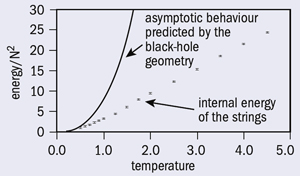
A research group at KEK has succeeded in calculating the state inside a black hole using computer simulations based on superstring theory. The calculations confirmed for the first time that the temperature dependence of the energy inside a black hole agrees with the power-law behaviour expected from calculations based on Stephen Hawking’s theory of black-hole radiation. The result demonstrates that the behaviour of elementary particles as a collection of strings in superstring theory can explain thermodynamical properties of black holes.

CCnew6_02_08

In 1974, Stephen Hawking at Cambridge showed theoretically that black holes are not entirely black. A black hole in fact emits light and particles from its surface, so that it shrinks little by little. Since then, physicists have suspected that black holes should have a certain interior structure, but they have been unable to describe the state inside a black hole using general relativity, as the curvature of space–time becomes so large towards the centre of the hole that quantum effects make the theory no longer applicable. Superstring theory, however, offers the possibility of bringing together general relativity and quantum mechanics in a consistent manner, so many theoretical physicists have been investigating whether this theory can describe the interior of a black hole.

Jun Nishimura and colleagues at KEK established a method that efficiently treats the oscillation of elementary strings depending on their frequency. They used the Hitachi SR11000 model K1 supercomputer installed at KEK in March 2006 to calculate the thermodynamical behaviour of the collection of strings inside a black hole. The results showed that as the temperature decreased, the simulation reproduced behaviour of a black hole as predicted by Hawking’s theory (figure 1).

CCnew7_02_08

This demonstrates that the mysterious thermodynamical properties of black holes can be explained by a collection of strings fluctuating inside. The result also indicates that superstring theory will develop further to play an important role in solving problems such as the evaporation of black holes and the state of the early universe.

The team at SPIN@COSY looks inside a spin resonance

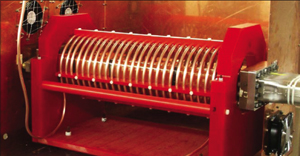
The SPIN@COSY polarized-beam team has found striking new results while studying the spin-manipulation of polarized deuterons at the Cooler Synchrotron (COSY) at the Forschungszentrum in Jülich. The team – from Michigan, COSY, Bonn, the Japan Proton Accelerator Research Complex (J-PARC), Indiana and Groningen, led by Michigan’s Alan Krisch – used a new RF-solenoid magnet to manipulate the spins of stored 1.85 GeV/c deuterons (spin-1 bosons).

CCnew3_02_08

Maria Leonova, a graduate student at Michigan, and Alexander Schnase, an electrical engineer at J-PARC, designed the new RF-solenoid, which was built by Dieter Prasuhn and his accelerator team at COSY. It used the same sophisticated RF high-voltage supply as its predecessor, an RF-dipole. However, the RF solenoid produces a longitudinal RF magnetic field rather than a radial field.

The goal of the experiment was to test precisely a new analytic matrix formalism developed by Alexander Chao of SLAC, a theoretical member of the SPIN@COSY team (Chao 2005). The Chao formalism is the first generalization of the famed Froissart–Stora formula, which allows the calculation of the beam polarization after passing through a spin resonance (Froissart and Stora 1960). This formula is valid only if the initial beam polarization is measured long before crossing the spin resonance and the final beam polarization long after crossing it. As polarized beam hardware and the understanding of spin dynamics improved, however, polarized beam enthusiasts became eager to learn what happens very near or even inside a spin resonance.

CCnew4_02_08

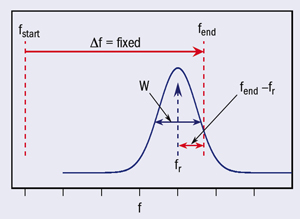
Vasily Morozov at Michigan used the Chao formalism to calculate in detail what might happen in a new type of experiment, where a 1 MHz RF-magnet’s frequency is swept by a fixed range of 400 Hz, while its end-frequency fend steps through many different values near and inside an RF spin resonance (figure 2). The Chao–Morozov calculations predicted that, if the magnet’s resonance strength ε was not high enough to flip the spin fully, then there would be large oscillations in the final polarization. These oscillations seem so sensitive to ε and other parameters, such as the beam’s momentum spread, Δp/p, and the resonance’s central frequency fr, that the oscillations might provide a new way to measure such parameters precisely.

CCnew5_02_08

The data from the new experiment showed striking oscillations that agree very well with these calculations (figure 3). The experiment’s data also verified the polarization’s extreme sensitivity to the resonance’s strength, ε, the resonance’s frequency spread, δfΔp, (owing to the beam’s momentum spread, Δp/p), and the resonance’s central frequency fr. Moreover, the data clearly demonstrate that the oscillations’ size increased rapidly as the beam’s momentum spread decreased (Morozov et al. 2007 and 2008).

These new experimental results also confirm the validity of the Chao matrix formalism. It may now be used to understand better the behaviour of the 100–250 GeV polarized protons stored in RHIC at Brookhaven and, perhaps in the future, polarized antiprotons in the Facility for Antiproton and Ion Research at GSI (see FAIR gets the green light at GSI), or polarized protons stored in J-PARC or even in the LHC at CERN.

Un Improbable Chemin de Vie

par André Krzywicki, L’Harmattan. Broché ISBN 2296011934, €17.50.

André Krzywicki connaît certainement trop bien la théorie des probabilités pour ne pas réaliser que le titre de son autobiographie est une contradiction dans les termes. Un événement envisagé dans le futur peut être probable ou improbable, mais ce qui est déjà arrivé est déjà arrivé, un point c’est tout. Cependant tout le monde comprend très bien ce que veut dire le titre, à savoir que tout ce qui est arrivé était, a priori, très improbable. Improbable qu’il survive à la terreur nazie, comme ce fut le cas pour nos amis du CERN, Georges Charpak, Jacques Prentki et Marcel Vivargent par exemple. Improbable qu’il survive à la poliomyélite. Improbable qu’il s’en tire avec un handicap sérieux mais supportable lui permettant d’avoir une vie sentimentale normale. Improbable enfin de pouvoir s’installer à l’Ouest, à Orsay (près de Paris), où il terminera sa carrière comme physicien théoricien au plus haut niveau. Incontestablement, tout cela valait la peine d’être raconté.

CCbok1_01_08

André Krzywicki est né à Varsovie d’un père aristocrate catholique et d’une mère juive, écrivain célèbre déjà avant la guerre. Officier, son père est fait prisonnier par les Russes et exécuté à Kharkov, massacre peut être moins connu que celui de Katyn. L’auteur a un frère aîné, le préféré de sa mère. Cette dernière comprend qu’accepter de porter l’étoile de David est tomber dans un piège. Elle se réfugie avec ses deux enfants sous un faux nom à la campagne. Mais ils se font repérer par les Allemands qui, par chance, s’y prennent à deux fois pour venir les chercher. La seconde fois, la famille avait disparu, cachée par des voisins. Elle retourne à Varsovie. Elle est témoin de l’insurrection du ghetto (de l’extérieur!) et de l’insurrection de Varsovie écrasée à cause du cynisme de Staline.

Ensuite, surviennent la mort catastrophique de son frère aîné, puis l’adaptation au régime communiste. Avec beaucoup d’honnêteté, André Krzywicki reconnaît qu’il s’est lancé à fond dans les jeunesses communistes tandis que sa mère semblait louvoyer avec le régime. Par deux fois, elle est envoyée en mission culturelle dans des ambassades à l’étranger. Il décrit son amour pour le sport brutalement bloqué par la polio dont il risque de mourir. D’autres, autour de lui, y resteront par manque de soins. Il parvient à force d’efforts à surmonter une partie de sa paralysie, mais il devra utiliser des béquilles toute sa vie comme le savent ceux qui le connaissent.

C’est peut-être à cause de son handicap qu’il s’oriente vers la physique théorique et atterrit à l’institut de la rue Hoza, sur lequel il porte un jugement un peu trop sévère à mon goût. Il y avait là de bons éléments, par exemple, mon regretté ami Lukaszuk qui, lui, est resté en Pologne et a été exilé sur la Baltique à cause de sa participation à Solidarité.

Lors d’une première escapade à l’Ouest, à Copenhague, André Krzywicki invite son ami Ziro Koba qui lui présente son élève, l’excentrique mais génial Holger Nielsen que nous connaissons bien au CERN. Ensuite, pour des raisons idéologiques et scientifiques, il part à l’Ouest définitivement. Au CERN, dont il fait beaucoup d’éloges, il bénéficie de l’aide de Jacques Prentki, alors que Léon Van Hove essaie de le persuader de retourner à Varsovie (un peu comme Van Hove avait réexpédié Martin Veltman à Utrecht, ce qui valut à ce dernier de recontrer Gerard ‘t Hooft avec lequel il partagea le prix Nobel!). Finalement, avec l’aide de Louis Leprince-Ringuet et de Maurice Lévy, il s’installe à Orsay. J’admire qu’il ait réussi ce prodige car ces deux personnalités marquantes du monde scientifique français n’avaient pas d’atomes crochus.

Ses témoignages de la vie scientifique parisienne sont très intéressants. Il y décrit, avec un oeil critique, le fonctionnement de la recherche et de l’enseignement et surtout, il dresse une peinture impitoyable des événements de Mai 1968. Il raille la veulerie de la plupart des enseignants et des chercheurs. Il décrit la séquestration de Jean Nuyts accusé d'”élitisme” parce qu’il enseignait la théorie des champs. Pour lui, Mai 1968 a été surtout l’occasion pour les médiocres de se pousser en avant! Dans l’ensemble, c’est vrai. Mais il y avait parmi les meneurs, des gens qui avaient fait d’excellents travaux avant (par exemple, Jean Marc Lévy-Leblond). Nous avons aussi droit à une description réaliste du milieu scientifique où, il n’y a pas que des saints, mais parfois des voleurs, agissant de différentes façons, dont nous avons tous été victimes un jour ou l’autre. Ce qui rend la compétition entre les physiciens pire que celle entre les hommes d’affaires, disait un ancien ingénieur du CERN, Pierre Amiot, c’est que les hommes d’affaires luttent pour l’argent tandis que les physiciens se battent pour la gloire. Roy Glauber (bien avant de recevoir le Prix Nobel), lui fait une intéressante remarque: “Vers 50 ans les gens souffrent de ne pas recevoir la considération qu’ils méritent”. Il explique aussi le pour et le contre du système des citations qui “rapporte” surtout aux plus connus.

Sur son œuvre personnelle André Krzywicki est relativement discret. C’est un mérite du livre qu’il ne contienne pas de formules. Tout au plus, on lit “nucléon , quark, couleur”. L’homme peut être d’une très grande modestie: “il n’est pas exclus que cet ouvrage (de mathématiques pour la physique) soit la seule chose qui reste de moi” (p117). Mais il ne résiste pas à l’envie de répéter les compliments (et les emprunts) que lui ont fait les grands de ce monde comme Ken Wilson et Dick Feynman.

Sur sa vie sentimentale complexe, l’auteur est très honnête, donnant même des détails d’ordre sexuels. Mais on voit bien que parmi toutes les femmes qu’il a rencontrées, il n’y en a qu’une qui a été le grand amour. Il s’agit d’Ela, décédée d’un cancer à Orsay. C’est un peu comme Feynman qui a eu beaucoup d’aventures, mais un seul grand amour, Arlene, morte de la tuberculose à Albuquerque, alors qu’il travaillait à Los Alamos. Une dernière remarque : alors qu’il conserve un attachement viscéral à la Pologne, on comprend qu’il se sent vraiment chez lui en France.

Ma conclusion est que ce livre vaut vraiment la peine d’être lu, non seulement par des physiciens, mais aussi par des personnes connaissant le milieu de la physique, par exemple des époux ou épouses de physiciens ou des membres non scientifiques du personnel du CERN. Je pense qu’il serait très souhaitable qu’une traduction en Anglais en soit faite.

Constructing HERA: rising to the challenge

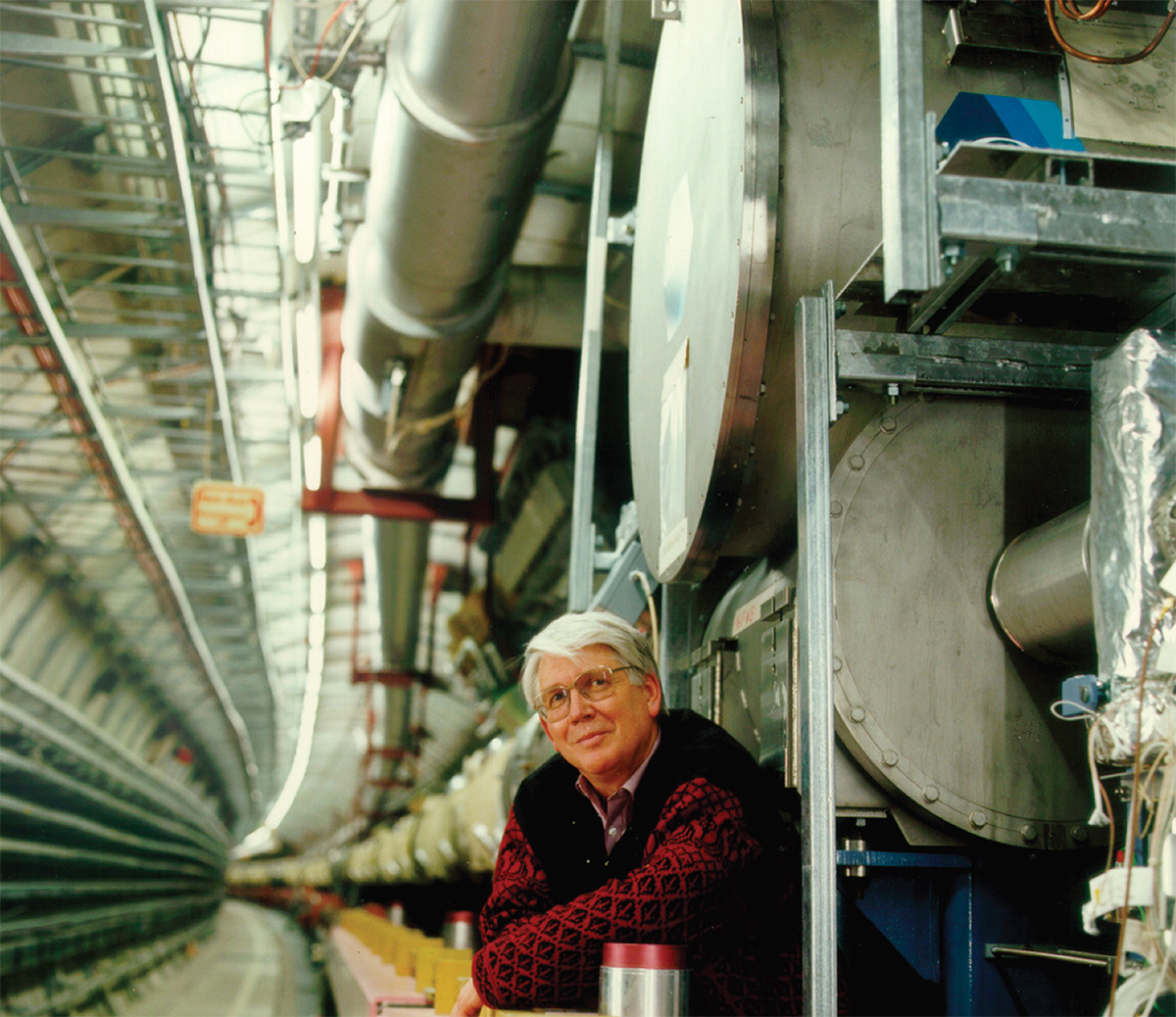
Inside the HERA tunnel

Ideas for an electron–proton collider based on storage rings first arose after the famous experimental results on deep inelastic electron–proton scattering from SLAC in 1969, which indicated a granular structure for the proton. Using two storage rings to collide electrons and protons head-on, rather than directing an electron beam at a proton target, would allow for higher centre-of-mass energies. This would in turn result in a better resolution for measure­ments of the internal structure of the proton. So, in the early 1970s, several laboratories – Brookhaven, CERN, DESY, Fermilab, IHEP (Moscow), Rutherford Laboratory, SLAC and TRIUMF – began to think about building an electron–proton collider.

Bjørn Wiik

At DESY, Bjørn Wiik in particular was a major advocate for the construction of an electron–proton collider. In 1972, Horst Gerke, Helmut Wiedemann, Günter Wolf and Wiik wrote a first report in which they proposed using the existing double-storage ring DORIS for electron–proton collisions. Then, in 1981, after several workshops organized by the European Committee for Future Accelerators (ECFA), DESY submitted a proposal to the government of the Federal Republic of Germany (FRG) for the construction of a completely new machine called HERA. It was to be an electron–proton collider with a circumference of 6.3 km and it had the strong support of the European high-energy physics community and ECFA.

Early discussions on electron–proton colliders had already considered the use of superconducting magnets for the proton ring. Then, in the 1980s, this demanding technology became feasible for large systems, thanks to the courageous and pioneering work at Fermilab on superconducting magnets for the construction of the Tevatron. When it came into operation in 1983, the Tevatron was the world’s first superconducting synchrotron at high energies.

DESY had no major experience in this technology, so in 1979 Hartwig Kaiser and Siegfried Wolff were sent to work with colleagues at Fermilab and profit from their know-how. The successful dipole and quadrupole magnets developed at Fermilab naturally influenced the design of the superconducting accelerator magnets for HERA, and the first dipoles built at DESY were basically copies of the Fermilab magnets. However, with increasing experience, the physicists and engineers at DESY started to add major improvements of their own, leading to the characteristic design of the HERA magnets, which proved extremely successful over the lifetime of the accelerator. As the superconducting magnet ring was the most challenging part of HERA, this article will focus on its design in particular.

The superconducting coil is the most critical component of a superconducting magnet. Coils several metres long are fabricated with cross-sections accurate to a few hundredths of a millimetre. This demanding task was solved at Fermilab by using laminated tooling for the production and curing of the coils. These are surrounded by collars punched from stainless-steel sheets, which provide the precise coil geometry and sustain the huge magnetic forces. Only special types of steel, which do not become brittle or magnetic at cryogenic temperatures, are suitable. For the coils of the HERA dipoles, the collars are made from an aluminium alloy with high yield-strength, thus eliminating magnetic effects.

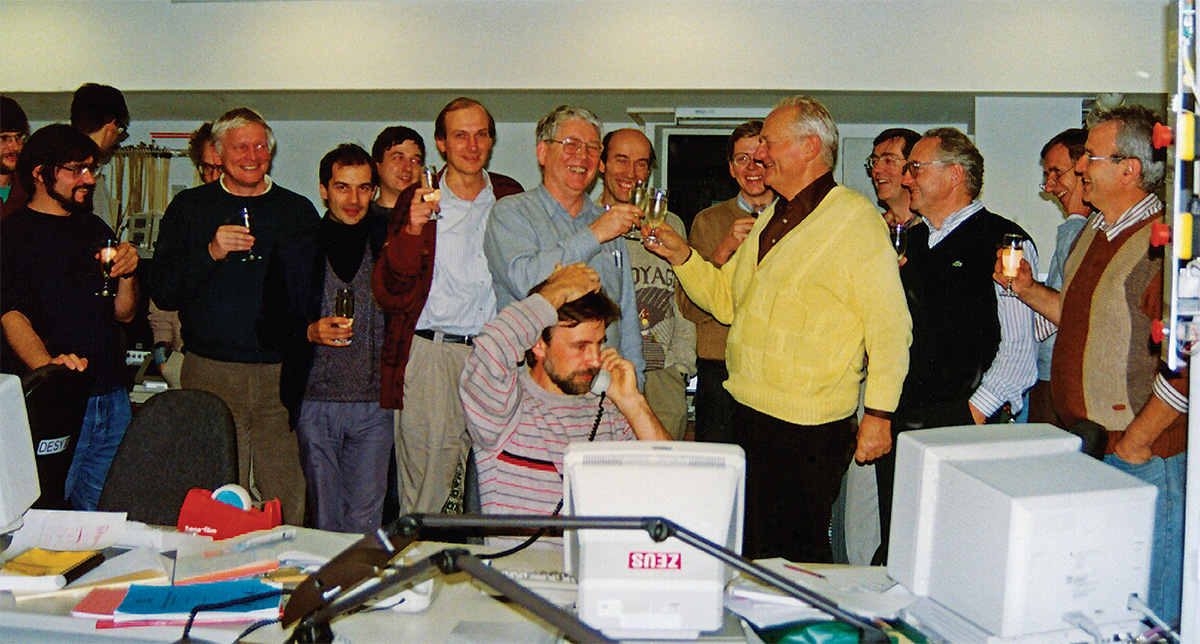
the first electron–proton collisions in HERA

In the HERA dipoles, this collaring is reinforced by the iron yoke, which, unlike its Fermilab counterpart, is located inside the cryostat. This “cold iron” concept has several advantages. First, it leads to an additional gain of 12% in the central magnetic field, as the iron is closer to the coil. Second, the cryogenic load at 4 K is reduced as a result of the longer support rods. Finally, a passive protection scheme with parallel diodes can protect the coil against damage from the stored energy should it become normally conducting (quench). The resulting larger cold mass leads to longer cool-down and warm-up times of about five days. However, this turned out to be no drawback as there were only a few occasions during the whole lifetime of HERA, outside regular shutdowns, when the magnets had to be warmed up. Hartwig Kaiser, Karl Hubert Mess and Peter Schmüser were the main people responsible for this development.

In a superconducting magnet ring, the protection of the coils against quenches is of utmost importance and is a challenging technology in itself. It involves both the detection of a quench (by monitoring the voltage over the coils) and the installation of quench heaters to force the quenching coil to become normally conducting, thus distributing the energy deposited by the magnet current over its whole length. As many magnet coils are powered serially in long strings, the current coming from the power supply has to be bypassed around the quenching magnet and its stored energy safely dissipated in a resistive load. A switch is required to bypass the magnet. At Fermilab, this was in the form of a thyristor mounted outside the vacuum vessel, which had to be triggered in case of a quench. The current leads to the thyristor were connected to the coil at 4 K, thus adding to the cryogenic load.

For the HERA magnets, Mess applied a different idea, first considered at Brookhaven, in which a “cold” diode inside the cryostat at 4 K automatically switches the current of about 5000 A in case of a quench. This was one of the most innovative and courageous technological steps of the HERA project. First, a suitable diode had to be found. Of course, no commercially available diodes were made for such an application. Mess did eventually find one that promised to be up to the task, but only after extensive searching and testing. Then, the mechanical mounting and electrical connections of the diodes had to be devised in such a way as to guarantee their reliable operation inside the helium, where they were exposed to rapid and extreme thermal cycles. Comprehensive tests of all of the diodes were carried out to qualify them and validate the design of the mounting – an example of innovative engineering at its best.

To save costs and keep the cryogenic load at 4 K as low as possible, the various corrector magnets were connected via super­conducting cables inside the 4 K helium pipe over an octant of the ring. The cables were held in a special fixture between the magnets and had to be soldered together before the 4 K helium tubes were joined by a welding sleeve. To make sure that all of the 20 or so cables were correctly connected, clever clamping devices – which supplied electrical contact to all of the wires simultaneously – were installed at two intersections. By applying voltages to the various contacts, a computerized central measuring station determined whether the cables were connected correctly in a time-effective way. There are many other cases that required ingenious ideas, such as solving the problem with persistent currents in the super­conducting coils as Schmüser and his students did, but unfortunately it is impossible to cover these in a short article.

Schematics of the Tevatron dipole

There were many systems for the superconducting magnet ring where little or no experience existed at DESY. One example is the huge cryogenic system with the cryogenic plant and the magnet cryostats, various cryogenic boxes, and transfer lines and pipes for cold and room-temperature helium, respectively. One pipe, the quench gas-collection pipe, was connected to the 4 K helium ­volume of the dipole magnets but separated by a special valve, named the Kautzky valve after its inventor at Fermilab. This valve opens automatically when the pressure inside the cryostat exceeds a preset value. It is sealed by a conical plastic piece inside a conical body. However, some of these valves would start to rattle during a quench, indicating that they were closing and opening in rapid succession. This effect quite often cracked the plastic cone, so the valves would no longer seal for normal operation and had to be exchanged. Despite intensive studies and tests of various materials – the high radiation level in the HERA tunnel meant that the Teflon of the original design could not be used – the problem was never solved. It did not become an operational problem thanks to the small number of quenches. This was an example where the work on HERA did not evolve from the heritage of Fermilab.

One clear evolutionary step, however, was the strong involvement of industry in the production of the superconducting magnets for HERA. For European industry in particular, HERA presented a unique opportunity: it was the first time that companies had an opportunity to gain experience in superconducting technologies and cryogenics on such a large scale. This step was beneficial for both DESY and the industrial companies, and also for later projects using ­superconducting-magnet technology.

Another step forward, this time in terms of financing and organizing large research projects, was the construction of HERA in collaboration with research laboratories from other countries: the so-called “HERA model”. It is to the credit of both Wiik and Volker Soergel that they brought the collaboration together with contributions from Canada, France, Israel, Italy, the Netherlands and the US, with additional manpower provided by institutes in China, Czechoslovakia, Poland, Switzerland, the UK, and USSR as well as institutes from both the FRG and the German Democratic Republic. The particularly large contribution by Italy of half of the superconducting dipoles cannot be overemphasized, and was to the great merit of Antonino Zichichi, who made this happen.

At DESY, we clearly stood on the shoulders of Fermilab’s pioneering work when realizing HERA, and the experiences and technological advancements made at HERA were valuable for later projects, such as RHIC at Brookhaven and the LHC at CERN. When DESY began the adventure of constructing the superconducting magnet ring for HERA, several people were worried that there would be problems with such a novel system and that its operation would become very difficult. Fortunately, none of the worries were substantiated and the operation of the “cold” ring essentially went without problems. I am sure that people at CERN now have similar worries concerning the LHC. I would like to express my best wishes to them, with the hope that they might be as fortunate and successful with the LHC as we were with HERA. 

bright-rec iop pub iop-science physcis connect