Comsol -leaderboard other pages

Topics

KEK reclaims luminosity record

Instantaneous luminosity

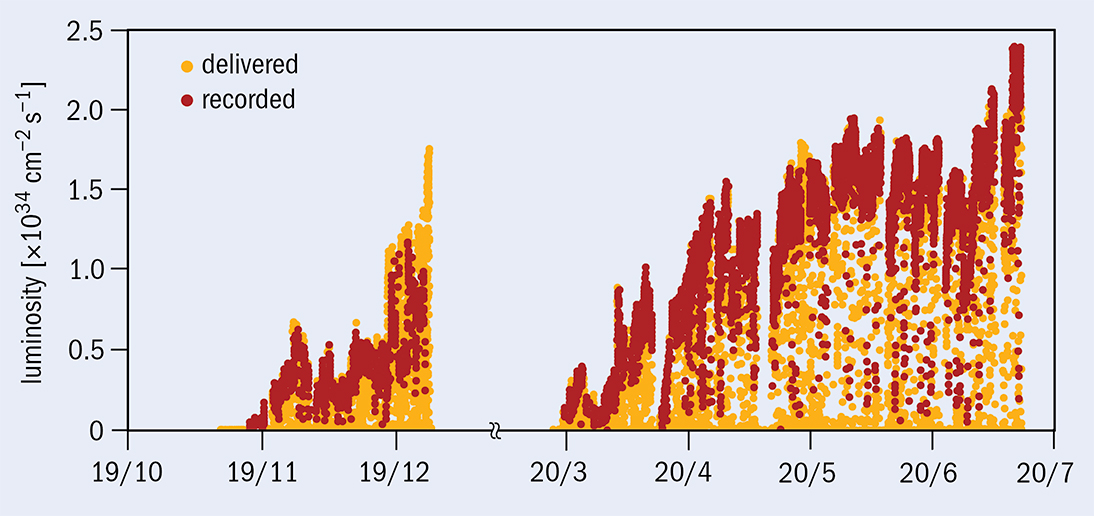
A new record for the highest luminosity at a particle collider has been set by SuperKEKB at the KEK laboratory in Tsukuba, Japan. On 15 June, electron–positron collisions at the 3 km-circumference double-ring collider reached an instantaneous luminosity of 2.22×1034 cm-2 s-1 — surpassing the LHC’s record of 2.14×1034 cm-2s-1 set with proton–proton collisions in 2018. A few days later, SuperKEKB pushed the luminosity record to 2.4×1034 cm-2s-1. This milestone follows more than two years of commissioning of the new machine, which delivers asymmetric electron–positron collisions to the Belle II detector at energies corresponding to the Υ(4S) resonance (10.57 GeV) to produce copious amounts of B and D mesons and τ leptons.

We can spare no words in thanking KEK for their pioneering work in achieving results that push forward both the accelerator frontier and the related physics frontier

Pantaleo Raimondi

SuperKEKB is an upgrade of the KEKB b-factory, which operated from 1998 until June 2010 and held the luminosity record of 2.11×1034 cm−2s−1 for almost ten years until the LHC edged past it. SuperKEKB’s new record was achieved with a product of beam currents less than 25% of that at KEKB thanks to a novel “nano-beam” scheme originally proposed by accelerator physicist Pantaleo Raimondi of the ESRF, Grenoble. The scheme, which works by focusing the very low-emittance beams using powerful magnets at the interaction point, squeezes the vertical height of the beams at the collision point to about 220 nm. This is expected to decrease to approximately 50 nm by the time SuperKEKB reaches its design performance.

“We, as the accelerator community, have been working together with the KEK team since a very very long time and we can spare no words in thanking KEK for their pioneering work in achieving results that push forward both the accelerator frontier and the related physics frontier,” says Raimondi.

The first collider to employ the nano-beam scheme and to achieve a β*y focusing parameter of 1 mm, SuperKEKB required significant upgrades to KEKB including a new low-energy ring beam pipe, a new and complex system of superconducting final-focusing magnets, a positron damping ring, and an advanced injector. The most recent improvement, completed in April, was the introduction of crab-waist technology, which stabilises beam-beam blowup using carefully tuned sextupole magnets located symmetrically on either side of the interaction point (IP). It was first  used at DAΦNE, which had much less demanding tolerances than SuperKEKB, and differs from the “crab-crossing” technology based on special radio-frequency cavities which was used to boost the luminosity at KEKB and is now being implemented at CERN for the high-luminosity LHC.

This luminosity milestone marks the start of the super B-factory era

Yukiyoshi Ohnishi

“The vertical beta at the IP is 1 mm which is the smallest value for colliders in the world. Now we are testing 0.8 mm,” says Yukiyoshi Ohnishi, commissioning leader for SuperKEKB. “The difference between DAΦNE and SuperKEKB is the size of the Piwinski angle, which is much larger than 1 as found in ordinary head-on or small crossing-angle colliders.”

In the coming years, the luminosity of SuperKEKB is to be increased by a factor of around 40 to reach its design target of 8×1035 cm−2s−1. This will deliver to Belle II, which produced its first physics result in April, around 50 times more data than its predecessor, Belle, at KEKB over the next ten years. The large expected dataset, containing about 50 billion B-meson pairs and similar numbers of charm mesons and tau leptons, will enable Belle II to study rare decays and test the Standard Model with unprecedented precision, allowing deeper investigations of the flavour anomalies reported by LHCb and sensitive searches for very weakly interacting dark-sector particles.

“This luminosity milestone, which was the result of extraordinary efforts of the SuperKEKB and Belle II teams, marks the start of the super B-factory era. It was a special thrill for us, coming in the midst of a global pandemic that was difficult in so many ways for work and daily life,” says Ohnishi. “In the coming years, we will significantly increase the beam currents and focus the beams even harder, reducing the β*y parameter far below 1 mm. However, there will be many more difficult technical challenges on the long road ahead to design luminosity, which is expected towards the end of the decade.”

The crab-waist scheme is also envisaged for a possible Super Tau Charm factory and for the proposed Future Circular Collider (FCC-ee) at CERN, says Raimondi. “For both these projects there is a solid design based on this concept and in general all circular lepton colliders are apt to take benefit from it.”

John Flanagan 1964–2020

John Flanagan. Credit: M Masuzawa

Accelerator physicist John Flanagan, who made important contributions to beam instrumentation for the KEKB and SuperKEKB projects in Japan, passed away on 13 March.

John Flanagan was born in 1964 and grew up in The Valley of Vermont, attending Philips Academy and graduating from Harvard University in 1987 with a degree in physics, astronomy and astrophysics. After working for a few years at software companies and at the Space Sciences Laboratory at Berkeley, he attended graduate school in physics at the University of Hawai’i at Manoa in 1992. Emeritus professor Steve Olsen recalls: “John was one of our best ever graduate students at the UH. Although he was initially attracted to Hawaii because of his love for scuba diving, his deepest dive as a grad student was to the bottom of the Super-Kamkiokande water tank.”

John joined the Super-Kamkiokande experiment at an early stage. He was a beloved member of the construction team and quite a favourite of the miners at Kamioka, who presented him with the snake’s beating heart at the mine-tunnel dedication. John took the first data-taking shift on the experiment on 1 April 1996 and the following year married Mika Masuzawa, who was at that time a postdoc from Boston University working on the Super-K construction. This was around the time John completed his thesis on the first observation of atmospheric neutrino oscillations at Super-Kamkiokande, supervised by John Learned. After completing his PhD, he moved back to Japan and was a research fellow in the KEK accelerator division. His talent was quickly recognised. He was appointed as an assistant professor in 1999, an associate professor in 2008 and promoted to full professor in 2016.

He was also known for his activities on gender-equality issues

A world-leading accelerator physicist, John was well known for his immense contributions to the KEKB and SuperKEKB projects. His work on the photoelectron instability, monitoring of the beam size via synchrotron radiation light and X-rays, and feedback systems played a key role in KEKB’s achievement of the world highest luminosity at an electron-positron accelerator. Flanagan-san (sometimes nicknamed “furigana-san”) participated in nearly every aspect of the construction, monitoring and operation of KEKB. He is most celebrated for his outstanding work on the synchrotron radiation (SR) light monitor using interferometery, which allows real-time measurement of micron-level beam sizes. For SuperKEKB, he greatly improved the SR monitor by using a diamond mirror; this eliminated the systematics from thermal expansion of the mirror that had plagued the SR monitoring system in KEKB.

John also led work on the remediation of the electron-cloud effect, in particular concerning the onset of the electron-cloud blowup and its relation to the head-tail instability, which has been quite visible in the global accelerator community. In addition to being one of the key accelerator problems for KEKB and SuperKEKB, a solution to the electron-cloud problem is also needed for successful operation of the damping rings for the future International Linear Collider. Finally, he developed an innovative X-ray beam profile monitoring technique by adapting techniques from X-ray astronomy and using innovative high-speed electronics. John carried out early tests of the system in collaboration with colleagues at CESR-TA (Cornell Electron Storage Ring Test Accelerator) in Cornell and at the ATF2 (Accelerator Test Facility) at KEK. He also developed a collaboration with SLAC and the University of Hawai’i within the framework of the US-Japan Cooperation Program in High Energy Physics. In the near future, an upgraded version of this X-ray monitor will be used to realise John’s dream of bunch-by-bunch measurements of small vertical beam sizes.

In addition to his fluent command of the Japanese language and understanding of Japanese manners, John was a modest and kind person who was beloved by his colleagues in the KEK accelerator division and by those on the Belle and Belle II experiments. He was also known for his activities on gender-equality issues including participation in the Japanese Physical Society taskforces and committees as well as serving as an instructor at the Rikejo science camp for high-school girls.

John is survived by his wife, a professor at KEK, and by his daughter Mariko. We will all remember him with the greatest respect as a splendid person, as innovative scientist, and someone who we are very proud to have had the opportunity to work with.

European strategy update unveils ambitious future

An artist

The discovery of the Higgs boson by the ATLAS and CMS collaborations at the LHC in 2012 marked a turning point in particle physics. Not only was it the last of the Standard Model particles to be found, but it is completely different to any particle seen before: a fundamental scalar, with profound connections to the structure of the vacuum. Extensive measurements so far suggest that the particle is the simplest possible version that nature permits. But the study of the Higgs boson is still in its infancy and its properties present enigmas, including why it is so light, which the Standard Model cannot explain. Particle physics is entering a new era of exploration to address these and other outstanding questions, including unknowns in the universe at large, such as the nature of dark matter.

The 2020 update of the European strategy for particle physics (ESPPU), which was released today during the 199th session of the CERN Council, sets out an ambitious programme to carry the field deep into the 21st century. Following two years of discussion and consultation with particle physicists in Europe and beyond, the ESPPU has identified an electron–positron Higgs factory as the highest priority collider after the LHC. The ultraclean collision environment of such a machine (which could start operation at CERN within a timescale of less than 10 years after the full exploitation of the high-luminosity LHC in the late 2030s) will enable dramatic progress in mapping the diverse interactions of the Higgs boson with other particles, and form an essential part of a research programme that includes exploration of the flavour puzzle and the neutrino sector.

We have started to concretely shape CERN’s future after the LHC

Ursula Bassler

To prepare for the longer term, the ESPPU prioritises that Europe, together with its international partners, explore the technical and financial feasibility of a future proton–proton collider at CERN with a centre-of-mass energy of at least 100 TeV. In addition to allowing searches for new phenomena at unprecedented scales, this machine would enable the detailed study of how the Higgs boson interacts with itself – offering a deeper understanding of the electroweak phase transition in the early universe after which the vacuum gained a non-zero expectation value and particles were enabled to acquire mass.

“The strategy is above all driven by science and presents the scientific priorities for the field,” said Ursula Bassler, president of the CERN Council. “We have started to concretely shape CERN’s future after the LHC, which is a difficult task because of the different paths available.”

Setting the stage
The strategy update is the second since the process was launched in 2005. It aims to ensure the optimal use of global resources, serving as a guideline to CERN and enabling a coherent science policy in Europe. Building on the previous strategy update, which concluded in 2013, the 2020 update states that the successful completion of the high-luminosity LHC should remain the focal point of European particle physics, together with continued innovation in experimental techniques. Europe, via the CERN neutrino platform, should also continue to support the Long Baseline Neutrino Facility in the US and neutrino projects in Japan. Diverse projects that are complementary to collider projects are an essential pillar of the ESPPU recommendations, which urge European laboratories to support  experiments enabling, for example, precise investigations of flavour physics and electric or magnetic dipole moments, and searches for axions, dark-sector candidates and feebly interacting particles.

The continuing ability of CERN, European laboratories and the particle-physics community to realise compelling scientific projects is essential for scientific progress, states the report. Cooperative programmes between CERN and research centres and national institutes in Europe should be strengthened and expanded, in addition to building strong collaborations with the astroparticle and nuclear physics communities.

Exploring the next frontier
The 2013 ESPPU recommended that options for CERN’s next machine after the LHC be explored. Today, there are four possible options for a Higgs factory in different regions of the world: an International Linear Collider (ILC) in Japan, a Compact Linear Collider (CLIC) at CERN, a Future Circular Collider (FCC-ee) at CERN, and a Circular Electron Positron Collider (CEPC) in China. As Higgs factories, the ESPPU finds all four to have comparable reach, albeit with different time schedules and with differing potentials for the study of physics topics at other energies. While not specifying which facility should be built, the ESPPU states that the large circular tunnel necessary for a future hadron collider at CERN would also provide the infrastructure needed for FCC-ee as a possible first step. In addition to serving as a Higgs factory, FCC-ee is able to provide huge numbers of weak vector bosons and their decay products that would enable precision tests of electroweak physics and the investigation of the flavour puzzle.

Considering colliders at the energy frontier, a 3 TeV CLIC and a 100 TeV circular hadron collider (FCC-hh) were considered in depth. While the proposed 380 GeV CLIC also offers a Higgs factory as a first stage, the dramatic increase in energy possible with a future hadron collider compared to the 13 TeV of the LHC has led the ESPPU to consider this technology as the most promising for a future energy-frontier facility. Europe together with international partners will therefore begin a feasibility study into building such a machine at CERN with the FCC-ee Higgs and electroweak factory as a possible first stage, to be established as a global endeavour and completed on the timescale of the next strategy update later this decade. It is also expected that Europe invests further in R&D for the high-field superconducting magnets for FCC-hh while retaining a programme in the advanced accelerator technology developed for CLIC, which also has significant potential applications in accelerator-based science beyond high-energy physics.

Europe should keep the door open to participate in other headline projects

Halina Abramowicz

The report also notes that the timely realisation of the ILC in Japan would be compatible with this strategy and, in that case, the European particle physics community would wish to collaborate. “The natural next step is to explore the feasibility of the highest priority recommendations, while continuing to pursue a diverse programme of high-impact projects,” explains Halina Abramowicz, chair of the European Strategy Group, which was charged with organizing the 2020 update. “Europe should keep the door open to participate in other headline projects which will serve the field as a whole.”

Ramping up accelerator R&D
To achieve the ambitious ESPPU goals, particle physicists are urged to undertake vigorous R&D on advanced accelerator technologies, in particular concerning high-field superconducting magnets including those based on high-temperature superconductors. Europe should develop a technology roadmap, taking into account synergies with international partners and other communities such as photon and neutron science, fusion energy and industry, urges the ESPPU report, which also stresses the proven ability of innovative accelerator technology to drive many other fields of science, industry and society. In addition to high-field magnets, the roadmap should include R&D for plasma-acceleration schemes, an international design study for a muon collider, and R&D on high-intensity, multi-turn energy-recovery linacs.

It is an historic day for CERN and for particle physics in Europe and beyond

Fabiola Gianotti

The ESPPU recommendations strongly emphasise the need to continue with efforts to minimise the environmental impact of accelerator facilities and maximise the energy efficiency of future projects. Europe should also continue to vigorously support theoretical research covering the full spectrum of particle physics, pursuing new research directions and links with cosmology, astroparticle physics and nuclear physics. The development of software and computing infrastructures that exploit recent advances in information technology and data science are also to be pursued in collaboration with other fields of science and industry, while particle physicists should forge stronger relations with the European Commission and continue their leadership in promoting knowledge-sharing through open science.

“It is an historic day for CERN and for particle physics in Europe and beyond. We are all very excited and we are ready to work on the implementation of this very ambitious but cautious plan,” said CERN Director-General Fabiola Gianotti following the unanimous adoption of the resolution to update the strategy by the CERN Council’s national representatives. “We will continue to invest in strong cooperative programmes between CERN and other research institutes in CERN’s member states and beyond. These collaborations are key to sustained scientific and technological progress and bring many societal benefits.”

LHCb hosts Guido Altarelli awards

This year’s Guido Altarelli awards, which recognise exceptional achievement by young scientists in the field of deep inelastic scattering (DIS), and related topics, have been presented to Pier Francesco Monni of CERN and Philip Ilten of the University of Birmingham. Monni was recognised for his pioneering contributions to the theory and phenomenology of multi-scale QCD resummation, and Ilten, a member of the LHCb collaboration, for his exceptional contributions to bridging the gap between experiment and phenomenology in QCD and proton structure.

The prizes, now in their fifth iteration, and sponsored this year by European Physical Journal C, World Scientific and Centro Fermi, are awarded each year to a theorist and an experimentalist with a maximum of eight years of research experience following their PhD. The ceremony took place last week during the LHCb collaboration meeting, as its traditional venue, the annual DIS conference, had to be cancelled due to the ongoing coronavirus pandemic.

“Guido Altarelli was one of the founders of QCD and one of the fathers of the DIS conferences,” explains chair of the selection committee Elisabetta Gallo. “His legacy and his mentorship of young scientists inspired the leaders of the DIS conference series to honour his legacy through this prize.”

CERN trials graphene for magnetic measurements

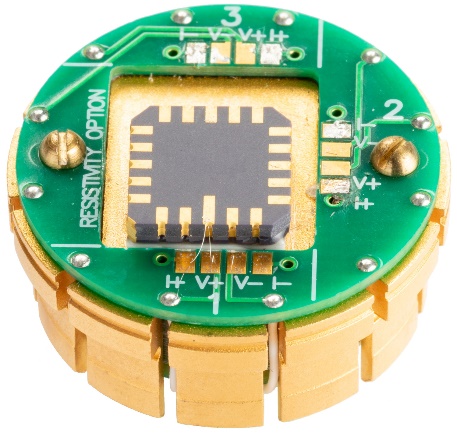
First isolated in 2004 by physicists at the University of Manchester using pieces of sticky tape and a graphite block, the one-atom-thick carbon allotrope graphene has been touted as a wonder material on account of its exceptional electrical, thermal and physical properties. Turning these properties into scalable commercial devices has proved challenging, however, which makes a recently agreed collaboration between CERN and UK firm Paragraf on graphene-based Hall-probe sensors especially novel.

There is probably no other facility in the world to be able to confirm this, so the project has been a big win on both sides

Ellie Galanis

With particle accelerators requiring large numbers of normal and superconducting magnets, high-precision and reliable magnetic measurements are essential. While the workhorse for these measurements is the rotating-coil magnetometer with a resolution limit of the order of 10–8 Vs, the most important tool for local field mapping is the Hall probe, which passes electrical current proportional to the field strength when the sensor is perpendicular to a magnetic field. However, measurement uncertainties in the 10–4 range required for determining field multipoles are difficult to obtain, even with the state-of-the-art devices. False signals caused by non-perpendicular field components in the three-dimensional sensing region of existing Hall probes can increase the measurement uncertainty, requiring complex and time-consuming calibration and processing to separate true signals from systematic errors. With an active sensing component made of atomically thin graphene, which is effectively two-dimensional, a graphene-based Hall probe in principle suffers negligible planar Hall effects and therefore could enable higher precision mapping of local magnetic fields.

Inspiration strikes

Stephan Russenschuck, head of the magnetic measurement section at CERN, spotted the potential of graphene-based Hall probes when he heard about a talk given by Paragraf – a recent spin-out from the department of materials science at the University of Cambridge – at a magnetic measurement conference in December 2018. This led to a collaboration, formalised between CERN and Paragraf in April, which has seen several graphene sensors installed and tested at CERN during the past year. The firm sought to develop and test the device ahead of a full product launch by the end of this year, and the results so far, based on well-calibrated field measurements in CERN’s reference magnets, have been very promising. “The collaboration has proved that the sensor has no planar effect,” says Paragraf’s Ellie Galanis. “This was a learning step. There is probably no other facility in the world to be able to confirm this, so the project has been a big win on both sides.”

Graphene sensor

The graphene Hall sensor also operates over a wide temperature range, down to liquid-helium temperatures at which superconducting magnets in the LHC operate. “How these sensors behave at cryogenic temperatures is very interesting,” says Russenschuck. “Usually the operation of Hall sensors at cryogenic temperatures requires careful calibration and in situ cross-calibration with fluxmetric methods. Moreover, we are now exploring the sensors on a rotating shaft, which could be a breakthrough for extracting local, transversal field harmonics. Graphene sensors could get rid of the spurious modes that come from nonlinearities and planar effects.”

CERN and Paragraf, which has patented a scalable process for depositing two-dimensional materials directly onto semiconductor-compatible substrates, plan to release a joint white paper communicating the results so far and detailing the sensor’s performance across a range of magnetic fields.

LHC physics shines amid COVID-19 crisis

The eighth Large Hadron Collider Physics (LHCP) conference, originally scheduled to be held in Paris, was held as a fully online conference from 25 to 30 May. To enable broad participation, the organisers waived the registration fee, and, with the help of technical support from CERN, hosted about 1,300 registered participants from 56 countries, with attendees actively engaging via Zoom webinars. Even a poster session was possible, with 50 junior attendees from all over the world presenting their work via meeting rooms and video recordings. The organisers must be complimented for organising a pioneering virtual conference that succeeded in bringing the LHC community together, in larger and more diverse numbers than at previous editions.

LHCP20 presentations covered a wide assortment of topics and several new results with significantly enhanced sensitivity than was previously possible. These included both precision measurements with excellent potential to uncover discrepancies that can be explained only by beyond the Standard Model (SM) physics and direct searches using innovative techniques and advanced analysis methods to look for new particles.

The first observation of the combined production of three massive vector bosons was reported by CMS

The first observation of the combined production of three massive vector bosons (VVV with V = W or Z) was reported by the CMS experiment. In the nearly 40 years that have followed the discovery of the W and Z boson, their properties have been measured very precisely, including via “diboson” measurements of the simultaneous production of two vector bosons. However, “triboson” simultaneous production of three massive vector bosons had eluded us so far, as the cross sections are small and the background contributions are rather large. Such measurements are crucial to undertake, both to test the underlying theory and to probe non-standard interactions. For example, if new physics beyond the SM is present at high mass scales not far above 1 TeV, then cross section measurements for triboson final states might deviate from SM predictions. The CMS experiment took advantage of the large Run 2 dataset and machine learning techniques to search for these rare processes. Leveraging the relatively background-free leptonic final states, CMS collaborators were able to combine searches for different decay modes and different types of triboson production (WWW, WWZ, WZZ and ZZZ) to achieve the first observation of combined heavy triboson production (with an observed significance of 5.7 standard deviations) and at the same time evidence for WWW and WWZ production with observed significances of 3.3 and 3.4 standard deviations, respectively. While the results obtained so far are in agreement with SM predictions, more data is needed for the individual measurements of the WZZ and ZZZ processes.

Four-top-quark production

The first evidence for four-top-quark production was announced by ATLAS. The top-quark discovery in 1995 launched a rich programme of top-quark studies that includes precision measurements of its properties as well as the observation of single-top-quark production. In particular, since the large mass of the top quark is a result of its interaction with the Higgs field, studies of rare processes such as the simultaneous production of four top quarks can provide insights into properties of the Higgs boson. Within the SM, this process is extremely rare, occurring just once for every 70 thousand pairs of top quarks created at the LHC; on the other hand, numerous extensions of the SM predict exotic particles that couple to top quarks and lead to significantly higher production rates. The ATLAS experiment performed this challenging measurement using the full Run-2 dataset using sophisticated techniques and machine-learning methods applied to the multilepton final state to obtain strong evidence for this process. The observed signal significance was found to be 4.3 standard deviations, in excess of the expected sensitivity of 2.4, assuming SM four-top-quark-production properties. While the measured value of the cross section was found to consistent with the SM prediction within 1.7 standard deviations, the data collected during Run 3 will shed further light on this rare process.

The LHCb collaboration presented, with unprecedented precision, measurements of two properties of the mysterious X(3872) particle. Originally discovered by the Belle experiment in 2003 as a narrow state in the J/ψπ+π mass spectrum of B+→J/ψπ+πK+ decays, this particle has puzzled particle physicists ever since. The nature of the state is still unclear and several hypotheses have been proposed, such as its being an exotic tetraquark (a system of four quarks bound together), a two-quark hadron, or a molecular state consisting of two D mesons. LHCb collaborators reported the most precise mass measurement yet, and measured, for the first time, and with 5 standard-deviations significance, the width of the resonance (see LHCb interrogates X(3872) line-shape). Though the results favour its interpretation as a quasi-bound D0D*0 molecule, more data and additional analyses are needed to rule out other hypotheses.

Antideuterons could be produced during the annihilation or decay of neutralinos or sneutrinos

The ALICE collaboration presented a first measurement of the inelastic low-energy antideuteron cross section using p-Pb collisions at a centre-of-mass energy per nucleon–nucleon pair of 5.02 TeV. Low-energy antideuterons (composed of an antiproton and an antineutron) are predicted by some models to be a promising probe for indirect dark-matter searches. In particular, antideuterons could be produced during the annihilation or decay of neutralinos or sneutrinos, which are hypothetical dark-matter particles. Contributions from cosmic-ray interactions in the low-energy range below 1-2 GeV per nucleon are expected to be small. ALICE collaborators used a novel technique that utilised the detector material as an absorber for antideuterons to measure the production and annihilation rates of low energy antideuterons. The results from this measurement can be used in propagation models of antideuterons within the interstellar medium for interpreting dark-matter searches, including intriguing results from the AMS experiment. Future analyses with higher statistics data will improve the modelling as well as extend these studies to heavier antinuclei.

The above are just a few of the many excellent results that were presented at LHCP2020. The extraordinary performance of the LHC coupled with progress reported by the theory community, and the excellent data collected by the experiments, has inspired LHC physicists to continue with their rich harvest of physics results despite the current world crisis. Results presented at the conference showed that huge progress has been made on several fronts, and that Run 3 and the High-Luminosity LHC upgrade programme will enable further exploration of particle physics at the energy frontier.

IPAC goes virtual

More than 3000 accelerator specialists gathered in cyber-space from 11 to 14 May for the 11th International Particle Accelerator Conference (IPAC). The conference was originally destined for the GANIL laboratory in Caen, a charming city in Normandy, and host to the flagship radioactive-ion-beam facility SPIRAL-2, but the coronavirus pandemic forced the cancellation of the in-person meeting and the French institutes CNRS/IN2P3, CEA/IRFU, GANIL, Soleil and ESRF agreed to organise a virtual conference. Oral presentations and the accelerator-prize session were maintained, though unfortunately the poster and industry sessions had to be cancelled. The scientific programme committee whittled down more than 2000 proposals for talks into 77 presentations which garnered more than 43,000 video views across 60 countries, making IPAC’20 an involuntary pioneer of virtual conferencing and a lighthouse of science during the lockdown.

Recent trends indicate a move towards the use of permanent magnets

IPAC’20’s success relied on a programme of recent technical highlights, new developments and future plans in the accelerator world. Weighing in at 1,998 views, the most popular talk of the conference was by Ben Shepherd from STFC’s Daresbury Laboratory in the UK, who spoke on high-technology permanent magnets. Accelerators do not only accelerate ensembles of particles, but also use strong magnetic fields to guide and focus them into very small volumes, typically just micro or nanometres in size. Recent trends indicate a move towards the use of permanent magnets that provide strong fields but do not require external power, and can provide outstanding field quality. Describing the major advances for permanent magnets in terms of production, radiation resistance, tolerances and field tuning, Shepherd presented high tech devices developed and used for the SIRIUS, ESRF-EBS, SPRING-8, CBETA, SOLEIL and CUBE-ECRIS facilities, and also presented the Zero-Power Tunable Optics (ZEPTO) collaboration between STFC and CERN, which offers 15 – 60 T/m tunability in quadrupoles and 0.46 – 1.1 T in dipoles.

Top of the talks

The seven IPAC’20 presentations with the most views included four by outstanding female scientists. CERN Director General Fabiola Gianotti presented strategic considerations for future accelerator-based particle physics. While pointing out the importance of Europe participating in projects elsewhere in the world, she made the strong point that CERN should host an ambitious future collider, and discussed the options being considered, pointing to the update of the European Strategy for Particle Physics soon to be approved by the CERN Council. Sarah Cousineau from Oakridge reported on accelerator R&D as a driver for science in general, pointing out that accelerators have directly contributed to more than 25 Nobel Prizes, including the Higgs-boson discovery at the LHC in 2012. The development of superconducting accelerator technology has enabled projects for colliders, photon science, nuclear physics and neutron spallation sources around the world, with several light sources and neutron facilities currently engaged in COVID-19 studies.

SPIRAL-2 will explore exotic nuclei near the limits of the periodic table

The benefits of accelerator-based photon science for society was also emphasized by Jerry Hastings from Stanford University and SLAC, who presented the tremendous progress in structural biology driven by accelerator-based X-ray sources, and noted that research can be continued during COVID-19 times thanks to the remote synchrotron access pioneered at SSRL. Stressing the value of international collaboration, Hastings presented the outcome of an international X-ray facilities meeting that took place in April and defined an action plan for ensuring the best possible support to COVID-19 research. GANIL Director Alahari Navin presented new horizons in nuclear science, reviewing facilities around the world and presenting his own laboratory’s latest activities. GANIL has now started commissioning SPIRAL-2, which will allow users to explore the as-yet unknown properties of exotic nuclei near the limits of the periodic table of elements, and has performed its initial science experiment. Liu Lin from LNLS in Brazil presented the commissioning results for the new 4th generation SIRIUS light source, showing that the functionality of the facility has already been demonstrated by storing 15 mA of beam current. Last, but not least in the top-seven most-viewed talks, Anke-Susanne Müller from KIT presented the status of the study for a 100 km Future Circular Collider – just one of the options for an ambitious post-LHC project at CERN.

Many other highlights from the accelerator field were presented during IPAC’20. Kyo Shibata (KEK) discussed the progress in physics data-taking at the SuperKEKb factory, where the BELLE II experiment recently reported its first result. Ferdinand Willeke (BNL) presented the electron-ion collider approved to be built at BNL, Porntip Sudmuang (SLRI) showed construction plans for a new light source in Thailand, and Mohammed Eshraqi (ESS) discussed the construction of the European Spallation Source in Sweden. At the research frontier towards compact accelerators, Chang Hee Nam (IBS, Korea) explained prospects for laser-driven GeV-electron beams from plasma-wakefield accelerators and Arnd Specka (LLR/CNRS) showed plans for compact European plasma-accelerator facility EuPRAXIA, which is entering its next phase after successful completion of a conceptual-design report. The accelerator-application session rounded the picture off with presentations by Annalisa Patriarca (Institute Curie) about accelerator challenges in a new radiation-therapy technique called FLASH, in which ultra-fast delivery of radiation dose reduces damage to healthy tissue, by Charlotte Duchemin (CERN) on the production of non-conventional radionuclides for medical research at the MEDICIS hadron beam facility, by Toms Torims (Riga Technical University) on the treatment of marine exhaust gases using electron beams and by Adrian Fabich (SCK-CEN) on proton-driven nuclear-waste transmutation.

To the credit of the French organisers, the virtual setup worked seamlessly. The concept relied on pre-recorded presentations and a text-driven chat function which allowed registered participants to participate from time zones across the world. Activating the sessions in half-day steps preserved the appearance of live presentations to some degree, before a final live session, during which the four prizes of the accelerator group of the European Physical Society were awarded.

Funky physics at KIT

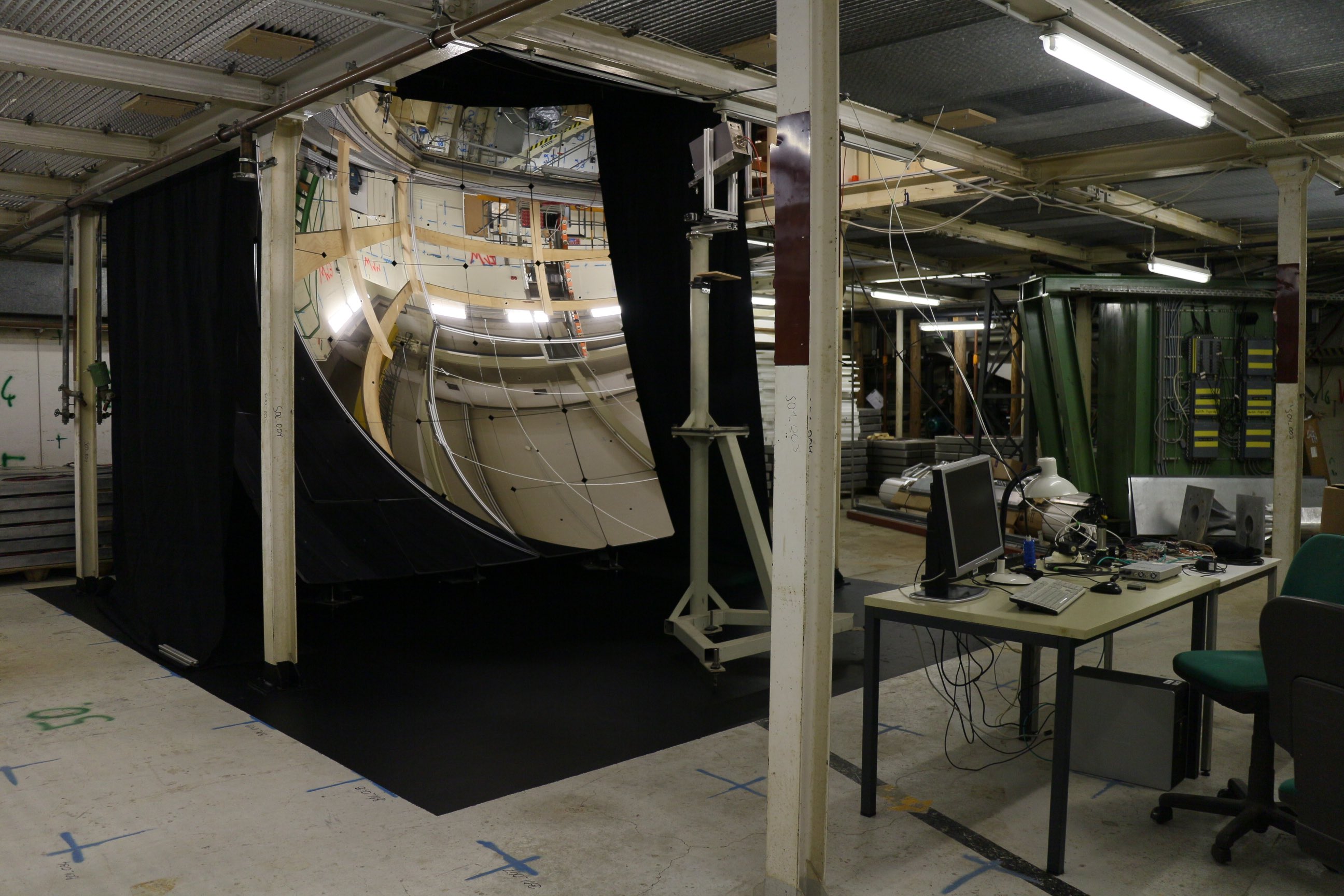
The FUNK experimental area, where the black-painted floor can be seen with the PMT-camera pillar at the centre and the mirror on the left. A black-cotton curtain encloses the whole area during running. Credit: KIT.

A new experiment at Karlsruhe Institute of Technology (KIT) called FUNK – Finding U(1)s of a Novel Kind – has reported its first results in the search for ultralight dark matter. Using a large spherical mirror as an electromagnetic dark-matter antenna, the FUNK team has set an improved limit on the existence of hidden photons as candidates for dark matter with masses in the eV range.

Despite overwhelming astronomical evidence for the existence of dark matter, direct searches for dark-matter particles at colliders and dedicated nuclear-recoil experiments have so far come up empty handed. With these searches being mostly sensitive to heavy dark-matter particles, namely weakly interacting massive particles (WIMPs), the search for alternative light dark-matter candidates is growing in momentum. Hidden photons, a cold, ultralight dark-matter candidate, arise in extensions of the Standard Model which contain a new U(1) gauge symmetry and are expected to couple very weakly to charged particles via kinetic mixing with regular photons. Laboratory experiments that are sensitive to such hidden or dark photons include helioscopes such as the CAST experiment at CERN, and “light-shining-through-a-wall” methods such as ALPS experiment at DESY.

FUNK exploits a novel “dish-antenna” method first proposed in 2012, whereby a hidden photon crossing a metallic spherical mirror surface would cause faint electromagnetic waves to be emitted almost perpendicularly to the mirror surface, and be focused on the radius point. The experiment was conceived in 2013 at a workshop at DESY when it was realised that there was a perfectly suited mirror — a prototype for the Pierre Auger Observatory with a surface area of 14 m2 – in the basement of KIT. Various photodetectors placed at the radius point allow FUNK to search for a signal in different wavelength ranges, corresponding to different hidden-photon masses. The dark-matter nature of a possible signal can then be verified by observing small daily and seasonal movements of the spot around the radius point as Earth moves through the dark-matter field. The broadband dish-antenna technique is able to scan hidden photons over a large parameter space.

The mass range of viable hidden-photon dark matter is huge

Joerg Jaeckel

Completed in 2018, the experiment took data during last year in several month-long runs using low-noise PMTs. In the mass range 2.5 – 7 eV, the data exclude a hidden-photon coupling stronger than 10−12 in kinetic mixing. “This is competitive with limits derived from astrophysical results and partially exceeds those from other existing direct-detection experiments,” says FUNK principal investigator Ralph Engel of KIT. So far two other experiments of this type have reported search results for hidden photons in this energy range — the dish-antenna at the University of Tokyo and the SHUKET experiment at Paris-Saclay – though FUNK’s factor-of-ten larger mirror surface brings a greater experimental sensitivity, says the team. Other experiments, such as NA64 at CERN which employs missing-energy techniques, are setting stringent bounds on the strength of dark-photon couplings for masses in the MeV range and above.

“The mass range of viable hidden-photon dark matter is huge,” says FUNK collaborator Joerg Jaeckel of Heidelberg University. “For this reason, techniques which can scan over a large parameter space are especially useful even if they cannot explore couplings as small as is possible with some other dedicated methods. A future exploitation of the setup in other wavelength ranges is possible, and FUNK therefore carries an enormous physics potential.”

100 TeV photons test Lorentz invariance

Over the past decades the photon emission from astronomical objects has been measured across 20 orders of magnitude in energy, from radio up to TeV gamma rays. This has not only led to many astronomical discoveries, but also, thanks to the extreme distances and energies involved, allowed researchers to test some of the fundamental tenets of physics. For example, the 2017 joint measurement of gravitational waves and gamma-rays from a binary neutron-star merger made it possible to determine the speed of gravity with a precision of less than 10-16 compared to the speed of light. Now, the High-Altitude Water Cherenkov (HAWC) collaboration has pushed the energy of gamma-ray observations into new territory, placing constraints on Lorentz-invariance violation (LIV) that are up to two orders of magnitude tighter than before.

Models incorporating LIV allow for modifications to the standard energy—momentum relationship dictated by special relativity, predicting phenomenological effects such as photon decay and photon splitting. Even if the probability for a photon to decay through such effects is small, the large distances involved in astrophysical measurements in principle allow experiments to detect it. The most striking implication would be the existence of a cutoff in the energy spectrum above which photons would decay while traveling towards Earth. Simply by detecting gamma-ray photons above the expected cutoff would put strong constraints on LIV.

HAWC

Increasing the energy limit for photons with which we observe the universe is, however, challenging. Since the flux of a typical source, such as a neutron star, decreases rapidly (by approximately two orders of magnitude for each order of magnitude increase in energy), ever larger detectors are needed to probe higher energies. Photons with energies of hundreds of GeV can still be directly detected using satellite-based detectors equipped with tracking and colorimetry. However, these instruments, such as the US-European Fermi-LAT detector and the Chinese-European DAMPE detector, require a mass of several tonnes, making launching them expensive and complex. To get to even higher energies ground-based detectors, which detect gamma-rays through the showers they induce in Earth’s atmosphere, are more popular. While they can be more easily scaled up in size than can space-based detectors, the indirect detection and the large background coming from cosmic rays make such measurements difficult.

It is likely that LIV will be further constrained in the near future, as a range of new high-energy gamma-ray detectors are developed

Recently, significant improvements have been made in ground-based detector technology and data analysis. The Japanese-Chinese Tibet air shower gamma-ray experiment ASγ, a Cherenkov-based detector array built at an altitude of 4 km in Yangbajing, added underground muon detectors to allow hadronic air showers to be differentiated from photon-induced ones via the difference in muon content. By additionally improving the data-analysis techniques to more accurately remove the isotropic all-sky background from the data, in 2019 the ASγ team managed to observe a source, in this case the Crab pulsar, at energies above 100 TeV for the first time. This ground-breaking measurement was soon followed by measurements of nine different sources above 56 TeV by the HAWC observatory located at 4 km altitude in the mountains near Puebla, Mexico.

These new measurements of astrophysical sources, which are likely all pulsars, could not only lead to an answer on the question where the highest-energy (PeV and above) cosmic rays are produced, but also allows new constraints to be placed on LIV. The spectra of the four sources studied by the collaboration did not show any signs of a cutoff, allowing the HAWC team to exclude the LIV energy scale to 2.2×1031  eV — an improvement of one-to-two orders of magnitude over previous limits.

It is likely that LIV will be further constrained in the near future, as a range of new high-energy gamma-ray detectors are developed. Perhaps the most powerful of these is the Large High Altitude Air Shower Observatory (LHAASO) located in the mountains of the Sichuan province of China. The construction of the detector array is ongoing while the first stage of the array commenced data taking in 2018. Once finished, LHAASO will be close to two orders of magnitude more sensitive than HAWC at 100 TeV and capable of pushing the photon energy into to the PeV range. Additionally, the limit of direct-detection measurements will be pushed beyond that from Fermi-LAT and DAMPE by the Chinese European High Energy cosmic Radiation Detector (HERD), a 1.8-tonne calorimeter surrounded by a tracker scheduled for launch in 2025 which is foreseen to be able to directly detect photons up to 100 TeV.

LHCb interrogates X(3872) line-shape

Figure 1

In 2003, the Belle collaboration reported the discovery of a mysterious new hadron, the X(3872), in the decay B+→X(3872)K+. Their analysis suggested an extremely small width, consistent with zero, and a mass remarkably close to the sum of the masses of the D0 and D*0 mesons. The particle’s existence was later confirmed by the CDF, D0, and BaBar experiments. LHCb first reported studies of the X(3872) in the data sample taken in 2010, and later unambiguously determined its quantum numbers to be 1++, leading the Particle Data Group to change the name of the particle to χc1(3872).

The nature of this state is still unclear. Until now, only an upper limit on the width of the χc1(3872) of 1.2 MeV has been available. No conventional hadron is expected to have such a narrow width in this part of the otherwise very well understood charmonium spectrum. Among the possible explanations are that it is a tetraquark, a molecular state, a hybrid state where the gluon field contributes to its quantum numbers, or a glueball without any valence quarks at all. A mixture of these explanations is also possible.

Two new measurements

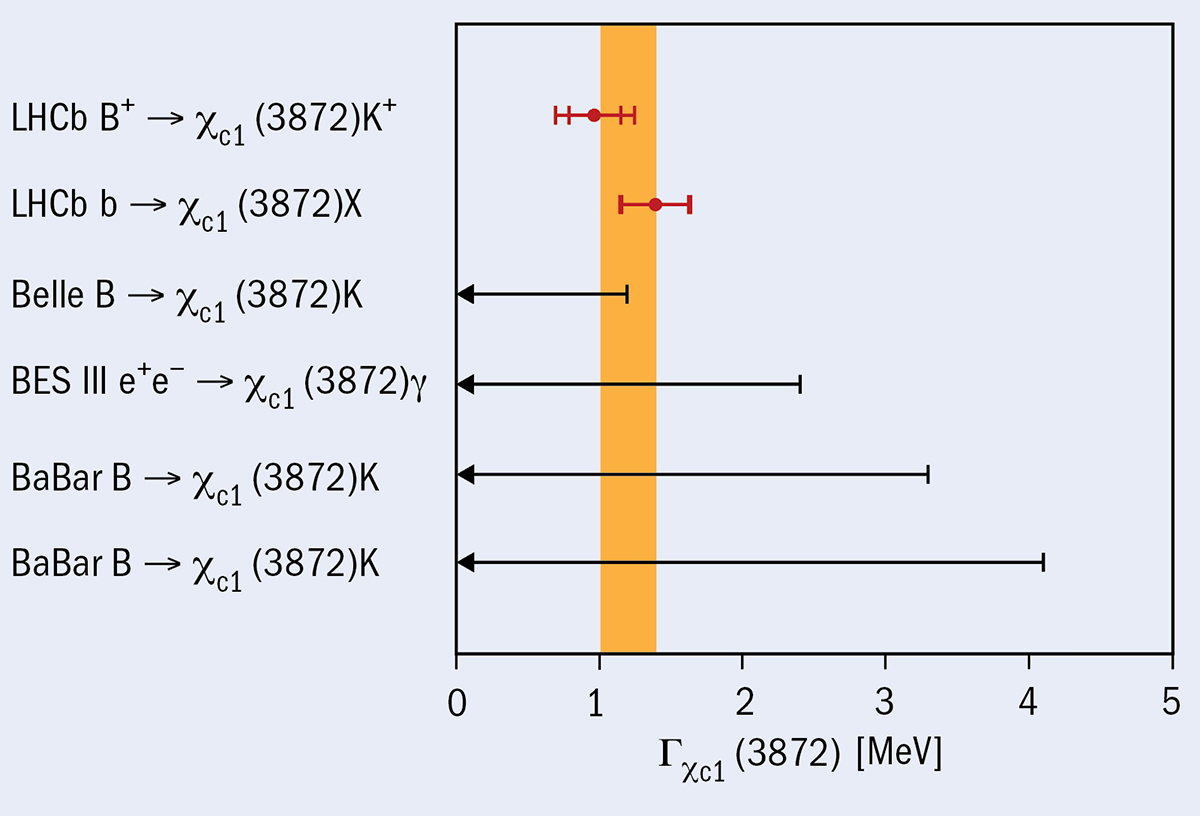
As reported at the LHCP conference this week, the LHCb collaboration has now published two new measurements of the width of the χc1(3872), based on minimally overlapping data sets. The first uses Run 1 data corresponding to an integrated luminosity of 3 fb-1, in which (15.5±0.4)×103 χc1(3872) particles were selected inclusively from the decays of hadrons containing b quarks. The second analysis selected (4.23±0.07)×103 fully reconstructed B+→χc1(3872)K+ decays from the full Run 1–2 data set, which corresponds to an integrated luminosity of 9 fb-1. In both cases, the χc1(3872) particles were reconstructed through decays to the final state J/ψπ+π. For the first time the measured Breit-Wigner width was found to be non-zero, with a value close to the previous upper limit from Belle (see figure).

Combining the two analyses, the mass of the χc1(3872) was found to be 3871.64±0.06 MeV – just 70±120 keV below the D0D*0 threshold. The proximity of the χc1(3872) to this threshold puts a question mark on measuring the width using a simple fit to the well-known Breit-Wigner function, as this approach neglects potential distortions. Conversely, a precise measurement of the line-shape could help elucidate the nature of the χc1(3872). This has led LHCb to explore a more sophisticated Flatté parametrisation and report a measurement of the χc1(3872) line-shape with this model, including the pole positions of the complex amplitude. The results favour the interpretation of the state as a quasi-bound D0D*0 molecule, but other possibilities cannot yet be ruled out. Further studies are ongoing. Physicists from other collaborations are also keenly interested in the nature of the χc1(3872), and the very recent observation by CMS of the decay process Bs0→χc1(3872)? suggests another laboratory for studying its properties.

bright-rec iop pub iop-science physcis connect