 Read article 'Have you got what it takes to teach?'
Have you got what it takes to teach?
CERN alumni who have returned to the classroom reveal teaching to be one of the hardest but most rewarding things they have ever done.

 Read article 'Have you got what it takes to teach?'
CERN alumni who have returned to the classroom reveal teaching to be one of the hardest but most rewarding things they have ever done.
 Read article 'A systematic approach to systematics'
The latest PHYSTAT meeting concentrated on the way systematic effects are incorporated in a range of particle-physics analyses.
 Read article 'Counting collisions precisely at CMS'
Beyond the setting of new records, precise knowledge of the luminosity at particle colliders is vital for physics analyses.
 Read article 'Breaking records at EPS-HEP'
EPS-HEP 2021 saw breathtaking results from LHC Run 2, writes Christophe Grojean.
 Read article 'African physicists begin strategy process'
A town-hall meeting initiated a broad and community-driven discussion leading to a final strategy document in two to three years’ time.
 Read article 'From sea quarks to sea shanties'
As TikTok dethrones Facebook as the most popular app, the Courier explores how high-energy physicists are taking advantage of the social-media phenomenon.
 Read article 'On your way to Cyclotron Road?'
Berkeley Lab’s Cyclotron Road initiative is helping science innovators to translate their ideas into high-impact technologies.
 Read article 'Forging the future of AI'
Leaders in artificial-intelligence research spoke to the Courier about what's next for the field, and how developments may impact fundamental science.
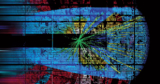 Read article 'Hunting anomalies with an AI trigger'
Jennifer Ngadiuba and Maurizio Pierini describe how ‘unsupervised’ machine learning could keep watch for signs of new physics at the LHC that have not yet been dreamt up by physicists.
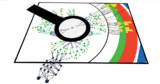 Read article 'What’s in the box?'
The LHC Olympics and Dark Machines data challenges stimulated innovation in the use of machine learning to search for new physics, write Benjamin Nachman and Melissa van Beekveld.