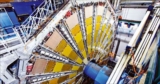
 Read article 'ATLAS and CMS collect cosmic-event data…'
ATLAS and CMS collect cosmic-event data…
As with the other experiments, the shutdown period provided the opportunity for consolidation work on the detectors.

 Read article 'ATLAS and CMS collect cosmic-event data…'
As with the other experiments, the shutdown period provided the opportunity for consolidation work on the detectors.
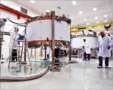 Read article 'AMS gets its slot on a space shuttle in 2010'
AMS-02, the experiment that will seek dark matter, missing matter and antimatter in space aboard the International Space Station (ISS), has recently received the green light to be part of the STS-134 ...
 Read article 'The future is together'
Recent events at CERN are helping to pave the way towards a worldwide linear-collider community in accelerators and detectors.
 Read article 'A small experiment with a vast amount of potential'
TOTEM prepares innovative detectors to study collisions at the LHC.
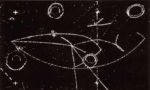 Read article 'Gargamelle: the tale of a giant discovery'
A look back to the first observation of weak neutral currents.
 Read article 'Knocking on the door again'
The LHC's anti-clockwise beam transfer system was tested on 6 and 7 June.
 Read article 'BEPCII/BESIII accumulates 100 million ψ(2S) in Beijing'
After five years of construction, the upgraded Beijing Electron–Positron Collider (BEPCII) and the new Beijing Spectrometer (BESIII) finished accumulating their first large data set of more than 100...
 Read article 'Borexino homes in on neutrino oscillations'
Experiment at Gran Sasso provides key evidence for the solar-neutrino problem.
 Read article 'ALICE prepares for jet measurements'
ALICE is designed to study matter produced in high-energy nuclear collisions at the LHC, in particular using lead ions. The goal is to investigate thoroughly the characteristics of hot, dense matter a...
 Read article 'PAMELA finds an anomalous cosmic positron abundance'
The collaboration for the Payload for Antimatter Matter Exploration and Light-nuclei Astrophysics (PAMELA) experiment has published evidence of a cosmic-positron abundance in the 1.5–100 GeV range.