


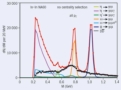
 Read article 'NA60: in hot pursuit of thermal dileptons'
NA60: in hot pursuit of thermal dileptons
Measurements reveal the thermal origin of dileptons in nuclear collisions at SPS energies.

 Read article 'NA60: in hot pursuit of thermal dileptons'
Measurements reveal the thermal origin of dileptons in nuclear collisions at SPS energies.
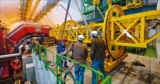 Read article 'ALICE prepares for jet measurements'
ALICE is designed to study matter produced in high-energy nuclear collisions at the LHC, in particular using lead ions. The goal is to investigate thoroughly the characteristics of...
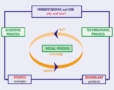 Read article 'Knowledge transfer: from creation to innovation'
Insight into the generation of know-how in five LHC experiments.
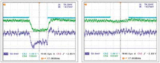 Read article 'ALICE achieves energy recovery at Daresbury and Cockcroft Institute'
At 2.00 a.m. on 13 December 2008, the commissioning team at the ALICE facility of the UK's Daresbury Laboratory and Cockcroft Institute successfully demonstrated "energy recovery...
 Read article 'LHC first beam: a day to remember'
At a little before 10.30 a.m. on 10 September, two dots on a colour screen in the CERN Control Centre (CCC) marked the successful first complete turn of protons clockwise round th...
 Read article 'JINST provides open access to LHC articles'
Seven major articles on the LHC and its detectors have been published electronically in a special issue of the Journal of Instrumentation (JINST).
 Read article 'The high-energy frontier (archive)'
The principal goal of the experimental programme at the LHC is to make the first direct exploration of a completely new region of energies and distances, to the tera-electron-volt ...
 Read article 'LHC computing: Milestones (archive)'
LHC computing articles from the archive.
 Read article 'LHC computing: Switching on to the Grid (archive)'
When CERN's LHC collider begins operation, it will be the most powerful machine of its type in the world, providing research facilities for thousands of researchers from all over t...
 Read article 'ALICE: The heavy-ion challenge'
When the ideas for ALICE were first formed at the end of 1990, the heavy-ion programme was still in its infancy and very little was known about what physics to expect or what kind ...