Yulian Aramovich Budagov, a world-class experimental physicist and veteran JINR researcher, passed away on 30 December. Born in Moscow on 4 July 1932, he graduated from the Moscow Engineering Physics Institute in 1956 and joined the staff of the Joint Institute for Nuclear Research (JINR), to where his lifelong scientific career was connected. He made a significant contribution to the development of large experimental facilities and achieved fundamentally important results, including: the properties of top quarks; the observation of new meson decay modes; measurements of CP-violating and rare-decay branching ratios; the determination of νN scattering form factors; observation of QCD colour screening; verification of the analytical properties of πр interaction amplitudes; and observation of scaling regularities in the previously unstudied field of multiple processes.
The exceptionally wide creative range of his activities was most prominently manifested during the preparation of experiments at TeV-scale accelerators. In 1991–1993 he initiated and directly supervised the cooperation of JINR and domestic heavy-industry enterprises for the Superconducting Super Collider, and in 1994 became involved in the preparation of experiments for the Tevatron at Fermilab and for the LHC, then under construction at CERN. He led the development of a culture using laser-based metrology for precision assembly of large detectors, and the meticulous construction of the large calorimetric complex for the ATLAS experiment. Budagov also devised a system of scintillation detectors with wave-shifting fibres for heavy-quark physics at the Tevatron’s CDF experiment, which helped measure the top-quark mass with a then-record accuracy. He was a leading contributor to JINR’s participation in the physics programme for the ILC, and initiated unique work on the use of explosion welding to make cryogenic modules for the proposed collider.
In his later years, Budagov focused on the development of next-generation precision laser metrology, which has promising applications such as the stabilisation of luminosity at future colliders and the prediction of earthquakes. Precision laser inclinometers developed under his supervision allowed the time dependence of angular oscillations of Earth’s surface to be measured with unprecedented accuracy in a wide frequency range, and are protected by several patents.
Yulian Aramovich Budagov successfully combined multifarious scientific and organisational activities with the training of researchers at JINR and in its member states. Based on the topics of research performed under his leadership, 60 dissertations were defended, 23 of which were prepared under his direct supervision. His research was published in major scientific journals of the Soviet Union, Russia, Western Europe and the US, and in proceedings of large international conferences. His works were awarded several JINR prizes, and he received medals of the highest order in Russia and beyond.
His memory will always remain in the hearts of all those who worked alongside him.
Thomas K Gaisser of the University of Delaware passed away on 20 February at the age of 81, after a short illness.
Tom was born in Evansville, Indiana, and graduated from Wabash College in 1962. He won a Marshall Scholarship that took him to the University of Bristol in the UK, where he received an MSc in 1965. He then went on to study theoretical particle physics at Brown University, receiving his PhD in 1967. After postdoctoral positions at MIT and the University of Cambridge, he joined the Bartol Research Institute in 1970, where his research interests tilted toward cosmic-ray physics.
Tom was a pioneer in gamma-ray and neutrino astronomy, and then in the emerging field of particle astrophysics. He was a master of extracting science from the indirect information collected by air-shower arrays and other particle astrophysics experiments. Early on, he studied the extensive air showers that are created when high-energy cosmic rays reach Earth. His contributions included the Gaisser–Hillas profile of longitudinal air showers and the Sybill Monte Carlo model for simulating air showers. He laid much of the groundwork for large experiments, such as Auger and IceCube, that provide high-statistics data on the high-energy particles that reach Earth, and for how that data can be used to probe fundamental questions in particle physics.
Tom’s work was also vital in interpreting data from lower-energy neutrino experiments, such as IMB and Kamioka. He provided calculations of atmospheric neutrino production that were important in establishing neutrino oscillations and, later, for searching for neutrino phenomena beyond the Standard Model.
Tom also contributed to experimental efforts. He was a key member of the Leeds–Bartol South Pole Air Shower Experiment (SPASE), which studied air showers as well as the muons these produce in the Antarctic Muon and Neutrino Detector Array (AMANDA). The combined observations were critical for calibrating AMANDA, and were important data for understanding the cosmic-ray composition. This work evolved into a leading role for Tom in the IceCube Neutrino Observatory, where he served as spokesperson between 2007 and 2011.
In IceCube, Tom focused on the IceTop surface array. Built, like SPASE, as a calibration tool and a veto-detector, its observations contributed to cosmic-ray physics covering a wide and unique energy range, from 250 TeV to EeV. It also made the first map of the high-energy cosmic-ray anisotropy in the Southern Hemisphere. Tom took to the task of building IceTop with gusto. For several summer seasons he travelled to Antarctica, staying there for weeks at a time to work on building the surface array, which consisted of frozen Auger-style water–Cherenkov detectors. He delighted in the hard physical labour and the camaraderie of everyone engaged in the project, from bulldozer drivers to his colleagues and their students. Tom became an ambassador of Antarctic science, in large part through a blog documenting his and his team’s expeditions to the South Pole.
Tom may be best known to physicists through his book Cosmic Rays and Particle Physics. Originally published in 1990, it was updated to a second edition in 2016, coauthored with Ralph Engel and Elisa Resconi. It sits on the shelves of researchers in the field around the globe.
Throughout his career, Tom received many scientific awards. He became a fellow of the American Physical Society in 1984 and was internationally recognised with the Humboldt Research Award, the O’Ceallaigh Medal and the Homi Bhabha Medal and Prize, among others. His Antarctic contributions were recognised when a feature on the continent was named Gaisser Valley.
Yes, having trained as a high-energy physics experimentalist with a focus on detector R&D, I joined ATLAS in 1998 and began working on the liquid-argon (LAr) calorimeter. I then got involved in the LAr calorimeter upgrade programme, when we were looking at the possible replacement of the on-detector electronics. I then served as leader for the trigger and data-acquisition upgrade project, before being elected as upgrade coordinator by the ATLAS collaboration in October 2018, with a two-year mandate starting in March 2019 and a second term lasting until February 2023. Because of the new appointment to the Neutrino Platform I will step down and enter a transition mode until around October.
What are the key elements of the ATLAS upgrade?
The full Phase-II upgrade comprises seven main projects. The largest is the new inner tracker, the ITk, which will replace the entire inner detector (Pixel, SCT and TRT) with a fully silicon detector (five layers of pixels and four of strip sensors) significantly extended in the forward region to exploit the physics reach at the High-Luminosity LHC. The ITk has been the most challenging project because of its technical complexity, but also due to the pandemic. Some components, such as the silicon-strip sensors, are already in production, and we are currently steering the whole project to complete pre-production by the end of the year or early 2023. The other projects include the LAr and the scintillating-tile calorimeters, the muons, trigger and data acquisition, and the high-granularity timing detector. The Phase-II upgrades are equivalent in scope to half of the original construction, and despite the challenges ATLAS can rely on a strong and motivated community to successfully complete the ambitious programme.
What are the stand-out activities during your term?
The biggest achievement is that we were able to redefine the scope of the trigger-systems upgrade. Until the end of 2020 we were planning a system based on a level-0 hardware trigger using calorimeter and muon information, followed by an event filter where tracks were reconstructed by associative memory-based processing units (HTT). The system had been designed to be capable of evolving into a dual-hardware trigger system with a level-0 trigger able to run up to 4 MHz, and the HTT system reconfigured as a level-1 track trigger to reduce the output rate to less than 1 MHz. We reduced this to one level by removing the evolution requirements and replacing the HTT processors with commodity servers. This was a complex and difficult process that took approximately two years to reach a final decision. Let me take this opportunity to express my sincere appreciation for those colleagues who carried the development of the HTT for many years: their contribution has been essential for ATLAS, even if the system was eventually not chosen. The main challenge of the ATLAS upgrade has been and will be the completion of the ITk in the available timescale, even after the new schedule for Long Shutdown 3.
What led you to apply for the position of Neutrino Platform leader?
Different factors, personal and professional. From a scientific point of view, I have been interested in LAr time-projection chambers (TPCs) for neutrino physics for many years, and in the challenge of scalability of the detector technology to the required sizes. Before being ATLAS upgrade coordinator, I had a small R&D programme at Brookhaven for developing LAr TPCs, and I worked for a couple years in the MicroBooNE collaboration on the electronics, which had to work at LAr temperatures. So, I have some synergetic work behind me. On a personal level, I’m obviously thrilled to formally become part of the CERN family. However, it has also been a difficult decision to move away from ATLAS, where I have spent more than 20 years collaborating with excellent colleagues and friends.
I am still planning to be hands-on – that is the fun part
What have been the platform’s main achievements so far?
Overall I would highlight the fact that the Neutrino Platform was put together in a very short time following the 2013 European strategy update. This was made possible by the leadership of my predecessor Marzio Nessi, a true force of nature, and the constant support of the CERN management. The refurbishment of ICARUS has been a significant technical success, as has the development and construction of the huge protoDUNE models for the two far detectors of LBNF/DUNE in the US.
What’s the status of the protoDUNE modules?
The first protoDUNE module based on standard horizontal-drift (“single phase”) technology has been successfully completed, with series production of the anode plane assembly starting now. Lately, the CERN group has contributed significantly to the vertical-drift concept, which is the baseline technology for the second DUNE far detector. This was initially planned to adopt “dual phase” detection but has now been adapted so that the full ionisation charge is collected in liquid-argon after a long vertical drift. Recently, before I came on board, the team demonstrated the ability to drift and collect ionisation charges over a distance of 6 m, which requires the high voltage to be extremely stable and the liquid-argon to be very pure to have enough charge collected to properly reconstruct the neutrino event. There is still work to be done but we have demonstrated that the technology is already able to reach the requirements. The full single-phase DUNE detector has to be closed and cooled down in 2028, and the second based on vertical drift in 2029. For an experiment at such scale, this is non-trivial.
What else is on the agenda?
The construction of the LBNF/DUNE cryostats is a major activity. CERN has agreed to provide two cryostats, which is a large commitment. The cryostat technology has been adapted from the natural-gas industry and the R&D phase should be completed soon, while we start the process of looking for manufacturers. We are also completing a project together with European collaborators involving the upgrade of the near detector for the T2K experiment in Japan, and are supporting other neutrino experiments closer to home, such as FASER at the LHC. Another interesting project is ENUBET, which has achieved important results demonstrating superior control of neutrino fluxes for cross-section measurements.
What are the platform’s long-term prospects?
One of the reasons I was interested in this position was to help understand and shape the long-term perspective for neutrino physics at CERN. The Neutrino Platform is a kind of tool that has a self-contained mandate. The question is whether and how it should or could continue beyond, say, 2027 and whether we will need to use the full EHN1 facility because we have other labs on-site to do smaller-scale tests for innovative detector R&D. Addressing these issues is one of my primary goals. There is also interest in Gran Sasso’s DarkSide experiment, which will use essentially the same cryostat technology as DUNE to search for dark matter. As well as taking care of the overall management and budget of the Neutrino Platform, I am still planning to be hands-on – that is the fun part.
What do you see as the biggest challenges ahead?
For the next two years the biggest challenge is the delivery of the two cryostats, which is both technical and subject to external constraints, for instance due to the increase in the costs of materials and other factors. From the management perspective, one has toacknowledge that the previous leadership created a fantastic team. It is relatively small but very motivated and competent, so it needs to be praised and maintained.
The ever maturing technology of silicon photomultipliers (SiPMs) has a range of advantages over traditional photomultiplier tubes (PMTs). As such, SiPMs are quickly replacing PMTs in a range of physics experiments. The technology is already included in the LHCb SciFi tracker and is foreseen to be used in CMS’ HGCAL, as well as in detectors at proposed future colliders. For these applications the important advantages of SiPMs over PMTs are their higher photo-detection efficiencies (by roughly a factor of two), their lower operating voltage (30-70 V compared to kV’s) and their small size, which allows them to be integrated in compact calorimeters. For space-based instruments — such as the POLAR-2 gamma-ray mission, which aims to use 6400 SiPM channels (see image) — a further advantage is the lack of a glass window, which gives SiPMs the mechanical robustness required during launch. There is, however, a disadvantage with SiPMs: dark current, which flows when the device is not illuminated and is greatly aggravated after exposure to radiation.
In order to strengthen the community and make progress on this technological issue, a dedicated workshop was held at CERN in a hybrid format from 25 to 29 April. Organized by the University of Geneva and funded by the Swiss National Science Foundation, the event attracted around 100 experts from academia and industry. The participants included experts in silicon radiation damage from the University of Hamburg who showed both the complexity of the problem and the need for further studies. Whereas the non-ionizing energy loss concept used to predict radiation damage in silicon is linearly correlated to the degradation of semiconductor devices in a radiation field, this appears to be violated for SiPMs. Instead, dedicated measurements for different types of SiPMs in a variety of radiation fields are required to understand the types of damage and their consequences on the SiPMs’ performance. Several such measurements, performed using both proton and neutron beams, were presented at the April workshop, while plans were made to coordinate such efforts in the future, for example by performing tests of one type of SiPMs at different facilities followed by identical analysis of the irradiated samples. In addition, an online platform to discuss upcoming results was established.
The lack of a glass window gives SiPMs the mechanical robustness required during launch
The damage sustained by radiation manifests itself mainly in the form of an increased dark current. As presented at the workshop, this increase can cause a vicious cycle because the increased current can cause self-heating, which further increases the highly temperature-dependent dark current. These issues are of great importance for future space missions as they influence the power budget, causing the scientific performance to degrade over time. Data from the first SiPM based in-orbit detectors, such as the SIRI mission by the US Naval Research Lab, the Chinese-led GECAM and GRID detectors and the Japanese-Czech GRBAlpha payload, were presented. It is clear that although SiPMs have advantages over PMTs, the radiation, which is highly dependent on the satellite’s orbit, can cause a significant degradation in performance that limits low-earth orbit missions to several years in space. Based on these results, a future Moon mission has decided against the use of SiPMs and reverted to PMTs.
Solutions to radiation damage in SiPMs were also discussed at length. These are mainly in the form of speeding up the annealing of the damage by exposing SiPMs to hotter environments for short periods. Additionally, cooling of the SiPM during data taking will not only decrease the dark current directly, but could also reduce the radiation damage itself, although further research on this topic is required.
Overall, the workshop indicated significant further studies are required to predict the impact of radiation damage on future experiments.
Ernest Rutherford’s pioneering work on radioactive decay at McGill University, Montreal, in the early 1900s marked the beginning of Canadian subatomic physics. By the middle of the century, research in nuclear physics and the properties of fissionable material was being conducted at the Montréal Laboratory of the National Research Council of Canada (NRC) and at Chalk River Laboratories, which later became Atomic Energy of Canada Limited, by Bruno Pontecorvo, Bernice Weldon Sargent, Ted Hincks and John Robson, and others. Many Canadian physicists were starting to participate in experiments abroad, and in the 1960s the NRC began funding university professors to work on high-energy physics experiments at US labs. When the US National Accelerator Laboratory (now Fermilab) was approved in 1966, Canadian physicists expressed their strong interest and formed the “200 GeV study group”, chaired by Hincks. Their report, published in March 1969, formed the basis of the foundation of the Institute of Particle Physics (IPP) to steer Canadian involvement at Fermilab.
IPP research scientists are the glue in the Canadian particle-physics community and enable university-based researchers to have an impact in international collaborations.
The IPP serves both as the focal point for particle-physics activities across Canada and as the point of contact for research partners in laboratories and universities worldwide. For the past 50 years, the non-profit corporation owned by institutional members has expanded Canada’s particle-physics programme. Today, it is operated by 17 institutional members, including the TRIUMF laboratory, the Sudbury Neutrino Observatory Laboratory (SNOLAB) and the Perimeter Institute for Theoretical Physics, as well as 230 individual members. In addition to projects at TRIUMF and SNOLAB, IPP members are heavily engaged in international collaborations, such as in ATLAS at CERN and T2K in Japan. Almost all individual members are university faculty or permanent scientific staff working on a diverse set of experiments and theories.
Strong collaboration
The IPP was incorporated on 10 March 1971, with institutional members appointing a board of trustees and electing a six-member scientific council. The board selects the IPP director, who is endorsed by the individual members. Incumbent Michael Roney (Victoria) is the institute’s eighth director.
A cornerstone since the 1970s has been the IPP research scientists’ programme. IPP research scientists serve as the glue in the Canadian particle-physics community and are essential in enabling university-based researchers to have an impact well above what their numbers would warrant in large international collaborations. Recruited by the IPP council via a national and competitive process, each scientist holds an appointment at a host IPP member university, enabling them to work with graduate students, hold grants and undertake long-term stays at international laboratories. This has resulted in significant leadership roles in a number of projects, including ARGUS, OPAL, ZEUS, SNO, BABAR, and more recently ATLAS, T2K, Belle II, SNO+, PICO and DUNE. So far, IPP has had 21 research scientists, 13 of which have either retired or moved to faculty positions.
Promoting participation in large international particle physics experiments by Canadian university-based physicists is a core mission of the IPP. In addition to the work of the IPP research scientist programme, this is accomplished by coordinating particle-physics activities in research and society in Canada and by introducing young Canadians to opportunities in particle physics through the CERN summer student and teacher programmes. Due to its decentralised organisation, individual university interests are parked at the door of the IPP. This enables healthy, vigorous, and highly collaborative teams built from multiple Canadian universities to have a substantial impact in international collaborations.
From CHEER to SNO
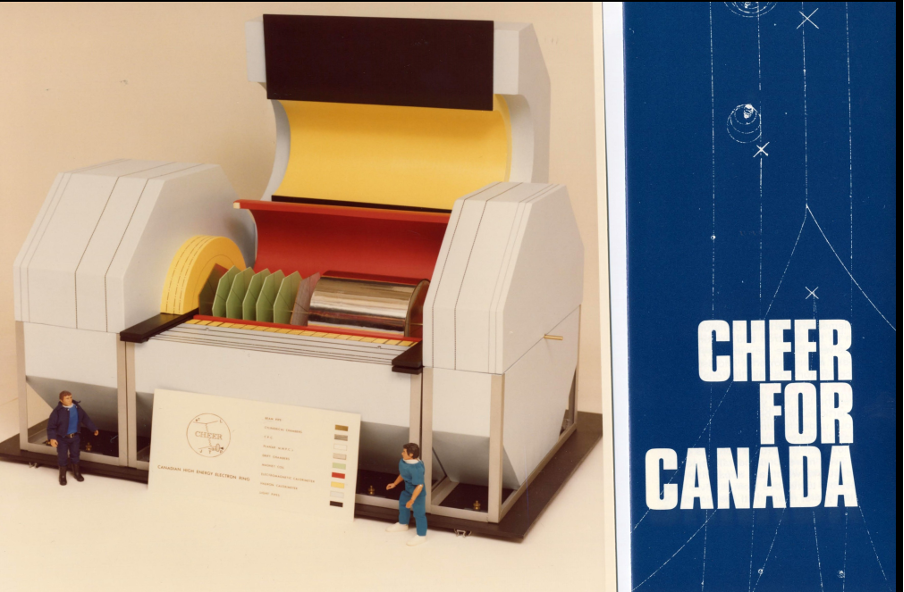
The first major IPP project proposal was the Canadian High Energy Electron Ring (CHEER), an electron storage ring feeding off a straight section of the Main Ring to study high-energy electron-proton collisions. Although the 1980 proposal was not approved by the Fermilab directorate, it paved the way for many fruitful collaborations for Canadian physicists. The CHEER team was invited to join HERA at DESY in 1981, which led to a long-term Canadian-DESY collaboration also involving ARGUS, HERMES and ZEUS. Contributions to ARGUS included the construction of the vertex detector’s mechanical structure and the online data acquisition system by Toronto and York universities. For ZEUS, a collaboration between the universities of York, McGill, Toronto and Manitoba from 1987 to 1990 constructed 26 large calorimeter modules. HERA also marked a major Canadian contribution to an offshore accelerator, with a proton transfer line designed and built by TRIUMF and proton-ring radio-frequency cavities built by Atomic Energy of Canada Limited.
Another part of the CHEER team, including Carleton University and the NRC particle physics group, joined the OPAL collaboration at CERN’s LEP collider in 1982. OPAL was the largest particle-physics project in Canada between 1989 and 2000. Canadian teams were responsible for building the detector’s central vertex-wire chamber and “zed” chambers at the outer radius of the large OPAL jet chamber, with the Montréal group building parts of the tracker data acquisition system. In 1992, researchers from TRIUMF and the universities of Victoria and British Columbia, who had constructed part of the SLD calorimeter at SLAC, joined OPAL and deployed its online processing system, while a team from Alberta developed the OPAL scintillating tile end-cap.
IPP’s precision flavour-physics programme using e+e– colliders at the Upsilon resonance began with ARGUS and continued with the BaBar experiment at SLAC’s PEP-II collider. The BaBar drift chamber was built at TRIUMF in the late 1990s in a collaboration with McGill, Montréal, British Columbia, Victoria and US colleagues. In addition to physics positions held by the Canadian team, including three IPP research scientists, they contributed to senior BaBar management roles over the years. Canada’s flavour-physics programme continues today with the Belle II experiment at KEK.
One of the great successes in Canadian particle physics, led by Queen’s, Carleton, Laurentian and other universities, was the Sudbury Neutrino Observatory (SNO). Centered around a 1000-tonne tank of heavy water located at a depth of 2100 m in the Vale Creighton mine in Sudbury, Ontario, SNO was built to investigate the properties of neutrinos and to confront the solar neutrino puzzle. The observatory operated from 1999 to 2006 and its director Art McDonald sharing the 2015 Nobel Prize in Physics for SNO’s contributions to the discovery of neutrino oscillations. Following SNO’s tremendous success, SNOLAB expanded the facility to 5000 m2 of clean and well-equipped underground space for experiments that benefit from the low-background environment. Current IPP projects operating at SNOLAB include the SNO+ neutrinoless double-beta decay experiment, and the DEAP-3600 and PICO direct dark-matter searches. Next-generation dark-matter projects, such as SuperCDMS and the Scintillating Bubble Chamber, are currently under construction.
IPP also has a strong involvement in accelerator-based neutrino projects, in particular the Tokai to Kamioka (T2K) long-baseline neutrino experiment and the new Hyper-Kamiokande experiment in Japan and DUNE in the US, which are both under construction. Canadians were among the founding members of T2K, making strong intellectual contributions to the off-axis neutrino beam concept at the heart of the project. They have led the design and construction of key elements of the ND280 near-detector, which characterises the neutrino beams, and built the optical transition radiation monitor that measures the extremely active neutrino production target.T2K’s remote handling infrastructure was designed and deployed by TRIUMF. Today, Canadian physicists have leadership roles in a wide range of T2K physics studies, including the first indications of oscillations of muon neutrinos to electron neutrinos and placing strong constraints on the CP violating phase in the neutrino-oscillation matrix.
LHC and beyond
ATLAS at the LHC is currently the largest particle-physics project in Canada, with around 40 faculty participants. Canadians were among the founding members of ATLAS in 1992, making key contributions to both the design and construction of parts of the liquid argon calorimeters with additional work on the high-level trigger, pixel detector, transition radiation tracker, luminosity and radiation monitoring, and computing. They are involved in many ATLAS physics studies, and have a leading role in several upgrade projects, including the new muon small wheel, liquid-argon trigger and the silicon-strip detectors for the inner tracker (ITk) detector for the HL-LHC. The LHC is another accelerator complex to which TRIUMF made important contributions, including power supply systems for the proton synchronic upgrades and the quadrupole magnets in the LHC ring used for “scrubbing”.
The also IPP has had a diverse set of projects in the US, including the Large Acceptance Superconducting Solenoid multi-particle spectrometer facility at SLAC (LASS) and the fixed-target experiments E691 and E705 at Fermilab, as well the CDF experiment at the Tevatron. Canadians were also leaders in the rare-kaon decay experiments E787 and E949 at Brookhaven, which made the first observations of the decay of a charged kaon to a pion and a neutrino pair, leading to an involvement in the NA62 experiment at CERN. The precision MOLLER experiment at JLab is another IPP project and IPP is also engaged in the particle-astrophysics projects IceCube at the South Pole, the P-ONE deep ocean neutrino observatory off the Canadian west coast, and VERITAS at the Fred Lawrence Whipple Observatory.
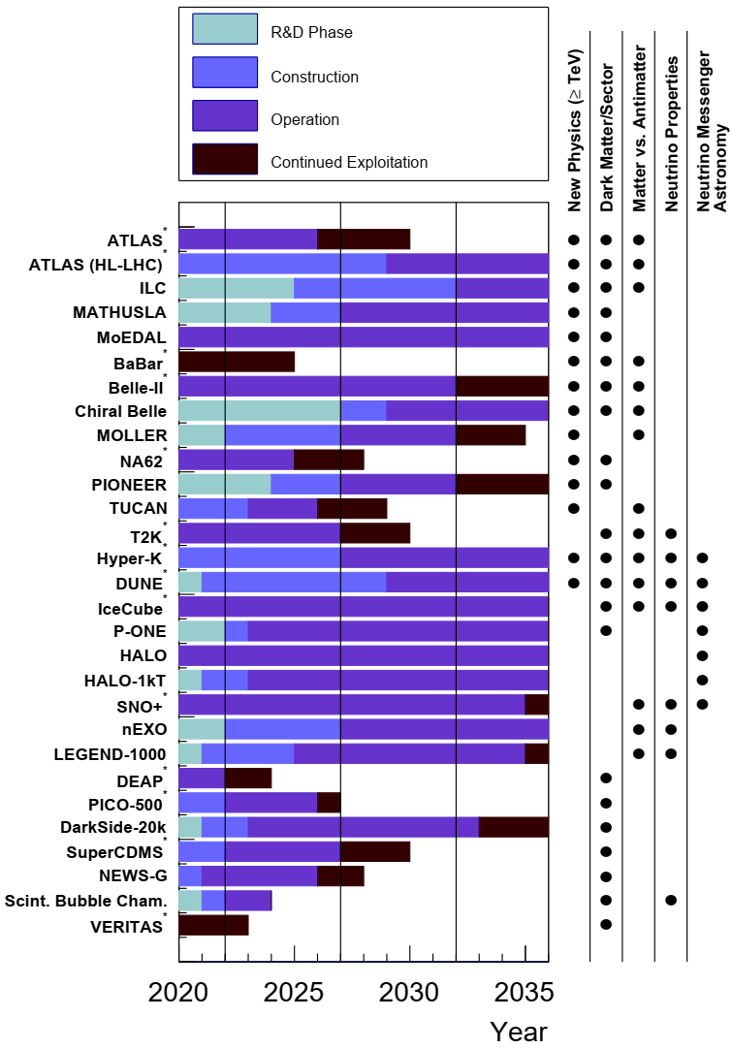
For the past five decades, the IPP has united Canadians working on a diverse set of particle-physics projects, advocated for support by the Canadian government and funding agencies, organised long-range planning for the community, and represented Canada in international committees and steering groups. IPP also employs research scientists playing important roles in international collaborations and enabling Canadian scientific leadership. The IPP continues to support new and novel projects (see figure), while diversifying and extending the Canadian particle-physics programme.
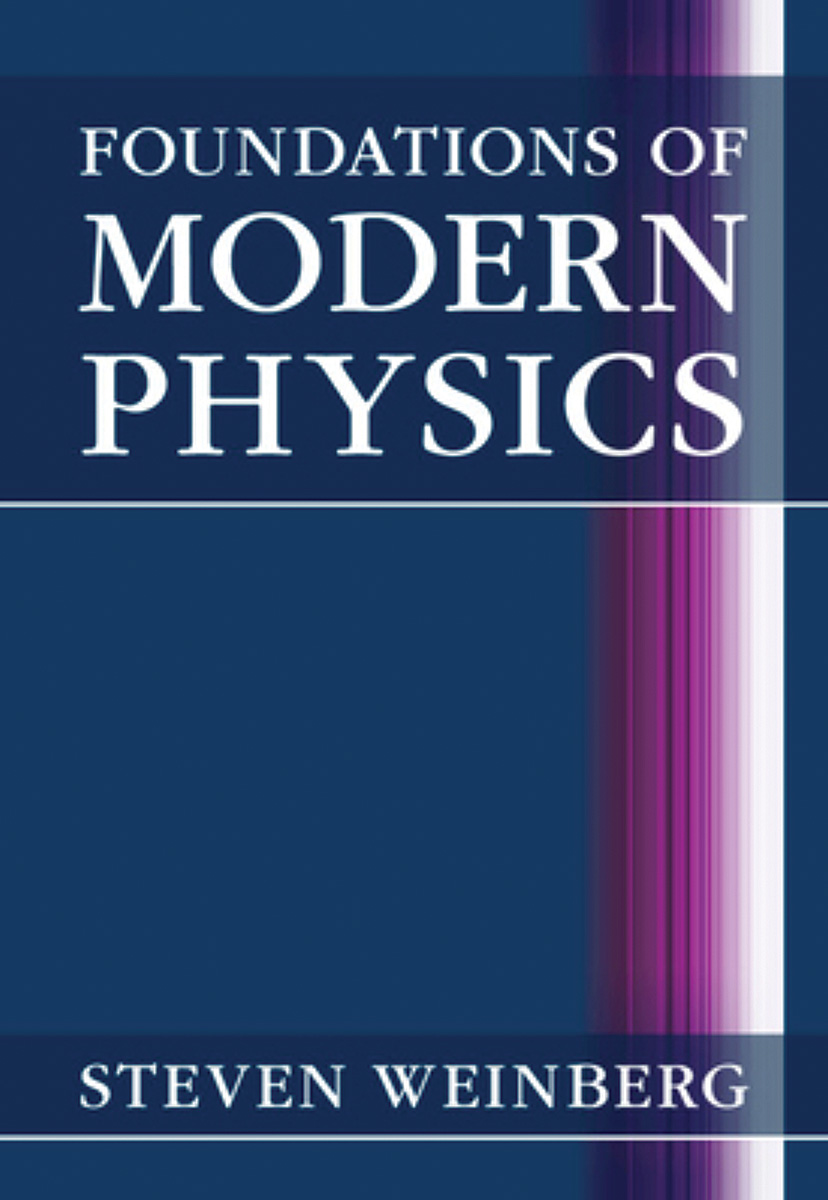
Knowing that it will be his last, it is with a mixture of gratitude and sadness that we welcome the new monograph Foundations of Modern Physics, a textbook for undergraduate students and a source of reflection for teachers and researchers, by the late Steven Weinberg. If we exclude his works for the layperson such as The First Three Minutes or Dreams of a Final Theory, this is Weinberg’s first book for undergraduate students. The idea behind it is plausible but rarely stressed: the foundations of modern physics ultimately rest on the successful development of the notion of fundamental constituents. While common wisdom attributes the origin of modern physics to Galileo and Newton, the original corpuscular intuition goes back to Democritus, Epicurus and Lucretius. Weinberg already suggested in To Explain the World: the Discovery of Modern Science that the existence of fundamental constituents, after nearly two millennia of relentless scrutiny, is the ultimate foundation of all the physical sciences.
With smooth language enriched by historical remarks, Weinberg describes the tortuous path that corroborated the corpuscular intuition of the Greek thinkers. The perfect gases, described in chapter 1, led to the Avogadro number, the first fragile bridge between the macroscopic and the corpuscular description of matter. In chapter 2, readers surf through the Maxwellian theory of transport phenomena that define the transition between hydrodynamics and the atomic (or molecular) hypothesis. This ends with three pivotal landmarks: the discreteness of the electric charge, the celebrated results of Einstein and Perrin on Brownian motion (allowing a direct measurement of the Avogadro number) and the black-body radiation puzzle. Chapters 3 and 4 are devoted to early quantum theory and the special theory of relativity. Quantum mechanics is introduced in chapter 5 and the physics of the atomic nucleus in chapter 6. The tenets of the corpuscular description of matter and radiation are combined in the framework of quantum field theory in the final chapter.
By using the notion of fundamental constituents as the guiding historical and theoretical principle, Weinberg manages to lay the foundations of diverse disciplines (hydrodynamics, statistical mechanics, kinetic theory, thermodynamics, special relativity, quantum mechanics and even field theory) in less than 300 pages.
The flamboyant imagination of Lucretius in De rerum natura could not have conceived of the possibility of human missions to Mars or the existence of colliders. Nonetheless, his corpuscular intuition was one of the essential seeds that eventually developed into the roots of modern physics. We must all admit, despite claims to the contrary, that modernity is not bound to coincide with recency because good ideas take an exceedingly long time to mature. Weinberg’s time capsule for students of future generations is that truly modern physicists are not always contemporaries.
At an extraordinary session of the CERN Council on 8 March, the 23 Member States of CERN condemned, in the strongest terms, the military invasion of Ukraine by the Russian Federation on 24 February. The Council deplored the resulting loss of life and humanitarian impact, as well as the involvement of Belarus in the unlawful use of force against Ukraine.
Ukraine joined CERN as an Associate Member State in 2016 and Ukrainian scientists have long been active in many of the laboratory’s activities. Russian scientists also have a long and distinguished involvement with CERN, and Russia was granted Observer status in recognition of its contributions to the construction of the LHC.
The Council decided that: CERN will promote initiatives to support Ukrainian collaborators and Ukrainian scientific activity in high-energy physics; the Observer status of Russia is suspended until further notice; and CERN will not engage in new collaborations with Russia and its institutions until further notice. In addition, the CERN management stated that it will comply with all applicable international sanctions.
The Council also expressed its support to the many members of CERN’s Russian scientific community who reject the invasion: “CERN was established in the aftermath of World War II to bring nations and people together for the peaceful pursuit of science: this aggression runs against everything for which the Organization stands. CERN will continue to uphold its core values of scientific collaboration across borders as a driver for peace.”
Two weeks later at its March session, strongly condemning statements by those Russian institutes that have expressed support for the invasion and stressing that its decisions are taken to express its solidarity with the Ukrainian people and its commitment to science for peace, the Council decided to suspend the participation of CERN scientists in all scientific committees of institutions located in Russia and Belarus, and vice versa. It also decided to suspend or, failing that, cancel all events jointly arranged between CERN and institutions located in those countries, and to suspend the granting of contracts as associated members of the CERN personnel to any new individuals affiliated to home institutions in Russia and Belarus.
CERN was established to bring nations and people together for the peaceful pursuit of science
Measures were also introduced regarding the Joint Institute of Nuclear Research (JINR), with which CERN has had scientific relations for more than 60 years. The Council decided to suspend the participation of CERN scientists in all JINR scientific committees, and vice versa; to suspend or, failing that, cancel all events jointly arranged between CERN and JINR; that CERN will not engage in new collaborations with JINR until further notice; and that the Observer status of JINR at the Council is suspended and CERN will not exercise the rights resulting from its Observer status at JINR, until further notice.
At its June session, the Council will decide on further measures regarding the suspension of international cooperation agreements and related protocols, as well as any other agreements concerning participation in CERN’s scientific programme.
Science for peace
Other European institutions with longstanding scientific relationships with Russia, such as DESY and the ESRF, have also taken measures in response to the invasion. On 4 March the European Commission suspended co-operation with Russia on research and innovation, and on 28 February ESA announced that it will fully implement sanctions imposed on Russia by its 22 member states, making a scheduled 2022 launch for the ExoMars programme “very unlikely”. Russia’s future cooperation on the International Space Station is also uncertain.
The EPS, APS and national physical societies in Europe have released statements strongly condemning the Russian invasion and announcing various measures, as have organisations including IAEA, IUPAP and EUROfusion. A declaration initiated by the Max Planck Society and supported by the Lindau Nobel Laureate Meetings has been signed by 150 Nobel Laureates, while 77 Breakthrough Prize Laureates have signed an open letter standing in solidarity with the people of Ukraine. A letter from Russian scientists and science journalists attracted around 5000 signatories, while almost 200 Russian researchers participating in CERN experiments have signed an open letter standing strongly for resolving the conflict through diplomacy and negotiations.
At CERN, actions have been initiated to support employed and associated members of personnel of Ukrainian nationality and their families. The CERN community has also raised funds for the Red Cross’s operations in Ukraine. With the CERN directorate deciding to match, from the CERN budget, donations made by the personnel, and in addition to a financial contribution from the CERN Staff Association, the collection raised 820,000 Swiss francs by the time of closing on 22 March.
The initiatives of many members of the personnel further demonstrate CERN’s solidarity and community spirit. The theoretical physics department has created a web page listing initiatives from the scientific community, and the users office also has useful information.
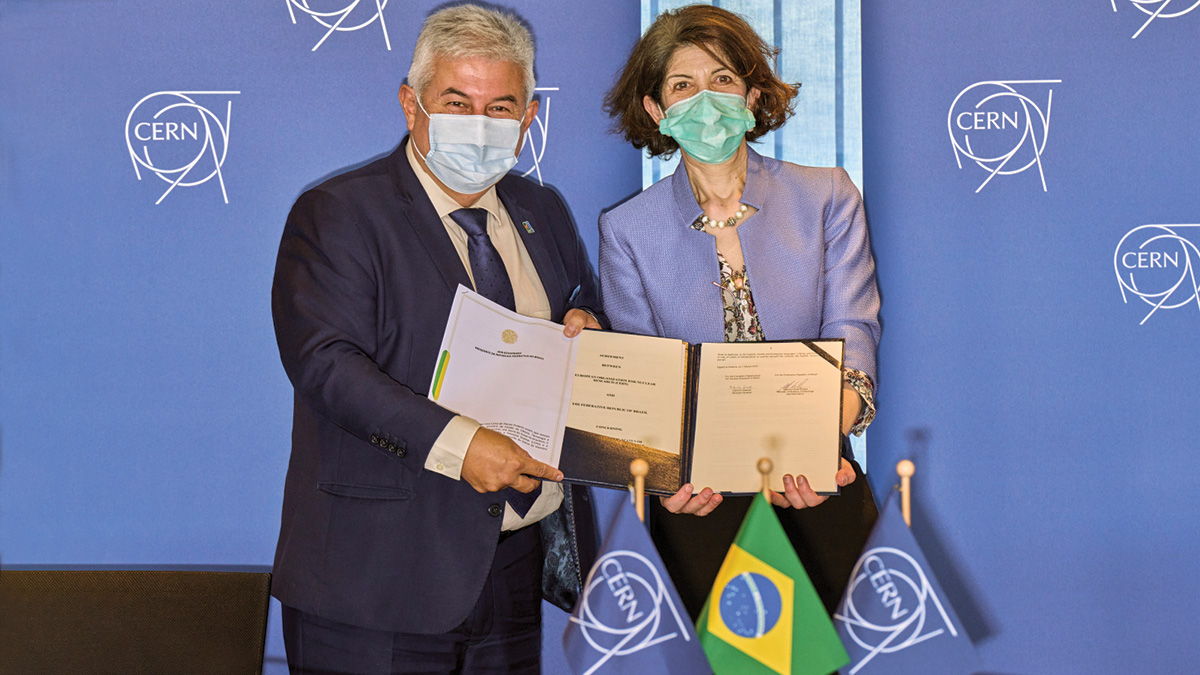
On 3 March, CERN Director-General Fabiola Gianotti and Brazilian minister for science, technology and innovation Marcos Pontes signed an agreement admitting Brazil as an Associate Member State of CERN. The associate membership will enter into force once Brazil has completed all necessary accession and ratification processes.
Brazil will be the first country in Latin America to join CERN as an Associate Member State, marking a significant step in a geographical enlargement process that was initiated in 2010. Formal cooperation between CERN and Brazil started in 1990 with the signature of an international cooperation agreement, allowing Brazilian researchers to participate in the DELPHI experiment at LEP. Today, Brazilian institutes participate in all the main experiments at the LHC and are also involved in other experiments, such as ALPHA, ProtoDUNE at the Neutrino Platform, ISOLDE, Medipix and RD51. Brazilian nationals also participate very actively in CERN training and outreach programmes, including the summer student programme, the Portuguese- language teacher programme and the Beamline for Schools competition.
Over the past decade, Brazil’s experimental particle-physics community has doubled in size. At the four main LHC experiments alone, more than 180 Brazilian scientists, engineers and students collaborate in fields ranging from hardware and data processing to physics analysis. Beyond particle physics, CERN and Brazil’s National Centre for Research in Energy and Materials have also been formally cooperating since December 2020 on accelerator R&D and applications.
“The accession of Brazil to CERN Associate Membership creates a robust framework for collaboration in research, technology development and innovation,” said Marcos Pontes. “I am certain that this partnership will take the Brazilian science, technology and innovation sector to a whole new level of development.”
As an Associate Member State, Brazil will attend meetings of the CERN Council and finance committee. Brazilian nationals will be eligible for limited-duration staff positions, fellowships and studentships, while Brazilian companies will be able to bid for CERN contracts, increasing opportunities for industrial collaboration in advanced technologies.
“We are very pleased to welcome Brazil as an Associate Member State,” said Fabiola Gianotti. “Over the past three decades, Brazilian scientists have contributed substantially to many CERN projects. This agreement enables Brazil and CERN to further strengthen ourcollaboration, opening up a broad range of new and mutually beneficial opportunities in fundamental research, technological developments and innovation, and education and training activities.”
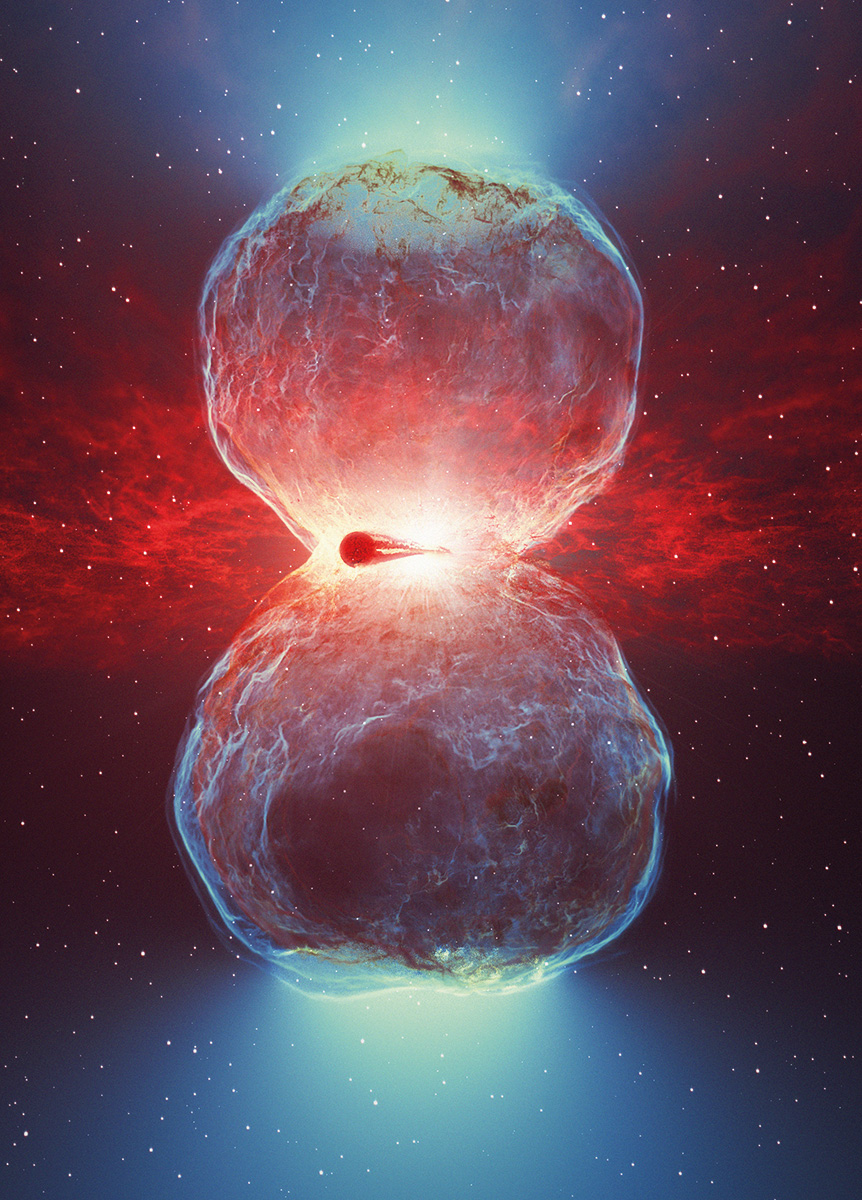
Normally, RS Ophiuchi is a faint astronomical object at a distance of about 5000 light years from Earth. Once every 15 years or so, however, it brightens dramatically to the point it becomes visible to the naked eye, only to disappear again within several days. This object, classified as a recurrent nova, is not a single star but rather a binary system consisting of a white dwarf and a red giant. Due to the proximity of the white dwarf to its massive companion, it slowly accumulates matter from which it forms a thin atmospheric-like layer on its surface. Over time, this atmosphere becomes denser and heats up until it reaches a critical temperature of around 20 million K. The thermonuclear explosion initiated at this temperature rapidly spreads across the dwarf’s surface, causing all the remaining material to be blown away. This process, which in the case of RS Ophiuchi occurs between every 9 to 26 years, makes the object visible in the optical region. However, the process has also been theorised to be capable of producing cosmic rays.
Bipolar shape
The first recorded explosion on RS Ophiuchi was in 1898 after it was discovered in optical images by Williamina Fleming in 1905. A more recent explosion in 2006 was observed in detail by Hubble, while the last one occurred in August 2021. Hubble’s 2006 images show a shock wave propagating from the object. The shock, which is originally radially symmetric, gets distorted by the gas present in the orbital plane of the binary system. This gas slows down the shock in the orbital plane, leading to a final bipolar shape capable of accelerating electrons and hadrons to high energies. These accelerated charged particles can reach Earth in the form of cosmic rays, but due to the influence of magnetic fields it is not possible to directly trace these back to the source. The high-energy gamma rays produced by some of these cosmic rays, on the other hand, do point directly to the source. Gamma rays formed in this way during the 2021 explosion have recently been used by the H.E.S.S. collaboration to test cosmic-ray acceleration models.
After the initial detection of the brightening of the source in optical wavelengths, the ground-based H.E.S.S. facility in Namibia pointed its five telescopes (which are sensitive to the Cherenkov light emitted as TeV gamma rays induce showers in the atmosphere) to the source. In parallel, the space-based Fermi–LAT telescope, which directly detects gamma rays in the ~100 MeV to ~500 GeV energy range, observed the target for a duration of several weeks. The emission measured by both telescopes as a function of time shows the maximum energy flux as measured by Fermi–LAT peaking about one day after the peak in optical brightness. For H.E.S.S., which covered the 250 GeV to 2.5 TeV energy range, the peak only occurred three days after the optical peak, indicating a significant hardening of the emission spectrum with time.
Hadronic origin
These results match what would be expected from a hadronic origin of these gamma rays. The shock wave produced by the thermonuclear explosion is capable of accelerating charged particles every time they traverse the shock. Magnetic fields, which are in part induced by some of the accelerated hadrons themselves, trap the charged particles in the region, thereby allowing these to traverse the shock many times. Some of the hadrons collide with gas in the surrounding medium to produce showers in which neutral pions are produced, which in turn produce the gamma rays detected on Earth. The maximum energy of these gamma rays is about an order of magnitude lower than the hadrons that induced the showers. This implies that one day after the explosion, hadrons had been accelerated up to 1 TeV, producing the photons detected by Fermi–LAT, while it took an additional two days for the source to further accelerate such hadrons up to the 10 TeV required to produce the emission visible to H.E.S.S. These timescales, as well as the measured energies, match with the theoretical predictions for sources with the same size and energy as RS Ophiuchi.
The results show a clear correlation between the theoretical predictions of hadronic production of gamma rays by recurring novae
The results, published in Science by the H.E.S.S. collaboration, show a clear correlation between the theoretical predictions of hadronic production of gamma rays by recurring novae. The alternative theory of a leptonic origin of the gamma rays is more difficult to fit due to the relatively large fraction of the shock energy that would need to be converted into electron acceleration. The measurements form an almost direct way to test models of the origin of cosmic rays and thereby add several important pieces to the puzzle of cosmic-ray origins.
An advisory panel to the Japanese Ministry of Education, Culture, Sports, Science and Technology (MEXT) has called on proponents of the International Linear Collider (ILC) to re-evaluate their plans. In particular, noting the global situation and the progress in other future-collider proposals, the expert panel recommends that the issue of Japan hosting the ILC should be temporarily shelved in forthcoming ILC activities.
The Japanese high-energy physics community proposed Japan to host the ILC shortly after the discovery of the Higgs boson in 2012. Since then, MEXT and bodies including the Science Council of Japan (SCJ) have been examining all aspects of the estimated $7 billion project, which would collide electrons and positrons to study the Higgs boson in detail. In 2018 the International Committee for Future Accelerators (ICFA) backed a 20 km-long ILC operating at a centre-of-mass energy of 250 GeV – half the energy set out in the 2013 technical design report. But the following year MEXT, with input from the SCJ, announced that it had “not yet reached declaration” for hosting the ILC and that further discussion and greater international commitment were necessary.
Planning and progress
In June 2021, a 50 page-long report published by the ILC International Development Team (IDT), which was established in 2020, set out the organisational framework, implementation model, work plan and required resources for an ILC “pre-lab”. At the same time, KEK and the Japan Association of High Energy Physicists submitted a report to MEXT summarising progress on ILC activities over the past three years. Having evaluated this progress, the ILC advisory panel to MEXT released its findings on 14 February.
While recognising the academic significance of particle physics, the importance of a Higgs factory and the value of international collaborative research, the panel concluded that there is no progress in the international cost sharing for the ILC and that it is premature to proceed with an ILC pre-lab based on the premise that the Japanese government will express its interest in hosting the facility. It recommended that ILC proponents reflect upon the increasing strain in the financial situation of the related countries and reevaluate the plan in a global manner, in particular taking into account the progress in studies such as the Future Circular Collider (FCC). The question of hosting the ILC in Japan should be “decoupled”, recommended the report, and development work in key technological areas be carried out by further strengthening the international collaboration among institutes and laboratories. The panel also urged the research community to continue efforts to expand the broad support from various stakeholders in Japan and abroad by building up trust and mutual understanding.
Responding to the advisory panel’s findings on 22 March, KEK stated that it will re-examine the path for realising the ILC as a Higgs factory, taking into account the progress in various fronts including the FCC feasibility study. Also, in collaboration with the ILC-IDT, KEK will propose a framework to ICFA to address some of the pressing accelerator R&D issues for the ILC pre-lab. “KEK and the Japanese ILC community is committed to further advance important technological and engineering development in the accelerator area,” stated KEK, also announcing a new centrally managed organisation to strengthen ILC communications to the public, academia and industry.
Writing in ILC Newsline on 22 March, ILC-Japan chair Shoji Asai of the University of Tokyo sought to clarify the advisory panel’s statements, pointing out the “rather ambiguous” Japanese language: “It is easy to react by saying ‘ILC is dead’ or ‘Japan is not interested’. However, this is not a project that can be talked about in such a simple manner.” Regarding the panel’s statement about the FCC: “Some interpret this line as the recommendation to choose between the ILC and the FCC. It is NOT. There is a clear understanding of the timing difference between the two projects.”
On 11 April, ICFA published a statement reaffirming its position that the concept for the ILC is technically robust and has reached a level of maturity “which supports its moving forward with the engineering design study toward its timely realisation”. ICFA commits to continuing efforts within the IDT over the next year to coordinate the global research community’s activities, in particular to further strengthen international collaboration among institutes and laboratories to advance international collaboration toward important R&D activities, and will continue to encourage intergovernmental discussion between Japan and potential partner nations on the ILC.
“Since Japan has never hosted a large international research facility in the past, the cautious attitude of the Japanese government is in some way understandable,” says Tatsuya Nakada, head of the ILC-IDT. “Linear colliders should remain as a viable option for the future Higgs factory and beyond. In this context, ICFA support for the Japanese community proposing the ILC as a global project hosted in Japan is very important.”
To provide the best experiences, we use technologies like cookies to store and/or access device information. Consenting to these technologies will allow us to process data such as browsing behavior or unique IDs on this site. Not consenting or withdrawing consent, may adversely affect certain features and functions.
Functional
Always active
The technical storage or access is strictly necessary for the legitimate purpose of enabling the use of a specific service explicitly requested by the subscriber or user, or for the sole purpose of carrying out the transmission of a communication over an electronic communications network.
Preferences
The technical storage or access is necessary for the legitimate purpose of storing preferences that are not requested by the subscriber or user.
Statistics
The technical storage or access that is used exclusively for statistical purposes.The technical storage or access that is used exclusively for anonymous statistical purposes. Without a subpoena, voluntary compliance on the part of your Internet Service Provider, or additional records from a third party, information stored or retrieved for this purpose alone cannot usually be used to identify you.
Marketing
The technical storage or access is required to create user profiles to send advertising, or to track the user on a website or across several websites for similar marketing purposes.