When did you first know you had a passion for pure mathematics?
I have had a passion for mathematics since my first year in school. At that time I did not realise what “pure mathematics” was, but maths was my favourite subject from a very early age.
What is number theory, in terms that a humble particle physicist can understand?
In fact, “number theory” is not well defined and any interesting question about numbers, geometric shapes and functions can be seen as a question for a number theorist.
What motivated you to work on sphere-packing?
I think it is a beautiful problem, something that can be easily explained. Physicists know what a Euclidean space and a sphere are, and everybody knows the problem from stacking oranges or apples. What is a bit harder to explain is that mathematicians are not trying to model a particular physical situation. Mathematicians are not bound to phenomena in nature to justify their work, they just do it. We do not need to model any physical situation, which is a luxury. The work could have an accidental application, but this is not the primary goal. Physicists, especially theorists, are used to working in multi-dimensional spaces. At the same time, these dimensions have a special interpretation in physics.
What fascinates you most about working on theoretical rather than applied mathematics?
My motivation often comes out of curiosity and my belief that the solutions to the problems will become useful at some point in the future. But it is not my job to judge or to define the usefulness. My belief is that the fundamental questions must be answered, so that other people can use this knowledge later. It is important to understand the phenomena in mathematics and in science in general, and the possibility of discovering something that other people have not yet. Maybe it is possible to come up with other ideas for detectors, which become interesting. When I look at physics detectors, for example, it fascinates me how complex these machines are and how many tiny technical solutions must be invented to make it all work.
How did you go about cracking the sphere-stacking problem?
I think there was an element of luck that I could find the correct idea to solve this problem because many people worked on it before. I was fortunate to find the right solution. The initial problem came from geometry, but the final solution came from Fourier analysis, via a method called linear programming.
I think a mathematical reality exists on its own and sometimes it does describe actual physical phenomena
In 2003, mathematicians Henry Cohn and Noam Elkies applied the linear programming method to the sphere-packing problem and numerically obtained a nearly optimal upper bound in dimensions 8 and 24. Their method relied on constructing an auxiliary, “magic”, function. They computed this function numerically but could not find an explicit formula for it. My contribution was to find the explicit formula for the magic function.
What applications does your work have, for example in quantum gravity?
After I solved the sphere-packing problem in dimension 8 in 2016, CERN physicists worked on the relation between two-dimensional conformal field theory and quantum gravity. From what I understand, conformal field theories are mathematically totally different from sphere-packing problems. However, if one wants to optimise certain parameters in the conformal field theory, physicists use a method called “bootstrap”, which is similar to the linear programming that I used. The magic functions I used to solve the sphere-packing problem were independently rediscovered by Thomas Hartman, Dalimil Mazác and Leonardo Rastelli.
Are there applications beyond physics?
One of the founders of modern computer science, Claude Shannon, realised that sphere-packing problems are not only interesting geometric problems that pure mathematicians like me can play with, but they are also a good model for error-correcting codes, which is why higher-dimensional sphere packing problems became interesting for mathematicians. A very simplified version of the original model could be the following. An error is introduced during the transmission of a message. Assuming the error is under control, the corrupted message is still close to the original message. The remedy is to select different versions of the messages called codewords, which we think are close to the original message but at the same time far away from each other, so that they do not mix with each other. In geometric language, this situation is an exact analogy of sphere-packing, where each code word represents the centre of the sphere and the sphere around the centre represents the cloud of possible errors. The spheres will not intersect if their centres are far away from each other, which allows us to decode the corrupted message.
Do you view mathematics as a tool, or a deeper property of reality?
Maybe it is a bit idealistic, but I think a mathematical reality exists on its own and sometimes it does describe actual physical phenomena, but it still deserves our attention if not. In our mathematical world, we have chances to realise that something from this abstract mathematical world is connected to other fields, such as physics, biology or computer science. Here I think it’s good to know that the laws of this abstract world often provide us with useful gadgets, which can be used later to describe the other realities. This whole process is a kind of “spiral of knowledge” and we are in one of its turns.
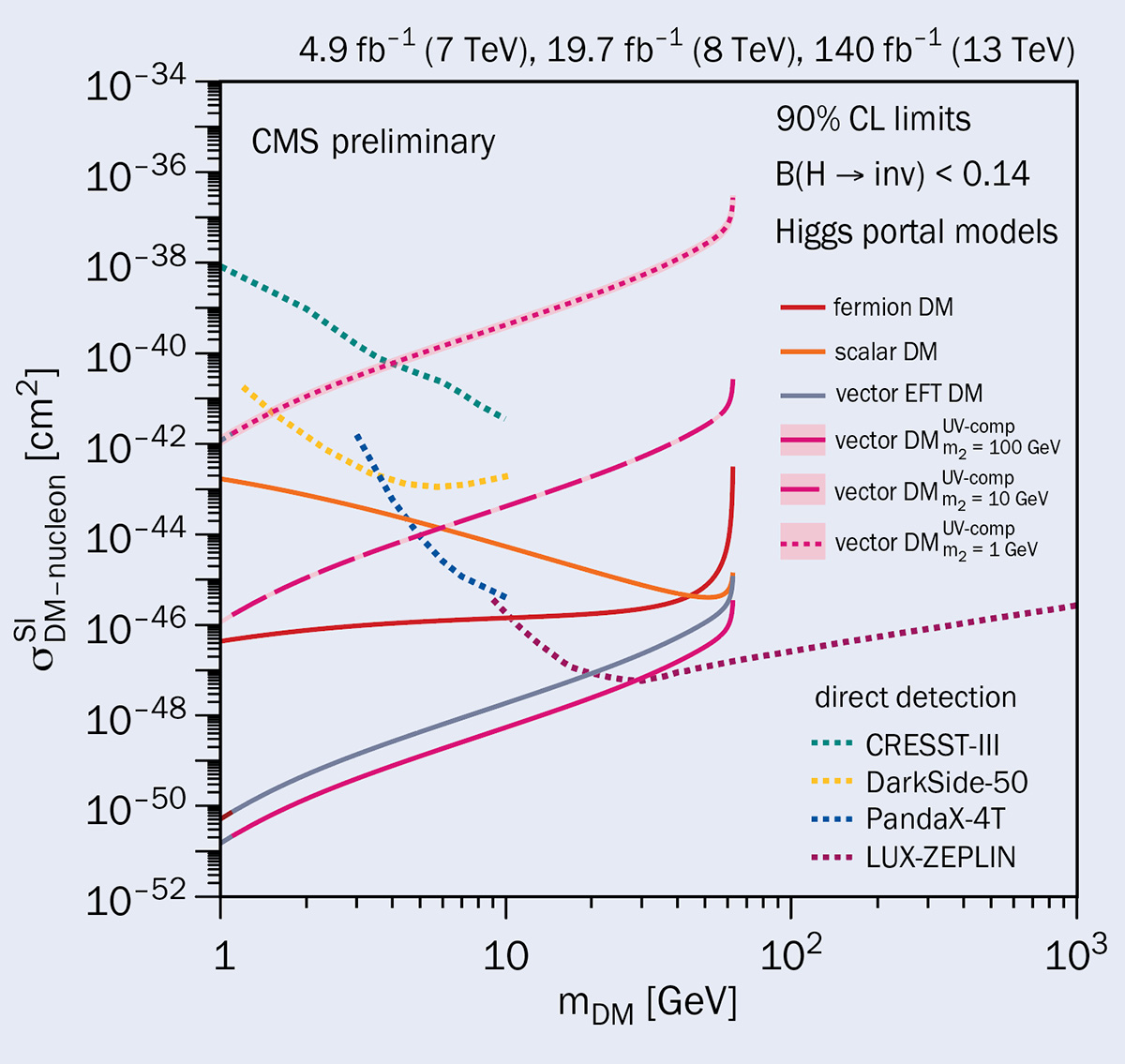
In the Standard Model (SM) of particle physics, the only way the Higgs boson can decay without leaving any traces in the LHC detectors is through the four-neutrino decay, H → ZZ → 4ν, which has an expected branching fraction of only 0.1%. This very small value can be seen as a difficulty but is also an exciting opportunity. Indeed, several theories of physics beyond the SM predict considerably enhanced values for the branching fraction of invisible Higgs-boson decays. In one of the most interesting scenarios, the Higgs boson acts as a portal to the dark sector by decaying to a pair of dark matter (DM) particles. Measurements of the “Higgs to invisible” branching fraction are clearly among the most important tools available to the LHC experiments in their searches for direct evidence of DM particles.
The CMS collaboration recently reported the combined results of different searches for invisible Higgs-boson decays, using data collected at 7, 8 and 13 TeV centre-of-mass energies. To find such a rare signal among the overwhelming background produced by SM processes, the study considers events in most Higgs-boson production modes: via vector boson (W or Z) fusion, via gluon fusion and in association with a top quark–antiquark pair or a vector boson. In particular, the analysis looked at hadronically decaying vector bosons or top quark–antiquark pairs. A typical signature for invisible Higgs-boson decays is a large missing energy in the detector, so that the missing transverse energy plays a crucial role in the analysis. No significant signal has been seen, so a new and stricter upper limit is set on the probability that the Higgs boson decays to invisible particles: 15% at 95% confidence level.
This result has been interpreted in the context of Higgs-portal models, which introduce a dark Higgs sector and consider several dark Higgs-boson masses. The extracted upper limits on the spin-independent DM-nucleon scattering cross section, shown in figure 1 for a range of DM mass points, have better sensitivities than those of direct searches over the 1–100 GeV range of DM masses. Once the Run 3 data will be added to the analysis, much stricter limits will be reached or, if we are lucky, evidence for DM production at the LHC will be seen.
Lepton number is a quantum number that represents the difference in the number of leptons and antileptons participating in a process, while lepton flavour is a corresponding quantity that accounts for each generation of lepton (e, μ or τ) separately. Lepton number is always conserved but lepton flavour violation (LFV) is known to exist in nature, as this phenomenon has been observed in neutrino oscillations – the transition of a neutral lepton of a given flavour to one with a different flavour. This observation motivates searches for additional manifestations of LFV that may be the result of beyond-the-Standard Model (SM) physics, key among which is the search for LFV decays of the Higgs boson.
The ATLAS collaboration has recently announced the results of searches for H → eτ and H → μτ decays based on the full Run 2 data set, which was collected at a centre-of-mass energy of 13 TeV. The unstable τ lepton decays to an electron or a muon and two neutrinos, or to one or more hadrons and one neutrino. Most of the background events in these searches arise from SM processes such as Z →ττ, the production of top–antitop and weak-boson pairs, as well as from events containing misidentified or non-prompt leptons (fake leptons). These fake leptons originate from secondary decays, for example of charged pions. Several multivariate analysis techniques were used for each final state to provide the maximum separation between signal and background events.
To ensure the robustness of the measurement, two background estimation methods were employed: a Monte Carlo (MC) template method in which the background shapes were extracted from MC and normalised to data, and a “symmetry method”, which used only the data and relied on an approximate symmetry between prompt electrons and prompt muons. Any difference between the branching fractions B(H → eτμ) and B(H → μτe), where the subscripts μ and e represent the decay modes of the τ lepton, would break this symmetry. In both cases, contributions from events containing fake leptons were estimated directly from the data.
The MC-template method enables the measurement of the branching ratios of the LFV decay modes. Searches based on the MC-template method for background estimation involve both leptonic and hadronic decays of τ leptons. A simultaneous measurement of the H → eτ and H → μτ decay modes was performed. For the H → μτ (H → eτ) search, a 2.5 (1.6) standard deviation upward fluctuation above the SM background prediction is observed. The observed (expected) upper limits on the branching fractions B(H → eτ) and B(H → μτ) at 95% confidence level are slightly below 0.2% (0.1%), which are the most stringent limits obtained by the ATLAS experiment on these quantities. The result of the simultaneous measurement of the H → eτ and H → μτ branching fractions is compatible with the SM prediction within 2.2 standard deviations (see figure 1).
The observed upper limits on the branching fractions are the most stringent limits obtained by the ATLAS experiment
The symmetry method is particularly sensitive to the difference in the two LFV decay branching ratios. For this measurement, only the fully leptonic final states were used. Special attention was paid to correctly account for asymmetries induced by the different detector response to electrons and muons, especially regarding the trigger and offline efficiency values for lepton reconstruction, identification and isolation, as well as regarding contributions from fake leptons. The measurement of the branching ratio difference indicates a small but not significant upward deviation for H → μτ compared to H → eτ. The best-fit value for the difference between B(H → μτe) and B(H → eτμ) is (0.25 ± 0.10)%.
The expected twice-larger LHC Run 3 dataset at the higher centre-of-mass energy of 13.6 TeV will shed further light on these results.
The Cabibbo–Kobayashi–Maskawa (CKM) matrix describes the couplings between the quarks and the weak charged current, and contains within it a phase γ that changes sign under consideration of antiquarks rather than quarks. In the Standard Model (SM), this phase is the only known difference in the interactions of matter and anti-matter, a consequence of the breaking of charge-parity (CP) symmetry. While the differences within the SM are known to be far too small to explain the matter-dominated universe, it is still of paramount importance to precisely determine this phase to provide a benchmark against which any contribution from new physics can be compared.
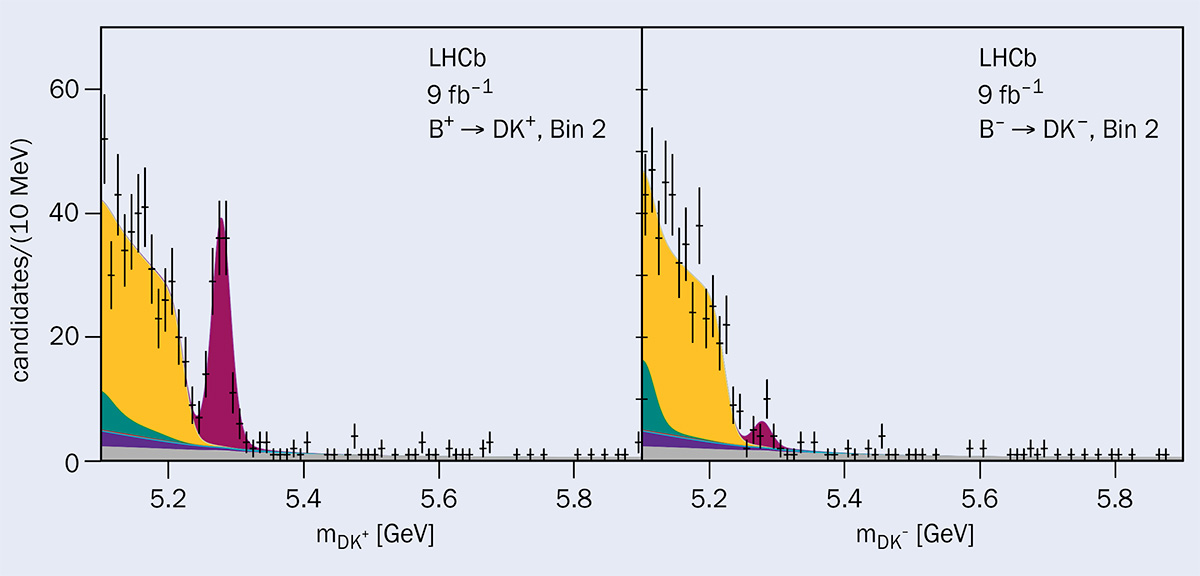
A new measurement recently presented by the LHCb collaboration uses a novel method to determine γ using decays of the type B± → D[K∓π±π±π∓]h± (h = π, K). CP violation in such decays is a consequence of the interference between two tree-level processes with a weak phase that differs by γ, and thus provide a theoretically clean probe of the SM. The new aspect of this measurement compared to those performed previously lies in the partitioning of the five-dimensional phase space of the D-decay into a series of independent regions, or bins. In these bins, the asymmetries between B+ and B– meson decay rates can receive large enhancements from the hadronic interactions in the D-meson decay. The enhancement for one of such bins can be seen in figure 1, which shows the invariant mass spectrum of the B+ and B– meson candidates, where the correctly reconstructed decays peak at around 5.3 GeV. The observed asymmetry in this region is around 85%, which is the largest difference in the behaviour of matter and antimatter ever measured. Observables from the different bins are combined with information on the hadronic interactions in the D-meson decay from charm-threshold experiments to obtain γ = 55 ± 9°, which is compatible withprevious determinations and is the second most precise single measurement.
The matter–antimatter asymmetry reaches 85% in a certain region, the largest ever observed
The LHCb average value of γ is then determined by combining this analysis with the measurements in many other B and D decays, where in all cases the SM contribution is expected to be dominant. Measurements of charm decays are also included to better constrain both the parameters of charm mixing, which also play an important role in the measurements of B-meson decays at the current level of precision and help to constrain the hadronic interactions in some of the D decays. In particular, included for the first time in this combination is a measurement of yCP, which is proportional to the difference in lifetimes of the two neutral charm mesons, and was determined using two-body decays of the D meson using the entire LHCb data set collected so far.
The overall impact of these additional analyses reduces the uncertainty on γ by more than 10%, corresponding to adding around a year of data taking across all decay modes.
The improvements in the knowledge of yCP is also dramatic, reducing the uncertainty by around 40%. While the value of γ is found to be compatible with determinations that would be more susceptible to new physics, the precision of the comparison is starting to approach the level of a few degrees, at which discrepancies may start to be observable.
Given that the current uncertainties on many of the key input analyses to the combination are predominately statistical in nature, measurements of these fundamental flavour-physics parameters with the upgraded LHCb detector, and beyond, are an intriguing prospect for new-physics searches.
For almost 40 years, charmonium, a bound state of a heavy charm–anticharm pair (hence also called a hidden charm), has provided a unique probe to study the properties of the quark–gluon plasma (QGP), the state of matter composed by deconfined quarks and gluons present in the early instants of the universe and produced experimentally in ultrarelativistic heavy-ion collisions. Charmonia come in a rich variety of states. In a new analysis investigating how these different bound charmonium states are affected by the QGP, the ALICE collaboration has opened a novel way to study the strong interaction at extreme temperatures and densities.
In the QGP, the production of charmonium is suppressed due to “colour screening” by the large number of quarks and gluons present. The screening, and thus the suppression, increases with the temperature of the QGP and is expected to affect different charmonium states to different degrees. The production of the ψ(2S) state, for example, which is 10 times more weakly bound and two times larger in size than the most tightly bound state, the J/ψ, is expected to be more suppressed.
This hierarchical suppression is not the only fate of charmonia in the quark–gluon plasma. The large number of charm quarks and antiquarks in the plasma – up to about 100 in head-on lead–lead collisions – also gives rise to a mechanism, called recombination, that forms new charmonia and counters the suppression to a certain extent. This process is expected to depend on the type and momentum of the charmonia, with the more weakly bound charmonia being produced through recombination later in the evolution of the plasma and charmonia with the lowest (transverse) momentum having the highest recombination rate.
Previous studies, using data first from the Super Proton Synchrotron and then from the LHC, have shown that the production of the ψ(2S) state is indeed more suppressed than that of the J/ψ, and ALICE has also previously provided evidence of the recombination mechanism in J/ψ production. But so far, no studies of ψ(2S) production at low transverse particle momentum had been precise enough to provide conclusive results in this momentum regime, preventing a complete picture of ψ(2S) production from being obtained.
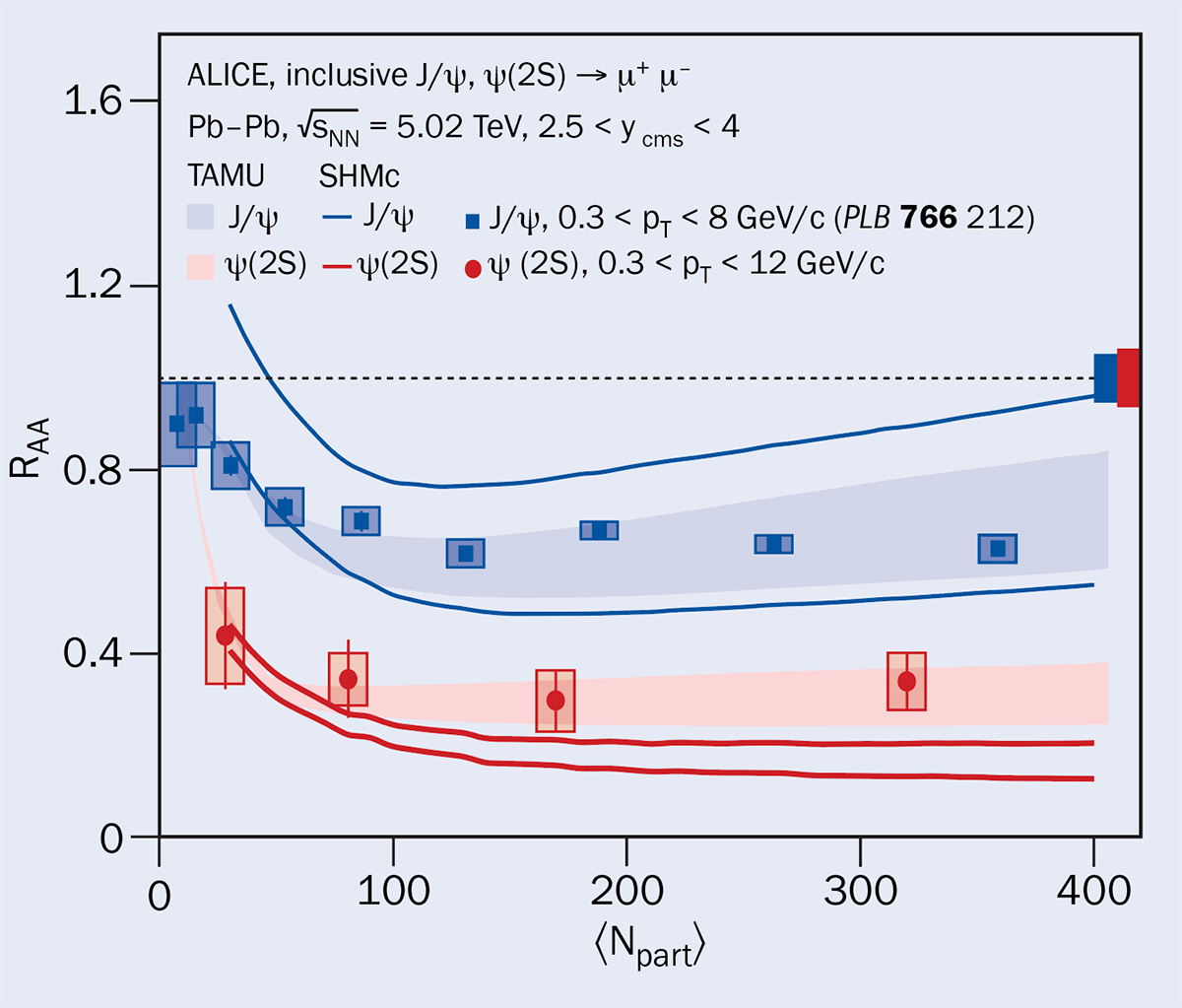
The ALICE collaboration has now reported the first measurements of ψ(2S) production down to zero transverse momentum, based on lead–lead collision data from the LHC collected in 2015 and 2018. The results indicate that the ψ(2S) yield is largely suppressed with respect to a proton–proton baseline, almost a factor of two more suppressed than the J/ψ. The suppression, shown as a function of the collision centrality (Npart) in the figure, is quantified through the nuclear modification factor (RAA), which compares the particle production in lead–lead collisions with respect to the expectations based on proton–proton collisions.
Theoretical predictions based on a transport approach that includes suppression and recombination of charmonia in the QGP (TAMU) or on the Statistical Hadronisation Model (SHMc), which assumes charmonia to be formed only at hadronisation, describe the J/ψ data, while the ψ(2S) production is underestimated in central events by the SHMc. This observation represents one of the first indications that dynamical effects in the QGP, as taken into account in the transport models, are needed to reproduce the yields of the various charmonium states. It also shows that precision studies, including these and those of other charmonia, and foreseen for Run 3 of the LHC, may lead to a final understanding of the modification of the force binding these states in the extreme environment of the QGP.
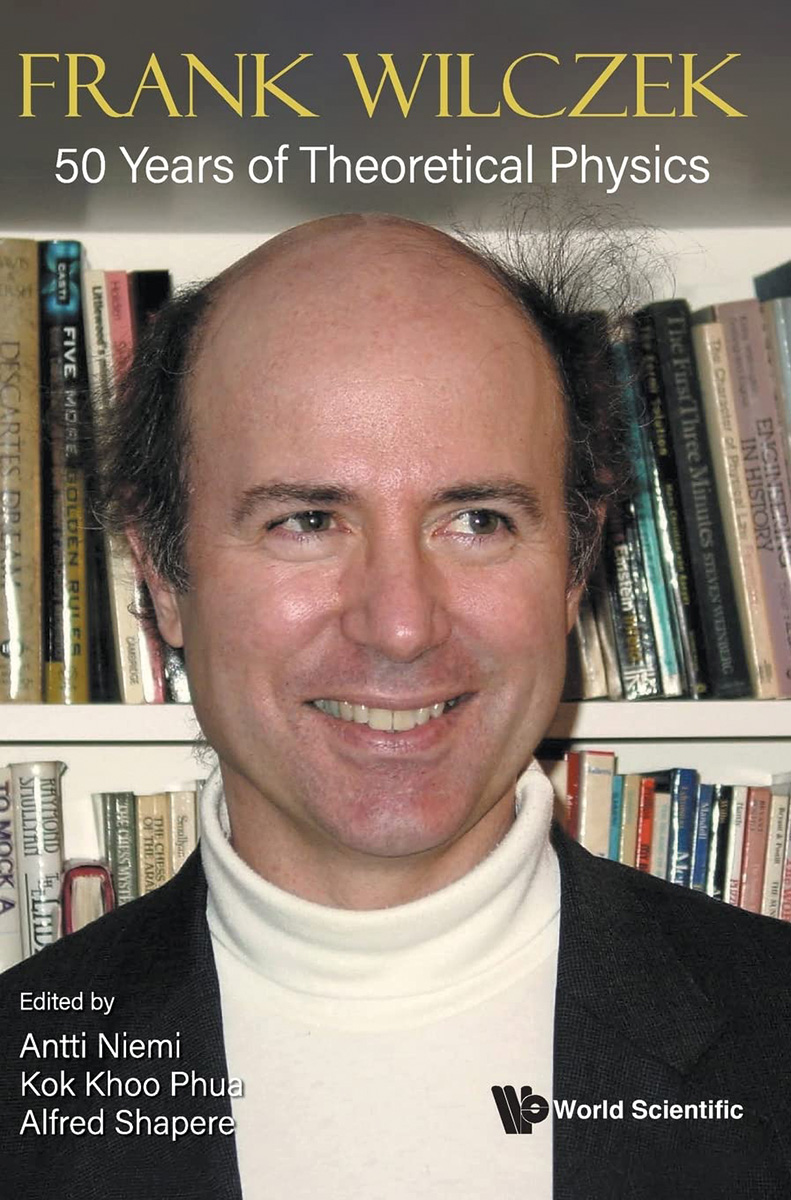
This carefully crafted edition highlights the scientific life of 2004 Nobel laureate Frank Anthony Wilczek, and the developments of theoretical physics related to his research. Frank Wilczek: 50 Years of Theoretical Physics is a collection of essays, original research papers and the reminiscences of Wilczek’s friends, students and followers. Wilczek is an exceptional physicist with an extraordinary mathematical talent. The 23 articles represent his vivid research journey from pure particle physics to cosmology, quantum black holes, gravitation, dark matter, applications of field theory to condensed matter physics, quantum mechanics, quantum computing and beyond.
In 1973 Wilczek discovered, together with his doctoral advisor David Gross, asymptotic freedom through which the field theory of the strong interaction, quantum chromodynamics (QCD), was firmly established. Independently that year, the same work was done by David Politzer, and all three shared the Nobel prize in 2004. Wilczek’s major work includes the solution of the strong-CP problem by predicting the hypothetical axion, a result of the spontaneously broken Peccei–Quinn symmetry. In 1982 he predicted the quasiparticle “anyon”, for which evidence was found in a 2D electronic system in 2020. This satisfies the need for a new variant for 2D systems as the properties of fermions and bosons are not transferable.
Original research papers included in this book were written by pioneering scientists, such as Roman Jackiw and Edward Witten, who are either co-inventors or followers of Wilczek’s work. The articles cover recent developments of QCD, quantum-Hall liquids, gravitational waves, dark energy, superfluidity, the Standard Model, symmetry breaking, quantum time-crystals, quantum gravity and more. Many colour photographs, musical tributes to anyons, memories of quantum-connection workshops and his contribution to the Tsung-Dao Lee Institute in Shanghai complement the volume. The book ends with Wilczek’s publication list, which documents the most significant developments in theoretical particle physics during the past 50 years.
Wilczek is an exceptional physicist with an extraordinary mathematical talent
Though this book is not an easy read in places, and the connections between articles are not always clear, a patient and careful reader will be rewarded. The collection combines rigorous scientific discussions with an admixture of Wilczek’s life, wit, scientific thoughts and teaching – a precious and timely tribute to an exceptional physicist.
Special Topics in Accelerator Physics by Alexander Wu Chao introduces the global picture of accelerator physics, clearly establishing the scope of the book from the first page. The derivation and solution of concepts and equations is didactic throughout the chapters. Chao takes readers by the hand and guides them through important formulae and their limitations step-by-step, such that the reader does not miss the important parts – an extremely useful tactic for advanced masters or doctoral students when their topic of interest is among the eight special topics described.
In the first chapter, I particularly liked the way the author transitions from the Vlasov equation, a very powerful technique for studying beam–beam effects, towards the Fokker–Planck equation describing the statistical interaction of charged particles inside an accelerator. Chao pedagogically introduces the potential-well distortion, which is complemented by illustrations. The discussion on wakefield acceleration, taking readers deeper into the subject and extending it both for proton and electron beams, is timely. Extending the Fokker–Planck equation to 2D and 3D systems is particularly advanced but at the same time important. The author discusses the practical applications of the transient beam distribution in simple steps and introduces the higher order moments later. The proposed exercises, for some of which solutions are provided, are practical as well.
In chapter two, the concept of symplecticity, the conservation of phase space (a subject that causes much confusion), is discussed with concrete examples. Naming issues are meticulously explained, such as using the term short-magnet rather than thin-lens approximation in formula 2.6. Symplectic models for quadrupole magnets are introduced and the following discussion is extremely useful for students and accelerator physicists who will use symplectic codes such as MAD-X and who would like to understand the mathematical framework of their operation. This nicely conjuncts with the next chapter and the book offers useful insights to how these codes operate. In the discussion about third-order integration, Chao makes occasional mental leaps, which could be mitigated with an additional sentence. Although the discussion on higher order and canonical integrators is rather specialised, it is still very useful.
The author introduces the extremely convenient and broadly used truncated power series algebra (TPSA) technique, used to obtain maps, in chapter three. Chao explains in a simple manner the transition from the pre-TPSA algorithms (such as TRANSPORT or COSY) to symplectic algorithms such as MAD-X or PTC, as well as the reason behind this evolution. The clear “drawbacks” discussion is very useful in this regard.
The transition to Lie algebra in chapter four is masterful and pedagogical. Lie algebras, which can be an advanced topic and come with many formulas, are the main focus in this section of the book. In particular, the non-linearity of the drift space, which is absent of fields, should catch the reader’s attention. This is followed by specialised applications for expert readers only. One of this chapter’s highlights is the derivation of the sextupole pairing, which is complemented by that of Taylor maps up to the second order and its Lie algebra, although it would be better if the “Our plan” section was placed at the beginning of the chapter.
Chapter five covers proton-spin dynamics. Spinor formulas and the Froissart–Stora equation for the polarisation change are developed and explained. The Siberian snake technique remains one of the most well-known to retain beam polarisation, which the author discusses in detail. This links elegantly to chapter six, which introduces the reader to electron-spin dynamics where synchrotron radiation is the dominant effect and therefore constitutes a completely different research area. Chao focuses on the differences between the quantum and classical approach to synchrotron radiation, a phenomenon that cannot be ignored in high-brightness machines. Analogies between protons and electrons are then very well summarised in the recap figure 6.3. Section 6.5 is important for storage rings and leads smoothly to the Derbenev–Kondratenko formula and its applications.
Echoes
Chapter seven looks at echoes, a key technique when measuring diffusion in an accelerator, where the author introduces the reader to the generality of the term and the concept of echoes in accelerator physics. Transverse echoes (with and without diffusion) are quite analytical and the figures are didactic.
The book concludes with a very complete, concise and detailed chapter about beam–beam effects, which acts as an introduction to collider–accelerator physics for coherent- and incoherent-effects studies. Although synchro-betatron couplings causing resonant instabilities are advanced topics, they are often seen in practice when operating the machines, and the book offers the theoretical background for a deeper understanding of these effects.
Special Topics in Accelerator Physics is well written and develops the advanced subjects in a comprehensive, complete and pedagogical way.
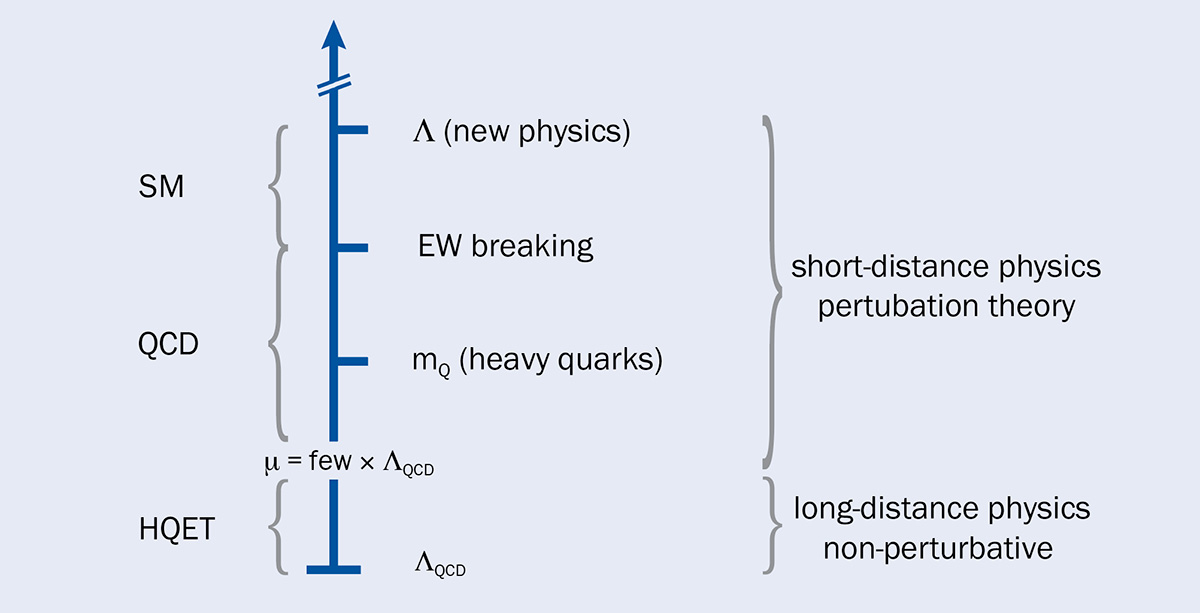
High-energy physics spans a wide range of energies, from a few MeV to TeV, that are all relevant. It is therefore often difficult to take all phenomena into account at the same time. Effective field theories (EFTs) are designed to break down this range of scales into smaller segments so that physicists can work in the relevant range. Theorists “cut” their theory’s energy scale at the order of the mass of the lightest particle omitted from the theory, such as the proton mass. Thus, multi-scale problems reduce to separate and single-scale problems (see “Scales” image). EFTs are today also understood to be “bottom-up” theories. Built only out of the general field content and symmetries at the relevant scales, they allow us to test hypotheses efficiently and to select the most promising ones without needing to know the underlying theories in full detail. Thanks to their applicability to all generic classical and quantum field theories, the sheer variety of EFT applications is striking.
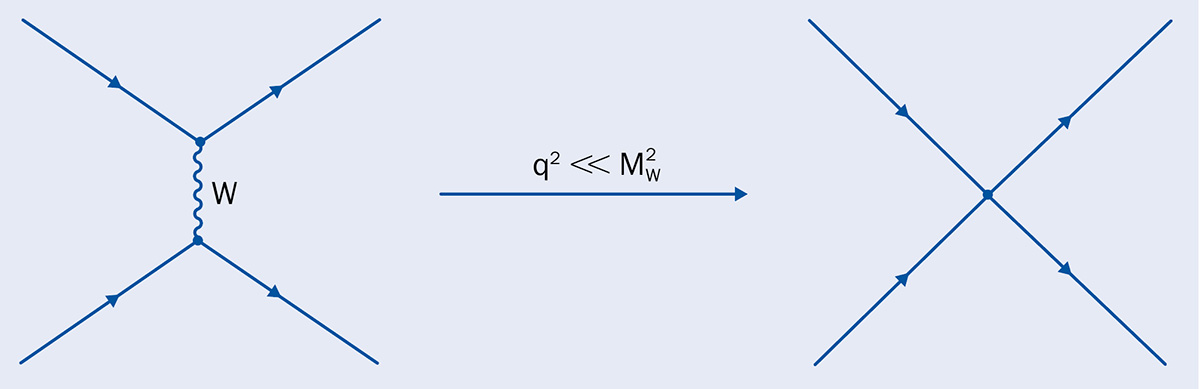
In hindsight, particle physicists were working with EFTs from as early as Fermi’s phenomenological picture of beta decay in which a four-fermion vertex replaces the W-boson propagator because the momentum is much smaller compared to the mass of the W boson (see “Fermi theory” image). Like so many profound concepts in theoretical physics, EFT was first considered in a narrow phenomenological context. One of the earliest instances was in the 1960s, when ad-hoc methods of current algebras were utilised to study weak interactions of hadrons. This required detailed calculations, and a simpler approach was needed to derive useful results. The heuristic idea of describing hadron dynamics with the most general Lagrangian density based on symmetries, the relevant energy scale and the relevant particles, which can be written in terms of operators multiplied by Wilson coefficients, was yet to be known. With this approach, it was possible to encode local symmetries in terms of the current algebra due to their association with conserved currents.
For strong interactions, physicists described the interaction between pions with chiral perturbation theory, an effective Lagrangian, which simplified current algebra calculations and enabled the low-energy theory to be investigated systematically. This “mother” of modern EFTs describes the physics of hadrons and remains valid to an energy scale of the proton mass. Heavy-quark effective theory (HQET), introduced by Howard Georgi in 1990, complements chiral perturbation theory by describing the interactions of charm and bottom quarks. HQET allowed us to make predictions on B-meson decay rates, since the corrections could now be classified. The more powers of energy are allowed, the more infinities appear. These infinities are cancelled by available counter-terms.
Similarly, it is possible to regard the Standard Model as the truncation of a much more general theory including non-renormalisable interactions, which yield corrections of higher order in energy. This perception of the whole Standard Model as an effective field theory started to be formed in the late 1970s by Weinberg and others (see “All things EFT: a lecture series hosted at CERN” panel). Among the known corrections to the Standard Model that do not satisfy its approximate symmetries are neutrino masses, postulated in the 1960s and discovered via the observation of neutrino oscillations in the late 1990s. While the scope of EFTs was unclear initially, today we understand that all successful field theories, with which we have been working in many areas of theoretical physics, are nothing but effective field theories. EFTs provide the theoretical framework to probe new physics and to establish precision programmes at experiments. The former is crucial for making accurate theoretical predictions, while the latter is central to the physics programme of CERN in general.
EFTs in particle physics
More than a decade has passed since the first run of the LHC, in which the Higgs boson and the mechanism for electroweak symmetry breaking were discovered. So far, there are no signals of new physics beyond the SM. EFTs are well suited to explore LHC physics in depth. A typical example for an event involving two scales is Higgs-boson production because there is a factor 10–100 between its mass and transverse momentum. The calculation of each Higgs-boson production process leads to large logarithms that can invalidate perturbation theory due to the large-scale separation. This is just one of many examples of the two-scale problem that arises when the full quantum field theory approach for high-energy colliders is applied. Traditionally, such two-scale problems have been treated in the framework of QCD factorisation and resummation.
Over the past two decades, it has been possible to recast two-scale problems at high-energy colliders with the advent of soft-collinear effective theory (SCET). SCET is nowadays a popular framework that is used to describe Higgs physics, jets and their substructure, as well as more formal problems, such as power corrections to reconstruct full amplitudes eventually. The difference between HQET and SCET is that SCET considers long-distance interactions between quarks and both soft and collinear particles, whereas HQET takes into account only soft interactions between a heavy quark and a parton. SCET is just one example where the EFT methodology has been indispensable, even though the underlying theory at much higher energies is known. Other examples of EFT applications include precision measurements of rare decays that can be described by QCD with its approximate chiral symmetry, or heavy quarks at finite temperature and density. EFT is also central to a deeper understanding of the so-called flavour anomalies, enabling comparisons between theory and experiment in terms of particular Wilson coefficients.
A novel global lecture series titled “All things EFT” was launched at CERN in autumn 2020 as a cross-cutting online series focused on the universal concept of EFT, and its application to the many areas where it is now used as a core tool in theoretical physics. Inaugurated in a formidable historical lecture by the late Steven Weinberg, who reviewed the emergence and development of the idea of EFT through to its perception nowadays as encompassing all of quantum field theory and beyond, the lecture series has amassed a large following that is still growing. The series featured outstanding speakers, world-leading experts from cosmology to fluid dynamics, condensed-matter physics, classical and quantum gravity, string theory, and of course particle physics – the birthing bed of the powerful EFT framework. The second year of the series was kicked off in a lecture dedicated to the memory of Weinberg by Howard Georgi, who looked back on the development of heavy-quark effective theory and its immediate aftermath.
Moreover, precision measurements of Higgs and electroweak observables at the LHC and future colliders will provide opportunities to detect new physics signals, such as resonances in invariant mass plots, or small deviations from the SM, seen in tails of distributions for instance at the HL-LHC – testing the perception of the SM as a low-energy incarnation of a more fundamental theory being probed at the electroweak scale. This is dubbed the SMEFT (SM EFT) or HEFT (Higgs EFT), depending on whether the Higgs fields are expressed in terms of the Higgs doublet or the physical Higgs boson. This particular EFT framework has recently been implemented in the data-analysis tools at the LHC, enabling the analyses across different channels and even different experiments (see “LHC physics” image). At the same time, the study of SMEFT and HEFT has sparked a plethora of theoretical investigations that have uncovered its remarkable underlying features, for example allowing EFT to be extended or placing constraints on the EFT coefficients due to Lorentz invariance, causality and analyticity.
EFTs in gravity
Since the inception of EFT, it was believed that the framework is applicable only to the description of quantum field theories for capturing the physics of elementary particles at high-energy scales, or alternatively at very small length scales. Thus, EFT seemed mostly irrelevant regarding gravitation, for which we are still lacking a full theory valid at quantum scales. The only way in which EFT seemed to be pertinent for gravitation was to think of general relativity as a first approximation to an EFT description of quantum gravity, which indeed provided a new EFT perspective at the time. However, in the past decade it has become widely acknowledged that EFT provides a powerful framework to capture gravitation occurring completely across large length scales, as long as these scales display a clear hierarchy.
The most notable application to such classical gravitational systems came when it was realised that the EFT framework would be ideal to handle gravitational radiation emitted at the inspiral phase of a binary of compact objects, such as black holes. At this phase in the evolution of the binary, the compact objects are moving at non-relativistic velocities. Using the small velocity as the expansion parameter exhibits the separation between the various characteristic length scales of the system. Thus, the physics can be treated perturbatively. For example, it was found that even couplings manifestly change in classical systems across their characteristic scales, which was previously believed to be unique to quantum field theories. The application of EFT to the binary inspiral problem has been so successful that the precision frontier has been pushed beyond the state of the art, quickly surpassing the reach of work that has been focused on the two-body problem for decades via traditional methods in general relativity.
This theoretical progress has made an even broader impact since the breakthrough direct discovery of gravitational waves (GWs) was announced in 2016. An inspiraling binary of black holes merged into a single black hole in less than a split second, releasing an enormous amount of energy in the form of GWs, which instigated even greater, more intense use of EFTs for the generation of theoretical GW data. In the coming years and decades, a continuous increase in the quantity and quality of real-world GW data is expected from the rapidly growing worldwide network of ground-based GW detectors, and future space-based interferometers, covering a wide range of target frequencies (see “Next generation” image).
EFTs in cosmology
Cosmology is inherently a cross-cutting domain, spanning scales over about 1060 orders of magnitude, from the Planck scale to the size of the observable universe. As such, cosmology generally cannot be expected to be tackled directly by each of the fundamental theories that capture particle physics or gravity. The correct description of cosmology relies heavily on the work in many disparate areas of research in theoretical and experimental physics, including particle physics and general relativity among many more.
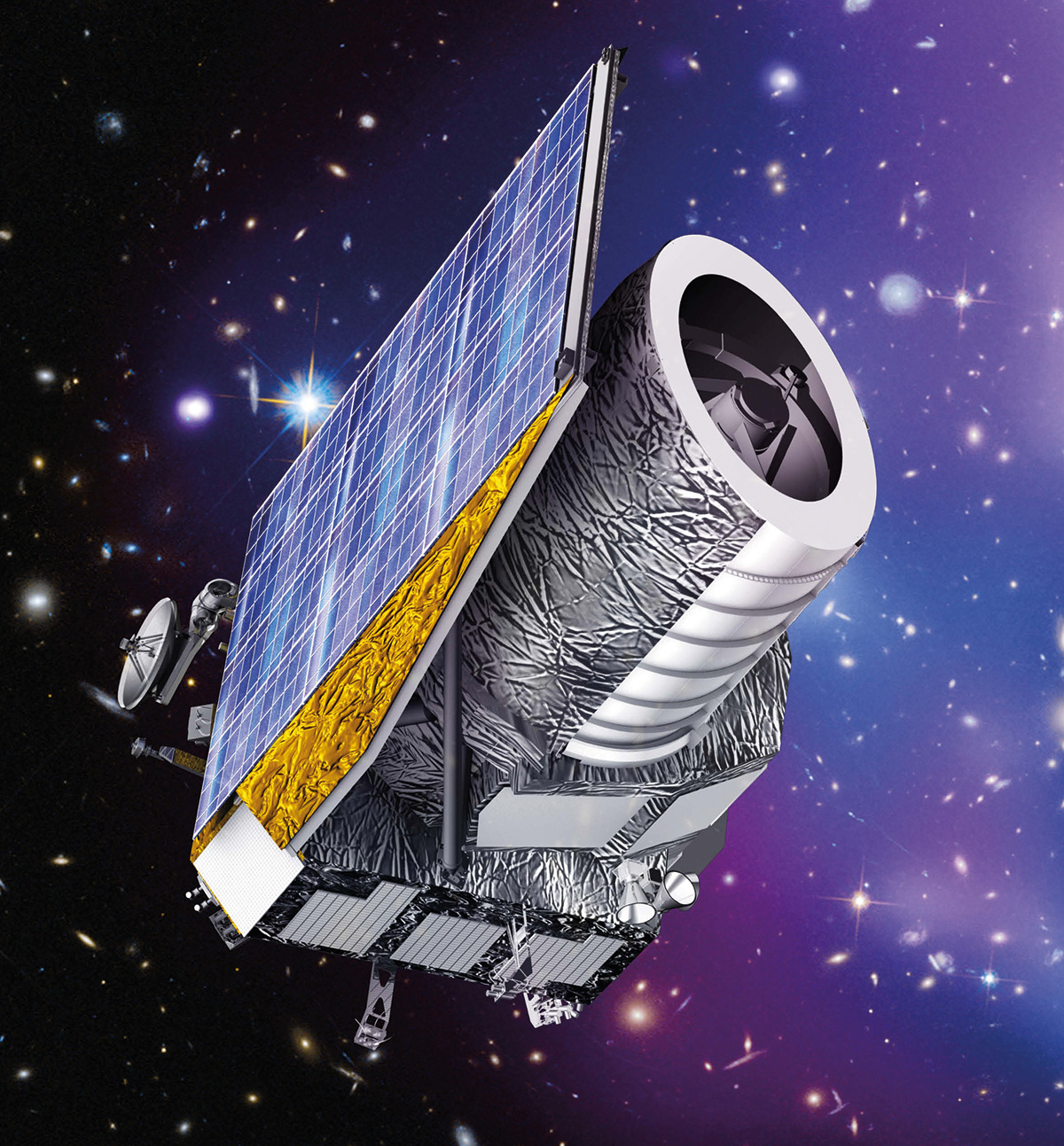
The development of EFT applications in cosmology – including EFTs of inflation, dark matter, dark energy and even EFTs of large-scale structure – has become essential to make observable predictions in cosmology. The discovery of the accelerated expansion of the universe in 1998 shows our difficulty in understanding gravity both at the quantum regime and the classical one. The cosmological constant problem and dark-matter paradigm might be a hint for alternative theories of gravity at very large scales. Indeed, the problems with gravity in the very-high and very-low energy range may well be tied together. The science programme of next-generation large surveys, such as ESA’s Euclid satellite (see “Expanding horizons” image), rely heavily on all these EFT applications for the exploitation of the enormous data that is going to be collected to constrain unknown cosmological parameters, thus helping to pinpoint viable theories.
The future of EFTs in physics
The EFT framework plays a key role at the exciting and rich interface between theory and experiment in particle physics, gravity and cosmology as well as in other domains, such as condensed-matter physics, which were not covered here. The technology for precision measurements in these domains is constantly being upgraded, and in the coming years and decades we are heading towards a growing influx of real-world data of higher quality. Future particle-collider projects, such as the Future Circular Collider at CERN, or China’s Circular Electron Positron Collider, are being planned and developed. Precision cosmology is also thriving, with an upcoming next-generation of very large surveys, such as the ground-based LSST, or space-based Euclid. GW detectors keep improving and multiplying, and besides those that are currently operating many more are planned, aimed at measuring various frequency ranges, which will enable a richer array of sources and events to be found.
EFTs provide the theoretical framework to probe new physics and to establish precision programmes at experiments across all domains of physics
Half a century after the concept has formally emerged, effective field theory is still full of surprises. Recently, the physical space of EFTs has been studied as a fundamental entity in its own right. These studies, by numerous groups worldwide, have exposed a new hidden “totally positive’’ geometric structure dubbed the EFT-hedron that constrains the EFT expansion in any quantum field theory, and even string theory, from first principles, including causality, unitarity and analyticity, to be satisfied by any amplitudes of these theories. This recent formal progress reflects the ultimate leap in the perception of EFT nowadays as the most fundamental and most generic theory concept to capture the physics of nature at all scales. Clearly, in the vast array of formidable open questions in physics that still lie ahead, effective field theory is here to stay – for good.
The discovery of the Higgs boson at the LHC in 2012 changed the landscape of high-energy physics forever. After just a few short years of data-taking by the ATLAS and CMS experiments, this last piece of the Standard Model (SM) was proven to exist. Since then, the Higgs sector has been studied using a rapidly growing dataset and, so far, all measurements agree with the SM predictions within the experimental uncertainties. In parallel, a comprehensive programme of searches for beyond-SM processes has been carried out, resulting in strong constraints on new physics. A harvest of precise measurements of a large variety of processes, confronted with state-of-the-art theoretical predictions, has further supported the SM. However, the theory lacks explanations for, among others, the nature of dark matter, the cosmological baryon asymmetry and neutrino masses. Importantly, the Higgs sector is related to “naturalness” problems that suggest the existence of new physics at the TeV scale, which the LHC can probe.
The high-luminosity phase of the LHC (HL-LHC) will provide an order of magnitude more data starting from 2029, allowing precision tests of the properties of the Higgs boson and improved sensitivity to a wealth of new-physics scenarios. The HL-LHC will deliver to each of the ATLAS and CMS experiments approximately 170 million Higgs bosons and 120,000 Higgs-boson pairs over a period of about 10 years. By extrapolating Run 2 results to the HL-LHC dataset, this will increase the precision of most Higgs-boson coupling measurements: 2–4% precision on the couplings to W, Z and third-generation fermions; and approximately 50% precision on the self-coupling by combining the ATLAS and CMS datasets. The larger dataset will also give improved sensitivity to rare vector-boson scattering processes that will offer further insights into the Higgs sector.
These precision measurements could reveal discrepancies with the SM predictions, which in turn could inform us about the energy scale of beyond-SM physics. In addition to improving SM measurements, the upgraded detectors and trigger systems being developed and constructed for the HL-LHC era will enable direct searches to better target new physics with challenging signatures. To achieve these goals, it will be essential to achieve a detailed understanding of the detector performance as well as to measure the integrated luminosity of the collected dataset to 1% precision.
Rising to the challenge
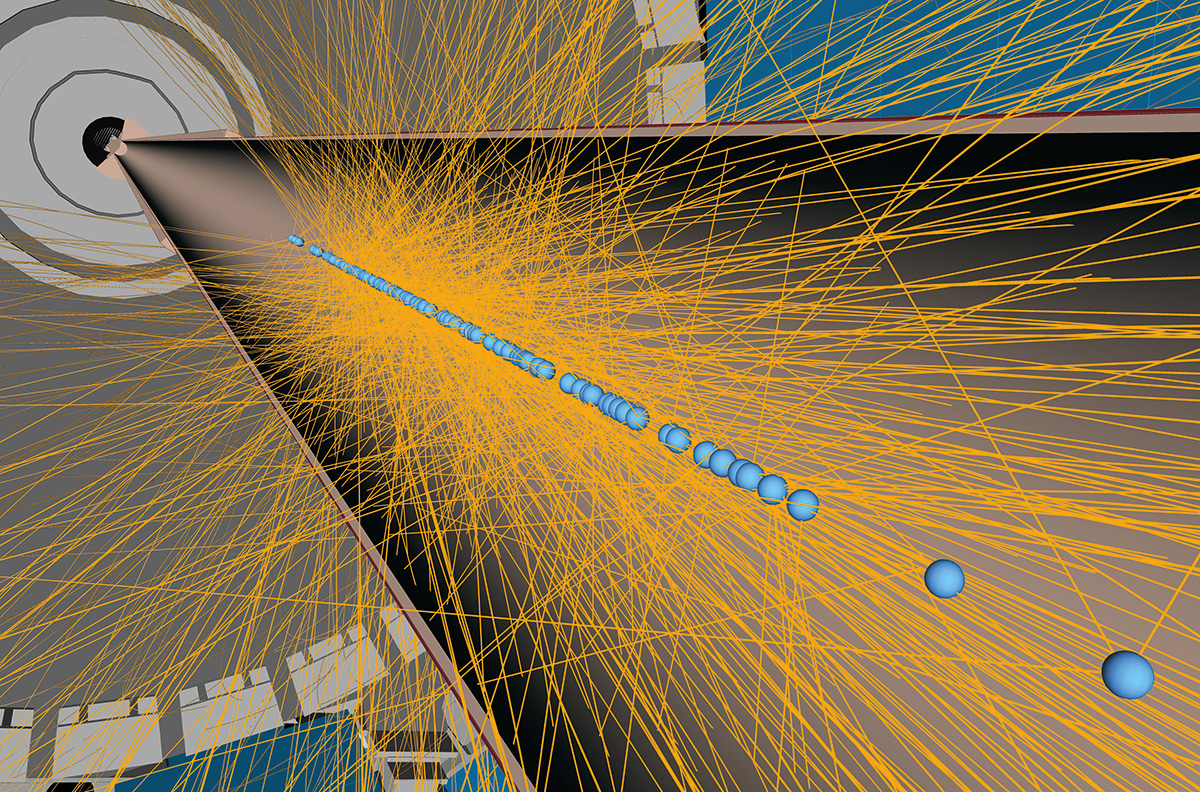
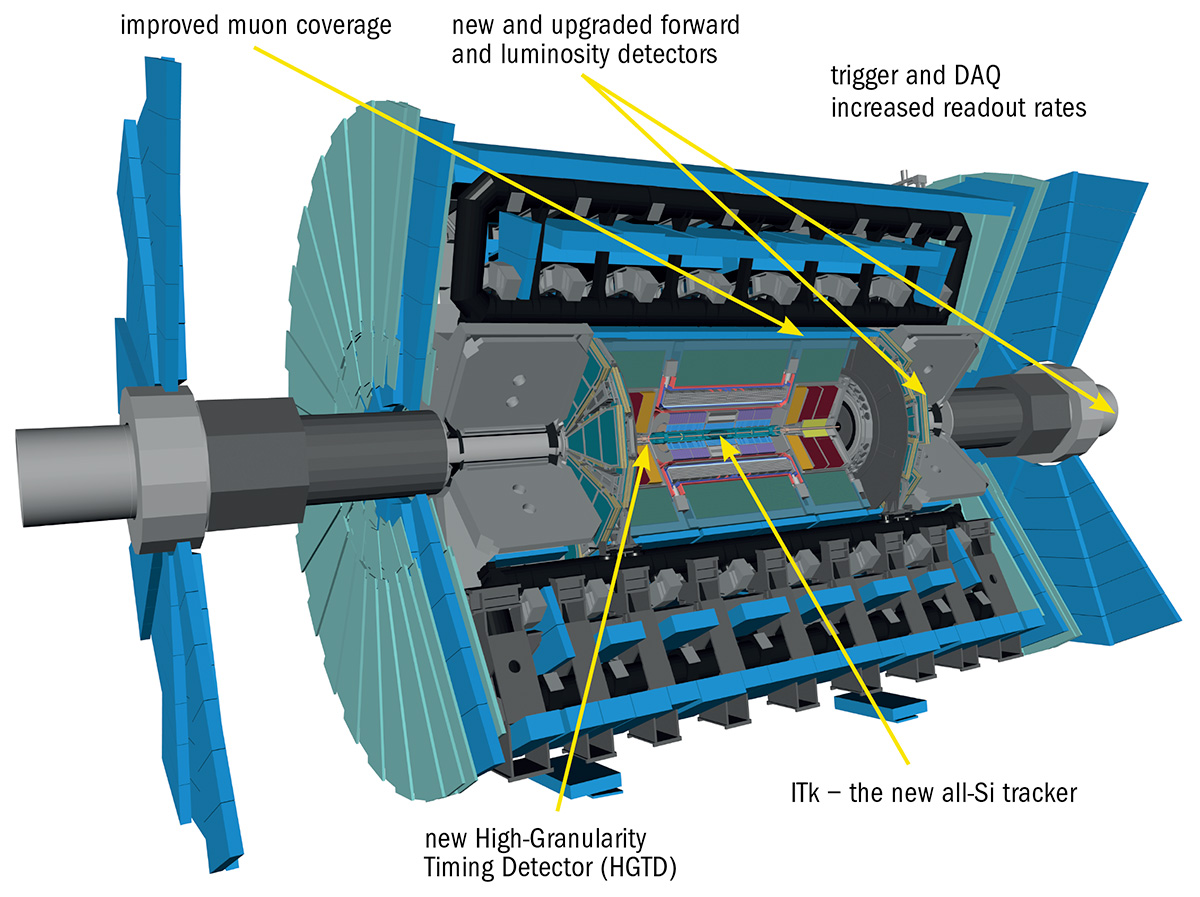
To cope with the increased number of interactions when proton bunches collide at the HL-LHC, the ATLAS collaboration is working hard to upgrade its detectors with state-of-the-art instrumentation and technologies. These new detectors will need to cope with challenging radiation levels, higher data rates and an extreme high-occupancy environment with up to 200 proton–proton interactions per bunch crossing (see “Pileup” figure). Upgrades will include changes to the trigger and data-acquisition systems, a completely new inner tracker, as well as a new silicon timing detector (see “ATLAS Phase II” figure).
The trigger and data-acquisition system will need to cope with a readout rate of 1 MHz, which is about 10 times higher than today. To achieve this, ATLAS will use a new architecture with a level-0 trigger (the first-level hardware trigger) based on the calorimeter and muon systems. Building on the upgrades for Run 3, which started in July 2022, the calorimeter will include capabilities for triggering at higher pseudorapidity, up to |η| = 4. During HL-LHC running, the global trigger system will be required to handle 50 Tb/s as input and to decide within 10 μs whether each event should be recorded or discarded, allowing for more sophisticated algorithms to be run online for particle identification. All the detectors will require substantial upgrades to handle the additional acceptance rates from the trigger.
The readout electronics for the electromagnetic, forward and hadronic end-cap liquid-argon calorimeters, along with the hadronic tile calorimeter, will be replaced. The full calorimeter systems, segmented into 192,320 cells that are read out individually, will be read out for every bunch crossing at the full 40 MHz to provide full-granularity information to the trigger. This will require changes to both front-end electronics and off-detector components.
The muon system will also see significant upgrades to the on-detector electronics of the resistive plate chambers (RPCs) and thin-gap chambers (TGCs) responsible for triggering on muons, as well as the muon drift tubes (MDTs) responsible for measuring the curvature of the tracks precisely. The MDTs will also be used for the first time in the level-0 trigger decisions. These improvements will allow all data to be sent to the back-end at 40 MHz, removing the need for readout buffers on the detector itself. All hits in the detector will be used to perform trigger logic in hardware using field programmable gate-arrays. Additional improvements to increase the trigger acceptance for muons will come in the form of a new layer of RPCs to be installed in the inner barrel layer, along with new MDTs in the small sectors. The Muon New Small Wheel system was installed during Long Shutdown 2 (LS2) from 2019 to 2022 and is located inside the end-cap toroid magnet containing both triggering and precision tracking chambers. Additional RPC upgrades were also made in the barrel leading up to Run 3, and the TGCs will be upgraded in the endcap region of the muon system during LS3.
State-of-the-art tracking
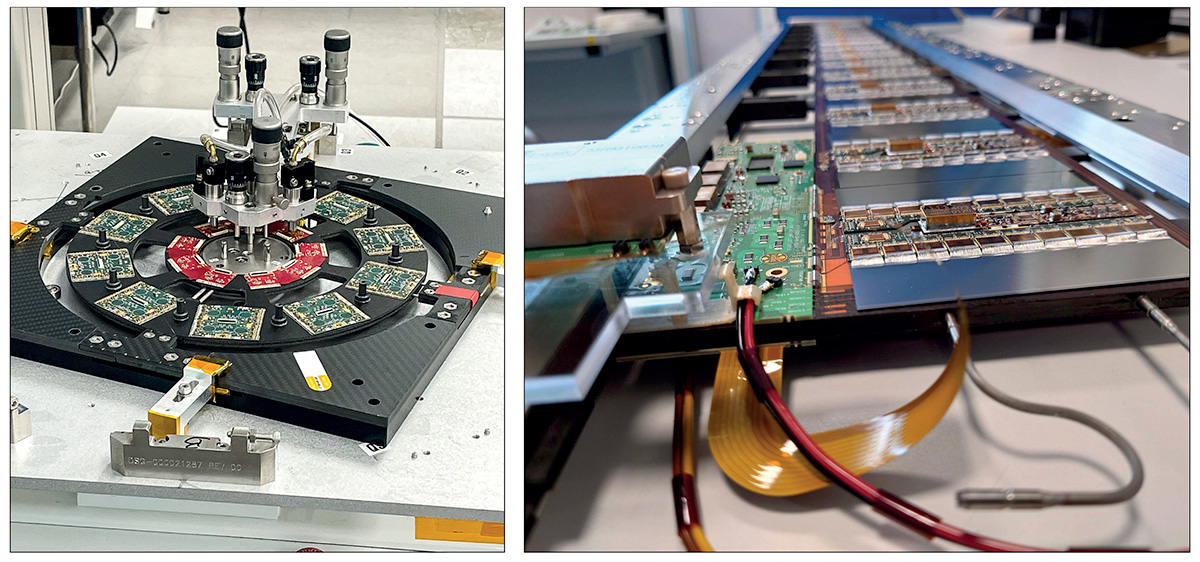
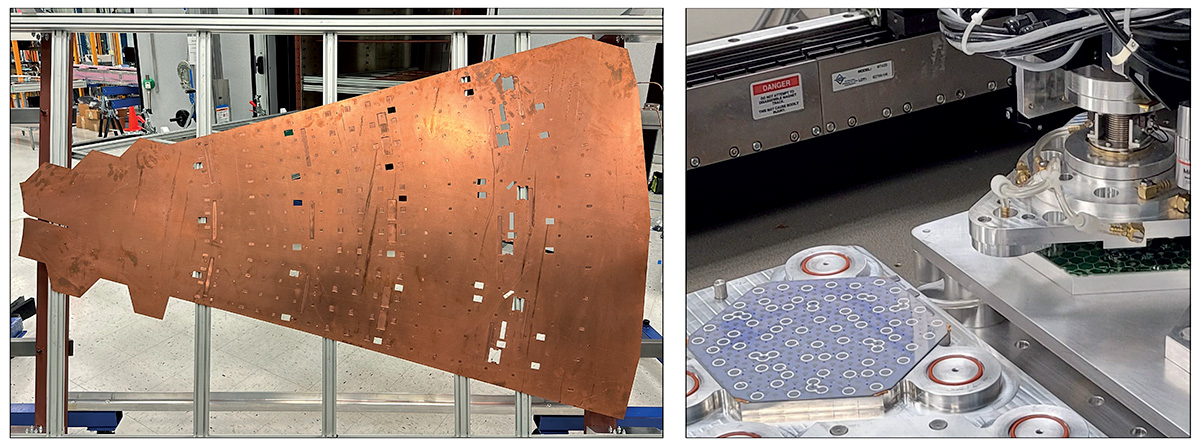
The success of the research programme at the HL-LHC will strongly rely on the tracking performance, which in turn determines the ability to efficiently identify hadrons containing b and c quarks, in addition to tau and other charged leptons. Reconstructing individual particles in the HL-LHC collision environment with thousands of charged particles being produced within a region of about 10 cm will be very challenging. The entire tracking system, presently consisting of pixel and strip detectors and the transition radiation tracker, will be replaced by a new all-silicon pixel and strip tracker – the ITk. Thiswill feature higher granularity, increased radiation hardness and readout electronics that allow higher data rates and a longer trigger latency. The new pixel detector will also extend the pseudorapidity coverage in the forward region from |η| < 2.5 to |η| < 4, increasing the acceptance for important physics processes like vector-boson fusion (see “Pixel perfection” image).
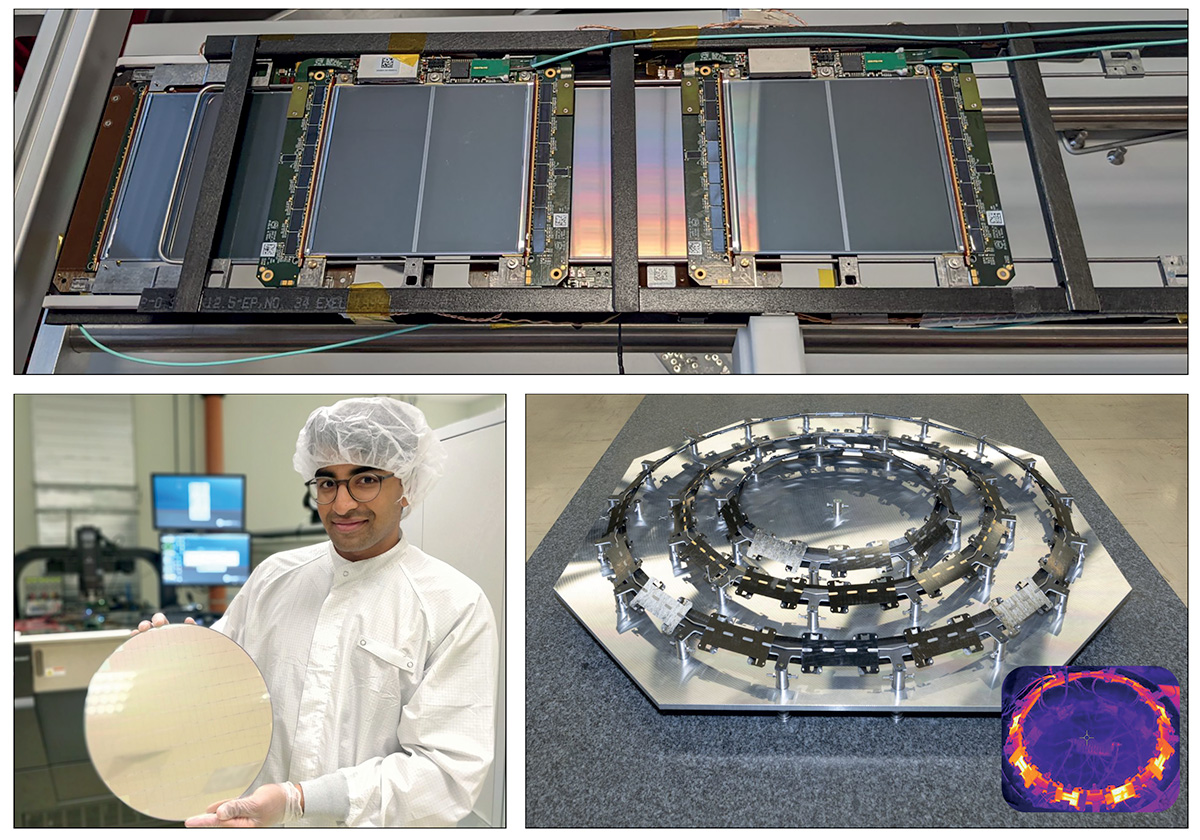
The ITk will comprise nine barrel layers, positioned at radii from 33 mm out to 1 m from the beam line, plus end-cap rings. It will be much more complex with respect to the present ATLAS tracker, featuring 10 times the number of strip channels and 60 times the number of pixel channels. The strip detectors will cover a total surface of 160 m2 with 60 million readout channels, and the pixels an area of 13 m2 with more than five billion readout channels. The innermost layer will be populated with radiation-hard 3D sensors, with pixel cells of 25 × 100 µm2 in the barrel part and 50 × 50 µm2 in the forward parts for improved tracking capabilities in the central and forward regions. Prototypes of the end-cap ring for the inner system and of the strip barrel stave are at an advanced stage (see “ITk prototyping” image). A unique feature of the trackers at the HL-LHC is that they will be operated for the first time with a serial powering scheme, in which a chain of modules is powered by a constant current. If the modules were to be powered in parallel, the high total current would lead to either high power losses or a large mass of cables within the volume of the detector, which would impact the tracking performance.
Given the challenging conditions posed by the HL-LHC, ATLAS will construct a novel precision-timing silicon detector, the High-Granularity Timing Detector (HGTD), which provides a time resolution of 30 to 50 ps for charged particles. The detector will cover a pseudorapidity range of 2.4 < |η| < 4 and will comprise two double-sided silicon layers on each side of ATLAS with a total active area of 6.4 m2. The precise timing information will allow the collaboration to disentangle proton–proton interactions in the same bunch crossing in the time dimension, complementing the impressive spatial resolution of the ITk. Low-gain avalanche diodes (see “Clocking tracks” image) provide timing information that can be associated with tracks in the forward regions, where they are more difficult to assign to individual interactions using spatial information. With a timing resolution six times smaller than the temporal spread of the beam spot, tracks emanating from collisions occurring very close in space but well-separated in time can be distinguished. This is particularly important in the forward region, where reduced longitudinal impact-parameter resolution limits the performance.
Building upon the insertable B-layer cooling system used since the start of Run 2, and to reduce the material budget, ATLAS will use a two-phase CO2 cooling system for the entire silicon ITk and HGTD detectors. These will allow the detectors to be cooled to around –35 °C during the entire lifetime of the HL-LHC. The low temperature is required to protect the silicon sensors from the expected high radiation dose received during their lifetime. Two-phase CO2 cooling is an environmentally friendly option compared to other suitable coolants. It provides a high heat transfer at reasonable flow parameters, a low viscosity (thus reducing the material used in the detector construction) and a well-suited temperature range for detector operations.
Luminous future
Precise knowledge of the luminosity is key for the ATLAS physics programme. To reach the goal of percent-level precision at the HL-LHC, ATLAS will upgrade the LUCID (Luminosity Cherenkov Integrating Detector) detector, a luminometer that is sensitive to charged particles produced at the interaction point. This is incredibly challenging given the number of interactions expected to be delivered by the machine, and the requirements on radiation hardness and long-term stability for the lifetime of the experiment. The HGTD will also provide online luminosity measurements on a bunch-by-bunch basis, and additional detector prototypes are being tested to provide the best possible precision for luminosity determination during HL-LHC running. Luminometers in ATLAS provide luminosity monitoring to the LHC every one to two seconds, which is required for efficient beam steering, machine optimisation and fast checking of running conditions. In the forward region, the zero-degree calorimeter, which is particularly important for determining the centrality in heavy-ion collisions, is also being redesigned for HL-LHC running.
The HL-LHC will deliver luminosities of up to 7.5 × 1034 cm–2s–1, and ATLAS will record data at a rate 10 times higher than in Run 2. The ability to process and analyse these data depends heavily on R&D in software and computing, to make use of resource-efficient storage solutions and opportunities that paradigm-shifting improvements like heterogeneous computing, hardware accelerators and artificial intelligence can bring. This is needed to simulate and process the high-occupancy HL-LHC events, but also to provide a better theoretical description of the kinematics.
New era
The Phase-II upgrade projects described are only possible through collaborative efforts between universities and laboratories across the world. The research teams are currently working intensely to finalise the designs, establish the assembly and testing procedures, and in some cases start construction. They will all be installed and commissioned during LS3 in time for the start of Run 4, currently planned for 2029.
To cope with the increased number of interactions when proton bunches collide at the HL-LHC, the ATLAS collaboration is working hard to upgrade its detectors with state-of-the-art instrumentation and technologies
The HL-LHC will provide an order of magnitude more data recorded with a dramatically improved ATLAS detector. It will usher in a new era of precision tests of the SM, and of the Higgs sector in particular, while also enhancing sensitivity to rare processes and beyond-SM signatures. The HL-LHC physics programme relies on the successful and timely completion of the ambitious detector upgrade projects, pioneering full-scale systems with state-of-the-art detector technologies. If nature is harbouring physics beyond the SM at the TeV scale, then the HL-LHC will provide the chance to find it in the coming decades.
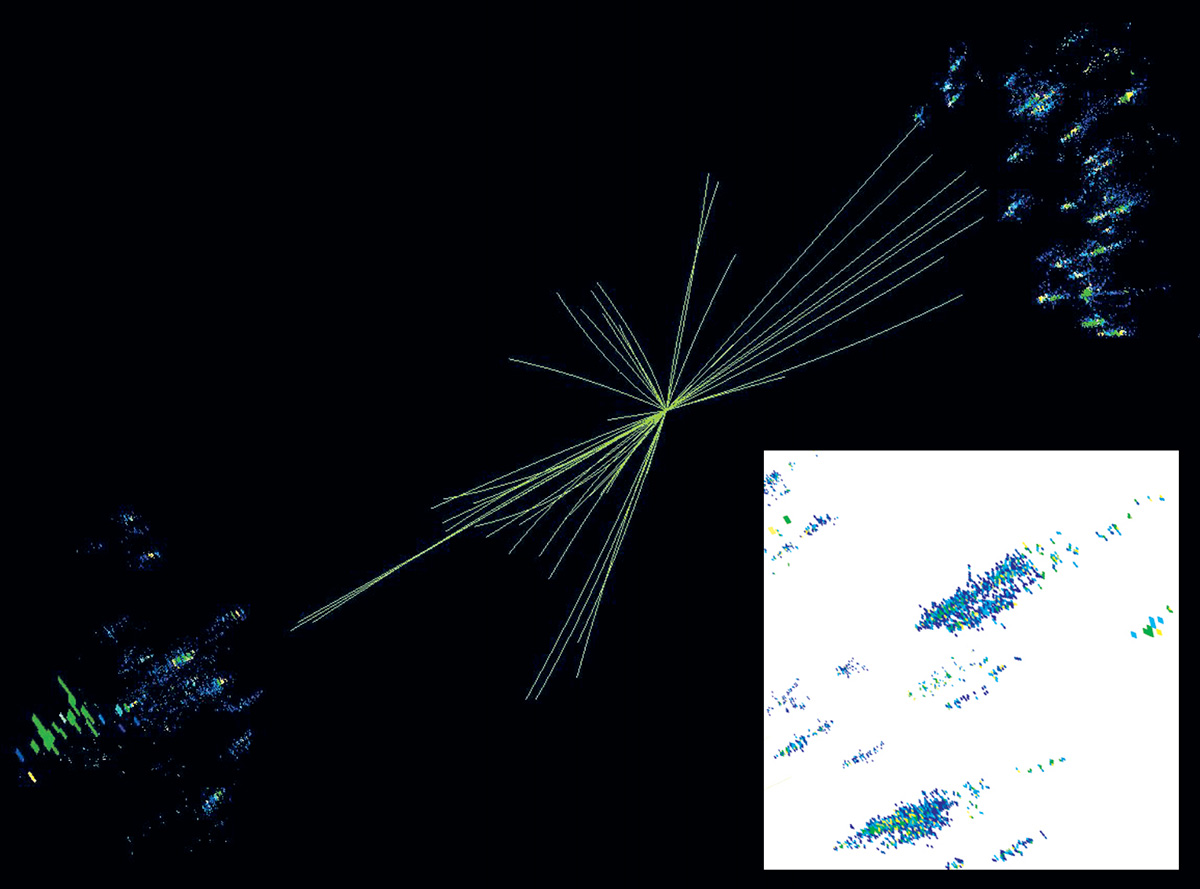
The High-Luminosity LHC (HL-LHC), due to start operations in 2029, will deliver about 10 times more data than has been accumulated during the previous LHC runs. The CMS collaboration is getting ready to profit from sub-percent precision on many Standard Model (SM) processes and to probe physics beyond the SM, both directly and through studies of higher-order effective operators. Studying rare processes, such as double-Higgs production, rare tau-lepton decays and Higgs couplings to second-generation fermions, will also be a central part of the programme. New ideas will certainly lead to improvements beyond the statistical scaling of uncertainties, bringing us closer to observing these rare processes. While high-precision tests of the SM will surely be the ultimate legacy of the LHC experiments, CMS will also keep searching for clear signs of new physics by investigating the many signatures accessible at the HL-LHC.
To exploit the HL-LHC physics potential, the CMS collaboration is building an optimised detector that pushes technologies to new heights. This major “Phase II” upgrade will enable the subdetectors to sustain the increased luminosity, which results in greater radiation damage and higher particle rates – the innermost pixel layer, for example, will see three billion hits per second per square centimetre. The CMS tracker and the calorimeter endcap will be replaced, a new minimum-ionising-particle precision timing detector (MTD) and a new luminosity detector will be installed, almost all of the existing electronics will be replaced, and additional muon forward stations will be mounted.
High granularity
The key to achieving the necessary HL-LHC performance is to enhance the granularity of the detector significantly. This reduces the maximum occupancy per readout cell while considerably increasing the readout bandwidth and processing power of the trigger system, thereby fully exploiting the higher collision rates. As a novelty, all CMS detector designs are tuned to allow full particle-flow reconstruction at the hardware-based level-1 trigger (operating at 40 MHz), while precision timing information, which contributes to the high-level-trigger decision, is exploited by highly optimised software mostly running on graphics processing units.
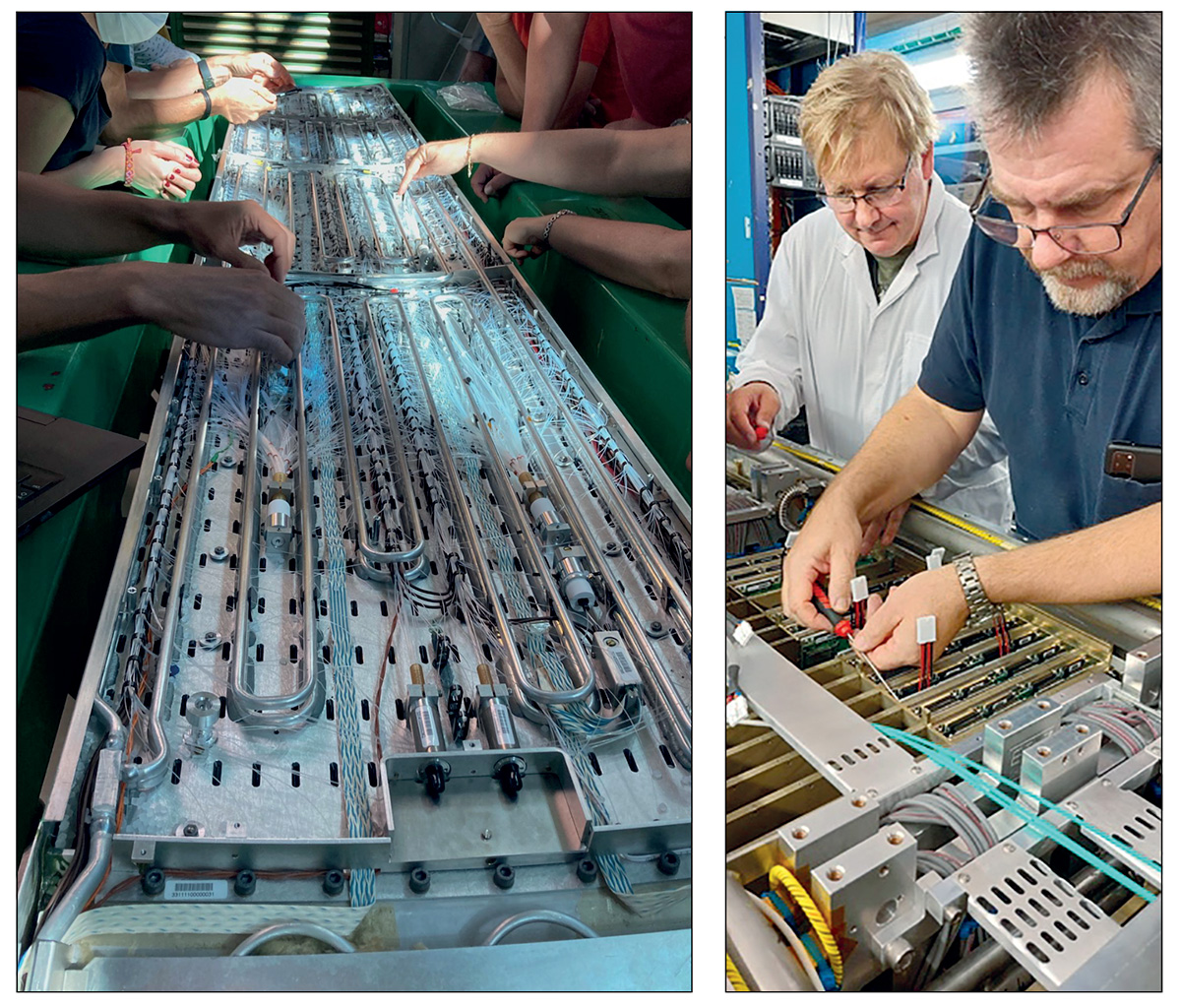
CMS is currently transitioning from the prototyping to the production phase on several major items. The novel gas electron multiplier (GEM) detector concept, used to detect muons produced in the very forward region, was deployed for the first time on a large scale during long shutdown 2 (LS2): 144 chambers in the first station are fully integrated into the ongoing data taking and the second station will be fully installed in a year-end technical stop before LS3 (see “GEM of a detector” image). Finishing endcap-muon upgrades in advance of LS3 allows the collaboration to minimise the repositioning of the CMS disks during LS3 and to reduce its overall duration. In this spirit, CMS has already finished the replacement of all front-end electronics of the cathode strip chambers. The replacement of the drift-tube electronics in the barrel muon detectors will take place in LS3, and an installed small-scale drift-tube demonstrator is already proving its performance.
The exceptional performance of the current all-silicon tracker provides a solid platform for even further improvements. A main novelty for Phase II is the level-1 track trigger, which reconstructs tracks with transverse momentum above 2 GeV, made available at a rate of 40 MHz. Profiting from the experience with pixels from Phase I, the whole Phase II tracker will use dual-phase CO2 cooling, ultra-lightweight mechanics, DCDC converters for the powering of the outer tracker, and serial powering for the pixel system, thereby reducing the amount of material by a factor of two compared to today. To reduce the occupancies expected at the highest foreseeable number of collisions per bunch crossing (pile-up), the outer-tracker channel count will increase from 9 million strips to 42 million strips plus 170 million macro-pixels, providing unambiguous z-position measurements. With six barrel layers and five double-disks per endcap, the outer tracker is optimised not only for standalone tracking but also for vertexing, a prerequisite for the track trigger (see “Outer tracker” image).
The outer tracker is already in production, having overcome most engineering and prototyping challenges. ASICs (application-specific integrated circuits) and sensors are being delivered and the order for the hybrids (which host integrated circuits and connections in the front-end modules) has been submitted. The inner tracker (pixel system) will feature two billion micro-pixels, compared to the 125 million at present. Four barrel layers plus 12 disks per endcap enable excellent track seeding and b-quark jet identification over the pseudorapidity range |η| < 4 (much broader than today’s |η| < 2.5). The inner tracker system aspects are understood, sensors will be ordered soon, and teams are waiting for the final readout ASIC to begin module production.
A new era of calorimetry
The high-granularity calorimeter (HGCAL) in the forward region starts a new era of calorimetry. It is a radiation-tolerant 5D imaging calorimeter with spatial, energy and precision-timing information (see “HGCAL on display” and “High-granularity calorimetry” images). The deployment of machine-learning algorithms will further enhance its potential to establish the HGCAL as a blueprint for future calorimeters. The HGCAL has 6.4 million channels, two orders of magnitude more than the current endcap calorimeters, including both silicon cells (with an area of 0.5 or 1 cm2) and scintillator tiles (4 to 32 cm2) read out by silicon photomultipliers (SiPMs). The electromagnetic section consists of 26 active layers of silicon sensors interleaved with copper, copper-tungsten and lead absorbers. It is followed by the hadronic section, which is made of 21 active layers of silicon and scintillator tiles, separated by steel absorbers. All in all, 600 m2 are equipped with silicon sensors (three times the area of the tracker) and 400 m2 with SiPMs-on-tiles.
The hexagonal-shaped sensors and the modules mimicking bee-hive structures are a design feature of the HGCAL. The hexagonal structure makes optimal use of the circular silicon wafer, therefore being cost-effective. With the sensor design and evaluation completed, mass production has started. The development of silicon sensors that are sufficiently radiation-tolerant for HL-LHC conditions, for both the HGCAL and the tracker, has taken considerable effort. It is also worth noting the use, for the first time in particle physics, of passive sensors processed on 8-inch wafers – another essential feature for covering larger areas at an affordable cost.
The electromagnetic calorimeter (ECAL) barrel and its 61,200 lead-tungstate crystals, which were instrumental in the discovery of the Higgs boson via its decay to two photons, will be retained and equipped with new front-end electronics capable of sustaining the higher rates and trigger latency (see “ECAL upgrades” image). Faster signal processing will result in a much-improved time resolution of 30 ps for high-energy photons (and electrons), enabling precise primary-vertex determination.
The novel track trigger and the much-improved cell granularity allow the full implementation of the particle-flow reconstruction (based on field-programmable gate arrays, FPGAs) already in the level-1 trigger. The single-crystal granularity that will be provided by the ECAL barrel, even at the trigger level, together with the 3D imaging features of the HGCAL, provide crucial information to precisely follow the path of all particles through the entire detector. This opens the possibility of establishing a full menu of cross-particle triggers and of using FGPA-based machine learning at the level-1 trigger. Trigger algorithms have been prototyped in FPGAs and demonstrated in a multi-board “slice test”. In order to efficiently process the 63 Tb/s input bandwidth, the system is equipped with 250 FPGAs, with an output rate of 750 kHz and a latency of 12.5 μs.
Bright times ahead
For the luminosity measurement, CMS is following a strategy analogous to the one for the trigger, exploiting data from various subdetectors with the ambitious goal of 1% offline (2% online) uncertainty. Achieving this precision requires an understanding of the detector systematic effects, such as linearity and stability, at the per-mille level. A dedicated silicon-pad-based luminometer with an asynchronous readout will help in quantifying systematic uncertainties and beam-related backgrounds, and will play an essential role in the CMS (and LHC accelerator) commissioning.
CMS will enter further uncharted territory in the precision-timing domain with the MTD. For the barrel system, the challenge is to adapt the cost-effective LYSO crystal + SiPM technology, similar to that used in PET scanners, to sustain the HL-LHC rates and radiation. An interesting detail is the use of micro-Peltier elements (thermo-electric coolers) to further decrease the local temperature on the SiPMs, thus counteracting the effects of radiation damage. The endcaps use a new twist on well-established silicon tracking technology: low-gain avalanche detectors, with an additional thin implant within the sensor to generate internal gain. The MTD covers the full solid angle up to |η| = 3 to mitigate pile-up, boost the sensitivity to searches for long-lived particles, and enhance the physics capabilities during heavy-ion runs by providing particle identification capability via time-of-flight measurements.
The high-granularity calorimeter in the forward region starts a new era of calorimetry
All these individual systems are combined into the CMS Phase II detector. Technical coordination is choreographing the integration and has established a detailed schedule for LS3, taking all the detector and external requirements and constraints into account. To maximise the time for detector installation and commissioning during LS3, a huge effort is ongoing in preparing the site in advance. New buildings are already under construction to house the new service infrastructure, such as chillers for the detector CO2 cooling, uninterrupted power systems and detector- and dry-gas systems. During LS3, the biggest challenge will be to decommission all the legacy systems, including services, that will be replaced by new detectors, and then fit all the new pieces together.
The CMS Phase-II upgrade is a multi-faceted project involving more than 2000 scientists, students and engineers from institutes and industrial companies in more than 50 countries. Initially discussed prior to the first LHC operation and defined by the CMS technical proposal in 2015, the CMS Phase II upgrade together with upgrades to the other LHC detectors will ensure that maximal physics is extracted under the challenging conditions of the HL-LHC.
To provide the best experiences, we use technologies like cookies to store and/or access device information. Consenting to these technologies will allow us to process data such as browsing behavior or unique IDs on this site. Not consenting or withdrawing consent, may adversely affect certain features and functions.
Functional
Always active
The technical storage or access is strictly necessary for the legitimate purpose of enabling the use of a specific service explicitly requested by the subscriber or user, or for the sole purpose of carrying out the transmission of a communication over an electronic communications network.
Preferences
The technical storage or access is necessary for the legitimate purpose of storing preferences that are not requested by the subscriber or user.
Statistics
The technical storage or access that is used exclusively for statistical purposes.The technical storage or access that is used exclusively for anonymous statistical purposes. Without a subpoena, voluntary compliance on the part of your Internet Service Provider, or additional records from a third party, information stored or retrieved for this purpose alone cannot usually be used to identify you.
Marketing
The technical storage or access is required to create user profiles to send advertising, or to track the user on a website or across several websites for similar marketing purposes.